

Israeli army says it mistakenly killed three captives held in Gaza
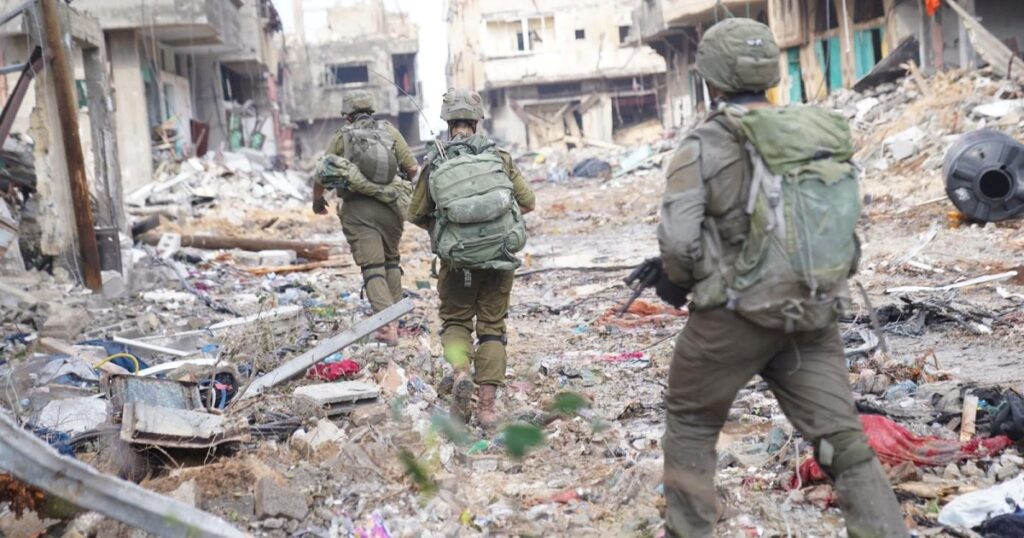
The captives were killed during combat with Palestinian fighters after they were erroneously identified as a threat. The Israeli army has killed three captives held by Palestinian armed groups in Gaza after “mistakenly” identifying them as a threat, according to Israeli military officials. The military said on Friday that the captives were killed during combat with Palestinian groups in Gaza and expressed its condolences to the families while saying there would be “full transparency” in the investigation into the incident, which is “under review”. “During combat in Shujayea, the [Israeli army] mistakenly identified three Israeli hostages as a threat. As a result, the troops fired toward them and they were killed,” the army said in a statement. “The [Israeli army] began reviewing the incident immediately … Immediate lessons from the event have been learned, which have been passed on to all [Israeli army] troops in the field,” it added, expressing “deep remorse over the tragic incident”. The hostages were identified as three young men who had been abducted from Israeli communities during the Hamas attack on October 7 – 28-year-old Yotam Haim, 25-year-old Samer Al-Talalka and 26-year-old Alon Shamriz. The army’s chief spokesman, Daniel Hagari, said Israeli troops found the hostages and erroneously identified them as a threat. He said it was believed that the three had either fled their captors or been abandoned. Israeli troops have engaged in fierce battles with Palestinian fighters in the area in recent days. About 250 captives were taken into Gaza by Palestinian groups during the October 7 attack on southern Israel, which killed around 1,200 people, according to Israeli authorities. Israel’s war on Gaza has killed more than 18,700 Palestinians, according to Gaza’s Health Ministry, most of them women and children. Thousands more are missing and trapped beneath the rubble. The Israeli government has repeatedly stated that bringing home all of the hostages is one of its principal aims in the war. To date, 110 of the captives have been freed, mostly during a seven-day truce last month in exchange for Palestinians held in Israeli jails. Israel has also repatriated eight bodies, including on Friday those of dual Israeli-French national Elia Toledano, 28, abducted from an electronic music festival, and two 19-year-old soldiers. The deaths were announced as US National Security Adviser Jake Sullivan said the US and Israel were discussing a timetable for scaling back the offensive against Hamas, even though they agree the overall fight will take months. Sullivan also met with Palestinian President Mahmoud Abbas to discuss the besieged enclave’s postwar future. US President Joe Biden’s administration has expressed unease over Israel’s failure to reduce civilian casualties and its plans for the future of Gaza, but the White House continues to offer wholehearted support for Israel with weapons shipments and diplomatic backing. Israeli air raids and shelling continued Friday, including in the southern city of Rafah, part of the shrinking areas of tiny, densely populated Gaza to which Palestinian civilians had been told by Israel to evacuate. Adblock test (Why?)
Israeli air attack on residential home in Rafah kills four Palestinians
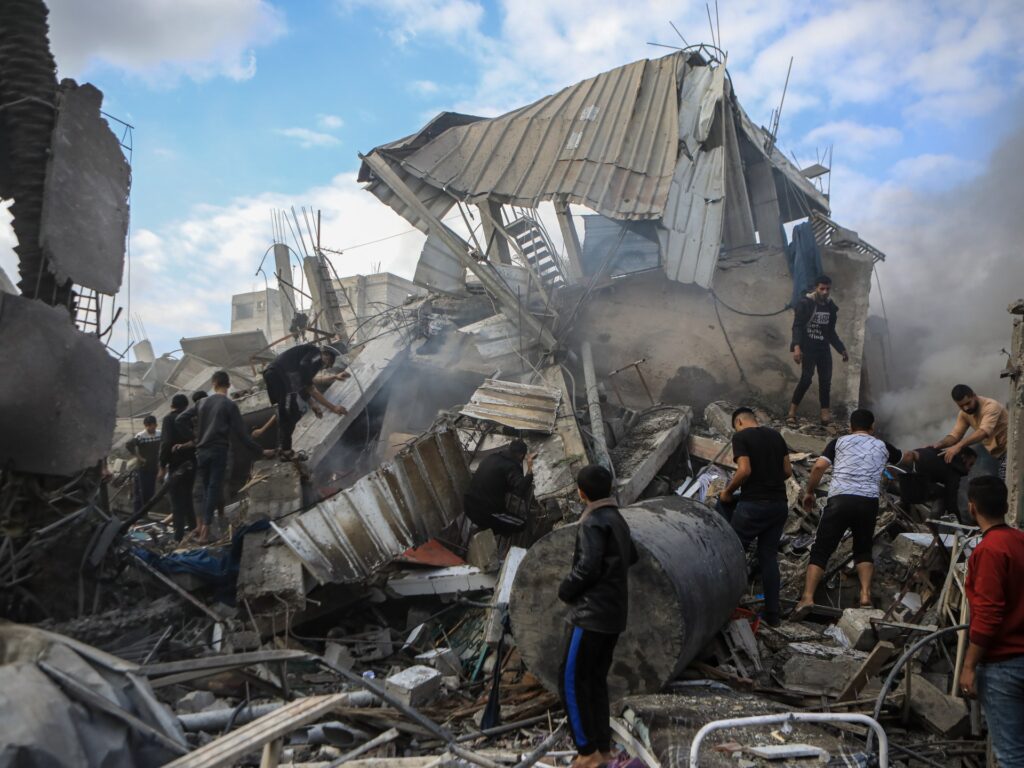
Israeli warplanes have bombed a house belonging to the Shehadeh family in the Brazil neighbourhood in the Rafah governorate, south of the Gaza Strip. Four people were killed in the attack on Thursday, and dozens of others wounded. At least 15 people remain missing under the rubble. The wounded were transferred to the Abu Youssef Al Najjar Hospital and the Kuwaiti Specialty Hospital in Rafah. The house, which belonged to Abdullah Shehadeh, a doctor, sheltered dozens of displaced people. People in the neighbourhood, alongside the civil defence crews, dug through the wreckage with simple tools and their bare hands, in an attempt to retrieve the bodies of those killed that remained under the rubble. In two separate attacks on the Abu Dabaa and Ashour family homes in Rafah, the number of people killed from the aerial bombardment increased to 25. The attacks came on the same night when communication networks were cut off once again by Israeli forces, the fifth time since October 7. In a statement, the government media office in Gaza announced the Israeli policy as a “deliberate act”. “Cutting off communications and the internet means that Palestinians will face life-threatening disasters, as there will be many killed and wounded people [in Israeli attacks] that no one will be able to reach,” the media office said. “Thus, the number of victims killed will increase.” More than 280 Palestinians and about 800 others were injured on Thursday, as air raids and artillery shelling continued throughout the Gaza Strip, especially in the southern city of Khan Younis, northern Gaza, and the neighbourhoods east of Gaza City. Since the beginning of the Israeli offensive on the coastal territory, at least 18,797 people have been killed, and more than 50,000 wounded, according to Palestinian authorities. Some 7,780 Palestinians remain missing and are presumed dead under the rubble of their own homes. More than 253,000 housing units have been partially damaged by the ongoing bombing, and more than 52,000 housing units were completely demolished by the Israeli air attacks or have become uninhabitable. Adblock test (Why?)
Denmark stepping up terror probe amid suspicion of Hamas links
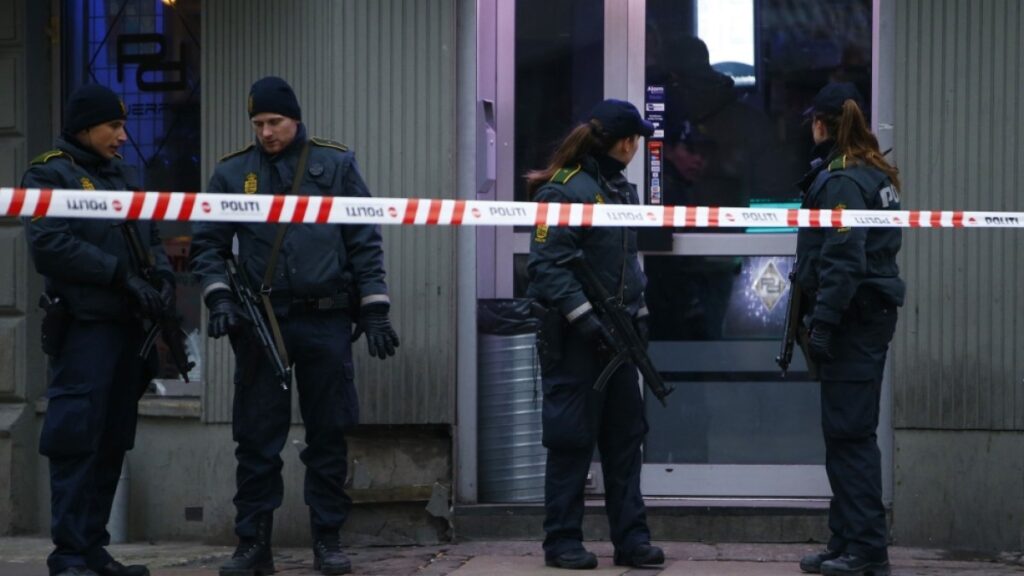
Two detentions coincide with arrests in Germany, where three people allegedly linked to Hamas have been detained. Denmark is holding two people in custody and targeting four more in an investigation that may have ties to others across Europe that are linked to Hamas. The two suspects detained have been ordered to remain in pretrial detention until January 9, prosecutor Anders Larsson said on Friday. The arrests coincide with detentions in Germany allegedly linked to Hamas and in the Netherlands. The Danish Security and Intelligence Service announced on Thursday the arrests of three people on suspicion of plotting to carry out “an act of terror”. Larsson revealed that one was released after a nightlong custody hearing at a Copenhagen court. The prosecutor did not say whether the released person was still considered a suspect. The whereabouts of the other four suspects is unknown. ‘Hamas infrastructure on European soil’ Larsson also did not specify whether there is a Hamas link in the Danish arrests. However, there have been strong suggestions that they may be connected. After the arrests on Thursday, Israel’s Mossad spy agency said Denmark had exposed “Hamas infrastructure on European soil”, according to a statement from Prime Minister Benjamin Netanyahu’s office. “It is, of course, in relation to Israel and Gaza, completely unacceptable for someone to bring a conflict elsewhere in the world into Danish society,” Danish Prime Minister Mette Frederiksen told the Ritzau news agency the same day. Danish police said they would increase their public presence in the coming days, in particular in Copenhagen and around Jewish localities. Prosecutors have said it is unclear whether the arrest of Dutch national Nazih R in the Netherlands is linked to the Hamas investigation in Germany, where Lebanon-born Abdelhamid al-A and Ibrahim el-R and Egyptian national Mohamed B have been detained. German prosecutors alleged that the three detainees were tasked with finding a previously established underground Hamas weapons cache in Europe. They added: “The weapons were due to be taken to Berlin and kept in a state of readiness in view of potential terrorist attacks against Jewish institutions in Europe.” “Following the terrible attacks by Hamas on the Israeli population, attacks on Jews in Jewish institutions have also increased in our country in recent weeks,” German Justice Minister Marco Buschmann said in a statement. “We must, therefore, do everything we can to ensure that Jews in our country do not have to fear for their safety again,” he added. This month, the European Union’s home affairs commissioner, Ylva Johansson, also warned that Europe faced a “huge risk of terrorist attacks” over the Christmas holiday period during the Israel-Hamas war. Hamas official Sami Abu Zuhri told the Reuters news agency: “We deny there are members of Hamas detained in Denmark, Germany or any other European country.” “Publishing these allegations aims to influence the mass rallies that are supportive of Palestine in Europe.” Adblock test (Why?)
Attack launched from Houthi-held Yemen hits cargo ship in Red Sea
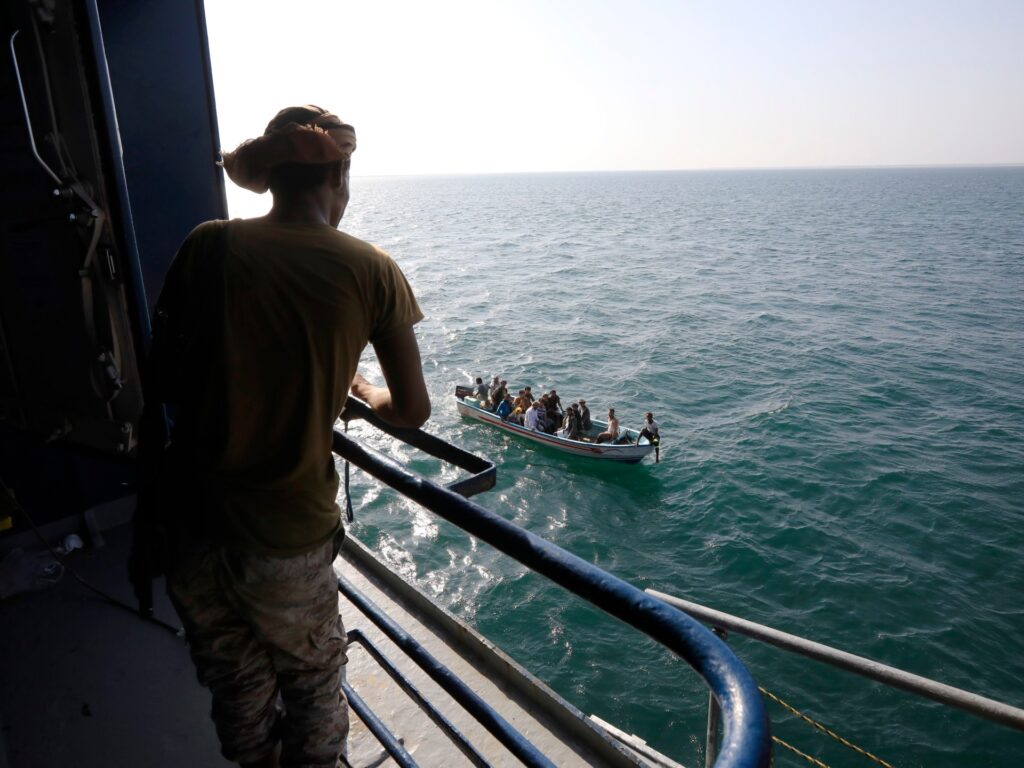
Yemen’s Houthi rebels attacked a cargo ship in the Red Sea, near the strategic Bab al-Mandeb Strait, causing a fire on deck in the latest of a near-daily series of raids in the commercially vital waterway. The Iran-aligned Houthis, who control much of Yemen but are not recognised internationally, have said that they are targeting shipping to pressure Israel during its offensive on Gaza, which has killed more than 18,700 people in the two-month-old war against Hamas, which governs the enclave. “We are aware that something launched from a Houthi-controlled region of Yemen struck this vessel which was damaged, and there was a report of a fire,” a US defence official told the AFP news agency on Friday. A US official, speaking on condition of anonymity to discuss intelligence matters, also confirmed the attack to The Associated Press news agency. Speaking in Tel Aviv, US National Security Adviser Jake Sullivan said, “While the Houthis are pulling the trigger, so to speak, they’re being handed the gun by Iran.” The ship was identified as the Liberia-flagged Al-Jasrah, a 370-metre (1,200-foot) container ship built in 2016. Private intelligence firm Ambrey said the vessel, owned by German transport company Hapag-Lloyd, “sustained physical damage from an aerial attack” north of the Yemeni coastal city of Mokha. “The projectile reportedly hit the port side of the vessel and one container fell overboard due to the impact. The projectile caused a fire on deck” that was reported over radio, Ambrey said. The Houthis have said they will target any ship travelling to Israel, irrespective of its nationality, and are now launching regular attacks, although they are mostly unsuccessful. The ship was en route from the Greek port of Piraeus to Singapore. There were no casualties and the vessel was now travelling on towards its destination, a Hapag-Lloyd spokesman told AFP. ‘Threat to commercial shipping’ Sullivan, who is visiting Israel, said the Houthi rebels were threatening freedom of movement in the Red Sea, vital for massive oil and goods shipments. “The United States is working with the international community, with partners from the region and from all over the world to deal with this threat,” he told reporters. The attack occurred near Bab al-Mandab, the narrow strait between Yemen and northeast Africa through which much of global commerce flows. Some 40 percent of international trade passes through the area, which leads to the Red Sea, Israel’s southern port facilities, and the Suez Canal. Insurance costs for ships transiting the area have jumped in recent days, amounting to increases in the tens of thousands of dollars for larger ships like oil tankers, reports say. While warships passing through the Red Sea are well equipped and can retaliate, commercial vessels do not have the same protections. Crews under fire by heavy weapons typically abandon the bridge and control their vessels remotely from an armoured citadel. Israel’s regional rivals have cited the high Palestinian death toll and occupation of much of Gaza as motivating their attacks, raising the risk of the conflict spreading further. The rebels have tried to hijack and capture several ships, succeeding at least once in November. They typically order them to surrender and head to a Yemeni port, and open fire if they do not comply. US, French and British warships are patrolling the area and have shot several missiles out of the sky. Adblock test (Why?)
‘We barely make ends meet’: In Italy, some women are postponing motherhood
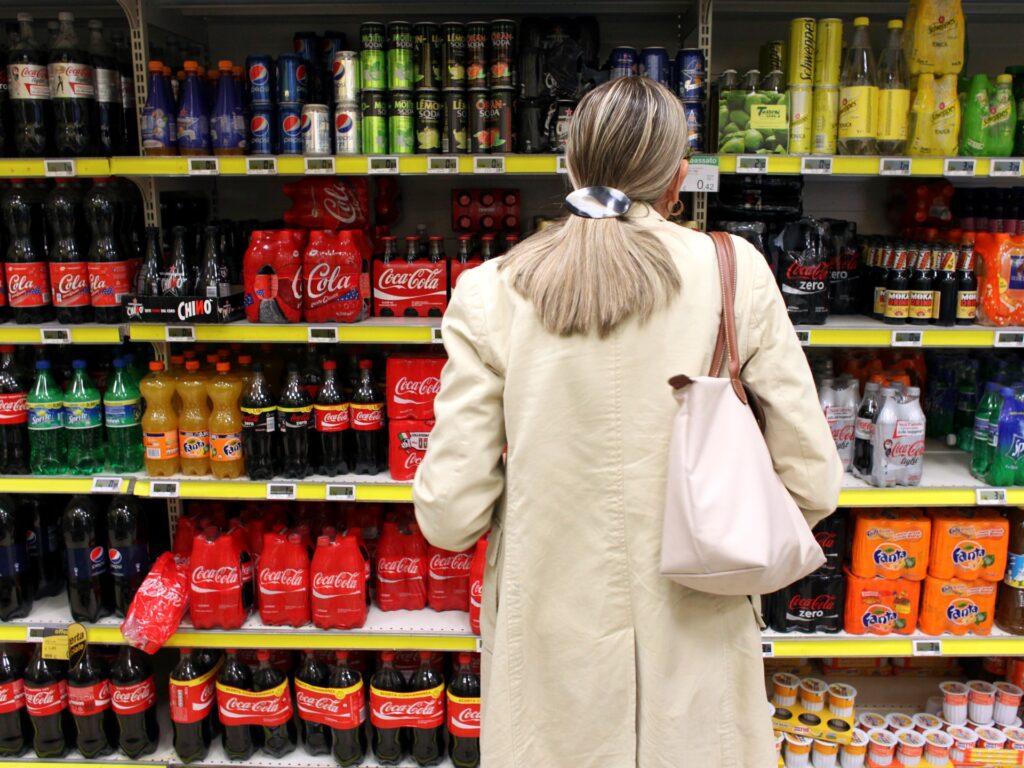
Giada, a 30-year-old writer, lives in central Italy with her boyfriend, a shop assistant also in his thirties. After several unpaid internships, she finally secured a more reliable position this year. As a writer specialising in science, she earns about 800 euros ($876) a month on a one-year part-time contract. “They said they are going to renew it, but it’s a small company and everything is very unstable,” Giada told Al Jazeera. For this reason, she is postponing motherhood. “Having kids has never been a question for me, and my boyfriend and I discuss it as he would also like to have them. But then we think about our precarious situation and realise that becoming parents now would not be sustainable. We barely make ends meet – imagine with a child.” Working in Italy as a woman is fraught with challenges. The country is home to the lowest female employment rate in the European Union and a steep gender pay gap. Women are also often more likely to be employed in “non-standard” arrangements, such as part-time and temporary jobs. And it is mothers and young women who are the most affected. “We are lucky in other ways,” Giada said. “Our families support us so we know that if we need help we can ask them. “[But] what if I get pregnant and my company decides to not renew my contract? It is not so unrealistic that this could happen.” Chiara, a 26-year-old social media strategist living in Padua with her boyfriend, said given their salaries, they cannot plan for a family yet. “I left my parents’ home when I was 19 and almost immediately became financially independent by working while studying,” she said. “All my wages have always been used for daily living, not allowing me to save any money.” Chiara is working on an apprenticeship contract, earning about 1,200 euros ($1,314) per month. Looking ahead, she does not expect her salary to rise by much. “Our desire to become parents is strong, but it is never stronger than knowing that a kid deserves to live comfortably,” she said. “With groceries, rent and bills going up, while our salary remains the same, it is basically impossible to do so. “Of course, this is not something that makes me happy: not knowing whether our financial situation will ever allow us to have children scares me, because this day may never come”. Motherhood postponed According to a recent Department of Health report, Italian women are, on average, older than 31 when they have their first child. About 62 percent of babies in 2022 were born to mothers aged between 30 and 39. Those aged between 20 and 29 accounted for 26 percent of births, compared with 30 percent in 2012. The average number of children per woman is now 1.24, one of the lowest rates in Europe. To compare, France’s rate, which is considered high, was 1.8 in 2021 while Greece’s was 1.4, according to the World Bank. The Department of Health said the trends are partly down to a “decrease in the propensity to have children”. While women are under less societal pressure to have children, in Italy, the biggest obstacle to motherhood for some is being able to afford it. Official figures show that 72 percent of resignations in 2021 were submitted by women. Most of those who quit cited the difficulties associated with juggling work and childcare duties. “Care work is still all on women’s shoulders, even for couples where both have jobs,” Chiara Daniela Pronzato, professor of demography at the University of Turin, told Al Jazeera. While women get five months’ maternity leave, fathers are entitled to just 10 days. Good quality and affordable childcare is in short supply. There are not enough state-run nursery places and private preschools are very expensive. Plans to use 4.6 billion euros of the EU’s COVID-19 recovery funds to build new nurseries are lagging. “The most expensive aspect of parenthood is children’s time. Caring for them costs money,” Pronzato said. “When a woman has kids and a low salary, it is likely she would resign to take care of the family, setting her up in a state of poverty that certainly does not help the country to grow. “Increasing the fertility rate is not important because ‘we are shrinking as a population’, but rather to maintain economic prosperity,” Pronzato explained. “If women worked more, they could have more children, as shown by France, Sweden and Norway, where fertility and female employment rates are both high.” Presenting the government’s 2024 budget, Italian Prime Minister Giorgia Meloni, who has made clear her desire to increase the birth rate, announced measures for families with children, including free nursery care for a second child, the temporary exemption of women with two or more children from social security contributions, and benefits for companies that hire mothers on permanent contracts. “A woman who gives birth to at least two children … has already made an important contribution to society,” Meloni said in October. But Pronzato warned that while incentives could be helpful, “there should be more focus on services instead of money, as it is hard for people to trust that these bonuses will remain for a long time”. “Building new kindergartens and offering full-time education and after-school activities in schools would rather be a more forward-looking step,” she explained. “We should begin to consider children as precious and important to everyone, because the future depends on them, and it should be the community, the public – not the individual household – that take care of them.” Adblock test (Why?)
Emaciated but alive: Gaza mothers, premature babies reunited in Egypt
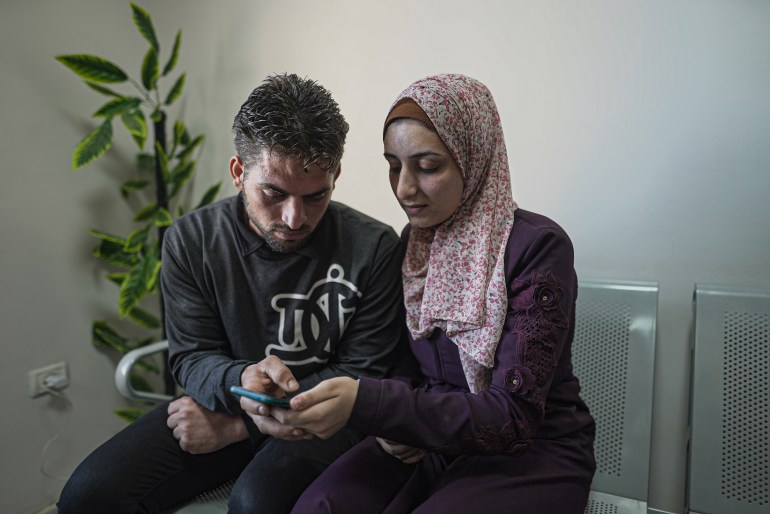
Central Gaza Strip – When Noor Reyhan gave birth to her baby boy, the 20-year-old had no idea it would be the first and last time she would see him for two months. Noor had gone into labour eight months into her pregnancy and gave birth on October 6 at al-Shifa Hospital in Gaza City. “Because he was premature, I didn’t have the chance to see him,” Noor said. “The doctors took him immediately to put him in an incubator. I only have a photo of him.” The next day, all hell broke loose. Israeli forces bombarded northern Gaza indiscriminately, a few hours after Hamas fighters attacked army outposts and Israeli towns just outside the strip. Living in the northern town of Beit Lahiya, Noor and her husband, Huthaifa Marouf, knew from previous Israeli offensives that their area would be targeted. So they left their home and took refuge at a school in the Nuseirat refugee camp, where Noor could not even find a mattress and instead slept on a blanket on a cold classroom floor with 40 other people. Noor and her husband, Huthaifa, look at photos of their baby boy on her phone. They have not seen him for weeks [Suleiman al-Farra/Al Jazeera] “We have been displaced since the beginning,” Noor said. “Our house was destroyed in the first week after the Israelis targeted our neighbourhood. Even before I became pregnant, we had prepared the nursery room in our home. That’s all gone now.” The new parents tried to take their baby with them but were told they would be risking his life. Besides, relatives and doctors told them that, according to the rules of war, a hospital would be the safest place. They named their son Ayman – which means blessed, righteous or lucky – weeks after he was born. For the next several weeks, they wouldn’t know if he was even alive. Babies left behind In the second week of November, Israeli forces besieged al-Shifa Hospital. Over the course of several days, the hospital was targeted several times, terrorising thousands of displaced families sheltering there and forcing them to leave. Among the dozens of premature babies in the hospital were Ayman and twin girls Rateel and Raseel. Unlike Noor and Huthaifa, Sawsan Abu Odeh, the mother of Rateel and Raseel, was sheltering in al-Shifa. But as the bombardment of the hospital intensified, the 20-year-old had to leave. Rateel and Raseel Abu Odeh were born on October 13 at al-Shifa Hospital [Suleiman al-Farra/Al Jazeera] “That was the day the Israelis threw leaflets telling people to head south,” Sawsan said. “I saw them [the twins] every day for a month and would pump milk to give to them, but I couldn’t hold them.” A week earlier when the fifth-floor maternity ward of the hospital was hit by an air strike, Sawsan told the doctor at the neonatal intensive care unit (NICU) that she wanted to take her twins out of the incubators and head south. “He said it was too dangerous to move them and that they would die if I took them with me because they were still taking nutrition intravenously,” she said. “He pointed out that the gunpowder in the air and the dust and dirt in general would impact their health even more and assured me that the safest place for them was the hospital.” As they talked, the hospital grounds next to the NICU were bombed. The doctor took his wife and children, who were staying with him in the hospital, and fled. The next day, Sawsan and her father, Khaled, were coming back to the hospital after going to the market to buy clothes for the twins. As they made their way towards the entrance gate, an Israeli missile struck it. “A man only a few metres away from me was injured in his leg – there was a big chunk missing,” Sawsan said. “Another man close to us was wounded in his shoulder. My father grabbed me, and we fled from the hospital.” The young mother was hysterical. She had given birth just a few weeks before with some complications and now found herself on the road leading to the southern Gaza Strip with thousands of other people. “I kept stopping and crying and told my family that I didn’t want to go on, that they should continue without me,” she said. “We passed by the soldiers and their tanks and saw many bodies lying on the road. One of the bodies was burned black, and I saw two decomposing bodies in an abandoned car as well.” Her mother flagged down a donkey cart and put her daughter on it until they reached the Maghazi refugee camp, where once again they took shelter in another school. “It was horrible,” Sawsan said. “The bathrooms were filthy. There was no food. I wasn’t in a good state, and I blamed my dad for making me abandon my babies.” As she spoke, her father, Khaled, let out a sad chuckle. After they arrived at Maghazi, worried about his daughter’s state of mind, he set about asking around for news of the premature babies left at al-Shifa Hospital. Sawsan Abu Odeh and her father, Khaled, sit outside Al-Aqsa Martyrs Hospital waiting for the ambulance that will take her to the Rafah border crossing with Egypt to be reunited with her twin baby girls [Suleiman al-Farra/Al Jazeera] “For weeks, we had no idea where the girls were,” he said. “We called every hospital, but they gave us conflicting news. Some said they were taken to an Israeli hospital, others to the hospital in Ramallah.” Sawsan’s fear intensified after reports emerged that several of the premature babies at the hospital had died. She got in touch with the ambulance services, who referred her to the Red Crescent. It told her to contact the Red Cross, which eventually referred her along to the Ministry of Health in Gaza. After many attempts because of the bad phone lines, she
Video said to show Palestinian detainees being paraded
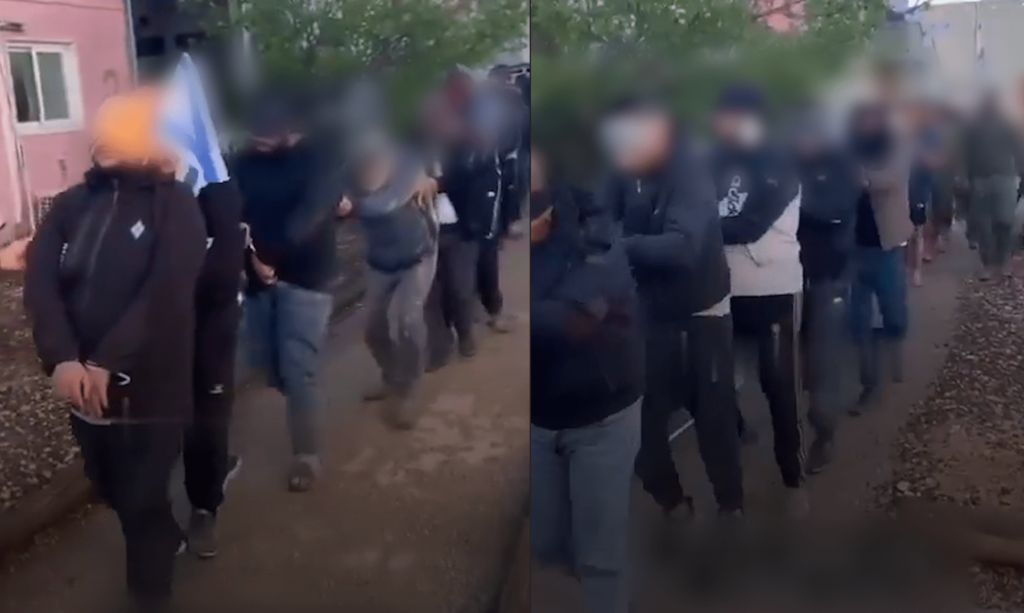
NewsFeed Video shared on social media appears to show blindfolded Palestinian detainees being paraded by Israeli soldiers in the occupied West Bank, to a soundtrack of an Israeli children’s song. The Israeli military has been contacted for comment. Published On 15 Dec 202315 Dec 2023 Adblock test (Why?)
China’s big freeze blamed for Beijing subway crash
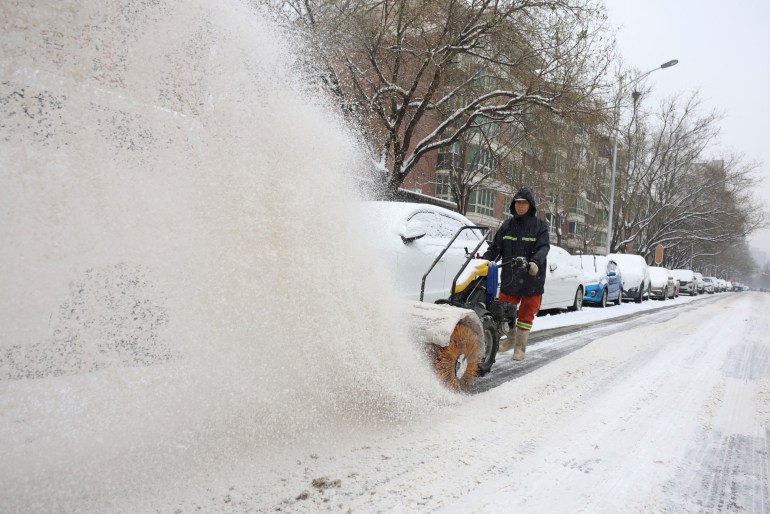
Extending recent erratic weather patterns, China has been hit by sudden freezing temperatures and heavy snowfall. More than 500 people have been hospitalised after two subway trains collided amid heavy snowfall in Beijing. Authorities in the Chinese capital said on Friday that 102 people had suffered broken bones. The accident happened in west Beijing on an above-ground portion of the sprawling Changping subway line on Thursday evening. China has been in the grip of harsh winter weather over recent days. Snow has been building in Beijing since Monday, with temperatures expected to slide further to minus 12 degrees Celsius (10.4 Fahrenheit). Further north, cities such as Shenyang could drop to a 2023 low of minus 27C (minus 16.6F), state broadcaster CCTV said. Due to the weather conditions, slippery tracks prompted a braking on the leading train. The train following from behind was on a descending section and went into a skid and was unable to brake in time, the city transport authority said in a statement on social media. Emergency medical personnel, police, and transport authorities responded, and all passengers were evacuated by about 11pm. By Friday morning, 423 people had been released from hospital, 25 passengers were under observation and 67 remained hospitalised. No deaths were recorded. On social media, images of the collision showed passengers on the floor and partial lighting outages. Some commuters used emergency hammers to try to break the train windows to escape. In other videos, firefighters were seen helping to evacuate an elderly passenger while others made their way through the deep snow to leave the scene. A worker operates a machine sweeping snow on a street amid snowfall in Beijing, China [Tingshu Wang/Reuters] “We sincerely apologise for the accident that occurred this evening,” Beijing Subway, the train’s operator, said on the Weibo social media platform. “Passengers who left the premises unaccompanied during the evacuation and who are not feeling well can contact us at any time. We will take on the cost of care,” it added. Alerts remain in place in Beijing for icy roads, extreme cold and heavy snowfall. Temperatures were due to fall to minus 11C (12F) overnight on Friday. The heavy snow began falling in Beijing on Wednesday, leading to the closures of schools and train operations. However, no deaths have been reported from the winter storms that have hit a large portion of northern China. The sudden cold snap in the capital, contrasting with autumnal temperatures last week, continues a recent trend of sharp swings in temperatures. Beijing experienced one of its warmest Octobers in decades in a year of extreme weather patterns. Adblock test (Why?)
Police and soldiers killed as more violence flares in northwest Pakistan
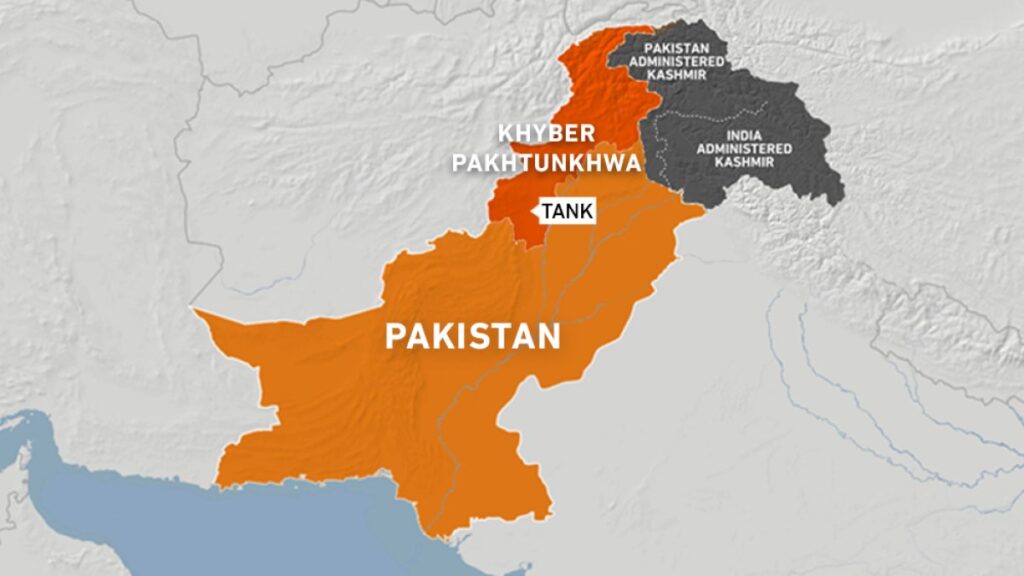
Three attackers were also reported killed in the second attack this week on police posts in Khyber Pakhtunkhwa. Several officers and soldiers have been killed and injured in attacks by armed men on a police station and an army outpost in northwest Pakistan, police said. The assaults came on Friday morning, extending a growing campaign of violence in former Taliban strongholds along the border with Afghanistan. Three days earlier, a suicide bomber killed 23 Pakistani soldiers in the same province of Khyber Pakhtunkhwa. Friday’s attack on the police occurred in the Tank district of the province’s Dera Ismail Khan division. Police said two officers were killed and three others wounded. The incident also left three of the attackers dead, reports Al Jazeera’s Abid Hussain. Two were killed by police while the third blew himself up, he reported. An unexploded suicide jacket has also been found and police launched an operation to secure the compound. “Our force on guard engaged them in a gun battle for hours,” and police officers were wounded, police official Iftikhar Shah told Reuters news agency. According to Pakistan’s DawnNewsTV, Shah said all remaining officers at the post were evacuated safely and a search operation was under way after alerts of more armed men present in the area. An armed group that identified itself as Ansar-ul-Islam claimed responsibility for the attack in a statement released to a Reuters reporter. However, Dawn reported that a group called Ansarul Jihad claimed the attack. The police did not verify the authenticity of the claims. According to the AP, a military post was also targeted on Friday morning. Two soldiers were reportedly killed and five wounded, local police official Salim Khan said. On Tuesday, armed men stormed a military post in the town of Daraban, about 60km (37 miles) from Dera Ismail Khan city. The fighters rammed a vehicle laden with explosives into the main gate of the police station, followed by a suicide bombing attack, the army said. That attack was claimed by the recently formed militant Tehreek-e-Jihad Pakistani group, which is believed to be an offshoot of the Tehreek-e-Taliban Pakistan (TTP), or the Pakistani Taliban. Khyber Pakhtunkhwa has witnessed a rise in violence this year, with several deadly attacks taking place. In January, at least 101 people were killed when a suicide bomber targeted a mosque in the capital, Peshawar. The TTP has been waging a war against the state for years, seeking to overthrow the government and replace it with a harsh brand of Islamic governance. Authorities say fighters have become emboldened while living openly in Afghanistan since the Taliban took it over in 2021. [embedded content] Adblock test (Why?)
Eleven security personnel killed in Iran police station attack: State TV
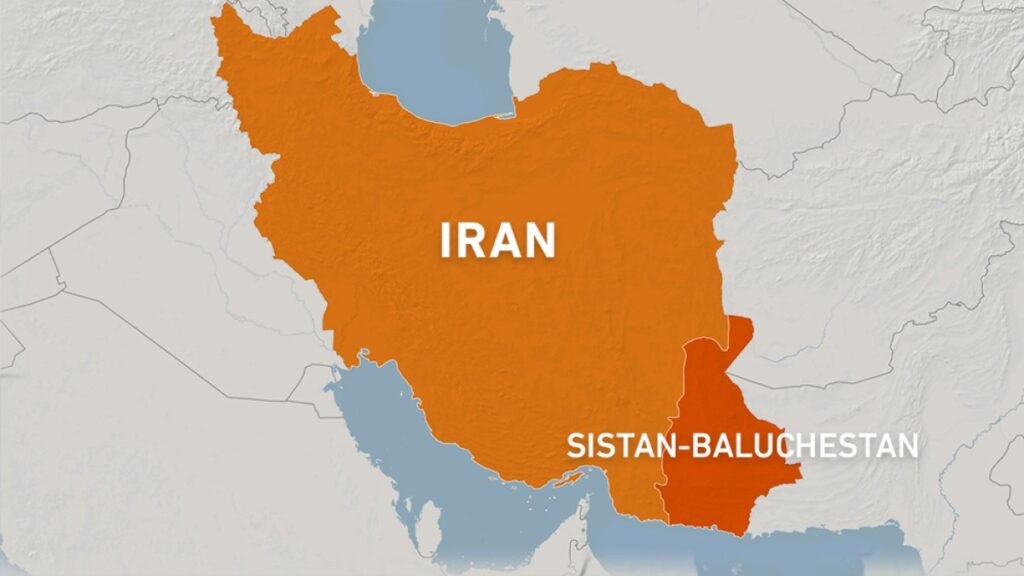
Several wounded in shooting in province of Sistan-Baluchestan which borders Afghanistan and Pakistan. At least 11 Iranian security personnel have been killed in an attack on a police station in the southeastern border province of Sistan-Baluchestan, state television reported. Alireza Marhamati, deputy governor of the province, said on Friday that senior police officers and soldiers were killed and injured in the 2am (22:30 GMT Thursday) attack in the town of Rask, about 1,400km (875 miles) southwest of the capital, Tehran. A number of assailants were also killed in a shootout that ensued with the security forces, according to state television reports. The attack was one of the deadliest in years in the region close to Iran’s border with Afghanistan and Pakistan. The Jaish al-Adl (Army of Justice), a Sunni armed group, claimed responsibility for the attack, state media said. Jaish al-Adl was formed in 2012 and is blacklisted by Iran as a “terror” group. Unrest has plagued the impoverished province of Sistan-Baluchestan because of drugs-smuggling gangs, rebels from the Baluchi minority and Sunni Muslim hardliners. Security forces regularly targeted Similar attacks have previously taken place, including in July when four policemen were killed while on patrol. That attack came two weeks after two policemen and four assailants were killed in a shootout in the province, for which Jaish al-Adl claimed responsibility. In May, five Iranian border guards died in clashes with an armed group in Saravan, southeast of Zahedan, the provincial capital of Sistan-Baluchestan. State media reported at the time that the attack was carried out by “a terrorist group that was seeking to infiltrate the country” but whose members “fled the scene after suffering injuries”. In late May, state-run news agency IRNA quoted police official Qassem Rezaee as saying that “Taliban forces” had shot at an Iranian police station in Sistan-Baluchestan, a drought-hit region. Iran and Afghanistan have been at odds over water rights. Zahedan, one of the few Sunni-majority cities in predominantly Shia Iran, was also the site of months-long deadly protests that erupted in September last year over the alleged rape of a teenage girl by a police officer. Jaish al-Adl and its affiliate groups based in Pakistan have been accused of committing cross-border attacks against Iranian forces. Adblock test (Why?)