

Russia strikes Kharkiv hospital, UN convoy as Ukraine seeks US Tomahawks
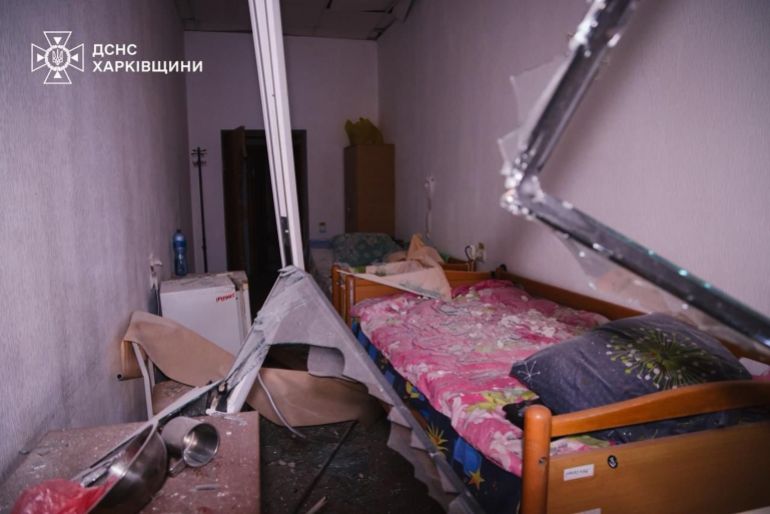
The latest attacks on civilians come days before talks in which Zelenskyy hopes to secure the long-range missiles from Trump. Russian forces have struck a hospital and a United Nations convoy in Ukraine, officials say, in attacks likely to bolster President Volodymyr Zelenskyy’s pitch for long-range Tomahawk missiles when he meets his United States counterpart later this week. Officials said on Tuesday that overnight attacks involving drones and glide bombs struck a hospital in Kharkiv, injuring 57 people and forcing the evacuation of 50 patients. Recommended Stories list of 4 itemsend of list Meanwhile, Russian forces attacked a UN convoy that was delivering aid to the front-line town of Bilozerka in the partially occupied southern region of Kherson, UN and Ukrainian officials said. No casualties were reported. The attacks in Kharkiv and Kherson – condemned, respectively, by Zelenskyy as a “terrorist” attack and by the UN as a violation of international law – come days before a scheduled meeting between Zelenskyy and US President Donald Trump in Washington, DC, on Friday when the pair is expected to discuss the potential supply of long-range, precision-strike Tomahawk missiles to Kyiv to allow it to hit back at Moscow. Trump has suggested in recent days that he was considering providing Kyiv with Tomahawks, which would be the longest-range missiles in Ukraine’s arsenal and could allow it to accurately strike targets deep inside Russia, including Moscow. Washington had previously ruled out supplying Ukraine with the cruise missiles, which the Kremlin has warned could have serious consequences and would entail direct US involvement in the conflict. Hospital attacked The overnight attacks on Kharkiv, Ukraine’s second largest city, hit the city’s main hospital, Zelenskyy said in a post on X. Advertisement He described the strikes as an “utterly terrorist, cynical attack on a place where lives are saved”. A Russian attack caused injuries, evacuations and damage at a hospital in Kharkiv, Ukraine [Handout/Ukrainian Emergency Service via AP] He said the main targets of the overnight raids across the country had once again been energy facilities and power facilities in the Kherson and Sumy regions were hit. “Every day, every night, Russia strikes power plants, power lines, and our [natural] gas facilities,” Zelenskyy said on Telegram. For the past three years, Russia has started to target Ukraine’s power grid before each winter in a campaign to demoralise the population by leaving millions without power in freezing conditions. In response to the escalating attacks on Ukraine’s energy facilities, which forced outages across the country on Monday in a bid to reduce pressure on the grid, Zelenskyy has called on Ukraine’s allies to help blunt Russia’s long-range attacks by providing more air defence systems. Ukraine has dispatched a senior delegation to Washington to discuss boosting its defence and energy resilience, officials said on Monday. Attack on aid convoy Meanwhile, in Kherson, the UN said its convoy of four vehicles, clearly marked with World Food Programme branding, came under attack from Russian drones and artillery while delivering aid. Two trucks were damaged in the strike although no one was injured, said the UN’s humanitarian coordinator for Ukraine, Matthias Schmale. “Such attacks are utterly unacceptable. Aid workers are protected by international humanitarian law and should never be attacked,” he said. Ukrainian Foreign Minister Andrii Sybiha called the strike “another brutal violation of international law, proving Russia’s utter disregard for civilian lives and its international obligations”. The UN’s sexual and reproductive health agency, UNFPA, told the AFP news agency that the convoy was carrying 800 individual packages “containing essential items for older persons, women and girls”. Aid groups have reported throughout the nearly four-year invasion that their staff and facilities have come under attack from Russian forces. Adblock test (Why?)
Supreme Court declines Alex Jones challenge to defamation judgement
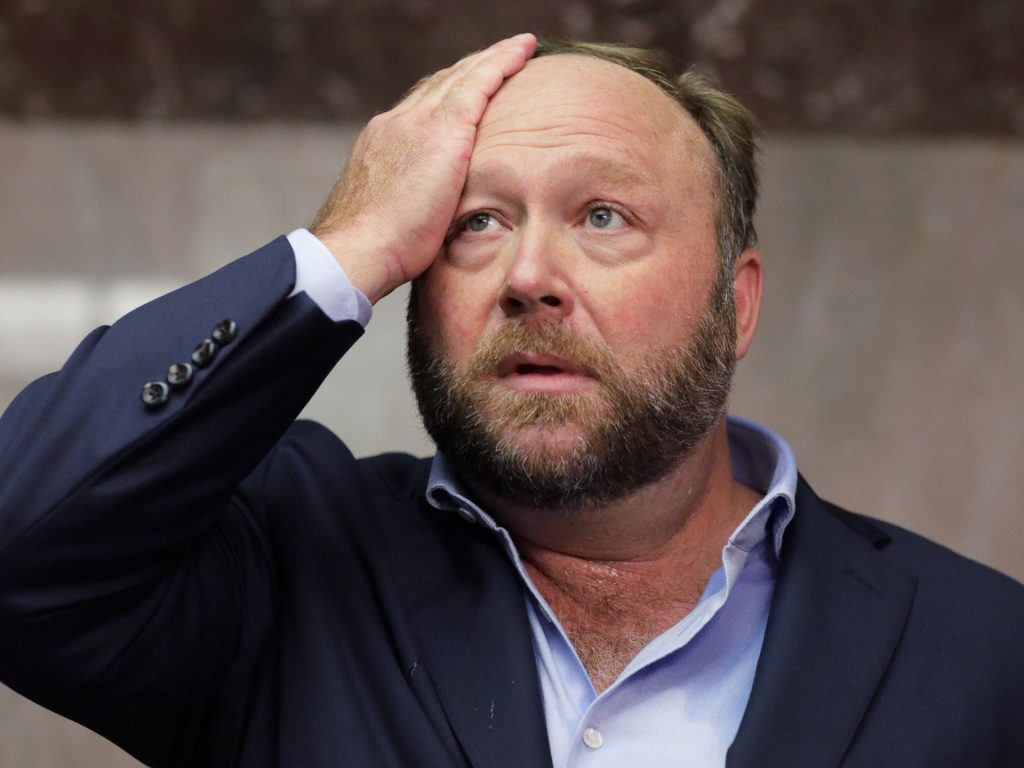
In 2022 it was ruled that the conspiracy theorist would have to pay $1.4bn to families of the victims of Sandy Hook Elementary School mass shooting which, he claimed, was a hoax. By Reuters Published On 14 Oct 202514 Oct 2025 Click here to share on social media share2 Share The United States Supreme Court declined to hear a challenge by conspiracy theorist Alex Jones to a $1.4bn judgement awarded to families of the victims of the Sandy Hook Elementary School mass shooting in Connecticut over the Infowars website founder’s false statements that the 2012 incident was a hoax. The high court made the decision on Tuesday. Recommended Stories list of 4 itemsend of list The justices turned away his appeal of the Connecticut Appellate Court’s decision in a defamation lawsuit against him to uphold most of the judgement issued by a judge and jury in 2022 to 14 family members of children and school employees who were killed, and an FBI agent who responded to the shooting. In doing so, the top US judicial body left the judgement in place. Twenty-six people – 20 students and six staff members at the school in Newtown, Connecticut – were killed in the incident by a 20-year-old former student who then fatally shot himself. Jones has argued that the judgement in the lawsuit brought against him in Connecticut violated his rights under the US Constitution to due process and free speech. It is believed to be the largest judgement in US libel case history, according to his filing to the Supreme Court. He also lost a similar lawsuit in Texas, though the roughly $50m judgement in that case was far lower. Jones is separately appealing that judgement. He declared bankruptcy after losing the lawsuits. Jones was sued for defamation after calling the shooting a “false flag” operation meant to stir up anti-gun-rights sentiment among Americans, and he has said that the parents of slain children were “crisis actors” who were faking their grief in television interviews. Advertisement Jones refused to cooperate in the legal proceedings. He has objected to the fact that Connecticut Superior Court Judge Barbara Bellis determined he was liable for defaming the parents, and that a six-member jury was asked only to consider how much he should pay. Jurors awarded compensatory damages of $965m in the trial held in the city of Waterbury. The judge then added $473m in punitive damages, and an appeals court later reduced that amount to $323m after Jones appealed. In his appeal to the Supreme Court, Jones challenged the original $1.4bn sum. Multiple cases The verdict is so large that it “can never be paid”, according to the filing, and a bankruptcy court has ruled that Jones cannot use his personal bankruptcy to avoid paying the debt. In his filing to the Supreme Court, Jones said that the judge’s default judgement was based on “small discovery errors” and “trivial” missteps by his lawyers, and led to an unfair trial. Jones previously asked the US Supreme Court to intervene in the Connecticut case in 2021, after Bellis imposed sanctions on Jones for public statements he made during the litigation but before he was found liable for defamation. The Supreme Court declined to take the case at that time. Jones is separately appealing his loss in Texas, and is currently challenging a court order that would force the sale of Infowars. Jones faces two more defamation lawsuits from other Sandy Hook parents and the family of a man who was falsely identified as a school shooter. Those cases have not yet gone to trial. Adblock test (Why?)
Forever Chemicals: A Toxic Legacy

Pervasive and permanent, Forever Chemicals have poisoned the planet. We meet those fighting to hold someone to account. From remote polar regions to the depths of the Amazon, one group of chemicals can be found almost everywhere. PFAS – per- and polyfluoroalkyl substances – have caused one of the most widespread contamination crises in history. They’re known as Forever Chemicals because they don’t biodegrade, staying and accumulating in our bodies and in the environment. And they’re toxic, with exposure linked to a list of health problems, including cancer. For decades, PFAS have been used in countless products, lauded for their heatproof, waterproof and greaseproof qualities. They’re in cooking utensils, cosmetics, raincoats, firefighting foam, motor oil and thousands more. But now they’re in our bodies, too. People & Power tells the story of how a single group of chemicals poisoned the entire planet, and meets the men and women fighting to bring those responsible to justice. Published On 14 Oct 202514 Oct 2025 Click here to share on social media share2 Share Adblock test (Why?)
Joint Egypt-Qatar-Turkiye-US statement on Gaza: The full text
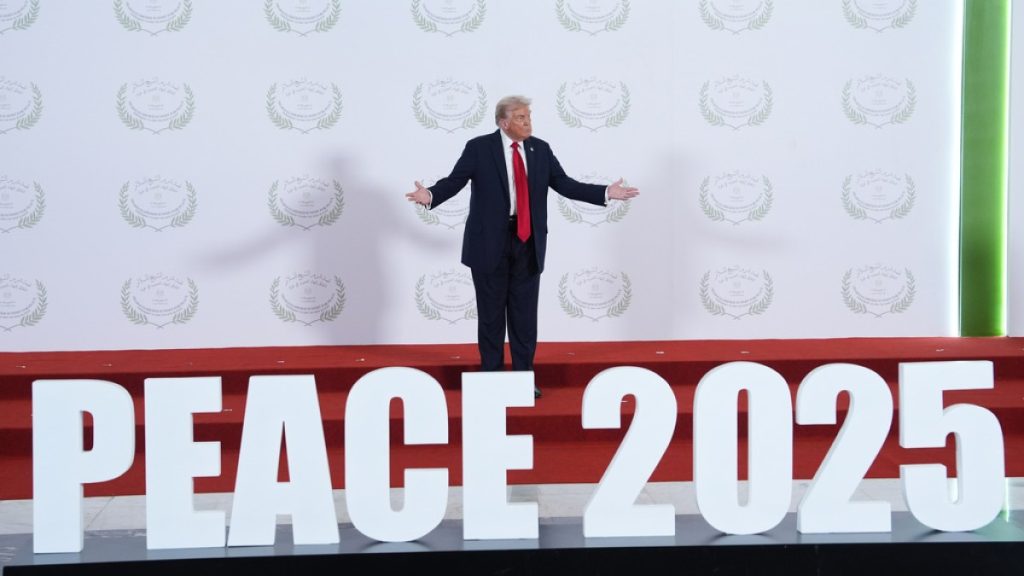
The leaders of Egypt, Qatar, Turkiye and the United States have released a joint statement backing the Gaza ceasefire deal and committing to “enduring peace” in the region. The statement, released on Monday after an international summit in Egypt’s Sharm el-Sheikh, is a rare acknowledgement by the administration of US President Donald Trump that Palestinians and Israelis deserve equal rights. Recommended Stories list of 3 itemsend of list The proclamation also does not point the finger at Palestinians as the cause of the conflict in the way that successive US administrations have. Notably, it reframes the struggle in Gaza as part of the broader Palestinian question. The Trump administration has previously avoided even describing the residents of Gaza as Palestinian. However, the statement does not explicitly acknowledge Palestinians’ right to statehood and self-determination. It was signed by Trump, Qatari Emir Sheikh Tamim bin Hamad Al Thani, Turkish President Recep Tayyip Erdogan and Egyptian President Abdel Fattah el-Sisi. Palestine and Israel were not part of the proclamation despite being its subject matter. Here’s the full text of the joint statement: The Trump Declaration for Enduring Peace and Prosperity We, the undersigned, welcome the truly historic commitment and implementation by all parties to the Trump Peace Agreement, ending more than two years of profound suffering and loss – opening a new chapter for the region defined by hope, security, and a shared vision for peace and prosperity. We support and stand behind President Trump’s sincere efforts to end the war in Gaza and bring lasting peace to the Middle East. Together, we will implement this agreement in a manner that ensures peace, security, stability, and opportunity for all peoples of the region, including both Palestinians and Israelis. Advertisement We understand that lasting peace will be one in which both Palestinians and Israelis can prosper with their fundamental human rights protected, their security guaranteed, and their dignity upheld. We affirm that meaningful progress emerges through cooperation and sustained dialogue, and that strengthening bonds among nations and peoples serves the enduring interests of regional and global peace and stability. We recognize the deep historical and spiritual significance of this region to the faith communities whose roots are intertwined with the land of the region – Christianity, Islam, and Judaism among them. Respect for these sacred connections and the protection of their heritage sites shall remain paramount in our commitment to peaceful coexistence. We are united in our determination to dismantle extremism and radicalization in all its forms. No society can flourish when violence and racism is normalized, or when radical ideologies threaten the fabric of civil life. We commit to addressing the conditions that enable extremism and to promoting education, opportunity, and mutual respect as foundations for lasting peace. We hereby commit to the resolution of future disputes through diplomatic engagement and negotiation rather than through force or protracted conflict. We acknowledge that the Middle East cannot endure a persistent cycle of prolonged warfare, stalled negotiations, or the fragmentary, incomplete, or selective application of successfully negotiated terms. The tragedies witnessed over the past two years must serve as an urgent reminder that future generations deserve better than the failures of the past. We seek tolerance, dignity, and equal opportunity for every person, ensuring this region is a place where all can pursue their aspirations in peace, security, and economic prosperity, regardless of race, faith, or ethnicity. We pursue a comprehensive vision of peace, security, and shared prosperity in the region, grounded in the principles of mutual respect and shared destiny. In this spirit, we welcome the progress achieved in establishing comprehensive and durable peace arrangements in the Gaza Strip, as well as the friendly and mutually beneficial relationship between Israel and its regional neighbors. We pledge to work collectively to implement and sustain this legacy, building institutional foundations upon which future generations may thrive together in peace. We commit ourselves to a future of enduring peace. Adblock test (Why?)
US Speaker Johnson warns government shutdown could be longest in history
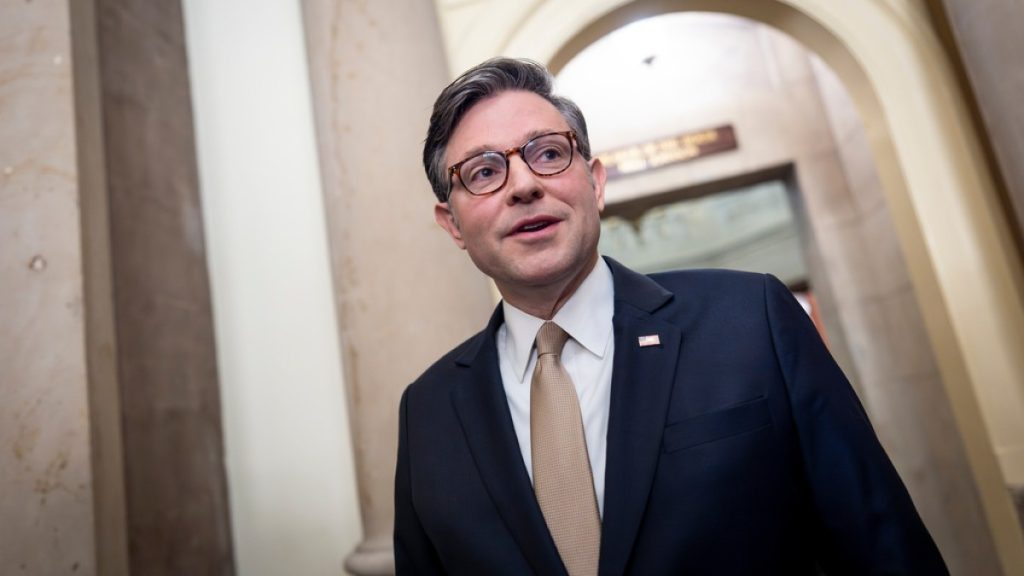
House Speaker Mike Johnson says that he will not negotiate with Democrats until they drop healthcare demands. Published On 13 Oct 202513 Oct 2025 | Updated: an hour agoUpdated: an hour ago Click here to share on social media share2 Share Speaker of the United States House of Representatives Mike Johnson has said that the current government shutdown could become the longest in history, as an impasse between the Democrats and Republicans drags on with no end in sight. Speaking to reporters on Monday, Johnson, a Republican, said that he would not negotiate with Democratic lawmakers until they suspended policy demands related to healthcare, a dispute at the core of the shutdown. Recommended Stories list of 3 itemsend of list “We’re barreling toward one of the longest shutdowns in American history,” said Johnson, who leads Republican lawmakers in the House. The administration of President Donald Trump has used the shutdown, now in its 13th day, as a pretext for pushing forward a series of cuts and layoffs to government services and agencies, although its legal authority to do so remains in dispute. Trump has plainly stated that such cuts will target his political rivals, saying last week that he would reduce “Democrat programmes” if the party refused to drop its demands on healthcare subsidies. Meanwhile, the number of institutions affected by the shutdown continues to grow. On Sunday, the Smithsonian Institution, a federal trust that runs some of the country’s most revered public facilities, including museums, libraries, research centres and the National Zoo in Washington, DC, said it had been impacted. It announced that it was temporarily closing all 21 museums that it runs, along with research centres and the National Zoo. The institution depends on the federal government for 62 percent of its funding. Advertisement Recent polls have shown that US voters blame Democrats, Republicans, and Trump himself in roughly equal measure for the shutdown. Democrats have called for an extension of subsidies under the Affordable Care Act that millions of people in the US rely on to buy healthcare plans. Republicans have said that the issue can be addressed after the government is reopened, but Democrats have expressed doubt that the Republicans will honour that pledge. Earlier this year, Republican lawmakers passed a huge tax and spending bill that is set to result in the loss of healthcare access for more than 15 million people. While government shutdowns have become a routine occurrence in US politics in recent years, they can disrupt or reduce access to key services and force employees to work without pay for uncertain periods of time. The US military said over the weekend that it would use unspent funds originally set aside for research and development to ensure that military personnel continue to receive pay. The mass layoffs pushed by the Trump administration are a relatively new addition to shutdowns. Vice President JD Vance has warned that more “painful” cuts are ahead, even as government employee unions launch legal challenges against the terminations. Adblock test (Why?)
LIVE: Trump signs Gaza ceasefire deal with leaders of Qatar, Egypt, Turkiye
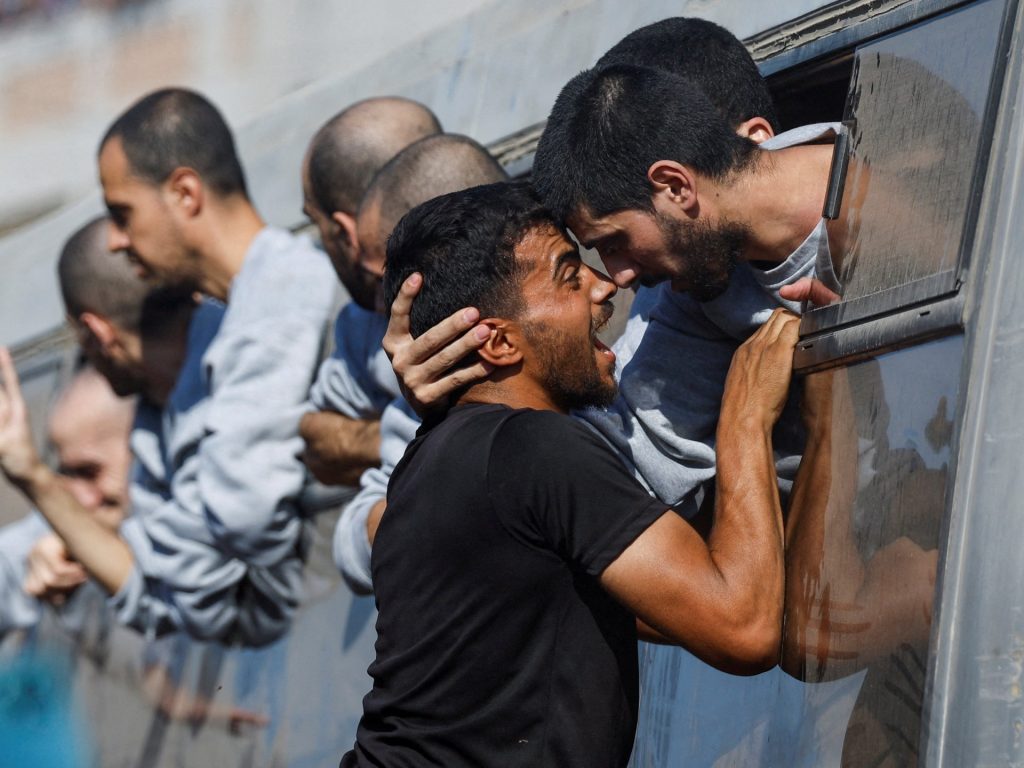
blinking-dotLive updatesLive updates, Signing comes as families in Israel and Palestine reunite with their loved ones released from captivity in Gaza and Israeli jails. Published On 14 Oct 202514 Oct 2025 Click here to share on social media share2 Share Adblock test (Why?)
Palestinian journalist Saleh Aljafarawi shot dead in Gaza City clashes
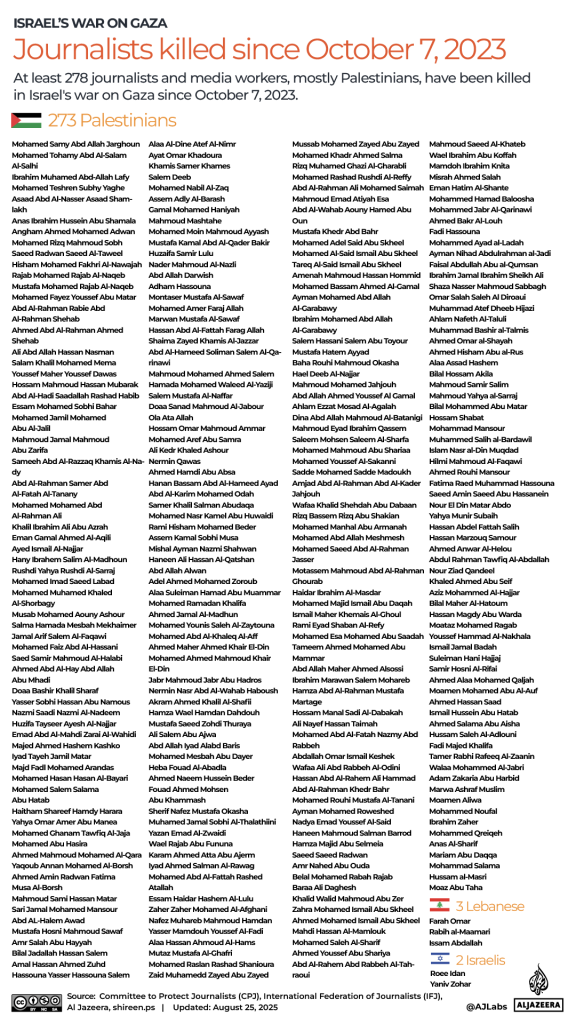
Sources say the 28-year-old was killed by members of an Israel-linked ‘militia’ fighting Hamas in the Sabra neighbourhood. Published On 12 Oct 202512 Oct 2025 Click here to share on social media share2 Share Palestinian journalist Saleh Aljafarawi has been killed during clashes in Gaza City, just days after Israel and Hamas reached a ceasefire agreement in the Gaza Strip. Palestinian sources told Al Jazeera Arabic that the 28-year-old, who had gained prominence for his videos covering the war, was shot and killed by members of an “armed militia” while covering clashes in the city’s Sabra neighbourhood. Recommended Stories list of 3 itemsend of list Al Jazeera’s Sanad agency verified footage published by reporters and activists showing his body – in a “press” flak jacket – on what appeared to be the back of a truck. He had been missing since Sunday morning. Palestinian sources said clashes were taking place between Hamas security forces and fighters from the Doghmush clan in Sabra on Sunday, although this has not been confirmed by local authorities. A senior source in Gaza’s Ministry of Interior told Al Jazeera Arabic that the clashes in Gaza City involved “an armed militia affiliated with the [Israeli] occupation”. The source said security forces imposed a siege on the militia, adding that “militia members” killed displaced people as they were returning from southern Gaza to Gaza City. Despite the recent ceasefire, local authorities have repeatedly warned that the security situation in Gaza remains challenging. ‘I lived in fear for every second’ Speaking to Al Jazeera in January, several days before the start of a temporary ceasefire in the war at the time, Aljafarawi talked about his experiences being displaced from northern Gaza. “All the scenes and situations I went through during these 467 days will not be erased from my memory. All the situations we faced, we will never be able to forget them,” Aljafarawi said. Advertisement The journalist added that he had received numerous threats from Israel due to his work. “Honestly, I lived in fear for every second, especially after hearing what the Israeli occupation was saying about me. I was living life second to second, not knowing what the next second would bring,” he said. In the deadliest-ever conflict for journalists, more than 270 media workers have now been killed in Gaza since the start of Israel’s war in October 2023. Aljafarawi’s death comes as the current ceasefire in Gaza has held for a third day, ahead of an expected hostage-prisoner exchange. United States President Donald Trump is set to gather with other world leaders on Monday in Egypt’s Red Sea resort town of Sharm el-Sheikh for a Gaza summit co-hosted by Egypt’s President Abdel Fattah el-Sisi. It aims “to end the war in the Gaza Strip, enhance efforts to achieve peace and stability in the Middle East, and usher in a new era of regional security and stability”, according to the Egyptian president’s office. During the “historic” gathering, a “document ending the war in the Gaza Strip” is set to be signed, Egypt’s Foreign Ministry said on Sunday. Neither Israel nor Hamas will have representatives at the talks. Adblock test (Why?)
LIVE: Israel, Hamas set to free captives; Trump says Gaza ‘war is over’
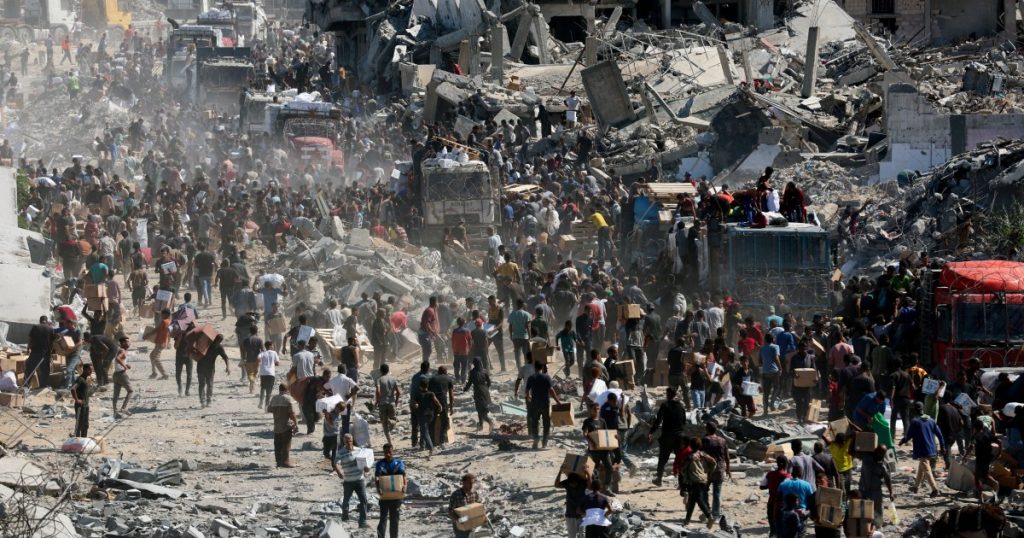
blinking-dotLive updatesLive updates, Families in Palestine and Israel await the return of their loved ones as the Israeli-Hamas truce continues to hold. Published On 13 Oct 202513 Oct 2025 Click here to share on social media share2 Share Adblock test (Why?)
France’s Macron unveils new government ahead of budget deadline
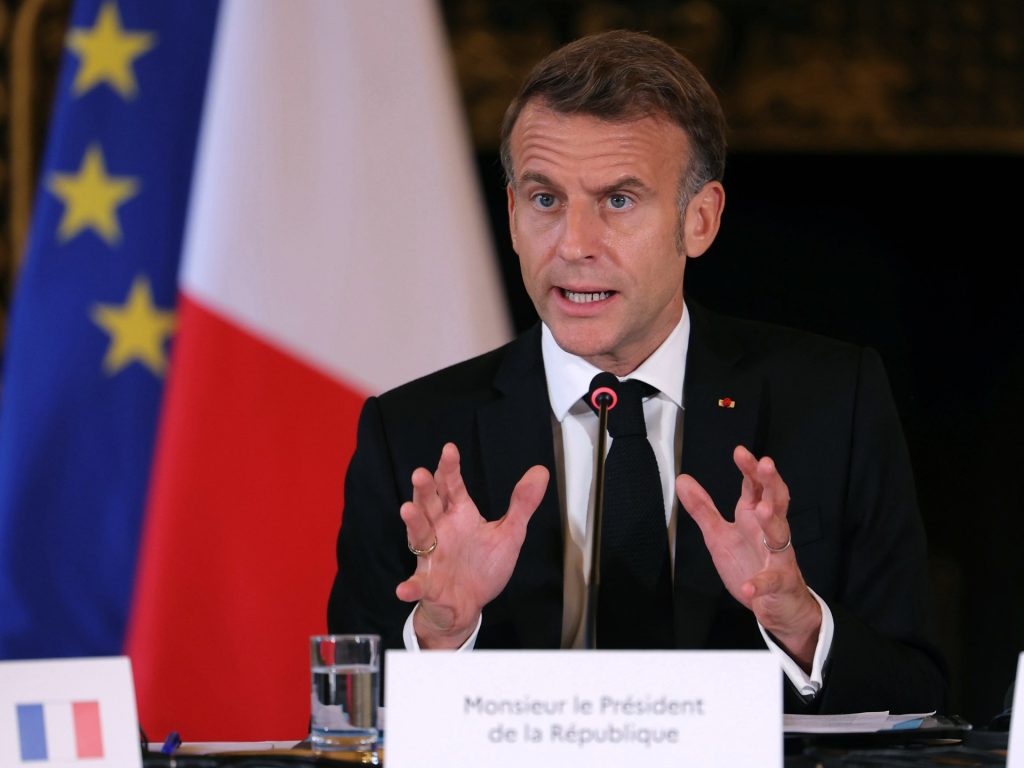
The new government, led by Prime Minister Sebastien Lecornu, must present a 2026 draft budget on Monday. French President Emmanuel Macron has unveiled a new government after holding marathon talks with newly re-appointed Prime Minister Sebastien Lecornu ahead of a fast-approaching deadline to present next year’s budget to parliament. In Lecornu’s new cabinet, Jean-Noel Barrot remains as foreign minister, while outgoing Labour Minister Catherine Vautrin takes on the defence portfolio, according to a lineup published by the president’s office on Sunday. Recommended Stories list of 3 itemsend of list Roland Lescure, a Macron loyalist, will serve as economy minister. There were also new faces. Paris police chief Laurent Nunez will take over the interior ministry, replacing Bruno Retailleau of the right-wing Republicans (LR) party. Monique Barbut, the former France director of the World Wide Fund for Nature (WWF), was to head the ministry of environmental transition. Gerald Darmanin, however, stayed on as justice minister. And Rachida Dati, the culture minister who is set to stand trial for alleged corruption next year, also retained her post. In a post on X, Lecornu wrote: “A mission-based government has been appointed to draw up a budget for France before the end of the year.” “I would like to thank the women and men who have freely committed themselves to this government, putting aside personal and partisan interests. Only one thing matters: the interests of the country.” Macron reinstated Lecornu late on Friday, just four days after the premier had resigned and as his first government collapsed, leading to outrage and pledges from opponents to topple any new cabinet at the first chance. Advertisement The former defence minister was tasked with assembling a government to present a 2026 draft budget on Monday, giving parliament the constitutionally required 70 days to scrutinise the plan before the year’s end. But the LR, a key political ally, complicated matters on Saturday by announcing that the party would not take part in the new government but only cooperate on a “bill-by-bill” basis. Other allied and rival parties wrestled all weekend over whether to join Lecornu’s new government or vote to topple it. The premier had pledged to work with all mainstream political movements and to select cabinet members who are “not imprisoned by parties”. A Macron loyalist, Lecornu agreed after he had quit to stay on for two extra days to talk to all political parties. He told the French weekly La Tribune that he had resigned “because the conditions were no longer met” and said that he would do so again if that remained the case this time around. The French president, facing the worst domestic crisis since the 2017 start of his presidency, has yet to address the public since Lecornu’s first government fell. On Monday, Macron is due to travel to Egypt to support a Gaza ceasefire deal brokered by the United States, a trip that could delay the presentation of the draft budget. Lecornu’s reappointment comes as France faces political deadlock and a parliamentary impasse over an austerity budget against a backdrop of climbing public debt. The country faces pressure from the European Union to rein in its deficit and debt, with the fight over cost-cutting measures toppling Lecornu’s two predecessors. Lecornu has pledged to do “everything possible” to give France a budget by the end of the year, saying that restoring the public finances was “a priority” for the future. But he is under pressure from parties across the political spectrum, including the Socialists, who have threatened to topple his government unless he backs away from the 2023 pension reform that pushed the retirement age from 62 to 64. Lecornu said on Saturday that “all debates are possible” over the pension reforms, and that his “only ambition is to get out of this situation that is painful for everyone”. If Lecornu fails to secure parliamentary support, France would need emergency stopgap legislation to authorise spending from January 1 until a full budget is adopted. French politics has been deadlocked ever since Macron gambled last year on snap polls that he hoped would consolidate power, but that instead ended in a hung Parliament and more seats for the far right. Adblock test (Why?)
Russia-Ukraine war: List of key events, day 1,326
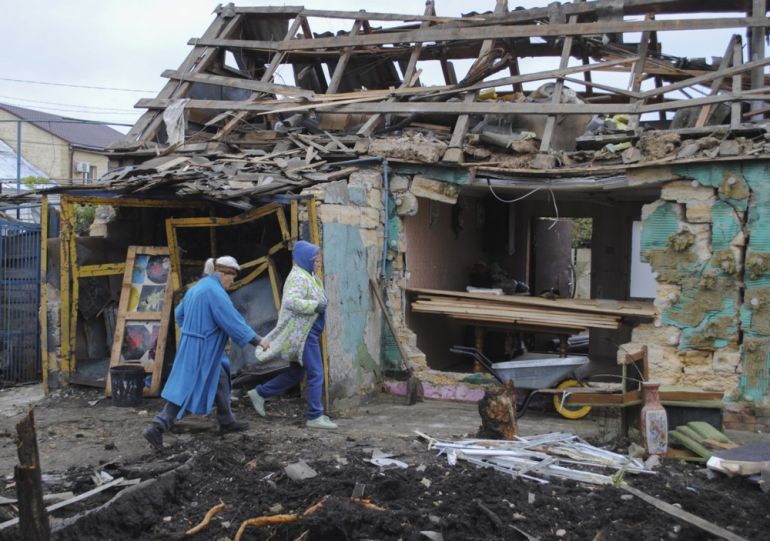
Here are the key events from day 1,326 of Russia’s war on Ukraine. Published On 12 Oct 202512 Oct 2025 Click here to share on social media share2 Share Here is how things stand on Sunday, October 12, 2025: Fighting Russian drone and missile attacks across Ukraine on Saturday killed at least five people, while also cutting power to parts of the southern Odesa region, the AFP news agency reported, citing local officials. Two of the victims were killed in an attack on a church in Kostiantynivka in eastern Donetsk, AFP said. Ukraine’s private energy firm DTEK said that power has been restored to 240,000 households in Odesa after a Russian attack overnight on Saturday, which damaged some energy infrastructure. The Russian TASS news agency said a Ukrainian drone attack on Russia’s Kursk region killed an 81-year-old man. An official from Ukraine’s SBU security service told the Reuters news agency that Ukrainian drones struck Russia’s Bashneft oil refinery in Ufa, causing explosions and a fire. The unnamed official said the attack marked the third time Ukrainian forces struck the facility in Bashkortostan in southwestern Russia in the last month. Regional security United Kingdom Secretary of State for Defence John Healy said that two Royal Air Force aircraft flew a 12-hour mission earlier this week alongside US and NATO forces to patrol Russia’s border. Healy described the joint operation as “substantial”, coming after a series of alleged Russian drone and aircraft incursions into NATO airspace. Politics and diplomacy Ukrainian President Volodymyr Zelenskyy said in a post on X that he discussed the most recent Russian attacks on the Ukrainian energy system in a call with United States President Donald Trump. He described the discussion as “positive and productive”, while adding that the two also talked about how to bolster Ukrainian air defences. In a separate post on Facebook, Zelenskyy said that he congratulated Trump for his “outstanding” ceasefire plan in the Middle East, while urging him to broker a similar deal for Russia’s war on Ukraine. He wrote that if Trump could stop one war, “others can be stopped as well”. Cuba denied US claims that it had deployed soldiers to fight for Russia in its war in Ukraine. It also said that 26 Cubans had been sentenced to prison terms ranging from five to 14 years for mercenary activity since September 2023, when reports circulated of Cubans being sent to the front in Ukraine. Residents of Odesa clean debris near their damaged home after a Russian attack [Igor Tkachenko/EPA] Adblock test (Why?)