

Day one of Gaza peace talks ends on ‘positive’ note in Egypt

Sources familiar with the mediated talks between Israel and Hamas say that progress was made on Monday, with negotiations to continue. The first day of resumed indirect talks between Israel and Hamas in Egypt ended on a positive note, amid hopes of a potential deal to implement US President Donald Trump’s 20-point plan to end the war on Gaza, multiple sources told Al Jazeera and other media outlets. Negotiators are set to return for more discussions on Tuesday. Recommended Stories list of 4 itemsend of list Sources told Al Jazeera Arabic that the meeting in the Red Sea resort city of Sharm el-Sheikh on Monday was “positive” and that a roadmap was drawn up for how the current round of talks would continue. The Hamas delegation told mediators that Israel’s continued bombing of Gaza poses a challenge to negotiations on the release of captives, Al Jazeera Arabic reported. The Hamas delegation included Hamas leaders Khalil al-Hayya and Zaher Jabarin, two negotiators who survived an Israeli assassination attempt in central Doha that killed five people last month. Talks on day one covered the proposed exchange of prisoners and captives, a ceasefire, and humanitarian aid entering Gaza, according to Egypt’s state-linked Al-Qahera News. White House Press Secretary Karoline Leavitt also said Trump was pushing for an early exchange of Israeli captives and Palestinian prisoners, in a bid to build “momentum” to implement other parts of his plan to end the Gaza war. “The technical teams are discussing that as we speak, to ensure that the environment is perfect to release those hostages,” Leavitt said, adding that teams were “going over the list of both the Israeli hostages and also the political prisoners who will be released.” Advertisement Trump, speaking to reporters from the Oval Office on Monday afternoon, said that “we have a really good chance of making a deal”, while also noting that he still has his own “red lines”. “But I think we’re doing very well. And I think Hamas has been agreeing to things that are very important”, Trump added. Al Jazeera’s Rosiland Jordan reporting from Washington, DC, said that Trump had not “not given any details of how he thinks the discussions are going beyond his general positive assessment.” “The US President also was very complimentary of the joint Arab-Turkish support to keep Hamas at the bargaining table, he was complimentary of the Israeli people and of course, he was complimentary about his own special envoy, Steve Witkoff, who was leading the US delegation in these negotiations,” said Jordan. Trump’s son-in-law Jared Kushner, a real estate developer, is also reportedly part of the US delegation. Egypt’s Al-Qahera News, meanwhile, confirmed that the talks were expected to continue on Tuesday, which marks two years since the Hamas attack on Israel that killed 1,139 people and saw about 200 people taken captive. Since then, Israeli forces have killed at least 67,160 Palestinians and wounded 169,679 in Gaza, in a war that has been described as genocidal by a United Nations inquiry, leading genocide scholars and leading human rights groups — including Israeli non-profits. And even as the talks were held on Monday, Israeli forces killed at least 10 Palestinians in attacks across Gaza, including three who were seeking humanitarian aid, according to Al Jazeera sources. UN Secretary-General Antonio Guterres shared a social media post late on Monday, New York time, acknowledging the two year anniversary of Hamas’s “abhorrent large-scale terror attack on Israel”, on October 7, 2023. Guterres also said that the “recent proposal” put forward by Trump “presents an opportunity that must be seized to bring this tragic conflict to an end.” “A permanent ceasefire and a credible political process are essential to prevent further bloodshed and pave the way for peace,” the UN chief wrote. Adblock test (Why?)
Trump walks back offer to talk to Democrats as government shutdown extends
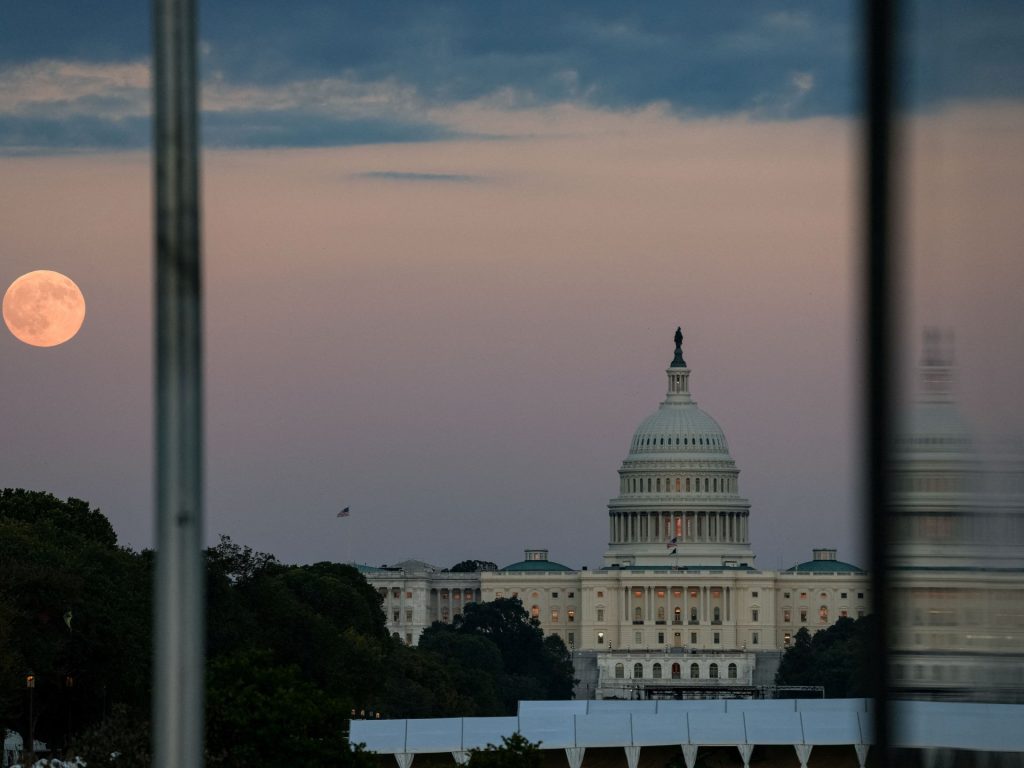
Published On 7 Oct 20257 Oct 2025 Click here to share on social media share2 Share US President Donald Trump suggested on Monday that he was ready to negotiate with Democrats over healthcare subsidies to break a deadlock over the continuing government shutdown, before walking back on that offer. Trump put the blame for the shutdown — which is entering its seventh day — on Democrats in a post on social media, where he said they must end the shutdown before substantive negotiations can begin over healthcare policy – the key issue underlying the shutdown. Recommended Stories list of 4 itemsend of list “I am happy to work with the Democrats on their Failed Healthcare Policies, or anything else, but first they must allow our Government to re-open. In fact, they should open our Government tonight! ” Trump wrote in a Truth Social post on Monday evening. Just hours earlier at the Oval Office, Trump told reporters he would like to “see a deal made for great healthcare,” according to CBS News. “We have a negotiation going on right now with the Democrats that could lead to very good things, and I’m talking about good things with regard to healthcare,” Trump was quoted as saying. Senate Minority Leader Chuck Schumer, one of the Democratic Party’s highest-ranking members, quickly denied that Democrats were in talks with Trump. “This isn’t true,” Schumer said in a statement shared on X. “If Republicans are finally ready to sit down and get something done on healthcare for American families, Democrats will be there – ready to make it happen,” Schumer added. THIS ISN’T TRUE. For months, Democrats have been demanding Trump and Republicans come to the table and work with us to deliver lower costs and better healthcare for the American people. If Republicans are finally ready to sit down and get something done on health care for… https://t.co/dvm4kGVJwq — Chuck Schumer (@SenSchumer) October 6, 2025 Advertisement Trump’s remarks came as the Senate on Monday evening again failed to pass a Republican-sponsored bill to extend government spending until the end of November. The vote of 52 in favour, 42 against, was eight votes short of the 60-vote threshold needed to pass the bill, according to Senate vote records. Democrats hold a minority in both houses of Congress, and they are trying to use the spending bill to force Republicans to negotiate over critical healthcare spending. Democrats want Congress to extend expiring subsidies before the US healthcare enrolment period begins in November and reverse cuts to Medicaid assistance for low-income and disabled US residents. A Democratic version of the spending bill that extends funding through October 31 and makes the subsidies permanent also failed 45 to 55 on Monday in a vote along party lines. The Kaiser Family Foundation, a non-partisan non-profit focused on healthcare policy, predicts that once the subsidies expire, healthcare premiums will “more than double what subsidised enrollees currently pay annually for premiums.” Adblock test (Why?)
How Ladakh protest leader Sonam Wangchuk went from Indian hero to ‘traitor’
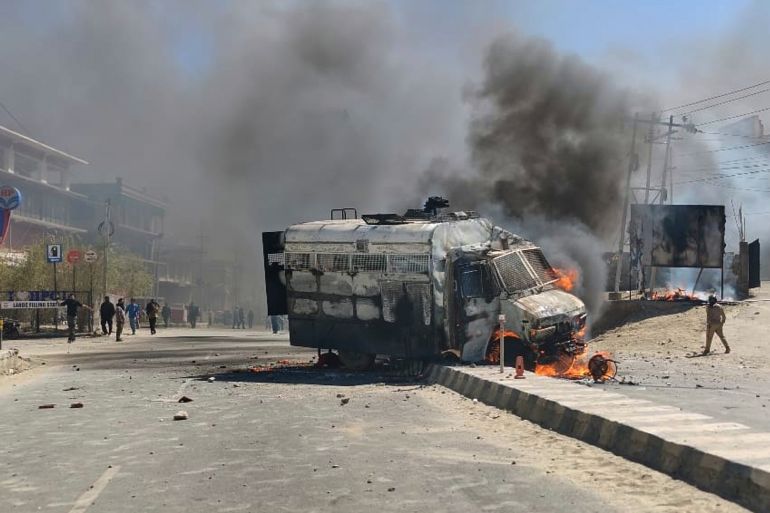
New Delhi, India — On the night of August 5, 2019, hundreds of Kashmiris were arrested amid a crackdown by Indian security forces that followed the Indian government’s decision to strip the region of its special rights and status as a state. Sonam Wangchuk celebrated, and thanked Indian Prime Minister Narendra Modi. “THANK YOU PRIME MINISTER,” he wrote on X, then Twitter, “for fulfilling Ladakh’s longstanding dream.” One of India’s best-known innovators and education reformers, Wangchuk was referring to a decades-long demand from many in Ladakh, for the cold desert bordering China to be separated from Jammu and Kashmir, the Indian-administered part of the disputed region that Pakistan also claims. Until August 2019, Ladakh was part of Jammu and Kashmir. With the Modi government’s move, it had been made a separate administrative entity, a so-called union territory to be governed federally by New Delhi. But while the rest of Jammu and Kashmir — also reduced to a union territory from a state — was allowed to keep a locally elected legislature, Ladakh was not. That lack of any say over their future would slowly turn the peaceful Ladakh into a tinderbox of political unrest against Modi’s government in the subsequent six years. And leading that protest movement is a disillusioned Wangchuk. On September 26, Wangchuk was arrested and transported more than a thousand miles from home to jail in Jodhpur, Rajasthan, charged with “anti-national” activities, conspiring to overthrow the government, after a breakaway group from his protest engaged in violent clashes with security forces. Indian paramilitary soldiers shot dead four protesters, after they had set the local office of Modi’s Bharatiya Janata Party on fire, and authorities accused Wangchuk of instigating the violence. Advertisement The same BJP and Modi government had previously turned to Wangchuk for promotional campaigns in Ladakh. BJP-led governments in other states had sought his advice as an educationist. Today, that one-time poster child, the inspiration for one of Bollywood’s most iconic and successful movies ever, stands accused of treason — with officials imputing a possible Pakistan hand behind his campaign for constitutional rights for Ladakh. “Suddenly, in a month, the same government that was decorating him is calling him an anti-national,” Gitanjali Angmo, Wangchuk’s wife, told Al Jazeera. “The writing is on the wall: this is to silence him, to scare him because they could not buy him.” A police vehicle is set on fire during a protest by locals demanding federal statehood from the Indian government, in the high-altitude Leh town, in the region of Ladakh, India, Wednesday, September 24, 2025 [AP Photo] ‘Grief in Leh’ Early in September, local activists in Ladakh, led by Wangchuk, began a hunger strike. It was the latest in a series of peaceful protests they had held in recent years demanding constitutional protections under what is known as the Sixth Schedule. That statute allows parts of India that are predominantly inhabited by Indigenous tribes autonomous administrative and governance structures. More than 90 percent of Ladakh’s population consists of such tribes. But on the 15th day of the strike, some youth-led demonstrators broke away and torched the BJP office in Leh, Ladakh’s capital, on September 24. Security forces fired back: Four people, including a veteran soldier, were killed and dozens were left injured. The administration then launched a massive crackdown, detaining over 80 people, including the protest leaders who had been earlier sitting on a peaceful hunger strike. Wangchuk was arrested under the National Security Act, a preventive detention law that allows imprisonment without trial for a year. Over a dozen local activists surrendered to the police in solidarity with Wangchuk and other detainees. It was the worst violence and crackdown in the modern history of Ladakh. Stanzin Dorje, a local businessman in Leh in his late thirties, had sat next to Wangchuk and others, joining the hunger strike. But amid the crackdown, he was — like the rest of Ladakh — restricted to his home under an unprecedented curfew-like deployment of armed forces on the streets of Leh. Dorje grew increasingly despondent, his friends said. On Wednesday, Stanzin died by suicide. He is survived by his wife and two children. Advertisement “He was Sonam’s fan. He kept asking about him, kept taking his name,” said Tsering Dorje, the president of Ladakh Buddhist Association, a local group central to protests. Stanzin was also a member of the association’s general council. “He felt agitated and very sad. We are all asking, ‘What was [Wangchuk’s] crime? He was just sitting there. Why did they arrest him and send him to a jail outside [Ladakh]?” said Dorje. Wangchuk’s rise from an engineer next door to an icon of Indian ingenuity and sustainable living made him a local icon, Dorje said, where young people looked up to him. “We are all grieving in Leh for our people, martyred or jailed,” he added. A national hero Born in Uleytokpo, a mountain village about 70km from Leh, in 1966, Wangchuk was home-schooled by his mother, Tsering Wangmo, till he was nine. In 1975, when his father, Sonam Wangyal, a politician, became a minister in the Jammu and Kashmir government, the family moved to Srinagar, the capital of Indian-administered Kashmir. But Wangchuk struggled in Srinagar schools because he spoke only Ladakhi, while classes were taught in Urdu and Kashmiri. So he moved to a school in New Delhi for high school, and went on to study mechanical engineering at the National Institute of Technology in Srinagar. In 1988, soon after graduating, he co-founded the alternative school model SECMOL, or Students’ Educational and Cultural Movement of Ladakh, with other students to reform the education system in Ladakh. Until then, nearly 95 percent of Ladakhi students failed their state exams amid a struggle with the curriculum which was in Urdu — a language alien to many in Ladakh — and other cultural barriers. Urdu, spoken much more widely in Kashmir, was the dominant language of the state when it was a unified entity. At SECMOL, the number of students clearing
Ukraine’s Zelenskyy says Western parts found in Russian drones, missiles
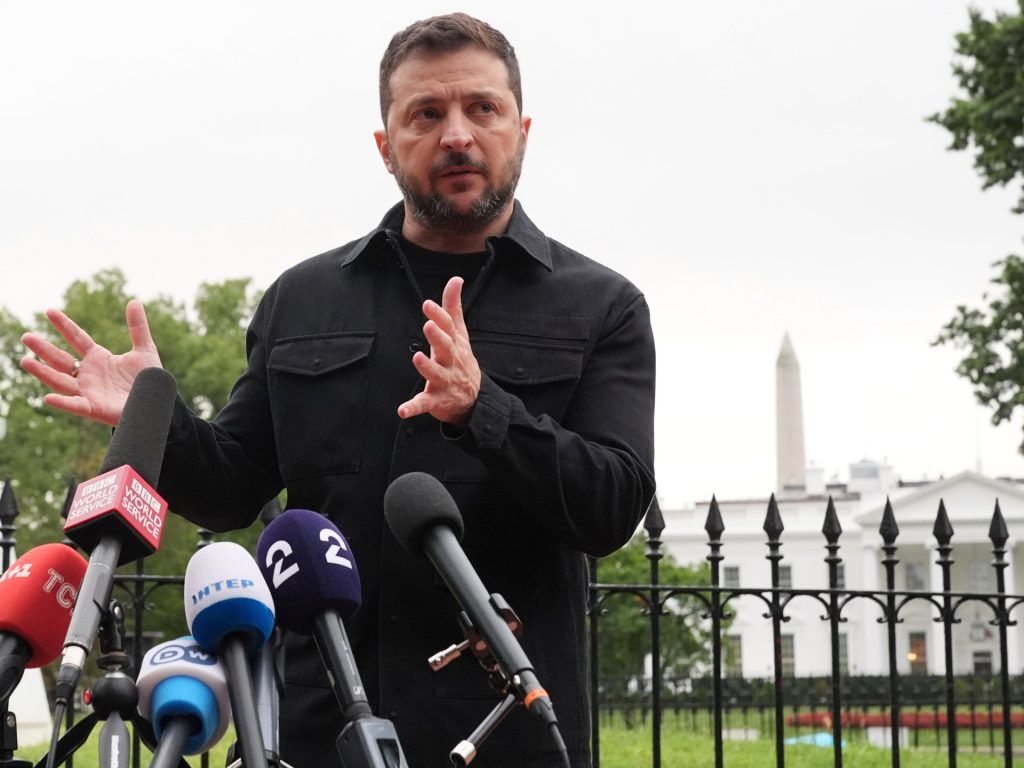
Pressing for stiffened sanctions, president says more than 100,000 components from US, UK and other suppliers found in Russian missiles and drones fired on Ukraine. Ukrainian President Volodymyr Zelenskyy has alleged that drones and missiles fired by Russia against his country are filled with parts sourced from Western companies. In a social media post on Monday, Zelenskyy said the hundreds of weapons used in Russian attacks over the previous two nights contained tens of thousands of components produced by firms in the United States, United Kingdom, Germany, Switzerland, Japan, South Korea, the Netherlands, Taiwan and China. Recommended Stories list of 3 itemsend of list “Nearly 100,688 of foreign-made parts were in the launched attack drones, about 1,500 were in Iskanders, 192 in Kinzhal missiles, and 405 in Kalibrs,” he wrote. He made the accusation as Ukraine and some European partners are pressing for harsher sanctions and stronger oversight to close loopholes on current trade limits imposed in the wake of Russia’s invasion of its neighbouring country in February 2022. Zelenskyy’s inclusion of US and UK companies was noteworthy due to the leading role the two countries have had in mobilising military and financial support for Ukraine as it battles Russia’s invading forces. US companies manufacture converters for Kh-101 missiles and Shahed-type drones, sensors for unmanned aerial vehicles and Kinzhal missiles, and microelectronics for missiles, the Ukrainian president said. He added that British companies produce microcomputers for drone flight control. “Ukraine is preparing new sanctions against those who help Russia and its war,” Zelenskyy said, adding that detailed data on each company and product have been shared with Ukraine’s partners. Advertisement Zelenskyy, who has long called on countries around the world to prevent the funding and equipping of Russia’s war machine, demanded more robust measures before a meeting of G7 sanctions coordinators, a body that oversees sanctions regimes among the club of the world’s wealthiest countries. Oleh Alexandrov, a Ukrainian intelligence official, said over the weekend that Kyiv has evidence that China has been helping Moscow identify targets in Ukraine. He said there was “evidence of a high level of cooperation between Russia and China in conducting satellite reconnaissance of the territory of Ukraine in order to identify and further explore strategic objects for targeting”. Kremlin spokesperson Dmitry Peskov denied reliance on China’s satellites and said Russia has its “own capabilities, including space capabilities, to accomplish all the tasks the special military operation poses”. Zelenskyy issued his statement as a number of European countries have been dealing with a wave of suspicious drone activity. Unmanned aerial vehicles have been spotted over military sites and disrupted air traffic. Some governments have pointed a finger at Russia and warned that Moscow is testing NATO’s air defences. Russia has denied responsibility, and President Vladimir Putin has mocked countries accusing Moscow of being behind the drone incursions. On Monday, the Kremlin dismissed as “baseless” comments by German Chancellor Friedrich Merz, who said his country assumes Russia was behind the activity. Oslo Airport, meanwhile, temporarily suspended several landings on Monday after reports of a drone, its operator, Avinor, said. Adblock test (Why?)
Conservative writer Bari Weiss named editor-in-chief of CBS News

Appointment of media figure known for pro-Israel, anti-‘woke’ stances comes as US media firms feel Trump pressure. Published On 6 Oct 20256 Oct 2025 Click here to share on social media share2 Share The United States media conglomerate Paramount has announced a deal securing the acquisition of the commentary website Free Press and naming its founder, conservative media figure Bari Weiss, as the editor-in-chief of CBS News. The appointment of Weiss, known for her pro-Israel positions and frequent criticism of “woke” politics, comes amid what critics have called an effort to steer CBS in a direction more aligned with the administration of President Donald Trump. Recommended Stories list of 3 itemsend of list Paramount CEO David Ellison on Monday hailed Weiss’s “entrepreneurial drive and editorial vision”. “This move is part of Paramount’s bigger vision to modernise content and the way it connects – directly and passionately – to audiences around the world,” Ellison said in a statement. The latest moves follow a merger between Skydance Media and Paramount, which owns the CBS television network, completed in August. In Skydance’s regulatory bid to buy Paramount, the company promised the US government greater “viewpoint diversity” at CBS, according to a statement from Federal Communications Commission Chairman Brendan Carr in July. Before that approval, Paramount also agreed to pay $16m to settle a defamation lawsuit brought by Trump over a segment on the flagship CBS News programme, 60 Minutes. Media watchdogs widely criticised that suit as a baseless effort to pressure news outlets into more favourable coverage. Ellison, to whom Weiss will report directly, is the son of tech businessman Larry Ellison, one of the richest men in the world and a close Trump ally. Advertisement Weiss founded The Free Press in 2022 after departing from The New York Times, where she had penned a letter saying she had been subjected to “constant bullying” by colleagues who disagreed with her views. She has styled herself as a truth teller often at odds with US legacy media. Recent Free Press articles have taken on diversity, equity and inclusion (DEI) programmes and scepticism over vaccines, both issues spearheaded by the Trump administration. However, the publication has also been at odds with mainstream Republicans in some instances, including in its critical coverage of the party’s positions on abortion. Weiss’s approach has attracted prominent backers, including venture capitalists Marc Andreessen and David Sacks, former Starbucks CEO Howard Schultz, and hedge fund tycoon Paul Marshall. The Free Press has recently been criticised for its writing on Israel’s war in Gaza, including an article titled The Gaza Famine Myth, which questioned famine conditions in the enclave as a result of Israel’s blockade despite findings by the United Nations and medical groups. Adblock test (Why?)
ICC convicts first militia leader for brutal attacks in Darfur
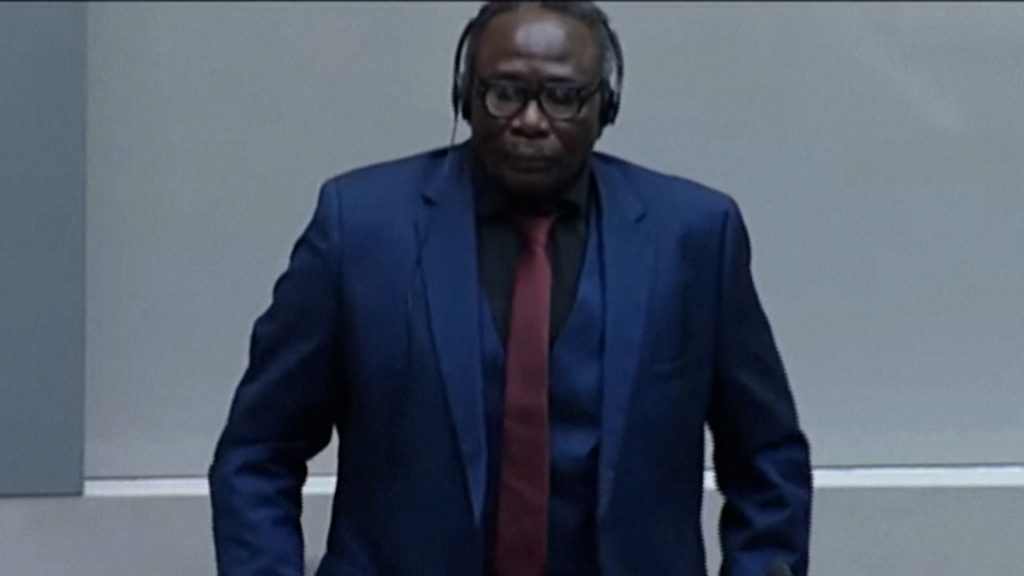
NewsFeed The International Criminal Court has found Sudanese militia chief Ali Muhammad Ali Abd-Al-Rahman guilty of war crimes committed during Sudan’s Darfur conflict more than two decades ago. He was accused of playing a crucial role in the atrocities that killed hundreds of thousands of people. Published On 6 Oct 20256 Oct 2025 Click here to share on social media share2 Share Adblock test (Why?)
Russia-Ukraine war: List of key events, day 1,320
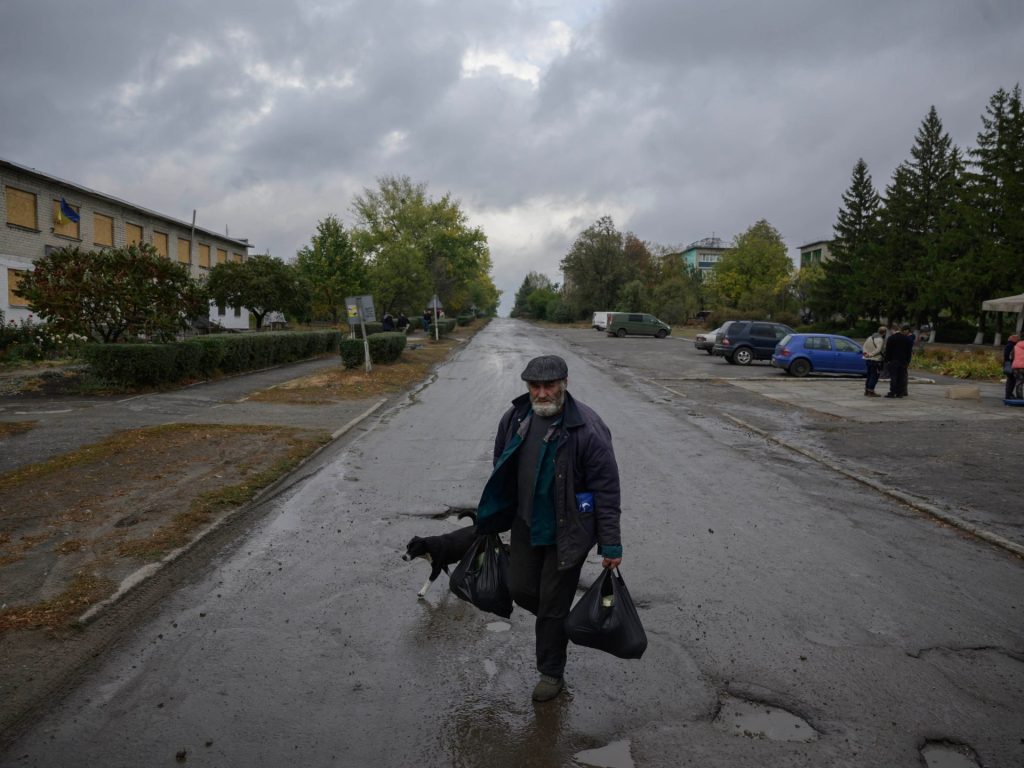
Here are the key events from day 1,320 of Russia’s war on Ukraine. Published On 5 Oct 20255 Oct 2025 Click here to share on social media share2 Share Here is how things stand on Monday, October 6, 2025: Fighting A Russian attack killed a family of four, including a 15-year-old girl, in the village of Lapaivka in Ukraine’s Lviv region, the regional prosecutor’s office reported in a post on Facebook. The attack on the region in Ukraine’s west, far from the Russian border, also injured several people and targeted gas infrastructure used for heating during a cold snap, the regional administrator’s office wrote in a post on Telegram. One person was killed and 10 others injured as Russian forces launched 702 attacks on 18 settlements in Ukraine’s Zaporizhia region in a day, Regional Governor Ivan Fedorov wrote on Telegram. The attacks left at least 73,000 people without power, with service restored to most people by early afternoon, Fedorov added. Russia’s Ministry of Defence claimed on Sunday its forces had hit Ukrainian military-industrial facilities as well as gas and energy infrastructure overnight. Ukrainian President Volodymyr Zelenskyy wrote in a post on Facebook that Russian forces launched more than 50 missiles and about 500 attack drones at Ukraine overnight into Sunday, targeting the Lviv, Ivano-Frankivsk, Zaporizhia, Chernihiv, Sumy, Kharkiv, Kherson, Odesa and Kirovohrad regions. Ukrainian attacks on Russia’s Belgorod region left some 40,000 people without power, Regional Governor Vyacheslav Gladkov wrote in a post on Telegram. Three people were also injured in Ukrainian attacks on Belgorod, Russia’s TASS state news agency reported. Russian forces shot down four Ukrainian guided aerial bombs and 145 drones in a 24-hour period, TASS reported. Politics and Diplomacy Advertisement In response to a question from reporters about Russian President Vladimir Putin’s offer last month to voluntarily maintain limits on deployed strategic nuclear weapons, United States President Donald Trump said, “Sounds like a good idea to me.” German Defence Minister Boris Pistorius warned Europe must be wary of falling into “Putin’s escalation trap” while also strengthening anti-drone defences, amid drone sightings near airports across Europe. Georgian Prime Minister Irakli Kobakhidze said that “specific people from abroad … expressed direct support … for the announced attempt to overthrow [Moldova’s] constitutional order,” naming the European Union ambassador to Georgia, the day after protesters sought to force their way into the presidential palace. German Chancellor Friedrich Merz informed Trump about plans to use frozen Russian assets to support Ukrainian armed forces in a phone call on Sunday. The Reuters news agency reported that Trump administration diplomats are planning to accuse Cuba of providing up to 5,000 fighters to support Moscow’s war on Ukraine, in a bid to limit support for lifting the decades-long US embargo on Cuba. Cuban authorities previously arrested 17 people on charges related to a human trafficking ring that allegedly lured young Cuban men to fight in Ukraine with the Russian military. Weapons Putin said that if the US supplies Tomahawk missiles to Ukraine for long-range strikes deep into Russia, it would “lead to the destruction of our relations, or at least the positive trends that have emerged in these relations”, in a video released by Russian state television reporter, Pavel Zarubin, on Sunday. In a post on X, Zelenskyy said that Russian weapons used to attack Ukraine include components made by companies from many places, including “the United States, China, Taiwan, the United Kingdom, Germany, Switzerland, Japan, the Republic of Korea, and the Netherlands”. Adblock test (Why?)
More than 350 trekkers escape blizzard-hit Everest, hundreds still stranded
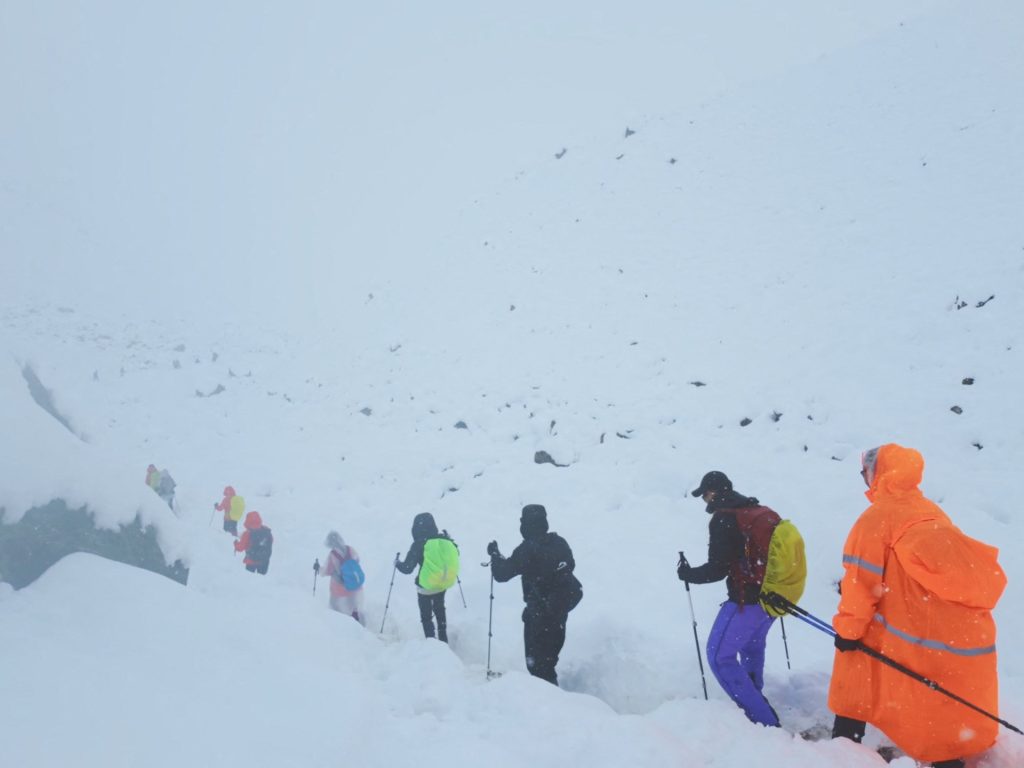
Rescued trekkers reach China’s Qudang township while 200 others still face treacherous Everest conditions awaiting help. Published On 6 Oct 20256 Oct 2025 Click here to share on social media share2 Share Rescuers have guided more than 350 people to safety after they were stranded by blizzard-like conditions on the Tibetan side of Mount Everest, Chinese state media reported on Sunday. In total, more than 500 people were caught by surprise when unusually heavy snow and rainfall lashed them on the way in the Tingri region of Tibet, one of the main routes to ascend the world’s tallest mountain. Recommended Stories list of 4 itemsend of list Those rescued on Sunday were taken to the small township of Qudang, on the Tibetan side of the peak, CCTV reported. Some 200 trekkers who remained stranded in treacherous conditions as of Sunday were due to arrive in Qudang in stages under the guidance and assistance of rescuers organised by the local government, CCTV reported. The CCTV report did not indicate whether local guides and support staff accompanying the trekking parties had been accounted for. It was also unclear if trekkers near the north face of Everest, also in Tibet, had been affected or not. Heavy snowfall in the valley, which lies at an elevation averaging 4,200 metres (13,800 feet), began on Friday evening and persisted throughout Saturday. Ticket sales and entry to the entire Everest Scenic Area were suspended from late Saturday, according to notices on the official WeChat accounts of the local Tingri County Tourism Company. “It was so wet and cold in the mountains, and hypothermia was a real risk,” said Chen Geshuang, who was part of an 18-strong trekking team that made it to Qudang. “The weather this year is not normal. The guide said he had never encountered such weather in October. And it happened all too suddenly,” Chen told the Reuters news agency. Advertisement In neighbouring Nepal, Sherpa communities have been adapting to increasingly unpredictable conditions as climate change contributes to more frequent and dramatic climate shifts in the Himalayas, posing risks to climbers and the Sherpa communities who work there. In a situation update shared on Sunday, Nepal’s Tourism Board said that search and rescue operations were ongoing after the weather “improved significantly” across Nepal, with “clear skies in Kathmandu and many other parts of Nepal”. The update came after heavy rains triggered landslides and flash floods across Nepal, killing at least 47 people since Friday. Thirty-five people died in separate landslides in the eastern Ilam district bordering India. Nine people were reported missing after being swept away by floodwaters, and three others were killed in lightning strikes elsewhere in the country. The floods and landslides in the mountainous regions come as South Asian countries continue to battle ongoing floods, including in Pakistan, where some four million people have been affected. Adblock test (Why?)
Australia, Papua New Guinea sign mutual defence treaty
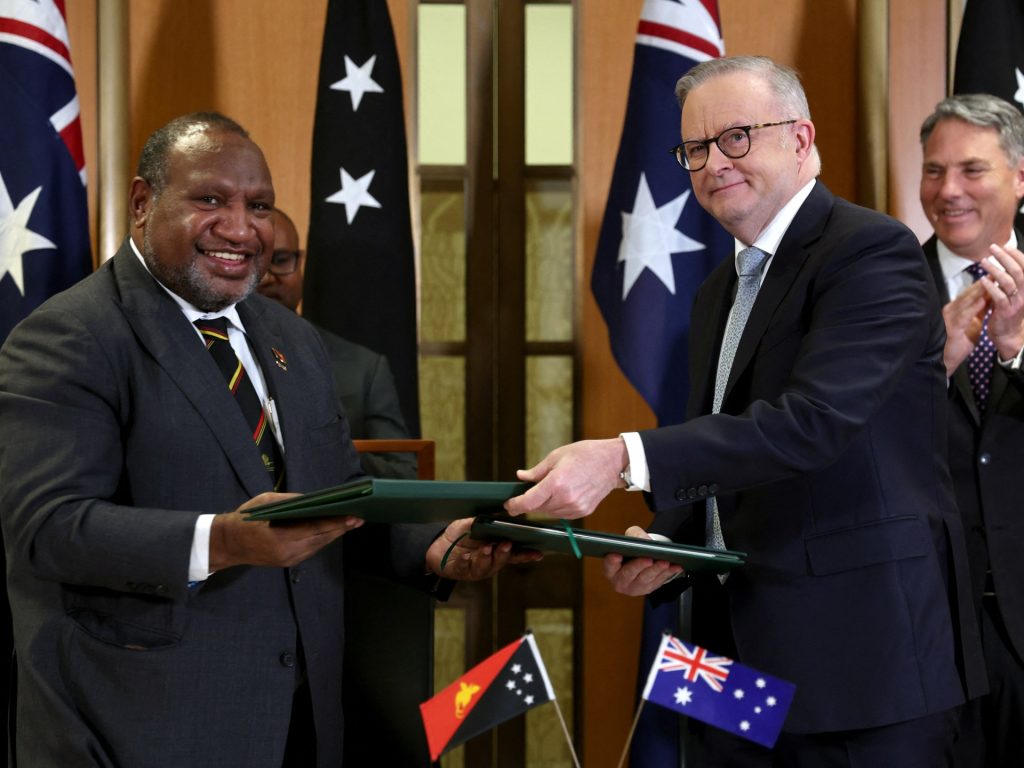
Pukpuk treaty commits the two neighbours to greater military cooperation, although the text is yet to be released. Published On 6 Oct 20256 Oct 2025 Click here to share on social media share2 Share Australia’s Prime Minister Anthony Albanese and the Prime Minister of Papua New Guinea (PNG) James Marape have signed a mutual defence treaty in Canberra, with the leaders saying the text of the agreement will be available soon. Marape told reporters on Monday in the Australian capital that the treaty was drawn up “out of geography, history and the enduring reality of our shared neighbourhood”. Recommended Stories list of 4 itemsend of list “It is about one bigger fence that secures two houses that has its own yard space,” Marape said, according to the Australian Broadcasting Corporation (ABC). The Papua New Guinean leader disagreed that the pact was drawn up due to broader geopolitical issues, in an apparent reference to the military interests of countries like China and the United States in the Pacific region. “This treaty was not conceived out of geopolitics or any other reason,” Marape said. “We maintain friendships to all enemies, we advocate peace wherever we engage, in as far as foreign relations concern,” PNG’s leader added. Australian Prime Minister Anthony Albanese said that the treaty “makes very explicit” that there will be “interoperability” between the two neighbouring countries’ “defence assets”, adding that “our greatest asset is our people”. The ABC reported that this meant the two countries would share the same rights as current members of the Five Eyes agreement, which Australia shares with Canada, New Zealand, the United Kingdom and the US. Marape’s office said last week that the agreement will create a path for 10,000 Papua New Guineans to serve in the Australian Defence Force, as his country also aims to build up its own defence force to 7,000 troops. Advertisement Papua New Guinea has a population of some 12 million people, of which about 40 percent live below the poverty line, in stark contrast to its richer neighbour, Australia. The signing of the Pukpuk treaty comes weeks after Papua New Guinea celebrated 50 years of independence from Australia, which assumed control of its northern neighbour as a colonial power in 1902, after both countries were colonised by the UK. In August 2013, Australia signed a memorandum of understanding with Papua New Guinea, which saw thousands of migrants arriving in Australia by boat detained on Manus Island in offshore detention. The controversial detention centre closed in 2017, leaving hundreds of refugees stranded. Australia is also seeking to sign a security agreement with Fiji, after a similar agreement covering both security and climate change with Vanuatu stalled last month. Australia also recently signed a landmark treaty with Tuvalu, the world’s first agreement offering visas to help people facing displacement due to the climate crisis to resettle. Climate change remains a key security concern for many countries in the region, with Australia bidding to host the 2026 UN COP climate change meeting, alongside its Pacific neighbours. The bid has yet to materialise as Turkiye is also formally campaigning to host the same meeting. Adblock test (Why?)
Moldova’s vote is one more sign of Russia’s weakness in its ‘near abroad’
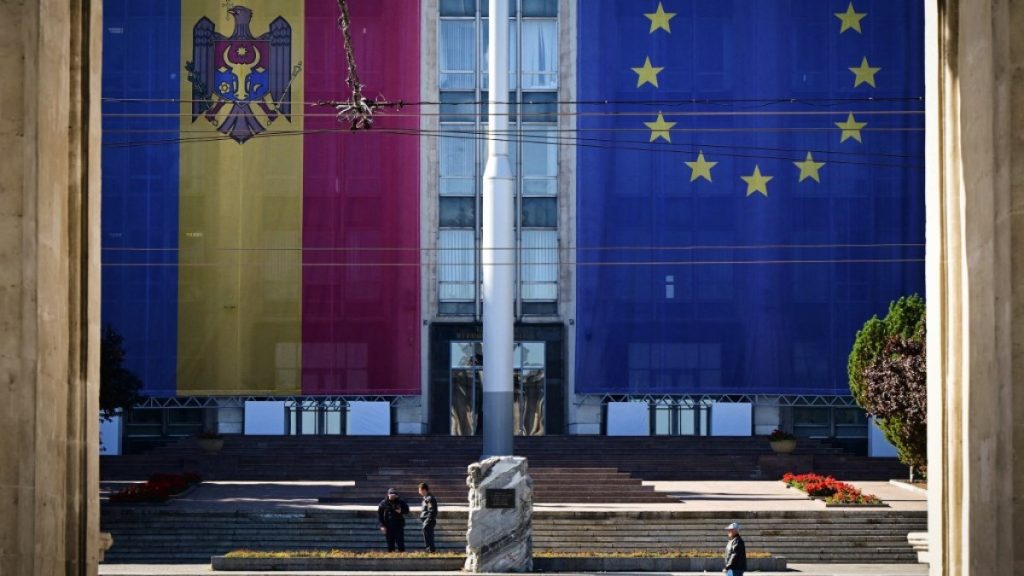
On September 28, the governing pro-European Party of Action and Solidarity (PAS) in Moldova emerged victorious in the general election. It not only defeated the Russia-friendly Patriotic Electoral Bloc (PEB) but also confirmed a new geopolitical trend. Across post-Soviet Eurasia, Russia is losing ground amid the continuing Russian aggression against Ukraine. Paradoxically, Moscow launched the large-scale invasion of its neighbour in 2022 to assert primacy over what it calls its “near abroad”. More than three years later, it is painfully obvious that the strategy has failed. Countries and leaders, whether democrats or old-school autocrats, are turning away from Moscow. In Moldova, the stellar result for PAS defied predictions of a tight race. In the run-up to the elections, pro-Russian forces under the umbrella of PEB appeared to have momentum. Society was evenly split and economic uncertainty weighed on Moldova. However, the tide turned in late summer with old tensions between parties within the PEB resurfacing. Concerted Russian efforts to sway the elections through information ops on social media – depicting PAS as a Western puppet threatening to drag the country into war against Russia and playing on fears of an economic downturn and annexation by Romania – backfired. The Central Electoral Commission was given a reason to ban two overtly pro-Russian parties over allegations of illegal financing. The government also secured the extradition from Greece of fugitive oligarch Vladimir Plahotniuc, accused of playing a key role in the theft of $1bn from Moldovan banks. Advertisement The drama energised the Moldovan diaspora in the West, a strong supporter of the European Union. As a result, PEB and other opposition parties did well only in their strongholds in the Gagauz region of northern Moldova and Transnistria. PAS lost nearly 3 percent of its votes compared with 2021 but still came out on top with 50.2 percent vs 24.4 percent for PEB. Had Russia refrained from interfering, Moscow-friendly forces probably would have stood a better chance of challenging PAS. The opposition missed an opportunity to make the elections about the economy and good governance. The moment it became about the EU vs Russia, PAS was at an advantage. The party could claim credit for bringing Moldova closer to membership, having secured the opening of accession talks in June 2024 – a rather popular move. Almost two-thirds of Moldovans are in favour of joining the EU, which is highly unsurprising, given the role it plays as the country’s top trading partner and main destination for its exports. The pro-EU orientation of the population is irreversible, and even if PEB comes to power, it is unlikely to change course dramatically. The move away from Russia is visible in the South Caucasus too. Armenia, which was historically highly dependent on Moscow’s strategic and economic aid, has reoriented itself westwards. Moscow abysmally failed to back its ally as Azerbaijan regained full control over the disputed region of Nagorno-Karabakh in 2022. The defeat created space for Armenian President Nikol Pashinyan to actually engage with both Azerbaijan and Turkiye. Currently, a peace treaty between Baku and Yerevan is in the works as United States President Donald Trump is eager to see it across the finish line so he can claim credit. In February 2024, Armenia suspended its participation in the Russian-dominated Collective Security Treaty Organisation. It also deepened security and defence cooperation with France. For its part, Azerbaijan has had heightened tensions with Russia twice in recent years – in 2024 over a downed passenger jet over the Caspian Sea and this summer over the arrests of Azerbaijani nationals in the Russian city of Yekaterinburg, which escalated into a major crisis. Russia used to project regional influence by being the arbiter between Armenia and Azerbaijan. Now it has somehow managed to alienate both countries, while Turkiye and the US have stepped in to fill the vacuum. In the South Caucasus, only Georgia appears to be leaning towards Moscow. But that is largely because the governing Georgian Dream party and its informal leader, the billionaire Bidzina Ivanishvili, have clashed with the EU over their tilt towards authoritarianism. Yet Georgia has not given up on the EU; it has just rejected its demands for democratisation, which under Trump’s influence have diminished in value anyway. Rather than tie itself fully to Russia, Tbilisi is trying to juggle among Europe, the US and, of course, China. Advertisement “Multivectoring” has long been popular in Central Asia too. There, the Ukraine war has also put governments on alert of Russian encroachment and given them an extra incentive to turn to China as a counterweight. Beijing has been enlarging its economic footprint in the region. It is the top investor in Central Asia and its share in the overall trade of the five Central Asian countries combined has gone up from 17.7 percent in 2020 to 24.1 percent in 2024 with Turkmenistan (55 percent) and Kyrgyzstan (35 percent) ahead of the pack. China has also stepped up diplomacy: The inaugural China-Central Asia summit took place in Xi’an in May 2023. The follow-up in Astana in June this year saw the signing of a treaty on “permanent good-neighbourliness, friendship, and cooperation”. Beijing also focused on an increased role in the realm of security, traditionally an area reserved for Russia, including antiterrorism, border security and transnational crime. From the perspective of the regional states, this partnership could prove useful in fending off domestic challenges. The old adage about Russia providing the muscle and China providing the cash is not accurate any more. Russia is obviously not happy, but it has been cornered, given its dependence on China, which has grown exponentially as a result of the war in Ukraine and the Western sanctions that followed. Putin’s presence at the military parade in Beijing on September 3 celebrating the 80th anniversary of the victory in World War II and elevating the Chinese role in the conflict is another example of how asymmetric the relationship has become. The leaders of the five Central Asian countries as well as Belarus