

Super typhoon heads to Taiwan, Hong Kong, China after lashing Philippines
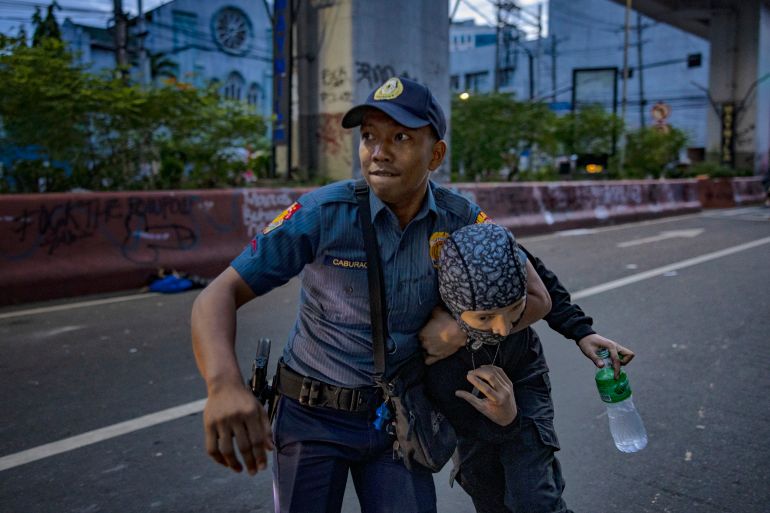
Hong Kong is bracing for hurricane force winds from Super Typhoon Ragasa as southern China prepares for heavy flooding. A super typhoon that caused thousands of people to evacuate from northern Philippine villages is now making its way towards Hong Kong, the southern parts of mainland China, and Taiwan, where people are preparing for more extreme weather. In Hong Kong, officials warned of a “serious threat” from Super Typhoon Ragasa, comparing the risk with some of the most destructive storms in the city’s recent history. Recommended Stories list of 4 itemsend of list “Ragasa will pose a serious threat to Hong Kong, which could reach the levels of Hato in 2017 and Mangkhut in 2018,” Hong Kong’s number-two official Eric Chan said on Monday, referring to two super typhoons that each caused significant damage. Ragasa was generating winds with maximum sustained speeds of 220 kilometres per hour (137 mph) at its centre as it churned across the South China Sea early on Tuesday, according to Hong Kong’s weather service. Hong Kong’s airport will remain open, but there will be “significant disruption to flight operations” from 6pm (10:00 GMT) on Tuesday until the next day, the airport authority said. More than 500 Cathay Pacific flights are expected to be cancelled. In Taiwan, the state weather service predicted “extremely torrential rain” in the country’s east. “Its storm radius is quite large, about 320 [kilometres, or 199 miles]. Although the typhoon’s centre is still some distance away, its wide, strong wind field and outer circulation are already affecting parts of Taiwan,” it said. Officials in Shenzhen, the southern Chinese tech hub, planned to evacuate about 400,000 people, including residents living in low-lying and flood-prone areas. Shenzhen’s airport said it would halt flights, starting Tuesday night. Advertisement China’s National Meteorological Centre forecast the typhoon would make landfall in the coastal area between Shenzhen city and Xuwen county in Guangdong province on Wednesday. Protests over non-existent flood controls in Philippines Ragasa, which is known locally as Nando, forced the evacuation of several villages in the northern Philippines on Monday, a day after thousands of people took to the streets to protest alleged corruption over non-existent flood control projects. Philippine President Ferdinand Marcos Jr suspended government work and all classes in the capital, Manila, and 29 provinces in the main northern Luzon region, on Monday. Power was knocked out on Calayan Island and in the entire northern mountain province of Apayao, disaster-response officials said, as the super typhoon caused wind gusts of up to 295 kph (183 mph) in some areas. There were no immediate reports of casualties or further damage, according to the Associated Press news agency. More than 8,200 people were evacuated to safety in Cagayan province, which includes Calayan, while 1,220 fled to emergency shelters in Apayao, which is prone to flash floods and landslides. Domestic flights were suspended in northern provinces lashed by the typhoon, while fishing boats and inter-island ferries were prohibited from leaving ports due to rough seas. On Calayan Island, at the storm’s centre, information officer Herbert Singun told the AFP news agency that chunks of a school roof had been ripped off and landed on an evacuation centre about 30 metres (98 feet) away, causing one minor injury. “Can you see those coconut trees swaying in the distance?” he asked during a video chat. “There were eight of them before. Now only four are still standing. That goes to show how strong this typhoon is.” Scientists have warned that climate change is already making tropical storms more intense, causing stronger winds and more flooding. A police officer arrests a protester during anticorruption demonstrations on Sunday in Manila, the Philippines [Ezra Acayan/Getty Images] Ragasa, the 14th weather disturbance to batter the Philippines this year, comes as authorities and both chambers of Congress investigate a corruption scandal involving alleged kickbacks that resulted in substandard or non-existent flood control projects. Thousands of people took to the streets on Sunday to protest the scandal involving an estimated 118.5 billion pesos ($2bn) in projects, even as the typhoon affected the weather. Adblock test (Why?)
Cyberattack on European airports caused by ransomware, EU finds
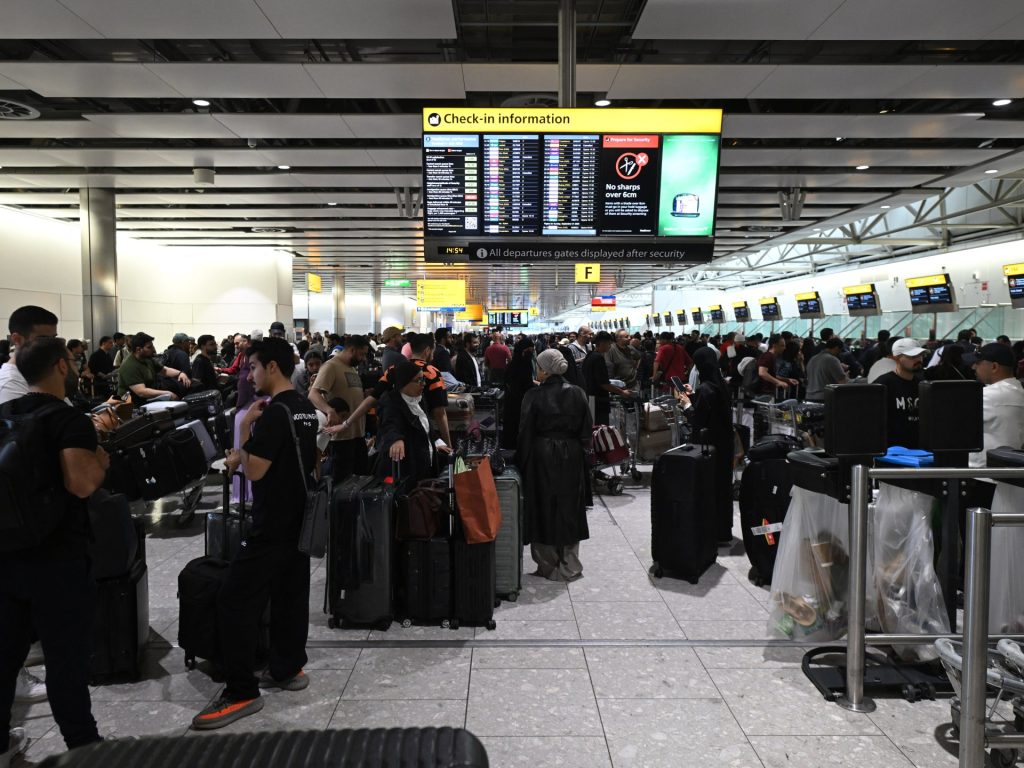
Since Friday, Europe’s busiest airports have faced significant disruptions after hackers hit automated check-in systems. By News Agencies Published On 22 Sep 202522 Sep 2025 Click here to share on social media share2 Share A cyberattack that has caused major airport disruptions in the United Kingdom, Germany and Belgium was caused by ransomware, the European Union Agency for Cybersecurity (ENISA) says. In a statement on Monday, ENISA said law enforcement was involved to investigate the software that holds data until those targeted pay to have their access back. Recommended Stories list of 3 itemsend of list ENISA did not elaborate on where the ransomware had originated. Since Friday night, several of Europe’s biggest airports have faced disruptions after hackers took out automated check-in systems developed by Collins Aerospace, affecting dozens of flights and thousands of passengers. Collins Aerospace, owned by weaponsmaker RTX, formerly Raytheon Technologies, said on Monday that it was working with the airports targeted by the ransomware, including Brussels and London’s Heathrow, and was in the final stages of completing updates to help restore them to full functionality. However, Berlin Brandenburg Airport still did not have its check-in systems restored on Monday, and delays of more than an hour for departures were reported. At Brussels Airport, iPads and laptops were being used to check in passengers online. Among the 550 departing and arriving flights on Monday, 60 had to be cancelled, the airport said. According to Rafe Pilling, director of threat intelligence at the British cybersecurity firm Sophos, there have been more ransomware attempts targeting high-profile victims due to the attention they bring but these kinds of attacks have not been happening frequently. Advertisement “Disruptive attacks are becoming more visible in Europe, but visibility doesn’t necessarily equal frequency,” he told the Reuters news agency. “Truly large-scale, disruptive attacks that spill into the physical world remain the exception rather than the rule,” he added. Last week, the German industry group Bitkom found that in a survey of about 1,000 companies, malicious software was the most common form of cyberattack. One in seven of the companies reported having paid a ransom to access data that had been locked up. It added that the most effective method remained cyberattacks, often carried out with ransomware, and ransom payments had reached a record high of 202 billion euros ($238bn) this year. Adblock test (Why?)
US public opinion on Israel is changing, US policy will have to as well
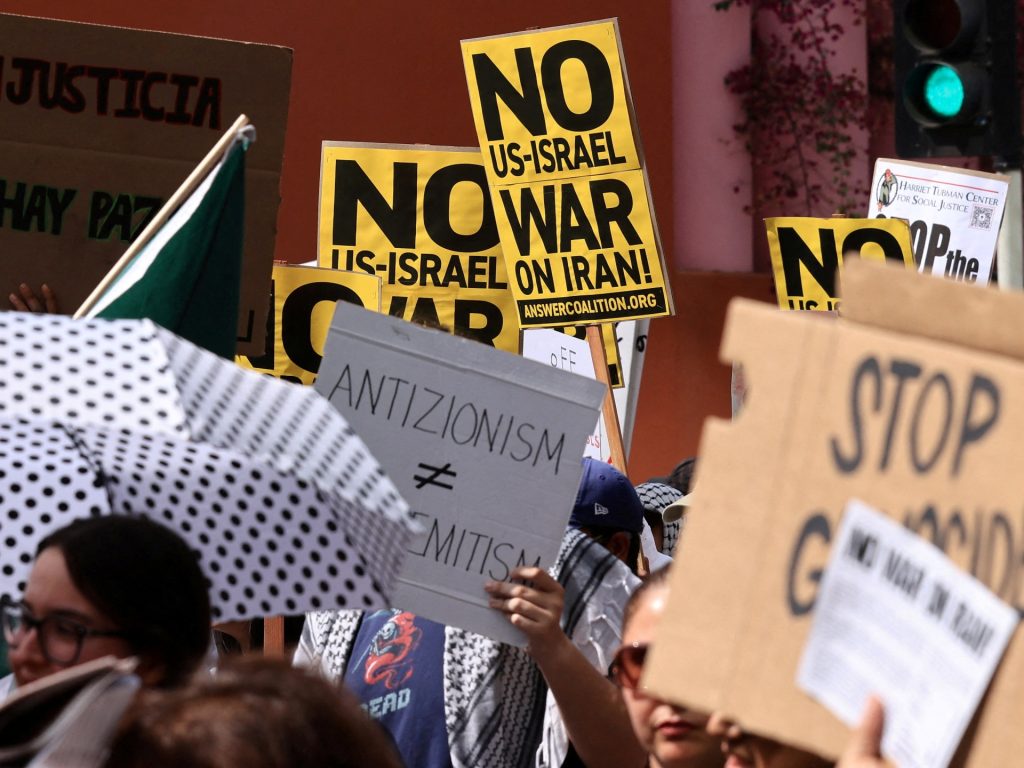
The Zionist narrative has been a dominating force in the United States for more than seven decades. Promoted by powerful lobbies, nurtured by Christian evangelicals, and echoed by mainstream media, it remained largely unchallenged until the outbreak of the genocide in Gaza. In nearly two years, the unyielding images of horror, the scale of devastation, and the shocking loss of human lives have created an indomitable record of horror that has challenged the Zionist narrative. Poll after poll is registering a shift in public opinion vis-a-vis Israel. On both sides of the political divide, Americans are growing less enthusiastic about blanket support for the longstanding US ally. So what does this mean for US-Israeli relations? In the short and medium term, not much. US arms, aid, security cooperation, and diplomatic backing for Israel will barely be affected. The support structure built up over almost eight decades cannot be expected to evaporate overnight. But in the long term, US backing will be reduced. This means Israel will be forced to reconsider its aggressive posture in the region and roll back its plans to rule over all of historic Palestine. What the polls say Polls started picking up a shift in US public opinion, especially among young Democrats, even before the October 7, 2023 attacks. But afterwards, this change appeared to accelerate dramatically. A poll conducted by Pew Research in March this year suggests that negative attitudes towards Israel have risen from 42 percent to 53 percent of all US adults since 2022. The shift is more pronounced among Democrats, from 53 percent to 69 percent for the same period. Advertisement What is remarkable about this change is that it is cross-generational. Among Democrats 50 and older – people who are usually moderate on foreign policy issues – negative attitudes towards Israel increased from 43 percent to 66 percent. Expressions of sympathy have also changed. According to an August poll (PDF) by The Economist and YouGov, 44 percent of Democrats sympathise more with Palestinians, compared with 15 percent with Israelis; among Independents, these figures are 30 and 21 percent. The same poll suggests that a plurality of Americans now believes Israel’s continuing bombing of Gaza is unwarranted, and some 78 percent want an immediate ceasefire, including 75 percent of Republicans. The percentage of respondents who said Israel is committing genocide against the Palestinians was 43 percent; those who disagreed were just 28 percent. More significantly, a plurality – 42 percent – favour decreasing support for Israel; among Republicans this number stands at 24 percent. A Harvard-Harris poll (PDF) from July reveals perhaps the most concerning trend for Israel’s advocates: 40 percent of young Americans now favour Hamas, not Israel. While this is likely a reflection of general sympathy for the Palestinians, it shows significant cracks in the dominance of Israel’s “Palestinian terrorism” narrative among the American youth. The same poll suggested that only 27 percent support Israeli Prime Minister Benjamin Netanyahu, a disastrous vote of no confidence that is far removed from the welcome he has enjoyed at the White House and Congress. How policy may change As older voters – Israel’s last electoral stronghold – make way for younger voters more sympathetic to the cause of Palestinian rights, the political math will shift towards profound political change. The question is no longer if the US will rethink its special relationship with Israel, but when. The special relationship with Israel is one of those rare issues for which there is bipartisan support. Changing that would take a long time. Of course, in the short term, there are some possible changes. If there is a sudden rift between Netanyahu and US President Donald Trump – perhaps even on a personal level – the latter will have the polls to justify a move away from Israel. The clear shift in public opinion would provide him with the political cover that he is listening to the American people. However, such a dramatic change is not likely. What is more likely is that, under pressure from the public, members of Congress will increasingly start shifting on Israel-Palestine. Those who stubbornly refuse may be challenged by younger, more energetic candidates who rebuff funding by pro-Israel organisations like AIPAC. Advertisement The shift in Congress, however, would take a lot of time, not least because there will be stiff resistance to it. Pro-Israel lobby groups regard this as a pivotal moment in US-Israeli history. They will employ their vast resources to eliminate any candidate expressing sympathy for the Palestinians or questioning automatic support for Israel. Furthermore, other issues, such as the economy and various social ills, will continue to dominate political agendas; foreign policy rarely shapes US elections. The transition will not be bipartisan in the near term. Republican support for Israel is more consistent. The Democratic establishment has been under mounting pressure from its base since Joe Biden’s presidency. As younger members gain political ascendancy – as exemplified by the spectacular victory of New York mayoral candidate Zohran Mamdani in the Democratic primary – the Democratic leadership will be forced to change tack. With more pro-Palestinian officials elected into office, especially in Congress, the progressive bloc will grow and intensify the pressure to change policy from within. This process, however, will not be quick enough to immediately improve the situation in Palestine or even stop the looming ethnic cleansing of Gaza. Relief is more likely to come due to international pressure and developments on the ground rather than a change in US policy. Nevertheless, in the longer term, lessened support for Israel from Congress or even a US president would mean the Israeli government would have to change its overly aggressive posture in the region and rein in its adventurous militarism. It will likely also be forced to make concessions on the Palestinian question. Whether this would be enough to establish a Palestinian state remains to be seen. The views expressed in this article are the author’s own and do not necessarily reflect Al Jazeera’s editorial stance.
US targets Brazilian justice’s wife with sanctions; will revoke more visas

Six officials will see their visas revoked following the sentencing of Trump ally Jair Bolsonaro. By Reuters Published On 22 Sep 202522 Sep 2025 Click here to share on social media share2 Share The United States is reportedly revoking visas for six more Brazilian judicial officials while the US Department of the Treasury has imposed sanctions on the wife of a Supreme Court justice. In an expansion of its sanctions targeting Brazil’s judiciary, the administration of US President Donald Trump on Monday imposed sanctions on Viviane Barci de Moraes, the wife of Supreme Court Justice Alexandre de Moraes. Recommended Stories list of 3 itemsend of list It also imposed sanctions on the Lex Instituto de Estudos Juridicos, a financial entity controlled by Barci de Moraes and other family members that the US government believes could serve as a vehicle to evade pre-existing sanctions, a Treasury Department notice said. Shortly after those sanction notices were published, a White House official told the Reuters news agency that the government is revoking the visas of Brazilian Solicitor General Jorge Messias and five other former and current Brazilian judicial officials. Brazil’s Supreme Court declined to comment. Barci de Moraes’s law firm did not immediately respond to a request for comment. Alexandre de Moraes presided over the criminal case of right-wing former President Jair Bolsonaro, who was convicted this month of attempting a coup to stay in power after he lost the 2022 election to current leftist President Luiz Inacio Lula da Silva. He was sentenced to 27 years in prison. His lawyers said they will appeal the conviction although jurists said their chances of success are remote. Alexandre de Moraes himself was hit in July with sanctions under the Global Magnitsky Act, which allows the US to impose economic penalties against foreigners it considers to have a record of corruption or human rights abuses. Advertisement Taken as a whole, the latest sanctions represent a deepening of an ongoing diplomatic crisis between the Western Hemisphere’s two largest democracies. Trump and his political allies have long dismissed the criminal case against Bolsonaro as a political witch-hunt. The US president, who was himself criminally indicted for trying to stay in power after his 2020 election loss to former President Joe Biden, has frequently indicated that he sees a kindred spirit in the former Brazilian leader. Alexandre de Moraes has stood firm on Brazil’s judicial independence after being hit with the US sanctions. “Respect comes from independence. A subservient, cowardly judiciary, one that makes deals just to calm the country down, is not independent,” he said in August. Earlier in July, the Trump administration yanked US visas held by the justice and several of his Supreme Court colleagues. The US also hit Brazil with a 50 percent tariff on most goods. Adblock test (Why?)
Israeli attack kills at least 25 from the same family in Gaza City homes

Palestinian family members at the scene say they fear as many as 50 people are trapped under the rubble. The Israeli military has killed at least 25 members of the same family in the Sabra neighbourhood of Gaza City as it ramps up strikes across the besieged enclave. A group of homes were bombed in the early hours of Sunday by Israeli warplanes in the Sabra neighbourhood, where Israeli tanks began advancing in late August as part of a plan to destroy and seize the area. Recommended Stories list of 4 itemsend of list At least 17 people have been rescued in the aftermath of the strike, and rescue work was ongoing as people and emergency responders dug with their hands and family members at the scene said they feared as many as 50 people were trapped under the rubble. The Palestinian family made an urgent appeal for help to try to free others still trapped. Family members at the scene said they could still hear voices from the rubble. “I appeal to the whole world: Please lend us a helping hand,” one family member said. “Our relatives are buried alive. We keep hearing their screams from under the rubble, but we cannot reach them.” He said Israeli drones were firing on rescuers working in the rubble. “Every time we try to reach them, the Israeli drones open fire on us. For every five men making an attempt, four are killed, and only one survives.” Footage circulating online showed casualties being rushed away in a small vehicle surrounded by people. The video below shows a mother crying out that she lost “all of my children” in the Israeli attack in the Sabra neighbourhood, located south of Gaza City. Advertisement Seven Palestinians, including four children, were killed in another Israeli air raid in the Bureij refugee camp in central Gaza, an emergency source told Al Jazeera. The attack reportedly hit near a clinic operated by the United Nations Relief and Works Agency for Palestine Refugees (UNRWA). The Ministry of Health in Gaza reported on Saturday afternoon that at least 65,283 people have been killed and 166,575 others wounded by the Israeli army since the start of the war in October 2023. It said at least four more deaths due to Israeli-induced starvation and famine were recorded over the past day, bringing the total death toll to 440 people, including 147 children. More buildings were blown up by the Israeli military on Sunday as it tries to forcibly displace hundreds of thousands of Palestinians and seize Gaza City despite international criticism and opposition from the families of captives held in the enclave. Mourners react as a relative embraces body bags, during the funeral for members of the Abu Amsha family, who were killed in an Israeli strike on a house on Saturday, according to medics, at al-Shifa Hospital in Gaza City, September 21, 2025 [Ebrahim Hajjaj/Reuters] Many Palestinians are refusing to step outside where they are sheltering since nowhere is safe due to drone strikes and remotely controlled explosive robots planted inside displacement camps and roads, said Al Jazeera’s Hani Mahmoud from the Nuseirat refugee camp in central Gaza. “As of now, people’s movement has been very limited by the use of these explosives. The air is still thick with smoke,” he said. The Israeli military estimates that more than 450,000 people have been forcibly displaced from Gaza City since the start of September. Hamas puts the number at under 300,000 people, saying about 900,000 remain. The Israeli military said on Sunday that three divisions are leading a ground invasion in Gaza City and northern Gaza, with another division operating in Khan Younis in the south. It claimed that its soldiers killed “many terrorists who were on their way to carry out terror plots” over the past 24 hours. Pope Leo spoke out against the forced displacement of civilians in Gaza on Sunday, saying, “Together with the pastors of the churches in the Holy Land, I repeat that there is no future based on violence, forced exile, and revenge.” Adblock test (Why?)
Charlie Kirk mourned as Jimmy Kimmel supporters fear erosion of free speech

NewsFeed As thousands gather for Charlie Kirk’s memorial, debate rages over a clampdown on free speech in the US. Late-night TV hosts have spoken out in support of Jimmy Kimmel following his cancellation, while President Donald Trump reiterated his view that critical coverage of him is illegal. Published On 21 Sep 202521 Sep 2025 Click here to share on social media share2 Share Adblock test (Why?)
Trump to join thousands at memorial for right-wing US activist Charlie Kirk

US President Donald Trump to address Arizona service for assassinated ally. Published On 21 Sep 202521 Sep 2025 Click here to share on social media share2 Share Tens of thousands of people are expected to attend a memorial service in Arizona for Charlie Kirk, the right-wing United States activist and founder of Turning Point USA who was shot dead this month. The event will take place on Sunday at State Farm Stadium in Glendale, which seats more than 63,000 people. Organisers said additional space has been arranged nearby to accommodate overflow crowds. Recommended Stories list of 4 itemsend of list President Donald Trump, Vice President JD Vance and several other Republicans will address the gathering, which Turning Point USA has called Building a Legacy: Remembering Charlie Kirk. Kirk’s widow, Erika, who recently became the organisation’s chief executive, is also expected to speak. The Department of Homeland Security has classified the service as an event of “the highest national significance”, a designation usually reserved for occasions such as the Super Bowl. Officials said tight security measures are in place due to Trump’s attendance and the political tension surrounding Kirk’s killing. Kirk, 31, was killed on September 10 during a university event in Utah. Police charged a 22-year-old suspect with murder, saying he carried out the attack alone and killed Kirk because he had “enough of his hate”. Kirk was a polarising figure who called for the use of tear gas, rubber bullets and whips against immigrants at the US-Mexico border; suggested Islam is a danger to American society; and claimed there was “no factual data to back up global warming”. The US right-wing viewed Kirk as a major figure in the Trump movement who played a pivotal role in building support for the US president and conservative causes among young people. Advertisement Trump has been accused of exploiting Kirk’s murder for political gain by linking the killing to what he calls “left-wing extremism” despite law enforcement dismissing claims of a wider alleged assassination plot. His remarks have drawn criticism from opponents who accused him of inflaming political divisions. Kirk established Turning Point USA in 2012 at the age of 18. The organisation has grown into one of the largest right-wing groups in the US with influence across high schools, universities and social media platforms. Adblock test (Why?)
Americans to dominate board of TikTok’s US operations: White House

Six of seven board seats for TikTok’s US operations will be held by Americans, White House press secretary says. Published On 20 Sep 202520 Sep 2025 Click here to share on social media share2 Share A deal between Washington and Beijing for the Chinese parent company of video-sharing app TikTok to sell its US operations would see the formation of an American-majority board, the White House has announced. “There will be seven seats on the board that controls the app in the United States, and six of those seats will be Americans,” White House Press Secretary Karoline Leavitt told Fox News on Saturday. Recommended Stories list of 3 itemsend of list According to Leavitt, a deal could be signed “in the coming days”. Leavitt’s comments come one day after US President Donald Trump and Chinese President Xi Jinping held talks in a bid to finalise an agreement that will allow TikTok to continue operating in the United States amid threats of a ban. While Trump described the conversation as being a “very good call … appreciate the TikTok approval” on his Truth Social platform, China did not confirm any agreement between the two sides. It has been reported that Larry Ellison, the billionaire cofounder of tech firm Oracle, is part of an investor group whose companies are looking to buy the app. Leavitt on Saturday seemed to confirm Oracle’s participation in purchasing TikTok. “The data and privacy will be led by one of America’s greatest tech companies, Oracle, and the algorithm will also be controlled by America as well,” she told Fox News. “So all of those details have already been agreed upon. Now we just need this deal to be signed.” TikTok boasts about 175 million users in the US, making it one of the top five social media apps. Advertisement However, the platform has been beset by controversies when lawmakers under the Joe Biden administration passed legislation to force the platform to divest itself of its ownership by the Chinese internet company ByteDance. Both Democrats and Republicans supported the legislation due to security concerns that Beijing could have access to TikTok data and could spread Chinese propaganda through TikTok’s algorithm. Trump himself proposed banning TikTok during his first term as US president, signing two executive orders in August 2020 that were aimed at restricting the app. However, the US president did a U-turn, pledging to “save” the popular app during his 2024 re-election campaign. China has consistently denied claims by US lawmakers that Beijing pressures apps like TikTok to collect personal information for the state. Adblock test (Why?)
Why is a deal with China on TikTok’s US assets so important to Trump?
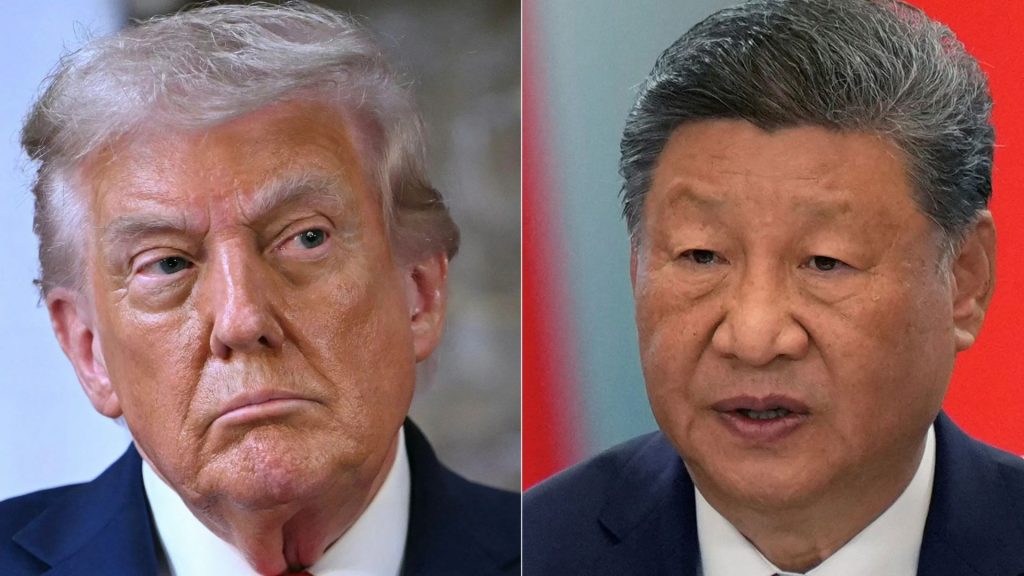
After a call with Chinese President Xi Jinping, US President Donald Trump says an agreement is on the way. Millions of TikTok users in the United States will be relieved to hear President Donald Trump say that China had agreed to approve a deal on the future of the social media platform in the US. With US politicians worried that TikTok poses a national security threat and spreads propaganda, Congress passed a bill last year that banned the short video app unless its Chinese owner, ByteDance, sold its US business. Recommended Stories list of 3 itemsend of list But Trump had extended the deadline by which ByteDance was to divest from the platform or face the promised ban, and even went so far as to raise the matter with Chinese President Xi Jinping in a call on Friday. So, why does a deal on this app matter so much to Trump? Presenter: Tom McRae Guests: Richard Weitz – senior non-resident associate fellow at the NATO Defense College Einar Tangen – senior fellow at the Centre for International Governance Innovation Maria Curi – technology policy reporter for Axios, focusing on government oversight of social media platforms Published On 20 Sep 202520 Sep 2025 Click here to share on social media share2 Share Adblock test (Why?)
Zelenskyy plans to meet Trump on sidelines of UN as Russia steps up attacks
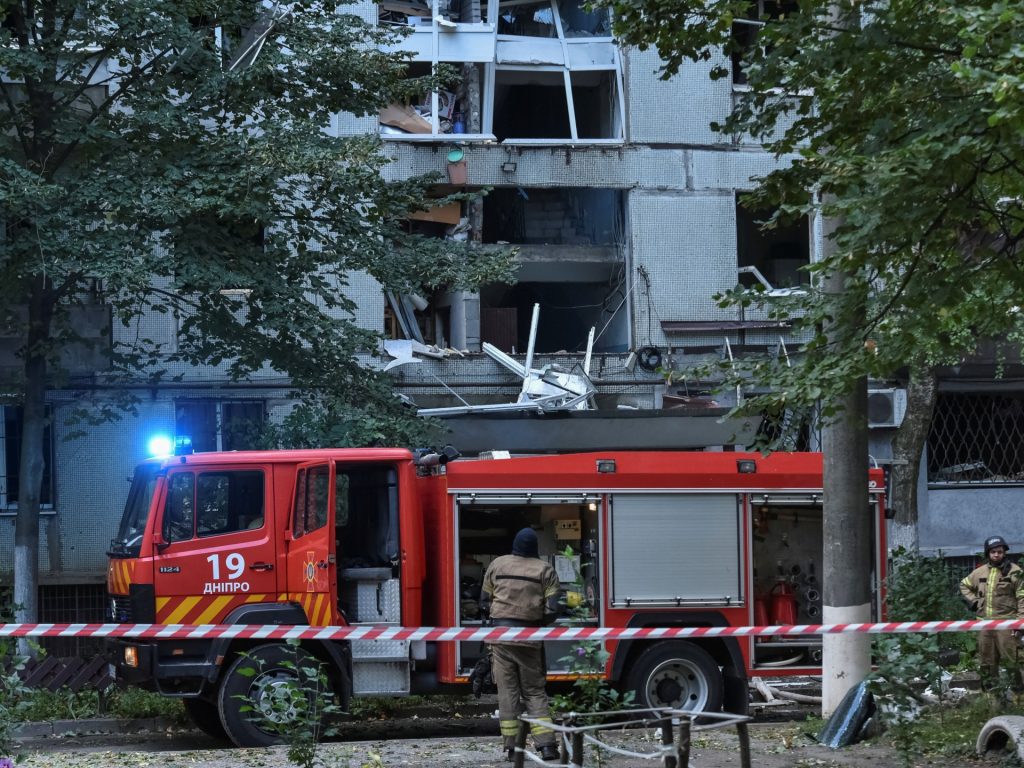
Kyiv in sanctions push as NATO states on Europe’s eastern flank take preventive action after Moscow’s air incursions. By News Agencies Published On 20 Sep 202520 Sep 2025 Click here to share on social media share2 Share Ukrainian Volodymyr Zelenskyy is preparing to meet US President Donald Trump on the sidelines of the United Nations General Assembly in New York City next week in a bid to urge him to impose stronger sanctions on Russia. The Ukrainian president shared his plans on Saturday, as Russia intensified attacks on his country following air incursions into Europe’s eastern flank that have sparked anxiety over a potential spillover of the ongoing war in Ukraine. Recommended Stories list of 3 itemsend of list The announcement, reported by the AFP news agency, came the day after the European Union presented its 19th sanctions package. “We now expect strong sanctions steps from the United States as well – Europe is doing its part,” Zelenskyy posted on X on Saturday. This week brought us closer to finalizing the 19th sanctions package – we expect its approval soon. We will quickly synchronize the package in Ukraine. Russia’s energy resources are being restricted. The infrastructure of the “shadow fleet” will face new pressure. Cryptocurrency… pic.twitter.com/JzgvsQQHHQ — Volodymyr Zelenskyy / Володимир Зеленський (@ZelenskyyUa) September 20, 2025 Trump already signalled last week that he was ready to impose “major sanctions” on Russia, which has so far evaded his attempts for a ceasefire, but only if all NATO allies agree to completely halt buying oil from Moscow. Zelenskyy is also expected to discuss security guarantees for Ukraine to prevent future Russian attacks after an eventual truce, though Russian President Vladimir Putin has warned that he would not accept the presence of Western troops in Ukraine. Advertisement Moscow stepped up attacks on Ukraine overnight, firing 40 missiles and some 580 drones in one of the biggest barrages of Russia’s war on its neighbour, killing at least three people and wounding dozens. Preventive operations in east NATO countries took measures to strengthen defences on Europe’s eastern flank after Russian drone incursions in Poland and Romania over the past two weeks, and unprecedented reports of three Russian fighter jets entering Estonian airspace on Friday. Poland’s army said that Polish and allied aircraft were deployed early on Saturday in a “preventative operation” to ensure the safety of Polish airspace after Russia launched air strikes targeting western Ukraine, near the Polish border. The United Kingdom said that its fighter jets had flown their first NATO air defence sortie to patrol Polish skies and defend against potential aerial threats from Russia as part of the alliance’s Eastern Sentry mission. On Saturday, Russia’s Ministry of Defence denied that its aircraft flew into Estonia’s airspace the day before, but Estonian officials said the 12-minute violation was confirmed by radar and visual contact. Colonel Ants Kiviselg, the commander of Estonia’s Military Intelligence Centre, said that it still “needs to be confirmed” whether the border violation was deliberate. Adblock test (Why?)