

Houthis post cryptic video of American flag-draped coffins

Houthi rebels in Yemen posted an animation online that depicted American flag-draped coffins floating near destroyed Navy ships. “These terrorists really cannot tell the difference between delusions and reality,” Hussain Abdul-Hussain, a research fellow at the Foundation for Defense of Democracies (FDD), said in a post on X along with the Houthi animation. The animation starts out with somber music and depicts a coffin draped in an American flag floating in water, then slowly zooms out to reveal dozens of similar flag-draped coffins floating away from destroyed warships. TRUMP ANNOUNCES ‘DECISIVE AND POWERFUL’ AIRSTRIKES AGAINST HOUTHI TERRORISTS IN YEMEN The animation comes after President Donald Trump ordered “decisive and powerful” airstrikes against Houthi terrorists in Yemen on Saturday, arguing on Truth Social that the group has “waged an unrelenting campaign of piracy, violence, and terrorism against American, and other, ships, aircraft, and drones.” “It has been over a year since a U.S.-flagged commercial ship safely sailed through the Suez Canal, the Red Sea, or the Gulf of Aden,” Trump said in the post. “The last American Warship to go through the Red Sea, four months ago, was attacked by the Houthis over a dozen times…. These relentless assaults have cost the U.S. and World Economy many BILLIONS of Dollars while, at the same time, putting innocent lives at risk.” “To all Houthi terrorists, YOUR TIME IS UP, AND YOUR ATTACKS MUST STOP, STARTING TODAY. IF THEY DON’T, HELL WILL RAIN DOWN UPON YOU LIKE NOTHING YOU HAVE EVER SEEN BEFORE!” The White House on Sunday released photos of Trump watching the strikes on the Iran-backed terrorist group along with Secretary of State Marco Rubio and national security advisor Mike Waltz. TRUMP WATCHES STRIKE ON IRAN-BACKED HOUTHIS IN YEMEN IN NEW WHITE HOUSE PICS AS LARGE-SCALE OP CONTINUES “President Trump is taking action against the Houthis to defend US shipping assets and deter terrorist threats,” the White House wrote in a post on X. “For too long American economic & national threats have been under assault by the Houthis. Not under this presidency.” U.S. Central Command said in a statement Saturday that it “initiated a series of operations consisting of precision strikes against Iran-backed Houthi targets across Yemen to defend American interests, deter enemies, and restore freedom of navigation.” Meanwhile, the Houthi-run Health Ministry in Yemen told the Associated Press that the strikes killed at least 31 people. Fox News’ Danielle Wallace contributed to this report.
Trump, Putin call expected this week, as admin edges closer to Russia-Ukraine ceasefire deal: Witkoff
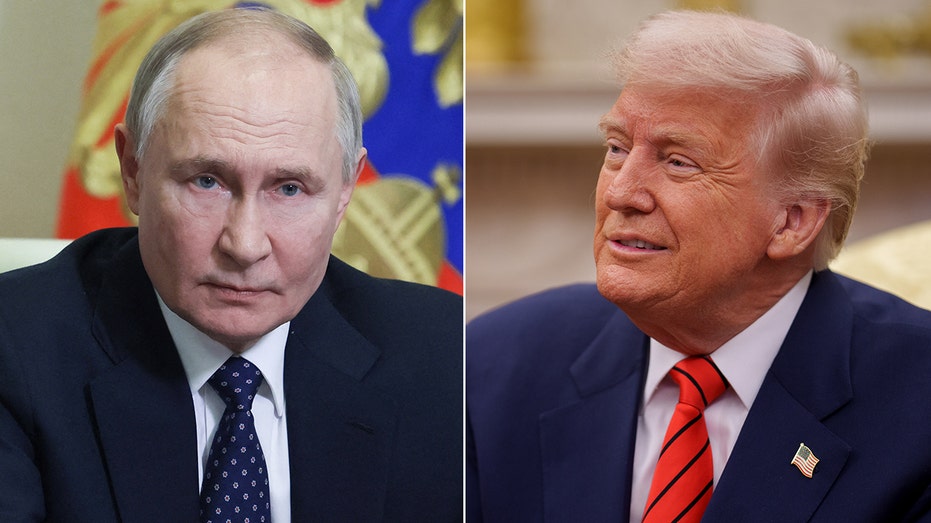
U.S. special envoy to the Middle East Steve Witkoff said Sunday that President Donald Trump will likely speak with Russian President Vladimir Putin this week. In an appearance on CNN’s “State of the Union,” Witkoff was asked when a deal to end the war in Ukraine could be anticipated. “The president uses the timeframe weeks, and I don’t disagree with him. I am really hopeful that we’re going to see some real progress here,” Witkoff said. “Nobody expected progress this fast. This is a highly, very complicated situation, and yet we’re bridging the gap between two sides. So, lots of things that remain to be discussed, but I think the two presidents are going to have a really good and positive discussion this week.” ‘WE HAVE NEVER BEEN THIS CLOSE TO PEACE’ SINCE RUSSIA INVADED UKRAINE, LEAVITT TELLS REPORTERS Trump’s special envoy met with Putin in Moscow on Thursday, days after U.S. and Ukrainian officials in Saudi Arabia agreed to the terms of a potential ceasefire with Russia. Witkoff said he met with Putin for between three and four hours and had a “positive” and “solution-based” discussion. “Before this visit, there was another visit, and before that visit, the two sides were miles apart,” Witkoff told CNN host Jake Tapper. “The two sides are, today, a lot closer. We had some really positive results coming out of the Saudi Arabia discussion led by our national security advisor, Mike Waltz, and our secretary of state, Marco Rubio.” “I describe my conversation with President Putin as equally positive,” Witkoff said. “The two sides have… we’ve narrowed the differences between them, and now we’re sitting at the table. I was with the president all day yesterday, I’ll be with him today, we’re sitting with him, discussing how to narrow it even further.” TRUMP ‘HOPES’ PUTIN AGREES TO CEASEFIRE AS MOSCOW SIGNALS NO TRUCE YET It was the second time Witkoff had met with Putin in the last month. The first sit-down in mid-February resulted in the Russians releasing U.S. prisoner Marc Fogel. Witkoff said he briefed Trump, Vice President JD Vance, chief of staff Susie Wiles and Waltz from the U.S. embassy within five to 10 minutes of meeting with Putin last week. “President Trump has been involved in every aspect and dimension of these discussions,” Witkoff said. “The president is getting updates in real time on everything that’s happening, and he’s involved in every important decision here. I expect that there will be a call with both presidents this week, and we’re also continuing to engage and have conversations with the Ukrainians. We’re advising them on everything we’re thinking about.” “The four regions are of critical importance here,” Witkoff said of the terms of the deal. “And we’re in discussions with Ukraine, we’re in discussions with all these stakeholder European countries, so that includes France, Britain, Norway, Finland… the whole host.… And we’re in discussions with the Russians too about those regions. We’re also in discussion with all other elements that would be encompassed in a ceasefire.” CLICK HERE TO GET THE FOX NEWS APP Witkoff flew to Moscow last week from Doha, Qatar, where he mediated negotiations between Israel and Hamas on a potential extension of their ceasefire agreement.
Democrats lash out at Schumer for ‘betrayal’ of siding with Trump
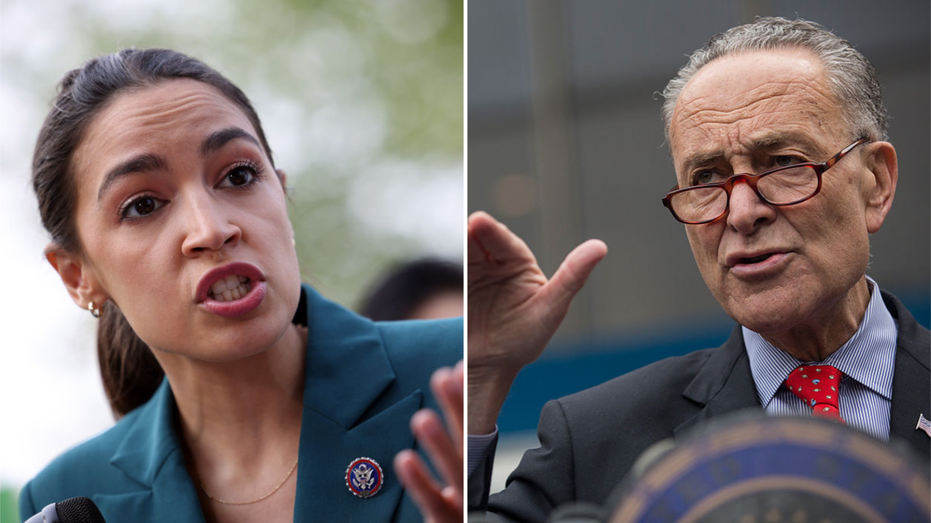
Several prominent Democrats have taken aim at Senate Minority Leader Chuck Schumer, D-N.Y., over his decision to side with Republicans and vote for a continuing resolution to keep the federal government open. “I believe that’s a tremendous mistake,” Rep. Alexandria Ocasio-Cortez, D-N.Y., told CNN’s Jake Tapper Thursday in response to Schumer’s decision. “It is almost unthinkable why Senate Democrats would vote to hand the few pieces of leverage that we have away for free when we’ve been sent here to protect Social Security, protect Medicaid and protect Medicare.” The progressive lawmaker was just one of several prominent Democratic figures to lash out at Schumer, who opted to vote in favor of a House-approved government funding bill that averted a government shutdown. Sen. Angus King, an independent who caucuses with Democrats, and Sen. Jeanne Shaheen, D-N.H., were the only other Democrats in the Senate to vote in favor of the bill, while Sen. Rand Paul, R-Ky., was the only Republican senator to vote against the legislation, which passed 54 to 46. PRESIDENT TRUMP SIGNS CONTINUING RESOLUTION, OFFICIALLY AVERTING A SHUTDOWN Schumer, the most prominent of the trio of Democrats to support the bill, is now facing heat for that decision, including from some longtime allies. “Let’s be clear: neither is a good option for the American people. But this false choice that some are buying instead of fighting is unacceptable,” former House Speaker Nancy Pelosi, D-Calif., said of the decision. Anne Caprara, the chief of staff for Democratic Illinois Gov. J.B. Prtizker, appeared to pile on, arguing on social media that Democrats should unify around resisting President Donald Trump. “The fight going on in the Democratic Party right now is not between hard left, left and moderate. It’s between those who want to fight and those who want to cave,” Caprara said in the post. “Misread this at your own peril.” Meanwhile, House Minority Leader Hakeem Jeffries, D-N.Y., refused repeated questions about whether he had confidence in Schumer at a Friday press conference urging Senate Democrats to vote against the continuing resolution. SHUTDOWN AVERTED AFTER SCHUMER CAVES AND BACKS TRUMP SPENDING BILL “We do not want to shut down the government. But we are not afraid of a government funding showdown,” Jeffries said. Democratic allies on television also lashed out at the Schumer decision, with CNN political commentator Van Jones arguing that the Democratic Party had to do more to push back against Trump. “We want some alpha energy. And that’s not what we’re seeing. This party is tired of watching Donald Trump and Elon Musk run over this party, run over this country, run over the Constitution,” Jones said during a Friday appearance on the network. “And if you only have one opportunity to take a stand, and you don’t take it, it’s very difficult.” Meanwhile, MSNBC political commentator Symone Sanders said she was “p—ed” that Schumer “folded like a paper napkin” and threatened to change her party registration to independent. Nevertheless, some Democrats tempered their criticism of the longtime Democratic leader, noting that the party was put in a no-win situation. “We’re stuck with two bad choices presented by a unified Republican front,” Sen. Mark Warner, D-Va., who voted against the bill, said, according to a report in WTTW. “These are tough, tough calls.” Schumer’s office did not immediately respond to a Fox News Digital request for comment.
Trump orders the dismantling of government-funded, ‘propaganda’-peddling media outlet
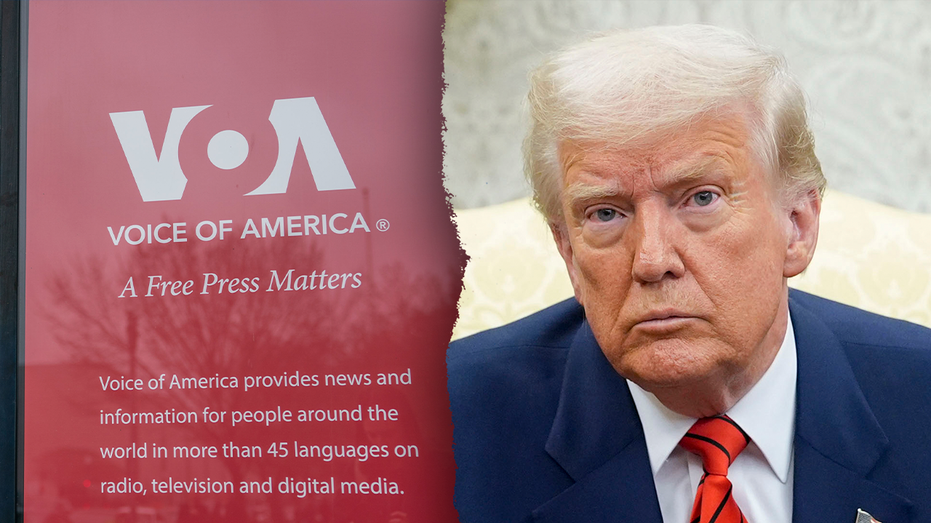
President Donald Trump ordered the dismantling of news agency Voice of America, the U.S.’s state-funded media outlet that Trump has railed against for promoting biased media reports. “Voice of America has been out of step with America for years. It serves as the Voice for Radical America and has pushed divisive propaganda for years now,” a senior White House official told Fox News Digital. Trump signed an executive order on Friday that commands the dismantling of seven government offices, including the United States Agency for Global Media, which is the parent company of Voice of America (VOA) and Radio Free Europe/Radio Liberty. “The non-statutory components and functions of the following governmental entities shall be eliminated to the maximum extent consistent with applicable law, and such entities shall reduce the performance of their statutory functions and associated personnel to the minimum presence and function required by law,” the EO reads. MUSK AND DOGE HAVE ANOTHER PERFECT TARGET: MORE TAXPAYER-FUNDED, ANTI-AMERICAN MEDIA Kari Lake, whom Trump named as the VOA’s next chief in December, is currently serving as senior advisor at the U.S. Agency for Global Media and told employees to “check your email” for more information on their employment futures. “The President has issued an Executive Order titled Continuing the Reduction of the Federal Bureaucracy. It affects USAGM and its outlets VOA and OCB. If you are an employee of the agency please check your email immediately for more information,” Lake, who is also a former news anchor and Republican Arizona political candidate, posted to X. OCB refers to the Office of Cuba Broadcasting, which is a Spanish language, government-funded radio and TV broadcaster that operates Radio and TV Martí in Miami, Florida. Employees received an email on Saturday detailing that their employment was terminated, the Wall Street Journal reported, though it is unclear how many employees were affected. WHITE HOUSE SAYS FEDERALLY FUNDED NEWS SERVICE ‘SPENDS YOUR MONEY TO PROMOTE FOREIGN PROPAGANDA’ The seven government agencies targeted in the order include: the Federal Mediation and Conciliation Service; the U.S. Agency for Global Media; the Woodrow Wilson International Center for Scholars in the Smithsonian Institution; the Institute of Museum and Library Services; the U.S. Interagency Council on Homelessness; the Community Development Financial Institutions Fund; and the Minority Business Development Agency. Voice of America has come under scrutiny for promoting biased content, including for allegedly “sanitizing” Hamas when the outlet neglected to note in an article in January that residents in Gaza cheered the terrorist group when it brought out coffins holding the remains of Israeli hostages, including children. TRUMP ANNOUNCES MORE NOMINATIONS, INCLUDING KARI LAKE AS DIRECTOR OF VOICE OF AMERICA BROADCAST “Let’s get the facts straight: Hamas paraded the dead bodies of innocent Israelis, including two children, in front of cheering crowds. American taxpayers should not be paying the salaries of Hamas apologists who spout terrorist propaganda,” House Foreign Affairs Committee Chairman Brian Mast, R-Fla., told National Review at the time of VOA’s coverage. Just days after Hamas attacked Israel on Oct. 7, 2023, VOA told its employees to “avoid calling Hamas and its members terrorists, except in quotes,” National Review reported that year. TAXPAYER-FUNDED VOICE OF AMERICA UNDER FIRE FOR SHARING CAMPAIGN-LIKE BIDEN VIDEO The government-funded news outlet has also come under fire for other stories across the years, including running an article in 2020 that asked, “What Is ‘White Privilege’ and Whom Does It Help?” It was also criticized over publishing a story and video that was compared to a Biden campaign video in 2020, and downplaying the Hunter Biden laptop controversy that rocked the 2020 presidential campaign in its waning days. “I have monitored the agency’s bureaucracy along with many of its reporters and concluded that it has essentially become a hubris-filled rogue operation often reflecting a leftist bias aligned with partisan national media,” a former VOA employee wrote in an op-ed last year calling for the outlet’s dismantling. “It has sought to avoid accountability for violations of journalistic standards and mismanagement.”
El Salvador takes in hundreds of Venezuelan gang members from US, even as judge moves to block deportations
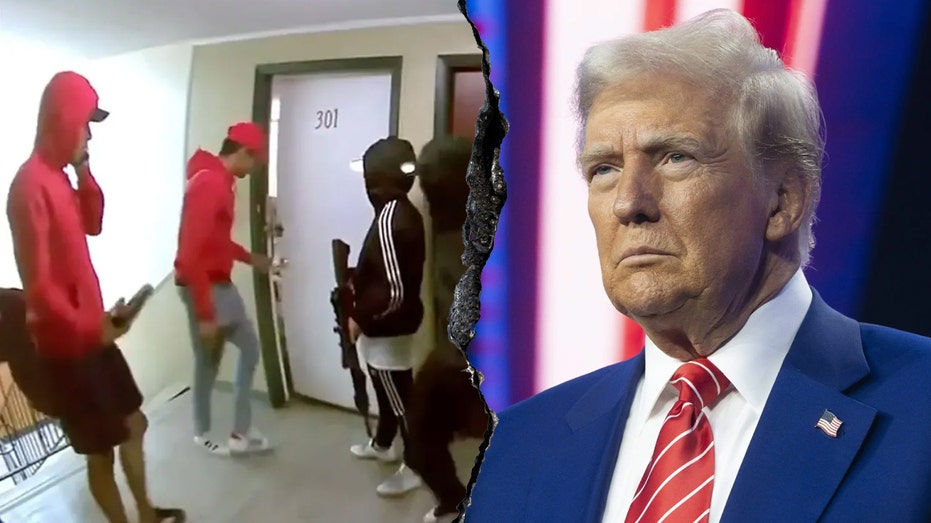
The president of El Salvador announced his country has accepted hundreds of Venezuelan gang members who were illegally living in the United States, as a U.S. judge moved to block deportations of illegal immigrants under a wartime law invoked by President Donald Trump. “Today, the first 238 members of the Venezuelan criminal organization, Tren de Aragua, arrived in our country. They were immediately transferred to CECOT, the Terrorism Confinement Center, for a period of one year (renewable),” El Salvador President Nayib Bukele posted to X on Sunday morning, accompanied by video footage of planes on a tarmac. “On this occasion, the U.S. has also sent us 23 MS-13 members wanted by Salvadoran justice, including two ringleaders. One of them is a member of the criminal organization’s highest structure,” he added. Tren de Aragua is a Venezuelan-connected gang that has infiltrated communities in states such as Colorado and Texas, while MS-13 is a Los Angeles-founded gang with ties to El Salvador that has deep roots in California and other states such as Maryland. The State Department designated both gangs as foreign terrorist organizations last month. EL SALVADOR AGREES TO ACCEPT US DEPORTEES OF ANY NATIONALITY FOLLOWING MEETING WITH RUBIO Secretary of State Marco Rubio celebrated the Salvadoran president as “the strongest security leader in our region” and “a great friend of the U.S.” for accepting the criminal illegal aliens. “We have sent 2 dangerous top MS-13 leaders plus 21 of its most wanted back to face justice in El Salvador. Also, as promised by @POTUS, we sent over 250 alien enemy members of Tren de Aragua which El Salvador has agreed to hold in their very good jails at a fair price that will also save our taxpayer dollars. President @nayibbukele is not only the strongest security leader in our region, he’s also a great friend of the U.S. Thank you!” Rubio posted to X. RUBIO HEADS TO PANAMA, LATIN AMERICA TO PURSUE TRUMP’S ‘GOLDEN AGE’ AGENDA The deportations of the gang members come as U.S. District Judge James Boasberg ordered the Trump administration to halt its deportations of illegal immigrants under a wartime powers act that President Donald Trump invoked on Friday to target Tren de Aragua members in the U.S. The Alien Enemies Act of 1798 allows deportation of natives and citizens of an enemy nation without a hearing, and has been invoked three times before, including, during the War of 1812, World War I and World War II. Boasberg ordered on Saturday that the Trump administration is barred from using the wartime powers act to deport the illegal aliens. He added that he heard “flights are actively departing” and ordered them to return. The planes of the violent gang members, however, arrived in El Salvador this weekend, with Bukele responding to news of Boasberg’s order, “Oopsie… too late,” accompanied by a laughing emoji. Bukele offered to take illegal immigrants of any nationality facing deportation in the U.S. back in February, offering to book the illegal aliens in his country’s notorious prison system. “We can send them, and he will put them in his jails,” Rubio told reporters back in February of Bukele’s offer “And, he’s also offered to do the same for dangerous criminals currently in custody and serving their sentences in the United States, even though they’re U.S. citizens or legal residents.” TRUMP CONGRATULATES BITCOINERS — EL SALVADOR’S NAYIB BUKELE TAKES VICTORY LAP WITH BITCOIN OVER 100K El Salavador’s CECOT prison is known as the nation’s most notorious prison. The prison, which can hold 40,000 inmates, was built to house gang members in a country that held one of the highest murder rates in the world before the violence dropped in recent history. Prisoners at CECOT are blocked from receiving visitors, can only attend hearings virtually, while the prison itself blocks any cell signal to ensure gang members cannot contact criminals still on the street, various media reports have detailed. EL SALVADOR PRESIDENT RIPS FBI TRUMP RAID, QUESTIONS WHAT US GOV’T WOULD SAY IF HIS POLICE TARGETED CANDIDATES “The United States will pay a very low fee for them, but a high one for us. Over time, these actions, combined with the production already being generated by more than 40,000 inmates engaged in various workshops and labor under the Zero Idleness program, will help make our prison system self-sustainable. As of today, it costs $200 million per year,” Bukele added on X on Sunday. “As always, we continue advancing in the fight against organized crime. But this time, we are also helping our allies, making our prison system self-sustainable, and obtaining vital intelligence to make our country an even safer place. All in a single action. May God bless El Salvador, and may God bless the United States.” Fox News Digital’s Alexandra Koch contributed to this report.
Democrats’ favorable ratings drop to record low in new national poll

The Democratic Party’s favorable ratings are falling to new lows, according to a new national poll. Just 29% of those questioned in a CNN poll released on Sunday say they have a favorable view of the party, with 54% holding an unfavorable view. That’s a record low in CNN polling dating back more than three decades. The Democrats’ favorability has dropped four points since early January, ahead of the start of President Donald Trump’s second tour of duty in the White House, and it’s a plunge of 20 points from January 2021, just ahead of the start of former President Joe Biden’s term in office. HEAD HERE FOR THE LATEST FOX NEWS POLLING Just 63% of Democrats and Democratic-leaning independents questioned in the survey said they hold a favorable view of the party, down from 72% in January and down from 81% four years ago, at the start of the Biden administration. The Democratic Party is in the political wilderness, following last November’s election setbacks, when Republicans won back control of the White House and the Senate, and defended their fragile House majority. According to the CNN poll, the favorable rating for the GOP stands at 36%, with 48% holding an unfavorable view of the Republican Party. The GOP’s favorable rating is unchanged from January, with the unfavorable rating up four points. The new survey by CNN, conducted March 6-9 by SSRS, follows a Quinnipiac University national poll last month that made headlines by indicating the Democrats’ favorability had also hit an all-time low in their surveys dating back to 2009. The new CNN survey also indicates that by a 57%-42% margin, Democrats say their leaders should mostly work to stop the GOP agenda rather than to try and find common ground with Republicans. That’s a shift from polling at the start of Trump’s first term in office, when nearly three-quarters of Democrats said their party should work with Republicans. The poll was conducted before the move last week by 10 Democrats in the Senate, including Minority Leader Chuck Schumer, D-N.Y., to vote in favor of a GOP-crafted federal government spending bill that averted a government shutdown. The move infuriated many on the left, who want their party to take a tougher stand in resisting Trump’s agenda. The poll also asked respondents to name the political leader who they feel “best reflects the core values” of the party. Ten percent of Democratic-aligned adults name Rep. Alexandria Ocasio-Cortez of New York, with 9% saying former Vice President Kamala Harris, 8% offering progressive champion Sen. Bernie Sanders of Vermont and 6% naming Rep. Hakeem Jeffries of New York, the top Democrat in the House. More than three in 10 did not offer a response.
Heating up: Newsom, Pritzker, Buttigieg make early moves in 2028 presidential race
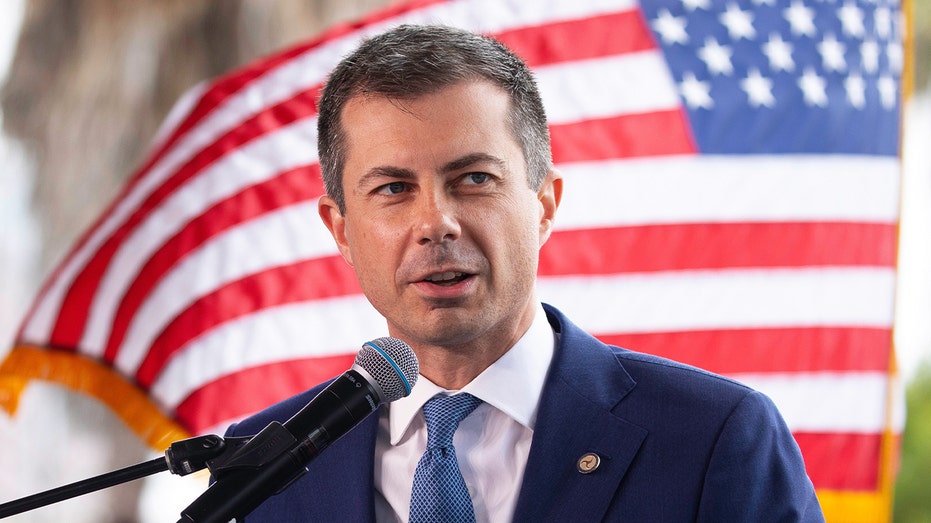
The early moves in the next White House race, at least among the Democrats, have begun. Pete Buttigieg on Thursday ruled out a run for an open Democrat-held Senate seat in his adopted home state of Michigan. And the announcement by the 2020 Democratic presidential candidate, who served four years as transportation secretary in former President Biden’s administration, appears to clear the path for a potential 2028 White House bid by Buttigieg. “While my own plans don’t include running for office in 2026, I remain intensely focused on consolidating, communicating and supporting a vision” that is an alternative to the “cruel chaos” of President Donald Trump’s administration, Buttigieg said. THESE ARE THE DEMOCRATS WHO MAY RUN FOR THE WHITE HOUSE IN 2028 A source familiar with Buttigieg’s thinking told Fox News the former transportation secretary is in a strong possible position to run for president in 2028 and that running for either senator or Michigan governor “in 2026 would have taken that off the table.” NEWSOM MAKES MAJOR HEADLINES IN INAUGURAL EDITION OF HIS NEW PODCAST Across the country, term-limited California Gov. Gavin Newsom, who has long been suspected of harboring national ambitions, is grabbing lots of attention and millions of YouTube hits, thanks to a new and high-profile podcast series. The first two guests of the podcast were MAGA world superstars Charlie Kirk and Steve Bannon. But that didn’t sit well with two-term Gov. Andy Beshear, the Democrat in red state Kentucky who is also seen as a potential 2028 contender. “I think that Gov. Newsom bringing on different voices is great,” Beshear told reporters this past week. “We shouldn’t be afraid to talk and to debate just about anyone. But Steve Bannon espouses hatred and anger, and, even at some points, violence. And I don’t think we should give him oxygen on any platform — ever, anywhere.” Meanwhile, Democrat JB Pritzker, the billionaire two-term governor of blue state Illinois and one of his party’s leaders in opposing President Donald Trump’s second-term agenda, will head to New Hampshire next month to headline the state party’s annual fundraising gala, sparking plenty of 2028 speculation. DEMOCRAT GOVERNOR’S TRIP TO THIS KEY STATE SPARKING 2028 SPECULATION Trips to New Hampshire, which, for over a century, has held the first primary in the race for the White House, are seen as an early indicator of a politician’s interest in running for the presidency in the next election. But there’s more. There is plenty of focus on former Vice President Kamala Harris, who replaced Joe Biden as the Democratic Party’s 2024 presidential nominee last summer after he dropped out of the race amid mounting questions over his physical and mental stamina. KAMALA HARRIS REVEALS TIMETABLE FOR MAJOR POLITICAL DECISION Harris, who lost November’s White House race to Trump, is considering a 2026 bid to succeed Newsom in her home state of California. But a run for governor in 2026 would likely derail a 2028 White House bid. A source in the former vice president’s political orbit recently confirmed to Fox News Digital that Harris has told allies she will decide by the end of the summer whether to launch a gubernatorial campaign. And Harris earlier this month made a stop in Nevada, an early voting state on the Democrats’ primary calendar. Harris’ 2024 running mate, Minnesota Gov. Tim Walz, is not ruling out a White House run of his own in 2028. Walz on Friday kicked off a high-profile town hall tour of red congressional districts. His first stop was in Iowa, the state that, through the 2020 cycle, kicked off the Democrats’ presidential nominating calendar. Three other prominent Democrats considered potential 2028 contenders — governors Gretchen Whitmer of Michigan, Josh Shapiro of Pennsylvania and Beshear — addressed the House Democrats’ annual policy retreat Thursday. VANCE IN ‘CATBIRD SEAT,’ BUT HERE ARE THE OTHER REPUBLICANS WHO MAY ALSO RUN IN 2028 Even Rahm Emanuel, the former congressman from Illinois, White House chief of staff in President Obama’s administration and Chicago mayor who most recently served as U.S. ambassador to Japan, is potentially mulling a 2028 run. Emanuel this week was the topic of a feature report by Politico. While 2028 seems like a very long way away, the early moves in the next White House race begin early for the party out of power. That was the case for the Republicans in the 2024 cycle. Iowa continues to kick off the GOP’s presidential nominating schedule, and the first stop there during the 2024 cycle by a potential White House contender was in March 2021, just weeks after Biden assumed the presidency. Former Secretary of State Mike Pompeo, who eventually decided not to run for president, grabbed plenty of attention as he spoke to the Westside Conservative Club in suburban Des Moines that year. “There’s no sense in waiting,” New Hampshire-based political strategist Lucas Meyer told Fox News. “If anyone is serious about running for president, they would probably be well served in getting after it now.” Meyer, a former president of the New Hampshire Young Democrats who chairs the advocacy group 603 Forward, called it a “wide-open field” for Democrats. “The crowd of leadership at the top of the Democratic Party isn’t very deep at the moment,” he observed. “There’s oxygen there for someone.”
Karoline Leavitt says she won’t attend White House Correspondents’ Association dinner
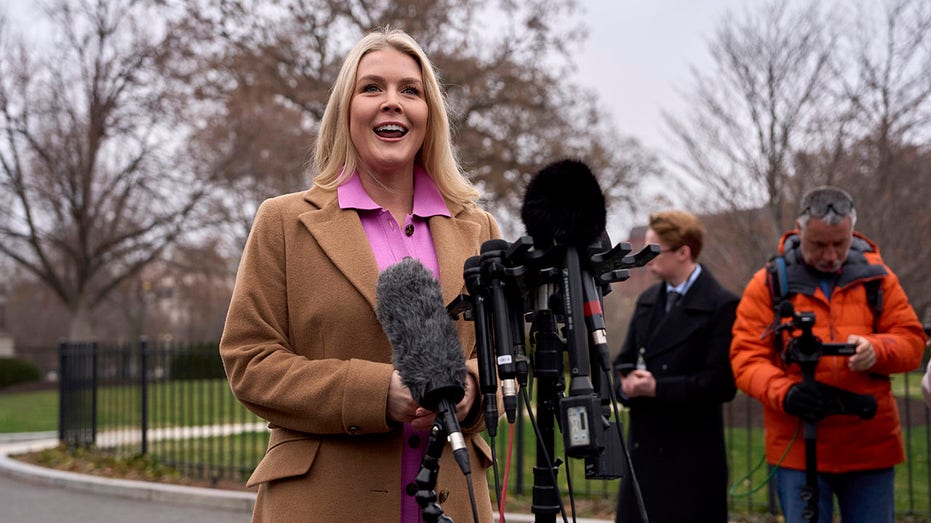
White House press secretary Karoline Leavitt said she is skipping the White House Correspondents’ Association (WHCA) dinner slated for April 26. Leavitt made the announcement during a podcast appearance with Sean Spicer, who served as President Donald Trump’s White House press secretary for the first six months of 2017. “I will not be in attendance at the White House Correspondents’ Dinner, and that’s breaking news for ‘The Sean Spicer Show,’” Leavitt said. Leavitt said the WHCA “has truly become a monetized monopoly over the White House and the coverage of the president of the United States in America.” TRUMP WATCHES STRIKE ON IRAN-BACKED HOUTHIS IN YEMEN IN NEW WHITE HOUSE PICS AS LARGE-SCALE OP CONTINUES “This is a group of journalists who’ve been covering the White House for decades,” she said on the podcast published Friday. “They started this organization because the presidents at the time were not doing enough press conferences. I don’t think we have that problem anymore under this president, so the priorities of the media have shifted, especially with this new digital age.” Leavitt said the WHCA has been an “exclusive group of journalists who cover this White House, they have not really welcomed other people, new media, independent journalists, with open arms, and so we thought it was time to expand the coverage and determine who gets to be part of that 13-person press pool, who gets to ask the president of the United States questions in the Oval Office, aboard Air Force One.” “Since we have started this new process of determining the daily rotation, so many new voices and outlets who have never been part of this small and privileged group of journalists have been able to access those very unique and privileged spaces and cover this presidency and that’s very important,” Leavitt added, revealing that the White House has received more than 15,000 applications for the new media seat in the press briefing room. KAROLINE LEAVITT SHUTS DOWN AP REPORTER AFTER ‘INSULTING’ QUESTION ON TARIFFS In late February, the White House said it would decide which journalists would be a part of the 13-member pool covering Trump in limited spaces, such as the Oval Office or Air Force One, breaking from the century-old tradition of the WHCA independently selecting which news outlets go where the president does when the full press corp cannot be accommodated. Eugene Daniels, the president of WHCA’s board and a Politico correspondent, said the decision “tears at the independence of a free press in the United States,” but the White House championed the move as modernizing the press pool to expand past solely legacy media. The Trump administration said the three traditional wire services – the Associated Press, Bloomberg and Reuters – would no longer have a permanent spot in the pool and would instead rotate a single spot in the 13-member group. The White House later barred the AP from the press pool for ignoring Trump’s executive order renaming the Gulf of Mexico to the Gulf of America. The ban was temporarily upheld in federal court, though U.S. District Court Judge Trevor N. McFadden warned that case law did not favor the White House and scheduled another hearing for March 20. CLICK HERE TO GET THE FOX NEWS APP Trump did not attend the WHCA annual dinner during his first term. Last month, the association tapped comedian Amber Ruffin, a writer for the “Late Show with Seth Meyers,” to headline this year’s dinner. Ruffin told CNN’s Jake Tapper that “no one wants” Trump to show up, though the president “should” go to the event traditionally attended by the president and the first lady.
DOGE’s plans to offload government buildings supported by former GSA official

EXCLUSIVE: Former General Services Administration (GSA) head Emily Murphy, who served all of President Donald Trump’s first term, told Fox News Digital that the GSA will “rightsize its portfolio” by selling or leasing unused government buildings – saving money to help the government run more efficiently. “I think that there’s an incredible opportunity right now for GSA to save the government substantial amounts of money by rightsizing its portfolio,” Murphy told Fox News Digital about Elon Musk’s Department of Government Efficiency (DOGE) working with GSA to identify “vacant or underutilized federal spaces” as part of the Trump administration’s plan to cut wasteful spending. “Right now, GSA is losing money,” Murphy said. “The federal buildings that they own have over $370 billion in deferred maintenance. That’s a liability that is just growing and growing and growing because the buildings haven’t been maintained. So getting rid of owned space that hasn’t been maintained and that isn’t occupied, first of all, takes that off the government’s books, gets rid of that liability. But it also creates opportunities in communities. Having a building that’s unoccupied isn’t good for a city. It isn’t good for the state. It isn’t good for anyone.” Murphy said those empty buildings are often in ideal downtown, “heavy utilization areas” that can be a real asset to building up the community and returning funds to the Treasury Department. TOP FEDERAL AGENCY TAKES DOGE’S MISSION TO HEART WITH ALL-HANDS MEMO TO EVERY EMPLOYEE: ‘REDUCTION IN FORCE’ “GSA has to rightsize its lease portfolio. Otherwise, it’s going to be paying rent on buildings it’s not occupying, and it doesn’t have the funding necessary to do that,” Murphy said. The GSA’s cost-cutting efforts have already resulted in 794 lease terminations with a total of over $500 million of lease obligations being canceled, a source familiar with the GSA’s actions told Fox News Digital. DOGE AND AGENCIES CANCEL 200,000 FEDERAL GOVERNMENT CREDIT CARDS Murphy said terminating leases and selling unused office space will benefit the government twofold. First, it can shore up money to fund government agencies in the short term. Second, it will reduce long-term financial obligations. “No taxpayer should want the government to be paying for space it doesn’t use,” Murphy said. “It’s billions of dollars a year [that] go out in rent and real estate payments from the federal government. This is a substantial amount of money, and it’s a real chance for GSA to do a great job for the American people and reduce the long-term financial obligations of the government and, frankly, free up money for agencies in the short term as well.” Murphy told Fox that GSA exists to “cut down on waste” and during her tenure, they managed to return about $21.6 billion in savings. She embraced DOGE’s efforts to cut wasteful spending and increase government efficiency, telling Fox News Digital those issues should have bipartisan support. “Prioritizing efficiency and minimizing waste in our government really should be a bipartisan issue. Government contracting, government real estate doesn’t have a Republican side or a Democratic side of the coin,” Murphy said. “What DOGE is doing right now is just pushing forward and trying to make sure that taxpayers can have confidence that every dollar being spent is really in their best interest. Murphy explained that GSA was created to manage the federal government’s portfolio of properties and procurement and welcomed the renewed focus on efficiency. “GSA is essentially the government’s management arm. It handles the real property, the procurement, many of the shared services the government has, the vehicles in the government’s fleet. It runs a lot of the back office functions of the government. It was created about 75 years ago to specifically take on that challenge, so that agencies didn’t have to all be doing the same repetitive tasks again and again,” Murphy said. Stephen Ehikian was sworn in as acting administrator and deputy administrator of the GSA on Inauguration Day. “Under the Trump-Vance administration, I will return the GSA to its core purpose of making government work smarter and faster,” said Ehikian. “Moving forward, GSA will be laser-focused on driving an efficient government and enabling our sister agencies to provide better service to taxpayers at lower costs.” GSA has produced the most savings across federal agencies, according to the official DOGE website. A webpage titled “Non-core property list (Coming Soon)” on the GSA’s website outlines the agency’s ongoing effort to save on government buildings. “We are identifying buildings and facilities that are not core to government operations, or non-core properties, for disposal. Selling ensures that taxpayer dollars are no longer spent on vacant or underutilized federal spaces. Disposing of these assets helps eliminate costly maintenance and allows us to reinvest in high-quality work environments that support agency missions,” it says on GSA’s website. The Associated Press reported that dozens of federal office and building leases will be terminated by June 20, with hundreds more expected in the coming months. AP also reported last week that GSA published a list of more than 440 federal properties the government was planning to offload. The list was then revised to include only 320 buildings before the webpage was ultimately updated to its current “coming soon” language. Musk has lamented about unused office buildings on his personal X account and DOGE’s official account. “Still *way* too many leases on unused buildings,” Musk posted on Feb. 25. “Agreed! Today, lease cancellations on vacant/underutilized buildings are up from ~257 to ~440, with annual rent savings increasing from ~$100M to ~$171M. Still plenty of available office space for the current workforce,” DOGE replied to Musk the following day. “Today, the Federal Government exceeded $100M in annual rent savings through cancellations of 250+ vacant/underutilized leases totaling 3M+ square feet. With ~7,250 current leases, there is plenty of available office space for the current workforce,” DOGE announced in a post on Feb. 25. “Crazy that the government was just renting and paying for upkeep services of hundreds of empty buildings!” Musk replied.
Trump watches strike on Iran-backed Houthis in Yemen in new White House pics as large-scale op continues
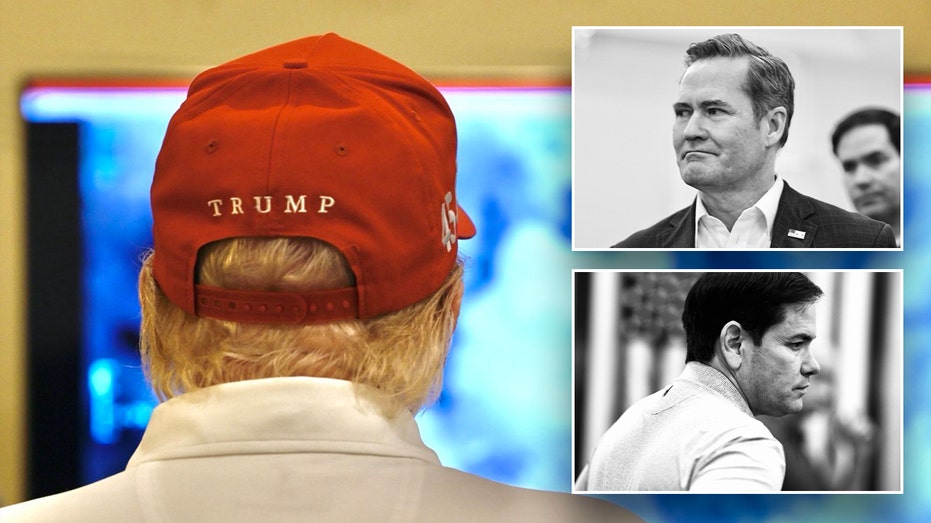
The White House released photos of President Donald Trump watching strikes on Iran-backed Houthis in Yemen on Saturday, as the large-scale U.S. operation against the terrorist group continues. “President Trump is taking action against the Houthis to defend US shipping assets and deter terrorist threats,” the White House wrote on X, sharing photos of Trump, as well as Secretary of State Marco Rubio and National Security Adviser Mike Waltz. “For too long American economic & national threats have been under assault by the Houthis. Not under this presidency.” Trump appeared to be dressed in golf attire and was wearing his signature red baseball cap with his name emblazoned on the back while watching video of the strikes on a television screen. Another photo showed the president from the front with a black headset on. US NAVY SHIPS REPEL ATTACK FROM HOUTHIS IN GULF OF ADEN Trump wrote in a Saturday TRUTHSocial post that he had “ordered the United States Military to launch decisive and powerful Military action against the Houthi terrorists in Yemen.” “Our brave Warfighters are right now carrying out aerial attacks on the terrorists’ bases, leaders, and missile defenses to protect American shipping, air, and naval assets, and to restore Navigational Freedom,” Trump said. “No terrorist force will stop American commercial and naval vessels from freely sailing the Waterways of the World.” U.S. Central Command said Saturday it “initiated a series of operations consisting of precision strikes against Iran-backed Houthi targets across Yemen to defend American interests, deter enemies, and restore freedom of navigation.” State Department spokeswoman Tammy Bruce said in a statement that Rubio spoke with Russian Foreign Minister Sergei Lavrov on Saturday. “The Secretary informed Russia of U.S. military deterrence operations against the Iran-backed Houthis and emphasized that continued Houthi attacks on U.S. military and commercial shipping vessels in the Red Sea will not be tolerated,” Bruce wrote. “Secretary Rubio and Foreign Minister Lavrov also discussed next steps to follow up on recent meetings in Saudi Arabia and agreed to continue working towards restoring communication between the United States and Russia.” The Houthi-run Health Ministry in Yemen said the strikes killed at least 31 people, according to the Associated Press. The Houthis have repeatedly targeted international shipping in the Red Sea and launched missiles and drones at Israel in what the terrorist group said were acts of solidarity with the Palestinians in the Gaza Strip, where Israel has been at war with Hamas, another Iranian ally. The attacks stopped when a fragile Israel-Hamas cease-fire took hold in Gaza in January. The Houthis then threatened to renew them after Israel cut off the flow of humanitarian aid to Gaza this month following the Hamas rejection of a U.S. framework for continuing the cease-fire and hostage releases. The U.S. and others have long accused Iran of providing military aid to the Houthis, and the U.S. Navy has seized Iranian-made missile parts and other weaponry it said were bound for the terrorist group, which controls Yemen’s capital of Sanaa and the country’s north. Gen. Hossein Salami, head of Iran’s paramilitary Revolutionary Guard, denied his country was involved in the Houthis’ attacks. TRUMP ANNOUNCES ‘DECISIVE AND POWERFUL’ AIRSTRIKES AGAINST HOUTHI TERRORISTS IN YEMEN Iranian Foreign Minister Abbas Araghchi, in a post on X, urged the U.S. to halt the strikes and said Washington cannot dictate Iran’s foreign policy. Trump said, “The Houthi attack on American vessels will not be tolerated. We will use overwhelming lethal force until we have achieved our objective. The Houthis have choked off shipping in one of the most important Waterways of the World, grinding vast swaths of Global Commerce to a halt, and attacking the core principle of Freedom of Navigation upon which International Trade and Commerce depends.” Trump charged that the Houthis “have waged an unrelenting campaign of piracy, violence, and terrorism against American, and other, ships, aircraft, and drones.” “Joe Biden’s response was pathetically weak, so the unrestrained Houthis just kept going,” he wrote on TRUTHSocial. Trump said it has been more than a year since a U.S.-flagged commercial ship safely sailed through the Suez Canal, the Red Sea, or the Gulf of Aden. “The last American Warship to go through the Red Sea, four months ago, was attacked by the Houthis over a dozen times. Funded by Iran, the Houthi thugs have fired missiles at U.S. aircraft, and targeted our Troops and Allies. These relentless assaults have cost the U.S. and World Economy many BILLIONS of Dollars while, at the same time, putting innocent lives at risk,” Trump wrote. “To all Houthi terrorists, YOUR TIME IS UP, AND YOUR ATTACKS MUST STOP, STARTING TODAY. IF THEY DON’T, HELL WILL RAIN DOWN UPON YOU LIKE NOTHING YOU HAVE EVER SEEN BEFORE!” Trump said. The president added, “To Iran: Support for the Houthi terrorists must end IMMEDIATELY! Do NOT threaten the American People, their President, who has received one of the largest mandates in Presidential History, or Worldwide shipping lanes. If you do, BEWARE, because America will hold you fully accountable and, we won’t be nice about it!” The Houthis have targeted over 100 merchant vessels with missiles and drones, sinking two and killing four sailors, during their campaign targeting military and civilian ships between the start of the Israel-Hamas war in October 2023 and January of this year, when the ceasefire in Gaza took effect, according to the AP. The U.S., Israel and Britain have previously hit Houthi-held areas in Yemen, but Saturday’s operation was conducted solely by the U.S. It was the first strike on the Houthis under the second Trump administration. It comes two weeks after Trump sent a letter to Iranian leaders offering a path to restarting bilateral talks between the countries on Iran’s advancing nuclear program. Trump has said he will not allow it to become operational. The Trump administration re-designated the Houthis as a foreign terrorist organization earlier this month, after the Biden administration had lifted the group’s designation in 2021. The Associated Press contributed to this report.