

‘Devasted farms’: Bipartisan Senate letter calls for ‘new urgency’ to address crippling virus
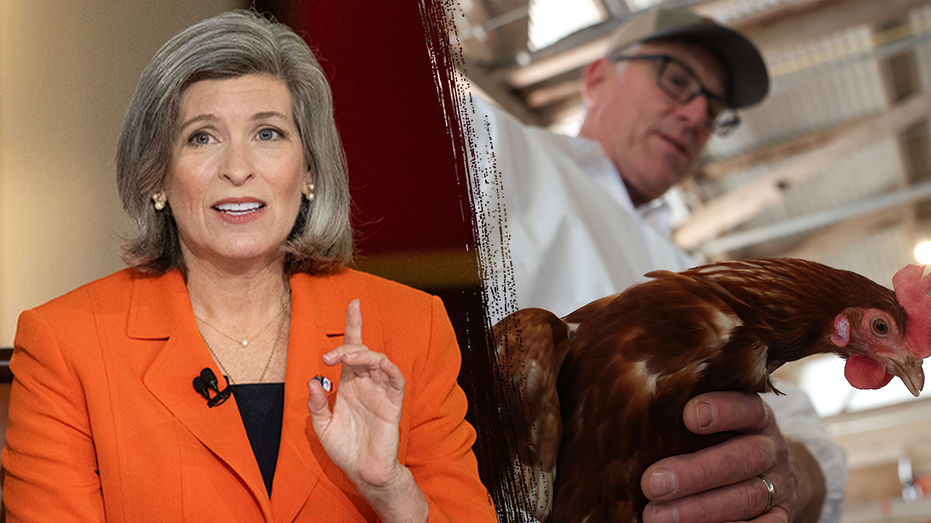
FIRST ON FOX: GOP Sen. Joni Ernst sent a letter to newly confirmed Agriculture Secretary Brooke Rollins calling for cooperation on key measures to address the bird flu epidemic ravaging farms across the country. “We know many pressing concerns await you as you begin your new role. We write to ask that you enhance the U.S. Department of Agriculture’s (USDA) response to the ongoing outbreak of highly pathogenic avian influenza (HPAI) in our nation’s animal agriculture sector, which we greatly appreciate you announcing as a top priority in your testimony before the Senate Committee on Agriculture, Nutrition, and Forestry,” the letter from Ernst, a member of the Senate Agriculture Committee, states. “The United States is now entering the fourth year of an outbreak of HPAI that has devastated farms, required the depopulation of more than 136 million birds on commercial poultry operations, and infected a small but growing number of farm workers. A new urgency is required from the USDA to address the evolving situation.” The letter promotes ways to address the crisis that have been outlined by egg and turkey farmers, including an aggressive vaccination strategy for hens and turkeys, stockpiling vaccines, and outreach to trading partners to ensure that trade is not negatively impacted. MINNESOTA DECLARES STATE OF EMERGENCY AS DISEASES CRIPPLE MIDWESTERN FARMS The senators also called on the USDA to shift attention to a Biden order in 2024 that requires biosecurity audits on previously infected farms, or farms placed within a buffer zone of a control area, to be eligible for indemnities. “In principle, this change would appear to enhance biosecurity measures and accountability for indemnity, but the rule was rushed,” the letter states. “As a result, nearly no auditors have been trained to complete these audits, and the audit itself was posted in draft form. USDA should provide adequate numbers of qualified auditors prior to enforcement of the rule.” The letter explains that “current indemnity rates for laying hens and pullets are based on inaccurate data and are artificially low” and offers solutions on how to address that, including an egg industry proposal to revise the calculations relying on data from USDA and land grant institutions that would make the indemnities “fairer.” BIRD FLU FOUND IN ARIZONA DAIRY CATTLE MILK AFTER BEING FIRST DETECTED IN NEIGHBORING NEVADA “Even with revisions to indemnity formulas proposed by egg farmers, these payments will not come close to making producers whole for their losses. In reviewing indemnity activities, we would also urge you to ensure proper outreach to all farmers,” the letter says. The bipartisan letter was signed by Democratic Sens. John Fetterman, Amy Klobuchar, Tina Smith, Raphael Warnock, Mark Warner and Jon Ossoff, and Republicans Sens. Bernie Moreno, Jerry Moran, Roger Marshall, Todd Young, Dave McCormick, Ted Budd, Thom Tillis and Chuck Grassley. “I’m working to protect and preserve the livelihoods of our farmers, the stability of our local economies, and our food supply chain impacted by the spread of HPAI,” Ernst told Fox News Digital in a statement. “By partnering with the Trump administration to identify solutions, we can ensure our producers have the tools they need to stop avian flu.” American farmers and those in the agricultural business continue to reel over the spread of H5N1 bird flu, which apparently shows no sign of slowing to “disaster” status, FOX Business previously reported. “The real crisis is that we’re going through the worst bird flu outbreak that we’ve had in the last 10 years since 2015, potentially the worst bird flu outbreak that we’ve ever had in the history of this country,” Eggs Unlimited Vice President Brian Moscogiuri said on “Fox & Friends” last week. “We’ve lost 120 million birds since the beginning of 2022. In the last few months alone, since the middle of October, we’ve lost 45 million egg-laying hens,” he added. “We’ve lost a significant amount of production, more than 13%. So we’re just dealing with supply shortages. And it’s just a disaster right now because this virus is in three of the top egg-laying states in the country. It doesn’t seem like it’s stopping anytime soon.” During her confirmation hearing, Rollins said she is “hyper focused” on finding the team to combat bird flu and other diseases. “Secretary Rollins received the letter from Sen. Ernst and her colleagues yesterday,” a USDA spokesperson told Fox News Digital. “She will respond in short order and is looking forward to working with Sen. Ernst and her colleagues to tackle this critical issue. The Biden administration failed to sufficiently address the avian flu, and his inflationary economic policies only made the problem worse. The American people deserve affordable eggs, and Secretary Rollins is fully committed to taking aggressive action to combat the avian flu and help lower the price of eggs. She is working with the White House to implement a comprehensive strategy that will be rolled out very soon.” Fox News Digital’s Kristen Altus contributed to this report
FLASHBACK: Trump seeks to expand fertility coverage, after Tim Walz once accused him of being ‘anti-IVF’
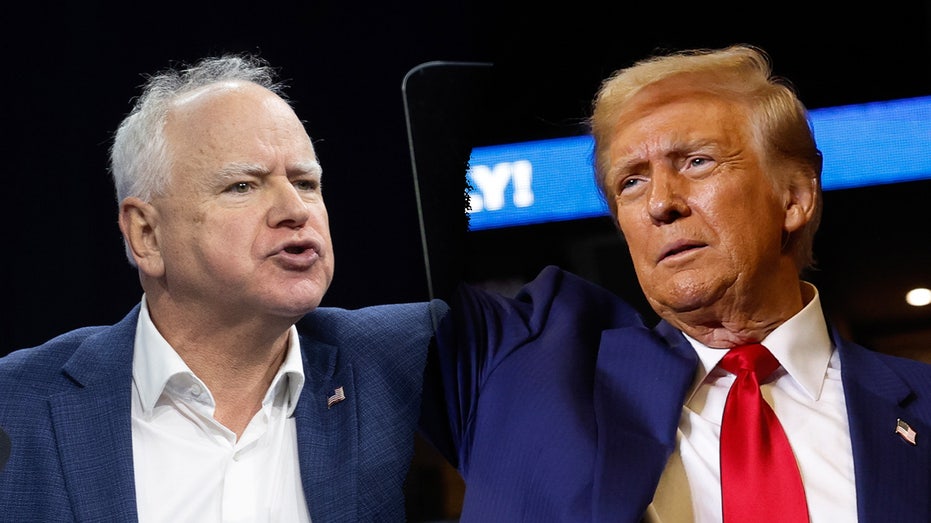
President Donald Trump signed an executive order Tuesday requesting the Domestic Policy Council examine ways to make in vitro fertilization, known as IVF, more affordable and accessible for Americans – despite the fact Democrats cautioned that Trump would seek to ban the procedure. “Americans need reliable access to IVF and more affordable treatment options, as the cost per cycle can range from $12,000 to $25,000,” the executive order said. “Providing support, awareness, and access to affordable fertility treatments can help these families navigate their path to parenthood with hope and confidence.” Specifically, the order requires the assistant to the president for domestic policy to provide a list of policy recommendations aimed at “protecting IVF access and aggressively reducing out-of-pocket and health plan costs for IVF treatment” within 90 days, according to the order. ‘PROMISES KEPT’: TRUMP SIGNS EXECUTIVE ORDER TO ‘AGGRESSIVELY’ MAKE IVF MORE AFFORDABLE AND ACCESSIBLE The directive comes months after former Vice President Kamala Harris’ running mate in the 2024 election against Trump, Minnesota Gov. Tim Walz, accused the Trump administration of being “anti-IVF.” Specifically, Walz singled out Trump’s running mate, then-Sen. JD Vance, a practicing Catholic who voted in June against the Right to IVF Act. The Catholic Church opposes IVF, saying unused embryos pose a moral dilemma. But Vance said in August 2024 he doesn’t believe all his religious views should translate to public policy since the U.S. is a “democratic society,” he told the New York Post. “Catholic social teaching is obviously very robust,” he told the Post. “I think that no person who, or at least no one I know who’s Catholic, doesn’t accept that just because the Catholic Church teaches something, doesn’t mean you necessarily as a legislator need to affect that to public policy.” The Right to IVF measure would establish a nationwide right to IVF and other assisted reproductive technology, but it failed to pass in the Senate. “JD Vance opposing the miracle of IVF is a direct attack on my family and so many others,” Walz said in a social media post on X in July 2024. Walz previously claimed that he and his wife, Gwen, struggled to conceive and shared details during the 2024 campaign about the couple’s experience using IVF to become pregnant with their two children. But Gwen Walz later clarified in August 2024 in an interview with Glamour magazine that the couple actually used intrauterine insemination, known as IUI, to conceive. The process involves using a catheter to place the sperm directly into the uterus to increase odds of conception. DOGE SCORES BIG COURT WIN, ALLOWED ACCESS DATA ON 3 FEDERAL AGENCIES In contrast, IVF requires the removal of a woman’s eggs and injecting them with sperm to create embryos, which then are placed back into the woman’s uterus. More than 85,000 babies born in 2021 were from IVF, according to the Department of Health and Human Services. Costly IVF treatments are rarely fully covered by health insurance, and only 25% of employers report providing coverage to their employees, according to the White House. Trump unveiled plans in August 2024 that he’d seek to require insurance companies to cover the cost of IVF, stating he was pushing the policy “because we want more babies, to put it nicely.” The Associated Press contributed to this report.
President Trump: Founding Fathers ‘spinning in their graves’ because of birthright citizenship abuse

Following a fourth judge’s ruling blocking his executive order ending birthright citizenship for the children of illegal immigrants, President Donald Trump took to Truth Social to say that the Founding Fathers are “spinning in their graves” and that the 14th Amendment was for former slaves, not illegals. “Our lawyers and Judges have to be tough, and protect America!” the president chided. “The 14th Amendment Right of American Citizenship never had anything to do with modern-day ‘gate crashers,’ illegal immigrants who break the Law by being in our Country, it had everything to do with giving Citizenship to former slaves,” he wrote. “Our Founding Fathers are ‘spinning in their graves”’ at the idea that our Country can be taken away from us,” he added. “No Nation in the World has anything like this.” TRUMP FREEZES APPLICATIONS FOR BIDEN-ERA MIGRANT PROGRAMS AMID FRAUD, NATIONAL SECURITY CONCERNS In what has become perhaps his most controversial move yet, Trump issued an executive order on his first day back in the Oval Office to end the practice of granting birthright citizenship to the children of illegal immigrants. The order – titled “Protecting the Meaning and Value of American Citizenship” – states that “the privilege of United States citizenship does not automatically extend to persons born in the United States” when that person’s parents are either unlawfully present in the U.S. or when the parents’ presence is lawful but temporary. Since he signed the order, lawsuits have been filed by two dozen Democratic-led states and cities and several civil rights groups. Four federal district judges have issued rulings temporarily blocking the order as it works through the long judicial process. The latest ruling, issued by U.S. District Judge Leo Sorokin last week, said the “Constitution confers birthright citizenship broadly, including to persons within the categories described” in the order. ACTIVISTS IN MEXICO REPORT FLOW OF MIGRANTS HAS ‘ENORMOUSLY DECREASED’ ONE MONTH INTO TRUMP ADMIN In response, several Republican states and America First Legal have filed amicus briefs in favor of Trump’s order, arguing that it is entirely constitutional and well within the original meaning of the 14th Amendment and in line with previous rulings by the U.S. Supreme Court. CLICK HERE FOR MORE IMMIGRATION COVERAGE The 14th Amendment was passed in 1868 and was designed to extend citizenship to African American former slaves. The amendment states that “all persons born or naturalized in the United States, and subject to the jurisdiction thereof, are citizens of the United States and of the State wherein they reside.” After filing two amicus briefs in support of Trump’s order, America First Vice President Dan Epstein told Fox News Digital that the phrase “subject to the jurisdiction thereof” means that citizens must owe their political allegiance to the U.S., not some foreign power or culture. TRUMP ADMIN REVEALS LIST OF CARTELS AND GANGS TO BE DESIGNATED TERRORIST ORGANIZATIONS Epstein believes Trump’s order would restore the constitutional principle that only those who are subject to the jurisdiction of the U.S. – that is loyal, law-abiding Americans – are citizens. He believes the case will likely end up in the Supreme Court, where he is confident it will ultimately be upheld. “My expectation is that this is a no-brainer. The law is clear, ‘subject to the jurisdiction thereof’ has to mean something,” he said. “So, it’s not a very hard question. It’s a very clear question and the law has a very clear answer.”
Trump’s nominee for Labor secretary walks back support for PRO Act, embraces Republican Right-to-Work laws
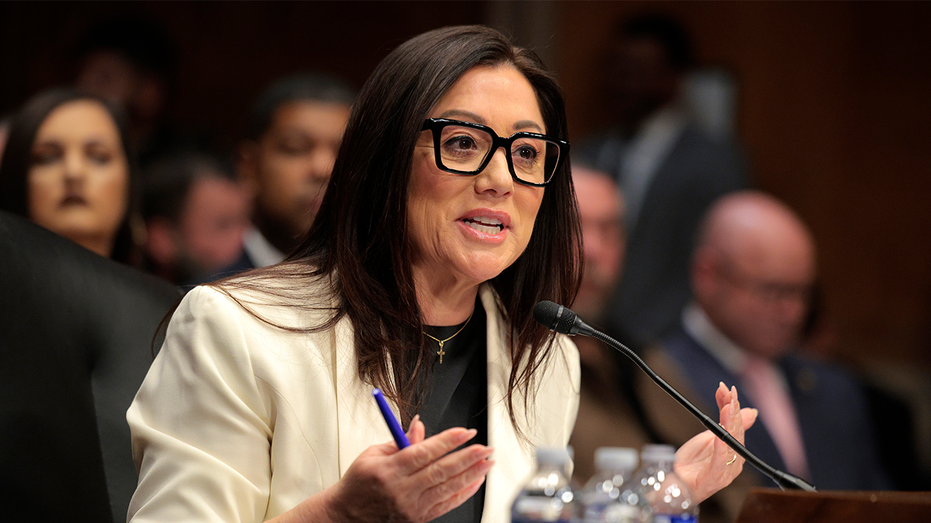
Lori Chavez-DeRemer, the pro-union Republican tapped by President Donald Trump for Labor secretary, testified before the Senate Committee on Health, Education, Labor and Pensions (HELP) on Wednesday, fielding questions from senators about her support for the Protecting the Right to Organize (PRO) Act. Chavez-DeRemer supported the PRO Act as a representative for Oregon’s 5th congressional district. She told senators on Wednesday she no longer supports the aspect of the PRO Act that would have overturned Republican-backed Right-to-Work laws, which could earn her the favor of some Republican senators who were reluctant to confirm her nomination. The PRO Act would effectively kill state-level laws that prevent employers and unions from requiring workers to pay union dues as a condition of their employment. Republicans, including Sen. Rand Paul, R-Ky., opposed the PRO Act for overturning Right-to-Work laws. Paul said he would not support her if she continued to support the PRO Act. “If she wanted to make a public statement saying that her support for the PRO Act was incorrect and she no longer does, then I’d think about her nomination,” Paul told Fox News Digital in a statement ahead of Chavez-DeRemer’s hearing. PRO-UNION TRUMP NOMINEE FACES SENATE GRILLING AS AT LEAST ONE REPUBLICAN VOWS TO OPPOSE HER As a member of the HELP committee, Paul had the opportunity to question Chavez-DeRemer about the PRO Act on Wednesday. SENATE ADVANCES NOMINATION OF KASH PATEL, TRUMP’S PICK FOR FBI DIRECTOR “So you no longer support the aspect of the PRO Act that would have overturned state Right-to-Work laws?” Paul asked during the hearing. Chavez-DeRemer agreed she no longer supports the aspect of the PRO Act that would have overturned the state’s Right-to-Work laws, replying, “Yes, sir.” “Like President Trump, I believe our labor laws need to be updated and modernized to reflect today’s workforce and the business environment,” Chavez-DeRemer said on Wednesday. “As a member of Congress, the PRO Act was the bill to have those conversations that mattered deeply to the people of Oregon’s 5th congressional district. I recognize that that bill was imperfect, and I also recognize that I am no longer representing Oregon as a lawmaker.” Sen. Tommy Tuberville, R-Ala., also queried Chavez-DeRemer about the PRO Act, questioning if she would change Alabama’s Right-to-Work laws. “My constituents at home want to know that. Are you going to try to change our status as Right-to-Work?” Tuberville asked during the hearing. “I respect the fact that you are from a Right-to-Work state, and I respect the fact that you can continue to be a Right-to-Work state,” Chavez-DeRemer said. Chavez-DeRemer highlighted the distinction between representing Oregon as a congresswoman and representing Trump’s agenda as Labor secretary. “I signed on to the PRO Act because I was representing Oregon’s 5th district, but I also signed on to the PRO Act because I wanted to be at that table and have those conversations. I fully, fairly support states who want to protect their Right-to-Work,” Chavez-DeRemer said. Sen. Bernie Sanders (I-V.T.) began the hearing by questioning if Chavez-DeRemer would stand by her pro-union values or bend the knee to Trump’s “authoritarian” rule. “You will have to make a choice. Will you be a rubber stamp for the anti-worker agenda of Elon Musk, Jeff Bezos and other multi-billionaires who are blatantly anti-union?” Sanders asked. “Or will you stand with working families all over the country? So that is really the main issue. It’s not just your record. This is a very unusual administration. In my view, we are moving toward an authoritarian society where one person has enormous power,” Sanders added. Chavez-DeRemer was joined by her husband, Dr. Shawn DeRemer, father Richard Chavez, mother Patricia Chavez, daughter Annie DeRemer and other extended family members. In her opening statement, Chavez-DeRemer thanked Trump and credited him with the “single greatest political achievement of our time” – a new coalition of working-class Americans. “President Trump has united a new coalition of working-class Americans like never before. With 59.6% of Teamsters backing him, historic support from African American and Latino voters, and record-breaking turnout in once-solid blue cities and states—Americans are speaking loud and clear. They are calling for action, progress, and leadership that puts the American worker first,” Chavez-DeRemer said. Chavez-DeRemer advocated for trade school investments to expand “educational pathways beyond the traditional four-year degree” programs that will strengthen the American workforce. She committed to leveling the playing field for American businesses, workers and unions. “My record of collaboration demonstrates a shared belief that, under President Trump’s leadership, we can deliver real solutions. Putting American Workers First is not just a vision but a promise to fight for every working mom, single dad, small business owner, and every American striving for their fair shot at the American Dream,” Chavez-DeRemer said. Less than three weeks after he was elected president, Trump nominated Chavez-DeRemer for U.S. secretary of Labor. “Lori has worked tirelessly with both Business and Labor to build America’s workforce, and support the hardworking men and women of America,” Trump said. “I look forward to working with her to create tremendous opportunity for American Workers, to expand training and apprenticeships, to grow wages and improve working conditions, to bring back our manufacturing jobs. Together, we will achieve historic cooperation between Business and Labor that will restore the American Dream for Working Families.”
Trump admin moves to block NYC congestion toll program
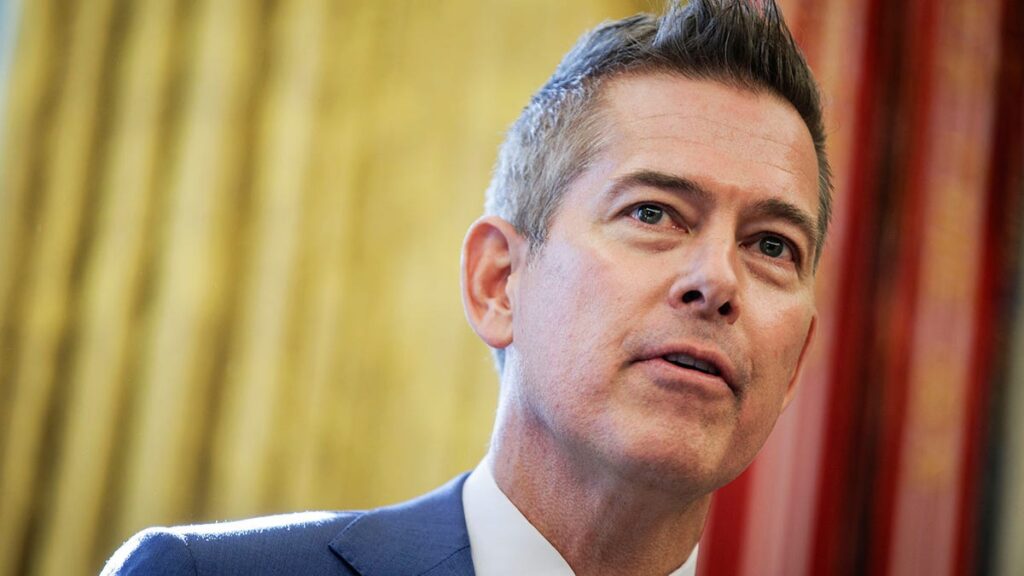
President Donald Trump’s administration has moved to block the New York City congestion pricing toll program. U.S. Transportation Secretary Sean Duffy penned a letter informing New York Gov. Kathy Hochul on Wednesday that the Federal Highway Administration’s approval of the pilot program was “not authorized by law.” “New York State’s congestion pricing plan is a slap in the face to working class Americans and small business owners,” Duffy also said in a statement obtained by Fox News Digital. “Commuters using the highway system to enter New York City have already financed the construction and improvement of these highways through the payment of gas taxes and other taxes. But now the toll program leaves drivers without any free highway alternative, and instead, takes more money from working people to pay for a transit system and not highways. It’s backwards and unfair.” “The program also hurts small businesses in New York that rely on customers from New Jersey and Connecticut,” he added. “Finally, it impedes the flow of commerce into New York by increasing costs for trucks, which in turn could make goods more expensive for consumer. Every American should be able to access New York City regardless of their economic means. It shouldn’t be reserved for an elite few.” This is a developing news story. Check back for updates.
Senate confirms Kelly Loeffler to lead Small Business Administration
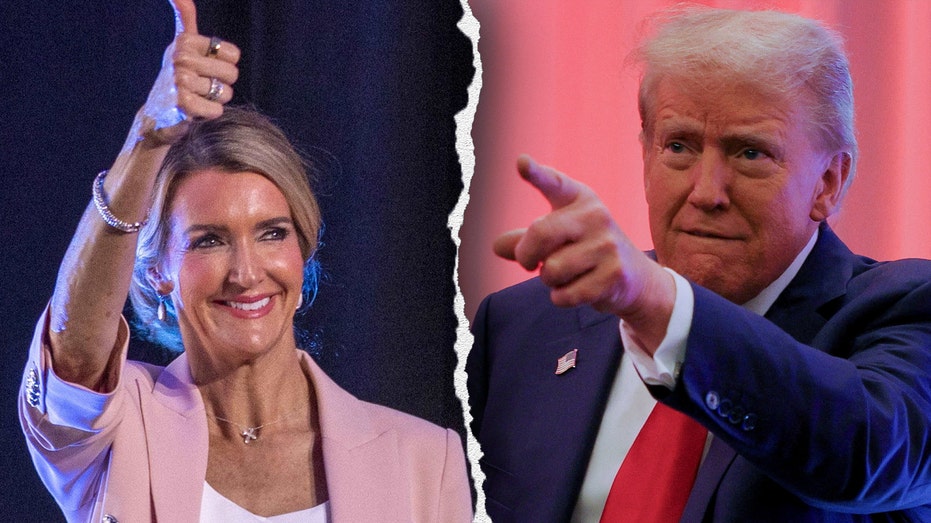
The Senate voted Wednesday by a 52–46 margin to confirm the nomination of President Donald Trump’s pick to lead the Small Business Administration (SBA). Kelly Loeffler, a prominent business executive and philanthropist who served as a senator from Georgia for two years, will now lead the agency. She unveiled plans during her confirmation hearing to reduce regulatory burdens on small business owners, and enhance access to SBA-backed loans and grants. The agency aims to provide small business owners with counseling, capital and contracting expertise to advance their businesses. Loeffler appeared before the Senate Small Business and Entrepreneurship Committee Jan. 28 to outline her vision and promised that Trump’s policies would “restore the small business economy” that would lead to a “golden era of prosperity and growth.” TRUMP’S SMALL BUSINESS ADMINISTRATION NOMINEE ADVANCES TO THE SENATE FLOOR “That’s exactly what the America First agenda does — by ending inflation, cutting taxes, unleashing American energy dominance, slashing regulation, and reining in fraud, waste, and abuse across government,” Loeffler said in her opening remarks. Loeffler and her husband, Jeff, created a Fortune 500 financial services and technology company together, and she has told lawmakers she intends to donate her annual $207,500 salary as SBA administrator to charity. Loeffler, whose net worth is estimated at roughly $1 billion, previously donated her annual Senate salary of $174,000 between 2019 and 2021 to more than 40 Georgia charities and nonprofits. Those organizations included food banks, faith groups and organizations opposed to abortion, foster care/adoption groups as well as organizations promoting health care, agriculture, education, law enforcement and disaster relief. The Senate voted Thursday by a 51–43 margin to advance Loeffler’s nomination for the final confirmation vote. Chair of the Senate Small Business and Entrepreneurship Committee Sen. Joni Ernst, R-Iowa, backed Loeffler’s nomination, citing Loeffler’s “zero-tolerance policy for waste, fraud and abuse” within the agency. Additionally, Ernst voiced support for Loeffler’s plans to conduct a full-scale audit of the SBA to weed out any wasteful spending. TRUMP CABINET NOMINEE LOEFFLER PLEDGED TO DONATE SALARY IF CONFIRMED “Senator Loeffler is immensely qualified for this role,” Ernst said on the Senate floor Thursday. “As a successful businesswoman, it is abundantly clear that Senator Loeffler truly understands what it takes to be an entrepreneur and will be an effective voice for small businesses across America.” However, ranking member of the Senate Small Business and Entrepreneurship Committee Sen. Ed Markey, D-Mass, pushed back on Loeffler’s nomination amid concern that her confirmation would pave the way for the newly created Department of Government Efficiency (DOGE) to “illegally cut off funding” for small business owners. As a result, he said that Trump is looking to fill his cabinet with those that will follow his “illegal bidding.” Markey and Loeffler also sparred during her confirmation hearing in January after the Trump administration announced Jan. 27 that it would freeze federal funds and grants that aimed to eradicate “wokeness” and the “weaponization of government.” TRUMP SIGNS ORDER INSTRUCTING DOGE TO MASSIVELY CUT FEDERAL WORKFORCE While the White House rescinded the memo on Jan. 29, White House press secretary Karoline Leavitt said the federal funding freeze remained in effect. As a result, Markey pressed Loeffler on whether she believed the move was lawful or not, following backlash from members of Congress that the Trump administration attempted to illegally circumvent Congress and withhold funds. “I fully agree with President Trump’s decision to stop wasteful spending,” Loeffler told Markey. “It resulted in a landslide victory that many Americans were waiting for relief against excessive government spending.”
DOGE uncovers over 4M government credit cards responsible for 90M transactions
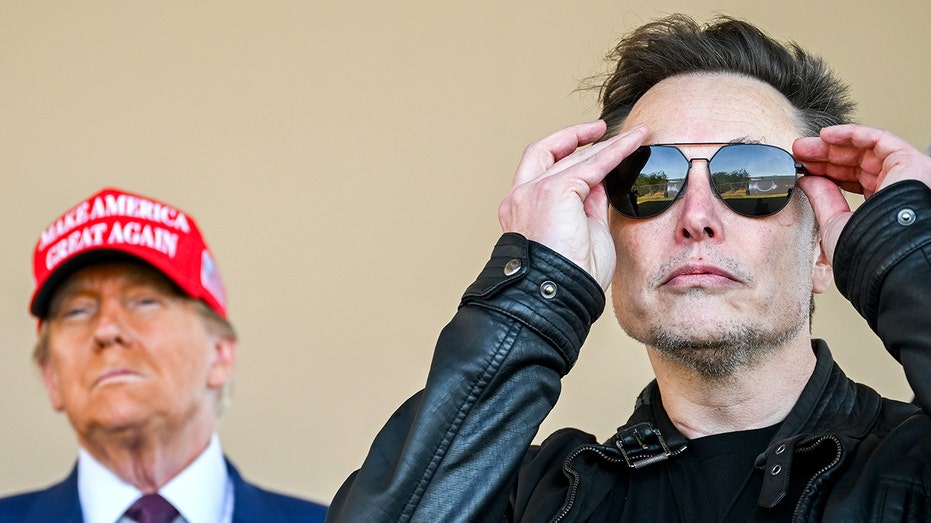
The Department of Government Efficiency (DOGE) said it has uncovered that the U.S. government currently has more than 4 million active credit cards on its books. “The US government currently has ~4.6M active credit cards/accounts, which processed ~90M unique transactions for ~$40B of spend[ing] in FY24,” DOGE said in a post on X on Tuesday. Attached to the post was a breakdown of multiple federal agencies and their credit card use, with the Department of Defense leading the way in both the number of transactions (about 27.2 million), and number of individual accounts (roughly 2.4 million). TRUMP ISSUES WARNING ABOUT WASTEFUL SPENDING, ORDERS ‘RADICAL TRANSPARENCY’ AMID DOGE PROBES, REVELATIONS DOGE’s activities have come under increasing scrutiny over the last few weeks, with opponents arguing that President Donald Trump has given billionaire Elon Musk, who was tapped to head the department, too much power to shrink the size of the federal government. The new department has also been at the center of numerous lawsuits, with opponents attempting to block Musk and the Trump administration from carrying out many of DOGE’s recommendations for cuts. However, Trump has not wavered in his support from the efforts, publicly supporting DOGE’s work while also releasing a memo on Tuesday ordering government agencies to be “radically transparent” with the American people about its spending. $1,300 COFFEE CUPS, 8,000% OVERPAY FOR SOAP DISPENSERS SHOW WASTE AS DOGE LOCKS IN ON PENTAGON The memo argues that the federal government “spends too much money on programs, contracts, and grants that do not promote the interests of the American people.” “For too long, taxpayers have subsidized ideological projects overseas and domestic organizations engaged in actions that undermine the national interest,” the note continues. “The American people have seen their tax dollars used to fund the passion projects of unelected bureaucrats rather than to advance the national interest.” “The American people have a right to see how the Federal Government has wasted their hard-earned wages.” DOGE SAYS IT FOUND NEARLY UNTRACEABLE BUDGET LINE ITEM RESPONSIBLE FOR $4.7T IN PAYMENTS Meanwhile, DOGE promised to update its efforts to streamline the government’s credit card usage within a week. “DOGE is working w/ the agencies to simplify the program and reduce admin costs – we will report back in 1 week,” DOGE said on X.
Green New Headache: Dems flee gov’s green ‘Energy Master Plan’ as election approaches

A prominent New Jersey Democrat running for governor this year publicly split from leftist Gov. Phil Murphy’s green “Energy Master Plan” as Garden State residents brace for 20% or worse increases in utility costs by summertime. Former state Senate President Steve Sweeney called for an immediate halt to Murphy’s comprehensive roadmap to 100% clean energy by 2050, saying his “foremost priority” if elected is to make the notoriously pricy state an affordable place to live. “The recent increases in utility bills demonstrate how overly ambitious targets for a zero-carbon future can negatively impact our residents. We need to take a step back and reassess policies that could drive costs even higher,” Sweeney said on NJ-101.5FM. Rate hikes of 17-21% can be expected throughout the state, via Jersey Central Power & Light, Atlantic City Electric, PSEG and New York-based Rockland Electric, according to 101.5. NJ RESIDENTS HIT WITH DOUBLED UTILITY BILLS AS LAWMAKERS FUME OVER MURPHY’S ‘ENERGY DISASTER PLAN’ In a further statement, Sweeney noted he previously sponsored legislation on solar power development, offshore windmills and reducing New Jersey’s reliance on fossil fuels. He also has encouraged building up the state’s EV infrastructure and promoting EV sales. But, the Democrat appeared to split with some on his side of the aisle by expressing an openness to pursue natural gas as a cleaner fuel source than oil. “With our abundant organic resources – from landfills and sewage to farms and food waste – New Jersey has a unique opportunity to harness [natural gas] to generate gas to meet our energy needs,” Sweeney said. “We must also acknowledge and make effective use of the substantial investments that have been made in our pipeline infrastructure, which represents a commitment that should not be disregarded.” Meanwhile, state Sen. Jon Bramnick, R-Scotch Plains, told Fox News Digital on Wednesday that Sweeney’s public stance shows the left’s green energy plans are “too extreme, even for Democrats.” GOP LAWMAKER TORCHES OFFSHORE WIND PROJECTS AS MAYOR WARNS OF ‘STAR WARS’ BACKDROPS The term-limited Murphy’s plan “wasn’t practical,” said Bramnick, a top candidate on the GOP side to replace him. “Sometimes, Democrats become more political than practical – and that’s kind of why they’re having more trouble at the polls.” “I think their heart might be in the right place, but they lack some practical common sense,” Bramnick said. In a prior interview on Trenton’s green energy efforts, lawmakers such as state Sen. Mike Testa, R-Vineland, derided the idea as the “Energy Disaster Plan.” CLICK HERE TO GET THE FOX NEWS APP “Quite frankly, what I think happened is, via the Murphy Energy Master Plan that I’ve often called the energy disaster plan, it seemed that the BPU (New Jersey Board of Public Utilities) and the Murphy administration are working in tandem chasing this green energy dream…. It’s a green energy nightmare,” Testa said at the time. For his part, Murphy has defended his plan, saying it “comprehensively addresses New Jersey’s energy system, including electricity generation, transportation and buildings, and their associated greenhouse gas emissions and related air pollutants.” Fox News Digital also reached out to prominent Democratic candidate Steve Fulop, the mayor of Jersey City, and Republican Edward Durr, better known in New Jersey as “Ed the Trucker.” In Janurary, Fulop released a dozen-page outline of his “environmental and sustainability policy goals,” and has touted Jersey City’s advancements in energy and sustainability endeavors. Durr, who was then a newcomer to politics, notably engineered the 2021 upset win against Sweeney in Gloucester County that drew national attention.
Colorado poised to ban sale of AR-15s, other rifles and shotguns with extended mags

Colorado is poised to see a major change to its gun laws after the state Senate passed a bill that would effectively ban AR-15s, AK-47s, shotguns and pistols that hold more than 15 rounds. The new bill would not impact the current possession of these guns, but it would prohibit the manufacture, sale and purchase of them going forward. In addition to its ban on new sales and purchases of AR-15s and other rifles that hold high-capacity magazines, the new bill also prohibits the sale or purchase of certain after-market gun accessories that increase a firearm’s rate of fire. The state Senate passed the bill on Tuesday, and it now heads to the lower chamber, where Democrats have a big majority and the bill is expected to pass. Colorado Gov. Jared Polis, a Republican, has said he is not against the sweeping move, and gun control advocates in the Senate amended the bill to include a carve-out aimed at appeasing the governor. FEDERAL COURT RULES AGE LIMITS ON HANDGUN SALES VIOLATE SECOND AMENDMENT Under the carve out, buyers who wish to purchase these sorts of weapons must undergo a background check from local law enforcement similar to what one must go through to obtain a concealed carry permit. Then, the proposed buyer must complete a state-run hunting safety course and an additional 4-hour firearm safety course. If the buyer did not previously have a hunter’s license, then they would also need to complete an extended 12-hour in-person training over two days. In addition to all the training, the buyer would also have to score at least 90% on their final exam to obtain the exemption, which would need to be updated every five years to stay current. Despite the carve out, all Republicans and three Democrats voted against the measure on Tuesday. “This is not a privilege granted by the government, it is a right inherent to who I am and enshrined in the United States Constitution,” the top Republican in the Colorado state Senate, Paul Lundeen, said in reference to the Second Amendment, according to KOAA in Colorado. Meanwhile, according to the local outlet, Republicans also voiced concerns Tuesday over a potential “registry” being created for those seeking to purchase the type of firearms being prohibited under the new law. MD, BALTIMORE MAYOR TARGET GLOCK FOR SELLING PISTOLS THAT CAN BE CONVERTED INTO MACHINE GUNS “I’ve had hundreds of emails I think, so many I didn’t answer them all,” Republican state Sen. Marc Catlin said. “The point is, people are really concerned about this – the idea they have to put their name on a list.” Under the newly proposed law, purchasing AR-15s that carry more than 15 rounds will be a class 2 misdemeanor, while repeated offenses will amount to a class 6 felony. While the sale and purchase of AR-15s and other semiautomatic rifles that carry less than 15 rounds will still be permitted, the magazines that come from the factory for AR-15s in particular carry at least 15 rounds, according to Alan Gottlieb, the founder of the Second Amendment Foundation. The Colorado Sun added that few manufacturers make firearms that meet Senate Bill 3’s new requirements, including that the magazine be epoxied, welded or soldered to the firearm. “Anti-gun radicals in Colorado continue their attacks on law-abiding gun owners by restricting access to commonly owned firearms,” John Commerford, Executive Director of NRA-ILA, told Fox News Digital. “This bill is more about optics than public safety, which was recognized by the bipartisan group of senators who voted against it. The NRA will continue to fight this unconstitutional legislation to protect the rights of peaceable Coloradans.”
Trump freezes applications for Biden-era migrant programs amid fraud, national security concerns

The Trump administration has frozen applications for three Biden-era migrant parole programs, including for Ukrainians and migrants from Latin America, as it continues to crack down on what conservatives say was an abuse of parole by the prior administration. The Department of Homeland Security (DHS) has implemented an agency wide administrative pause on all pending benefit requests for migrants filing under the three programs. “This is an administrative hold on all pending USCIS Benefit Requests filed by Parolees Under the Uniting for Ukraine (U4U) Process, Processes for Haitians, Cubans, Nicaraguans, and Venezuelans (CHNV) Process, or Family Reunification Parole (FRP) Process,” a DHS spokesperson told Fox News Digital. “This is pending the completion of additional vetting to identify any fraud, public safety, or national security concerns,” they said. DHS SAYS IT ‘CAN, SHOULD AND WILL’ ADMINISTER POLYGRAPH EXAMS AMID ICE RAID LOCATION LEAKS President Donald Trump had already ordered an end to multiple parole programs on his first day in office, which was quickly enacted. The DHS has also allowed for those in the U.S. on parole processes to have their parole status canceled. However, CBS News first reported that a Feb. 14 memo also pauses pending requests already allowed into the U.S. under three programs. The first program is Uniting for Ukraine, which used humanitarian parole to allow in Ukrainians in the wake of the Russian invasion. The CHNV program was highly controversial and allowed for migrants from Cuba, Haiti, Nicaragua and Venezuela to receive travel authorization and fly into the United States under parole. Over 500,000 migrants flew in under that program. It was briefly paused last year after DHS discovered fraud in sponsor applications, a development first reported by Fox News Digital. The third program impacts the family reunification parole process, which was opened up to nationals from countries including Guatemala, Ecuador, Colombia, Cuba and Haiti, and allowed nationals who have relatives who are U.S. citizens or green card holders to enter the U.S. for parole as they also apply for a green card. “The Family Reunification Parole process promotes family unity consistent with our laws and our values,” then-DHS Secretary Alejandro Mayorkas said in 2023. ‘RAMPANT’ ABUSE IN BLUE STATE MIGRANT SHELTER SYSTEM, SAYS FORMER DIRECTOR: ‘COLOSSAL MESS’ At the time, the Biden administration said the expanded “lawful pathways” were part of an effort to reduce illegal crossings, but Republicans accused the administration of abusing limited parole power and allowing in migrants who should not legally have entered. CLICK HERE FOR MORE IMMIGRATION COVERAGE A DHS memo from last month said that parole “has been repeatedly abused by the Executive Branch over the past several decades in ways that are blatantly inconsistent with the statute.” “Most important, the parole statute does not authorize categorical parole programs that make aliens presumptively eligible on the basis of some set of broadly applicable criteria,” it says. ACTIVISTS IN MEXICO REPORT FLOW OF MIGRANTS HAS ‘ENORMOUSLY DECREASED’ ONE MONTH INTO TRUMP ADMIN The new pause is the latest in a slew of measures to overhaul the immigration system and shake off programs championed by the Biden administration. The Trump administration has suspended refugee resettlement and has also ended the use of the CBP One app to allow migrants to be paroled into the U.S. at ports of entry. That is connected to a mass deportation operation launched by the administration on day one, as well as a rapid-fire series of moves to increase border security. The administration has also ordered a review of parole programs, and has also taken limits off the use of expedited removals in order to quickly remove recently-arrived illegal immigrants.