

Rising gas prices from Iran conflict put GOP on defense after previous Biden attacks

Republicans sharply criticized former President Joe Biden over rising prices at the gas pump, but a spike in energy prices amid the U.S.-Israeli conflict in Iran threatens to scramble the party’s affordability messaging. The Iran conflict has led to a surge in gas prices for Americans, leading to an average 50 cents a gallon increase since Operation Epic Fury began on Feb. 28. The average price of gas reached $3.63 per gallon on Friday, according to AAA. Diesel prices have also risen to $4.89 per gallon. The increases have been mostly fueled by volatility in oil prices, which closed above $100 per barrel Thursday for the first time since 2022 as the Strait of Hormuz remained effectively shuttered from the conflict. The president characterized the gas price hike amid the Iran conflict as “a very small price to pay” in a Truth Social post Sunday. THE WAR HITS HOME: WHY FINANCIAL PAIN AND ECONOMIC UNCERTAINTY THREATEN TRUMP’S DRIVE TO TOPPLE IRAN’S REGIME That statement represented a sharp break with Trump’s typical messaging touting low gas prices prior to Operation Epic Fury. “Gasoline, which reached a peak of over $6 a gallon in some states under my predecessor — it was quite honestly a disaster — is now below $2.30 a gallon in most states. And in some places, $1.99 a gallon,” President Donald Trump said during his Feb. 27 State of the Union address. “And when I visited the great state of Iowa just a few weeks ago, I even saw $1.85 a gallon for gasoline.” The surge in gas and diesel prices threatens to undermine the economic message of President Trump and congressional Republicans, who have touted low gas prices as a major win in the lead-up to November’s midterm elections. Cost of living issues are expected to be a key concern among voters as both parties claim to be laser-focused on making everyday life more affordable. Trump directed the Strategic Petroleum Reserve to release 172 million gallons of crude oil Wednesday in an effort to lower oil prices. “I filled it up once, and I’ll fill it up again, but right now, we’ll reduce it a little bit, and that brings the prices down,” Trump told Cincinnati news station WKRC. During the 2024 presidential contest, Trump frequently campaigned on ending Biden’s “war on American energy” and pledged to reverse a surge in gas prices that occurred under his predecessor’s tenure. Gas prices averaged $3.45 per gallon across all fuel grades during Biden’s four-year term, surging to a record high of more than $5 per gallon in June 2022 after the outbreak of the Russia-Ukraine war, according to the U.S. Energy Information Administration. “Starting on Day 1, we will drive down prices and make America affordable again,” Trump said during a speech at the Republican National Committee convention in July 2024. “People can’t live like this.” Democrats have seized on rising prices at the pump amid the conflict in Iran. “I wish the administration thought about this before they started this unnecessary war,” Sen. Angus King, I-Maine, who caucuses with Democrats, said Monday when asked about the gas price hike. “Donald Trump’s war has sent gas prices skyrocketing through the roof,” Senate Minority Leader Chuck Schumer, D-N.Y., wrote on social media Monday. “What contempt. What cluelessness.” TANKERS TO RESUME NORMAL MOVEMENT IN MIDDLE EAST IN ‘A FEW WEEKS’ AT WORST, ENERGY SEC SAYS, ENDING OIL SURGE Republicans have voiced confidence that the rise in gas prices would be temporary. GOP lawmakers have frequently cited their efforts to roll back Biden-era energy regulations and boost domestic production as evidence that their policies are working to lower energy prices. “It’s going to be probably volatile for a period of time. I think what’s going to be key is ensuring we can get safe access to the Strait of Hormuz,” Sen. Steve Daines, R-Mont., said Monday, adding that he was confident the disruption would be short-lived. Daines, who abruptly suspended his re-election campaign last week, highlighted that average gas prices were under $3 per gallon prior to Trump’s State of the Union speech. “That’s an important win for the American people,” the retiring Montana lawmaker said. “Something you’re reminded of usually weekly when you’re gassing up your vehicle.” Some Republicans and Trump administration officials are also arguing that a defeated Iran will ultimately spur lower gas prices, even if there is pain in the short run. White House press secretary Karoline Leavitt characterized the recent increase in oil and gas prices as “temporary” during a briefing Tuesday. “Once the national security objectives of Operation Epic Fury are fully achieved, Americans will see oil and gas prices drop rapidly, potentially even lower than they were prior to the start of the operation,” Leavitt said. “At the end of the day, we’re going to destroy this regime, and their ability to disrupt oil is going to be less, and we’re going to have more production, not less,” Sen. Lindsey Graham, R-S.C., told reporters Monday. “Once you take the largest state sponsor of terrorism off the planet, who depends on oil for their revenue, that’s a more stable world.” However, some Republicans are warning that high oil and gas prices could be catastrophic for the party’s midterm prospects. “I think if you add in high gas prices, high oil prices, and if we are still bombing Iran with kinetic action … I think you’re going to see a disastrous election,” Sen. Rand Paul, R-Ky., told Fox Business’ Maria Bartiromo on Tuesday. Nearly seven in 10 Americans — including 44% of Republicans — expect gas prices to keep increasing in the coming months, according to a Reuters-Ipsos poll released Monday. Trump has threatened Iran with unprecedented force if the flow of oil through the Strait of Hormuz is further restricted. “Death, Fire, and Fury will reign upon them — But I hope, and pray, that it does not happen!” Trump wrote Monday on Truth Social.
Pentagon identifies 6 US airmen killed in refueling tanker crash in Iraq after midair collision

The Pentagon has identified six U.S. service members who were killed when a KC-135 refueling aircraft crashed in western Iraq during a combat mission in support of Operation Epic Fury. The incident, which occurred on Thursday, took place in “friendly” airspace during an unspecified incident involving another aircraft. While the other plane landed safely, the KC-135 crashed. Military officials said the incident was not due to hostile or friendly fire and remains under investigation. The airmen were assigned to the 6th Air Refueling Wing at MacDill Air Force Base in Florida and the 121st Air Refueling Wing at Rickenbacker Air National Guard Base in Columbus, Ohio, according to U.S. government and state officials. Those killed were Maj. John “Alex” Klinner, 33; Capt. Ariana Savino, 31; Tech. Sgt. Ashley Pruitt, 34; Capt. Seth Koval, 38; Capt. Curtis Angst, 30; and Tech. Sgt. Tyler Simmons, 28. 3 US WARPLANES SHOT DOWN BY KUWAITI AIR DEFENSES, PILOTS BAIL OUT IN FRIENDLY FIRE INCIDENT, CENTCOM SAYS Maj. John “Alex” Klinner, 33, leaves behind three small children — 7-month-old twins and a 2-year-old son, his brother-in-law, James Harrill, confirmed. A graduate of Auburn University and an eight-year U.S. Air Force veteran from Birmingham, Alabama, Klinner had recently moved with his family into a new home, according to his wife, Libby Klinner. “It’s kind of heartbreaking to say: He was just a really good dad and really loved his family a lot — like a lot,” Harrill said. An outdoorsman who enjoyed hiking, Klinner was also known for helping others. Harrill recalled that when he last saw him in January during a family wedding, Klinner helped shovel Harrill’s vehicle out of the snow. FORMER TOPGUN PILOT DECLARES IRAN MILITARY ‘OVER WITH’ AMID US AIR SUPERIORITY, BUT WARNS OF ANOTHER DANGER “Alex was one of those guys that had this steady command about him,” Harrill said. “He was literally one of the most kind, giving people.” Libby Klinner said her heart is broken for their children, who will grow up not knowing their father. “They won’t get to see firsthand the way he would jump up to help in any way he could,” she wrote in a post. “They won’t see how goofy and funny he was. They won’t witness his selflessness, the way he thought about everyone else before himself. They won’t get to feel the deep love he had for them.” OPERATION EPIC FURY SURVIVES SENATE CHALLENGE AS REPUBLICANS CLOSE RANKS BEHIND TRUMP Klinner was assigned to the 6th Air Refueling Wing at MacDill Air Force Base in Florida, though Alabama Gov. Kay Ivey said he was stationed in Birmingham. Capt. Ariana Savino, 31, of Covington, Washington, was also assigned to the 6th Air Refueling Wing at MacDill Air Force Base. Savino was among the crew members aboard the KC-135 refueling aircraft when it crashed in western Iraq. Tech. Sgt. Ashley Pruitt, 34, of Bardstown, Kentucky, was the third member of the MacDill-based crew killed in the crash. Pruitt served with the 6th Air Refueling Wing and was deployed as part of the mission when the aircraft went down. Capt. Seth Koval, 38, served as a KC-135R Stratotanker instructor pilot with the 166th Air Refueling Squadron at the 121st Air Refueling Wing in Columbus, Ohio. The Ohio National Guard said Koval was an aircraft commander with 19 years of service. While the Ohio National Guard listed his home in Stoutsville, Ohio, the U.S. government listed his hometown as Mooresville, Indiana. US STRIKES MORE THAN 1,700 TARGETS IN IRAN DURING FIRST 72 HOURS OF OPERATION EPIC FURY A graduate of Purdue University, Koval first enlisted in 2006 as a machinist with the Indiana National Guard’s 122nd Fighter Wing before transferring to the Ohio Air National Guard in 2017. He earned his commission in 2018 and completed instructor pilot upgrade in 2024. Over the course of his career, Koval logged 2,076 total flight hours, including 443 combat hours. Capt. Curtis Angst, 30, served as a KC-135R pilot with the 166th Air Refueling Squadron at the 121st Air Refueling Wing in Columbus, Ohio. While the Ohio National Guard listed his home as Columbus, the U.S. government listed his hometown as Wilmington, Ohio. A graduate of the University of Cincinnati with a degree in aerospace engineering, Angst initially enlisted in the Ohio Air National Guard in 2015 as a vehicle maintenance technician with the 123rd Air Control Squadron. He earned his commission in 2021, completed undergraduate pilot training in 2023, and qualified as a KC-135R pilot in April 2024. During his career, Angst logged 880 total flight hours, including 67 combat hours. Tech. Sgt. Tyler Simmons, 28, of Columbus, Ohio, served as a KC-135R boom operator with the 166th Air Refueling Squadron. He was responsible for transferring fuel from the tanker to receiver aircraft during missions. 4 US SERVICE MEMBERS KILLED IN REFUELING AIRCRAFT CRASH IN IRAQ Simmons entered the Air Force in 2017 and initially served in the security forces before transitioning to aviation in 2022. He became a mobility force aviator in 2023 and reached the rank of technical sergeant on May 1, 2023. During his career, Simmons logged 779 total flight hours, including 230.4 combat hours. Simmons’ family told WCMH-TV in Columbus they were devastated by the loss. “Tyler’s smile could light up any room, his strong presence would fill it. His parents, grandparents, family and friends are grief stricken for the loss of life,” they said. Maj. Gen. Matthew S. Woodruff, Ohio adjutant general, said the state is mourning the loss of the three “remarkable” Ohio airmen. “Today we mourn the loss of three remarkable Airmen whose service and commitment embodied the very best of our Ohio National Guard,” Woodruff said. U.S. Central Command said the aircraft crashed during a combat mission over western Iraq in “friendly” territory. Military officials stated that the incident involved an unspecified interaction with another aircraft that landed safely and that the crash was not caused by hostile or friendly fire. The KC-135 Stratotanker refuels other aircraft in midair,
New guard of GOP women says Democrats can’t ‘pigeonhole’ female voters as they target key House races

A new wave of Republican women running in competitive congressional races is aiming to chip away at Democrats’ long-held advantage with female voters — and flip key seats that could determine control of the House this November. In an interview with Fox News Digital, one of these candidates, Laurie Buckhout, a former cattle rancher, U.S. Army veteran and mother, knocked the Democratic Party for trying to “pigeonhole” female voters into a single category. “The Democrats try way too hard to pigeonhole us women in a certain role while they still can’t define what a woman is,” she quipped. She believes that despite the rhetoric, Democrats are “really out of touch when it comes to women voters.” DEMOCRATS SINK TO NEW VOTER LOW, REPUBLICANS ALSO UNDERWATER: POLL “They try to own that gender and try to stuff them in a box,” she went on. “’This is how you’re going to vote. Don’t tell your husband. This is how you are going to think.’ Republicans don’t do that.” This midterm election, Buckhout is running to unseat Democratic Rep. Don Davis in North Carolina’s 1st Congressional District. The district stretches across the northeastern corner of the state from the border with Virginia to the Atlantic coast. After narrowly losing to Davis in the 2024 election, Buckhout’s campaign has already garnered significant momentum this time around. She defeated a field of four other Republican candidates in the March 3 primary and, just this week, was further bolstered by an endorsement from President Donald Trump. As the dominant party in an off-year midterm cycle, many expect that Republicans will take a beating at the ballot box this November. Buckhout, however, thinks it will be a very different story in North Carolina. With the GOP barely grasping onto a razor-thin majority in the House of Representatives, every seat matters. “I can tell you the people of North Carolina, especially eastern North Carolina, they want to live their lives with a minimum of government interference, they don’t want big government leaning in, telling them how to live their life, what to do, taking their money out of their pockets for more and more taxes for programs that they don’t need and they didn’t vote for,” she said. “So, I can tell you that we feel very good about this being a Republican election, taking this, adding another seat to the House.” Buckhout is not the only female Republican candidate who stands a good shot at flipping a blue district red this year. In one of the GOP’s top targeted districts, Carrie Buck, a former school principal and self-described minivan mom, is angling to unseat Rep. Dina Titus in Nevada‘s 1st Congressional District in Las Vegas. As of the latest Federal Election Commission filings, Buck has significantly outraised Titus, further signaling the incumbent’s vulnerability. MINIVAN MOM PUTS DEM INCUMBENT ON NOTICE IN TOP GOP TARGET DISTRICT: ‘SHE HAS DONE NOTHING FOR US’ Buck told Fox News Digital that after serving in Congress since 2013, Titus has “had her chance, and Nevada families are still waiting for results.” “I spent 30 years in classrooms — teaching, running schools, and working to fix problems. During that same time, Dina Titus was in public office, unable and unwilling to address the challenges Nevadans face: rising inflation, soaring crime rates, an open border, and failing schools,” she said. On the East Coast, Tiffany Burress, a New Jersey attorney who is a newcomer to the political scene, is running to unseat Democratic Rep. Nellie Pou, who is considered vulnerable. If the GOP could pick up the seat, it would be a huge boon in retaining the majority. “Voters are ready for something different, and that’s how I know we’re going to win,” Burress told Fox News. She knocked Pou, saying she has “spent decades living on the taxpayers’ dime,” and “puts extreme progressive agendas ahead of the priorities of our district” by voting with the likes of Rep. Alexandria Ocasio-Cortez, D-N.Y., nearly 94% of the time. LEGALIZE PROSTITUTION EFFORT LEFT CANDIDATE ‘SHOCKED’ IN BLUE STATE WITH RAMPANT HUMAN TRAFFICKING Similarly, Barb Regnitz, in Indiana’s 1st Congressional District, is running to flip a long-held Democratic seat currently filled by Rep. Frank Mrvan. Regnitz, who is a former software engineer and current Porter County commissioner, told Fox News Digital that “for almost 100 years, Republicans have been powerless to stop the failed policies of the far-left that have resulted in falling incomes, struggling industry, and increasingly unsafe communities right here in Northwest Indiana.” “I’m running for Congress because I believe our district deserves serious, principled leadership focused on results, not rhetoric,” she said. Down in Texas, another Republican woman, Jessica Steinmann, is fighting to retain a Republican seat north of Houston, being left vacant by Rep. Morgan Luttrell, who opted not to seek re-election. Steinmann served in President Donald Trump’s Justice Department during his first term as director of the Office for Victims of Crime. She told Fox News Digital she is running for Congress “because the next two years of President Trump’s administration are critical for our country.” “I was proud to serve in the first Trump administration, where I saw firsthand what strong, America First leadership can accomplish,” she said, adding, “I’m confident that message will carry us to victory in November.”
Trump-backed Potomac sewage cleanup complete after massive spill ahead of summer America250 celebrations

Repairs have been completed after the historic Potomac River sewage spill in Washington, D.C., less than a month after President Donald Trump approved a disaster declaration that allowed the Federal Emergency Management Agency (FEMA) to help. “Emergency repairs to the Potomac Interceptor are complete,” DC Water said Saturday. “Full flow has been restored, and the C&O Canal has been fully drained as part of site restoration. Since Jan 19, crews worked around the clock to stabilize the site and protect the Potomac River.” The declaration came after a sewage pipe interceptor ruptured Jan. 19, releasing more than 240 million gallons of raw sewage into the Potomac River. D.C. Mayor Muriel Bowser declared a disaster emergency over the Potomac sewage spill and requested federal assistance with the cleanup. Trump said he was worried the Potomac River would still stink when America250 celebrations kick off this summer, according to the White House. SEWAGE SPILL SENDS E COLI SURGING IN THE POTOMAC RIVER NEAR DC The president had directed his ire toward Democratic Maryland Gov. Wes Moore and other local leaders in Virginia and Washington, D.C., on the issue, claiming incompetence led to the disaster. Moore and his office, however, pushed back on Trump’s assertions, claiming the federal government has oversight over the sewer utility. “This is a Washington, D.C., pipe on federal land,” Moore told Fox News Digital last month. “Maryland has nothing to do with this. In fact, the only thing Maryland did was when we saw a neighbor who was in need. That’s why I ordered people, our people to go support them, and that’s what we’ve been doing the past month. “We’ve been doing essentially the federal government’s job because it’s the federal government’s job to be able to protect the Potomac interconnector because that’s federal land,” Moore said. “For the president now to come and attack me on this, I find that to be … absurd.” The sewage pipes are managed by DC Water, an independent utility based in the District of Columbia. A class action lawsuit was filed by a Virginia resident on March 6 that accused DC Water of negligence. The plaintiff, Nicholas Lailas, who is a recreational boater, is seeking compensation for people “whose property interests in and use and enjoyment of the Potomac River … have been impaired by Defendant’s conduct,” the lawsuit said. He is seeking unspecified damages. Fox News’ Stephen Sorace and Jasmine Baehr and The Associated Press contributed to this report.
Obama Presidential Center wants 100 unpaid volunteers while Valerie Jarrett makes $740K

The Obama Foundation is looking for 100 unpaid volunteers to work alongside the former president’s highly paid cronies at the $850 million Obama Presidential Center in Chicago when it opens in June. Officials are pitching the no-paycheck gigs as rooted in former President Barack Obama’s legacy of civic engagement. The recruitment campaign comes after Fox News Digital reported that the organization’s CEO, former top Obama aide Valerie Jarrett, was paid $740,000 in 2024. Foundation officials told Fox News Digital the volunteers will complement about 300 full- and part-time employees at the long-delayed center, which the organization is promoting as a $3.1 billion economic catalyst for the Windy City’s South Side. TAXPAYERS ON THE HOOK FOR LAWN CARE, FIXING HINGES AT PRESIDENTIAL LIBRARIES. TRUMP-LED REFORMS AIM TO STOP IT The new program will have 75 to 100 volunteers, known as “ambassadors,” greet and direct visitors around the campus and share information about exhibits at the 22-story museum tower, athletic center and Chicago Public Library branch, among other amenities. It is expected to expand in the future. The foundation describes the volunteer program as a key component of its mission, saying volunteers represent its values both onsite and in the community. It is unclear what the salary range for those paid workers will be. However, the foundation’s most recent tax filings provide insight into compensation at the organization’s senior levels. Federal filings viewed by Fox News Digital show Jarrett made $740,000 in 2024, 2023 and 2022, while several former Obama White House officials have collected six-figure salaries as foundation executives. Total salaries and benefits at the foundation climbed from $18.5 million in 2018 to $43.7 million in 2024 as staffing expanded to 337 employees and annual revenue reached nearly $210 million, according to the filings. The foundation’s main office is located in Chicago’s Hyde Park, where it runs leadership and community programs in the U.S. and abroad. OBAMA PRESIDENTIAL CENTER BREAKS SILENCE OVER CONTROVERSIAL BUILDING DESIGN Still, the foundation is looking to have a cohort of unpaid volunteers help out at the new presidential center. It’s common for presidential libraries, museums and nonprofit cultural institutions to employ unpaid volunteers. “Volunteerism has been central to President Obama’s vision of civic life since his earliest days as a community organizer on Chicago’s South Side,” the foundation said in a press release. Jarrett, one of the Obamas’ closest advisors, said in a statement that the center will be “a place where the world meets the best of the city of Chicago, and our volunteers will help bring that vision to life every day.” She became CEO in 2021 and is overseeing development of the 19.3-acre campus in Jackson Park. OBAMA PRESIDENTIAL CENTER SLAMMED FOR PROMOTING ‘FAR-LEFT’ AGENDA ON PUBLIC LAND The foundation has promoted the center as a catalyst for economic revitalization on Chicago’s South Side, citing $3.1 billion in projected economic activity over 10 years and 5,000 construction jobs tied to the $850 million campus. Those figures come from an economic assessment conducted by Deloitte Consulting LLP. According to the foundation, more than 50% of construction contracts have been awarded to diverse firms, 33% of the construction workforce has come from South and West Side communities and 798 residents have enrolled in construction pre-apprenticeship programs. The center is scheduled to open on Juneteenth, the federal holiday commemorating the end of slavery in the United States. Other former Obama administration officials have also earned substantial compensation at the foundation in past years, including former White House political director David Simas, who made more than $600,000 annually while leading the organization from 2017 to 2020, and Adewale Adeyemo, who later became Biden’s deputy Treasury secretary and made roughly $540,000 during his tenure. Several other senior leaders with Obama administration ties have earned between roughly $300,000 and $400,000 annually, according to tax filings.
Virginia Democrats dig in on DHS funding line despite ISIS-linked shooting at ODU, illegal immigrant murder
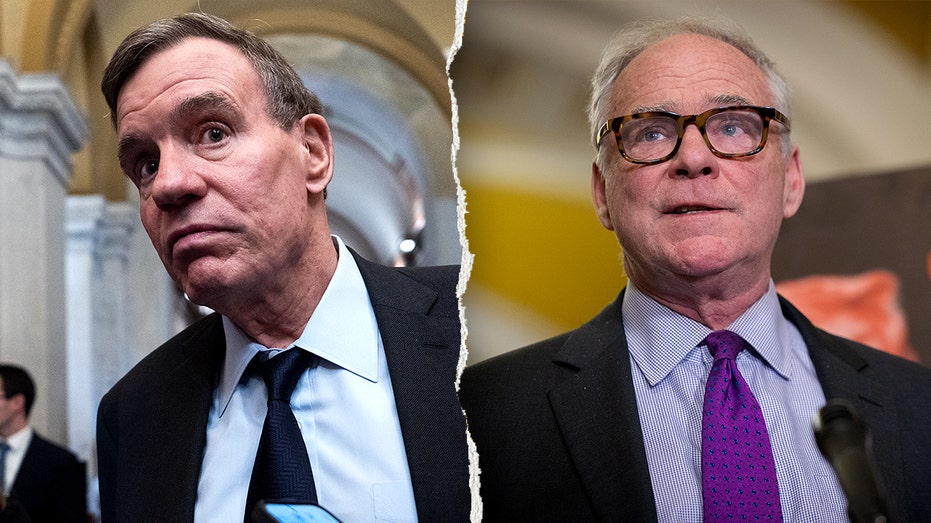
Virginia’s Democratic senators aren’t budging from their position against funding the Department of Homeland Security (DHS) without reforms, despite a deadly shooting involving a suspect with links to ISIS. Sens. Mark Warner, D-Va., and Tim Kaine, D-Va., have both consistently voted with Senate Minority Leader Chuck Schumer, D-N.Y., and their colleagues against the GOP’s attempts to reopen the agency in their push for stringent reforms to Immigration and Customs Enforcement (ICE) and Customs and Border Protection (CBP). Senate Republicans have warned of the necessity to reopen DHS out of concern about an increase in terrorist activity in the U.S. following Operation Epic Fury in Iran. OLD DOMINION UNIVERSITY SHOOTER IDENTIFIED AS MOHAMED JALLOH, FORMER NATIONAL GUARD MEMBER, ISIS SUPPORTER That became a reality on Thursday when the FBI announced it was investigating the shooting at Old Dominion University, which left one person dead and two others wounded, as an act of terrorism after identifying the alleged shooter as Mohamed Bailor Jalloh, a former member of the Army National Guard who was convicted of supporting ISIS. Kaine argued that Senate Democrats have repeatedly tried to reopen chunks of the agency, either through a bill that carved out funding for ICE and CBP or through standalone funding bills that Republicans have blocked. “Senate Democrats have repeatedly moved to fund — and Senate Republicans have repeatedly blocked — TSA, CISA, the Coast Guard and other entities within DHS that help keep us safe,” Kaine said in a statement to Fox News Digital. ‘YOU CAN CRY ABOUT IT’: TEMPERS FLARE IN SENATE AS DHS SHUTDOWN DEBATE ERUPTS, STALEMATE DIGS DEEPER Warner said in a statement to Fox News Digital that he was “heartbroken by the loss of Lt. Col. Brandon A. Shah” and lauded the Old Dominion University students who subdued Jalloh. But he pointed the finger at FBI Director Kash Patel for playing a role in the incident and demanded that Patel “answer for how the FBI lost track of a known, convicted terrorist sympathizer who was then able to get his hands on a gun and murder an American citizen.” “Following Director Patel’s mass firings of experienced FBI agents and counterterrorism experts, this tragedy emphasizes serious concerns about whether his leadership has left Americans more vulnerable to threats,” Warner said. DEMS VOTE TO KEEP DHS CLOSED DESPITE AIRPORT CHAOS, IRANIAN SLEEPER CELL THREAT Separately, the lawmakers panned ICE’s handling of Abdul Jalloh, who was charged with the murder of Virginia resident Stephanie Minter earlier this year. When asked if Virginia counties should have cooperated with ICE to detain Jalloh, an illegal immigrant with a rap sheet of 30 arrests dating back to 2014, Kaine countered, “How about ICE cooperating with counties?” “ICE had this guy repeatedly and let him go,” Kaine said. “And so should counties do more? Yeah, but what about ICE? Why would ICE, beginning in, like, 2017, 2018 — and that was during Trump’s presidency — not take cases like this seriously?” Warner called her murder a tragedy and said, “No one can doubt the fact that somebody who has been arrested 30 times should not be in this country.”
Ex-Dem senator admits to affair with former bodyguard in explosive court filing: ‘Romantic and Intimate’
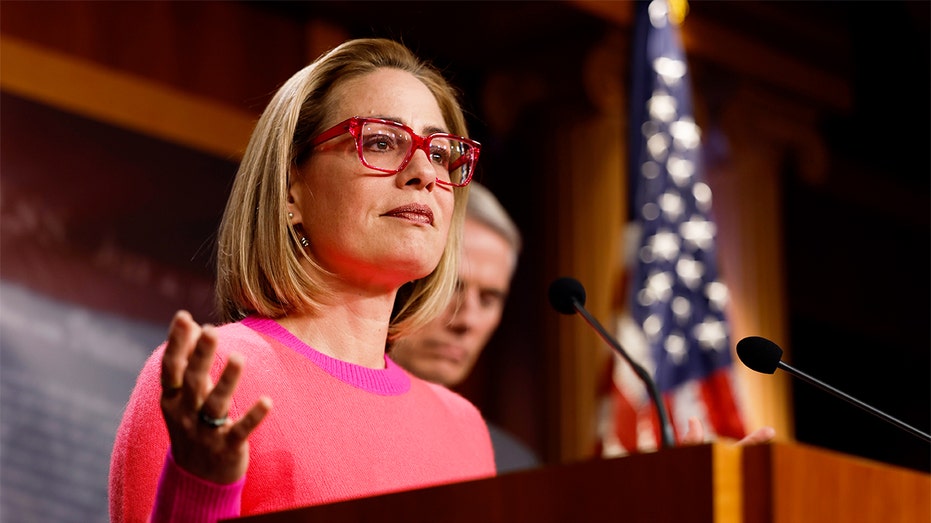
Former Arizona senator Kyrsten Sinema admitted to having an affair with her former bodyguard while in office and while he was still married — an admission that came by way of an explosive new court filing in the state of North Carolina, seeking to dismiss a so-called “homewrecker” lawsuit filed by the bodyguard’s estranged wife. Sinema, who served in the Senate from 2019 to 2025, acknowledged the relationship with her former bodyguard, Matthew Ammel, in a motion to dismiss the “alienation of affection” lawsuit filed in North Carolina by his estranged wife. The complaint accused Sinema of engaging in “intentional and malicious interference” in Ammel’s marriage and sought $25,000 in damages from Sinema as a result of allegedly “willful and wanton” conduct. KYRSTEN SINEMA RIPS SENATE DEMOCRATS FOR APPARENT FLIP-FLOP ON FILIBUSTER NOW THAT THEY NEED IT Neither the motion to dismiss, nor the sworn declaration Sinema submitted to the court, seeks to dispute the nature of her affair with Ammel — described as both “romantic and intimate.” Rather, the filings argue that the case should be dropped because the communications in question occurred “exclusively outside” the boundaries of the Tar Heel state. Combined, the new filings leave little to the imagination regarding the nature of the affair between Sinema and Ammel, which began in May 2024 in Sonoma, Calif., and involved months of phone calls, emails, and Signal messages, in addition to various romantic relations in cities across the U.S. cities. KYRSTEN SINEMA’S SWITCH TO INDEPENDENT DESCRIBED AS ‘GUT PUNCH’ TO DEMOCRATS: ‘NO WIGGLE ROOM’ “I keep waking up during my sleep and reaching over for your arms to hold me,” Sinema told Ammel in one Signal message, which she recalled was sent in June 2024 from Scottsdale, and received by Ammel while in Kansas. That fall, another Signal exchange between the two was apparently interrupted by Ammel’s estranged wife. She allegedly responded to Sinema directly, stating: “Are you having an affair with my husband? You took a married man away from his family.” Just six states, including North Carolina, still recognize “alienation of affection” lawsuits, though the ones that do still require the spouses to meet a difficult legal burden. In order to succeed in the lawsuit, plaintiffs in an “alienation of affection” lawsuit must prove to the court three things: First, that the marriage had real affection and a viable relationship before any third-party involvement; second, that the “love and affection” was destroyed, or significantly diminished; and finally, that the defendant directly “caused the destruction of that marital love and affection.” Fox News Digital reached out to Sinema for comment.
Dems continue to reject GOP efforts to fund ICE in DHS fight despite terror concerns: ‘That’s on them’
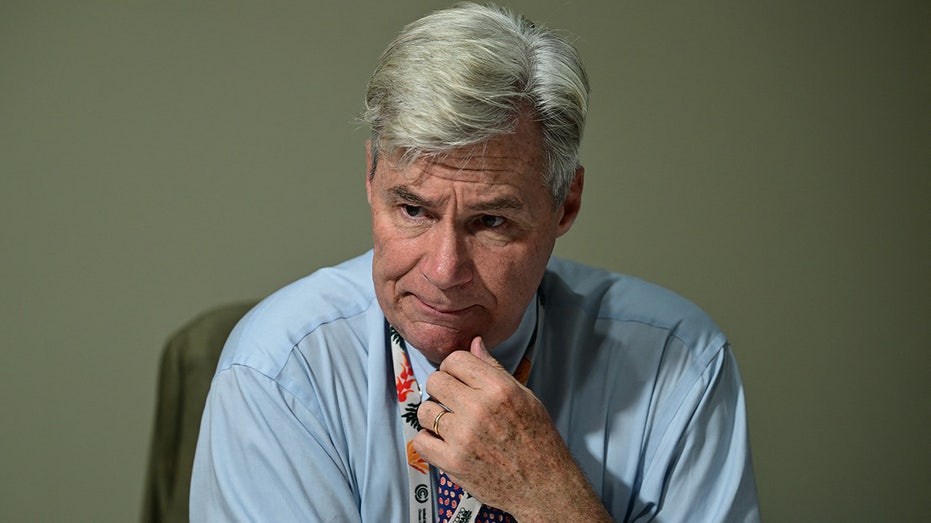
Democrats on Capitol Hill are accusing Republicans of walking away from attempts to shrink the size of a partial government shutdown that began on Feb. 14, arguing that the impasse over funding for Immigration and Customs Enforcement (ICE) doesn’t need to hold up funding for other agencies. It’s a position that Sen. Sheldon Whitehouse, D-R.I., believes his party has repeatedly made clear. “We’re totally ready to fund FEMA, TSA, Coast Guard, other elements. But while ICE continues to misbehave, we need to make sure that there’s an agreement about their behavior. And the Republicans are holding the rest of DHS hostage,” Whitehouse said, listing the other agencies also tied to DHS. “That’s on them,” he added. SCHUMER, DEMS AGAIN BLOCK DHS FUNDING, FORCE STATE OF THE UNION SHOWDOWN Sen. John Cornyn, R-Texas, scoffed at what they view as Democratic calls to avoid the heart of the gridlock. “That’s extremely hypocritical because we’ve already funded ICE,” Sen. John Cornyn, R-Texas, said, noting that the agency had already received allocations through Trump’s Big Beautiful Bill last year. “So, the only thing they’re doing is hurting the air-traveling public through TSA. They’re hurting them and not accomplishing what they’re saying they’re trying to accomplish. It’s shameful,” Cornyn said. DHS SHUTDOWN TRIGGERS TSA ‘EMERGENCY MEASURES’ AS LAWMAKER WARNS AIRPORTS COULD FEEL ECONOMIC PAIN Sen. Rick Scott, R-Fla., echoed Cornyn’s thinking, arguing that lawmakers should address DHS funding. “All of Homeland Security needs to be funded. We’re not going to pick part of it not being funded. It’s making our country less safe,” Scott said. The lapse in funding for DHS hit the one-month mark Saturday with no resolution in sight over the 10 operational reform demands Democrats have made regarding any funding for ICE. SWALWELL PRESSED ON DEMOCRATS’ RESISTANCE TO FULLY FUNDING DHS AMID IRAN THREAT Among others, Democrats are demanding a ban on masks for ICE agents, an end to roaming patrols, stiffer warrant requirements and visible identification markings. Their demands came about in the wake of the deaths of two civilians in Minnesota who lost their lives in escalated confrontations with immigration enforcement. Sen. Ed Markey, D-Mass., said it was squarely on the Trump administration to make those incidents more unlikely in the future. “Trump has a responsibility to put safeguards around a corrupt agency that is endangering the constitutional privileges of everybody,” Markey said. HOUSE DEMOCRATS VOTE TO CONTINUE DHS SHUTDOWN DESPITE IRAN THREAT, NOEM’S OUSTER Without those demands, Democrats say there’s no way to press on towards funding ICE. “Frankly, we have a simple menu of fixes to ensure that ICE and CBP follow the same standards as state and local law enforcement. We get agreement on that we can move ahead,” Sen. Chris Coons, D-Del., told Fox News Digital. Republicans maintain the demands would handcuff President Donald Trump’s illegal immigration crackdown efforts. Republicans can’t advance funding legislation in the Senate without the help of at least 7 Democrats. Republicans hold 53 seats in the chamber and need 60 votes to break the threat of a filibuster.
Trump’s demand for colleges nationwide to fork over race data faces legal hurdle

A U.S. judge in Boston on Friday temporarily blocked President Donald Trump from ordering colleges to collect and turn over detailed data on race and student admissions, delivering a near-term reprieve to 17 Democratic attorneys general who sued to block the policy from taking force. U.S. District Judge F. Dennis Saylor IV, a George W. Bush appointee, issued a temporary restraining order Friday that blocked the administration from immediately ordering the detailed information from colleges and universities across the U.S. Trump announced the new effort last August as part of a broader push from the administration to ensure universities were not using race as a factor for admissions, in accordance with a 2023 Supreme Court ruling that blocked so-called “race-conscious” admissions. JUDGES V TRUMP: HERE ARE THE KEY COURT BATTLES HALTING THE WHITE HOUSE AGENDA The ruling forced many colleges to fundamentally alter their admissions process for the first time in decades. But Trump and some Republicans have criticized what they argue is a lack of compliance with the ruling, arguing that many universities have failed to adjust their admissions processes quickly or fully enough to comply. Trump’s August memo directs Education Secretary Linda McMahon to require colleges to report more data to the federal government “to provide adequate transparency into admissions.” EX-JUDGES BLAST TOP TRUMP DOJ OFFICIAL FOR DECLARING ‘WAR’ ON COURTS As part of that effort, all universities that receive federal funding were ordered to submit to the Education Department race and gender admissions data dating back years, as well as information regarding the total undergraduate applicant pool and enrollment size. But the Democratic attorneys general who sued to block the policy argued this week that they had not been given enough time to compile the large amount of data — roughly seven years’ worth— required by the administration. They also argued that the effort by the Trump administration is an attempt to turn the Education Department’s primary statistical agency, the National Center for Education Statistics (NCES), into a “mechanism for law enforcement and the furthering of partisan policy aims.” TOP US COURT HANDS TRUMP A WIN ON DEPORTATIONS AS SCOTUS CHALLENGE LOOMS Judge Saylor’s temporary order effectively extends the deadline by another 12 days, through March 25, to allow the court to consider the case made by the states, and to provide for an “orderly resolution of the issues,” according to the brief order. It was not immediately clear whether the Trump administration would appeal the order. Neither the Justice Department nor the Department of Education immediately responded to Fox News Digital’s request for comment.
Democrat darling Talarico called out for making sixth-grade public students write ‘Obama memoirs’

Democrat darling and Texas Senate candidate James Talarico is taking heat after it was discovered that, as a public school teacher in San Antonio, he made his sixth-grade students write “Obama memoirs” celebrating his election. Corey DeAngelis, a school choice advocate and research fellow at the Heritage Foundation, called the assignment “disqualifying” for a Senate hopeful in Texas. In a Facebook post by Talarico dated Nov. 13, 2012, he announced, “Today, we finished writing our Obama memoirs,” explaining that “students wrote a memoir of Election Night from the point of view of a member of the Obama family.” One of the memoirs shared by Talarico showed one of his students writing as if they were former President Barack Obama’s child, saying, “I was crying when my father was giving his speech” and praising “those lovely words that came out of his mouth” during his election night speech. DEMOCRAT RISING STAR CALLED OUT FOR ‘CREEPY’ COMMENT ABOUT TRANSGENDER CHILDREN The Democratic Party has high hopes that Talarico, a progressive state representative, can flip a critical Senate seat blue and become the first Democratic senator from Texas in decades. Since winning the party’s nomination, however, many have called out his history of progressive statements, including saying “God is nonbinary” and using the Bible to justify abortion. In another Facebook post, dated Nov. 16, 2012, Talarico shared an image of a poster board full of Obama memoirs with a banner reading “Mr. Talarico’s Wall of Fame.” The display featured more than a dozen memoirs along with photos of Obama and his family, as well as presidential seals and Obama’s campaign emblem. Talarico commented, “Our Wall of Fame has been updated with our awesome Obama Family Memoirs!” The Obama memoirs are not the only posts from Talarico’s teacher account drawing criticism. Some have also taken issue with a Sept. 14, 2011, post depicting a classroom “free thinker” display. Among the figures labeled as free thinkers were Obama, Bill Gates, Supreme Court Justice Sonia Sotomayor and Housing and Urban Development Secretary Julián Castro. LEGALIZE PROSTITUTION EFFORT LEFT CANDIDATE ‘SHOCKED’ IN BLUE STATE WITH RAMPANT HUMAN TRAFFICKING Other figures included in the display ranged from Ludwig van Beethoven to Frida Kahlo to Jay-Z. Harry Potter author J.K. Rowling was also included. Not included, however, were any Republican or conservative leaders. Some have also criticized Talarico for a Sept. 4, 2012, post in which he encourages students to watch the Democratic National Convention to see Castro, a former mayor of San Antonio, give the keynote speech. DEMOCRAT RISING STAR CALLED OUT FOR ‘CREEPY’ COMMENT ABOUT TRANSGENDER CHILDREN Conservative commentator Steve Guest slammed Talarico for this, writing on X, “What Talarico was doing as an ‘educator.’” The National Republican Senatorial Committee also chimed in, writing, “James Talarico made his public school students write ‘Obama memoirs’ and encouraged them to watch the DNC What else was he telling Texas kids in his classroom?” A Talarico spokesman responded to conservative critics in a statement to Fox News Digital. “John Cornyn, Ken Paxton, and the billionaires who prop them up are scared of James Talarico for good reason: our campaign is building a movement poised to change the politics of this state and take power back for working people,” press secretary JT Ennis said. “While they spend their time lobbing stale attacks to mislead Texans, we are uniting the people of Texas to win in November.” Talarico will be facing off against either incumbent Sen. John Cornyn, R-Texas, or state Attorney General Ken Paxton this November. Cornyn and Paxton are currently locked in a bitter primary runoff that will come to a head this May.