

Tributes pour in from Congressional lawmakers after Jimmy Carter’s death: ‘A great humanitarian’
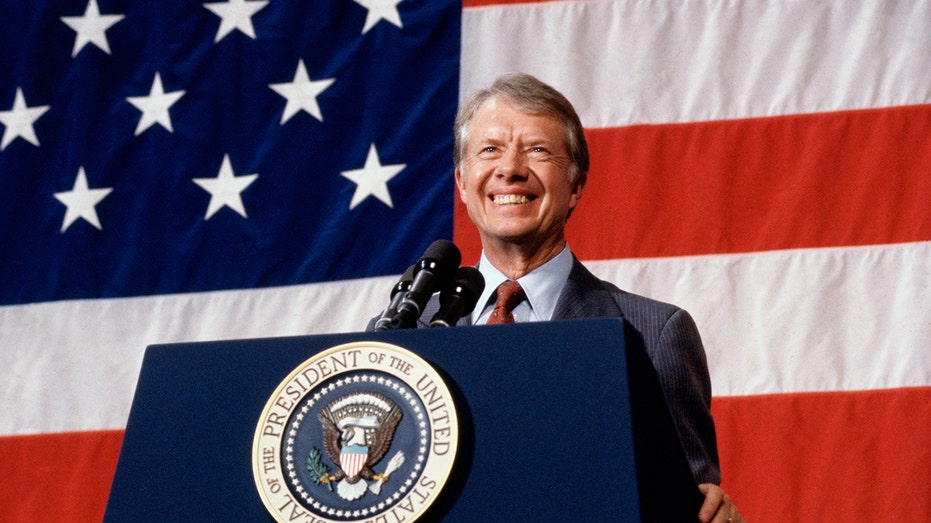
Members of Congress on both sides of the aisle have shown an outpouring of sympathy in the wake of former President Jimmy Carter’s death on Sunday. “I join all Americans in saluting President Carter for his lifetime of service, first as a naval officer, then as a senator in the Georgia legislature, then as Governor of Georgia, and, finally, as President of the United States,” House Majority Leader Steve Scalise, R-La., said in a statement on Sunday. “Jennifer and I would like to extend our heartfelt condolences to the Carter family.” Senate Majority Leader Chuck Schumer, D-N.Y., said in a statement, “Today, we mourn the loss of one of our most humble and devoted public servants, President Jimmy Carter.” REPUBLICANS GIVE DETAILS FROM CLOSED-DOOR MEETINGS WITH DOGE’S MUSK, RAMASWAMY “From his legacy as President, to his dedication to improving human rights across the globe, and his tireless efforts alongside his wife, Rosalynn, in building a better world through Habitat for Humanity, he inspired millions with his unwavering commitment to justice and equality,” Schumer said. “President Carter’s faith in the American people and his belief in the power of kindness and humility leave a strong legacy. He taught us that the strength of a leader lies not in rhetoric but in action, not in personal gain but in service to others.” Carter died on Sunday afternoon at age 100, his nonprofit foundation, The Carter Center, announced. Both Republicans and Democrats immediately sent condolences to his family and praised his lifetime of service, particularly after his one-term stint in the White House. House Minority Leader Hakeem Jeffries, D-N.Y., said on X, “Thankful for the incredible life, legacy and leadership of President Jimmy Carter. He was a great man, a great role model and a great humanitarian.” FORMER PRESIDENT JIMMY CARTER TO SPEND ‘REMAINING TIME’ AT HOME RECEIVING HOSPICE CARE “Today, I join Americans across the country in mourning the loss of our 39th President, Jimmy Carter,” said Rep. Mike Collins, R-Ga., who hails from Carter’s home state of Georgia. “Born in a small town in Georgia, President Carter’s dedication to public service, leadership, humanitarian work, and Christian spirit touched the lives of countless individuals.” Rep. Hank Johnson, a Peach State Democrat, said, “President Carter restored honest competence, integrity, and humility to the Office of the Presidency.” “He led the nation with vision and courage, although his Southern heritage was used to belittle him in the eyes of many,” Johnson said in a statement. “I know of no man in his post presidency who has had a greater impact on humanity than President Carter. A member of Georgia’s Congressional delegation on the other side of the aisle, Rep. Austin Scott, R-Ga., said the U.S. “lost a great Georgian” on Sunday. “President Jimmy Carter was a distinguished public servant, a proud farmer, an accomplished Navy veteran, and a graduate of the US Naval Academy,” Scott said. “Even after leaving the White House, President Carter maintained his efforts to serve those in need…His legacy lives on as the namesake of USS Jimmy Carter (SSN-23).”
Jimmy Carter: His life in pictures
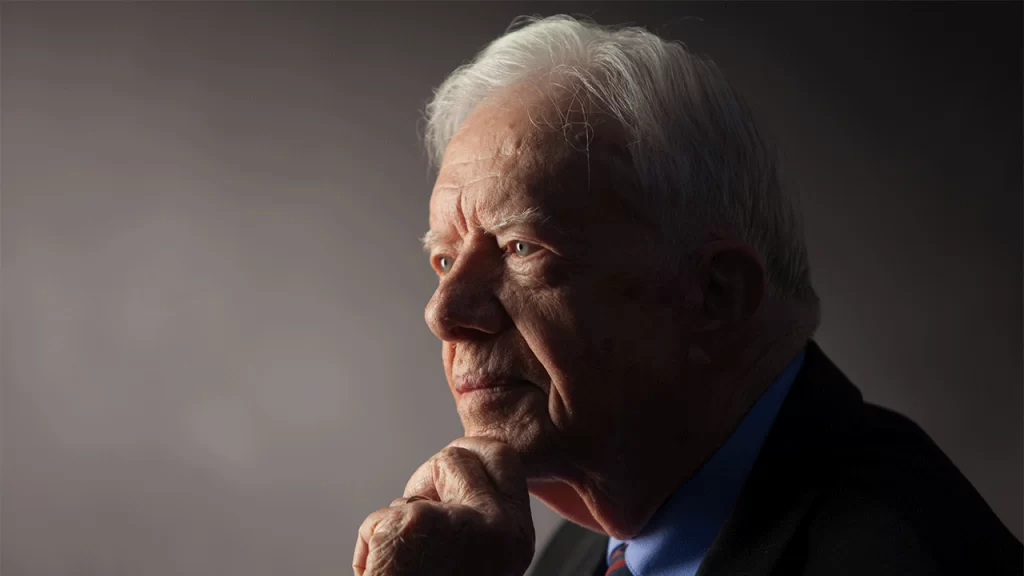
Jimmy Carter served as the 39th President of the United States. Known for his Christian faith, Carter lived a life of service that left a forever mark on United States history.
Camp David: Jimmy Carter’s finest moment
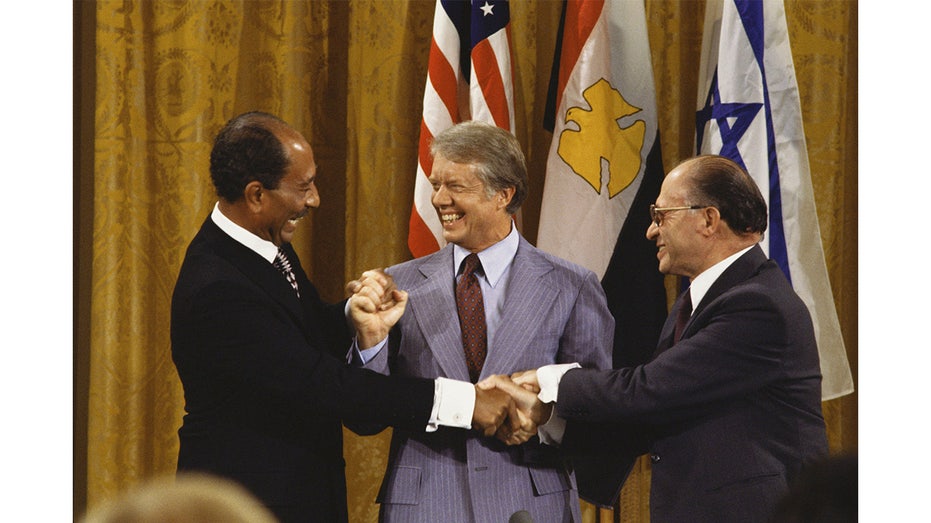
One of Former President Jimmy Carter‘s defining moments was being the president who managed to broker the first peace agreement in the Middle East, successfully ushering in peace between Israel and Egypt after 30 years of war. With the Camp David Accords of 1978, Carter was able to stand out from his predecessors by notching a success in an area where they had failed. The feat became particularly notable amid a presidency known for various economic and foreign affairs shortcomings. According to Martin Indyk, the Lowy distinguished fellow in U.S.-Middle East diplomacy at the Council on Foreign Relations, “Arab-Israeli peace has always been the kind of Holy Grail for American diplomacy.” PRESIDENT CARTER LAUDED FOR POST WHITE HOUSE SERVICE “There have been other agreements, but none of them so important, as the peace treaty that Jimmy Carter brokered between Israel and Egypt. It was the first, and it was the most important,” Indyk, who was once special envoy for Israeli-Palestinian negotiations under former President Obama, continued. The Camp David Accords were signed by then-President Carter, Egyptian President Anwar Sadat and Israeli Prime Minister Menachem Begin in September 1978, and signaled peace between the two countries. Egypt was considered the largest and most powerful Arab nation at the time. Negotiations had begun years earlier, in 1973, and were led by former Secretary of State Henry Kissinger. The start of discussions was prompted by the Yom Kippur War, which had proven an expensive conflict for both Israel and Egypt, as well as the Arab countries it led. Kissinger had managed to negotiate a ceasefire and disengagement pact, leading to Isreal withdrawing a third of its military forces from the Sinai Peninsula. Carter first sought to finalize a deal in November 1977, when Sadat historically traveled to Jerusalem and gave remarks on his desire for peace between the countries. SECRET SERVICE SPOKESMAN ON JIMMY CARTER’S HEALTH: ‘FOREVER BY YOUR SIDE’ Indyk described those inital talks very difficult and noted they were ultimately unsuccessful. “So you had this… moment of great hope created by Sadat’s initiative, to go into the enemy’s den as it were, into Jerusalem and to speak of peace. But that proved very difficult to achieve agreement,” he said. “And that’s when Carter took the risky decision to bring both leaders to Camp David to try to broker a peace agreement between them.” The high-risk meeting with both leaders at Camp David was confidential and lasted 12 days. “They had no certainty at all that they would be able to bridge the gaps,” Indyk said of the meeting’s sensitive nature. Carter faced an important question during the meeting: What would happen to the Palestinian people? “The Palestinian cause was a national cause for the Arabs and so Sadat felt he could not simply abandon them. That he had to have some understanding about what would happen for the Palestinians once he made peace with Israel,” Indyk explained. Indyk attributed Carter’s decision to focus solely on Israel and Egypt to the former president’s “genius.” JIMMY CARTER HAD ONE OF THE ‘GREATEST SECOND ACTS’ IN AMERICAN HISTORY, CONSERVATIVE HISTORIAN SAYS “They had a kind of loose framework for what would happen on the Palestinian front, but essentially, the deal that he did, that he persuaded president Sadat of Egypt to do, was a standalone peace treaty between Israel and Egypt. That’s what he succeeded in negotiating that Camp David,” he said. But this result was contrary to what aides for Carter and Sadat both had advised, per Indyk. “This was Carter’s decision. Against the advice of his advisers and against the advice of Sadat’s advisers, it was his decision to go for the separate peace between Israel and Egypt.” The agreement with Sadat went on to become a foreign policy hallmark of Carter’s presidency and also earned him the Nobel Peace Prize in 2002. “He was an embattled president,” Indyk said. “Nothing else was really going well for him. There were other things he achieved, but this was the most important one.”
Jimmy Carter’s presidency: A time of ‘malaise’ that led to the election of Ronald Reagan
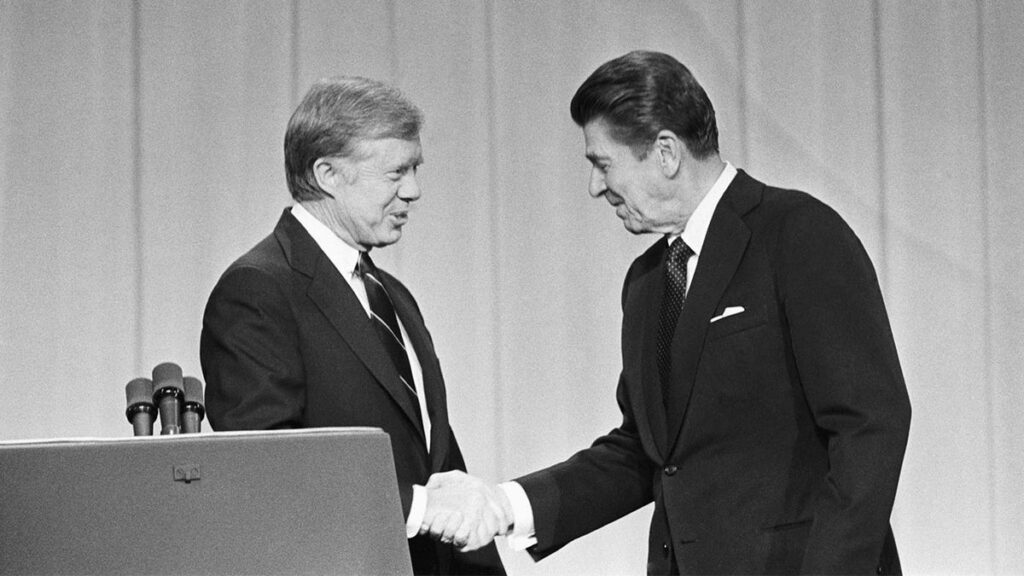
In his one term in the White House, the late President Jimmy Carter struck the Camp David Accords between Israel and Egypt, helped take the world further from nuclear proliferation with the second Strategic Arms Limitation Treaty (SALT), signed the Panama Canal Treaties, which ended a century of direct American control over the crucial canal, and deregulated the nation’s airline industry. But Carter, a former Georgia governor who defeated Republican President Gerald Ford in the 1976 election, also confronted the socialist Nicaraguan revolution in Central America and the invasion of Afghanistan by the Soviet Union, which led to a resumption of Cold War tensions with Moscow and an embargo of the 1980 Summer Olympics by the U.S. And domestically, the one-term Democratic president battled massive inflation known as stagflation, and an energy crisis that led to the return of gas lines across the country. As Carter struggled to cope with multiple domestic and international crises, the then-president went on national television in July 1979 to deliver what was titled “the crisis confidence” address, but was later dubbed the “malaise” speech, even though the world malaise never appeared in Carter’s actual address. Carter called for Americans to return to a sense of civic duty that would unify the country through a call for shared sacrifice for the common good of the nation. While initially giving the president a boost in the polls, the goodwill was short-lived. A couple of days after the address, Carter fired several members of his cabinet and was unable going forward to be seen as a strong and effective leader. REACTIONS POUR IN AS JIMMY CARTER ENTERS HOSPICE Adding to Carter’s woes, was the overrunning of the American embassy in Tehran in the late autumn of 1979, which triggered the more than yearlong Iranian hostage crisis. Carter, politically weakened by a fierce and nearly successful primary challenge by the late Sen. Edward Kennedy of Massachusetts for the 1980 Democratic presidential nomination, was crushed by GOP nominee Ronald Reagan in the general election, with the former California governor sweeping 44 of the 50 states. Historian and author Craig Shirley, who wrote multiple books about Reagan and Carter, pointed to the economic conditions at the time as a major contributor to Carter’s demise. “Interest rates were something like 18%. Inflation was almost as high. The value of a dollar wasn’t worth today what it was yesterday. It was really devastating to people’s savings,” Shirley spotlighted in a C-SPAN interview a few years ago. FORMER PRESIDENT JIMMY CARTER TO SPEND ‘REMAINING TIME’ AT HOME RECEIVING HOSPICE CARE Veteran political scientist Wayne Lesperance, president of New England College, concurred. “While it is certainly true that the Carter Administration had its share of successes, such as the Camp David Accords and the Panama Canal Treaty, in the months leading up to the 1980 election, voters were focused on high inflation, low economic growth, an energy crisis and the growing perception that American power and influence in the world was in decline,” Lesperance said. “The Iran hostage crisis and failed rescue attempt punctuated the feeling that the U.S. under Carter had become a paper tiger. Americans wanted John Wayne. They elected Ronald Reagan whose campaign projected strength, confidence, humor, and a nostalgic appeal to an America as the proverbial shining city on a hill,” he emphasized. But it’s the “malaise” speech that still stands out more than four decades after Carter’s stinging rejection by American voters. “Jimmy Carter’s one-term presidency would be known for many things: stagflation, a terrible economy, weakness in the face of Soviet advances, but also the Camp David Accords and ushering in the Age of Reagan. Yet to his everlasting chagrin, Carter’s failed four years in office will always be reduced to the word “malaise,” and his awful, terrible, embarrassing speech in July of 1979,” Shirley wrote on the 40-year anniversary of the infamous address.
Jimmy Carter, 39th president, remembered for his integrity and devotion to humanity
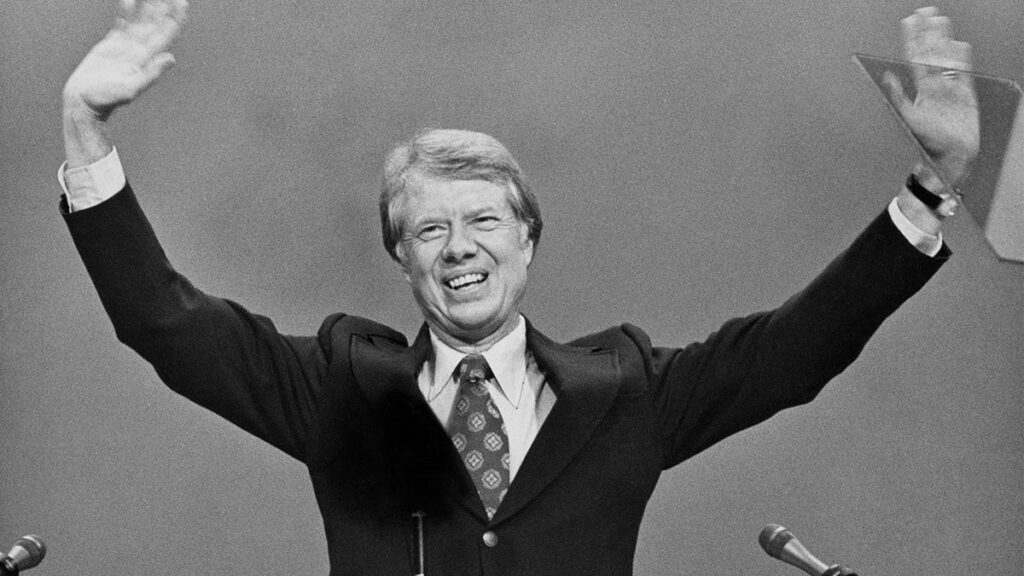
Jimmy Carter, the nation’s 39th president, has died at the age of 100. He served a single term as president, but he also will be remembered for his decades of humanitarian work. Those who knew him – opponents and supporters alike – described him as a man of integrity, whatever flaws he may have had as president. “When we look at the whole thrust of Jimmy Carter’s life, it’s an amazing American story,” Douglas Brinkley, author of The Unfinished Presidency: Jimmy Carter’s Journey Beyond the White House, told Fox News Digital. “He grew up with no electricity, went to work in the… Navy. He became President of the United States at the height of the Cold War and won the Nobel Prize for his post-presidency,” Brinkley said. “All the time, his ambitious humanity was aimed at trying to make sure that everybody he came in contact with, had a better, fair shake at life.” JIMMY CARTER HAD ONE OF THE ‘GREATEST SECOND ACTS’ IN AMERICAN HISTORY, CONSERVATIVE HISTORIAN SAYS A peanut farmer and former one-term governor of Georgia, Carter beat the odds and was elected president in 1977. “Nobody thought Carter could procure the Democratic nomination. But Carter had a unique amount of bulldog tenacity [and] gumshoe perseverance,” Brinkley said. His campaign befuddled Democrats, as Carter was deeply religious and ran to the right of his Republican opponent, Gerald Ford, on some social issues. As a Washington outsider, Carter’s agricultural background and accent endeared him to the deep south. He took office at a time when Watergate, the Vietnam War, and stagflation had left the country in a sour mood. In Washington, his populist campaign inevitably collided with establishment Democrats who never fully accepted Carter. TIM SCOTT’S MASSIVE WAR CHEST COULD GIVE HIM HEAD START IN 2024 PRESIDENTIAL CAMPAIGN “He never had a full grip on his own Democratic Party. Ted Kennedy liberals didn’t like Carter, and the Scoop Jackson Cold War hawks didn’t like him,” Brinkley said. “So, he was kind of an island unto himself as president.” Carter’s foreign policy wins included brokering Mideast peace by keeping Egyptian President Anwar Sadat and Israeli Prime Minister Menachem Begin at the bargaining table for nearly two weeks in 1978. At home, Carter partially deregulated the airline, railroad, and trucking industries and established the departments of Education and Energy and the Federal Emergency Manager Agency. Carter designated millions of acres in Alaska as national parks or wildlife refuges and he appointed a then-record number of women and non-whites to federal posts. He also built on Nixon’s opening with China and pushed Latin America from dictatorships to democracy. Yet, his president was also marked by double-digit inflation, long gasoline lines, and the 444-day hostage crisis in Iran. His bleakest hour came when eight Americans died in a failed hostage rescue in April 1980, helping to ensure his landslide defeat. Carter was also crippled by his – as Brinkley put it – “lack of communication chops.” Oratory, Brinkley said, was not his strong suit. In 1979, Carter delivered his famous “Crisis of Confidence” speech in which he lamented that the United States, once a nation “proud of hard work, strong families, close-knit communities, and our faith in God” had descended into “self-indulgence and consumption.” SIX DEMOCRATS WHO COULD RETIRE AHEAD OF A POSSIBLY GRUELING 2024 SENATE ELECTION CYCLE “Human identity is no longer defined by what one does, but by what one owns. But we’ve discovered that owning things and consuming things does not satisfy our longing for meaning,” Carter said. “We’ve learned that piling up material goods cannot fill the emptiness of lives which have no confidence or purpose.” Craig Shirley, a Reagan biographer and historian, recalled watching the speech while working for a senator on Capitol Hill. “I remember watching it that Sunday night and feeling for the first time in my life, I felt scared as an American. The speech was such a downer. It was so depressing,” Shirley said. “A president is supposed to tell the truth to the American people, but also appeal to the American people’s hopes and aspirations and not their worst feelings or desires.” Carter ultimately served a single, tumultuous term and was defeated by Republican Ronald Reagan in 1980. But whatever flaws his presidency may have had, Carter will perhaps be most fondly remembered for the decades he spent post-presidency advocating for democracy, public health, and human rights via The Carter Center. CHRISTIAN GROUP URGES BIDEN TO PREVENT ‘GENOCIDE’ DEVELOPING ON RUSSIA’S DOORSTEP The Center, which Carter opened with his wife, Rosalynn, in 1982, has been a pioneer of election observation, monitoring at least 113 elections in Africa, Latin America, and Asia since 1989. In perhaps its most widely hailed public health effort, the organization recently announced that only 14 human cases of Guinea worm disease were reported in all of 2021, the result of years of public health campaigns to improve access to safe drinking water in Africa. Carter’s work with the Center garnered a Nobel Peace Prize in 2002. For his humanitarian work, Shirley argued, Carter will be remembered as “one of the best ex-presidents of the 20th century.” “Carter really wasn’t for PR stunts. He really threw himself into his charitable works and did so for many years,” Shirley said. “We’re going to remember him kindly. He was a terrific former president with what he did with the Carter Center and the various initiatives around the country. His book writing stands out [as does] his charitable works. So, he goes down in his history as an extraordinarily good, former president.” The Associated Press contributed to this report.
Jimmy Carter, 39th president of the United States, dead at 100
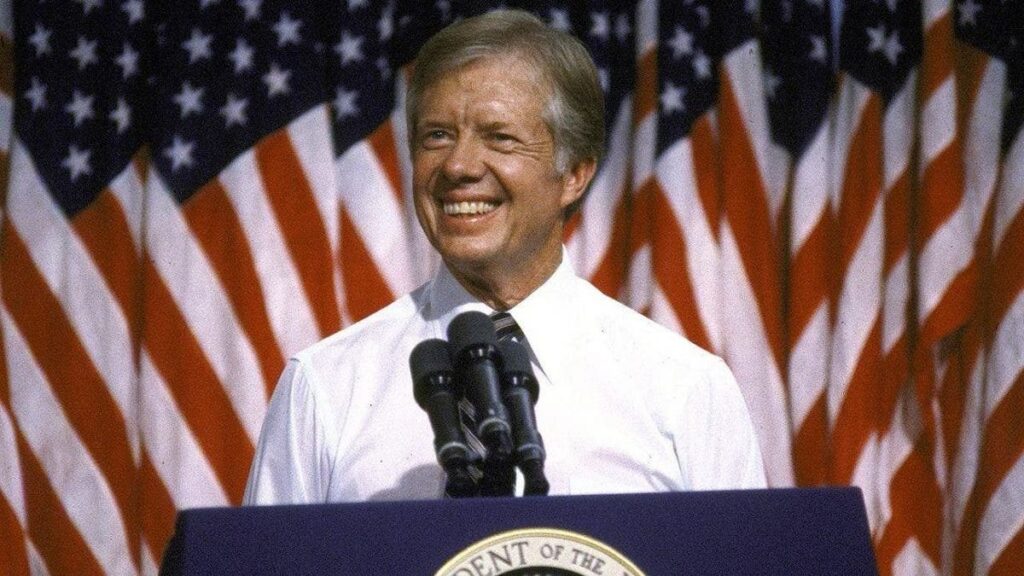
Jimmy Carter, the 39th president of the United States and a former peanut farmer whose vision of a “competent and compassionate” government propelled him into the White House, died on Sunday, according to local media. He was 100. The news was announced by the Atlanta Journal-Constitution on Sunday. Carter’s death follows the passing of his wife Rosalynn on Nov. 19, 2023 at the age of 96 with her family by her side at the Carter home in Plains, Georgia, just days after she had been admitted to hospice care. The late former president himself had entered hospice care in February 2023. Carter survived for years after he had a “small mass” removed from his liver in early August 2015 and later that month announced he had liver cancer that had spread throughout his body. The Carter family had a history of cancer and the former president lost his father, brother, and two sisters to pancreatic cancer. His mother had breast cancer, which later spread to her pancreas. FORMER PRESIDENT JIMMY CARTER TO SPEND ‘REMAINING TIME’ AT HOME RECEIVING HOSPICE CARE Jason Carter, Carter’s grandson, had announced in May that he believed the former president was “coming to the end” of his life’s journey. But the former president hung on much longer. The soft-spoken leader with a signature Georgia drawl saw his single term in the Oval Office clouded by an economic downturn at home and a hostage crisis abroad. His post-presidency life was marked by a very visible dedication to service, but also a series of sometimes controversial moves as he continued to wade into foreign affairs, particularly as it related to the Israeli-Palestinian conflict. Carter met with the leadership of terrorist group and Palestinian representative Hamas in 2009 and 2015. He reprimanded Israel for its operations against Hamas in 2014, saying there was “no justification in the world for what Israel is doing.” James Earl Carter Jr. was born in 1924 in Plains, Georgia. Plains was a farming town and Carter’s father was a farmer, a background that helped instill in him a love of the land – and the working and lower class people who tilled it – that would follow him throughout his personal and professional life. But Carter initially sought a path outside the dirt of Plains and, after attending the U.S. Naval Academy, he served as a submariner in the post-World War II navy, eventually attaining the rank of lieutenant. Carter married Rosalynn Smith, a fellow native of Plains, in 1946, the same year he graduated from the Academy. After Carter’s father died in 1953, Carter resigned his naval commission and returned to his and Rosalynn’s roots in Plains. Carter took the lead at the family farm while Rosalynn operated a farm supply company in their small Georgia town. It wasn’t long, however, before Carter again left the farm fields behind, this time beginning a career in politics that would land him the nation’s highest office in just 14 years. Carter won election to the Georgia Senate in 1962 and, following a failed gubernatorial bid in 1966, he became the state’s governor in 1971. JIMMY CARTER CELEBRATES 98TH BIRTHDAY WITH FAMILY, FRIENDS, BASEBALL Carter grew into a national Democratic Party leader and won the 1976 presidential election against President Gerald Ford, riding a wave of popular discontent with former President Richard Nixon – and the pardon that Ford had extended to Nixon. While in the White House, Carter established full diplomatic relations with China and led negotiation of a nuclear limitation treaty with the Soviet Union. Domestically, he led several conservation efforts, showing the same love of nature as president as he did as a young farmer in Plains. He has cited the Panama Canal treaties and the Camp David accords that brought peace between Egypt and Israel as among his greatest personal accomplishments. “We focused on peace,” he told The Washington Post in 2014. “We never shot a bullet or dropped a bomb on anyone.” But peace wasn’t always easily maintained, and a perceived lack of strength in dealing with bad actors likely contributed to his lopsided 1980 defeat by Ronald Reagan. The final 14 months of his presidency were dominated by the Iran hostage crisis. Following the country’s revolution, the new government took 52 American hostages. Carter was never able to retrieve the detained Americans or negotiate for their release. In an obvious snub, Iran finally released the 52 after they had been held for 444 days — on the same day Carter left office. And though Carter started the Department of Education and the Department of Energy, two government bureaucracies that have since become popular targets for Republicans, a nationwide energy crunch also served to hurt his tenure. Footage of gas lines and high gas prices are a seminal feature of nearly any late 1970s documentary or discussion. The domestic and foreign issues led Sen. Ted Kennedy to take the rare step of challenging Carter for the Democratic presidential nomination. Though Carter survived that battle, though barely, he wasn’t as fortunate in November 1980, when Reagan won 44 states and the presidency. JIMMY CARTER, WIFE ROSALYNN CELEBRATE 75 YEARS OF MARRIAGE Upon leaving the White House, Carter, who authored 28 books, was named a distinguished professor at Emory University in Atlanta and founded The Carter Center, a nonprofit organization focusing on national and international public policy. Carter told The Associated Press that he had the “best times” of his life after establishing the organization in 1982. “This beautiful place on Earth that has set moral and ethical standards that exemplify what a superpower like America ought to be,” Carter said of the center in October. Recalling the manual labor of his youth in Plains, Carter was often seen volunteering and fundraising for Habitat for Humanity, helping to build homes for the needy. Carter also served as a member of The Elders, a group of independent global leaders no longer in politics whose ranks at one time included South Africa President Nelson
Eric Schmitt blasts ‘abuse’ of H-1B visa program, says Americans ‘shouldn’t train their foreign replacements’
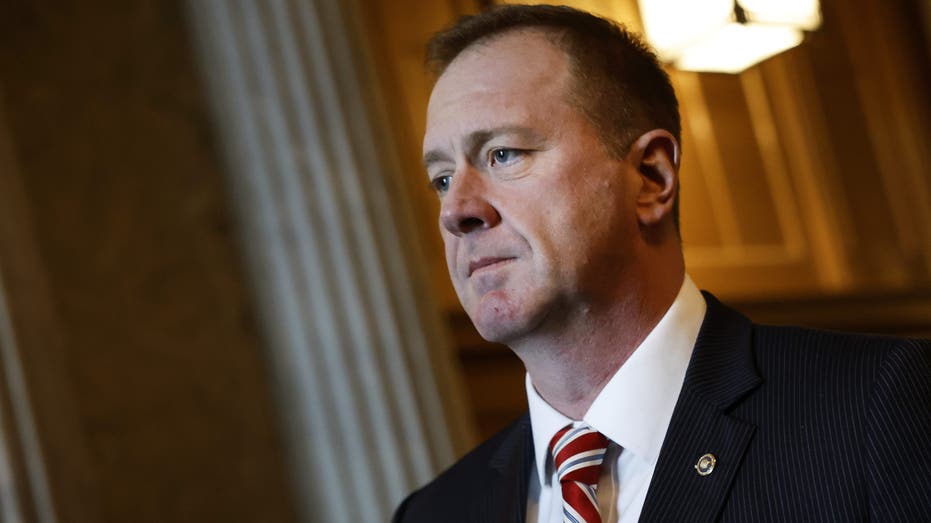
Sen. Eric Schmitt, R-Mo., says H1-B visas are being “abused” in the U.S. and argues that many American workers are being forced to “train their replacements.” Schmitt made the comments on Fox News Sunday with host Shannon Bream, cutting against a push for more migrant workers from Elon Musk. “I think there’s an important, thoughtful debate that’s happening. But the context that we need to, I think, keep in mind here is that American workers have been left behind by this economy. Many factory jobs have been sent overseas,” Schmittt said. “I think the abuses of the H-1B program have been evident, where you have sort of the sons and daughters of those factory workers who lost their jobs, got white collar jobs as accountants, and they’re, you know, training their replacements, the foreign workers who are undercutting their wages,” he continued. GOP SENATORS ‘VERY IMPRESSED’ WITH MUSK, RAMASWAMY DOGE FRAMEWORK AMID MEETINGS ON CAPITOL HILL “So I think the solution here President Trump has actually articulated in 2020 is to reform that system and, you know, get rid of the abuses, make it merit-based and make sure that we’re not undercutting wages and having, you know, Americans train their foreign replacements,” he added. ‘WE’RE GOING TO GUT THE FISH’: REPUBLICANS GIVE DETAILS FROM CLOSED-DOOR MEETINGS WITH DOGE’S MUSK, RAMASWAMY Schmitt went on to argue that the U.S. needs to “invest” more in Americans workers, as well as defend President Trump’s plans for deportations. “The idea of deporting people who are here illegally is not a new concept. In fact, the policy in the law of the United States of America, since, you know, for 200 years, is if you come here illegally, you are detained. If you don’t have a valid reason, like asylum. And by the way, nine out of ten asylum claims are bogus. Then you are deported,” Schmitt said. He stated that it has “only been in the last four years” that Democrats in control of the federal government have refused to enforce existing laws. Musk and DOGE counterpart Vivek Ramaswamy ignited an intra-MAGA battle with their proposals to increase immigration visas for high-skill workers last week. Ramaswamy argued on social media that American culture has glorified “mediocrity” for decades and that importing skilled labor from other countries is the solution. Trump restricted access to foreign worker visas during his first administration and has critiqued the H-1B visas program, which allows U.S. companies to hire foreign workers in specialty occupations.
2024 Most Memorable Election Moments: December 29, 2024
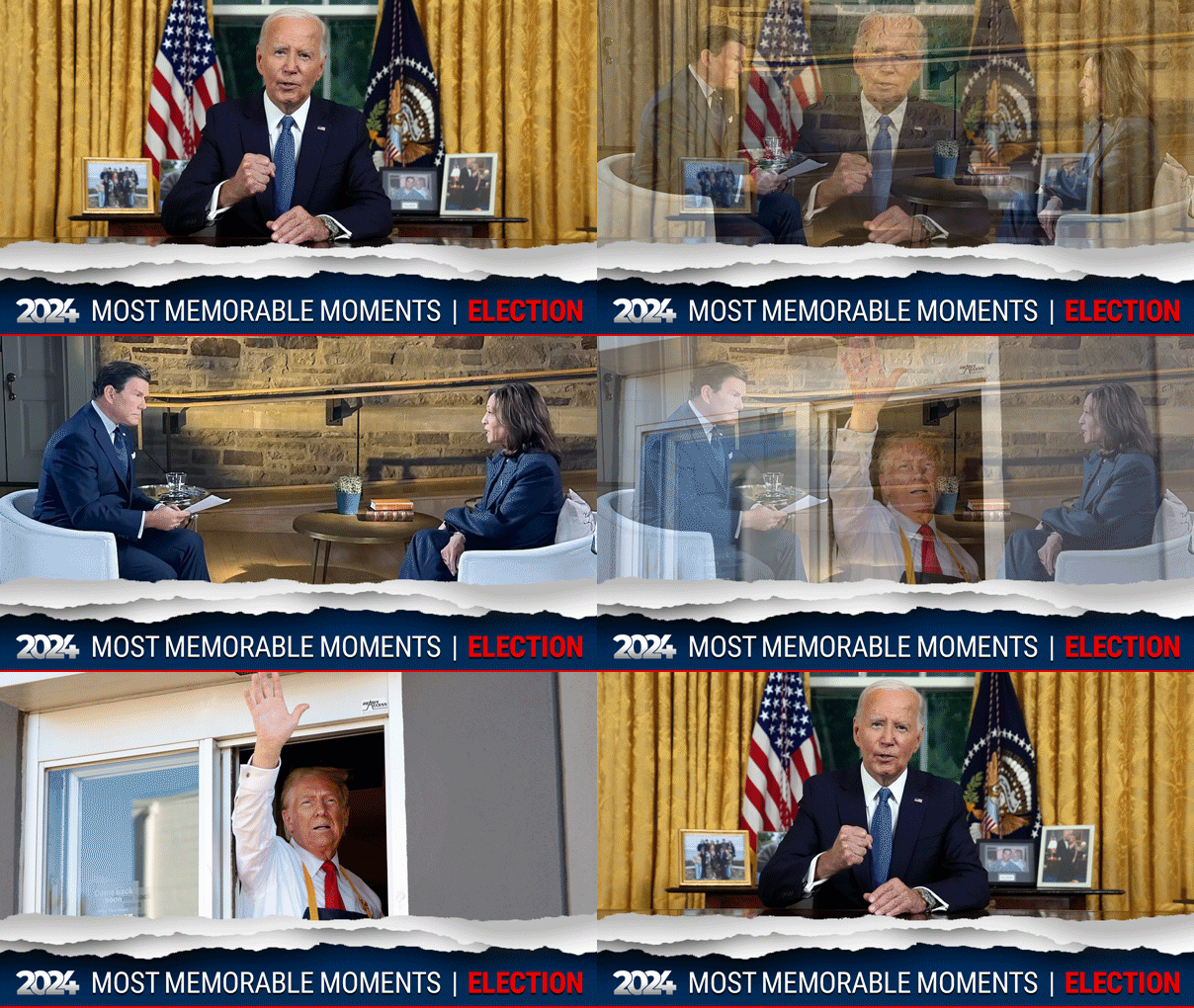
Choose your Most Memorable Election Moment of 2024. Choose between President Joe Biden dropping out of the 2024 race for the White House, Vice President Kamala Harris on Special Report with Bret Baier, and Donald Trump surprising McDonald’s customers at a drive-through. Then see how your choice ranks and share the results with your friends. Check back each day this week to pick your Most Memorable Moments of 2024. Thanks for playing!
European officials pitch new idea to shore up defenses with Trump’s return
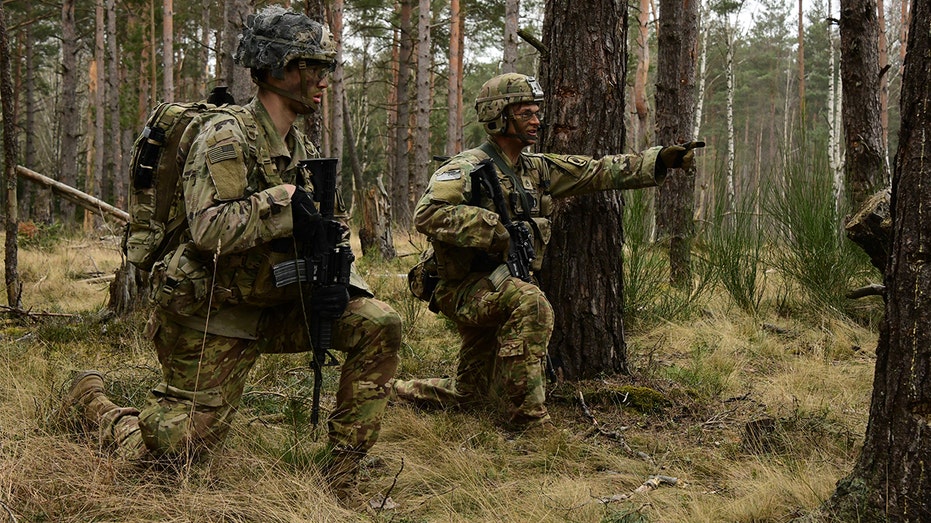
As NATO member states struggle to meet their defense spending goals and war rages on Europe’s eastern front, officials are struggling to agree on a plan to shore up hundreds of billions of dollars to bolster defenses. Eight NATO countries did not meet their 2% target for defense spending in 2024. And as many member states struggle with chronically stressed budgets, calls to meet those goals are not being heeded quickly. The European Commission estimates about 500 billion euros, the equivalent of $524 billion in investments, are needed in the coming decade to defend Europe against evolving threats. NATO LEADERS PREDICT ERA OF 2% DEFENSE SPENDING ‘PROBABLY HISTORY’ AS TRUMP REPORTEDLY FLOATS HIGHER TARGET The EU’s budget cannot be used to fund defense directly, and some European officials and NATO experts are proposing a global defense bank to dole out funds for military modernization. A defense, security and resilience (DSR) bank would issue bonds backed by AAA ratings for financially strapped countries to upgrade their defenses and would provide guarantees for commercial banks to offer credit to defense suppliers. “This is not a substitute to raising defense spending in each of these countries. I think it should be a supplemental tool,” Giedrimas Jeglinskas, chairman of the national security committee in the Lithuanian parliament and a former NATO official, told Fox News Digital. His remarks echo those of incoming President Trump, who has long threatened to pull the U.S. out of NATO due to the number of nations missing the mark on the 2% goal for defense spending. “I think we have to look at it also as an opportunity for the U.S. as well,” Jeglinskas added. “I understand the skepticism by Donald Trump of the World Bank and then the IMF [International Monetary Fund] and IFC [International Finance Corporation] and other institutions. I think there’s been a lot of capital deployed and a lot of investments that these banks or institutions do. The real impact is, at best, questionable. So, I think we have to have very clear KPIs [key performance indicators]. We need to build defense.” The United States’ $824 billion defense budget in 2023 equaled half of total defense spending by all NATO member states combined at $1.47 trillion. PUTIN SAYS RUSSIA READY TO COMPROMISE WITH TRUMP ON UKRAINE WAR The return of Trump to the White House, coupled with a U.S. push to refocus on China, has left Europeans wondering whether the U.S. will have less of an appetite to defend Europe in years to come. More EU defense chiefs and foreign ministers have pitched the idea of issuing joint debt through bonds to finance military projects. But some countries like Germany have voiced concerns about maintaining their own sovereignty and a disproportionate financial burden on some countries. The DSR bank idea is explained at length in a new Atlantic Council report by defense fellow Rob Murray. “For allies across both the Euro-Atlantic and Indo-Pacific regions, the bank could go beyond offering low-interest loans for defense modernization to facilitating equipment leasing, currency hedging, and supporting critical infrastructure and rebuilding efforts in conflict zones like Ukraine,” Murray wrote. “An additional critical function of the DSR bank would be to underwrite the risk for commercial banks, enabling them to extend financing to defense companies across the supply chain.” The goal would be to offer financing to small and medium-sized defense companies that often struggle with access to funds. “By providing loans with extended maturities, the bank would offer predictable and sustainable funding for defence modernisation. Its governance structures would align funding with collective security goals, such as upgrading arsenals and investing in emerging technologies,” Jeglinskas wrote in a recent op-ed for the Financial Times. Asked how the DSR bank would get countries to agree on defense funding priorities, Jeglinskas likened the idea to the U.K.-led Joint Expeditionary Force, a military alliance that includes Denmark, Estonia, Finland, Iceland, Latvia, Lithuania, the Netherlands, Norway and Sweden. Jeglinskas noted the 33 trillion euros in European assets under management across the continent. “There’s really no political will, no risk appetite to move them anywhere besides the kind of bond markets where they rest now,” he said. “But several nations need to build that initial capital, and then, by using the sovereign rating to get to hopefully AAA in capital markets, raise that money from bond markets and to start funding defense programs.” The European Investment Bank has doled out long-term loans and guarantees to European nations’ projects that align with EU policy goals. “But even they are struggling with kind of shifting their mandate towards more dual-use technologies is still not allowed in their funding package,” said Jeglinskas. “Of course, every other bank in Europe is looking at EIB for their signals. That signaling hasn’t been there yet. So, that’s the point. We need to create some sort of mechanism, and that kind of global defense bank would be one of the tools that we could use to rally the capital and really direct it toward defense. So, it’s really creating another multilateral lending institution.”
Billionaires cozy up to Trump with seven-figure inaugural donations after past feuds with incoming president
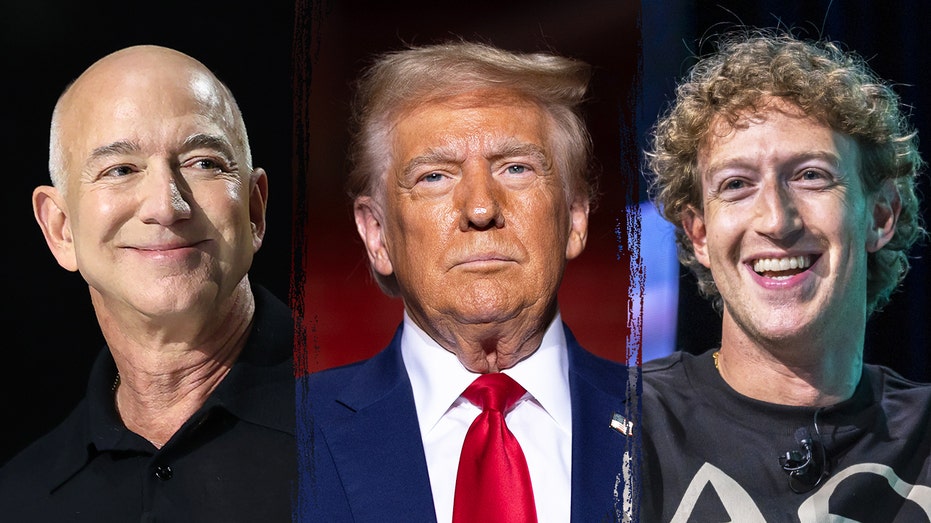
Companies that previously feuded with President-elect Trump are now making seven-figure donations to his 2025 inauguration. Trump has butted heads with several Fortune 500 company executives over the years, but following his presidential election victory in November, some of those same big-business leaders are dropping major cash on the incoming president’s exclusive inaugural festivities. “In the first term, everyone was fighting me. This time, everyone wants to be my friend,” Trump recently said at Mar-a-Lago, according to The Washington Post. Meta, the world’s largest social media network headed by Mark Zuckerberg, suspended Trump’s Facebook and Instagram accounts in 2021 after the events of Jan. 6 — which Trump called an “insult” to his voters. In his new book, titled “Save America,” Trump accused Zuckerberg of “plotting” against him in 2020. DOJ SEEKS TO BLOCK JAN. 6 DEFENDANTS FROM ATTENDING TRUMP INAUGURATION “He told me there was nobody like Trump on Facebook. But at the same time, and for whatever reason, steered it against me,” Trump wrote. “We are watching him closely, and if he does anything illegal this time he will spend the rest of his life in prison — as will others who cheat in the 2024 Presidential Election.” Trump, in his book, also accused Zuckerberg of “always plotting to install shameful Lock Boxes in a true PLOT AGAINST THE PRESIDENT.” However, the relationship appeared to change course as the election drew nearer. After Trump’s Butler, Pennsylvania, assassination attempt in July, Zuckerberg said Trump’s fist pump in the air after suffering a bullet wound to the ear was “one of the most bada– things I’ve ever seen in my life.” Shortly after Trump won the election in November, Zuckerberg met with the incoming president at Mar-a-Lago. Just weeks later, Meta donated $1 million to Trump’s inauguration fund. JOHNSON ALLIES URGE TRUMP TO INTERVENE AS MESSY SPEAKER BATTLE THREATENS TO DELAY 2024 CERTIFICATION “Mark Zuckerberg has been very clear about his desire to be a supporter of and a participant in this change that we’re seeing all around America, all around the world with this reform movement that Donald Trump is leading,” Trump adviser Stephen Miller said during an appearance on “The Ingraham Angle.” Despite a yearlong clash between Amazon’s billionaire founder, Jeff Bezos — who also owns The Washington Post — and the incoming president, the e-commerce company recently pledged to donate $1 million to Trump’s inauguration fund. After Trump told Fox News’ Sean Hannity in 2016 that Amazon was “getting away with murder, tax-wise,” Bezos fired back at the then-presidential candidate. Bezos, appearing at a technology conference, said that Trump’s comments were “not an appropriate way for a presidential candidate to behave.” “Washington Post employees want to go on strike because Bezos isn’t paying them enough. I think a really long strike would be a great idea,” Trump wrote in another hit at the billionaire on X, then Twitter, in June 2018. “Employees would get more money and we would get rid of Fake News for an extended period of time! Is @WaPo a registered lobbyist?” The mood appeared to have shifted following the 2024 election, when Bezos said he was “very optimistic” about Trump’s regulatory agenda. “I’m very hopeful — he seems to have a lot of energy around reducing regulation,” Bezos said at the New York Times DealBook Summit. “My point of view is, if I can help him do that, I’m going to help him.” When Ford agreed to make a deal to meet California’s efficiency standards, the company defied then-President Trump’s plans to push back on the state setting its own green energy standards for automakers. Trump voiced his opposition to the auto giant’s decision, saying that Henry Ford, the company’s founder, would be “very disappointed if he saw his modern-day descendants wanting to build a much more expensive car that is far less safe and doesn’t work as well, because execs don’t want to fight California regulators.” Ford, one of the world’s largest automakers, recently announced it will be making a seven-figure donation to Trump’s inauguration in January. Other major automakers, such as GM and Toyota, will also make individual donations of $1 million to Trump. Trump will also receive a $1 million inauguration donation from Intuit, whose stock recently dropped in November after it was reported that the Department of Government Efficiency (DOGE) was considering creating a free tax-filing app.