

GOP senator unveils BOASBERG Act to stop ‘rogue’ judges from handpicking Trump cases
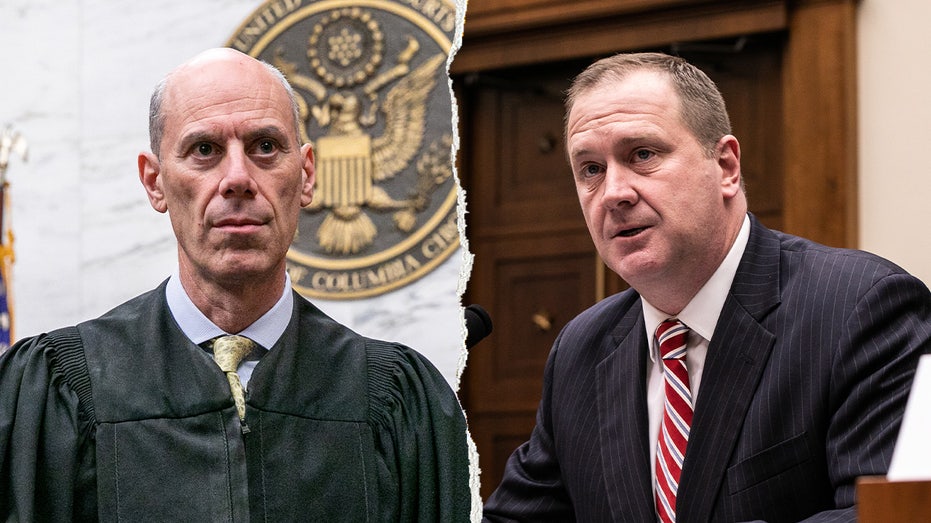
FIRST ON FOX: A Senate Republican is planning to curb so-called “rogue” judges, and he is using one of President Donald Trump’s greatest foils in the judicial branch as the launching point. Sen. Eric Schmitt, R-Mo., is planning to introduce the Blocking Overt Attempts at Shopping By Enforcing Randomization Guidelines Act in an attempt to curb judge shopping in federal cases. The bill, shortened to the BOASBERG Act, is named after U.S. District Judge James Boasberg, one of Trump’s main antagonists on the bench. Schmitt’s legislation, first obtained by Fox News Digital, would broadly require that federal cases be randomly assigned in a bid to limit the ability of judges and litigants to influence who gets to hear and oversee a case. OBAMA-APPOINTED JUDGE BLOCKS TRUMP’S ELECTION ORDER AS SAVE AMERICA ACT FIGHT INTENSIFIES “Judge Boasberg is the poster child for a rogue judge and exposed serious loopholes in our judicial system,” Schmitt said in a statement to Fox News Digital. “Randomly assigning cases among judges ensures the American people can have confidence in the impartiality of our courts.” Schmitt’s legislation adds several guardrails to the selection process for federal cases and gives courts 120 days after enactment to implement them. It would require the random assignment of federal civil cases, prohibit chief judges from influencing case assignments, require courts to publicly disclose their case assignment practices, create penalties for meddling with or manipulating the assignment process, and require the random reassignment of a case if the Supreme Court intervenes in a ruling. DC APPEALS COURT ORDERS JUDGE BOASBERG TO HALT TRUMP CONTEMPT PROBE OVER DEPORTATION FLIGHTS Boasberg, who was first appointed to the federal bench by former President Barack Obama in 2010, has become a flashpoint for Republicans and the White House for his role in several high-profile cases against Trump and his administration during his two non-consecutive stints at 1600 Pennsylvania Ave. It’s caused Trump to call for his impeachment and the Justice Department to file a misconduct claim against him. Boasberg most recently blocked the State Department from restricting visas for foreign officials and other foreign nationals that the administration has accused of suppressing or helping suppress American free speech. SUPREME COURT WEIGHS TRUMP EFFORT TO TERMINATE TEMPORARY PROTECTIONS FOR HAITIAN, SYRIAN MIGRANTS That latest move is just the tip of the iceberg in a long-running set of clashes between Boasberg and Trump. Boasberg has been a key player in the administration’s attempt to deport Venezuelan migrants. He tried to temporarily block the administration’s fast-paced deportation of Venezuelan migrants that the White House alleged were Tren de Aragua gang members. He later ordered the administration that the men had to be returned to the U.S. for violating due process in their removal. Boasberg also landed the case surrounding “Signalgate,” where top members of Trump’s Cabinet, including Vice President JD Vance, War Secretary Pete Hegseth, Secretary of State Marco Rubio and then-National Security Advisor Michael Waltz, among others, accidentally included a journalist in their encrypted group message discussing strikes in Yemen. He ordered the administration to preserve any of the messages related to the group chat, but stopped short of requiring that the administration salvage any that may have been deleted. Schmitt hopes that his legislation will create a new operating standard moving forward. “The BOASBERG Act prevents judges from forcing their way onto cases and is an important piece of court transparency legislation that will help restore the American people’s confidence in our judiciary,” Schmitt said.
Battleground Democrat flip-flops on conversion therapy after left-wing backlash
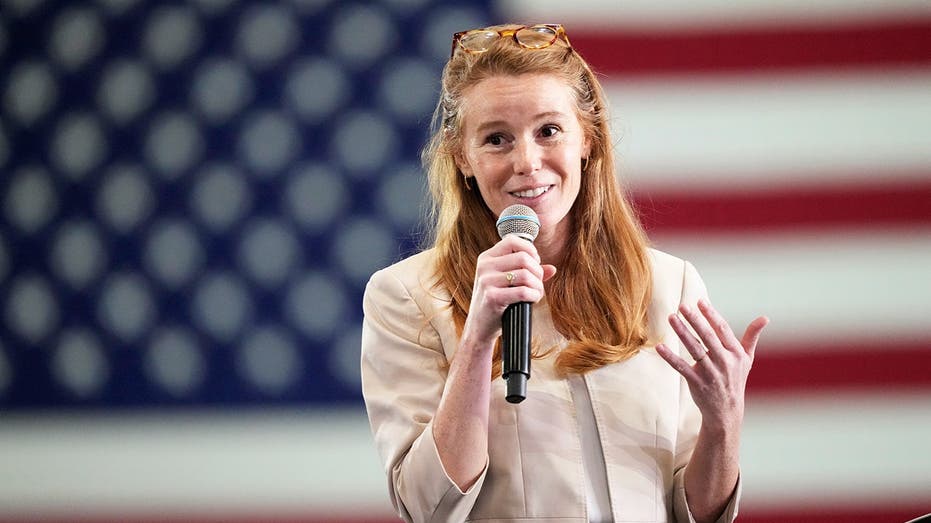
A Democratic House candidate vying to flip a key Republican-held seat is on the defensive after reversing her position on conversion therapy following backlash from the party’s left flank. Rebecca Cooke, a Democratic challenger vying to unseat Rep. Derrick Van Orden, R-Wis., repeatedly declined to endorse a federal ban on conversion therapy during several forums held ahead of the Aug. 11 primary. But after drawing criticism from some progressive voters, Cooke reversed course, saying the federal government should prohibit the controversial practice, which often involves mental health professionals offering talk therapy for individuals struggling with their sexual orientation or gender identity. The issue gained renewed attention when the Supreme Court ruled earlier this year that Colorado could not enforce a state-level ban on conversion therapy over free speech concerns, sparking backlash from some Democrats. FOX NEWS POWER RANKINGS: DEMOCRATS LEAD IN THE HOUSE, BUT REDISTRICTING KEEPS THE GOP IN THE GAME The reversal comes as Cooke appears to be walking a political tightrope on LGBTQ issues in the Trump-friendly swing district, where she must appeal to both Democratic primary voters and the broader electorate. Before Cooke can seek a rematch against Van Orden, she must first overcome a primary challenge from former Eau Claire City Council President Emily Berge, who is running to her left. Asked what lawmakers could do to push back against the Supreme Court ruling at a May forum in La Crosse, Cooke sidestepped the question and said she preferred “local communities having control.” “I’m in favor of that sort of local control when making policies like this,” the Wisconsin Democrat said. Wisconsin’s conversion therapy ban took effect in 2022, while the city of Eau Claire, in Van Orden’s district, prohibited the practice in 2018. Meanwhile, at a June candidate forum in Platteville, Cooke said “no” when asked if the federal government should pass legislation to ban conversion therapy. Her answers prompted outrage from some progressive voters. “I find it interesting that not in one, but TWO forums you said you would leave conversion therapy up to the states to decide,” one user wrote on Facebook. “That is not protecting the LGBTQ community.” “I don’t know how you can say ‘Happy Pride’ if you aren’t willing to stand up for people you want to represent in Congress,” another account replied. “If you are willing to sell out the LGBTQIA+ community for votes, who is next?” CHRISTIAN COUNSELORS CHALLENGE WISCONSIN CONVERSION THERAPY BAN AFTER SUPREME COURT RULING Amid the backlash, Cooke said she “misunderstood” the moderator’s question and said she supported a federal ban on conversion therapy in a statement posted on a third-party account after the debate. During a July forum in Eau Claire, Cooke clarified, “I do not support conversion therapy whatsoever.” Berge, who helped enact Eau Claire’s local conversion therapy ban, was clear throughout the candidate forums in denouncing the practice. “As a therapist, conversion therapy has no place in our society, in our culture,” she said during the June event. Republicans sharply criticized Cooke’s reversal on conversion therapy bans. Van Orden’s campaign argued Cooke, who counts Sen. Bernie Sanders, I-Vt., among her endorsers, flip-flopped on her stance while still trying to “portray herself as a moderate.” “Rebecca Cooke is so desperate to appease the far-left woke mob that Wisconsin voters can’t be sure where she actually stands,” Republican National Committee (RNC) spokesman Hunter Lovell told Fox News Digital. “She’s trying to be one candidate for liberal activists and another for everyone else,” he continued. “Whether it’s caving to the far left or scrambling to rebrand herself for the general election, Cooke owes Wisconsinites an answer: Which Rebecca Cooke would show up in Congress?” Fox News Digital reached out to Cooke for comment. Cooke, a former Democratic consultant, fundraiser and small business owner, has consistently supported expanding LGBTQ rights during her previous two failed bids for Wisconsin’s 3rd Congressional District. In her third run for the seat, the repeat candidate is making clear that the Democrat-backed Equality Act — legislation that would make sexual orientation and gender identity protected classes under federal civil rights law potentially affecting women-only spaces and female sports teams — is a “centerpiece” of her campaign. She is also endorsed by the progressive Human Rights Campaign, which has advocated for sex change procedures for minors, including hormone therapy and puberty blockers. President Donald Trump comfortably carried the sprawling swing district by more than seven points in 2024, meaning Cooke would likely have to win over a segment of the president’s voters to prevail in November. Cooke, who significantly outperformed former Vice President Kamala Harris, lost to Van Orden in the general election by just under three points in 2024, according to analysis from The Downballot. The nonpartisan Cook Political Report rates the battleground contest as a “toss-up.”
Russia exposes NATO weapons gap as top commander warns ‘the math is not in favor of the West’

Days after NATO allies committed tens of billions of dollars to new air and missile defenses, the alliance’s top transformation commander warned that the West must fundamentally redesign its weapons and industrial base to withstand attacks at the scale now being demonstrated in Ukraine and the Middle East. “Today, the math is not in favor of the West,” Adm. Pierre Vandier, NATO’s Supreme Allied Commander Transformation (SACT), told Fox News Digital in an exclusive interview following the alliance’s summit in Ankara, Turkey, in early July. The summit produced commitments to acquire 900 Patriot missiles and invest more than $40 billion in counter-drone capabilities throughout five years. But Vandier argued that simply buying more of the West’s existing weapons will not solve the underlying problem. TRUMP ENTERS FINAL NATO SUMMIT DAY AS UKRAINE, DEFENSE SPENDING TAKE CENTER STAGE Russia’s nightly barrages against Ukraine have exposed an air-defense model designed for smaller numbers of incoming threats. The U.S.-Iran conflict has simultaneously intensified demand for the high-end interceptors needed to defeat ballistic missiles, including Patriots and Terminal High Altitude Area Defense (THAAD) that cannot quickly be replaced. “There is no way to produce 50,000 Patriots a year,” Vandier said. “We don’t have the supply chain, and it’s not worth doing that given the cost of the weapon.” Instead, Vandier said NATO needs a layered mix of defenses: cheaper weapons that can be mass-produced to counter waves of drones, while preserving advanced interceptors for ballistic missiles and other sophisticated threats. THE TWO MOST IMPORTANT AMERICAN WEAPONS SYSTEMS NATO IS EAGER TO HAVE “You need to have attritable, low-cost, mass-produced weapons to just kill the low-cost weapons that are coming by big waves,” Vandier said. “And then you need still the exquisite, complex weapons to kill the most complex weapons, as ballistic missiles.” Trump announced at the summit that the United States would grant Ukraine a license to manufacture Patriot interceptors, potentially allowing Kyiv to build more of the weapons it urgently needs to defend against Russian ballistic missiles. But asked whether the announcement changed his assessment that Patriots alone could not protect Europe throughout the next five years, Vandier pointed to a deeper obstacle: Western weapons were designed around an industrial base that no longer exists. UKRAINE’S BATTLEFIELD IS TRANSFORMING THE FUTURE OF NATO “The design needs to change,” Vandier said. “We are at a moment where some stuff will be redesigned under pressure to be mass-produced.” NATO also is attempting to transform against a threat that is changing in real time. Asked about a recent Russian live-fire exercise on Lake Peipus, between Estonia and Russia, which Estonia’s defense minister assessed was likely practice against Ukrainian-style naval drones, Vandier said Russia has demonstrated an ability to absorb battlefield lessons and adjust “on a weekly basis.” “War — if you do not adapt, you die,” Vandier said. “All your brain is about how you outmatch, outpace, outrun the enemy. And so Russia is not that bad at that.” “For NATO now, it’s a question of speed of adaptation,” Vandier said. “It’s a mind game.” Ukraine’s defense industry, meanwhile, is increasingly setting the pace for the larger Western manufacturers that once supplied most of its weapons, Vandier said. Ukrainian companies have been able to develop, field and modify systems quickly in response to changes on the battlefield. “The very agile and fast-evolving industrial base in Ukraine is now giving the pace to the European and Western industry,” Vandier said. But the technological competition is not confined to drones and air defenses. Vandier warned that the collapse of the Intermediate-Range Nuclear Forces Treaty has reopened a broader race over long-range missiles in Europe, as Russia and NATO allies seek weapons capable of holding targets farther behind enemy lines at risk. The 1987 treaty prohibited the United States and Russia from possessing ground-launched missiles with ranges between 500 and 5,500 kilometers. The first Trump administration withdrew from the agreement in 2019 after accusing Moscow of violating it, an allegation Russia denied. Vandier said the disappearance of those limits has produced a period of “complete strategic instability,” with both sides under pressure to develop new capabilities to preserve deterrence. “The Pandora’s box is open again,” Vandier said, “and we’ll try to close it down one day.”
WATCH: Rand Paul says Fauci lobbied for $1M prize while leading COVID response
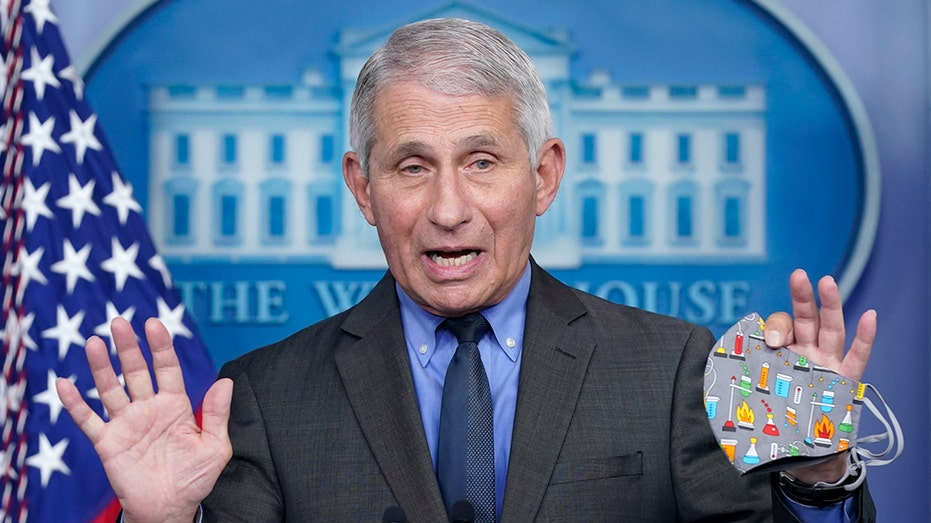
Sen. Rand Paul, R-Ky., wants answers from former chief White House medical advisor Anthony Fauci on why he used his rising fame to lobby colleagues to nominate him for a $1 million prize. Paul, who chairs the Senate Homeland Security and Governmental Affairs Committee, is gearing up for a blockbuster hearing with Fauci, the former head of the National Institute of Allergy and Infectious Diseases at the National Institutes of Health (NIH), for his role as spokesman and policy craftsman during the COVID-19 pandemic. Ahead of the hearing, Paul dumped over 1,000 pages of Fauci’s diary, and he told Fox News Digital that one of the issues that would soon come to light during Wednesday’s fight in the Senate was Fauci’s alleged dogged pursuit of a hefty cash prize while serving under former President Joe Biden. FAUCI’S NEWLY RELEASED COVID DIARIES REVEAL BIZARRE FIXATION ON FAME AS PANDEMIC DEATHS MOUNTED “We have conversations where he’s telling other people at the NIH to nominate him,” Paul said. “Like, ‘Will you nominate me? I’ll write up my nominating background for you, and then you nominate me.’” “Why would we let — politicians aren’t supposed to get more than $50,” he continued. “Why would we let a guy that runs a bureaucracy, why would we want him to be allowed to have a $1 million prize? That just boggles my mind.” In 2021, Fauci was awarded the Dan David Prize, a $1 million award disbursed by the Israel-based Dan David Foundation headquartered at Tel Aviv University. Per the rules of the award, 10% of the prize was meant to be designated for academic scholarships in Fauci’s field. LINDSEY GRAHAM’S FINAL MISSION NEARS FINISH LINE AS WORLD LEADERS GATHER TO HONOR HIM The foundation said in a statement at the time that as the pandemic unraveled, Fauci “leveraged his considerable communication skills to address people gripped by fear and anxiety and worked relentlessly to inform individuals in the United States and elsewhere about the public health measures essential for containing the pandemic’s spread.” Despite advising seven presidents and serving at the NIH since the 1980s, Fauci was a career civil servant who never required Senate confirmation. Strewn across the pages of Fauci’s diary are several instances, particularly in the early stages of the pandemic, that show an individual with a keen understanding of his role in the media. FAUCI’S DIARY SHOWS HE FED QUESTIONS TO JOURNALISTS, BUILT FRIENDSHIPS WITH MEDIA FIGURES In May 2020, for example, Fauci wrote that a “Big front page article [about] me appeared in the Washington Post.” “Very flattering. The situation with my national and international fame is explosive and really unimaginable,” he said. “It is not [hyperbole] to say that today I am the most famous and talked about person in the country and one of the most recognizable [persons] in the world.” And in another entry shortly after, Fauci noted that the Trump White House was “very upset” about his meteoric rise in the media. When asked about Fauci’s close eye on the media and whether that might have colored his portrayal of the virus, Paul was unsure. “I mean, he wouldn’t be the first person in Washington that publicity went to his head,” Paul said.
Trump welcomes Netanyahu to White House as raging Iran war threatens to sour US-Israel relationship

President Donald Trump will welcome Israeli Prime Minister Benjamin Netanyahu to the White House Tuesday for talks that could shape the next phase of the U.S. standoff with Iran. A political shadow is cast over the visit, however, amid renewed calls from the far-left to arrest the Israeli leader. “Every meeting between Prime Minister Netanyahu and President Trump has carried drama and historic weight, but this one comes as the Middle East stands at a genuine crossroads,” Shurat HaDin Law Center President Nitsana Darshan-Leitner told Fox News Digital of the upcoming sit-down. “The decisions made by these two leaders in Washington will have far-reaching repercussions and will determine not only the next chapter in confronting Iran, but whether the region moves toward lasting stability or slips back into dangerous and chaotic escalation,” added Darshan-Leitner. NETANYAHU TO VISIT TRUMP AT WHITE HOUSE, ATTEND ‘DEAR FRIEND’ LINDSEY GRAHAM’S MEMORIAL SERVICE Netanyahu is in Washington, D.C., to attend the funeral service of Sen. Lindsey Graham, R-S.C., whom he has called a dear friend not just to Israel, but to himself. Ukrainian President Volodymyr Zelenskyy is also in D.C. for the funeral of the late senator and is using the opportunity to meet with Trump. The high-stakes talks between the world leaders come as Israel continues to press for a tougher Iran strategy, while Trump is weighing whether to resume major strikes against Iran. “He’s been a great wartime prime minister,” Trump told reporters Wednesday, speaking of Netanyahu. “We worked with each other very closely. And we went through a very big thing. We did a big thing together.” The Israeli leader’s visit has stirred controversy over Israel’s handling of Gaza as well as its approach to Iran. MAMDANI GOES BACK ON CAMPAIGN PROMISE, SAYS NYC CAN’T ARREST NETANYAHU New York City Mayor Zohran Mamdani called on the federal government to carry out the International Criminal Court’s arrest warrant ahead of a possible Netanyahu visit to the Big Apple for the United Nations General Assembly in September. Former Mayor Bill de Blasio defended Mamdani’s call to have Netanyahu arrested, stating the Israeli leader is “fomenting hate.” The relationship between longtime allies Trump and Netanyahu — who is often referred to as Bibi — appeared to face a rare rift over their differing views in the two countries’ handling of the conflict with Iran. TRUMP CONFIRMS ‘CRAZY’ NETANYAHU CLASH AS QUESTIONS MOUNT OVER PUSH TO HOLD FIRE ON HEZBOLLAH TERRORISTS Trump admitted that he called Netanyahu “f—ing crazy” in a heated phone call over Israel’s military operations in Lebanon. “So many in the media attempt to portray deep rifts between the President and the Prime Minister while they need to project unity and strength,” Darshan-Leitner explained to Fox News Digital. “History will likely remember this meeting not simply for what was discussed behind closed doors, but for the course it set for the region — and perhaps the world — for years to come.” Netanyahu is expected to present Trump with intelligence in their meeting on Tuesday alleging Iran is expanding activity at its Pickaxe Mountain nuclear site and is not negotiating in good faith over its nuclear program, according to the New York Post, citing a source in Jerusalem. Trump delayed planned U.S. military strikes against Iran for several days while emphasizing that the United States remains prepared to launch a “massive attack,” if necessary. Trump said Monday Washington is engaged in “good talks” with Iran, but warned that if negotiations fail, the U.S. would resume military action. “From the future of Iran’s nuclear ambitions, to the security of U.S. bases, to the ownership of the Strait of Hormuz and the freedom of global maritime commerce, the stakes extend far beyond Israel’s borders,” said Darshan-Leitner. “This is one of the rare moments when diplomacy and deterrence must move in lockstep.”
Fauci privately took credit for COVID-19 lockdowns despite public denial, newly exposed diary entries reveal
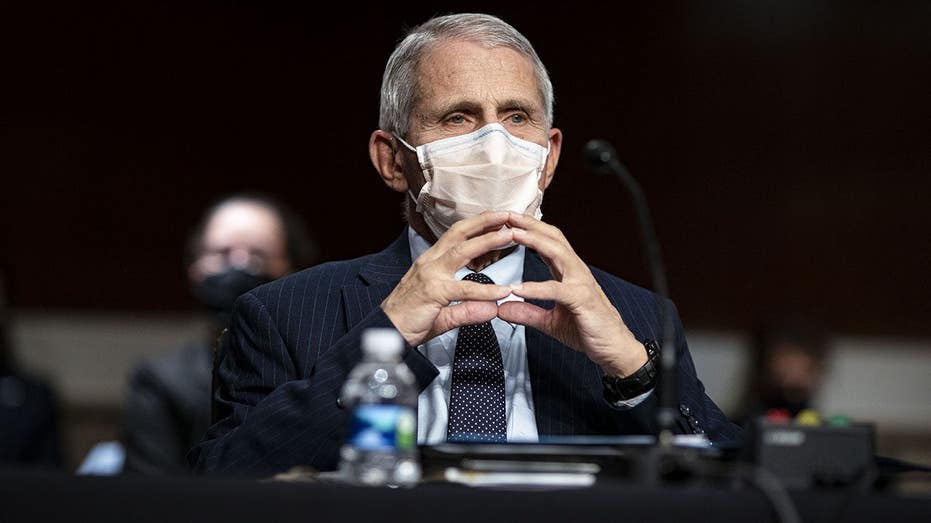
Despite denying on multiple occasions during and after the COVID-19 pandemic that he personally recommended lockdowns, excerpts revealed from Dr. Anthony Fauci’s private diary prove a clear contradiction. In a March 15, 2020, entry in the diary, which begins with “BIG DAY!” written in red letters, Fauci, then the director of the National Institute of Allergy and Infectious Disease (NIAID) recalled a striking conversation he had with then-New York City Mayor Bill de Blasio. “I spoke with Bill de Blasio (Mayor – NYC) and convinced him based on what I was saying publicly and my conversation tonight to close the NYC schools (he had already decided based on what I was saying on TV),” Fauci revealed in his private notes. FAUCI’S NEWLY RELEASED COVID DIARIES REVEAL BIZARRE FIXATION ON FAME AS PANDEMIC DEATHS MOUNTED “I had a similar call with Ann O’Leary, the [Chief of Staff] of Gov. Gavin Newsom of California,” this particular entry went on. “Ann said that based on my TV appearances today and yesterday, the Governor has decided to close the schools in California as well as the bars and restaurants.” But seven months later, in an Oct. 16, 2022, interview with ABC News’ Jonathan Karl, Fauci denied any involvement in inspiring lockdowns. “Let’s go back and look at the transcript. We said we should try as best as we possibly can to keep the children in school,” Fauci said. “Nobody plays that clip.” “They always come back and say, ‘Fauci was responsible for shutting schools down.’ I had nothing to do [with it]!” he insisted at the time. EXPOSED FAUCI DIARY SHOWS HE ESTIMATED COVID-19 DEATH RATE TO BE MUCH LOWER THAN WHAT HE TOLD CONGRESS In 2022, he told The Hill that he “didn’t recommend locking anything down,” clearly going against his own privately recorded entries. On January 9, 2024, years after the end of lockdowns ended, Fauci testified the same thing before the House Oversight Committee. “I did not close the schools,” he said, according to the hearing transcript. And it became the widespread situation where I became a political target.” Fauci recommended to government leaders lockdown measures besides just closing schools, which he would also later deny. INSIDE FAUCI’S PRIVATE DIARY: WHAT HE WROTE ABOUT TRUMP, TV PERSONALITIES AND CELEBRITIES In the March 15, 2020, diary entry, Fauci, once the nation’s leading infectious disease expert, said he directed de Blasio to close the city’s bars. “I went on to tell him he should close the bars and restaurants in NYC. He said that he would base this on my recommendation,” Fauci wrote. Five days later, he said he told the mayor to close all of New York City. “Also, had phone call with [Mayor] de Blasio who wants to go to ‘shelter in place for the entire city.[‘] He is asking my advice since Gov. Cuomo is pushing back. I advised DeBlasio [sic] to go ahead and do it. I will try to speak with Cuomo,” the entry said. On March 29, 2020, Fauci recounted a tense meeting with President Donald Trump, who he described as “incorrigible.” The goal of the meeting was to get the president to extend lockdowns after the initial “15 days to stop the spread” period, which began on March 16 of 2020 — about a month after the first case of COVID-19 was recorded in the U.S. “At the end of the day, it was a good outcome since we convinced him to go with 30 day (sic) instead of ending the mitigation prematurely, which I feel would be a disaster,” Fauci said. In a November 28, 2020, diary entry, he recalled lending support to a Los Angeles County health official who wanted to lock the county down. “Got call last night from Mark Ghaly (Deputy Director for Community Health for the LA County Dept of Health Services). He has called me several times for advice,” the diary says. “Frantic call saying that they are surging in LA County and very soon hospital beds will be overrun. He wants to do a 3 weeks shutdown of the city to ‘stop the surge’ and wants my support since there is a large pushback to locking down. I agreed to support him.” But again in 2022, when he joined The Hill’s “Rising” podcast, Fauci denied responsibility for lockdowns. “Well, you know, again, first of all, I didn’t recommend locking anything down,” he claimed. “You’re asking me questions. You’re talking about the CDC is the public health agency that uses their epidemiologists and their science-based approach to make recommendations…” Despite his own denials, Fauci himself told CBS news in the midst of the 2020 chaos that he was behind the lockdowns. “When it became clear that we had community spread in the country, with a few cases of community spread — this was way before there was a major explosion like we saw in the northeastern corridor driven by New York City metropolitan area — I recommended to the president that we shut the country down,” he said on Oct. 7, 2020.
Biden’s classified docs narrative crumbles amid release of ghostwriter tapes: ‘Be careful’
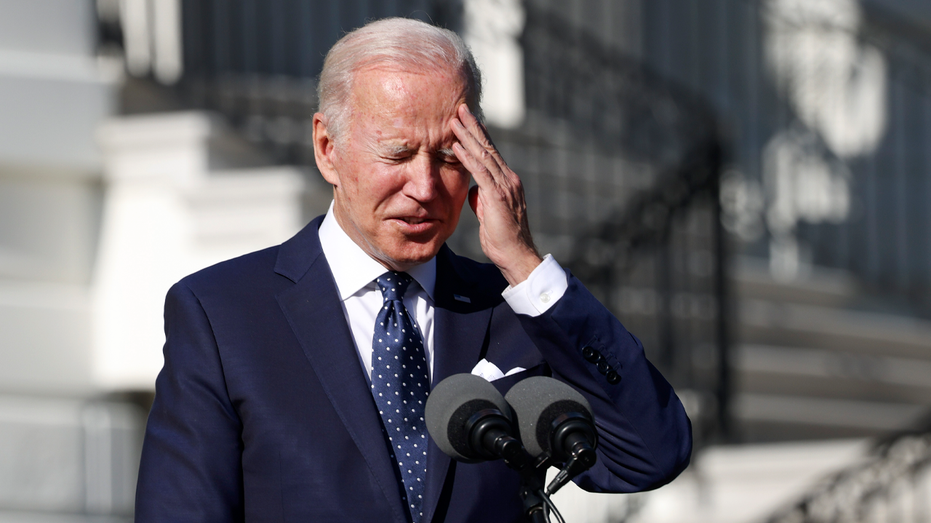
Former President Joe Biden’s recordings from interviews with his memoir ghostwriter — obtained during special counsel Robert Hur’s classified documents investigation — have been released to the public. After a months-long fight from Biden’s attorneys to block the release of the tape, they abandoned their lawsuit calling for a dismissal Friday, in which a judge accepted Monday. The plaintiff, Mike Howell formerly with conservative think tank Heritage Foundation and now at Oversight Project, has fought for more than two years to obtain the materials through FOIA requests, arguing that the public has an interest in reviewing the recordings and transcripts on which Hur based his decision. BIDEN’S HUR INTERVIEW TAPES COULD NOW GO PUBLIC AFTER HIS ATTORNEYS WAVE WHITE FLAG The Oversight Project published hours of recordings from Biden’s 2016 and 2017 conversations with his “Promise Me, Dad” ghostwriter, Mark Zwonitzer, in which the then-former vice president frequently pauses, speaks haltingly and struggles to recall events — reinforcing Special Counsel Robert Hur’s characterization in his report. “Joe Biden didn’t want these tapes to come out. But now they have — after two years of painful delay. There is no joy in Bidenville today. Robert Hur’s and Merrick Garland’s decision to give Biden a free pass for keeping and disclosing classified information must now be reexamined from top to bottom,” Oversight Project Vice President of Litigation Jeff Clark exclusively told Fox News Digital. The House Judiciary Committee announced there were 2 hours and 45 minutes of recordings released. Hur investigated Biden’s handling of classified documents dating from his time as vice president in the Obama administration and as a U.S. senator from Delaware. He declined to pursue criminal charges because he concluded prosecutors could not prove beyond a reasonable doubt that Biden willfully retained or disclosed the material. HUNTER BIDEN RESURFACES IN LA, REACTS TO QUESTIONS ABOUT BIDEN TAPES, UFO FILES In his report, Hur wrote that Biden’s conversations were “painfully slow” and said Biden was “struggling to remember events and straining at times to read and relay his own notebook entries.” “Mr. Biden’s memory was significantly limited, both during his recorded interviews with the ghostwriter in 2017 and in his interview with our office in 2023,” wrote Hur. He also said, in shocking reasoning for the lack of prosecution, that Biden could appear to a jury as a “sympathetic, well-meaning, elderly man with a poor memory” rather than an intentional violator of classified document laws. The interview recordings show instances where Biden takes long pauses, forgets names, and can’t recall specific days. Biden warned Zwonitzer while discussing a 2014 Situation Room meeting, “Some of this may be classified, so be careful,” and added, “I’m not sure. It isn’t marked classified, but….” In one instance, on April 24, 2017, Biden struggled to recall two economic advisers. “I’ll think of his name,” said Biden, and then, “I should write the names down because I keep forgetting them.” A long pause follows before Zwonitzer says Alan Krueger’s name. On the same day, Biden fails to recall where he was on a certain date, later remembering he was at a memorial for a fallen service member – and forgot his name. “I think I went to that memorial service in Wilmington. It says [REDACTED] December the 4th, but I don’t — I know what this means. Memorial service — [REDACTED] gets names really f—ed up,” said Biden. “So it says memorial service for [REDACTED]. I don’t think her name was [REDACTED]. Or I forget [REDACTED].” Zwonitzer responded, “Okay,” and Biden said he would “make a note of that too.” “But at any rate, back to — there was — I had a meeting with Ron Klain, and I don’t know when,” Biden added. Biden also appeared to struggle in recalling a lunch with former United States Secretary of the Treasury Larry Summers. “When he, when he came to me — and I’ll get the date. Remind me when did Summers come to me to have lunch to — it was when I was thinking about running.” He later goes on to say, “Here’s what happened, before I forget. Don’t mind my train of thought. He also pledged to support me in 2016.” Fox News Digital reached out to the Office of Joe Biden for comment.
Senate clears way for Trump’s top spy as key anti-terror program remains in limbo
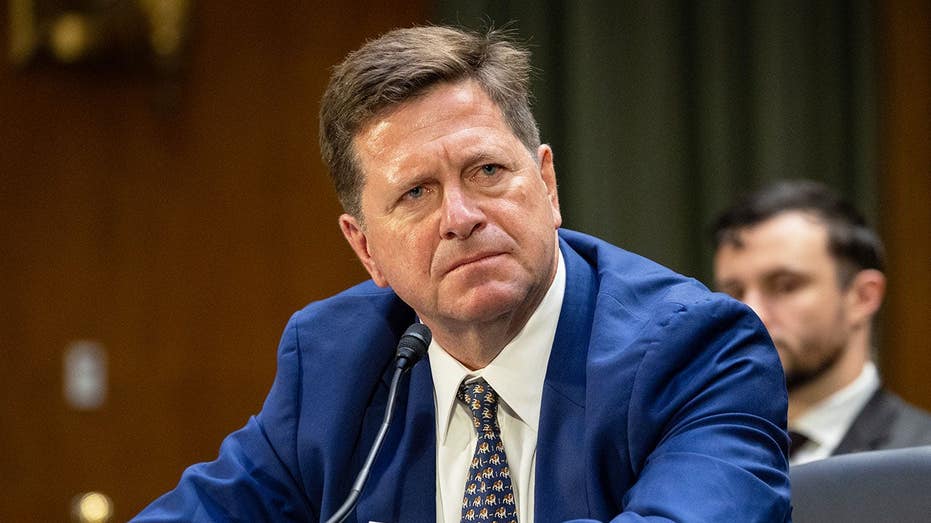
President Donald Trump’s pick to run the nation’s intelligence agencies is one step closer to clinching the job, and puts the Senate ever-closer to jump-starting a key counter-terrorism tool in the process. The Senate advanced Jay Clayton through a key hurdle Monday night to be the next Director of National Intelligence (DNI). It comes after former DNI Tulsi Gabbard’s sudden exit from the position to care for her cancer-stricken husband. The largely partisan 51-43 vote to move Clayton, who formerly chaired the Securities and Exchange Commission (SEC) during Trump’s first term, comes after he narrowly squeaked out the Senate Intelligence Committee on a 9 to 8 vote. TRUMP’S DNI PICK CLEARS KEY HURDLE, REVIVING PATH FOR NATION’S TOP ANTI-TERROR SURVEILLANCE PROGRAM Senate Majority Leader John Thune, R-S.D., challenged Democrats to support Clayton during the broader, final vote, but expected them to resist as they have with several other Trump nominees through his second term. “One might think that we’d be seeing some bipartisanship from Democrats on this nominee,” Thune said. “But Democrats are playing the same partisan games with this qualified nominee as they have for so many of President Trump’s picks.” “It’s a funny thing because Democrats have made no secret of their disdain for the current acting Director of … National intelligence,” he continued. “In fact, Democrats were so worked up over the president’s temporary choice for this position, they allowed our nation’s most important counterterrorism tool to go dark for the first time ever.” TRUMP CONCESSION BREATHES NEW LIFE INTO STALLED FISA SPY POWERS DEAL The Senate will now vote on confirmation Tuesday, putting an end cap on an arduous process to replace Gabbard. When she announced her exit from the position, Trump hastily installed Federal Housing Finance Agency (FHFA) Director Bill Pulte to lead the nation’s 18 intelligence agencies in the interim. That came as the Senate was nearing a vote on a bipartisan deal to keep the nation’s top counter-terrorism tool, Section 702 of the Foreign Intelligence Surveillance Act (FISA), running ahead of its expiration. But Democrats, who railed against Pulte and accused him of being an unqualified loyalist who would weaponize the intelligence community against the president’s enemies and try to dismantle it, walked away from the deal after Trump torpedoed Clayton’s previously scheduled confirmation hearing. SPY LAW USED TO STOP TAYLOR SWIFT ATTACK TO LAPSE AS CONGRESS SKIPS TOWN, WORLD CUP NEARS Less than 24 hours before Clayton’s penultimate test, Pulte announced on X that he had completed his fourth round of layoffs as DNI. “Since becoming Acting Director of National Intelligence, our team has been smartly, and carefully, reducing the size of ODNI, re-focusing ODNI on national security, the law, and the statute,” Pulte said. “As of this evening, we just finished a 4th round of thoughtful, measured layoffs. Thank you!” The Section 702 program has since been steadily going dark, with new authorizations caught in a legal void until lawmakers reauthorize the program that has been used to thwart deadly terror attacks, including halting a mass-casualty terror plot at a Taylor Swift show in Vienna, Austria. Last week, only Republicans on the panel voted Clayton out of committee after he failed to satisfy Senate Democrats’ questioning on who won the 2020 election, his knowledge of Gabbard’s raid on the Fulton County, Georgia election offices, and subpoenas against New York Times reporters that his were submitted by him in his role as the top prosecutor in New York’s Southern District. Those subpoenas were voluntarily withdrawn by the Department of Justice last week, two days after Clayton was confirmed by the panel.
Summer School: Republicans’ crusade to teach voters the ‘New Math’ on the ‘commie caucus’
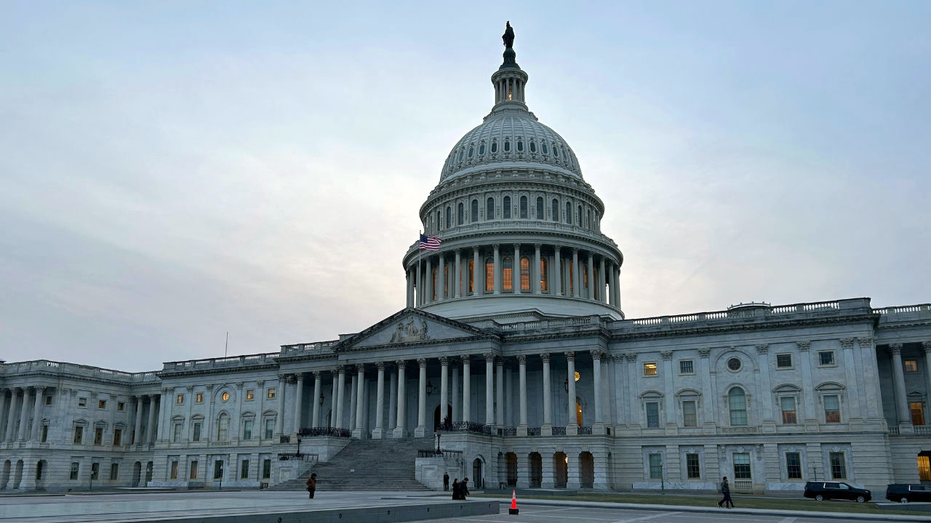
The House is gone. But the campaign is on. “We’re going to have a lot to talk about during this break,” said House Majority Leader Steve Scalise, R-La. “The contrast on the ballot this November between communism and freedom.” School is out for the summer in the House until August 31. But Republicans envision a version of summer school for the voters. They intend to educate people about Democratic candidates who are veering to the left. “The reality is that the communist caucus, the commie caucus is coming to Congress,” claimed Rep. Nicole Malliotakis, R-N.Y. REPORTER’S NOTEBOOK: HOUSE’S FINAL SPRINT PUTS SAVE AMERICA ACT AND IRAN FUNDING IN PLAY Republicans hope to cling to their narrow House majority by distinguishing themselves from Democrats – and noting how Democrats tapped far-left candidates in New York City and even Colorado. These “Democratic Socialists of America” candidates will undoubtedly prevail in their districts. But Republicans believe that left-wing Democrats freak out independents and mainstream Democrats. The GOP is banking on that as an insurance policy to maintain control of the House. House Republicans also enjoyed some relative success last week for the first time in months. The GOP advanced a host of bills important to them. And, simultaneously got Democrats on the record about bills which Republicans think they can boomerang against their adversaries this fall. “They have to answer for why they voted against funding our troops, against funding the government, against common sense policies like voter ID and proof of citizenship,” said House Speaker Mike Johnson, R-La. The House approved a plan barring stock trades by Members, 232-198. Only 13 Democrats voted yes compared to all Republicans. But the GOP tacked on a voter ID mandate. Democrats argue that provision transformed a once bipartisan issue into a GOP political wedge. “I proudly voted no because we are not going to sabotage mail-in voting in this country. And we’re not going to fall for that kind of bait-and-switch tactic here,” fumed Rep. Alexandria Ocasio-Cortez, D-N.Y. Democrats have long campaigned on affordability. “Today, prices are up over 25 cents a gallon above $4 a gallon in my region,” said Rep. Mary Gay Scanlon, D-Pa. SUCCESSION: WHY CONGRESS HAS NO CLEAR PLAN WHEN LAWMAKERS CAN’T SERVE President Donald Trump has now paused the air campaign against Iran after two weeks of consecutive bombing. But the war in Iran presents Democrats with a political opening. “Will Democrats recalibrate their message on Iran? Will we see ads on Iran going into the midterms?” yours truly asked House Minority Leader Jeffries, D-N.Y. “We don’t have to recalibrate our message. We’ve been opposed to Donald Trump’s reckless and costly war of choice in the Middle East from the very beginning,” replied Jeffries. There was a split decision on Capitol Hill last week. The House voted to shackle the president on Iran war powers. Four Republicans defected and sided with Democrats. “He ran on no new wars,” said Rep. Becca Balint, D-Vt. “He’s making the case for us. He hit voters over and over and over with this promise. And then he did the exact opposite.” Still, the president’s allies claimed that the vote undercuts American forces in harm’s way. “To belittle this mission is to belittle and demean the very service these members who gave their lives,” said House Foreign Affairs Committee Chairman Brian Mast, R-Fla. A couple of hours later, the Senate rejected the House’s rebuke of the President. “I think Democrats have taken that tack from the start,” said Sen. John Hoeven, R-N.D., of the Democrats hoping to cut off the Iran operation. “It wouldn’t have passed if it wasn’t for Republicans in the House,” yours truly pointed out. “A few Republicans,” conceded Hoeven. “But I think there’s strong support in our party (for the President).” That’s ultimately why the Senate defeated its Iran measure. Some GOPers argued that the U.S. has Iran on the ropes. “Last time I checked, we’ve wiped these b——s out. An occasional missile strike and boats in the Strait (of Hormuz). That’s not military strength. Those are the flailings of a failing empire,” declared Sen. Tim Sheehy, R-Mont. HOUSE GOP VOTES TO PUNT GOVERNMENT SHUTDOWN BATTLE TO AFTER NOVEMBER MIDTERMS But Senate Democrats chided Republicans for not intervening in the conflict. “Every time Republicans oppose our war powers resolution and vote against ending this war, they lose the faith of the American people,” said Senate Minority Leader Chuck Schumer, D-N.Y. “Senate Republicans need to wake up. Not next week. Not next month. Now.” Top Congressional GOP leaders say it’s not necessary for Congress to flex its war powers muscles. “I don’t think an AUMF (authorization for use of military force) is in order right now. I think we need to bring this to a resolution,” said Johnson. However, some Republicans demand answers about the endgame. “I think we need greater clarity there. I think Congress needs to exercise more of its powers here,” said Rep. Chip Roy, R-Texas. Democrats may believe they have an advantage on Iran. But like Roy, they demand a plan. “This whiplash policy in Iran is not good,” said Rep. Bennie Thompson, D-Miss., the top Democrat on the Homeland Security Committee. “You can’t run a war at 2:00 in the morning on Twitter.” JOHNSON HAS THREE-WORD ANSWER ON WHETHER HOUSE WILL LEAVE EARLY Despite their criticism, Democrats are vague about how they’d go about ending the war. “We’ve got to figure that out. But Donald Trump got us into this mess,” said Jeffries. “But won’t voters demand you guys to have a plan if you’re going to win the majority, Mr. Leader?” I asked as Jeffries walked away. I posed a similar question to Sen. Chris Coons, D-Del., one of the most thoughtful Democrats on foreign policy and national security issues. “We didn’t start it,” replied Coons. “But don’t you have to have a plan if you’re going to criticize the president on this?” I asked. “I wouldn’t have gotten into this war,” said Coons. The Pentagon
Fox News Poll: Cool your servers! Voters reject data centers

While U.S. tech companies race for AI dominance, the latest Fox News nationwide survey finds voters hitting the brakes on data centers, as more prefer taking time to address local concerns than rushing expansion to maintain a competitive global edge. By a 40-point margin, voters oppose building data centers in their area to support artificial intelligence (30% favor, 70% oppose). MAGA supporters (46% favor) and Republican men (45%) are the groups most likely to favor data centers, while White women with a college degree (84% oppose) and liberal voters (80%) are the most opposed. FOX NEWS POLL: VOTERS WANT MAJOR CHANGE AMID ECONOMIC AND POLITICAL DISCONTENT Among those favoring data centers, 60% cite economic benefits, including jobs, economic growth, community investment, and tax revenue as the reason for their support. Another 21% point to technological benefits, saying the centers are useful, necessary, or important for future progress. Just 2% say staying ahead of competitors is the primary reason for their support. Those opposing data centers emphasize a different set of considerations. Half (50%) say environmental issues are their main concern, including energy and water use, pollution, noise, and overall environmental impact, while far fewer mention quality-of-life concerns (14%), economic effects (11%), or simply having a negative view of AI (11%). FOX NEWS POLL: SIGNIFICANT SUPPORT FOR BOTH VOTER ID LAWS AND MAIL-IN BALLOTS While data centers are broadly unpopular, views of artificial intelligence technology itself are somewhat less negative. Overall, 45% view AI favorably versus 54% unfavorably, underwater by 9 points. In April, it was -11 points. Positive views of AI are higher among MAGA Republicans (55% favorable), voters with graduate degrees (52%), conservatives (50%), and men (49%) than among Democrats (41%), those without a college degree (43%), liberals (37%), and women (40%). Nearly 8 in 10 voters prefer slower data center construction to address environmental and community concerns, while 2 in 10 favor building them as quickly as possible to maintain a competitive advantage over China and other countries. While majorities across the board prefer the slow adoption of the centers, MAGA Republicans (36%) and very conservatives (35%) are the most likely to prioritize rapid expansion to maintain international competitiveness. AI won’t find an ally in the under 30 crowd Although younger voters are often viewed as more tech-savvy, that does not translate into warm views of artificial intelligence. Voters under age 30 are the least likely to view AI favorably, at 38%, compared with 48% of those ages 30-44 and 44% of those 45 and over. CLICK HERE FOR CROSSTABS AND TOPLINE Regardless of differences in views of AI, attitudes toward data centers are pretty consistent across generations. Roughly 7 in 10 in every age group oppose building data centers, and about 8 in 10 prefer slowing construction to address environmental and local concerns. Conducted July 17–20, 2026, under the direction of Beacon Research (D) and Shaw & Company Research (R), this Fox News survey includes interviews with a sample of 1,003 registered voters randomly selected from a national voter file. Respondents spoke with live interviewers on landlines (70) and cellphones (681) or completed the survey online after receiving a text (252). Results based on the full sample have a margin of sampling error of ±3 percentage points. The survey includes an oversample of 200 voters aged 18–29, bringing the sample size for that subgroup to 350 (±5). Sampling error for results among subgroups is higher. In addition to sampling errors, question wording and order can influence results. Weights are generally applied to age, race, education, and area variables to ensure the demographics are representative of the registered voter population. Sources for developing weight targets include the most recent American Community Survey, Fox News Voter Analysis, and voter file data.