

Trump-appointed judge slams door on DOJ as court losses pile up days ahead of midterms
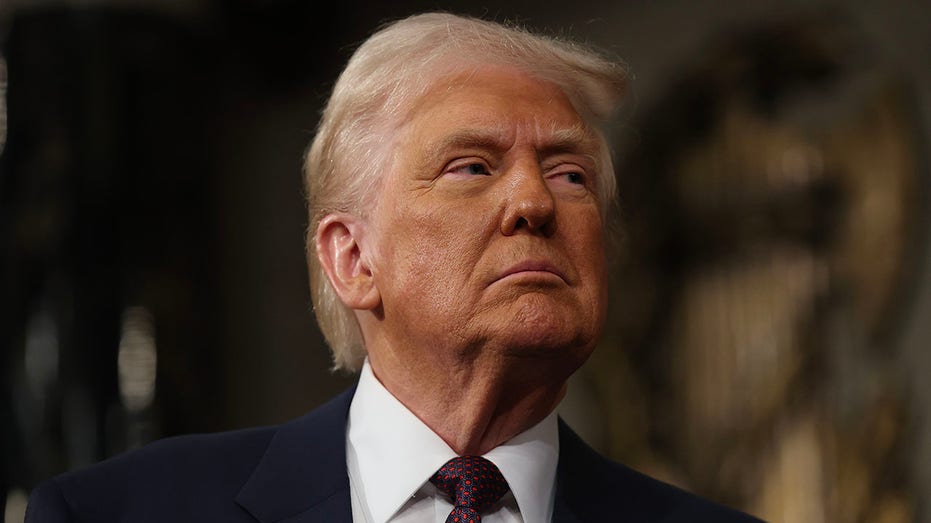
A federal judge appointed by President Donald Trump has handed his administration another loss in its quest to tackle alleged illegal voting ahead of the midterm elections. District Judge David Barlow on Friday dismissed a case the Department of Justice brought against Utah Lt. Gov. Deidre Henderson, a Republican, demanding that she turn over state voter data. The administration sought to compel Henderson, the state’s top election official, to hand over a complete list of Utah voters, including their names, birthdays and addresses as well as their driver’s license numbers or the last four digits of their Social Security numbers. The Justice Department’s defeat in Utah is one of more than 25 voter-roll litigation defeats the Trump administration has suffered since beginning its campaign to address alleged illegal voting. TRUMP-APPOINTED FEDERAL JUDGE TOSSES DOJ LAWSUIT SEEKING ARIZONA VOTER DATA Federal lawyers initially sued Henderson, arguing that the Civil Rights Act of 1960 requires her to make certain voting records that “come into” her possession available for federal inspection. Barlow, however, cited a ruling from the Sixth Circuit Court of Appeals that found “an ordinary English speaker would not say that she has come into possession of something that she created, established and maintained,” a reference to the broad dataset the DOJ was seeking to obtain. The DOJ countered that line of argument by asserting that, even if the precise language of the law didn’t require the data to be surrendered, the purpose of the law in question was to serve as enforcement tool for federal election laws, so it would make little sense to interpret it as excluding the statewide voter-registration database that states use to carry out voter-list maintenance. FEDERAL JUDGE BLOCKS DOJ ACCESS TO NJ VOTER ROLLS AMID STATEWIDE CONTROVERSY Barlow rejected this line of argument, stating that judges have “no warrant to elevate vague invocations of statutory purpose over the words Congress chose.” Trump tapped Barlow to serve on the federal bench in 2019. Before being nominated, Barlow served as a Republican congressional lawyer, a federal prosecutor and a private attorney. TRUMP-APPOINTED FEDERAL JUDGE RULES AGAINST ADMIN ON MAINE VOTER ROLL DATA Barlow dismissed the administration’s complaint with prejudice, meaning that the DOJ cannot simply refile the same claim, though the department can appeal the ruling to a higher court. While the Trump administration has charged a number of individuals with illegal voting since coming to power, it has yet to uncover evidence of widespread voter fraud. The DOJ still has three pending cases related to voter rolls in the states of Hawaii, Idaho and Delaware. It is also appealing losses in California and Oregon. “We appreciate Judge Barlow’s ruling dismissing the Department of Justice’s lawsuit that sought to force us to disclose the private data of every Utah voter,” Henderson wrote on Threads. “Our office will continue to uphold the rule of law and safeguard the fundamental right to free, fair and secure elections for the people of Utah.” The White House and DOJ did not respond to requests for comment when reached by Fox News Digital on Monday.
Ilhan Omar joins ‘polarizing and dangerous’ streamer at campaign event despite Democratic backlash
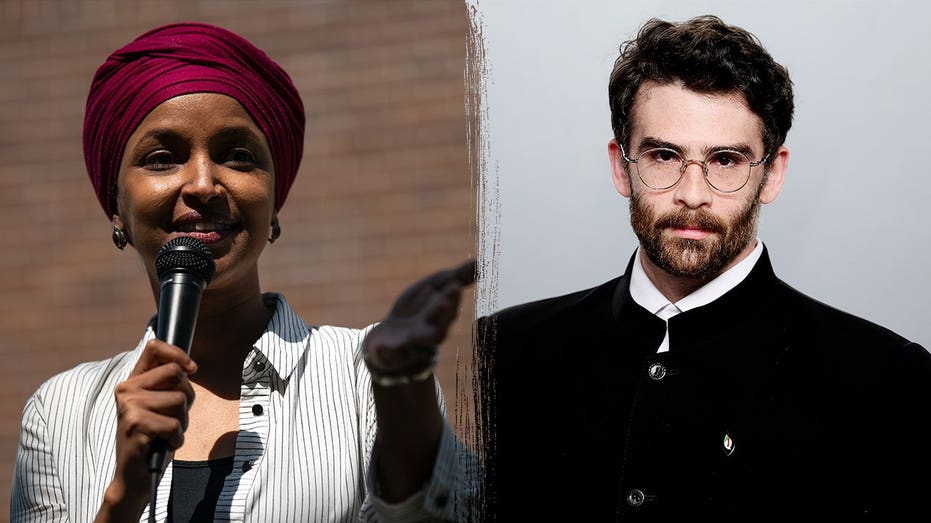
Rep. Ilhan Omar, D-Minn., is set to share the stage with far-left streamer Hasan Piker on Monday night despite mounting opposition from fellow Minnesota Democrats, some of whom have publicly urged the congresswoman to cancel the appearance just eight days before the midterm elections. Rep. Angie Craig, D-Minn., has called Piker’s rhetoric “polarizing and dangerous” and said embracing him is “a mistake,” while Sen. Amy Klobuchar’s gubernatorial campaign called a number of his past statements “reckless and unacceptable.” Other Democratic officials and party groups have gone further, calling on Omar and state Sen. Omar Fateh, who is hosting the sold-out Minneapolis event, to cancel the appearance. The controversy is exposing a divide among Minnesota Democrats in the closing stretch of the midterms over whether Piker’s enormous following among younger progressives outweighs the political liability of his past rhetoric. University of Minnesota political science professor Larry Jacobs told FOX 9 the event would “create a split within the DFL,” arguing it could distract statewide Democrats from their closing message and put candidates in a difficult position with moderate and Jewish voters. WHO IS HASAN PIKER? MEET THE FAR-LEFT STREAMER WHO IS STIRRING UP CONTROVERSY AND DIVIDING DEMOCRATS Piker, who commands millions of followers across social media, has faced backlash over remarks involving the Sept. 11 attacks, Hamas, Israel and Jewish people. He later apologized for saying in 2019 that “America deserved 9/11” and has rejected accusations of antisemitism. Omar’s campaign, however, has defended her decision to participate by pointing to Piker’s appeal among the younger voters Democrats are trying to turn out ahead of Election Day. DEMOCRATS CONDEMNING HASAN PIKER AS BACKLASH SPREADS THROUGH PARTY “Early voting among people under 40 is down, and we need to do everything to get young people to the polls,” Omar’s campaign told FOX 9. “The Congresswoman knows the Democratic Party is a Big Tent party, and she’s excited to join Senator Omar Fateh’s event to mobilize young voters and get them to vote in this critical midterm election.” During an appearance on “Pod Save America” earlier this year, Piker said he would “vote for Hamas over Israel every single time.” He has also described Orthodox Jews as “inbred” and faced renewed criticism this summer over remarks warning that continued American Jewish support for Israel could provoke someone to “take action.” “People don’t f— with Israel any longer. And if Jews in America keep putting this idea out there that they’re singularly invested in Israel, eventually someone will come around and take action not against Israel, mind you, but against American Jews,” Piker said in August. SIGN UP TO GET THE POLITICS NEWSLETTER Fox News Digital reached out to Omar’s campaign, Fateh and Piker for additional comment on the mounting criticism and calls to cancel Monday night’s event but did not immediately receive a response. Fox News Digital’s Brian Flood and Rachel Wolf contributed to this report.
Major school district’s pledge with teachers’ union sparks racial discrimination complaint
FIRST ON FOX: One of Colorado’s largest school districts is facing a new federal civil rights complaint over a pledge it made with its teachers’ union to recruit, retain and advance educators of color. Defending Education filed a federal civil rights complaint Monday, which was first obtained by Fox News Digital, with the U.S. Department of Education alleging that CCSD is discriminating on the basis of race in employment. CCSD is notably Colorado’s fourth-largest school district, and serves 52,000 students and more than 300,000 residents in the southeast Denver metropolitan area, according to the district’s website. At the heart of the complaint is the district’s June 2023 “Educators of Color Declaration,” which commits Cherry Creek School District and its teacher’s union to recruiting, retaining and advancing educators of color, even as a separate provision in the same agreement calls for recruitment, hiring and advancement to be based on qualifications without regard to race. “Cherry Creek Schools has written racial preferences directly into its teachers’ contract. The district’s ‘Educators of Color Declaration’ commits it to recruiting, retaining, and promoting teachers based on the color of their skin — which means other equally qualified teachers are passed over for the same reason,” Sarah Parshall Perry, Vice President and Senior Legal Fellow at Defending Education, told Fox News Digital. “That’s not diversity; it’s discrimination, and it is precisely what Title VI and the Fourteenth Amendment forbid. The Supreme Court could not have been clearer in Students for Fair Admissions: the law is colorblind, and a school district cannot cure a race-based hiring policy with generic ‘equal opportunity’ language.” Title VI prohibits race discrimination in federally funded programs under specified conditions, while Title VII more directly governs employment discrimination, leaving the legality of Cherry Creek’s teacher recruitment and advancement commitments dependent on how those policies are implemented. OBAMA-APPOINTED JUDGE CLEARS WAY FOR WHITE EMPLOYEE TO CHALLENGE SEATTLE’S DEI POLICIES The “Educators of Color Declaration” also commits the district and its teachers’ union to intentionally recruiting highly qualified educators of color while making a concerted effort to retain those already employed by the district and help them advance into leadership positions, according to the district’s negotiated agreement. JUSTICE DEPARTMENT LAUNCHES TITLE VI INVESTIGATION INTO DEI PROGRAMS AT ARIZONA STATE UNIVERSITY Additionally, the policy says that “to fulfill these goals, all policies in this agreement shall reflect Cherry Creek School District core values by grounding the work of negotiations in diversity, equity, and inclusion (DEI),” according to the school district’s 2026-2027 Negotiated Agreement. FLORIDA STATE UNIVERSITY HIT WITH FEDERAL CIVIL RIGHTS INVESTIGATION OVER RACE, SEX-BASED SCHOLARSHIP PROGRAMS “Cherry Creek is under no obligation to accept federal funding, but because it has, it cannot run a racial balancing scheme for its own workforce and still adhere to federal law,” Perry continued. “We are asking the Office for Civil Rights to open an investigation and put an end to it.” Defending Education’s latest complaint comes after the Department of Education announced a separate investigation on June 8, into allegations that Cherry Creek School District sponsored racially discriminatory programs involving students, teachers and parents. “These allegations of racially discriminatory conduct in this District seem to permeate almost every aspect of the school community, affecting students, teachers, and parents alike,” Assistant Secretary for Civil Rights Kimberly Richey said in a statement at the time. “Federal law prohibits racial discrimination, which means that race cannot be a factor in how the school educates its students or trains its teachers.” The Trump administration has been cracking down on DEI efforts across the nation’s education system, including proposing new regulations in September that would revoke the tax-exempt status of private schools and colleges that consider race in admissions, scholarships or other school-administered programs. CCSD did not immediately respond to Fox News Digital’s request for comment on Monday. When reached for comment, a Department of Education spokesperson told Fox News Digital that “the Department does not confirm complaints.”
Inside House GOP’s far-reaching push to monitor midterm elections and prepare for legal fights
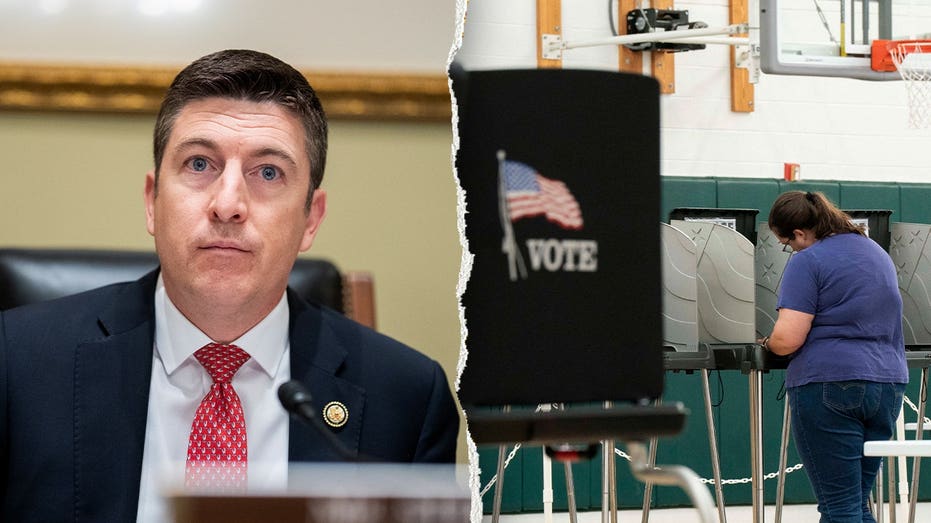
House Republicans are deploying “dozens and dozens” of staff across the country next Tuesday to ensure the midterm elections are being run cleanly and fairly as both parties fight tooth and nail for control of Congress. The Committee on House Administration, which has jurisdiction over federal elections, runs an annual election watcher program aimed at adding oversight in districts where races are anticipated to be particularly close, and in some cases, paving the way for legal challenges if improprieties are found. Rep. Bryan Steil, R-Wis., the panel’s chairman, told Fox News Digital that this year’s program will be “the most robust program the House has ever done.” “We’re building on the success that we had last cycle and recognizing that a large number of House races are likely to be close,” Steil said. “The balance of power in the United States House of Representatives is at stake, and we wanna make sure that we have eyes and ears on the ground in close races across the country.” BIDEN-APPOINTED JUDGE BLOCKS VOTER-FRAUD PROBES IN BATTLEGROUND STATES JUST DAYS BEFORE MIDTERMS How that plays out will vary from state to state depending on varying election laws, he explained. But many of those observers are potentially in for lengthy shifts. SENATE REPUBLICANS PUSH ELECTION DAY DEADLINE FOR CALIFORNIA’S MARATHON BALLOT COUNTS “Some jurisdictions that run their elections well, like Florida, their shift may end early in the evening. States that have kind of poor election policies, like California, those shifts go on for days on end until the counting is done,” Steil said. “Two years ago, I went to Los Angeles County — about 10 million people — counts all their ballots at one location. And of course, we know California has bad election policy. They allow ballots to arrive after the polls have closed. And so I went to Central Count, met with our election observers as we watched ballots arrive days after the election. We want eyes and ears on the ground, recording what is occurring, and documenting what’s happening, and making sure that the rules are followed.” Steil also recalled an instance in Milwaukee where an issue arose during tabulation “where ultimately thousands of ballots would have to be recounted.” But those poll watchers, trained under the jurisdiction of Congress, will often stay the entire time votes are being cast on Election Day. In some cases, they observe votes being counted as well. MAP IT: DOJ ILLEGAL VOTING CRACKDOWN SWEEPS 17 STATES AS RAZOR-THIN ELECTIONS FACE SCRUTINY “These are long days. I mean, polling locations are often open for a full 12 hours. They’re arriving, they’re staying often until the early evening or late evening, in some cases as the ballots are actually tabulated, but they play an absolutely essential role in verifying… our elections are run freely and fairly,” he said. It is all part of a process to build a case in the event the results need to be re-examined. Their documentation could potentially lead to recounts in close races or even lawsuits. “Not only are they documenting what they’re seeing, but they’re in direct contact with myself and the committee on Election Day, so that we’re in a position to deploy additional resources, if necessary, to make any court challenges if that was required,” Steil explained. “They are the first step in identifying if there is a problem, and then they notify our team and we get to work immediately.” Election observers’ jobs are federally protected under the Confirmation of Congressional Observer Access Act, which was enacted by Congress in 2024. The program is open to any staffer of the House of Representatives, save for interns. Democrats are free to run their own program under the law, but they do not do so in coordination with Republicans.
Mamdani message to residents on how to deal with ICE results in viral internet backlash: ‘Treason’
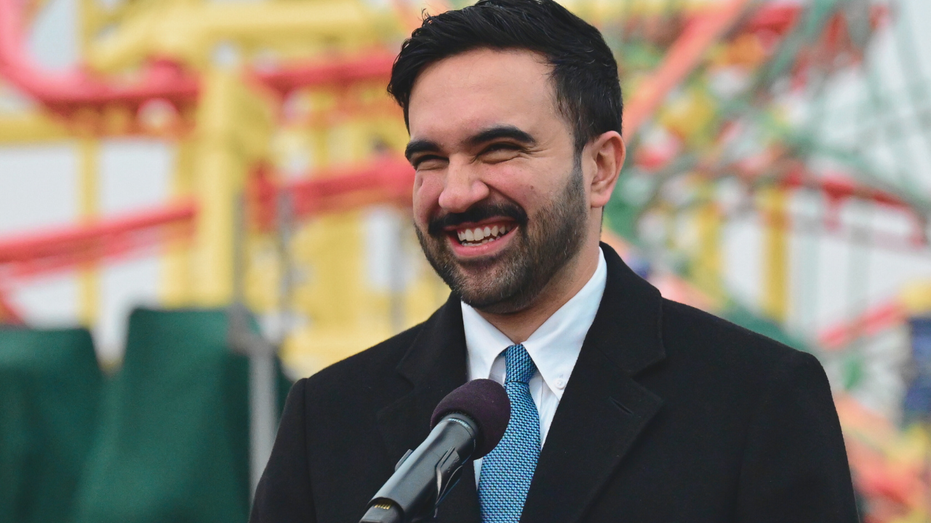
New York City Mayor Zohran Mamdani faced viral backlash on Friday after posting instructions in Spanish on how residents should handle interactions with Immigration and Customs Enforcement (ICE). “If you encounter ICE, here’s what every New Yorker should know,” the socialist mayor of the nation’s largest city posted on X on Friday in a message that quickly racked up over 7 million views. Mamdani explained “what every New Yorker should know” if they “encounter ICE,” adding that ICE “cannot enter private spaces like your home, school, hospitals or private areas of a workplace without a judicial warrant signed by a judge.” Mamdani reminded New Yorkers they have the right to remain silent and gives tips on best practices for interacting with ICE, saying that “these are very frightening times for many people.” MAMDANI CALLS ICE A ‘ROGUE’ AGENCY AFTER NYC SHOOTING, CLAIMS AGENTS VIEW LAW AS ‘MERELY A SUGGESTION’ Mamdani’s post was quickly criticized by conservatives on social media, with many characterizing the video as the mayor encouraging obstruction of federal law enforcement and encouraging illegal immigration. “It should be insulting to every American that the mayor of our largest city is a guy who became a citizen less than a decade ago and now spends his time coaching illegal aliens in a foreign language on how they can avoid being lawfully deported,” Rep. Brandon Gill, R-Texas, posted on X. MULLIN CALLS MAMDANI’S ANTI-ICE RHETORIC ‘DANGEROUS’ FOLLOWING NEW YORK SHOOTING “Unless you’re here illegally, you have no reason to fear ICE,” actor Dean Cain posted on X. “This wanker is dangerous.” “At no point in this video is anyone urged to abide by the laws of the United States,” Sen. Mike Lee, R-Utah, posted on X. “Because it was not made for the benefit of the people of the United States.” “If you’re here illegally, you’re not a New Yorker,” Rep. Nancy Mace, R-S.C., posted on X. “Period.” “Treason,” Sen. Bernie Moreno, R-Ohio, posted on X. “Here we are in 2026 with foreign born Democrats instructing illegals how to evade the law and remain in our country to suck off our system and best case scenario free load off our hard work,” Fox News commentator Tomi Lahren posted on X. “Dangerous incitement full of disturbing falsehoods by communist terrorist supporter @NYCMayor,” Judicial Watch President Tom Fitton posted on X. “This statement could put lives in danger.” Fox News Digital reached out to Mamdani’s office for comment. Mamdani has repeatedly positioned himself against ICE and the Trump administration’s immigration-enforcement agenda. During his campaign and after taking office, he called for abolishing ICE and said the NYPD would not assist the agency with civil immigration enforcement. He has also described ICE operations as harmful to immigrant communities. As mayor, Mamdani signed an executive order strengthening New York City’s sanctuary policies. The order directs city agencies to limit cooperation with federal immigration authorities, protect personal information and establish protocols for handling ICE requests to access city property or records. It also called for expanded “know your rights” materials and training for city employees.
Alaska Dem Senate candidate suffers minor injuries in car crash, forcing her to skip campaign events
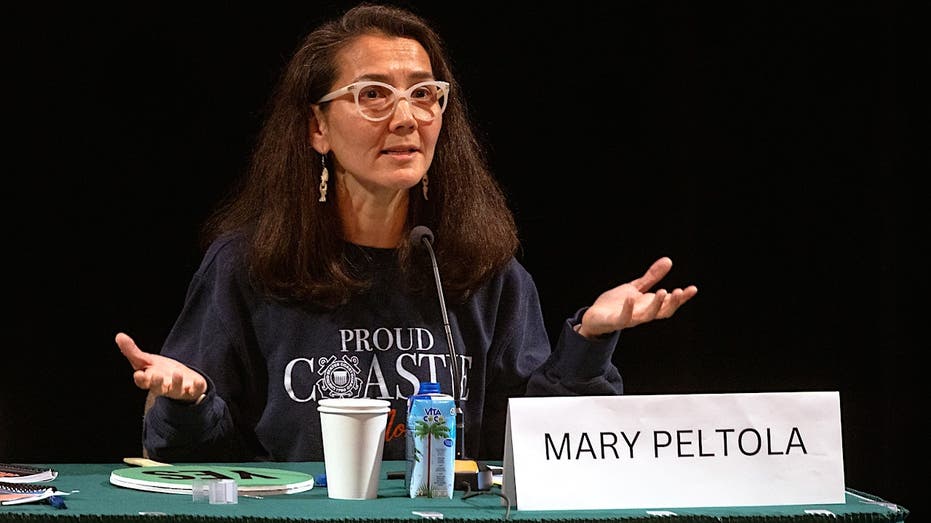
Democratic Senate nominee Mary Peltola and members of her family were involved in a two-vehicle collision in Anchorage on Saturday night, prompting her campaign to adjust upcoming schedule commitments in the final stretch of the midterm race. The crash occurred Saturday in the vicinity of the Alaska Federation of Natives (AFN) convention, where candidate events and campaign appearances had been underway over the weekend. It happened when another vehicle crashed into the one transporting Peltola and her family, the campaign said. The family was on their way to the Alaska Federation of Natives Annual Banquet. “Mary and her family sustained minor injuries but are in good spirits,” campaign manager Cheryl Bruce said in a statement. “Unfortunately, per the advice of medical professionals, Mary’s upcoming events in Fairbanks and Bethel will be rescheduled for later in the week as she takes time to recover.” “Mary is disappointed that the accident is delaying the start of her Alaska Always Tour, and she is eager to get back on the campaign trail to speak directly with Alaskans about her plan to take on the rigged system and lower costs for working families,” Bruce added. TODD BLANCHE CHALLENGES DANA BASH FOR ONLY CITING PART OF CONSTITUTION DURING HEATED ELECTION CLASH The pause comes at a pivotal moment in Alaska’s high-stakes Senate contest between Peltola and incumbent Republican Sen. Dan Sullivan, as both campaigns scramble across the state to mobilize voters and secure turnout ahead of the November midterm vote. DEMOCRAT’S DEBATE ‘CUE CARDS’ STEAL SPOTLIGHT IN HIGH-STAKES SENATE CLASH Peltola, an Alaska Native and former congresswoman, is hoping to become the first Democrat in nearly two decades to represent the state in the Senate. Both she and Sullivan have tried to rally support from Alaska Native voters, a key constituency in the high-stakes race that has become one of the most watched in the nation. ALASKA HAS A VOTING SYSTEM LIKE NO OTHER STATE; REPUBLICANS WORRY IT COULD COST THEM IN NOVEMBER President Donald Trump — who held a rally in support of Sullivan earlier this month — said Friday he told his administration to sue to block certification of the race if the incumbent loses. The lawsuit cites potential confusion with another candidate who is listed on the ranked choice ballot as Daniel J. Sullivan Jr. Alaska allows voters to rank their top picks rather than choosing a single candidate. Voters will have four choices, including Sullivan, Peltola and the other Dan Sullivan, a candidate Republicans have called a decoy in what they believe is a Democratic effort to confuse voters. COURT KEEPS ‘DECOY DAN’ ON ALASKA BALLOT AS EXPERT WARNS RANKED-CHOICE SYSTEM CREATES VOTER ‘TRAPS’ “I revealed what everyone knows, that the Ranked Choice Voting Ballot is a TOTAL DEMOCRAT SCAM meant to confuse the Voter, so that Senator Dan Sullivan will lose Votes to a man who has never participated in Politics before, named Daniel J. Sullivan, Jr.,” Trump wrote early Sunday morning on Truth Social. “He is only there because the Democrats want to steal the Election.” It is a reason to vote out ranked-choice voting, Trump added. “The Democrats are trying to steal this important Republican Seat and, if that happens, everything we’ve done for Alaska will come to an immediate hault [sic],” Trump concluded. “VOTE ‘YES’ AGAINST RANKED CHOICE VOTING, on Ballot Measure 2. SAVE ALASKA!” Peltola has outraised Sullivan through October, $33 million to nearly $14 million, but Sullivan reported having more campaign cash, $5.1 million to Peltola’s $3.2 million. Republicans have outspent Democrats in the race, $42 million to $38 million. The Associated Press and Reuters contributed to this report.
Dem Senate hopeful rejects Schumer but benefits from millions in spending by his allies
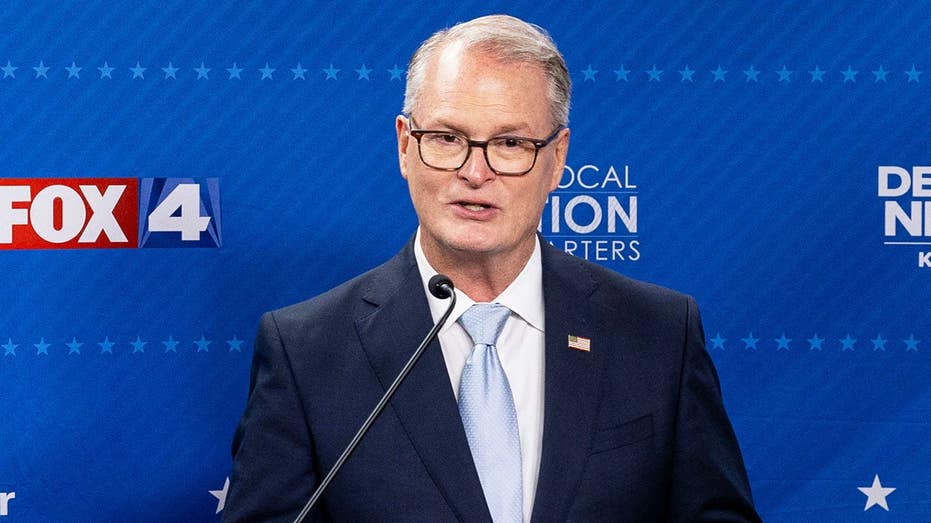
WICHITA, Kan. — National Democrats are pouring millions of dollars into Kansas to bolster Adam Hamilton, who has spent much of his campaign arguing that he would not be beholden to the top Democratic leaders in Washington, D.C. Tens of millions are flowing into Kansas to boost Hamilton, with a sizable chunk coming from Senate Majority PAC, a super PAC closely aligned with Senate Minority Leader Chuck Schumer, D-N.Y., whom Hamilton has repeatedly said he would not support as the Democratic leader should he win in November. But his opponent, Sen. Roger Marshall, R-Kan., questioned how he could benefit from “$30 to $40 million from Chuck Schumer and not be beholden to him in some way?” THUNE MAKES BOLD PREDICTION ABOUT REPUBLICANS’ SENATE CHANCES AS GOP PULLS MILLIONS FROM KEY RACES “Regardless of what he says, if we lose this seat, then it’s going to give the Senate control to the Democrats,” Marshall told Fox News Digital during an interview on the campaign trail. “Chuck Schumer would be the leader of the Senate.” “Look, if he’s going to denounce Chuck Schumer, let’s denounce him with his money as well,” he continued, “Look, we’re going to be outspent five to one, and we knew that.” Candidates, notably, can’t directly accept outside funding from independent groups like the Senate Majority PAC, given the guardrails are established by federal election law, according to the Federal Election Commission. SCHUMER WARNS OF REPUBLICAN ADVANTAGE THAT COULD CHANGE THE BATTLE FOR SENATE CONTROL The Schumer-aligned group teed up $5 million in advertising spending in Kansas earlier this month, a sign that Democrats are bullish about flipping the seat in a contest that has gotten closer than Republicans expected. Hamilton’s campaign pushed back on Marshall, arguing that the first-term senator has been given a lifeboat by national Republicans. Hamilton has vastly outraised Marshall, scoring nearly $14 million compared to Marshall’s almost $6 million, according to Federal Election Commission filings. “Adam has said repeatedly he believes it’s time for fresh leadership in Washington,” Tyson Brody, a Hamilton campaign spokesperson, told Fox News Digital. “Adam will always put Kansas first. Meanwhile, Roger Marshall is totally dependent on Washington money to save his campaign because he has abandoned Kansas to support D.C. corruption, endless war and high prices.” KANSAS DEMOCRAT BEGS KAMALA HARRIS NOT TO CAMPAIGN WITH HIM, ‘PLEASE DO NOT COME TO MY STATE’ In all, national Democrats and their affiliated groups — combined with spending from Hamilton’s campaign — are slated to dump $38 million into the race, according to AdImpact. National Republicans, along with Marshall’s campaign, are putting $32 million into the contest. Marshall has sought to tie Hamilton, who is running as a moderate in ruby-red Kansas, directly to Schumer, a point he made several times during their final debate before Election Day this week. Hamilton pushed back, arguing that Marshall had mentioned Schumer “maybe 20 times so far.” “I’ve already said I wouldn’t support Chuck Schumer for Senate majority leader if the Democrats took control of the Senate,” Hamilton said.
$800-a-day penalty threatens to bleed reporter dry as explosive legal fight heads to Supreme Court
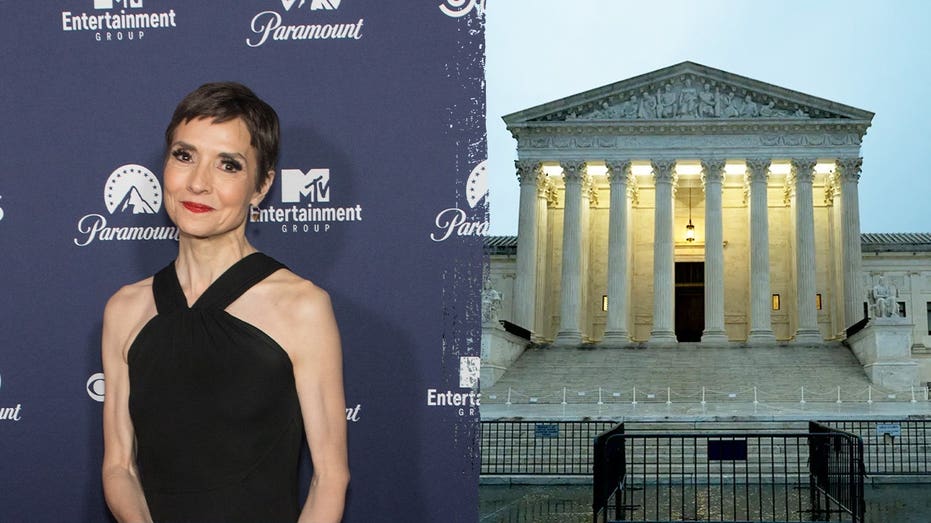
Former Fox News investigative reporter Catherine Herridge is asking the Supreme Court to protect her confidential sources after a federal court ordered her to identify who helped expose a woman’s alleged ties to China’s military. The outcome of the case could dramatically reshape the legal protections afforded to journalists working in the U.S. under the First Amendment. Herridge was held in contempt and ordered to pay $800 per day for refusing to reveal sources behind her 2017 reporting on Yanping Chen, a Chinese American businesswoman who operated a university attended by U.S. military personnel. Her reporting raised questions about Chen’s alleged past as a colonel for the People’s Liberation Army (PLA) of China and the potential exposure of sensitive information about American service members. The Department of War subsequently cut off military tuition assistance funding to Chen’s university following a national security review, according to a filing by Herridge’s legal team. The school had been receiving approximately $200,000 a month in taxpayer-funded tuition assistance. NEW YORK TIMES BLASTS ‘ABUSIVE’ TRUMP SUBPOENAS TARGETING REPORTERS’ SOURCES Now Chen, who was investigated by federal authorities but never charged with a crime, is pursuing a lawsuit against the federal government, alleging that officials improperly disclosed her private records to Herridge in violation of the Privacy Act. She has sought to compel Herridge to identify her sources as part of that litigation. The dispute has reached the Supreme Court, where Herridge’s attorneys are asking the justices to reconsider the legal standard used to force journalists to disclose confidential sources in civil cases. Her legal team argues that the lower courts failed to adequately weigh the broader circumstances of Chen’s lawsuit, including the Pentagon’s national security findings and whether Chen can ultimately prevail in her claims against the government. The case also exposes a longstanding disagreement among federal appeals courts over the scope of the reporter’s privilege, an issue the Supreme Court has not comprehensively addressed in more than five decades. Herridge’s original investigation, published while she was working at Fox News in 2017, examined Chen’s background and her operation of the University of Management and Technology in Arlington, Virginia, which enrolled U.S. military personnel using Defense Department tuition assistance. The reporting included photographs appearing to show Chen in a Chinese military uniform and examined allegations that she had concealed her previous military service when applying for U.S. immigration benefits. It also raised concerns about the university’s collection of information on American service members, including details about their military training and professional backgrounds. A whistleblower interviewed for the investigation alleged that information stored on the school’s computers could be accessed remotely from China. WASHINGTON POST BOASTS IT STARED DOWN ‘UNWARRANTED’ JUSTICE DEPARTMENT SUBPOENA Federal authorities had previously investigated Chen over potential immigration violations and counterintelligence concerns, but prosecutors in the Eastern District of Virginia declined to bring charges. Following Herridge’s reporting, the Pentagon completed a review of Chen’s university and terminated its eligibility for military tuition assistance funding, according to her filing. Chen subsequently filed suit against the federal government, alleging that confidential information from government records had been improperly disclosed to Herridge. She contends that identifying the officials responsible for the alleged disclosures is necessary to establish her Privacy Act claims. Herridge refused to identify her sources, arguing that compelling disclosure would undermine the ability of journalists to obtain sensitive information from government officials and whistleblowers. A federal judge ultimately ordered Herridge to disclose the sources and held her in civil contempt when she refused. The U.S. Court of Appeals for the D.C. Circuit upheld the order, prompting her appeal to the Supreme Court. Fox News Media has continued to support Herridge’s legal fight, including covering her legal fees, despite her departure from the network in 2019. At the center of Herridge’s petition is a disagreement among federal appeals courts over how judges should evaluate a journalist’s claim of privilege when confidential sources are sought in civil litigation. The filing argues that the D.C. Circuit applied a narrow test focused primarily on whether Chen needed the information to pursue her lawsuit and whether she had exhausted alternative means of obtaining it. They contend that courts should also consider the strength of the underlying lawsuit and the consequences of compelling disclosure, particularly when confidential national security sources may be involved. The distinction could prove significant for journalists reporting on sensitive government matters. Under the standard challenged by Herridge, a plaintiff could obtain a reporter’s confidential sources even if other deficiencies in the lawsuit would ultimately prevent the plaintiff from recovering damages, according to the petition.
Candy prices surge beyond inflation, but Americans still plan to spend billions on Halloween staples

Trick-or-treating, like most expenses recently, will come with a bigger price tag this Halloween. The increase is hitting as families prepare for a holiday built around candy. Shoppers, however, still plan to spend billions on Halloween treats, even as rising prices make affordability part of the seasonal calculation. Candy prices rose 7.7% over the year through September, more than twice the overall inflation rate of 3.7%, according to the Bureau of Labor Statistics. The figure tracks candy and chewing gum broadly, rather than Halloween-specific products. But higher prices haven’t pushed candy out of the Halloween budget. The National Retail Federation expects Americans to spend $4.1 billion on candy this year as part of a record $13.5 billion in overall Halloween spending. Its survey found that 96% of Halloween shoppers plan to buy sweets. “Consumers continue to make Halloween a spending priority, but they are also approaching the season with affordability in mind,” NRF Vice President of Industry and Consumer Insights Allison Zeller said. THE FAMILY BEHIND AN ICONIC AMERICAN FAIR FOOD REVEALS THE SECRET TO ITS STAYING POWER The NRF found that 31% of shoppers plan to comparison shop if prices are higher than expected, while 26% will look for coupons or sales. Retailers are offering products across a range of price points to help shoppers celebrate within their budgets, Zeller said. NIQ said rising costs for housing, transportation and everyday essentials are shaping spending decisions, but Halloween remains an occasion consumers are willing to protect. That resilience showed up in last year’s sales. Halloween confectionery sales rose 7.6% in 2025 even as unit sales fell 2.5%, suggesting shoppers spent more while taking home fewer items. Chocolate had the largest average unit-price increase among the confectionery categories NIQ tracked, at 11.5%. YOUR SUMMER BBQ IS ABOUT TO COST MORE – HERE’S THE SURPRISING REASON WHY “Consumers continue to make room for Halloween. What’s changing is how they participate,” said Chris Costagli, NIQ’s vice president of food and beverage thought leadership. Shoppers are starting earlier, spreading purchases across more trips and evaluating items more carefully, he said. The National Confectioners Association said candy makers and retailers offer seasonal promotions and different package sizes to give shoppers options at various price points.
Trump’s fingerprints seen on Latin America’s rightward shift while Brazil throws up roadblock
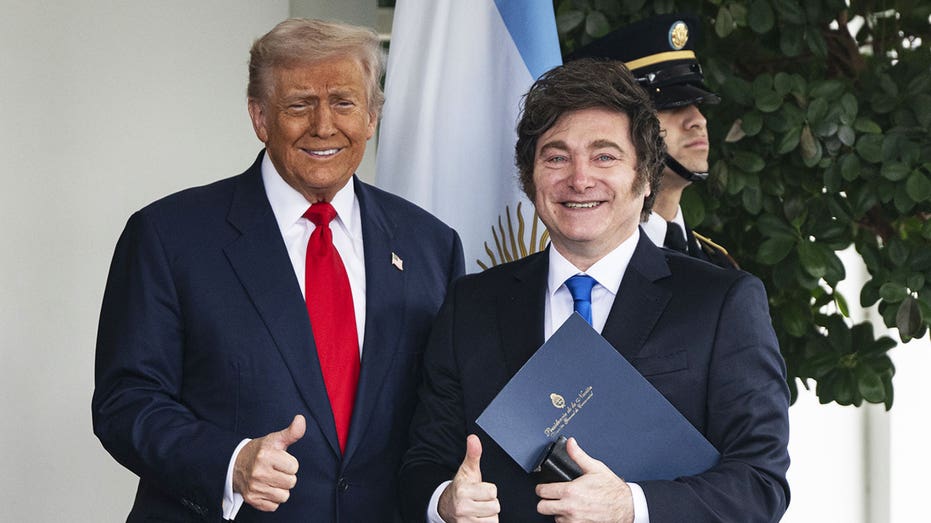
President Donald Trump’s political influence is reaching far beyond America’s borders as several Latin American countries shift toward right-leaning leadership, though that momentum hit a roadblock Sunday when Brazilian President Luiz Inácio Lula da Silva defeated conservative challenger Flávio Bolsonaro in the country’s presidential runoff. For Argentina-born Trump rally attendee Marcelo Sandrin, who has lived in the U.S. for roughly three decades, the shift is unmistakable — and Trump deserves substantial credit. Speaking to Fox News Digital outside the T. Ed Garrison Arena near Clemson before Brazil’s election results were known, Sandrin pointed to Argentine President Javier Milei and the possibility of another conservative victory in Brazil as evidence of what he sees as Trump’s growing influence. Lula’s subsequent victory complicated that outlook, even as the Trump administration has asserted U.S. power more directly across the region, most dramatically through the capture of Venezuelan socialist leader Nicolás Maduro. “[Trump deserves] a lot of credit,” Sandrin told Fox News Digital, adding that Milei is a very forceful libertarian, right-wing/small-government figure, and that during the Trump era, South America has moved “more and more to the right.” CONSERVATIVE WAVE HITS ROADBLOCK IN BRAZIL AS LULA HOLDS OFF BOLSONARO CHALLENGE In Argentina, Milei has emerged as one of Trump’s most prominent ideological allies in the hemisphere, pursuing sweeping economic reforms and challenging the left-wing political establishment that dominated much of the country’s recent history. “Brazil is almost going to be [moving] to the right again. It’s only Mexico and Uruguay for now [on the left]. The problem in my country is one side or the other, they have to steal, stop stealing. That’s the number one thing.” Brazil instead delivered a setback to the region’s conservative momentum, with Lula winning 51.8% of the vote to Bolsonaro’s 48.2%, according to the country’s electoral court. The result secured Lula a fourth, nonconsecutive presidential term and demonstrated that the rightward shift Sandrin described has not extended uniformly across Latin America. The Trump administration’s impact on the region has also extended beyond electoral politics. Venezuela underwent a dramatic change following the U.S. capture of longtime socialist leader Nicolás Maduro, an operation that Venezuela native and Manhattan Institute researcher Santiago Vidal Calvo argued reinforced Washington’s influence across the hemisphere and weakened the political order Maduro represented. COAST GUARD FIREFIGHT PUTS US, MEXICO AT ODDS DESPITE COORDINATED BORDER OPERATIONS “I have no doubt that President Trump has had a good, influential policy towards making governments more right-leaning in Latin America,” Calvo said. “I think that got exacerbated with the capture of Maduro,” he added. “A lot of people saw that the United States was again an influential force in the continent, that China was being kicked out in many fronts.” Calvo argued that Trump, Milei and Salvadoran President Nayib Bukele have helped inspire right-leaning movements across the region, with implications extending beyond elections to immigration, trade, Chinese influence and national security. He also pointed to China, arguing that Beijing expanded its influence in Latin America through loan agreements that differ from conventional North American banking transactions and can give it leverage in countries’ domestic affairs. SIGN UP TO GET THE POLITICS NEWSLETTER The regional shift is far from uniform. Mexico remains governed by the left-wing Morena movement, while Uruguay also remains under left-wing leadership. Lula’s reelection in Brazil adds another major counterpoint to the conservative gains elsewhere in the hemisphere, underscoring the limits of a regionwide political realignment. Calvo also singled out Secretary of State Marco Rubio for praise, arguing that the administration’s Latin America strategy has been an underappreciated foreign-policy achievement. “I think one of the highlights of this Trump administration has been a good example of foreign policy in Latin America, especially at the hand of [Marco] Rubio,” Calvo told Fox News Digital. Fox News Digital’s Reagan Schroeder contributed to this report.