

Trump critic Jasmine Crockett poised for Senate run in deep-red Texas
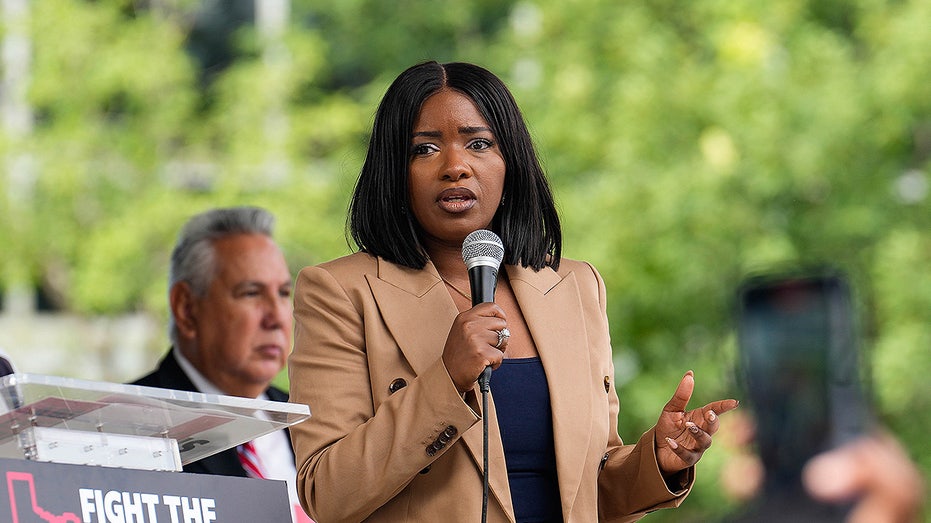
Democratic Rep. Jasmine Crockett of Texas, the progressive firebrand and frequent foil of President Donald Trump, is expected to launch a U.S. Senate campaign on Monday, which is the deadline for candidates to file for the state’s March 3 primary. Hours before Crockett — a rising star Democrat with a large social media imprint who represents a Dallas area district — was to hold an event announcing her decision, one of the two Democrats already running for the Senate abandoned his bid. Former Rep. Colin Allred, who was making his second straight bid for the Senate in right-leaning Texas, announced he was ending his campaign and instead would launch a congressional campaign as he seeks to return to the House. But Democratic state Rep. James Talarico, a former middle school teacher and Presbyterian seminarian, remains in the Senate primary, setting up a likely face-off between two surging contenders with formidable fundraising. If Crockett launches a Senate campaign as expected, it would further rock a high-profile and heavily contested race, which, on the Republican side, includes Sen. John Cornyn and GOP primary rivals Texas Attorney General Ken Paxton and U.S. House Rep. Wesley Hunt. The contest in Texas is one of the most closely watched Senate showdowns as Democrats try to win back the chamber’s majority in next year’s midterms. EX-NFL STAR ABANDONS SENATE BID AS JASMINE CROCKETT NEARS MAJOR ANNOUNCEMENT Crockett told CNN this weekend that she’s made out two cashier checks, one if she jumps into the Senate campaign and one to submit if she files for re-election in the House. And her down-to-the-wire announcement is scheduled for 90 minutes before the final deadline to submit one of the checks. Crockett has teased a possible Senate run for weeks, telling MS NOW on Sunday that “I am closer to yes than I am to no.” And she has said she’s commissioned polling to make her case for a Senate run in Texas, where no Democrat has won a statewide election in over three decades. In another sign that she’s expected to launch a Senate run, Crockett told the Dallas Morning News that she called both Allred and Talarico to discuss her polling. BIG WIN FOR TRUMP, GOP, AS SUPREME COURT GREENLIGHTS NEW CONGRESSIONAL MAP IN TEXAS Monday’s filing deadline comes just a few days after the Supreme Court upheld a new congressional map passed by the GOP-dominated Texas legislature and signed into law by longtime Republican Gov. Greg Abbott that creates five more right-leaning House districts in the Lone Star State. And one of the Texas Democrats whose district had been dramatically altered, Rep. Marc Veasey, had reportedly been discussing with Crockett a plan where he would file for her current House seat shortly after she files to run for the Senate. Allred, who was making a second straight Senate bid after losing to conservative firebrand Sen. Ted Cruz by roughly 9 points last year, said in a statement that he didn’t want to contribute to anything that would splinter Democrats’ hopes of flipping the GOP-held Senate seat in next year’s elections. “In the past few days, I’ve come to believe that a bruising Senate Democratic primary and runoff would prevent the Democratic Party from going into this critical election unified against the danger posed to our communities and our Constitution by Donald Trump and one of his Republican bootlickers Paxton, Cornyn, or Hunt,” Allred wrote. By dropping out of the race, Allred will likely allow Democrats to avoid a costly and messy primary runoff in the spring, giving the party more time to consolidate around their nominee and raise much-needed campaign cash. Meanwhile, with Cornyn, Paxton, and Hunt all taking aim at each other in a combustible primary, the GOP nomination may be headed towards a runoff, which would be triggered if no candidate tops 50% in the primary. CROCKET SPENDS EYE-POPPING AMOUNT OF CAMPAIGN CASH ON THIS The 44-year-old Crockett, who is Black, is a former state representative and civil rights lawyer. She won her seat in 2022 after longtime Democratic Rep. Eddie Bernice Johnson, who was retiring, hand-picked her as his successor in Congress. Crockett, who won re-election last year, has become one of the most well-known Democratic politicians in the country the past couple of years, thanks to her viral jabs at Republicans and her verbal sparing on social media with Trump, who has repeatedly questioned her intelligence. And she’s grabbed plenty of headlines during her time on the House Oversight Committee. While her expected Senate run will likely excite many Democrats, thanks to her energy and her proven fundraising ability, her frequent push-back against GOP politicians may energize Republicans. Among her biggest blunders — calling Abbott, who is partially paralyzed and uses a wheelchair, “Gov. Hot Wheels.” Crockett has also compared Trump to Adolf Hitler on multiple occasions while accusing aspects of the Republican Party of fascism. She notably ran for ranking member of the House Oversight Committee earlier this year following the death of its previous top Democrat, the late Rep. Gerry Connolly, D-Va., but dropped out of the race after failing to win the recommendation of leadership within her party. But the Dallas-area Democrat has won favor with some party leaders, like ex-Vice President Kamala Harris, who revealed in her memoir “107 Days” that she mentored Crockett as part of her covert “Stars Project” while in office. Crockett spoke at the Democratic National Convention last year when Harris was named the party’s presidential candidate, a notable slot for someone who was then a first-term House lawmaker. She had also been facing some tough decisions in her House race after the new GOP-led Texas congressional map appeared to draw her home out of her current district. Crockett’s expected entry into the Senate race will shift the spotlight off of the GOP primary, where Cornyn, the longtime incumbent who hails from the party’s establishment wing, has cut into the one-time large lead by Paxton, a MAGA firebrand, with Hunt in third. The concern
FBI to be under harsh new microscope as Stefanik scores victory in annual defense bill

A Republican-backed measure in this year’s annual defense policy bill is aimed at significantly expanding FBI transparency in American elections. A provision in the 3,000-page National Defense Authorization Act (NDAA) would force the bureau to disclose the initiation of a “counterintelligence assessment or investigation” against a candidate for federal office or a current elected official within 15 days of its launch. Specifically, it would mandate that the FBI notify the top four congressional leaders in the House and Senate as well as the top Republican and top Democrat on both chambers’ judiciary and intelligence committees. An exception would be granted if one of those people was the target of such a probe, however. PATEL SAYS COMEY CASE IS ‘FAR FROM OVER,’ VOWS TO RESTORE ‘ACCOUNTABILITY AND TRANSPARENCY’ TO FBI The provision was spearheaded by House GOP Leadership Chairwoman Elise Stefanik, R-N.Y., who told Fox News Digital on Monday that it was “a win that I am proud to deliver for transparency and accountability and against the illegal weaponization of the deep state.” “I am the only remaining House Republican who served on the House Intelligence Committee during the dark Schiff impeachment era,” Stefanik said. “Congress owes the American people long overdue accountability after the unprecedented illegal weaponization of our federal government, whether it was the illegal Crossfire Hurricane targeting of President Trump in 2016 or more recently the sweeping Operation Arctic Frost.” FBI FIRES AGENTS, DISMANTLES CORRUPTION SQUAD AFTER PROBE UNVEILS MONITORING OF GOP SENATORS, PATEL SAYS The measure is also backed by House Judiciary Chairman Jim Jordan, R-Ohio. A Jordan spokesman told Fox News Digital that the conservative leader has “always been 100% supportive of this provision.” Its inclusion came after some fireworks between Stefanik and Speaker Mike Johnson, R-La., last week. Stefanik had publicly accused the speaker of kowtowing to Democrats and allowing that provision to be removed. Johnson said he was blindsided by Stefanik’s anger and was unaware of her concerns when she had made them public. HOUSE REPUBLICANS ACCUSE BIDEN’S FBI OF RETALIATING AGAINST WHISTLEBLOWER WHO EXPOSED MISCONDUCT Johnson also said at the time that it had been removed from the final bill during normal procedural discussions between Democrats and Republicans, although he himself supported the measure. Stefanik later claimed victory on X, however, announcing the provision had been reinstated after a conversation between herself, Johnson and President Donald Trump. “I had a very productive conversation with Speaker Johnson last night and I shared my views that House Republicans need to focus on delivering results to the American people,” she said last week. House Republican leadership aides said in answer to a question by Fox News Digital on Monday night that there was “some miscommunication and misunderstandings” related to the provision at first but “we’ve worked through those.” Aides said House GOP leaders “worked closely with Stefanik’s office and with the committees of jurisdiction to find a way to accomplish her intent and what she was hoping to get out of the provision in a way that that fit with the priorities of the committees of jurisdiction and address some of the concerns that they’d had.” Jeremy Paul, a professor of law at Northeastern University, told Fox News Digital on Monday that he did not believe there were legitimate concerns over separation of powers with the provision. HOUSE VOTES TO REPEAL CONTROVERSIAL ARCTIC FROST PROVISION FROM GOVERNMENT SHUTDOWN BILL “If it is enacted into law, the executive branch could argue that this is an intrusion on executive power,” he said. “But it’s very tough, because there are no crimes unless the Congress makes something a crime. So Congress really ultimately has control over what is and is not investigated.” “As far as constitutional arguments, it’s not easy for me to think of one that would derail this statute. That doesn’t mean the statute is a good idea.” “If people are breaking the law, then they should be investigated. And if the investigation reveals that their campaign, for example, is being funded by foreign governments, then that ought to be stopped. And this is gonna make it harder for that to happen,” he said. But conservatives in Congress argue that the provision is critical. “We support that 110%. I hope it stays in the NDAA in light of what we’ve seen in the last 10 years, particularly what the weaponized Justice Department did to President Trump,” Jordan told FOX Business host Maria Bartiromo last week. “This is definitely needed. I totally support what Elise is trying to get done.”
Senate Democrats push Obamacare subsidy vote ‘designed to fail’ as Republicans call plan unserious
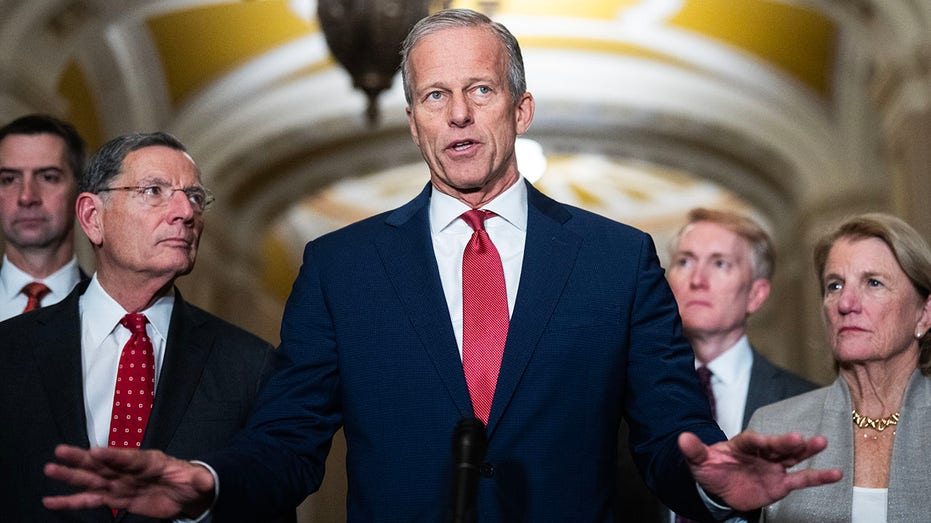
The Senate is readying for a vote on extending expiring Obamacare premium subsidies, but the proposal on the table is all but certain to fail. Senate Minority Leader Chuck Schumer, D-N.Y., unveiled Senate Democrats’ long-awaited plan to prevent the subsidies from lapsing, which Senate Republicans nearly universally panned. A vote on the plan is expected on Thursday. “I mean, it’s obviously designed to fail,” Senate Majority Leader John Thune, R-S.D., told Fox News Digital. ABORTION RESTRICTIONS CREATE MAJOR ROADBLOCK FOR BIPARTISAN OBAMACARE SUBSIDY DEAL IN SENATE Schumer’s proposal would extend the subsidies for another three years without any of the reforms demanded by the GOP. And bipartisan talks that have been ongoing since the government shutdown ended have virtually ground to a halt. Thune said when the proposal fails, “if they want to have a serious conversation about a real solution, that can get underway.” “But, you know, we haven’t decided yet exactly what we’re going to do. But what that signals, though, and evidences, is they’re just not serious,” he said. Senate Republicans have not landed on their own proposal and may not before the upper chamber leaves Washington, D.C., next week until the start of the New Year. SCHUMER UNVEILS DEMOCRATS’ OBAMACARE FIX PLAN, LIKELY DEAD IN THE WATER There are several plans circulating among Republicans to choose from, but none have gained enough traction or support to hit the floor in a possible side-by-side vote. The subsidies, which were initially passed under former President Joe Biden during the COVID-19 pandemic and then enhanced to virtually remove any income caps — one of the many sticking points for Republicans — are set to expire by the end of the year. While the Senate struggles to find a way forward, lawmakers are quick to point the finger at who would own the subsidies’ expiration. Senate Republicans contend that it’s Schumer and Senate Democrats who are to blame, given that they set the subsidies to sunset by the end of this year when they controlled the Senate. And Senate Democrats argue that Republicans would own the issue since they have yet to produce their own proposal. BIPARTISAN DEAL ON OBAMACARE SUBSIDIES FADES AS REPUBLICANS PUSH HSA PLAN Schumer argued that Republicans have “chosen to do nothing, absolutely nothing,” as the deadline creeps closer. And he believes that Senate Democrats’ plan could succeed, despite a likely insurmountable math problem. “It is not a nonstarter, 13 votes could solve the problem,” Schumer said. “That’s where the onus should be.” But the plan is a nonstarter for Republicans for several reasons, including the lack of reforms, the length and that it has no inclusion of Hyde Amendment language that would prevent taxpayer dollars from funding abortions — a tricky issue that has largely derailed bipartisan negotiations. Meanwhile, Republicans are eyeing a proposal that would send the subsidy money directly to Americans in the form of Health Savings Accounts (HSAs), a plan first pushed by Sen. Rick Scott, R-Fla., and then co-opted by President Donald Trump. Sen. Bill Cassidy, R-La., has been working on an HSA plan that he presented, among other ideas, last week to Senate Republicans during their closed-door lunch. Still, lawmakers exited the meeting and left Washington by the end of the week, without a counteroffer to Senate Democrats’ dead-on-arrival proposal. “The president gave the marching orders. We’re working on it. We want to deliver it,” Cassidy told Fox News’ Shannon Bream.
Watchdog finds DEI, CRT baked into accreditation rules for hundreds of university social work programs

FIRST ON FOX: A prominent education watchdog is sounding the alarm with a report it says shows that the accreditation process for bachelor’s and master’s social work programs at top U.S. universities is rife with DEI, critical race theory and other far-left agenda items. The report, published by Defending Education on Monday, focuses on the Council on Social Work (CSWE), the national body tasked with accrediting degree programs, and concludes that it “requires” DEI as a key tenet of the curriculum used to shape the minds of aspiring social workers in hundreds of programs nationwide. The study found that eight of the nine competencies in CSWE’s 2022 Educational Policy and Accreditation Standards include the phrases “anti-racism” and “anti-oppression” while discussing the ideas of “privilege” and “social justice.” DEI within program competencies can be found at over 500 of the 897 accredited social work programs. CLICK HERE FOR MORE CAMPUS RADICALS COAST TO COAST Competency 3, “Engage Anti-Racism, Diversity, Equity, and Inclusion (ADEI) in Practice,” calls on social workers to “understand how racism and oppression shape human experiences” and “understand the pervasive impact of White supremacy and privilege and use their knowledge, awareness, and skills to engage in anti-racist practice.” The report cites several examples of potential bias, including the Masters of Social Work program at the University of Alaska-Anchorage that asks applicants to submit a writing sample showing their “understanding of concepts fundamental to the social work profession, such as anti-racism, diversity, equity, and inclusion and to advancing human rights and social, racial, economic, and environmental justice.” Several other examples of prospective students essentially being required to prove their adherence to a race-based ideology. Masters program applicants at West Virginia University are required to write two paragraphs explaining how they will defend the principles of DEI in their work, while applicants at the University of Maine must describe their “commitments to anti-racism, diversity, equity, and inclusion and plans to advance them.” TOP MEDICAL SCHOOL MOVED DEI OFFICE TO SECRET LOCATION AS IT TRIES TO ‘EVADE ACCOUNTABILITY’: LEGAL GROUP At the same time, CSWE has been raking in a sizable amount of money, according to the report, to the tune of just over $40 million in membership and accreditation fees from universities between 2016-2023. Additionally, the study found that the Biden administration’s Department of Education approved over $90 million in grants to over 20 university social work programs that were centered on anti-racism and diversity measures. “This report underscores how far our schools of social work have drifted from their core mission,” Reagan Dugan, project manager for Higher Education at Defending Education, told Fox News Digital. “At a time when K–12 students are facing a growing mental health crisis, these programs should be equipping future social workers with the tools to support students and educators,” Dugan said. “Instead, too many are prioritizing divisive ideological coursework. Some programs, such as Boston University’s offer classes on ‘racial capitalism, white supremacy, and structural and institutional racism,’ coursework that does nothing to prepare students for the real needs in our schools. We urge these programs to refocus on training excellent social workers dedicated to helping students rather than turning them into ideological activists.” Fox News Digital reached out to CSWE for comment.
Maryland middle school’s Transgender Awareness Week lesson gave kids ‘binding’ tips, ‘coming out’ advice

FIRST ON FOX: A Maryland middle school presented a slideshow to 6th graders celebrating “Transgender Awareness Week” where the children were given a lesson that included “advice for coming out” and “8 tips for being nonbinary.” “A person’s gender is who they feel that they are,” middle schoolers at Westland Middle School in Bethesda, Maryland, were told last month in a video that was contained in a 12-slide presentation obtained by Fox News Digital. “It is important to understand the difference between sex and gender so that we can better understand ourselves,” the slide says beneath the video, a video that was produced by the LGBT educational resource provider Pop’n’Olly. Multiple slides in the presentation provide information on “what it means” to be transgender and students are then quizzed about what they learned. CLICK HERE FOR MORE CAMPUS RADICALS COAST TO COAST In another slide, students are told to discuss questions with their neighbor in class, including, “how do people know if they are a ‘girl’ or ‘boy?’” Another question reads, “The first thing people announce about their new baby is the gender, why do you think that is?” Students were shown a video titled “Advice for Coming Out” along with a video titled “8 Tips for Being Nonbinary.” BLUE SCHOOL DISTRICT HIT WITH FEDERAL COMPLAINT ALLEGING IT ‘SIDESTEPPED’ LAW DEPRIVING PARENT OF TRANSPARENCY In the video with nonbinary tips, a “nonbinary creator” named Laurenzo explains what to do if someone uses incorrect pronouns to describe an individual and how to find the best “label” that describes you. Laurenzo, who has a large following on social media, also explains to students how to “bind” properly, referring to a term used to describe the process of flattening a female’s breasts in order to appear less feminine. The last slide of the presentation informs students that they can attend meetings for “Westland’s LGBTQ+ Club” called “SAGA,” which stands for “Sexuality and Gender Acceptance.” “There isn’t a single justification for this cult-like propaganda being pushed on children at school,” Erika Sanzi, senior director of communications for Defending Education, told Fox News Digital. “They are presenting a harmful ideology as gospel to other people’s children and manipulating language in ways that would almost be funny if it didn’t come with so much risk. Many kids will rightly scoff and be unfazed by the absurdity of it all, but others may be vulnerable, potentially set down a path from which they can never fully return. These are 11- and 12-year-olds and nothing about this is remotely appropriate or defensible.” A spokesperson for Montgomery County Public Schools defended the lesson in a statement to Fox News Digital, explaining that it is the responsibility of the district to ensure that “every student feels safe, seen, and respected at school.” “Westland Middle School has used advisory lessons on a range of topics to help students understand differences, treat each other with kindness, and follow school expectations,” the spokesperson said. “These materials were communicated in advance, including clear information about opt-out procedures, which were followed. The lessons were about awareness, respect, and how to support peers in a school community that includes students of many backgrounds and lived experiences. Middle school is a time when questions come up, and schools must reinforce that bullying, harassment, and discrimination have no place in our buildings.”
SCOTUS takes up Trump’s bid to fire FTC commissioner at will — a showdown that could topple 90-year precedent
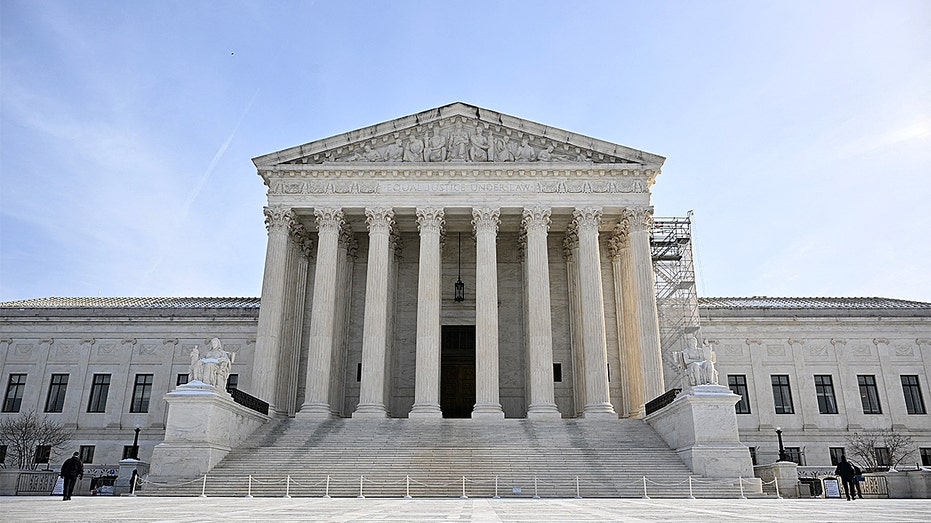
The Supreme Court on Monday weighed the legality of President Donald Trump’s attempt to fire a member of the Federal Trade Commission without cause, in a blockbuster legal fight that justices noted could fundamentally reshape the balance of powers across the federal government, and impact at least two dozen federal agencies. Justices on the high court appeared split over how to proceed in the case, which involves Supreme Court precedent set in Humphrey’s Executor, a 1935 decision that allowed Congress to protect certain federal regulators from being removed by a sitting president without cause. U.S. Solicitor General D. John Sauer urged the Supreme Court justices at the outset of oral arguments Monday to overturn Humphey’s precedent, which he assailed as an “indefensible outlier” and “decaying husk” that has “not withstood the test of time.” The court’s conservative justices seemed to entertain the possibility of further narrowing protections for federal agencies established under the 1935 decision, if not overturning it altogether. Justices Brett Kavanaugh and Amy Coney Barrett in particular focused some of their questions to the Trump administration on what “limiting” principles might apply, if any. LAWYERS FOR COOK, DOJ TRADE BLOWS AT HIGH-STAKES CLASH OVER FED FIRING Liberal justices on the court appeared skeptical of Sauer’s claim that Trump has the power to fire the heads of independent federal agencies, citing concerns that allowing him to do so here could be a slippery slope of sorts that could also free the executive to fire other agency heads or lower-level civil servants. “You’re asking us to overturn a case that has been around for nearly 100 years,” Justice Sonia Sotomayor told Sauer. “I don’t see how your logic can be limited,” if the case is overturned, she added, telling Sauer the government is asking them to “take away from Congress” its ability to decide the structure of some independent agencies. “Once you’re down this road, it’s a little bit hard to see how you stop,” Justice Elena Kagan said, echoing the same concerns. The case, Trump v. Slaughter, centers on Trump’s firing of Federal Trade Commission member Rebecca Slaughter, a Democrat, without cause earlier this year. Slaughter sued immediately to challenge her removal, arguing that it violated protections the Supreme Court enshrined in Humphrey’s Executor. The 1935 precedent, and questions of separation of powers, drove the bulk of arguments Monday. The case also comes as the high court gears up to hear a case next month centered on Trump’s attempt to remove Federal Reserve Governor Lisa Cook. The arguments in Monday’s case will be closely watched and are expected to inform how the court might consider that case in January. .APPEALS COURT BLOCKS TRUMP FROM FIRING FEDERAL BOARD MEMBERS, TEES UP SUPREME COURT FIGHT Slaughter had sued in March over her removal, arguing that it violates Humphey’s Executor, and a 1914 law passed by Congress, which shields FTC members from being removed by a president except in circumstances of “inefficiency, neglect of duty, or malfeasance in office.” A federal judge had sided with Slaughter’s lawyers in July, agreeing that her firing unlawfully exceeded Trump’s executive authorites and ordered her reinstated. The Supreme Court in September stayed that decision temporarily, allowing Trump’s firing to remain in effect pending their review. The Supreme Court’s willingness to review the case is a sign that justices might be ready to do away completely with Humphrey’s protections, which have already been weakened significantly over the last 20 years. Allowing Humphey’s to be watered down further, or overturned completely, could allow sitting presidents to wield more authority in ordering the at-will firing of members of other federal regulatory agencies, including the National Labor Relations Board and the Securities and Exchange Commission, among others, and replacing them with persons of their choosing. The six conservative justices on the high court signaled as much when they agreed to review the case earlier this year. (Justices split along ideological lines in agreeing to take up the case, with Justices Elena Kagan, Sonia Sotomayor and Ketanji Brown Jackson dissenting.) They asked both parties to come prepared to address two key questions in oral arguments: First, whether the removal protections for FTC members “violates the separation of powers and, if so, whether Humphrey’s Executor, should be overruled,” and whether a federal court may prevent a person’s removal from public office, “either through relief at equity or at law.” U.S. Solicitor General D. John Sauer argued in a filing that the FTC authorities of today vastly exceed the authorities granted to the commission in 1935. “The notion that some agencies that exercise executive power can be sequestered from presidential control seriously offends the Constitution’s structure and the liberties that the separation of powers protects,” he said. A decision is expected to be handed down by the end of June. TRUMP WARNS SUPREME COURT TARIFF SHOWDOWN IS ‘LIFE OR DEATH’ FOR AMERICA The case, Trump v. Slaughter, is one of four cases the Supreme Court’s conservative majority has agreed to review this term that centers on key separation of powers issues, and questions involving the so-called unitary executive theory. Critics have cited concerns that the court’s decision to take up the cases could eliminate lasting bulwarks in place to protect against the whims of a sitting president, regardless of political party. It also comes as justices for the Supreme Court’s 6-3 conservative majority have grappled with a flurry of similar lawsuits filed this year by other Trump-fired Democratic board members, including Gwynne Wilcox of the National Labor Relations Board (NLRB) and Cathy Harris of the Merit Systems Protection Board (MSPB). Since taking office, Trump has signed hundreds of executive orders and ordered sweeping personnel actions that have restructured federal agencies and led to mass layoffs across federal agencies, including leaders that were believed to be insulated from the whims of a sitting president.
US deports more Iranians, Islamic republic says
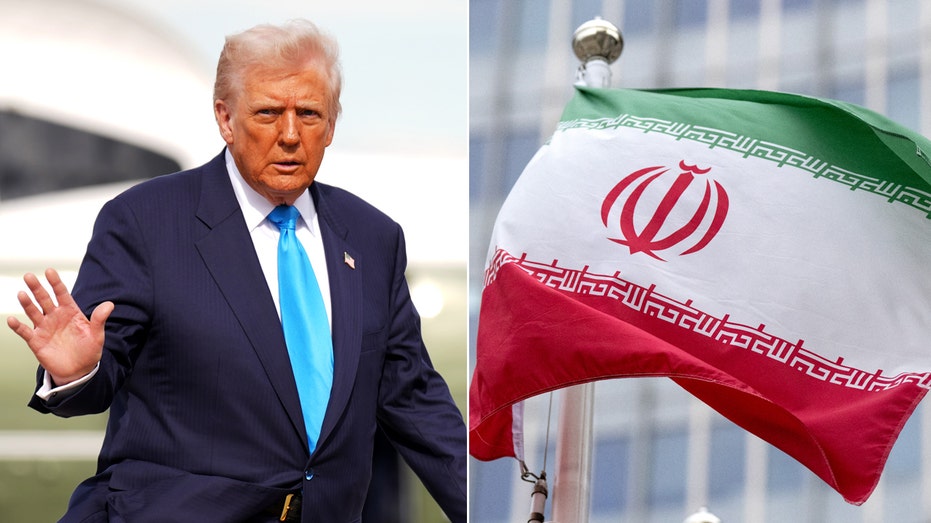
President Donald Trump’s administration has deported more Iranians, according to reports. A report published Monday by the Mizan news agency, the official mouthpiece of Iran’s judiciary, quoted Iranian Foreign Ministry official Mojtaba Shasti Karimi acknowledging the deportation of 55 Iranians. “These individuals announced their willingness for return following continuation of anti-immigration and discriminative policy against foreign nationals particularly Iranians by the United States,” the foreign official reportedly claimed, according to The Associated Press. Fox News Digital reached out to the Department of Homeland Security for comment on Monday. IRAN FIRES BALLISTIC AND CRUISE MISSILES AT SIMULATED TARGETS NEAR PERSIAN GULF “In the coming days, about 55 nationals will return to Iran….This is the second group being returned to Iran in the latest months,” Iranian Foreign Ministry spokesperson Esmaeil Baghaei noted, according to Reuters. IRAN BOYCOTTING 2026 WORLD CUP DRAW CEREMONY IN WASHINGTON DUE TO DENIED VISAS BY TRUMP ADMINISTRATION The New York Times reported that a U.S. official indicated that the aircraft departed on Sunday and that it was a routine deportation flight that also had people from other nations on board as well. An Iranian official said Arab and Russian nationals would disembark the aircraft when it touched down in Cairo, while the Iranians would head to Kuwait and move to a chartered Kuwait Airways aircraft for the flight to Tehran, according to the outlet. IRAN BACKS MADURO TO KEEP LATIN AMERICA FOOTHOLD AS TRUMP INCREASES PRESSURE ON VENEZUELA The deportation of Iranians comes amid the Trump administration’s broader illegal immigration crackdown. The Associated Press contributed to this report
Ex-House Democrat drops out of Texas Senate race as Jasmine Crockett candidacy rumors swirl
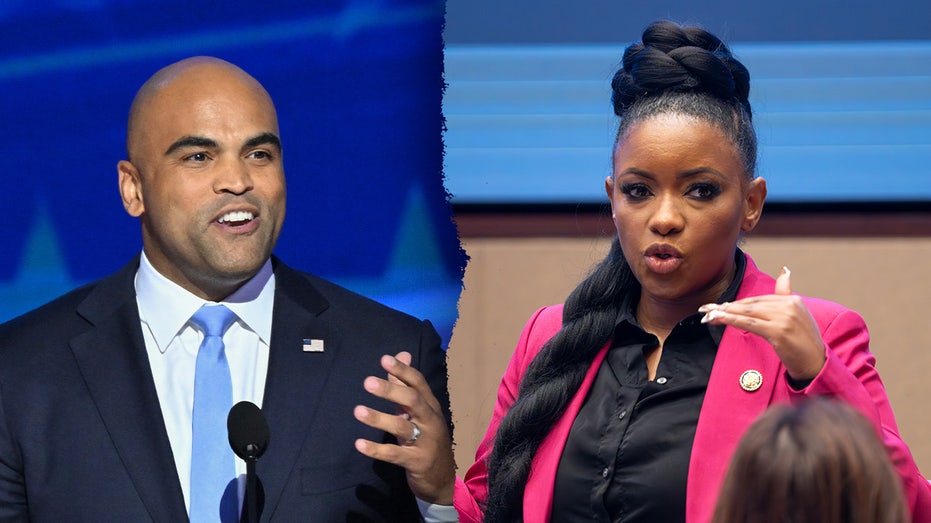
Former House Rep. Colin Allred, D-Texas, is dropping out of the Lone Star State’s Senate race, he announced on Monday. Allred’s announcement comes as rumors swirl about progressive Rep. Jasmine Crockett, D-Texas, potentially entering the fray as soon as late Monday afternoon. “l’ve come to believe that a bruising Senate Democratic primary and runoff would prevent the Democratic Party from going into this critical election unified against the danger posed to our communities and our Constitution by Donald Trump and one of his Republican bootlickers [Attorney General Ken Paxton, Sen. John Cornyn, R-Texas, or Rep. Wesley Hunt, R-Texas],” Allred said in a statement. “That’s why l’ve made the difficult decision to end my campaign for the U.S. Senate.” DOJ BACKS TEXAS IN SUPREME COURT FIGHT OVER REPUBLICAN-DRAWN MAP Allred said he would instead run in the newly-redrawn 33rd Congressional District in Texas, which is currently represented by Rep. Marc Veasey, D-Texas, under previously-created boundaries. It’s not clear yet where Veasey will run for re-election in 2026, but Allred is already expected to face a primary against current Rep. Julie Johnson, D-Texas. Johnson is switching districts to run in the newly-redrawn 33rd, which now includes more of Dallas County while cutting out areas of nearby Tarrant County. “The 33rd district was racially gerrymandered by Trump in an effort to further rig our democracy but it’s also the community where I grew up attending public schools and watching my mom struggle to pay for our groceries,” Allred said. The Supreme Court last week upheld a new congressional map passed by the GOP-dominated Texas legislature and signed into law by longtime Republican Gov. Greg Abbott that creates five more right-leaning House districts in the Lone Star State. Allred, a college football star at Baylor University who went on to play linebacker with the Tennessee Titans in the National Football League (NFL) and later worked as a civil rights lawyer, was first elected to the House in 2018, flipping a red seat. He won re-elections in his Dallas area district in 2020 and 2022. ABBOTT SIGNS TEXAS REDISTRICTING MAP INTO LAW, SECURING MAJOR GOP VICTORY AHEAD OF 2026 MIDTERMS As the Democrats’ 2024 Senate nominee in Texas, Allred aimed to dethrone GOP firebrand Sen. Ted Cruz, R-Texas. But Allred ended up losing to Cruz by eight points in last year’s election, in a Senate race that was one of the most expensive in the country. Allred launched a second straight bid for the Senate in July. But Allred didn’t have the Democratic field to himself for long. James Talarico, a Democratic state lawmaker from Texas with a surging national profile, jumped into the Lone Star State’s high-profile Senate race in September. Meanwhile, the Dallas Morning News first reported on Sunday night that Crockett would launch a bid for Senate after facing her own tough House race decisions following the GOP’s redraw of Texas’ congressional map. She is expected to make an announcement about her political future at 5:30 p.m. ET on Monday. Candidates in Texas have until Monday evening to file for their campaigns. Crockett is currently in her second term as a U.S. House member and has already made a name for herself as a progressive firebrand both on social media and during hearings in the House Oversight Committee. Crockett has notably compared President Donald Trump to Adolf Hitler and aspects of the Republican Party to fascism. But her bombastic style has also made Crockett a superstar within the Democratic Party, with her being chosen to speak at the Democratic National Convention (DNC) last year as a then-first-term member of Congress. She ran for ranking member of the House Oversight Committee earlier this year following the death of its previous top Democrat, late Rep. Gerry Connolly, D-Va., but dropped out of the race after failing to win the recommendation of leadership within her party. On the GOP side of the Texas Senate race is a high-profile three-way primary between incumbent Cornyn as well as challengers Paxton and Hunt.
NYC mayor-elect tells residents how to resist ICE agents knocking at their door in new video
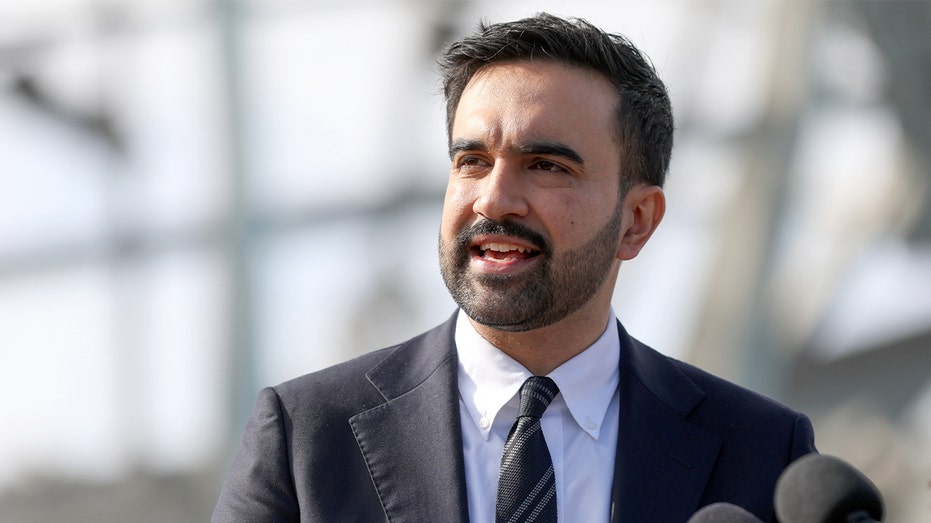
New York City mayor-elect Zohran Mamdani on Sunday released a video outlining New Yorkers’ rights during encounters with U.S. Immigration and Customs Enforcement after an attempted raid in Manhattan, pledging that his administration will safeguard immigrant communities while protecting the city’s constitutional right to protest. The video comes as immigration enforcement in New York faces renewed scrutiny, underscoring how Mamdani plans to confront federal actions he says threaten immigrant communities and demand that New Yorkers be prepared, informed and confident in asserting their legal rights. In the video, Mamdani opens by recalling an ICE raid last weekend in Manhattan that sought to detain immigrants. “As mayor, I’ll protect the rights of every single New Yorker, and that includes the more than 3 million immigrants who call this city their home,” he said. “But we can all stand up to ICE if you know your rights.” MAMDANI VOWS NYPD WILL ‘NEVER’ GO BACK TO ADAMS-ERA COOPERATION WITH ICE ENFORCEMENT He then offered guidance for immigrants who may encounter ICE. “First, ICE cannot enter into private spaces like your home, school or private area of your workplace without a judicial warrant signed by a judge,” Mamdani advised. “If ICE does not have a judicial warrant signed by a judge, you have the right to say, ‘I do not consent to entry’ and the right to keep your door closed.’” He noted that ICE may present paperwork claiming authority to make an arrest, but said “that is false.” BONDI PUTS SANCTUARY CITIES NATIONWIDE ON NOTICE AFTER DC POLICE FEDERAL TAKEOVER “ICE is legally allowed to lie to you, but you have the right to remain silent,” the mayor-elect said. “If you’re being detained, you may always ask, ‘Am I free to go?’ repeatedly until they answer you.” Mamdani also said that people are “legally allowed to film” ICE agents as long as they do not interfere with an arrest. “It is important to remain calm during any interaction with ICE or law enforcement. Do not impede their investigation, resist arrest or run,” he said. DHS DEMANDS LETITIA JAMES TAKE ACTION OVER NEW YORK’S REFUSAL TO HONOR ICE DETAINERS Mamdani closed by emphasizing New Yorkers’ constitutional right to protest. “New Yorkers have a constitutional right to protest, and when I’m mayor, we will protect that right,” he said. “New York will always welcome immigrants, and I will fight each and every day to protect, support and celebrate our immigrant brothers and sisters.” The video comes more than two weeks after the mayor-elect met with President Donald Trump, appearing to forge a new path in their relationship as they found common ground on affordability issues and improving conditions in New York. Despite that meeting, Mamdani reaffirmed New York’s status as a sanctuary city during a speech at a church in the Bronx. “I shared with the president directly that New Yorkers want to follow the laws of our city, and the laws of our city say that, in our sanctuary city policies, city government can be in touch with the federal government on around 170 serious crimes,” Mamdani said last month. “The concern comes from beyond those crimes, the many New Yorkers who are being arrested, they’re being detained, they’re being deported for the crime of making a regular court appearance.” “My focus as the next mayor of this city is going to be to protect immigrants who call this city their home,” the mayor-elect added.
Congress unveils $900B defense bill targeting China with tech bans, investment crackdown, US troop pay raise
Congress released a $900 billion defense bill that reshapes U.S. economic and military competition with China by imposing new investment restrictions, banning a range of Chinese-made technologies from Pentagon supply chains, and expanding diplomatic and intelligence efforts to track Beijing’s global footprint. The legislation, which authorizes War Department spending at $8 billion above the White House’s request, includes a 4% pay raise for enlisted service members, expands counter-drone authorities, and directs new investments in the Golden Dome missile defense shield and nuclear modernization programs. It also extends Pentagon support to law enforcement operations at the southwest border and strengthens U.S. posture in the Indo-Pacific, including funding for Taiwan’s security cooperation program. In a victory for conservative privacy hawks like House Judiciary Committee Chairman Jim Jordan, R-Ohio, the legislation includes a non-defense provision that would mandate FBI disclosure when the bureau was investigating presidential candidates and other candidates for federal office. That measure was the subject of party in-fighting last week when Rep. Elise Stefanik, R-N.Y., whom Speaker Mike Johnson, R-La., had appointed chairwoman of House GOP leadership, publicly accused the speaker of kowtowing to Democrats and allowing that provision to be removed. WAR DEPARTMENT REFOCUSES ON AI, HYPERSONICS AND DIRECTED ENERGY IN MAJOR STRATEGY OVERHAUL Johnson said he was blindsided by Stefanik’s anger and was unaware of her concerns when she had made them public. Stefanik later claimed victory on X, stating the provision had been reinstated after a conversation between herself, Johnson and President Donald Trump. Coverage of in vitro fertilization (IVF) for military families, which became a flashpoint in recent days, is not included in the final NDAA. Neither are provisions preempting states from regulating AI or banning a U.S. central bank digital currency (CBDC). Republicans have pushed the CBDC prohibition as a privacy and civil-liberties measure, arguing that a government-issued digital dollar could give federal agencies the ability to monitor or restrict individual transactions. House aides said the anti-CBDC language became tied to a separate housing-policy package known as “Road to Housing,” and the concessions required to keep both items together were unacceptable. The bill also establishes a new “Artificial Intelligence Futures Steering Committee” charged with producing long-range forecasts and policy recommendations for advanced AI systems, including artificial general intelligence. The legislation takes aim at long-standing bottlenecks in the defense industrial base by authorizing new investment tools, expanding multi-year procurement for high-demand munitions and platforms, and overhauling portions of the acquisition system to speed the fielding of commercial and emerging technologies. Alongside those reforms, lawmakers approved new “right-to-repair” style requirements that force contractors to provide the technical data the Pentagon needs to maintain and sustain major weapons systems—a change intended to reduce vendor lock-in and ease chronic maintenance delays across the fleet. One major section of the bill establishes a far-reaching outbound investment screening system, requiring U.S. companies and investors to alert the Treasury Department when they back certain high-risk technologies in China or other “countries of concern.” The measure gives Treasury the ability to block deals outright, forces detailed annual reporting to Congress, and grants new authorities to sanction foreign firms tied to China’s military or surveillance networks. Lawmakers cast the effort as a long-overdue step to keep U.S. capital from fueling Beijing’s development of dual-use technologies. US COULD LOSE NEXT MAJOR WAR DUE TO PENTAGON’S ‘BROKEN’ ACQUISITION SYSTEM The bill also includes a procurement ban targeting biotechnology providers that would bar the Pentagon from contracting with Chinese genetic sequencing and biotech firms linked to the People’s Liberation Army or China’s security services. Additional sourcing prohibitions restrict the War Department from purchasing items such as advanced batteries, photovoltaic components, computer displays, and critical minerals originating from foreign entities of concern, further tightening U.S. supply chains away from China. They also require the department to phase out the use of Chinese-made computers, printers and other tech equipment. Beyond economic measures, the NDAA directs the State Department to deploy a new cadre of Regional China Officers at U.S. diplomatic posts around the world, responsible for monitoring Chinese commercial, technological, and infrastructure activities across every major geographic region, including Beijing’s Belt and Road Initiative. The NDAA contains several Israel-related provisions, including a directive for the Pentagon to avoid participating in international defense exhibitions that bar Israeli involvement. It authorizes funding for Iron Dome, David’s Sling, and Arrow – the missile defense programs the U.S. operates with Israel. The bill also requires biennial reports comparing China’s global diplomatic presence to that of the United States. The Pentagon is separately directed to strengthen U.S. posture in the Indo-Pacific by extending the Pacific Deterrence Initiative and expanding cooperative training and industrial-base initiatives with regional allies, including Taiwan and the Philippines. The legislation reauthorizes the Ukraine Security Assistance Initiative at $400 million per year for fiscal years 2026 and 2027. Congress will also require more frequent reporting on allied contributions to Ukraine to track how European partners support Kyiv. The bill repeals two long-dormant war authorizations tied to earlier phases of U.S. military involvement in Iraq, while leaving the primary post-9/11 counterterrorism authority untouched. Lawmakers said the final text includes repeals of the 1991 Gulf War AUMF and the 2002 Iraq War AUMF, both of which successive administrations have said are no longer operationally necessary. The 1991 authorization approved the U.S.-led effort to expel Iraqi forces from Kuwait, and the 2002 authority permitted the invasion of Iraq under President George W. Bush. Both parties have debated winding down these authorizations for years, arguing they no longer reflect current U.S. missions in the Middle East. Presidents from both parties, including Trump, have maintained that modern military operations in the region do not rely on either statute and that the commander in chief already holds sufficient Article II authority to defend U.S. personnel when required. Repeal also answers long-running concerns in Congress about outdated war authorities being used as secondary legal justifications for actions far from their original intent, such as the 2020 strike on Iranian Gen. Qassem Soleimani. The NDAA does not