

EXCLUSIVE VIDEO: Marine vet prosecutor refuses to cross constitutional line on Spanberger ‘assault weapon’ ban

EXCLUSIVE: Ryan Mehaffey, a Marine veteran and Virginia prosecutor, is taking a hard-line stance against what he believes is an “unconstitutional” new gun ban signed by Democratic Gov. Abigail Spanberger. Spanberger, who has been slipping in the polls amid criticisms of her progressive policy agenda, signed a new bill last week banning the future sale and manufacture of “assault weapons,” including many semiautomatic rifles, pistols and shotguns. The law also bans the future sale of magazines with a capacity of more than 15 rounds. The move caused immediate backlash from many Virginians and raised new Second Amendment violation concerns. Rather than protest, however, Mehaffey, who serves as the commonwealth attorney for Spotsylvania County, is drawing a line in the sand and flatly refusing to enforce the ban. With the bill set to take effect this July ahead of America’s 250th anniversary of independence, Mehaffey sent a letter to Spotsylvania Sheriff Roger Harris, instructing him that the ban is “unconstitutional and cannot be lawfully enforced.” LEGAL EXPERT UNLEASHES ON SPANBERGER’S NEW EXECUTIVE ORDER TARGETING ICE: ‘POLITICAL THEATER’ A statement released by Spanberger’s office called the assault weapons ban a “critical step toward protecting families, communities, and the law enforcement officers who serve them.” Spanberger remarked she signed the bill into law “because firearms designed to inflict maximum casualties do not belong on our streets.” She added that “while the General Assembly chose not to adopt my amendment that specifically carves out certain firearms frequently used for hunting, I will work with the patrons to clarify this language.” In response, Mehaffey said in an interview with Fox News Digital that the law “is striking at the core of the militia system that existed in Virginia.” According to Mehaffey, the Second Amendment is not just an assurance of personal freedoms, but also a safeguard for a community’s ability to defend itself through a “well-regulated militia.” “Our founders were careful to make sure when they drafted our founding document, that the ultimate right of the people was preserved to defend themselves and to defend their community,” he explained. “So, the linchpin of the constitutional analysis is going to be does this instrument have some reasonable relationship to the preservation or efficiency of a regulated militia.” ‘BACKYARD BRAWL’ IGNITES AS WEST VIRGINIA’S MORRISEY MOVES TO POACH BLUE STATE RIVAL SPANBERGER’S JOBS Mehaffey argues that in Virginia, historical tradition and case law precedent not only allow citizens to own firearms but even require them to arm themselves with the weapons of a basic infantryman for common defense. In the Founding Fathers’ time, Mehaffey said the standard issue was a musket and 20 rounds. Today, the basic infantry weapon in the U.S. military is the M4A1 carbine equipped with a 30-round magazine. “The second amendment may not mean that you are allowed to have a nuclear weapon,” he laughed. “But what it does allow you to have is a basic infantry weapon.” “That sort of weapon is the core of what’s protected by the Second Amendment. Not necessarily a nuclear warhead, but a rifle that you can take out and form either a fire team or a company to defend yourself and to defend your community.” Mehaffey is not alone in his stance. In addition to what he characterized as the “overwhelmingly positive” response from his community, Smyth County Commonwealth’s Attorney Phillip Blevins, an Air Force veteran, has also refused to enforce the bill, arguing it is unconstitutional. The ban is also facing lawsuits from gun-rights groups, including the NRA, Firearms Policy Coalition and Second Amendment Foundation. Blevins told Fox News Digital that “ultimately, courts will continue to address these issues, and I respect the role of the judiciary. But as the elected Commonwealth’s Attorney for Smyth County, I will continue to stand for what I believe the Constitution requires, without apology or hesitation.” “My position is not based on politics. It is based on constitutional fidelity,” he continued, adding, “The Bill of Rights either means something, or it does not.” “As Commonwealth’s Attorney, I took an oath to support and defend the Constitution of the United States and the Constitution of Virginia. That oath is not situational, and it does not change based on politics, headlines, or pressure from either side of an issue.” Mehaffey believes he and those standing beside him on this issue will ultimately prevail. “The Second Amendment is the supreme law of the land, both in the U.S. Constitution and the analog in the Virginia Constitution,” he explained. “So, whatever law is passed by the General Assembly is not going to have the ability to supersede the Constitution.” POWERFUL DEM’S JABS AT TRUMP COME BACK TO HAUNT HER AFTER OFFICE RAIDED BY FBI: ‘AGED WELL’ While he has gotten a lot of personal attention for his stance, Mehaffey emphasized that, “I want nothing more than to fulfill my office with honor and to be a good servant to the people that elected me to represent them and to stick up for their rights.” “That’s what I’m trying to do,” he continued, adding, “I would expect any government official to remain faithful to the Constitution and to discharge their duties as servants of the people in the same way that I have.” Fox News Digital reached out to Spanberger for additional comment.
‘After your boy’: Hasan Piker lashes out over fed probe into Cuba trip
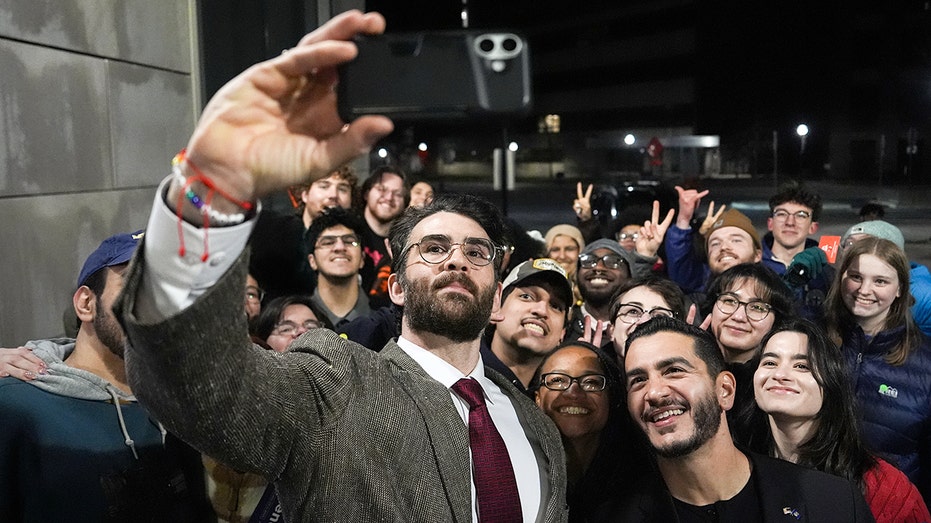
Marxist political influencer Hasan Piker is lashing out over a federal inquiry into his recent trip to communist Cuba, calling it an “intimidation tactic” prompted by his harsh stance on Israel and the U.S. The response by Piker — echoed by other leaders from Democratic Socialists of America and pro-communist and anti-Israel leaders — illustrates how quickly the Cuba “solidarity” movement, pro-communist influencers and anti-Israel activist networks converged online to frame the federal inquiry not as a sanctions or foreign influence investigation, but as political repression aimed at broader anti-capitalist, anti-Western, anti-Israel activist movements. Piker told followers during a livestream on Twitch Sunday afternoon that he is being targeted for being a “loudmouth” and “rabble-rouser,” criticizing Israel and the “fascist” United States. Fox News Digital reported Saturday that the Treasury Department’s Office of Foreign Assets Control has sent administrative subpoenas to Piker and leftist CodePink co-founder Medea Benjamin to get documents about the financial, logistical and communications details of their March trips to Cuba, in possible violation of laws and regulations about doing business with the government of Cuba. “It’s not great,” Piker told his followers in the early minutes of his livestream on Sunday afternoon. “The news is not great, okay? Um, I mean, it’s bulls—. But still not great…I mean it’s bulls— but still not great that they’re after your boy. They’re up my a–.” Piker didn’t respond to requests for comment, although he acknowledged receiving the queries as he spoke to his followers during his livestream. He said that he got his trip cleared by the Office of Foreign Assets Control, saying, “Everything we did was cleared by Treasury.” The Treasury Department’s Office of Foreign Assets Control didn’t respond to a request for comment. By the end of his segment on the federal inquiry, Piker pivoted from the Cuba sanctions inquiry to argue that the scrutiny was really driven by backlash to his comments on Israel. “A lot of this, by the way, does still have a lot to do with Israel,” he said, charging that his critics “don’t like that I talk s— about Israel” and “don’t like that I am a loudmouth, a rabble-rouser.” He claimed the investigation was not “just about Cuba” but also about his role in boosting anti-Israel voters and candidates. “They recognize that Democrats and young people are against Israel” and see him “campaigning with candidates who are anti-Israel, and they are winning their races,” he said. FEDS SUBPOENA HASAN PIKER, MEDEA BENJAMIN OVER CUBA TRIPS Piker’s response followed a pattern that has become common among online activist influencers under scrutiny: reframing a legal or regulatory inquiry as political persecution while broadening the issue into a sweeping ideological struggle. Rather than focus narrowly on the sanctions questions surrounding the Cuba trip, Piker repeatedly cast himself as the victim of a coordinated campaign by “Israel first” Democrats, pro-Israel activists, mainstream media figures and the “fascist” Trump administration. He frequently shifted the conversation away from the specifics of Treasury’s inquiry and toward a larger narrative in which the federal government is allegedly criminalizing anti-Israel activism, anti-capitalist politics and opposition to U.S. foreign policy. He sought to portray the investigation as evidence that powerful political and media institutions are targeting dissenting voices who challenge establishment positions on Israel, Cuba and American foreign policy. At one point, Piker said he created a mini-documentary about life in Cuba during his March trip, saying he was serving as a journalist. In other moments, he has described the mission as a “humanitarian” effort, framing his trip as providing “humanitarian aid” to the people of Cuba. Piker also characterized the controversy using language increasingly emerging from socialist, communist and anti-capitalist movements online, where activists have used the phrase “Epstein class” as shorthand for wealthy elites and the supposed moral corruption of American capitalism. The rhetoric repeats the propaganda of U.S. adversaries, including Cuba, China, the Islamic Republic of Iran and Russia. He read a comment from a fan, who wrote, “We’ll free you, my brother.” POWER COUPLE OF CHAOS: HOW A TYCOON AND ACTIVIST BUILT A ‘REVOLUTIONARY BASE’ AT THE HOUSE OF SINGHAM Piker responded, “I’m seemingly going to be made an example of…in America’s galloping toward fascism.” He batted away suspicions that Elon Musk made a “boss call” to subpoena Piker after he did an interview yesterday with Ashley St. Clair, the mother of a baby with Musk. The two are going through a custody dispute. “I haven’t gotten anything yet,” said Piker. “Yes, I’ll get lawyered up,” he said, in response to a follower. He said he needed a lawyer with expertise on the First Amendment and “knowledgeable on OFAC.” “I haven’t had anything happen to me yet,” he said. “And it’s not like anything I’ve done.” Saturday evening, Piker posted on X that “the American govt would rather try to criminalize delivering aid to a country we’d starved, than punish the Epstein class.” MEDIA TAPS TWITCH STAR WHO TOLD VIEWERS TO ‘KILL’ REPUBLICANS FOR COMMENT ON CHARLIE KIRK’S ASSASSINATION At 10:51 p.m., CodePink’s Benjamin posted: “Taking medical supplies to pediatric hospitals in Cuba is now a crime? Saving the lives of babies is a crime? The administration is beyond grotesque.” Benjamin repeated the movement’s broader framing of the Cuba trips as “humanitarian” missions, even as organizers and participants repeatedly paired the aid campaigns with overt political rhetoric condemning the Trump administration, U.S. sanctions policy and what activists described as “imperialism” and “settler colonialism” in Cuba and Latin America. Piker’s uncle, far-left commentator Cenk Ugyur, the co-founder of Justice Democrats, a socialist organization that helped elect Ilhan Omar, Rashida Talib and Alexandria Ocasio-Cortez to Congress in 2018, defended him online Saturday night. “Government apparently sent some bullshit subpoena to Hasan,” Ugyur wrote. “They’re tightening the noose on speech. Remember, they’ll always have an excuse or some technicality. It’s not like they’re going to tell you, ‘We did it because we don’t like what you’re saying.’” Uygur then linked the investigation to broader left-wing claims about suppression
Retiring senator warns if Trump continues to do ‘stupid things’ it will kill GOP in November
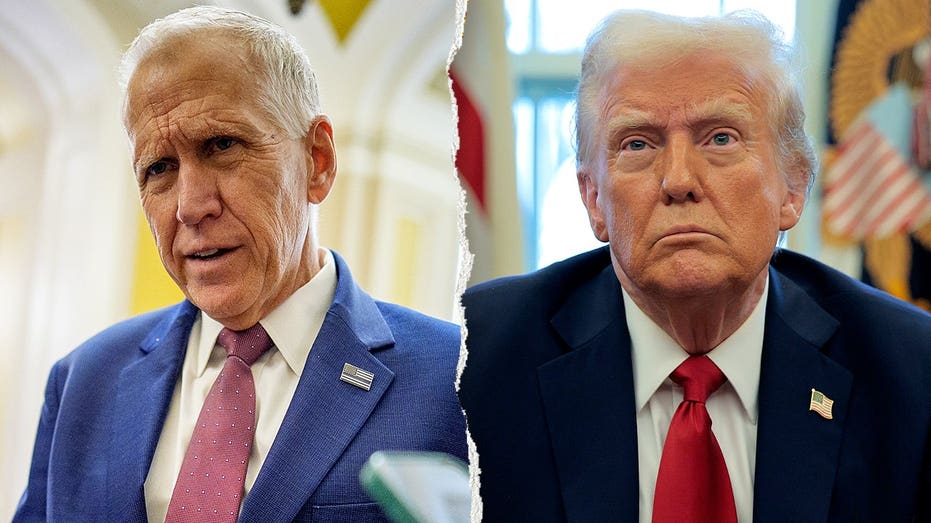
A Senate Republican warned that President Donald Trump’s decisions were “killing our chances” for the GOP holding onto power in the Senate. It’s another chapter in the ongoing breakdown of the relationship between Sen. Thom Tillis, R-N.C., and Trump that started last year during Republicans’ push to pass the president’s “big, beautiful bill.” The latest episode on Friday came after Trump accused Tillis of being a “nitpicker” on Truth Social. “When I told him that I would not, under any circumstances, endorse him for another run, too much work and drama (he couldn’t have won, anyway!), he immediately quit the race and publicly announced that he was going to ‘retire,’” Trump said. TRUMP DOUBLES DOWN ON $1.8 BILLION ‘SLUSH FUND’ THAT KILLED HIS AGENDA, SPURRED REPUBLICAN REBELLION “I said, ‘Wow, great news, that was easy!’ The media said how brave he was to take me on, but he wasn’t brave, he was just the opposite – HE WAS A QUITTER,” he continued. “Now he can have all the fun he wants for a few months, with some of his RINO friends, screwing the Republican Party.” Tillis has not shied away from being critical of the Trump administration since announcing his decision not to run for office again, and he has typically aimed his barbs at the president’s top advisors. He did so again by blaming Trump’s nearly $1.8 billion “anti-weaponization” fund on U.S. Pardon Attorney Ed Martin, pushing 50-year mortgages and the bipartisan Senate housing package on Housing Director Bill Pulte, the push to acquire private companies with taxpayer dollars on Commerce Secretary Howard Lutnick, and the spate of firings of top generals at the Pentagon — and “not holding Putin accountable for his systematic kidnapping, rape, torture, and murder of Ukrainian civilians,” on War Secretary Pete Hegseth. SENATE GOP ERUPTS OVER TRUMP DOJ ‘ANTI-WEAPONIZATION’ FUND, PUNTS ICE, BORDER PATROL FUNDING “If opposing these things makes me a RINO, then I gladly accept that nickname,” Tillis said on X. “We need Republicans to do well in November, but the stupid stuff is killing our chances!” White House spokeswoman Olivia Wales told Fox News Digital in a statement that Trump is “the unequivocal leader, best messenger, and unmatched motivator for the Republican Party, and he is committed to maintaining Republicans’ majority in Congress to continue delivering wins for the American people.” REPUBLICANS RECOIL AS TRUMP’S BILLION-DOLLAR DOJ ‘SLUSH FUND’ FOR ALLIES THREATENS ICE, BORDER PATROL PLAN “In just over one year, the President has made our country greater than ever before with the most secure border in American history, the largest middle-class tax cuts ever, and the lowest murder rate since 1900,” Wales said. “President Trump will continue to draw a sharp contrast with his commonsense agenda and the radical Democrats in Congress who allowed millions of illegal aliens to flow through the border, unanimously opposed the Working Families Tax Cuts, and are soft-on-crime.” Still, many of those decisions have given Republicans across the spectrum of the Senate GOP heartburn, and most recently, the “anti-weaponization” fund derailed Congress’ effort to fund immigration operations across the country for the remainder of Trump’s term. Tillis was one of several Republicans who blasted the fund created by the Department of Justice (DOJ) shortly after its announcement earlier this week and joined in a dogpile against acting Attorney General Todd Blanche on Wednesday behind closed doors. Like several others, Tillis was concerned that the fund could be used by Jan. 6 rioters convicted of assaulting police officers. “Imagine that,” Tillis said earlier this week. ”A fund that is set up to compensate people who assaulted Capitol Police officers and other responding agencies, right? People that had pled guilty to physical acts against the president may actually be able to get compensated. How absurd does that sound coming out of my mouth?”
‘Wasteful distraction’: Experts slam Mamdani’s taxpayer-funded grocery stores

As New York City Mayor Zohran Mamdani moves forward with plans for city-owned grocery stores, economists and local business owners warn the proposal could crush small grocers while leaving taxpayers with a hefty bill. The initiative, a key Mamdani campaign pledge, would establish city-backed supermarkets across the city in an effort to lower food costs. Adam Lehodey of the Manhattan Institute believes the city could address food affordability more efficiently through private-sector partnerships and existing assistance programs rather than operating grocery stores itself. “I think really it’s a distraction and a pretty wasteful distraction,” Lehodey told Fox News Digital. “There’s an easier and better way to solve the problem.” NYC VOTERS FLOCK TO SOCIALIST-STYLE FREEBIES AS MAMDANI PUSHES RENT FREEZES, CITY-RUN STORES The first location is expected to open in 2027 in the Bronx neighborhood of Hunts Point as part of The Peninsula redevelopment project at the former Spofford Juvenile Detention Facility, according to the mayor’s office. The larger redevelopment plan includes 740 affordable housing units, more than 50,000 square feet of public open space, 30,000 square feet of light industrial space and more than 50,000 square feet of community facilities. It would also include a 20,000-square-foot grocery market intended to serve the South Bronx. MAMDANI’S PUBLIC GROCERY STORES MAY HAVE DEVASTATING EFFECTS ON CITY’S FOOD SUPPLY Lehodey also warned the city-backed stores could put small neighborhood grocers at a disadvantage because the projects would receive public support that private businesses do not. “Yeah, the prices might be a little bit cheaper, but that comes at the cost of other businesses running sustainable operations,” he said. He argued the city is also sacrificing valuable public land and potential revenue by subsidizing the projects. MAMDANI’S WALL STREET COURTSHIP SPARKS CRITICISM OF ANTI-BILLIONAIRE AGENDA “That land does have value,” Lehodey said. “By giving it out for free, the taxpayer again is losing money, and we’re losing revenue that could have been spent on other things.” A second city-backed grocery market is slated to open next year at La Marqueta, a public market space in East Harlem. The city plans to spend roughly $30 million to build the location. Critics question whether another grocery option is needed in the neighborhood. Roughly 45 grocery stores are located within a 35-minute walk of the proposed site, according to a Fox News Digital analysis. Those stores range from major chains, including Whole Foods and Lidl, to smaller neighborhood markets and bodegas. The area is also well served by public transit, with multiple subway and bus lines giving residents several ways to reach nearby grocery options. Some local grocers say the city-backed market could siphon away customers and hurt already thin profit margins. Despite the abundance of nearby grocery options, some local store owners fear the city-backed market could undercut existing businesses by offering lower prices backed by public support. “Of course it will affect this store,” said Sarah Kang, manager at a CTown Supermarkets location about a 35-minute walk south, or one subway stop, from La Marqueta. “A lot of people walk 20 to 30 minutes to get here,” she explained to Fox News Digital. “If they find a cheaper supermarket, I don’t think they’ll be willing to make that trip. It’s going to affect small grocery stores. Definitely.” “I hope we don’t lose customers,” Kang added. About a 30-minute walk north of La Marqueta, Joel Martinez, a manager of a supermarket at 128th Street and Frederick Douglass Boulevard, said the impact may depend on proximity to the proposed site. FROM FREE BUSES TO CITY-OWNED GROCERY STORES, HERE ARE MAMDANI’S KEY ECONOMIC PROMISES “I hope it doesn’t impact us,” Martinez said in a call with Fox News Digital. “The store will be a little far from us, so that’s good. But it will affect smaller businesses that are closer.” Bodegas and small grocery stores are a staple of New York City neighborhoods, often serving as primary food sources for nearby residents. Similar proposals for local government-owned and operated grocery stores and markets have surfaced in other cities, including Boston. Atlanta officials appear to have pioneered the effort, opening a city-backed grocery store aimed at improving food access in underserved communities.
Dem socialist running for Wisconsin governor pushed ‘abolishing the police’
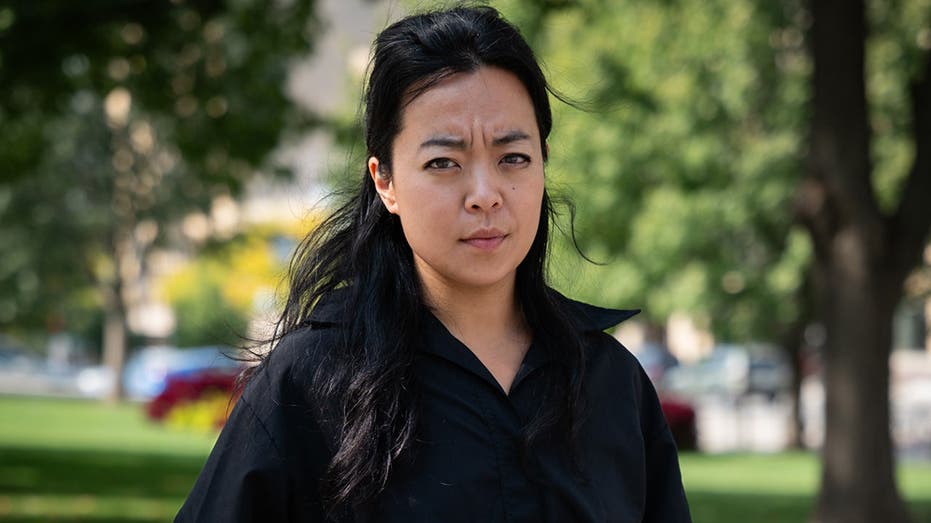
A Democratic socialist running for governor in Wisconsin once called to “defund, then abolish,” the police. Wisconsin state Rep. Francesca Hong, in a flurry of posts on social media, called for the end of policing in the wake of the slaying of George Floyd and the shooting of Jacob Blake, before and during her time as an elected official. In one post made in August 2020, first reported by CNN, Hong said, “I support defunding the police as a first step towards abolishing the police.” DEM HOUSE HOPEFUL EXPOSED AS FAR-LEFT ACTIVIST PUSHING TO ABOLISH POLICE WEEKS BEFORE SPECIAL ELECTION “Jacob Blake is fighting for his life, but he shouldn’t have to be,” she said on X, then Twitter. “We must also fight for his life and get justice for all those harmed by state-sanctioned violence.” Blake was shot seven times in Kenosha, Wis., after police responded to a domestic disturbance call. The incident left him partially paralyzed and sparked a wave of violent protests in 2020. He had a pocket knife on him that fell from his pocket in the altercation, which he picked up before being shot. Hong again weighed in on the issue, this time as an elected official in October 2021 in response to federal prosecutors’ decision to not file charges against Officer Rusten Sheskey, who shot Blake over a year prior. BLM ACTIVIST LEADING RESISTANCE TO TRUMP’S DC CRIME PLAN REPEATEDLY CALLED FOR ABOLISHING POLICE “How is 7 bullets in the back not excessive force,” Hong said online. “Police exist to uphold white supremacy. Defund then abolish. Reform can’t be an option. My heart breaks for the trauma the Blake family and their community continues to endure.” In a statement to Fox News Digital, Hong appeared to backtrack from the posts, but didn’t say whether as governor she would move to defund and abolish the police. “There is no way I want to cut resources for public safety,” Hong said. “I don’t like crime. I don’t like unsafe streets. I also don’t like when a member of law enforcement abuses their power.” MANDELA BARNES JUMPS INTO WISCONSIN GOVERNOR RACE — BUT BAGGAGE FROM HIS 2022 SENATE BID FOLLOWS “Everyone deserves the resources they need to be safe, including housing, good-paying jobs, mental health supports and community resources,” she continued. “As governor, I will look at every part of the state and work with local leaders to shape solutions that address our immediate needs.” Hong, who is endorsed by Reps. Ilhan Omar, D-Minn., and Ro Khanna, D-Calif., is one of several candidates in a crowded primary for the Democratic nomination in Wisconsin. Primary Election Day is still a ways away on Aug. 11, and Hong is locked in a tight battle with former Lieutenant Governor and 2022 Democratic nominee for Senate Mandela Barnes. The winner of their primary will likely square off against Rep. Tom Tiffany, R-Wis., a member of the House Freedom Caucus and frontrunner in his bid for the Republican nomination. Tiffany, in a statement to Fox News Digital, took a shot at both candidates. “This is what today’s Democrat Party has become,” Tiffany said. “Whether it’s Francesca Hong doubling down on abolishing the police or Mandela Barnes calling to empty prisons while pushing to end cash bail, they are both far-left radicals who care more about protecting criminals than the innocent people harmed by their crimes.” Tiffany’s campaign directed Fox News Digital to older posts from Barnes, too, where he pushed to “cut the prison population in half,” and legislation he introduced a decade ago to end cashless bail. Fox News Digital reached out to Barnes’ campaign for comment but did not immediately hear back.
From rally gunfire to White House shooting, threats against President Trump continue to mount
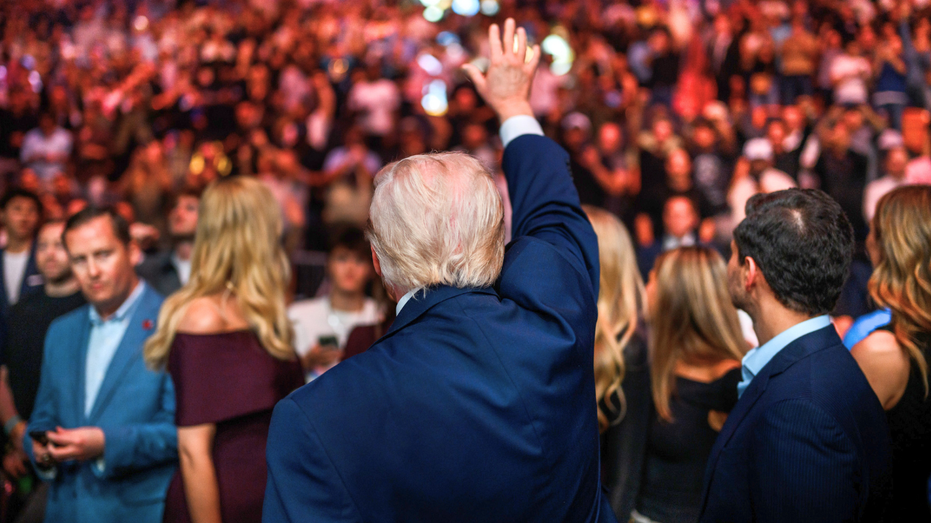
Saturday’s shootout between the Secret Servbice and a deranged gunman near the White House marked the latest in a growing series of threats and security incidents involving President Donald Trump and senior administration officials, intensifying concerns about political violence. As investigators continue piecing together the incident, authorities said Nasire Best, 21, of Maryland, approached a Secret Service checkpoint near 17th Street and Pennsylvania Avenue NW at about 6 p.m. local time, removed a weapon from his bag and opened fire on posted officers. GUNMAN DEAD AFTER OPENING FIRE NEAR WHITE HOUSE CHECKPOINT, SECRET SERVICE SAYS According to a senior administration official with direct knowledge of the incident, Best — who allegedly had prior encounters with the Secret Service and a history of mental health issues — fired about three shots toward the executive mansion before he was taken down by Secret Service agents. The shooting comes just weeks after another armed suspect rushed the entry point of the White House Correspondents’ Dinner at the Washington Hilton hotel. Authorities identified that suspect as 31-year-old Cole Allen, of Torrance, California, who traveled to the nation’s capital armed with multiple weapons and carrying a manifesto outlining his intent. Investigators also said Allen shared anti-Trump rhetoric on social media and allegedly expressed hostility toward Christians in online posts reviewed by law enforcement. WHCD SHOOTING SUSPECT PLANNED TO TARGET TRUMP OFFICIALS, MANIFESTO REVEALS According to investigators, Allen intended to target senior Trump administration officials attending the annual event before being stopped by law enforcement outside the Washington Hilton. The alleged WHCD plot came less than two years after Trump survived two separate assassination attempts during the 2024 presidential campaign, incidents that dramatically reshaped security operations around the president and other top officials. In July 2024, a gunman opened fire during a Trump rally in Butler, Pennsylvania, grazing Trump’s ear, killing one rally attendee and injuring others before Secret Service agents fatally shot the suspect. Federal investigators later described the shooting as one of the most serious security failures in decades. TRUMP RALLY GUNMAN ACTED ALONE, FBI SAYS — BUT QUESTIONS ABOUT MOTIVE PERSIST Just months later, an armed suspect was discovered near Trump International Golf Club in West Palm Beach, Florida, in what investigators described as a second assassination attempt. Prosecutors alleged the suspect had positioned himself near the course with a rifle before being spotted by Secret Service agents. The heightened security posture has continued since those incidents. In February, Secret Service agents fatally shot a 21-year-old man carrying a shotgun and gas canister outside Mar-a-Lago while Trump was in Washington. The incident occurred around 1:30 a.m. when the suspect made an “unauthorized entry” through the north gate of the resort as another vehicle was exiting. The man was identified as 21-year-old Austin Tucker Martin of North Carolina. Beyond those incidents, federal officials have repeatedly warned about a broader rise in threats targeting Trump and current and former administration officials, including dangers linked to extremist rhetoric, online radicalization, and foreign adversaries such as Iran. SUSPECT IDENTIFIED AFTER FATAL SHOOTING AT TRUMP’S MAR-A-LAGO ESTATE: OFFICIALS Security concerns have also extended beyond Trump himself, with repeated swatting incidents, online death threats, and increased protection measures for judges, prosecutors, and public officials connected to politically charged investigations and events. Taken together, the incidents have heightened concerns inside federal law enforcement and the intelligence community about the escalating risk of political violence ahead of another contentious election cycle.
Doug McCain, eldest son of John McCain, dead suddenly at 66
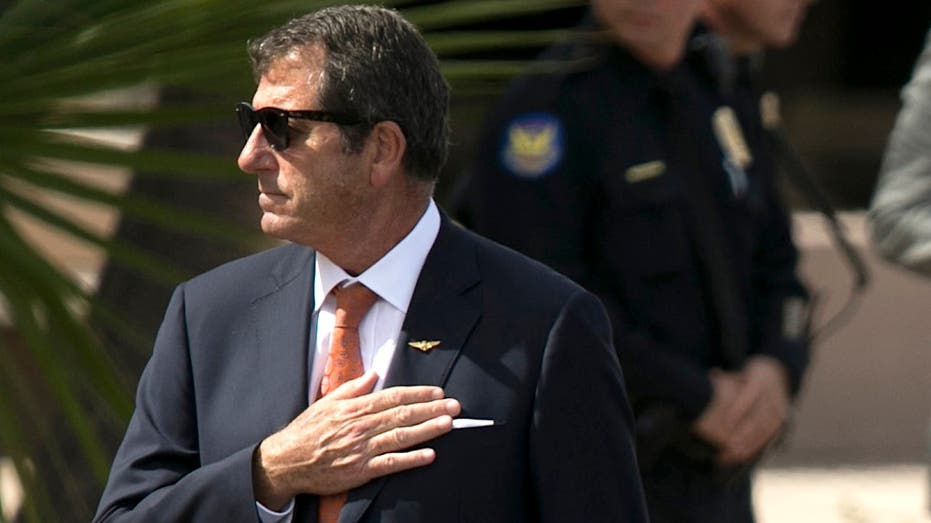
Meghan McCain and her family are mourning the sudden death of her stepbrother, Douglas Shepp McCain, the eldest adopted son of late Sen. John McCain. He was 66. Doug McCain died Wednesday, according to his funeral home obituary, which did not disclose the cause of sudden death. “I am deeply saddened to share the news of my brother Doug McCain’s sudden passing,” Meghan McCain wrote Sunday morning on X. “He was a truly wonderful, joyful man who supported me throughout my life.” “He brought humor, fun and great conversation to every room. I will cherish our memories together. Our prayers are with his wife Ashley and children Caroline and Shepp.” MARIE OSMOND SAYS BROTHER WAYNE’S DEATH HAS LEFT A ‘GIANT HOLE’ IN HER HEART The McCain Institute also extended condolences to the family. “We extend our condolences to the McCain family following the passing of Douglas ‘Doug’ Shepp McCain, the eldest son of John McCain,” the institute wrote Saturday on X. “A Navy pilot like his father, Doug will be remembered as a patriot and friend to the many alumni of Sen. McCain’s Institute, campaigns & Senate staff,” the institute continued. REMEMBERING THE COLLEAGUES WE LOST: A VETERAN’S MEMORIAL DAY REFLECTION Doug McCain was born Oct. 4, 1959, in Pensacola, Florida, and grew up in Jacksonville, where he surfed and played baseball and soccer. He graduated from Jacksonville Episcopal High School in 1977 before attending the University of Virginia, where he majored in systems engineering, joined Navy ROTC and met his future wife Ashley Jardine. After graduating from UVA in 1982, McCain joined the Navy and spent six years flying A-6 Intruders. He later built a long career with American Airlines, where his family said he found work he loved, especially after becoming a captain. Doug was John McCain’s adopted son from the senator’s first marriage to Carol Shepp McCain. John McCain, a Navy aviator who was held as a prisoner of war in Vietnam, later represented Arizona in the U.S. Senate and became the Republican presidential nominee in 2008. He died in 2018. ELIZABETH STUART NORTH, BELOVED WIFE AND MOTHER, DEAD AT 80 “Doug could always be counted on to tell you what he knew and, more often than not, explain why he was right,” his obituary read. “He secretly loved his ‘World Book’ nickname and hated that Google eventually put him out of business. He enjoyed golf and was very proud to hold the McCain family record of three holes-in-one. “He was a loyal friend to many and cherished each and every friendship. He was a devoted son, a loving father to Caroline and Shepp, and most recently found great joy in being Teddy’s grandfather. Doug will be remembered for his generous heart, his loyal friendships, and his unwavering love for his family. He will be dearly missed by those close to him.” He is survived by his wife of 40 years Ashley Jardine McCain, daughter Caroline McCain Hendrickson, son Douglas Shepp McCain Jr., and grandson Teddy. He is also survived by mother Carol Shepp McCain, brother Andy McCain, sister Sidney McCain, stepmother Cindy McCain, and stepsiblings Meghan, Jack, Jimmy and Bridget. Private services will be held for the family. A memorial gathering is scheduled for Saturday, May 30 at the Princess Anne Country Club in Virginia Beach, Virginia.
White House blasts Cruz, Pompeo for trashing Trump peace efforts as Iran appeasement
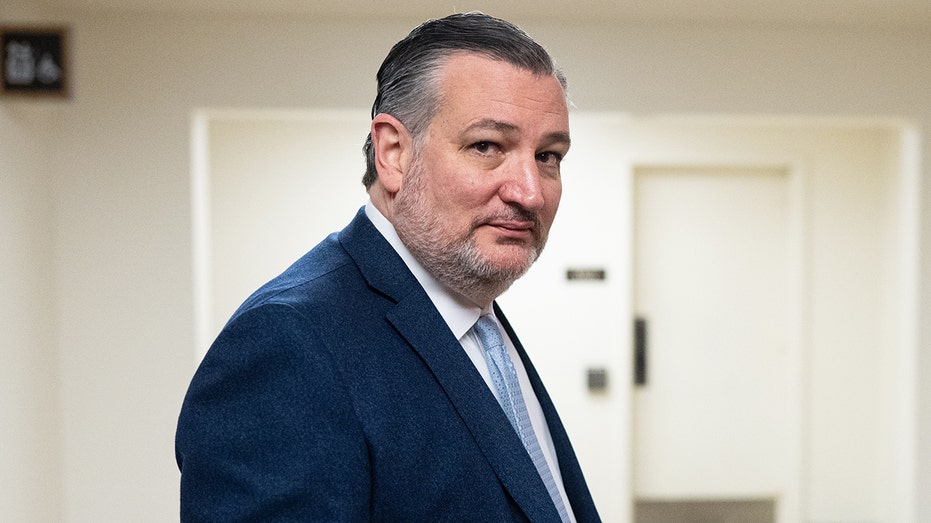
While President Donald Trump was burning the midnight oil hammering out a last-minute peace and denuclearization deal with Iran, his White House inner circle was hammering critics from the right for either working to “undermine” peace efforts or “illegally” abusing residual security clearance. Former Secretary of State Mike Pompeo, a Fox News contributor, and Sen. Ted Cruz, R-Texas, received X criticism from some of Trump’s top inner circle advisors, including White House communications director Steven Cheung, deputy assistant on counterterror Sebastian Gorka and outside political advisor Alex Bruesewitz. “Mike Pompeo has no idea what the f— he’s talking about,” Cheung wrote in a scathing X post Saturday night. “He should shut his stupid mouth and leave the real work to the professionals. He’s not read into anything that’s happening, so how would he know.” Trump himself finally weighed in on the latest peace talks Sunday morning, rebuking his predecessors along with his current critics. TOP REPUBLICAN WARNS TRUMP AGAINST MAKING A DEAL WITH IRAN: ‘FINISH THE JOB’ “One of the worst deals ever made by our Country was the Iran Nuclear Deal, put forth and signed into existence by Barack Hussein Obama and the rank amateurs of the Obama Administration. It was a direct path to Iran developing a Nuclear Weapon,” Trump wrote on Truth Social. “Not so with the transaction currently being negotiated with Iran by the Trump Administration – THE EXACT OPPOSITE, in fact! “The negotiations are proceeding in an orderly and constructive manner, and I have informed my representatives not to rush into a deal in that time is on our side. The Blockade will remain in full force and effect until an agreement is reached, certified, and signed. Both sides must take their time and get it right. There can be no mistakes! “Our relationship with Iran is becoming a much more professional and productive one. They must understand, however, that they cannot develop or procure a Nuclear Weapon or Bomb.” The Pompeo post that drew the White House ire suggested an impending Trump deal would wind up being an Obama-era-esque capitulation to Iran’s ongoing nuclear weapons aspirations. MORNING GLORY: PRESIDENT TRUMP MUST REJECT A SECOND MUNICH AND HOLD FIRM AGAIN IRAN “The deal being floated with Iran seems straight out of the Wendy Sherman-Robert Malley-Ben Rhodes playbook: Pay the IRGC to build a WMD program and terrorize the world,” Pompeo wrote on X. “Not remotely America First.” “It’s straightforward: Open the damned strait. Deny Iran access to money. Take out enough Iranian capability so it cannot threaten our allies in the region. “Overdue. Let’s go.” MIKE POMPEO: TRUMP’S IRAN STRIKES SHOW WORLD WHAT ‘AMERICA FIRST’ FOREIGN POLICY LOOKS LIKE Gorka, while confirming nothing from Pompeo’s post, did suggest the former secretary of state might be “illegally” abusing his residual high security clearance. “You have no knowledge of what is being negotiated in secret,” Gorka wrote on X. “If you did, you would be in possession of information illegally provided to you and which you are wholly unauthorized to have or to share.” “So are you a liar or a criminal Pompeo?” Gorka asked. Secretary of State Marco Rubio weighed in Sunday morning with a further rebuke of critics of the Trump administration’s peace-making efforts. WHY IRAN TALKS ARE IN LIMBO AS TRUMP SCRAMBLES FOR A WAY OUT OF THE WAR HE STARTED “The idea that somehow this president, given everything he’s already proven he’s willing to do, is going to somehow agree to a deal that ultimately winds up putting Iran in a stronger position when it comes to nuclear ambitions is absurd,” Rubio said. “That’s just not going to happen. “But our preference is to address this through diplomatic means, and that’s what we’re endeavoring to do here.” Rubio admitted he remains only “cautiously” optimistic Iran will put its words on paper into “action.” “You can agree to things on paper,” he continued. “They actually have to be implemented. You can agree to things in writing and then you actually have to go out and do it.” Cruz also received blowback for a post suggesting Trump’s peace efforts would come up short because of releasing “billions of dollars” to the Iranian regime. “I am deeply concerned about what we are hearing about an Iran ‘deal,’ being pushed by some voices in the administration,” Cruz wrote Saturday on X. “President Trump’s decision to strike Iran was the most consequential decision of his second term. He was right to do so, and we achieved extraordinary military results — including destroying all of their missiles & drones and sinking their entire navy. MORNING GLORY: TRUMP SHOULD DEMAND A CLEAR VICTORY OVER IRAN AND REJECT WEAK COMPROMISES “If the result of all that is to be an Iranian regime—still run by Islamists who chant “death to America” — now receiving billions of dollars, being able to enrich uranium & develop nuclear weapons, and having effective control over the Strait of Hormuz, then that outcome would be a disastrous mistake. “The details are still coming out — and I pray the early reports are wrong — but the fact that Biden’s Rob Malley is praising the deal is not encouraging. “President Trump believes in peace through strength, and his strong leadership has already made America much safer. He should continue to hold the line, defend America & enforce the red lines he has repeatedly drawn.” That drew criticism from one of Trump’s outside political advisors in Bruesewitz. ISRAEL-IRAN WAR DIVIDES DEMOCRATS, BUT TRUMP’S DIPLOMACY ALSO SPLITTING REPUBLICANS “Cool, Ted,” Bruesewitz wrote on X, touching off a tit-for-tat exchange with Cruz. “No one asked you, bro. “Stop trying to undermine the President and his administration.” Cruz fired back, suggesting Trump’s inner circle might be pushing Obama-era “Iran appeasement.” DAVID MARCUS: THE MAGA ‘CIVIL WAR’ OVER IRAN IS A MYTH “Hush, child,” Cruz replied on X. “The adults are talking. I’m not your ‘bro.’ And young political grifters pushing Iran appeasement are not remotely helping the President.” While there is some criticism
California mayors revolt over Newsom bullet train plan they warn could ‘raid’ local tax bases
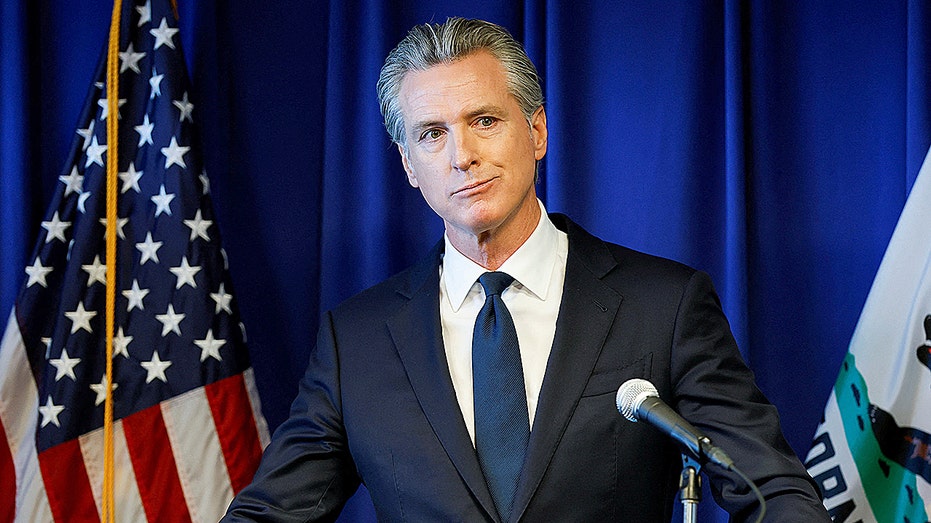
California city leaders are escalating opposition to the state’s high-speed rail project amid fears the Golden State could tap local taxpayer funds to prop up the troubled rail system after nearly two decades of delays. “This proposal in the 2026 Draft Business Plan is fiscally reckless, legally vulnerable, and fundamentally unfair to the communities expected to host High-Speed Rail facilities. It would weaken local governments, destabilize public services, and undermine constitutional protections that California voters have repeatedly affirmed. Simply put: the state cannot solve a state funding problem by raiding local tax bases,” wrote Fresno Mayor Jerry Dyer along with nine other mayors in the letter obtained by Fox News Digital. The mayors penned the April letter to the CEO of the High-Speed Rail Authority (HSRA), slamming a tax and planning proposal to help bankroll the railroad that has been in the works since 2008. The mayors urged the state to pursue voter-approved bonds or dedicated state revenue sources instead of “attempting to divert local tax growth through a legally dubious scheme.” NEWSOM’S CALIFORNIA RAIL PROJECT NOW EXPECTED TO COST $126B, OFFICIAL ADMITS, WITH STILL NO TRACKS LAID The suggested plan first appeared in the California High-Speed Rail Authority’s 2026 Draft Business Plan. The plan outlined a full Phase 1 buildout of the line was re-estimated to cost $231.3 billion, while the Authority’s optimized approach puts the initial Phase 1 investment at about $126.2 billion. The proposed funding for the high-speed rail would not create a new tax, but redirect tax revenues near future High Speed Rail stations to the project, local outlet the Fresno Bee reported. A California High-Speed Rail Authority spokesperson pushed back on the mayors’ characterization, saying there is no finalized plan to capture local revenues. “There is no proposal. Through the 2026 Draft Business Plan, the Authority is continuing conversations with local jurisdictions and stakeholders about potential tools that could support station-area infrastructure and long-term system delivery,” said a California High-Speed Rail Authority spokesperson. President Donald Trump and other administration officials have repeatedly called out Newsom and other California leaders for the time and money that has been spent on the project since it was approved in 2008 with an initial $33 billion price tag, before ballooning to more than $200 billion in expected costs. “A little train going from San Francisco to Los Angeles that’s being run by Gavin New-scum — the governor of California,” Trump said on May 6. “Did you ever hear of Gavin Newsom? He has got that train—the worst cost overrun I’ve ever seen. It’s like, totally out of control.” “It is not constitutionally allowable in California for the state of California to come in and take those sales tax dollars for any other purpose than what they’re intended for, and that’s to support local government,” said Dyer. He added that mayors have been left in the dark, having not met with HSRA officials, been left out of conversations and remained unsure of what the tax would be. JONATHAN TURLEY: GRANDSTANDING NEWSOM WILL STOP AT NOTHING TO RIDE THE RAILS TO GLORY IN 2028 The nine other mayors who signed the letter represent the cities of Anaheim, Lancaster, Riverside, Bakersfield, Gilroy, Merced, Burbank, Hanford and Stockton. Mayors called the plan to cherry-pick tax dollars as “legally dubious scheme” and “sets a dangerous statewide precedent.” Lawmakers and local officials have slammed the project for failing to show deliverables and seemingly wasting taxpayer funds, while project leaders insist it will be completed. “California’s high-speed rail has become a slow-moving train wreck — a case study in government waste and mismanagement, with billions spent, deadlines blown, and still nothing to show for it,” Rep. Vince Fong, R-Calif., wrote on X in April. “No finished track. No trains. Just broken promises. Years later, taxpayers are still footing the bill.” ‘WHO BENEFITED?’: BLUE STATE LAWMAKER DEMANDS FBI INVESTIGATE BULLET TRAIN ‘BOONDOGGLE’ While at a conference in Washington, D.C., HSRA CEO Ian Choudri said the high-speed railway will be finished “in our lifetime,” SFGate reported. Fox News Digital reached out to the HSRA, office of Gov. Newsom and Mayor Dyer for comment.
The red states racing ahead in America’s powerful wealth boom — and the states falling behind

Americans, along with billions in taxable income, are flocking to Southern and Sun Belt states, accelerating a population and wealth shift away from several coastal blue-state strongholds, according to new IRS migration data. The shifts are reshaping where economic and political power is concentrated ahead of the 2026 midterms, affecting housing markets, state economies, congressional representation and the balance of power. Texas and Florida led the nation in inbound migration between 2022 and 2023, gaining more than 56,000 residents and 55,000 income tax filers, respectively, according to the IRS. Florida also gained roughly $20.6 billion in taxable income, while Texas added another $5.5 billion. THE RED-STATE WINNERS IN THE CLIMB TO BECOME AMERICA’S NEXT ECONOMIC POWERHOUSE North Carolina, South Carolina, Tennessee and Arizona also ranked among the top destinations for interstate movers, underscoring the broader population boom across the South and Sun Belt. Adjusted for population size, South Carolina posted the nation’s largest gain from domestic migration at 1.12%, fueled by more than 29,000 incoming households carrying roughly $4.1 billion in taxable income. Meanwhile, California recorded the nation’s largest outbound losses, with more than 100,000 income tax filers and nearly $12 billion in taxable income leaving the state between 2022 and 2023. New York followed, losing roughly 72,000 households and nearly $10 billion in taxable income, while Illinois and New Jersey shed about $6 billion and $2.6 billion, respectively. AMERICANS KEEP MOVING TO TEXAS AND FLORIDA — BUT ONE OTHER RED STATE IS GROWING EVEN FASTER Experts say the migration boom reflects broader affordability pressures pushing households toward lower-cost, lower-tax states across the South. “While tax friendliness is not the sole determinant of where one chooses to live or start a business, states experiencing net in-migration tend to have more competitive tax structures and lower overall costs of living,” Nicole Fox, a policy analyst at the Tax Foundation, told Fox News Digital. The migration trends are also reshaping state economies, labor markets and housing demand as fast-growing Sun Belt states absorb new residents, businesses and taxable income, while states with sustained outbound migration face shrinking tax bases and slower population growth.