

Battle for the House runs through Virginia as court OKs high-stakes redistricting vote
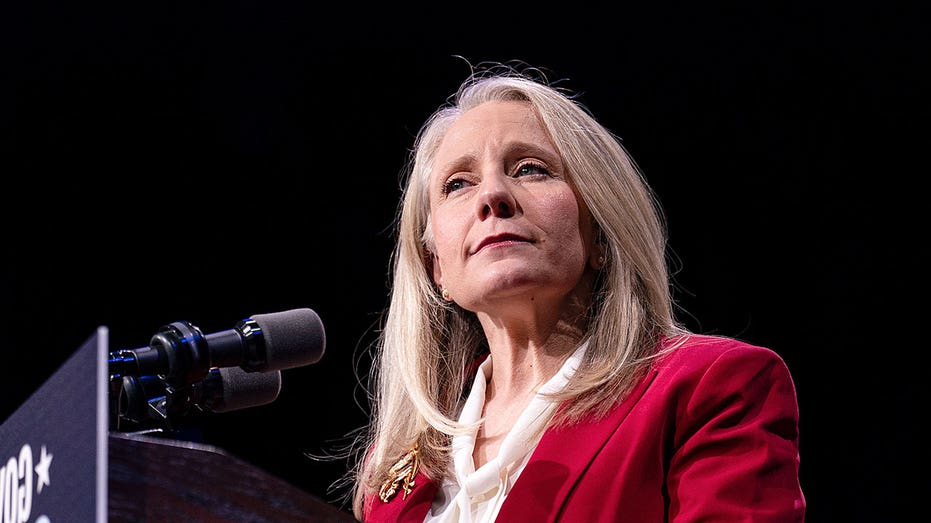
In a crucial decision on Friday, the Virginia Supreme Court ruled that a high-stakes referendum scheduled for April 21 on congressional redistricting can go forward. It’s a victory for Democrats in Virginia, who are fast-tracking a proposed new congressional map that would give the competitive state up to four more left-leaning U.S. House districts in time for this year’s midterm elections. Virginia is the latest battleground, with Florida on deck, in the ongoing crucial battle between President Donald Trump and Republicans versus Democrats to alter congressional maps ahead of November’s elections. Republicans are defending their razor-thin House majority in the midterms, and Democrats need a net gain of just three seats to win back control of the chamber. That means the redistricting efforts in Virginia and other states may very well decide which party controls the House next year. VIRGINIA JUDGE STRIKES BLOW TO DEMOCRATS REDISTRICTING PUSH But the proposed map in Virginia, which the Democrat-controlled legislature is expected to give final approval in the coming days, followed by Democratic Gov. Abigail Spanberger signing it, still needs the approval of voters in the Commonwealth. Republicans had challenged the validity of the referendum, arguing that Democrats had erred procedurally when the legislature approved amendments to the state Constitution. And last month, a lower court ruled in the GOP’s favor. But the ruling by the state Supreme Court greenlights the ballot measure, which asks voters to give the legislature, rather than Virginia’s current non-partisan commission, redistricting power through the 2030 election. “Today’s order is a huge win for Virginia voters,” Dan Gottlieb, spokesperson for Democrat-aligned Virginians for Fair Elections, said in a statement. “The Court made it clear that nothing in this case stops the April 21 referendum from moving forward and that Virginians will have the final say.” Early voting on the referendum is scheduled to start on March 6. Friday’s ruling on the referendum doesn’t mean the legal challenges are over. Democrats are still defending their ability to redraw the maps, and the state Supreme Court may schedule arguments in that case. Republicans charge that the Democrats’ redistricting effort is an “unconstitutional power grab.” Virginians for Fair Maps, a Republican-aligned group that opposes the redistricting push, has highlighted that “Virginians came together to pass bipartisan redistricting reform — a process that took the power to draw maps out of politicians’ hands. Now, politicians in Richmond want to undo that progress.” And the Republican National Committee has called the Democrats’ push in Virginia a “power grab.” But Democrats have countered that it’s a necessary step to balance out partisan gerrymandering already implemented in other states by the GOP. Aiming to prevent what happened during his first term in the White House when Democrats reclaimed the House majority in the 2018 midterms, Trump last spring first floated the idea of rare, but not unheard of, mid-decade congressional redistricting. The mission was simple: redraw congressional district maps in red states to pad the GOP’s razor-thin House majority to keep control of the chamber in the midterms, when the party in power traditionally faces political headwinds and loses seats. Trump’s first target was Texas. BIG WIN FOR TRUMP AS SUPREME COURT GREENLIGHTS TEXAS’ NEW CONGRESSIONAL MAP When asked by reporters last summer about his plan to add Republican-leaning House seats across the country, the president said, “Texas will be the biggest one. And that’ll be five.” Republican Gov. Greg Abbott of Texas called a special session of the GOP-dominated state legislature to pass the new map. But Democratic state lawmakers, who broke quorum for two weeks as they fled Texas in a bid to delay the passage of the redistricting bill, energized Democrats across the country. Among those leading the fight against Trump’s redistricting was Democratic Gov. Gavin Newsom of California. California voters in November overwhelmingly passed Proposition 50, a ballot initiative that temporarily sidetracked the left-leaning state’s nonpartisan redistricting commission and returned the power to draw the congressional maps to the Democratic-dominated legislature. That is expected to result in five more Democratic-leaning congressional districts in California, which aimed to counter the move by Texas to redraw their maps. The fight quickly spread beyond Texas and California. Republican-controlled Missouri and Ohio, and swing state North Carolina, where the GOP dominates the legislature, have drawn new maps as part of the president’s push. In blows to Republicans, a Utah district judge late last year rejected a congressional district map drawn up by the state’s GOP-dominated legislature and instead approved an alternate that will create a Democratic-leaning district ahead of the midterms. But Utah Republicans have appealed to the state Supreme Court to block a new court-ordered map for this year’s elections. Meanwhile, Republicans in Indiana’s Senate in December defied Trump, shooting down a redistricting bill that had passed the state House. The showdown in the Indiana statehouse grabbed plenty of national attention. Florida’s next up. Two-term Republican Gov. Ron DeSantis and state lawmakers in the GOP-dominated legislature are hoping to pick up an additional three to five right-leaning seats through a redistricting push during a special legislative session in April. But the bid by DeSantis and Republicans in Tallahassee last week drew its first lawsuit, from a group aligned with Florida Democrats. The lawsuit contends that the governor and Secretary of State Cordy Byrd don’t have the legal authority to reshape election laws, after Byrd pushed back congressional qualifying dates from April to June. Democrats in solidly blue Maryland are also pushing redistricting, which could result in one extra left-leaning congressional seat. But the effort, pushed by Democratic Gov. Wes Moore and green-lighted by state House Democrats, is facing opposition from Senate President Bill Ferguson, a fellow Democrat. Lastly, Republicans in South Carolina, Nebraska, Kansas and New Hampshire, and Democrats in Illinois and Washington State are also exploring possible bids to redraw the maps. Hovering over the redistricting wars is the Supreme Court, which is expected to rule in Louisiana v. Callais, a crucial case that may lead to the overturning of a key provision
‘They were spying’: Sullivan sounds alarm on joint Russia-China moves in US Arctic zone
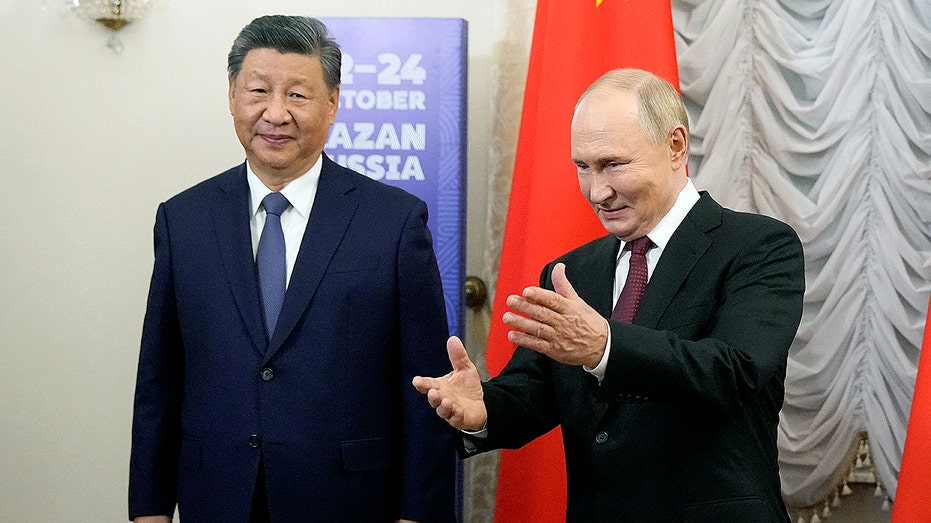
Joint Russian and Chinese military aircraft and vessels have entered the U.S. Arctic air defense identification zone (ADIZ) near Alaska dozens of times in recent months, Sen. Dan Sullivan said in an interview with Fox News Digital, warning the activity amounts to coordinated pressure on America’s northern defenses. Sullivan, R-Alaska, said data compiled by his office shows mostly airborne incursions — and at times joint patrols — along with several naval and “research” vessels operating inside the ADIZ, a buffer zone where aircraft must identify themselves but are not automatically denied access. “They were spying on us,” Sullivan said, arguing the missions amount to strategic surveillance and have accelerated efforts to reopen the Navy base at Adak and expand Arctic infrastructure. Sullivan led a Senate Commerce subcommittee hearing last month that secured $25 billion in new Coast Guard funding, including $4.5 billion for infrastructure upgrades such as a deepwater port in Nome — one of the closest U.S. cities to Russia — and additional Arctic icebreakers. The U.S. currently operates two icebreakers, one of which is out of service, compared with Russia’s reported 54. RUSSIA, CHINA SQUEEZE US ARCTIC DEFENSE ZONE AS TRUMP EYES GREENLAND Among the projects is a plan to reopen the military base on Adak Island near the end of the Aleutian chain, roughly 6,000 miles from Washington but on Russia’s doorstep. Adak played a key role during World War II, when Japanese forces attacked parts of the Aleutians, and it later served as a Cold War outpost monitoring Soviet activity in the North Pacific. “We have Adak Navy Base being reopened. We have this strategic deepwater port of Nome that’s finally being built [where] every essential Navy or Coast Guard asset with the exception of an aircraft carrier can port, and the icebreaker Storis being homeported in Juneau. There’s a lot going on,” Sullivan said. “We’re continuing to press it, and you know what I like to do with all the military services is press, press, press, press.” TRUMP SAYS GREENLAND’S DEFENSE IS ‘TWO DOG SLEDS’ AS HE PUSHES FOR US ACQUISITION OF TERRITORY Adak also hosts a 20-million-gallon fuel repository, Sullivan said, adding that revitalizing the compound would give U.S. destroyers and other vessels a crucial waypoint as malign activity heats up. Sullivan said the incursions should concern all Americans, dismissing any suggestion the vessels were conducting benign research or trying to “save the whales.” “They were there spying on us and looking at submarine routes, looking at cables,” he said, pointing to trans-Pacific communication lines that pass through Alaska. “That’s really, really strategic.” He added that joint Russian-Chinese naval task forces operating in the U.S. ADIZ — alongside coordinated bomber patrols with armed fighters — is “unprecedented” in American territory. NATO AMBASSADOR SAYS EUROPE ‘HAS A TENDENCY TO OVERREACT’ OVER GREENLAND DISPUTE When incursions occur, U.S. aircraft are dispatched from bases as far as 1,000 miles away, including Eielson Air Force Base near Fairbanks, a logistical stretch similar to sending New York City responders to a fire in Chicago. The Nome port, Adak base and other new infrastructure will slash response times, increase defensive presence and keep America safer, he said. “We are the Arctic part of America, but we’re America. And when our adversaries are pressing into us, we need to respond with force and infrastructure and capabilities. Our military’s doing it. We’re building that up with the Coast Guard, with the Air Force, with the Army,” he said. TRUMP EYES ACTION ON GREENLAND, SETTING UP WHITE HOUSE FACE-OFF WITH DENMARK A recent report from The Wall Street Journal detailing a Chinese vessel that transited the Bering Strait, icebreaking along Russia’s Arctic coast before docking in Poland, as further evidence of Beijing’s expanding Arctic reach. Sullivan called the merchant vessel’s junket a prime example of why action is needed now to bolster America’s Arctic. USAF Gen. Alexus Grynkewich — NATO’s top military official — told The Wall Street Journal the alliance sees China “being more and more aggressive” across the Arctic. “It’s our territory, right? And we just need to be ready to defend it and have assets that can monitor whether that’s a merchant ship or a spy ship,” Sullivan added. “The good news is with the Trump administration, with the Budget Reconciliation Bill, the Working Families Tax Cuts Act, and you saw the president before, and he wants a top line number for our military of about $1.5 trillion, that’s sending a message to China, Russia and all of our adversaries that we’re not going to let incursions into our airspace and our waters happen on a regular basis without forceful responses from the U.S. military.” Sullivan said another development is expanding capacity at Point Barrow — at the “top of North America” — which, along with Adak, would allow the U.S. to intercept malign aircraft more quickly. The dynamic is also shaping global geopolitics, he said, as NATO shifts toward an “Arctic-capable alliance” — with allies Finland, Sweden and Norway similarly cognizant of the threats. Finland and Sweden recently joined NATO, he noted, which has been key to this situation. Looking at the globe from above — rather than straight on — places the U.S., Canada and Scandinavia directly across from Russia and, increasingly, China, which has declared itself a “Near-Arctic power.” Fox News Digital’s Kiera McDonald contributed to this report.
GOP Arizona governor candidate drops out but doesn’t endorse
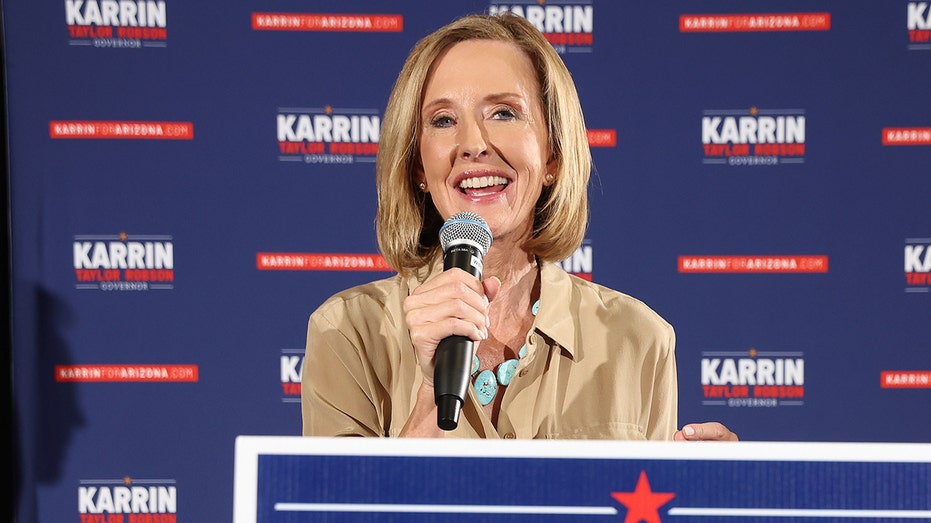
Karrin Taylor Robson dropped out of the Arizona Republican gubernatorial primary despite being one of the two candidates in the race backed by President Donald Trump. “After deep reflection, prayer, and many conversations with my family, I have decided to suspend my campaign for Governor,” Robson said in a statement posted to X on Thursday. She explained that she does not want to contribute to a contentious GOP primary. HOCHUL PRIMARY CHALLENGER ANTONIO DELGADOO ENDS CAMPAIGN FOR NEW YORK GOVERNOR “We cannot afford a divisive Republican primary that drains resources and turns into months of intraparty attacks. It only weakens our conservative cause and gives the left exactly what they want: a fractured Republican Party heading into November. With so much on the line in 2026, I am not willing to contribute to that outcome,” she noted in the statement. Robson did not make an endorsement. “I remain committed to helping Republicans win in 2026 and to ensuring Arizona remains strong, safe, and free for generations to come,” she noted in the statement. Trump had pledged to support her for governor in 2024. “Are you running for governor? I think so, Karrin, cuz if you do, you’re gonna have my support,” Trump said at Turning Point USA’s AmericaFest in December 2024. ADAM SCHIFF MAKES ENDORSEMENT IN CALFORNIA GUBERNATORIAL RACE Rep. Andy Biggs, R-Ariz., launched a gubernatorial bid in January 2025, and Robson launched her bid in February 2025 — but in April 2025, Trump made the unorthodox move of announcing that he endorsed both of them. “I like Karrin Taylor Robson of Arizona a lot, and when she asked me to Endorse her, with nobody else running, I Endorsed her, and was happy to do so. When Andy Biggs decided to run for Governor, quite unexpectedly, I had a problem — Two fantastic candidates, two terrific people, two wonderful champions, and it is therefore my Great Honor TO GIVE MY COMPLETE AND TOTAL ENDORSEMENT TO BOTH. Either one will never let you down. MAKE AMERICA GREAT AGAIN!” Trump declared in an April 2025 Truth Social post. In 2022, Robson lost the GOP gubernatorial primary in Arizona to Kari Lake, who went on to lose the general election to Democrat Katie Hobbs. TRUMP BACKS REPUBLICAN RIVALS IN ARIZONA GOVERNOR’S RACE AFTER REP. BIGGS ENTERS CONTEST: ‘I HAD A PROBLEM’ Hobbs is seeking re-election this year. Rep. David Schweikert, R-Arizona, is another Republican seeking the Grand Canyon State governorship.
Billions in foreign cash tied to US climate network draws scrutiny from Republican AGs
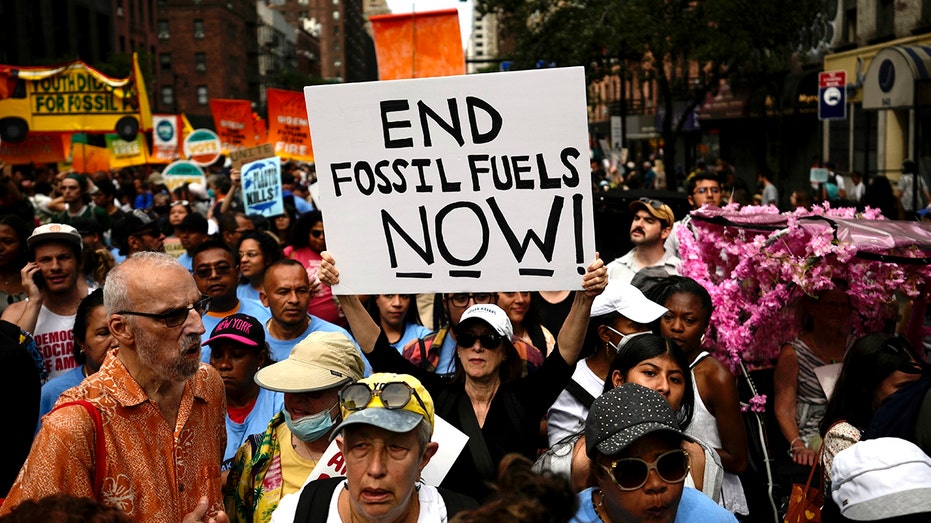
FIRST ON FOX: Nineteen Republican attorneys general on Friday asked the Department of Justice to investigate dozens of U.S.-based nonprofits for potential violations of federal foreign agent laws after receiving nearly $2 billion in foreign funding over the past decade. The state attorneys general urged Attorney General Pam Bondi and the DOJ’s national security division head, John Eisenberg, to open the probe after the nonprofits accepted the funding from five foreign-based climate foundations, according to a letter first obtained by Fox News Digital. The funding may have been used to improperly influence U.S. energy policies without the nonprofits registering under the Foreign Agents Registration Act, the attorneys general wrote. CLIMATE GROUP SCRUBS JUDGES’ NAMES FROM WEBSITE AFTER UNEARTHED CHATS UNMASKED COZY TIES The attorneys general identified more than 150 U.S.-based organizations the DOJ should investigate, saying there was “substantial evidence” that many of them were violating FARA by “engaging in coordinated funding and advocacy efforts to influence U.S. energy policy and undermine American energy independence.” The five foreign groups named in the letter, the Oak Foundation, Children’s Investment Fund Foundation, Quadrature Climate Foundation, KR Foundation and Laudes Foundation, were found by the conservative watchdog Americans for Public Trust to have funneled the money to the smaller organizations over the past decade. The letter was led by Montana Attorney General Austin Knudsen. Fox News Digital reached out to the five groups for comment. The attorneys general alleged the foreign foundations used funding to “direct climate activism and influence energy policy in the United States, including by funding U.S. policy fights, litigation, research, protests, and lobbying to advance an extreme, foreign, activist agenda.” BOMBSHELL REPORT SHOWS FOREIGN CHARITIES DUMPED BILLIONS INTO US POLITICAL ADVOCACY GROUPS, ‘ERODE’ DEMOCRACY’ At least one of the foreign groups, the Children’s Investment Fund Foundation, “has documented ties to the Chinese Communist Party,” the attorneys general said. They noted a separate December 2025 request from more than two dozen state attorneys general seeking a FARA investigation into two U.S.-based groups connected to CIFF. Fox News Digital reached out to the DOJ for comment. Under the FARA statute, entities must register if they act as an “agent” of a “foreign principal” and engage in certain political activities. The attorneys general argued the foreign foundations qualified as foreign principals because they are incorporated in Switzerland, Denmark and the United Kingdom. They also said the nonprofits’ activities did not appear to fall under any exemptions under the law, adding that the “burden of establishing the availability of an exemption from registration under the Act shall rest upon the person for whose benefit the exemption is claimed.”
Fetterman bucks Democrats, says party put politics over country in DHS shutdown standoff
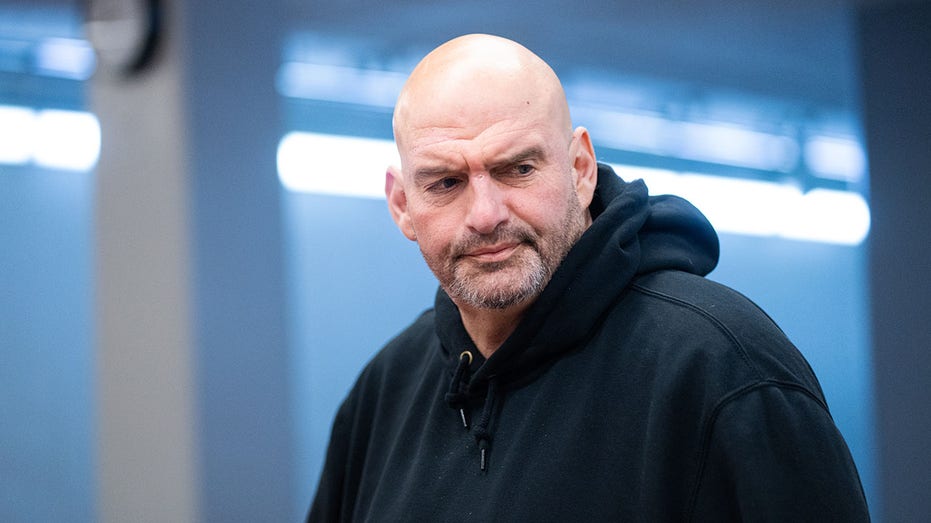
Sen. John Fetterman, D-Pa., the lone Senate Democrat to join the GOP to fund the Department of Homeland Security (DHS), accused his colleagues of choosing party over country in their shutdown vote. Senate Democrats dug their heels in against funding the agency on Thursday in their pursuit of stringent reforms to Immigration and Customs Enforcement (ICE), following the fatal shootings of Alex Pretti and Renee Nicole Good during immigration operations in Minnesota. But Fetterman believed that Senate Minority Leader Chuck Schumer, D-N.Y., and his party were missing the point. GOVERNMENT TO SHUT DOWN AT MIDNIGHT AFTER DEMS, WHITE HOUSE FAIL TO STRIKE DHS DEAL “This shutdown literally has zero impact on ICE functionality,” Fetterman said in a post on X. “Country over party is refusing to hit the entire Department of Homeland Security. Democracy demands a way forward to reform ICE without damaging our critical national security agencies.” Senate Democrats’ refusal to fund DHS this week has made a partial government shutdown affecting only DHS inevitable. The deadline to strike a deal is midnight Friday, and the likelihood of that happening is nearly nonexistent. That’s because both chambers of Congress quickly fled Washington, D.C., on Thursday, with many in the upper chamber leaving the country altogether for the Munich Security Conference in Germany. DHS SHUTDOWN EXPLAINED: WHO WORKS WITHOUT PAY, WHAT HAPPENS TO AIRPORTS AND DISASTER RESPONSE Schumer and his caucus argued that the White House and Republicans weren’t serious about reforms to ICE or Customs and Border Protection (CBP) and contended that the GOP’s counteroffer to their own list of demands didn’t go far enough to earn their votes. But to Fetterman’s point, shutting down DHS won’t halt the cash flow to immigration operations. That’s because congressional Republicans last year injected roughly $75 billion into the agency for ICE with President Donald Trump’s marquee “big, beautiful bill.” That money is spread across the next four years, meaning that a shutdown now will have little, if any, effect on ICE’s core functions. DEMS DIG IN, GUARANTEE SHUTDOWN WITH BLOCK OF DHS FUNDING But other functions under DHS’ purview, like TSA, FEMA, the Coast Guard and more, will experience the brunt of the partial shutdown. Negotiations on striking a deal are expected to continue in the background, and Senate Democrats have signaled that they’re considering offering a counteroffer to the White House in response to the GOP proposal. Still, a vote to reopen and fund the agency won’t happen until early next week at best.
Trump DOJ files new lawsuit accusing Harvard of withholding records on race in admissions
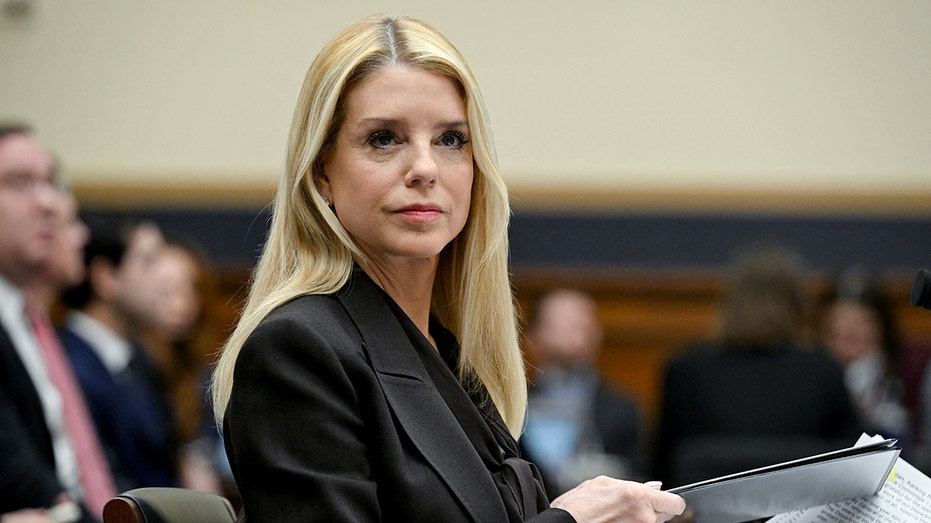
The U.S. Department of Justice announced that its Civil Rights Division lodged a new lawsuit against Harvard University, alleging that the Ivy League institution illegally withheld admissions material needed to decide whether the school is continuing to discriminate in the admissions process despite a 2023 Supreme Court ruling. “Under President Trump’s leadership, this Department of Justice is demanding better from our nation’s educational institutions,” Attorney General Pam Bondi said in a statement. “Harvard has failed to disclose the data we need to ensure that its admissions are free of discrimination — we will continue fighting to put merit over DEI across America.” Fox News Digital reached out to Harvard for comment on Friday. TRUMP SEEKS $1 BILLION IN DAMAGES FROM HARVARD UNIVERSITY OVER ‘SERIOUS AND HEINOUS ILLEGALITIES’ The suit was filed on Thursday, according to the DOJ. “The lawsuit alleges that Harvard repeatedly slow-walked the pace of production and refused to produce pertinent data and documents requested by the DOJ, including individualized applicant admissions data, admissions policies, and correspondence related to race; ethnicity; diversity, equity, and inclusion; and Students for Fair Admissions,” the DOJ’s press release explains. “The suit alleges that Harvard — a recipient of DOJ funding — violated Title VI by failing to comply with the DOJ’s request for sufficient document production for compliance review. The suit also notes that by failing to make timely and complete document productions or otherwise permitting the DOJ to access Harvard’s applicant-level admissions data, Harvard breached a material term of DOJ federal financial assistance,” the release notes. HEGSETH ENDING MILITARY EDUCATION TIES WITH HARVARD AMID TRUMP FEUD: ‘WE TRAIN WARRIORS, NOT WOKESTERS’ The suit aims to force the school to turn over documents pertaining to the consideration of race in admissions, but “does not accuse Harvard of racial discrimination,” according to the DOJ. In a 2023 ruling, the Supreme Court objected to Harvard’s and the University of North Carolina’s consideration of race in admissions. “For the reasons provided above, the Harvard and UNC admissions programs cannot be reconciled with the guarantees of the Equal Protection Clause. Both programs lack sufficiently focused and measurable objectives warranting the use of race, unavoidably employ race in a negative manner, involve racial stereotyping, and lack meaningful end points. We have never permitted admissions programs to work in that way, and we will not do so today,” the opinion declared. HARVARD SLASHES A GRADES BY NEARLY 7 PERCENTAGE POINTS AFTER FACULTY CRACKDOWN ON GRADE INFLATION CLICK HERE TO GET THE FOX NEWS APP “The Justice Department will not allow universities to flout our nation’s federal civil rights laws by refusing to provide the information required for our review,” Assistant Attorney General for the DOJ’s Civil Rights Division Harmeet K. Dhillon noted in a statement. “Providing requested data is a basic expectation of any credible compliance process, and refusal to cooperate creates concerns about university practices. If Harvard has stopped discriminating, it should happily share the data necessary to prove it,” she added.
Battleground states shoulder burden of Trump’s tariffs as midterm messaging ramps up

Some of the most hotly contested states in this year’s elections are also footing the nation’s steepest tariff bills, according to an analysis of U.S. Census trade data. That convergence creates a new economic pressure point at a time when affordability dominates the national midterm debate and the cost of everyday goods remains a top voter concern. Candidates in both parties are campaigning on promises to rein in the cost of groceries, housing and other everyday goods. All 435 House seats and 33 Senate seats are on the ballot this year, putting Republicans’ slim majorities at risk. Democrats need four seats to reclaim the Senate, while Republicans can afford to lose just two in the House. US TARIFF REVENUE UP 300% UNDER TRUMP AS SUPREME COURT BATTLE LOOMS Tariffs factor directly into those costs. Tariffs are taxes the federal government places on imported goods. While American importers pay those duties at the border, economists say businesses often pass the added costs along, raising prices as the expense moves through supply chains. California and Texas — the nation’s two largest state economies — top the list in tariff totals at $38 billion and $21 billion, driven by the volume of imports flowing through major ports and industrial supply chains. Among the states with the most consequential Senate races are Georgia and Michigan, both of which carry sizable tariff burdens, underscoring how deeply their economies are intertwined with international trade. Other states bearing the brunt of hefty tariff bills include Illinois ($9.6 billion), Ohio ($6.5 billion), Pennsylvania ($6.3 billion), North Carolina ($5 billion), South Carolina ($5.2 billion) and Kentucky ($4 billion). Even as states shoulder billions in tariff costs, collections nationwide have climbed 300% since President Donald Trump’s return to office, significantly boosting federal revenue. January collections hit $30.4 billion, a 275% jump from a year earlier, pushing fiscal-year revenue to $124 billion, more than triple last year’s pace. TRUMP CALLS TARIFF WINDFALL ‘SO BEAUTIFUL TO SEE’ AS CASH SAILS IN The surge in revenue has become a cornerstone of Trump’s economic agenda, with the administration arguing tariffs can fund domestic priorities, chip away at the nation’s $38 trillion debt and finance a proposed $2,000 dividend check for Americans. Trump has promoted the policy as a strategy to revive domestic industry and extract concessions from foreign trading partners. But the policy faces a pivotal test at the Supreme Court, which has yet to rule on whether the tariffs fall within Trump’s authority. A decision against the government could jeopardize a key source of federal revenue and reshape the administration’s trade strategy. With billions in revenue at stake and control of Congress hanging in the balance, the court’s ruling could reverberate far beyond Washington.
Government to shut down at midnight after Dems, White House fail to strike DHS deal
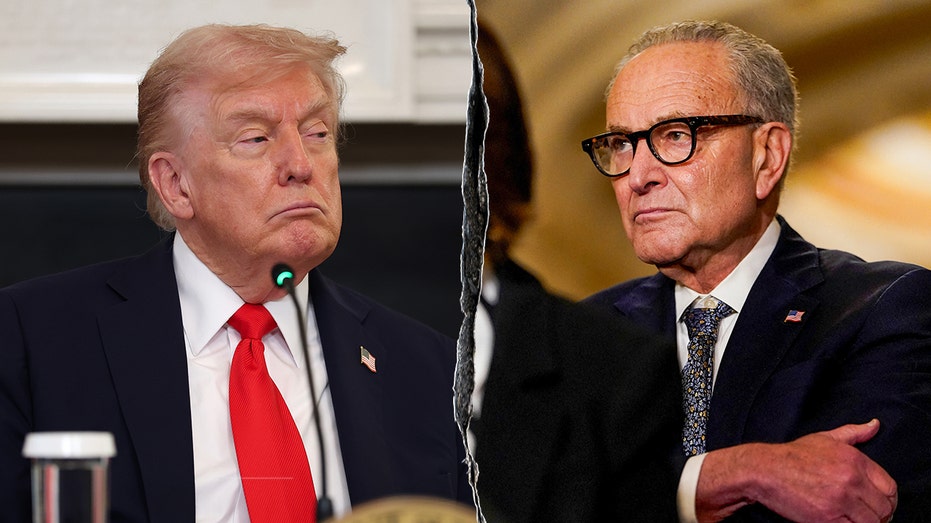
With little time and no deal in sight to fund the Department of Homeland Security (DHS), a partial government shutdown by midnight is all but guaranteed. The battle to prevent the third government shutdown under President Donald Trump in less than six months was lost in the Senate on Thursday. Now, with Congress scattered across the U.S. and several senators headed abroad, there’s no chance that a shutdown will be averted. Senate Republicans were unable to smash through Senate Minority Leader Chuck Schumer, D-N.Y., and Senate Democrats’ unified front to pass a full-year DHS funding bill, nor were they able to do yet another short-term, two-week extension. DHS SHUTDOWN EXPLAINED: WHO WORKS WITHOUT PAY, WHAT HAPPENS TO AIRPORTS AND DISASTER RESPONSE “The idea of not even allowing us to have an extended amount of time to negotiate this suggests to me, at least, that there isn’t a high level of interest in actually solving this issue,” Senate Majority Leader John Thune, R-S.D., said. The final fight on the floor Thursday wasn’t with every lawmaker present, but between Sens. Katie Britt, R-Ala., and Chris Murphy, D-Conn., over giving lawmakers a little more time to keep the agency open while negotiations continue. Senate Democrats argued that Republicans offered their legislative proposal in the dead of night, giving little time to actually move toward a compromise. DEMS DIG IN, GUARANTEE SHUTDOWN WITH BLOCK OF DHS FUNDING “We had plenty of time to get a deal in the last two weeks,” Murphy said. “And the lack of seriousness from the White House and from Republicans not getting language until last night has put us in the position we are in today.” And with the expected shutdown, Democrats’ main targets — Immigration and Customs Enforcement (ICE) and Customs and Border Protection (CBP) — won’t see their cash flow dry up because of billions injected into the agency by Trump’s “big, beautiful bill.” Instead, agencies like TSA, FEMA, the Coast Guard and several others will suffer the brunt of the shutdown. “There is no way that you can’t say we’re working in good faith. We want to continue this conversation,” Britt said on the Senate floor. “But yet you’re penalizing a TSA agent. A TSA agent is going to go without a paycheck. Why? So that you can posture politically? I’m over it.” DHS FUNDING BILL FAILS AFTER SCHUMER REJECTS TRUMP’S ICE REFORM OFFER “Everybody on that side of the aisle knows that ICE and CBP will continue to be funded,” she continued. “They’re going to continue to enforce the law just as they should. Who’s going to pay the price?” The final floor argument was a microcosm of what the week had devolved into. Senate Republicans argued that Democrats had burned too much time producing their list of demands, while Senate Democrats contended that they weren’t given enough time by the White House. And as is typical during the string of shutdowns in the last several months, it has devolved into a public blame game. When asked about the effects a shutdown would have on the agencies not involved in immigration enforcement, Schumer pointed the finger at the GOP and the White House. “Talk to the Republicans, OK? We’re ready to fund everything,” Schumer said. “We’re ready to have good, serious proposals supported by the American people. They’re not; they’re sort of dug in the ground, and they’re not moving forward.” But neither side is willing to divulge publicly what the exact sticking points are in their ongoing negotiations. And Senate Democrats now appear to be considering a counteroffer to the White House, a sign that negotiations aren’t totally dead in the water. “Negotiations will continue, and we will see in the course of the next few days how serious they are,” Thune said.
DHS shutdown explained: Who works without pay, what happens to airports and disaster response
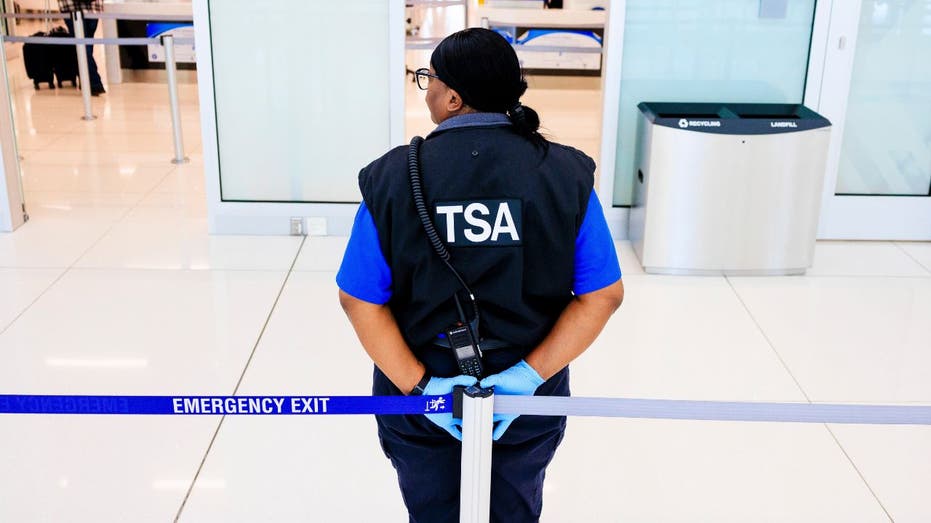
A partial government shutdown is all but certain after Senate Democrats rejected attempts to fund the Department of Homeland Security (DHS) offered by Republicans on Thursday afternoon. But it will not look like the record-long 43-day full shutdown that paralyzed Congress last year, nor will it look like the shorter four-day partial shutdown that hit Capitol Hill earlier this month. That’s because Congress has already funded roughly 97% of the government through the end of fiscal year (FY) 2026 on Sept. 30. When the clock strikes 12:01 a.m. on Saturday, Feb. 14, just DHS will be affected by a lapse in its federal funding. While it’s a vastly smaller scale than other recent fiscal fights, it will still have an impact on a broad range of issues given DHS’s wide jurisdiction. SCHUMER, DEMS CHOOSE PARTIAL SHUTDOWN AS NEGOTIATIONS HIT IMPASSE Disruptions to the TSA, whose agents are responsible for security checks at nearly 440 airports across the country, could perhaps be the most impactful part of the partial shutdown to Americans’ everyday lives. Acting Administrator Ha Nguyen McNeill told lawmakers at a hearing on Wednesday that around 95% of TSA employees — roughly 61,000 people — are deemed essential and will be forced to work without pay in the event of a shutdown. McNeill said many TSA agents were still recovering from the effects of the recent 43-day shutdown. “We heard reports of officers sleeping in their cars at airports to save money on gas, selling their blood and plasma, and taking on second jobs to make ends meet,” she said. TSA paychecks due to be issued on March 3 could see agents getting reduced pay depending on the length of the shutdown. Agents would not be at risk of missing a full paycheck until March 17. If that happens, however, Americans could see delays or even cancellations at the country’s busiest airports as TSA agents are forced to call out of work and get second jobs to make ends meet. SHUTDOWN CLOCK TICKS AS SCHUMER, DEMOCRATS DIG IN ON DHS FUNDING DEMANDS The U.S. Coast Guard is the only branch of the armed forces under DHS rather than the Department of War, and as such would likely see reduced operations during a shutdown. That includes a pause in training for pilots, air crews and boat crews until funding is restarted. Admiral Thomas Allan, Coast Guard Vice Commandant, warned lawmakers that it would have to “suspend all missions, except those for national security or the protection of life and property.” A lapse in its funding would also result in suspended pay for 56,000 active duty, reserve, and civilian personnel, which Allan warned would negatively affect morale and recruitment efforts. The U.S. Secret Service (USSS), which is critical to protecting the president and key members of the administration, is also under DHS’s purview. While its core functions would be largely unaffected by a shutdown, some 94% of the roughly 8,000 people the service employs would be forced to work without pay until the standoff is resolved. Deputy USSS Director Matthew Quinn also warned that a shutdown could also hurt the progress being made to improve the service in the wake of the July 2024 assassination attempt against President Donald Trump. “The assassination attempt on President Trump’s life brought forward hard truths for our agency and critical areas for improvement — air, space, security, communications and IT infrastructure, hiring and retention training, overarching technological improvements,” Quinn said. “We are today on the cusp of implementing generational change for our organization. A shutdown halts our reforms and undermines the momentum that we, including all of you, have worked so hard to build together.” ICE operations would largely go on unimpeded during a shutdown, despite Democrats’ outrage at the agency being the main driver of the current standoff. Nearly 20,000 of ICE’s roughly 21,000 employees are deemed “essential” and therefore must work without pay, according to DHS shutdown guidance issued in September 2025. But even though it’s the center of Democrats’ funding protest, ICE has already received an injection of some $75 billion over the course of four years from Trump’s One Big, Beautiful Bill Act (OBBBA). It means many of its core functions retain some level of funding even during a shutdown. CISA is responsible for defending critical U.S. sectors like transportation, healthcare, and energy from foreign and domestic threats. The agency would be forced to reduce operations to an active threat mitigation status and activities “essential to protecting and protecting life and property,” according to Acting CISA Director Madhu Gottumukkala. That means a shutdown would significantly reduce CISA’s capacity to proactively monitor for potential threats from foreign adversaries. “We will be on the defensive, reactive as opposed to being proactive, and strategic in terms of how we will be able to combat those adversaries,” Gottumukkala said. Operations like “cyber response, security assessments, stakeholder engagements, training, exercises, and special event planning” would all be impacted, he said. FEMA, one of the largest recipients of congressional funding under DHS, would also likely see reduced operations if a shutdown went on for long enough. The bright spot for the agency is that past congressional appropriations have left its Disaster Relief Fund (DRF), the main coffer used to respond to natural disasters throughout the U.S., with roughly $7 billion. The DRF could become a serious problem if the DHS shutdown goes on for more than a month, however, or in the event of an unforeseen “catastrophic disaster,” an official warned. FEMA is also currently working through a backlog of responses to past natural disasters, progress that Associate Administrator of the Office of Response and Recovery Gregg Phillips said could be interrupted during a shutdown. “In the 45 days I’ve been here…we have spent $3 billion in 45 days on 5,000 projects,” Phillips said. “We’re going as fast as we can. We’re committed to reducing the backlog. I can’t go any faster than we actually are. And if this lapses, that’s going to stop.”
Trump’s $12B rare earth plan targets China as experts warn US is ‘one crisis away’
EXCLUSIVE: Industry experts warn the United States is “one crisis away” from losing access to the rare earth elements that power everything from fighter jets to electric vehicles — a vulnerability President Donald Trump’s new $12 billion “Project Vault” aims to address. The initiative, backed by $1.67 billion in private seed money and a $10 billion loan from the Export-Import Bank, would create a federally supported stockpile of rare earth elements and other critical minerals. The U.S. currently imports much of those materials from China. Executives from Graphite One, one of the country’s largest critical mineral developers, told Fox News Digital the effort could mark a turning point in the battle over China’s dominance of global supply chains. “The Chinese are willing to weaponize access to … semiconductor materials like gallium and uranium,” Graphite One advisor Dan McGroarty said. “Then they turn off the tap and sort things out, give us a one-year reprieve, you know, it’s a leash, and they can yank that leash anytime they want.” TRUMP SAYS ‘YOU’LL SEE’ WHEN ASKED HOW FAR HE’LL GO ON GREENLAND TAKEOVER CEO Anthony Huston compared the concept to the Strategic Petroleum Reserve, established after the 1970s oil crisis to safeguard U.S. energy security, arguing that critical minerals now play a similarly vital role in powering modern defense systems, advanced electronics and electric vehicles. “For years, American businesses have risked running out of critical minerals during market disruptions… Project Vault [will] ensure that American businesses and workers are never harmed by any shortage,” Trump said in his announcement last month. Graphite One recently made news with its “truly generational” Graphite Creek site in Alaska, which is the U.S.’ largest asset of that particular critical mineral, in Huston’s words. As of 2024, the U.S. was at least 93% import-dependent on rare earth elements and graphite, according to the International Energy Agency, and remains heavily reliant on foreign suppliers for dozens of other critical minerals. TRUMP KNOWS GOOD REAL ESTATE — AND HE KNOWS GREENLAND’S VALUE TO NATIONAL SECURITY “The United States really relies on China and Africa for graphite. China, as we understand, is our adversary,” Huston said. A buried lede in the Project Vault news, he added, is a little-reported counter-terror aspect. Huston said some African mineral deposits, including in parts of Mozambique, are located in areas where ISIS-linked groups have operated. By onshoring development of critical minerals, the U.S. will not only work to unseat Chinese dominance but also deal a blow to operations in areas run by people who want to kill us, he argued. McGroarty added that Project Vault reminds him of the idea of “dual-use technologies” during the Cold War, where computers of the time had technology that could not be exported – but could be used for both manufacturing and nuclear weapons design, for instance. “On another level, we’re going to have to balance it across 20, 30, 40 different metals, minerals, compounds, and composites, not just oil,” he said. TRUMP CHALLENGES CARNEY AT DAVOS, ASSERTS CANADA SHOULD BE ‘GRATEFUL’ FOR GOLDEN DOME MISSILE DEFENSE McGroarty said the U.S. is “one crisis away” from having REEs “cut-off” by adversaries like China. Huston also spoke of why Project Vault fits the 2020s more than any other time. In the prior century, there were no cell phones, no EVs and graphite and the like were being used in analog tools like pencils and primitive computers. The Graphite Creek site supplied materials for World War II-era steel production, a far cry from its potential role in today’s high-tech economy. Huston reiterated that the U.S. needs its own “strategic petroleum reserve” of critical minerals rather than relying on adversarial nations. “As they say when you’re flying, put the oxygen mask on yourself first before turning to help those around,” he said. TRUMP SAYS GREENLAND’S DEFENSE IS ‘TWO DOG SLEDS’ AS HE PUSHES FOR US ACQUISITION OF TERRITORY Asked about any nexus between Project Vault, the Senate’s renewed focus on Arctic national security amid foreign incursions and Trump’s overtures toward Greenland, McGroarty suggested there may be one — but it’s not yet clear. He quipped that sometimes it’s better to look at the globe from the top rather than the side, which places North America in the center of everything. “See what nations have a presence in the Arctic, you’ll see the importance of Greenland; you’ll also see that the U.S. is an Arctic nation only because of Alaska,” he said. Of the 60 critical minerals on the U.S. government’s official list, Alaska has known resources of at least 58, he added. “It’s the same sort of thing with Greenland. In the case of Greenland, I think there’s a phrase that I use from time to time: resource denial — That is to say, you might try not to be interested in Greenland’s resource potential in critical minerals. If you wake up one day, and the Chinese and the Russians are engaging in economic relationships in Greenland and directing those metals and minerals into their supply chains, you will have to be concerned about what goes on.” China-based experts, on the other hand, were dismissive of Project Vault, with rare-earths analyst Wu Chenhui telling the state-owned Global Times that while Trump’s move is novel, it “functions more as a short-term buffer than a fundamental solution,” and other officials in the Communist nation were similarly bearish on the news.