

President Donald J. Trump International Airport poised to come to Palm Beach under new bill
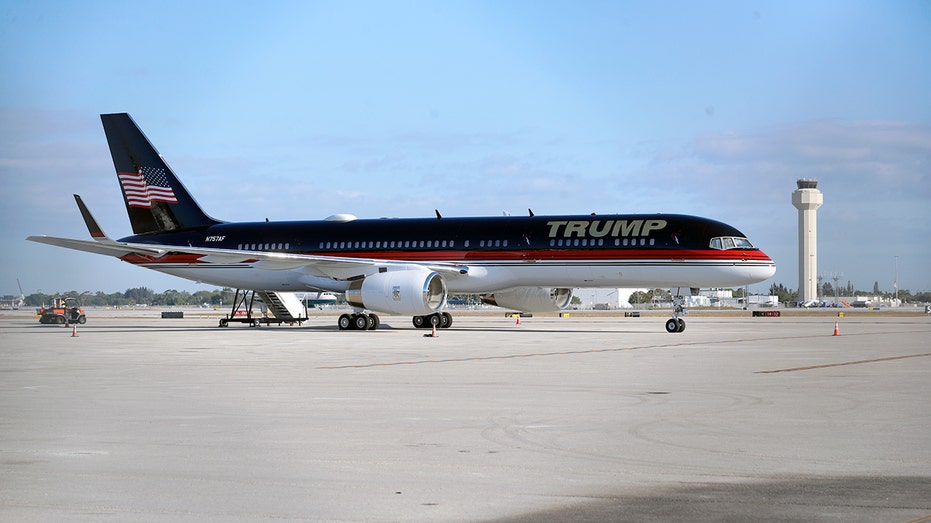
The airport closest to President Donald Trump’s Mar-a-Lago club may soon bear his name after both chambers of the Florida Legislature passed a bill to rename Palm Beach International Airport in West Palm Beach in his honor. Trump’s name has been affixed to multiple pieces of infrastructure in recent months, from the Trump-Kennedy Center in Washington to Donald J. Trump highways in Florida and Oklahoma. Rep. Addison McDowell, R-N.C., has also introduced a bill to strip former Secretary of State John Foster Dulles’ name from the Washington-area airport in Virginia, aiming to have the nation’s capital served by Trump and Reagan. Senate Bill 706, sponsored by RNC Chairman and state Sen. Joe Gruters of Lakeland and state Sen. Debbie Mayfield, R-Brevard. passed the upper chamber and was paired with House Bill 919, sponsored by state Rep. Meg Weinberger, R-Palm Beach Gardens, whose district includes the airport. The House measure passed earlier Friday. TRUMP ANNOUNCES 10% GLOBAL TARIFF, CRITICIZES SUPREME COURT JUSTICES The text of the bill amends an existing law codifying the names of several Florida airports, including Miami International Airport and Jacksonville International Airport, to add language designating that the airport in West Palm Beach “currently known as the Palm Beach International Airport shall be renamed the President Donald J. Trump International Airport.” The bill also grants Palm Beach County funding for the rebranding effort. The renaming still requires approval from the Federal Aviation Administration (FAA) and Gov. Ron DeSantis. A DeSantis spokeswoman said the governor has not yet received the bill, but “once it is delivered to his office, he will review it in its final form.” Fox News Digital also reached out to a representative for Transportation Secretary Sean Duffy for comment. SUPREME COURT BLOCKS TRUMP TARIFFS IN MAJOR TEST OF EXECUTIVE BRANCH POWERS Florida Democrats warned about the estimated $5 million in rebranding costs and any incidental profits that could be made by the Trump family. Democrats also said any consideration should wait until 2029, when the current president is out of office, according to The Floridian Press. Rep. Lois Frankel, D-Fla., whose district includes the airport and for whom Trump is a constituent, criticized the proposal. “It’s misguided and unfair that the Republican-controlled Florida Legislature ignored the voices of Palm Beach County by pushing forward a bill to rename Palm Beach International Airport without giving county residents a real opportunity for input,” Frankel said in a statement. CLICK HERE TO GET THE FOX NEWS APP She echoed concerns about renaming an airport after a sitting president. “Decisions … should wait until after an honoree’s service has concluded,” Frankel said. “And [they] should include meaningful input from the local residents and communities most directly affected.” White House Communications Director Steven Cheung said the name “has a great ring to it.”
‘Impossible to describe:’ Importer who challenged Trump tariffs hails Supreme Court win

Victor Owen Schwartz never imagined he would one day find himself challenging a president in the highest court in the land. But after President Donald Trump’s sweeping tariffs threatened the survival of his wine importing business, Schwartz became a plaintiff in a case that would ultimately reach the Supreme Court and prevail. With wines and spirits arriving from 16 countries across five continents, nearly every corner of Schwartz’s supply chain was touched by the new tariffs. On Friday, the nation’s highest court dealt Trump a significant blow to his trade policy. Schwartz watched the decision unfold over Zoom with his lawyers, the fate of his nearly 40-year-old business hanging in the balance. SUPREME COURT DEALS BLOW TO TRUMP’S TRADE AGENDA IN LANDMARK TARIFF CASE “We are relieved and very excited to get back to doing what we love, bringing handmade authentic wines and spirits to American consumers,” Schwartz said. “It’s impossible to describe the feeling of elation, of seeing that, yes, we were right, and the court agrees with us, and a feeling that justice prevailed,” he told Fox News Digital. Schwartz was a plaintiff in one of two cases brought before the Supreme Court. The challenges — Learning Resources Inc. v. Trump and Trump v. V.O.S. Selections Inc. — were filed by an educational toy manufacturer and Schwartz’s family-owned wine and spirits importer, both contesting the legality of Trump’s tariffs. The disputes followed Trump’s so-called “Liberation Day” tariffs in April, a sweeping package of import duties he said would address trade imbalances and reduce reliance on foreign goods. TRUMP’S TARIFF REVENUES HIT RECORD HIGHS AS SUPREME COURT DEALS MAJOR BLOW “Last spring, thousands of American small businesses like mine were thrown into chaos,” Schwartz said, referring to the “Liberation Day” tariffs. “The administration’s unprecedented tariffs, which my business was forced to pay upfront, threatened our very existence,” he added. Unlike previous tariffs enacted by Congress, which businesses could plan around, Schwartz said Trump’s sweeping duties felt unpredictable and arbitrary. He argued the new duties forced small companies to “gamble with our livelihoods by trying to predict the unpredictable,” calling them “an unconstitutional act of government overreach.” Beyond the legal fight, Schwartz said the strain on cash flow was especially acute. “A very important thing to realize in running any business, certainly a small business, is the impact on cash flow,” he said. “When you have to pay those tariffs up front before you have sold a single bottle of wine, that’s a major impact … cash flow is the lifeblood of a company.” Meanwhile, the Trump administration has argued that aggressive tariffs are necessary to confront what it calls years of unfair global trade — underscoring how central trade policy is to Trump’s broader economic strategy. Shortly after the Supreme Court ruling, Trump announced a 10% global tariff and vowed to use other avenues to keep the duties in place. While questions remain about what comes next for U.S. trade policy, Schwartz said he is focused on moving forward and receiving the “government’s refund of these improperly collected taxes.”
US to unveil platform aiming to bypass internet censorship in China, Iran and beyond
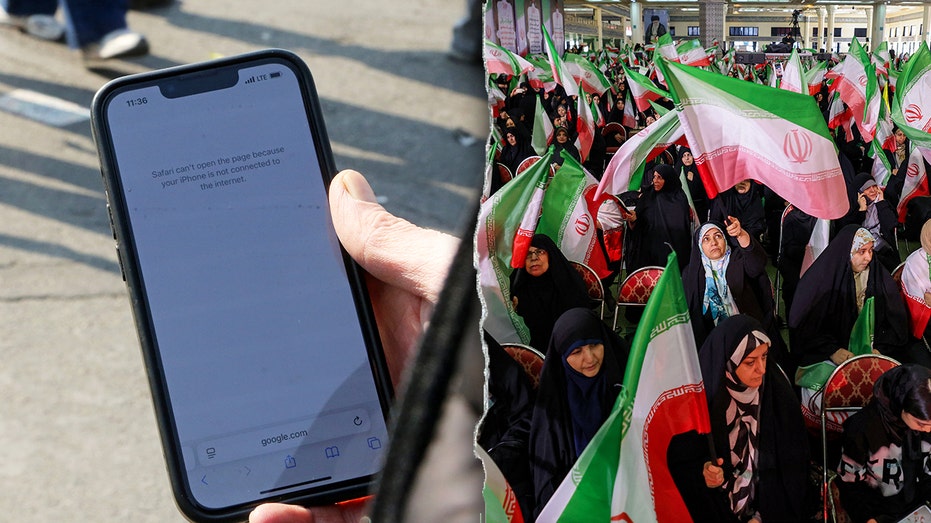
FIRST ON FOX: The State Department has finalized a new privacy-preserving app intended to give users worldwide access to what officials describe as the same uncensored internet available to Americans, even in countries with strict online repression such as China and Iran and as Europe enacts tighter content oversight. The platform, Freedom.gov, will roll out “in the coming weeks,” Fox News Digital has learned. It will operate as a one-click desktop and mobile application compatible with iOS and Android devices. MARCO RUBIO VOICES CONCERN THAT AMERICANS MAY SOMEDAY BE ARRESTED FOR SOCIAL MEDIA POSTS WHEN VISITING EUROPE The app is open-source and includes built-in anonymity protections. The initiative comes as governments worldwide tighten control over digital speech, from China’s “Great Firewall” to sweeping internet shutdowns in Iran and new regulatory regimes in Europe. U.S. officials say Freedom.gov is designed to offer a technological counterweight — exporting what they describe as America’s open internet model to users living under censorship. “In the interest of total transparency, we made Freedom.gov completely open-source. But we also made it completely anonymous,” a State Department official said. “Anyone can see how it works. No one, including us, can track or identify you.” According to the official, the application does not log IP addresses, session data, browsing activity, DNS queries or device identifiers that could be used to personally identify users. Specific details about the app’s underlying technical structure were not disclosed. Governments with sophisticated censorship systems historically have moved quickly to block or criminalize circumvention tools. Authorities can restrict app downloads, block domains, throttle traffic or impose penalties on users. Whether Freedom.gov maintains accessibility in heavily restricted environments may depend on its technical architecture and its ability to adapt to countermeasures. The initiative is being led by Under Secretary for Public Diplomacy Sarah Rogers, who oversees the State Department’s Digital Freedom office. “Freedom.gov is the latest in a long line of efforts by the State Department to protect and promote fundamental freedoms, both online and offline,” Rogers said. “The project will be global in its scope, but distinctly American in its mission: commemorating our commitment to free expression as we approach our 250th birthday.” Reuters previously reported that the State Department was developing the Freedom.gov platform. The rollout comes amid intensifying global battles over internet governance, as governments across Europe and beyond move to assert greater control over online content. GOOGLE’S DECISION TO WALK BACK BIDEN-ERA YOUTUBE ACCOUNT BANS HAILED AS ‘HUGE DEVELOPMENT’ FOR FREE SPEECH In Europe, regulators have tightened oversight under new laws aimed at policing digital platforms. The European Union’s Digital Services Act expands government authority over major platforms and requires removal of illegal content, including hate speech and extremist material, with regulators empowered to impose steep fines for violations. In the United Kingdom, the Online Safety Act imposes new obligations on platforms to address harmful and illegal content and includes age-verification requirements for certain services. Critics warn the measures risk incentivizing aggressive content removal and expanding government influence over lawful speech online. Elsewhere, restrictions have been more direct. Russia recently moved to ban WhatsApp, further consolidating state control over digital communications. China maintains the world’s most sophisticated online censorship system, widely known as the “Great Firewall,” blocking foreign news outlets and social media platforms while promoting a state-controlled digital ecosystem. Iran repeatedly has imposed sweeping internet shutdowns during periods of unrest. During protests, government blackouts have cut citizens off from global communications. The Wall Street Journal previously reported that thousands of Starlink satellite internet terminals were covertly brought into the country following a blackout, in an effort backed by the United States to help dissidents bypass censorship. Iranian authorities have attempted to jam satellite signals and criminalized possession of such equipment. Satellite connectivity — which does not rely on domestic telecommunications infrastructure — has emerged as one of the few viable lifelines during shutdowns.
RFK Jr defends Trump move to protect pesticide he tied to ‘chronic disease epidemic’
Health and Human Services (HHS) Secretary Robert F. Kennedy Jr. recently defended a move by President Donald Trump to protect and boost the production of a precursor chemical for pesticides, which just two years ago RFK Jr. said was a major contributor to “America’s chronic disease epidemic,” and if elected he would “ban” it. Citing national defense imperatives, Trump passed an executive order earlier this week to protect a precursor element used in the production of an herbicide known as glyphosate. Trump’s executive order described glyphosate-based herbicides as “a cornerstone” of the United States’ agricultural productivity. The directive created a furor among proponents of the Make America Healthy Again (MAHA) agenda. Just two years ago, in June 2024, when Kennedy was still running for president, he posted on X, formerly Twitter, that “glyphosate is one of the likely culprits in America’s chronic disease epidemic.” BROOKE ROLLINS, ROBERT KENNEDY JR: NEW DIETARY PLAN RECOMMENDS REAL FOOD FOR ALL AMERICANS “The herbicide Glyphosate is one of the likely culprits in America’s chronic disease epidemic. Much more widely used here than in Europe. Shockingly, much of our exposure comes from its use as a desiccant on wheat, not as an herbicide. From there it goes straight into our bodies,” RFK Jr. said in 2024 while running for president. “MY USDA will ban that practice.” A MAHA Commission report released in May 2025 highlighted the concerns surrounding glyphosate as well. “Some studies have raised concerns about possible links between some of these products and adverse health outcomes, especially in children, but human studies are limited,” the report said. “For example, a selection of research studies on a herbicide (glyphosate) have noted a range of possible health effects, ranging from reproductive and developmental disorders as well as cancers, liver inflammation and metabolic disturbances.” Trump’s executive order was immediately praised by agriculture industry leaders, but MAHA loyalists were sharply critical. RFK JR BACKS BEEF, DECLARING ‘WAR ON PROTEIN IS OVER’ AS HE THANKS AMERICA’S CATTLE RANCHERS “This move betrays the very MAHA voters who put this administration in power,” Kelly Ryerson, co-executive director of American Regeneration and a leading grassroots voice within MAHA, said in a statement. “It stands in direct opposition to the President’s original promise to address the contribution of pesticides to chronic disease.” “The right is captured by Big Glyphosate,” added Alex Clark, a podcast host affiliated with Turning Point USA, founded by the late-Charlie Kirk. “It feels like MAHA is going through a breakup, or just found out our husband was having an affair,” she told the Wall Street Journal. When reached for comment, RFK Jr. said Trump’s directive on glyphosate “puts America first where it matters most,” citing the nation’s defense readiness and food supply. “We must safeguard America’s national security first, because all of our priorities depend on it,” he said in a statement to Fox News Digital. “When hostile actors control critical inputs, they weaken our security. By expanding domestic production, we close that gap and protect American families.”
Trump’s tariff revenues hit record highs as Supreme Court deals major blow
Tariff collections surged to historic highs under President Donald Trump, advancing his trade agenda before the Supreme Court stepped in on Friday to limit the power behind many of the levies. Tariffs have been a defining feature of Trump’s economic agenda since his return to office, and revenue from the duties has risen roughly 300%. In January alone, duties brought in $30.4 billion — up 275% from a year earlier. For the fiscal year to date, collections have reached $124 billion, an increase of about 300% over the same period last year. This administration has repeatedly argued that tariff revenue can fund domestic priorities — including lowering the nation’s $38 trillion debt and potentially delivering a $2,000 dividend check to Americans — as critics from both the left and right warn that tariffs could raise consumer prices and strain global trade relationships. SUPREME COURT DEALS BLOW TO TRUMP’S TRADE AGENDA IN LANDMARK TARIFF CASE Tariffs are essentially taxes on imports, typically paid upfront by U.S. importers who then push the added expense down the supply chain to retailers and consumers. That can translate into higher prices for goods ranging from electronics to raw materials. Their overall economic impact hinges on how much of the cost consumers absorb, how domestic producers respond and whether the intended strategic benefits justify the additional expense. TRUMP SAYS US WOULD BE ‘DESTROYED’ WITHOUT TARIFF REVENUE With affordability a central concern for voters heading into the midterm elections, any policy that raises consumer prices is likely to face heightened political scrutiny. The Supreme Court case arose from lawsuits filed by an educational toy maker and a family-owned wine and spirits importer challenging Trump’s sweeping “Liberation Day” tariffs unveiled in April. The broad package of import duties was designed, the administration said, to address trade imbalances and reduce reliance on foreign goods. Revenue surged in the months that followed, climbing from $9.6 billion in March to $23.9 billion in May. For fiscal year 2025, which ended Sept. 30, 2025, total duty collections reached $215.2 billion, according to Treasury data. The upward trend has continued into fiscal 2026, with receipts already running ahead of last year’s pace. The Supreme Court ruling injects fresh uncertainty into the future of the tariffs and how the Trump administration will respond. The White House did not immediately respond to Fox News Digital’s request for comment.
Trump says he is ‘considering’ a limited military strike to pressure Iran into nuclear deal
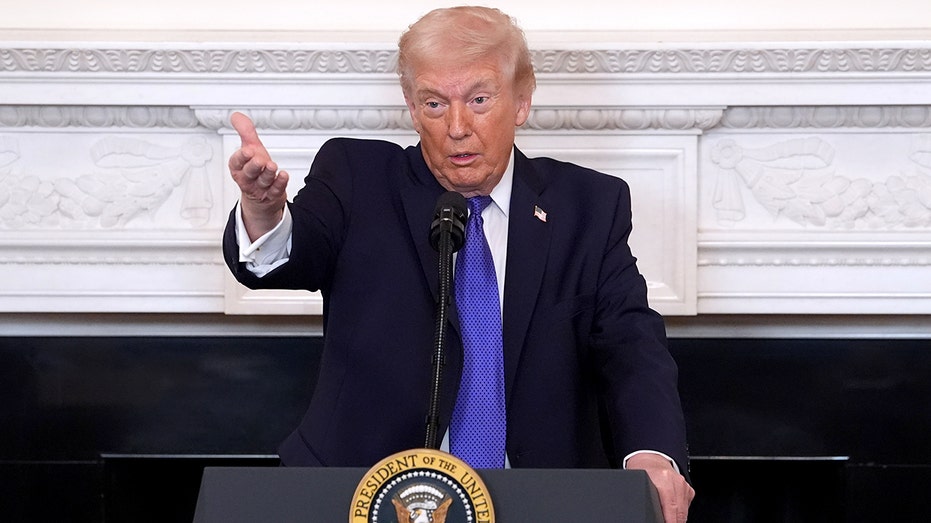
President Donald Trump said Friday he is “considering” a limited military strike on Iran to pressure its leaders into a deal over its nuclear program. “I guess I can say, I am considering that,” Trump said at a breakfast with governors at the White House, after being asked by a reporter, “Are you considering a limited military strike to pressure Iran into a deal?” The president on Thursday suggested the window for a breakthrough is narrowing, indicating Iran has no more than “10, 15 days, pretty much maximum” to reach an agreement. “We’re either going to get a deal, or it’s going to be unfortunate for them,” he said. THE ONLY MAP YOU NEED TO SEE TO UNDERSTAND HOW SERIOUS TRUMP IS ABOUT IRAN Trump’s remarks come as the U.S. is building up military assets in the Middle East, sending the USS Gerald R. Ford and its strike group toward the region. The USS Abraham Lincoln and three guided-missile destroyers arrived in the Middle East more than two weeks ago. TRUMP SAYS IRAN HAS 15 DAYS TO REACH A DEAL OR FACE ‘UNFORTUNATE’ OUTCOME On Wednesday, U.S. Central Command posted photos showing F/A-18 Super Hornets landing on the decks of the USS Abraham Lincoln in the Arabian Sea. The next day, Russia warned Iran and “all parties in the region to exercise restraint and caution.” “Russia continues to develop relations with Iran, and in doing so, we call on our Iranian friends and all parties in the region to exercise restraint and caution, and we urge them to prioritize political and diplomatic means in resolving any problems,” Kremlin spokesman Dmitry Peskov said, according to Reuters. Fox News Digital’s Emma Bussey and Greg Wehner contributed to this report.
Democratic-socialist nominee eyeing NJ governor’s vacant House seat compares ICE to 1960s segregationists
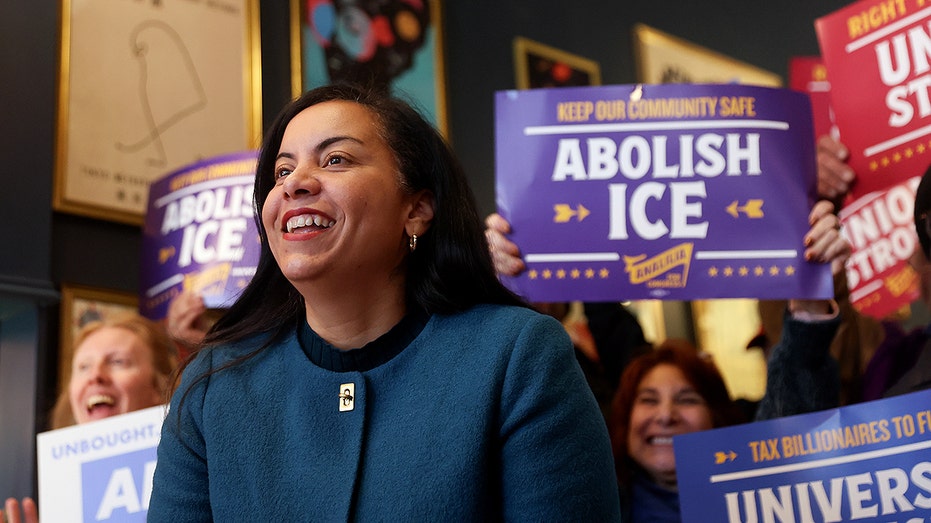
FIRST ON FOX: Analilia Mejia, the Democrat hoping to take over newly elected New Jersey Governor Mikie Sherrill’s now absent House seat, recently likened the Trump administration’s federal immigration efforts to that of segregationists in the South during the 1960s. After securing the Democratic Party nomination in a crowded field to take over Sherrill’s 11th Congressional District seat, activist Mejia began holding interviews to share her platform. Among the crowded field of Democrats, she was said to be the only one to call Israel’s actions in Gaza a “genocide” and call for Immigration and Customs Enforcement (ICE) to be abolished. During an interview Mejia conducted with The American Prospect after securing her nomination, she defended calls to abolish ICE and said that the “murders in Minnesota,” referring to the deaths of anti-ICE agitators Renee Good and Alex Pretti, “feel very similar to that moment in our nation’s history, when in the middle of evening news, the American people couldn’t turn away from what was happening in the South, they couldn’t turn away from fire hoses turned on children.” JEFFRIES CLASHES WITH LEFT-WING PODCAST HOST OVER DEMAND TO LEAD PUSH TO ‘ABOLISH ICE’ Mejia was alluding to the 1963 Birmingham “Children’s Crusade” when kids walked out of school to support desegregation but were met with brutality from local officials who turned a high-powered fire hose onto kids who had walked out of school to protest segregation. Fox News Digital reached out to campaign representatives for Mejia but did not hear back in time for publication. “Anyone who has studied American history understands, every time across our nation’s history, we keep having these cycles of when regular, everyday Americans grab those words of freedom and try to pull them to cover as many of us as possible,” Mejia explained further, in a separate interview she conducted after securing her nomination, with Democracy NOW. “We then have kind of a reaction in this nation, whether it was after Reconstruction or after the civil rights movement or after the election of Barack Obama. It’s almost as if we have this snap back, this clap back to expansive freedom.” Comparing ICE to racists is nothing new for the Democratic Party. Rep. Jasmine Crockett, D-Texas, for example, compared them to slave patrols, while just last month, the NAACP posted a split-image comparing ICE agents to the KKK. The KKK comparison also recently reared its head during California’s gubernatorial debate and just a few days ago, Rep. Ayanna Pressley, D-Mass, complained “ICE can’t be reformed anymore than the KKK could.” TRUMP DHS HAMMERS DEM GOVERNOR’S PORTAL TO TRACK ICE AGENTS: ‘ENCOURAGES VIOLENCE’ Mejia, longtime labor organizer who served as a 2020 national political director for Bernie Sanders and also as deputy director of the Labor Department’s women’s bureau under former President Joe Biden, upset the more moderate former congressman, Tom Malinowski, in the Democratic Primary for New Jersey’s 11th district last week. She is now preparing to battle it out against her Republican opponent in the April 16 special general election, local New Jersey Mayor Joe Hathaway. “You can’t turn away from this madness, and you can’t unsee this injustice, and they want leaders who say you’re not crazy, what you’re seeing is real,” Mejia told The American Prospect when asked about her stance to abolish ICE position. “People get it, voters are not dumb.” In another interview, after Mejia secured her 11th District nomination, she also spoke about her platform, including her position on ICE and immigration, with longtime New York news anchor Bill Ritter. “You sound a little like the person who just became the Mayor of New York,” Ritter remarked to Mejia during their discussion.
The only map you need to see to understand how serious Trump is about Iran
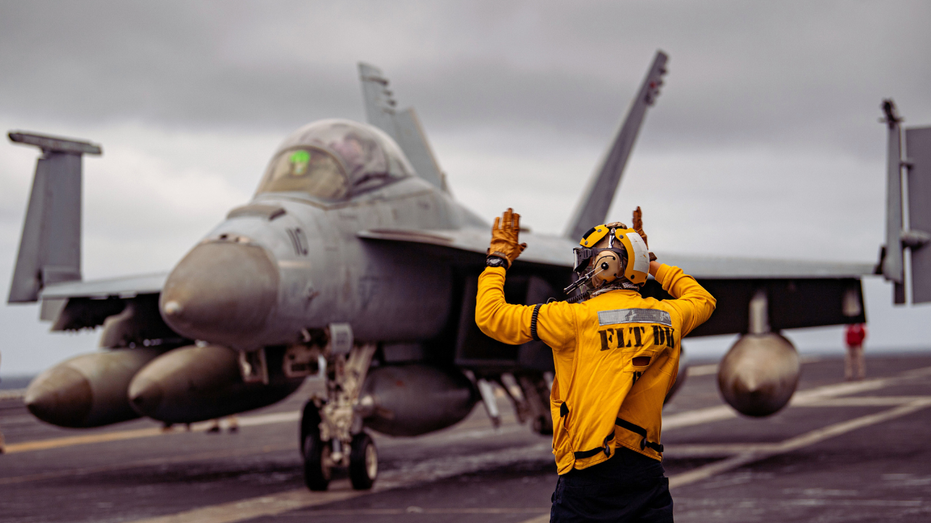
For weeks, the U.S. military has quietly amassed what President Donald Trump has described as an “armada” in Iran’s backyard. Mapped out across the Persian Gulf and beyond, the deployment tells its own story — one of calculated pressure backed by credible capability. The latest signal of escalation is the movement of the world’s largest aircraft carrier, the U.S. Navy’s USS Gerald R. Ford, and its strike group from the Caribbean toward the Middle East. The buildup coincides with indirect negotiations between Washington and Tehran over Iran’s disputed nuclear program. Trump has warned that the regime must fully dismantle its nuclear infrastructure — or face consequences. THE WORLD’S TOP NUCLEAR POWERS HAVE NO ARSENAL LIMITS, HERE ARE THE COUNTRIES WITH NUKES At the heart of America’s force projection is another carrier strike group: USS Abraham Lincoln — a mobile fortress at sea, guarded by destroyers and equipped to unleash precision strikes at a moment’s notice. On deck, F-35 fighters and F/A-18 attack aircraft sit within range of dozens of key Iranian military and nuclear targets. Meanwhile, in the Eastern Mediterranean, destroyers USS Bulkeley and USS Roosevelt provide additional strike capability and missile defense coverage — and could potentially assist Israel in defending against any Iranian counterattack. WORLD’S LARGEST AIRCRAFT CARRIER HEADS TO MIDDLE EAST AS IRAN NUCLEAR TENSIONS SPIKE DRAMATICALLY Farther south, in the Red Sea, USS Delbert B. Black adds another layer of firepower along one of the world’s most important shipping lanes. The Red Sea links the Mediterranean to the Indian Ocean through the Suez Canal, a corridor that carries a significant share of global trade and energy supplies. A U.S. destroyer there not only protects commercial traffic but also gives Washington the flexibility to respond quickly to threats moving between the Middle East and Europe. Even closer to Iran’s coastline, in the Persian Gulf and the Strait of Hormuz, USS McFaul and USS Mitscher are operating in one of the most strategically sensitive waterways on the planet. Roughly a fifth of the world’s oil passes through the Strait of Hormuz each day. Their presence signals that the U.S. can both defend that vital choke point and, if necessary, strike Iranian targets from close range. IRAN DRAWS MISSILE RED LINE AS ANALYSTS WARN TEHRAN IS STALLING US TALKS Beyond naval forces, U.S. air power is spread across multiple Middle Eastern bases, giving commanders the ability to strike, defend and sustain operations quickly. Several types of combat aircraft are operating from regional bases, including F-15s, F-16s and the radar-evading F-35. The A-10 specializes in close-air support missions against armored threats. Those fighters are backed by a network of support aircraft. KC-135 and KC-46 tankers refuel jets midair, allowing them to fly farther and stay aloft longer. EA-18G electronic warfare aircraft can jam enemy radar and communications. E-3 Sentry aircraft serve as airborne command centers, tracking threats across wide areas. P-8 Poseidon planes patrol and monitor maritime activity. Additionally, heavy transports — including C-5 Galaxy and C-17 Globemaster aircraft — move troops and equipment, while MQ-9 Reaper drones provide surveillance and can carry precision weapons. The assets give U.S. commanders flexibility to operate across air, sea and land. Taken together, the air and naval deployments create overlapping strike capability, missile defense coverage and control over major maritime routes. For Iran, it means U.S. forces are not concentrated in a single vulnerable location — they are distributed, layered and positioned to operate from multiple directions at once.
Supreme Court blocks Trump tariffs in major test of executive branch powers
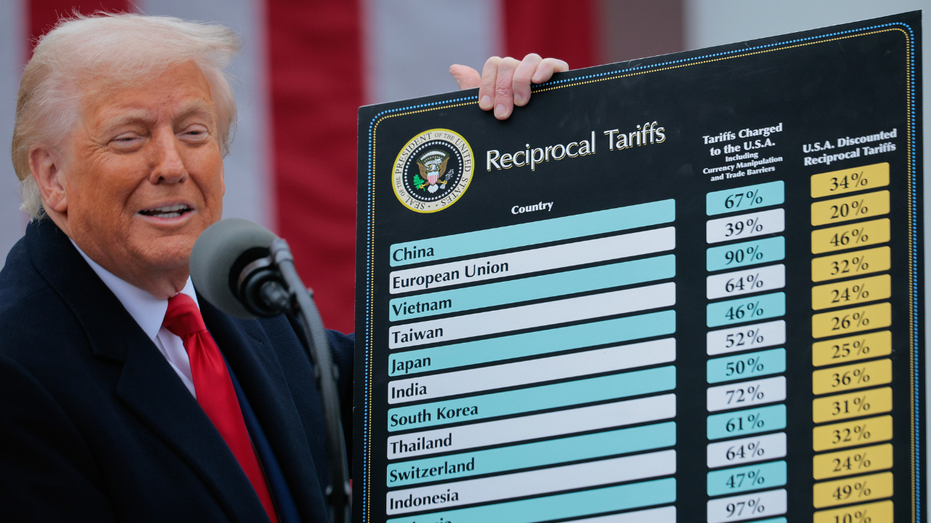
The Supreme Court on Friday blocked President Donald Trump’s use of an emergency law to unilaterally impose sweeping tariffs on most U.S. trading partners, delivering a blow to the president in a case centered on one of his signature economic policies — one he characterized as “life or death” for the U.S. economy. In a 6-3 decision, the justices invalidated Trump’s tariffs. Justices Clarence Thomas, Samuel Alito and Brett Kavanaugh dissented. “The Framers gave that power to ‘Congress alone’ — notwithstanding the obvious foreign affairs implications of tariffs,” Chief Justice John Roberts wrote for the majority. “And whatever may be said of other powers that implicate foreign affairs, we would not expect Congress to relinquish its tariff power through vague language, or without careful limits.” Roberts noted that Trump used “two words” that were “separated by 16 others” in the International Emergency Economic Powers Act (IEEPA), “regulate” and “importation,” to justify that he had the “independent power to impose tariffs on imports from any country, of any product, at any rate, for any amount of time.” “Those words cannot bear such weight,” Roberts wrote. BATTLEGROND STATES SHOULDER BURDEN OF TRUMP’S TARIFFS AS MIDTERM MESSAGING RAMPS UP The Supreme Court heard oral arguments in November in the case, which centered on Trump’s use of the IEEPA to enact his “Liberation Day” tariffs on most countries, including a 10% global tariff and a set of higher, so-called “reciprocal” tariffs on certain nations. In April, Trump declared the U.S. trade deficit a “national emergency,” and lawyers for the administration have cited that declaration as the legal basis for invoking IEEPA, which allows the president to respond to “unusual and extraordinary threats” when a national emergency has been declared. The high court agreed to take up the case last fall after lower courts, including the U.S. Court of International Trade (CIT) and the U.S. Court of Appeals for the Federal Circuit, blocked Trump’s attempt to use IEEPA to enact import duties. Lower courts pressed the Justice Department to explain why Trump invoked IEEPA when other, more narrowly tailored statutes enacted by Congress more specifically address tariffs — including laws that cap tariffs at certain levels or set timeframes subject to congressional review. The law authorizes the president to “regulate … importation” during a declared national emergency, but it does not mention the word “tariffs” — an omission that was at the heart of the hours-long arguments before the high court in November. The absence of the word was a key factor in the majority’s decision. During oral arguments, justices pressed Solicitor General John Sauer, who argued on behalf of the government, on whether IEEPA applies to tariffs or taxation powers and what guardrails — if any — would limit the executive branch should the high court rule in Trump’s favor. TRUMP DENOUNCES COURT’S ‘POLITICAL’ TARIFF DECISION, CALLS ON SUPREME COURT TO ACT QUICKLY Sauer told the justices that IEEPA allows a president to “regulate” “importation” of goods, which he said was the practical equivalent of a tariff. But justices, including Trump’s conservative appointees, appeared skeptical, pressing Sauer on whether there has “ever been another instance in which a statute has used that language to confer the power” Trump seeks. Other conservative justices questioned whether an “economic equivalent” to tariffs — such as sanctions, embargoes, licenses and quotas — could be used by the president under the law. Justice Brett Kavanaugh raised in a fiery dissent what he said would be “serious practical consequences” of the high court’s decision in terms of refunding illegitimately imposed tariffs. The majority did not address refunds, an issue now likely to be raised in lower courts. “The United States may be required to refund billions of dollars to importers who paid the IEEPA tariffs, even though some importers may have already passed on costs to consumers or others,” Kavanaugh wrote. “As was acknowledged at oral argument, the refund process is likely to be a ‘mess.’” Lawyers for the Trump administration have argued in lower courts that the IEEPA allows a president to act in response to “unusual and extraordinary threats” and in cases where a national emergency has been declared. TRUMP TARIFF PLAN FACES UNCERTAIN FUTURE AS COURT BATTLES INTENSIFY Trump has claimed that deep and “sustained” trade deficits amount to a national emergency that is sufficient to trigger his executive powers under the emergency law. The DOJ urged the Supreme Court to allow the tariffs to remain in place, warning that denying Trump the tariff authority under IEEPA “would expose our nation to trade retaliation without effective defenses.” Plaintiffs countered that in the 50 years since its passage, the law has never been used by a president to impose tariffs. They also argued that, by the administration’s own admission, the trade deficit cited by Trump has persisted for nearly 50 years — a fact they said undermines his claim that there is an “unusual and extraordinary” trade emergency. They argued that authorizing Trump’s use of IEEPA to continue his universal tariffs would drastically expand executive power at the expense of the other branches of government. Judges on a three-judge panel for the U.S. Court of International Trade voted unanimously last year to block Trump’s tariffs from taking effect, ruling that as commander in chief, Trump does not have “unbounded authority” to impose tariffs under the emergency law. The U.S. Court of Appeals for the Federal Circuit also rejected the administration’s use of IEEPA.
A third of GOP voters warn they may sit out midterms if party ‘abandons’ pro-life fight, poll finds
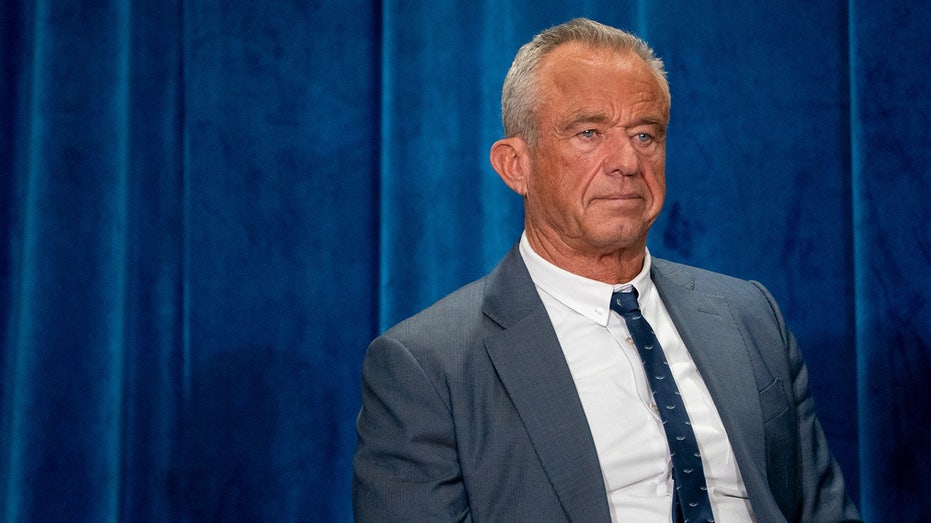
A third of Republicans would be less likely to vote in the midterms if they believe that the GOP has abandoned the abortion issue, according to a poll released on Thursday. The findings emphasize a perceived rift between pro-life advocates and the Trump administration, given the position of Health and Human Services (HHS) Secretary Robert F. Kennedy Jr. John Rogers, a senior partner at Cygnal, a public opinion data firm that conducted the poll, said that their work proves abortion is still a “north star” topic for much of the Republican base. “It’s a bedrock issue for Republican primary voters for decades,” Rogers said. “This is at the core of their worldview.” In a memo accompanying the release of their findings, Rogers said voters specifically expressed disappointment with Kennedy over an HHS policy that enables continued access to abortion drugs through the mail. MARK HALPERIN: TRUMP STRATEGY SUPER SESSION PLOTS MIDTERM SURVIVAL AS HISTORY STALKS GOP “Voters are overwhelmingly committed to pro-life principles, but frustrated with federal health agencies’ abortion policies under HHS Secretary Robert F. Kennedy Jr. The national data show a significant disconnect between base Republican voter expectations and current federal actions, creating real enthusiasm risks for the November midterm general election,” the memo states. According to Cygnal’s findings, 32% of GOP voters said they will have decreased enthusiasm for voting in the midterm election “if Republican leaders weaken or abandon pro-life policies.” That number overlaps with the 36% of the “most engaged” portion of the voter base. AFTER 80-MINUTE TRUMP ADDRESS, GOP LAWMAKERS SAY MOMENTUM IS BACK AS HEALTHCARE FIGHT LOOMS Marjorie Dannenfelser, the president of Susan B. Anthony Pro-Life America, a pro-life advocacy group, said Kennedy is risking turning that prediction into a reality by continuing mail-access to abortion drugs, a policy response to the COVID-19 pandemic. “In failing to repeal Biden’s COVID mail order rule, [he] runs counter to the MAHA base,” Dannenfelser said on Thursday. “51 senators, 145 representatives and 22 attorneys general have called for the end of mail-order abortion drugs and the immediate restoration of in-person dispensing,” Dannenfelser said. On that issue specifically, Cygnal’s polling indicated that 80% of respondents overall believed that the FDA should require in-person visits to secure an abortion. “They see a dissonance there,” Rogers said of Kennedy’s decision to continue the mail-order policy. ‘FICTION’: HOUSE REPUBLICAN CAMPAIGN CHAIR DISMISSES DEMOCRATS’ EXPANDING GOP TARGET MAP “I think they see the broader MAHA movement as an extension of their pro-life commitments.” Dannenfelser warned that if voters don’t feel like the administration has moved in the right direction, Republicans could stand to lose their current grip on a governing trifecta. “There is no amount of money that can overcome a reluctant voter base that sees failed action. What we might see is a loss in the House. Everyone assumes the Senate is fine. I would not assume that,” Dannenfelser said. “I have no doubt that if we lose, the pro-life movement will be blamed No. 1,” she added.