

Trump vows consequences for ‘animals’ burning American flags in LA, slams those waving other countries’ flags
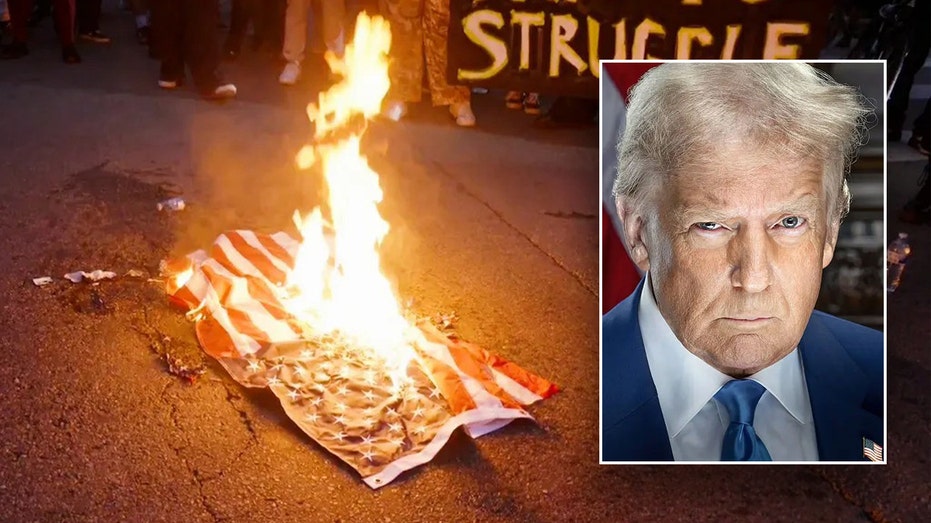
President Donald Trump slammed anti-ICE protesters in Los Angeles, whom he described as “animals,” for carrying flags of other countries and burning the American flag amid their efforts to protest federal deportation actions. Trump also floated the potential of imposing criminal penalties, specifically a one-year jail sentence, for burning the American flag, during comments at Fort Bragg Tuesday afternoon commemorating the United States Army’s 250th anniversary. “These are animals, but they proudly carry the flags of other countries. They don’t carry the American flag. They only burn it. Did you see a lot of the flags being burned?” Trump asked the crowd of service members, veterans, and their families. TRUMP SAYS ‘DISRESPECT’ TOWARD NATIONAL GUARD IN LA ‘WILL NOT BE TOLERATED’: ‘IF THEY SPIT, WE WILL HIT’ “They weren’t being burned by people from our country, or from people that love our country. People that burn the American flag should go to jail for one year,” Trump continued. “We’ll see if we can get that done. We’re going to try and get that done. We’re working with some of your senators.” The president’s appearance at Fort Bragg comes amid controversy over his deployment of over 4,000 National Guard troops and 700 U.S. Marines to Los Angeles in response to violent immigration protests. Critics, including Democratic California Governor Gavin Newsom, argue that the deployment is an overreach of federal authority. Trump reiterated his stance about potential jail time for those who burn American flags during an interview on a new podcast hosted by New York Post columnist Miranda Devine that debuted Monday. “I happen to think if you burn an American flag — because they were burning a lot of flags in Los Angeles — I think you go to jail for one year,” he said during his appearance on the new podcast. “Just automatic.” TRUMP TAKES ACTION AGAINST ‘ORCHESTRATED ATTACK’ ON LAW ENFORCEMENT BY DEPLOYING MARINES TO LA: ASSEMBLYMAN In addition to potential criminal penalties for rioters, Trump has suggested he may try to go after Gov. Newsom for interfering with Immigration and Customs Enforcement (ICE) operations in Los Angeles. Newsom filed a lawsuit Monday against the Trump administration, alleging the president violated California’s 10th Amendment rights by invoking a law that enabled federal control of the National Guard. “Come after me. Arrest me,” Newsom said. “Let’s just get it over with, tough guy.” During the president’s comments at Fort Bragg, Trump also noted that his administration is looking into who may be “financing” the protests, saying “we’re going to find out through Pam Bondi and Department of Justice who it is.” CLICK HERE TO GET THE FOX NEWS APP U.S. Attorney General Bondi, in her first appearance since the riots broke out, indicated that the Justice Department has “nine open cases” connected to the ongoing protests, which critics have deemed amount to riots. “As President Trump said: You spit we hit,” Bondi said. “Get ready.”
148 Democrats back noncitizen voting in DC as GOP raises alarm about foreign agents
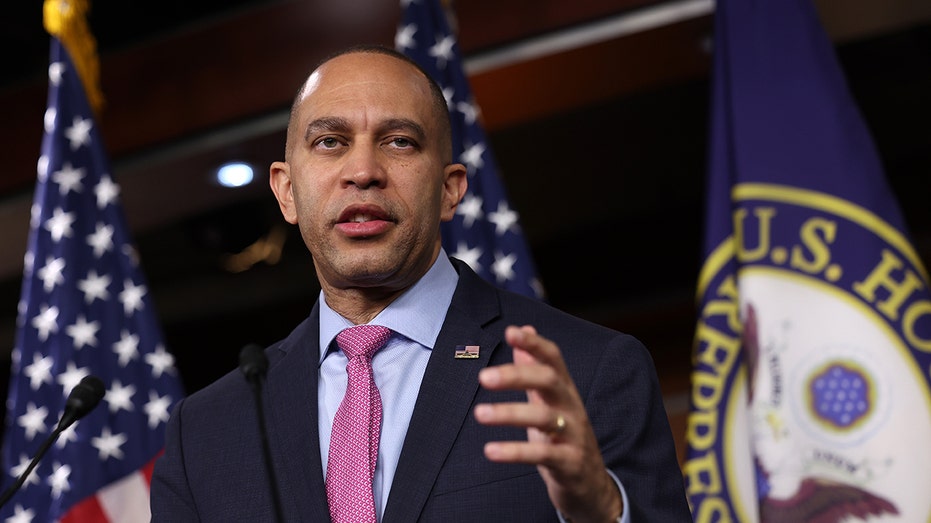
The majority of House Democrats voted in favor of allowing non-citizens to participate in Washington, D.C. elections on Tuesday. The House of Representatives passed a bill led by Rep. August Pfluger, R-Texas, to prohibit non-U.S. citizens from voting in elections in the nation’s capital. It passed 266 to 148, with 56 Democrats joining Republicans in passing the measure. One Democrat voted “present,” while 148 voted against the bill. “I believe strongly in not having federal overreach, but we have jurisdiction, Congress has jurisdiction over Washington, District of Columbia…and we don’t like to utilize our jurisdiction and our authority, but in this case, they’ve gone too far,” Pfluger told Fox News Digital in an interview before the vote. D.C.’s progressive city council passed the Local Resident Voting Rights Amendment Act in 2022, granting non-U.S. citizens the ability to vote in local elections if they’ve lived in the district for at least 30 days. SCOOP: HOUSE GOP MEMO HIGHLIGHTS REPUBLICAN WINS IN TRUMP’S ‘BIG, BEAUTIFUL BILL’ Noncitizens can also hold local elected office in the D.C. government. The local measure has been a frequent target of GOP attacks, with Republican national security hawks raising alarms about the possibility of hostile foreign agents participating in D.C. elections. But progressive Democrats like Rep. Maxwell Frost, D-Fla., who spoke out against the bill on Tuesday afternoon, have dismissed that as an implausible scenario. “Republicans claim that Congress has a constitutional duty to legislate on local D.C. matters, but this is historically and legally incorrect. Republicans legislate on local D.C. matters only when they think they can score political points, such as by demonizing immigrants,” Frost said during debate on the House floor. “They only bring it up to the floor when they think they can score political points, taking away the democratic rights of people here in D.C. and home rule.” Frost also argued that it was “highly unlikely” foreign officials would vote in those elections, claiming they would have to “renounce their right to vote in their home country” and because “DC has no authority in federal matters.” But Pfluger, who spoke with Fox News Digital before the vote, was optimistic that it would get at least some Democratic support. He noted that 52 Democrats voted for the bill when it passed the House in the previous Congress. It was never taken up in the formerly Democrat-controlled Senate, however. “It’s hard to go back to your district as a Democrat and say, yeah, I want foreign agents to be able to vote in our elections – ‘Oh yeah, it’s not federal elections,’ some may say. But it has an impact on the way the city is run,” Pfluger said. MEET THE TRUMP-PICKED LAWMAKERS GIVING SPEAKER JOHNSON A FULL HOUSE GOP CONFERENCE “This could be Russian embassy personnel, they could be Chinese embassy personnel – a number of folks. It’s just wrong. It goes against the fabric of our society,” he added. Another bill receiving a vote on Tuesday is legislation that would grant D.C. police the ability to negotiate punishments via collective bargaining, and would help shield the capital’s police force from at least some liability by installing a statute of limitations against the Metropolitan Police Department. That legislation was introduced by New York Republican Rep. Andrew Garbarino.
Newsom files emergency motion to ‘immediately block’ Trump’s use of military to stop LA riots
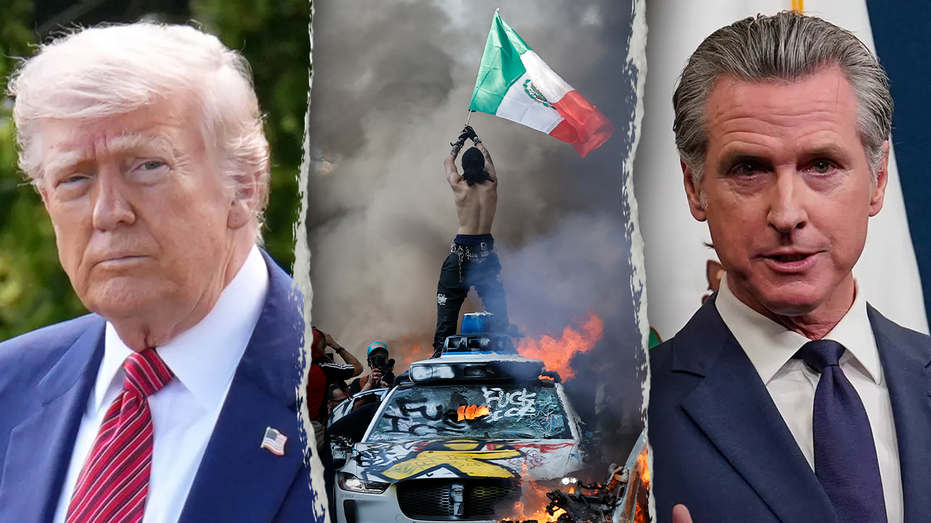
Accusing the federal government of intentionally provoking rioters and “turning the military against American citizens,” California Governor Gavin Newsom, a Democrat, filed an emergency motion to stop President Donald Trump from further using the National Guard and Marines to quell the ongoing anti-ICE riots in Los Angeles. Fiery riots and looting have overtaken much of Los Angeles over the last several days following a series of ICE operations in the city. Despite the riots, Newsom said that the federal government’s military response has been unnecessary and that the protests are “largely nonviolent.” Newsom and California Democratic Attorney General Rob Bonta filed the motion in a federal court for the Northern District of California on Tuesday. The motion asks the court to grant the state a temporary restraining order keeping Trump, Defense Secretary Pete Hegseth and the Department of Defense from the “use of the military and the federalized National Guard to patrol communities or otherwise engage in general law enforcement activities,” which they say “creates imminent harm to State Sovereignty, deprives the State of vital resources, escalates tensions and promotes (rather than quells) civil unrest.” In a Tuesday statement, Newsom’s office said that the motion is charging the Trump administration with violations of the U.S. Constitution and Title 10 authority, “not only because the takeover occurred without the consent or input of the Governor, as federal law requires, but also because it was unwarranted.” ‘DELUSIONAL’ HILLARY CLINTON SAVAGELY MOCKED FOR HER RESPONSE TO LA RIOTS In the statement, Newsom’s office blamed the ICE agents for the riots, saying that their operations were carried out “without providing notification to law enforcement and engineered them to provoke community backlash.” The next several days saw unrest and violent confrontations between anti-ICE rioters and law enforcement, while the Department of Homeland Security urged California state leaders to “call off their rioting mob.” A DHS statement put out Saturday read, “Last night, over 1,000 rioters surrounded a federal law enforcement building and assaulted ICE law enforcement officers, slashed tires, defaced buildings, and taxpayer-funded property. It took the Los Angeles Police Department (LAPD) 2 hours to respond.” In response to the escalating chaos, Trump deployed thousands of National Guard troops to Los Angeles. Later, he also ordered 700 U.S. Marines into the city to restore order. FORMER LA COUNTY SHERIFF CALLS CALIFORNIA’S RIOT RESPONSE ‘FECKLESS’ ON STEROIDS The move has been met with intense pushback from Newsom and other California Democrats. Newsom’s office said that though “some violent and illegal incidents were reported,” the protests “were largely nonviolent and involved citizens exercising their First Amendment right to protest.” The statement claimed “the protests did not necessitate federal intervention, and local and state law enforcement have been able to control the situation, as in other recent instances of unrest.” “The federal government is now turning the military against American citizens,” Newsom said in the statement. The governor claimed that Trump’s “sending trained warfighters onto the streets is unprecedented and threatens the very core of our democracy.” “Donald Trump is behaving like a tyrant, not a President,” said Newsom. NATIONAL GUARD TROOPS ARRIVE IN LOS ANGELES AMID VIOLENT ANTI-ICE PROTESTS Newsom has sued the Trump administration for deploying the military to Los Angeles. The lawsuit said Trump “unlawfully bypassed” Newsom by putting National Guard troops under federal control without the governor’s permission. The California attorney general, meanwhile, has claimed the president is “looking for any pretense to place military forces on American streets to intimidate and quiet those who disagree with him.” “It’s not just immoral — it’s illegal and dangerous,” said Bonta. Fox News Digital reached out to the Trump administration and the Department of Defense for comment but did not immediately receive a response. Speaking with reporters on Tuesday, Trump warned his administration is “not playing around.” Trump added that he had called California Gov. Gavin Newsom on Monday and criticized his handling of the riots. “A day ago, I called him up to tell him got to do a better job. He’s done a bad job causing a lot of death and a lot of a lot of potential death,” Trump said of Newsom. POSSE COMITATUS ACT AT CENTER OF TRUMP-NEWSOM NATIONAL GUARD DISPUTE IN LA Trump offered further details on his exchange with Newsom to Fox News’ John Roberts. Trump told Roberts that his first call to Newsom was not picked up, but that they did connect and speak for 16 minutes when he called again. “I told him to, essentially, ‘get his ass in gear,’ and stop the riots, which were out of control,” Trump told Roberts. CLICK HERE TO GET THE FOX NEWS APP “If we didn’t send out the National Guard and last night, we gave him a little additional help. Los Angeles would be burning right now. Los Angeles would be not a lot different than what you saw take place in California, in Los Angeles just a little while ago,” Trump added in his statement to reporters, referring to this year’s wildfires. Trump went on to describe the rioters as “animals,” and argued they are paid agitators rather than real protesters. “They look in your face and they spit right in your face. They’re animals. And these are paid insurrectionists. These are paid troublemakers they’re agitators. They’re paid,” Trump said. “These are paid insurrectionists or agitators or troublemakers. You can call it whatever you want. And we ended it, and we have in custody some very bad people, some very bad people.”
Fox News Politics Newsletter: Hillary ‘Can’t Handle the Ratio’
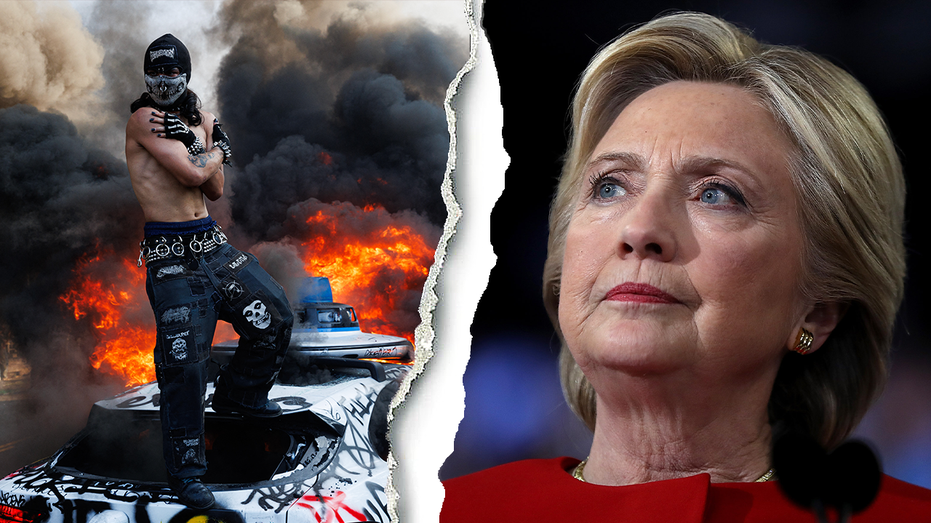
Welcome to the Fox News Politics newsletter, with the latest updates on the Trump administration, Capitol Hill and more Fox News politics content. Here’s what’s happening… Former Secretary of State Hillary Clinton was brutally mocked by critics over a “delusional” X post describing the anti-ICE riots in Los Angeles as “peaceful demonstrations” while pinning blame on President Donald Trump for sowing “chaos” in southern California. “Comments off lol. She can’t handle the ratio. This is what Hillary Clinton calls ‘peaceful demonstrations,’” popular conservative X account Libs of TikTok posted, referring to how comments on Clinton’s post were restricted to only permit ones from accounts Clinton follows on the social media platform and accompanied by footage of the destruction in LA. The message was in response to Clinton posting her first and only comment as of Tuesday morning regarding the Los Angeles riots, describing them as “peaceful demonstrations” before Trump mobilized the National Guard over the weekend…READ MORE. ‘DEPRESSION CRISIS’: Report gives new details on Trump assassination attempt suspect’s ‘descent into madness’ BIG MUSIC: Trump order to stop ‘exploitative ticket scalping’ clears way for $1B Live Nation investment in new music venues ROADBLOCK: Federal judge rules Trump admin cannot block grants to LGBT groups ABORT DEPORT: ‘Proof is in the pudding’: Trump DOJ tells court it will seek dismissal of Abrego Garcia case COURT PUSHBACK: Trump admin may not deport migrant to Congo during immigration proceedings, federal judge rules ‘ORCHESTRATED’: Trump takes action against ‘orchestrated attack’ on law enforcement by deploying Marines to LA: Assemblyman RIOT CRACKDOWN: Tom Cotton pushes new crackdown on pro-immigration rioters in Los Angeles, citing ICE assaults TROOPS ON HOME SOIL: Trump mobilizes Marines: Look back at when US presidents have used active duty troops to quell domestic unrest BORDER BATTLE BOIL: Congress steps in amid ‘out-of-control’ Los Angeles riots as Democrats resist federal help COMMON SENSE: Fetterman calls out ‘anarchy’ in LA, declaring Dems forfeit ‘moral high ground’ by failing to decry violence SUPERCUT: WATCH: Democrats, media outlets insist L.A. anti-ICE riots are ‘peaceful’ despite violence, injured officers FUELING THE FIRE: California sheriff says Newsom ‘encouraged’ LA riots as ICE arrests violent illegal aliens ‘DISAPPOINTING’: Iran becoming ‘much more aggressive’ in nuclear talks, Trump tells Fox News ‘OUTRAGEOUS’: Five countries hit controversial Israeli politicians with sanctions and travel bans TERROR TAKEDOWN: Israel’s navy hits Houthis in Yemen in ‘unique’ strike after Trump promises end to US ops KICKED OUT: Greta Thunberg deported from Israel after Gaza-bound ‘selfie yacht’ was seized BUDGET BATTLE: Republicans challenge ‘irrelevant’ budget office as it critiques Trump’s ‘beautiful bill’ LAW AND ORDER: Hegseth defends National Guard LA deployments, says ICE agents must be protected ‘ENOUGH IS ENOUGH’: ‘Enough is enough’: GOP rep calls for official probe into time it took for LAPD to help assaulted ICE officers ‘DO THE RIGHT THING’: GOP unveils new weapon to help slash billions in government waste as Republicans rally behind Trump’s plan ‘THERE IS A GAP’: House Dem grills Hegseth on submarine spending plans: ‘Give us the details’ REPORTER’S NOTEBOOK: How the House is technically done with the ‘big, beautiful bill’ MEMORIAL MISSTEP: NY lawmaker lambastes failed commemoration of Oct 7 attack, as Dem leadership accused of ‘antisemitism’ ‘NOT ABOVE THE LAW’: Milwaukee judge not immune from charges after allegedly helping illegal immigrant evade ICE, prosecutors say RED LINE: Blue city mayor vows ‘no tolerance’ for anti-ICE violence as LA riots unfold Get the latest updates on the Trump administration and Congress, exclusive interviews and more on FoxNews.com.
Trump announces he is ‘restoring’ the names of several bases changed under Biden
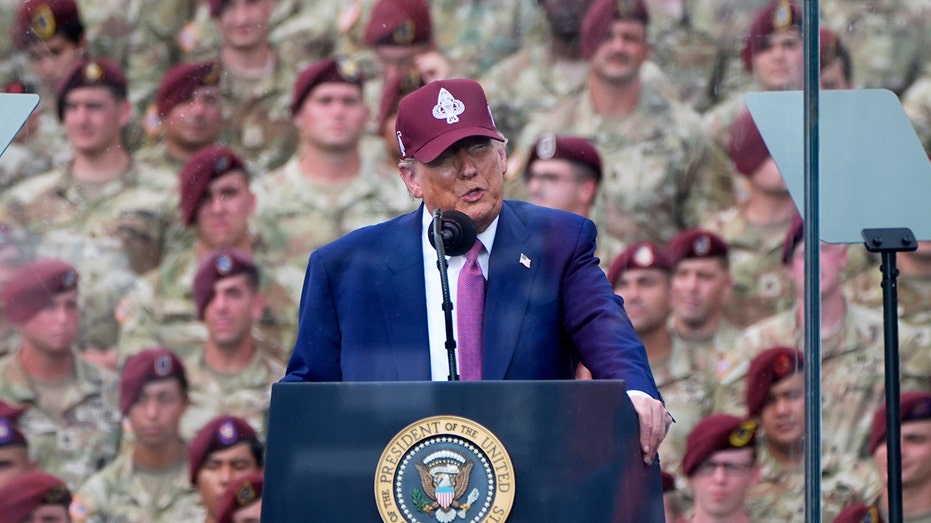
President Donald J. Trump announced Tuesday that his administration will restore the original names of several U.S. Army bases that were renamed during the Biden presidency, calling the previous changes unnecessary and politically driven. “For a little breaking news,” Trump said during a speech at Fort Bragg, “we are also going to be restoring the names to Fort Pickett, Fort Hood, Fort Gordon, Fort Rucker, Fort Polk, Fort A.P. Hill, and Fort Robert E. Lee.” TRUMP WARNS ANY POTENTIAL PROTESTORS AT HIS MILITARY PARADE WILL BE ‘MET WITH VERY BIG FORCE’ The crowd erupted in cheers and Trump continued: “We won a lot of battles out of those forts. It’s no time to change. And I’m superstitious. You know, I like to keep it going, right? I’m very superstitious. We want to keep it going.” The seven bases were renamed in 2023 under a Pentagon directive carried out by the Biden administration, following a 2021 law passed by Congress. TRUMP HONORS FALLEN AMERICAN HEROES, PRAISES GOD IN MEMORIAL DAY ADDRESS: ‘GREAT, GREAT WARRIORS’ The changes were recommended by the Naming Commission to remove honors for Confederate figures. Trump made no mention of Fort Bragg’s name change to Fort Liberty. “That’s a big story,” he said. “We just announced that today to you for the first time. They said, ‘Why didn’t you wait till Saturday?’ Said, ‘I can’t wait. I got to talk to my friends here today.’” CLICK HERE TO GET THE FOX NEWS APP A military parade is scheduled for Saturday, June 14 in Washington, D.C. The White House has confirmed the restoration of the Army base names to Fox News Digital.
Dem governor hopefuls vow to resist Trump as California chaos becomes NJ campaign issue
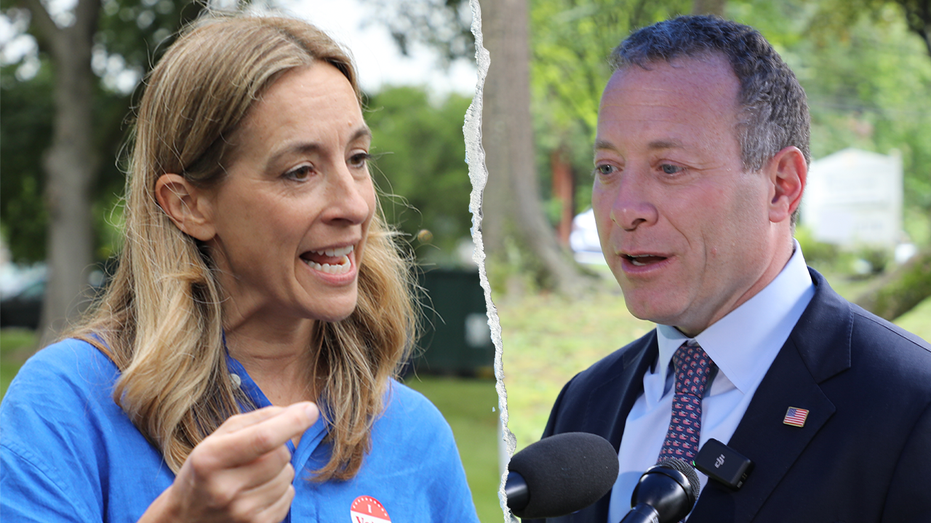
The chaos unfolding in California seeped onto the New Jersey campaign trail Tuesday as Democratic gubernatorial candidates pitched their plan to resist President Donald Trump. Tuesday is primary Election Day in the Garden State, and the race to replace Gov. Phil Murphy is on. Murphy, who is term-limited this year, is one of several Democratic governors leading blue-state resistance to Trump’s second term and his flurry of executive actions. Two candidates vying for an opportunity to fill Murphy’s shoes – Rep. Mikie Sherrill and Rep. Josh Gottheimer, both U.S. representatives from New Jersey – defended California Gov. Gavin Newsom’s response to the protests and riots impeding U.S. Immigration and Customs Enforcement (ICE) operations in Los Angeles. When asked how she would handle the ongoing situation in Los Angeles differently from Newsom, Sherrill touted her military and law enforcement background and told Fox News Digital she would stand up “strongly in favor of keeping people here in the state safe,” return safety to the streets and continue “speaking out against a president who is trying to create violence in the country.” DEMOCRATIC STRATEGIST WARNS HIS PARTY THAT LA RIOTS ARE PLAYING INTO TRUMP’S HANDS Sherrill is a U.S. Navy veteran and served in the U.S. Attorney’s Office in New Jersey as an outreach and re-entry coordinator, which she described as prosecuting federal cases and advising law enforcement on investigations. TRUMP TAKES ACTION AGAINST ‘ORCHESTRATED ATTACK’ ON LAW ENFORCEMENT BY DEPLOYING MARINES TO LA: ASSEMBLYMAN Trump said this weekend it would be a “great thing” if Newsom was arrested. After casting her ballot in Montclair on Tuesday morning, Sherrill called Trump’s comments “ridiculous.” “It should concern everyone,” Sherrill said. The Trump administration has ordered National Guardsmen and Marines to Los Angeles following days of escalating anti-ICE protests and riots. “Governor Newsom surged law enforcement in, and what Trump seems to be doing is trying to add fuel to the fire and really make the situation violent and bad,” Sherrill told reporters. “That’s completely unacceptable.” Also in the Garden State on Tuesday afternoon, Gottheimer said it was “outrageous” for Trump to send the National Guard to California without Newsom’s request. “The fact that the president, for the first time since 1965, sent troops in from the National Guard without a request from the governor is outrageous. It’s just more chaos that we’re used to having in this administration. It’s not how I would approach this,” Gottheimer told Fox News Digital after voting in Tenafly. The last time a sitting U.S. president used his federal authority to deploy the National Guard without the governor’s request was during the civil rights march from Selma to Montgomery in 1965. Gottheimer said his primary focus is on protecting New Jersey families, and that priority would guide his leadership through any situation if elected governor. Both candidates on Tuesday said they were best positioned to take on Trump. While Sherrill said she is the candidate willing to resist the status quo, Gottheimer pitched himself as the “tenacious” leader to actually beat the Republican nominee this fall. In addition to Sherrill and Gottheimer, Democratic gubernatorial candidates for New Jersey include Newark Mayor Ras Baraka, Jersey City Mayor Steve Fulop, New Jersey Education Association President Sean Spiller and former state Senate President Steve Sweeney. Baraka was arrested for trespassing at an ICE facility in Newark this year, another example of Trump’s immigration policies taking center stage in the New Jersey governor’s race. Last week, Baraka filed a lawsuit against Alina Habba, U.S. Attorney for the District of New Jersey, and Department of Homeland Security (DHS) Agent Ricky Patel “for false arrest, malicious prosecution, and defamation.” And Spiller said on X the situation in LA is “not normal” and vowed to stand up for New Jersey against Trump and his “tactics that are real threats” if elected governor. “From ICE tearing apart families to the President sending out the National Guard – over the objection of the Governor – and now apparently contemplating deploying Marines on our people – we have to stand up in solidarity and defend our democracy,” Spiller said. Fox News’ Kirill Clark contributed to this report.
Trump’s response to LA riots ‘endangers the very bedrock of our democracy,’ Schumer warns
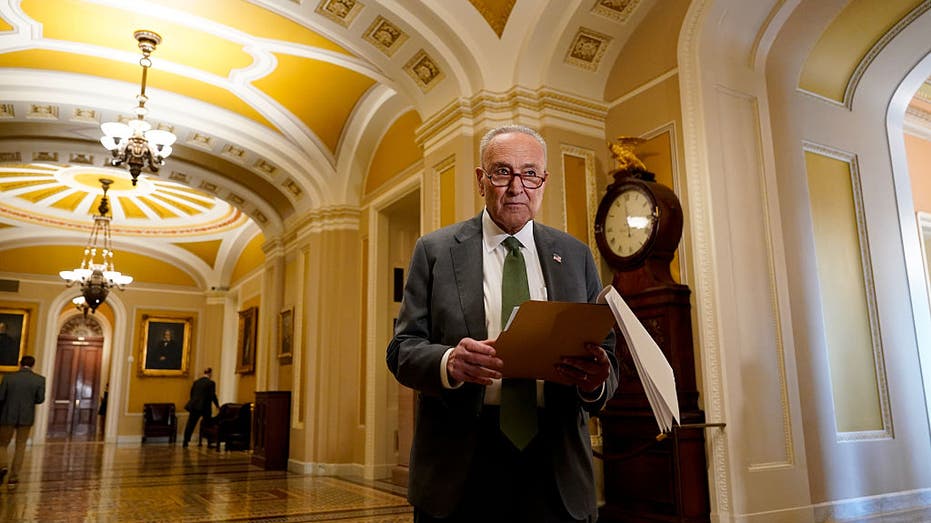
Senate Minority Leader Chuck Schumer tore into President Donald Trump for his administration’s response to the Los Angeles illegal immigration riots, warning that American democracy is at stake. Schumer, a New York Democrat, was asked about comments from Sen. John Fetterman, D-Pa., who had warned his party was “los[ing] the moral high ground” by refusing to condemn “setting cars on fire, destroying buildings, and assaulting law enforcement.” Without addressing the Pittsburgher directly, Schumer said violence being seen in the riots is “outrageous and should never happen – full stop.” “That’s the bottom line and anyone who permits violence or breaks the law should be fully prosecuted.” FETTERMAN CALLS OUT ANARCHY IN LA, NOTING DEMS ‘FOREFEIT THE MORAL HIGH GROUND’ BY FAILING TO DECRY VIOLENCE However, Schumer then pivoted to lambasting Trump’s decision to federalize the California National Guard and to allow Pentagon chief Pete Hegseth to activate Marines from Twentynine Palms, California. “Donald Trump bringing American troops and American Marines in against American citizens is not only dangerous. It is not only provocative, but it endangers the very bedrock of our democracy.” By contrast, Sen. Roger Wicker, R-Miss., chair of the Armed Services Committee, was asked a similar question moments earlier during a Republican press conference while addressing the military budget. MAXINE WATERS TAUNTS ARMED AGENTS AFTER FEDS SLAM DOOR IN HER FACE Wicker, speaking alongside Senate leadership about the Big Beautiful Bill, said that if a crisis like this hit his state, the outcome would be very different. “I would think the governor of Mississippi [would want] to have all the help he could get,” Wicker said. He credited Mayor Karen Bass for reportedly offering kind words in terms of her office’s interactions with U.S. military officers and officials. CLICK HERE TO GET THE FOX NEWS APP Wicker added Gov. Gavin Newsom may be making a “mistake there, politically.” “When a situation is fraught by extreme violence, it would seem the governor and the mayor would want all the help they can receive,” Wicker said. Newsom has defended his response to the rioting, including a dare for border czar Thomas Homan to prosecute him: “Tom, arrest me – let’s go,” he said on MSNBC. In response to Schumer, White House spokeswoman Abigail Jackson said: “violent rioters in Los Angeles, enabled by Democrat Gov. Gavin Newsom, have attacked American law enforcement, set cars on fire, and fueled lawless chaos.” “President Trump rightfully stepped in to protect federal law enforcement officers. When Democrat leaders refuse to protect American citizens, President Trump will always step in.”
Trump brings receipts he called Newsom amid LA riots as California gov claims there wasn’t ‘even a voicemail’
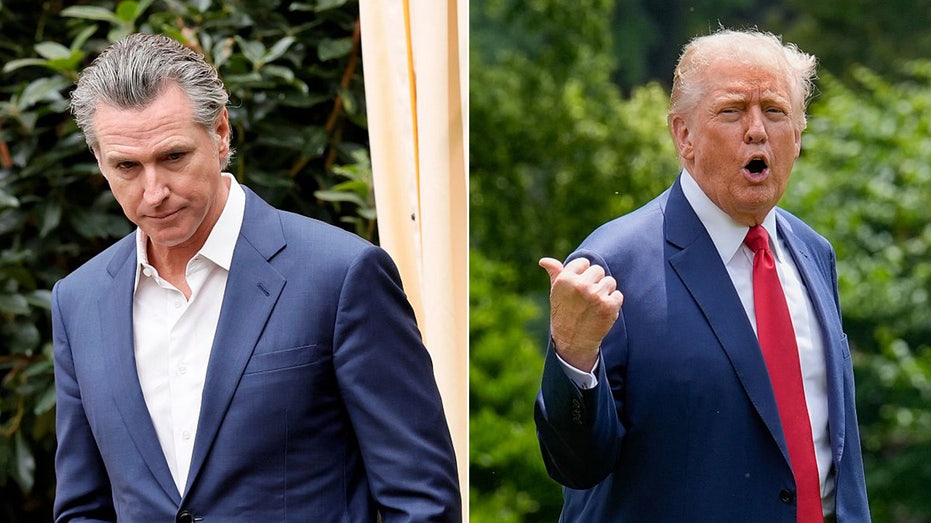
President Donald Trump hit back at Democrat Gov. Gavin Newsom’s claims that the president did not recently call him, telling Fox News he spoke to the governor for about 16 minutes on Saturday. Trump told Fox News Tuesday while traveling to Fort Bragg, North Carolina, that Newsom did not pick up his first call over the weekend, but that he picked up the second call and the pair spoke for about 16 minutes on Saturday. “I told him to, essentially, ‘get his ass in gear,’ and stop the riots, which were out of control,” Trump said Tuesday. “More than anything else, this shows what a liar he is – Said I never called.” Trump provided a screenshot of the phone call dated June 7 at 1:23 a.m. White House Director of Communications Steven Cheung added in comment to Fox Digital Tuesday afternoon: “The President called Gavin Newsom to tell him to get his ass in gear. The Governor has clearly decided to disgustingly side with the violent rioters instead of protecting Californians. The only liar here is Newsom who continues to fail his state as he prioritizes doing interviews with leftist media to gaslight the public instead of helping his state.” ‘DELUSIONAL’ HILLARY CLINTON SAVAGELY MOCKED FOR LA RIOTS RESPONSE: ‘ONLY LEFTISTS DISABLE COMMENTS’ Earlier Tuesday, Trump held an event addressing wildfire response and prevention from the Oval Office, where he fielded a handful of questions from the media regarding the ongoing anti-ICE riots in Los Angles, telling a reporter he spoke to Newsome “a day ago.” “A day ago. I called him up to tell him (he’s) got to do a better job. He’s done a bad job,” Trump said. In a response post on X, Newsom claimed Trump did not call him or leave a voicemail in the past day. “There was no call. Not even a voicemail. Americans should be alarmed that a President deploying Marines onto our streets doesn’t even know who he’s talking to,” Newsom posted to X Tuesday afternoon, accompanied by video of Trump in the Oval Office. Newsom spokesperson Izzy Gardon added in comment to the Sacramento Bee Tuesday: “I just personally looked through the governor’s phone. No missed call. No voicemail. Nothing. The last time they spoke was Friday when the governor called him.” WATCH: DEM, MEDIA OUTLETS INSIST LA ANTI-ICE RIOTS ARE ‘PEACEFUL’ DESPITE VIOLENCE, INJURED COPS Los Angeles descended into violent riots Friday when federal immigration officials converged on the city to carry out raids targeting illegal immigrants. Local leaders such as Los Angeles Mayor Karen Bass and Newsom, however, quickly denounced the raids in public statements while offering words of support for illegal immigrants in the state. Protests over the raids soon devolved into violence as rioters targeted federal law enforcement officials, including launching attacks at federal law enforcement officials. Trump announced Saturday that he was deploying 2,000 National Guard members to help quell the violence. While the Trump administration deployed hundreds of U.S. Marines to respond to anti-immigration chaos on Monday evening as the violence continued. “If I didn’t ‘SEND IN THE TROOPS’ to Los Angeles the last three nights, that once beautiful and great City would be burning to the ground right now,” Trump posted to Truth Social on Tuesday morning.
Dems join clergy to pray for ‘moral reckoning’ to fix Big, Beautiful Bill: ‘I still know how to agitate’
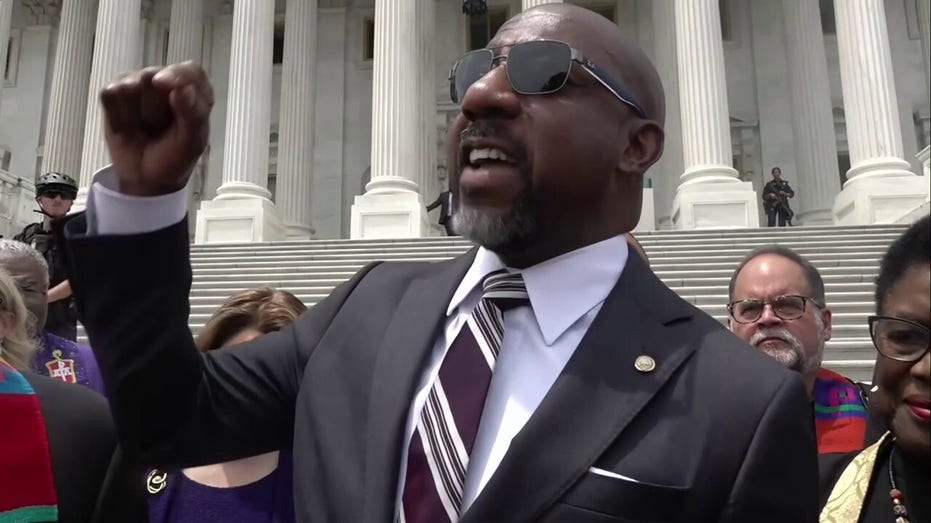
Several Democratic senators, including one who remains the preacher at Martin Luther King Jr.’s church, joined several clergy members for a vigil in opposition to the One Big Beautiful Bill Act on the Capitol steps Tuesday. “Clergy and leaders in robes, collars and religious vestments will offer prayers, sing songs, read scripture and testify to the Gospel, providing a moral reckoning at this critical moment in history,” read an advisory announcing the vigil obtained by Fox News Digital. Rev. Jim Wallis, who advised the Obama administration on faith and neighborhood partnerships, told the crowd they “come today in spiritual procession – singing, reading Scripture and coming for a vigil on the Senate steps.” “Some say that we should keep faith out of politics – we’re saying while the Bible doesn’t give us detailed legislation, it tells us who to care for,” Wallis went on. “We don’t want to let Jesus Christ be left outside the Senate chamber for this vote.” WARNOCK DODGES QUESTION FROM NBC HOST ON WHETHER BIDEN SHOULD HAVE DROPPED OUT EARLIER Wallis called Republicans’ budget a “big bad bill” that will purportedly “take 60 million [people] off of health care.” Sen. Chris Coons, D-Del., cited Luke 10, recalling the passage where a lawyer – “and it’s always a lawyer causing trouble,” he quipped – asks Jesus who qualifies as a neighbor and who one ought to care for. Coons claimed the GOP bill “literally takes the food from the mouths of hungry children to pass an enormous tax cut for the very wealthiest [and] is the definition of an immoral bill before this Congress.” MIKE JOHNSON, DONALD TRUMP GET BIG BEAUTIFUL WIN AS BUDGET PASSES HOUSE Later, Sen. Raphael Warnock, D-Ga. – reverend of Ebenezer Baptist Church in Atlanta – said the vigil felt like “déjà vu.” Warnock recounted protesting via prayer and singing in the Capitol rotunda in 2017 – alongside former North Carolina NAACP president William Barber II – and said he “drew the short straw” when he, but not Barber, was arrested. “As I stood there, I said then what I want to say today: That a budget is not just a fiscal document, it’s a moral document.” “Show me your budget and I’ll show you who you think matters and who does not – who you think is dispensable. Right. And we stood there in 2017 making the same point,” he said, crediting the Capitol Police for arresting them in a professional manner. Warnock recounted that when he was warned of being arrested, he said he had “already been arrested.” CLICK HERE TO GET THE FOX NEWS APP “My mind and my imagination and my heart had been arrested by the heartbeat of children who should not lose their food and who should not lose healthcare in order to give wealthy people a tax cut,” he said, suggesting the same was true with Republicans’ latest budget bill. “Here I am eight years later, having transformed my agitation into legislation.” “I’m here today because I still know how to agitate – I still know how to protest. I’m not a senator who used to be a pastor. I’m a pastor in the Senate.”
Trump says nationwide immigration raids on the way, rioters to face ‘greater force’ than LA
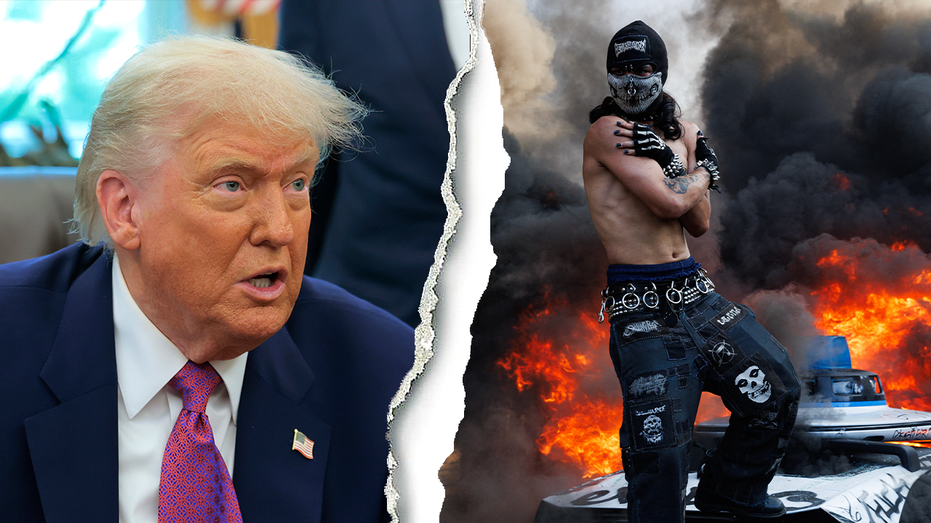
President Donald Trump said Americans can expect additional immigration raids across the country similar to the ones in California, while warning that any potential riots that break out in response to the raids will be met with “equal or greater force” compared to the government’s handling of recent Los Angeles violence. “Mr. President, these protests obviously started in reaction to these large-scale ICE operations in Los Angeles. Should people expect to see similar operations in the rest of the country and with similar protests, similar responses?” a reporter asked the president from the Oval Office early Tuesday afternoon. “Yeah, as you know, we’re moving murderers out of our country that were put here by Biden or the autopen,” Trump responded, referring to the Biden administration’s use of an autopen to sign official documents that Trump has argued indicated Biden staffers were in charge of high-profile decisions and not former President Joe Biden. “The people are criminals that allowed these criminals into our country,” Trump continued. “And I don’t think that Biden knew what the hell he was doing. I don’t think he even knew about it. But when they opened up our borders for the whole world to come in, yeah, we’re going to get them out. We’re getting them out.” ‘DELUSIONAL’ HILLARY CLINTON SAVAGELY MOCKED FOR LA RIOTS RESPONSE: ‘ONLY LEFTISTS DISABLE COMMENTS’ The president was addressing efforts by federal agencies to address wildfire management and prevention as the nation heads into the summer months, and he took a bevvy of questions from reporters regarding the riots that have spiraled in Los Angeles since Friday. WATCH: DEM, MEDIA OUTLETS INSIST LA ANTI-ICE RIOTS ARE ‘PEACEFUL’ DESPITE VIOLENCE, INJURED COPS Riots broke out in the left-wing city Friday evening after federal law enforcement officials converged on Los Angeles to carry out immigration raids as part of Trump’s vow to deport illegal aliens who flooded the nation under the Biden administration. Local leaders such as Los Angeles Mayor Karen Bass and Gov. Gavin Newsom, however, quickly denounced the raids in public statements while offering words of support for illegal aliens in the state. Protests over the raids soon devolved into violence as rioters targeted federal law enforcement officials, including throwing rocks, with videos showing people looting stores, setting cars on fire and taking over a freeway. MUSK DOES IMMEDIATE 180 ON TRUMP AS SOON AS LA RIOTS RAGE Trump announced Saturday that he was deploying 2,000 National Guard members to help quell the violence, bypassing the governor, who typically activates the National Guard. The move sparked Newsom to file a lawsuit against the Trump administration for efforts to allegedly “federalize the California National Guard,” while Democrats across the nation have attempted to pin blame for the violence on Trump’s activation of the National Guard while characterizing the anti-ICE riots as “peaceful” demonstrations. Trump continued Tuesday that if riots break out in other areas of the country in response to immigration raids, violent protesters will be met with “equal or greater force” than those participating in the L.A. riots. “If we didn’t attack this one very strongly, you’d have them all over the country,” he said. “But I can inform the rest of the country that when they do it, if they do it, they’re going to be met with equal or greater force than we met right here.” Illegal immigrants in the U.S. “come from jails, and they come from mental institutions, and they come from all over the world, not just South America,” Trump added. “And we’re not going to let them stay.” As the riots continued on Monday, the Trump administration deployed hundreds of Marines to respond to the chaos. NEWSOM’S POLITICAL FUTURE ‘PRACTICALLY NONEXISTENT’ AS LA DEVOLVES INTO RIOTS, SOCIAL MEDIA CRITICS PREDICT “Approximately 700 Marines with 2nd Battalion, 7th Marines, 1st Marine Division will seamlessly integrate with the Title 10 forces under Task Force 51 who are protecting federal personnel and federal property in the greater Los Angeles area,” U.S. Northern Command said in a Monday statement. Trump defended in a Truth Social post early Tuesday morning that if he “didn’t ‘SEND IN THE TROOPS’ to Los Angeles the last three nights, that once beautiful and great City would be burning to the ground right now.” “Much like 25,000 houses burned to the ground in L.A. do to an incompetent Governor and Mayor — Incidentally, the much more difficult, time consuming, and stringent FEDERAL PERMITTING PROCESS is virtually complete on these houses, while the easy and simple City and State Permits are disastrously bungled up and WAY BEHIND SCHEDULE! They are a total mess, and will be for a long time. People want to rebuild their houses. Call your incompetent Governor and Mayor, the Federal permitting is DONE!!!” Trump continued, referring to the thousands of homes that burned in southern California wildfires that gripped the Los Angeles area in January. The Trump administration’s immigration raids and deportation efforts are part of the president’s campaign pledge to remove the millions of illegal immigrants that flooded the nation under the Biden administration.