

Trump to call Putin in a bid to end Russia’s ‘bloodbath’ war with Ukraine

President Donald Trump is set to call Russian President Vladimir Putin in an effort to end the “bloodbath” war with Ukraine after peace talks resulted in a prisoner swap over the weekend. The call is expected at 10 a.m. EST. Trump said he would speak with Ukrainian President Volodymyr Zelenskyy and members of NATO shortly after. “The subjects of the call will be, stopping the ‘bloodbath’ that is killing, on average, more than 5,000 Russian and Ukrainian soldiers a week, and trade,” Trump said in a post on Truth Social. “Hopefully it will be a productive day, a ceasefire will take place, and this very violent war, a war that should have never happened, will end,” Trump added. “God bless us all!!!” RUSSIA BOMBARDS UKRAINE WITH DRONES HOURS AFTER TRUMP ANNOUNCES TALKS WITH PUTIN Just hours ahead of the call, Russia launched its largest drone attack on Ukraine yet, firing 273 exploding drones and decoys targeting the Kyiv, Dnipropetrovsk and Donetsk regions, according to Ukraine’s air force. Of those, 88 were intercepted and 128 lost, likely being electronically jammed. Russia’s defense ministry said Monday it had downed 35 Ukrainian drones overnight. Vice President JD Vance and Secretary of State Marco Rubio also met with Zelenskyy in Rome on Sunday for ongoing peace talks. On Friday, Russian and Ukrainian officials took part in direct talks in Turkey for the first time since the early days of the war. Initially, there was hope that Zelenskyy and Putin would sit down with each other. The Ukrainian leader said he would attend if Putin showed up. However, after the Kremlin announced they would be sending an envoy, Zelenskyy appointed his defense minister to lead the delegation. RUBIO TEASES DETAILS OF POTENTIAL TRUMP, PUTIN IN-PERSON MEETING AFTER RUSSIA-UKRAINE CEASEFIRE TALKS STALL The two sides each agreed to release around 1,000 prisoners of war “in the coming days,” though they failed to reach agreement on peace. Zelenskyy attributed the lack of a breakthrough to Putin sending low-level officials to the talks. “Everyone could see that the Russian delegation in Istanbul was of a very low level. None of them were people who actually make decisions in Russia. Still, I sent our team,” Zelenskyy wrote in an X post on Friday. Putin said Sunday any peace deal would need to “eliminate the causes that triggered this crisis” and “guarantee Russia’s security.” Trump, meanwhile, suggested peace would not be brokered without him. “Nothing’s going to happen until Putin and I get together,” Trump told reporters on Thursday. Ukraine has called for a 30-day, unconditional ceasefire. Putin, however, has suggested that Ukraine might use the time to rearm and mobilize.
Blue state political battle intensifies after Dem mayor’s arrest at ICE facility: ‘Outraged’

Political tensions remain high in New Jersey following the Delaney Hall clash between protesters and Immigration and Customs Enforcement (ICE) officials earlier this month, which led to the arrest of Newark Mayor Ras Baraka on a trespassing charge weeks ahead of a competitive Democratic gubernatorial primary he is in. Protesters outside the federal courtroom in Newark, rallying in support of Baraka, said the issue spans much bigger than just the Delaney Hall incident. “The rest of the country should know that we should stand up against fascism,” rapper and activist Mysonne, who is a co-founder of Until Freedom, told Fox News Digital outside the courthouse on Thursday. BLUE STATE GOP LEADER REVEALS WHO IS BENEFITING AFTER DEMS CLASH WITH ICE The incident came under federal investigation by interim United States Attorney for the District of New Jersey Alina Habba, and three members of congress are also facing both scrutiny and praise for their role. Baraka said on Thursday, following his status conference, that he was targeted. “I was the only person arrested. That’s right. You know, I was the only person identified. I was the only person, you know, they put in a cell,” he said. TOP DEM GUBERNATORIAL CANDIDATE ARRESTED FOR TRESPASSING AT ICE DETENTION CENTER Delaney Hall is an ICE detention facility privately operated by the GEO Group. The city of Newark has argued that GEO Group does not have a valid certificate of occupancy, whereas the group has said it is valid and that they are following city laws. “Anybody who cares about government accountability or free speech or the rights of Congress members and mayors to know what’s going on in their communities should be outraged by what happened to Mayor Baraka,” Amol Sinha, executive director of the American Civil Liberties Union of New Jersey, said. However, Republicans in the state have had a critical view of what went down, especially since stopping illegal immigration continues to be a top priority of the Trump administration. President Donald Trump won nearly 46% of the vote in the Garden State in 2024, coming just short of flipping what is typically considered a blue state. ‘BOGUS CLAIMS’: BLUE CITY MAYOR UNDER FIRE FOR TRYING TO HALT REOPENING OF ICE FACILITY “Shame on the Democrats, particularly the mayor of Newark,” Trump-endorsed Republican Jack Ciattarelli told Fox News Digital. He said issues the city faces, ranging from the airport, crime, to education, are things that need to be a larger focus for the mayor. “He’s showing up to a detention center where we’re detaining illegals who’ve committed crimes. I don’t understand what it is exactly we’re protesting,” he said. “When the border is as porous as it was under the Joe Biden administration, we’re all border states. And so we should not be encouraging illegal immigration with sanctuary cities or us being a sanctuary state,” he continued. A spokesperson for Baraka’s campaign fired back at Ciattarelli’s comments, telling Fox News Digital that he does not “recognize the Newark Jack Ciattarelli is talking about.” “The high school graduation rate is 86%. Their top-performing schools rival those in Millburn or Summit,” Kabir Moss, Baraka’s spokesperson, said. “When Baraka became Mayor, there were over 100 homicides a year – today, that number is 37. Violent crime is at its lowest point since John F. Kennedy was President – around the same time Jack’s family was being subsidized to leave cities and build the suburbs.” “The mayor was not trespassing, he was let in by the GEO Group,” he continued. “He didn’t go there to get arrested, he went to join a press conference with the congress members. But if Jack Ciattarelli can’t recognize the Constitutional crisis we’re in – where due process is being denied on American soil – then he’s not fit to be Governor.” The gubernatorial race to replace outgoing Democratic Gov. Phil Murphy is expected to be highly competitive in the November general election, as Cook Political Report ranks the race as “Lean Democratic.” The primary election is June 10.
Trump’s ‘big, beautiful bill’ wins support from police for overtime tax elimination

FIRST ON FOX: Police officers are rallying behind a provision in President Donald Trump‘s “big, beautiful bill” to end taxing overtime work, which they say would have a favorable ripple effect on officer retention and morale. “No tax on overtime, it would be a huge advantage to law enforcement across the country,” one officer said in a White House video shared with Fox News Digital. Another added, “We work sometimes 100 plus hours a pay period. It’s a lot of time taken away from the family. So that would be pretty special.” Republican lawmakers are in the midst of hashing out the details of the sweeping legislation that would fund Trump’s agenda through the budget reconciliation process. The legislation jumped its latest hurdle to move along to passage late Sunday evening, when lawmakers on the House Budget Committee voted to advance the bill. Trump has called on Republicans to swiftly pass the legislation, touting that it will lower taxes and provide larger paychecks for Americans, while also securing the border. Trump specifically directed congressional Republicans to permanently extend his 2017 Tax Cuts and Jobs Act and implement new policies eliminating taxes on tips, overtime pay and retirees’ Social Security. ‘FAILURE’S NOT AN OPTION’: TRUMP BUDGET BILL WILL BE ‘BIG’ HELP FOR SENIORS, TOP HOUSE TAX-WRITER SAYS Officers in the White House video touted that eliminating taxes on overtime would serve as an extra dose of “appreciation” to law enforcement. Police departments nationwide saw morale and staffing crater in 2020 and the following years as left-wing cities answered calls from activists to defund the police following the death of George Floyd while in police custody on Memorial Day 2020. Many liberal cities soon walked back budget plans slashing police department funding as crime waves washed over the nation, stretching from sky-high murder rates to teenagers repeatedly carrying out carjackings. WH STUDY WARNS 9 MILLION AMERICANS COULD LOSE HEALTH INSURANCE IN ‘MAJOR’ RECESSION IF TRUMP BUDGET BILL FAILS “If there was no tax on overtime … we’d be working about as hard as we currently do, but we would have that appreciation that goes along with it,” one officer in the video said. VANCE SEARS US LEADERS TURNING POLICE INTO ‘ENEMIES’ ‘ENOUGH IS ENOUGH’: GOP SENATOR UNLEASHES BILL WITH SEVERE CONSEQUENCES FOR HARMING POLICE The police officers continued that removing taxation on overtime would likely lead to senior officers sticking around in the job longer to help train the next generation of law enforcement, while also giving younger officers extra cash in their pockets to raise their young families on an officer’s salary. “To have something like this in play would just help senior officers, perhaps stay a little bit longer to help be that guidance for that department, that community, to help teach those policy and procedures that we know of and to help with the retention,” one police officer said. POLICE GROUP SLAMS GOFUNDME FOR OHIO FATHER ACCUSED OF KILLING DEPUTY LARRY HENDERSON A female officer added, “That would really benefit those, especially younger cops that have younger kids and a lot of families. I think that would mean a tremendous amount.” May is Law Enforcement Appreciation month, with a mid-May National Police Week celebration and the White House illuminating its exterior in blue colors Thursday evening in honor of police officers who were killed or injured while in the line of duty. “So know from the president on down, this administration stands behind you guys,” Vice President JD Vance said during a law enforcement breakfast Wednesday at the vice president’s residence. “We love you guys. We know that you’re out there doing a good job for us. And I think that moral leadership matters just as much as the public policy. But from this administration, you’re, of course, getting it both.” Fox News Digital’s Elizabeth Elkind and Diana Stancy contributed to this report.
Republicans demand probe into DOD’s taxpayer-funded charges at casinos, bars and nightclubs
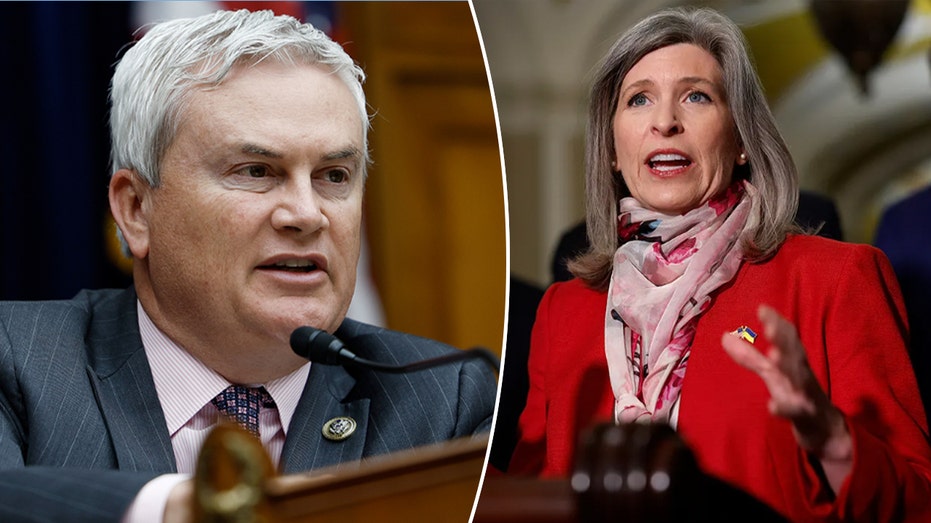
FIRST ON FOX: House Oversight Chairman James Comer, R-Ky., and Sen. Joni Ernst, R-Iowa., are demanding sweeping reforms to the federal government’s use of charge cards after thousands of highly questionable charges were uncovered at the Department of Defense, including at casinos, bars and nightclubs using taxpayer dollars. In a letter addressed to Comptroller General Gene Dodaro, Ernst and Comer called on the Government Accountability Office (GAO) to launch a comprehensive review of all federal charge card programs. The demand follows alarming findings from recent audits that point to systemic failures in oversight, including the issuance of nearly two charge cards per federal employee and more than $40 billion in spending last fiscal year alone. The Pentagon’s inspector general found nearly 8,000 Defense Department credit card transactions at “high-risk locations” – including casino ATMs – over the past year. An additional 3,246 transactions occurred at bars and nightclubs, many of them on federal holidays, Super Bowl Sunday, St. Patrick’s Day, the day of UFC 300, Cinco de Mayo and New Year’s Eve. DOGE AND AGENCIES CANCEL 200,000 FEDERAL GOVERNMENT CREDIT CARDS “It is indefensible for Department of Defense bureaucrats to waste tax dollars at clubs, casinos, and bars, racking up charges on Super Bowl Sunday, St. Patrick’s Day, Cinco de Mayo, and federal holidays,” said Ernst. The DOD is not alone. Recent GAO reports have found agencies consistently fail to use tools to analyze purchase card data and prevent fraud, the letter notes. “With Washington $36 trillion in debt, the last thing we need is bureaucrats maxing out their tab and sticking taxpayers with the bill. There should never be more credit cards than federal employees, and I’m working to create accountability government-wide.” $1,300 COFFEE CUPS, 8,000% OVERPAY FOR SOAP DISPENSERS SHOW WASTE AS DOGE LOCKS IN ON PENTAGON The letter also highlighted the illegal practice of “split purchases,” where government employees intentionally divide large transactions to stay under the $3,500 micro-purchase threshold – the largest purchase that can be put on a federal charge card. Despite being a clear violation of federal regulations, these practices reportedly continue due to inadequate monitoring and enforcement. Ernst and Comer’s request urges the GAO to investigate criteria for issuing cards, agency compliance with internal controls, the frequency of risky transactions – including at marijuana dispensaries, dating services, and gambling platforms – and whether agencies are appropriately closing accounts after employees leave government service. In a particularly damning detail, the lawmakers noted that no local purchase card program officials at the DOD could provide examples of analyzing card spending to reduce costs, despite long-standing recommendations from the Office of Management and Budget to do so. “I’m working to create accountability government-wide. It’s time to cut up the plastic and put a stop to the reckless spending,” said Ernst. The GAO review, if initiated, could affect hundreds of federal agencies covered under the Chief Financial Officers Act and could lead to a sweeping overhaul of how federal employees use government-issued charge cards. “American taxpayers shouldn’t be stuck paying for federal bureaucrats’ splurges on government-issued credit cards. Tax dollars are meant to fund essential government services, not dating apps, nightclubs, or bar tabs,” Comer said in a statement.
A user’s manual to where we stand with the ‘big, beautiful bill’
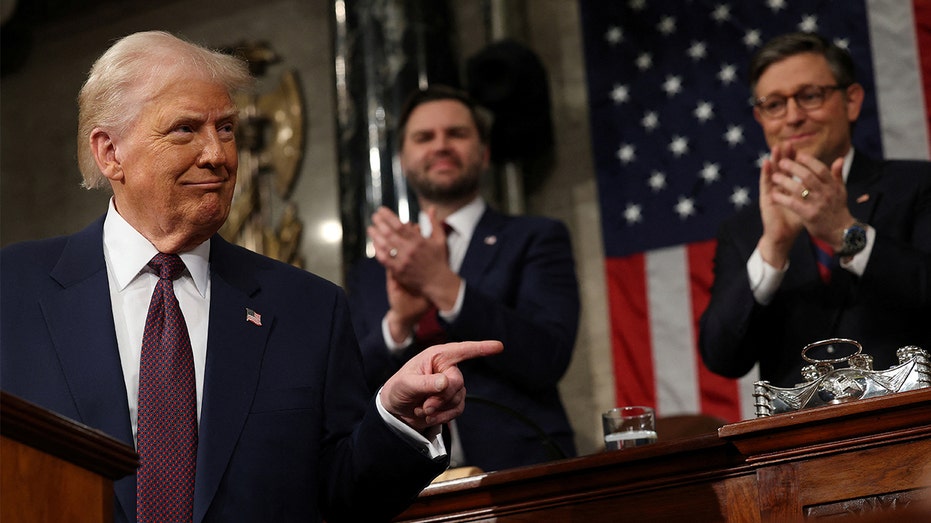
House Republicans cleared a major hurdle late last night, finally advancing the “big, beautiful bill” out of the Budget Committee after a hiccup Friday afternoon. The bill is now set to go before the House Rules Committee – which is the gateway to the floor – on Wednesday. The House could vote on the overall package on Thursday. The goal is to have this wrapped up by Memorial Day. TRUMP’S ‘BIG, BEAUTIFUL BILL’ PASSES KEY HOYSE HURDLE AFTER GOP REBEL MUTINY It’s about the math. House Republicans have little turning radius to approve the bill due to their narrow majority. Questions still remain among some conservatives about green energy tax credits, work requirements for Medicaid and a deduction for SALT – an acronym for “state and local taxes.” That means there will be a lot of massaging of the bill over the next few days. Expect some changes via a “manager’s amendment” before the Rules Committee on Wednesday. JOE BIDEN DIGNOSED WITH ‘AGGRESSIVE FORM’ OF PROSTATE CANCER WITH METASTASIS TO THE BONE Some Republicans will need verbal or handshake assurances on other provisions from the White House and GOP leadership before voting “yes.”
Biden speaks out for first time since cancer diagnosis

Former President Joe Biden is commenting publicly for the first time Monday after it was announced he was diagnosed with an “aggressive form” of prostate cancer. “Cancer touches us all. Like so many of you, Jill and I have learned that we are strongest in the broken places. Thank you for lifting us up with love and support,” Biden wrote on X. Biden’s team revealed Sunday that the former president “was seen for a new finding of a prostate nodule after experiencing increasing urinary symptoms.” “On Friday, he was diagnosed with prostate cancer, characterized by a Gleason score of 9 (Grade Group 5) with metastasis to the bone,” it said in a statement. OBAMA REACTS TO BIDEN CANCER DIAGNOSIS “While this represents a more aggressive form of the disease, the cancer appears to be hormone-sensitive which allows for effective management. The President and his family are reviewing treatment options with his physicians,” the statement added. Former Presidents Barack Obama and Bill Clinton, and President Donald Trump have since commented on Biden’s cancer diagnosis. “Michelle and I are thinking of the entire Biden family. Nobody has done more to find breakthrough treatments for cancer in all its forms than Joe, and I am certain he will fight this challenge with his trademark resolve and grace. We pray for a fast and full recovery,” Obama noted in posts on social media. BIDEN BATTLING ‘MOST AGGRESSIVE TYPE’ OF PROSTATE CANCER WITH BONE METASTASIS, MEDICAL EXPERT SAYS Trump said, “Melania and I are saddened to hear about Joe Biden’s recent medical diagnosis.” “We extend our warmest and best wishes to Jill and the family, and we wish Joe a fast and successful recovery,” he added in a post on Truth Social. Clinton said, “My friend Joe Biden’s always been a fighter,” and “Hillary and I are rooting for him and are keeping him, Jill, and the entire family in our thoughts.” Fox News’ Stepheny Price, Peter Doocy and Alex Nitzberg contributed to this report.
Is America’s power grid ready for next attack? Experts warn EMPs, cyber threats and AI could cripple US

The widespread blackouts that recently brought parts of Spain and Portugal to a standstill triggered global speculation: was it an electromagnetic pulse (EMP) attack? Though authorities later ruled out an EMP, the incident reignited urgent questions about America’s vulnerability to similar large-scale disruptions and whether the U.S. is prepared for a modern-day “black sky” event. According to cybersecurity expert and former Army Cyber Institute board member Bryson Bort, the United States remains dangerously exposed to a range of threats: not just EMPs, but increasingly sophisticated cyber and artificial intelligence (AI) attacks. “There are a lot of other problems that are higher probability,” Bort told Fox News Digital. “The EMP thing is a little bit of a distraction – but that doesn’t mean it’s not a threat.” HOW CHINA’S CYBERESPIONAGE HAS CHANGED An EMP is a sudden burst of electromagnetic energy capable of disabling electronic devices across vast areas. It can be natural – from a solar flare – or man-made, triggered by a high-altitude nuclear detonation. Unlike cyberattacks that target software, an EMP disables physical systems: from car engines and cellphone towers to hospital generators and water pumps. A major attack could throw society back to the pre-electric age, with devastating consequences. Former CIA Director James Woolsey once called EMPs “one of the greatest national vulnerabilities,” and some estimates suggest an EMP could result in the deaths of up to 90% of Americans within a year due to the collapse of infrastructure. “The very first thing you’ve got to lose is your water supply,” said Dr. William Forstchen, a longtime EMP researcher. “Within days, nursing homes, hospitals, law enforcement – they’re all in deep trouble.” While the Trump administration issued an executive order directing federal agencies to prepare for such an event, Bort said implementation has been inconsistent and fragmented. “We are not prepared for this at all,” he warned. Forstchen expressed optimism that the administration’s “Golden Dome” project, a proposed ground-and space-based defense system, could intercept EMP threats – but the project remains years from completion. NUCLEAR EMP ATTACK MOVES TO BIG SCREEN AS AUTHOR REFLECTS ON ‘INVISIBLE LIFELINE’ While EMP attacks remain the stuff of both national security nightmares and Hollywood scripts, experts say cyberattacks are far more probable and still highly destructive. “We know that the Chinese have been in the American civilian critical infrastructure since 2010,” Bort said. “They haven’t done anything yet, but they are absolutely in there and setting up to do something at some point.” This week, Reuters reported that U.S. officials found communication modules embedded in Chinese-made power inverters – devices used to connect solar panels and wind turbines to the grid. Bort pointed to “Jack Voltaic,” a multi-year cyber warfare simulation by the Army Cyber Institute, designed to test military-civilian coordination in response to attacks on critical infrastructure. “What we found is there’s a great interdependence,” he said. “You can’t even have an electric grid if you don’t have water – because you can’t cool it.” Bort said cyberattacks are often the product of long-term reconnaissance, with hackers quietly positioning themselves inside systems for months or years. “A cyberattack is not something where Putin says, ‘Hey, hit Detroit tomorrow,’” he explained. “It’s already set in place. When the political situation calls for it, that’s when the trigger gets pulled.” Another, less understood, threat to America’s infrastructure is the rise of AI. In particular, the race toward artificial general intelligence (AGI), or AI systems with human-level cognitive abilities. Tyler Saltzman, a military technologist working on AI systems capable of operating in disconnected environments like an EMP aftermath, warned that AI – if used maliciously – could bring the grid down entirely. “Our infrastructure is very fragile,” Saltzman said. “All you need to do is take down our power grid, and we’re in complete chaos.” Saltzman expressed deep concern about efforts to create AGI – systems he says could eventually surpass human control. “Once AGI comes online, it could easily take down our power grid, infiltrate our financial systems, destroy our economy,” he said. “If it sees how violent humans are to each other, why would it serve us?” In 2023, a Chinese surveillance balloon drifted over U.S. territory for days before it was shot down by the military. While believed to be for spying, defense officials note that a high-altitude balloon could be used for electronic warfare – including an EMP. The Commission to Assess the Threat to the United States from EMP Attacks has long warned about balloon-based delivery. Others argue a missile would be more effective, since it would be harder to intercept. Whether the next major threat comes from above or from a keyboard, experts agree: the U.S. is not ready. “We’re still thinking about wars with tanks,” Bort said. “Meanwhile, the real fight is already happening inside our infrastructure.”
Coast Guard rejects Schumer’s claim that DOGE contributed to fatal Brooklyn Bridge crash
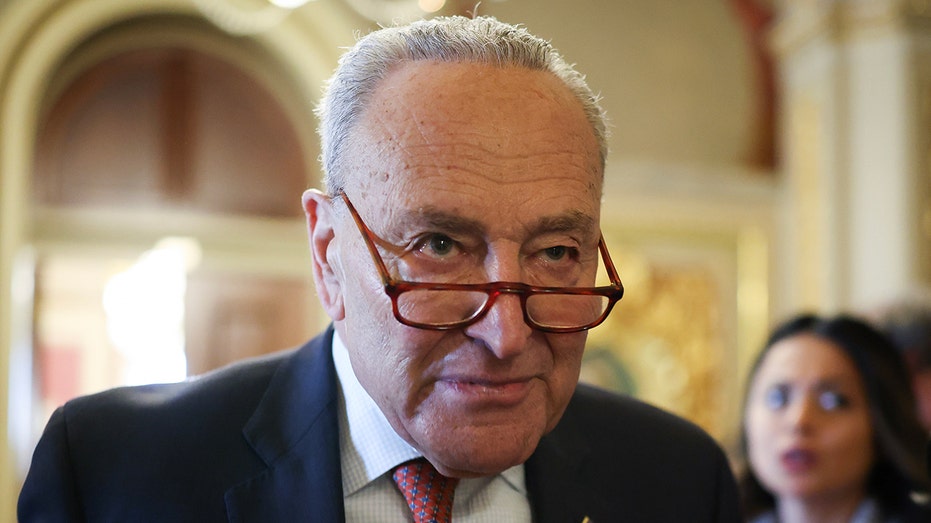
Senate Minority Leader Chuck Schumer suggested that the Department of Government Efficiency may be at least partly responsible for a Mexican navy tall ship crashing into the Brooklyn Bridge on Saturday night. Schumer made the claim in a press release on Sunday, saying he had been briefed on the details of the deadly crash, which left two people dead and over a dozen more injured. Schumer argued that a U.S. Coast Guard system may have been operating at partial capacity due to a DOGE hiring freeze at the Department of Homeland Security, but the Coast Guard itself says the system was “fully functional during the incident.” “We know that the Trump administration has been meddling in U.S. Coast Guard operations, from staffing to command and comms, and I have the general sense of a DOGE dysfunction in parts of the Coast Guard, to put it mildly,” Schumer wrote in a statement. “After being fully briefed on last night’s Brooklyn Bridge accident, one thing is very clear. There are many more questions than answers as to how the accident occurred and whether it could have been prevented.” Schumer went on to point to the DOGE-implemented hiring freeze at the U.S. Coast Guard, arguing it could have impeded the Coast Guard’s Vehicle Traffic System (VTS), which works in a similar fashion to the air traffic control system. CREW ON MEXICAN NAVY TALL SHIP SEEN CLINGING TO RIGGING AFTER COLLISION WITH BROOKLYN BRIDGE, VIDEO SHOWS “There are indications that this service called the VTS may not have been fully or adequately functional in light of that hiring freeze. We don’t know the answer to that question. We need answers. If this were the case, Brooklyn Bridge accident could be a national harbinger, demanding immediate attention,” Schumer said. “The current hiring freeze at the Department of Homeland Security, DHS, which the Coast Guard is part of, may have limited the ability of the Coast Guard to fully staff up at the VTS, the vehicle traffic service, the shore-wide system that provides quote air traffic control for the seas, especially in congested areas and restricted waters like New York Harbor,” he added. The Coast Guard rejected Schumer’s claim in a statement of its own. Furthermore, there were no other ships involved in Saturday’s crash that would have involved the VTS. AT LEAST 2 DEAD AFTER MEXICAN NAVY SAILING SHIP COLLIDES WITH BROOKLYN BRIDGE IN DRAMATIC NYC CRASH The Coast Guard said VTS was “fully functional during the incident and operating in accordance with established procedures to manage commercial traffic and facilitate safe navigation,” according to CBS News. “Our response included launching a crew from Station New York, establishing a temporary safety zone, and coordinating with NYPD, FDNY, and NYC DOT,” they added. The Coast Guard did not immediately respond to a request for comment from Fox News Digital. The National Transportation Safety Board (NTSB) announced Sunday it was launching a “go-team” to the Brooklyn Bridge the crash. New York City Mayor Eric Adams, said the Mexican navy tall ship Cuauhtémoc “lost power and crashed into the Brooklyn Bridge.” “At this time, of the 277 on board, 19 sustained injuries, 2 of which remain in critical condition, and 2 more have sadly passed away from their injuries,” the mayor wrote on X. Mexican President Claudia Sheinbaum said she regretted the passing of two crew members who “lost their lives in the unfortunate accident at the port of New York.” CLICK HERE TO GET THE FOX NEWS APP “Our solidarity and support go out to their families,” she wrote at 1:15 a.m. on X. “The Secretariat of the Navy, with the support of local authorities, is attending to the injured. The Ambassador of Mexico to the United States and staff from the Consulate General of Mexico in New York are assisting the Secretariat of the Navy.” Fox News’ Danielle Wallace and Greg Wehner contributed to this report
Obama reacts to Biden diagnosis: ‘Nobody has done more to find breakthrough treatments for cancer…than Joe’
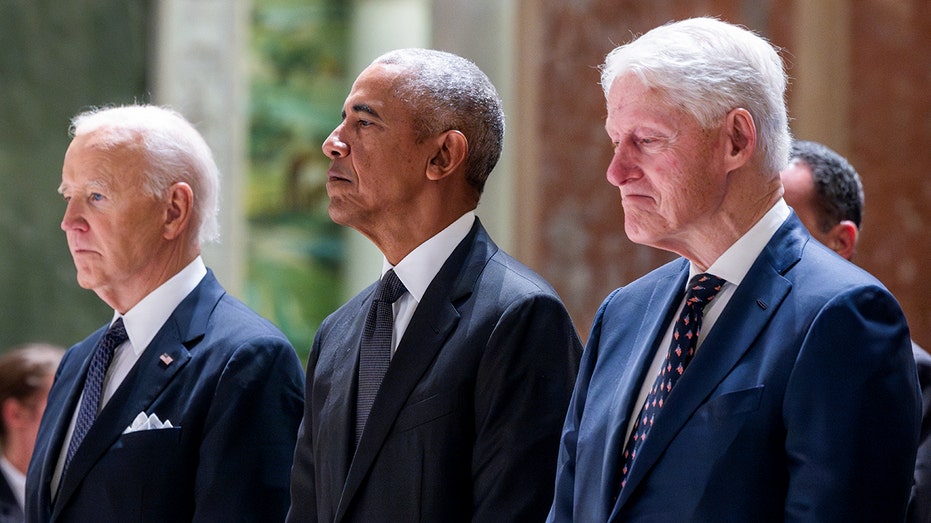
Former President Barack Obama, former President Bill Clinton, and President Donald Trump have each commented on the grim news of President Joe Biden’s cancer diagnosis. “Michelle and I are thinking of the entire Biden family. Nobody has done more to find breakthrough treatments for cancer in all its forms than Joe, and I am certain he will fight this challenge with his trademark resolve and grace. We pray for a fast and full recovery,” Obama noted in posts on social media. Biden served as vice president during Obama’s White House tenure from early 2009 through early 2017. JOE BIDEN DIAGNOSED WITH ‘AGGRESSIVE FORM’ OF PROSTATE CANCER WITH METASTASIS TO THE BONE He was diagnosed with prostate cancer last week, according to a statement his personal office released on Sunday. “Last week, President Joe Biden was seen for a new finding of a prostate nodule after experiencing increasing urinary symptoms. On Friday, he was diagnosed with prostate cancer, characterized by a Gleason score of 9 (Grade Group 5) with metastasis to the bone. While this represents a more aggressive form of the disease, the cancer appears to be hormone-sensitive which allows for effective management. The President and his family are reviewing treatment options with his physicians,” the statement noted. President Donald Trump also commented on the news. POLITICAL WORLD REACTS TO FORMER PRESIDENT BIDEN’S ‘AGGRESSIVE’ CANCER DIAGNOSIS: ‘INCREDIBLY DIFFICULT’ “Melania and I are saddened to hear about Joe Biden’s recent medical diagnosis. We extend our warmest and best wishes to Jill and the family, and we wish Joe a fast and successful recovery,” he noted in a post on Truth Social. The Clintons both commented as well. “My friend Joe Biden’s always been a fighter. Hillary and I are rooting for him and are keeping him, Jill, and the entire family in our thoughts,” former President Bill Clinton noted. “I’m thinking of the Bidens as they take on cancer, a disease they’ve done so much to try to spare other families from. Wishing you a speedy, full recovery,” former Secretary of State Hillary Clinton, who lost the 2016 presidential election to Donald Trump, said in social media posts. BIDEN BATTLING ‘MOST AGGRESSIVE TYPE’ OF PROSTATE CANCER WITH BONE METASTASIS, MEDICAL EXPERT SAYS Biden, who left office earlier this year on Jan. 20, is 82 years old. Fox News’ Peter Doocy contributed to this report
Trump’s ‘big, beautiful bill’ passes key House hurdle after GOP rebel mutiny
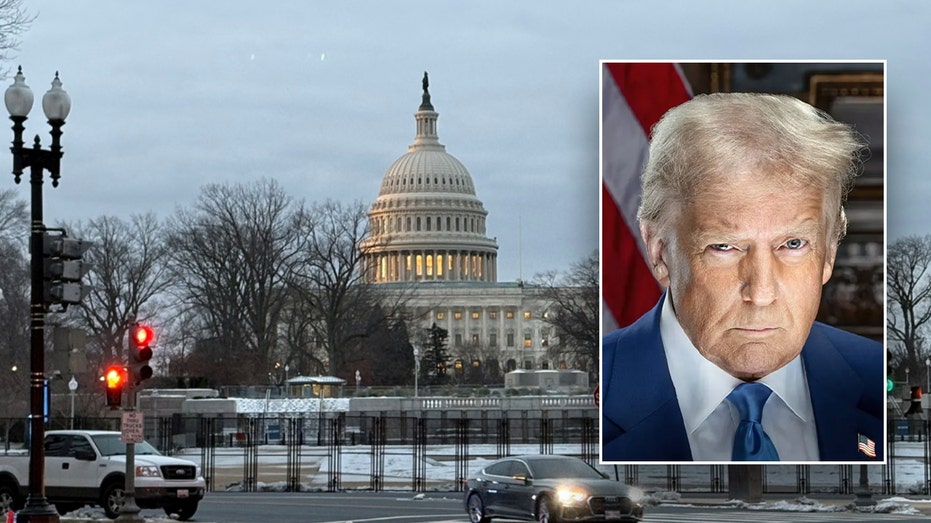
President Donald Trump’s “one big, beautiful bill” survived a key hurdle in the House of Representatives on Sunday night, putting it one step closer to a chamber-wide vote later this week. It comes after a rebellion by four House conservatives upended plans to advance the bill on Friday morning. Lawmakers on the House Budget Committee were summoned back to Washington for a 10 p.m. meeting to vote on advancing the legislation. It passed the panel in a nearly party-line vote, 17 to 16, with four Republicans voting “present.” Speaker Mike Johnson, R-La., made a surprise appearance in the committee room shortly before the vote began, telling reporters, “We think this is going to go well tonight. We’re about to find out.” He said there would likely be “minor modifications” to the final bill before disappearing into a back room with the four GOP holdouts who sunk the bill on Friday morning. ANTI-ABORTION PROVIDER MEASURE IN TRUMP’S ‘BIG, BEAUTIFUL BILL’ COULD SPARK HOUSE GOP REBELLION Johnson spoke to reporters again just before the vote began. “I think what is about to happen here is that every member, every Republican member, will give a vote that allows us to proceed forward, and we count that as a big win tonight,” he said. The speaker said he expects to have “productive discussions” with various factions of the House GOP, adding, “I am absolutely convinced we’re going to get this in final form and pass it in accordance with our original deadline.” It comes after a rebellion by four conservative House Freedom Caucus members on the committee blocked the bill from advancing on Friday, with the fiscal hawks seeking assurances that stricter crackdowns on Medicaid and green energy subsidies in the Inflation Reduction Act (IRA) would be in the final bill before a House-wide vote. The four conservatives voted “present” in an effort to move discussions forward on Sunday night. Advancing the legislation through the House Budget Committee is a largely procedural move. Lawmakers have signaled that some changes will be introduced as amendments in the House Rules Committee, the final gatekeeper before a House-wide vote, sometime early this week. Notably, two of the Budget Committee fiscal hawks who demanded further changes – Reps. Chip Roy, R-Texas, and Ralph Norman, R-S.C. – also sit on the House Rules Committee. “In an effort to move this bill forward, I’m excited about the changes we’ve made. And I will vote present,” Norman said as voting began. The House Budget Committee passed a framework earlier this year with “instructions” for various other committees to enact Trump policies under their jurisdictions. Following House and Senate-wide votes on their frameworks, House committees began crafting those policies, which have now been put back together into the massive bill the House Budget Committee advanced on Sunday night. BROWN UNIVERSITY IN GOP CROSSHAIRS AFTER STUDENT’S DOGE-LIKE EMAIL KICKS OFF FRENZY Republicans are working to pass Trump’s agenda via the budget reconciliation process, which allows the party controlling both Congress and the White House to pass vast pieces of legislation while completely sidelining the minority – in this case, Democrats. It does so by lowering the Senate’s threshold for passage from 60 votes to 51, lining up with the House’s own simple majority. The legislation must adhere to a specific set of rules, however, including only items related to federal spending, tax, and the national debt. Trump is having Republicans use the legislation to enact his campaign promises on tax cuts, immigration, energy, defense, and raising the debt limit. And while quelling Friday’s GOP mutiny is a victory for House Republican leaders, lawmakers will still have to sit through high-stakes negotiations on any changes made to the bill before the House Rules Committee considers it. Conservatives are opposed to aspects of the legislation’s crackdown on Medicaid, which Republicans have said they are only trimming for waste, fraud, and abuse. But Medicaid work requirements for able-bodied people are not set to kick in until 2029, and conservatives have argued that it was a large window of time for those changes to be undone, among other concerns. They’re also pushing for a more aggressive effort to repeal green energy tax subsidies passed in the former Biden administration’s Inflation Reduction Act (IRA). The respective pushes have pitted them against moderates wary of significant Medicaid cuts, and Republican lawmakers whose districts have businesses that have benefited from the tax relief. Meanwhile, moderates in high-cost-of-living areas have also pushed for larger state and local tax (SALT) deduction caps, which red state Republicans have largely dismissed as subsidies to high-tax blue states. The Republicans in those seats, however, have argued that it’s an existential issue for their districts, where GOP victories were critical to winning and holding the House majority. But even after it passes the House, Republicans there likely won’t be done with the “big, beautiful bill” – Republican senators have already signaled they are likely going to make changes to the bill. Johnson said on Fox News Sunday that House and Senate leaders were “in close coordination” on the final product, adding, “we hope that they don’t make many modifications to it.” Any changes will have to go through the House again; identical bills must pass both chambers before getting signed into law by Trump. Republican leaders have said they hope to get a bill on the president’s desk by Fourth of July.