

India-Pakistan war: Know which cities were targeted by Pakistan and neutralised by India so far, check full list here
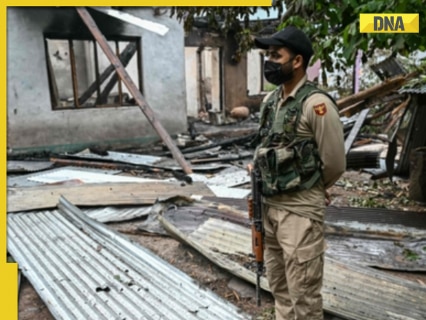
Amid rising tension between India and Pakistan, the Ministry of External Affairs detailed Pakistan’s aggression along the western border and LoC. In a joint press conference by the Ministry of External Affairs and the Ministry of Defence, Colonel Sofiya Qureshi said that the attacks, spanning over 26 locations, attempted airspace infiltration from Srinagar to Naliya, using drones, long-range weapons, UCAVs, loitering ammunition, and fighter jets to target Indian military structures. Despite sustaining damage to airbases in Udhampur, Pathankot, Adampur, Bhuj, and Bathinda, and injuring personnel, Indian forces successfully retaliated, the MEA said. The use of high-speed missiles and unprofessional targeting of non-military areas like hospitals and schools were particularly condemned. While Pakistan continued striking, the Indian Army successfully neutralised attempted strikes on various locations across the country, preventing them from reaching their targets.
Missile-like object lands in Dal Lake, loud explosions heard in Srinagar

Smoke bellowed from the surface of the lake when the object landed, the officials said.
FACT CHECK: Missile attack on Delhi Airport? Know truth here

PIB has run a fact check on the same and said it has no connection to the current India-Pakistan situation.
Big update on Char Dham Yatra amid rising India-Pakistan tension, Uttarakhand suspends this service; check here

According to reports, helicopter services will only be available to evacuate pilgrims from Char Dham Yatra locations.
WATCH: Senators answer questions about ‘due process’ as Trump cracks down on illegal immigration
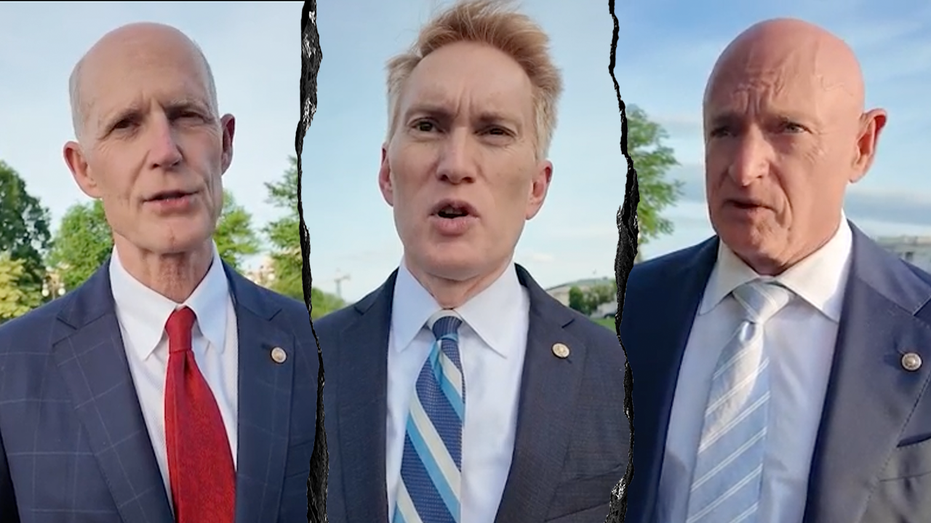
While Republicans have celebrated President Donald Trump’s crackdown on illegal immigration, Democrats have accused the Trump administration’s deportations of violating due process. “We need judges that are not going to be demanding a trial for every single illegal immigrant. We have millions of people who have come in here illegally, and we can’t have a trial for every single person. That would be millions of trials,” Trump recently told reporters on Air Force One. Fox News Digital asked lawmakers on Capitol Hill to respond to Trump’s argument that illegal immigrants are not entitled to due process. “People come here and get a legal process called parole and have a right to due process,” said Sen. Mark Kelly, D-Ariz. “We are a country of laws, and we shouldn’t be kicking people out of the country without having that due process.” FOX NEWS RIDES ALONG AS FLORIDA HIGHWAY PATROL BEGINS ENFORCING FEDERAL IMMIGRATION LAWS ON STATE ROADS According to the Fifth Amendment of the U.S. Constitution, all “persons” are entitled to due process. While the extent of due process for deporting illegal immigrants has played out in the courts, Kelly made his position clear when pressed by Fox News Digital. DEM CONGRESS MEMBERS STORM NEW JERSEY ICE PRISON TO CONDUCT ‘OVERSIGHT VISIT’: ‘PEOPLE DESERVE DIGNITY’ “I’ll also say, throwing out little kids who are U.S. citizens, it’s wrong, it’s dangerous. It is certainly not fair to them or their parents, but it really does affect everybody. I mean, tossing out a 2-year-old who’s a U.S. citizen is crazy,” Kelly said. But Republicans who spoke to Fox News Digital weren’t so sympathetic, as they doubled down on their support of the Trump administration deporting illegal immigrants. “Nobody should be coming into the country illegally,” Sen. Rick Scott, R-Fla., said. “[Former President Joe] Biden has ruined all this. He’s ruined the whole immigration process. He has tainted immigration. Now we have [Venezuelan President Nicolás] Maduro’s criminals that are coming in, that he sent here. We have all the drug traffickers here. We have terrorists here. These people need to get out of the country. They’re here illegally. I want this country safe.” Scott’s comments mimic Trump’s accusations on the 2024 presidential campaign trail of Venezuelan President Nicolás Maduro intentionally sending criminals to the U.S., and blaming former President Joe Biden for the surge in illegal immigration. “The law does not require someone to actually have a jury trial,” Sen. James Lankford, D-Okla., countered to Fox News Digital. “A hearing can be done. It’s not a trial. It’s not a jury trial. That’s not the right of someone that’s not legally present in the country.” Lankford said illegal immigrants are only entitled to a hearing, not a trial before a jury before deportation, which is supported by the due process clause of the Fifth Amendment. “No, it’s not necessary,” said Sen. Tommy Tuberville, R-Ala., agreeing with Trump. “These people are illegal.” Sen. Eric Schmitt, R-Mo., explained to Fox News Digital that while illegal immigrants are entitled to prior notice before deportation under habeas corpus, the judicial system has not clearly defined how long that window is. “Basically, the courts have said under a habeas proceeding, there needs to be notice,” said Schmitt. “But the question is, what does that notice mean? Is it an hour, is it a day or is it a week? I think what you’re ultimately going to see, not under the Alien Enemies Act, but under the habeas cases, is that there’s going to be a relatively short window, and [Trump’s] going to be able to proceed with these deportations.” White House deputy chief of staff Stephen Miller told reporters on Friday that the White House is considering suspending habeas corpus, which he said the Trump administration has the authority to do during “a time of invasion.” “A lot of it depends on whether the courts do the right thing or not,” Miller said.
Amid India-Pakistan War, US Secretary of State Marco Rubio dials S Jaishankar, asks both countries to…
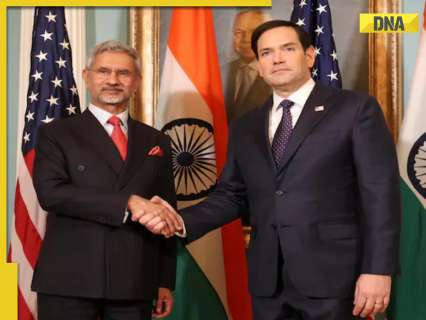
Amid India-Pakistan War, US Secretary of State Marco Rubio dials S Jaishankar, asks India, Pakistan to…
Rs 70 lakh cash stolen from ATM van in Bihar, know how it happened

A bizarre incident of cash theft has been reported from Chhapra, Bihar, where Rs 70 lakh vanished from an ATM cash van. The incident has left the police stunned. Here’s how it happened
Judge puts temporary pause on Trump’s mass layoffs at government agencies
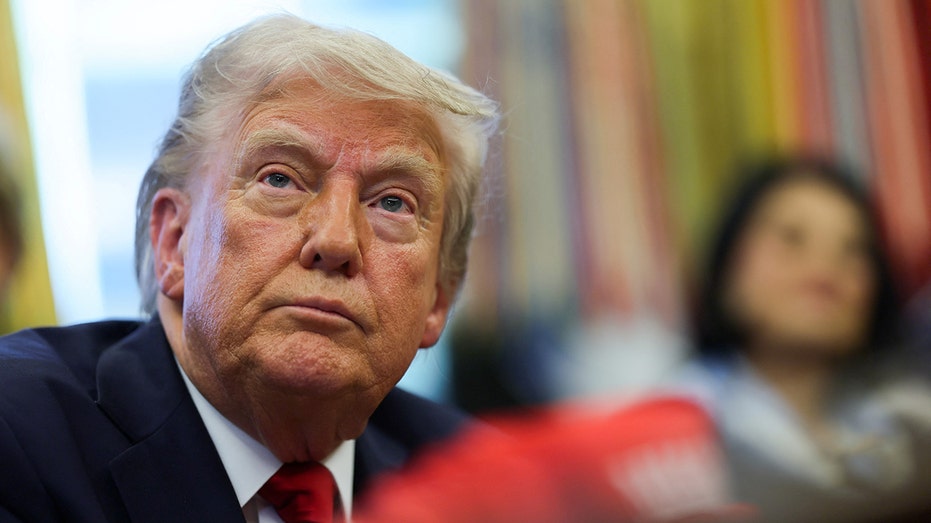
A federal judge on Friday issued a temporary pause on the Trump administration’s plans to restructure various government agencies and cut tens of thousands of federal workers because the government overhaul was not authorized by Congress. U.S. District Judge Susan Illston put a 14-day pause on the mass layoffs, siding with a group of unions, non-profits and local governments after they filed a lawsuit on April 28. Illston said Trump may broadly restructure federal agencies, but only in “lawful ways” with approval from Congress. “The President has the authority to seek changes to executive branch agencies, but he must do so in lawful ways and, in the case of large-scale reorganizations, with the cooperation of the legislative branch,” Illston said. “Many presidents have sought this cooperation before; many iterations of Congress have provided it.” FEDERAL JUDGE BLOCKS TRUMP ADMIN FROM DISMANTLING 3 AGENCIES “Nothing prevents the President from requesting this cooperation—as he did in his prior term of office,” the judge continued. “Indeed, the Court holds the President likely must request Congressional cooperation to order the changes he seeks, and thus issues a temporary restraining order to pause large-scale reductions in force in the meantime.” Illston’s ruling was the broadest of its kind against administration efforts to overhaul the federal government, which have been led by Elon Musk and the Department of Government Efficiency, DOGE. Fox News Digital has reached out to the White House for comment. In February, Trump directed agencies to work with DOGE to identify targets for mass layoffs as part of the administration’s plans to restructure the government. FEDERAL JUDGE ORDERS HALT TO TRUMP ADMIN’S CFPB TERMINATIONS The president instructed agencies to eliminate duplicate roles, unnecessary management layers and non-critical jobs, as well as to automate routine tasks, close regional field offices and reduce the use of outside contractors. The group of plaintiffs said the administration’s “unlawful attempt to reorganize the federal government has thrown agencies into chaos, disrupting critical services provided across our nation.” “Each of us represents communities deeply invested in the efficiency of the federal government – laying off federal employees and reorganizing government functions haphazardly does not achieve that,” the groups said in a statement. Illston scheduled a hearing for May 22 for a potential longer preliminary injunction. She said plaintiffs are likely to suffer irreparable harm without the temporary restraining order, which she said preserves the status quo. The judge said the plaintiffs are likely to succeed on the merits of some of their claims. They accuse Trump of exceeding his authority and say that DOGE, the Office of Management and Budget and the Office of Personnel Management exceeded their authority and violated administrative law. “The Court here is not considering the potential loss of income of one individual employee, but the widespread termination of salaries and benefits for individuals, families, and communities,” Illston wrote. Reuters contributed to this report.
Newark Mayor Ras Baraka arrested during ICE detention centre protest
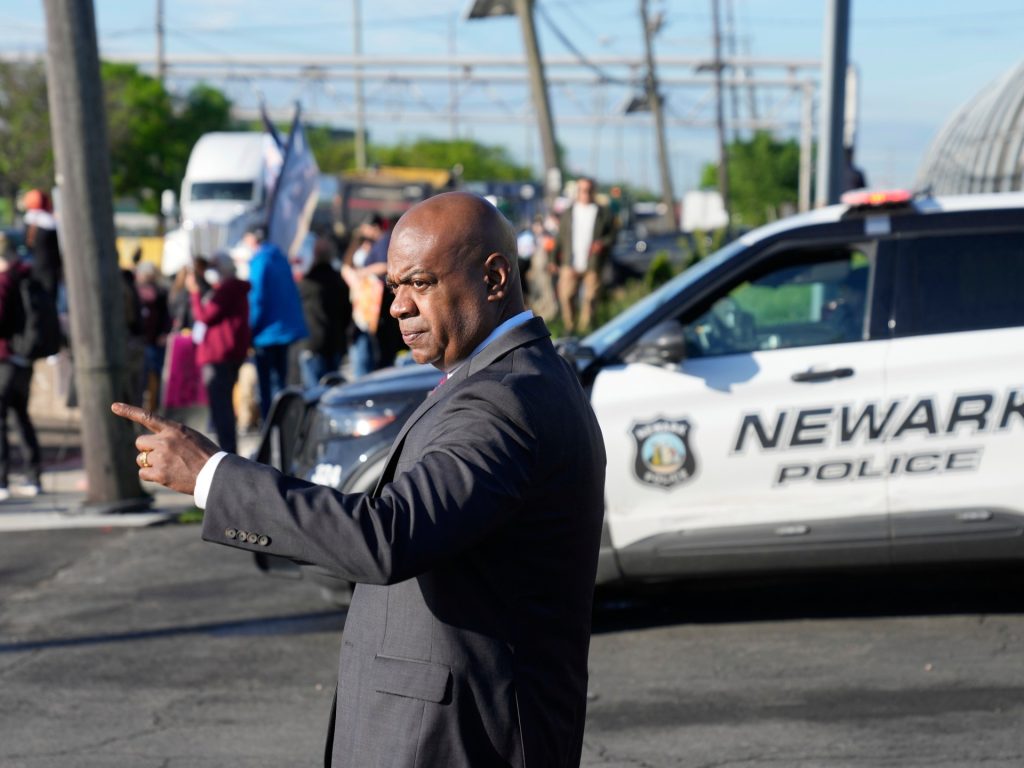
US attorney says Baraka ‘committed trespass’ during protest of facility, which he argues opened without proper permits. Rights groups and Democratic officials have decried the arrest of the mayor of Newark, New Jersey, during a protest at an immigration detention centre. Mayor Ras Baraka had joined several lawmakers at the detention centre, called Delaney Hall, for a demonstration on Friday. For weeks, he has been among those protesting the recently opened 1,000-bed centre, which critics see as a key link in President Donald Trump’s mass deportation efforts. Those in attendance said Baraka sought to enter the facility along with members of the United States Congress on Friday, but he was denied entry. A video reviewed by The Associated Press showed a federal official in a jacket with the logo for the Homeland Security Investigations unit telling Baraka he could not tour the facility because “you are not a congress member”. Baraka then left the secure area, rejoining protesters on the public side of the centre’s gate. Video showed him speaking through the gate to a man in a suit. The man said, “They’re talking about coming back to arrest you.” Advertisement “I’m not on their property. They can’t come out on the street and arrest me,” Baraka replied. Moments later, several Immigration and Customs Enforcement (ICE) agents, some wearing face coverings, surrounded the mayor and others on the public side of the gate. Baraka was dragged back through the security gate in handcuffs, while protesters yelled, “Shame!” In a subsequent post on the social media platform X, Alina Habba, Trump’s former personal lawyer and acting US attorney for New Jersey, said Baraka had “committed trespass and ignored multiple warnings” to leave. “He has willingly chosen to disregard the law. That will not stand in this state,” Habba wrote. “He has been taken into custody. NO ONE IS ABOVE THE LAW.” US Representative LaMonica McIver was also at the centre on Friday, along with Representatives Bonnie Watson Coleman and Robert Menendez Jr, to conduct what they called an “oversight inspection”. In a post on X, McIver said Baraka “did nothing wrong” and had already left the facility at the time of his arrest. “This is unacceptable,” McIver said in the video. For its part, a spokesperson for the Department of Homeland Security accused the lawmakers of “storming” the facility in a “bizarre political stunt”. Baraka has said the detention centre — located in Newark, not far from New York City — opened despite not having the proper local permits and approvals. He has launched a lawsuit to halt its operations. The GEO group, which runs the centre in coordination with ICE, has denied his claims. It entered into an agreement with the federal government in February to run the Delaney Hall facility, under a 15-year contract valued at $1bn. Advertisement ‘Unjust arrest’ Local elected officials swiftly condemned the federal agents’ actions, with the state’s governor, Phil Murphy, writing on X that he was “outraged by the unjust arrest” of Baraka. Murphy called the mayor an “exemplary public servant who has always stood up for our most vulnerable mayors” and appealed for his release. The governor noted that New Jersey had previously passed a law banning private immigration detention centres in the state, a Democratic stronghold, although it was partially struck down by a federal court in 2023. An appeal is ongoing. Baraka, who is running in next month’s Democratic primary for governor, has been an outspoken critic of the Trump administration’s immigration policies. He struck a defiant tone against the Trump administration in January, after ICE raided businesses in the city he leads. “Newark will not stand by idly while people are being unlawfully terrorised,” he said at the time. Adblock test (Why?)
Could India, Pakistan use nuclear weapons? Here’s what their doctrines say
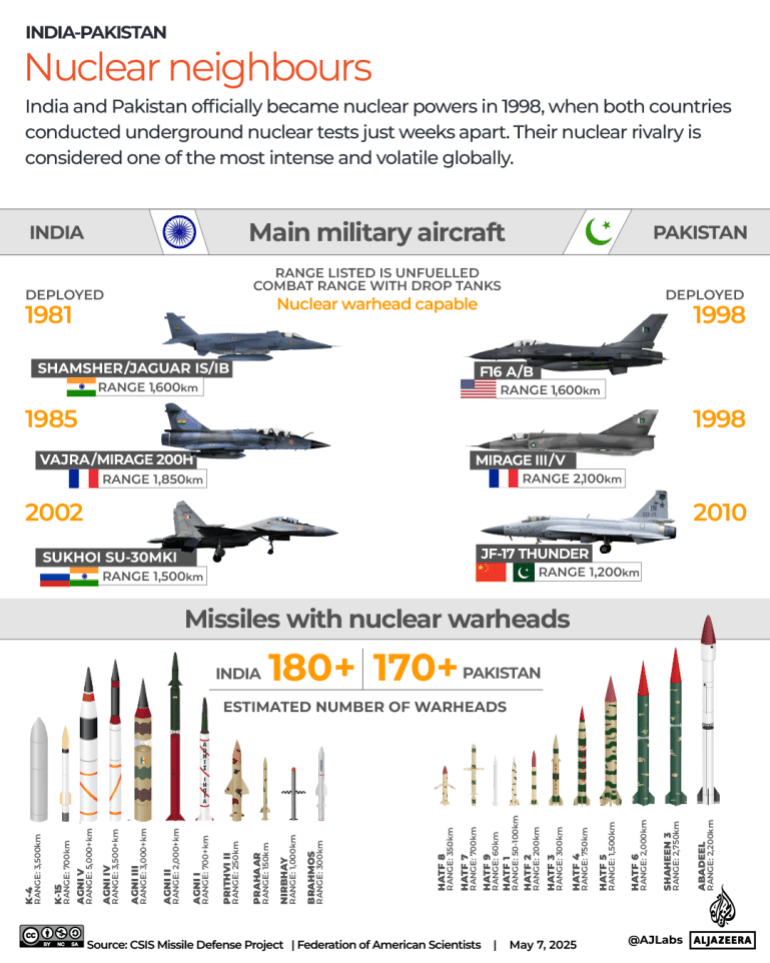
Pakistan said it struck multiple Indian military bases in the early hours of Saturday, May 10, after claiming that India had launched missiles against three Pakistani bases, marking a sharp escalation in their already soaring tensions, as the neighbours edge closer to an all-out war. Long-simmering hostilities, mostly over the disputed region of Kashmir, erupted into renewed fighting after the deadly April 22 Pahalgam attack in Indian-administered Kashmir that saw 25 tourists and a local guide killed in an armed group attack. India blamed Pakistan for the attack; Islamabad denied any role. Since then, the nations have engaged in a series of tit-for-tat moves that began with diplomatic steps but have rapidly turned into aerial military confrontation. As both sides escalate shelling and missile attacks and seem on the road to a full-scale battle, an unprecedented reality stares not just at the 1.6 billion people of India and Pakistan but at the world: An all-out war between them would be the first ever between two nuclear-armed nations. Advertisement “It would be stupid for either side to launch a nuclear attack on the other … It is way short of probable that nuclear weapons are used, but that does not mean it’s impossible,” Dan Smith, director of the Stockholm International Peace Research Institute, told Al Jazeera. So, how did we get here? What are the nuclear arsenals of India and Pakistan like? And when – according to them – might they use nuclear weapons? How tensions have spiralled since April 22 India has long accused The Resistance Front (TRF) – the armed group that initially claimed credit for the Pahalgam attack, before then distancing itself from the killings – of being a proxy for the Lashkar-e-Taiba, a Pakistan-based armed group that has repeatedly targeted India, including in the 2008 Mumbai attacks that left more than 160 people dead. New Delhi blamed Islamabad for the Pahalgam attack. Pakistan denied any role. India withdrew from a bilateral pact on water sharing, and both sides scaled back diplomatic missions and expelled each other’s citizens. Pakistan also threatened to walk out of other bilateral pacts, including the 1972 Simla Agreement that bound the neighbours to a ceasefire line in disputed Kashmir, known as the Line of Control (LoC). But on May 7, India launched a wave of missile attacks against sites in Pakistan and Pakistan-administered Kashmir. It claimed it hit “terrorist infrastructure”, but Pakistan says at least 31 civilians, including two children, were killed. On May 8, India launched drones into Pakistani airspace, reaching the country’s major cities. India claimed it was retaliating, and that Pakistan had fired missiles and drones at it. Then, for two nights in a row, cities in India and Indian-administered Kashmir reported explosions that New Delhi claimed were the result of attempted Pakistani attacks that were thwarted. Advertisement Pakistan denied sending missiles and drones into India on May 8 and May 9 – but that changed in the early hours of May 10, when Pakistan first claimed that India targeted three of its bases with missiles. Soon after, Pakistan claimed it struck at least seven Indian bases. India has not yet responded either to Pakistan’s claims that Indian bases were hit or to Islamabad’s allegation that New Delhi launched missiles at its military installations. How many nuclear warheads do India and Pakistan have? India first conducted nuclear tests in May 1974 before subsequent tests in May 1998, after which it declared itself a nuclear weapons state. Within days, Pakistan launched a series of six nuclear tests and officially became a nuclear-armed state, too. Each side has since raced to build arms and nuclear stockpiles bigger than the other, a project that has cost them billions of dollars. India is currently estimated to have more than 180 nuclear warheads. It has developed longer-range missiles and mobile land-based missiles capable of delivering them, and is working with Russia to build ship and submarine missiles, according to the Center for Strategic and International Studies (CSIS). Pakistan’s arsenal, meanwhile, consists of more than 170 warheads. The country enjoys technological support from its regional ally, China, and its stockpile includes primarily mobile short- and medium-range ballistic missiles, with enough range to hit just inside India. A motorcyclist rides past shattered windows of a restaurant outside the Rawalpindi cricket stadium after an alleged drone was shot down in Rawalpindi, Pakistan, on May 8, 2025 [Aamir Qureshi/ AFP] What’s India’s nuclear policy? India’s interest in nuclear power was initially sparked and expanded under its first prime minister, Jawaharlal Nehru, who was eager to use it to boost energy generation. However, in recent decades, the country has solidified its nuclear power status to deter its neighbours, China and Pakistan, over territorial disputes. Advertisement New Delhi’s first and only nuclear doctrine was published in 2003 and has not been formally revised. The architect of that doctrine, the late strategic analyst K Subrahmanyam, was the father of India’s current foreign minister, S Jaishankar. Only the prime minister, as head of the political council of the Nuclear Command Authority, can authorise a nuclear strike. India’s nuclear doctrine is built around four principles: No First Use (NFU): This principle means that India will not be the first to launch nuclear attacks on its enemies. It will only retaliate with nuclear weapons if it is first hit in a nuclear attack. India’s doctrine says it can launch retaliation against attacks committed on Indian soil or if nuclear weapons are used against its forces on foreign territory. India also commits to not using nuclear weapons against non-nuclear states. Credible Minimum Deterrence: India’s nuclear posture is centred around deterrence – that is, its nuclear arsenal is meant primarily to discourage other countries from launching a nuclear attack on the country. India maintains that its nuclear arsenal is insurance against such attacks. It’s one of the reasons why New Delhi is not a signatory to the Nuclear Non-Proliferation Treaty (NPT), as it maintains that all countries uniformly disarm before it does the same. Massive Retaliation: