

Reporting from behind shifting front lines in Myanmar’s civil war
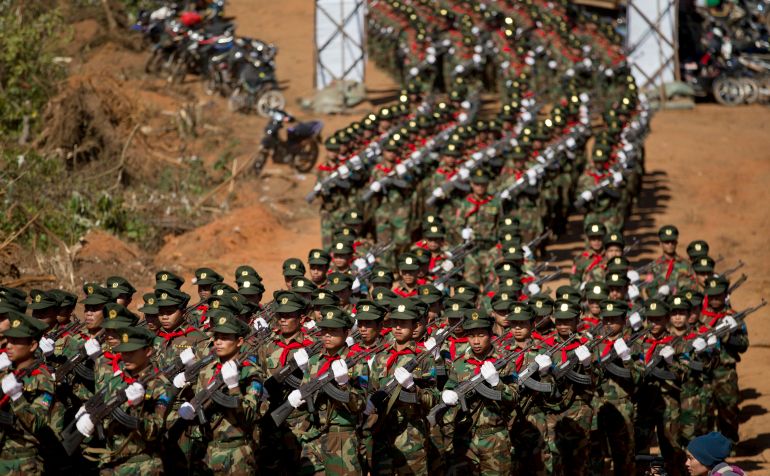
On a typical day, Mai Rupa travels through his native Shan State, in eastern Myanmar, documenting the impact of war. A video journalist with the online news outlet Shwe Phee Myay, he travels to remote towns and villages, collecting footage and conducting interviews on stories ranging from battle updates to the situation for local civilians living in a war zone. His job is fraught with risks. Roads are strewn with landmines and there are times when he has taken cover from aerial bombing and artillery shelling. “I have witnessed countless people being injured and civilians dying in front of me,” Mai Rupa said. “These heartbreaking experiences deeply affected me,” he told Al Jazeera, “at times, leading to serious emotional distress.” Mai Rupa is one of a small number of brave, independent journalists still reporting on the ground in Myanmar, where a 2021 military coup shattered the country’s fragile transition to democracy and obliterated media freedoms. Like his colleagues at Shwe Phee Myay – a name which refers to Shan State’s rich history of tea cultivation – Mai Rupa prefers to go by a pen name due to the risks of publicly identifying as a reporter with one of the last remaining independent media outlets still operating inside the country. Advertisement Most journalists fled Myanmar in the aftermath of the military’s takeover and the expanding civil war. Some continue their coverage by making cross-border trips from work bases in neighbouring Thailand and India. But staff at Shwe Phee Myay – a Burmese-language outlet, with roots in Shan State’s ethnic Ta’ang community – continue reporting from on the ground, covering a region of Myanmar where several ethnic armed groups have for decades fought against the military and at times clashed with each other. Ta’ang National Liberation army officers march during an event to mark the 52nd Ta’ang revolution day in Mar-Wong, Ta’ang self-governing area, northern Shan State, Myanmar, in 2015 [File: Gemunu Amarasinghe/AP] Fighting to keep the public informed After Myanmar’s military launched a coup in February 2021, Shwe Phee Myay’s journalists faced new risks. In March that year, two reporters with the outlet narrowly escaped arrest while covering pro-democracy protests. When soldiers and police raided their office in the Shan State capital of Lashio two months later, the entire team had already gone into hiding. That September, the military arrested the organisation’s video reporter, Lway M Phuong, for alleged incitement and dissemination of “false news”. She served nearly two years in prison. The rest of the 10-person Shwe Phee Myay team scattered following her arrest, which came amid the Myanmar military’s wider crackdown on the media. Spread out across northern Shan State in the east of the country, the news team initially struggled to continue their work. They chose to avoid urban areas where they might encounter the military. Every day was a struggle to continue reporting. Advertisement “We couldn’t travel on main roads, only back roads,” recounted Hlar Nyiem, an assistant editor with Shwe Phee Myay. “Sometimes, we lost four or five work days in a week,” she said. Police arrest Myanmar Now journalist Kay Zon Nwe in Yangon in February 2021, as protesters took part in a demonstration against the military coup [Ye Aung Thu/AFP] Despite the dangers, Shwe Phee Myay’s reporters continued with their clandestine work to keep the public informed. When a magnitude 7.7 earthquake hit central Myanmar on March 28, killing more than 3,800 people, Shwe Phee Myay’s journalists were among the few able to document the aftermath from inside the country. The military blocked most international media outlets from accessing earthquake-affected areas, citing difficulties with travel and accommodation, and the few local reporters still working secretly in the country took great risks to get information to the outside world. “These journalists continue to reveal truths and make people’s voices heard that the military regime is desperate to silence,” said Thu Thu Aung, a public policy scholar at the University of Oxford who has conducted research on Myanmar’s post-coup media landscape. Journalists with Shwe Phee Myay conduct a video interview in Shan State, Myanmar, in September 2024 [Courtesy of Shwe Phee Myay] On top of the civil war and threats posed by Myanmar’s military regime, Myanmar’s journalists have encountered a new threat. Advertisement In January, the administration of US President Donald Trump and his billionaire confidante Elon Musk’s Department of Government Efficiency (DOGE) began dismantling the United States Agency for International Development (USAID). USAID had allocated more than $268m towards supporting independent media and the free flow of information in more than 30 countries around the world – from Ukraine to Myanmar, according to journalism advocacy group Reporters Without Borders. In February, The Guardian reported on the freezing of USAID funds, creating an “existential crisis” for exiled Myanmar journalists operating from the town of Mae Sot, on the country’s border with Thailand. The situation worsened further in mid-March, when the White House declared plans for the US Agency for Global Media (USAGM) to reduce operations to the bare minimum. USAGM oversees – among others – the Voice of America and Radio Free Asia, which were both leading providers of news on Myanmar. Last week, RFA announced it was laying off 90 percent of its staff and ceasing to produce news in the Tibetan, Burmese, Uighur and Lao languages. VOA has faced a similar situation. Tin Tin Nyo, managing director of Burma News International, a network of 16 local, independent media organisations based inside and outside Myanmar, said the loss of the Burmese-language services provided by VOA and RFA created a “troubling information vacuum”. Myanmar’s independent media sector also relied heavily on international assistance, which had already been dwindling, Tin Tin Nyo said. Many local Myanmar news outlets were already “struggling to continue producing reliable information”, as a result of the USAID funding cuts brought in by Trump and executed by Musk’s DOGE, she said. Some had laid off staff, reduced their programming or suspended operations. Advertisement “The downsizing of independent media has decreased the capacity
India Vs Pakistan Fighter Jets: Who has stronger air power
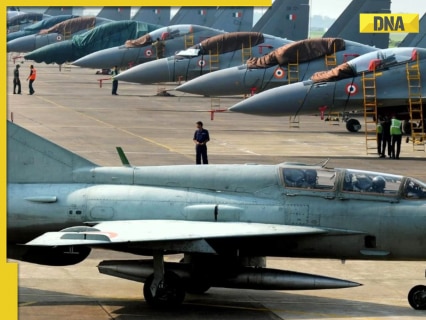
India has a significant advantage in airpower, operating reportedly 2,229 military aircraft, including 513 advanced fighter jets like the Rafale, Su-30MKI, and Tejas.
Govt briefing on Operation Sindoor in 25 points: India attacks Pakistan air bases and more…
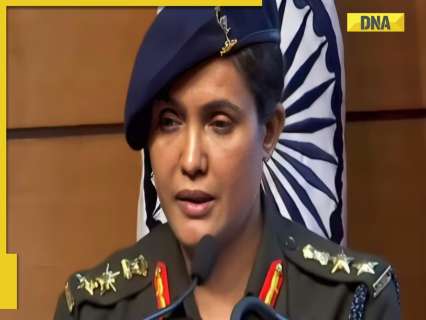
Govt briefing on Operation Sindoor: India attacks Pakistan air bases
Pakistan targeted India Army hospital and school in Srinagar, Awantipora and Udhampur
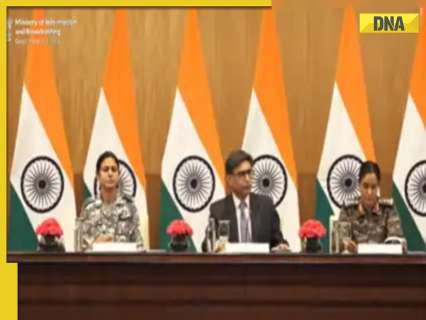
At the press briefing, Wing Commander Vyomika Singh said that Pakistan targeted medical infrastructure in Jammu and Kashmir areas – Srinagar, Awantipora and Udhampur.
India-Pakistan War: Additional deputy commissioner Raj Kumar Thapa martyred in Pakistani shelling in Rajouri, confirms government
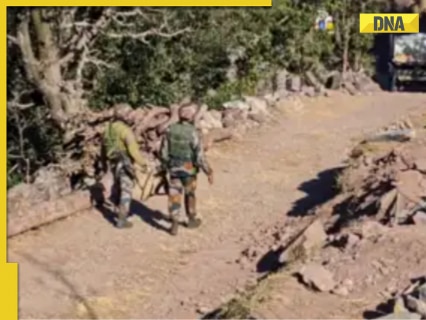
Jammu and Kashmir Chief Minister, in a post on X, also confirmed that AADC Rajouri has been killed in the shelling.
Pakistan’s claim of destroying India’s S-400 missile systems completely false, Indian military says at press briefing
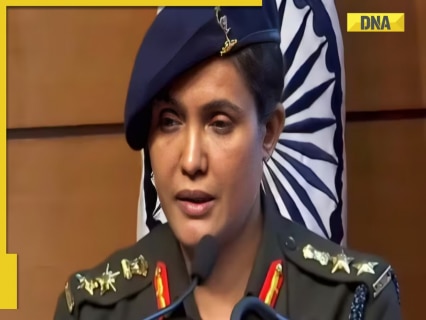
Pakistan’s claim that its hypersonic missiles fired from JF-17 fighter jets destroyed India’s S-400 air defence system in Adampur is “false,” an Indian military official said at a press briefing on Saturday.
Befitting reply has been given to Pakistani actions: Col Sofiya Qureshi at MoD-MEA briefing on Operation Sindoor
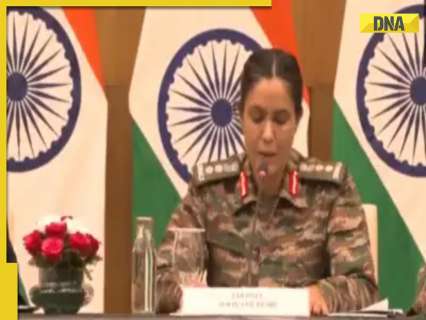
Colonel Qureshi also outlined the extent of Pakistan’s aggression, which included the use of Unmanned Combat Aerial Vehicles (UCAVs), long-range weapons, loitering ammunition, and fighter jets to target India’s military structures.
India-Pakistan War: Pakistani missile intercepted over Sirsa skies; how far is Sirsa from Delhi?
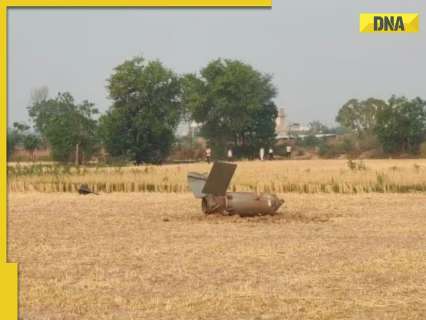
Amid escalating tension between India and Pakistan, India intercepted Pakistan’s Fatah 2 missile in Sirsa Haryana in the early hours of Saturday.
BSF destroys terrorist launch pad in Sialkot’s Looni after Pakistan violates ceasefire
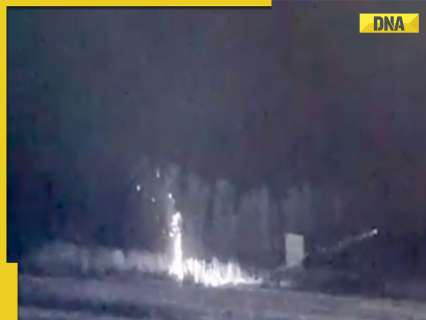
The strike was part of a measured response to the ceasefire violation that began around 9 pm on Friday.
Mexico sues Google for changing ‘Gulf of Mexico’ to ‘Gulf of America’ after Trump’s order
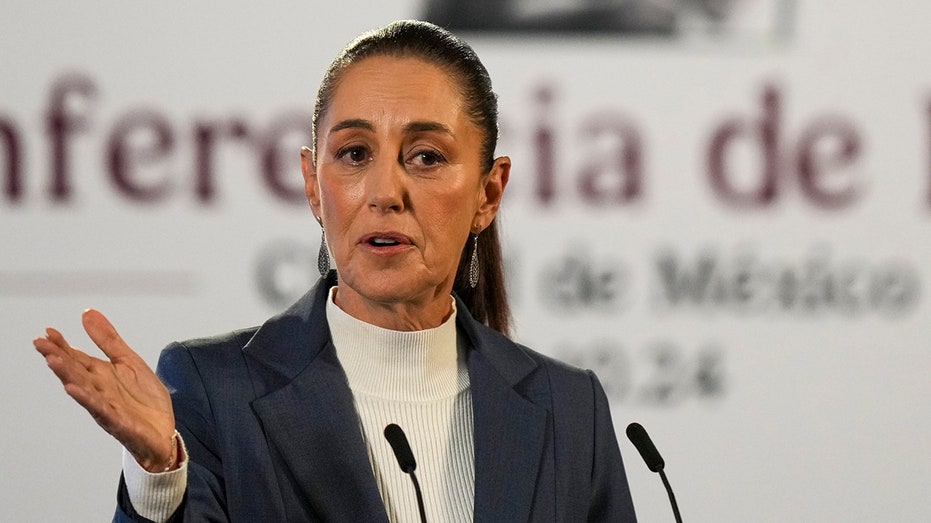
Mexico has filed a lawsuit against Google after it changed the label for the Gulf of Mexico to the Gulf of America on its maps platform to match U.S. President Donald Trump’s executive order to amend the name of the body of water, Mexican President Claudia Sheinbaum announced Friday. Sheinbaum said at a press briefing that the lawsuit had been filed against the tech giant, without providing additional details. The lawsuit comes after Sheinbaum threatened in February to sue Google for the name change. MEXICAN PRESIDENT SIGNALS POSSIBLE LAWSUIT AGAINST GOOGLE OVER GULF OF AMERICA NAME CHANGE “We are going to wait. We are already seeing, observing what this would mean from the perspective of legal advice, but we hope that they will make a revision,” Sheinbaum said at the time. Mexico’s Foreign Relations Ministry has also previously sent letters to Google urging it not to relabel the oceanic basin as the Gulf of America. Trump signed an order on his first day back in the White House in January to rename the northern part of the gulf to the Gulf of America. The body of water has shared borders between the United States and Mexico, and Trump’s order only carries authority within the U.S. Mexico has argued that the Gulf of America label should only apply to the part over the U.S. continental shelf. The U.S. has control over about 46% of the gulf, Mexico controls about 49% and Cuba controls about 5%, according to Sovereign Limits, a database of international boundaries. “What Google is doing here is changing the name of the continental shelf of Mexico and Cuba, which has nothing to do with Trump’s decree, which applied only to the U.S. continental shelf,” Sheinbaum said in February. The gulf appears in Google Maps as the Gulf of America within the U.S., as the Gulf of Mexico within Mexico and Gulf of Mexico (Gulf of America) everywhere else. It had been called the Gulf of Mexico for more than 400 years. GOOGLE MAPS, FAA OFFICIALY ACKNOWLEDGE GULF OF AMERICA AFTER TRUMP DECLARATION: ‘ISN’T IT BEAUTIFUL?’ Google Maps began using Gulf of America for users in the U.S. shortly after Trump’s order, citing its “longstanding practice” of following the U.S. government’s lead on these matters. In cases where official names vary between countries, Google’s policy says users will see their official local names. In February, the Mexican president shared a response from Google’s vice president of government affairs and public policy, Cris Turner, who said the company would not change its policy after Trump’s order. Sheinbaum’s announcement of the lawsuit comes after House Republicans passed the Gulf of America Act in a 211-206 vote, marking the first step in codifying Trump’s order. The legislation now heads to the Senate. Fox News Digital has reached out to Google for comment. The Associated Press contributed to this report.