

As the conclave gathers, let debt justice be Pope Francis’s legacy

Pope Francis was never drawn to pomp or grandeur. He asked to be buried in a simple casket, and his burial was held not in the ornate halls of the Vatican, but in a modest neighbourhood church, true to his lifelong humility. As a conclave gathers today to choose his successor, world leaders and faith communities are reflecting on how best to carry forward his legacy. Francis would not have wanted ornate tributes or empty gestures. He would have wanted action – especially in the form of debt cancellation for developing countries and a renewed commitment to climate justice. Francis envisioned 2025, a Jubilee year for the Catholic Church, as a time to restore justice – among people, between nations, and with the Earth itself. A time to wipe the slate clean and begin again, not in words but in deeds. That vision aligns closely with another urgent global imperative: 2025 is also the year by which scientists warn that global carbon emissions must peak and begin to decline if we are to avoid catastrophic climate breakdown. Advertisement But instead of preparing for a just transition, many of the countries most affected by climate change are caught in a worsening “climate-debt doom loop.” From cyclones in Mozambique to floods in Pakistan and prolonged droughts in Malawi, climate-related disasters – caused overwhelmingly by industrialised nations – are tearing apart the infrastructure and economies of developing countries and displacing millions of people. Yet rather than receiving long-overdue funding and support, climate-vulnerable nations are being drained by record levels of debt payments – many owed to the very countries and institutions most responsible for global warming. According to calculations by 350.org, in 2023, developing nations spent roughly 40 times more on servicing foreign debt than they received in net climate assistance. This is not only unjust – it’s self-defeating. Funds that should be invested in clean energy, sustainable agriculture, reforestation, flood defences and public health are instead diverted to repay wealthy creditors. Meanwhile, the escalating impacts of climate change are driving up borrowing costs, pushing vulnerable countries even deeper into debt. For every $10 spent on debt payments, an additional dollar is effectively added as a premium for climate risk. The consequences ripple far beyond environmental damage. Debt service now consumes more government spending in many countries than healthcare and education combined. Over three billion people live in countries where more is spent on interest payments than on meeting basic human needs. This is not only economically short-sighted – it is a moral scandal. Advertisement Pope Francis named this reality with unflinching clarity. In his final New Year’s message, he wrote: “Foreign debt has become a means of control whereby governments and private financial institutions of the richer countries unscrupulously and indiscriminately exploit the human and natural resources of poorer countries, simply to satisfy the demands of their own markets.” He reminded us that the financial debt of the Global South is the mirror image of the massive ecological debt the Global North owes. Research by Oxfam and others estimates that wealthy nations – responsible for more than 75 percent of historic carbon emissions – owe developing countries around $5 trillion each year in climate-related reparations. That’s a feasible figure, especially when you consider that these same wealthy governments currently spend about $7 trillion annually subsidizing fossil fuel industries. There is precedent for bold, transformative action. In the last Jubilee year – 2000 – a global movement led by civil society and faith groups secured the cancellation of over $100bn in debt for 35 heavily indebted nations. The results were remarkable: Tanzania and Uganda eliminated primary school fees, boosting enrolment. Mozambique and others expanded access to healthcare. Several countries saw improved credit ratings and increased foreign investment. That initiative was a recognition that economies must serve people, not the other way around. But it fell short of addressing the deeper structural flaws that enable recurring debt crises. In the years since, especially during the COVID-19 pandemic, indebtedness has surged again. Now, the combined pressure of climate impacts, declining aid and economic instability – including trade disruptions triggered by protectionist policies – threatens to unleash a global debt tsunami. Advertisement The poorest nations may be hit first and hardest, but this is not a crisis they face alone. A world shackled by unjust debt cannot act decisively to stop climate collapse. The debt crisis, if left unresolved, will sabotage efforts to protect people and the planet alike. Pope Francis reminded us that forgiveness, renewal and justice are not abstract ideals. They are moral and practical imperatives in an age of ecological breakdown. As the world prepares for the next chapter of papal leadership, we must act in his spirit: by resetting the rules of a broken financial system and building one rooted in equity, solidarity and care for our common home. The views expressed in this article are the author’s own and do not necessarily reflect Al Jazeera’s editorial stance. Adblock test (Why?)
Israel retrofitting DJI commercial drones to bomb and surveil Gaza
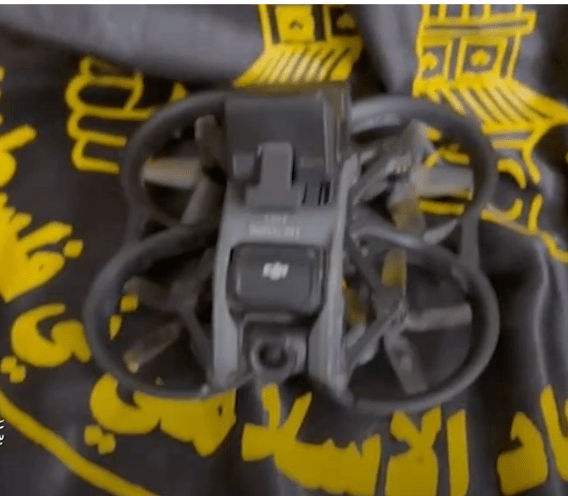
The Israeli military has been altering commercial drones to carry bombs and surveil people in Gaza, an investigation by Al Jazeera’s Sanad verification agency has found. According to Sanad, drones manufactured by the Chinese tech giant DJI have been used to attack hospitals and civilian shelters and to surveil Palestinian prisoners being forced to act as human shields for heavily armoured Israeli soldiers. This is not the first time DJI drones have been modified and used by armies. There were similar reports about both sides of the Russia-Ukraine war in 2022. At the time, DJI suspended all sales to both countries and introduced software modifications that restricted the areas where its drones could be used and how high they could fly. However, DJI has not stopped selling drones to Israel. A DJI Avata captured in Gaza [Handout/Saraya al-Quds] Israel’s use of DJI drones The Israeli army’s use of DJI drones is not new. By 2018, DJI drones were reportedly in extensive use across numerous divisions in the Israeli military. The Israeli campaign group Hamushim found evidence that Israeli military-trained operators were using DJI’s Matrice 600 model to drop tear gas on civilian protesters during the following year’s Great March of Return in Gaza. Despite their previous deployment by the Israeli military, their lethal use against civilians and protected targets in Gaza, as documented in this investigation, is unprecedented. Al Jazeera has reached out to Israeli authorities to request comment on the findings of this investigation but has received no response by time of publication. A DJI Matrice 300 captured in Gaza [Handout/Saraya al-Quds] Sanad has documented several DJI drones that have been adapted for military use. Advertisement However, it is the powerful DJI Agras drone, developed for agricultural use, that is the most significant. According to its manufacturers, the DJI Agras can carry a substantial payload and is capable of precision flight. As Sanad’s investigation shows, it can also be used to deliver an explosive payload to targets beyond the reach of conventional military forces. In addition to the DJI Agras, the DJI Mavic has been used by the Israeli military across Gaza for reconnaissance and target acquisition. Similarly, the compact DJI Avata drone, designed for recreational filming, has been repurposed by the Israeli military to navigate and map the intricate tunnel networks beneath Gaza. Israeli soldiers equip a DJI Agras drone with explosives [tamerqdh on X] Attacks on northern Gaza By late 2024, Israel had laid siege to Gaza’s north, pushing the population to the brink of famine and imposing conditions described as “apocalyptic” by United Nations observers. Residents and humanitarian organisations reported an alarming number of what appeared to be civilian drones armed with explosives. In an incident documented by displaced civilians, footage shared on July 17, 2024, shows a DJI Agras drone dropping a bomb onto the IHH Turkish charity’s building in Jabalia, northern Gaza, less than 100 metres (330ft) from a school serving as a shelter and aid distribution centre. A DJI Agras drone drops a bomb on a building next to a school used as a shelter [hamza20300 on Telegram] In November in Beit Lahia, northern Gaza, a DJI Agras drone dropped a bomb in a residential neighbourhood where civilians had fled after Israeli shelling of a UN-operated school-turned-shelter. Advertisement People who witnessed the bombing told Sanad the attack seemed calculated to instil fear. A DJI Agras drone drops a bomb on residential buildings [moneer._20 on Instagram] Surveillance and urban warfare Beyond direct attacks, Israeli-modified DJI drones have been used extensively for surveillance and tactical operations throughout Gaza. An Israeli soldier’s TikTok account shows him operating a DJI drone using first-person-view goggles. The DJI headset is compatible with drones like the Mavic and Avata [amitmaymoni via TikTok] In a further incident, footage obtained by Al Jazeera Arabic from one Israeli drone shows a DJI Avata helping to track an unnamed Palestinian being used by heavily armed Israeli soldiers as a human shield – an illegal practice under international law – in Shujaiya in December 2023. The individual is seen opening the school’s doors to make sure there were no Palestinian fighters inside, closely monitored by another drone that captured the entire operation. Israeli drone footage secured by Al Jazeera shows a second, DJI Avata, drone tracking a Palestinian detainee being used as a human shield to clear a school [Sanad/Al Jazeera] DJI double standards: Gaza vs Ukraine In 2022, in response to complaints from Ukrainian officials that DJI was sharing critical data with their Russian adversaries, the drone manufacturer suspended all sales to its retail partners in both countries. DJI explained the move: “We will never accept any use of our products to cause harm, and we will continue striving to improve the world with our work.” Despite evidence of DJI drones being weaponised by the Israeli military in Gaza, DJI has had no such response. Responding to direct inquiries from Sanad, DJI said: “Our products are for peaceful and civilian use only, and we absolutely deplore and condemn the use of [DJI] products to cause harm anywhere in the world.” Advertisement A subsequent direct query asked if it plans “to halt sales in Israel or implement measures similar to those taken in the Russia-Ukraine conflict”. But DJI did not respond to the query not has it undertaken any measures to halt sales or impose software restrictions on where drones can fly over Gaza, allowing continued military deployments of their drones by the Israeli military. Adblock test (Why?)
President Xi: China and Russia should safeguard international justice
[unable to retrieve full-text content] President Xi Jinping called for closer bilateral relations with Russia and reaffirmed China’s support for the country.
Blackout in Bikaner, ban on drones, Pakistan tries to attack three places

Amid operation Sindoor and India’s preparedness for any potential emergencies as Pakistan is continuosly violating ceasefire operations and even making drone attacks, blackout in various northern regions in Rajasthan, Punjab, Jammu and Kashmir has taken place.Bikaner has also seeb blackout with the government putting a ban on drones. Pakistan has tried to attack three places,
India destroys Pakistan’s F-16 fighter jet after attack on Jammu Airport
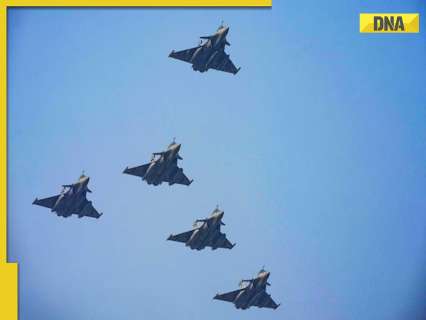
India has destroyed Pakistan’s F-16 fighter jet after attack on Jammu Airport.
S-400 stops 30 attacks, India on offensive against Pakistan’s aggression

S-400 stops 30 attacks, India on offensive against Pakistan’s aggression
DRONE attacks foiled in Jammu, Udhampur, RS Pura, Pathankot, Indian Defence system builds wall
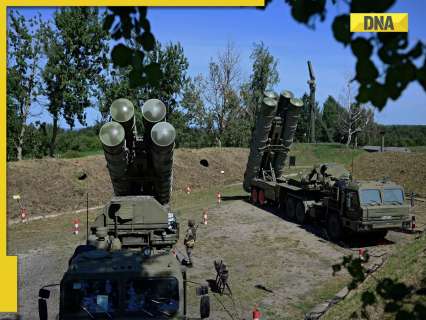
DRONE attacks foiled in Jammu, Udhampur, RS Pura, Pathankot, Indian Defence system builds a wall.
India guns down two Pakistan’s JF-17 fighter aircrafts, DGISPR confirms
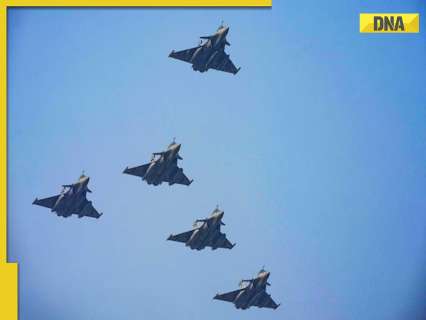
India has gunned down two Pakistan’s JF-17 fighter aircrafts, DGISPR confirmed on Thursday, i.e., May 8.
India shoots down 8 Pakistani missiles after attack on Jammu Airport

India shoots down 8 Pakistani missiles after attack on Jammu Airport
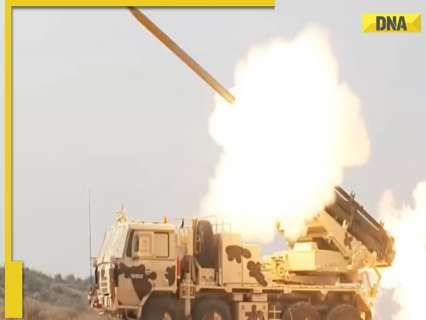
Pakistan’s attacks foiled, list of Indian locations targeted
Pakistan’s attacks foiled, list of Indian locations targeted