

Mortar attack in Poonch, Rajouri, Akhnoor

Mortar attack in Poonch, Rajouri, Akhnoor
India’s Rafale jet vs Pakistan’s F-16: Which is more powerful?
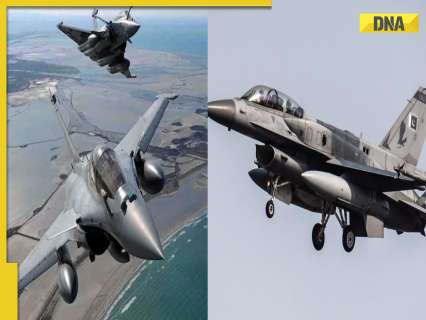
India has the French-made Rafale jets, produced by Dassault Aviation. Pakistan operates the F-16 Fighting Falcons.
Eight Pakistani missiles shot down in Samba
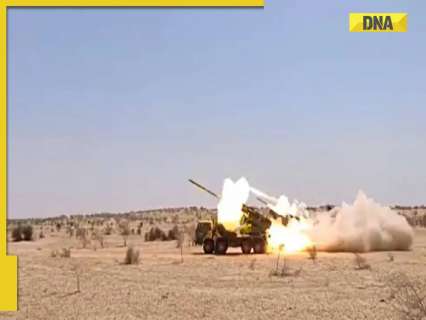
Eight Pakistani missiles shot down in Samba region of Jammu and Kashmir.
Texas has thousands of abandoned oil and gas wells. Who is responsible for cleaning them up?
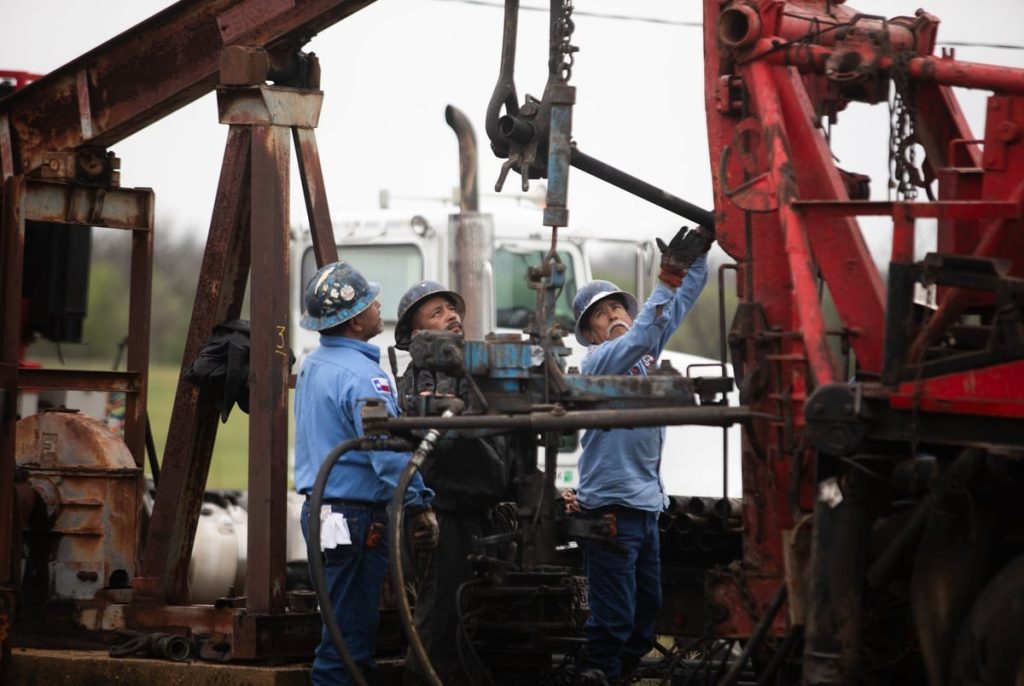
Across Texas, abandoned wells are erupting with chemical-infused liquid and some have created massive lakes of contaminated water. Regulators say they need more money to address the problem.
Trump targets Iranian oil with sanctions, increasing pressure on Islamic Republic to make deal on nukes
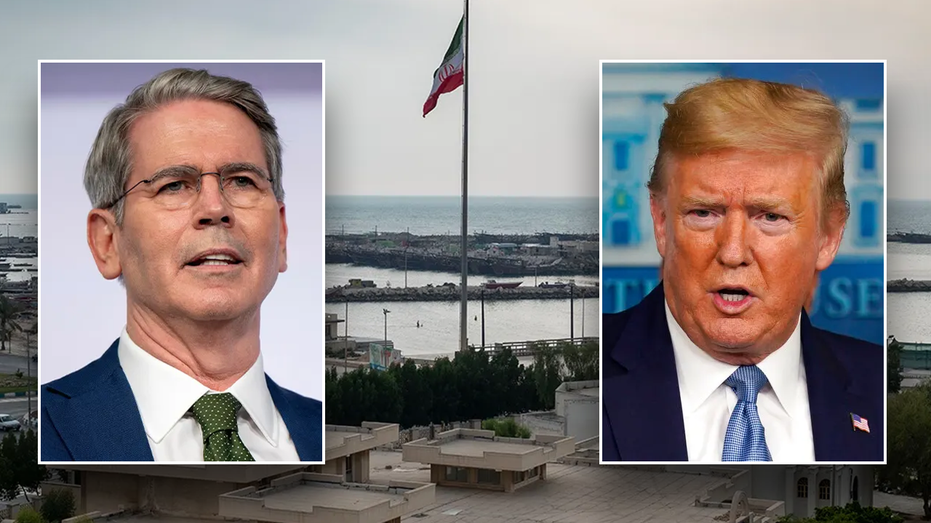
The Trump administration on Thursday targeted Iranian oil with a new slate of sanctions – a move that increases pressure on the Islamic Republic amid talks between U.S. and Iranian officials to make a deal to prevent nuclear proliferation, Fox News Digital has learned. The Treasury Department’s Office of Foreign Assets Control increased pressure on Iran’s export of oil Thursday, designating the “teapot” refinery Hebei Xinhai Chemical Group Co., Ltd., and three port terminal operators in Shandong province, China, for their role in purchasing or facilitating the delivery of hundreds of millions of dollars’ worth of Iranian oil. VANCE PREVIEWS US-IRAN NUCLEAR TALKS, SAYS TRUMP ‘OPEN’ TO SITTING DOWN WITH RUSSIANS, CHINESE IN FUTURE The “teapot” refineries purchase the majority of Iranian crude oil exports, according to the Treasury Department. The Treasury Department on Thursday is also imposing sanctions on several companies, vessels and captains they say are responsible for facilitating Iranian oil shipments as part of Iran’s so-called “shadow fleet.” The companies and vessels are all China-based. “As part of President Trump’s broad and aggressive maximum pressure campaign, Treasury today is targeting another teapot refinery that imported Iranian oil,” Treasury Secretary Scott Bessent said. “The United States remains resolved to intensify pressure on all elements of Iran’s oil supply chain to prevent the regime from generating revenue to further its destabilizing agenda.” The sanctions come following President Donald Trump’s executive order, which targets Iran’s petroleum and petrochemical sectors – as well as another executive order targeting those that provide support to the National Iranian Oil Company. Thursday’s sanctions are the latest round targeting Iranian oil sales since the president, in early February, issued a national security memorandum that instituted a campaign of “maximum economic pressure on Iran.” As for Iran’s “shadow fleet,” Tehran relies on obscure ship management companies to manage its fleet of tankers that “mask” Iran’s petroleum shipments to China using ship-to-ship transfers with sanctioned vessels. The Treasury Department on Thursday took action to increase pressure on that “shadow fleet” of actors by designating ships as “blocked property.” Any violation of U.S. sanctions may result in the imposition of civil or criminal penalties on U.S. or foreign persons, the Treasury Department said. The imposition of sanctions comes as the United States and Iran prepare for a fourth round of nuclear talks. U.S. and Iranian officials are set for the next round of talks to take place in Oman in the coming days. TRUMP TEASES ‘VERY, VERY BIG ANNOUNCEMENT’ AHEAD OF MIDDLE EAST TRIP, CARNEY SAYS HE’S ‘ON EDGE OF MY SEAT’ Trump is scheduled to travel to the Middle East, including Saudi Arabia, Qatar and the United Arab Emirates. Vice President JD Vance recently previewed the next round of talks, saying Wednesday the U.S. was negotiating toward a “complete cessation” of Tehran’s nuclear program. The Trump administration has said the flawed 2015 Obama-era Joint Comprehensive Plan of Action (JCPOA), also known as the Iran nuclear feal, did not prevent Iran from building an atomic bomb, with Vance adding that the agreement had “incredibly weak” enforcement regarding inspections. Vance said he didn’t believe it “actually served the function of preventing the Iranians from getting on the pathway to nuclear weapons.” Vance also said the Trump administration believes that there were some elements of the Iranian nuclear program that were actually “preserved” under the JCPOA. “Yes, there weren’t nuclear weapons. Iran doesn’t have a nuclear weapon,” Vance said, arguing the deal “allowed Iran to sort of stay on this glide path toward a nuclear weapon if they flip the switch and press go.” “We think that there is a deal here that would reintegrate Iran into the global economy,” Vance said ahead of the talks. “That would be really good for the Iranian people, but would result in the complete cessation of any chance that they can get a nuclear weapon. And that’s what we’re negotiating toward. And as the president has said, that’s Option A.” CLICK HERE TO GET THE FOX NEWS APP If Option A is “very good for the Iranian people,” Vance said, then Option B “is very bad.” “It’s very bad for everybody,” Vance said. “And it’s not what we want, but it’s better than Option C, which is Iran getting a nuclear weapon. That is what is completely off the table for the American administration. No ifs, ands or buts.” As for Trump, he said during a recent interview on NBC’s “Meet the Press” that he would only accept “total dismantlement” of Iran’s nuclear program.
Trump signals China ‘very much’ interested in securing trade deal ahead of Switzerland negotiations
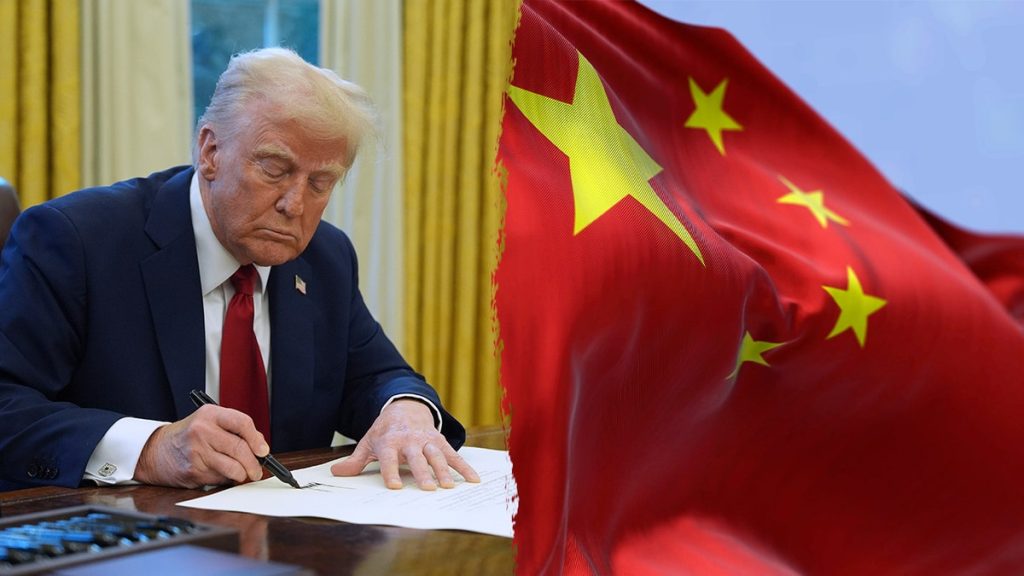
China is eager to hash out a trade deal with the U.S., according to President Donald Trump. Trump’s remarks come as Treasury Secretary Scott Bessent is poised to launch trade negotiations with China in Switzerland Saturday amid a steep tariff battle between Washington and Beijing. “Scott’s going to be going to Switzerland, meeting with China,” Trump told reporters Thursday at the White House. “And you know, they very much want to make a deal. We can all play games. Who made the first call, who didn’t make them? It doesn’t matter. Only matters what happens in that room. But I will tell you that China very much wants to make a deal. We’ll see how that works out.” Trump told reporters on Air Force One Sunday he wants a “fair” trade deal with China, claiming discussions with Beijing were in the works on multiple issues. Trump has voiced support for tariffs for decades. The White House has called for tariffs to address the nation’s 2024 record $1.2 trillion trade deficit, and said the tariffs will bring back U.S. manufacturing jobs. Bessent cautioned in April that the tariffs could cost China up to 10 million jobs, and said that it’s incumbent upon Beijing to remove current tariffs on U.S. imports. “I think that over time we will see that the Chinese tariffs are unsustainable for China. I’ve seen some very large numbers over the past few days that show if these numbers stay on, Chinese could lose 10 million jobs very quickly,” Bessent told reporters at the White House April 29. “And even if there is a drop in the tariffs that they could lose 5 million jobs.” “So remember that we are the deficit country,” Bessent said. “They sell almost five times more goods to us than we sell to them. So the onus will be on them to take off these tariffs. They’re unsustainable for them.” Bessent also told lawmakers Tuesday that the U.S. has launched discussions with various countries, and indicated that major trade deals could be announced “as early as this week.” This is a breaking news story and will be updated.
Bill Gates says he will give away 99 percent of his wealth by 2045
The former Microsoft CEO slams Elon Musk for his efforts to slash funding for US assistance to poor countries. Tech billionaire Bill Gates has said that he will give away 99 percent of his wealth in the next two decades, funding his philanthropy the Gates Foundation long enough for it to close in 2045. In a statement published on Thursday, Gates also firmly criticised the way his fellow centibillionaire – Elon Musk, an adviser to US President Donald Trump – is pushing to slash United States funds for essential things like food and medical assistance in poor countries. “The picture of the world’s richest man killing the world’s poorest children is not a pretty one,” Gates told the Financial Times, referring to Musk’s work with the Trump administration to dismantle the US Agency for International Development (USAID). Gates, who has a current estimated net worth of about $108bn, has long been among the most recognisable figures in the field of philanthropy, with an emphasis on medical assistance in poor countries. He has also become a symbol of the enormous influence that such wealth can have on everything from politics to global health. Advertisement Pandemic vaccine criticism During the COVID-19 pandemic, Gates was a vocal opponent of loosening patent protections around COVID-19 vaccines in order to allow poorer countries to manufacture their own versions and distribute them to their populations more quickly, arguing that doing so would harm innovation and intellectual property rights. Critics accused him of promoting a vision of “vaccine apartheid”. They have also questioned whether Gates, through his substantial funding of groups such as the vaccine group Gavi and the World Health Organization, wields disproportionate influence in the field of global health without the same oversight and accountability that a public institution would face. Over the years, Gates has stated that he is determined to give away most of his enormous fortune. While he is currently worth about $108bn, he expects the foundation to spend a total of around $200bn by 2045, depending on inflation and markets. “People will say a lot of things about me when I die, but I am determined that ‘he died rich’ will not be one of them,” the 69-year-old co-founder of Microsoft said in a post on his website. “There are too many urgent problems to solve for me to hold onto resources that could be used to help people,” he added. Gates also lamented that the US has pulled back from involvement in global health and humanitarian assistance around the world, offering a subtle rebuke of the Trump administration. “It’s unclear whether the world’s richest countries will continue to stand up for its poorest people,” he said. Advertisement Adblock test (Why?)
New Shireen Abu Akleh documentary ‘identifies her killer’
[unable to retrieve full-text content] The makers of new documentary ‘Who Killed Shireen?’ say they have identified the Israeli soldier who shot her.
US-UK trade deal: How are Trump’s global tariff talks shaping up?
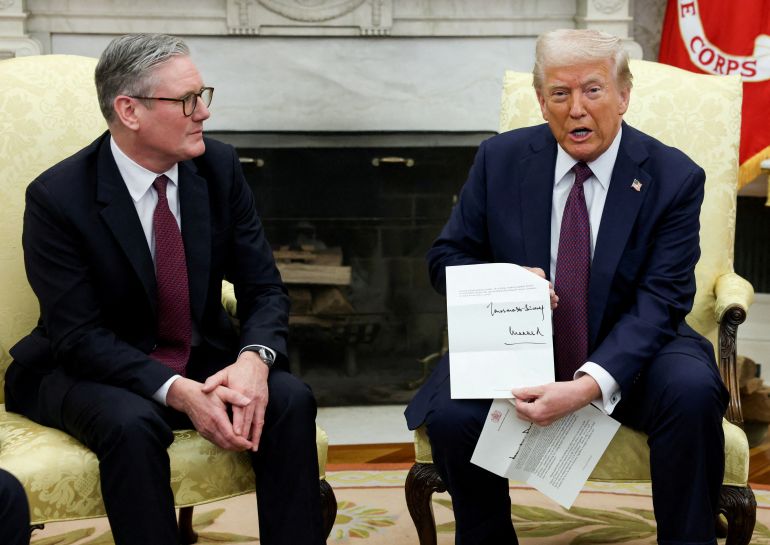
United States President Donald Trump is expected to announce the framework of a trade deal between the US and the United Kingdom on Thursday, according to people familiar with the plan. On Wednesday, Trump said he was preparing to announce “a major trade deal with representatives of a big and highly respected country”. In a post on Truth Social, he promised it would be the “first of many”. Investors have been waiting for Trump to ease his global trade war amid fears that prolonged uncertainty over tariffs could inflict serious damage to the world’s biggest economies. An agreement with the UK would mark Trump’s first trade deal since he imposed tariffs on dozens of countries on April 2, a move he called “liberation day”. Separately, Trump has introduced bespoke tariffs on certain US imports, including cars and steel. Trump has long accused other countries of exploiting the US on trade, casting his tariffs as necessary to bring jobs back to the US. He also wants to use tariffs to finance future tax cuts. US President Donald Trump holds a letter from Britain’s King Charles as he meets with British Prime Minister Keir Starmer in the Oval Office at the White House in Washington, DC, US, on February 27, 2025 [File: Kevin Lamarque/Reuters] What could be in a US-UK trade agreement? At the moment, most imports from the UK to the US face a blanket 10 percent tariff. The UK, like other countries, has also been hit with 25 percent tariffs on steel and aluminium exports to the US, as well as a 25 percent tariff on cars and car parts. Advertisement The broad outline of a proposed deal has been clear for some time – significant reductions in US tariffs on steel and cars, with an expectation that Trump’s 10 percent general tariff will remain in place. The UK would then be expected to reduce its own 2 percent digital services tax on US tech firms and its 10 percent tariff on car imports, and varying duties on US agricultural goods. However, Jonathan Haskel, a former member of the Bank of England’s Monetary Policy Committee, told the BBC: “Deals are limited and short-term and partial, just covering a few items. Trade agreements are broad-based and long-term.” Today’s announcement, he suggested, is more likely to be a deal and may amount to little more than a carve-out – exemptions on certain trade barriers that Trump introduced last month. On Thursday morning, however, Trump said the agreement was “a full and comprehensive one that will cement the relationship between the United States and the United Kingdom for many years to come”. While both governments will likely present any agreement announced today as a significant win, it is essentially about returning to the status quo – removing the newly imposed tariff barriers. It remains to be seen how much any agreement will contribute to both countries’ economic output. What and how much do the US and UK trade? In 2023, the UK had an overall trade surplus with the US. The UK reported a surplus of 71.4 billion pounds ($95bn) in goods and services. Most of that headroom came from services, however. Advertisement On the goods side, the UK exported 15.3 percent of its goods to the US in 2023 – amounting to roughly 60 billion pounds ($80bn). Machinery and transport equipment accounted for the largest share, at 27 billion pounds ($36bn), ahead of chemicals at 14 billion pounds ($19bn). On the flipside, the US exported $77.2bn of goods to the UK in 2023. Ten percent of all goods imported by Great Britain came from the US in that year, second only to Germany. Machinery and transport equipment accounted for the largest share, worth nearly 20 billion pounds ($27bn), followed by fuel – amounting to 18.7 billion pounds ($25bn). On the services side, the US exported $76bn in services – things like advertising and banking – to the UK in 2023, and imported $170bn in British services. These are unaffected by tariffs. Could the US deal serve as a blueprint for other US negotiations? Trump’s top negotiating officials have engaged in a flurry of meetings with trade partners since the president’s “liberation day” tariff announcement on April 2. Although Trump delayed implementing “reciprocal” tariffs for most countries by 90 days on April 9, he did raise them for China to 145 percent. Beijing, in turn, slapped a 125 percent tariff on US goods. The reciprocal tariffs, which varied from 10 percent to 39 percent, were designed to hit countries with which Washington has large trade deficits, or that impose heavy tariffs on US goods. Though Britain was not among the countries hit with these reciprocal tariffs, today’s announcement could set a precedent for other bilateral trade deals. Advertisement On Tuesday, Trump said he would review potential trade agreements over the next two weeks to decide which ones to accept. Last week, he said that “we [already] have potential trade deals” with South Korea and Japan. Following his 90-day reprieve, steep reciprocal tariffs are due to be imposed on US trade partners in early July, leaving country representatives racing to avoid a full-blown trade spat with the world’s number one economy. What stage of talks has the US reached with other countries? China According to data from the Office of the United States Trade Representative, the total goods trade between the US and China stood at an estimated $582.4bn in 2024. US exports of goods to China totalled $143.5bn while US imports from China totalled $438.9bn. The upshot is that America’s trade deficit with China was $295.4bn last year, 5.8 percent higher ($16.3bn) than in 2023. US Treasury Secretary Scott Bessent will meet with China’s Vice Premier He Lifeng in Switzerland this weekend for talks, which may be the first step in resolving a trade war between the world’s two largest economies. Meetings will take place in Geneva, and are expected to address reductions on broad tariffs, duties on specific products, export controls and Trump’s
Mumbai: Siddhivinayak Temple bans offerings of floral garlands, coconuts and others due to security reasons

The use of mobile phones in the temple will also be completely prohibited. The new decision will be implemented from Sunday.