

New York Assembly passes bill to legalize assisted suicide for the terminally ill
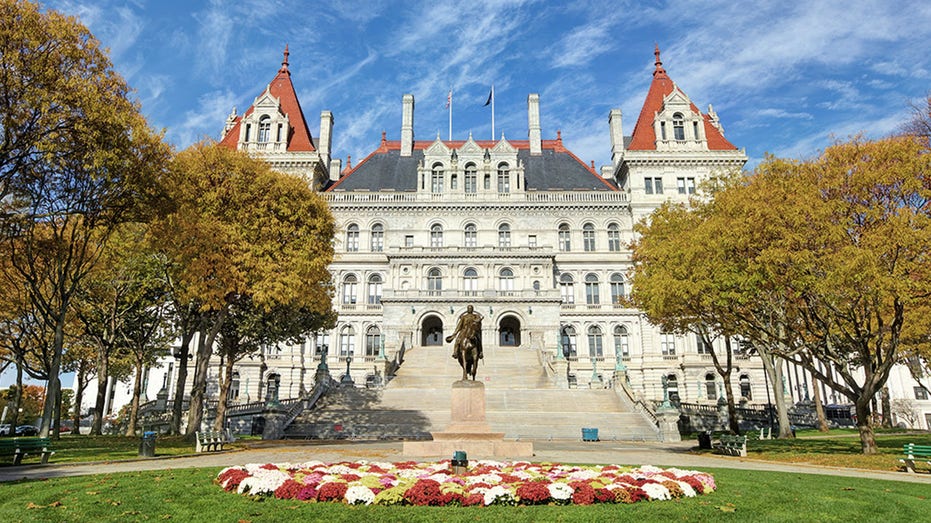
The New York State Assembly on Tuesday passed a bill that would legalize medically assisted suicide for terminally ill people, sending the measure to the state Senate. The Medical Aid in Dying Act passed the Assembly by an 81-67 vote. The measure would allow a mentally competent adult who has been given six months or less to live the option of being prescribed lethal drugs. The bill’s sponsor, Assemblywoman Amy Paulin, said she was motivated to introduce the legislation after her sister died of ovarian cancer. “I don’t know whether she would have availed herself of this medication if she had the opportunity, but I can tell you that when she died, I wasn’t there,” Paulin, a Democrat, told reporters, according to the New York Post. MINNESOTA LAWMAKERS PROPOSE CONTROVERSIAL MEDICALLY-ASSISTED SUICIDE BILL “When she died, my other sisters were not there, and that was her wish,” she continued. Democrat Assemblywoman Karines Reyes, a registered nurse, said the bill would allow people to die with dignity. “If you don’t believe in it, then don’t avail yourself of that choice, but I think it is inhumane for us to tell people that we are forcing them to continue their suffering,” Reyes said. Medically-assisted suicide has been gaining support in New York over the last decade, but opponents of the measure argue it is akin to state-sponsored assisted suicide. “I watched my mom die. I watched my daughter die. And I know that for a fact that none of us are getting out of here alive. At some point or the other, we’re all going to go, but I don’t believe there should be a combination of six drugs offered to someone to end their life,” Assembly Majority Leader Crystal Peoples-Stokes, a Democrat, said on the Assembly floor, according to the New York Post. TERMINALLY ILL MISSOURI WOMAN, 79, TAKING TRIP TO SWITZERLAND FOR ASSISTED SUICIDE Assemblywoman Mary Beth Walsh, a Republican, said “each and every life has value” in arguing against the proposal. “Progress may not be on a straight line and will look different to each of us, but this idea of giving up and dying is not excelsior, ever upward. It’s incredibly sad,” she said, referring to the state motto, “Excelsior” which means “ever upward.” State Senate Majority Leader Andrea Stewart-Cousins said she would discuss the bill with senators, but she did not say whether she would bring it up for a floor vote. “The conversation had begun in earnest last year. So I think we have time to look at it seriously,” she told reporters. It is unclear if Democrat Gov. Kathy Hochul would sign the measure if it passed the state legislature. There are 10 U.S. states with legalized physician-assisted suicide. Several other countries, including Canada, Germany, Switzerland and the Netherlands, have also legalized assisted suicide.
Elon Musk no longer working on DOGE efforts from White House: report

Elon Musk, the world’s richest man, is starting to transition from his role with the Department of Government Efficiency (DOGE) and is no longer working regularly from the White House, according to a report from the New York Post. His impending exit is no surprise, as the White House confirmed earlier this month that the plan was always for Musk to refocus on Tesla once he completed “his incredible work at DOGE.” The Tesla CEO was appointed as an unpaid special government employee under DOGE and remains involved in the agency remotely. MUSK NOT LEAVING YET, WRAPPING UP WORK ON SCHEDULE ONCE ‘INCREDIBLE WORK AT DOGE IS COMPLETE’: WHITE HOUSE Fox News’ Bret Baier previously asked the DOGE leader during an interview with him and members of his team if he would be working past the 130 days typically expected of special government employees. To which Musk responded, “I think we will have accomplished most of the work required to reduce the deficit by a trillion dollars within that timeframe.” Musk has also reportedly told his investors that he would be “allocating far more of my time to Tesla” in the coming months during a Tesla earnings call. Although the exact amount of money DOGE has recovered is unknown, Musk has said that he believes enough work has been done to reduce the deficit by a trillion dollars. White House Chief of Staff Susie Wiles told The NYP that Musk working remotely “really doesn’t matter much” when it comes to accomplishing goals. “Instead of meeting with him in person, I’m talking to him on the phone, but it’s the same net effect. He hasn’t been here physically, but it really doesn’t matter much,” Wiles said. DOGE SLASHES OVER $100M IN DEI FUNDING AT EDUCATION DEPARTMENT: ‘WIN FOR EVERY STUDENT’ Wiles also said Musk’s team is still working from the Eisenhower Executive Office Building next to the West Wing. “He’s not out of it altogether… He’ll be stepping back a little, but he’s certainly not abandoning it,” she told the outlet.
Neha Khan to Neha Sharma: Hurt by Pahalgam terror attack, Ghaziabad Muslim woman converts to Hinduism, criticises Islam

With the help of the Hindu Raksha Dal, she embraced Sanatan Dharma through formal religious rituals. She has also changed her name from Neha Khan to Neha Sharma.
As judge is charged with obstructing justice in migrant case, spinners cast it as an anti-Trump story
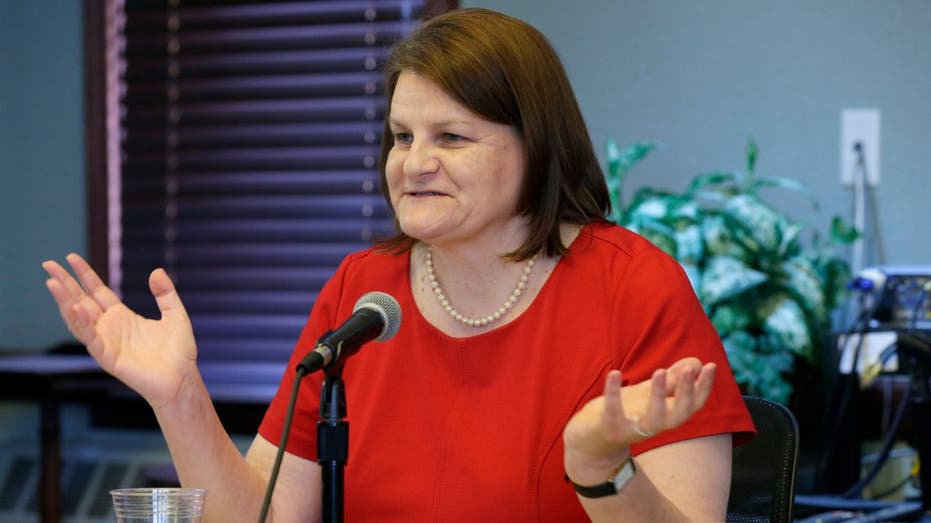
Here’s what actually happened to that Wisconsin judge. Setting aside the spin – and there’s plenty of it from some Democrats and pundits – these are the facts. Based on the criminal complaint, county judge Hannah Dugan had a hearing scheduled for illegal Mexican immigrant Eduardo Flores-Ruiz – who is already facing charges of domestic abuse. Not only that, Flores-Ruiz got into a fight with two roommates who complained that he was playing his music too loud. Flores-Ruiz punched one roommate in the face 30 times, then hit a woman who tried to end the fight, the complaint says. Let that sink in for a minute. WISCONSIN JUDGE’S ARREST BLASTED BY DEMOCRATS WHO PREVIOUSLY CLAIMED ‘NO ONE IS ABOVE THE LAW’ IN TRUMP CASES Now let’s get to what Hannah Dugan did. (National Review’s Jim Geraghty has a highly detailed account with extensive quotes from the documents.) First she blew off the hearing. ICE agents have the absolute power to arrest the immigrant at the county courthouse, and were closing in, but hoped to do it in a low-key manner. Then she arranged for Flores-Ruiz to slip out a private exit, for the sole purpose of helping him avoid the federal agents. And it worked. But the agents tracked him down after a chase. This sounds very much like alleged obstruction of justice. Now Dugan is entitled to the presumption of innocence, along with a healthy skepticism. We’ve only heard the government’s side of the story. Does that sound like obstruction of justice? That’s what the judge has been charged with, along with concealing an individual to prevent an arrest. The Washington Post yesterday made explicit what it implied a day earlier: “While many Republican supporters of the president cheered the aggressive actions, critics of the administration said the spectacle sent a chilling message. “‘The obvious purpose of the arrest of Judge Dugan on criminal charges is to intimidate and threaten all judges, state and local, across the country,’ said J. Michael Luttig, a conservative former U.S. appeals court judge.” Many others are treating Dugan’s arrest, unusual though it is, as an outrage. Before the arrest of Flores-Diaz, the Milwaukee county executive said: “An attack on this safe, community-serving space undermines public trust, breeds fear among citizens and staff and disrupts the due process essential to our courts,” An attack, says David Crowley. Some other quotes helpfully rounded up by Geraghty: Minnesota Democratic Sen. Tina Smith posted: “If Kash Patel,” the FBI director, “and Donald Trump don’t like a judge, they think they can arrest them.” So this was not about alleged obstruction of justice but some kind of personal animus toward Dugan? And I doubt Trump knew anything about this. JUDGE WHO ALLEGEDLY HELPED MIGRANT DOESN’T DESERVE ‘SPECIAL TREATMENT,’ WISCONSIN LAWMAKER SAYS New York Times columnist David Brooks said on PBS: “It strikes me as maybe something illegal, but it also strikes me as something heroic.” It MAY be illegal, but on what planet would the judge’s actions be deemed heroic?? And here’s one I found from Guardian columnist Moira Donegan, saying: “The Trump administration is making an example of the Milwaukee judge to intimidate critics and opponents.” SUBSCRIBE TO HOWIE’S MEDIA BUZZMETER PODCAST, A RIFF ON THE DAY’S HOTTEST STORIES So now the tale has morphed into an anti-Trump hit job. The president does plenty of things to intimidate critics and openly talks about it. This isn’t one of them. As for the politics, aren’t most voters going to be more concerned with keeping violent illegal migrants off our streets?
US begins prosecuting migrants for breaching ‘military zone’ near border

The United States has announced its first criminal prosecutions against migrants and asylum seekers accused of crossing into a newly created military zone along the country’s border with Mexico. Court filings submitted on Monday – and reviewed by US media the following day – show that approximately 28 people have been charged with “violations of security regulations” for breaching the military zone. That charge, though a misdemeanour, carries the possibility of heightened penalties. The US Code stipulates that violations of security regulations can result in a fine of up to $100,000 for individuals or up to a year in prison – or both. Normally, the consequences for unlawful entry into the US are less severe. But as the administration of President Donald Trump ramps up its crackdown on immigration, critics warn of the growing militarisation of the southern border region neighbouring Mexico. The new charges were made possible by the establishment of the “New Mexico National Defence Area” on April 18. Advertisement The Department of Defense ordered that an Army installation called Fort Huachuca be expanded to include 109,651 acres (44,400 hectares) of federal land, previously held by the Department of the Interior. The transfer is effective for three years and turns a strip of border land adjacent to Mexico into a US military zone, where trespassing carries serious consequences. That military zone notably overlaps with routes that migrants and asylum seekers have taken to enter the US irregularly, without official paperwork. Successive presidential administrations, however, have sought to limit asylum applicants from crossing into the US outside of official ports of entry, despite US and international law that protects the right to flee persecution. The threat of increased penalties has been one of the tools used as deterrence. Defense Secretary Pete Hegseth meets with US military personnel in New Mexico on February 3 [Jose Luis Gonzalez/Reuters] Last week, Secretary of Defense Pete Hegseth visited the recently established military zone, where he touted the strip as a new line of defence against what he called an “invasion” of migrants and asylum seekers. “This is Department of Defense property. The National Defense Area, formerly known as the Fort Huachuca annex zone, is federal property. Any illegal attempting to enter that zone is entering a military base – a federal, protected area,” Hegseth said. “You can be detained. You will be detained. You will be interdicted by US troops and border patrol working together.” Advertisement Since January, the Trump administration has surged the number of US troops stationed at the border, bringing the total to an estimated 11,900 soldiers. During his visit, Hegseth revealed that he also plans to expand military zones at other sites along the US border, to add an extra line of defence against irregular migration. He played up the risks of complex criminal prosecutions and lengthy prison sentences. “If you are an illegal crossing, you will be monitored. You will be detained by US troops. You will be detained temporarily and handed over to Customs and Border Patrol,” he said. “If you have cut through a fence or jumped over a fence, that’s destruction of government property. If you have attempted to evade, that’s evading law enforcement, just like you would any other military base. You add up the charges of what you can be charged with – misdemeanours and felonies – you could be looking at up to 10 years in prison when prosecuted.” He added that New Mexico’s attorney general “can’t wait to prosecute” the first group to cross through the military zone. Groups like the American Civil Liberties Union of New Mexico have voiced opposition to the new tactic, saying that human rights are at risk when the military is deployed to address civilian offences. “The expansion of military detention powers in the ‘New Mexico National Defence Area’ – also known as the ‘border buffer zone’ – represents a dangerous erosion of the constitutional principle that the military should not be policing civilians,” said Rebecca Sheff, a senior staff lawyer for the group. Advertisement Sheff added there could be unintended consequences beyond the government’s attempts to restrict irregular migration. “We don’t want militarized zones where border residents – including U.S. citizens – face potential prosecution simply for being in the wrong place.” Adblock test (Why?)
Russia-Ukraine war: List of key events, day 1,161
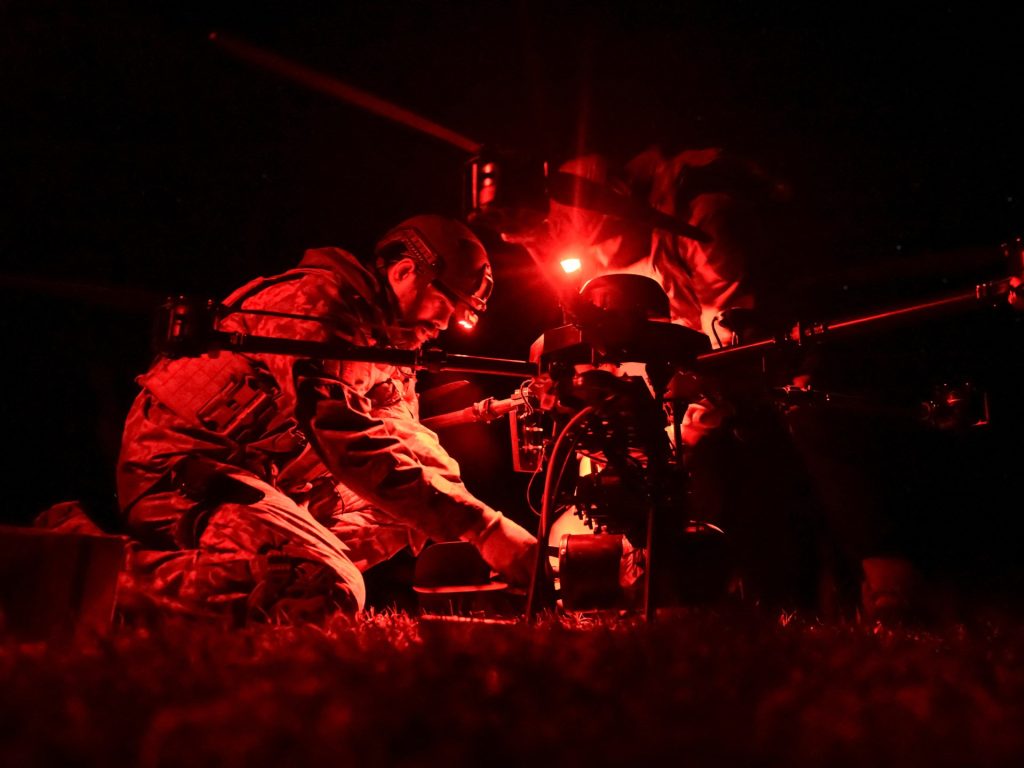
These are the key events on day 1,161 of Russia’s war on Ukraine. Here is where things stand on Wednesday, April 30: Fighting Swarms of Russian drones attacked the Ukrainian cities of Kharkiv and Dnipro late on Tuesday, killing at least one person and wounding at least 38, including two children, officials said. The Russian Ministry of Defence also said it had captured the Ukrainian village of Doroshivka in the northeastern Kharkiv region. The governor of the Ukrainian province of Sumy said Russian troops are trying to carve out a buffer zone in the northeastern region, which borders Russia’s Kursk, but have “not had any significant success”. Earlier on Tuesday, officials said Russian drone attacks overnight killed a 12-year-old girl in Ukraine’s central Dnipropetrovsk region and wounded three people in the capital, Kyiv. Ukrainian officials also ordered the evacuation of seven villages in the eastern Dnipropetrovsk region which used to be remote from the front lines but are now under threat as Russian forces close in. In Russia, a Ukrainian drone slammed into a car on a highway in the Belgorod region, which borders Ukraine, killing two people and wounding three, according to the governor there. Earlier in the day, Russia’s Defence Ministry said it destroyed 91 Ukrainian drones overnight, with 40 of them downed over the border Kursk region. Ukrainian Prime Minister Denys Shmyhal said the country lost almost half its domestic gas production during the winter due to Russian attacks, and is still making up for the shortfall through imports. Advertisement Diplomacy Ukrainian President Volodymyr Zelenskyy again called on Russia to agree to a complete and unconditional ceasefire, after Moscow declared a three-day truce, from May 8-10, to celebrate the 80th anniversary of the victory of the Soviet Union and its allies in World War II. Zelenskyy also told a summit in Warsaw that Russia was “preparing something” in Belarus this summer, using military drills as an excuse. US Secretary of State Marco Rubio warned that the United States would step back as mediator unless Russia and Ukraine delivered “concrete proposals” on ending the three-year war. A spokesperson for Rubio also said that Washington was seeking a “complete, durable ceasefire and an end to the conflict”, not a “three-day moment so you can celebrate something else”. The US has said that this week will be “critical” for peace efforts. The comments came as Russia rejected Ukraine’s proposal to extend the three-day truce to 30 days, saying it would be “difficult to enter into a long-term ceasefire” without first clearing up a number of “questions”. At the Security Council, the UN’s political affairs chief, Rosemary DiCarlo, welcomed the intensified efforts to bring the parties to negotiations, saying they “offer a glimmer of hope for progress towards a ceasefire and an eventual peaceful settlement”. France and the United Kingdom praised US mediation, while criticising Russia. Moscow rejected allegations that Russian forces had targeted civilians in Ukraine, while Kyiv said it could not accept peace at just any cost. France also accused Russia’s military intelligence of staging cyberattacks on a dozen French entities including ministries, defence firms and think tanks since 2021 in an attempt to destabilise the country. Advertisement Politics An investigation by the European nonprofit Forbidden Stories found that Ukrainian journalist Viktoriia Roshchyna, who died in Russian captivity, was tortured and had organs removed before her body was returned. A Russian military court sentenced a man to 27 years in jail for attempting to kill army pilots with poisoned alcohol and cakes at a graduation party on Ukrainian orders. Ukraine has detained defence officials suspected of supplying the army with faulty mortar shells. Latvia has sentenced one of its citizens to six years in prison for fighting for Russian forces in Ukraine, according to the Latvian prosecutor’s office. Adblock test (Why?)
‘Sense of fear’: Harvard reports find anti-Jewish and anti-Muslim bias

Students and staff at Harvard University have faced both anti-Semitism and Islamophobia amid a deeply polarised atmosphere on the campus of one of the top universities in the United States, separate reports have found. The release of the reports on Tuesday follows the establishment of separate task forces on combating anti-Jewish and anti-Muslim sentiment last year amid campus protests over Israel’s war on Gaza. It also comes as Harvard is embroiled in a legal fight with US President Donald Trump over his administration’s decision to freeze more than $2bn in funding for the university, a move Trump claims was taken in response to rampant anti-Semitism on campus. In a statement announcing the findings, Harvard president Alan Garber said that Jewish, Israeli and Zionist community members reported hiding “overt markers of their identities to avoid confrontation”, while Muslim, Arab and Palestinian community members described feeling “judged, misrepresented, and silenced”. “Especially disturbing is the reported willingness of some students to treat each other with disdain rather than sympathy, eager to criticise and ostracize, particularly when afforded the anonymity and distance that social media provides,” Garber said. Advertisement “Some students reported being pushed by their peers to the periphery of campus life because of who they are or what they believe, eroding our shared sense of community in the process.” The task force on combating anti-Semitism and anti-Israeli bias said in its report that bias had been “fomented, practiced, and tolerated” at Harvard and within academia more widely. In an online survey, 26 percent of Jewish students reported feeling physically unsafe, while 39 percent said they did not feel at home at the university, the task force said. Nearly 60 percent of Jewish students reported experiencing “discrimination, stereotyping, or negative bias” due to their opinions, with only 25 percent believing there was no “academic or professional penalty” for expressing their views, the task force said. Among other examples of bias cited in the report, the task force quoted an unnamed Israeli Arab student as saying that Israelis “get used to social discrimination” from their first day on campus. “People refusing to speak to you. Not even pretending to be nice. Some people pretend to be nice and end conversation in [a] polite manner when they find out [I am] Israeli and then don’t talk to [me] again,” the report quoted the student as saying. The task force on combating anti-Muslim, anti-Arab and anti-Palestinian bias found a similar climate of hostility, describing a “deep-seated sense of fear” among students and a state of “uncertainty, abandonment, threat, and isolation” on campus. Advertisement “Muslim women who wear hijab and pro-Palestinian students wearing keffiyehs spoke about facing verbal harassment, being called ‘terrorists,’ and even being spat upon,” the task force said. “The issue of doxxing was particularly highlighted as a significant concern that affects not only physical safety and mental well-being, but also future career prospects,” it added, referring to the practice of disclosing a person’s personal or identifying information online. Nearly half of Muslim students and staff surveyed reported feeling physically unsafe on campus, while 92 percent said they believed they would face professional or academic penalties for expressing political views. “As Muslim students we have been living in constant fear,” the taskforce quoted an unnamed student as saying. “There have been trucks driving around campus for months, displaying the faces of Muslim students… my peers who have lost their jobs simply for being in the leadership of Muslim faith organisations have been left out to dry once they had their offers revoked… If there were antisemitic trucks driving around campus and planes flying over with antisemitic slogans, I cannot help but believe Harvard would have done more to stop it.” Both task forces issued a series of recommendations for combating bias on campus, including expanding access to legal services equipped to combat doxxing and prioritising the admission of students who support open inquiry. Garber said the university would redouble its efforts to ensure it is a place where “ideas are welcomed, entertained, and contested in the spirit of seeking truth” and “mutual respect is the norm”. Advertisement “Especially when tensions are high, we must embrace the challenge of seeing one another as we truly are, unique individuals with complex beliefs and identities, leaving our preconceptions behind and meeting one another with kindness and concern,” he said. Adblock test (Why?)
7 killed after 20-foot-long temple wall collapses during Chandanotsavam festival in Visakhapatnam

The National Disaster Response Force (NDRF) and the State Disaster Response Force (SDRF) were at the scene to carry out search and rescue operations.
Blue state governor makes another appearance with Trump before his 100-day speech: ‘Happy we’re here’
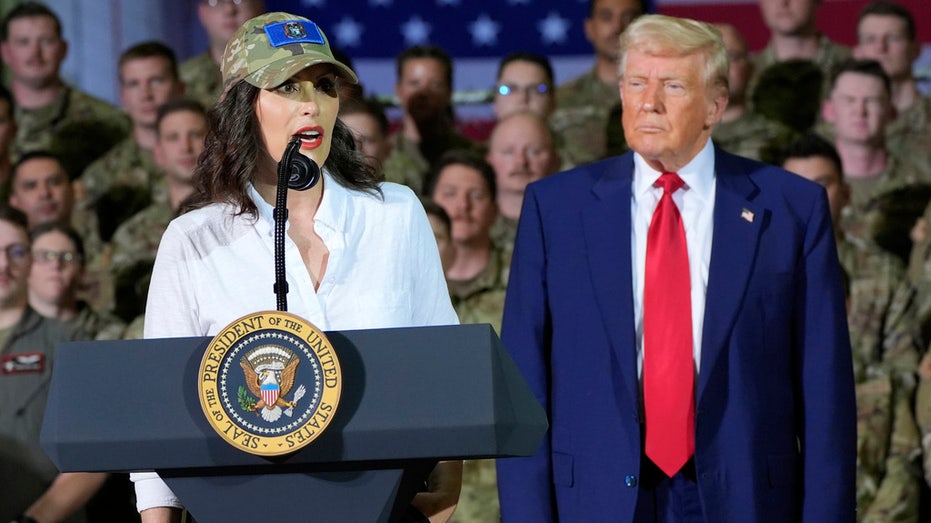
Gov. Gretchen Whitmer, D-Mich., greeted President Donald Trump on the tarmac in Michigan before his speech to National Guard members on Tuesday, where she also spoke at the event without hiding her face. “Well, I hadn’t planned to speak, but on behalf of all the military men and women who serve our country and serve so honorably on behalf of the State of Michigan, I am really damn happy we’re here,” Whitmer said. Fox News co-host Judge Jeanine Pirro said on “The Five” Tuesday that Whitmer had a chance to set the tone for the Democratic Party. “I think that…of course, she’s there because of the troops, but there are some Democrats who wouldn’t be in the same room with Donald Trump,” Pirro said. “I think that she did the right thing, and I think that wanting to work with the president to bring back manufacturing to Michigan is a smart move.” WHITMER DITCHES DEM PLAYBOOK ON TRUMP’S TARIFFS AMID 2028 SPECULATION During the event on Tuesday, Trump unveiled plans to swap out the retiring A-10 Warthog aircraft based out of Selfridge Air National Guard Base in Michigan with 21 brand-new F-15EX Eagle II fighter jets. Trump shared the details during a speech to National Guard members at the Michigan base before an event commemorating his 100th day in office. “So I want to thank Governor Gretchen Whitmer for bringing it also to our attention very strongly. And, you know, I’m not supposed to do that. She’s a Democrat. They say, ‘Don’t do that. Don’t have her here.’ I said, ‘No, she’s going to be here,’” Trump said. “She’s done a very good job, frankly. And she’s she was very much involved with, with the Republicans. They worked together on saving it. And it was not easy. So I want to thank you very much, Gretchen. Good job.” DEM GOVERNORS REVOLT AGAINST TRUMP’S ‘LIBERATION DAY’ TARIFFS Whitmer’s presence Tuesday came a few weeks after seemingly hiding her face during a meeting with Trump in the Oval Office. Whitmer was criticized for shielding her face with a folder as a photo of the moment became a meme on social media. She poked fun at the now-viral moment by once again holding folders up in front of her face when asked about her trip to Washington, D.C., during an event at the Detroit Economic Club after the meeting with the president. “… I don’t want my picture taken, that’s all it was. I kind of wished I hadn’t put my folder up in front of my face, but whatever. You know I was there … I just wrote a book about learning to laugh at yourself, so I’m pretty good at it. We all have our moments,” Whitmer said. GRETCHEN WHITMER RIBBED ONLINE FOR SEEMING TO HIDE FACE IN OVAL OFFICE The governor’s trip to Washington brought her 2028 presidential ambitions into the national conversation as she struck a diplomatic tone with Trump. She carefully criticized Trump’s tariffs while saying she understood the “motivation behind the tariffs” and even agreeing with Trump that we “need to make more stuff in America.” Whitmer’s Oval Office moment marked her second meeting with Trump in less than a month, and Tuesday’s meeting now marks the third. As Trump signed executive orders from the Oval Office on April 9 and answered questions from the press, he said Whitmer had “done an excellent job” as governor and called her a “very good person,” a break from his typical lines of attack on her character. CLICK HERE TO GET THE FOX NEWS APP When Trump signed the executive orders calling for the investigation of two first-term administration aides who were critical of his actions, Whitmer’s office said she was brought into the room “without any notice” and that her appearance was “not an endorsement of the actions taken or statements made.” But Trump called the issues “bipartisan” and jokingly added, “We’ll all stand there together and cut a ribbon. OK, Gretchen?” Fox News Digital’s Diana Stancy and Deirdre Heavey contributed to this report.
At least 14 killed as fire rips through hotel in central Kolkata, special probe team formed

The incident occurred around 8:15 km at Rituraj Hotel. The fire has been brought under control, Kolkata Police Commissioner Manoj Kumar Verma told reporters.