

Houston Rockets owner Tilman Fertitta confirmed as Trump’s ambassador to Italy
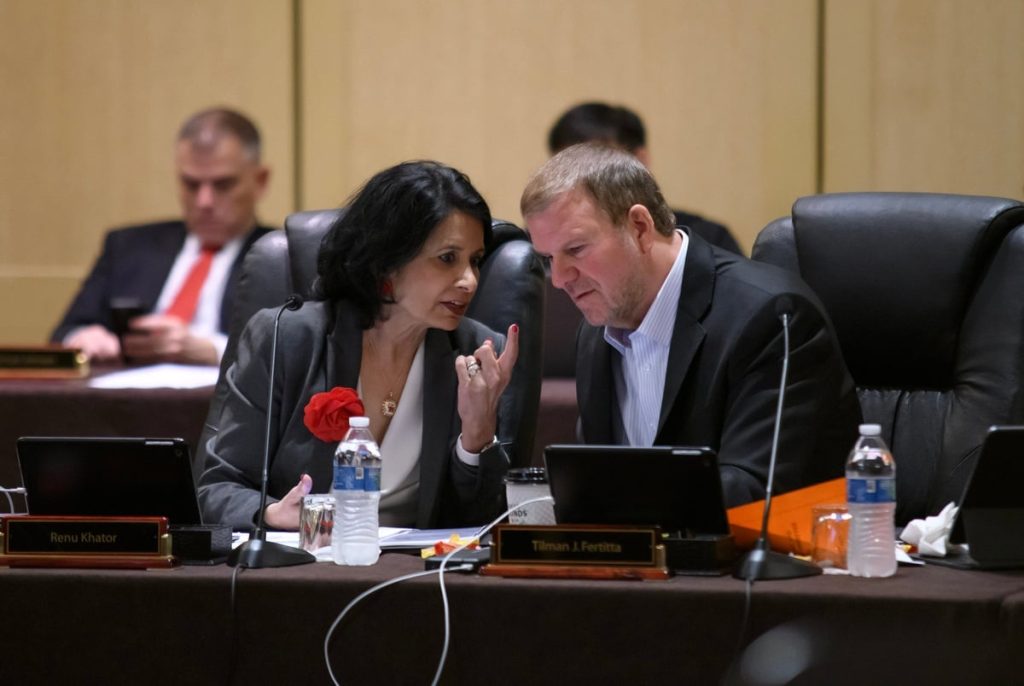
The Texas billionaire has said he will drop his position at Landry’s, but will continue his ownership of the Houston Rockets.
Schumer kicks off Democrat all-nighter marathon railing against Trump’s 100 days: He’s ‘being a mob boss’
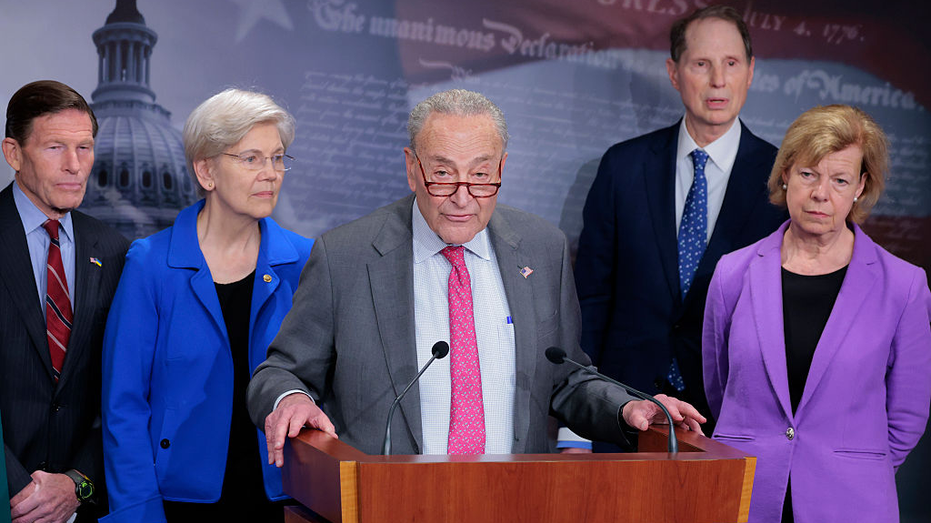
Senate Minority Leader Charles Schumer, D-N.Y., saved little deference for his fellow New York native when he kicked off what he previously advertised as an all-nighter on the Senate floor by Democrats planning to rail against President Donald Trump for actions over his first 100 days. Speaking just before the endeavor was interrupted by two scheduled votes including the final ambassadorship confirmation of the day, Schumer said it has been 100 days of “corruption [and] cronyism” that are “forcing much higher costs on the American people – it really is awful.” “[T]his is a threat to our democratic republic. He’s acting like a king, a mob boss, a wannabe dictator,” Schumer fumed. “He said he wanted to be a dictator on day one. It looks like he’s extending it – Any quarter of opposition that might just say something in our tradition of free speech and debate, he tries to crush: crush the law firms, crush the universities, go after the judges, which have been the foundation of our republic; that judges are independent and are were able to stop an executive that’s going too far.” DEM SENATORS RIP GOP’S ‘SILENCE OF THE LAMBS’ AS TRUMP MARKS 100TH DAY “Let us commit ourselves, all of us Democrats here in the Senate, against this administration, and to uphold the core values and principles of this beautiful nation which we must fight to preserve and protect.” Earlier in the day, Schumer had been challenged by CNN’s Manu Raju on his sinking poll numbers within his party. Schumer dismissed the charge: “Polls come and go: our party is united.” Sen. Richard Blumenthal, D-Conn., also took shots at the president, saying his administration has been “cruel… and dumb.” DAVID PERDUE CONFIRMED AS TRUMP’S TOP CHINA DIPLOMAT AFTER KEY SENATE VOTE “The turmoil and turbulence has produced confusion – and yes, anxiety, deep fear and apprehension about the future of this country,” he said. Sen. Tammy Baldwin, D-Wis., began her remarks Tuesday by lamenting what she called the “unimaginable amount of havoc and harm President Donald Trump has caused for Wisconsinites.” “While on the campaign trail and even once in office, the president made a staggering number of promises — promises to end wars on day one, promises to lower costs at the grocery store on day one – promises to make health care more affordable, and the list goes on and on and on.” CLICK HERE TO GET THE FOX NEWS APP White House press secretary Karoline Leavitt told Fox News Digital when asked about the remarks, “In his first 100 days, President Trump has delivered on hundreds of promises and already accomplished his two most important campaign goals — the border is secure and inflation is ending.” “The next 100 days will consist of trade deals, peace deals, and tax cuts. More American greatness is on the way,” Leavitt said. Interrupted again by a procedural vote on an energy-standards bill from Sen. Jon Husted, R-Ohio, the all-nighter, is expected to continue thereafter.
Trump wagers US economy in high-stakes tariff gamble at 100-day mark
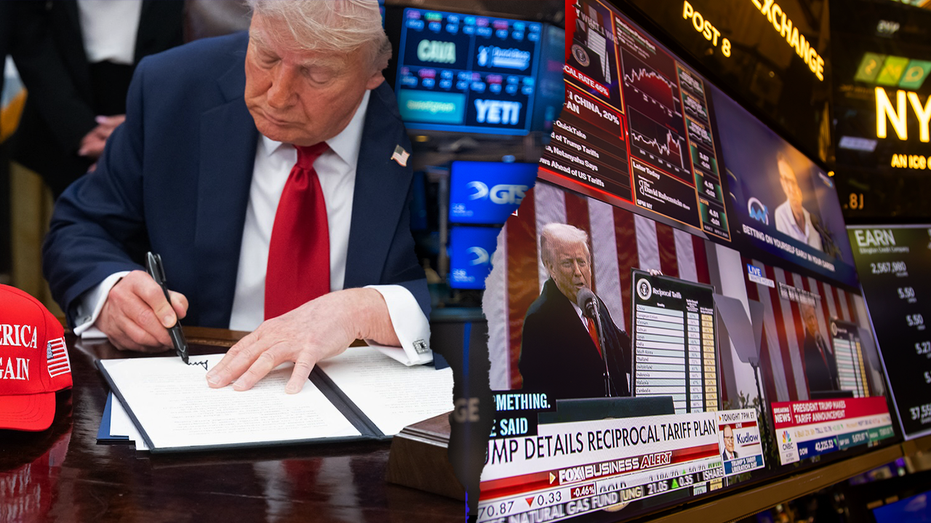
President Donald Trump campaigned for a second term on pledges to lower prices, create jobs and impose tough tariffs on imports, especially from China. Dubbing himself the “Tariff Man” last fall, he told an audience at the Economic Club of Chicago, “To me, the most beautiful word in the dictionary is tariff.” However, in his first months in office, it is unclear whether Trump can, or should, implement the harsh reciprocal tariffs he announced in April against dozens of countries. Now, 100 days into his second term, economists told Fox News Digital they see these proposed reciprocal tariffs as politically motivated, unnecessary and failing to secure the benefits from U.S. trading partners that Trump had been hoping for. CHINA IS ‘CAVING’ TO TRUMP’S TRADE WAR STRATEGY, EXPERT SIGNALS Instead, they warned, Trump’s tariffs could grind billions of dollars in trade to a halt between the world’s two largest economies, disrupt global supply chains and risk torpedoing the U.S. economy into a major slump or recession. When Trump took office, chances of recession “were probably about 10%,” Justin Wolfers, an economist at the University of Michigan, told Fox News Digital in an interview. “Now, they’re up to around 55%.” It is unclear whether Trump will continue to push through with these unpopular tariffs, which are slated to take force in early July. In the near-term, uncertainty and volatility remain. Trump announced tariffs on April 2, dubbed “Liberation Day.” The announcement included both a 10% universal baseline tariff and plans to enact larger tariffs on dozens of other countries, including China. These new import taxes immediately sent stock markets into free-fall, triggering one of the largest single-day S&P 500 losses since World War II, and prompting deep and unyielding uncertainty over possible next moves. “The only thing that’s happened that has pushed the odds of a recession up so high, so fast, is chaos coming from out of the White House,” Wolfers said. Trump subsequently paused the reciprocal tariffs for 90 days to encourage the administration to make “deals” with countries on trade and encourage more investment in U.S. manufacturing. Even so, some prices have already risen in anticipation of higher costs under the new tariff regime. Uncertainty has also played a role. Trump’s tariff announcement in April prompted a number of large container ships to abruptly halt their shipments to the U.S. earlier this month and turn back to their original ports. This means that more consumers will see a price hike for everyday products, likely at certain big-box retailer stores like Walmart or Target, as early as next month. These price hikes are “not showing up tomorrow, but will show up over the next few months, as scarcities develop and American retailers have to find other sources – that might take a while,” David H. Feldman, an economist and professor at William & Mary College, said in an interview. TRUMP’S ULTIMATUM TO FEDERAL WORKERS: RETURN TO OFFICE ‘OR BE TERMINATED’ While Trump says tariffs will target foreign competitors and reduce the trade deficit, the costs will fall mostly on working- and middle-class Americans who buy the bulk of imported goods. Wolfers said Trump’s focus on the trade “deficit” is based on a common misconception. “What that means is we sell China a small amount of stuff, and they sell us a large amount of stuff,” he explained. However, for every dollar bill that goes to China, the U.S. gets something for it that Americans want to buy, like T-shirts. “We have a dollar deficit – but we have a stuff surplus.” There are few signs that Trump’s tariffs will deliver the gains he sought, such as onshoring U.S. production or securing better trade deals, particularly with Asian countries. Instead, experts warn these countries are likely to circumvent U.S. markets and supply chains over time. “If these tariffs stay in place, there will be hardly any trade between the U.S. and China,” by the second half of the year, Gary Clyde Hufbauer, a senior non-resident fellow at the Peterson Institute for International Economics, said in an interview. Roughly $650 billion in annual trade between the two countries is at risk, along with knock-down effects on global commerce in the long term. WORLD LEADERS REACT AS TRUMP RE-ENTERS THE WHITE HOUSE Trump’s tariffs also discard decades of international understanding that has depoliticized trade disputes, Feldman said. The U.S. is “moving from a system that at least was based on mutually acceptable rules of behavior to a system that does not have that as its anchor,” Feldman, whose research focuses on global trade policy, told Fox News Digital. That shift allows the government to target foreign nations individually and offer selective tariff relief to firms and industries “if they do ‘our’ bidding,” he argued. “America is now master of the shakedown.” After market backlash, Trump appears to be warming to the idea of easing his proposed 145% reciprocal tariffs on China, which has vowed to impose its own retaliatory measures on U.S. goods. Economists say he is more likely to do so if the economy sours, or he sees a major drop in poll numbers, if the past is precedent. Still, any path to deescalation remains uncertain. Just last week, China denied Trump’s claim that the two countries were negotiating a tariff deal, after he asserted in an interview that he had reached “200 deals” on trade. Economists believe Trump will at least partially scale back the tariffs before July but warn he is playing a high-stakes game of brinkmanship that could hit U.S. consumers and businesses hardest. “What I worry about is that the immediate impact of uncertainty is on business investment in trade-exposed industries, leading to a recession,” Feldman said. “But it could get worse, if it transmits into a financial panic. And if everyone starts to say, ‘geez, I got to get into gold and cash, I can’t be in Treasury bills.’ If we move into a flight to cash, all bets are off.” Should that happen, he said,
DOGE terminates billions in contracts, including $361K for ‘gender non-conforming, non-binary’ BIPOC farmers
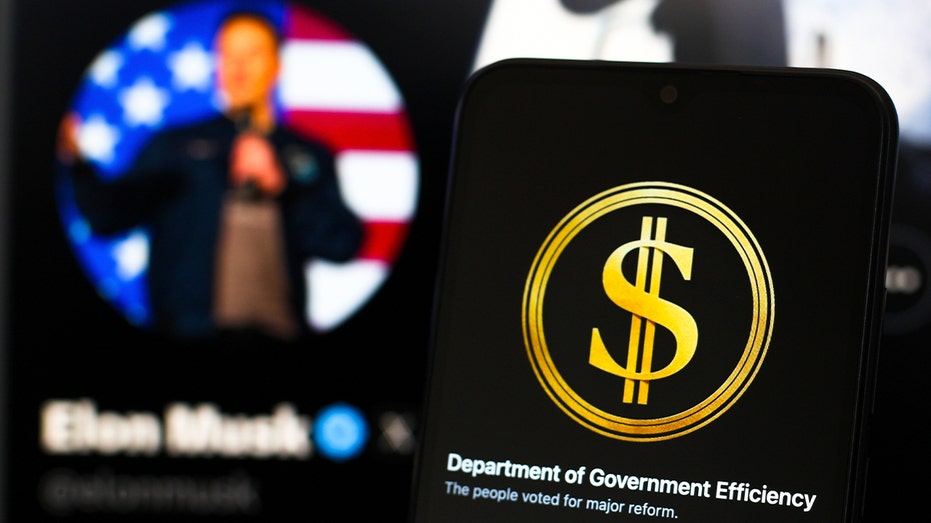
The Department of Agriculture (USDA) terminad $2.5 billion in “wasteful” grants that went toward gender-based causes, the Department of Government Efficiency (DOGE) said Tuesday. The USDA got rid of 420 grants for a savings of $2.3 billion, according to DOGE. Among the programs the money was used for, $361,000 went toward “gender non-conforming, non-binary, two-spirit” BIPOC (Black, Indigenous, and people of color) farmers in New York. HOW A DOGE REVIEW CAN ACTUALLY IMPROVE THE PROGRAMS THAT FIGHT HIV/AIDS Another $150,000 was used for “gender-lensed curricula designed to be transdisciplinary in the food, agriculture, natural resources and human sciences.” Even Ghana benefited, with $100,000 earmarked for “climate resilience and sustainable agriculture” in the African nation. DOGE SLASHES ‘WASTEFUL’ ‘PROBLEM-SOLVING’ CONTRACT WORTH $50K IN LATEST ROUND OF ELIMINATIONS In addition, federal agencies eliminated 179 contracts with a ceiling value of $1.87 billion and savings of $280 million. CLICK HERE TO GET THE FOX NEWS APP The federal government spent $207,000 on a U.S. Department of Health and Human Services consulting contract for a “grant writing workshop” and an $89,000 Treasury Department contract for a “country program manager in Namibia.” Another $1.8 million Trade & Development contract was spent on “energy and climate advisory services.”
57 transfers in 34 years: Meet IAS Ashok Khemka, IIT graduate, who is retiring today, came to limelight in 2012 due to…

Over his entire career, on average, he has been transferred about every six months. In the past more than 12 years, IAS Khemka has been posted in departments considered ‘low profile’.
DOGE, Treasury discover $334M in improper payment requests due to foul codes

The U.S. Treasury Department and the Department of Government Efficiency (DOGE) discovered that hundreds of millions of dollars in improper payment requests were identified after going live with its first automated payment system last week. In fact, the system found $334 million in improper payment requests that were flagged because of missing budget codes, invalid budget codes and budget codes without authorization. DOGE, which is led by billionaire Elon Musk, announced the discovery in a post on X. In the post, DOGE said an example of an invalid budget code was if the payment was not linked to the budget. It also provided an example of a budget code without authorization, saying the budget had already been fully spent. DOGE SAYS IT FOUND NEARLY UNTRACEABLE BUDGET LINE ITEM RESPONSIBLE FOR $4.7T IN PAYMENTS The news comes months after DOGE learned about an identification code linking U.S. Treasury payments to a budget line item that accounted for nearly $4.7 trillion in payments, which was oftentimes left blank. “The Treasury Access Symbol (TAS) is an identification code linking a Treasury payment to a budget line item (standard financial process),” DOGE wrote in a post on X in February. “In the Federal Government, the TAS field was optional for ~$4.7 Trillion in payments and was often left blank, making traceability almost impossible. As of Saturday, this is now a required field, increasing insight into where money is actually going.” DOGE SLASHES ‘WASTEFUL’ ‘PROBLEM-SOLVING’ CONTRACT WORTH $50K IN LATEST ROUND OF ELIMINATIONS DOGE thanked the U.S. Treasury for its work in identifying the optional field. According to the Bureau of the Fiscal Service, which is under the Treasury, TAS codes are used to describe any one of the account identification codes assigned by the Treasury and are also referred to as the “account.” All financial transactions made by the federal government are classified by TAS when reporting to the Treasury and the Office of Management and Budget. FOX NEWS POLL: THE FIRST 100 DAYS OF PRESIDENT TRUMP’S SECOND TERM DOGE’s announcement on Tuesday comes as it continues to find savings and fraud across all aspects of the government. CLICK HERE TO GET THE FOX NEWS APP On the department’s site, it says $160 billion in savings have been discovered, equating to $993.70 in savings per taxpayer. DOGE has been aggressive in its mission to root out wasteful spending and to downsize the scope of the federal government.
Trump roasted Dem critics, media with new nicknames in first 100 days online: ‘Watermelon-Head’
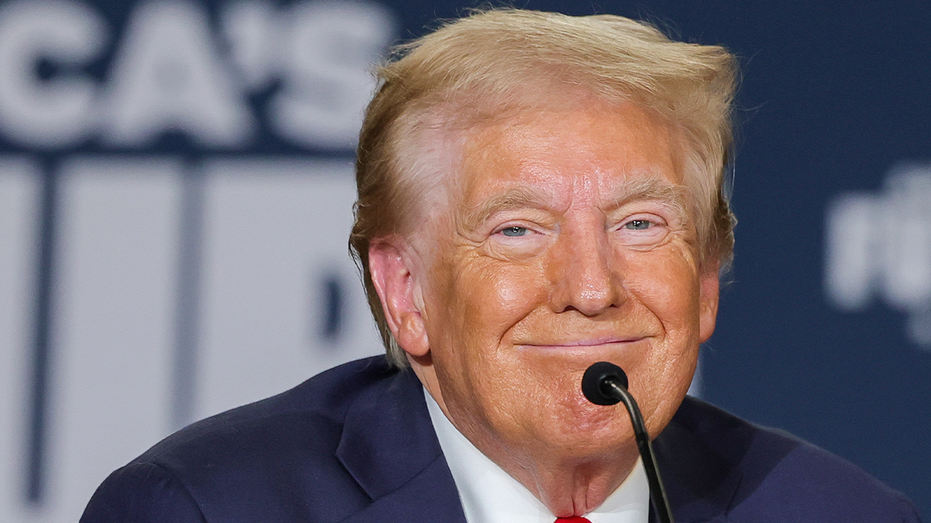
President Donald Trump has been unafraid to publicly blast Democrats and the liberal media during his first 100 days in office, continuing a similar trend from his first term. In one high-profile skirmish, Trump publicly berated Maine’s Democrat. Gov. Janet Mills for defying his executive order barring biological males who identify as transgender from competing in women’s sports. “Your population doesn’t want men playing in women’s sports, so you better comply because otherwise you’re not getting any federal funding,” Trump told Mills during a meeting of the nation’s governors at the White House in February. Mills argued she would “see [him] ion court” over the matter, to which the president responded: “I look forward to that. That should be a real easy one.” TRUMP TOOK ON THE ‘ENTIRE’ INTERNATIONAL GLOBAL WORLD ORDER WITH TARIFFS: JOURNALIST “Enjoy your life after governor,” he added, “because I don’t think you’ll be in elected politics.” A second notable clash with Democrats came during Trump’s joint address to Congress in March. Several Democrats held up anti-Trump signs, shouted and moaned in the middle of Trump’s speech, and some ultimately walked out. Progressive Democratic Rep. Al Green of Texas had to be escorted out of the House chamber because he would not stop disrupting the president’s speech and was subsequently censured by members of his own party over the stunt. “I realize there is absolutely nothing I can say to make them happy or make them stand and smile or applaud,” Trump said during his address, looking toward the Democrats’ side of the House chamber. “I could find a cure to the most devastating diseases. A disease that would wipe out entire nations, or announce the answers to the greatest economy in history… and these people sitting right here will not clap, will not stand, and certainly will not cheer for these astronomical achievements.” PROMISES MADE, PROMISES KEPT: HOW TRUMP’S FIRST 100 DAYS STACK UP AGAINST INAUGURATION DAY PLEDGES “It’s very sad,” Trump added. “And it just shouldn’t be this way.” The press has not been spared from public lashings by Trump during his second term, either. In one notable back-and-forth, Trump was asked by a reporter in the Oval Office whether he thought he had the legal authority to mass deport illegal aliens. In response, the president flipped the script on the reporter, asking in return: “Did Biden have the authority to allow millions of people to come into our country?” In another testy back-and-forth with reporters, this time aboard Air Force One, Trump did not mince words with a reporter from Bloomberg who questioned Trump about his tariffs. HOW DONALD TRUMP DOMINATES THE NEWS, BOTH POSITIVELY AND NEGATIVELY “I think your questions are so stupid,” Trump told the reporter aboard Air Force One after he was asked if there was any “pain in the market at some point you’re unwilling to tolerate?” “I don’t want anything to go down, but sometimes you have to take medicine to fix something,” Trump shot back. “And we have such a horrible, we have been treated so badly, by other countries because we had stupid leadership that allowed this to happen.” Trump’s public lashings of Democrats and the media have also included new nicknames for the president’s political opponents. One of those targets, Sen. Adam Schiff, D-Calif., garnered himself a new nickname this term: “Watermelon-Head.” The nickname follows Trump’s first-term nickname he gave to Schiff: “Pencil neck.” TRUMP WHITE HOUSE TAKES 100-DAY VICTORY LAP ON REFORMING KEY AGENCY AMID FIERCE PUSHBACK “Adam ‘Schifty’ Schiff – can you believe this guy?” Trump said at a dinner hosted by the National Republican Congressional Committee earlier this month. “He’s got the smallest neck I’ve ever seen – and the biggest head: We call him Watermelon-Head.” Trump went on to ponder how Schiff’s “big fat face” could “stand on a neck” the size of the president’s finger. “It’s the weirdest thing – it’s a mystery; no one can understand it.” Another Trump nickname to come from his first 100 days did not target a specific person, but Democrats as a whole who have been against his tariff policies. “The United States has a chance to do something that should have been done DECADES AGO. Don’t be Weak! Don’t be Stupid! Don’t be a PANICAN (A new party based on Weak and Stupid people!),” Trump wrote in a post on his social media platform Truth Social earlier this month. “Be Strong, Courageous, and Patient, and GREATNESS will be the result!”
EXCLUSIVE: Cattle industry chief warns flesh-eating fly menaces US herds as Mexico yields on pest fight

The nation’s top cattle industry leader sounded the alarm Tuesday that a flesh-eating fly infestation advancing through Mexico remains a dire threat to U.S. ranchers, even as the Trump administration claimed a key victory in efforts to stop it. Buck Wehrbein, president of the National Cattlemen’s Beef Association (NCBA) and a cattle feeder from eastern Nebraska, praised Agriculture Secretary Brooke Rollins for taking aggressive action against the outbreak of the New World screwworm, a parasitic fly whose larvae can burrow into the flesh of livestock and often cause fatal wounds. But Wehrbein warned that with just one day left before a U.S. ultimatum expires, “the crisis is far from over” and American cattle herds remain in jeopardy. “If this screwworm crosses into the United States, it could devastate our industry,” Wehrbein told Fox News Digital in an exclusive interview. USDA THREATENS TO HALT MEXICAN BEEF IMPORTS OVER FLESH-EATING FLY CRISIS’ “These parasites literally eat livestock alive. We eradicated them from the U.S. in the 1960s, and we’re not about to let them take hold here again.” Wehrbein noted that the U.S. government spent millions of dollars to wipe out New World screwworm decades ago – only for the pest to reemerge in Central America and begin creeping northward toward Texas. The screwworm was first detected in southern Mexico late last year, prompting U.S. authorities to scramble resources to contain it. The USDA temporarily halted imports of Mexican cattle from late November until February after a screwworm case surfaced in Chiapas, underscoring how seriously officials view the threat to America’s food supply. MAINE’S FEDERAL FUNDING FREEZE FROM TRUMP’S USDA REVERSED Now, U.S. agriculture officials are racing to build a final barrier against the flesh-eating fly before it reaches the border. For decades, the United States and Mexico have relied on a sophisticated sterile insect technique (SIT) program, using aircraft to release millions of sterile male flies to keep screwworm populations in check. But that strategy was recently thrown into chaos amid bureaucratic interference by Mexican authorities, who U.S. officials say blocked and delayed critical fly-release missions just as the outbreak intensified. According to the USDA and cattle industry representatives, Mexico “failed to uphold their end” of the bi-national eradication effort by refusing landing permissions, charging import duties on U.S.-funded equipment and limiting fly drops to six days a week, conditions that officials say allowed the pest to spread further. Wehrbein did not hide his frustration. “We were pulling our hair out,” he said. “The science is there to stop this bug, but not if the planes are grounded over paperwork. Every day of delay gave the screwworm a bigger foothold.” In an April 26 letter obtained by Fox News Digital, Secretary Rollins gave Mexico an April 30 deadline to resolve the issues or face a halt in the import of live cattle, bison and equine, a move that would strike a blow to Mexico’s ranching economy and tighten U.S. supply chains already under pressure. “It certainly got their attention,” Wehrbein noted. “No one wants to shut down trade. That’s a last resort that would hurt producers on both sides. But Secretary Rollins and President Trump made it crystal clear that protecting America’s herds comes first.” Wehrbein said the NCBA met with senior Mexican embassy officials in Washington last week to emphasize the urgency. “Ranchers in Mexico and the U.S. are on the same side here. We need this pest stopped,” Wehrbein said. “It shouldn’t take high-level threats to get commonsense cooperation.” On Tuesday, Rollins posted on X that Mexico has agreed to allow U.S. sterile fly planes to land, calling it “a HUGE win for our American ranchers!” Fox News Digital has reached out to Secretary Rollins’ office for further details and confirmation but has not yet received a response. Wehrbein welcomed the announcement, saying it marked a turning point, but not the end of the threat. “Getting those fly planes back in the air is absolutely critical. It’s a relief to see Mexico finally do the right thing,” he said. “Frankly, it should never have taken this long. But at least now we have a fighting chance to contain the outbreak before it reaches our border.” While the flight permissions appear to have been restored, it remains unclear whether Mexico will waive the import duties or allow seven-day operations, both of which the USDA had demanded. Rollins has also called for a senior liaison from the Mexican government to ensure faster coordination moving forward. Longer term, Wehrbein said the U.S. needs to reconsider how much it relies on outside partners for biosecurity. “This situation shows why we need our own domestic supply of sterile flies,” he said. “If we had a facility here at home cranking them out, we wouldn’t be at the mercy of another country’s cooperation.” A veteran of the cattle industry, Wehrbein was raised on a farm in eastern Nebraska and spent years working in Texas commercial cattle feeding. He now operates a feedlot just outside Omaha and has served in leadership roles at both the state and national level. This year, he was elected president of the NCBA, the country’s largest and oldest organization representing cattle producers, and has become the group’s key voice in Washington. CLICK HERE TO GET THE FOX NEWS APP “We love this industry. We’re proud to feed the country and the world,” Wehrbein said. “But it takes vigilance, cooperation and leadership to protect it. The screwworm is a reminder that we’re always one outbreak away from disaster, and we’ve got to stay ahead of it.” Fox News Digital’s Bill Melugin contributed to this report.
The Texas House wants voters to approve billions to save the state’s water supply

The Senate has a similar proposal, but is more prescriptive in how the money should be spent. The two chambers must agree on the final proposal to send to voters.
Texas House approves antisemitism bill in response to pro-Palestinian protests

The bill, which would require schools to use a definition of antisemitism when considering discipline for students, will soon head over to Abbott’s desk.