

This former PM is only Indian to receive both Bharat Ratna and Nishan-e-Pakistan, his name is…
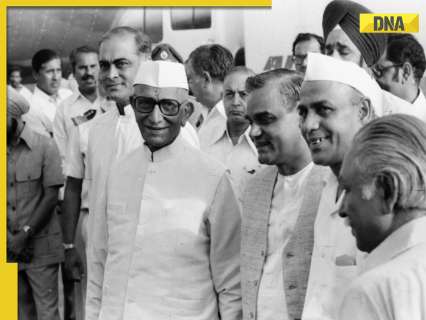
Born in Gujarat, he played a key role in India’s freedom struggle and later became the Prime Minister of India.
Ambedkar Jayanti 2025: History, significance, inspirational quotes, here’s all you need to know
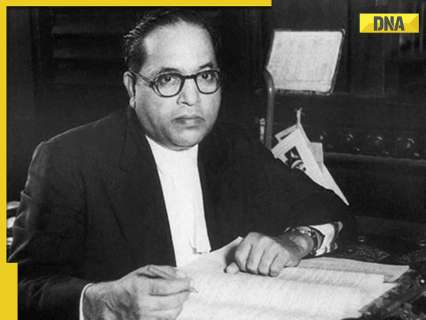
Ambedkar Jayanti is a way to remember Bhimrao Ramji Ambedkar’s, who is also known as the Father of the Indian Constitution, life and honour his continuous efforts for social justice, equality, and human rights.
Ambedkar Jayanti 2025: Are banks open or closed on April 14? check state-wise list here
Essential services such as hospitals, general stores, and ration shops are expected to function normally.
Delhi-Meerut RRTS: NCRTC begins Namo Bharat train trial runs between key stations; check details

The stretch between the two stations spans about 4.5 kilometres. Once operational, this link will allow smooth, air-conditioned train services to Meerut.
Trump takes swipe at Biden, says US will support Somalia against Houthis
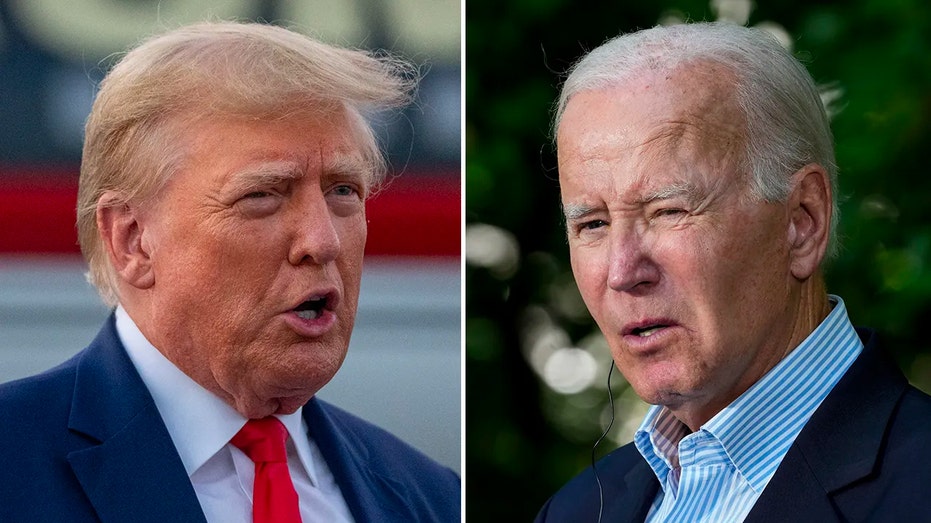
President Donald Trump issued a stern warning to the Houthis by saying it was time for them to hide now that he has removed “dangerous red tape” from the Biden administration, allowing U.S. troops to protect Somalia against terrorists. “Time for the terrorists to hide, but it won’t do them any good. Our Warfighters, the Greatest the World has ever seen, will find them, and bring them to a swift Justice,” Trump wrote in a post on Truth Social. “I just got rid of Joe Biden’s dangerous red tape, and empowered our Warfighters, once again, just like I did against our fight with ISIS, who were completely obliterated in three weeks under General Daniel Caine, our new Chairman of the Joint Chiefs of Staff. “We will support the Somali People, who should not allow the Houthis to embed (which they are trying to do!), to end terrorism, and bring prosperity to their Country,” the president added. Fox News Digital has reached out to the State Department on the matter and is waiting to hear back. TRUMP TOUTS AIRSTRIKE ON HOUTHIS, SHOWING VIDEO: WILL ‘NEVER SINK OUR SHIPS AGAIN’ For years, the U.S. has helped Somali forces with airstrikes and other support against the al-Shabab extremist group and an affiliate of the Islamic State, or ISIS. Last month, Somali President Hassan Sheikh Mohamud drafted a letter to Trump offering the U.S. exclusive access to air bases and seaports, which reignited tensions between the government of Somalia and the breakaway region of Somaliland, the Associated Press reported. In the letter, Somalia offered “exclusive operational control” over the Berbera and Baledogle air bases and the ports of Berbera and Bosaso to “bolster American engagement in the region.” LEADER OF SOMALIA’S BREAKAWAY SOMALILAND SAYS DEAL WITH ETHIOPIA WILL ALLOW IT TO BUILD A NAVAL BASE The letter was dated March 16 and leaked on social media during the last week of March. In it, the Somali leader spoke of “ensuring uninterrupted military and logistical access while preventing external competitors from establishing a presence in this critical corridor.” The letter was confirmed as “an authentic draft” by a senior official in Somalia’s foreign ministry, who spoke to the AP on condition of anonymity because he was not authorized to give press interviews. US FORCES CARRY OUT AIRSTRIKE IN SOUTHERN SOMALIA, KILLING 3 AL-SHABAAB TERRORISTS The official was not sure if the final letter, which made the same offer, was sent. One of the ports, Berbera, is in a key city located in Somaliland, whose long assertion as an independent state has not received international recognition. Somaliland, a former British protectorate, declared independence from Somalia in 1991 after the collapse of the central government. It maintains its own government, security forces and currency and has held elections. The Associated Press contributed to this report.
Trump vows nobody getting ‘off the hook’ for ‘unfair’ trade balances, says there was no tariff ‘exception’
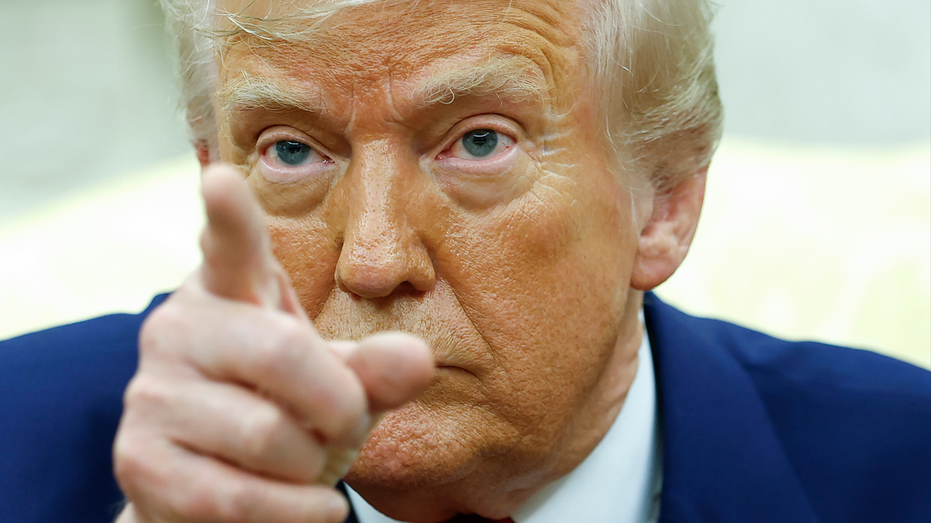
President Donald Trump vowed on Sunday that nobody was getting “off the hook” for unfair trade balances and tariff barriers, which other countries have used against the U.S. The Trump administration announced Friday that it was exempting imported smartphones, laptops and other electronics from reciprocal tariffs, but the president wanted to clear a few things up. “There was no Tariff ‘exception’ announced on Friday,” Trump said in a post on X on Sunday. “These products are subject to the existing 20% Fentanyl Tariffs, and they are just moving to a different Tariff ‘bucket.’ The Fake News knows this, but refuses to report it. We are taking a look at Semiconductors and the WHOLE ELECTRONICS SUPPLY CHAIN in the upcoming National Security Tariff Investigations. “What has been exposed is that we need to make products in the United States, and that we will not be held hostage by other Countries, especially hostile trading Nations like China, which will do everything within its power to disrespect the American People,” he continued. “We also cannot let them continue to abuse us on Trade, like they have for decades, THOSE DAYS ARE OVER!” TRUMP’S TARIFF BLITZ NOW EXEMPTING ELECTRICAL GOODS LIKE PHONES, LAPTOPS Trump closed out his post by saying the Golden Age of America will mean “more and better paying jobs” as well as making products in the U.S. and treating other countries as they have treated America. “The bottom line is that our Country will be bigger, better, and stronger than ever before,” he said. “We will MAKE AMERICA GREAT AGAIN!” Customs and Border Protection issued new guidance on reciprocal tariff negotiations late Friday, noting the exemption of those goods from Trump’s April 2 executive order that declared a national emergency due to non-reciprocal trade practices and structural imbalances in the global trading system. Subsequent executive orders ramped up tariffs on China to 125%. ‘DEAL-MAKER-IN-CHIEF’: BEHIND THE SCENES OF TRUMP’S TARIFF PAUSE, WHERE HE HAS FINAL SAY OVER NEGOTIATIONS The updated guidance, which cites a presidential memorandum issued Friday, excluded the products from Trump’s 125% China tariff and his baseline 10% global tariff on some countries. They apply to goods that left a warehouse as of April 5. The new move will likely ease the blow for consumers while giving a boost to electronics giants such as Apple, Samsung and Dell. A White House official confirmed to Fox News that the exemptions were put in place. CHINA REFUSES TO BACK DOWN ON TARIFFS AFTER TRUMP THREATENED TOUGHER MEASURES Products included in the exemption are things like hard drives, computer processors, solar cells, semiconductor manufacturing equipment, flat-panel TV displays and memory chips. But in light of the easing of tariffs on electronics, Commerce Secretary Howard Lutnick said Sunday the exemption would be temporary. “They’re exempt from the reciprocal tariffs, but they’re included in the semiconductor tariffs, which are coming in probably a month or two,” Lutnick told ABC’s “This Week” on Sunday. Lutnick’s comments Sunday made clear that more changes were on the horizon. Trump told reporters on Air Force One on Saturday night that he would get into more specifics on exemptions on Monday. “We’ve been making a lot of money,” he said. “It’s been the other way around. Other countries, in particular China, was making a lot of money.” CLICK HERE TO READ MORE ON FOX BUSINESS In a statement issued Saturday, White House press secretary Karoline Leavitt did not specifically address the exemptions but indicated the administration still plans to push for tech companies to move manufacturing to the U.S. She said the administration has secured U.S. investments from tech companies, including Apple, TSMC and Nvidia, that are “hustling to onshore their manufacturing in the United States as soon as possible.” Fox News Digital’s Michael Dorgan, Brie Stimson and Sarah Tobianski, as well as the Associated Press, contributed to this report.
How the sick and injured fled as Israel bombed Gaza’s al-Ahli Hospital
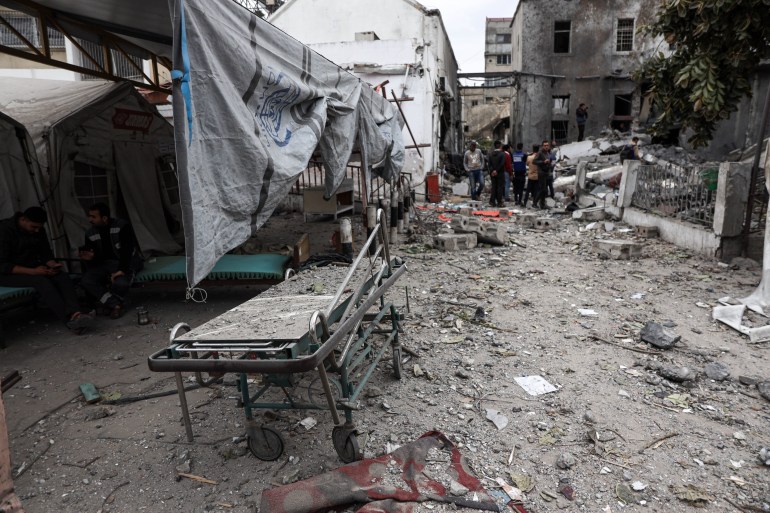
Gaza City, Gaza – Yousef Abu Sakran was dozing next to his injured child and wife, Iman, in a tent ward at al-Ahli Arab Hospital when the sounds of people running and shouting woke him up. He stepped into the hospital courtyard well before dawn on Sunday to ask what was happening but found no clear answer, only vague news that the Israeli army had made calls to people living around the hospital, demanding the expulsion of everyone in the medical facility. The 29-year-old father reacted instantly. He scooped up his five-year-old son, Mohammad, and he and Iman ran towards the gate. Mohammad has severe injuries across his body, including third-degree burns on his back and legs, but Yousef had to keep running with him. “I was carrying my son, whose body was burned, and running while he screamed,” Yousef said. “His back was bleeding – his wounds were bleeding heavily – and he was screaming in agony. “[So many people’s] injuries reopened from the sudden movement. I saw the family of a girl with spinal injuries trying to pull her bed, but it was stuck in the debris. Advertisement “Just seconds after we left the hospital, it was struck by two missiles that shook the entire place. I told my wife: ‘Imagine if we had been a minute later. We’d be dead.’” A damaged gurney and rubble litter the area near the tent wards that al-Ahli had to set up to accommodate all its patients [Abdelhakim Abu Riash/Al Jazeera] Where to go with an injured boy? Yousef and his wife were in the street with everyone else from the hospital. “It was around 2am, and I had no idea where to take my injured son. He was in pain and bleeding. There were no clinics or hospitals, and the tent we live in is very far and completely unsuitable for his condition.” Mohammad had been injured in an Israeli air strike on a block of homes in Gaza’s Shujayea neighbourhood, which killed more than 20 people and wounded dozens. An hour after the hospital was bombed, Yousef and his wife decided there was nothing they could do other than take Mohammad back to al-Ahli. “The place was pitch-black, and it reeked of gunpowder and dust. I went to the surgery building at the far end of the hospital, where I found a nurse who took pity on Mohammad’s condition, treated his wounds and admitted him.” Bombing a hospital like this, Yousef said, is a stain on humanity’s conscience. “They bomb our homes over our heads and then bomb hospitals while patients and the wounded are inside. Where are we supposed to go? “Isn’t all this grief and suffering enough?” Dragging himself out of danger Suhaib Hamed, 20, was asleep in another tent ward, right next to the hospital’s emergency building, which was hit. Advertisement Hamed was injured when he went to fetch flour for his starving family on February 29, 2024 – a day known as the “Flour Massacre“, during which Israel killed 109 Palestinians and wounded dozens while they waited for food aid. He was shot in the leg by Israeli tanks, damaging his bones and tissue to the point that he needed metal implants and has been in the orthopaedic department since then. “My brother, who usually stays with me, wasn’t there. I don’t even know how I managed to stand on my injured leg, grab my crutches and flee,” Suhaib told Al Jazeera as he exited the surgery department after having the wounds to his leg cleaned and checked. “I forgot my pain because of what I saw around me. Everyone was screaming in terror and fear, just trying to survive. It felt like the Day of Judgement.” Suhaib also managed to get out of the hospital minutes before two Israeli missiles landed. “My leg couldn’t handle it any more, and my wound reopened and started bleeding again.” He couldn’t keep walking, so he stopped and called his brother, who came and supported him to their home in the Zeitoun neighbourhood, a half-hour’s walk for a healthy person on undamaged roads. Two members of al-Ahli Arab Hospital’s staff examine what’s left of its emergency department after Israel bombed it on April 13, 2025 [Abdelhakim Abu Riash/Al Jazeera] The pain in his leg kept Suhaib up, but he was also worried about the hospital being forced to close. “I’ve been staying in the hospital [for more than a year] because of my condition,” he said. Suhaib has a medical referral to travel outside Gaza for treatment but has been waiting to leave for a year. Advertisement “Isn’t the closure and banning of our travel enough? They even target the hospital that was still treating us with the little that’s available.” Making a catastrophic situation worse The Israeli strike on al-Ahli has exacerbated an already catastrophic situation for Gaza’s healthcare system, which has been collapsing as Israeli bombardments and a blockade on medicines, medical supplies and fuel continues. In the panic that ensued because Israel did not give hospital staff even the bare minimum of time to evacuate patients, a child died due to lack of oxygen, Fadel Naeem, director of al-Ahli, told Al Jazeera. Israel destroyed the vital emergency, radiology, laboratory and central pharmacy departments, the doctor continued. “We’ll need weeks or months to resume operations,” he noted. “This hospital is a hub for services and includes all essential facilities, including the only CT scan machine available. “The fate of patients and the wounded is now unknown. We’ll have to distribute them to other hospitals, but no hospital is equipped to provide full services.” Adblock test (Why?)
Israel’s attack on al-Alhi Hospital in Gaza City draws global condemnation
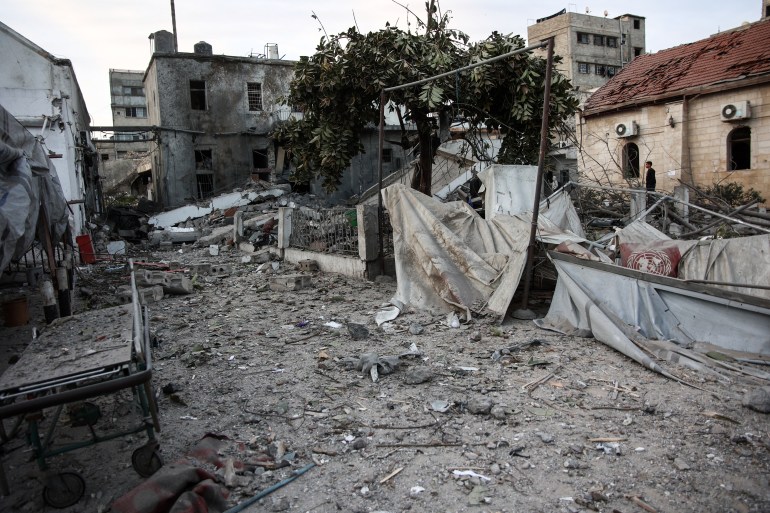
A predawn Israeli strike on al-Ahli Hospital in Gaza City, the last major hospital providing critical healthcare in northern Gaza, has sparked condemnation in Palestine and across the world as Israel continues to attack healthcare facilities. Israel on Sunday claimed it struck a Hamas command and control centre at the hospital, without providing evidence, while Hamas denied the allegations. The Episcopal Diocese of Jerusalem, which runs al-Ahli Hospital, condemned the attack, saying it occurred on “Palm Sunday, the start of the Holy Week, the most sacred week of the Christian year.” It said the twin strikes demolished the hospital’s two-storey genetic laboratory and damaged the pharmacy and the emergency department buildings. The Higher Presidential Committee for Church Affairs in Palestine, which is affiliated with the Anglican Church, said the attack constituted “a grave violation of religious sanctity and fundamental principles of international humanitarian law”. The head of the committee, Ramzi Khoury, asserted that the attack was a direct affront to Palestinian Christians and the global Christian community. Advertisement Britain’s Archbishop of York Stephen Cottrell said in a statement on Sunday: “The Anglican-run Ahli Hospital in Gaza is a place of healing and care for Palestinians living through unimaginable suffering. In unbearable conditions, its heroic doctors and nurses have cared for civilians who have endured 18 months of devastating violence”. “For the only Christian hospital in Gaza to be attacked on Palm Sunday is especially appalling. I share in the grief of our Palestinian brothers and sisters in the Diocese of Jerusalem,” he said. Gaza’s Health Ministry said the bombing forced the evacuation of patients and staff. “We call on international institutions and relevant authorities to protect the health sector in accordance with international laws and agreements,” it said in a statement. The Palestinian Islamic Jihad (PIJ) said the “heinous aggression” was “part of a systematic series of attacks targeting hospitals, schools, shelters and tents for the displaced in Gaza, within the context of a systematic war of extermination that violates all humanitarian and moral standards”. PIJ blamed Israel for sowing panic among patients and staff by issuing a warning shortly before the strike. “The international silence on Gaza is forcing it to become a graveyard for law and humanity,” it added. A gurney lies amid the debris in the aftermath of an Israeli strike on the al-Ahli Hospital [AFP] International condemnation: ‘Attacks on health care must stop’ Hospitals have special protection under international law. Israel has besieged and raided them nevertheless, some several times, and struck multiple ones while accusing Hamas of using them as cover for its fighters. Last month, Israel struck Nasser Hospital in Khan Younis, the largest hospital in southern Gaza, killing two people and causing a large fire. Advertisement Director-General of the World Health Organization (WHO) Tedros Adhanom Ghebreyesus said the hospital was out of service and a child had died as a result of the disruption of care. The hospital was also forced to move 50 patients to other health centres, but 40 critical patients could not be moved, Tedros added. “Attacks on health care must stop,” the WHO chief wrote on X. “Once again we repeat: patients, health workers and hospitals must be protected. The aid blockade must be lifted. Ceasefire.” Al-Ahli hospital in #Gaza is out of service following this morning’s evacuation order and attack – @WHO has received an update from the hospital’s director. A child died due to disruption of care. The emergency room, laboratory, emergency room X-ray machines and the pharmacy… — Tedros Adhanom Ghebreyesus (@DrTedros) April 13, 2025 British Foreign Minister David Lammy said Israel’s bombing of medical facilities had “comprehensively degraded access to healthcare” in the enclave. “Al-Ahli Hospital has been attacked repeatedly since the conflict began. These deplorable attacks must end. Diplomacy not more bloodshed is how we will achieve a lasting peace,” Lammy wrote on X. Qatar said the attack on the last functioning hospital in northern Gaza was a “horrific massacre and a heinous crime against civilians” that constituted a grave violation of international humanitarian law. The Foreign Ministry warned about the expansion of the cycle of violence across the region and said the international community must assume its responsibilities in protecting civilians. Advertisement Jordan also condemned the attack as well as Israel’s systematic targeting of civilians in Gaza and the destruction of vital facilities that provide essential services to its population. Egypt, too, issued a statement, calling the attack a grave violation of international humanitarian law and international norms and appealing for the international community’s intervention in halting the attacks. German Foreign Minister Annalena Baerbock questioned the modalities of the strike but stopped short of condemning the attack. “The cruel Hamas terror must be combated. But international humanitarian law applies, with a special obligation to protect civilian areas. How can a hospital be evacuated in less than 20 minutes?” she asked in a post on X. Adblock test (Why?)
Will elections in Gabon lead to change?
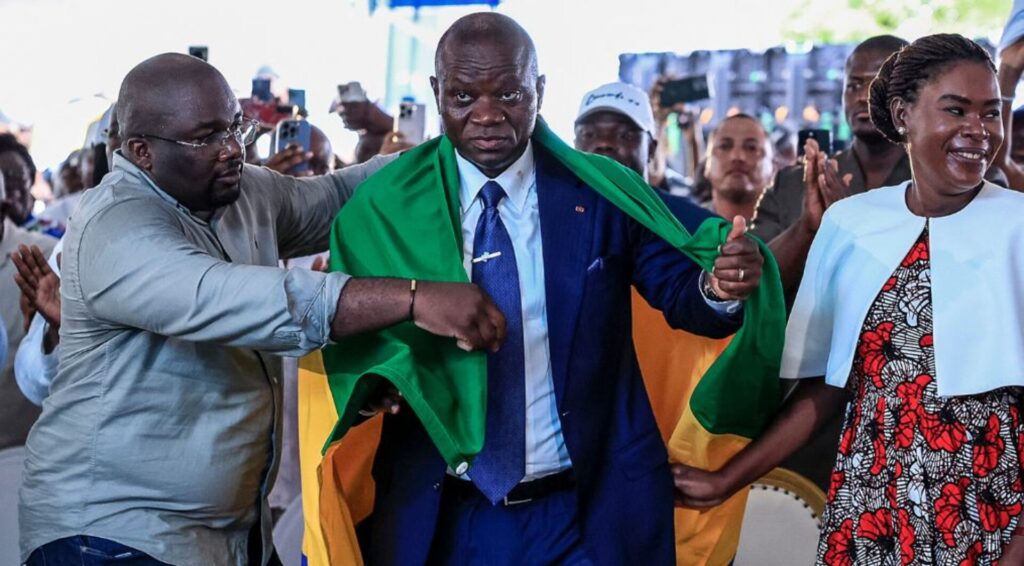
The leader of a 2023 coup, Brice Oligui Nguema, wins in a landslide victory in Gabon. General Brice Oligui Nguema has just won Saturday’s election in Gabon, and will lead the country for the next seven years. Gabon is among seven west and central African countries where the military has seized power in recent years. When the army overthrew the president there in 2023, it ended 56 years of rule by the Bongo dynasty. The winner, Nguema, is the army general who led that military takeover. He now says he’ll bring democratic changes and reforms. But can he deliver on his promises? Presenter: Adrian Finighan Guests Jo Dioumy Moubassango – Member of Gabon’s Parliament and a former government official Victor Doke – Lecturer on international politics, peace and security at the Kofi Annan International Peacekeeping Centre Abdullahi Boru Halakhe – Africa security and policy analyst Arnauld Engandji – Special adviser to the Gabonese president and his official spokesperson Adblock test (Why?)
Results of President Trump’s physical released, here’s what they say
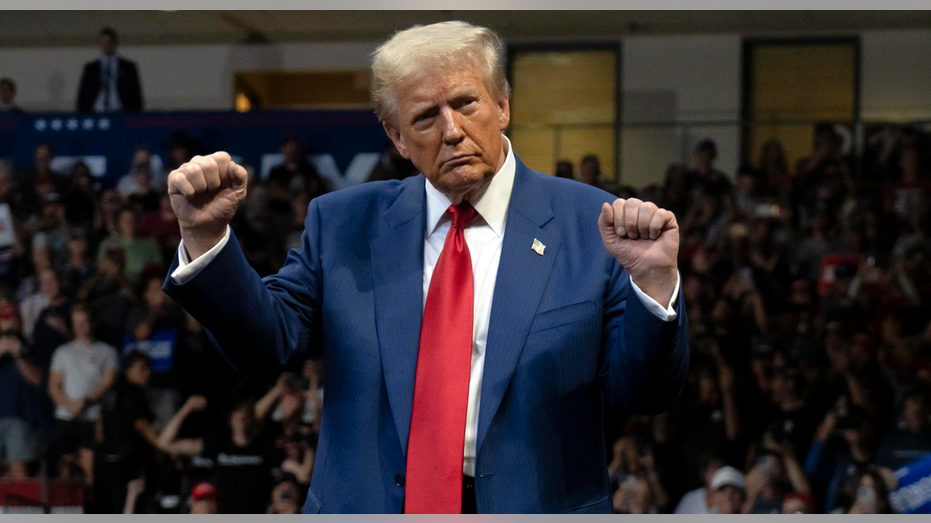
President Donald Trump “remains in excellent health,” according to a release from the White House physician following the president’s annual physical. “President Trump remains in excellent health, exhibiting robust cardiac, pulmonary, neurological, and general physical function,” read the release by Navy Capt. Sean P. Barbabella, the physician to the president. Trump underwent the physical on Friday morning at Walter Reed National Military Medical Center, the release noted, which included “diagnostic and laboratory testing” and “consultations with fourteen specialty consultants.” WARREN DEMANDS SEC INVESTIGATE TRUMP FOR INSIDER TRADING, ACCUSES HIM OF UNLEASHING ‘CHAOS’ WITH TARIFFS The release included Trump’s vital statistics, noting that the president is 75 inches tall, weighs 224 pounds, has a resting heart rate of 62 beats per minute, a blood pressure of 128/74 mmHg, a pulse oximetry of 99% on room air, and a temperature of 98.6 degrees Fahrenheit. Trump’s physical examination raised no red flags or significant abnormalities, though the physician noted that the president has “scarring on the right ear from a gunshot wound.” DONALD TRUMP’S ALLIES, SUPPORTERS AND DONORS, LED BY ELON MUSK, PUSH TO END TARIFF WAR The president’s lab results also came back normal and Trump’s “lifelong abstinence from tobacco and alcohol” was noted in his medical history. Trump is currently on four medications, the release notes, including Rosuvastatin and Ezetimibe for cholesterol control, aspirin for cardiac prevention, and Mometasone cream as needed for a skin condition. The release also credits Trump’s “active lifestyle” for contributing “significantly to his well-being.” “President Trump’s days include participation in multiple meetings, public appearances, press availability, and frequent victories in golf events,” the release reads. “President Trump exhibits excellent cognitive and physical health and is fully fit to execute the duties of the Commander -in-Chief and Head of State.”