

Delhi CM Rekha Gupta sees man throw ‘roti’ at cow on busy road, approaches him and does this
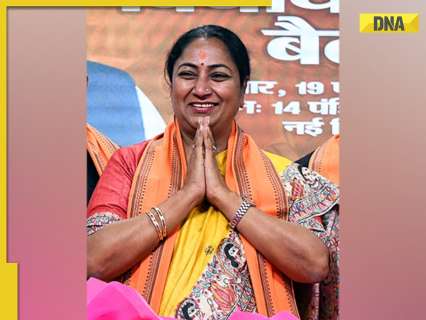
Delhi Chief Minister Rekha Gupta, on Saturday, took to ‘X’, and shared that she saw a man in a car throwing a ‘roti’ at a stray cow to feed it. What did she do next?
At least 26 American hostages released since Trump took office
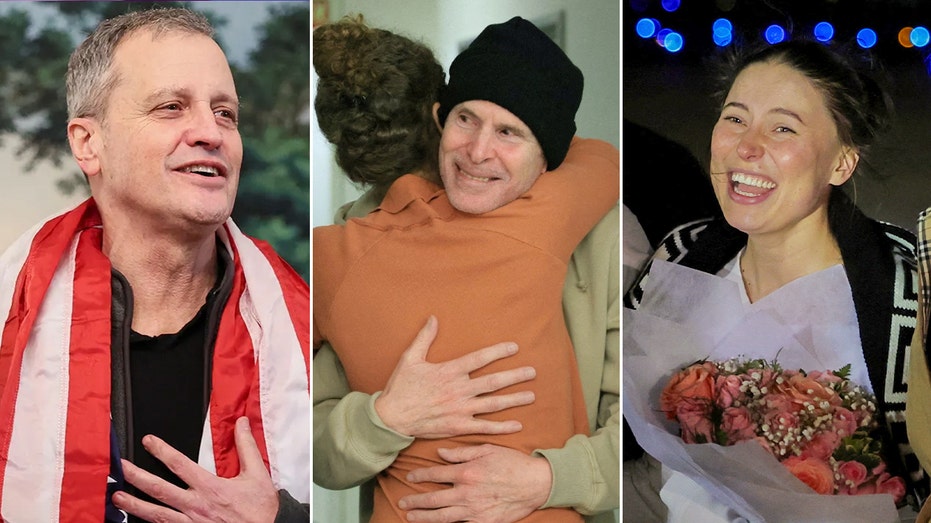
At least 26 Americans held hostage abroad have been freed since President Donald Trump entered the Oval Office in January. Those who gained their freedom include a ballerina, a teacher and a mechanic, among others. On Jan. 21, 2025, just one day after Trump’s second term began, Ryan Corbett and William McKenty were released from Taliban captivity in Afghanistan. While Corbett and McKenty were freed under Trump, the deal that secured their release was completed by the Biden administration. Corbett and his family moved to Afghanistan in 2010, where they lived in Kabul and Jalalabad. According to a website set up by his family, Corbett did work for NGOs, which focused on education, birth and life-saving skills. He also started a project in 2017, Bloom Afghanistan, with the goal of strengthening the country’s private sector. In 2021, the Corbett family evacuated as the Taliban took control of the country. Corbett returned to Afghanistan a year later and was captured by the Taliban, which his family suspects was because of his “value as political leverage.” There aren’t many details on McKenty or exactly why he was in Afghanistan. According to the BBC, his family asked for privacy. 2 AMERICANS RELEASED IN EXCHANGE FOR TALIBAN PRISONER Anastasia Nuhfer, who was detained in Belarus during the Biden administration, gained her freedom Jan. 26, 2025. While Secretary of State Marco Rubio announced Nuhfer’s release, he did not give details on when she was detained or why. However, according to The Associated Press, a former high-ranking Belarusian official said the arrest was linked to 2020 protests against Belarusian President Alexander Lukashenko. Special envoy Ric Grenell secured the release of six Americans after meeting with Venezuelan President Nicolás Maduro. Grenell posted a photo of himself and the men on a plane and said that they “couldn’t stop thanking” Trump when speaking to him on the phone. The men were not identified. TRUMP ENVOY RICHARD GRENELL SECURES FREEDOM FOR 6 AMERICANS FOLLOWING MEETING WITH MADURO IN VENEZUELA After spending 484 days as a hostage in Gaza, Keith Siegel was released as part of a ceasefire deal Feb. 1, 2025. Siegel was taken from Kibbutz Kfar Aza during Hamas’ Oct. 7 attacks. His wife, Aviva, was also taken hostage but was released in November 2023. On April 8, Siegel, who has credited Trump with saving his life, thanked the president during an NRCC event in Washington, D.C. “President Trump, I am here, and I am alive. President Trump, you saved my life,” Siegel said. He also asked Trump to continue working to secure the freedom of the 59 remaining hostages in Gaza. American schoolteacher Marc Fogel was released from Russian captivity Feb. 11, 2025, more than three years after he was detained. Fogel was carrying less than one ounce of medical marijuana, according to his family’s website, which he used for severe pain. The Fogel family criticized former President Joe Biden’s handling of Marc’s case, especially in light of his work to release WNBA player Brittney Griner, who was also arrested for having marijuana. On July 13, 2024, Fogel’s mother, Malphine, attended a Trump rally in Butler, Pennsylvania, Marc’s hometown. She spoke with Trump, who promised to bring her son home. Trump invited Marc and Malphine to attend his address to a joint session of Congress in March 2025. On Feb. 12, 2025, Secretary of State Marco Rubio announced that an American “unjustly detained in Belarus” had been released. The statement did not include details or identifying information about the hostage. In a press release, Rubio affirmed the administration’s commitment to releasing Americans held hostage across the globe. On Oct. 7, 2023, Israeli American Sagui Dekel-Chen was taken hostage by Hamas terrorists from his home at Kibbutz Nir Oz. He was shot in the shoulder during the massacre and endured torture while in captivity. Dekel-Chen spent almost 500 days as a hostage in Gaza and gained his freedom in February 2025. While he was in captivity, his wife gave birth to their third child. He only learned about his daughter’s birth after being released. On March 13, 2025, 10 unidentified Americans, including veterans and military contractors, were released from captivity in Kuwait. According to The Associated Press, the American citizens were detained on drug charges. Delta Airlines mechanic George Glezmann spent more than two years as a hostage in Gaza after being detained by the Taliban in December 2022. According to senators John Ossoff and Raphael Warnock, both Democrats from Georgia, Glezmann went to “Afghanistan for a five-day trip to explore the cultural landscape and rich history of the country.” The two senators advocated for Glezmann’s release, which eventually occurred March 20, 2025. TALIBAN FREES AMERICAN HOSTAGE GEORGE GLEZMANN FOLLOWING NEGOTIATIONS WITH US, QATAR The Taliban released Faye Hall in March 2025, though it is unclear when she was detained. CBS News reported that Hall was arrested on charges of using a drone without authorization. The Trump administration posted a video of Hall thanking the president for her release. In the video, Hall said she had “never been so proud to be an American citizen.” CLICK HERE TO GET THE FOX NEWS APP Russian American ballet dancer Ksenia Karelina was released from detention April 10, 2025, after being wrongfully detained for over a year. Karelina was arrested and sentenced to 12 years in a penal colony after donating approximately $50 to a Ukrainian charity. “Mr. Trump, I’m so, so grateful for you bringing me home,” a teary-eyed Karelina said upon her arrival in the U.S. “I never felt more blessed to be American.” Christopher Guly contributed to this report.
Longtime House Republican weighs run to flip Dem-held Senate seat in key battleground
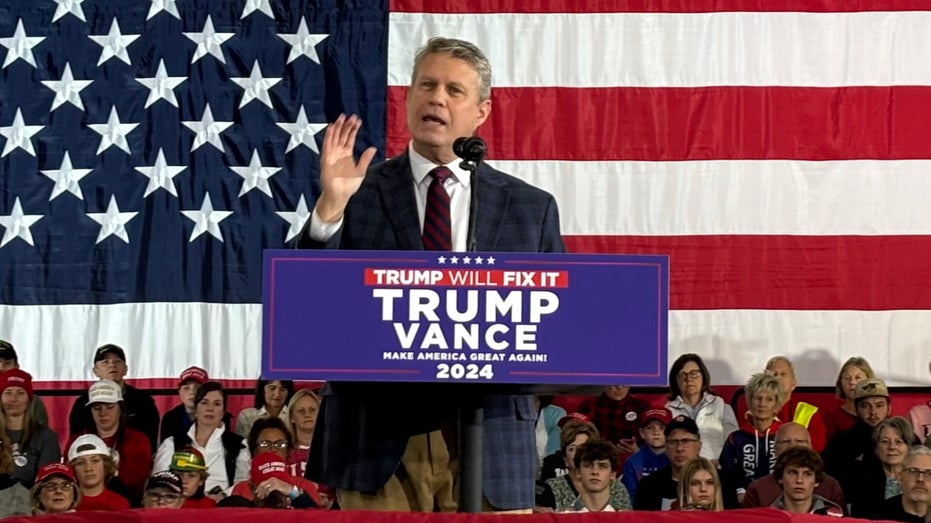
Longtime Republican Rep. Bill Huizenga of Michigan says that as soon as Democratic Sen. Gary Peters announced earlier this year that he wouldn’t seek re-election in the key Great Lakes battleground state in next year’s midterms, “my phone started to ring and it hasn’t stopped ringing.” Huizenga, who was first elected to the House in 2010 and represents Michigan’s 4th Congressional District, which covers parts of the southwestern part of the state, highlighted that he’s getting “encouragement” to seek the Senate from “grassroots folks,” as well as donors. “I have been very flattered and honored to have this kind of support emerging,” he said. The Senate seat in Michigan is a top target for the GOP in the 2026 midterm elections to flip from blue to red, as the party aims to expand its current 53-47 majority in the chamber. And the emerging showdown is expected to be one of the most expensive and bruising battles of the cycle. 2026 ELECTIONS: THIS SENATOR IS RUNNING FOR GOVERNOR NEXT YEAR Huizenga, who is now the vice chair of the House Financial Services Committee, pointed to “the connections that I’ve got and have built up over the last now going into my eighth term here” when asked about fundraising. “It’s donors in Michigan. It’s donors nationally,” he touted. “I’ve got a network of folks that have been very, very helpful in the past, and they’re very interested in helping me out again.” WILL THIS BLUE STATE REPUBLICAN END THE GOP’S 20-YEAR LOSING STREAK IN HIS STATE? But Huizenga isn’t the only Republican making noise about a Senate run. Former Rep. Mike Rogers announced at the end of January that he was “strongly considering” a second straight Republican run. And Rogers, a former FBI special agent who later served as chair of the House Intelligence Committee during his tenure in Congress, is likely to announce his campaign on Monday. Rogers won the 2024 GOP Senate nomination in Michigan but narrowly lost to Rep. Elissa Slotkin, the Democrats’ nominee, in last November’s election in the race to succeed longtime Democratic Sen. Debbie Stabenow, who retired. Slotkin, who vastly outspent Rogers, edged him by roughly 19,000 votes, or a third of a percentage point. Asked if a campaign launch by Rogers would affect his decision-making process, Huizenga said “quite honestly, no.” “I think the question that everyone needs to answer is, who can win? Who can win the state of Michigan, and Michigan politics has shifted, and that’s the reality,” he said. A LIKELY BRUISING SENATE BATTLE IN BATTLEGROUND MICHIGAN HEATS UP AS THIS CANDIDATE ENTERS THE RACE Michigan was once part of the Democratic Party’s blue wall states that helped boost the party’s candidates in presidential elections. But President Donald Trump narrowly carried Michigan in his 2016 and 2024 White House victories. “What we don’t know is whether that Trump coalition of union households, Hispanics, the Arab American population and African Americans, especially males, that came out and supported Donald Trump, along with those independents and Republicans, whether that coalition is going to be held,” Huizenga said. And Huizenga pointed to his double-digit re-election margin last year in a competitive House District (his seat is one of 35 House seats Democrats are targeting in next year’s midterms). Democratic Gov. Gretchen Whitmer narrowly won the district in her 2022 re-election victory, and Trump carried the district by six points last November. WHY PETE BUTTIGIEG SAID NO TO RUNNING FOR THE SENATE NEXT YEAR An endorsement by Trump, whose sway over the GOP is stronger than ever, is expected to play a significant role in the Republican Senate primary in Michigan. And while Trump has yet to weigh in on the race, Rogers earlier this year hired veteran Republican strategist and 2024 Trump co-campaign manager Chris LaCivita as a senior advisor. Asked about his relationship with Trump, Huizenga called it “very good” and claimed that “there is one elected official that has spoken at all three of his last rallies [in Michigan], in 2016, 2020 and 2024, and that’s me.” As for his timetable, Huizenga said: “I’m still going to do my evaluation here, and need to kind of push through on the fundraising and need to make sure that I’m able to get the support that I really need to have to be able to do this kind of run.” “We’re still more than a year out from the filing deadline, and so there’s a lot of runway here, and so I’m not in a huge hurry,” he added. “It needs to be done soon. But it would seem to me, sometime this summer or right after Labor Day, is more than enough time to make sure that we got the right candidate.” THIS CONSERVATIVE COMMENTATOR IS MULLING 2026 STATEWIDE RUN IN KEY BATTLEGROUND And in what appeared to be a comment directed at Rogers, Huizenga added that “it’s better to have the right person at the right time, rather than somebody early on.” Besides Rogers and Huizenga, business executive, conservative commentator and 2022 Republican gubernatorial nominee Tudor Dixon has said she’s seriously mulling another run for governor, or for the Senate, in 2026. And Republican businessman and auto dealership executive Kevin Rinke, who ran for governor in 2022, is also thought to be considering another statewide run next year. Earlier this month, Michigan state Sen. Mallory McMorrow launched a campaign for the Democratic Senate nomination. Reps. Kristen McDonald Rivet and Haley Stevens are considering a run, as is Michigan Attorney General Dana Nessel. Last month, Pete Buttigieg, a 2020 Democratic presidential candidate who later served as Transportation Secretary in former President Joe Biden’s administration, ruled out a campaign after seriously considering a bid.
Is UPI down? Thousands report massive outage on Google Pay, PhonePe, Paytm apps

According to Downdetector, an online tracker where users can report outages, complaints peaked at 2,355 around 1:00 pm. Several social media platforms, including X, were also flooded with posts highlighting failed payments and delays in transactions.
Lawmakers reveal whether Americans should pick up the Medicaid tab for illegal immigrants
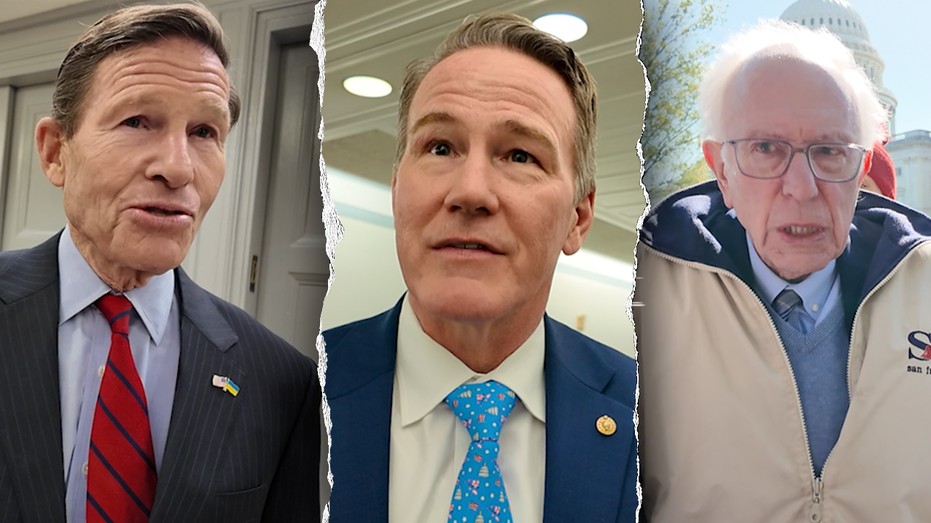
California has a $6.2 billion budget deficit for Medicaid services, and Democratic Gov. Gavin Newsom’s latest budget proposal projects the state will spend a staggering $8.4 billion to cover Medi-Cal, the state’s version of Medicaid, for illegal immigrants in 2024-2025. Two new reports by the Bureau of Economic Analysis found the U.S. economy has become increasingly reliant on government handouts. Entitlements are growing faster than tax receipts and wages. Private wages grew by $67 billion in early 2025, while government payments to recipients surged by $162 billion. In North Carolina and California, growth in Medicaid benefits was the leading contributor to increased personal income. Coverage for undocumented immigrants under California’s $6.2 billion budget gap for Medi-Cal is contributing to the surge in personal income. Fox News Digital asked lawmakers on Capitol Hill if taxpayers should have to pick up the Medicaid tab for illegal immigrants. Popular progressive senators Adam Schiff, D-Calif.; Michael Bennett, D-Colo.; and Bernie Sanders, I-Vt., refused to say whether illegal immigrants are entitled to Medicaid benefits funded by U.S. taxpayers. NEWSOM ASKS FOR NEARLY ANOTHER $3B FOR STATE HEALTH PROGRAM OVERWHELMED BY ILLEGAL IMMIGRANTS Sen. Jon Husted, R-Ohio, who was tapped by moderate Republican Gov. Mike DeWine to replace Vice President JD Vance in the Senate this year, told Fox News Digital it should be illegal for Americans to fund healthcare for illegal immigrants. NEWSOM CONCEDES SKYROCKETING HEALTHCARE COSTS FOR ILLEGALS ARE ‘PARTIAL’ CONTRIBUTOR TO MEDICAID PROBLEM “That cost should be transferred back to the state of California if that’s the decision that they made. If people are here illegally, the taxpayers of this country should not be footing the bill for their healthcare when we can barely pay our own bills here in this country and people are going without. So, this is an astonishing thing that California would decide to do. Clearly, the leaders of that state are tone deaf because that’s not what the American public wants,” Husted said. Rep. Maria Salazar, R-Fla., who serves on the House Committee on Foreign Affairs and on Small Business, said she doesn’t support any federal funding for federal programs for illegal immigrants. “We need to see those numbers,” Salazar said. “I’m not in favor of any undocumented migrants in the United States using any type of federal funding or federal programs, because if you are not documented, you cannot be using any of the government or the federal government services. “But I need to know what are the numbers. I do believe that in construction, hospitality and agriculture, the illegals, the undocumented are giving a lot to the economy.” Sen. Mike Lee, R-Utah, a fiscal conservative who serves on economic and commerce committees, said programs like Medicaid are solely for U.S. citizens. “They’re certainly not there for illegal aliens. And this is costing the American people a lot of money. So, yeah, that is a problem, and it’s one we need to fix,” Lee said. Sen. Richard Blumenthal, D-Conn., said he has questions about the policy and wants to know more about the substance of Medicaid benefits for undocumented immigrants and “whether it applies in emergency situations where somebody’s life may be at stake.” Another Northeast Democrat, Sen. Andy Kim, D-N.J., said he is more concerned “we’re not taking away Medicaid from people with disabilities, seniors that need long-term care” before discussions begin on expanding resources. Sen. Ron Johnson, R-Wis., said it could “threaten the benefits for disabled children.” Sen. Marsha Blackburn, R-Tenn., a Trump loyalist, said California made a “conscious decision” to allow taxpayers to pick up the tab on healthcare for illegal immigrants. “They fully realize and appreciate that the federal government does not have one single penny to spend until the taxpayer sends that penny into the treasury,” Blackburn said. Sen. Cynthia Lummis, R-Wyo., said California needs to realize the impact its policies have on other states. “A lot of people in Wyoming are living paycheck to paycheck. They’re struggling to pay for things they used to be able to take for granted, like food and gasoline. And it’s absolutely wrong that one state can expand its benefits to illegals, and my state has to pay for it,” Lummis said. “Cost increases to the Medicaid program are driven by multiple factors, including expansion, increased enrollment for all populations and pharmacy costs,” a spokesperson for Newsom said when reached by Fox News Digital for comment. Newsom’s office emphasized that Medi-Cal covers approximately 15 million Californians, which accounts for more than one-third of the state’s population. Program costs have more than doubled in the past decade, according to the governor’s office. CLICK HERE TO GET THE FOX NEWS APP Given Medi-Cal’s size, Newsom’s office said even a 1-2% increase in drug prices or hospital visits could mean billions of dollars in additional costs for the program, and states across the country and political spectrum are facing their own rising Medicaid expenses, specifically Pennsylvania and Indiana.
Old Mughal document details on pilgrims’ benefits in Allahabad: Those who come for holy dip in river Ganga…

The document also features a distinctive orbital genealogical seal signifying imperial authority, with the king’s name, Abul Muzaffar Jalaluddin, at its center, surrounded by his predecessors’ names.
Did Tahawwur Rana meet Pakistan’s ISI agent in Dubai before 26/11 Mumbai attack? Who was MYSTERIOUS man?
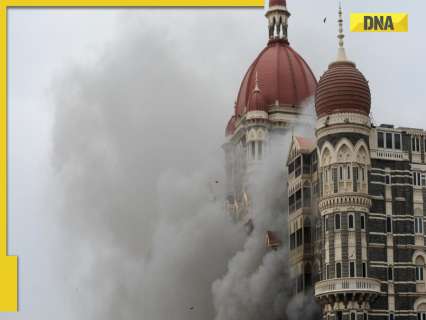
26/11 Mumbai attack plotter Tahawwur Rana met a mysterious man in Dubai. That man knew about the impending attack. The National Investigative Agency (NIA) is probing the identity and role of this man.
‘I didn’t go’: The last Muslim man in Indian town hit by religious strife
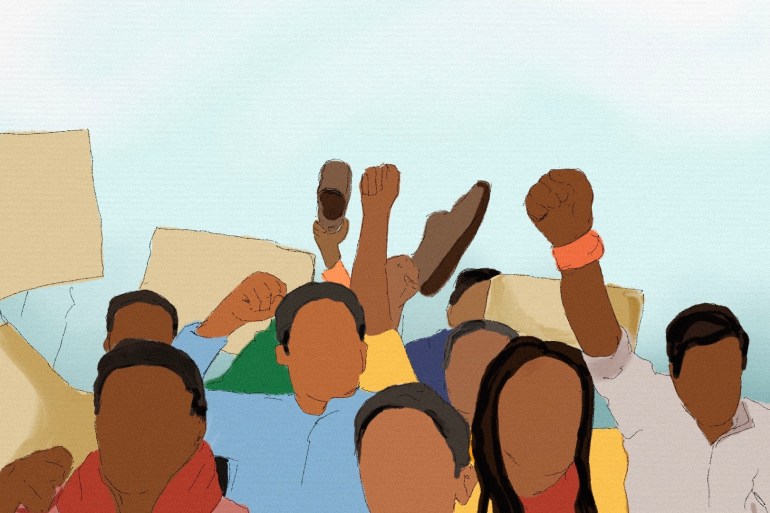
Nanda Nagar, Uttarakhand, India — Every morning at 8am, Ahamad Hasan pulls up the brown shutter of his dry-cleaning shop on the banks of the Nandakini river, which runs through the remote Himalayan town of Nanda Nagar in the northern Indian state of Uttarakhand. He neatly hangs dry-cleaned clothes in plastic covers on the pink walls of his shop. Then the 49-year-old waits for customers. Until September 2024, by lunchtime, he would have had between 20 and 25 customers come by, leaving their sherwanis, suits, coats, pants and winter wear. Some would sip a cup of tea with him while discussing politics and jokes, sharing their smiles and sorrows. Most of the customers were Hindu, a few, Muslim. But on this day, fewer than five Hindu customers visit his shop by noon. And he knows there’s no point waiting for a Muslim customer. Hasan is the last Muslim man in town. For generations, 15 Muslim families called Nanda Nagar home. It’s where Hasan was born and raised, where his family received invitations for Hindu festivals and hosted neighbours on Eid. He has collected wood for Hindu funeral pyres and shouldered the bodies of his Hindu friends. Advertisement That all changed last September in an explosion of anti-Muslim violence triggered by a Hindu girl’s allegation of sexual harassment, but rooted in a broader shift in sentiment against the minority community that Hasan had noticed since COVID-19. Hate-filled slogans and marches culminated in physical assaults against Muslims, as their shops were destroyed. Fearing for their lives, the town’s small Muslim community fled in the cover of night. Only Hasan returned, with his wife, two daughters and two sons, adamant that they could make it work in the only place he knew as home. But the family lives in fear. Their Hindu neighbours don’t speak to them. He no longer goes for walks along the river like he used to every evening. He does not let his kids and wife meet anyone. And he worries about more violence breaking out. “I just go to my shop and come back home. This is our life now,” Hasan says. “After spending my whole life in this town, I feel like I am a ghost. I am completely invisible. Nobody is even talking to me.” Hasan and other Muslims in Nanda Nagar were attacked after a protest march against an alleged act of sexual harassment by a Muslim barber [Jawaher Al-Naimi/Al Jazeera] ‘Beat Muslims with shoes’ Nanda Nagar is a 10-hour drive from India’s capital New Delhi. Located near the India-China border, the town is nestled at the confluence of the Nandakini’s tributaries, and has a population of about 2,000 people. The river Nandakini is one of the six tributaries of the Ganges river, and is considered holy by Hindus. Advertisement After Hasan’s grandfather migrated from Najibabad, a town in Bijnor district of neighbouring Uttar Pradesh state in 1975, their family settled in town. Hasan was born a year later. Life was largely peaceful, he recalls, until 2021. During the coronavirus pandemic, Muslims across India were vilified because of conspiracy theories spread by the Hindu far-right groups that accused the community of deliberately spreading the virus through their religious practices and by holding large gatherings. The far-right called it “Corona jihad”. Suddenly, Hasan felt his Hindu friends grow distant. “Before COVID-19, there used to be so many people in our home on Eid, and on Diwali we used to get so many invites from our friends. But after COVID, this stopped,” he says. But the events of September 1, 2024, were a tipping point. A week earlier, on August 22, a young Hindu pupil accused a Muslim barber, Mohammad Arif, of sexual harassment while he was opening his salon. The barber soon fled the town. On September 1, the town’s shopkeepers’ association decided to rally to condemn the alleged harassment of the pupil and demand police action. Hasan, along with other Muslims in the town, participated in the protest. “We went because otherwise the Hindus would allege that we support crimes committed by Muslims,” he recalls. However, the crowd soon started chanting anti-Muslim slogans, threatening violence. “As we were walking along with protesters, anti-Muslim slogans were raised such as ‘Mullon ke dalaalon ko … Joote maaro saalon ko’ [the pimps of Muslims should be beaten by shoes],” he says. As the rally reached the police station in Nanda Nagar, a group of protesters grabbed a 30-year-old Muslim man, Harun Ansari, and started beating him. Hasan said many Hindus justified Ansari’s beating by alleging that Muslims in town had helped the accused barber, Arif, to flee. Advertisement In a phone interview from Najibabad, where he moved after the assault, Ansari says that he received multiple injuries in his head. “I just remember being dragged by the crowd. After that nothing was visible to me,” he recalls. After Ansari was beaten, all the other Muslims, including Hasan, fled from the rally and locked themselves in their houses. A mob of hundreds of people came and started pelting their houses with stones. Hasan says the Muslim families kept calling the police for help. “But no one came.” He also called his Hindu friends. “They were not even picking up my call,” he says. The Muslim families stayed indoors until late evening when the mob went away. That night, as the clock crossed midnight, Hasan quietly made his way back to his shop, which is in front of his house. He saw that the shutter of his shop was broken and twisted. Dry-cleaned clothes were strewn across the street like confetti. The counter, a sturdy wooden table where he kept savings worth 400,000 rupees [$4,600] in a locked drawer, was shattered – the money stolen. He had saved that money for his children’s marriages. Fragments of the name board of his shop, The Hasan Drycleaners, were thrown like debris on the banks of the Nandakini. “I will never forget that day,” Hasan tells Al Jazeera, while showing photos of
Gabon’s first election after collapse of Bongo dynasty: What’s at stake?
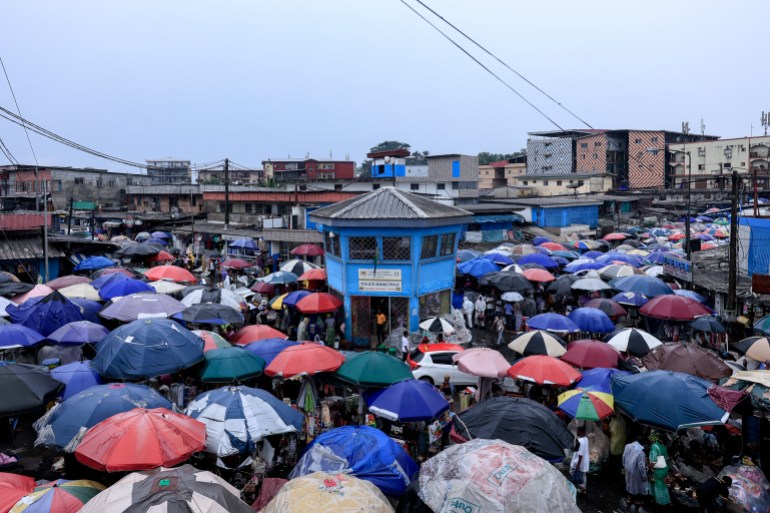
The small African nation of Gabon is voting on Saturday in its first executive elections since a military coup in 2023 ended the 50-year dynastic rule of the Bongo political family. Brice Clotaite Oligui Nguema, coup leader-turned-transition president, is the main candidate among four competitors and is widely expected to win the elections, despite controversial reforms he has put into place that experts say were tailored to make him eligible for the vote. Located in West-central Africa, on the Atlantic coast, Gabon is rich in extractives like crude oil. The country, with a population of 2.2 million, is also part of the vital Congo Basin and boasts millions of acres of rainforest replete with varieties of plant and animal species. However, those natural resources have not translated into any meaningful distribution of wealth, as one family and a small political elite have ruled the country for the past five decades. The opposition is weak, experts say; the press is largely toothless; and Gabonese are distrustful of politicians. Advertisement Located right on the equator, Gabon’s lingua franca is French, and local languages include Fang, Mbere and several others. Libreville, the breezy coastal capital, is the largest city, followed by the port town of Port-Gentil. Here’s what to know about the vote: General view of the Mont-Bouet market in Libreville on April 8, 2025. Gabon is voting Saturday to elect its future president 19 months after the August 2023 coup that overthrew the Bongo dynasty and brought General Brice Oligui Nguema, the clear favourite, to power [Daniel Beloumou Olomo/AFP] When is the vote — and how did Gabon get here? The presidential vote will be held in the country’s nine provinces on Saturday, April 12, from 7:30am to 6pm local time (06:30-17:00 GMT). Campaigns began on March 29 and will end on April 11. Voting is mandatory for adults. The election is being held several months before an August 2025 deadline the military initially announced after the August 30, 2023, coup that ended the rule of former President Ali Bongo Ondimba (2009 – 2023). The coup, part of a wave of military takeovers on the continent, occurred on the same day the results of presidential elections were released. Ondimba was declared the winner with 60 percent of the vote for a third term. The opposition, led by Albert Ondo Ossa of the Alternate Party, disputed the elections. Ondimba took over after the death of President Omar Bongo, his father (1967-2009). Between them, the father-son duo ruled Gabon for 56 years. Legislative elections have not been announced. Currently, the bicameral houses are staffed with representatives appointed by the military government. Advertisement Who is running? Four candidates, all male, have been approved by the electoral college. All are running independently. That’s because the candidates want to distance themselves from the former governing Gabonese Democratic Party (PDG), Douglas Yates, a professor at the American Graduate School in Paris, told Al Jazeera. The PDG has been in power since 1967 with little opposition and represents the only truly established party. Gabon Transitional President Brice Clotaire Oligui Nguema gestures at the Stade de l’Amitie in Libreville on March 29, 2025, during the opening rally of his electoral campaign [Nao Mukadi/AFP] Brice Clotaire Oligui Nguema (50): As head of the Royal Guard, Nguema led the coup that overthrew former President Ali Bongo, who is also his cousin, on August 30, 2023. The military general previously served as aide-de-camp to Omar Bongo before he was posted overseas to the embassies in Morocco and Senegal. He thereafter returned to lead the elite Royal Guard that protects the president, a post he kept until seizing power. Following the coup, Nguema promised to hand over to a civilian government within two years. He has been praised for moving rapidly towards that transition as opposed to military government counterparts in the West African countries of Mali, Niger, Burkina Faso and Guinea. He’s also managed to maintain ties with Gabon’s former colonial leader, France, while the others have actively cut ties with France. A new constitution affirming strict two-term limits was passed following a November referendum. Advertisement Nguema is promising to “lift” and transform Gabon economically. He has cleaned up his military image since the coup, sporting suave suits and T-shirts in his packed, colourful campaign rallies. In one, he was seen moonwalking on stage to loud applause from his supporters. Alain Claude Bilie-By-Nze (57): In a country where the opposition has historically been weak due to decades of elections widely viewed as rigged, Bilie-By-Nze poses the biggest challenge to Nguema. The career politician, unlike many of his more elite counterparts, comes from a low-income background. In 2015, he entered politics and went on to serve in several ministerial positions under Ali Bongo. He was prime minister until the 2023 coup. Backed by his Together for Gabon political group, Bilie-By-Nze has chosen a low-key door-to-door campaign in the lead-up to the election. He has tried to underplay his role in the previous government – even criticising the former ruling PDG party, which he was a part of until 2023. His promises of “another Gabon” include a focus on urban renewal, better health insurance and overall economic growth. However, experts say it is tough for many voters to trust him. “Despite his efforts to distance himself from his past, everybody knows that he was the last prime minister of Ali Bongo, and therefore is tarnished,” Yates said. A voter casts his ballot at a polling station during Gabon’s referendum in Libreville, on November 16, 2024 [Nao Mukadi/AFP] Stephane Germain Iloko Boussengui: The medical doctor, popularly known as Iloko, was once a spokesperson for the former ruling PDG party before its downfall in the coup. He formed the Together for Gabon group with By-Nze, but the two men clashed, leading to Iloko’s exit in March. Advertisement His rallies are colourful: In one campaign event in Libreville, Iloko wore traditional wrappers and danced with his supporters, who sported T-shirts with his photos on them. Despite his
Russia-Ukraine war: List of key events, day 1,143

These are the key events on day 1,143 of Russia’s war on Ukraine. Here is where things stand on Saturday, April 12: Fighting Russia’s defence ministry said air defence units destroyed 13 Ukrainian drones within a span of 30 minutes late on Friday. The ministry said that between 10-10:30pm local time (19:00-19:30 GMT), nine drones were destroyed over Russia’s Rostov region on Ukraine’s eastern border, and four in the Kursk region on Ukraine’s northern border. Ukrainian President Volodymyr Zelenskyy visited the site of a deadly Russian attack on his hometown of Kryvyi Rih, one week after a Russian missile strike killed 19 people, including nine children and teenagers. Ukrainian officials have in recent days sent Washington a list of targets it believes Russia has struck in violation of the energy infrastructure ceasefire that Kyiv and Moscow agreed to last month as part of efforts by the United States to reach a ceasefire. Military analysts believe Russia is preparing to launch a new military offensive in the coming weeks to ramp up pressure and strengthen the Kremlin’s hand in ceasefire negotiations. Advertisement President Zelenskyy said that hundreds of Chinese nationals were fighting at the Ukraine front line alongside Russian forces, and accused Moscow of dragging Beijing into its invasion of his country. “As of now, we have information that at least several hundred Chinese nationals are fighting as part of Russia’s occupation forces,” Zelenskyy said. More than 100 Chinese citizens fighting for the Russian military against Ukraine are mercenaries who do not appear to have a direct link to China’s government, two US officials familiar with American intelligence and a former Western intelligence official told the Reuters news agency. Chinese military officers have, however, been in the theatre of war behind Russia’s lines with Beijing’s approval to draw tactical lessons from the war, officials told Reuters. Zelenskyy said that Ukraine was ready to purchase additional air defence systems, adding that he discussed it with US President Donald Trump. Ceasefire Talks between US special envoy Steve Witkoff and Russian President Vladimir Putin on Friday in Russia lasted more than four hours, with no concrete results disclosed. According to Russia’s Interfax news agency, Kremlin spokesman Dmitry Peskov did not rule out the possibility of another phone call between Putin and Trump following the discussions. Trump said in a post earlier on Truth Social: “Russia has to get moving. Too many people [are] DYING, thousands a week, in a terrible and senseless war – A war that should have never happened, and wouldn’t have happened, if I were President!!!” Russia has rejected a US-backed proposal for a 30-day unconditional ceasefire and appears to be dragging its feet on a more limited truce in the Black Sea agreed last month, analysts said. Advertisement German Defence Minister Boris Pistorius said on Friday, after presiding over a meeting of the Ukraine Defence Contact Group in Brussels alongside British Defence Secretary John Healey, that “ongoing aggression” from Russia meant “we must concede peace in Ukraine appears to be out of reach in the immediate future”. If a ceasefire is not achieved by the end of this month, Trump could impose additional sanctions on Russia, the US news site Axios reported, citing an anonymous source. Ukraine could be partitioned like Berlin after World War II, President Trump’s envoy to Kyiv, General Keith Kellogg, appeared to suggest as Russia continues to hold out on accepting a truce. In an interview with The Times newspaper, Kellogg said the country could be split into zones of control, with British and French troops as part of a “reassurance force” in the west and Moscow’s forces in the east. Between them would be Ukrainian forces and a demilitarised zone. Military Aid European countries have promised to send billions of dollars in further funding to help Ukraine keep fighting Russia’s invasion. Ukraine’s allies pledged a record 21 billion euros ($23.9bn) of military aid for the country, with the United Kingdom Defence Secretary Healey warning that 2025 was “the critical year” for the war. Estonian Defence Minister Hanno Pevkur said that his country is monitoring the world armaments market and sees opportunities for Ukraine’s backers to buy more weapons and ammunition. US Defense Secretary Pete Hegseth was absent from the Ukraine donor’s forum that the US established and led for several years, although he spoke to the meeting via video. Advertisement Sanctions A former Russian government minister who violated UK sanctions by receiving financial support from family members was sentenced to more than three years in prison in England. Dmitrii Ovsiannikov, who was appointed governor of Sevastopol in Russian-annexed Crimea by Putin, became the first person convicted of violating the sanctions put in place after the illegal annexation of Crimea from Ukraine in 2014. Estonia’s navy said it detained an oil tanker believed to belong to Russia’s “shadow fleet” in the Gulf of Finland in order to check its papers. Regional security A reduction in the number of US soldiers in Eastern Europe would be seen as Washington moving another step closer to Moscow and a worrying sign for Europeans, according to analysts. The NBC news channel, quoting US and European sources, said this week that the US Department of Defense was looking at the withdrawal of 10,000 troops from Europe. President Putin announced billions in investments for the rearmament of his country’s navy. “In the next decade, 8.4 trillion roubles [around $97bn] are earmarked for the construction of new boats and ships for the navy,” Putin said at a meeting on navy development in Saint Petersburg, according to Russian news agencies. Putin said the navy would develop drone and robot technology, and he claimed that 49 warships of various classes have been built in Russian shipyards in the past five years, including nuclear submarines that can be equipped with new Zircon hypersonic missiles. Russian Foreign Minister Sergey Lavrov sharply criticised European Union politicians against the backdrop of a rapprochement between the Kremlin and the new US administration. Politicians such as acting German Foreign Minister