

Former CJI DY Chandrachud struggles to find suitable house in Delhi for specially abled daughters ahead of April 30 deadline

Justice Chandrachud and his wife, Kalpana Das, adopted two daughters-Priyanka and Mahi-who suffer from a rare genetic disorder called nemaline myopathy.
‘Extremely troubling’: Judge questions why US cannot locate deported man
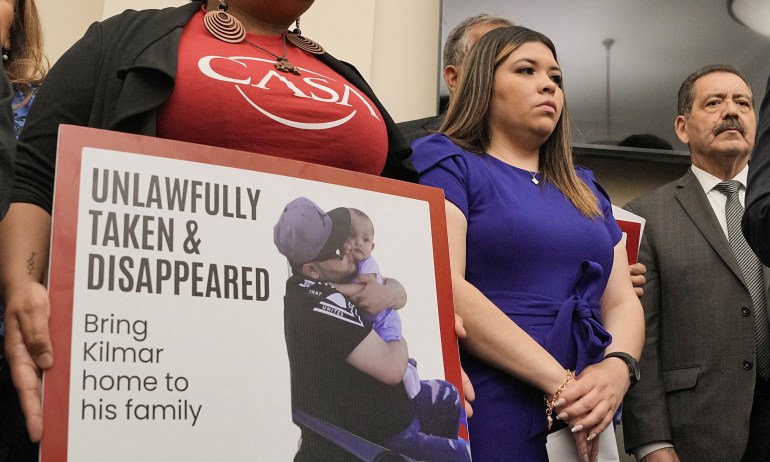
A United States federal judge has called it “extremely troubling” that the administration of President Donald Trump failed to comply with her court order to provide details on the status of a Maryland resident illegally deported to El Salvador. At a tense hearing on Friday, US District Judge Paula Xinis demanded that the administration identify the whereabouts of Kilmar Abrego Garcia, who was sent to El Salvador on March 15. She also required daily updates on the administration’s efforts to secure his return. Abrego Garcia, a Salvadoran migrant, had lived in Maryland under a court order protecting him from deportation since 2019. He had been in the US since 2011, after he said he fled gangs who were pursuing him for recruitment in his home country. His wife and child are American citizens. But on March 12, he was stopped and detained by US Immigration and Customs Enforcement officers who questioned him about alleged gang affiliations. He was deported on March 15 on one of three high-profile deportation flights to El Salvador that also included alleged Venezuelan gang members — in violation of the 2019 court order. Advertisement Abrego Garcia’s family sued to challenge the legality of his deportation, and on April 4, Xinis ordered the administration to “facilitate and effectuate” his return. The Trump administration challenged that order at the Supreme Court, which upheld Xinis’s order but said the term “effectuate” was unclear and may exceed the court’s authority. The Supreme Court also ordered the Trump administration to take measures to facilitate Abrego Garcia’s release from custody in El Salvador and detail the steps it has taken — and will take — to return him to the US. Xinis repeatedly pressed a government lawyer on Friday for answers about what it had done to get Abrego Garcia back. “Where is he and under whose authority?” Xinis asked. “I’m not asking for state secrets,” she added. “All I know is that he’s not here. The government was prohibited from sending him to El Salvador, and now I’m asking a very simple question: Where is he?” “I’m not sure what to take from the fact that the Supreme Court has spoken quite clearly, and yet I can’t get an answer today about what you’ve done, if anything, in the past.” ‘A man’s life and safety is at risk’ Drew Ensign, a lawyer with the US Department of Justice, said the government would comply with the Supreme Court’s ruling. He repeated what the administration had said in court filings: that it would provide the required information by the end of Tuesday next week, once it had evaluated the Supreme Court ruling. “We simply believe that the court’s deadlines are impracticable, but that is not to say that the government is not intending to comply with the Supreme Court’s order,” Ensign said. Advertisement Xinis ordered Ensign to provide her with daily updates, even if only to say that the government intends to comply with the Supreme Court’s order, but the administration believes her deadlines were unrealistic. The Supreme Court’s ruling also said the lower court should clarify its order “with due regard for deference” to the executive branch of government. The administration said in a court filing earlier on Friday that it was “unreasonable and impracticable” to say what its next steps are before they are properly agreed upon and vetted. “Foreign affairs cannot operate on judicial timelines, in part because it involves sensitive country-specific considerations wholly inappropriate for judicial review,” the government’s filing said. But Abrego Garcia’s lawyers questioned the Trump administration’s motives for the delay. In their own filing on Friday, they alleged that “the government continues to delay, obfuscate, and flout court orders, while a man’s life and safety is at risk.” [Jennifer Vasquez Sura, wife of Kilmar Abrego Garcia, looks on during a news conference with other family members, supporters and members of the Congressional Hispanic Caucus, in Washington [Ken Cedeno/Reuters] Abrego Garcia’s wife, Jennifer Vasquez Sura, said the ordeal has been an “emotional rollercoaster” for their family and the entire community. “I am anxiously waiting for Kilmar to be here in my arms and in our home, putting our children to bed, knowing this nightmare is almost at its end. I will continue fighting until my husband is home,” she said. Advertisement The case highlights the administration’s tensions with federal courts. Several have blocked Trump policies, and judges have expressed frustration with the administration’s efforts to avoid complying with court orders. In Abrego Garcia’s case, the Trump administration has remained adamant that its deportation was warranted. In a filing on April 7 to the Supreme Court, the Justice Department stated that, while Abrego Garcia was deported to El Salvador through “administrative error”, his actual removal from the United States “was not error”. The error, department lawyers wrote, was in removing him specifically to El Salvador despite the deportation protection order. Adblock test (Why?)
Trump officials end ‘temporary protected status’ for Afghans, Cameroonians
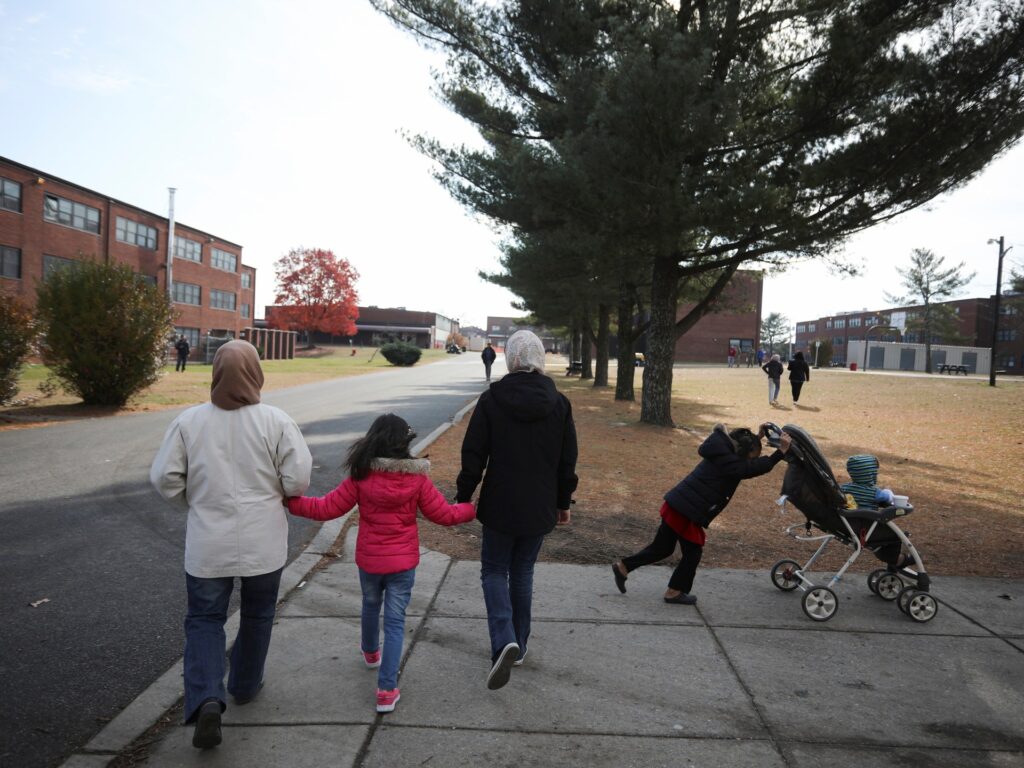
The administration of President Donald Trump has moved to end legal protections for thousands of Afghans and Cameroonians legally living in the United States. On Friday, a spokesperson for the Department of Homeland Security confirmed the decision, which will affect approximately 14,600 Afghans and 7,900 Cameroonians. Those individuals were able to live in the US under a designation called “temporary protected status” or TPS. The US government typically offers TPS to individuals already in the US for whom it may be unsafe to return, at least in the short term, due to conflict, natural disaster or other circumstances. But the Trump administration has attempted to sever TPS protections for multiple nationalities since taking office in January, as part of a broader crackdown on immigration, both legal and otherwise. In a statement, Homeland Security Secretary Kristi Noem said that conditions in Afghanistan and Cameroon no longer met the criteria for TPS. But critics point out that fighting has raged in Cameroon between the government and separatists since 2017. Advertisement And in Afghanistan, the Taliban has been in control of the government since the withdrawal of US and Western forces in 2021. Its leadership has been accused of perpetrating widespread human rights abuses, including arresting members of the previous US-backed government and banning women from many aspects of public life. Refugee groups quickly condemned the move. Krish O’Mara Vignarajah, the president of the nonprofit Global Refuge, called the revocation of the TPS for Afghans “a morally indefensible betrayal”. She warned they could face persecution if returned to Afghanistan. “Afghanistan today is still reeling from Taliban rule, economic collapse, and humanitarian disaster,” she said in a statement. “Nothing about that reality has changed.” While the US evacuated more than 82,000 Afghans to the US, the vast majority were granted temporary “parole” or other legal statuses based on their direct work with the US government. Still, the end of TPS would still affect a significant portion of that total group. Their TPS status will end in May. Veterans groups and politicians on both sides of the political spectrum have called for more legal avenues for Afghans to seek safety in the US, particularly if they worked alongside US troops or the US-backed government. Meanwhile, US lawmakers earlier this month urged the Trump administration to extend the status for Cameroonians, who face civilian attacks in their home country. They are now set to lose that protection in June. Advertisement “The country’s worsening security situation, combined with its ongoing humanitarian cries and human rights abuses, makes return impossible for Cameroonian nationals,” the lawmakers wrote. Cameroon has seen clashes between Anglophone separatists and Francophone security forces that have resulted in extrajudicial killings, attacks on civilians and widespread displacement. The Trump administration has moved to close several avenues to temporarily stay in the US, arguing it was “restoring the rule of law”. But many of the moves target immigration categories established under Trump’s predecessor and political rival, former President Joe Biden. Trump has also sought to pursue a campaign of “mass deportation” during his second term. Removing legal protections from immigrants allows the government to potentially remove them from the country. This is not the first time Trump has targeted TPS, though. During his first term, from 2017 to 2021, he tried to end most TPS enrollment but was thwarted by federal courts. During his second term, Trump reembarked on a similar push. In February, he sought to strip nearly 300,000 Venezuelans of their TPS. But in late March, a US district judge blocked his attempt, saying that his government’s characterisation of the migrants as criminals “smacks of racism”. Trump has also moved to nix the humanitarian parole programme that granted legal status to more than 500,000 Haitians, Venezuelans, Cubans and Nicaraguans under Biden. On Thursday, however, a federal judge blocked Trump from ending the programme, which would have stripped nearly half a million people of their legal status. Advertisement Adblock test (Why?)
Luisa Gonzalez wants to be Ecuador’s president. Will Correa weigh her down?

Still, even voters who reject Correa’s legacy might be inclined to vote for Gonzalez out of disillusionment with the status quo. President Noboa has faced criticism for human rights abuses and executive overreach during his short term in office. Some even say he has flashed an authoritarian streak, just like Correa. Voting is compulsory in Ecuador, and voters demonstrated their displeasure at the polls in the first round of this year’s presidential race. Null and blank votes made up nearly 9 percent of the total ballots cast — a sign of deep voter dissatisfaction. Political consultant Jacobo Garcia believes this segment of the electorate may lean towards Gonzalez, not because of her campaign, but due to growing frustration with Noboa. “What could tip the balance,” he said, “isn’t support for Gonzalez, but the perception that Noboa’s campaign has lost steam and made critical mistakes.” Some Indigenous leaders who once clashed with Correa are also backing Gonzalez for similar reasons. “The alternative is worse,” Gomez, the Kitu Kara activist, said. “This is about defending our territories and lives from a government that has shown open disregard for Indigenous rights.” In late March, the Confederation of Indigenous Nationalities of Ecuador (CONAIE) — the country’s largest Indigenous organisation — also struck an agreement with Gonzalez. It endorsed her, on the condition that she accepted a 25-point platform that included pledging to repeal Noboa-era decrees that CONAIE felt were anti-Indigenous. “We’re not joining a campaign. We’re demanding action on Indigenous rights, environmental justice, and an end to criminalising defenders,” said Gomez. She emphasised that the decision followed months of internal consultation across Indigenous communities — a strategic choice rooted in resistance, not alignment. “We’ve chosen who we’d rather confront. If she wins, the demands are clear, and the response will be mobilisation.” But Avila, the professor from the University of Cuenca, said such alliances will be key to any government Gonzalez might form if elected. Currently, Ecuador’s fiscal crisis and divided legislature could stall her agenda. “Campaigns are built on hope, but governance requires coalitions,” said Avila. “The real challenge will begin the day after the election.” Adblock test (Why?)
India’s first batch of 40 ‘Purple officers’ complete training in Tamil Nadu, here’s all you need to know about them

The first batch of “purple officers” includes 40 officers: 20 from the Army and 10 each from the Navy and Air Force. Four international officers from the US, South Korea, the UK, and Australia also participated.
Delhi Metro changes last train timings on all lines for IPL matches; Check new timings here

In anticipation of the sudden rush expected at these nearby metro stations after the match is over, the Delhi Metro will be performing 76 extra train trips on match day by extending its last train timings by about 1-2 hours on all the lines.
Trump feels in ‘good shape,’ after physical, says he got ‘every question right’ on cognitive test
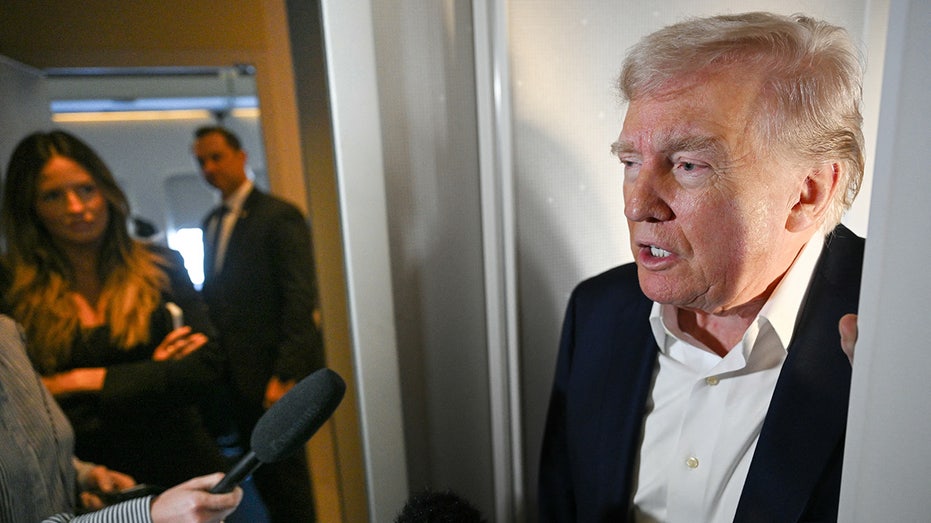
President Trump said on Friday that the first physical examination of his second term went well, and overall he feels he’s in “very good shape.” The president told reporters on board Air Force One while en route to his home in West Palm Beach Friday evening that the yearly presidential physical at Walter Reed Medical Center showed he has a “good heart, a good soul,” and “overall, I think I’m in very – I felt I was in very good shape.” He also took a cognitive test. “I don’t know what to tell you other than I got every answer right,” the president told reporters. PENNSYLVANIA MAN CHARGED WITH THREATENING TRUMP, ICE AGENTS, OTHER OFFICIALS He added, “I think it’s a pretty well-known test. Got it all right. I’ve taken the cognitive test, I think, four times and gotten nothing wrong. That’s what the American people want. Biden refused, Kamala refused.” He also said that doctors gave him “a little bit” of advice on lifestyle changes that could improve his health without going into detail. Biden’s yearly presidential exam at Walter Reed last year didn’t include a cognitive test. The former president’s mental abilities became a concern during the presidential election last year after he struggled in a June debate against Trump, which led to former Vice President Kamala Harris taking over as the Democratic nominee. Trump said he expected the report from the exam to be released by Sunday. The president was at Walter Reed for five hours undergoing “every test you can imagine.” TRUMP THREATENS TARIFFS AND SANCTIONS ON MEXICO FOR ‘STEALING’ WATER FROM TEXAS FARMERS “I was there for a long time,” Trump said. “I think I did very well.” White House press secretary Karoline Leavitt said Friday that a readout of the exam would be released “as soon as we possibly can.” The White House earlier this week promised to release the full results of Trump’s examination. “I have never felt better, but nevertheless, these things must be done!” Trump wrote on Truth Social before the exam earlier this week. The exam was also his first presidential physical since his ear was grazed by a bullet during an assassination attempt at a campaign rally in Butler, Pennsylvania, in July. CLICK HERE TO GET THE FOX NEWS APP Both Biden and Trump’s health have come under increased scrutiny as they are the two oldest U.S. presidents to ever serve, and Trump became the oldest president to be sworn into office in January.
Piyush Goyal, S Jaishankar double down on US after Donald Trump’s 90-day tariffs pause: ‘We never negotiate at gunpoint’

Speaking at the Italy-India Business, Science, and Technology Forum, Goyal stressed that any agreement will be made only if it benefits the Indian people.
Trump administration scores win as judge clears way for ICE enforcement in churches, places of worship
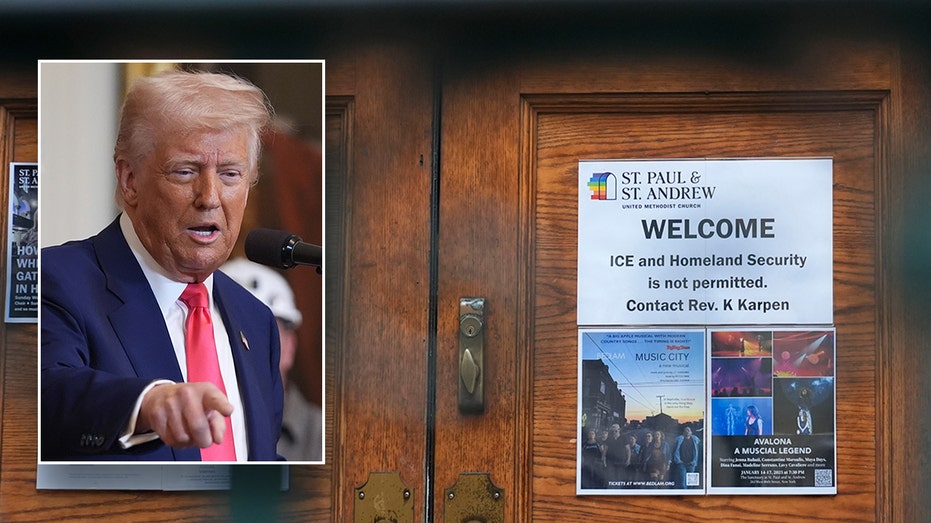
A federal judge has upheld a Trump administration policy that allows U.S. Immigration and Customs Enforcement (ICE) to carry out enforcement operations at churches and other places of worship despite lawsuits against it from faith-based groups. U.S. District Judge Dabney Friedrich, appointed by Trump during his first term, denied a request from more than two dozen Christian and Jewish organizations to block the policy. The groups said it infringes on religious freedoms and is causing drops in attendance, especially among immigrants worried about being detained by ICE. The court found little evidence that ICE is targeting churches or that the change in policy is solely to blame for fewer people attending services. Friedrich noted that only a few enforcement actions have actually taken place at or near religious sites. MARYLAND IMMIGRANT WRONGLY DEPORTED TO EL SALVADOR MUST RETURN TO US, SUPREME COURT RULES “That evidence suggests that congregants are staying home to avoid encountering ICE in their own neighborhoods, not because churches or synagogues are locations of elevated risk,” Friedrich wrote in her opinion. The policy at the center of the lawsuit took effect Jan. 20, Trump’s first day back in office. On that day, the Department of Homeland Security rescinded an Obama-era guideline that had discouraged ICE agents from making arrests in “sensitive locations,” including schools, hospitals and places of worship. Under the new rule, ICE officers no longer need special approval to act at these locations as long as they apply “common sense” and “discretion.” Religious leaders said that change went against more than three decades of precedent, which aimed to protect immigrants and other vulnerable populations from being targeted at sacred or essential community spaces. TRUMP THREATENS TO CUT ALL FEDERAL FUNDING TO SANCTUARY CITIES: ‘DISGRACING OUR COUNTRY’ The judge, however, said bringing back the old policy might not change attendance numbers, since broader immigration enforcement actions could still keep people away. Other legal challenges to immigration enforcement in sensitive locations are also making their way through the courts. A federal judge in Maryland temporarily blocked operations at religious sites for some groups, including Quakers. But a judge in Colorado ruled in the administration’s favor in a similar case involving enforcement at schools. CLICK HERE TO GET THE FOX NEWS APP Friedrich’s decision means the current policy will remain in place as the lawsuit proceeds. The Associated Press contributed to this report.
Is the alleged MS-13 gang member going to be returning to the US?
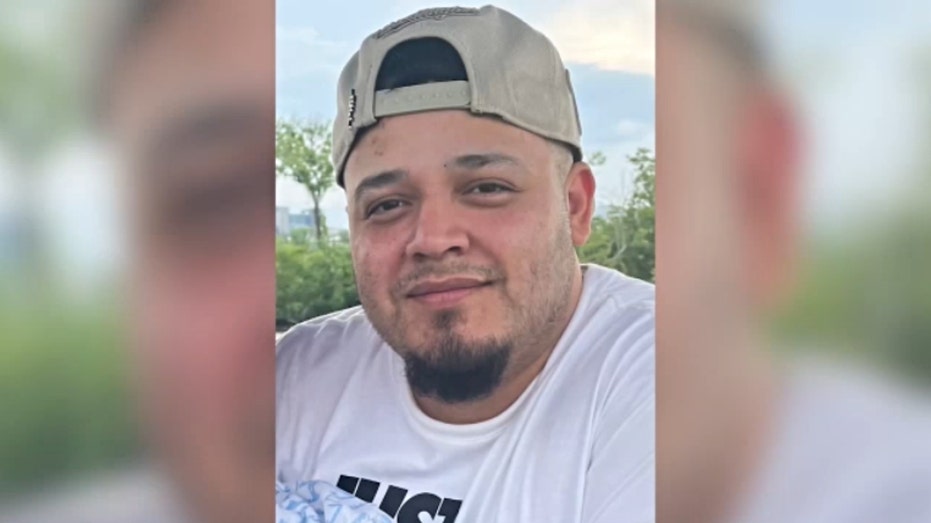
A Maryland federal judge on Friday told the Trump administration to comply with a Supreme Court order “in good faith” regarding the ordered return of an alleged MS-13 gang member erroneously deported to El Salvador. Kilmar Abrego Garcia, a Salvadoran national and Maryland resident, was deported to El Salvador last month for being an alleged MS-13 gang member. His attorneys have maintained that he does not have any ties to the violent gang. In a Friday hearing, U.S. District Judge Paula Xinis ordered the government to provide daily updates as they comply with Thursday’s Supreme Court order upholding her previous order to return Abrego Garcia to U.S. soil. FEDERAL JUDGE HAMMERS DOJ ON WHEREABOUTS OF ALLEGED MS-13 GANG MEMBER FOLLOWING SCOTUS ORDER “I hope you will, in good faith, comply and we’ll take it from there,” Xinis said Friday. “I want daily updates until this matter is resolved.” Deputy Assistant Attorney General Drew Ensign and Xinis made clear during the hearing that they did not agree on their understanding of the high court’s order. On Thursday, the Supreme Court wrote that Xinis’ order “properly requires the government to ‘facilitate’ Abrego Garcia’s release from custody in El Salvador and to ensure that his case is handled as it would have been had he not been improperly sent to El Salvador.” The high court also said the “intended scope of the term ‘effectuate’” in Xinis’ order is “unclear, and may exceed the District Court’s authority.” “For its part, the Government should be prepared to share what it can concerning the steps it has taken and the prospect of further steps,” the Court wrote. “It’s going to be very difficult for the parties and for the trial court to understand what the scope is of the Supreme Court’s order once the trial court takes the issue back up,” defense attorney Phil Holloway told Fox News Digital. MARYLAND IMMIGRANT WRONGLY DEPORTED TO EL SALVADOR MUST RETURN TO US, SUPREME COURT RULES Holloway said that the ambiguity in the high court’s order could lead to the case ending up in the justices’ hands again for further clarification. “The government is going to say that they are operating in good faith to comply with an order from the Supreme Court that is murky, and they’re trying their best to comply with it,” he said. “At the same time, the president’s trying to exercise his executive authority under Article II, which also the Supreme Court said the lower court must recognize.” Holloway said the government can take various routes as it moves forward, including seeking a reprieve from Xinis’ order and arguing that it is “unduly burdensome, and it hinders the president’s executive authority.” “I think they may wind up trying to get him out of that prison and sending him to a different location,” Holloway said. “But I think they’re going to fight pretty hard on whether they actually have to bring him back to U.S. soil.“ DOJ ASKS TO DISMISS VIRGINIA CASE AGAINST SALVADORAN ACCUSED MS-13 LEADER SET TO BE DEPORTED Jonathan Turley, a law professor at George Washington University and a Fox News contributor, said that the extent of the district court’s power to order the government to comply with the Supreme Court’s order is also in question. “It’s entirely unclear what, if anything, the court can do beyond other than nudge the administration in this direction,” he said. Heritage Foundation Legal Fellow Hans von Spakovsky specifically pointed to the Supreme Court noting that the district court must give “[d]ue regard for the deference owed to the Executive Branch in the conduct of foreign affairs.” “So while the government has to act in good faith to use diplomatic efforts to negotiate Garcia’s return and keep the district court informed of its efforts, the district court cannot give the government direct orders on how to accomplish this foreign policy task or penalize the government if it is not successful,” von Spakovsky said. “The assumption is that if the court determines that the administration is acting in bad faith, it could take some other action,” Turley noted. “The question is, how do you make that determination?” Turley said the district court could hold the government in contempt if it determines the administration acted in bad faith. However, enforcement may be challenging, given Abrego Garcia is overseas and the president’s Article II authority over foreign affairs.