

TribCast: Covering Texas’ new abortion fights
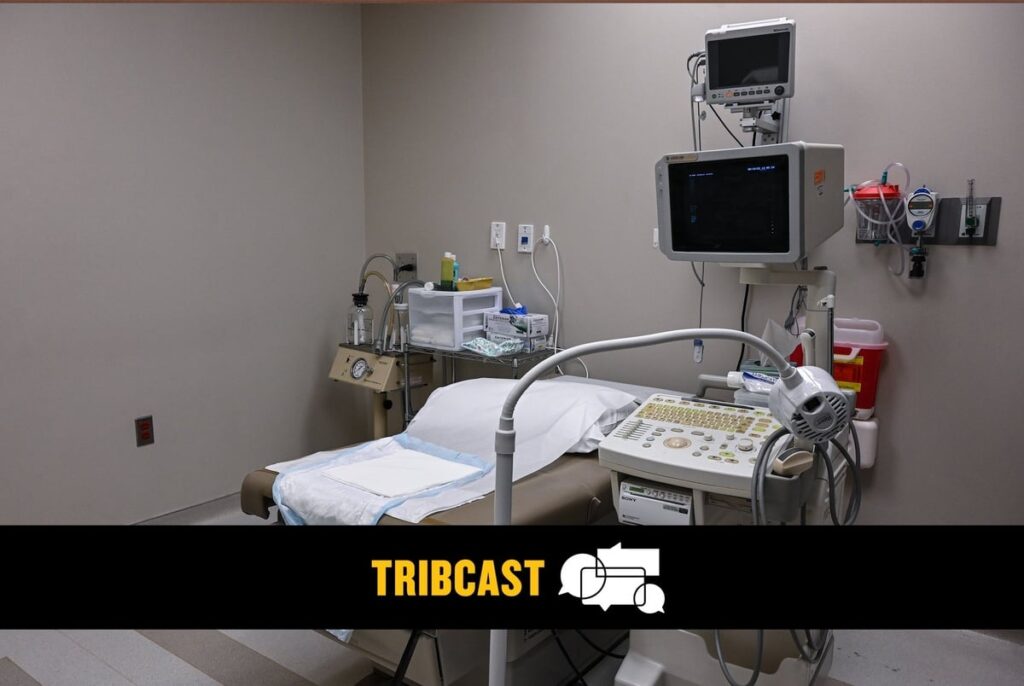
TribCast digs into clarifying bills, crackdowns on pills, lawsuits, arrests and everything else abortion-related.
Trump, Hegseth reveal whopping figure they want for the next Pentagon budget
President Donald Trump and Defense Secretary Pete Hegseth vowed to hike the Pentagon budget to over $1 trillion for the first time ever. Speaking to reporters alongside Israeli Prime Minister Benjamin Netanyahu, Trump said the upcoming budget would be “in the vicinity” of $1 trillion, a major boost from this year’s $850 billion budget. “COMING SOON: the first TRILLION dollar @DeptofDefense budget,” Hegseth posted on X. He said Trump is “is rebuilding our military – and FAST.” $1,300 COFFEE CUPS, 8,000% OVERPAY FOR SOAP DISPENSERS SHOW WASTE AS DOGE LOCKS IN ON PENTAGON The budget for all national security programs, including the Department of Defense, nuclear weapons development and other security agencies, is at $892 billion for this year. Moving to a $1 trillion Pentagon budget would be a 12% increase over current levels. But the $1 trillion budget idea comes just as the Pentagon has moved to cut 8% each year for five years from each program to reinvest in modernization. The department is also planning to slash tens of thousands from its civilian workforce and consolidate bases across the world. “We’re going to be approving a budget, and I’m proud to say, actually, the biggest one we’ve ever done for the military,” he said. “$1 trillion. Nobody has seen anything like it. NEW NAVY CHIEF ‘REGRETS’ COSTLY MISSILE STRIKES AGAINST HOUTHIS, PUSHES FOR CHEAPER RED SEA DEFENSE “We are getting a very, very powerful military. We have things under order now.” White House officials are expected to unveil their budget proposal for fiscal year 2026 later this spring before Congress hashes out the appropriations process. Even a $1 trillion budget would not put the U.S. at Trump’s stated target for NATO countries to spend on defense: 5%. But the president said the cash influx would be used to kickstart production on new equipment and technologies. “We’ve never had the kind of aircraft, the kind of missiles, anything that we have ordered,” he said. “And it’s in many ways too bad that we have to do it because, hopefully, we’re not going to have to use it.” The Trump administration recently unveiled a Boeing contract for the Air Force’s sixth-generation fighter jet, the F-47, which the service branch expects to cost around $20 billion from 2025 to 2029. “We know every other plane,” Trump said. “I’ve seen every one of them and it’s not even close. This is a next level.” An announcement on the Navy’s next-generation fighter jet, F/A-XX, has been stalled, while chief of naval operations Adm. James Kirby told reporters Monday work on the new jet’s contract was taking place at “secretary-level and above.”
White House: US will lead in AI, but China is catching up
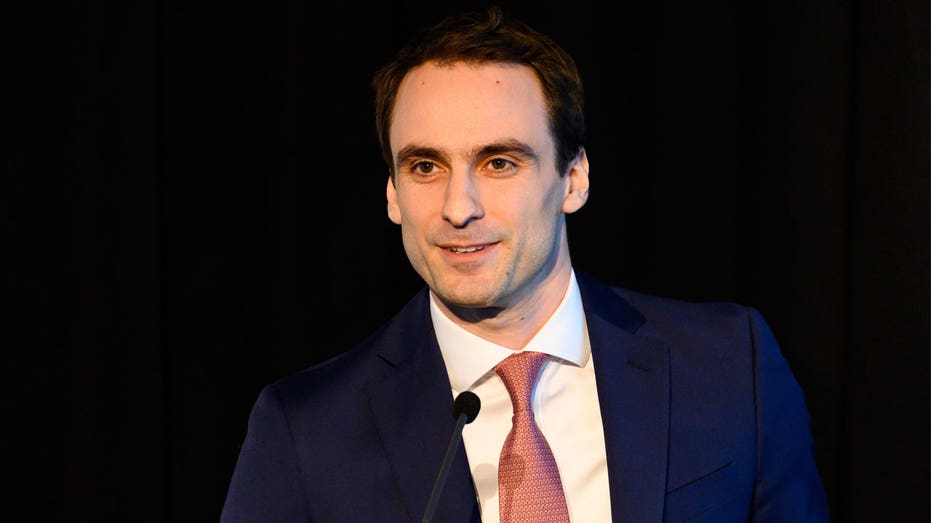
EXCLUSIVE: China’s innovation in artificial intelligence is “accelerating,” according to Michael Kratsios, director of the White House Office of Science and Technology. He told Fox News Digital that the United States’ “promote and protect” strategy will solidify its standing as the world’s dominant power in AI. Kratsios, who served as chief technology officer during the first Trump administration, sat for an exclusive interview with Fox News Digital on Monday. FLASHBACK: US TECHNOLOGY CHIEF WARNS CHINA ‘TWISTING’ ARTIFICIAL INTELLIGENCE TO TARGET CRITICS, AS AMERICA JOINS GLOBAL PACT “The White House in the first Trump administration redefined national tech policy to focus on American leadership in emerging technologies, and those were technologies like artificial intelligence, quantum computing and 5G, [which] were big back then,” Kratsios said. “The president, at that time, signed the executive order prioritizing U.S. leadership in AI, back in 2019 when people weren’t even talking about it.” “He recognized that it was critical for the U.S. to lead in AI,” Kratsios said. “We got the ball rolling on what the U.S. national strategy is and how we would win.” During his first administration, Trump signed the first-ever executive order on AI in 2019. He also took executive action in 2020 to establish the first-ever guidance for federal agency adoption of AI to deliver services to the American people and “foster public trust” in the technology. But Kratsios said that when former President Joe Biden took office, the attitude of his administration toward AI shifted to “one of fear and one of over-regulation.” “There was a fixation on what I would call harms, so, spending time and energy thinking about all the things that could go wrong with this technology, versus having a balanced approach, where you try to minimize things that could go poorly, and more importantly, look at ways this technology can transform America for the better,” Kratsios explained, noting that Biden officials were “harms focused,” which he said was “manifested in a lot of the policies that they did, in the way that they were very reticent to applying some of this technology to a lot of the issues that government faced, like how you make agencies more efficient.” Kratsios reflected on Trump’s AI message during the campaign, saying he “made it very clear that we as a country need to win and be dominant in artificial intelligence.” “And he acted very decisively,” Kratsios said, pointing to Trump’s move on his third day in office to direct him and other officials to develop an AI action plan. “It was a way to review everything that had been done under the Biden administration and turn the page with an agenda that’s focused on sustaining and ensuring continued U.S. leadership in this particular technology, and that’s what we’ve been working on,” Kratsios said. ‘AI POWERHOUSE’: WHITE HOUSE ENCOURAGES AMERICANS TO PROVIDE IDEAS FOR ARTIFICIAL INTELLIGENCE STRATEGY Kratsios explained that the U.S. is “the leader” in AI, specifically when it comes to the “three layers of technology,” which he said are chips or high-end semiconductors, the model itself and the application layer. “If you look at all three of those layers, the U.S. is the leader,” Kratsios said. “We have the best chips. We have the best models. And we have the best applications to date.” But he warned that the Trump administration is “seeing the velocity of innovation” from China. “We’re seeing the speed at which the PRC is catching up with us is actually accelerating,” he explained. Kratsios referenced DeepSeek, which was released by a Chinese firm earlier in 2025 and develops large language models. “I think what DeepSeek revealed is that the Chinese continue to make progress and are trying really hard to catch up with us on those three layers,” Kratsios said. But the key to maintaining U.S. dominance in the space is the Trump administration’s “promote and protect” strategy, Kratsios explained. Kratsios said the Trump administration will “promote” by continuing to accelerate the development of technology and encouraging more Americans, American companies and countries around the world to use that technology. “And then on the protect side, what is it that the U.S. has which could be useful to the PRC to accelerate their efforts in AI? We protect that technology from access by the Chinese,” Kratsios said, pointing to high-end semiconductors and chips that the Chinese “shouldn’t have access to, because that would make it easier for them to accelerate their efforts.” “How do we speed up innovation here at home and slow down our adversaries?” Kratsios said. OPINION: HOW TEAM TRUMP CAN MAKE AI STAND FOR AMERICAN INNOVATION The answer, Kratsios said, is AI research and development that continues to drive innovation. He also said the Trump administration needs to continue to remove regulations and barriers to AI innovation, and also prepare and train Americans in the workforce to “better leverage this technology.” Kratsios said another step is ensuring that foreign allies partner with the U.S. to “make sure that they are also keeping the PRC at bay and that they continue to use the American AI stack.” “So, if you’re any country in the world that wants to use AI, you’d want to use an American stack,” he explained. “So we should make it as easy as possible in order for us to export our technology to like-minded partners.” As for China, Kratsios said the PRC “is probably one of the most sophisticated surveillance states in the world, and that is underpinned by their own artificial intelligence technology.” “I think the goal of the United States should be to continue to be the dominant power in AI. And there are certain inputs to the development of AI which we can control, and which we would not want the PRC to have access to,” he said. “And the most important pieces are sort of these very high-end chips that they can use to train models, and also certain equipment that would allow them to build their own very high-end chips.” He added: “And
‘Mediterranean Blue’: Rare diamond makes dazzling debut
[unable to retrieve full-text content] Sotheby’s unveiled a newly discovered 10.03-carat fancy vivid blue diamond at an Abu Dhabi exhibit.
Palestinians mourn journalist burned alive in Israeli strike on Gaza tent
[unable to retrieve full-text content] Palestinians in Gaza are mourning the death of journalist Ahmad Mansour who was filmed burning alive.
Zelenskyy: Chinese soldiers fighting for Russia inside Ukraine

NewsFeed Ukrainian President Volodymyr Zelenskyy said his country’s military captured two Chinese soldiers fighting alongside Russian forces in the territory of Ukraine. He added that he believes there are “significantly more” and is raising the issue with Beijing. Read more Name(required) Email(required) Website Message Submit Published On 8 Apr 20258 Apr 2025 Adblock test (Why?)
Rep. Jasmine Crockett suggests the United States needs illegal immigrants because ‘we done picking cotton’

Rep. Jasmine Crockett, D-Texas, a member of the far-left group of progressive lawmakers known as “the Squad,” told congregants at a historically Black church that America needs robust immigration because “we done picking cotton.” Crockett, who represents Texas’s 30th Congressional District, made the remarks during Connecticut-based Grace Baptist Church’s 125th anniversary celebration held over the weekend. The comments were part of Crockett’s broader attempt to slam the Trump administration for cracking down on illegal immigration. “So I had to go around the country and educate people about what immigrants do for this country, or the fact that we are a country of immigrants. The fact is ain’t none of y’all trying to go and farm right now,” Crockett said, garnering a sheepish laugh from a few members of the audience. ROLLING CONTROVERSY: FAR-LEFT DEM JASMINE CROCKETT FACES WEEK OF BACKLASH AMID ‘UNHINGED’ COMMENTS “OK, so I’m lying?” Crockett shot back, noticing the awkward silence. “You’re not! You’re not! We done picking cotton! We are. You can’t pay us enough to find a plantation.” Crockett’s weekend remarks are just the latest in a line of other questionable comments and controversies that have resulted in her facing possible censure in the House of Representatives. One of those controversies occurred after she referred to Texas Gov. Greg Abbott, who is paralyzed and has been confined to a wheelchair for decades, as “Governor Hot Wheels.” While Crockett attempted to walk back her comments after they drew nationwide backlash, she has exhibited a pattern of promoting remarks about Abbott “rolling places.” JASMINE CROCKETT CONCEALS THE MEANING OF ‘HOT WHEELS’: GUTFELD “Rolling up to the White House to cheer on the president destroying the agency that makes sure kids in wheelchairs have equal access to education is wild,” read a social media post Crockett shared days before her “hot wheels comment.” Prior to that, during Abbott’s re-election campaign against former Democratic Rep. Robert Francis “Beto” O’Rourke, Crockett once again blasted the Texas governor, saying, “The new nickname I have for Beto O’Rourke is the king of the clap backs! Beto is rolling around the state… Where is Abbott rolling to?” Other questionable remarks leading up to the censure resolution included suggesting Texas GOP Sen. Ted Cruz should be “knocked over the head.” Meanwhile, amid a spate of violent attacks targeting Elon Musk and Tesla, Crockett mused that “all I want to see happen on my birthday is for Elon to be taken down,” while she was speaking at a rally pushing Tesla owners to sell their cars and get rid of any stock in the company. Another remark that has put Crockett in hot water lately included comments that Democrats need to be “OK with punching.” “I think you punch,” Crockett said in an interview when asked how Democrats regain the momentum they lost in the 2024 election. “I think you’re OK with punching.” JASMINE CROCKETT SETS OFF SOCIAL MEDIA AFTER TOUTING BEING BLACK AS QUALIFICATION FOR PUBLIC DEFENDER JOB Comments criticizing the interracial marriage of Florida GOP Congressman Byron Donalds, a Trump ally, from June 2024 have also resurfaced amid Crockett’s spate of questionable statements. “The fact that you’re sitting around talking about ‘life was better under Jim Crow,’ like, is this because you don’t understand history? Or literally it’s because you married a White woman and so you think that whitewashed you?” Crockett said on “The Breakfast Club” in June, which was first reported by the Washington Free Beacon. “I feel like they give [Donalds] his talking points and he’s like, ‘Yes, massa. I got it.’” The censure resolution against Crockett, introduced March 26 by Rep. Randy Weber, R-Texas, remains under consideration by the House Committee on Ethics. In comments to Fox News’ Sean Hannity last month, Attorney General Pam Bondi added that Crockett needs “to tread very carefully,” noting that “words have consequences.” CLICK HERE TO GET THE FOX NEWS APP “She needs to immediately apologize and denounce [her rhetoric] because, even in her home state, violence is happening after she made these statements,” Bondi said, referring specifically to Crockett’s comments about wanting to see Musk “taken down” for her birthday amid a spate of violent attacks targeting Tesla. “It’s dangerous,” Bondi continued. “She has to know it’s dangerous, and she’s calling for further insurrection on her birthday this weekend.” Fox News Digital reached out to Crockett’s office for comment but did not receive a response in time for publication.
Mike Huckabee nomination advances in Senate, one step closer to becoming ambassador to Israel
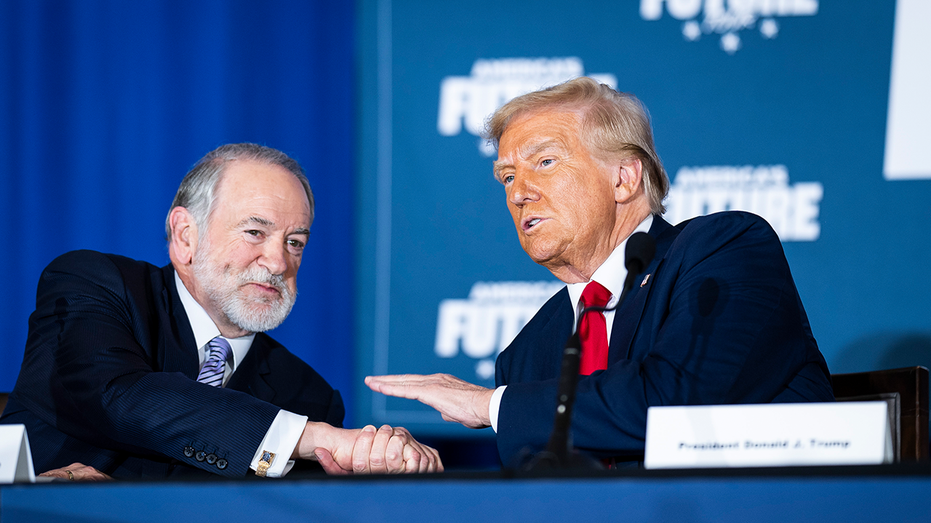
Mike Huckabee, President Donald Trump’s nominee for U.S. ambassador to Israel, cleared a key hurdle Tuesday after the Senate voted to end debate on his nomination. The Senate voted 53 to 46 to advance Hucakbee’s nomination. He now awaits a final confirmation vote as Israel continues its war against Hamas in the Gaza Strip. While Republicans have championed Huckabee as an ardent supporter of Israel, Democrats have questioned his previous “extreme” position on Palestinians. ANTI-ISRAEL PROTESTERS INTERRUPT HUCKABEE HEARING, ATTACK TRUMP NOMINEE’S FAITH The former Arkansas governor has previously argued it is Israel’s right to annex the West Bank and has flatly rejected the push to establish a two-state solution when it comes to the Gaza Strip. Huckabee has not commented on whether he still views the West Bank as Israel’s right to claim, or where he stands when it comes to Trump’s position on the Gaza Strip, which the president said he would like to turn into the “riviera of the Middle East” and called for the “relocation” of more than 2 million Palestinians. TRUMP, NETANYAHU TO MEET AT WHITE HOUSE AS ISRAEL SEEKS TARIFF RELIEF, DISCUSSIONS ON IRAN, GAZA HOSTAGES During his confirmation hearing, the former governor pushed back on claims that Trump wants to take over the Gaza Strip, insisting the president has not called for the “forced displacement” of Palestinians from Gaza – “unless it is for their safety.” “If confirmed, it will be my responsibility to carry out the president’s priorities, not mine,” Huckabee said in response to questions levied at him from Sen. Jeff Merkley, D-Ore. But Huckabee’s testimony during Senate questioning is unlikely to have garnered much new support from Democrats in Congress. “Huckabee’s positions are not the words of a thoughtful diplomat – they are the words of a provocateur whose views are far outside international consensus and contrary to the core bipartisan principles of American diplomacy,” New York Rep. Jerry Nadler, a senior Jewish Democrat, said in a statement last month. “In one of the most volatile and violent areas in the world today, there is no need for more extremism, and certainly not from the historic ambassador’s post and behind the powerful seal of the United States.” The Associated Press contributed to this report.
Under Trump, US Justice Department ends cryptocurrency investigations
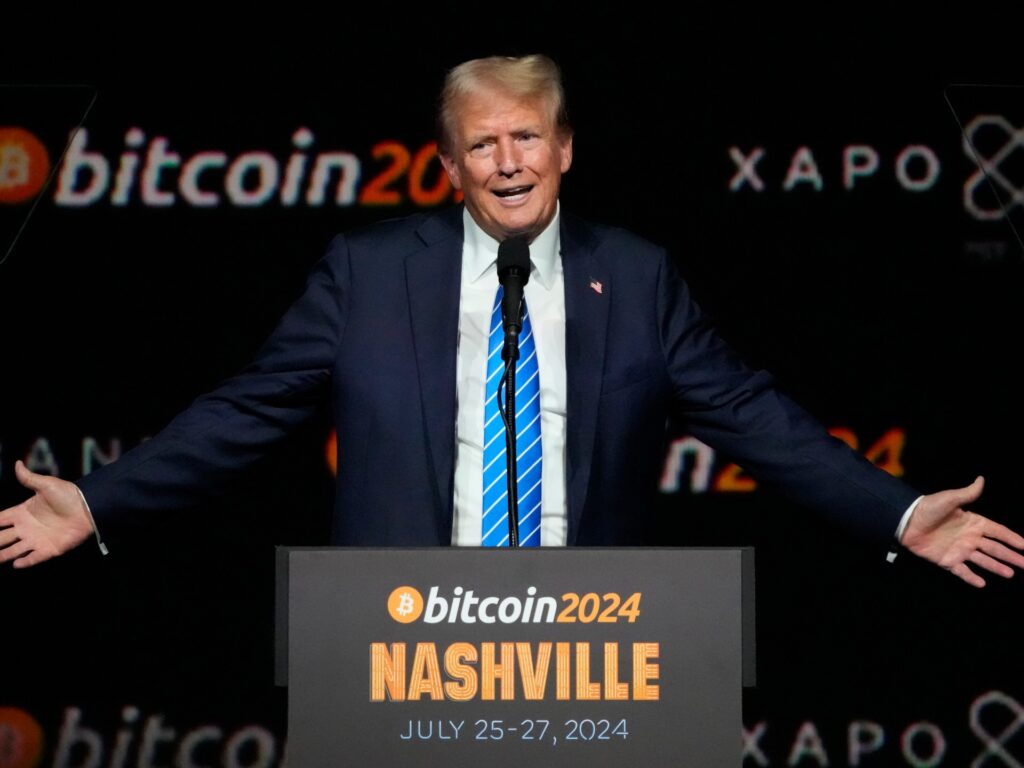
The United States Department of Justice has announced it plans to pare back its investigations into cryptocurrency fraud, instead redirecting those resources towards immigration enforcement, terrorism and drug trafficking. In a memo late on Monday, Deputy Attorney General Todd Blanche quoted President Donald Trump’s pledge to “end the regulatory weaponization” of the cryptocurrency industry. “The Department of Justice is not a digital assets regulator,” Blanche wrote. “The Justice Department will no longer pursue litigation or enforcement actions that have the effect of superimposing regulatory frameworks on digital assets.” Instead, Blanche explained that Trump regulators in other departments would enforce financial law “outside the punitive criminal justice framework”. “Prosecutors should not charge regulatory violations in cases involving digital assets,” Blanche wrote. As part of the changes, the Justice Department will immediately dismantle its National Cryptocurrency Enforcement Team (NCET), which was launched in February 2022 under the administration of former President Joe Biden. Advertisement The team was designed to pursue cases of alleged fraud and illicit finance schemes. In 2024, it announced a conviction in its first “cryptocurrency open-market manipulation case”. The suspect, Avraham Eisenberg, was found guilty of commodities fraud for artificially manipulating cryptocurrency prices. That, in turn, allowed him to amass $110m in cryptocurrency, according to prosecutors. NCET has also led high-profile investigations against cryptocurrency firms like Binance and Tornado Cash, the latter of which was accused of laundering money for North Korea. Trump has repeatedly slammed the Biden administration and has set about dismantling some of the former president’s signature policies, including NCET. In Monday’s memo, Blanche echoed Trump by blaming the “prior administration” for pursuing “a reckless strategy of regulation by prosecution”. Trump has sought to distance himself from Biden’s investigations into the largely unregulated cryptocurrency industry, instead positioning himself as a champion of digital currencies. On January 23, three days after returning to the White House for a second term, Trump issued Executive Order 14178, entitled “Strengthening American leadership in digital finance technology”. It revoked a Biden-era executive action pushing for “responsible development” of cryptocurrency and instead laid the groundwork for a “national digital asset stockpile”. In the weeks since, Trump has made good on that pledge, announcing a national strategic reserve for cryptocurrency in early March. He named five currencies to the reserve — XRP, Cardano, Solana, Bitcoin and Ethereum — giving each a brief boost in value. Advertisement Trump also released his own “meme coin” and has business interests in the cryptocurrency firm World Liberty Financial (WLF), netting him and his family billions of dollars. Critics, however, have questioned the ethics of those ventures, given Trump’s outsized role in the global economy. Calling himself the “crypto president”, Trump has nevertheless continued to make overtures to the digital currency industry. For example, he held a meeting with cryptocurrency leaders at the White House on March 7, dubbed the “first-ever White House Digital Assets Summit”. “Last year, I promised to make America the Bitcoin superpower of the world and the crypto capital of the planet, and we’re taking historic action to deliver on that promise,” Trump said at the meeting. “This will be a virtual Fort Knox for digital gold to be housed within the United States Treasury. That’s a big thing,” he added. He also drew a parallel between his legal woes and the investigations into the cryptocurrency industry. In 2023, Trump became the first president ever to be indicted on criminal charges, and in 2024, he was convicted of falsifying business documents in New York. “They weaponised government against the entire industry,” Trump said of the Biden administration’s actions probing cryptocurrency firms. “I know that feeling also, maybe better than you do. All of that will soon be over.” Under Trump’s direction, the federal government has indeed dropped several investigations into cryptocurrency businesses. Advertisement The Securities and Exchange Commission (SEC), for instance, dropped its probe into Coinbase, while the Justice Department ended its investigation of the financial company Robinhood, which had been accused of mishandling crypto assets. Monday’s memo did nevertheless say that some cryptocurrency-related investigations would remain a priority at the Justice Department. Instead, Blanche said the department would narrow its scope to focus on illegal activity that causes “financial harm to digital asset investors and consumers” and supports cartels, drug traffickers and designated “terrorist” groups. “For example, cartels and human trafficking and smuggling rings have increasingly turned to digital assets to fund their operations and launder the proceeds of their illicit businesses,” Blanche wrote. While the department would continue to pursue cartels and criminal organisations that use digital currencies, Blanche specified that his prosecutors “will not pursue actions against the platforms that these enterprises utilize to conduct their illegal activities”. Adblock test (Why?)
Tehran sceptical ahead of upcoming US-Iran nuclear talks
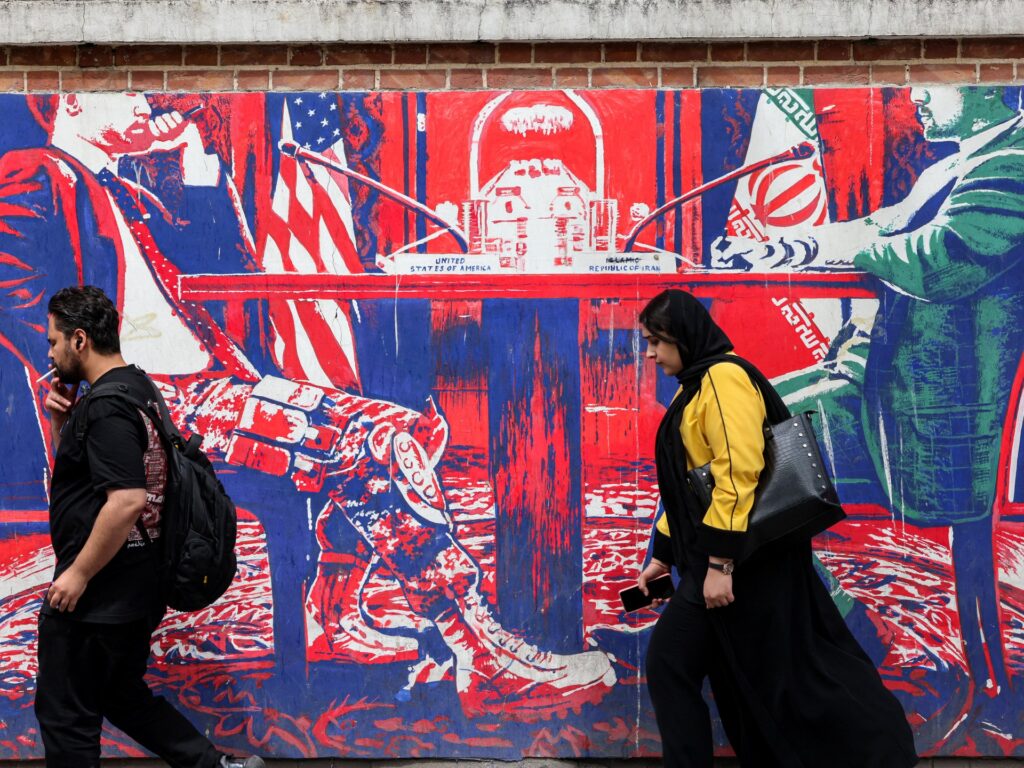
Iran is approaching talks in Oman with the United States over its nuclear programme with deep suspicions regarding Washington’s motives, following the latter’s repeated threats of military action in the lead-up to the meeting. US President Donald Trump announced this week that his administration would have “direct” talks with Tehran on Saturday. But his warning that Iran would be in “great danger” if talks failed comes after recent threats to bomb the country. While Iranian Foreign Minister Abbas Araghchi demonstrated Tehran’s willingness to engage on Tuesday, insisting amid the threats that the talks would nevertheless be “indirect”, he issued a note of warning, saying “Iran prefers diplomacy, but it knows how to defend itself”. In an opinion piece published Tuesday in the Washington Post, Araghchi alluded to “a significant wall of mistrust” and “doubts about the sincerity of intentions” exacerbated by the US’s revival of its “maximum pressure” campaign in the run-up to talks. Behind the scenes, three Iranian officials told news agency Reuters that Trump’s warnings were seen as a tactic “to box the Islamic Republic into accepting concessions in the talks Trump demands or face air strikes”. Advertisement “Trump wants a new deal: end Iran’s regional influence, dismantle its nuclear programme, and halt its missile work. These are unacceptable to Tehran. Our nuclear programme cannot be dismantled,” a senior Iranian official told the news agency. Iran’s suspicion may have been heightened by the presence of Israeli Prime Minister Benjamin Netanyahu at the White House when Trump announced Saturday’s talks. Netanyahu, who has repeatedly urged US governments to use strikes against Iran’s nuclear programme, said a diplomatic solution would be good if it was done “in a full way”, citing the complete dismantling of Libya’s atomic programme in 2003. Israel, which has engaged in tit-for-tat attacks on Iran as regional tensions mounted amid Israel’s war on Gaza, severely weakened Tehran’s Lebanese ally Hezbollah last year as it destroyed much of the group’s weapons arsenal and killed much of its leadership, including long-time chief Hassan Nasrallah. Tehran’s position in the region was weakened further by the toppling of another key partner, Syrian President Bashar al-Assad, by the country’s opposition last year. Analyst Tohid Asadi, speaking from Tehran, said that the signals from Iran and the US were at odds. “[Araghchi] said under these circumstances, in which we see pressure and threats directed from the United States, there’s no possibility for direct talks … That’s contradictory to what we heard from the US President Donald Trump, who said the two sides are getting ready for direct talks,” Asadi told Al Jazeera. Advertisement Russia and China ‘following’ talks Ahead of Saturday’s talks in Oman, the deputy foreign ministers of Russia, China and Iran met in Moscow, with the Kremlin welcoming the opening of dialogue between Washington and Tehran. Kremlin spokesman Dmitry Peskov said that Moscow “absolutely” supported the initiative. “This can only be welcomed because it can lead to de-escalation of tensions around Iran,” he said. Russia’s lower house of parliament also ratified on Tuesday a 20-year strategic partnership with Iran, a sign of the deepening military ties between the two countries. China offered pointed criticism of Washington, calling out Trump for tearing up a 2015 deal between Iran and six world powers – the US, Russia, China, France, the United Kingdom and Germany – that saw Iran receive sanctions relief in return for curbing nuclear activities. “As the country that unilaterally withdrew from the comprehensive agreement on the Iran nuclear issue and caused the current situation, the United States should demonstrate political sincerity [and]… mutual respect,” said China’s Foreign Ministry spokesman Lin Jian. Trump unilaterally withdrew from the deal in 2018, during his first presidency. Reporting from Moscow, Al Jazeera’s Yulia Shapovalova said Russia and China had agreed “to follow what is happening to the nuclear deal between Iran and the US, particularly in terms of the US rhetoric to resolve this issue by force”. Defence ‘non-negotiable’ Trump’s withdrawal from the nuclear deal was followed by an Iranian decision to stop complying with obligations under the agreement. Advertisement The result has been that Iran has built up large stocks of highly enriched uranium that leave it a short step from weapons-grade, according to the International Atomic Energy Agency. The agency said in February that Iran had an estimated 274.8 kilogrammes (606 pounds) of uranium enriched to up to 60 percent. Weapons-grade is around 90 percent. But Iran has repeatedly insisted in the past that its nuclear activities are solely for civilian purposes. Israel, which bitterly opposed the 2015 agreement, is widely believed to have an undeclared nuclear arsenal. There has been widespread speculation that Israel might attack Iranian facilities if no new agreement is reached in the upcoming US-Iran talks. “Our defence is non-negotiable. How can Tehran disarm when Israel has nuclear warheads? Who protects us if Israel or others strike?” an Iranian official asked in an interview with Reuters. Iran has withstood repeated sanctions programmes over recent decades, and Iranian military leaders have previously threatened to cut off regional oil exports – a significant proportion of the global energy supply. Adblock test (Why?)