

A growing trade war? Trump says China ‘wants to make a deal’
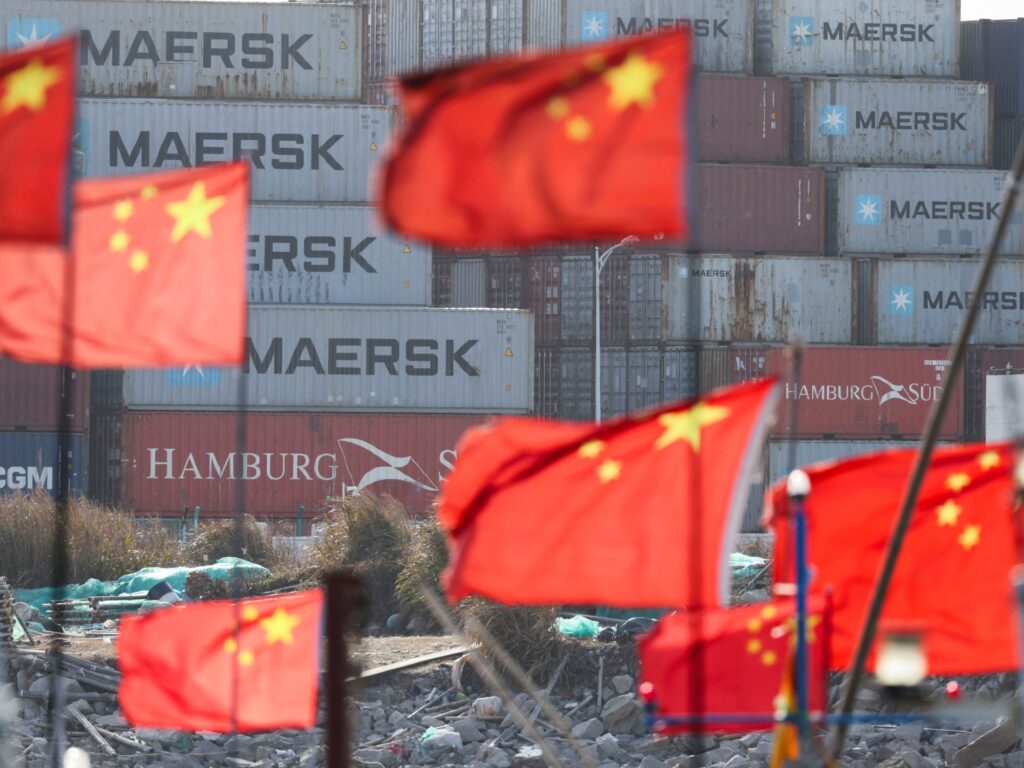
Washington, DC – With the clock ticking for additional United States tariffs to be placed on goods from China, President Donald Trump has said he is waiting for a call from Beijing to defuse a growing trade war. After a phone call with South Korea’s acting president, Han Duck-soo, on Tuesday, Trump said South Korean officials are travelling to the US for trade talks. He added that “many other countries” want to open economic negotiations with Washington. “China also wants to make a deal, badly, but they don’t know how to get it started,” the US president wrote in a social media post. “We are waiting for their call. It will happen!” However, hours later, a senior Trump aide cast doubt over Beijing’s willingness to negotiate a solution to tit-for-tat tariffs, suggesting that a breakthrough is unlikely in the coming days. “They [China] elected to announce retaliation,” US Trade Representative Jamieson Greer said at a Senate committee hearing on Tuesday. “Other countries did not. Other countries signalled that they’d like to find a path forward on reciprocity. China has not said that, and we will see where that goes.” Advertisement Trump has threatened to impose additional 50-percent tariffs on Chinese goods if China does not revoke the retaliatory levies it imposed on US products If implemented, the new US levies would be as high as 104 percent on some Chinese goods. Beijing, however, has appeared to refuse to budge, rejecting what it called “economic bullying” by Washington. “We Chinese are not troublemakers, but we will not flinch when trouble comes our way,” Chinese Foreign Ministry spokesperson Lin Jian said on Tuesday. “Intimidation, threats and blackmail are not the right way to engage with China. China will take necessary measures to firmly safeguard its legitimate and lawful rights and interests.” Lin added that, if the US is determined to engage in a trade war, “China’s response will continue to the end”. Despite the growing competition and tensions between the US and China, Washington and Beijing are major trade partners. According to US government data, the US imported $438.9bn in Chinese goods last year, making China the second largest exporter to the US after Mexico. US exports to China totalled $143.5bn in 2024. Foreign policy hawks in Washington have long called for scaling back economic ties with Beijing and reducing dependence on Chinese goods. On Tuesday, White House Press Secretary Karoline Leavitt used the friction with China as a means of illustrating Trump’s strength as president. “America does not need other countries as much as other countries need us, and President Trump knows this. He’s going to use the leverage of our markets and our country to the advantage of the people he was sworn in to represent,” Leavitt said. Advertisement “Countries like China who have chosen to retaliate and try to double down on their mistreatment of American workers are making a mistake. President Trump has a spine of steel, and he will not break.” Relations between the US and China have soured over many issues in recent years, including trade, the status of Taiwan, Beijing’s claims in the South China Sea and an ongoing US push against growing Chinese influence in the Indo-Pacific. But the ongoing tariff crisis between the two countries is part of Trump’s worldwide trade shake-up, which has not spared even the closest US allies. Trump has announced a 10-percent baseline tariff on all imports to the US, with additional levies — described as “reciprocal tariffs” — on countries with which the US has large trade deficits. On Tuesday, Greer portrayed the US as the victim of an unfair international trading system that has gutted American industries. Beyond tariffs, he slammed other countries for imposing barriers and regulations that limit US imports, including restrictions by the European Union on shellfish and by Australia on pork. Greer said “nearly 50 countries” have approached him to discuss Trump’s trade policy and “explore how to achieve reciprocity”. Trump’s tariffs, however, have rocked global markets and raised concerns about a spike in prices for US consumers. But the Trump administration has argued that the tariffs will ultimately force companies to manufacture their products in the US, reviving industries and creating jobs. Advertisement Greer said the plan will not achieve its aims “overnight”. “We must move away from an economy that’s based solely on government spending and the financial sector, and we must become an economy based on producing real goods and services that provide jobs for working class and middle class Americans in their communities,” he told senators. “This adjustment may be challenging at times. And in a moment of drastic, overdue change, I’m certain that the American people can rise to the challenges they’ve done before.” Adblock test (Why?)
Asaduddin Owaisi claimed that Mukesh Ambani-Nita Ambani’s Rs 1500 crore house Antilia is built on Waqf land, what was the legality

Asaduddin Owaisi reignited the debate over Mukesh Ambani’s Antilia, claiming it stands on Waqf land, raising legal and political questions amid the new Waqf (Amendment) Bill 2025.
US federal agencies to ‘unleash’ coal energy after Biden ‘stifled’ it: ‘Mine, Baby, Mine’
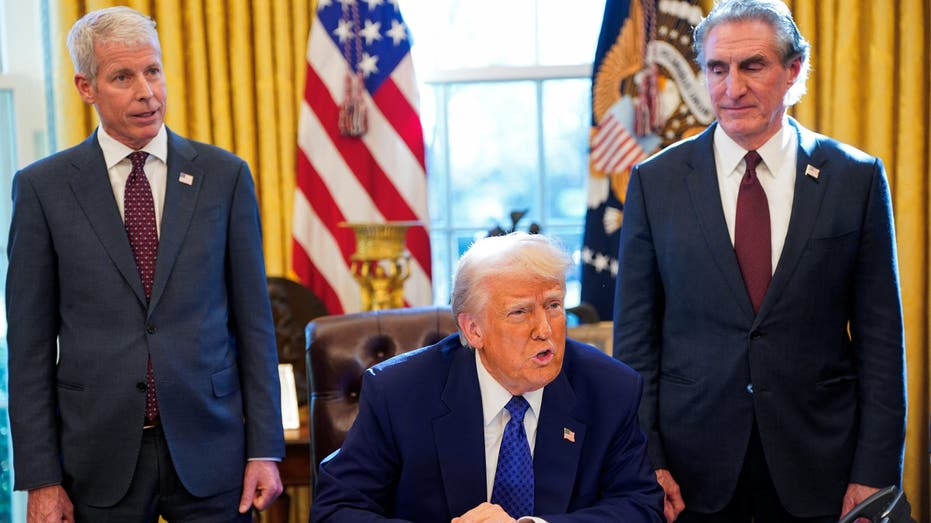
FIRST ON FOX: The Department of Energy, the Department of the Interior and the Environmental Protection Agency are set to announce a bevy of new actions Tuesday afternoon that will “unleash” coal energy following President Donald Trump’s expected signature on an executive order reinvigorating “America’s beautiful clean coal industry,” Fox News Digital learned. “The American people need more energy, and the Department of Energy is helping to meet this demand by unleashing supply of affordable, reliable, secure energy sources — including coal,” Department of Energy Secretary Chris Wright said in a Tuesday statement provided to Fox News Digital. “Coal is essential for generating 24/7 electricity generation that powers American homes and businesses, but misguided policies from previous administrations have stifled this critical American industry,” he said. “With President Trump’s leadership, we are cutting the red tape and bringing back common sense.” Trump is expected to sign an executive order Tuesday afternoon that will cut through red tape surrounding the coal industry, including directing the National Energy Dominance Council to designate coal as a “mineral,” end a current pause to coal leasing on federal lands, promote coal and coal technology exports, and encourage the use of coal to power artificial intelligence initiatives, Fox News Digital learned of the upcoming executive order. BIDEN BLOCKS NEW MINING IN REGION THAT PRODUCES ABOUT 40% OF NATION’S COAL: ‘IT’S A DISASTER’ The Departments of Energy and the Interior and the EPA will take actions supporting the Trump executive order Tuesday, including the Interior ending the current moratorium on federal coal leasing and removing regulatory burdens for coal mines, a press release first obtained by Fox Digital shows. COAL STILL KEY TO US ENERGY DOMINANCE, SAYS WEST VIRGINIA GOVERNOR “The Golden Age is here, and we are starting to ‘Mine, Baby, Mine’ for clean American coal,” Department of the Interior Secretary Doug Burgum said in a statement provided to Fox News Digital. “Interior is unlocking America’s full potential in energy dominance and economic development to make life more affordable for every American family while showing the world the power of America’s natural resources and innovation.” The Interior Department explained that by expanding acces to coal reserves and cutting through red tape surrounding the permitting process, “the administration is removing long-standing regulatory barriers that have undermined American coal production.” “These efforts support high-paying mining jobs and rural economies, while strengthening U.S. energy independence by reducing reliance on foreign energy sources,” the press release stated. “Coal is a critical component of a secure, stable and diversified American energy portfolio.” MOUNTAIN STATE CRACKDOWN: WV GOV’S ORDER LEADS TO 60 SUSPECTED ILLEGAL IMMIGRANT CRIMINAL DETENTIONS At the Department of Energy, Wright is expected to announce five initiatives to strengthen coal innovation and mineral independence, Fox Digital learned. The five actions include: Reinstating of the National Coal Council; facilitating new investment in coal-powered electricity generation; the designation of steelmaking coal as a critical material and mineral; deploying mineral extraction technology from coal ash; and commercializing coal ash conversion technologies. The National Coal Council is a 50-member federal advisory committee that was established in 1984, but saw its charter expire under the Biden administration in 2021. The council acted as a guide for the government while navigating coal technologies and markets. Once reinstated, the council will include coal producers, users, equipment suppliers, state and local officials, and other stakeholders, according to a Department of Energy press release first obtained by Fox News Digital Tuesday. The Energy Department’s Loan Program Office’s Energy Infrastructure Reinvestment (EIR) Program will also make $200 billion in financing available for coal energy investments, such as upgrading energy infrastructure and building new facilities that utilize legacy energy infrastructure. The Department of Energy also will work with the Interior Department to recommend that coal, in the context of steelmaking, be designated as critical material and a critical mineral in the 2025 Critical Materials Assessment. “This strategic designation will help ensure the U.S. maintains a stable supply of steelmaking coal in the decades to come and underscores the vital role of steelmaking coal in bolstering national security and economic stability,” the Energy Department explained of the initiative. NEW ENGLAND’S LAST COAL PLANTS SET TO SHUTTER, USHERING IN ERA OF GREEN ENERGY The department is also expected to heighten its focus on coal ash, specifically employing its newly patented technology to extract critical minerals from coal ash, and commercializing the recovery of critical minerals from coal ash, which the Department of Energy said will reduce the U.S.’ reliance on China for such materials. “The Energy Department is committed to restoring American energy dominance and strengthening America’s industrial base,” the Department of Energy said of the initiative. “Secretary Wright will continue to work with all members of the National Energy Dominance Council to eliminate unnecessary regulatory burdens on coal and unleash American energy.” While the EPA is set to announce that $5.8 million in State and Tribal Assistance Grants funds will be made available to provide grants assisting states in the implementation of EPA-approved state Coal Combustion Residual program, which comes after Zeldin’s EPA already has taken a handful of coal-related actions, such as reconsidering the Biden-era “Clean Power Plan 2.0.” plan and revising coal regulations. “President Trump is delivering on the mandate Americans gave him last November by empowering different forms of domestic energy to drive down costs, increase domestic energy supply, and improve our grid security as we pioneer the path to become the Artificial Intelligence capital of the world,” EPA Administrator Lee Zeldin said in comment provided to Fox News Digital. “The Obama and Biden administrations deliberately tried to regulate coal out of existence. Under my leadership, economic growth and environmental stewardship are not mutually exclusive choices. We are committed to supporting all forms of energy, including clean beautiful coal, and have already taken steps to bolster America’s energy dominance and make energy affordable again while ensuring we have the cleanest air, land and water on the planet,” Zeldin added. BIDEN ADMIN ISSUES ENERGY EFFICIENCY RESTRICTIONS ON KEY POWER GRID
Trump crypto chief says we are in the ‘golden age’ for digital assets, ‘clearing the deck’ of Biden barriers
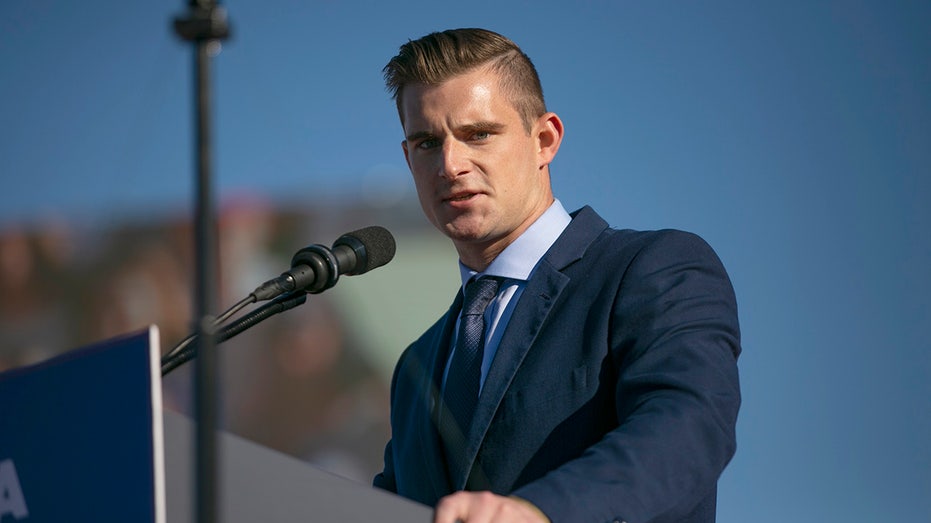
EXCLUSIVE: President Donald Trump wants to make the U.S. the “crypto capital of the world,” and a top White House cryptocurrency policy official said that the administration is well on its way to ushering in “the golden age for digital assets.” Bo Hines, executive director of the President’s Council of Advisers on Digital Assets, sat for an exclusive interview with Fox News Digital this week to outline the Trump administration’s work thus far in the cryptocurrency space. Cryptocurrency, or “crypto” for short, is a digital currency in which transactions are verified and records maintained by a decentralized system using cryptography that enables secure online payments for individuals or businesses. MR. WONDERFUL TALKS ‘EXCITEMENT’ AROUND CRYPTOCURRENCY UNDER TRUMP: AMERICA IS IN A ‘NEW PHASE’ “The president has made this a priority, and it is a testament to his leadership and his knowledge in the space,” Hines explained. “Unlike any president before him, he has truly embraced this technological development in a way that no one else has, which has allowed us to do what we need to do to make the United States the crypto capital of the world.” Hines told Fox News Digital that officials have focused on “clearing the deck” and ensuring that “what was happening under the Biden regulatory regime has been rescinded and repealed.” Under the Biden administration, Hines said Americans using cryptocurrency went “offshore due to the nature of attacks they specifically received under the Biden regime.” “We will start seeing a lot of those players come back to the United States in short order because, look, we are the greatest country in the world. People want to innovate here. People want to build here. And this space is no different,” he said. “At the end of the day, the largest players to the smallest players want to be operating in the United States—they just need a clear set of rules to abide by to do so.” Hines said that under the Biden administration, “rather than welcoming in innovation and encouraging technological developments, they went after these people.” “We’ve been in the demolition phase—removing a lot of those barriers that the Biden regime put up so that people can actually start building back here in the United States.” “My main message to players in the crypto space has been—welcome home,” Hines said. “We are going to create the most pro-crypto-friendly regulatory environment that anyone could possibly imagine because we understand how important the innovation is here in this space.” TRUMP’S CRYPTO CZAR DECRIES GOVERNMENT’S LACK OF BITCOIN ‘LONG-TERM STRATEGY’ Hines explained that during the first week of the second Trump administration, the president set up the interagency working group—the President’s Council of Advisers on Digital Assets—which includes officials from the Treasury Department, the SEC, CFTC, Attorney General Pam Bondi, and more. Trump’s executive order directed the working group to explore several digital asset-related issues, including looking into the “potential creation and maintenance of a national digital asset stockpile” and proposing “criteria for establishing such a stockpile, potentially derived from cryptocurrencies lawfully seized by the Federal Government through its law enforcement efforts.” “With this group and other White House offices, we are working on delivering on the president’s promise to clear the deck and have all of these burdens and regulations lifted,” Hines said. The group is currently in the process of compiling recommendations and building a comprehensive report they will deliver to the president later this year. The report is designed to explain the “clearest regulatory environment possible” in the space, and recommendations for how the U.S. maintains its role as “the dominant leader in the space across the globe.” As for legislation, Hines pointed to the Stablecoin Transparency and Accountability for a Better Ledger Economy, or the STABLE Act. That legislation, which passed out of the House Financial Services Committee on a bipartisan vote, establishes framework for the issuance and operation of dollar-denominated payment stablecoins in the U.S. CLICK HERE TO GET THE FOX NEWS APP “I think the Stable Coin legislation could be the first really, truly large and meaningful piece of legislation that the president signs in the first year of a second term,” Hines said, noting it would “truly revolutionize the financial system for years to come.” “I think that Americans will see that once this legislation is through—once this regulatory framework is established—the way in which they move their money will be changed forever,” Hines said. “You will see that Americans will have better access to quicker payments and better access to transparency.”
White House warns against tariff retaliation, says Trump ‘has a spine of steel and he will not break’
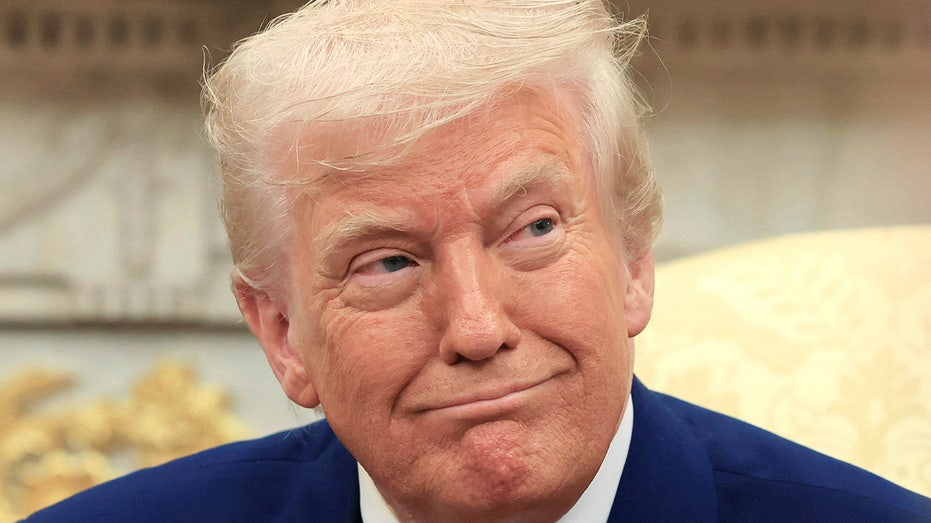
White House Press Secretary Karoline Leavitt insisted Tuesday that “all options are on the table for each country” when it comes to making deals over the latest U.S. tariffs, but warned to those who retaliate that President Donald Trump “has a spine of steel and he will not break.” Leavitt said since Trump’s “Liberation Day” tariff announcements, 70 countries have already reached out to the president to begin negotiations. “On the other hand, countries like China who have chosen to retaliate and try to double down on their mistreatment of American workers are making a mistake. President Trump has a spine of steel and he will not break,” Leavitt added, referencing 34% retaliatory tariffs that China unveiled against the U.S. last week. Leavitt told Fox News Senior White House Correspondent Jacqui Heinrich that Trump is “very much focused on ensuring that these deals are good for the American worker, they are good for American manufacturing” and “that they tackle these crippling deficits with these countries. DEMOCRAT GOVERNORS REVOLT AGAINST TRUMP’S ‘LIBERATION DAY’ TARIFFS “All options are on the table for each country,” she said. “But again, these are going to be tailor-made deals. They are not going to be off the rack deals as the president has called it. And he has directed his entire trade team to be part of this effort.” Leavitt also said “Countries are falling over themselves to reform their unfair trade practices and free open their markets to our country. TRUMP SAYS HE HAD ‘GREAT CALL’ WITH SOUTH KOREAN LEADER, SUGGESTS DEAL POSSIBLE “Why? Because these countries greatly respect President Trump and the sheer power of the American market. These countries realize they’ve gotten filthy rich over the past few decades by imposing substantial tariffs on American made products and ridiculous non-monetary barriers to block out American industry,” she continued. “The jig is up. Past American presidents sat by and let this happen. But President Trump stood up for our country. And he is saying no more.” “The president’s message has been simple and consistent from the beginning to countries around the world. Bring us your best offers and he will listen. Deals will only be made if they benefit American workers and address our nation’s crippling trade deficits,” Leavitt declared. “America does not need other countries as much as other countries need us. And President Trump knows this. He’s going to use the leverage of our markets and our country to the advantage of the people he was sworn in to represent.”
Dem accuses Trump admin of ‘fire sale approach’ as GOP aims to lower federal gov’s real estate portfolio
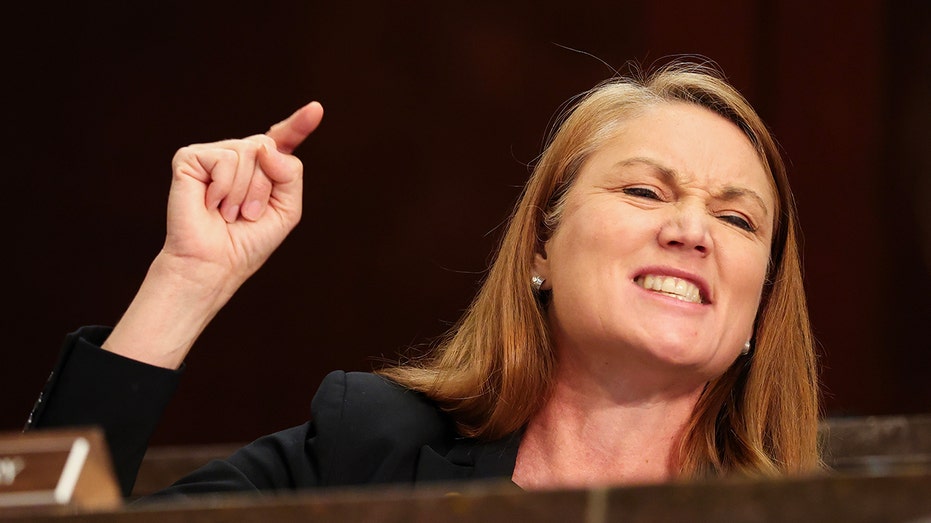
A Democrat on the House Oversight Committee accused the Trump administration of offloading federal real estate in a haphazard “fire sale” as Republicans aim to cut wasteful government spending by selling unused or underutilized government buildings. Rep. Melanie Stansbury, D-N.M., the ranking Democrat on the Department of Government Efficiency (DOGE) subcommittee, took issue with the Trump administration’s approach during a hearing on Tuesday on reducing the federal real estate portfolio. “The Trump administration is currently taking a fire sale approach of looting the federal government and stripping it for parts to pay for tax cuts that we know will come up in their reconciliation deal,” the lawmaker said. DOGE is working with the federal government’s General Services Administration (GSA) to “rightsize” its portfolio and cut wasteful spending. GSA has produced the most savings across federal agencies, according to the official DOGE website. AMERICANS GRADE DOGE AND ELON MUSK’S EFFORTS WITHIN THE FIRST 100 DAYS OF THE TRUMP ADMINISTRATION The GSA’s cost-cutting efforts have already resulted in nearly 700 lease terminations, eliminating 7.9 million square feet of federal office space and saving taxpayers approximately $400 million, according to subcommittee chair Rep. Marjorie Taylor Greene, R-Ga. John Hart, CEO of Open the Books, testified that $1 billion could be saved on furniture alone by not renewing leases on government buildings that are set to expire in 2027. David Marroni, director of physical infrastructure at the U.S. Government Accountability Office, testified that no government agency “had a great track record in terms of the utilization” of their physical headquarters’ footprints. Marroni said there could be substantial savings in reducing government workspaces. “It’s about $8 billion a year on owned and leased office space, so any reduction is going to generate a lot of money,” he said. DOGE HELPS COAST GUARD SAVE NEARLY $33M BY ELIMINATING ‘INEFFECTIVE IT PROGRAM’ Democrats at the hearing lobbed criticism at President Donald Trump and billionaire Elon Musk, who is leading the DOGE effort, with Stansbury accusing DOGE of being “a front” to support billionaires “who are trying to privatize public services.” “And just this week, we have seen, as Elon Musk is on his exit out of the federal government, he has secured billions of dollars in new contracts across the federal government. Conflict of interest? Yes, absolutely,” Stansbury said. The congresswoman claimed that Musk has secured contracts and promises for contracts at the Department of Defense and NASA, and is asking to install SpaceX’s Starlink Wi-Fi at federal agencies. Starlink, which is a subsidiary of Musk-owned SpaceX, was reportedly installed at the White House last month. “And we understand that there is the potential to potentially deploy his AI technology across the federal agencies to replace the tens of thousands of federal employees that have recently been illegally fired,” Stansbury claimed. As of Tuesday, DOGE claims on its site that it has saved Americans $140 billion, or about $870 per taxpayer. Fox News Digital’s Andrew Mark Miller and Deirdre Heavey contributed to this report.
Ukraine detains suspected Russian assassin

Indictment comes amid an uptick in targeted attacks on Ukrainian officials and public figures. Ukraine has arrested and indicted a man accused of assassinations and blowing up buildings on orders from Russia. The Ukrainian prosecutor general’s office said on Tuesday in a statement that the suspect is accused of murdering a Ukrainian soldier and plotting the assassination of officials. The arrest comes amid an apparent uptick in targeted attacks on Ukrainian officials and public figures, including a local lawmaker who was killed by a car bomb on Friday in the city of Dnipro. The prosecutor general’s office said under the orders of Russia’s Federal Security Service (FSB), the 56-year-old from the Crimean Peninsula, reportedly a persistent offender over many years, shot a Ukrainian soldier dead in March 2024. Prosecutors have also accused the suspect of planting an explosive under the car of Vyacheslav Zadorenko. However, the Kharkiv official spotted the bomb, “saving his own life”, they said in the statement. The suspect was also allegedly tasked with killing the head of the Kharkiv region, Oleh Synyehubov, for a reward of $50,000. Advertisement He also planted and set off explosives at strategically important buildings in the northeastern city of Kharkiv, the statement added. Russia and Ukraine have targeted one another’s officials in assassination plots since Moscow’s invasion in February 2022. Ukrainian counterintelligence investigators claimed last May to have foiled a Russian plot to assassinate President Volodymyr Zelenskyy, as well as the heads of Ukraine’s military intelligence agency and the SBU security service. Zelenskyy has said there had been numerous attempts to assassinate him since the start of the war with Russia, which has now stretched into a fourth year. The FSB did not comment on Kyiv’s claims regarding the suspect. Adblock test (Why?)
Are Iran and the US having ‘direct’ talks on the nuclear file?
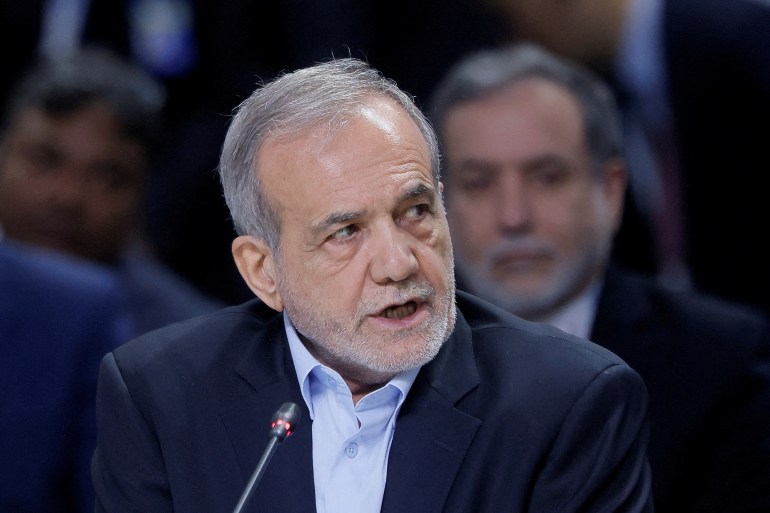
In a news conference on April 7, United States President Donald Trump said there were direct talks between Iran and his administration on the future of Tehran’s nuclear programme. “We’re having direct talks with Iran,” Trump said. “On Saturday, we have a very big meeting.” Iran denied the direct talks but admitted talks were set to take place through Omani mediation. Trump’s announcement came as a surprise to many, as Iran has long refused to hold direct talks. So, has something changed? Here’s everything we know so far. What did Trump say? Interestingly, he has doubled down on the talks being “direct”, saying they have begun and the next meeting would be on Saturday. “A lot of people say, oh, maybe you’re going through surrogates or you’re not dealing directly, you’re dealing through other countries,” he said. “No, we’re dealing with them directly. And maybe a deal’s going to be made. “Doing a deal would be preferable to doing the obvious,” he said, presumably in reference to attacking the regional giant, something that US ally Israel has done twice in the last 12 months. Advertisement In early March, Trump told reporters that he had written to Iranian authorities demanding talks on the country’s nuclear programme and threatening military action if there was no reply. Iran’s Supreme Leader Ayatollah Ali Khamenei said at the time that Iran would not negotiate with “bullying governments”. Trump has until now applied what he calls a policy of “maximum pressure” on Iran, consisting of intensified sanctions. What did Iran say? Iran’s Foreign Minister Abbas Araghchi said indirect talks between himself and US Special Envoy for the Middle East Steve Witkoff would take place in Oman. “It is as much an opportunity as it is a test,” Araghchi wrote on X. Iran has long said it will not hold direct talks with the US, but agreed to work through an Omani intermediary, who was announced by Iranian state media to be Omani Foreign Minister Sayyid Badr Albusaidi. Iran and the United States will meet in Oman on Saturday for indirect high-level talks. It is as much an opportunity as it is a test. The ball is in America’s court. — Seyed Abbas Araghchi (@araghchi) April 7, 2025 Iran’s messaging has oscillated between an openness to negotiate and rejection of the US’s threatening tactics. Iran’s President Masoud Pezeshkian said in September that direct talks were possible if the US showed it was amenable to good-faith talks. “We are not hostile towards the US. They should end their hostility towards us by showing their goodwill in practice,” Pezeshkian said at the time. “We are brothers with the Americans as well.” Advertisement However, earlier this week, Araghchi questioned Washington’s sincerity in calling for negotiations, saying on Sunday, “If you want negotiations, then what is the point of threatening?” Iranian President Masoud Pezeshkian [Maxim Shemetov/Reuters] What would Trump want to negotiate? Despite bombing Yemen and allowing Israel to have a free hand in Lebanon and Syria as well as to restart the war on Gaza, Trump says he wants to be seen as a “peacemaker”. He says he wants to negotiate Iran’s nuclear programme, to make sure that Iran never builds a nuclear weapon. During his first term in office, Trump actually withdrew the US from a nuclear deal between Iran and world powers that curbed Iran’s nuclear programme in return for some sanctions relief. After withdrawing, Trump reapplied sanctions. He said any agreement with Iran would have to limit its conventional weapons arsenal as well, not just the nuclear programme. In recent weeks, he has said Iran is materially aiding Yemen’s Houthis, blaming Iran whenever the Houthis launch an attack on Israel or what they say is Israel-linked shipping in the Arabian or Red seas. It is not clear if that will come up in negotiations. Trump may also want to discuss Iran’s increased oil sales to China. What would Iran want to negotiate? Iran is interested in sanctions relief to ease economic pressure on Tehran as the country suffers an economic crisis that has hit all sectors of society. This would include assurances that Iran would be able to access the SWIFT money transfer system as well as international investment. Advertisement However, Iran also wants recognition of its nuclear programme, including the right to some level of enrichment and to use its centrifuges, built since 2018. That said, the two sides’ starting positions are further apart than when negotiations first started on the Joint Comprehensive Plan of Action (JCPOA), widely known as the “Iran nuclear deal”. Iran is asking for more extensive sanctions relief than provided under Obama, while Trump has threatened to bomb Iran if they don’t cut a deal. Isn’t there already a deal on Iran’s nuclear programme? Yes, the JCPOA. As we mentioned above, it exchanged assurances from Iran on limiting its nuclear programme for sanctions relief. Trump withdrew the US from the agreement in 2018, and his close ally, Israeli Prime Minister Benjamin Netanyahu, has been one of the loudest voices opposing the JCPOA. Trump and Netanyahu are in agreement, saying the JCPOA didn’t go far enough for long enough, in reference to the JCPOA only prohibiting certain nuclear activities for 10 to 15 years. They said Iran’s conventional weapons programme should be included in any deal with Iran, and that any relief the Iranian economy receives would only enable Tehran to fund its regional allies to carry out activities assumed to “threaten Israel’s security”. Trump meets with Netanyahu in Washington, DC on April 7, 2025 [Kevin Mohatt/Reuters] How close is Iran to a nuclear weapon? No one really knows. Iran says its nuclear programme is for peaceful purposes and it does not want to develop a nuclear weapon. Advertisement Supreme Leader Khamenei issued a religious ruling to that effect in 2003, and that has been the cornerstone of Iran’s nuclear policy since. Some Western analysts claim that, in terms of capabilities, Iran is incredibly close to a nuclear weapon. In March 2025,
Germany halts UN refugee resettlement programme

The next German government, likely to be led by the centre-right CDU, is expected to be tougher on migration. Germany has suspended the admission of refugees through a United Nations programme, according to a document seen by the Reuters news agency, as a new conservative-led coalition government prepares to take office. Reuters reported on Tuesday that the Federal Ministry of the Interior had made the decision as negotiations between the centre-right Christian Democrats (CDU) and the centre-left Social Democrats (SPD) continue, with both sides likely to agree on a tougher migration and asylum policy. The German dpa news agency also reported that the Interior Ministry and the UN High Commissioner for Refugees (UNHCR) had confirmed news of the suspension. Migration has been a contentious issue in Germany, the third largest refugee-hosting country in the world, with 2.5 million refugees, including more than one million refugees from Ukraine. But a growing number of German voters want the country to accept fewer migrants. Immigration and asylum were hotly discussed before February’s German elections in which the far-right Alternative for Germany (AfD) doubled its vote share after several violent attacks blamed on refugees or asylum seekers. Advertisement The issue has been discussed as part of the coalition negotiations between the CDU and the SPD, with the CDU pushing for asylum seekers to be turned away from Germany’s borders on the grounds they have already passed through a safe country. The two sides have struck a preliminary agreement to end voluntary federal admission programmes for refugees such as the UN programme – the only one currently active – and not to launch any new ones, according to the document seen by Reuters. Since 2016, Germany has participated in a European Union resettlement scheme that accepts refugees selected by UNHCR. Most come from Turkiye, Egypt, Jordan or Kenya. The Interior Ministry said 4,711 people had arrived in Germany through the programme since 2024, out of the 13,000 refugees that Germany has promised the European Commission it would take in for 2024 and 2025 combined. Despite the suspension, admissions that are already well advanced, with concrete commitments, will go ahead, a ministry spokesperson said. On Monday, Germany said it no longer took top spot in the European Union for new asylum applications, local media outlets reported, citing EU data that put France and Spain ahead. Interior Minister Nancy Faeser was quoted as saying that the latest figures reflected measures taken to restrain “irregular migration towards Europe as a whole as well as to Germany itself”. Adblock test (Why?)
DNA Verified: Old video of Priyanka Gandhi Vadra falsely linked to protest over Waqf Amendment Bill, know truth here

The Waqf (Amendment) Act has come into force from Tuesday, the government said in a notification.