

Targeted, killed, burned alive: Journalists in Gaza attacked by Israel

Abed Shaat drifted off to sleep on Sunday night, exhausted after covering Israeli air strikes all day. The 33-year-old freelance photographer had returned to a tent in front of Nasser Hospital in Khan Younis in southern Gaza where he’d been based along with other journalists since the start of Israel’s war on Gaza. Then, they were jolted awake. “I woke up to the sound of a huge explosion nearby,” Shaat said. “My colleagues and I immediately rushed out of the tent. [I had] my mobile phone to film. “The strike had directly hit the journalists’ tent across from us. I was horrified – to target journalists like this!” Burned to death The tent belonged to the TV station Palestine Today. “I started taking pictures from a distance, but as I got closer to the burning tent, I saw one of my colleagues on fire,” Shaat said. “I couldn’t continue filming. I don’t even know how I summoned the courage to approach the flames and try to pull the burning person out. “The fire was intense. There was a gas canister that had exploded, and another one that was burning. I tried to pull him out by his leg, but his pants tore off in my hand. I tried from another angle, but I couldn’t. Advertisement “The fire grew so strong, I fell back, I couldn’t bear it any longer. Then some of the men came with water to put the fire out. “I suddenly felt really weak … and lost consciousness.” The mother of Palestinian journalist Islam Maqdad, who was killed in an Israeli strike, sits near her body at Nasser Hospital on April 6, 2025, a day before another Israel killed another journalist in the hospital [Hatem Khaled/Reuters] Israel’s attack burned Palestine Today reporter Hilmi al-Faqaawi to death along with another man named Yousef al-Khazindar. Journalists Hassan Eslaih, Ahmed al-Agha, Muhammad Fayek, Abdallah Al-Attar, Ihab al-Bardini and Mahmoud Awad were also injured. The Israeli army said on X it had launched the attack to capture Hassan Abdel Fattah Muhammad Islayh (Eslaih), alleging he was a member of Hamas posing as a journalist. Eslaih, a journalist with a large social media following, was badly wounded in the strike. He had been threatened multiple times by Israeli authorities for covering an attack on an Israeli kibbutz during the Hamas-led attacks on southern Israel on October 7, 2023. The Israeli army also said it took steps “to reduce the chance of harming civilians” but did not explain why it chose to bomb a tent full of sleeping journalists to capture one of them. ‘Nothing new in … crimes against journalists’ More than 200 journalists and media workers have been killed by Israeli forces since October 2023, according to the Palestinian Journalists Syndicate, making it the deadliest ever conflict for journalists. Advertisement The tent targeted on Monday was outside one of the largest hospitals in southern Gaza. Journalists have been gathering in hospitals from the beginning of Israel’s war on Gaza, seeking relatively steady internet service, electricity and safety in numbers. Locals said journalists have been stationed and reporting from Nasser Hospital throughout the conflict. “We live, sleep and work there. We see each other more than we see our own families,” Shaat said. “What connects us … is more than just work.” Experts told Al Jazeera in September that Israel’s killing of journalists in Gaza shows a clear pattern of targeting journalists. “There’s nothing new in the Israeli occupation’s crimes against journalists,” Jad Shahrour, spokesperson for the Samir Kassir Foundation, a Beirut-based media freedom watchdog, told Al Jazeera. “This isn’t the first time during this war, from October 7 to today, whether in Lebanon or Gaza, the Israeli army has directly targeted journalists’ centres. “This, of course, according to international law, is a war crime, and nothing justifies it.” Hossam Shabat was killed in March in a targeted attack by Israel [Filip Singer/EPA] Other journalists killed in Gaza since the start of the war include Al Jazeera Mubasher journalist Hossam Shabat and Al Jazeera reporter Hamza Dahdouh, son of Al Jazeera’s Gaza bureau chief Wael Dahdouh. Both journalists were killed in targeted attacks on their cars, and Israel justified its actions by saying they were part of armed groups but did not provide evidence for the allegations. Advertisement Since October 7, 2023, Israel has killed at least 50,700 people in Gaza, most of whom are children or women and, therefore, not considered members of “terrorist groups” in Israel’s classification. Many civilian men – a protected group under international law – have also been killed. Reporters Without Borders told Al Jazeera it was investigating Monday’s attack. Palestinians go through the remains of a tent that housed journalists and was hit by an Israeli strike in Khan Younis on April 7, 2025 [Hatem Khaled/Reuters] Whose turn is it next? Journalists in Gaza are walking with targets on their backs, media rights organisations said. “Israel deliberately bombs journalists because it doesn’t want anyone to report the situation,” Shahrour said. The idea, the groups said, is to discourage reporting of possible war crimes Israel is committing to allow Israel to avoid any accountability. The Palestinian Journalists Syndicate gave a news conference on Monday, calling for international accountability for Israel’s crimes against journalists in Gaza. Speaking to Al Jazeera just after returning from al-Faqaawi’s funeral, Shaat spoke of the deep psychological scars the experience has left on him. “Even now, I don’t feel I can move past what I saw. I never imagined in my life that I would be pulling someone while they were on fire.” He sustained minor burns on both hands during the rescue attempt and now cannot hold a camera. “I feel completely paralysed. … Who are we even doing this for? Does anyone care? Is there anything more horrific than this scene to move people?” Advertisement “This isn’t the first time someone has burned to death, and it’s not the first time journalists have been directly targeted,” Shaat said. “We still
Africa must shun Trump’s push to resurrect coal
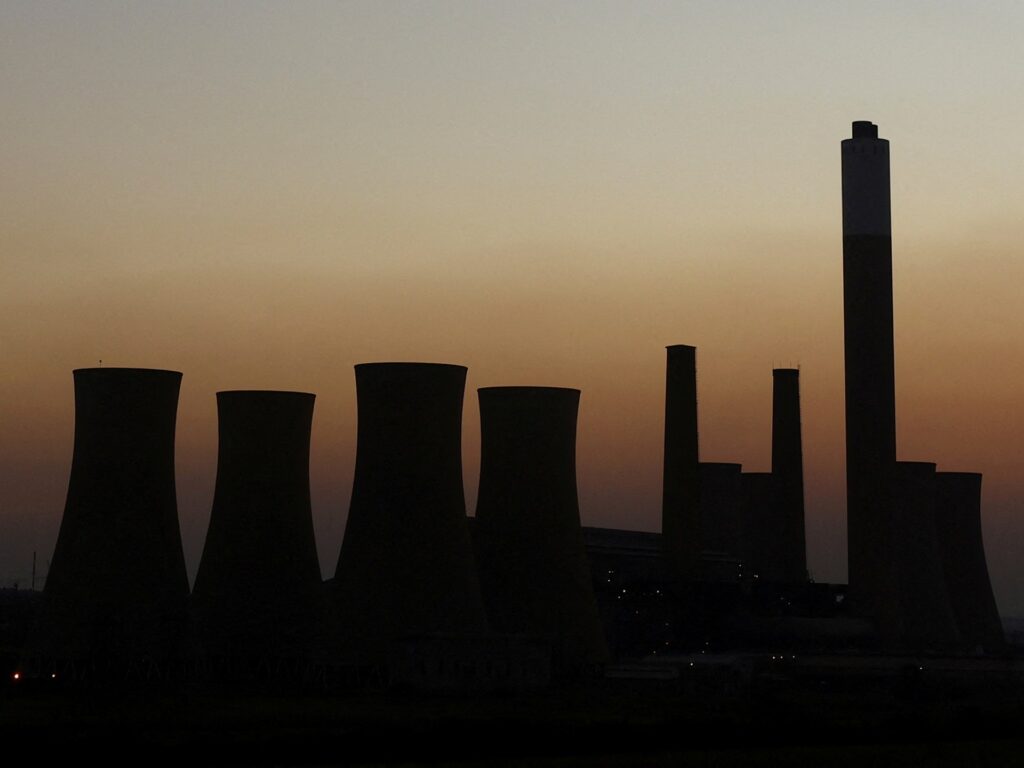
President Donald Trump’s administration has recently taken to urging African leaders to burn more planet-heating fossil fuels, and in particular coal, the dirtiest of all of them. Simultaneously, it scrapped USAID funding, which had been helping millions of the poorest people in Africa survive amid expanding climate breakdown. Those thinking of aligning with Trump’s agenda would do well to remember that the droughts, floods, and storms which have destroyed the lives and livelihoods of Africans across the continent have been supercharged by US energy policy. The US alone has produced about a quarter of all historic carbon dioxide emissions since the Industrial Revolution, which are now responsible for accelerated global warming. Not only would a coal-based development pathway for Africa heap more misery onto its citizens who are already living on the front lines of the climate crisis, but it would also be economically suicidal. The economic impact of the climate emergency is already taking a terrible toll on Africa, and a 2022 report by the charity Christian Aid showed that under the current climate trajectory, African countries could suffer a reduction in gross domestic product growth of 64 percent by 2100. Advertisement There is also no need for Africa to shackle itself to the outdated fossil fuel infrastructure of coal when the continent is blessed with a spectacular potential for developing clean renewable energy. The US fossil fuel advocates would be happy to see Africa trail along in the footsteps of the Global North, rather than see the continent leapfrogging the dirty energy era in the same way it leapfrogged landline telephone technology and adopted mobile phones en masse. But Africans should know better. No other continent has more untapped wind and solar power than Africa, and this remains the key to its long-term prosperity. From the sun-drenched deserts of North Africa to the wind-swept plains of East Africa, the continent has the natural resources to become a global leader in clean energy. Countries such as Morocco, Kenya and South Africa are already making significant strides in renewable energy development, with projects that harness solar, wind, geothermal, and hydropower. Investing in renewable energy offers numerous benefits. It can improve energy access for millions of people, create jobs, and boost economic growth. Renewable energy projects are often more scalable and adaptable to local needs, making them ideal for rural electrification and community-based initiatives. By contrast, coal has wrought a terrible cost to Africans. It is often touted as a cheap and reliable energy source, but this ignores the hidden costs of environmental degradation, health impacts, and the overall economic harm of climate breakdown. Moreover, the global shift towards clean energy means that investments in coal are increasingly risky and likely to become stranded assets. Advertisement African countries must resist the lobbying efforts of Trump’s fossil fuel backers and instead focus on building a sustainable energy future. This requires a multifaceted approach, including investment in renewable energy infrastructure, strengthening governance and policy frameworks, and fostering international cooperation. Investing in clean energy infrastructure is crucial. This includes not only large-scale projects like solar parks and wind farms but also decentralised systems that can bring electricity to off-grid communities. Many countries across Africa are already leading the way with community-focused solar systems and microgrids, and these initiatives demonstrate how renewable energy can be both ambitious and pragmatic, addressing energy access challenges while reducing reliance on imported fuels. Strengthening governance and policy frameworks is equally important. African governments must prioritise climate adaptation and resilience in their urban planning and development processes. This involves integrating climate considerations into all new projects and ensuring that resources are allocated where they are most needed. Effective governance structures can enable the implementation of climate adaptation strategies and ensure that investments in renewable energy are sustainable and equitable. International cooperation and support are also vital. The global clean energy transition holds new promise for Africa’s economic and social development. Countries representing more than 70 percent of global CO2 emissions have committed to reaching net zero emissions by mid-century, including several African nations. These commitments can help attract climate finance and technology, enabling African countries to achieve their energy-related development goals on time and in full. Advertisement Africa’s path to sustainable economic development lies in embracing renewable, clean energy. The continent has the natural resources and innovative spirit to become a global leader in renewables, improving energy access, creating jobs, and reversing the climate crisis. By resisting the fossil fuel industry’s attempts to perpetuate coal use, African countries can build a resilient and prosperous future for their people. Clean energy can be Africa’s greatest success story. For that to happen, African leaders must not take advice from a US president who admits he only cares about “America First”. The views expressed in this article are the author’s own and do not necessarily reflect Al Jazeera’s editorial stance. Adblock test (Why?)
Trump hints he’d back longtime critic’s bid to flip Dem Senate seat in 2026: ‘I hope he runs’
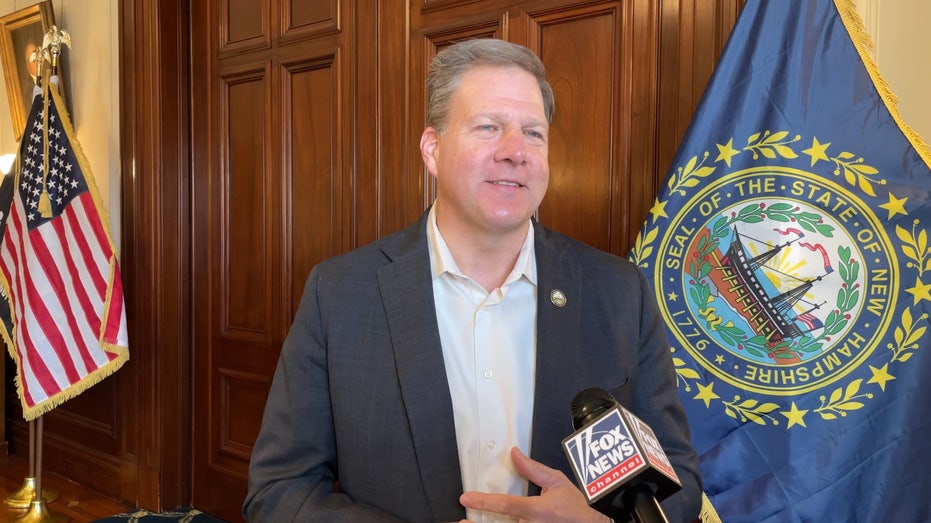
It appears that President Donald Trump has buried the hatchet when it comes to former New Hampshire Gov. Chris Sununu, who for years was a top Republican critic of the former and current president. Trump now says that if Sununu runs for the Senate in 2026 for the seat currently held by retiring Democratic Sen. Jeanne Shaheen, his former antagonist would have his full support. Sununu, who in January completed his fourth and final two-year term steering swing state New Hampshire, told Fox News Digital in an interview last month that he aimed to make a decision regarding a 2026 campaign in the “next few weeks.” He emphasized that “I have no doubt I’d have the president’s support,” if he decided to make a bid for the Senate. POLL POSITION: WHERE TRUMP STANDS WITH AMERICANS 11 WEEKS INTO HIS SECOND TOUR OF DUTY IN THE WHITE HOUSE Trump, when asked by reporters about Sununu as he flew to Washington, D.C., on Sunday night aboard Air Force One, revealed that the two politicians met recently at the White House. “I told him — He came to my office, came to the Oval Office, and [I] met with Chris Sununu, and I support him fully. I hope he runs,” Trump said. “He’s been very nice to me over the last year or so, but no, I hope he runs. I think he’ll win that seat.” Sununu supported Trump during the 2016 general election and again when Trump unsuccessfully ran for re-election in 2020. The then-governor had a strong working relationship with the Trump White House, including close ties with then-Vice President Mike Pence. WHY TRUMP, MUSK, FACE BLAME OVER BALLOT BOX SET BACKS LAST WEEK However, Sununu pushed back against Trump’s unproven claims that the 2020 presidential election was “rigged” and “stolen.” He also started stating in early 2021 that the GOP was larger than any one person, which was perceived as a swipe at the then-former president. Sununu amped up his criticism of the former president during numerous national interviews on cable news networks and Sunday talk shows, repeatedly arguing that Trump had too much political baggage to win back the White House. Additionally, Sununu began mulling a possible 2024 White House run of his own, which he ultimately decided against. However, he ended up backing and becoming a top surrogate of former South Carolina Gov. Nikki Haley in the 2024 GOP presidential primary. Haley ended up being the final rival to Trump in the nomination race. Trump occasionally returned fire at Sununu, calling him a “spoiled brat” and a “nasty guy,” among other things. However, after Trump clinched the 2024 GOP nomination, Sununu said he would vote for his party’s presidential nominee. WHAT SUNUNU TOLD FOX NEWS ABOUT POTENTIALLY RUNNING FOR THE SENATE Earlier this year, Sununu said in a Fox News Digital interview that “Donald Trump is the head of the party, and he’s the voice of the Republican Party, and I got to say, I think he’s doing a pretty darn good job in the first couple months.” Regarding a potential 2026 Senate run for a seat Republicans are aiming to flip from blue to red as they hope to expand their current 53-47 majority in the chamber, Sununu told Fox News Digital last month that while “the door’s open” to running, he emphasized “it’s not open a lot, to be honest.” Sununu, who was elected and re-elected to four straight two-year terms as governor, touted that “I have no doubt I can win.” The former governor’s comments in recent interviews are a switch from last year, when he repeatedly said he would not seek to run for the Senate in 2026. Four years ago, Sununu expressed interest in running for the Senate against his predecessor as governor, Democratic Sen. Maggie Hassan, who was up for re-election in 2022. The popular governor was heavily courted by national Republicans to take on Hassan, but on Nov. 9, 2021, Sununu announced that he would instead run for a fourth term as governor, upsetting many Republicans in the nation’s capital. Additionally, he heavily criticized the Senate. “They debate and talk and nothing gets done,” he said at the time. Sununu, who left office in January with very positive approval and favorable ratings, is seen by national Republicans as the best candidate to win the seat. However, he is not the only Republican mulling a Senate bid in New Hampshire. Former Sen. Scott Brown of Massachusetts, who later narrowly lost to Shaheen in New Hampshire in the 2014 election, is seriously considering a 2026 run. POPULAR FORMER GOP GOVERNOR WEIGHS IN ON POTENTIAL SENATE BID AND WHETHER TRUMP WILL ENDORSE HIM Brown, who served four years as U.S. ambassador to New Zealand during Trump’s first administration, has been holding meetings with Republicans across New Hampshire for a couple of months and has met multiple times with GOP officials in the nation’s capital. Earlier this year, Brown met with top Trump administration political officials at the White House, sources told Fox News. When asked about the president’s comments regarding Sununu, Brown told Fox News in a statement that “President Trump is the leader of the party, and he has earned the right to endorse whoever he supports. There is no path to a Republican nomination running against President Trump-backed candidates.” In the race for the Democratic Senate nomination in New Hampshire, four-term Rep. Chris Pappas formally launched his campaign last week. Using clips of a listening tour he made through all ten of New Hampshire’s counties last month as he ramped up toward running for the Senate, Pappas said voters feel like “the system’s rigged.” TRUMP’S SWAY OVER REPUBLICANS STRONGER THAN EVER, BUT SUNUNU SAYS GOP STILL A ‘BIG-TENT PARTY’ “You think about the Social Security office that’s going to be closed in Littleton, drastic cuts to Medicaid, all in the name of giving big tax breaks to billionaires like Elon Musk,” he argued, as he pointed to Trump’s top donor and
Noem’s Homeland Security ‘unapologetic’ about using lie-detector test on suspected intel leakers
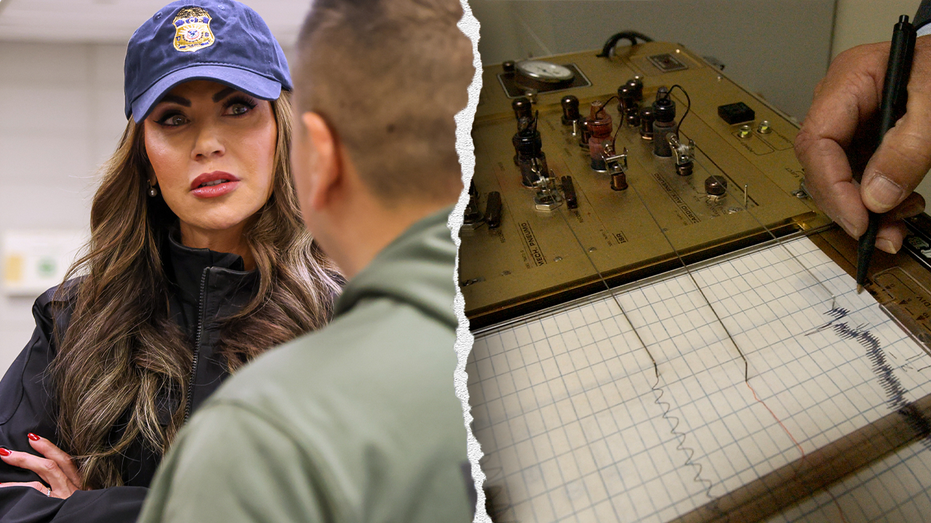
The Department of Homeland Security is “unapologetic” about using lie-detector tests on staffers as it aims to snuff out “leakers” who feed internal agency information to the public, Fox News Digital learned. “Under Secretary Noem’s leadership, DHS is unapologetic about its efforts to root out leakers that undermine national security,” Tricia McLaughlin, DHS’ assistant secretary for public affairs, told Fox News Digital Monday. “We are agnostic about your standing, tenure, political appointment or status as a career civil servant – we will track down leakers and prosecute them to the fullest extent of the law.” McLaughlin’s response follows Politico’s Friday reporting that the department had administered a lie detector test in March to Federal Emergency Management Agency (FEMA) Chief Cameron Hamilton following a meeting between DHS and an advisor to President Donald Trump, Corey Lewandowski. The test ultimately cleared Hamilton, according to the outlet, as officials worked to determine if information from the meeting had been leaked. The meeting reportedly focused on Trump administration efforts to “eliminate” FEMA – an agency Trump repeatedly has railed against for not doing its job in effectively aiding citizens during disasters. DHS SAYS IT ‘CAN, SHOULD AND WILL’ ADMINISTER POLYGRAPH EXAMS AMID ICE RAID LOCATION LEAKS The use of polygraph tests at intelligence and national security agencies is not new, with the FBI, CIA and Bureau of Alcohol, Tobacco, Firearms and Explosives all using polygraph tests as part of background and security checks for potential agents or investigators, respective agency websites show. The FBI reported that in addition to a long history of using polygraph machines to screen potential hires, the bureau has increasingly used lie-detector tests on staffers who handle sensitive information since 2001, when the FBI arrested one of its own, former agent Robert Hanssen, for spying for Russia. The Pentagon additionally announced in March that it was launching an investigation into alleged leaks of information concerning national security, which could include polygraph tests for employees in the Defense Department, Fox Digital previously reported. DHS had previously vowed it would use polygraph tests to weed out staffers who leaked information on immigration raids, citing that the department is a “national security agency.” “The Department of Homeland Security is a national security agency,” McLaughlin posted to X in response to a message from February that DHS planned to polygraph staffers who may have leaked information. “We can, should, and will polygraph personnel.” TOM HOMAN BELIEVES ICE RAID LEAKS ARE ‘COMING FROM INSIDE’ AS AURORA LEAKER CLOSER TO BEING IDENTIFIED Secretary Kristi Noem issued an internal directive in February explaining polygraphs administered by DHS must include a question about unauthorized communication with media outlets and nonprofits, according to a report by Bloomberg Government. Border czar Tom Homan speculated in February that an internal leak tipped off illegal immigrants to Immigration and Customs Enforcement raids in Colorado and California. The leaked intel allegedly allowed Tren de Aragua gang members to evade arrest at the time. NOEM SENDS MESSAGE TO THOSE CONSIDERING ENTERING US ILLEGALLY: ‘DON’T EVEN THINK ABOUT IT’ The department already uses polygraph exams during the hiring process of Customs and Border Protection (CBP) officers and agents in order to determine “suitability for employment” and “in support of internal and counterintelligence investigations,” according to the agency’s website. “The federal government uses the polygraph exam to understand an applicants’ past behavior, personal connections and personal integrity,” DHS said on a web page explaining why it administers polygraph exams to CBP applicants. “Almost every Border Patrol Agent, Customs and Border Protection Officer, and Air and Marine Operations Agent who has joined CBP has taken, and passed, a Polygraph Exam.” CLICK HERE TO GET THE FOX NEWS APP Fox News Digital’s Elizabeth Pritchett contributed to this article.
Delhi sees hottest day of season as heatwave intensifies; temperature reaches…

“Delhi can see heatwave conditions in the next three days. A western disturbance will influence the Himalayan region from tomorrow night, and its effects will be seen in the Himalayas…Temperatures in the Himalayas will start to fall after tomorrow night,” Dr. Naresh Kumar, an IMD scientist, said.
New House resolution asserts Trump’s use of centuries-old law to crack down on Tren de Aragua is ‘essential’
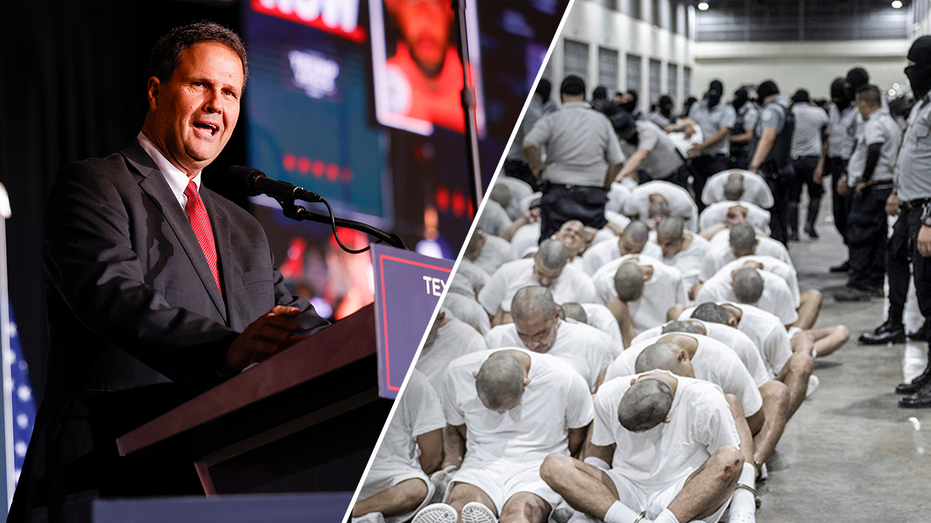
EXCLUSIVE: A House Resolution affirming the Trump administration’s use of the Alien Enemies Act to crack down on those suspected to be Tren de Aragua gang members will be introduced on Monday. “Coloradoans already know the truth: Tren de Aragua (TdA) is a terrorist organization active in our communities right now,” Rep. Jeff Crank, who’s introducing the resolution, told Fox News Digital in an exclusive statement. “I fully support President Trump’s executive order to designate them as a Foreign Terrorist Organization and to begin deporting these horrific terrorists. It is essential to our national security that known terrorists are quickly detained and deported out of our country by our law enforcement professionals,” the Republican, who took office in January, continued. AURORA AUTHORITIES ‘DECLINED’ TO HELP SEARCH FOR 2 ILLEGAL ALIENS WHO ESCAPED COLORADO DETENTION FACILITY: ICE Specifically, the resolution says that the House of Representatives agrees with using the Alien Enemies Act to transport those who are part of a designated foreign terrorist organization. In addition, it “endorses the complete elimination of these organizations from the United States to protect the nation’s territory, safety, and security.” The resolution is co-sponsored by Reps. Lauren Boebert, Sheri Biggs, Tom Tiffany and Michael Guest. Tren de Aragua, as well as some cartel groups, were recently listed as a foreign terrorist organization by President Donald Trump, and some of the alleged members from MS-13 were brought to the Center for Terrorism Confinement in El Salvador. JUDGE BOASBERG SHOULD ‘RECUSE’ HIMSELF FROM TRUMP DEPORTATION CASE, GOP LAWMAKER ARGUES Since then, court cases have continued to make waves including U.S. District Court for D.C. Judge James Boasberg’s legal tension with the administration over using the Alien Enemies Act of 1798, as Boasberg brought forth a temporary restraining order on using the law to deport the alleged members. The act was signed into law by former President John Adams as a measure during times of war. CLICK HERE TO READ MORE IMMIGRATION COVERAGE Colorado has been on the frontline of gang activity by the Venezuelan organization, including issues at apartments in Aurora. “Now, we are learning that the command and control for TdA in the entire United States of America is right here in Colorado,” Derek Maltz told Denver 7 last month, which was verified by DEA Rocky Mountain Division to Fox News at the time. ILLEGAL IMMIGRANTS CHARGED IN NIKE SHOE HEIST AS CARTELS ROB US CARGO TRAINS Other legislation introduced by Colorado lawmakers has taken aim at policies in Colorado that opponents argue serve as a sanctuary for criminals. Rep. Gabe Evans introduced the “Unhandcuffing Police to Locate and Interdict Foreign Transgressors (UPLIFT) Act” in late February, which would give more power to local authorities to work with the federal government on immigration enforcement. “State laws have a national impact because if federal law enforcement uses information from a criminal justice database, and Colorado provided that information, the state and local cops in Colorado who provided that information can get in trouble,” Evans told Fox News Digital at the time. “And so the feds don’t want to get their state and local partners in trouble.”
Johnson faces uphill battle keeping GOP divisions from derailing Trump budget bill
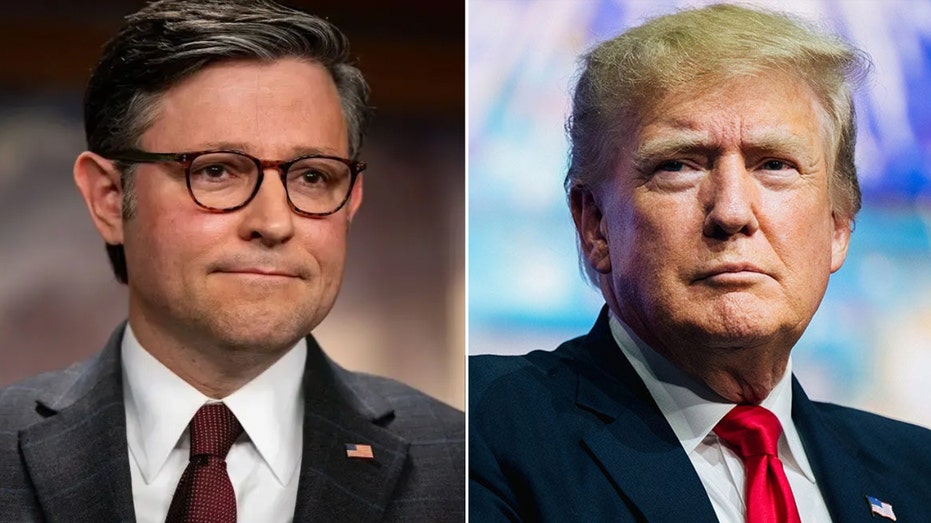
House GOP leaders’ aim to sync up with the Senate on a massive bill advancing President Donald Trump’s agenda is on the rocks as of Monday morning, with fiscal hawks worried the upper chamber’s version will not go far enough to reduce the national deficit. House Republican skeptics are worried specifically about the Senate plan requiring a baseline of $4 billion in spending cuts, while the House plan calls for a $1.5 trillion minimum. Two conservatives told Fox News Digital they would oppose the bill if it came to a House vote this week, while two others suggested they were leaning strongly against it. “The Senate proposal is not serious and is an insult to the American people,” Rep. Andy Ogles, R-Tenn., who said he is leaning “against” the measure, told Fox News Digital. HOUSE FREEDOM CAUCUS CHAIR URGES JOHNSON TO CHANGE COURSE ON SENATE VERSION OF TRUMP BUDGET BILL That is coupled with at least three GOP lawmakers declaring on social media this weekend that they are against the legislation – while even more have aired public concerns. “It’s dead on arrival,” Rep. Ralph Norman, R-S.C., told Fox News Digital last week. “We have to stay with what we worked so hard to put over there, which is a bare minimum. When they talk about changes and talk about putting, basically, a teardrop in the ocean as far as cuts – we’re not going to go along with that.” When asked on Monday morning about whether he felt the same, Norman replied emphatically via text message, “YES.” House Freedom Caucus Chairman Andy Harris, R-Md., shared similar concerns about the gap in the House and Senate’s minimum for spending cuts. “At this point, I would vote against it,” he said. Rep. Tim Burchett, R-Tenn., another critic of excessive government spending, told Fox News Digital he had not made his mind up on the bill but said there were “not enough cuts” in the Senate version. House GOP leaders are arguing that passing the Senate version does not impede the House in moving forward with its own more fiscally conservative version in any way. House Speaker Mike Johnson, R-La., has pitched House passage of the Senate bill as a necessary step to allow Republicans to enact Trump’s agenda. However, doubts over spending cuts are even extending beyond the House GOP’s right-most flank. House Budget Committee Vice Chair Rep. Lloyd Smucker, R-Pa., voiced his own issues with the bill in a private call with House Republicans on Sunday, two people familiar with discussions told Fox News Digital. Smucker’s office said it would not comment on internal deliberations, but pointed Fox News Digital to the lawmaker’s statement on Saturday. “The Senate’s passage of the amended House resolution is a critical step forward. However, with $5.8 trillion in costs and only $4 billion required savings in their instructions, I cannot vote for it. We can and must do better.” Committee Chair Jodey Arrington, R-Texas, called it “unserious,” but added he was open to working with House and Senate leaders and the White House to ease those concerns. Rep. Chip Roy, R-Texas, who sources said also raised concerns on the Sunday call, posted on X of the bill, “If the Senate’s ‘Jekyll and Hyde’ budget is put on the House floor, I will vote no.” In addition to opposing the gap in baseline spending cuts, some conservatives who oppose the bill are also wary of the Senate, signaling it would use the current policy baseline method to factor in the cost of extending Trump’s 2017 tax cuts. TED CRUZ CLASHES WITH KEY DEMOCRAT OVER ‘SECOND PHASE OF LAWFARE’ THROUGH FEDERAL JUDGES’ ORDERS The scoring tool essentially means the cost of making Trump’s tax cuts permanent would be factored at $0, because it extends current policy rather than counting it as new dollars being added to the federal deficit. “I’m very wary of this budget gimmick, especially paired with a measly $4 billion floor in spending cuts,” Rep. Andrew Clyde, R-Ga., told Fox News Digital. “The fiscally responsible way to extend and pay for tax cuts is through significant spending cuts, which is exactly what House Republicans instruct in our budget resolution.” Congressional Republicans are working on a massive piece of legislation that Trump has dubbed “one big, beautiful bill” to advance his agenda on border security, defense, energy and taxes. Such a measure is largely only possible via the budget reconciliation process. Traditionally used when one party controls all three branches of government, reconciliation lowers the Senate’s threshold for passage of certain fiscal measures from 60 votes to 51. As a result, it has been used to pass broad policy changes in one or two massive pieces of legislation. The House’s framework passed in late February and included some new funding for defense and border security, along with $4.5 trillion for extending Trump’s 2017 Tax Cuts and Jobs Act and implementing newer Trump proposals like no taxes on tipped wages. The framework also called for between $1.5 trillion and $2 trillion in spending cuts, dependent on how much Trump’s tax policies would add to the national deficit – something that was key to winning support from deficit hawks. It also raised the debt limit, something Trump has specifically asked Republicans to deal with, by $4 trillion. The Senate’s version, which passed in the early hours of Saturday, would raise the debt limit by $5 trillion. MEET THE TRUMP-PICKED LAWMAKERS GIVING SPEAKER JOHNSON A FULL HOUSE GOP CONFERENCE Trump himself has endorsed both the House and Senate versions of the bill. Passing a framework then allows lawmakers to craft actual policy to match the framework’s federal spending guidelines, led by the respective committees of jurisdiction. Those policy plans are all brought back together into another massive bill. The Senate and House must pass identical versions before it gets to Trump’s desk for a signature – something the House speaker said would be done by Memorial Day. In a letter to House GOP colleagues on Sunday,
Serbia’s President Vucic taps novice prime minister amid protest pressure

Nomination of endocrinologist Djuro Macut likely to pass parliament despite opposition fury. Serbia’s President Aleksandar Vucic has nominated a politically inexperienced endocrinologist and university professor as prime minister, amid massive ongoing protests that forced the previous premier to resign. Vucic announced the nomination of 62-year-old Djuro Macut weeks after the resignation of Milos Vucevic was approved by parliament on March 19 amid violence at the protests, which are focused on the president’s authoritarian stance and government corruption. Opposition parties were quick to reject the nomination of the Belgrade University lecturer, who had previously backed Vucic’s Serbian Progressive Party (SNS). They claimed that Macut would be beholden to directions from Vucic, who is trying to maintain his 12-year grip on power. “The prime minister-designate can be anyone or nobody as long as Vucic remains the head of the state,” said Pavle Grbovic, head of the Movement of Free Citizens party. “Knowledge about polycystic ovaries is not a reference for running the government, which requires a completely different kind of expertise,” said Boris Tadic, a former president and head of the opposition Social Democratic Party. Advertisement However, Macut is unlikely to encounter heavy resistance on his way to becoming prime minister since the SNS, which he will also formally lead, controls parliament. With the government having been run by technocrats since parliament accepted Vucevic’s resignation on March 19, Macut must now form a government and present it to the house by April 18. A swift confirmation process could signal political continuity for Vucic to both domestic and international audiences, with European Union accession talks still on the line for Serbia. However, the protests, which have spiralled since the collapse of a railway station roof in Novi Sad last November that killed 16 people, have not died down, particularly in Belgrade and Novi Sad. The tragedy was attributed to government corruption and mismanagement, leading to a public outcry and demands for accountability. Serbian authorities have occasionally used forceful tactics against protesters, but most demonstrations have proceeded without major incidents or deaths. Serbian cyclists celebrate as they arrive at their Budapest stop during their bike ride to Strasbourg aiming to raise awareness within EU institutions about months of antigovernment protests, in Budapest, Hungary, April 5, 2025 [Marton Monus/Reuters] The protests, which have seen organisers working hard to keep their distance from all political parties, have continued in varying forms. A group of about 80 Serbian university students embarked on a 1,300km (807-mile) journey from Novi Sad to Strasbourg in France on bicycles to draw EU attention to their cause. Advertisement Macut’s nomination is likely to test the mood, however, with the protesters having demanded a transitional government and for Vucic to step down. Adblock test (Why?)
Why has Trump revoked all South Sudanese visas?
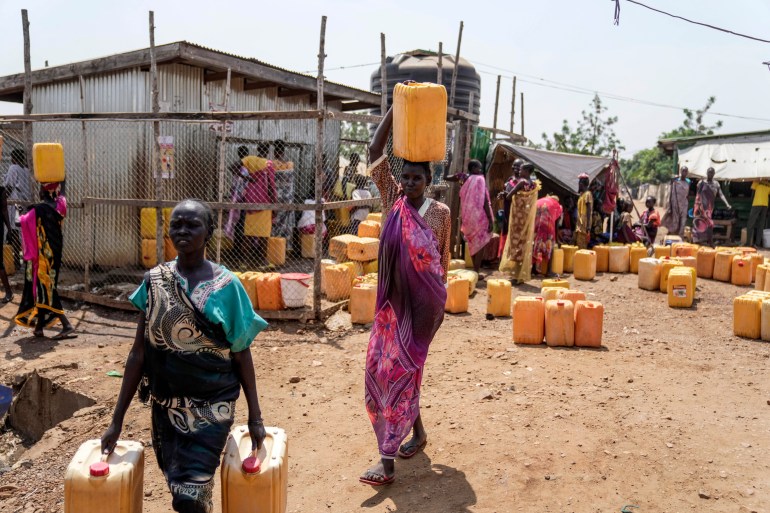
The United States government has revoked existing visas issued to all South Sudanese passport holders and barred further entries of the country’s nationals due to a failed deportation case, signalling an escalation of the Trump administration’s sweeping crackdown on immigration. In a statement on Saturday, US Secretary of State Marco Rubio blamed the transitional government of the African nation for a lack of “full cooperation” and accused South Sudan of “taking advantage” of Washington. It’s the first such blanket sanction on any country since President Donald Trump took office in January. South Sudanese officials have not reacted to the new ban. In posts on social media, however, some South Sudanese accused the US of “bullying” and using collective punishment. The East African nation, Africa’s youngest, is currently reeling from a new conflict between forces loyal to President Salva Kiir and Vice President Riek Machar. The United Nations has warned of the risk of a return to all-out civil war if tensions continue to rise. Advertisement Here’s what you need to know about why the US imposed the visa ban and how South Sudanese nationals could be affected: Displaced people fetch water inside a camp on the outskirts of Juba, South Sudan on February 13, 2025 [Brian Inganga/AP] What did the US accuse South Sudan of? Rubio implied in his statement that South Sudan’s government has refused to take back citizens who had been deported from the US. The matter, he said, involved US national security and warranted the visa revocations and ban. “Every country must accept the return of its citizens in a timely manner when another country, including the United States, seeks to remove them,” the statement read. In a more detailed account on X, also on Saturday, Deputy Secretary of State Christopher Landau alleged that South Sudan had refused to take back one person presumed to be from the African country because officials there had determined him to be Congolese after he arrived in Juba. It’s believed the country accepted several other returned people except the deportee in question. Landau claimed that the individual had, on February 13, been verified as South Sudanese by the country’s embassy in Washington, DC. He also said the embassy issued an emergency travel letter that the US relied on to send the deportee on a flight to Juba. However, upon arrival there, South Sudanese officials determined that he was not actually from the country and returned him to the US, Landau said. Let there be no mistake: the Administration of @POTUS @realDonaldTrump is committed to robust enforcement of our Nation’s immigration laws, and expects all other countries to accept repatriation of their own nationals. The Government of South Sudan has violated this obligation by… — Deputy Secretary Christopher Landau (@DeputySecState) April 5, 2025 Advertisement “Obviously, at that point, it is unacceptable and irresponsible for South Sudanese government officials to second guess the determination of their own Embassy – as far as we’re concerned, the Embassy’s certification is conclusive and the matter is closed,” Landau said in his posts. “We cannot have a repatriation system that allows foreign governments to reopen and relitigate eligibility for repatriation after those very governments had previously certified such eligibility and an individual has been repatriated,” he added. What has South Sudan said? South Sudan’s government has not publicly commented on the US actions. Local media reported that 24 South Sudanese nationals were originally deported from the US and one had been returned because he was determined not to be South Sudanese by immigration officials. In an unverified video posted on Facebook by a South Sudanese blog, Abeyeinthony Media, a man claiming to be the deportee in question is seen being interrogated by people who appeared to be South Sudanese officials, likely in Juba’s airport. The man, who claimed to be Makula Kintu from North Kivu in the Democratic Republic of the Congo (DRC), said he believed his parents were originally from Sudan but he was born in the DRC in 1977. At that time, South Sudan was still part of Sudan. It gained independence in 2011. The man said he did not choose to travel to South Sudan. “I came to South Sudan, one because I was deported against my will,” the man, who also said he was orphaned as a child and was brought up by missionaries, told officials. “There was allegation that I was being extradited by the government of South Sudan because (of) my parents.” Advertisement Who will be impacted? The conflict in South Sudan that erupted in 2011 after its independence from Sudan forced millions of people to flee the country. In 2013, the violence escalated into a full-blown civil war, sparked by tensions between Kiir and his deputy Machar. It ended in 2018 after a peace deal was reached, but sporadic violence has continued. Many South Sudanese now reside in neighbouring African countries as well as in the US, Canada and Australia. An estimated 100,000 South Sudanese were residing in the US by 2007, according to a South Sudanese official at the time. It’s unclear how many were visa holders and how many were naturalised Americans. About 133 South Sudanese were previously granted temporary protected status by former President Barack Obama’s administration in 2011 due to ongoing, sporadic conflict in the country. The categorisation grants work and residency rights to citizens of certain countries deemed unsafe due to conflict and natural disasters, including Haiti, Afghanistan, Ukraine, Cameroon and a handful of other countries. In 2023, President Joe Biden’s administration extended the status by 18 months to May 3 this year due to “violence and human rights abuses affecting civilians, as well as environmental, health, and food security concerns”. Another 140 South Sudanese nationals who’d been residing in the US since September 2023 were also eligible to apply for the protected status. Scores, if not hundreds, of South Sudanese study in US schools, many of them on scholarships. Advertisement South Sudan’s basketball team, Africa’s best rated, also has several members living and
Macron, Sisi call for Gaza ceasefire and release of captives
[unable to retrieve full-text content] The leaders of France, Egypt, and Jordan discussed efforts to achieve these goals at a meeting in Cairo.