

DNA Verified: Has PM Modi announced his retirement from politics? Know the truth behind viral graphic

The viral graphic states that the announcement comes two days after meeting with RSS in Nagpur on Sunday.
Appeals court blocks Trump from firing federal board members, tees up Supreme Court fight
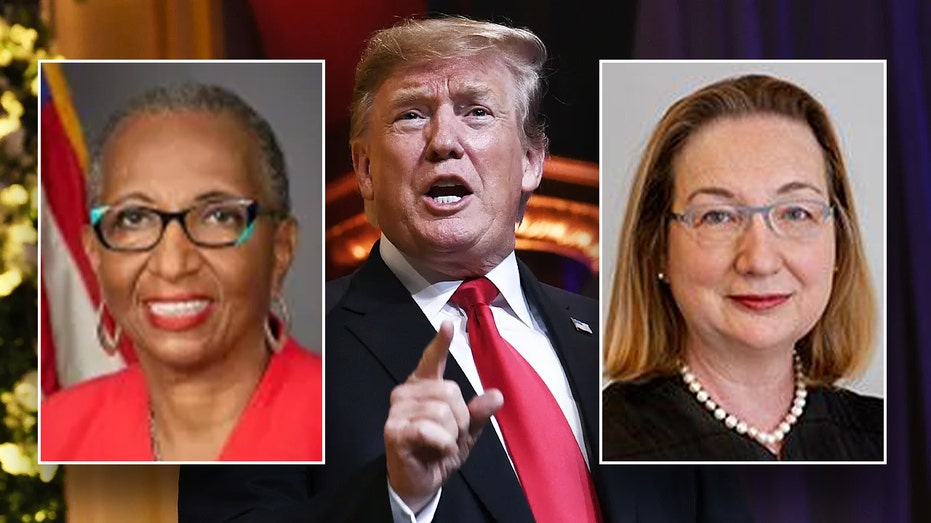
A federal appeals court voted en banc Monday to block President Donald Trump’s firings of two federal board members, reversing an appellate court ruling and clearing the way for the Trump administration to appeal the case to the Supreme Court. Judges for the U.S. Court of Appeals for the District of Columbia Circuit voted 7-4 Monday to restore the positions of National Labor Relations Board (NLRB) member Gwynne Wilcox and Merit Systems Protection Board (MSPB) member Cathy Harris – two Democratic appointees who were abruptly terminated by the Trump administration earlier this year. The majority cited Supreme Court precedent in Humphrey’s Executor and Wiener v. United States as the backing for their decision, noting that the Supreme Court had never overturned or reversed the decades-old precedent regarding removal restrictions for government officials of “multimember adjudicatory boards” – including the NLRB and MSPB. They noted that the Supreme Court has not yet overturned these precedents, or instructed lower courts to act otherwise. APPEALS COURT BLOCKS TRUMP ADMIN’S DEPORTATION FLIGHTS IN ALIEN ENEMIES ACT IMMIGRATION SUIT “The Supreme Court has repeatedly told the courts of appeals to follow extant Supreme Court precedent unless and until that Court itself changes it or overturns it,” judges noted in their opinion. Monday’s ruling from the full panel means that both Wilcox and Harris can return to their positions, at least for now. It is likely to spark intense backlash from the Trump administration, which has lobbed accusations of so-called “activist judges” that have slowed or halted some of Trump’s executive orders and actions. Also on Monday, the appeals court rejected the Trump administration’s request for an administrative stay, which would have allowed their removals to remain in place while the challenge continued to play out in federal court. The panel found that the administration had not demonstrated a strong likelihood of success on the merits of its appeals, nor did it show irreparable injury if they did not grant the stay – the legal requirements needed to satisfy an emergency court intervention. The en banc ruling reverses a decision reached just 10 days earlier by a three-judge panel for the same appeals court. That panel ruled 2-1 in favor of the Trump administration and allowed the firings to proceed, prompting plaintiffs to file a request for the appeals court to hear the case again en banc, or with all appellate court judges present. The appellate court’s decision to hear the case again, even after a three-judge appellate panel from the same court ruled on the issue late last month, is likely to be met with intense scrutiny by Trump and his allies. It also all but ensures that the Trump administration will move quickly to appeal the matter to the Supreme Court for emergency review. JUDGE BOASBERG POISED TO HOLD TRUMP ADMIN IN CONTEMPT, TAKES DOWN NAMES OF DHS OFFICIALS: ‘PRETTY SKETCHY’ Since taking office, Trump has signed more than 300 executive orders and actions, including sweeping personnel moves, the restructuring of federal agencies, and the creation of the so-called Department of Government Efficiency, or DOGE – a temporary agency that has drawn scrutiny for its broad oversight powers and access to sensitive government data. Critics argue that the flurry of early executive actions warrants an additional level of legal scrutiny, and judges have raced to review a crushing wave of cases and lawsuits filed by terminated employees or brought on behalf of agency employees. The Trump administration has appealed its early losses to the Supreme Court – a strategy it appears poised to continue in the NLRB and MSPB terminations.
EXCLUSIVE: House Freedom Caucus chair urges Johnson to change course on Senate version of Trump budget bill
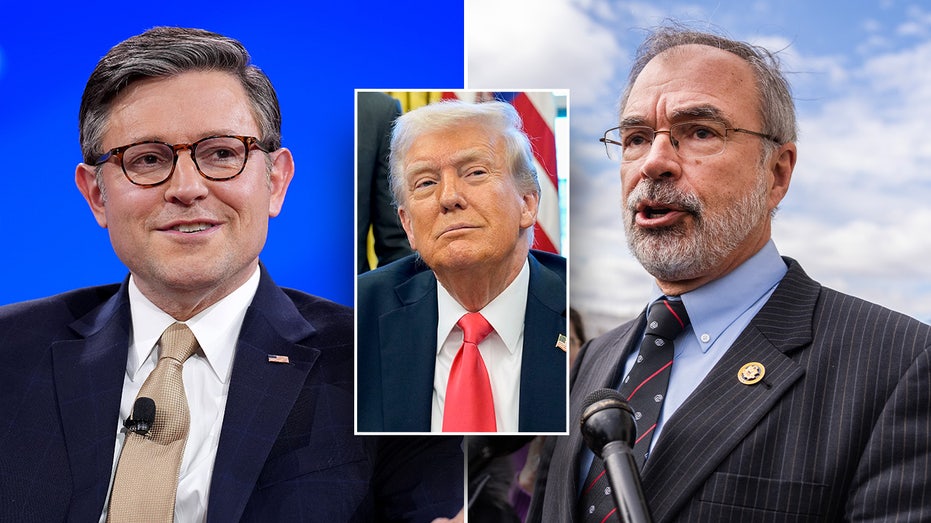
EXCLUSIVE: House Freedom Caucus Chairman Andy Harris, R-Md., said he would oppose the Senate’s version of sweeping legislation to advance President Donald Trump’s agenda if it was voted on in his chamber this week. “At this point, I would vote against it,” Harris told Fox News Digital in an interview on Monday morning. He is also calling for the House and Senate to get to work on their own versions of the plan, after the latter passed an amended version of the former’s legislation in the early hours of Saturday morning. The Maryland Republican, who leads the House GOP’s most conservative group, is the highest-ranking GOP lawmaker to come out against the legislation so far. TRUMP HATING NY ATTORNEY GENERAL LETITIA JAMES VOWS WAR WITH PRESIDENT-ELECT IN DIVISIVE NEWS CONFERENCE It comes as other fiscal hawks voice concerns about the Senate’s version of the legislation – specifically, that it mandates at least $4 billion in spending cuts, compared to $1.5 trillion to $2 trillion in the House. “I mean, if the Senate actually is able to deliver on meaningful deficit reduction, we could just pass the Senate amendments to the House budget resolution,” Harris said. “But again, I’m not willing to do that until I see what the deficit reduction, the actual deficit reduction that the Senate has in mind, is.” Congressional Republicans are working on a massive piece of legislation that Trump has dubbed “one big, beautiful bill” to advance his agenda on border security, defense, energy and taxes. ‘LOSING THEIR MINDS’: DEM LAWMAKERS FACE BACKLASH FOR INVOKING ‘UNHINGED’ VIOLENT RHETORIC AGAINST MUSK They can pass such a measure via the budget reconciliation process. Traditionally used when one party controls all three branches of government, reconciliation lowers the Senate’s threshold for passage of certain fiscal measures from 60 votes to 51. As a result, it has been used to pass broad policy changes in one or two massive pieces of legislation. The House’s framework passed in late February, and included some new funding for defense and border security, along with $4.5 trillion for extending Trump’s 2017 Tax Cuts and Jobs Act and implementing newer Trump proposals like no taxes on tipped wages. The framework also called for between $1.5 trillion and $2 trillion in spending cuts, dependent on how much Trump’s tax policies would add to the national deficit – something that was key to winning support from deficit hawks. It also raised the debt limit, something Trump has specifically asked Republicans to deal with, by $4 trillion. The Senate’s version would raise the debt limit by $5 trillion. In a letter to House GOP colleagues on Sunday, House Speaker Mike Johnson, R-La., said lawmakers would vote on the Senate’s amended version this week. However, Johnson insisted that the Senate’s passage of its framework simply allows the House to begin working on its version of the bill passed in February – and that it does not impede their process in any way. “The Senate amendment as passed makes NO CHANGES to the House reconciliation instructions that we voted for just weeks ago. Although the Senate chose to take a different approach on its instructions, the amended resolution in NO WAY prevents us from achieving our goals in the final reconciliation bill,” the letter said. “We have and will continue to make it clear in all discussions with the Senate and the White House that—in order to secure House passage—the final reconciliation bill must include historic spending reductions while protecting essential programs.” Johnson’s office pointed back to the letter when reached for comment on Monday. Passing a reconciliation framework, which merely outlines top-line spending figures, allows Congress to move on to the next step of actually crafting policy to accompany those top-lines. However, conservatives like Harris have countered that they see no need to vote on the Senate’s version of the bill to begin work in the House. “They just think that we have to keep the train moving forward. But again, if we just begin to craft the actual reconciliation packages, that keeps the train moving forward as well,” Harris said. He left the door open to supporting the Senate’s work, despite ruling out support for its immediate offering. “I still think that we should just ask the Senate to begin crafting their reconciliation bill, and then if they deliver on their promise of deficit reduction, then I’m fine with their budget resolution,” Harris said.
Blue state sheriffs combine forces to fight back against sanctuary laws
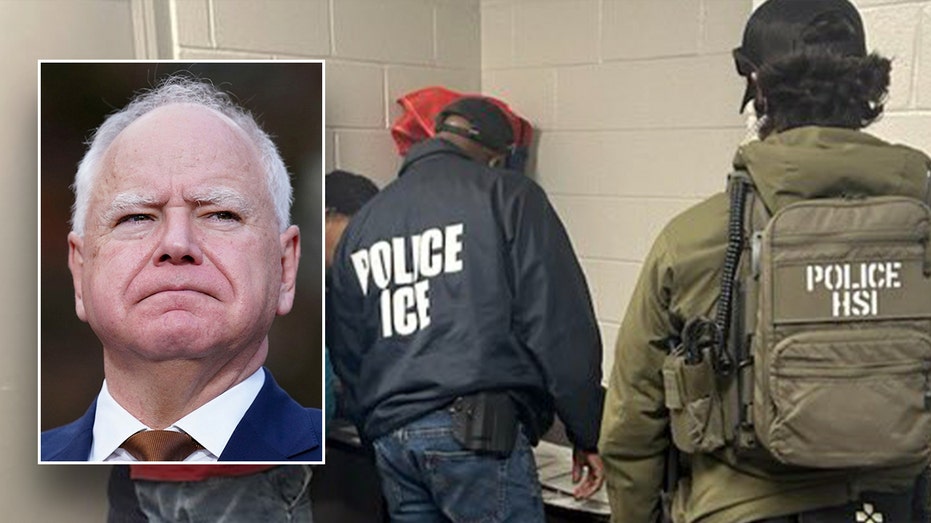
A group of five Minnesota sheriff’s offices inked cooperation agreements with U.S. Immigration and Customs (ICE), bringing an opposite approach to immigration enforcement in a state with widespread sanctuary policies. Minnesota’s Cass, Crow Wing, Freeborn, Itasca and Jackson counties sheriffs’ offices have all entered 287g agreements with ICE since President Donald Trump took office, allowing the federal immigration agency to delegate some authority to the offices to perform immigration enforcement functions, according to a report by the Sahan Journal. The agreements allow for increased cooperation between the local law enforcement agencies and ICE, including programs that focus on identifying and processing illegal immigrants that are already in custody and are eligible for deportation. Another program allows for a “task force model,” which brings the local agencies in to serve as a “force multiplier” for ICE, the report said. JD VANCE TORCHES MEDIA, DEMS’ ‘DISGRACEFUL SET OF PRIORITIES’ ON DEPORTATION OF ACCUSED MS-13 GANG MEMBER Some local law enforcement officers will also have the opportunity to participate in 40-hour ICE training sessions under the agreements, the report notes, while agencies participating in the program are required to keep in regular contact with their nearest ICE field office when carrying out any immigration enforcement. The agreements come in a state that has seen widespread use of so-called “sanctuary” policies that limit or prohibit a local jurisdiction’s ability to cooperate with federal immigration authorities, with the latest Center for Immigration Studies data showing 12 Minnesota counties that have passed rules limiting cooperation with ICE. The five sheriff’s offices inking agreements with ICE over the last few months brings the total number of offices participating in 287g in the state to seven, the Sahan Journal report notes, with the five new counties joining Sherburne and Kandiyohi counties, which have long had cooperation agreements with ICE. IOWA AG LAUNCHES INVESTIGATION AFTER SHERIFF REFUSES TO WORK WITH ICE JUDGE ORDERS TRUMP ADMINISTRATION TO RETURN MAN MARYLAND MISTAKENLY DEPORTED TO EL SALVADOR PRISON The agreements have already led to a growth in immigrant detentions, with a Freeborn County jail deputy telling the Sahan Journal that there has “definitely” been an “uptick” in immigration inmates since the county entered the agreement. However, the program is not without critics, with Minnesota Attorney General Keith Ellison’s office cautioning local agencies to consider potential drawbacks. “While 287g agreements are sometimes touted as a tool for getting violent offenders off the street, studies have shown that large numbers of people detained through 287g-related enforcement have committed only misdemeanors or traffic violations,” a spokesperson for Ellison’s office told the Sahan Journal. Fox News Digital has reached out to Walz’s office for comment.
Gov. DeSantis’ new DOGE task force gains momentum as universities, localities commit to being audited
Local jurisdictions and public universities in Florida are latching on to Gov. Ron DeSantis’ new state-level DOGE Task Force, including through formal resolutions, independent committees and additional resources supporting the new initiative. DeSantis announced the creation of “Florida DOGE” in February, a program similar to the one led at the federal level by Elon Musk. The audit intends to utilize artificial intelligence and other measures to uncover hidden waste, review state university and college operations and spending, eliminate “redundant” boards or commissions, and examine entities’ spending habits. The initiative intends to ensure financial compliance with all state laws, provide recommendations and submit referrals to the appropriate enforcement agencies when necessary. The governor subsequently sent out official guidance in March to various counties and municipalities, as well as to public colleges and universities, requesting they confirm their willingness to comply with the audit. The guidance also ordered the appointment of a proxy to be the primary point of contact throughout the initiative. DEMOCRATIC SENATOR STATES HE ‘DOES NOT BELIEVE’ DOGE IS TACKLING WASTE IN FEDERAL AGENCIES In response, some of Florida’s largest jurisdictions and public institutions – like Hillsborough County, the City of Jacksonville, and Florida Atlantic University – have signaled their willingness to comply with the audit. Their efforts include passing formal resolutions and creating independent committees to support the governor’s initiative. “Completing this DOGE audit is a no-brainer when you consider the inefficiencies we’ve already stumbled across – like old, forgotten bank accounts sitting there with millions of dollars just gathering dust,” said Hillsborough County Commissioner Joshua Wostal, who helped spearhead the resolution affirming the county’s willingness to open its doors. In Jacksonville, the city created a “Duval DOGE” task force that has already begun conducting meetings and is zeroing in on tens of millions of dollars in capital improvement projects that have sat idle since 2023, according to WJXT Channel 4 in Jacksonville. This week, the “Duval DOGE” task force also launched a website to track the work being done with the ongoing audit. ELON MUSK SAYS DOGE WILL INVESTIGATE ‘STRANGELY WEALTHY’ LAWMAKERS: ‘NOBODY CAN EXPLAIN THAT’ However, while residents in Jacksonville have been supportive of the effort, others have pushed back. “DOGE is a misnomer, catchy misnomer for let’s see what we can take away from the working class, the needy, the elderly. We don’t need it,” Duval County resident Russell Harper said during a city hall meeting about the new “Duval DOGE” committee. Other residents complained that the “Duval DOGE” lacked adequate Democratic representation and was just an effort to gain favor with political elites. Diversity, Equity, and Inclusion (DEI) initiatives at public colleges and universities will also be part of the audit. The governor’s DOGE task force aims to ensure that no state funds support these programs, in line with a resolution passed by the state board of education last year prohibiting such spending. Florida DOGE also intends to “abolish” 70 redundant boards and commissions around the state, per a February press release from the governor’s office announcing the new audits. “Florida was DOGE before DOGE was cool,” DeSantis spokesperson Brian Wright said in a statement to Fox News Digital. “Over the past five years, Florida, under Governor Ron DeSantis, has eliminated dozens of unnecessary boards, lifted needless regulations, and reduced spending. Florida has paid down 41% of our state’s debt, strengthened our economy, and increased our rainy-day fund by nearly $10 billion – all without raising taxes.” Wostal said the new DOGE audit was a better response than just raising taxes to pay for needed services. “Instead of the knee-jerk response of raising taxes – putting even more strain on already stretched households – it’s time for the government to turn the lens inward,” he said.
House plows ahead on Trump agenda after Johnson strikes deal with GOP rebels who paralyzed House
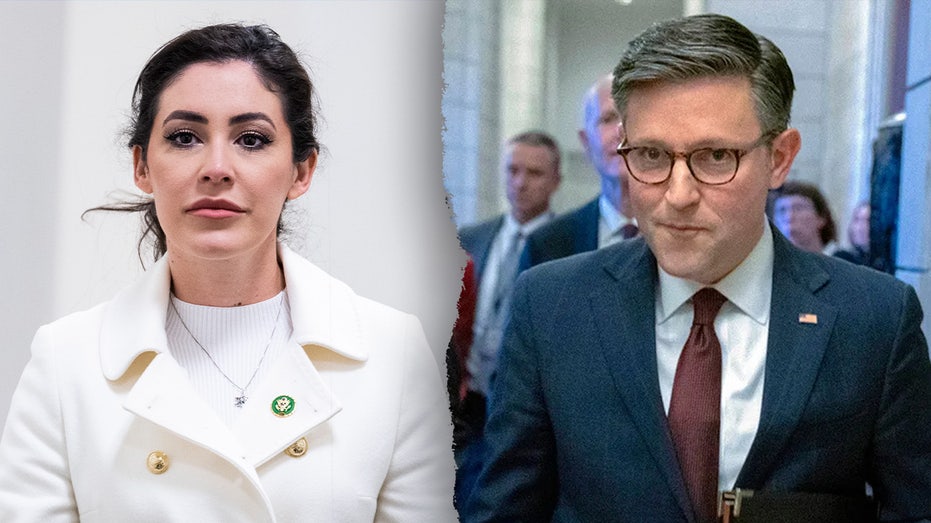
House Republicans are set to advance two key bills backed by President Donald Trump this week after House Speaker Mike Johnson, R-La., resolved a weekslong standoff with Rep. Anna Paulina Luna, R-Fla., over the issue of remote voting for new parents in Congress. The House is poised to vote this week on the Safeguarding American Voter Eligibility (SAVE) Act by Rep. Chip Roy, R-Texas, which requires proof of citizenship in the voter registration process; and the No Rogue Rulings Act (NORRA) by Rep. Darrell Issa, R-Calif., which would limit district court judges’ ability to issue orders blocking Trump policies nationwide. Both were expected to get a vote last week, but those plans were derailed amid a standoff over House procedure that ground business-as-usual to a halt. “Speaker Johnson and I have reached an agreement to bring back a procedure called live/dead pairing, which dates back to the 1800s. It will be open for the entire conference to use when unable to vote (e.g., new parents, bereaved, emergencies, etc.),” Luna wrote on X Sunday evening. ANNA PAULINA LUNA FORCES HOUSE LEADERSHIP’S HAND ON PROXY VOTING AS GOP WAR ESCALATES “Thanks to [Trump] and his guidance, as well as all of those who worked to get this change done, this is becoming the most modern, pro-family Congress we’ve ever seen.” Johnson’s office confirmed to Fox News Digital that the speaker announced a deal had been reached with Luna on a Republican lawmaker-only call on Sunday afternoon. The compromise they agreed to invokes an old congressional custom that essentially cancels out an absent new mother’s vote by “pairing” it with a vote by someone on the other side of the issue. Neither vote would count, but their stances on the issue would be noted in the Congressional Record. Johnson’s office said they also reached an agreement on boosting accessibility for young mothers in the Capitol as well. The House floor was left paralyzed last Tuesday afternoon when a small group of GOP lawmakers upended their leaders’ effort to quash a bill by Luna that would have allowed new parents to vote by proxy for 12 weeks surrounding their child’s birth. Luna was readying to force a vote on her legislation via a discharge petition, a mechanism allowing lawmakers to force bills into House consideration provided they can get signatures from a majority of the chamber. Johnson, who believes proxy voting is unconstitutional, attached language to kill discharge petitions to an unrelated measure that was up for a vote on Tuesday afternoon. If passed, it would have allowed for consideration and likely passage of the NORRA Act and SAVE Act last week. ANNA PAULINA LUNA RESIGNS FROM HOUSE FREEDOM CAUCUS, SAYS ‘MUTUAL RESPECT’ WAS ‘SHATTERED’ Instead, it was an embarrassing blow to House GOP leaders on a normally sleepy procedural vote. CLICK HERE TO GET THE FOX NEWS APP The standoff comes as the House is also trying to reckon with the Senate’s reconciliation framework, which will allow Republicans to begin working on policy and monetary changes that will become part of a massive bill advancing Trump’s agenda on defense, energy, the border, and taxes. Republican leaders are poised to move forward with that legislation as planned – despite concerns from fiscal hawks about discrepancies between the Senate and House’s views on the issue.
Poll position: Where Trump stands with Americans 11 weeks into his 2nd White House term
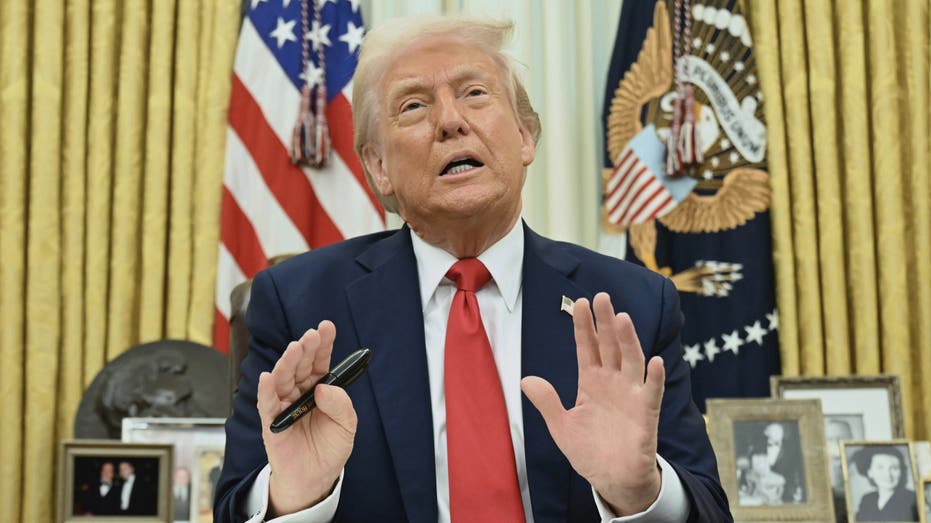
It is 11 weeks into his second administration, and President Donald Trump is not slowing down. The president has signed 111 executive orders since his inauguration on Jan. 20, far outpacing any of his immediate predecessors in the White House. “More than any in American history,” Trump touted a week ago. Trump has been expanding the powers of the presidency, as he has upended long-standing government policy and made major cuts to the federal workforce through an avalanche of executive orders and actions. WHY TRUMP, MUSK, FACE BLAME OVER BALLOT BOX SET BACKS LAST WEEK While Trump regularly showcases his performance steering the nation, some of the latest national public opinion polls suggest Americans may not be so pleased with the job he’s doing as president. The president stands at 43% approval and 53% disapproval in a Reuters/Ipsos survey conducted March 31-April 2, and he is also underwater – at 46%-51% – in a Wall Street Journal poll in the field March 27-April 1. While a survey from the Daily Mail, which was also conducted over the past week, suggested Trump’s approval rating is in positive territory, the majority of the national public opinion surveys in the field since mid-March indicate Trump in negative territory. WHERE TRUMP STANDS IN THE LATEST FOX NEWS NATIONAL POLL Trump has seen his numbers edge down slightly since the start of his second term, when an average of his polls indicated the president’s approval rating in the low 50s and his disapproval in the mid-40s. Contributing to the slide are increasing concerns over the economy and inflation, which was a pressing issue that kept former President Joe Biden’s approval ratings well below water for most of his presidency. Additionally, the latest surveys were conducted nearly entirely before Trump’s blockbuster tariff announcement last week, which sparked a trade war with the nation’s top trading partners, triggered a massive sell-off in the financial markets, and increased concerns about a recession. When asked about the market plunge, the president told reporters on Sunday evening, “Sometimes you have to take medicine to fix something.” Daron Shaw, a politics professor and chair at the University of Texas who serves as a member of the Fox News Decision Team and is the Republican partner on the Fox News poll, calls the economy “the 800-pound gorilla.” According to the Reuters/Ipsos poll, only 37% of Americans approve of the job the president’s doing on the economy, with 52% giving him a thumbs down. Trump’s numbers on the economy are slightly better in the Wall Street Journal poll – 44% approval and 52% disapproval – but still underwater. HEAD HERE FOR THE LATEST FOX NEWS REPORTING, ANALYSIS, AND OPINION ON PRESIDENT TRUMP Shaw suggested that over the past week the president has been “slowly losing the argument that tariffs are part of a larger program that will bring down prices.” “He’s got his work cut out for him….he’s losing the narrative,” Shaw said of Trump. “He’s got to make the case that tariffs are part of a larger economic plan that’s going to deal with problems that people feel.” The only issue where Trump is in positive territory in the Reuters/Ipsos and Wall Street Journal polls is immigration and border security, which, along with inflation, was another top issue that helped catapult him back into the White House. However, Shaw noted that Trump’s success has blunted the importance of the issue. “The broader narrative is that he’s had success on border security and has essentially tabled that as an issue,” he argued. “One of the problems of succeeding is that it’s something that you no longer really talk about. It’s no longer at the top of people’s issue priorities. So one of his dominant issues has been neutralized by his success on the issue.” CLICK HERE TO GET THE FOX NEWS APP While Trump’s poll numbers are edging down in most surveys, they are still superior to ratings during his first term in office. Trump’s poll numbers were almost entirely in negative territory in most surveys for the entirety of his first term in office. “Keep these numbers in perspective. The numbers he’s averaging right now are still higher than he was at any point during his first presidency,” veteran Republican pollster Neil Newhouse told Fox News. Newhouse emphasized that Trump’s Republican “base is strongly behind him,” which was not the case at the start of his first term in the White House.
Dominican Republic boosts security on border with crisis-ridden Haiti
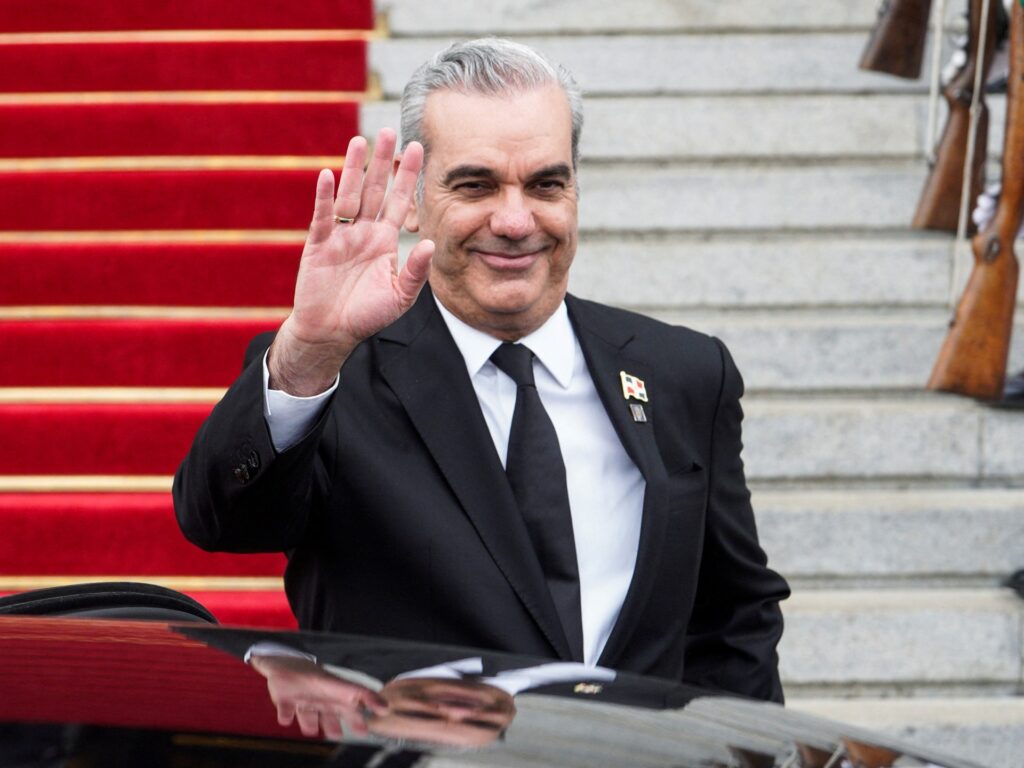
Caribbean island nation moving to extend border wall and eject migrants as violence and anarchy plague the neighbour. The Dominican Republic has announced a series of measures to bolster border security and tighten migration control in response to escalating instability in neighbouring Haiti. President Luis Abinader said on Sunday that security would be increased, despite calls for his country to ease stringent policies as Haitians seek refuge from violence wracking their country. “We will step up surveillance of the borders with 1,500 additional troops, on top of 9,500 already deployed,” the Dominican leader, re-elected last year on pledges to clamp down on immigration, said in a speech. Abinader added that he has approved the construction of a new section of a wall that separates the two countries – which share the second-largest island in the Caribbean after Cuba. The border between the two countries stretches for more than 300km (186 miles). About 54km (33 miles) of border wall has been completed. The president said his latest order would “speed up construction of the border wall” to add a further 13km (8 miles). Advertisement Legal reforms are also on the agenda, according to Abinader, with the goal of using tougher penalties to deter those who facilitate the entry and stay of immigrants into the country. Abuse The increased border measures come as the Dominican Republic eyes the deepening crisis in Haiti. Chaos took reign in the country last year as violence flared dramatically, leaving an alliance of gangs in control of most of the capital city of Port-au-Prince. Despite the efforts of a Kenyan peacekeeping force, numbering approximately 1,000, the transitional government in Haiti has been unable, or unwilling, to curtail the violence, which has seen a resurgence over the last month or so. The United Nations reports that more than 5,600 people were killed in 2024 and that over one million people have been displaced, many seeking refuge in the neighbouring Dominican Republic. The Dominican Republic has responded with stringent deportation policies, aiming to repatriate up to 10,000 Haitians per week in recent months. This has led to reports of human rights abuses, with advocates calling on countries across the Americas, especially the United States and the Dominican Republic, to halt deportations due to dire conditions awaiting people in Haiti. Abinader, who won a second term in the May 2024 election that heavily featured issues relating to Haiti, has emphasised the need for tougher border and immigration controls while also calling for international assistance. Adblock test (Why?)
Israeli strike on media tent extends journalist death toll in Gaza

Deaths add to the casualty numbers in what has been declared the deadliest ever war for media workers. An Israeli air attack on a media tent in Gaza has killed at least two people. The bombing near the Nasser Hospital in Khan Younis early on Monday also wounded several other reporters, according to local media. The attack was just the latest to result in the casualties of journalists, with Israel having been accused of deliberately targeting the press during its war in the enclave. The strike on the tent outside the hospital in southern Gaza at about 2am set it ablaze, killing journalist Helmi al-Faqawi as well as a man named as Yousef al-Khazindar, according to Palestine’s Wafa news agency. Footage shared online by the Quds News Network showed the tent on fire. Some people in a crowd gathered outside attempted to extinguish the flames. Reports said that nine people, six of them journalists, were injured, “some seriously”, in the attack. The Quds News Network showed footage of journalists Hassan Eslaih and Ihab al-Bardini on hospital beds, the latter “struck by shrapnel in the head, which exited through his eye”. Advertisement Journalist Ahmad Mansour was reportedly fighting for his life after suffering “severe burns”. Palestinians mourn journalist Helmi al-Faq’awi who was tragically murdered in the horrific Israeli attack late last on the journalists’ tent outside Nasser Hospital in Khan Younis. pic.twitter.com/DlB5r6wpuH — Quds News Network (@QudsNen) April 7, 2025 Israeli attacks on Gaza on Monday morning killed at least 13 people, according to medical sources cited by Al Jazeera Arabic. The network reported two people were killed in the strikes on the Jabalia refugee camp and three others in the Zeitoun district of Gaza City. Wafa reported that two people were killed west of Deir el-Balah and another in the al-Jurun area north of Gaza City. Deadliest war for journalists The attack on the media tent came a day after journalist Islam Meqdad was killed along with her husband and child, increasing the casualties reported among media representatives in Gaza. The Watson Institute for International and Public Affairs has said Israel’s war on Gaza is now the deadliest ever for media workers, according to its Costs of War project. The United States-based think tank’s report released last week stated that Israeli forces have killed 232 journalists and media workers since the war in the enclave began following the October 7, 2023 attack by Hamas on southern Israel. On average, 13 reporters and media workers have been killed every week in the bombardment. The destroyed house of journalist Islam Meqdad, where she was killed along with her son and five other family members in an Israeli army attack in Khan Younis, on April 6, 2025 [Abdel Kareem Hana/AP Photo] The figures demonstrate that more journalists have been killed in the conflict than in both world wars, the Vietnam War, the wars in Yugoslavia and the US war in Afghanistan combined, the report said. Advertisement It is unclear, the think tank continued, how many journalists in Gaza have been specifically targeted and “how many were simply the victims, like tens of thousands of fellow civilians, of Israel’s bombardment”. However, it cited the documentation by Reporters Without Borders (RSF) of 35 cases to the end of 2024 in which the military likely targeted and killed journalists because of their work. Citing the Costs of War study, journalist Antony Lowenstein told Al Jazeera that Israel is engaged in “deliberate targeting of journalists” and that the number of media workers killed in the enclave is now “greater than that of all conflicts in the last 100 years combined”. Adblock test (Why?)
Musk vs Navarro: Is the Trump team divided on tariffs?

United States President Donald Trump has doubled down on his tariffs plan, even as markets crash around the world. However, signs of divisions among Trump’s aides are emerging with key ally Elon Musk publicly clashing with trade adviser Peter Navarro on Saturday. Others have also presented diverging narratives. Here is more about what has happened: What happened between Musk and Navarro? On Wednesday, Trump announced sweeping tariffs impacting most of America’s trading partners. This marked a major break from decades of US trade policy and sparked criticism and concern from economists and countries targeted by Trump’s tariffs. In the aftermath, the three major stock indices in the US – the Dow Jones Industrial Average, S&P 500 and Nasdaq – dropped by more than 5 percent over the past week. This marked the biggest stock market drop in the US since 2020 during the COVID-19 pandemic. Longtime Trump aide and the administration’s senior counsellor for trade and manufacturing, Peter Navarro, defended the tariffs in an interview with CNN on Thursday. Advertisement “The market will find a bottom. It will be soon, and from there, we’re going to have a bullish boom, and the Dow is going to hit 50,000 during Trump’s term,” Navarro said. As of Monday, the Dow Jones stood at 38,314 before the start of trading. After an X user posted a clip of Navarro speaking to CNN and alluded to the adviser’s doctorate from Harvard University, Musk hit back on the platform, which he owns. “A PhD in Econ from Harvard is a bad thing, not a good thing,” Musk posted. The first phase of the new tariffs – 10 percent levies on countries including the United Kingdom, Australia, Argentina and Saudi Arabia – came into effect on Saturday. Higher levies that Trump calls reciprocal tariffs are scheduled to come into effect on Wednesday against countries including China and India. What did Musk say about tariffs on Europe? The hit against Navarro hasn’t been Musk’s only comment on tariffs in recent days. On Saturday, Musk – who oversees the Department of Government Efficiency (DOGE), tasked by Trump to slash government spending – joined a conversation by videolink with Italian Deputy Prime Minister Matteo Salvini, the leader of the far-right League party. During this conversation, Musk voiced hopes for “a zero-tariff situation” between the US and Europe, even as Trump has imposed 20 percent tariffs on the European Union. “I hope it is agreed that both Europe and the United States should move ideally, in my view, to a zero-tariff situation, effectively creating a free-trade zone between Europe and North America,” Musk said. Advertisement Musk – the world’s richest man, who is CEO of SpaceX and Tesla and the largest shareholder of both firms – has seen his firms face setbacks in recent weeks. In Europe alone, Tesla’s sales have plunged by 49 percent in January and February when compared with the same months in 2024, according to a March 25 report published by the European Automobile Manufacturers’ Association. Tesla’s share price has also stumbled. It’s about half of what it was in December. How has Navarro responded? In a Fox News interview on Sunday, Navarro responded to Musk’s comments about the tariffs in Europe. “It was interesting to hear Elon Musk talk about a zero-tariff zone with Europe. He doesn’t understand that,” Navarro said. “The thing that I think is important about Elon to understand is he sells cars. That’s what he does,” Navarro added, suggesting that Musk’s comments on tariffs were linked to his business interests. What had Musk said earlier about tariffs? Last month, Tesla warned the US government that tariffs could harm electric vehicle companies when Trump’s tariff targets impose their own levies on American products. In an unsigned letter to US Trade Representative Jamieson Greer, Tesla said: “US exporters are inherently exposed to disproportionate impacts when other countries respond to US trade actions.” The company added: “Past trade actions by the United States have resulted in immediate reactions by the targeted countries, including increased tariffs on electric vehicles imported into those countries.” Advertisement On March 26, Trump imposed 25 percent tariffs on car imports and certain automobile parts. In response to this, Musk wrote on X: “Important to note that Tesla is NOT unscathed here. The tariff impact on Tesla is still significant.” Are there other signs of splits within Team Trump? Commerce Secretary Howard Lutnick told CBS News on Sunday that the 10 percent baseline tariffs will “stay in place for days and weeks” and the higher reciprocal tariffs would also take effect. However, on the same day, Treasury Secretary Scott Bessent told NBC’s Meet The Press that more than 50 countries had reached out to Washington for negotiations to cut the levies. “The market consistently underestimates Donald Trump,” he said in response to the market crashes. Also on Sunday, CNN anchor Jake Tapper asked Agriculture Secretary Brooke Rollins whether the tariffs are here to stay like Trump and Lutnick have said. Rollins did not directly answer this question. Adblock test (Why?)