

15 Democrats back Sanders’ failed resolutions to cancel military aid to Israel

The Senate rejected a proposal by Sen. Bernie Sanders, I-Vt., that would have blocked the Trump administration’s planned $8.8 billion arms sale to Israel. Sanders’ proposal was split into two votes, each of which failed, with 15 senators voting for the measure. Fourteen Democrats voted with Sanders. They were Sens. Richard Durbin, Ill., Martin Heinrich, N.M., Mazie Hirono, Hawaii, Ben Ray Luján, N.M., Tim Kaine, Va., Andy Kim, N.J., Ed Markey, Mass., Jeff Merkley, Ore., Chris Murphy, Conn., Brian Schatz, Hawaii, Tina Smith, Minn., Chris Van Hollen, Md., Elizabeth Warren, Mass., and Peter Welch, Vt. RUBIO SIGNS DECLARATION TO EXPEDITE $4B IN ARMS TO ISRAEL ‘WRONGLY WITHHELD’ BY BIDEN Prior to the vote, Senate Foreign Relations Committee Chairman Jim Risch, R-Idaho, warned that in passing the resolutions, senators “would abandon Israel, our closes ally in the Middle East, during a pivotal moment for global security.” On Wednesday, Sanders released a video discussing his proposal, in which he demanded that the U.S. “end our complicity in these atrocities” in Gaza. He also accused Israeli Prime Minister Benjamin Netanyahu’s government of behaving in a “barbaric” fashion, saying that humanitarian aid has been blocked from reaching Gazans. From Jan. 19, 2025 until March 2, 2025, while the Israel-Hamas ceasefire deal was in place, a total of 25,200 aid trucks entered Gaza, according to the Coordinator for Government Activities in the Territories. This included 4,200 weekly aid trucks. NEW STUDY SHUTS DOWN ICC CHARGES AGAINST ISRAEL OVER GAZA STARVATION CLAIMS Before it fell apart earlier last month, the ceasefire deal saw the release of 33 hostages and nearly 2,000 Palestinian prisoners. Israel has long enjoyed bipartisan support in the U.S., but its latest war with Hamas has divided Democrats. Some, like Sen. John Fetterman, Pa., have been fierce defenders of Israel, while others, like Sanders, have been harsh critics. SENATE REJECTS BERNIE SANDERS’ EFFORT TO BLOCK WEAPONS SALES TO ISRAEL Sanders introduced a similar proposal in November 2024 during the Biden administration, which also failed. Many of the same senators who voted in favor of his April 2025 proposal voted for the resolution under the Biden administration, except for Sens. Angus King, Maine, Jeanne Shaheen, N.H. and Raphael Warnock, Ga. Fox News Digital contacted their offices to inquire about what changed between November 2024 and now. Shaheen’s office referred to a statement that they put out on Thursday, in which the senator explains her vote. “As Ranking Member of the U.S. Senate Foreign Relations Committee, I am deeply concerned by the breakdown of the ceasefire between Israel and Hamas in Gaza. Immediately de-escalating the conflict is crucial for delivering humanitarian aid to Palestinians, releasing the remaining hostages and preventing a regional war. With the delicate negotiations to restore the ceasefire happening right now, I voted against the Joint Resolutions of Disapproval on arms sales to Israel to encourage progress in those conversations,” Shaheen said. When speaking about his joint resolution of disapproval in November, Sanders claimed the Israeli government was controlled “not only by right-wing extremists, but by religious zealots.” He also accused Netanyahu of violating international law.
Who was C Sankaran Nair? Indian lawyer who inspired Akshay Kumar-starrer ‘Kesari Chapter 2’, he was FIRST Indian to be…

Bollywood superstar Akshay Kumar is back with Kesari Chapter 2 alongside actress Ananya Panday and legendary actor R Madhavan, leaving fans bursting with excitement!
Digital Marketing Certification Worth It? Benefits, Career Impact, and Salary Trends in 2025

As the industry transforms, digital marketing certifications will?follow the trend. Professionals should look out?for more specialized certifications in emerging fields like AI marketing, voice search optimization and immersive marketing.
Reporter’s Notebook: The Game of Death

The House and Senate are a long way from approving President Donald Trump’s “big, beautiful bill” to cut spending, slash taxes and likely raise the debt ceiling. But the next step in the process is now unfolding. The Senate voted Thursday to proceed to a retooled budget framework. The framework is necessary under special budget rules the Senate is using to avoid a filibuster which would kill the bill. That triggered a lengthy debate on the updated budget package prompting what’s called a “vote-a-rama” tonight. The Senate would presumably finish this step in the process and adopt the new framework in the wee hours of Saturday morning or perhaps during the day on Saturday. REPUBLICANS CHARGE AHEAD ON TRUMP BUDGET, SETTING UP MARATHON SENATE VOTE A “vote-a-rama” is really just a very Senate way of saying “a really long vote series which probably runs all night.” The Senate rifles through vote after vote for hours on end. Most vote-a-ramas run 10-15 hours. A 2008 vote-a-rama churned through a record 44 roll call votes. They are always related to the budget process. And, because of special budget rules, senators can offer an unlimited number of amendments. That’s why there are so many votes. Republicans aim to get through this process as quickly as possible. That said, some conservatives may offer amendments for additional debt reduction or proposals related to the debt ceiling. Democrats will likely offer a host of amendments to get vulnerable Republicans on the record about controversial issues like possible cuts to Medicare and Medicaid and even tariffs. The bottom line is this: There is high interest about where Congress stands advancing the “big, beautiful bill.” It’s the touchstone of President Trump’s legislative agenda and probably the most significant piece of legislation to come before Congress over the next two years. But getting to a point where the House and Senate can actually try to approve the bill itself is an exhaustive process and months away. However, this incremental step is essential to getting there. And that’s why interested parties will focus on the vote-a-rama starting tonight and when it ends. HERE’S A CLOSER LOOK AT TRUMP’S TARIFF PLAN: WHAT TO KNOW ABOUT THE NEW DUTIES Also, why start this process so late on a Thursday and compel the Senate to meet on a Friday night and bleed into the weekend? Especially when the Senate has had multiple weekend sessions already this year and several overnight sessions? That includes the all-night, record-breaking speech by Sen. Cory Booker (D-NJ) earlier this week. There is some method to the madness. First, the Senate needs to get through this step. Time is of the essence. Second, Fox is told that holding off until later in the week could limit the length of the vote-a-rama if the Senate doesn’t start until Friday night. That isn’t to say the vote-a-rama won’t be long and tiring. But it could abbreviate the process. Let’s take a step backward so we can look forward on what the House and Senate must still do to pass the tax cut and spending cut plan. There are potentially eight steps here. The Senate motion over the next few days is step three. In February, the Senate adopted an initial budget outline so it could use the special budget reconciliation process and avoid a filibuster. The House approved its own version of a budget outline in late February – even though the consequences of the filibuster mean nothing to the House. But the issue was that the House and Senate approved different budget frameworks. They still need to sync up. So those were steps one and two of this protracted process. The Senate’s vote-a-rama – culminating with the adoption of a new, updated budget blueprint – is step three. Step four likely comes next week when the Senate’s updated package goes to the House. House Speaker Mike Johnson (R-LA) indicated Wednesday night he’d like the House to align with the Senate framework next week. So that entails another debate and vote. However, some archconservatives might look askance at the Senate’s spending cut numbers. Those close to the Senate process have told Fox that those figures represent a “floor” for spending cuts. Not a “ceiling.” But the ultimate Senate number might not please as many House conservatives. Why does the Senate do it this way? To comply with specific, strict Senate budgetary rules. If the Senate didn’t stretch it out like this, the bill would face a filibuster and the gig would be up. Johnson seemed buoyed after he swore-in new Reps. Jimmy Patronis (R-FL) and Randy Fine (R-FL) after their special election victories in Florida. “The margin is a little more comfortable. It’s an embarrassment of riches. Now we can lose, what, three votes now or something,” said Johnson. “I vote for my Speaker,” replied Patronis. “Right!” piped up Johnson. It’s possible the Speaker was glad to have some backup after one of the worst weeks of his tenure. The Speaker lost an internecine fight over proxy voting for Members who are pregnant or new moms. That blocked the House from considering other major bills focusing on voting security and reining-in federal judges. The contretemps forced Johnson to shut the House down for the rest of the week on Tuesday afternoon. Regardless, if the House adopts the plan now before the Senate, they graduate to steps five and six. That’s where the House and Senate actually assemble, debate and presumably pass the bill itself. Those steps will be the most challenging set yet. And it likely involves yet another vote-a-rama in the Senate. Then, we may have steps seven and eight. That’s where the House and Senate may need to take yet another set of votes to align again – if both bodies approved different versions of the legislation. That’s why passing the “big, beautiful bill” may take until summer. And there will undoubtedly be additional hiccups along the way. Fox is told the House might not have the votes
Reporter’s Notebook: The Senate’s all-night session on the big, beautiful bill

Expect an all-night session tonight in the Senate as Republicans try to take the next step to pass President Donald Trump’s “big, beautiful bill.” The Senate is expecting up to 15 hours of round-the-clock voting starting tonight to approve a revamped budget framework to cut taxes, slash spending and raise the debt ceiling. The voting marathon likely begins this evening and could run through the day on Saturday. The record is 44 consecutive roll call votes, set in 2008. REPUBLICANS CHARGE AHEAD ON TRUMP BUDGET, SETTING UP MARATHON SENATE VOTE Democrats will try to force Republicans to take votes on amendments to cut Medicare and even tariffs. By getting Republicans on the record, Democrats will try to weaponize those votes against vulnerable GOPers in the 2026 midterms. If the Senate approves the plan, the package goes back to the House, where it must sync up and adopt the retooled Senate version. HERE’S A CLOSER LOOK AT TRUMP’S TARIFF PLAN: WHAT TO KNOW ABOUT THE NEW DUTIES But that could be a rocky road. House Republicans received reinforcements this week, winning both special elections in Florida. However, a knowledgeable source expressed skepticism to Fox News that the House had the votes to pass the Senate version. The reason is that some conservatives don’t think the spending cuts are deep enough.
Concerned parents of trans kids compared to ‘hate groups’ by Colorado Dem: Wouldn’t ‘ask the KKK’ for opinion
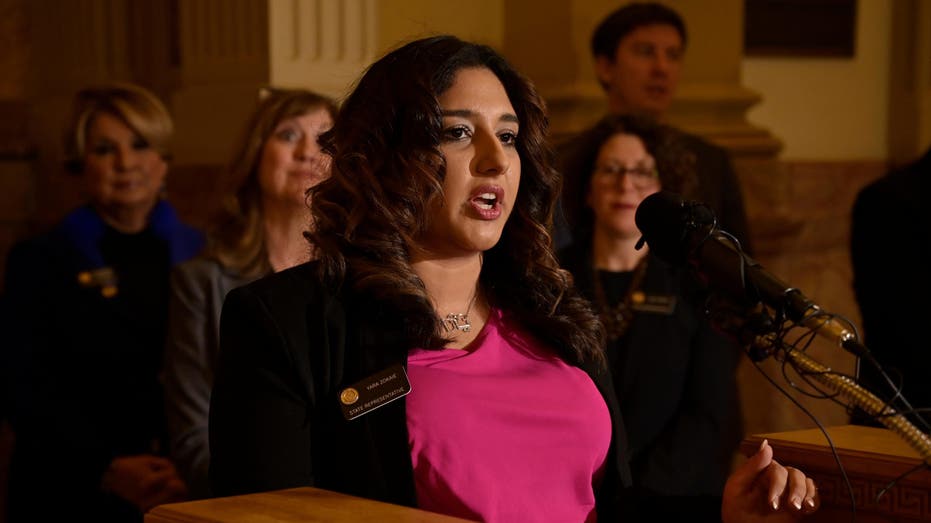
A Colorado Democrat likened parent groups to “the KKK” during an hours-long committee hearing for a controversial bill that could see parents accused of “coercive control” in custody fights for using a trans child’s “deadname.” “I really am curious about how much stakeholdering went on both sides of the issue, and not just one side,” Republican state Rep. Jarvis Caldwell said during the hearing, which began Monday night and ran into early Tuesday. “I’m curious with if the businesses in the community were included in these and if parent groups that are not part of the LGBT community if they were involved.” Later during the House Judiciary hearing, Democrat state Rep. Yara Zokaie said the committee that night had “heard a lot about stakeholding and who was left out of stakeholding” and that “this process is important for us to understand the implications of the bills that we are passing.” “But a well-stakeholdered bill does not need to be discussed with hate groups,” Zokaie said. “And we don’t ask someone passing civil rights legislation to go ask the KKK their opinion,” she added as several in the committee room applauded. HAWLEY OFFICIALLY A YES ON DR OZ AFTER SECURING COMMITMENTS ON TRANSGENDER, ABORTION ISSUES The bill in question, HB25-1312, An Act Concerning Legal Protections for Transgender Individuals, requires courts to consider “deadnaming, misgendering, or threatening to publish material related to an individual’s gender-affirming health-care services as types of coercive control” when making child custody decisions. It passed in a 7-4 vote out of the committee, clearing the first major hurdle to becoming law. It now goes to the Assembly for a second reading. If the bill passes, it would make Colorado the first state to pass such legislation. In California, similar legislation was passed in 2023 requiring courts to consider a parent’s affirmation of a child’s chosen gender identity in custody battles. However, liberal Gov. Gavin Newsom vetoed the bill. The Colorado bill, which would create the Kelly Loving Act, named after a transgender man who was killed in the 2022 Colorado nightclub shooting by a nonbinary gunman, also prohibits Colorado courts from enforcing laws from other states that remove children from parents who allow transgender treatments for minors. TRANS INMATE IN PRISON FOR KILLING BABY MUST GET GENDER SURGERY AT ‘EARLIEST OPPORTUNITY’: JUDGE If a child in school wants to go by a different name other than their legal one, the bill says educators must be “inclusive of all reasons that a student might adopt a chosen name.” “If the individual provides a chosen name that is different from the individual’s legal name, the chosen name must be used on all subsequent forms administered by the public entity,” the bill text summary says. After the hearing, Caldwell told Fox News Digital in a statement that Zokaie’s reference to certain stakeholders was “deeply concerning” and “reckless.” “Particularly when it involves labeling parents – the people who care the most about the future of their children – as hate groups,” he said. “Parents who stand up for their children’s education and rights should be respected, not vilified.” SCOTUS RULINGS THIS TERM COULD STRENGTHEN RELIGIOUS RIGHTS PROTECTIONS, EXPERT SAYS Zokaie also said during the hearing, “There was a lot of discussion of folks losing their children, and I just want us to note that these are parameters for a judge to consider.” “The word ‘consider’ is used repeatedly. There are no mandates in this bill,” she said. Fox News Digital reached out to Zokaie for comment but did not receive a response by publication deadline.
‘Uber for Teens’ launched In India: Who is eligible; here’s how to book a ride

A recent Uber survey found that 92% of parents said their teens had missed out on activities due to transport issues, and 72% cited safety concerns.
PM Modi’s FIRST meeting with Muhammad Yunus after Hasina’s extradition: ‘There were talks on…’

On the sidelines of the 6th BIMSTEC Summit, in Bangkok, Thailand, Prime Minister Narendra Modi held talks with Chief Adviser of Bangladesh Muhammad Yunus for the first time since the extradition of Sheikh Hasina.
SCOOP: Newsom to ask world leaders to exempt California exports from retaliatory tariffs

EXCLUSIVE: California Gov. Gavin Newsom will announce plans Friday afternoon directing the state to pursue “strategic” relationships with countries announcing retaliatory tariffs against the U.S., urging them to exclude California-made products from those taxes, Fox News Digital has learned. Sources in Newsom’s administration told Fox News Digital the announcement is a direct response to President Donald Trump’s “Liberation Day” tariff plan, which sets out a baseline duty of 10% on all imports to the U.S. and some higher percentages for other top traders. The Newsom administration is worried that California’s almond industry, a major agricultural exporter, will lose billions of dollars as nations like China, India and the European Union move to impose retaliatory tariffs. HERE’S A CLOSER LOOK AT TRUMP’S TARIFF PLAN: WHAT TO KNOW ABOUT THE NEW DUTIES Almonds, California’s most valuable food export, account for about 20% of the state’s $23.6 billion in agricultural sales abroad and 2.5% of its total exports, according to the California Department of Food & Agriculture. The state produces 80% of the world’s supply and exports the majority of its almond crop. Other top agricultural exports include dairy products, pistachios, wine and walnuts. California boasts of being the fifth-largest economy in the world, a vital engine for much of U.S. economic growth, with a gross domestic product of $3.9 trillion — 50% larger than Texas, the nation’s second-largest state. The Golden State is the largest importer and second-largest exporter among U.S. states, with more than $675 billion in two-way trade supporting millions of jobs, state officials said. Trade with Mexico, Canada and China are also key partners for California, as nearly half of the state’s imports come from these countries, totaling $203 billion of the more than $491 billion in goods imported by California last year. A Newsom official said the new Trump tariffs will also affect access to critical supplies, like construction materials, needed to rebuild after the Los Angeles wildfires. The U.S. currently imposes a duty of over 14% on Canadian lumber, with the rate potentially rising to nearly 27% this year. TRUMP TOUTS RETURN OF ‘AMERICAN DREAM’ IN HISTORIC TARIFF ANNOUNCEMENT State officials also said the retaliatory tariffs will cause “major disruptions” to cross-border supply chains in the California-Baja region, arguing that if component goods are taxed each time they cross the border, the final price of the finished product will increase and be passed onto Californians. “The markets are going to boom. The stock is going to boom, the country is going to boom, and the rest of the world wants to see is there any way they can make a deal,” Trump said Thursday leaving the White House. “This is one of the most important days, in my opinion, in American history. It’s our declaration of economic independence. For years, hardworking American citizens were forced to sit on the sidelines as other nations got rich and powerful, much of it at our expense,” Trump said. “But now it’s our turn to prosper, and in so doing, use trillions and trillions of dollars to reduce our taxes and pay down our national debt, and it’ll all happen very quickly.”
Texas bills requiring air-conditioned prisons languish despite temperatures being ruled unconstitutional

The five bills that would require complete air conditioning in state prisons haven’t had a hearing yet, and the money set for the upgrades falls short of the estimated cost.