

Lawmakers see hope in bipartisan border-Ukraine talks after White House meeting

Congressional leaders left a meeting at the White House on Wednesday signaling cautious but fresh hope that a bipartisan deal could be reached to fund Ukraine and overhaul policies at the southern border. Both Senate Majority Leader Chuck Schumer, D-N.Y., and Minority Leader Mitch McConnell, R-Ky., told reporters after the meeting that a deal on supplemental security funding could come for a vote soon. “I am more optimistic now that we can come to an agreement on border and Ukraine in one package, along with aid to Israel, along with humanitarian aid for the Palestinians in Gaza, and along with helping Indochina,” Schumer said. “I put the chances a little bit greater than half now. And that’s the first time I can say that.” McConnell called it a “constructive discussion” and added a deal could “be on the floor next week.” KEY MODERATE REPUBLICAN COMES OUT IN FAVOR OF IMPEACHING MAYORKAS, SAYS HE SHOULD BE ‘TRIED FOR TREASON’ “We’ve been talking about this for a very long time. It’s time to try to act,” he said upon returning to the U.S. Capitol on Wednesday. The meeting was intended to be focused on Democrats’ $110 billion supplemental aid request for Ukraine, Israel and others. But Republicans have insisted on border and immigration policy reforms for their support, as the border crisis becomes an increasingly bipartisan issue. But while the Senate has been discussing a bipartisan path forward on border policy, the House GOP majority has been steadfast in calling for nothing short of the provisions in H.R.2, which passed the House last year and includes Trump administration-era border policies like Remain in Mexico and construction of a border wall. JOHNSON CAUGHT BETWEEN WARRING HOUSE GOP FACTIONS: ‘DRIFTING TOWARD MOB RULE’ Democrats who control the Senate and White House have called the bill a nonstarter. A top House Republican who emerged from the meeting, Foreign Affairs Committee Chairman Mike McCaul, R-Texas, was cautiously encouraged that President Biden was receptive to border policy changes – and suggested his conference could be flexible as well. “He said that I am ready to make significant changes to the border. He said it’s broken, he knows that, and it needs to be fixed,” McCaul said of Biden. He said he and Speaker Mike Johnson, R-La., specifically pushed for the Remain In Mexico provision. “I think that would be a significant policy change, that would get to the heart of the problem. That is what drives the cartels,” McCaul said. “You stop that, you stop the flow and you solve the problem.” HOUSE, SENATE RELEASE BIPARTISAN AGREEMENT ON GOVERNMENT FUNDING AS SHUTDOWN DEADLINES LOOM McCaul said of the current status of talks, “Of course, we’re making the pitch for all of H.R.2. I also live in a realistic world.” Johnson called the meeting “productive” upon leaving the White House. Later on the “Ingraham Angle,” he signaled Republicans were still pushing for H.R.2 provisions but said of Biden at the meeting, “He said we’re ready to do big things on the border.” Rep. Jim Himes, D-Conn., the top Democrat on the House Intelligence Committee, told reporters that Johnson never specifically said it was H.R.2 or nothing during the meeting. He did say Johnson insisted “the most important issue for the American people is the border” and that he defended specific measures of the bill. The White House said of the meeting, “The President also made clear that we must act now to address the challenges at the border. He said he is encouraged by the progress being made in the bipartisan negotiations happening in the Senate. He expressed his commitment to reaching a bipartisan agreement on border policy and the need for additional resources at the border. The President called on Congress to swiftly pass his full national security supplemental.” Fox News’ Brianna O’Neil contributed to this report
Israeli arrests of Palestinian journalists soared in 2023: CPJ

More than a dozen Palestinian journalists held in Israeli jails since the start of the Gaza war on October 7. Israel emerged as one of the world’s leading jailers of journalists in 2023, according to a report by a press freedom watchdog, with the number of reporters behind bars soaring after the start of the Israel-Hamas war in Gaza. In its annual snapshot of jailed journalists published on Thursday, the Committee to Protect Journalists (CPJ) found that Israel was the joint sixth biggest jailer of journalists in 2023, alongside Iran. There were 17 Palestinian reporters held in Israeli jails as of December 1, the CPJ said. By comparison, the previous year one Palestinian reporter was held in an Israeli prison, according to the New York-based non-profit group. “Israel has appeared several times on CPJ’s annual census, but this is the highest number of arrests of Palestinian journalists since CPJ began documenting arrests in 1992 and the first time Israel has ranked among the top six offenders,” read the report. All those held in Israeli prisons were detained in the occupied West Bank after the Israel-Hamas war began on October 7, when Hamas fighters launched a surprise assault into southern Israel, killing at least 1,139 people, mostly civilians, according to an Al Jazeera tally based on official statistics. Around 240 others were taken captive, according to Israeli authorities. Israel responded with a devasting bombardment and ground offensive on Gaza. More than 24,600 people have been killed in the Israeli assault, according to Palestinian officials. In the more than three months since the Gaza war started, violence has soared in towns and cities across the West Bank, with Israeli forces conducting near-daily raids and mass arrests. According to the new report, most of the journalists arrested were held under administrative detention – a practice where Israeli authorities hold detainees without charge or trial for up to six months. The detention can be extended based on “secret evidence” that neither the detainees nor their lawyers are allowed to see. Due to the lack of information on the reason behind the jailing, the CPJ said it has been difficult to establish why the 17 journalists had been arrested. Several of the reporters’ families said they believe they were jailed for messages posted on social media, the report said. The CPJ’s list is a snapshot of people incarcerated on December 1, and it does not include those imprisoned or released throughout the year. As of January 17, at least 19 reporters were still in jail, the CPJ said. Al Jazeera journalist Wael Dahdouh reacts as he attends the funeral of his son, Palestinian journalist Hamza Dahdouh, after Hamza was killed in an Israeli strike, in Rafah in the southern Gaza Strip [Ibraheem Abu Mustafa/Reuters] The Gaza war has also seen a spike in the number of journalists killed in the region. As of mid-January, 83 reporters have been killed since the start of the conflict. At least 67 were Palestinians, four were Israeli and three were Lebanese, according to the CPJ. Since the start of 2024, the committee recorded that at least six journalists were killed, including Hamza Dahdouh, the eldest son of Al Jazeera’s Gaza bureau chief Wael Dahdouh. He was the fourth member of Dahdouh’s close family to have been killed in the war. Hundreds held worldwide The report found that 320 journalists were in prison worldwide on December 1 of last year, the second-highest number recorded since the committee began documenting arrests in 1992. The total marks a fall from a record global high in 2022 when more than 360 reporters were behind bars. This represents “a disturbing barometer of entrenched authoritarianism and the vitriol of governments determined to smother independent voices”, read the report. “Some governments go a step further, using transnational repression to threaten and harass reporters beyond their own borders,” it added. China is the worst offender, with 44 journalists in jail, followed by Myanmar (43) and Belarus (28). More than 65 percent of those listed in the census are accused of spreading false information and of “terrorism in retaliation for their critical coverage”. In 66 cases, those held have not yet been told of the charges they are facing, read the report. Adblock test (Why?)
How much will the US Supreme Court shape the 2024 presidential election?

Los Angeles, California – As the United States’ presidential primary season kicks off, the Supreme Court is expected to weigh in on several high-profile cases that could influence the election results. But experts say that puts the court in a precarious position. With Republican frontrunner and former president Donald Trump embroiled in multiple legal proceedings, the court may be forced to confront the limits of its impartiality. Some justices may even have to publicly evaluate the conduct of the former president who nominated them to the role. Trump, after all, is credited with giving the court its current conservative supermajority, after appointing three justices during his term in office. The Trump cases will be “a test for whether or not the court can somehow put aside their political preferences and biases”, said Michael Gerhardt, a professor of jurisprudence at the University of North Carolina at Chapel Hill. Former President Donald Trump is the Republican frontrunner in the 2024 presidential race [File: Alex Brandon/AP Photo] Testing the limits of presidential immunity One of the cases likely headed to the Supreme Court has to do with Trump’s broad claims to immunity for actions he took while president. Federal prosecutors, led by special counsel Jack Smith, have argued Trump conspired to overturn the 2020 election results during his final days in office. But Trump’s legal team has called on the court system to throw out the charges, on the premise that, as president, he was immune to criminal prosecution. An appeals court heard arguments in the case this month. If Trump loses there, he will likely turn to the Supreme Court with another appeal. Gerhardt said Trump’s immunity case will be a tough sell, though. “Trump’s immunity argument is incredibly weak. In fact, it’s just bad. And I have a hard time imagining that any court would agree with his argument.” But Gerhardt added the Supreme Court may not take the case at all, leaving the federal appeal court’s decision as the last word. “They’re probably not eager to get involved at all. The immunity case probably presents a great opportunity for the court to just stay out of it.” A courtroom sketch on January 9 depicts former President Donald Trump and his legal team at an appeals court hearing over presidential immunity claims [File: Bill Hennessy/Reuters] ‘Insurrection clause’ on the docket The Supreme Court has already been asked to intervene in another case, over whether states can remove Trump from their primary ballots. Colorado and Maine maintain that Trump is not qualified to be on their ballots due to his actions on January 6, 2021, when his supporters stormed the US Capitol to prevent Congress from certifying 2020 election results. Both states cited the 14th Amendment of the US Constitution, which includes a section that bars individuals from holding public office if they swear an oath of allegiance and then aid in an insurrection. Trump had spoken to the rioters before the 2021 attack on the Capitol, repeating false claims that the election was stolen and calling on the crowd to “fight like hell”. Experts told Al Jazeera that, of all the cases the Supreme Court may take in 2024, its decision on whether Trump can be removed from state ballots could have the greatest impact on the election. Never before has the Supreme Court ruled on the so-called “insurrection clause”. The states’ actions also mark the first time in history that the clause has been used against a presidential candidate. For their part, Trump’s lawyers argue it is unclear whether the law applies to the president’s office, and they have framed Trump’s remarks as falling within the limits of free speech. Colorado lawyer Eric Olson argues before the state Supreme Court on December 6 that Donald Trump should not appear on the state’s primary ballots [File: David Zalubowski/Pool via AP Photo] A likely win for Trump The court is scheduled to hear arguments in the case starting on February 8, ahead of the Maine and Colorado primaries on March 5. Each primary vote helps decide which candidates receive major party nominations. Mark Graber, a law professor at the University of Maryland School of Law, said the Supreme Court justices will want to have the case wrapped up swiftly to prevent voter confusion. “They’re likely to weigh in fairly quickly, in the sense that they’ll realise that this is something that ought not to be left hanging,” Graber said of the justices. “So far, he [Trump] has not been kicked off any ballot where there is a primary that looks immediate.” The primary season is set to start on January 23 with a vote in New Hampshire. Barbara Perry, professor of presidential studies at the University of Virginia, expects the conservative-stacked Supreme Court to ultimately decide in Trump’s favour. “I think it’s highly likely that they will,” she told Al Jazeera. “Typically, political scientists have found across the board that justices tend to follow the ideology of their appointing president 70 to 80 percent of the time.” Graber called the case “very challenging” for the court’s justices, particularly given their political leanings. “It’s going to be very hard to avoid the appearance of bias, given the nature of the case,” he explained. “Like abortion, everyone believes their position is the neutral position, and anyone who decides differently is obviously biased.” The Supreme Court is composed of nine members, including six justices who lean conservative and three liberal votes [File: J Scott Applewhite/AP Photo] Bias on the bench The question of judicial bias is a growing concern for the Supreme Court. Historically, the high court has been framed as a body that stands above politics, answerable only to the law. But that image has been shaken, as the court finds itself facing credibility questions. Public opinion of the Supreme Court recently dropped to a historic low. In 2023, the Pew Research Center found that only 44 percent of Americans perceived the court favourably — marking the first time since 1987 that the
‘Libya is hell’ 126 refugees rescued in the Mediterranean say

Mediterranean Sea – In the pitch-black hours of early Thursday morning, the Humanity 1 rescue ship approached a sky-blue wooden boat in distress in the central Mediterranean Sea. On board were at least 126 people who were suffering from hypothermia, dehydration and exhaustion from clinging to the boat for hours as it struggled to stay upright amid waves as high as two metres (six feet). Cries for help in Arabic echoed off the waves in the pre-sunrise. “‘We were ready for death, we were dying,’” a 30-year-old Syrian survivor told Al Jazeera as he clung to the orange rescue RIB (rigid inflatable boat) shuttling the refugees to the mothership while fighting against the high waves. Among the survivors were one newborn and 30 minors, most of whom had embarked on the treacherous Mediterranean crossing on their own without an adult to accompany them. “The newborn was completely covered in blankets, it was not easy to recognise that there was a baby inside. “We also had very old people this time, some of them weren’t even able to walk by themselves due to dehydration and exhaustion,” Viviana di Bartolo, Humanity 1’s search and rescue coordinator, said. According to the survivors, they had departed from the Libyan coast two days ago and were in distress due to rough weather conditions and high waves when they were intercepted by Humanity 1 while drifting in Maltese waters. Many of the survivors were afraid they would be taken back to Libya [Nora Adin Fares/Al Jazeera] They boarded the Humanity 1 barefoot, completely soaked in saltwater and obviously suffering from the cold and severe dehydration. Many were disoriented and afraid they would be taken back to Libya. ‘Not even treated as humans’ The survivors spoke to Al Jazeera about the horrific ordeals they had suffered to make it across the Mediterranean, especially human rights violations on the Libyan side. A young Syrian survivor in his early 20s, suffering from severe hypothermia, said he had tried to make the crossing from Tripoli to the south of Italy three times and that every time he had been intercepted by the Libyan coastguard. “It has been hell. Libya is hell. I tried leaving for eight months now without success, over and over again, we were forced back,” he said. Another survivor on board Humanity 1 testified to the inhumane conditions in Libyan prisons over the past year, after he had been forced back in a failed attempt to leave the North African coast in early 2023. “You don’t understand, we were not even treated as humans”, he said. The Humanity 1 was assigned a port of safety in Genova, north of Italy – but will request a closer port to disembark the suffering survivors sooner. Viviana di Bartolo, Humanity 1’s search and rescue coordinator [Nora Adin Fares/Al Jazeera] “We’ll ask for a closer port of safety because of the rough weather conditions and the fact that we have several vulnerable cases on board and people that require medical attention,” Lukas Kaldenhoff, Humanity 1’s press officer, says. ‘Boats in distress’ The desperate people who make these dangerous crossings have usually paid every last penny they have to human smugglers who put them on board rickety boats with no concern for their safety. As the boats flounder on the high seas, often the only hope these refugees have of survival is that their plea for help is picked up by a vessel that is willing to come help. “They [the survivors] were not only in distress because of the water conditions, but because of the boat,” di Bartolo said, exhausted after shuttling refugees between the wooden boat and the mothership for more than two hours. “It was very poorly structured, had no safety equipment at all or people that could navigate. The people on board had no life jackets or even basic stuff such as water, food or even a toilet. This kind of boat is not meant to sail in a safe way, not at all,” she continued. According to international law, vessels have a clear duty to help boats in distress. That definition is determined on a case-by-case basis but, according to di Bartolo, the term “boat in distress” is applicable to nearly every departure from Tunisia and Libya that aims to cross the central Mediterranean route. The small, overloaded boat had no safety precautions on board when the Humanity 1 intercepted it [Nora Adin Fares/Al Jazeera] On Wednesday night, Humanity 1’s crew had received two different Mayday calls about boats in distress, and they desperately tried to clarify whether there was another boat nearby. The first Mayday came from Frontex, the European border control, regarding a wooden boat carrying 40 people and the other from Alarm Phone, [a hotline for people in distress] regarding 90 people. “We’re now sure that both calls were regarding the boat we rescued this morning”, Kaldenhoff said. Humanity 1 is operated by the German NGO SOS Humanity and has been undertaking risky search-and-rescue missions across the Mediterranean Sea since 2022. At least 2,498 refugees, migrants and asylum seekers are known to have drowned in 2023 while crossing the central Mediterranean according to the International Organization for Migration, making it the deadliest year since 2017. But the real number is believed to be far higher. The Central Mediterranean is the deadliest known migration route in the world, with more than 17,000 deaths and disappearances recorded by the Missing Migrants Project since 2014. Most of the departures are from Libya and Tunisia – but the refugees and migrants have often travelled far from countries such as Syria, Afghanistan, Lebanon, Turkey or Egypt, fleeing violence, discrimination, and a loss of livelihood. [embedded content] Adblock test (Why?)
Justice department says law enforcement response to Uvalde school shooting showed failures in leadership, training

A long-anticipated report details the catastrophic errors of the police response to a gunman who killed 21 people.
U.S. Rep. Colin Allred joins Republicans to condemn Biden’s handling of border
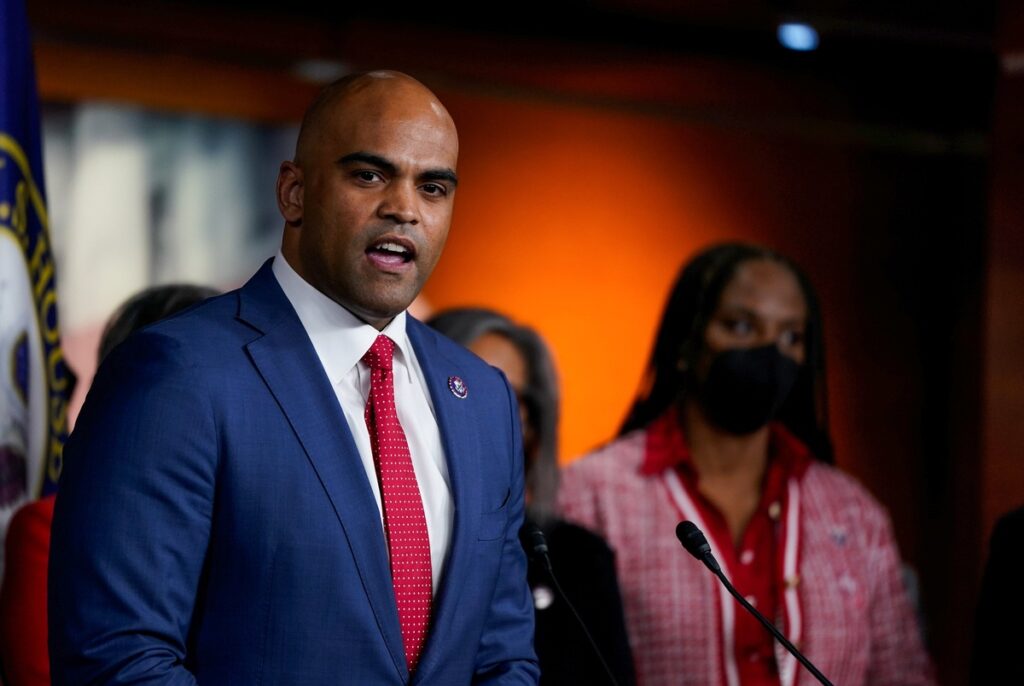
State Sen. Roland Gutierrez blasted Allred for the vote. Gutierrez and Allred are running for the Democratic nomination to challenge U.S. Sen. Ted Cruz.
VP Kamala Harris says it’s ‘unfortunate’ some ‘deny fact’ America has racist past

Vice President Kamala Harris spoke extensively about racism and United States history this week during a television appearance. Harris appeared on ABC’s “The View,” where she was asked to react to GOP presidential candidate Nikki Haley’s assertion that the U.S. has “never been a racist country.” “It’s unfortunate that there are some who would deny fact, or overlook it, when in fact, moving toward progress requires that we speak truth,” the vice president told the panel of “The View.” KAMALA HARRIS CONFIDENT AHEAD OF POTENTIAL 2024 TRUMP REMATCH: ‘WE’RE WINNING’ NO MATTER WHO GOP NOMINATES Harris’s comments are a response to comments made by Haley, former U.S. ambassador to the United Nations. “We’re not a racist country, Brian. We’ve never been a racist country,” Haley, who is of Indian descent, said in an interview with CNN’s Brian Stelter. “Our goal is to make sure that today is better than yesterday. Are we perfect? No. But our goal is to always make sure we try and be more perfect every day that we can.” CNN’S WOLF BLITZER ANNOYED WHEN PANELIST DEFENDS NIKKI HALEY OVER REMARKS ABOUT US NEVER BEING RACIST She later clarified her comments in a statement to CNN, stating that the U.S. “has always had racism,” but that America “has never been a racist country.” The former ambassador’s comments sparked a national discussion regarding how Americans should conceptualize the country’s past. “I think we all would agree that while it is part of our past, and that and we see vestiges of it today, we should also be committed collectively to not letting it define the future of our country,” Harris said on “The View.” CLICK HERE TO GET THE FOX NEWS APP She added, “But we cannot get to a place of progress on the issue of race by denying the existence of racism, by denying the history of racism.”
Kansas GOP faces Democratic resistance in renewed battle over controversial income tax cuts

Top Republican legislators in Kansas have renewed a fight with the Democratic governor over income tax cuts that have drawn bipartisan criticism as favoring the wealthy, with no sign of a break in an impasse that thwarted tax relief last year. The House was scheduled to vote Thursday on a GOP plan for cutting income, sales and property taxes by a total of $1.6 billion over three years. The Senate approved it Wednesday, 25-11, but with four members absent, it appeared that Republican supporters were at least a vote short of a two-thirds majority in the 40-member chamber needed to override an expected veto from Gov. Laura Kelly. Top Republicans want to impose a single personal income tax rate of 5.25%, replacing three rates that top out at 5.7%, starting in 2025. Kelly strongly opposes the idea, and projections from the state Department of Revenue have shown that with a single rate, the largest savings in raw dollars would go to people with incomes exceeding $250,000 a year. KANSAS GOV. KELLY MAKES MORE AGGRESSIVE PUSH FOR MEDICAID EXPANSION AS LEGISLATIVE SESSION OPENS The dispute over the single-rate or “flat” plan blocked a large tax cut in Kansas last year, when a dozen other states cut taxes, according to the conservative-leaning Tax Foundation. Kansas now expects to have nearly $4.5 billion in surplus cash at the end of June, equal to 17% of the state’s current $25 billion budget. “We need to give the money back,” said state Sen. Mike Thompson, a conservative Kansas City-area Republican. GOP lawmakers who drafted the plan included provisions that would exempt the first $20,300 of a married couple’s income from state taxes – more if they have children, with the amounts rising with inflation after 2025. Backers noted that all income groups would see cuts and that some poor families would see their tax burdens erased. KANSAS GOP LOOKS TO OVERHAUL ETHICS COMMISSION AMID ONGOING INVESTIGATION Republican leaders married the income tax plan to a proposal from Kelly to eliminate the state’s 2% sales tax on groceries starting April 1, and proposals she embraced to exempt all retiree Social Security income from taxes and to lower homeowners’ property taxes. “We gave her a lot of stuff in this legislation,” said Republican Sen. Caryn Tyson, the Senate tax committee’s chair. Lawmakers were acting in the first 14 days of their annual 90-day legislative session. GOP leaders treated the tax issues involved as familiar and expedited up-or-down votes on a plan in each chamber. Kelly outlined her own proposals for sales, property and Social Security taxes last week. Her income tax plan would increase the standard deductions that all individual filers claim. Her entire plan would cut taxes by a total of $1.1 billion over three years. Kansas is debating tax cuts at a time when the nationwide tax-cutting trend may be slowing as a revenue surge fueled by federal spending and inflation recedes. Backers of Kelly’s plan argue that it’s more affordable for the state in the long term, eventually costing $324 million a year in revenues, compared with $583 million under the Republican plan. GOP lawmakers dispute that, but neither side has made their longer-term projections public. Kelly still cites an aggressive tax-cutting experiment in 2012 and 2013 under Republican Gov. Sam Brownback that was followed by large, persistent budget shortfalls until most of the cuts were reversed in 2017. “Kansans have seen reckless tax experiments that hurt our schools, roads, and economy before, and they don’t want to go back,” Kelly spokesperson Brianna Johnson said in an email. Neva Butkus, a state policy analyst for the left-leaning Institute on Taxation and Economic Policy, said the GOP package would widen the gap between the poorest families, who already pay a higher percentage of their incomes in taxes, and the wealthiest. SEN MARSHALL URGES GOP TO SAY ‘HELL NO’ TO SUPPLEMENTAL FUNDING REQUEST WITHOUT TIGHTER BORDER SECURITY Butkus said while provisions of the package would help poor families, “It is definitely not capable of counteracting the giant tax cut that you’d be seeing at the top.” But some Republicans argued that a simpler income tax system is fairer and said Kansas needs to become more competitive with other states. The Tax Foundation said in a 2022 report that Kansas residents pay more of their incomes in taxes than residents of most surrounding states. In 2022, Iowa moved to a flat tax, initially set at 4.4% but scheduled to drop eventually to 3.9%. Now, GOP Gov. Kim Reynolds is pushing to cut the rate to $3.65% for this year. Kansas Senate President Ty Masterson, a Wichita-area Republican, said retaining an income tax with multiple rates would keep Kansas “behind the eight ball” economically. “It’s not the future,” he said.
Kentucky Senate approves proposal to end odd-year elections for state office

A long-running effort to shift Kentucky’s elections for governor and other statewide offices to coincide with presidential elections won approval in the state Senate on Wednesday. Now comes a much bigger test for supporters: whether they can muster enough votes to win House passage. The measure is aimed at amending Kentucky’s constitution to end the long Bluegrass State tradition of holding elections for governor and other state constitutional offices in odd-numbered years. The proposal would switch those contests to presidential election years, starting in 2032. The proposal won Senate approval on a 26-9 vote after a long debate, sending it to the House. Similar proposals in previous years died in the House. KENTUCKY DEMOCRATIC GOVERNOR AND HOUSE REPUBLICANS CLASH ON TEACHER RAISES If this year’s measure ultimately passes both chambers, it would be placed on the November ballot for Kentucky voters to decide whether to end the odd-year elections for governor, attorney general, secretary of state, auditor, treasurer and agriculture commissioner. Republican Sen. Chris McDaniel has pushed for the constitutional change for a decade. His proposals made it through the Senate in the past but always died in the House. After the Senate vote Wednesday, McDaniel urged House leaders to give Kentucky voters the chance to weigh in on the matter. Both chambers have Republican supermajorities. House Speaker David Osborne stopped short of commenting on its prospects Wednesday, noting there were “pretty strong opinions on it on both sides” among House members in previous years. “We will start having those conversations with the caucus and try to get the pulse of it,” the speaker told reporters. “I wouldn’t predict at this point.” Under Kentucky’s current system, there are elections three out of every four years. The bill’s supporters said that’s a reason to make the change. “There’s voter fatigue having elections three out of every four years,” Republican Senate Majority Floor Leader Damon Thayer said in supporting the measure. McDaniel said if his proposal had won legislative approval a decade ago and been ratified by voters, Kentucky’s counties would have collectively saved more than $30 million by now from a reduction in elections, while the state would have saved nearly $4 million. “And Kentuckians would have been spared countless hours of political ads interrupting their lives in odd-numbered years,” McDaniel said. Supporters also said voter turnout for the statewide offices would be much higher if those elections coincided with presidential elections. Speaking against the bill, Democratic Sen. Reginald Thomas said Kentucky should continue its tradition of keeping statewide issues at the forefront by holding the odd-year elections. Overlapping statewide contests with presidential elections would overwhelm state issues, he said. “This is purely a political measure designed to really be influenced by the presidential elections,” Thomas said. “And that is a bad way for Kentucky to go.” If voters approve the change, the state would still have one more round of statewide elections in 2027. Gov. Andy Beshear and Lt. Gov. Jacqueline Coleman, both Democrats, won re-election last year while Republicans won the other constitutional offices. Terms for governor and the other statewide offices would still last four years. But if the proposal wins ratification, candidates elected to those offices in 2027 would get an extra year added to their terms in order to bring those elections in line with the presidential election in 2032.
Trump holds double-digit lead in New Hampshire GOP presidential primary as Haley edges up in latest poll

With five days to go until New Hampshire’s Republican presidential primary, a new poll indicates former President Trump remains the commanding frontrunner, with former South Carolina Gov. Nikki Haley seemingly cutting into his lead, and Florida Gov. Ron DeSantis in a distant third. Trump, who is running a third straight time for the White House, grabs 50% support among those likely to vote in next Tuesday’s New Hampshire GOP presidential primary, according to a daily tracking poll released Thursday morning by Suffolk University, the Boston Globe and NBC10 in Boston. The former president’s support is unchanged from Wednesday’s tracking poll. Haley, who served as ambassador to the United Nations during the Trump administration, stands at 36%, with her support edging up two points since Wednesday’s survey. HALEY ARGUES DESANTIS IS ‘INVISIBLE’ – STRESSES ‘IT’S TRUMP WE’RE GOING AFTER’ DeSantis, once the clear runner-up to Trump in most polling, pulled in 6% support, up a point over the past 24 hours. Four percent of respondents said they were undecided, with 1% saying they would back a different candidate. The poll was conducted Tuesday and Wednesday evenings, after Trump scored a massive victory in Monday night’s Iowa caucuses, the first contest on the GOP presidential nominating calendar. DESANTIS CAMPAIGNS IN NEW HAMPSHIRE, BUT MOST OF HIS STAFF DECAMPS IN SOUTH CAROLINA Another poll released hours earlier from Saint Anselm College also indicated Trump with a 14-point lead over Haley, with DeSantis in single digits. Trump smashed the competition in Iowa, winning 51% of the vote, with DeSantis a distant second at 21% and Haley in third at 19%. However, New Hampshire has a very different electorate than Iowa. Moderate voters in the Granite State are highly influential, and the state’s independents – who can vote in either major party primary – have long played a crucial role in New Hampshire’s storied presidential contest. New Hampshire voters are traditionally late deciders, but the new poll indicates that most — 85% — have already decided on who they will support, and they are unlikely to change their minds. TRUMP, HALEY, TURN UP VOLUME ON EACH OTHER AS GOP PRESIDENTIAL SLUGFEST MOVES TO NEW HAMPSHIRE The poll also indicates that while the former president holds a massive lead over Haley among self-described conservatives, Haley leads by double digits among those who consider themselves moderate or liberal. Haley emphasized in a Fox Digital interview on Wednesday in Rochester, New Hampshire, that Trump “is the one I want. Trump is the one I’m going for.” Additionally, looking to the former president, Haley said “you see how close it is with both of us in New Hampshire. Same in South Carolina. We’re going to try to make it closer. That’s the goal. So it’s Trump we’re going after.” The latest polling in South Carolina, which holds the first southern primary on Feb. 24, indicates Trump with a large double-digit lead over Haley, with DeSantis a distant third in single digits. DeSantis, speaking to voters Wednesday afternoon in Hampton, New Hampshire, pointed to the Iowa caucus results and emphasized “I finished second. She [Haley] didn’t, I mean, that’s just the reality, you know. So I don’t know how they’re going to spin that.” Pushing back, Haley touted her Iowa finish. “We started at two percent. We ended at 20,” she noted in a Fox News interview ahead of a campaign event at an American Legion post in Rochester, New Hampshire. “If anybody doesn’t see the momentum in that, then that’s their problem. It’s not mine. But we’re going to continue to go further. We’re way above 30% here.” “Ron is invisible in New Hampshire and South Carolina. Everybody can see that,” Haley argued. DeSantis, speaking with Fox News in Derry, New Hampshire, later on Wednesday, argued that Haley “cannot beat Donald Trump in New Hampshire. And she definitely can’t beat him in her home state of South Carolina. That’s just the reality.” New Hampshire Gov. Chris Sununu, who endorsed Haley last month and is her top surrogate and adviser on the campaign trail in the Granite State, told Fox News Digital on Wednesday night that he still thinks “she can win” Tuesday’s primary. However, in a possible shifting of the goalposts, Sununu emphasized that Haley’s “already exceeded expectations in terms of a one-on-one race” with Trump. He spotlighted that “a strong second is going to be great.” The Suffolk University/Boston Globe/NBC 10 survey, which questioned 500 likely GOP primary voters in New Hampshire, had an overall sampling error of plus or minus 4.4 percentage points. Get the latest updates from the 2024 campaign trail, exclusive interviews and more at our Fox News Digital election hub.