

Biden-aligned group hires top Dem operative to help stifle third-party challengers

Democrats’ top opposition research group is setting its sights on suppressing third-party presidential challenges they fear could hamper President Biden’s re-election effort. The group, American Bridge, recently hired Mark Elias, a veteran Democratic operative and lawyer, in part to prevent such a challenger from succeeding, Reuters reported. The move comes as the group No Labels is pushing an independent candidacy for Robert F. Kennedy, Jr. So far, American Bridge’s efforts have taken the form of legal challenges over technical issues in the immense network of red tape required to run for office nationally. “We’re keeping an eye out to make sure they’re dotting all their i’s and crossing their t’s, and we are not ruling out legal action with our attorneys if we identify a problem – and that applies for all third-party threats to President Biden,” American Bridge President Pat Denis told Reuters. BIDEN CALLS ‘NO LABELS’ PRESIDENTIAL BID A ‘MISTAKE’ THAT WOULD HELP TRUMP Top Democrats widely fear that a third-party candidate would harm Biden far more than former President Trump, who is currently dominating the Republican primary race. Jim Messina, a former top aide to former President Obama, argued last month that a “third-party candidate can’t win in 2024” and would likely guarantee a Trump victory. “With a rematch between President Joe Biden and Donald Trump almost set in stone, it’s time to put a farce to rest: The notion that a third-party candidate could actually win the presidency in 2024,” Messina wrote in an op-ed for Politico. CHRISTIE ARGUES HALEY WILL GET ‘SMOKED’ IN HOT MIC MOMENT AS HE DROPS OUT OF THE 2024 RACE “No Labels is pushing a dangerous lie that would simply serve to put Donald Trump back in the White House,” he continued. RFK JR ANNOUNCED INDEPENDENT RUN FOR PRESIDENT A Reuters poll in December found that Trump’s lead over Biden expanded by 5 points when respondents were given the option to vote for Kennedy. The founder of No Labels, former Democratic Sen. Joe Lieberman of Connecticut, has repeatedly pushed back on claims that his group is working as a spoiler. The same Reuters poll from December found that 6 in 10 Americans want a third option beyond Republicans and Democrats. “That’s not our goal here,” Lieberman told Fox News Digital last year. “We’re not about electing either President Trump or President Biden.” Fox News’ Jeffrey Clark contributed to this report.
17 retired military officials raise alarm on Biden’s electric vehicle push

FIRST ON FOX: A coalition of 17 retired military officials — including multiple one-, two-, and three-star officers — are raising the alarm on President Biden’s aggressive electric vehicle (EV) push over its national security implications. In a letter addressed to Biden and Environmental Protection Agency (EPA) Administrator Michael Regan, the officials led by retired U.S. Army Major General James Marks warned that the president’s plans for mass EV proliferation will increase reliance on Chinese supply chains. They wrote that regulatory initiatives aimed at incentivizing EV adoption “intensify America’s vulnerability to political interference by the Chinese Communist Party.” “There is no doubt EVs will play a significant role in diversifying America’s transportation systems. Yet we believe your plans will rush our transition to EVs before the infrastructure necessary to support it is in place,” the officials wrote. “This trajectory will only position the U.S. to become more reliant on China for critical minerals and manufacturing that are necessary for the rapid expansion of EV markets this administration envisions.” “And even more concerning is the fact that this reliance hinges upon China’s goodwill to export those minerals and manufactured goods to the U.S.,” the letter continued. “This will undoubtedly open the U.S. up to economic manipulations by China, identical to what Russia is doing with Ukrainian grain exports, and a major threat to our national security. We do not believe now is the time for us to make ourselves vulnerable to such easy political pressures.” VIRGINIA DEMOCRATS UPHOLD STATE’S EV MANDATE DESPITE GROWING OPPOSITION: ‘DEFY COMMON SENSE’ The officials took particular issue with the EPA’s April 2023 proposal to implement the most aggressive tailpipe emissions ever crafted. If finalized and implemented, a staggering 67% of new sedan, crossover, SUV and light truck; up to 50% of bus and garbage truck; 35% of short-haul freight tractor; and 25% of long-haul freight tractor purchases could be electric by 2032, the EPA projected. The White House said at the time that increasing emissions standards for gas-powered cars would indirectly incentivize the adoption of zero-emission vehicles and provide a “clear pathway for a continued rise in EV sales.” Biden previously set a goal of ensuring 50% of car purchases are electric by 2030. HOUSE JOINS SENATE, STRIKES DOWN BIDEN EV CHARGER RULE PROTECTING CHINESE COMPANIES Marks and the 16 other retired military officials noted that EVs are largely dependent on components made in China and raw materials processed in China. “At a nearly tenfold increase over current electric vehicle sales, this proposed rule is a clear example of tone-deaf policymaking that favors the geopolitical advantages currently held by China in this market,” they continued in their letter. “We would be exposing our economy and national security interests if we consciously link America’s economic and transportation stability to the enterprise of a country you yourself described as an economic ‘ticking time bomb,’” they said. MAINE FORCED TO DELAY VOTE ON EV MANDATE AMID WIDESPREAD POWER OUTAGES According to the International Energy Agency (IEA) China produces about 75% of all lithium-ion batteries, a key component of EVs, worldwide. The nation also boasts 70% of production capacity for cathodes and 85% for anodes, two key parts of such batteries. In addition, more than 50% of lithium, cobalt and graphite processing and refining capacity is located in China, the IEA data showed. Those three critical minerals, in addition to copper and nickel, are vital for EV batteries. Chinese investment firms have also been aggressive in purchasing stakes in African mines in recent years to ensure a firm control over mineral production. At the same time, the officials additionally noted that, in August, China imposed new restrictions on the exports of gallium and germanium, two additional minerals used in EV batteries, causing prices to rise. China’s strategic positioning in the EV industry must be addressed, according to the letter, before the U.S. moves ahead with electrification strategies and regulations that will “artificially increase EV demand.” In addition to Marks, retired U.S. Navy Vice Admiral Robert Harward, retired U.S. Marine Corps Major General Mastin Robeson, retired U.S. Navy Rear Admiral James Carey, retired U.S. Air Force Major General Bentley Rayburn, and retired U.S. Air Force Lieutenant General E.G. Shuler also signed onto the letter along with retired colonels, captains, commanders and majors. The EPA didn’t immediately respond to a request for comment.
‘Committed to take forward partnership…’: India on Maldives row

“We mentioned that both sides held discussions on finding a mutually workable solution to enable continued operation of Indian aviation platforms that provide humanitarian and Medvec services to the people of the Maldives,” he also said.
Ken Paxton paid $2.4 million to defense lawyers for impeachment trial
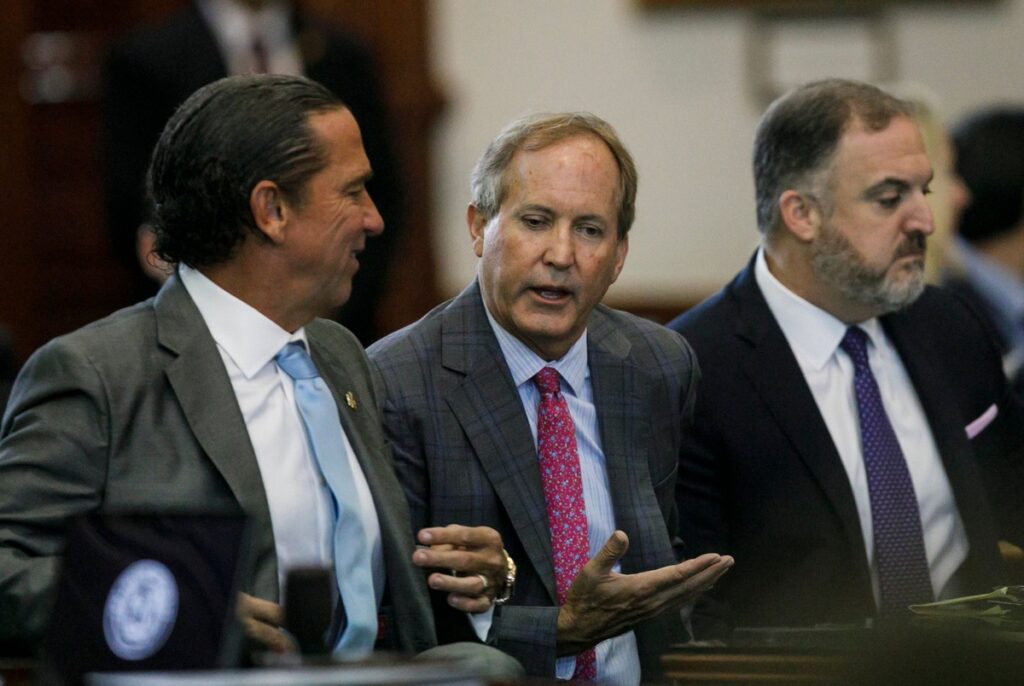
The lawyers were paid from his campaign, according to a report filed this week.
Massachusetts Gov. Healey to prioritize lower housing costs in 2024

Lowering the staggering cost of housing and child care, improving the state’s roads and rails, and strengthening schools were among the goals for 2024 that Massachusetts Gov. Maura Healey outlined in her State of the Commonwealth address Wednesday. The Democratic governor delivered the speech – typically used by governors to tout their recent achievements and lay out their priorities for the coming year – to a packed crowd of state lawmakers and members of her administration in the House of Representatives chamber at the Massachusetts Statehouse. Other goals Healey pointed to included making Massachusetts “the climate innovation lab for the world” and helping businesses and workers thrive – even as she acknowledged a mixed economic picture for the state. MASSACHUSETTS GOV. HEALEY PUSHES CHILDCARE SPENDING UNDER NEW PROPOSAL “Yes, our economy is strong – Massachusetts has more jobs than ever before, and unemployment has been at all-time lows,” she said. “But we also know prices are high, and too many families have a hard time making ends meet.” But the biggest challenge, Healey said, remains the lack of affordable housing, which threatens progress on all other fronts. “You know the numbers. Rents and prices are at all-time highs,” Healey said. “We have to act, and we have to act now, to make it easier for everyone to find affordable places to live.” MASSACHUSETTS GOV. HEALEY WARNS MIGRANTS ARE PUSHING STATE’S SHELTER SYSTEM TO CAPACITY Healey said the administration is trying to tackle the problem by pushing a $4 billion housing plan, which she said would make it easier to find affordable places to live in the state. She plans to testify in favor of the bill at a Statehouse hearing Thursday. “If you’re born here or come to school here, I want you staying here. If you run a business here, I want you to expand and hire employees who can afford to live here,” she said. The governor also highlighted an initiative she unveiled Tuesday aimed at giving parents across Massachusetts, and particularly in the state’s former industrial “Gateway Cities,” better access to child care and early education. The plan would guarantee that every 4-year-old in the 26 cities – including Worcester, Springfield, New Bedford, Taunton and Chelsea – has the chance, at low or no cost, to be enrolled in a high-quality preschool program by 2026. Healey’s proposal would also help an additional 4,000 low- and moderate-income families afford child care by increasing eligibility for Child Care Financial Assistance – the state’s programs that help families pay for child care and out-of-school programs. Healey also vowed Wednesday to set a new goal for early education in Massachusetts: universal pre-K available for every 4-year-old in the state. Her budget proposal will also call for $10 million to ensure the most vulnerable young people in the state have access to mental health care. “Let’s be a state where every young person knows that they are not alone, that they can ask for help, and that they will get help,” she said. The address came a little more than a week after Healey announced $375 million in budget cuts for the current fiscal year as the administration seeks to close an expected $1 billion shortfall with monthly revenues coming in at a slower pace than expected. Republican state Sen. Peter Durant said Healey glossed over many of the hardships facing Massachusetts. “As we enter 2024, we find ourselves asking some simple, yet familiar, questions: Are we better off today than we were 12 months ago, and are we headed in a direction that will make us better off? Unfortunately, for too many families the answer is ‘no,’” Durant said in written statement. Over the past year, Durant said, the state has become less affordable, finances are in trouble and the state is grappling with a migrant crisis costing taxpayers billions of dollars per year. MASSACHUSETTS GOV. HEALEY ANNOUNCES $375M IN BUDGET CUTS AMID ANTICIPATED SHORTFALL “It doesn’t have to be this way. As we enter this new year, we’re at a critical juncture, and with some course adjustments, bipartisanship, and collaboration we can get back on track,” he added. During the speech, Healey pointed to a series of accomplishments during her first year in office, including cutting taxes, making school meals free and letting students aged 25 and older attend community college for free. The state has also come under increasing pressure as it tries to cope with a continued influx of migrants, straining the state’s homeless shelter system – a challenge Healey acknowledged in her speech. “This is a hard issue, with no easy answers. And I want to be clear: Massachusetts did not create this problem,” Healey said during the speech. “But we’re also showing a way forward. In November, we put on a Work Authorization Clinic – and now, nearly 3,000 newcomers have work permits.”
Virginia Democrats vote down bill that would serve harsher penalties to drug dealers

A Virginia Senate committee narrowly defeated legislation Wednesday that would expand the circumstances in which a drug dealer could be charged with felony homicide in connection with a user’s death. The bill, a priority of Gov. Glenn Youngkin and fellow Republicans, was pitched as a deterrent to criminals that would save lives amid the rising tide of overdose deaths, particularly those attributable to fentanyl. However, the Democrats on the committee who voted it down voiced skepticism that stiffer penalties, rather than an approach focused on substance abuse treatment, would effectively address the root causes of the issue. “I think the policy difference that we’re encountering in committee here is, what’s the right way to attack this? And do we attack it the way we attacked things in the ’90s?” said Senate Democratic Leader Scott Surovell, who heads the committee. VIRGINIA VETERAN AIMS TO BE 1ST FEMALE MARINE ELECTED TO CONGRESS, JOINS RACE TO FLIP COVETED DEM-HELD SEAT The bill essentially sought to overrule a 2014 Court of Appeals decision that put time and place limits on how far removed a dealer could be from a user’s death to still be charged with felony homicide, bill sponsor Sen. Ryan McDougle said in an interview. McDougle, the Senate’s Republican leader, and others who testified in support of his bill told the committee that, currently, if a dealer sold drugs to an individual, left the scene and the purchaser died afterward, the dealer could not be charged with felony murder, which carries a 5- to 40-year sentence. However, if a person shared drugs with friends at a party, and someone died during the party, the person who provided the drugs could face that charge. “We were hoping that this bill would pass to say that regardless of how far away you get, or how long it was, if your drugs are the poison that killed somebody, you should be held accountable,” said Nate Green, the commonwealth’s attorney for Williamsburg and James City County, who advocated for the measure. Lawmakers heard testimony from around 10 people who said they had lost a child or another loved one to a drug overdose. Some of the speakers held photos of their relatives and pleaded with lawmakers to support the bill. Jennifer Johnson, of suburban Richmond, described the horror of finding the lifeless bodies of her son and his girlfriend in August 2020. In an interview, Johnson said her 19-year-old son PJ died after attending an open mic night and taking a counterfeit pill laced with fentanyl. Johnson found text messages on her son’s phone that showed an exchange with the person she believes provided the pill. No charges have been brought in connection with the deaths, though it is her understanding there is still an open investigation, she said. “I’m not really here because it’s going to make a difference in our situation. But, I mean, so many people are continuing to die,” Johnson said. TRIBAL LEADERS ASK WASHINGTON STATE LAWMAKERS FOR FUNDING TO COMBAT OPIOID CRISIS Opponents of the bill argued that prosecutors have drug distribution charges that can be used to punish bad actors and carry similarly tough penalties. Shawn Weneta, a lobbyist for the ACLU of Virginia, warned the committee that the measure could have a chilling effect on reporting or seeking help on behalf of people in an overdose because of the fear of punishment. “Unfortunately, what this is going to do is lead to situations where people are not going to report. They’re going to abandon them,” he said. Surovell, who expressed sympathy for the victims’ families, said he had “communicated” to Youngkin that a better place to find common ground with the General Assembly’s Democratic majority would be focusing more resources “to catch the people who do this.” He said he hoped policymakers would also invest more money in mental health to “reduce pressure on the demand side of the equation.” The committee voted to pass the bill on an 8-7 vote, with Democrat Russet Perry, a former prosecutor, voting with Republicans. The committee did advance a separate measure from Sen. Bill DeSteph that would create a task force to study ways to combat fentanyl, heroin and other similar controlled substances after amending it to remove provisions similar to McDougle’s bill. Lawmakers have grappled with the question for years. In 2019, then-Gov. Ralph Northam, a Democrat, vetoed a similar measure after lawmakers rejected his attempt to amend it. Last year, a similar measure was defeated. Youngkin has made the matter a vocal priority during his time in office. His spokesman, Christian Martinez, said in a statement that it was “troubling that most Democrat legislators are once again siding with fentanyl makers and dealers over victims’ families.” Jill Cichowicz, whose twin brother died nearly seven years ago after taking a pill laced with fentanyl, said after the hearing that the families who testified were disappointed in the vote. But Cichowicz said she was holding out hope that the measure may still have a path forward in the Democrat-controlled House of Delegates, where similar legislation has not yet been heard. If the House did advance that measure, the bill would then need the Senate’s approval before it could go to Youngkin’s desk.
White House apologizes to Asa Hutchinson for DNC joke about end of his campaign
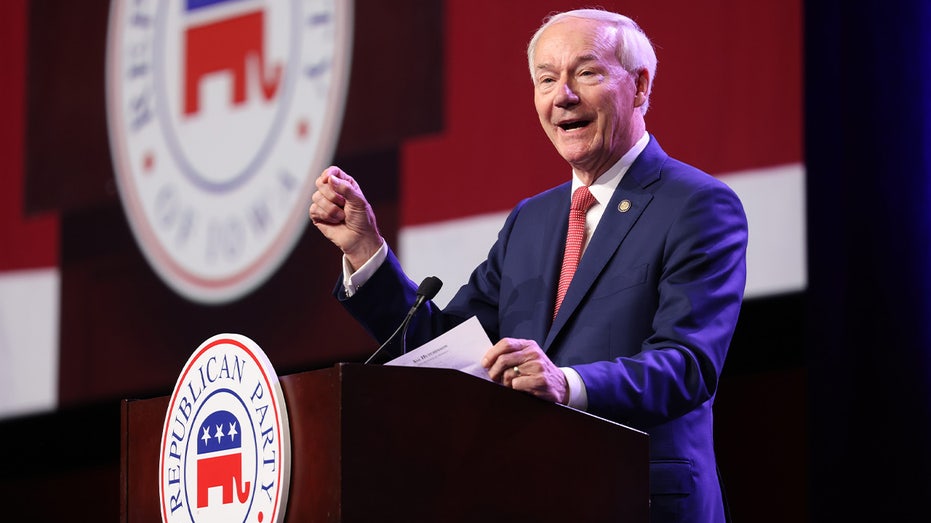
President Biden’s administration reached out to former Arkansas Gov. Asa Hutchinson to apologize for a joke made by the Democratic National Committee (DNC) about the end of his presidential campaign. Hutchinson’s decision to suspend his campaign drew mockery from the Democratic Party, who joked that they did not know he was still in the race. “This news comes as a shock to those of us who could’ve sworn he had already dropped out,” DNC press secretary Sarafina Chitika posted. FORMER ARKANSAS GOV. ASA HUTCHINSON ENDS REPUBLICAN CAMPAIGN FOR PRESIDENT AFTER FINISHING 6TH IN IOWA Biden reportedly requested an apology be given to the former governor on behalf of the administration. White House press secretary Karine Jean-Pierre said Wednesday that White House Chief of Staff Jeff Zients called Hutchinson “to apologize on behalf of the president.” She continued, “President Biden has deep respect for Gov. Hutchinson and admires the race that he ran.” REPUBLICAN PRESIDENTIAL NOMINATION PRIMARY BATTLE MOVES ON TO NEW HAMPSHIRE AFTER TRUMP ROMPS IN IOWA “The call from the White House was not necessary but still appreciated,” Hutchinson said. “We can disagree without demonizing.” Hutchinson on Tuesday suspended his long-shot campaign for the 2024 Republican presidential nomination after finishing sixth in the Iowa caucuses. “I am suspending my campaign for President and driving back to Arkansas. My message of being a principled Republican with experience and telling the truth about the current front runner did not sell in Iowa,” Hutchinson said in his announcement. He emphasized, “I stand by the campaign I ran. I answered every question, sounded the warning to the GOP about the risks in 2024 and presented hope for our country’s future.” According to the unofficial tabulation, Hutchinson won less than 200 votes out of more than 110,000 cast in Iowa’s Republican presidential caucuses. Fox News Digital’s Paul Steinhauser contributed to this report.
Which are the armed groups Iran and Pakistan have bombed — and why?
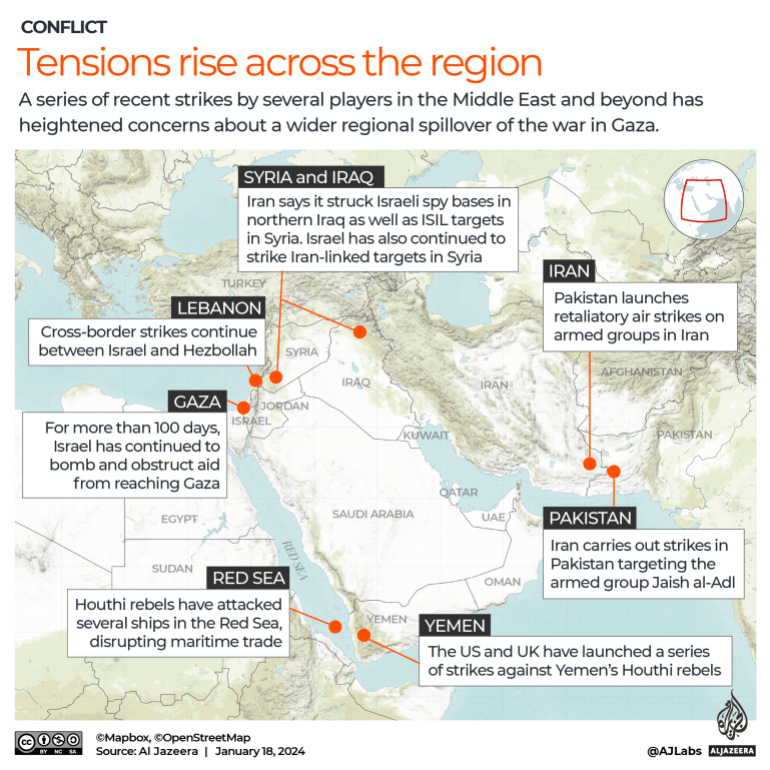
Iran and Pakistan have carried out air attacks on each other’s territories, targeting armed groups near their 900km-long (559-mile) volatile border, which they say were meant to ensure their respective national security. Iran’s powerful Islamic Revolutionary Guard Corps (IRGC) targeted an armed group in Panjgur town of Pakistan’s Balochistan province late on Tuesday, prompting Pakistan to bomb hideouts of armed groups in the Sistan-Baluchestan province of Iran early on Thursday. Let’s take a look at why the neighbours have resorted to direct military strikes, who the targets were, and what the attacks tell us. (Al Jazeera) What has happened so far? The IRGC, an elite force which is a vital part of the Iranian establishment but separate from Iran’s army, hit the Jaish al-Adl armed group with missile and drone strikes in a mountainous region in Pakistan close to the Iranian border. Iran said it targeted the Iranian “terrorist” group it blamed for recent attacks in the Iranian city of Rask in the southeastern province of Sistan-Baluchestan. “The group has taken shelter in some parts of Pakistan’s Balochistan province. We’ve talked with Pakistani officials several times on this matter,” Iran’s Foreign Minister Hossein Amirabdollahian said on Tuesday from the Swiss city of Davos. Videos from the scene showed what appeared to be a precision strike on a building, and Iranian media celebrated the destruction of a “terrorist” site. The Pakistani government said two children were killed in the attack, believed to be the first such attack by Iran on Pakistani soil. Pakistan launched several air attacks using drones and rockets on a border village in Saravan town, about 1,800km (1,100 miles) from the Iranian capital, Tehran, saying it hit Baloch “notorious terrorist” separatists. Tehran said nine people, including seven women and children, were killed in the attacks. Both countries’ foreign ministries released statements to say they respected the other’s territorial integrity but took measures to safeguard their national security. The Iranian attack came hours after Iran and Pakistan held a joint naval exercise, and the two countries’ foreign ministers spoke in Davos on the sidelines of the World Economic Forum. Both summoned their respective envoys, but there has been no talk of cutting diplomatic relations. Iran on Thursday held a large-scale military exercise in its southeastern areas near Pakistan, deploying a range of aircraft and missile systems. Who are the ‘terrorists’ targeted? Iran’s target inside Pakistan was the ethnic Baloch and Sunni group known as Jaish al-Adl, meaning Army of Justice, which surfaced around 2012. It purports to fight for better living conditions in the southeastern Sistan-Baluchestan province, which is Iran’s most impoverished and the longstanding scene of border tensions. Tehran considers it a “terrorist” group due to numerous deadly assaults on Iranian outposts and security forces near the border over more than a decade. Officials call it Jaish al-Zulm – the Army of Injustice. The group was born out of Jundallah, another Iranian Baloch group, which Tehran accused of having direct links with the United States and Israel. It was responsible for a string of deadly attacks, including one in 2009 which killed dozens, including senior IRGC officials. The leader of Jundallah, Abdolmalek Rigi, was captured in a dramatic operation by the Iranian army, with fighter jets forcing the landing of a passenger aircraft taking him from the United Arab Emirates to Kyrgyzstan in 2010. He was executed in Tehran the same year. Pakistan, for its part, said its targets were the Balochistan Liberation Front (BLF) and Balochistan Liberation Army (BLA), armed separatist groups which have launched numerous attacks inside Pakistan. The BLF claimed in a statement on Thursday that none of its fighters – known as Sarmachar – were killed, dismissing as fake an earlier statement that had quoted one of its members as confirming air strikes had hit BLF positions inside Iran. The latest cross-border strikes come against a backdrop of months of border attacks, with the latest attack by Jaish al-Adl on an Iranian border outpost launched from inside Pakistan in December killing 11 police officers. What do the Iranian attacks tell us? Even though the strikes come after years of border tensions, they are happening within the context of Israel’s war on Gaza, which has pitted the Iran-backed “axis of resistance” against Washington and its allies. This was the first time that Iran and Pakistan launched direct assaults on each other’s territory, and the first time since the end of the eight-year invasion of Iran by Iraq in 1988 that Iranian soil was targeted by a missile. Iran’s attack on Pakistan came a day after it launched 24 missiles from three different Iranian provinces on Iraq and Syria in a military show of force amid US and United Kingdom attacks on Yemen and Western support for the Gaza war. The attacks in the Levant were also framed as revenge for twin bombings in Kerman earlier this month that killed at least 90 civilians, serving to assuage domestic calls for retaliation. Yet they also showcase the capabilities and precision of the largest and most varied missile arsenal of the Middle East. In Iraq, Iran claims to have hit a Mossad-linked target in what appeared to be a precision strike. A wealthy Kurdish businessman Peshraw Dizayee was confirmed killed. Images from the area show that only the villa of the Dizayee was destroyed and it was located in the vicinity of the US consulate and the international airport in the regional capital, Erbil, where US and other foreign forces are stationed. For ISIL (ISIS)-linked targets in Syria’s Idlib, the IRGC made a point of saying that it used its brand new Kheibar Shekan ballistic missile with a stated range of 1,450km (900 miles). Even though the missiles could have been launched from a province closer to Syria, their stated launch site was in Khuzestan, which is several hundred kilometres farther. This means that the missiles travelled close to 1,300km (807 miles) to hit precise targets. That puts the entirety of Israel and occupied Palestinian territories within
What is the UK’s ‘Safety of Rwanda’ bill and why are MPs fighting over it?

British Prime Minister Rishi Sunak has succeeded in pushing his asylum and immigration bill through the House of Commons after an expected rebellion by Conservative Party MPs came to nothing. Some MPs from Sunak’s own party had threatened to vote against the “Safety of Rwanda” deportation bill on the grounds that government plans to send some asylum seekers to Rwanda were not robust enough to survive legal challenges. But in the end, only 11 hardline Conservatives rebelled and the legislation passed on Wednesday evening by a 320-276 vote. What is the ‘Safety of Rwanda’ bill? Sunak has made his anti-immigration “Stop the Boats” campaign central to his government’s legislative programme as he seeks to deter asylum seekers from trying to reach the United Kingdom across the English Channel. But the Rwanda deportation bill, which seeks to deport refugees and migrants to Rwanda to have their asylum claims heard and for resettlement, has been anything but plain sailing. In November, the Supreme Court struck down Sunak’s original Rwanda bill after it ruled that the landlocked African republic was not a safe country for asylum seekers, prompting the Conservative Party leader to introduce his so-called Safety of Rwanda bill. This new bill was intended to make it harder for the courts to challenge his legislation by asking the House of Commons to declare by majority vote that Rwanda is indeed a safe country for asylum seekers. Sunak presented his Safety of Rwanda bill to parliament in December but had to contend with hard-right MPs from his own party who asserted that the bill was still not “sufficiently watertight”. In the end, the Conservative Party leader secured a comfortable majority in favour of his bill after rebels, many of whom abstained, decided to let the legislation pass in the hope of holding Sunak’s feet to the fire at the final stage. How long has the government’s Rwanda policy been in the pipeline? The Rwanda legislation was first announced by former Prime Minister Boris Johnson in April 2022. Two months later, on June 14, 2022, the first Rwanda-bound flight from Britain was due to depart with asylum seekers on board. It was halted after a last-minute intervention by the European Court of Human Rights (ECHR), which decreed that one of the asylum seekers, a man from Iraq, was at “real risk of irreversible harm” should he end up in the East African nation. Legal battles over the government’s policy ensued. The issue came to a head when the Supreme Court made its ruling two months ago, but Sunak has nevertheless managed to drag his party kicking and screaming to Wednesday’s final vote. Members of staff board the first plane due to transport asylum seekers to Rwanda at MOD Boscombe Down base in Wiltshire, UK, on June 14, 2022, before the flight was halted by a court order [Henry Nicholls/Reuters] What happened to the expected Conservative rebellion? Rebel Conservatives, including MP Robert Jenrick, who resigned his role as immigration minister in December after accusing Sunak of presiding over defective legislation, tried to make changes to the Safety of Rwanda bill ahead of Wednesday’s vote. This included a Jenrick-drafted amendment designed to stop 11th-hour injunctions from the ECHR against deportations. But this was voted down easily. “In the end, the hardcore rebels – those who wanted both to toughen the bill and to use it to force a change of leader – just didn’t have the numbers that might have persuaded their other rather less zealous colleagues to join them,” Tim Bale, a professor of politics at Queen Mary University of London, told Al Jazeera. “They shot and missed.” Analysts said most rebel Conservatives were forced to accept that it was better to have some kind of legislation than to have no legislation at all. Among the 11 Conservative MPs to vote against the government were Jenrick and former UK Home Secretary Suella Braverman, whose hard-right credentials have led her to become something of a hate figure for leftists. After the vote, Braverman wrote on X: “The Rwanda Bill will not stop the boats. It leaves us exposed to litigation & the Strasbourg Court. I engaged with the government to fix it but no changes were made. I could not vote for yet another law destined to fail. The British people deserve honesty & so I voted against.” The ECHR is in Strasbourg, France. What happens next? The bill will now move on to Britain’s second chamber, the House of Lords, which will debate and vote on the legislation. The Lords, Bale said, “could still stymie or at least delay the bill”, so Sunak is far from home and dry. Indeed, Bale said that Wednesday’s success could turn out to be little more than a pyrrhic victory for the prime minister, who, according to opinion polls, is heading for an electoral wipeout in the next general election, which is likely to be held in the second half of this year and must be held no later than January 28, 2025. “Sunak has won a victory of sorts – but possibly only a temporary one,” the British academic said. “And he’s not come away completely unscathed: The divisions within the Conservative Party have been laid bare and his authority seriously questioned yet again.” Adblock test (Why?)
DR Congo’s shambolic election should be a wake-up call for the SADC
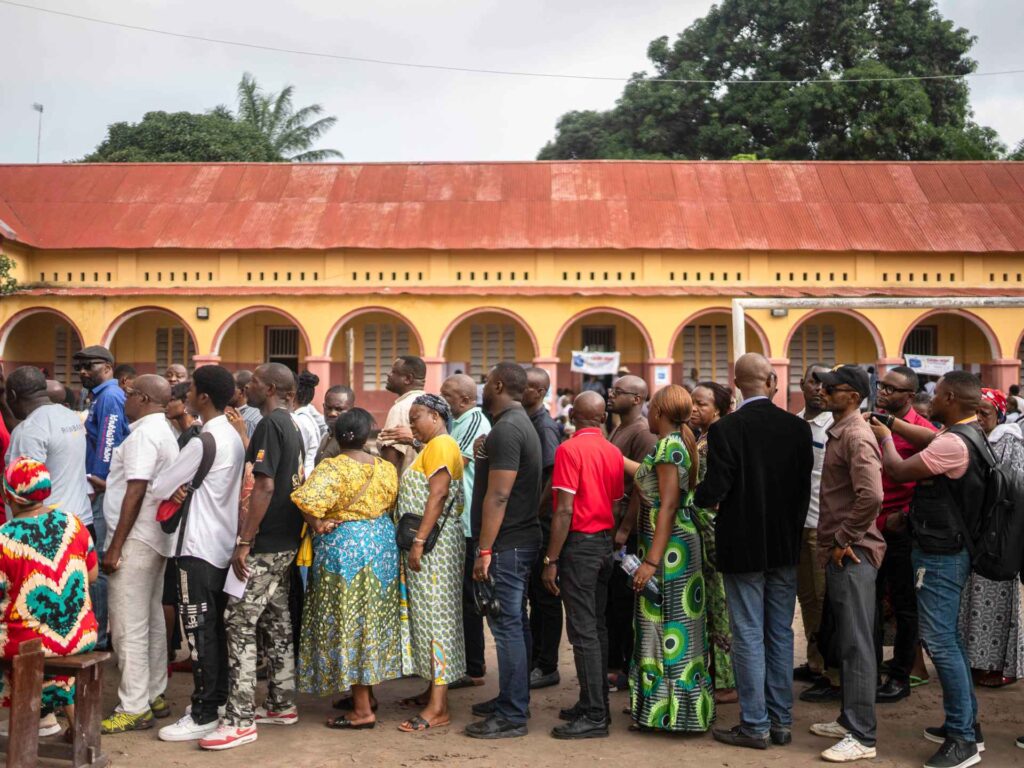
On January 9, the Constitutional Court of the Democratic Republic of the Congo (DRC) confirmed incumbent President Felix Tshisekedi’s landslide victory in the hotly disputed December 20, 2023 election, but failed to pull the Central African nation out of its full-blown electoral crisis. According to the DRC’s Independent National Electoral Commission (CENI) and highest court, Tshisekedi legitimately won a second and final five-year term in office with an impressive 74 percent of the vote, ahead of Moise Katumbi and Martin Fayulu, who placed second and third respectively. However, in the eyes of many, including failed presidential contenders Fayuli and Katumbi, the country’s synchronised presidential, local, provincial and national polls were a complete “farce”, and perhaps even less trustworthy and legitimate than the shambolic 2011 and 2018 elections. The joint observer mission from the Catholic Church and the Church of Christ of Congo (ECC) said they documented 5,402 cases of serious irregularities at polling stations. The churches said these alleged anomalies – malfunctioning voting devices, unopened polling stations, vote buying, plundering of polling materials, shoddy electoral lists, and ballot stuffing – could have compromised “the integrity of the results”. On Christmas Eve, while the shambolic election was still ongoing in many localities where the state failed to open polling stations on election day, the Archbishop of Kinshasa Cardinal Fridolin Ambongo voiced the feelings of countless angry voters in the country when he said: “What should have been a great celebration of democratic values quickly turned into frustration for many.” Indeed, it was extremely frustrating to see the DRC repeat the mistakes of the past, ignoring insistent warnings. Last April, for example, Fayulu, who many independent observers believe won the country’s controversial December 2018 presidential poll, published an opinion piece on this very page warning his country was “heading towards another sham election” and encouraging CENI to change course and ensure a “free and fair” presidential poll before it is too late. Denis Kadima, the president of CENI, however, chose to ignore this and other similar counsel. Confident as ever, he even launched a thinly veiled attack on the opposition a few days before the polls opened, claiming there were “political groups in this country that are not ready for elections” who “discredit the process, no matter what we do’’. When the sheer scale of the electoral fiasco became obvious in late December, Kadima went on to call Fayulu and other candidates who understandably demanded a rerun “bad losers”. In the end, Fayulu and others refused to challenge Tshisekedi’s win in court, saying state institutions were not trustworthy or independent. Now, the Congolese people are forced to accept the results of a clearly bungled poll and a leader with a crisis of legitimacy for the second time in five years. It is time to admit that electoral malfeasance and incompetence have become a substantial menace to societal cohesion, peace and development in the DRC. And regrettably, this is a widespread and deep-rooted problem across the Southern African Development Community (SADC) region. Take Zimbabwe, which has failed to hold a single truly free, fair and transparent election since its independence from British colonial rule in April 1980. President Emmerson Mnangagwa has won two disputed elections – in July 2018 and August 2023 – over his chief rival, Nelson Chamisa, leader of the main opposition Citizens Coalition for Change (CCC) party. Last year’s polls, for example, were deemed a colossal failure after many polling stations opened late or failed to open at all. The anomalies were particularly prevalent in Harare and Bulawayo, traditional strongholds of the opposition, raising suspicion the Zimbabwe Electoral Commission (ZEC) wanted to suppress votes there and give the ruling Zanu-PF party a helping hand. Meanwhile, the Zimbabwe Election Support Network (ZESN) and Election Resource Centre (ERC) stated Zanu-PF actors were engaged in voter intimidation tactics throughout the country. Understandably, Chamisa asserted the polls were a “blatant and gigantic fraud”, while his party called for a rerun. And just like the DRC’s Fayulu, he refused to challenge Mnangagwa’s corrupted triumph in court, alleging Zimbabwe’s Constitutional Court was “captured”. Meanwhile, a SADC electoral observer mission (SEOM), led by Dr Nevers Mumba, the former vice president of Zambia, delivered a scathing preliminary analysis of the August 2023 poll. Among others, the SEOM criticised aspects of ZEC’s Delimitation Report of 2022, and highlighted the contentious decision to exclude Saviour Kasukuwere, a former Mugabe-era Zanu-PF minister, from the presidential race. In this regard, the mission found that “some aspects of the Harmonised Elections, fell short of the requirements of the Constitution of Zimbabwe, the Electoral Act, and the SADC Principles and Guidelines Governing Democratic Elections (2021)”. A plethora of delays, it added, had “a knock-on effect as they dissuaded voters from voting in the first place” and effectively had “the unfortunate effect of creating doubts about the credibility of this electoral process”. Harare denounced SEOM’s objective assessments and demanded revisions to the preliminary report. At the same time, government-owned media launched a vicious smear campaign against Mumba, accusing him of being on a Western-sponsored “regime change mission”, all without offering a shred of evidence. Meanwhile, South Africa’s President Cyril Ramaphosa came to Harare’s defence, as he usually does, by declaring that other countries, like the US, also have electoral challenges – as if millions of frustrated and disfranchised Zimbabweans care at all whether such problems are also experienced to some extent in Washington. This is not a problem only for Zimbabwe, or the DRC, or whatever country that experiences the latest election debacle either. It is important to uphold SADC electoral standards, in every single member country, as Mumba boldly advocated for in his preliminary report, to improve our shared wellbeing in Southern Africa. SADC leaders have failed us all. The ability to deliver peace, stability and socioeconomic change through the ballot box has been turned into a mere pipe dream in most SADC countries. Zimbabwe has extensive socioeconomic problems, including an underperforming economy, a dilapidated health sector, and high unemployment for many decades.