

Fresh violence in Manipur as four shot dead, curfew reimposed in valley districts

Chief Minister N Biren Singh, in a video message, condemned the violence and urged residents, particularly in Lilong, to maintain peace.
ISRO heralds 2024 with satellite to study black holes in space, here’s everything you need to know

The mission objective includes measuring the polarisation of X-rays in the energy band 8-30 keV emanating from about 50 potential cosmic sources, to carry out long-term spectral and temporal studies of cosmic X-ray sources.
US watching Taiwan elections closely as China reiterates claim to island

Last month, Joe Biden and Xi Jinping strolled through the lush gardens of a grand California mansion engaged in a candid, intimate conversation. It was their first face-to-face summit in a year and the Chinese president was blunt – Taiwan, Xi told his US counterpart, was the most important and dangerous issue in the two countries’ fractious relationship. Beijing’s policy towards the self-ruled island it claims as its own will again be under the spotlight when voters in Taiwan go to the polls on January 13 to choose a new president and parliament, and the United States will be watching closely. At the moment, William Lai Ching-te, the incumbent vice president and the candidate of the ruling Democratic Progressive Party (DPP), is expected to emerge the winner. That result would likely rankle Beijing, which portrays Lai as a “separatist” bent on independence and ensure continued tension across the narrow strait that separates the island from China. “Washington is well prepared to deal with any choice that the Taiwan electorate makes, but there’s certainly going to be different opportunities and challenges depending on what the results of the election are,” Rorry Daniels, the managing director of the Asia Society Policy Institute, told Al Jazeera, adding that the US would be considering strategies for the “appropriate political signals” to deter any Chinese military responses. William Lai, the presidential candidate of the ruling Democratic Progressive Party (DPP), is leading the polls [I-Hwa Cheng/AFP] Beijing has stepped up pressure on Taiwan since voters first elected the DPP’s Tsai Ing-wen as president in 2016, cutting off all official dialogue, conducting military activities around the island and encouraging Taipei’s few remaining formal diplomatic allies to switch recognition to Beijing. The US, which maintains official ties with China, is, however, Taiwan’s most significant international supporter and is bound by law to provide Taipei with the means to defend itself. In August, it approved the sale of millions of dollars of military equipment and weapons to the island. Potential outcomes Opinion polls put Lai just ahead of Hou Yu-ih from the opposition Kuomintang (KMT). While the KMT is seen as friendlier towards Beijing, none of the candidates supports the unification which is a cornerstone of Beijing’s policy towards the island. All the candidates, to varying degrees, want to continue cooperation with the US and keep China’s influence at bay. Since taking office, Tsai, who argues that the people of Taiwan should choose their future, has bolstered cooperation with Washington, welcoming dozens of US politicians, including former House of Representatives Speaker Nancy Pelosi and meeting key representatives on stopovers in the US, despite fury in China. “She is now, I would argue, the best Taiwan president the US will ever get,” said Kharis Templeman, the programme manager of the Project on Taiwan in the Indo-Pacific at Stanford University’s Hoover Institution. A victory for the DPP’s Lai, who has also visited the US, could further distance Taiwan from Beijing, which has accused Lai of calling for independence and risking war. When Pelosi visited Taipei in August 2022, Beijing launched unprecedented war games over and around the island and cut military communication channels with Washington. “Lai will be very focused in the absence of open channels for dialogue with Beijing, making sure his US relationships are really strong,” said Daniels. Supporters at a Kuomintang (KMT) rally last month. The party is seen as being more friendly towards Beijing [I-Hwa Cheng/AFP] If the KMT’s Hou were to win, Daniels says the US would need to figure out how to counter the probable increased influence of Beijing, but analysts say a Hou victory could also be potentially beneficial to US-China ties by lowering the temperature in cross-strait relations. “That would allow the US and China to move Taiwan from the centre of the relationship off to the side,” Stanford’s Templeman noted. One caveat is that parliamentary elections will also take place on January 13 and while Lai is leading the surveys for president, experts say the DPP could lose its majority in the legislature. In that kind of scenario, the US government will be watching the candidates to see how they cope with inter and intra-party negotiations. Questions have already been raised over the ability of the opposition parties to work together after the KMT and Taiwan People’s Party’s attempt to submit a unity ticket and mount a concerted challenge to the DPP collapsed in disarray. Hou and the TPP’s Ko Wen-je ended up in an embarrassing public debacle, unable to agree on which candidate would run as the president. Policy and principle Whatever the outcome, the US will continue to stress the need for dialogue and avoiding military confrontation, especially since the military dialogue that was a casualty of Pelosi’s visit was revived last month. In recent years, the US has stepped up transits through the Taiwan Strait and Daniels says that carries a risk of being misconstrued. “We’re going to see these minor flare-ups that each side thinks is for defensive purposes that are perceived as so aggressive by the other side, that it starts an escalatory cycle,” Daniels told Al Jazeera. Instead of high-profile diplomatic visits that have raised the political and military temperature, Daniels suggests the US could push forward with more substantive commitments. “A US-Taiwan free-trade agreement would be a really strong signal of support in the relationship. And the US can deliver on its foreign military sales to Taiwan,” Daniels said. “Taiwan’s bought a lot of equipment and from my understanding, that has not been delivered yet.” Hou Yu-ih is running for the KMT after opposition parties attempt to agree on a joint candidate ended in disarray [I-Hwa Cheng/AFP] While Washington supports deterrence for Taiwan, for years it has maintained a purposefully vague policy of “strategic ambiguity” on Taiwan’s status that is typified by its approach to “One China”. For the US, One China is a policy that officially recognises Beijing as the sole legitimate government of China and acknowledges, but does not accept, Beijing’s position
Weather update: Cold wave conditions likely in these states; check IMD forecast here

IMD Director General Dr Mrutynjay Mohapatra said speaking to news agency ANI, “During 5th to 11th January, we are expecting night temperature to fall, it may lead to cold wave conditions in some parts of central India.
PM Modi to unveil development projects worth over Rs 21,000 cr in Tamil Nadu, Lakshadweep on Jan 2, 3

PM Modi will inaugurate, dedicate the nation and lay the foundation stone for multiple development projects worth more than Rs 19,850 crore.
Israel says it will pull out thousands of troops from Gaza

Israel has come under pressure from its principal ally, the United States, to move to a more low-intensity war. The Israeli military has announced that it will withdraw thousands of its soldiers from the besieged Gaza Strip in the first significant pullback of troops since the war there began in October. Israel has come under increasing pressure from its principal ally, the United States, to move to a more low-intensity war that has fewer civilian casualties. But in the southern city of Khan Younis, fierce fighting has continued as Israel reaffirms its pledge to press on with the war until its goals have been achieved, including destroying the Palestinian group Hamas, which killed around 1,140 people in attacks on southern Israel on October 7, according to Israeli officials. In a statement, the military said on Monday that five brigades, or several thousand troops, were being taken out of the enclave for training and rest. Army spokesperson Daniel Hagari did not say whether the decision meant the war was entering into a new phase during a briefing on Sunday that first announced the troop withdrawal. “The objectives of the war require prolonged fighting, and we are preparing accordingly,” he said. Palestinians inspect the damage to a destroyed house following Israeli air strikes on Khan Younis, in the Southern Gaza Strip [Mohammed Dahman/AP Photo] New stage? Shlomo Brom, a retired brigadier general previously in charge of strategic planning in the Israeli military, said the troop changes may be due to US pressure and could signal a shift in the way Israel is conducting the war. “The war is not stopping,” said Brom. “It is the beginning of a different mode of operations”. Israeli officials have said they would wage the war in three main stages. The first was intense shelling to clear access routes for ground forces and encourage civilians to evacuate. The second was the invasion of the Gaza Strip that began on October 27. With tanks and troops having now overrun much of the Strip, largely asserting control despite Palestinian gunmen continuing their ambushes from hidden tunnels and bunkers, the military is moving to the third stage, an Israeli official, who could not be named given the sensitivity of the issue, told the Reuters news agency. “This will take six months at least, and involve intense mopping-up missions against the terrorists. No one is talking about doves of peace being flown from Shujayea,” the official was quoted as saying, referring to a Gaza district ravaged by fighting. Separately on Monday, the US announced that it would be taking an aircraft carrier strike group back from the eastern Mediterranean and replacing it with an amphibious assault ship and accompanying warships. Palestinian health authorities say at least 21,978 people have been killed in the Israeli assault on Gaza since October 7. The Israeli military said last week that at least 172 soldiers had been killed since the ground operation began in late October, including 18 by friendly fire and 11 by weapons or equipment malfunctions. Cross-border fighting Since the outbreak of the war, the Israeli military has engaged in cross-border battles with the Lebanese armed group Hezbollah. On Monday, Hezbollah said on Telegram that three of its fighters had been killed in southern Lebanon. While it gave no detail about how they were killed, the groups said they “were martyred on the road to [liberate] Jerusalem”. The Israeli military said it hit a series of targets in Lebanon, including “military sites” where Hezbollah was operating. According to Hezbollah and security sources who have spoken to the Reuters news agency, more than 100 Hezbollah fighters and nearly two dozen civilians, including children and the elderly, have died. Adblock test (Why?)
How has Israel’s brutal Gaza war mobilised international youth?

Young people have been driving protests throughout the world, calling for an immediate ceasefire in Gaza. Demonstrations worldwide against Israel’s war on Gaza reflect widespread outrage at the months-long assault. Young people have been at the forefront of the protests. Could this global youth support for Palestine have long-term impacts? Presenter: Elizabeth Puranam Guests: Dana El Kurd – non-resident senior fellow at the Arab Center in Washington, DC Zellie Imani – Black Lives Matter activist and co-founder of the Black Liberation Collective Noga Levy-Rapoport – youth climate activist involved in Palestine solidarity campaigns in the United Kingdom. Adblock test (Why?)
Ethiopia signs agreement to use Somaliland’s Red Sea port

The deal will pave the way for the landlocked country to use the port of Berbera. Landlocked Ethiopia has signed an initial agreement with Somalia’s breakaway region of Somaliland to use its Red Sea port of Berbera, Prime Minister Abiy Ahmed’s office says. The Horn of Africa country currently relies on neighbouring Djibouti for most of its maritime trade. Ethiopia was cut off from the coast after Eritrea broke away from Addis Ababa and formally declared independence in 1993 following a three-decade war. “This has been now agreed with our Somaliland brothers and an MoU [memorandum of understanding] has been signed today,” Abiy said on Monday at the signing ceremony with Somaliland President Muse Bihi Abdi in the Ethiopian capital, Addis Ababa. Abiy’s office described the deal as “historic”, adding that it “shall pave the way to realise the aspiration of Ethiopia to secure access to the sea and diversify its access to seaport”. “It also strengthens their security, economic and political partnership,” the prime minister’s office wrote in a post on X. Prime Minister @AbiyAhmedAli and the President of Somaliland Muse Bihe Abdi have signed a historic Memorandum of Understanding in Addis Ababa.#PMOEthiopia pic.twitter.com/6lPlCoepGr — Office of the Prime Minister – Ethiopia (@PMEthiopia) January 1, 2024 The deal comes months after Abiy said the country should assert its right to access the Red Sea, rousing regional concerns. Abdi said that as part of the agreement, Ethiopia would be the first country to recognise Somaliland as an independent nation in due course. The agreement paves the way to allow Ethiopia to have commercial marine operations in the region by giving it access to a leased military base on the Red Sea, Abiy’s national security adviser, Redwan Hussien, said Somaliland would also receive a stake in state-owned Ethiopian Airlines, Hussien said, without providing details. Somaliland has not gained widespread international recognition despite declaring autonomy from Somalia in 1991. Somalia says Somaliland is part of its territory. Somalia’s SONNA state media agency reported last week that after mediation efforts led by Djibouti, Somalia and Somaliland had agreed to resume talks aimed at resolving their disputes. Adblock test (Why?)
Supreme Court chief justice report urges caution on use of AI ahead of contentious election year
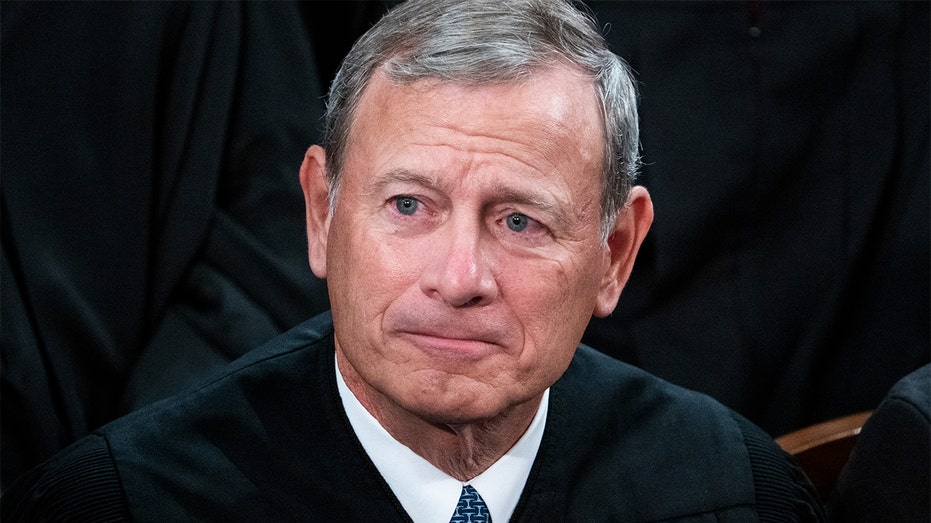
With a wary eye over the future of the federal courts, Supreme Court Chief Justice John Roberts warned Sunday of the perils of artificial intelligence (AI) when deciding cases and other important legal matters. His remarks came in the annual year-end report issued by the head of the federal judiciary, which made no mention of current controversies surrounding his court, including calls for greater transparency and ethics reform binding the justices. Noting the legal profession in general is “notoriously averse to change,” Roberts urged a go-slow approach when embracing new technologies by the courts. “AI obviously has great potential to dramatically increase access to key information for lawyers and non-lawyers alike,” he said. “But just as obviously it risks invading privacy interests and dehumanizing the law.” TOP REPUBLICAN TALKS AI ARMS RACE: ‘YOU’LL HAVE MACHINES COMPETING WITH EACH OTHER’ “But any use of AI requires caution and humility,” he added. “As 2023 draws to a close with breathless predictions about the future of Artificial Intelligence, some may wonder whether judges are about to become obsolete. I am sure we are not— but equally confident that technological changes will continue to transform our work.” Roberts also summarized the work of the nation’s 94 district courts, 13 circuit courts and his own Supreme Court. Previous year-end reports have focused on courthouse security, judges’ pay, rising caseloads and budgets. The chief justice’s predictions of the future did not include his own court’s caseload, as he and his colleagues are poised to tackle several politically-charged disputes in the new year, many focused on former president Donald Trump’s legal troubles and re-election efforts. WATCHDOG WARNS SEVERAL FEDERAL AGENCIES ARE BEHIND ON AI REQUIREMENTS The Supreme Court has tackled its share of election fights over the decades — remember Bush v. Gore nearly a quarter century ago? — but 2024 promises to make that judicial drama look quaint by comparison. First up could be whether states can keep Trump’s name off primary and general election ballots. Colorado’s highest court said yes, and now the U.S. Supreme Court is being asked to decide the extent of a 14th Amendment provision that bans from office those who “engaged in insurrection.” State courts across the country are considering whether Trump’s role in 2020 election interference and the Jan. 6 Capitol riots would disqualify him from seeking re-election. The justices are being asked to decide the matter quickly, either by mid-February or early March, when the “Super Tuesday” primaries in 16 states are held. In his leadership role as “first among equals,” the 68-year-old Roberts will likely be the key player in framing what voting disputes his court will hear and ultimately decide, perhaps as the deciding vote. Despite a 6-3 conservative majority, the chief justice has often tried to play the middle, seeking a less-is-best approach that has frustrated his more right-leaning colleagues. But despite any reluctance to stay away from the fray, the court, it seems, will be involved in election-related controversies. “Given the number of election disputes it might be coming, a lot of them could be moving very quickly and will be very important to see what the court does,” said Brianne Gorod, chief counsel at the Constitutional Accountability Center. “Sometimes the Supreme Court has no choice but to be involved in the election cases, because there are some voting rights and election cases that the justices are required to resolve on the merits.” Already the high court is considering redistricting challenges to voting boundaries in GOP-leaning states, brought by civil rights groups. That includes South Carolina’s first congressional district and claims the Republican-led legislature created a racial gerrymander. A ruling is expected in spring 2024. The high court could also be asked to weigh in on emergency appeals over vote-by-mail restrictions, provisional ballots deadlines, polling hours, the Electoral College and more. Just weeks before President Trump’s first House impeachment in 2019, Roberts tried to downplay his court’s consideration of partisan political disputes. “When you live in a polarized political environment, people tend to see everything in those terms,” Roberts said at the time. “That’s not how we at the court function and the results in our cases do not suggest otherwise.” But the court’s reputation as a fair arbiter of the law and Constitution has continued to erode to all-time lows. A Fox News poll in June found just 48% of those surveyed having confidence in the Supreme Court, down from 83% just six years ago. COMMERCE SECRETARY WILL BAN NVIDIA AI CHIPS DESIGNED TO GET AROUND RESTRICTIONS Donald Trump faces separate criminal prosecution in four jurisdictions in 2024 — two federal cases over document mishandling and 2020 election interference; and two state cases in Georgia over 2020 election interference and New York over hush money payments to a porn star. The prospect of a former president and leading GOP candidate facing multiple criminal convictions — with or without the blessing of the United States Supreme Court — has the potential to dominate an already riven election campaign. The former president has filed various motions in each case, seeking to drop charges, delay the proceedings, and be allowed to speak publicly at what he sees as politically-motivated prosecutions. The Supreme Court recently refused to fast-track a separate appeal, over Trump’s scheduled criminal trial scheduled to start the day before “Super Tuesday.” Special counsel Jack Smith is challenging Trump’s claim of presidential immunity in the 2020 election interference case. The former president says the prosecutions amount to a “partisan witch hunt.” While the justices are staying out of the dispute for now, they could quickly jump back in later this winter, after a federal appeals court decides the merits in coming weeks. But the justices will decide this term whether some January 6 Capitol riot defendants can challenge their convictions for “corruptly” obstructing “official proceedings.” Oral arguments could be held in February or March. More than 300 people are facing that same obstruction law over their alleged efforts to disrupt Congress’ certification of Joe Biden’s 2020 presidential
Migrant encounters at southern border hit record 302K in December, sources say

The U.S. southern border saw its highest rate of illegal migrant encounters last month, blowing away previous statistics. Sources with Customs and Border Patrol told Fox News Digital that migrant encounters hit a staggering 300,000 incidents in the last month of 2023, reaching a level thought unimaginable just years ago. Between Dec. 1 and December 31, more than 302,000 migrants were documented attempting to cross the U.S. southern border. It is the highest total for a single month ever recorded. It is also the first time migrant encounters have exceeded 300,000. BORDER NUMBERS FOR DECEMBER BREAK MONTHLY RECORD, AS BIDEN ADMIN TALKS AMNESTY WITH MEXICO More than 785,000 migrant encounters have been reported since the beginning of the fiscal year on Oct. 1 — the highest first quarter total ever recorded. Republicans have blamed the surge on the policies of the administration, including the ending of Trump-era policies, while the administration says it is dealing with a hemisphere-wide challenge and needs more funding and immigration reform legislation from Congress. REPUBLICANS FUME AT BIDEN FOR VACATIONING AS BORDER CROSSINGS EXPLODE: ‘DERELICTION OF DUTY’ Officials in Texas have been sending the migrants nationwide. A plane-load of migrants was seen arriving at Chicago Rockford International Airport in Illinois on Dec. 31. Mayor Michael Gonnelli of Secaucus, New Jersey reported that bus loads of migrants headed to New York City have stopped at his town’s train station, attempting to circumvent the city’s regulations on migrant arrivals. “It seems quite clear the bus operators are finding a way to thwart the requirements of the executive order by dropping migrants at the train station in Secaucus and having them continue to their final destination,” Gonnelli said in a statement. Last week, Secretary of State Antony Blinken and Homeland Security Secretary Alejandro Mayorkas were part of a U.S. delegation to Mexico City where they met with President Andres Manuel Lopez Obrador. In the joint statement, the countries affirmed their commitments to “orderly, humane and regular migration” and stressed their efforts to tackle “root causes” of migration, disrupt human smuggling and promote private investment while also investing in “ambitious development programs” in the region. But the statement also said that officials discussed the “benefits” of granting some form of legal status for illegal immigrants already in the U.S., including those protected by the 2012 Deferred Action for Childhood Arrivals (DACA) — an executive order signed by President Barack Obama, which shielded some illegal immigrants who arrived in the U.S. as minors.