

Criminalisation of victims of male violence needs to end – everywhere

In the West, we are often told terrible stories about women in the Global South countries being subjected to male violence and then punished afresh by “community leaders” and the courts. Most feminists in Europe and the US, for example, would know that premarital sex is criminalised in Saudi Arabia and that hospitals and health centres are compelled to report the pregnancies of single women to police – including those resulting from rape. They would also know about “honour killings” of women and girls in countries like Albania and Kurdistan for breaking patriarchal rules, such as having sexual relationships outside of marriage. Some who decry such abuses and atrocities in the Global South, however, appear not to be aware that this type of sexist victim blaming is not confined to the Global South; it also happens in the Global North. So-called “honour killings” also happen in the UK, for example, within both conservative religious communities and secular ones. I have long been working to raise awareness on this issue and prevent it happening to women in my home country, the United Kingdom. In 1990, I co-founded Justice for Women in response to the harsh treatment meted out to women who defended themselves against rape or sexual violence – by the criminal justice system, the media, and wider society. I had seen several cases of men killing their wives for spurious reasons, and walking free from court. Excuses such as “She nagged me”, or “I found her in bed with another man” were accepted by judges and jurors as reasonable grounds for men to “snap” and kill women. Meanwhile, women who were driven to kill or maim their male partners after years of violence, often in fear for their lives or those of their children, were treated as cold-blooded murderers and punished as such by British courts, targeted by the media, and shunned by society. We have undoubtedly made some progress in shedding light on the issue in the past three decades, but the criminalisation of survivors of male violence in the UK, by the courts as well as society at large, is far from over. Today, at least 57 percent of women in prison in the UK are survivors of domestic abuse, and for many of them, this abuse is directly linked to the reason for their incarceration (while, in most cases, their abusers remain free). The true number is likely significantly higher because many choose not to disclose their victim status, even when it could help explain the motivations behind the crimes they are accused of. Despite this, criminal justice agencies rarely acknowledge that a woman has been a victim of male violence, and treat this as a mitigating factor, when prosecuting her for a related offence (including defending herself against the perpetrator). Examples of such re-victimisation and criminalisation of survivors of male violence by British courts are all around us. A film by the UK-based Centre for Women’s Justice (CWJ), titled Stop Criminalising Survivors, launched earlier this month tells the stories of five such women, convicted of offences ranging from perverting the course of justice to murder, all as a result of the abuse they endured at the hands of a male partner. CWJ hopes the film will help educate criminal justice agencies and women’s support services on the reasons female victims of male violence end up in prison. One of the women featured in the CWJ film is Farieissia Martin who, aged 22 and with two small children, killed her extremely violent partner, Kyle Farrell. Farrell had raped her repeatedly, and she had undergone several abortions as a result. Family and friends had regularly seen her face covered in bruises. The night she killed him, he had given her another beating, convincing Farieissia that if she didn’t do something, she was going to die at his hands. Having access to all this information, and knowing well that she acted in self-defence, the courts still convicted her of murder. Farieissia served seven years in prison before successfully appealing her conviction. The only reason she was able to overturn her conviction was that she was represented at appeal by feminist lawyers equipped with an in-depth understanding of the effects of domestic violence. These days feminists are routinely blamed for exaggerating male violence, making women “scared of men”, and causing them to limit their lives by taking precautions. Meanwhile, women are blamed for being raped (“she was drinking/flirting/wearing revealing clothing”) or suffering domestic abuse (“she wound him up/enjoyed the drama”). Girls are blamed, and shamed, for being abused into prostitution. This victim blaming, still prevalent in most societies, reaches its ultimate form when women are punished and sent to prison for being victimised or defending themselves against their abusers. When we are blamed for what men do to us, we get a double dose of punishment – while our male abusers are handed free rein. This happens routinely in the Global South, but it happens in the North too. Lesbians in South Africa experience horrors like “punishment rape” for daring to reject men, but so do women in the UK. It is true that women are killed in Iran for supposed missteps like speaking to a man outside the family, but so do women in the UK – one woman is killed by a man known to her every three days in England and Wales. Men’s violence towards women and girls is global, and wherever it occurs, the blame is often diverted onto the victims. It is crucial that we speak of the rapist more than we do of the raped, and of the batterer rather than the battered. Let’s place the blame firmly on the guilty, and ensure we never, ever, look to the actions of the victims in an attempt to justify such atrocities against women. Women should never be criminalised and punished, anywhere, for being subjected to male violence or defending themselves against it. The views expressed in this article are the author’s own and do not
This Indian woman is on FBI’s ‘most wanted’ list, she carries a huge reward of….

Born in India in July 1994, Bhagat was pursuing studies in the United States under a student visa at the New York Institute of Technology.
Covid-19: India on alert as active cases continue to rise, 2 test positive in Bihar

Recent Covid-19 tests revealed that two residents of Patna, Bihar, tested positive. In the Indira Gandhi Institute of Medical Science (IGIMS) in Patna, one patient tested positive, but in the ESIC Hospital in Bihta, another patient was confirmed to have the virus.
‘Weaponizing disturbances as political strategy’: VP Dhankhar hits out at opposition MPs
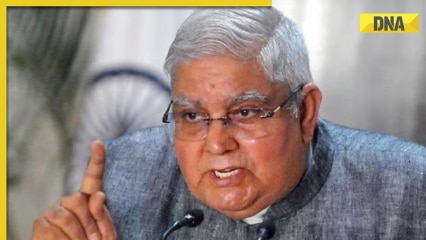
The Rajya Sabha Chairman after the conclusion of the 262nd Session of the Rajya Sabha, said that the productivity of the Upper House stood at 79 per cent.
‘Mujhe kabhi waqt he nahi mila’: Amrita Pritam’s partner, artist and poet Imroz passes away at 97

He was 97 and was suffering from age-related issues.
The Silent Threat: The Growing Heart Health Crises in India

WARNING…. India has witnessed an increased number of heart related deaths.
PM Modi to flag off 5 Vande Bharat, 2 Amrit Bharat trains on December 30, check details here

The Amrit Bharat train is based on Push and Pull technology, which will help in reducing travel time and increasing the average speed of the train.
India logs 328 new COVID-19 cases, 2,606 active cases in Kerala; states on high alert

With one death reported in the state, the total number of people who have died due to coronavirus in Kerala since its outbreak three years ago reached 72,060.
Republic Day 2024: French President Emmanuel Macron invited as Chief Guest

This is, notably the 6th time, a French leader will be the Chief guest at Republic Day celebrations here in the national capital.
A Biden-Netanyahu rift? ‘Distraction’, Palestinian rights advocates say
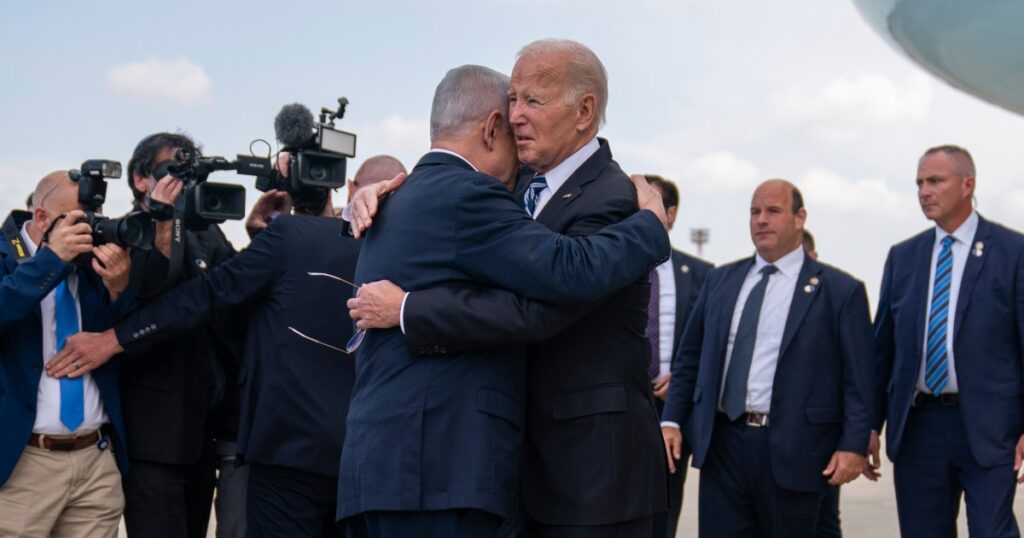
Washington, DC – Rock-solid. Unwavering. Unshakeable. After months of describing his commitment to Israel in fervent terms, United States President Joe Biden shifted his rhetoric this month — and issued his most firmly worded criticism of the country since the start of the war in Gaza. At a December 12 fundraiser, Biden warned that Israel is losing international support because of its “indiscriminate bombing” in the Palestinian territory. Those two words launched hundreds of headlines. The “rifts” between Biden and Israeli Prime Minister Benjamin Netanyahu had finally “spilled into public view”, CNN wrote. The Washington Post signalled the two leaders were headed for a “collision”. But Palestinian rights advocates have questioned how much of a “rift” exists — or whether Biden’s words were merely a means of allaying criticism without taking substantial action. Biden has faced intense scrutiny for his support of Israel’s military offensive in Gaza, which has killed more than 20,000 Palestinians since October 7. And the US remains one of the last countries in the world to oppose ending the war. The president’s statement on December 12, however, did not signal a shift in policy. Rather, his administration has reasserted that it will draw “no red lines” to restrict Israel’s actions or what it does with US military aid. Some advocates, therefore, argue that the reported disagreements between Biden and Netanyahu are inconsequential so long as the US continues to back Israel. “It doesn’t matter whether Biden and Bibi [Netanyahu] like each other or not because, at the end of the day, American money is still being transferred to fund the Israeli army. Weapons are still being sent with or without Congress’s approval,” said Laura Albast, a Palestinian American organiser in the Washington, DC, area. “Biden did not come out and call for a ceasefire.” Advocates denounce political ‘theatre’ Albast said the Biden administration is engaging in occasional criticism of Israel to address growing domestic concerns about the atrocities in Gaza. She noted that Biden’s popularity in the US has plunged during the war, particularly among young people. A Monmouth University poll this week showed Biden’s approval rating at a record low of 34 percent. Among voters under 34, that number tumbled to 23 percent. “They think that average voters in the United States are not critical thinkers, so they’re putting together this theatre,” Albast said. Hours after Biden made his comments about Israel’s “indiscriminate bombing” of Gaza, the US voted against a United Nations General Assembly resolution calling for a ceasefire in Gaza. Days earlier, Washington had also vetoed a similar measure in the UN Security Council. Still, US officials have said on several occasions that they are raising concerns with their Israeli counterpart over civilian harm in Gaza. “It’s clear that the conflict will move and needs to move to a lower-intensity phase, and we expect to see and want to see a shift to more targeted operations,” Secretary of State Antony Blinken told reporters on Wednesday. But the bombing nevertheless appears to be intensifying despite Washington’s demand. More than 5,000 Palestinians have been killed since the fighting resumed on December 1 after a brief truce. An Israeli air strike hit an area near the Kuwaiti Hospital in Rafah in southern Gaza while Al Jazeera correspondent Hani Mahmoud was live on air. pic.twitter.com/LKszfK4pQK — Al Jazeera English (@AJEnglish) December 20, 2023 Amer Zahr, a Palestinian American comedian and activist, said Biden is trying to avoid responsibility for the carnage in Gaza, even as his administration seeks billions of dollars in additional assistance to Israel. He called reports of a feud between Biden and Netanyahu a “distraction”. “This is an attempt by the Biden administration to distance themselves from the genocidal policies of Netanyahu, which they have supported from the beginning,” Zahr told Al Jazeera. ‘Clown show of foreign policy’ Adam Shapiro, the director of advocacy for Israel-Palestine at Democracy for the Arab World Now (DAWN), said the Biden administration was fully committed to the Israeli war in Gaza since its earliest days. But as the “horrific” reality of the Israeli offensive becomes more apparent, the Biden administration does not know how to disengage from it, he added. “It’s a ship without any kind of direction at this point. It’s like a drowning man, in a way, who’s just flailing,” Shapiro said. “That’s how I interpret all these random statements that come out from the administration. Meanwhile, the reality continues: Israel does what it wants. The weapons continue to flow.” Since the war broke out on October 7, some points of contention have emerged between the Israeli and US governments. They have, for example, articulated different visions for post-war Gaza. The US wants the Palestinian Authority to eventually govern the territory, but Israel wants Gaza to remain under its security control. Disagreements about the future, however, have not shaken Washington’s support for the ongoing war, the scale and intensity of which puts Palestinians at “risk of genocide“, according to UN experts. US officials, including Biden, have also emphasised the need for a two-state solution to the conflict, putting them again at odds with Netanyahu’s government, which opposes the establishment of a Palestinian state. But on Tuesday, the US was one of four countries, along with Israel, to vote against a UN General Assembly resolution reasserting Palestinians’ right to self-determination. The measure was backed by 172 other nations. To Zahr, the vote is yet another example of how US policy remains behind Israel even when Biden’s rhetoric appears to diverge from that of Israeli leaders. “How can you dare to say that you want to be an honest broker, that you want to create ‘peace’ between Palestinians and Israelis when you say you believe in the right to self-determination of one party and not the right to self-determination of the other?” Zahr said. “This is a clown show of foreign policy.” Shapiro, meanwhile, said the Biden administration was committing “unforced errors”. Its position towards the bloodshed in Gaza undermines its credibility and the principles it claims