

Sanctions threat looms over Bangladesh’s garment sector ahead of elections
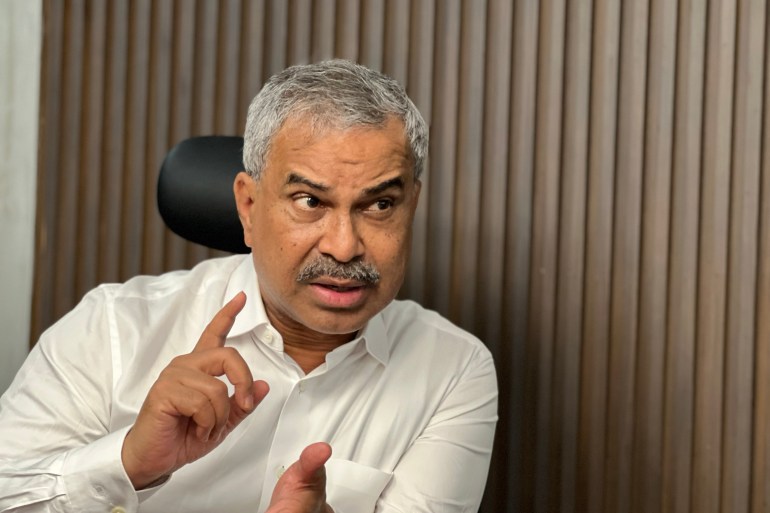
Dhaka, Bangladesh — Weeks after turbulent wage-hike protests and subsequent factory closures, Bangladesh’s ready-made garment (RMG) industry, a key revenue earner for the nation, is dealing with a new phase of anxiety: “possible” economic sanctions by the country’s Western partners. The United States and European Union collectively account for more than 80 percent of Bangladesh’s multibillion-dollar apparel sales, and any sanction on the RMG industry would put a severe dent in its already beleaguered economy, said analysts. The threat of sanctions from the US arose once Dhaka announced January 7 for national elections in what is likely to be another seemingly one-sided vote. Those concerns were further boosted in early December when a key garment supplier to the US was warned of sanctions in a letter of credit (LC) from a foreign garment buyer. An LC is issued by financial institutions or similar parties to guarantee payment to sellers of goods and services after appropriate documentations are presented. It essentially helps in avoiding risk by having intermediate buyer and seller banks that ensure proper payment. According to the LC, a copy of which was obtained by Al Jazeera, the Western buyer stated: “We will not process transactions involving any country, region or party sanctioned by the UN, US, EU, UK. We are not liable for any delay, non-performance or/ disclosure of information for sanction-based causes.” Should the clause kick in, the garment manufacturer in Bangladesh would likely incur massive losses as the buyer wouldn’t be liable to make any payment for the orders placed with that apparel producer. Both industry leaders and government officials have dismissed the threat as a “rumour” and “antigovernment” propaganda and say no such economic sanction can be imposed, especially on the garment sector, as it is a fully compliant industry and abides by all the international labour laws. Faruqe Hassan, President of Bangladesh Garments Manufacturers and Exporters Association (BGMEA) said that the LC came from a particular buyer, and was not a statutory order or notice by “any specific country or countries”. “From BGMEA, we have already contacted the buyer and the issue was sorted out. It was just a cautionary clause inserted by the bank who prepared the LC on behalf of the buyers,” Hassan told Al Jazeera, “It doesn’t mean that any country is planning to impose some sanctions on our industry.” Behind the uneasiness BGMEA President Faruque Hassan said manufacturers are concerned about the potential of economic sanctions [Faisal Mahmud/Al Jazeera] Hassan however admitted that many factory owners had expressed their concerns in a recent BGMEA meeting over that LC clause and the “ongoing political turmoil of Bangladesh has given birth to all sorts of speculations”. Bangladesh’s national election is due in less than three weeks but several political unrests have disrupted the country’s business and economy. Bangladesh Nationalist Party (BNP), the main opposition party, has boycotted the election amidst concerns of severe poll rigging. That sets up the elections as a repeat of one-sided polls held in 2014, in which Sheikh Hasina-led Awami League won 153 out of 300 parliamentary seats uncontested. BNP says no free and fair election is possible under a partisan government and gave an example of the 2018 poll, in which it took part. Independent observers termed it a severely “rigged” election which saw Awami League securing 288 out of 300 seats, a result that The Washington Post said could only be expected in a country like North Korea. For the last few months, opposition parties have been staging protests on the streets to press home the demand of installing a neutral election-time caretaker government. The government has, since late October, used brute force and court cases to suppress the protests. In November alone, more than 10,000 BNP leaders and activists were thrown in jail. None have received bail so far. Khondokar Golam Moazzem, research director of Bangladeshi think tank Center for Policy Dialogue (CPD) told Al Jazeera that the current political upheaval has obviously played its role in propagating the widespread notion that Bangladesh’s RMG industry might face an economic sanction. The United States has already taken a tough stance with a new visa policy for Bangladesh in September in which it said it would impose a visa sanction on “individuals undermining the democratic election process in Bangladesh”. The warning note in the LC also came at a time of severe unrest in the RMG sector over minimum wage hikes in which four workers died. Bangladesh has witnessed severe unrest over wage issues for garment workers [Faisal Mahmud/Al Jazeera] It also coincided with the introduction by the US, Bangladesh’s single largest garment buyer, of the Presidential Memorandum on Advancing Worker Empowerment, Rights, and High Labor Standards Globally. The memorandum is the Biden administration’s effort “to pursue a whole-of-government approach to advancing worker empowerment and organizing, workers’ rights, and labor standards globally”. While introducing the bill, the US Secretary of State specifically mentioned a firebrand garment labour activist in Bangladesh and said: “We want to be there for people like Kalpona Akter, a Bangladeshi garment worker and activist, who says that she is alive today because the US embassy advocated on her behalf.” After the new US bill, the Ministry of Commerce in Bangladesh received a letter from the Bangladesh embassy in Washington, DC in which the embassy speculated that “Bangladesh could be among the countries targeted by the new US Memorandum”. Al Jazeera has seen the letter and Commerce Secretary Tapan Kanti Ghosh acknowledged its receipt and told Al Jazeera that the Bangladesh government had already informed the US about the recent steps they had taken to protect labour rights in Bangladesh. “We are very serious about labour rights and we are the signatory of all the ILO conventions.” How serious are the sanction concerns? Labour rights activist Kalpona Akter says anger is still bubbling in the sector [Faisal Mahmud/Al Jazeera] Germany-based Bangladeshi financial analyst Zia Hassan told Al Jazeera that the prospect of US sanctions on Bangladesh’s garment industry cannot be ruled out. “Historical
US, China top military officials hold first talks in more than a year
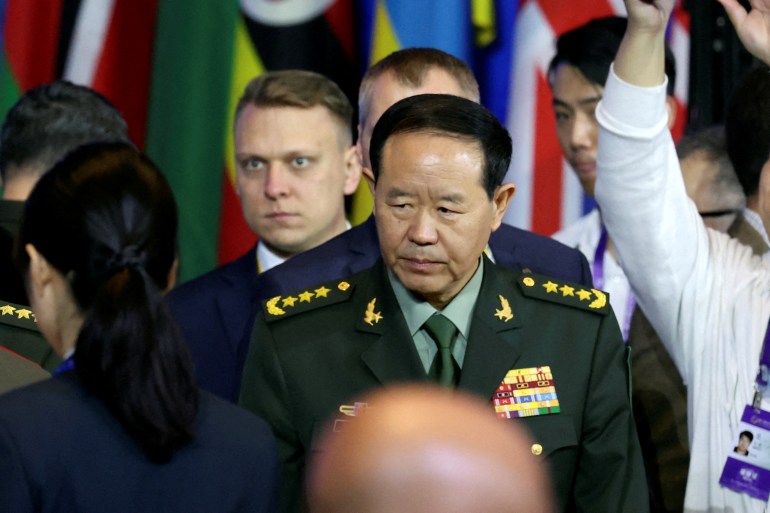
General Charles Q Brown, Chairman of the US Joint Chiefs of Staff, stresses need for dialogue to avoid miscalculations in talks with PLA’s General Liu Zhenli. The top military officer from the United States has held a virtual meeting with his Chinese counterpart, the Pentagon said, in the first such conversation in more than a year. Beijing stopped such high-level talks after then-US House Speaker Nancy Pelosi visited self-ruled Taiwan in August 2022. The two countries’ leaders finally agreed to resume them when they met last month. US Air Force General Charles Q Brown, chairman of the Joint Chiefs of Staff, and General Liu Zhenli of China’s People’s Liberation Army (PLA) touched on “a number of global and regional security issues” during their online discussion, Brown’s office said in a statement. Liu is the chief of the Joint Staff Department of the Central Military Commission (CMC), the military body responsible for China’s combat operations and planning. Brown “discussed the importance of working together to responsibly manage competition, avoid miscalculations and maintain open and direct lines of communication,” spokesman Captain Jereal Dorsey said in a statement. “General Brown reiterated the importance of the People’s Liberation Army engaging in substantive dialogue to reduce the likelihood of misunderstandings.” Brown said last month he had sent an introductory letter to Liu saying he was open to meeting. Liu said the key for the US and China to develop a healthy, stable and sustainable military-to-military relationship was for the US to have a “correct understanding of China”, according to a Chinese defence ministry statement that was released late on Thursday. US officials have cautioned that even with some restoration of military communications, it was likely to take some time to develop a functional dialogue between the two sides who remain at odds over a range of issues from Taiwan to the South China Sea and trade. China claims Taiwan as its own territory and has said it is willing to use force in order to achieve its aims. US President Joe Biden met his Chinese counterpart Xi Jinping in California in November with the two men agreeing to restore military-to-military communications as part of an effort to ease tensions. Liu has emerged as the top contender to replace China’s national defence minister, General Li Shangfu, who was dismissed in October [File: Florence Lo/Pool via Reuters] Pentagon spokesman Major General Pat Ryder described Thursday’s call between Brown and Liu as a “positive development”, saying that the two sides were working to implement what had been announced by Xi and Biden. “When you have two large militaries, it’s imperative that we keep lines of communication open in order to prevent miscalculation,” Ryder said. During the talks, Liu also asked for the US to respect China’s territorial sovereignty, and expansive maritime rights and interests in the South China Sea. China claims almost the entire sea under its so-called nine-dash line and has ignored a 2016 arbitral ruling that found it was without legal merit. Tensions have risen this year, particularly with the Philippines, which has accused the Chinese coast guard and other Chinese vessels of dangerous actions at Second Thomas Shoal and Scarborough Shoal. Liu has emerged as the top contender to replace China’s national defence minister, General Li Shangfu, who was fired in October two months after disappearing from public view. Li was placed under US sanctions in 2018 and had snubbed Washington’s efforts to resume contact. While high-level military-to-military ties between the US and China had been cut off, other top US officials were still in communication with Beijing, and lower-level military talks continued. Adblock test (Why?)
Covid-19 surge in India: Hyderabad on high alert as cases rise, wearing mask becomes mandatory
Apart from wearing masks, maintaining a distance of more than 6ft between people is important.
Nine MLAs to take oath as Chhattisgarh Cabinet Minister today
Chhattisgarh Chief Minister Vishnu Deo Sai announced the names of the nine cabinet ministers who will be sworn in at 11:45 a.m. in the Governor House.
4 soldiers martyred, 2 injured after terrorists attack army vehicles in Jammu and Kashmir’s Rajouri
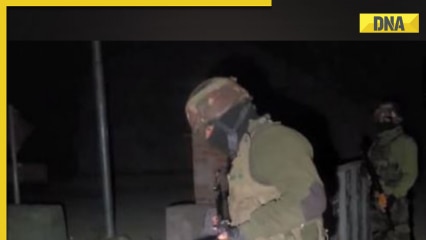
The operation has been underway in the general area of DKG (Dera ki Gali) since the night of December 20.
‘These tears are…’: Congress on Sakshi Malik announcing retirement after Brij Bhushan associate wins WFI polls
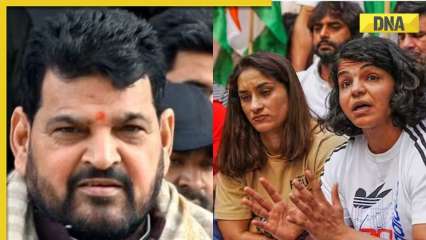
The opposition party said this after wrestler Sakshi Malik, with tears in her eyes, announced her retirement from wrestling, saying she has lost in the battle for justice for fellow women wrestlers, who she alleged were ”harassed” by former WFI chief Brij Bhushan Sharan Singh.
Delhi-NCR: Noida metro likely to get connected to Ghaziabad; check DMRC’s route plan for Blue line extension
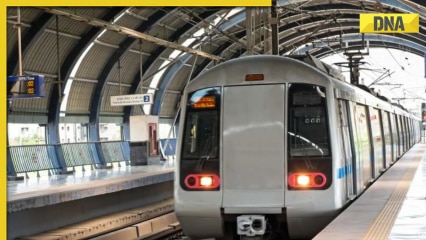
The 5.2-kilometer Metro route will culminate at Sahibabad and merge with the Namo Bharat station across the Link Road, offering commuters a smooth transition.
‘We want to show…’: INDIA bloc leaders to protest today against 146 suspensions of MPs from Parliament | Full details
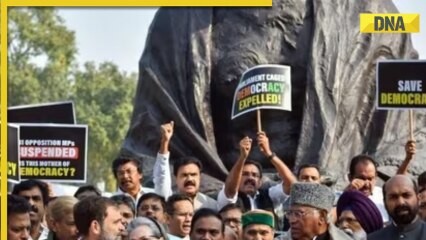
AAP MPs including ND Gupta, Sandeep Pathak, Sant Balbir Seecehwal, and Sanjeev Arora will join the INDIA bloc protest today.
Seattle Children’s Hospital sues Texas Attorney General over trans patient records
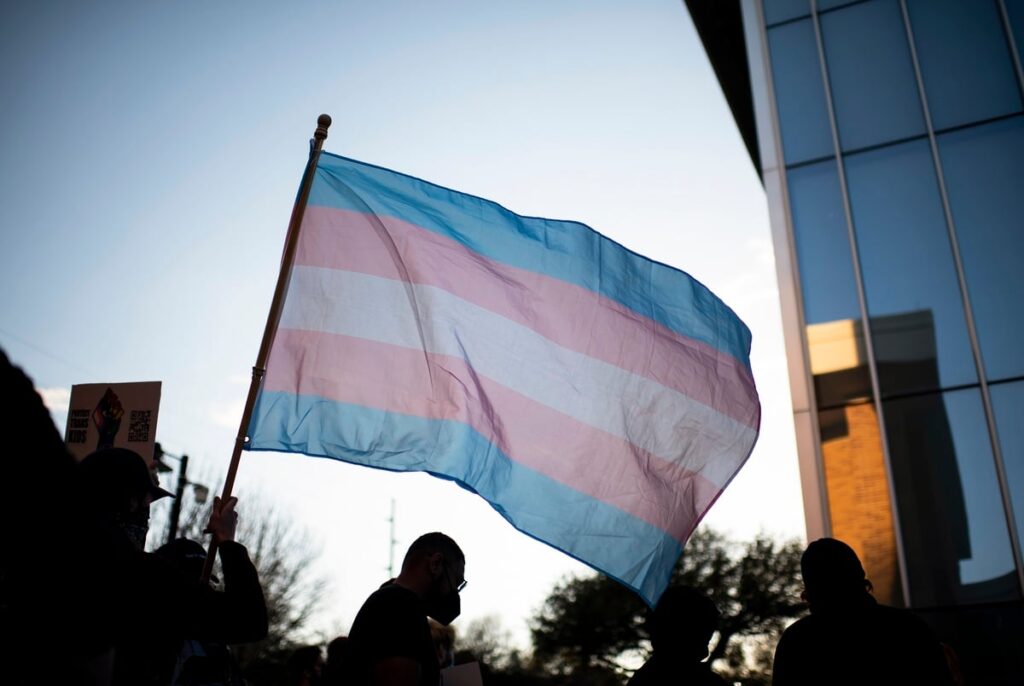
Suspecting the Washington-based hospital of providing gender-affirming care to Texas children, which is now banned in Texas, AG Ken Paxton issued investigative subpoenas demanding medical information.
Former prosecutor accused of limiting questions about Joe Biden denies politics played a role in Hunter probe
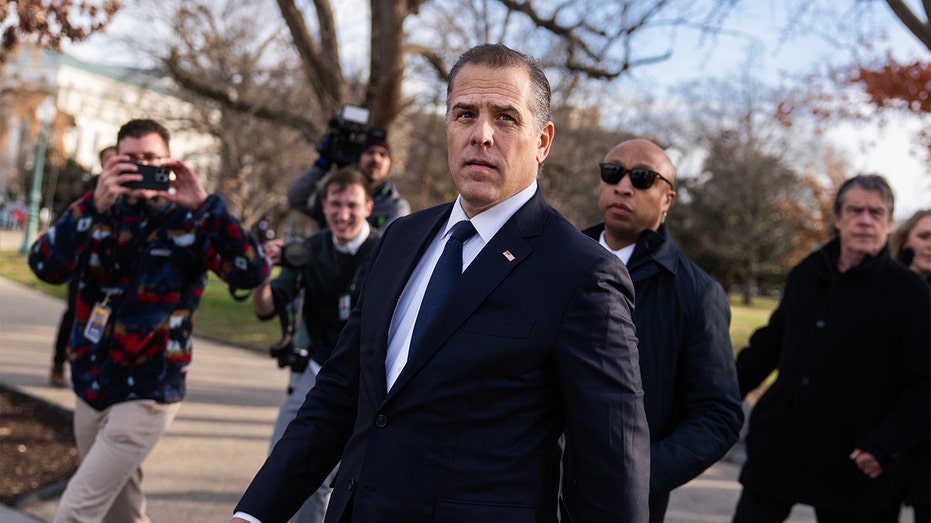
FIRST ON FOX: The former assistant U.S. attorney who allegedly worked to ‘limit’ questions about Joe Biden denied that politics played a role in the Hunter Biden investigation during her interview at the House Judiciary Committee, according to a transcript reviewed by Fox News Digital. Former Assistant U.S. Attorney Lesley Wolf, though, testified that she would “not be permitted to answer most of the questions you have for me” due to the ongoing nature of the federal criminal investigation into the first son. HUNTER BIDEN INVESTIGATORS LIMITED QUESTIONS ABOUT ‘DAD,’ ‘BIG GUY’ DESPITE FBI, IRS OBJECTIONS: WHISTLEBLOWER Wolf, who recently left the Justice Department—a decision that “long predated” allegations against her, was subpoenaed by the House Judiciary Committee to appear for a deposition. Wolf appeared before the House Judiciary Committee last week for a voluntary transcribed interview after the Justice Department negotiated terms with the panel. Fox News Digital reviewed a transcript of her interview Thursday night. After her interview, House Judiciary Committee Chairman Jim Jordan, R-Ohio, said Wolf “refused to answer most of our questions.” “She refused to answer based on instructions she was given from the Justice Department,” Jordan said. IRS whistleblowers Gary Shapley, who led the IRS’ portion of the Hunter Biden probe, and Joseph Ziegler, a special agent within the IRS’ Criminal Investigation Division, alleged political influence surrounding prosecutorial decisions throughout the Hunter Biden investigation, which began in 2018. Shapley alleged that Wolf sought to block investigators from asking questions related to President Biden throughout the years-long federal investigation into his son, Hunter Biden. But during her interview, Wolf testified that “at no time did politics play a role in or in any way impact my work as a federal prosecutor.” Wolf also said that prosecutorial decisions were “never made in a vacuum and were always guided by principles of justice and fairness.” JORDAN SAYS FORMER PROSECUTOR WHO ALLEGEDLY SCUTTLED HUNTER INVESTIGATION ‘REFUSED’ TO ANSWER QUESTIONS “My voluntary appearance here today is not without an overwhelming feeling of frustration and disappointment because as much as I would invite the opportunity to explain the decisions made and accurately describe the actions taken, I will not be permitted to answer most of the questions you have for me,” Wolf said. “It should come as no surprise to the committee that as a former DOJ employee, I am significantly constrained by and must strictly adhere to the authorization provided by the Department of Justice, as well as those obligations independently imposed by the Federal Rule of Criminal Procedure, including rule 6e, and the relevant laws governing disclosure of tax information.” Wolf explained that, “in light of the ongoing nature of the investigation,” she was “legally obligated at this time to largely remain silent as to those allegations, beyond stating the truth, which is, at all times while serving as an AUSA, I acted consistently with the Justice Manual, DOJ policy directives, and my statutory legal and ethical obligations.” “I followed the facts where they led and made decisions in the best interests of the investigation,” Wolf said. “This includes, but is by no means limited to, policies and rules governing politically sensitive investigations, election year sensitivities, attorney search warrants, search warrant filter requirements, and professional conduct rules barring contact with represented parties.” But when faced with specific questions by investigators, Wolf repeatedly said she could not answer or speak to “particulars or details about anything” relating to the ongoing Hunter Biden probe, led by now-Special Counsel David Weiss, and repeatedly said she was “not authorized” to discuss the matter. Shapley alleged earlier this year that Wolf worked to “limit” questioning related to President Biden and apparent references to Biden as “dad” or “the big guy.” But according to a Fox News Digital review of the transcript, investigators did not ask her about that specific allegation. Shapley and Ziegler also alleged that in October 2020, Wolf reviewed an affidavit for a search warrant of Hunter Biden’s residence and “agreed that probable cause had been achieved.” However, Shapley said Wolf ultimately would not allow a physical search warrant on the president’s son. Shapley said Wolf determined there was “enough probable cause for the physical search warrant there, but the question was whether the juice was worth the squeeze.” Wolf allegedly said that “optics were a driving factor in the decision on whether to execute a search warrant,” Shapley said, adding that Wolf agreed that “a lot of evidence in our investigation would be found in the guest house of former Vice President Biden, but said there is no way we will get that approved.” LESLEY WOLF, PROSECUTOR ACCUSED OF WORKING TO ‘LIMIT’ QUESTIONS ABOUT ‘BIG GUY’ IN HUNTER PROBE, OUT AT DOJ Wolf also allegedly tipped off Hunter Biden’s legal team ahead of a planned search of his storage unit. During her interview, Wolf did acknowledge that “Political Figure 1”–a term used in several communications between Hunter Biden investigators–was, in fact, a reference to then-Vice President Joe Biden. Wolf was asked about an email exchange with FBI Special Agent Joshua Wilson, in which she stated: “There should be nothing about political figure 1 in here.” Wolf said “Political Figure 1” is “described as former Vice President Joseph Robinette Biden, Jr., now President Biden,” but would not specifically elaborate on why she gave that directive. Wolf was asked: “To the extent you didn’t–you asked the agents to take out political figure 1, there was no political motivation in requesting that?” “I refer you back to my opening statement where I said at no time there was politics playing a role in those decisions.” Wolf’s testimony came as part of the House impeachment inquiry against President Biden, which was formalized last week. House Ways and Means Committee Chairman Jason Smith, R-Mo.; Judiciary Committee Chairman Jim Jordan, R-Ohio; and Oversight Committee Chairman James Comer, R-Ky., are leading the investigation as the House gathers evidence and considers whether to draft articles of impeachment against President Biden. The committees are investigating the alleged politicization of