

DOJ settles with Michael Flynn over Russia probe after wrongful prosecution claim: ‘Historic injustice’

The Department of Justice (DOJ) reached a settlement Wednesday with Michael Flynn, the former national security advisor to President Donald Trump, over a legal battle tied to his contacts with a Russian diplomat during the Mueller probe. Official court papers seen by Fox News Digital do not disclose the financial terms of the settlement, but the government is said to be paying Flynn approximately $1.2 million to resolve the matter, The Associated Press reported. The agreement concludes a lengthy legal saga stemming from the Russia investigation. Flynn, a retired Army lieutenant general, pleaded guilty on Dec. 1, 2017, to giving false statements to the FBI about his communications with Russia’s ambassador to the United States. JAMES COMEY SEEKS TO DISMISS HIS CRIMINAL CASE, CITING ‘VINDICTIVE’ PROSECUTION Those discussions included Russia’s response to U.S. sanctions and a United Nations Security Council resolution regarding Israel. The charge stemmed from Robert Mueller’s investigation into Russian election interference and possible links between Trump campaign officials and Russian figures. Mueller, a former FBI director who led the bureau from 2001 to 2013, later served as special counsel investigating Russian interference in the 2016 election, a probe that shadowed much of Trump’s presidency. He brought charges against multiple Trump associates, including former campaign chairman Paul Manafort and Flynn. JUDGE ORDERS DOJ TO GIVE COMEY GRAND JURY RECORDS, CITING PROSECUTOR’S MISCONDUCT His final report detailed extensive contacts between the Trump campaign and Russia, but did not establish a criminal conspiracy. Flynn later sought to withdraw his guilty plea and accused federal prosecutors of acting in bad faith. By 2019, he claimed innocence, citing alleged FBI misconduct. Although Flynn was pardoned by Trump in late 2020, he filed a lawsuit in 2023 seeking at least $50 million in damages, alleging wrongful and malicious prosecution. He argued the case, brought by what he described as a “virulently anti-Trump leadership” within the FBI, cost him tens of millions of dollars in business opportunities and future earning potential. FORMER FBI DIRECTOR ROBERT MUELLER DIES AT 81; TRUMP REACTS Under the previous administration, the DOJ moved to dismiss Flynn’s complaint. Now, under Attorney General Pam Bondi, a critic of the Russia probe, the department changed course. In a statement, the DOJ called the settlement an “important step in redressing” what it described as a “historic injustice,” The Associated Press reported. A spokesperson said the department will pursue accountability to ensure such “weaponization of the federal government” does not recur. According to a notice of settlement filed in the Middle District of Florida, the case will be dismissed with prejudice once Flynn confirms receipt of the funds, preventing the claims from being refiled. The filing states each party will bear its own legal costs and that the court will not retain jurisdiction over the agreement. In a statement Wednesday, Sen. Mark R. Warner, D-Va., vice chairman of the Senate Select Committee on Intelligence, said: “The Department of Justice’s reported decision to pay out more than $1 million of taxpayers’ dollars to Michael Flynn is as outrageous as it is indefensible.” Warner also described the settlement as one that “sends exactly the wrong message to our adversaries, to our intelligence professionals, and to the American people. “It undermines the rule of law, demeans the work of the men and women who safeguard our national security, and suggests that accountability depends on who you are and who you know, not what you’ve done.” The DOJ did not immediately respond to Fox News Digital’s request for comment.
US moves airborne troops, Marines as Iran rejects ceasefire, raising ground war potential

The U.S. is positioning ground-capable forces in the Middle East after Iran rejected a ceasefire proposal Wednesday, a shift that gives Washington new — though limited and high-risk — options for potential operations inside Iran. Military experts say the deployments are not a precursor to a large-scale invasion but instead position the U.S. for targeted, short-duration missions, options that have taken on new relevance as diplomatic off-ramps narrow. In recent days, the Pentagon has moved ground-capable forces into the region, including around 1,000 paratroopers with the Army’s 82nd Airborne Division. Among them is the 1st Brigade Combat Team, a core component of the military’s Immediate Response Force rapid-response unit designed to deploy on short notice to crises anywhere in the world. Also deployed were a few thousand Marines and sailors assigned to the 31st Marine Expeditionary Unit and its Amphibious Ready Group, led by the amphibious assault ship Tripoli. Marine expeditionary units and airborne forces often are among the first U.S. units deployed in a conflict to rapidly establish an initial presence and respond to emerging crises. IRAN’S REMAINING WEAPONS: HOW TEHRAN CAN STILL DISRUPT THE STRAIT OF HORMUZ The White House has emphasized the deployments are meant to preserve flexibility as the conflict evolves, a posture that now carries greater weight after Iran rejected a U.S.-backed ceasefire proposal. “The president likes to maintain options at his disposal,” press secretary Karoline Leavitt said Wednesday at a White House press briefing. “It’s the Pentagon’s job to provide those options to the commander in chief.” Lawmakers on the Armed Services Committees emerged from a classified briefing on Iran Wednesday expressing frustration over a lack of clarity from the administration. “We want to know more about what’s going on, what the options are and why they’re being considered,” House Armed Services Chairman Rep. Mike Rogers, R-Ala., told reporters. “We’re just not getting enough answers.” “Let me put it this way, I can see why he might have said that,” Sen. Roger Wicker, R-Miss., chairman of the Senate Armed Services Committee, said in agreement. Military experts said the types of forces being deployed point to a more limited set of options on the ground. “It is not for the type of ground invasion that we saw in Iraq,” James Robbins, Institute of World Politics dean and former special assistant to Defense Secretary Donald Rumsfeld, told Fox News Digital. “There simply aren’t enough troops.” The U.S. already maintains roughly 40,000 troops to 50,000 troops across the Middle East, with recent deployments adding several thousand more, including Marines and airborne units. The Pentagon did not respond to a request for comment. If U.S. forces were used inside Iran, experts say operations likely would focus on specific, high-value objectives rather than holding territory. One likely focus would be along Iran’s southern coast near the Strait of Hormuz, a critical global shipping lane that would become a central pressure point in any limited U.S. ground option. Iranian forces have positioned missiles, drones and naval assets throughout the region, creating a persistent threat environment for any operation. “The most logical step is to try to secure the straits by taking some key positions inside Iran,” Ehud Eilam, a former official with Israel’s Ministry of Defense, told Fox News Digital. “For the Marines, it would probably be somewhere along the Iranian side of the Persian Gulf, around the straits or nearby to establish a base of operations,” Robbins said. Trump has said the U.S. Navy could escort commercial tankers through the waterway if necessary after Iranian threats have disrupted traffic in one of the world’s most critical energy choke points. But no plans have been enacted to do so, according to officials. But even limited objectives would be difficult to secure or sustain under constant threat. “It’s a large gulf, and there’s lots of places you could drop a mine or shoot a cruise missile from or shoot a drone from,” said Adm. Kevin Donegan, former commander of the U.S. Navy’s Fifth Fleet. Beyond coastal positions, U.S. forces could be used for short-duration missions targeting specific military assets, such as missile launch sites, radar systems or other infrastructure that cannot be fully neutralized from the air. AFTER THE STRIKES, HOW WOULD THE US SECURE IRAN’S ENRICHED URANIUM? Eilam said special operations forces could also be used for targeted missions inside Iran, including striking military infrastructure or capturing key personnel. “They may come and capture a certain objective, destroy some Iranian radar or some Iranian facility, take some generals into captivity,” Eilam said. Such operations would be aimed at degrading Iran’s capabilities and supporting broader air and naval operations, rather than holding territory. Some experts noted that small special operations teams can operate inside Iran without public visibility, making it difficult to assess the full scope of current activity. One potential objective for ground forces would be securing Iran’s nuclear infrastructure. Nuclear experts have insisted that the material could not be destroyed by airstrikes alone, that a presence on the ground would be essential. Robbins said U.S. troops could be used to secure nuclear material or facilities but not under active fire. “That would have to be more under a permissive environment,” Robbins said. “It could not really well be done under fire.” Iran is believed to have roughly 970 pounds of uranium enriched to near weapons-grade levels, though international inspectors say they can no longer verify the size or location of that stockpile. In past conflicts, U.S. forces have been tasked with securing weapons sites or sensitive materials even in unstable or contested environments, particularly during and after the 2003 invasion of Iraq, when specialized units conducted extensive searches of hundreds of facilities. Any such operation in Iran would be complex. Key nuclear facilities are hardened, dispersed and, in some cases, buried deep underground, making them difficult to access or secure quickly. Experts cautioned that some of the more aggressive scenarios being discussed — such as seizing Iran’s key oil export hub at Kharg Island — are unlikely to
House Budget chairman reveals how Republicans will pay for the Iran campaign
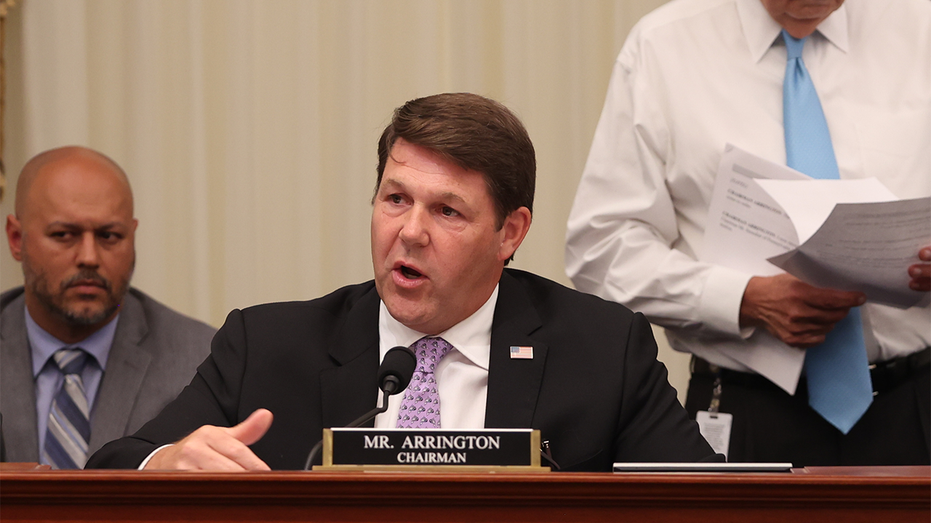
House Republicans are lurching forward with a second budget reconciliation package, ending months of speculation about whether the chamber would attempt to marshal a second GOP-only megabill through Congress before November’s midterm elections. House Budget Committee Chairman Jodey Arrington, R-Texas, said Wednesday he wants the measure to pay for President Donald Trump’s Iran campaign and enact anti-fraud provisions that offset the cost of the anticipated defense infusion’s large price tag. “It’s an opportunity to solve two problems and address two challenges and advance two great causes: fund the military, provide a strong defense, win the war, achieve the objectives and do it in a way that doesn’t put our kids further in the hole,” Arrington told reporters. “We’re all but ready to mark up a budget resolution,” Arrington continued, adding his panel is still continuing to hash out the details of the package. HOUSE CONSERVATIVES ERUPT OVER SENATE GOP, WHITE HOUSE DEAL AMID SAVE ACT FIGHT The Trump administration has floated a $200 billion request to help pay for the war in Iran but has yet to deliver a formal request. Given Democrats’ expected opposition to a defense supplemental, some House Republicans have said a second reconciliation package is the only viable vehicle to advance the measure and other Trump priorities through Congress. “Democrats have obstructed everything,” Rep. August Pfluger, R-Texas, told Fox News Digital. “So, we believe, unfortunately, that reconciliation is the only mechanism to move the rest of the President’s agenda.” Republicans have zeroed in on fraud in social services for months and view the enactment of fraud-related spending cuts as a way to offset the cost of the package. The budget reconciliation process would allow Republicans to circumvent the Senate’s 60-vote requirement and pass a spending measure with a simple majority. Arrington said he would be working closely with Senate Budget Committee Chairman Lindsey Graham, R-S.C., who also announced Wednesday that his panel would begin drafting reconciliation instructions. The South Carolina Republican floated funding increases for the military and law enforcement in addition to voter integrity measures as possible items in a second reconciliation bill. “Let’s put it this way: The reconciliation train is leaving the station,” Graham posted on X after the two lawmakers met to discuss a second megabill Wednesday. GOP MUST RACE FOR NEW ‘BIG, BEAUTIFUL BILL’ TO SLASH COSTS BEFORE MIDTERMS, TOP HOUSE REPUBLICANS WARN Though Republicans are likely to broadly support defense supplemental funding and fraud-prevention measures, a second megabill could still face major hurdles. Republicans narrowly passed Trump’s One Big Beautiful Bill Act in June 2025 after months of intraparty disagreement. Under House Republicans’ razor-thin majority, House Speaker Mike Johnson, R-La., can afford to spare just one GOP defection in a party-line vote. However, Arrington argued that the war in Iran would be a unifying force to get the bill done. “I think funding our military in a time of war, if there’s no sense of urgency and accountability from members of Congress to support our commander in chief, I can’t think of one,” Arrington said. “I do think the big push is going to be supporting our sons and daughters in uniform and making sure they have what they need to be successful.” Arrington did not shut the door on including parts of the SAVE America Act in a GOP-only megabill. However, its sweeping provisions, requiring proof of citizenship to vote in federal elections and voter ID requirements, could fail to meet reconciliation’s stringent budget requirements. The Trump-backed election bill has stalled in the Senate due to widespread Democratic opposition, though the upper chamber is continuing to debate the measure. Johnson, who has long pushed for a second budget bill, said Wednesday he was encouraged by Graham moving forward with reconciliation. “I’m glad to know the Senate is interested in reconciliation 2.0,” the speaker said. “I have been a broken record. We need to do that. It’s an important legislative tool.”
Mexico will continue accepting Cuban medical workers despite US pressure

Mexican President Claudia Sheinbaum praises services from Cuban doctors, who often work in underserved rural areas. Published On 25 Mar 202625 Mar 2026 Mexican President Claudia Sheinbaum has confirmed that her country will continue receiving Cuban medical workers, as part of a longstanding programme meant to build goodwill between the island and other Latin American countries. Her remarks on Wednesday come as the United States pressures Latin American countries to sever their ties to Cuba’s medical programme. Recommended Stories list of 3 itemsend of list Sheinbaum, however, told reporters during a news conference that the agreement was a benefit to Mexico. Thousands of Cuban medical workers have deployed there since 2022 to work largely in poor, rural areas. “We have a very good agreement that’s also been a great help to us. It’s a bilateral agreement that’s been very beneficial for Mexico,” said Sheinbaum. “It’s hard to get Mexican doctors and specialists to go out to many rural areas where we need medical specialists, and the Cubans are willing to work there.” In February, the US passed a law that opens the door to sanctions on countries that continue to participate in the programme. It called for the US secretary of state to issue a report within 90 days about which countries continue to pay the government of Cuba for the “coerced and trafficked labour of Cuban medical professionals”. The move comes amid a wider push to further isolate Cuba and topple the government in Havana, a longtime target of US ire. So far, countries including the Bahamas, Honduras, Guatemala, Jamaica and Guyana have ended their participation in the Cuban medical exchange programme. Cuba has long depicted the decades-old programme as a means of signalling solidarity with other countries. It has also become an important source of foreign revenue for the island nation, which has been under a restrictive US economic embargo since 1960. Advertisement The administration of US President Donald Trump, however, has depicted the programme as akin to forced labour. “Basically, it’s human trafficking,” Secretary of State Marco Rubio told reporters in February. “I mean, they’re barely even being paid. Their freedom of movement is tightly restricted. And we want these countries to understand that’s what they’re participating in.” Experts at the United Nations have also raised similar concerns, including about the confiscation of passports, which the Cuban government justifies as a means of preventing trained doctors from fleeing the country after their state-sponsored studies. The pressure on the Cuban medical missions is part of a broader push under Trump’s second term to seek regime change on the island. By threatening tariffs on Cuba’s trading partners, Trump has largely cut the island off from accessing the foreign oil necessary to power its electrical grid. Trump has also said that he hopes to “take” Cuba and install a new government that will be more pliant to US demands. The Mexican government has tried to balance its friendly relations with Cuba with the US’s demands. In the absence of energy shipments, Sheinbaum’s government has sent vessels with humanitarian aid to the island. Adblock test (Why?)
Video shows Israeli strike hitting displacement camp in Gaza
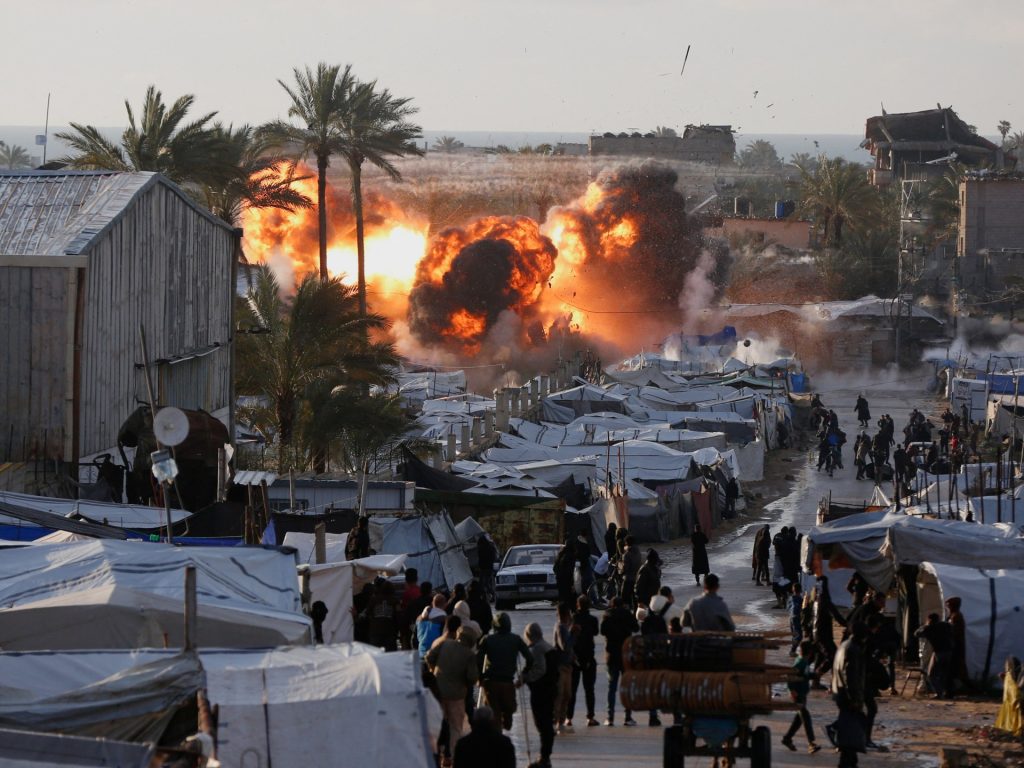
NewsFeed Videos show the moment a strike hit a tent camp for displaced Palestinians in Deir el-Balah, with explosions and smoke rising as casualties were carried away. Israeli attacks in Gaza have continued since the US-Israeli war on Iran, with 680 killed since the October ceasefire. Published On 25 Mar 202625 Mar 2026 Click here to share on social media share2 Share googleAdd Al Jazeera on Googleinfo Adblock test (Why?)
Iranian foreign minister rejects talks with US
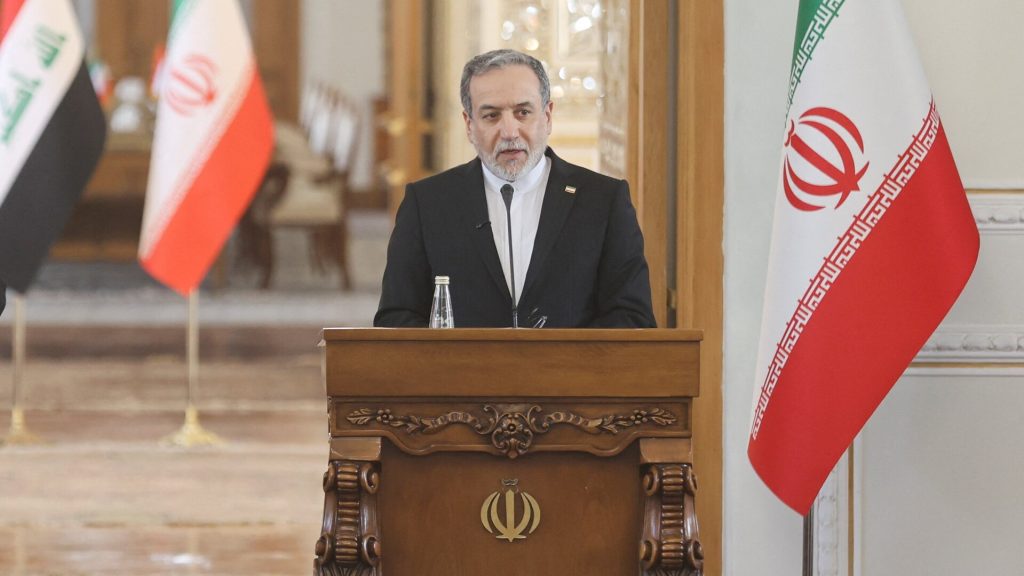
NewsFeed “No negotiations have taken place.” Iran’s foreign minister, Abbas Araghchi says his country is not and will not negotiate with the US while it is under attack. A day earlier, President Trump said the US was already in talks with Iranian officials, which Tehran denied. Published On 25 Mar 202625 Mar 2026 Click here to share on social media share2 Share googleAdd Al Jazeera on Googleinfo Adblock test (Why?)
Congress’ Sonia Gandhi’s health stable, doctors checking for infections

Congress Parliamentary Party (CPP) chairperson Sonia Gandhi was admitted to Sir Ganga Ram Hospital in the national capital last night, hospital authorities said. Her condition is now stable.
EAM Jaishankar breaks silence on Pakistan playing role as mediator between US and Iran ceasefire talk: ‘We’re not dalaal’
In an all party meeting, EAM S Jaishankar reacted to Pakistan reportedly playing active role as a mediator between US and Iran, and conveying Donald Trump’s 15 points ceasefire plan to Tehran. He said, ‘We are not a dalaal nation,” news agency PTI reported citing sources.
Mayes Middleton nabs former opponent Aaron Reitz’s endorsement in GOP attorney general runoff

Reitz, a former aide to Texas AG Ken Paxton, had sharply criticized both Middleton and Chip Roy on the campaign trail.
Ken Paxton assails acting Comptroller Kelly Hancock as “loser,” calls for his removal amid fiery grudge match
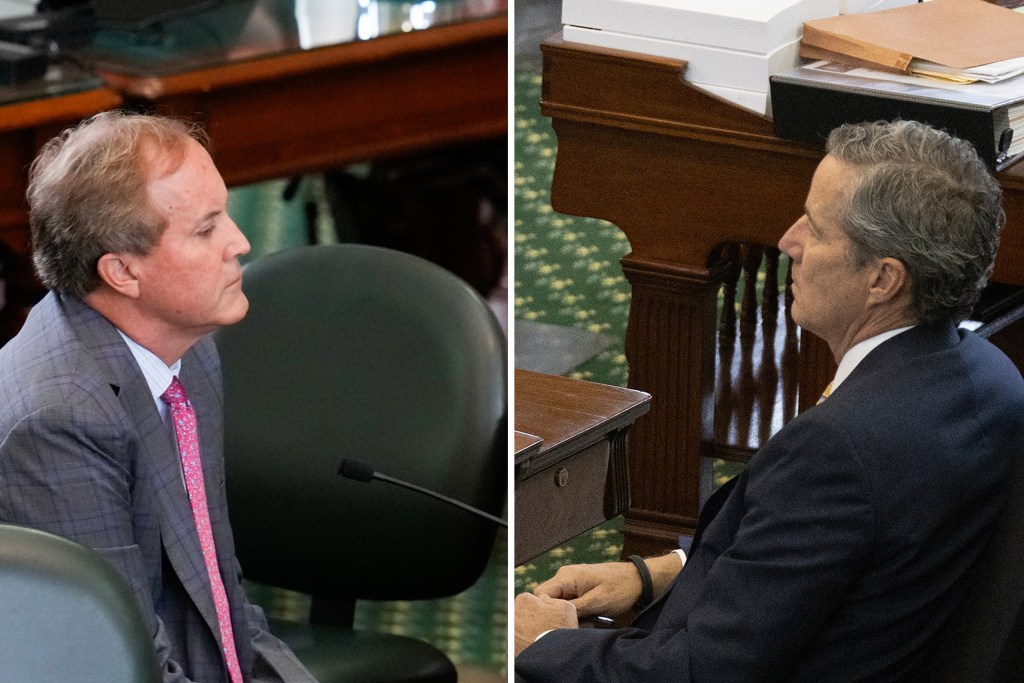
In a Tuesday letter, Hancock criticized the attorney general for not using all the tools at his disposal to go after groups he says are affiliated with Muslim terrorist groups.