

Pentagon seeks at least $200B from Congress for Iran war
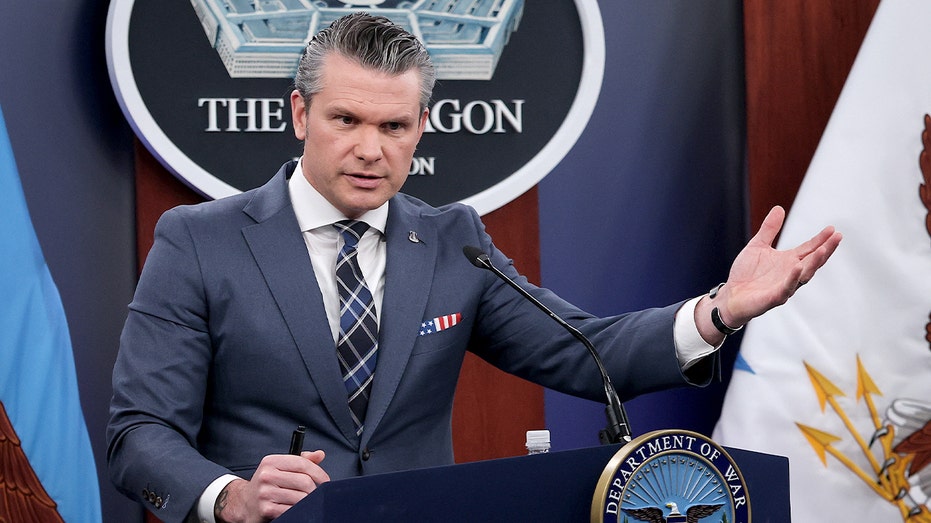
War Secretary Pete Hegseth said Thursday the Pentagon will ask Congress for additional funding related to the Iran war as Operation Epic Fury continues into its third week. Speaking at a Pentagon press briefing, Hegseth said the supplemental request would help cover the costs of operations and replenish U.S. weapons stockpiles. “As far as $200 billion, I think that number could move, obviously. It takes money to kill bad guys,” he told reporters, confirming reporting from The Washington Post that the Department of War is seeking that level of funding. “We’re going back to Congress and our folks there to ensure that we’re properly funded for what’s been done, for what we may have to do in the future, ensure that our ammunition is – everything’s refilled, and not just refilled, but above and beyond,” Hegseth added. TRUMP RALLIES DEFENSE TITANS TO SURGE WEAPONS OUTPUT AS IRAN WAR RAGES In December, Congress authorized about $856 billion for the Pentagon in fiscal year 2026 as part of a broader $891 billion national defense budget. Fox News confirmed Thursday that the War Department is seeking funding “north of $200 billion,” with replenishing ammunition stockpiles expected to be the biggest challenge. A senior House Republican source also told Fox News the price tag “will be whatever it will be.” HEGSETH WARNS ‘MORE CASUALTIES’ EXPECTED IN OPERATION EPIC FURY AGAINST IRAN The multibillion-dollar ask could face significant hurdles in Congress, where some lawmakers are expected to demand spending offsets that may be difficult to secure following recent budget cuts. Democratic support also appears unlikely amid ongoing concerns about the lack of congressional authorization for the conflict. The narrow Republican majority in the House adds another challenge, while any measure in the Senate would likely need 60 votes to overcome a filibuster. Lawmakers have discussed using the budget reconciliation process to bypass the Senate threshold, but some Republicans remain wary of pursuing another reconciliation bill. NEW IRANIAN SUPREME LEADER ‘LIKELY DISFIGURED,’ HEGSETH SAYS Gen. Dan Caine, chairman of the Joint Chiefs of Staff, said the U.S. will continue pursuing its military objectives and expand strikes deeper into Iranian territory. He told reporters the U.S. military recently dropped 5,000-pound penetrator munitions on underground storage facilities housing coastal defense cruise missiles and other support equipment. “These weapons are bespokely designed to get through concrete and or rocks and function after penetrating those barriers,” he said. “We continue to hunt and kill mine storage facilities and naval ammunition depots. We continue to hunt and kill afloat assets, including more than 120 vessels and 44 minelayers and the pressure will continue.”
Pentagon targets Iran-linked militias in Iraq as Hegseth vows ‘we will finish this’ for fallen US troops
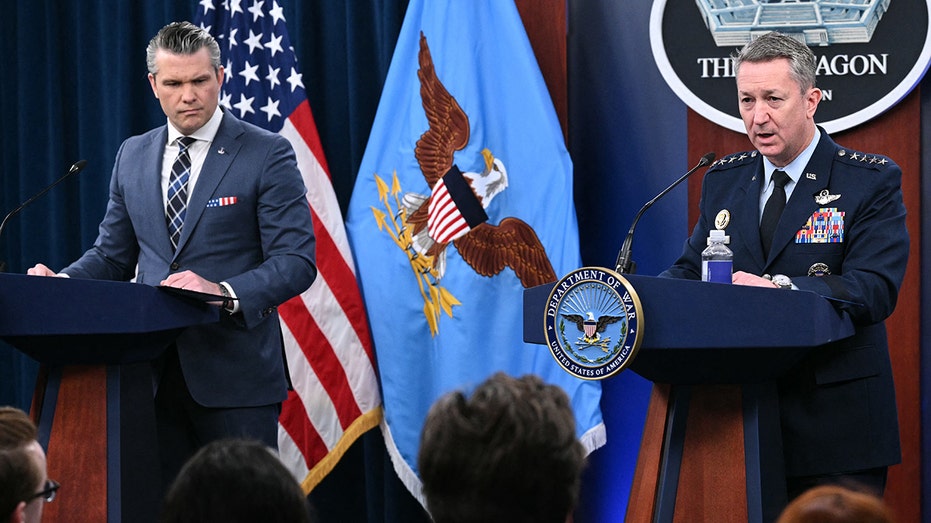
Chairman of the Joint Chiefs of Staff Gen. Dan Caine said the U.S. military is striking “Iranian-aligned militia groups” in Iraq as Secretary of War Pete Hegseth vowed Thursday to “honor” the sacrifice of six U.S. service members killed in a plane crash there last week. President Donald Trump, Hegseth and Caine on Wednesday attended the dignified transfer of the six fallen soldiers at Dover Air Force Base in Delaware. The Pentagon said last week that the U.S. forces were killed when a KC-135 refueling aircraft crashed in western Iraq during a combat mission in support of Operation Epic Fury. Caine said Thursday that in Iraq, AH-64 helicopters “have been striking against Iranian-aligned militia groups to make sure that we suppress any threat in Iraq against U.S. forces or U.S. interests.” “And we remain focused on pursuit of any platform that Iran could field to harm Americans or our partners,” he added. TRUMP THREATENS KEY IRANIAN GAS FIELD AFTER ISRAELI STRIKE Reflecting on the fallen U.S. service members, Hegseth said, “Yesterday at Dover Air Force Base, President Trump, the chairman, and I stood in solemn silence as heroes came home.” “Flag-draped caskets. We honored them. We grieved with their families, and we listened. What I heard through tears, through hugs, through strength and through unbreakable resolve was the same from family after family. They said, ‘finish this. Honor their sacrifice. Do not waver. Do not stop until the job is done.’ My response, along with that of the president, was simple — of course, we will finish this. We will honor their sacrifice,” Hegseth said. “Yesterday’s ceremony reminded us why we fight. Not for nation building or democracy promotion, but to crush direct threats to America, Americans, and our interests. We fight to win, and we are winning, on our terms, following our objectives,” he continued. 12 ARAB AND ISLAMIC COUNTRIES UNITE TO CONDEMN ‘HEINOUS’ IRANIAN ATTACKS “My 13-year-old son popped into my office last night while I was editing these remarks. He asked about the war and the families I met at Dover, and I looked at him and I said, ‘They died for you, son, so that your generation doesn’t have to deal with a nuclear Iran’,” Hegseth also said. “It’s the truth. And they did. So to the families who said, ‘finish this,’ we will. And I say the same to every American who wants peace through strength. May Almighty God continue to bless our troops in this fight. And again to the American people, please pray for them, every day, on bended knee, with your family, in your schools, in your churches, in the name of Jesus Christ. To the troops, keep going and Godspeed.” Those killed were Maj. John “Alex” Klinner, 33; Maj. Ariana Savino, 31; Tech. Sgt. Ashley Pruitt, 34; Capt. Seth Koval, 38; Capt. Curtis Angst, 30; and Master. Sgt. Tyler Simmons, 28. Caine said at the Pentagon Thursday that, “Our nation will never forget their sacrifice, and we will never forget their names,” and, “Our entire joint force mourns with you today.” Fox News Digital’s Bradford Betz contributed to this report.
Pence urges Senate to ‘restore public confidence’ with nationwide voter ID law
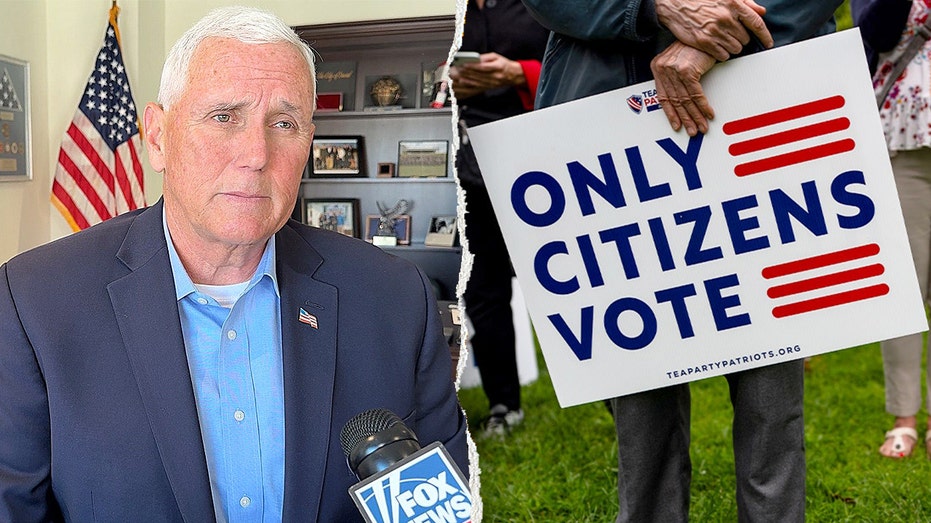
EXCLUSIVE: Former Vice President Mike Pence says that a national voter ID law “is truly an idea whose time has come.” In an exclusive interview with Fox News Digital, Pence urged the Senate to “make voter ID the law of the land in all 50 states.” The Senate is currently debating the SAVE America Act, which is strongly championed by Pence’s former boss, President Donald Trump. The SAVE Act, which stands for Safeguard American Voter Eligibility, narrowly passed the GOP-controlled House in February mostly along party lines. But it’s stalled in the Senate, where Republicans hold a 53-47 majority in the chamber, far short of the 60-vote threshold needed to pass the bill. The federal bill would require strict voter ID and proof-of-citizenship requirements across the country. Republicans say the bill is necessary to secure election integrity. FIRST ON FOX: REPUBLICAN GOVERNORS URGE CONGRESS TO PASS SAVE ACT “I think requiring our voters to show photo ID at the ballot box or prove American citizenship is simply an idea whose time has come,” Pence emphasized. And the former Indiana governor added, “I’m proud of the fact that the state of Indiana, 15 years ago, was one of the first states to adopt voter ID laws. Went all the way to the Supreme Court of the United States and was upheld. It became model legislation for many states around the country.” While polls indicate the vast majority of Americans — regardless of the political affiliation — support voter IDs at the polls and preventing noncitizens from voting in federal elections, Democrats argue the bill is not needed, since citizenship is already a requirement to vote and instances of noncitizen voting are rare. FLORIDA REPUBLICANS SEND SAVE ACT-STYLE PROOF-OF-CITIZENSHIP VOTING BILL TO GOV. DESANTIS’ DESK Democrats and voting rights groups also charge that the federal bill would create unnecessary barriers, making it harder for voters to cast a ballot. And longtime Senate Democratic leader Sen. Chuck Schumer of New York has framed the SAVE Act as “Jim Crow 2.0.” Pence noted that “the time, place and manner of elections under the Constitution is governed by the states. But the federal government has, under our Constitution, the ability to set certain conditions and parameters, and I believe the Save ACT falls well within the constitutional prerogative of the Congress.” The former vice president, through his policy and advocacy organization Advancing American Freedom, last month urged Congress to pass the bill. Pence reiterated his stance in his Fox News Digital interview, noting, “We have championed the SAVE America Act since it was first introduced, and will continue to. I’d urge every member of the Senate to set politics aside, cast a vote to restore public confidence in election integrity in this country.” SENATE GOP EYES BLAME GAME AS TRUMP-BACKED SAVE ACT HEADED FOR DEFEAT Pence earned the ire of Trump’s supporters five years ago, when he dismissed the president’s unproven claims of massive voter fraud in the 2020 presidential election and certified former President Joe Biden’s electoral college victory. The certification was upended for hours by the Jan. 6 riots at the U.S. Capitol, during which some of the rioters chanted “Hang Mike Pence.” “We all remember the election controversies of six years ago. We saw states that literally changed the rules in the midst of COVID for how votes would be counted,” Pence recollected. “There was never any evidence of widespread fraud that would change the outcome of the election, but it undermined public confidence, and it’s one of the reasons we’ve strongly supported election reform in states across the country.” And the former vice president reiterated, “I truly do believe that making sure the American people have confidence that those that are voting are citizens of this country, and that voter ID becomes the law of the land is truly an idea whose time has come.”
House Democrats vote against deporting immigrants who harm police dogs, horses
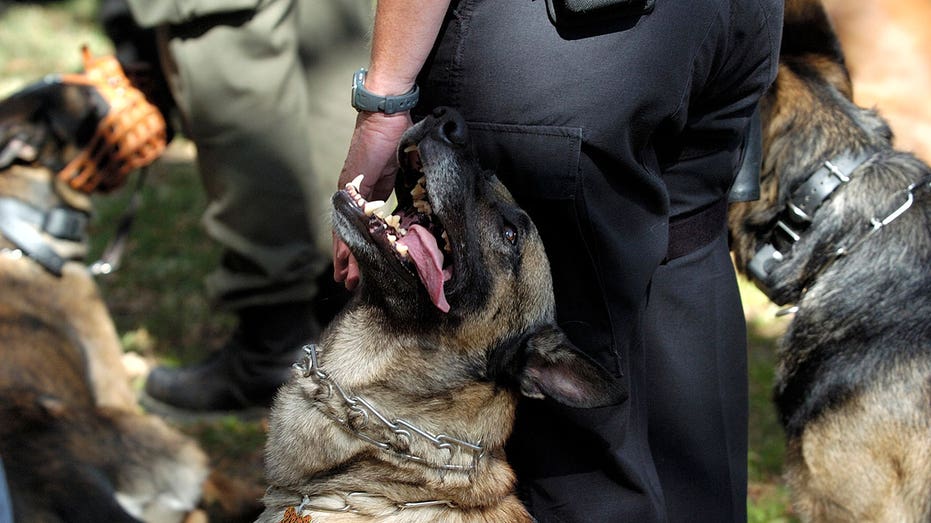
Nearly all Democrats opposed legislation Thursday targeting noncitizens who harm law enforcement animals. Lawmakers voted 228-190 largely along party lines to approve the measure, with just 15 Democratic lawmakers voting “yes.” All Republicans who voted supported the legislation. The Bill to Outlaw Wounding of Official Working Animals (BOWOW) Act, introduced by Rep. Ken Calvert, R-Calif., would make any noncitizen who is convicted of or admits to harming animals used in law enforcement operations deportable and not allowed to return. “The dogs and horses on the front lines of our federal law enforcement efforts alongside our officers deserve our protection,” Calvert said upon introducing the legislation. “[It] sends a clear message that we will stand up for our four-legged friends and have zero tolerance for any immigrants who assault them.” POLICE DOG HELPS SNIFF OUT BURGLARY SUSPECT HIDING IN AIR VENT Calvert cited an incident at Dulles Airport in June 2025 when Hamed Aly Marie, an Egyptian traveler, kicked a police K-9 that was screening his luggage and caught smuggled produce. The foreign national, who was promptly arrested by Customs and Border Protection (CBP), pleaded guilty to malicious assault on a police animal and returned to Egypt. The California Republican’s legislation would have made Marie eligible for deportation and inadmissible to the United States. “Can’t we at least all agree that kicking a 5-year-old beagle at an airport should disqualify a foreign national from entering our country ever again?” Rep. Tom McClintock, R-Calif, said in support of the measure Thursday. A majority of Democrats opposed the legislation because they argued that offenders could already be deported under existing law. SPARKS FLY AS GOP SENATOR REACTS TO BIDEN ADVISOR’S ‘I DON’T KNOW’ ANSWER ON ILLEGAL IMMIGRATION LAW Democrats also raised concerns that Calvert’s measure would infringe on legal immigrants’ due process rights by allowing for their removal before obtaining a formal conviction. “Here’s what America is talking about: Donald Trump’s unauthorized, undeclared war of choice,” Rep. Jamie Raskin, D-Md., said on the House floor Thursday. “What are MAGA Republicans in Congress talking about this week? They’re talking about the BOWOW Act.” The legislation will likely be dead on arrival in the Senate given expected opposition from Democrats in that chamber. In addition to the BOWOW Act, House Republicans also passed legislation this week seeking to crack down on noncitizens who commit fraud in the United States. All GOP lawmakers — and 20 Democrats — supported a measure on Wednesday that would make noncitizens who are convicted of or admit to defrauding the government eligible for deportation and banned from future entry. Rep. Marie Gluesenkamp Perez, D-Wash., one of the most vulnerable Democrats running for re-election, notably opposed the measure.
Paxton racks up Texas endorsements as bitter Cornyn runoff hits fever pitch
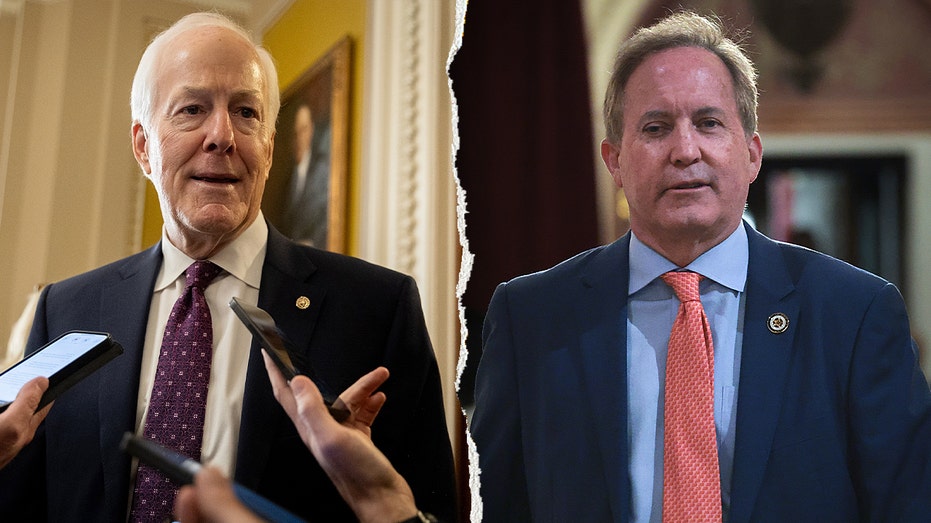
EXCLUSIVE: The Texas Senate primary runoff is reaching a fever pitch as Texas Attorney General Ken Paxton receives a slate of new endorsements from major state lawmakers and candidates over incumbent Sen. John Cornyn, R-Texas. The bitter rivals have been lobbing increasingly personal attacks at each other after a bruising primary election in which neither candidate achieved the 50% threshold to receive the GOP nomination. Now, Paxton has received 13 new state-level political endorsements, including prominent Texas Republican Sens. Bob Hall and Donna Campbell, and state Rep. Janis Holt. This brings his total to 250 Texas leaders, including Texas members of Congress Reps. Lance Gooden and Troy Nehls, who have endorsed Paxton. JAMES TALARICO’S PAST ANTI-MEAT STANCE GOES VIRAL, DRAWS REPUBLICAN FIRE FROM ACROSS TEXAS POLITICAL LANDSCAPE While an endorsement from President Donald Trump has remained notably absent for either candidate, the new endorsements represent a groundswell of renewed grassroots enthusiasm for Paxton as he and Cornyn close in on their May runoff election. Whichever candidate emerges victorious will have to defend the critical GOP Senate seat against progressive Democratic candidate state Rep. James Talarico. In response to the endorsements, Paxton told Fox News Digital he is “honored to be endorsed by leaders all across the state who are fighting for Texas and our future.” “The momentum behind our campaign continues to grow stronger every single day,” Paxton continued, adding that “Texans are ready for a change and are ready to be represented by an America First warrior who is going to work tirelessly to help Texas and support President Trump.” “That’s exactly what I’ve done as Attorney General, and it’s what I’ll continue to do as our next United States Senator,” he emphasized. Meanwhile, Cornyn campaign senior advisor Matt Mackowiak told Fox News Digital that “Ken Paxton will be a down-ballot dead weight if he is the GOP nominee, while Sen. Cornyn will provide the strongest up-ballot support for all Republicans and give the GOP the best possible chance to win the five new congressional seats that are critical to Trump’s legislative agenda.” Cornyn “has earned the endorsement of more than 500 current and former elected officials from every corner of the state who appreciate his integrity, work ethic, and effectiveness in fighting for Texas and enacting Trump’s agenda,” Mackowiak added. While Paxton’s list of state-level endorsements continues to grow, Cornyn, a leading member of the Senate who has filled the seat since 2002, has been endorsed by the likes of Senate Majority Leader John Thune, who called him a “very effective, conservative senator for the state of Texas and does a lot of good things for our country on so many issues.” He has also received the support of the National Republican Senatorial Committee, National Border Patrol Council and a long list of local leaders, including the famed business leader and sports gambler Jim “Mattress Mack” McIngvale. CORNYN BLASTS ‘DEFUND THE POLICE’ DEMOCRAT FOR HOLDING TSA AGENTS ‘HOSTAGE’ DURING AIRPORT CLASH Both candidates continue to vie for the all-important endorsement from Trump. While the president has yet to weigh in, he has repeatedly hinted at doing so. Trump has emphasized that he likes both candidates. He recently suggested that a voting integrity bill being voraciously debated in the Senate will play a role in his endorsement decision. “A lot has to do with the SAVE America Act,” Trump said, according to NBC News. “A lot is going to determine — Republicans have to get that passed, because that will secure voting in this country.” DEMOCRAT DARLING TALARICO CALLED OUT FOR MAKING SIXTH-GRADE PUBLIC STUDENTS WRITE ‘OBAMA MEMOIRS’ Cornyn has notably reversed his previous position on nixing the filibuster to get the SAVE America Act passed.
Mullin survives bruising hearing with Dem help, inches one step closer to becoming next DHS chief
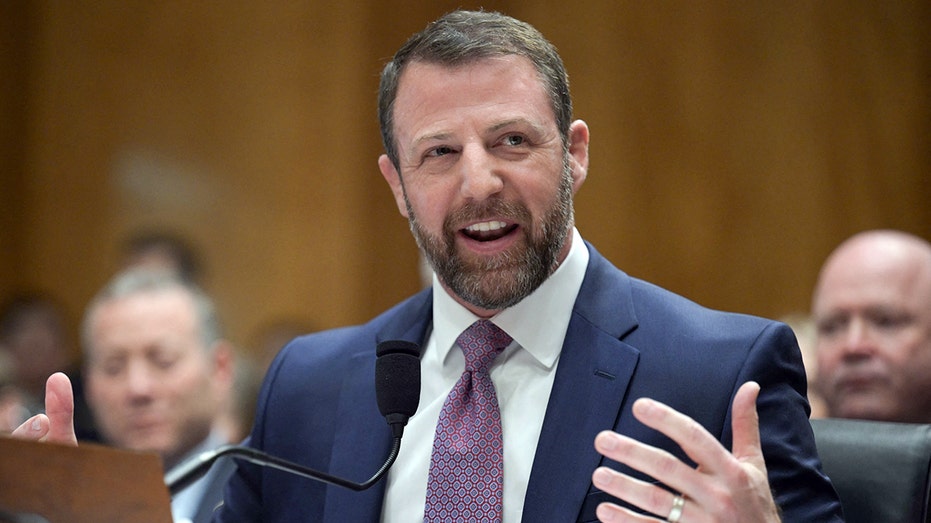
A Senate Democrat proved the decisive vote to advance Sen. Markwayne Mullin, R-Okla., to the next round of his confirmation journey after an explosive hearing. That’s because Sen. Rand Paul, R-Ky., who chairs the Senate Homeland Security and Governmental Affairs Committee, vowed not to support Mullin, whom he contended was “unfit” for the role. Mullin countered that if he had a problem with somebody, he would say it to their face. More so, he hoped to prove to Paul and Senate Democrats on the panel that he was the right pick for the job. ‘TELL ME TO MY FACE’: TOP MOMENTS IN MULLIN’S HEATED CONFIRMATION HEARING TO BE TRUMP’S NEXT DHS CHIEF “I’m going to earn the job, I won’t fail you,” Mullin said. “I won’t back down from a challenge. And I’ll also admit when I’m wrong. I’m not perfect. I don’t claim to be perfect. I make mistakes just like anybody else. But mistakes, if you own them, you can learn from them and you can move ahead. And I’ll make that commitment to you.” And, like several times on the Senate floor, Paul and Sen. John Fetterman, D-Pa., switched positions on their votes. Fetterman was the only Democrat on the panel to back Mullin, and without his vote, Republicans’ plans to sprint through the confirmation process would have been dealt a stiff blow. Fetterman acknowledged that he could be the difference-maker after the hearing. SCHUMER WEAPONIZES MULLIN NOMINATION TO DEMAND DHS OVERHAUL, SAYS ‘ROT’ GOES BEYOND NOEM “I came here and committed to come here with an open mind, and I’m going to continue to do that,” Fetterman said. “It’s not going to be about gotcha moments for me. My experience with you has been consistent and professional.” Mullin’s confirmation to become the next Department of Homeland Security secretary will now head to the Senate floor in the coming days and will require just a simple majority vote for him to be given the green light for the position. But several Senate Democrats may not support him because of the ongoing fight over the DHS shutdown. Democrats have demanded stringent reforms to Immigration and Customs Enforcement (ICE) and Customs and Border Protection (CBP) throughout the shutdown battle. “I will not be supporting Sen. Mullin’s nomination should it come before the Senate,” Senate Minority Leader Chuck Schumer, D-N.Y., said. “The problems at DHS, especially at ICE and CBP, run far deeper than just who is in charge.” Still, Mullin survived a sometimes jovial, sometimes grueling back-and-forth during the hearing. Senate Majority Leader John Thune, R-S.D., believed that once out of committee, Mullin would have broad support across the Senate. “Obviously, [Wednesday’s] hearing sounds like it got a little spicy at times,” Thune said. “But at the end of the day, it comes back to the job, and it comes back to the right person for the job. And I think that Markwayne is the right person.” MULLIN FACES DEMOCRAT GRILLING IN FIRST HURDLE TO LEAD DHS AMID SHUTDOWN FIGHT Thursday’s vote nearly didn’t happen, however, after Paul and Sen. Gary Peters, D-Mich., the top-ranking Democrat on the panel, clashed over travel the lawmaker took years ago. The duo wanted to meet and hear about the travel, which Mullin said happened while he was still in the House but couldn’t be detailed publicly, in a classified setting. Ultimately, Paul didn’t even go to the classified meeting. A spokesperson for Paul told Fox News Digital that the lawmaker already knew how he was going to vote but wanted to facilitate the classified meeting to “make sure everyone else got the information they needed.” And while the personal rancor between Paul and Mullin was explosive, it was not enough to sink his chances of becoming the next DHS chief. Paul said he would not support Mullin ahead of the confirmation vote, in part because he wouldn’t apologize for saying that the assault on Paul by a neighbor in 2017 was “justified.” He argued that Mullin’s inability to apologize, along with his previous outburst during a hearing with Teamsters President Sean O’Brien, showed he lacked the mindset needed to lead DHS. “We’re in the midst, I think, of a crisis where there needs to be more direction from the top,” Paul said. “And a guy who brawls, a guy who can’t even say he’s sorry about wishing violence on me and really applauding the attack that happened on me — can’t come to say that. I don’t know how he could, from my point of view, be a leader of ICE or Border Patrol.“
Georgia gubernatorial hopeful vows to ‘ban DEI’ but his own company touted diversity and inclusion

FIRST ON FOX: Rick Jackson, who is seeking the Republican nomination in the Georgia gubernatorial race, appeared to support Diversity Equity and Inclusion (DEI) policies at Jackson Healthcare, according to unearthed audio of a former DEI executive at his company, but Jackson is now promising to put an end to the DEI push if he becomes the governor. “We’ll ban DEI insanity and criminalize reverse discrimination,” Jackson said in a campaign ad last month. Jackson’s calls to end DEI appear to run counter to praise he received from Matthew Harrison, who formerly served in multiple executive-level roles leading DEI initiatives at Jackson Healthcare between early 2018 and Aug. 2022, according to his LinkedIn profile and University of Georgia bio for an adjunct assistant professor role. “I think it really reinforced for our associates that certainly, from a leadership perspective, our leaders get and see the importance of diversity, equity and inclusion in our workforce at Jackson Healthcare in I mean, and it really is emulated as a part of our values,” Harrison, who has a PhD in workplace diversity and who did his thesis on “Colorism,” said during a 2020 podcast interview. WATCH: DEI STILL IN PLACE AS COLLEGE ‘FINDING WAYS’ AROUND BAN, OFFICIAL ADMITS: ‘PROUD OF THE FIGHT’ Harrison described that the company’s leadership had taken steps to disseminate DEI principles through a “Conversations” series the company allegedly held at Jackson’s direction. “We created what we call our ‘Conversations,’ a learning experience about race. That was something we launched in October of 2019, and that is something that really kind of started due to the history of our CEO and founder, Rick Jackson,” Harrison said. “I think Rick felt that it was important enough, and we had a culture in place where we could establish that safe space and create those ground rules on the front end to where he felt comfortable with us doing that,” Harrison added. Harrison further described the “Conversations” series in a 2022 interview. “I think oftentimes we shy away a little bit at work, and we don’t have these discussions, and really, the workplace is the exact place where we should … So we created a ‘conversation on race’ series where people were brought together with their colleagues to talk about race, to talk about prejudice, to talk about microaggressions,” Harrison said. Jackson’s campaign pushed back on the characterization that the “Conversations” series meant that Jackson’s company had implemented or supported DEI principles. “The most pathetic attack yet from Burt Jones’ failing campaign,” Dave Abrams, a spokesperson from the Jackson campaign said, referring to Georgia’s current Lt. Governor and one of Jackson’s political opponents. “Jackson Healthcare had a black pastor speak to a voluntary group of employees. That doesn’t change the fact that Jackson Healthcare has always only hired the best.” Jackson, 71, announced his dark-horse candidacy on Feb. 3, joining an already-crowded pool of Republican candidates. Not including Jackson, eight other Republicans have also announced their candidacy. He is the billionaire founder of Jackson Healthcare, a healthcare recruiter and staffing company that services facilities nationwide with over 1,500 employees, according to its website. INVESTIGATION OF NIKE’S DEI PRACTICES COULD HAVE MAJOR NATIONWIDE IMPACT ON HIRING, SAYS ALAN DERSHOWITZ Since entering the race, Jackson has made ending DEI a fixture of his campaign alongside other policy stances like freezing property taxes, slashing income tax and continuing the Trump administration’s crackdown on illegal immigration. “I’ll ban DEI and focus on merit,” Jackson said in an interview he highlighted on X, where he laid out his plans. Despite the Jackson campaign’s pushback, a Fox News Digital review found several Facebook posts where Jackson Healthcare touted Harrison’s work at the company and his goal to implement DEI principles in the workplace. “Senior Vice President of Talent & Development, Matthew Harrison, recently participated in a Tech Alpharetta panel about building diversity, equality and inclusion into business operations. Click the link below to download and watch. Skip to 21:41 to hear Matthew highlight some of Jackson Healthcare’s key DE&I approaches,” a 2021 Jackson Healthcare Facebook post said. “Business RadioX talked with Matthew Harrison, our VP of Human Resources, and some of the leaders from our Associate Network Groups to hear about workplace diversity and how we’re creating an environment that welcomes everyone,” a 2019 Jackson Healthcare Facebook post said. “Our president, Shane Jackson, joined academic and business leaders during this week’s 2022 Business School Diversity Conference, sharing insights on how to create cultures where people thrive,” a 2022 Jackson Healthcare Facebook post said, referring to Jackson’s son. “The conference, hosted by the University of Georgia Terry College of Business and sponsored by the Business School DEI Collaborative, covered a variety of topics aimed at helping professionals advance DEI programs within their organizations.” In his time at Jackson Healthcare, Harrison recalls leadership, under Jackson’s instruction, taking strides to affirm the necessity of DEI — especially in the wake of several racially-charged incidents like the death of George Floyd that brought about chaos in major cities across the country. He recalled an instance where Jackson had personally attended and led conversation talks about DEI. BLACK REPUBLICAN CALLS FOR TOTAL, PERMANENT ABOLITION OF DEI: ‘I WANT TO EARN EVERY OPPORTUNITY ON MERIT’ “And I think more than anything, what it did illustrate with particularly, our president sitting through all six sessions and our CEO actually kicked off the session and came in the final session to again, talk about why he thought this was so important to our organization,” Harrison said. “And I think with them having the sessions, it really helped our associates even better understand what our president and CEO really mean by ‘others first,’ and that that is also inclusive of diversity and inclusion being something that’s really important to our organization,” he recalled. Jackson’s campaign once again denied that DEI had ever been implemented as a policy at his company. “Jackson Healthcare has never had DEI requirements,” Abrams said. Fox News Digital reached out to Harrison and
Trump threatens key Iranian gas field after Israeli strike
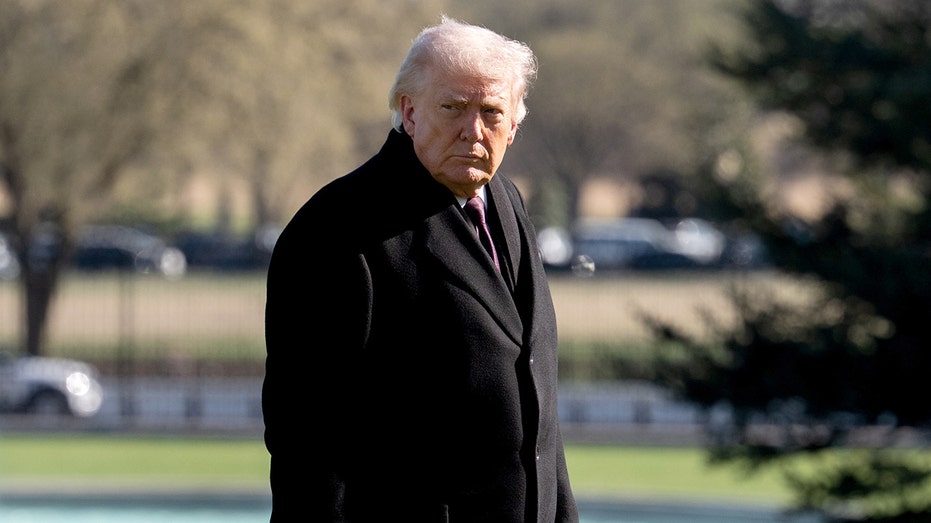
President Donald Trump warned in a Truth Social post that the U.S. will powerfully attack Iran’s South Pars natural gas field if the Islamic Republic targets a Qatari liquefied natural gas (LNG) facility again. “Israel, out of anger for what has taken place in the Middle East, has violently lashed out at a major facility known as South Pars Gas Field in Iran. A relatively small section of the whole has been hit. The United States knew nothing about this particular attack, and the country of Qatar was in no way, shape, or form, involved with it, nor did it have any idea that it was going to happen. Unfortunately, Iran did not know this, or any of the pertinent facts pertaining to the South Pars attack, and unjustifiably and unfairly attacked a portion of Qatar’s LNG Gas facility,” Trump declared in the Truth Social post. “NO MORE ATTACKS WILL BE MADE BY ISRAEL pertaining to this extremely important and valuable South Pars Field unless Iran unwisely decides to attack a very innocent, in this case, Qatar — In which instance the United States of America, with or without the help or consent of Israel, will massively blow up the entirety of the South Pars Gas Field at an amount of strength and power that Iran has never seen or witnessed before,” he continued. GOP BLOCKS BOOKER-LED PUSH TO CURB TRUMP’S MILITARY AUTHORITY IN IRAN Trump warned that while he does not want to take such action, he would be willing to do so. “I do not want to authorize this level of violence and destruction because of the long term implications that it will have on the future of Iran, but if Qatar’s LNG is again attacked, I will not hesitate to do so,” he declared in the post. Trump’s threat comes as the U.S. and Israel are deep into the third week of their controversial war with Iran. DNI TULSI GABBARD SAYS TRUMP ACTED BECAUSE HE CONCLUDED THE IRANIAN REGIME ‘POSED AN IMMINENT THREAT’ Earlier this week, Joe Kent resigned from his position as National Counterterrorism Center director due to his opposition to the war. “Iran posed no imminent threat to our nation, and it is clear that we started this war due to pressure from Israel and its powerful American lobby,” Kent declared in his resignation letter. FORMER COUNTERTERRORISM CHIEF JOE KENT UNDER FBI INVESTIGATION FOR ALLEGED CLASSIFIED LEAKS Trump pushed back on Tuesday, saying that “it’s a good thing that he’s out because he said that Iran was not a threat. Iran was a threat. Every country realized what a threat Iran was. The question is whether or not they wanted to do something about it.”
EXCLUSIVE: House Republicans to hold hearing on DHS shutdown risks amid travel surge
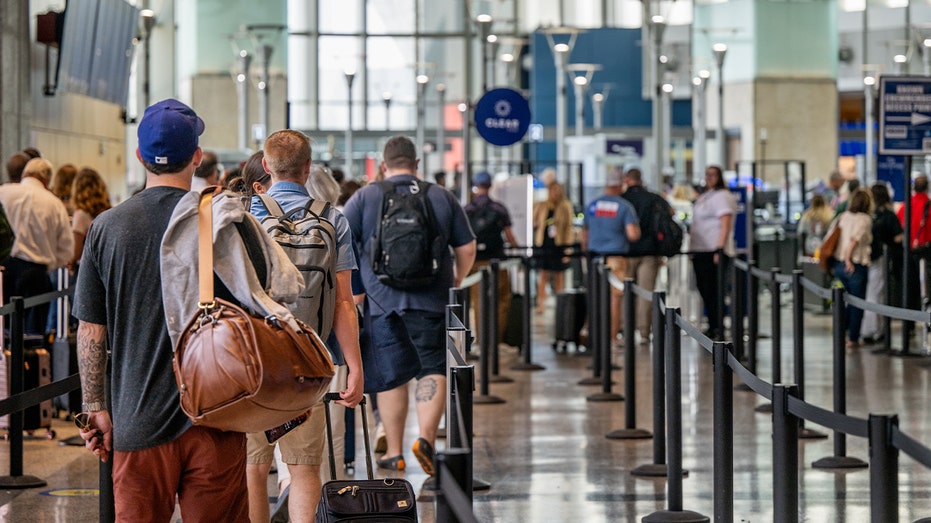
EXCLUSIVE: House Republicans are sounding the alarm about the costs of a prolonged Department of Homeland Security (DHS) shutdown as the funding lapse drags on with no end in sight. The House Homeland Security Committee will hold a hearing next Wednesday examining the security risks and financial hardship many DHS employees are facing as a result of the shutdown, Fox News Digital has learned. Senior officials from the Transportation Security Administration (TSA), the Federal Emergency Management Agency (FEMA), the U.S. Coast Guard and the Cybersecurity and Infrastructure Security Agency (CISA) — agencies overseen by DHS — are expected to testify about how the funding lapse is impacting their operations and the well-being of their personnel. House Republicans have slammed nearly all Democrats for withholding their support for a full-year DHS measure amid a massive spring travel season and a heightened threat environment amid the U.S.-Israeli conflict with Iran. The department is still expected to be shut down next week after Democrats panned the White House’s latest counteroffer on reforms to immigration enforcement, which Democrats have demanded to end the funding lapse. “Amid one of the busiest travel seasons and as we face heightened physical and cyber threats from the world’s leading state sponsor of terrorism and other adversaries, it is deeply troubling that DHS’s core mission continues to be undermined by Democrats’ political games,” Rep. Andrew Garbarino, R-N.Y., said in a statement. “Each day this shutdown continues, it jeopardizes the safety of Americans and creates worsening financial hardship for the frontline DHS personnel who work hard every day to protect the homeland.” TSA PAY BILL UNVEILED AS SHUTDOWN LEAVES AGENTS UNPAID, STRAINS AIRPORT SECURITY The shutdown’s impact on air travel has become a growing headache for Americans — 170 million of whom are expected to pass through the country’s airports during the spring travel season this year. More than 50,000 TSA employees have not received their salaries during the prolonged shutdown, leading some to quit their jobs or not show up to work, according to the House Homeland Security Committee. Among that cohort, more than 360 TSA employees have resigned during the 34-day partial shutdown, and roughly 10% of agents did not report to work on Sunday, according to the TSA. MOST VULNERABLE SENATE DEM BLAMES REPUBLICANS FOR UNPAID TSA WORKERS AFTER OPPOSING FUNDING BILL These staffing constraints have led to hours-long security lines in some of America’s largest travel hubs, though some airports still appear to be processing passengers relatively quickly. Lines at New York City’s JFK and LaGuardia airports were under 20 minutes Wednesday evening. FEMA staff, 85% of whom worked through the shutdown in fall 2025, are likely reporting to work in similar numbers without pay. FEMA leadership has warned that the agency could struggle to respond to a major disaster event in a shutdown. The hearing comes as Democrats are proposing legislation that would fund every DHS sub-agency that does not handle immigration enforcement. House Minority Leader Hakeem Jeffries, D-N.Y., announced Wednesday that Democrats intend to force a vote on the measure by filing a discharge petition. The petition would have to secure a handful of GOP signatures to trigger a vote on the underlying bill. Garbarino criticized Democrats’ proposal in a statement to Fox News Digital. “I hope my colleagues on the other side of the aisle recognize that there is far too much at stake to continue blocking full funding for the department, and that any piecemeal funding efforts simply fail to meet the moment,” Garbarino said. Senate Republicans have blocked similar legislation in the upper chamber, arguing that all of DHS — including its immigration enforcement functions — must receive full-year funding.
Saudi FM warns Iran that patience in Gulf not ‘unlimited’ amid attacks
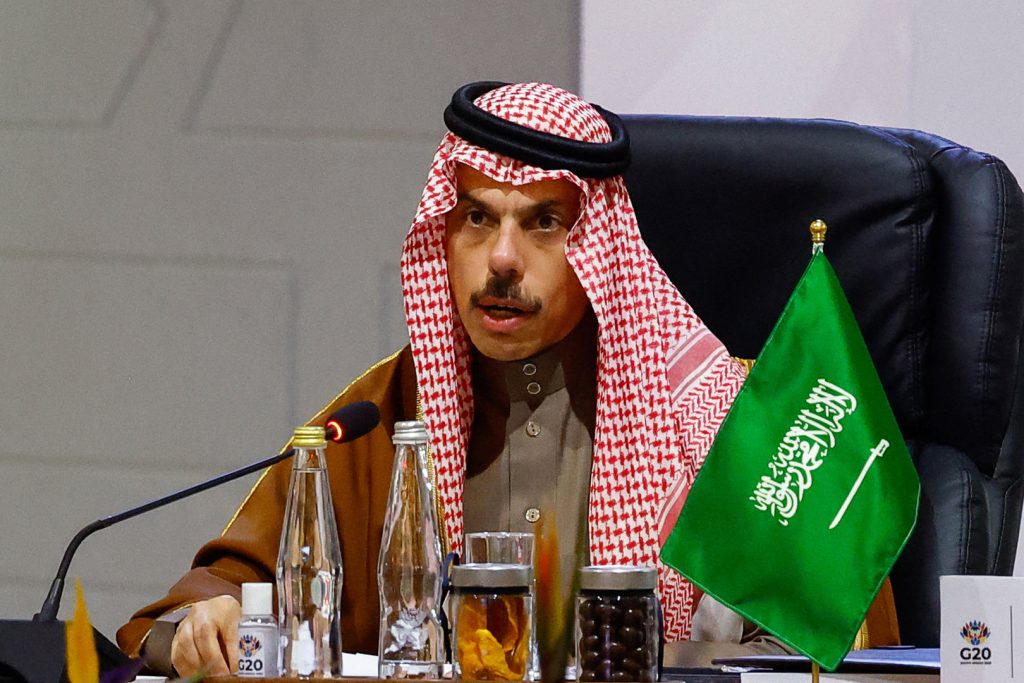
Saudi Arabia’s Foreign Minister warns Iran that regional neighbours have ‘significant’ capabilities with which to respond to Tehran’s aggression. Saudi Arabia’s Foreign Minister Prince Faisal bin Farhan Al Saud has warned Iran that tolerance of its attacks on his country and those of neighbouring Gulf states is limited, calling on Tehran to immediately “recalculate” its strategy. Warning that Saudi Arabia and other Gulf states have “very significant capacities and capabilities” that could be drawn on should they “choose to do so”, the foreign minister told a news conference early on Thursday that Iran had carefully planned its strategy for striking regional neighbours, despite denials from Tehran’s diplomats. Recommended Stories list of 4 itemsend of list “The level of accuracy in some of this targeting – you can see it in our neighbours as well as the kingdom – indicates that this is something that was premeditated, preplanned, preorganised and well thought out,” Prince Faisal said. “I’m not going to lay out what would and would not precipitate a defensive action by the Kingdom [of Saudi Arabia] because I think that is not a wise approach to signal to the Iranians,” the foreign minister continued. “But I think it’s important for the Iranians to understand that the kingdom, but also its partners who have been attacked and beyond, have very significant capacities and capabilities that they could bring to bear should they choose to do so,” he said. “The patience that is being exhibited is not unlimited. Do they [the Iranians] have a day, two, a week? I’m not going to telegraph that,” he added. “I would hope they understand the message of the meeting today and recalculate quickly and stop attacking their neighbours. But I am doubtful they have that wisdom.” Advertisement Prince Faisal’s warning followed a meeting of foreign ministers from Arab and Islamic countries in the Saudi capital earlier in the day to discuss the expanding war in the region, which on Wednesday saw Iranian attacks on Gulf energy sites, including Qatar’s Ras Laffan gas facility, where significant damage was reported, and the United Arab Emirates’ Habshan gas facility. Qatar’s Ministry of Foreign Affairs expressed its “strong condemnation and denunciation of the blatant Iranian attack targeting Ras Laffan Industrial City”, located 80km (50 miles) northeast of the Qatari capital Doha, which is the world’s largest liquefied natural gas (LNG) production facility, producing some 20 percent of the world’s LNG supply. Iran’s Islamic Revolutionary Guard Corps (IRGC) had warned earlier that oil and gas facilities in Qatar, Saudi Arabia and the UAE would face retaliation for an Israeli strike on Iran’s South Pars gasfield. Iranian state media reported that facilities linked to the country’s huge offshore South Pars field – located off the coast of southern Iran’s Bushehr province – had come under attack. Saudi Arabia’s Ministry of Defence also said on Wednesday that its air defences had intercepted four Iranian ballistic missiles that targeted Riyadh and two launched towards the country’s eastern region. Air defences in the UAE dealt with 13 ballistic missiles and 27 drones, according to the country’s Defence Ministry, while operations were suspended at the Habshan gas facility as authorities responded to incidents caused by fallen debris after the successful interception of a missile. The Saudi foreign minister also told the news conference on Thursday that while the war will end one day, it will take much longer to restore relations with Iran as trust “has completely been shattered” due to Tehran’s tactics of targeting its neighbours. “We know for a fact that Iran has been building this strategy over the last decade and beyond,” Prince Faisal said. “This is not something that is a reaction to an evolving circumstance where Iran is improvising. This has been built into their war planning: targeting their neighbours and using that to try and put pressure on the international community,” he said. “So when this war eventually ends, in order for there to be any rebuilding of trust, it will take a long time. And I have to tell you, if Iran doesn’t stop … immediately, I think there will be almost nothing that can re-establish that trust,” he added. Adblock test (Why?)