

Oppenheimer: Trump holds the reins on Netanyahu’s escalation options
NewsFeed Yariv Oppenheimer told Al Jazeera that Israeli PM Benjamin Netanyahu has incentives to escalate tensions with Iran and Hezbollah but is constrained by US President Donald Trump and US interests. He said Iran’s June 7 response was a warning, not a push for war, and doubts Trump would allow major Israeli retaliation. Published On 8 Jun 20268 Jun 2026 Click here to share on social media share-nodes Share googleAdd Al Jazeera on Googleinfo Adblock test (Why?)
How Mexican cartels turned South African farms into meth production hubs
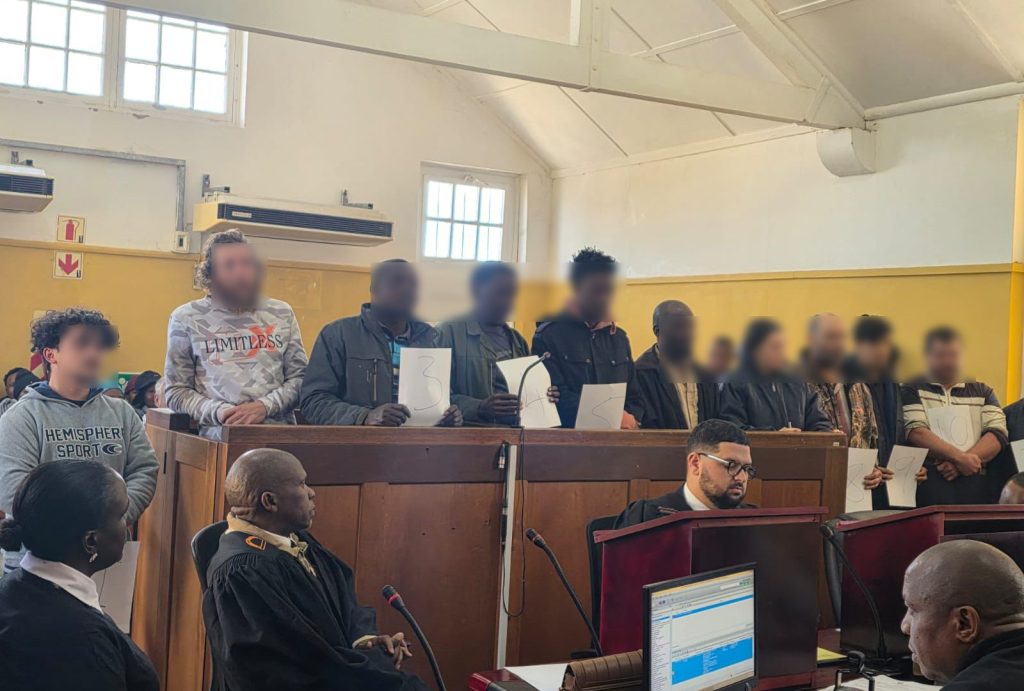
Johannesburg, South Africa – In the quiet mining town of Swartruggens, a small courthouse is preparing to decide whether five Mexicans accused of a major illegal drug operation will be granted bail or remain in custody. Their arrests followed a raid on a remote farm in North West province, where police said they uncovered a large methamphetamine laboratory worth about one billion rand ($60m). The case is one of several pointing to a pattern taking shape in South Africa’s rural interior. The Swartruggens laboratory was not an isolated discovery. It was one of four major meth sites linked to Mexican criminals uncovered in South Africa in just two years, a pattern that has unsettled investigators and organised crime experts. In 2024, police dismantled a large meth facility worth about $105–110 million on a farm near Groblersdal in Limpopo. Later that year, another laboratory worth roughly $5–6 million was discovered near Tshwane, followed by arrests last year in Mpumalanga. Then came Swartruggens. When police moved in on the North West farm in May, they found 481 kilos of methamphetamine, containers of chemicals and firearms. Among those arrested were Mexican nationals Fabian Astorga, Jesus Alonso Medina Astorga, Luis Alberto Ramirez Rios, Jose Andres Medina and Jacquelin Lopez Madrid, alongside co-accused South Africans. All the sites followed the same pattern: remote farmland, long distances from towns and enough isolation for criminal activity to go undetected. For investigators, the pattern is becoming harder to ignore. Advertisement Mexicans are increasingly being found working alongside local collaborators in rural production sites, suggesting a shift from trafficking meth into Africa to producing it there. Organised crime researcher Julian Rademeyer told Al Jazeera the model reflects a deliberate strategy. “It’s quite a unique development where you have members of Mexican drug cartels franchising, moving chemists into remote rural areas and farms,” he said. The approach has been building for more than a decade, he added. The logic is straightforward: produce closer to consumers, cut transport costs and reduce exposure to border and maritime enforcement. How it spread Mexican-linked networks in Africa did not begin in South Africa. Researchers trace early activity back to Nigeria, where local groups were producing meth with Mexican involvement by around 2016. From there, the networks spread through East Africa, then south through Mozambique and Botswana, before reaching South Africa more recently. For years, users on the streets spoke of “Mexican meth”, often assumed to be imported. That supply chain has now shifted inward. “Now, basically, the cartel chemists are being sent here,” Rademeyer told Al Jazeera. Analysts say multiple supply routes now feed the South African market, but the most significant change is the rise of local production. Who looks the other way Methamphetamine dominates parts of South Africa’s illicit drug market because cheaper drugs such as cocaine and heroin remain out of reach for many users, creating steady demand for a cheaper, highly addictive stimulant. Crime expert Willem Els says demand is only part of the story. “The main reason why manufacturing locally is lucrative to cartels is the local conditions that exist, where there is protection from corrupt police and politicians,” he told Al Jazeera. “It is very lucrative. The cartels can make a lot of money because South African conditions result in undetected and protected operations.” A separate commission of inquiry into law enforcement has heard testimony alleging deep corruption within policing structures, including missing drug consignments and suspected inside involvement in major cases. One case under scrutiny involves 541 kilos of cocaine seized in 2021 and later stolen from a police facility, in what investigators believe was an inside job. Former Interpol ambassador Andy Mashiale told Al Jazeera the problem is visible on the ground. “There is no way in which police don’t know those labs,” he said. “So corruption plays a role.” Advertisement He said officers deployed to rural areas were often aware of suspicious activity but failed to act. “What inspires the drug manufacturers or the drug cartels is the willingness of the police to enable the drug trade from happening,” he said. South Africa’s elite Hawks unit says recent raids show progress in disrupting networks, while international partners, including the US Drug Enforcement Administration, have provided intelligence linking some suspects to the Sinaloa Cartel. But investigators warn that the system behind the labs is resilient. A frontier that keeps moving US Africa Command officials have warned that Mexican cartels are now not only moving drugs through Africa, but also producing them on the continent. For South Africa, the challenge is no longer just border control, it is institutional capacity, intelligence and corruption within the system meant to contain it. Without deeper reform, analysts warn, the pattern is likely to continue: new farms, new labs, new chemists arriving quietly in rural provinces. For the five men in Swartruggens, the question is immediate, whether they will be released. For South Africa, the question is larger and more difficult: how to contain a trade that is no longer arriving at its borders, but taking root in the country. Rademeyer says the structure is built to absorb disruption. “It’s a game of whack-a-mole,” he told Al Jazeera. “You seize a meth lab here, you seize a meth lab there. They’ll spring up elsewhere.” Adblock test (Why?)
World’s most expensive mango found in Ayodhya? Meet the farmer growing the rare fruit at home
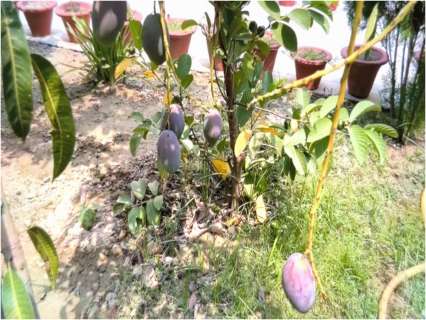
A farmer from Ayodhya has drawn attention for cultivating the world’s most expensive mango variety in his home garden. Know the whole story.
Amit Shah to launch LPMS on June 9: How new platform could transform border governance in India

Union Home and Cooperation Minister Amit Shah to launch the Land Port Management System on June 9 to make India’s border management more secure and smarter. Know more about it here.
‘No connection with masses’: Expelled TMC leader launches sharp attack on Abhishek Banerjee
Expelled leader of Trinamool Congress Ritabrata Banerjee launched a sharp attack on Abhishek Banerjee, alleging that he has ‘no connection with the masses’.
3 Air India planes damaged by ground equipment during storm at Delhi airport

A sudden storm at Delhi’s Indira Gandhi International (IGI) Airport led to damage to three aircraft of Air India after they were reportedly hit by ground handling equipment.
Digital blackout in Jaipur: Mobile internet shut, bulk SMS banned for 24 hours ahead of major action

Starting from midnight of June 7, the mobile internet services and bulk SMS facilities have been suspended for 24 hours in parts of Jaipur as authorities prepare for a large-scale anti-encroachment drive.
Why are INDIA Bloc leaders Rahul Gandhi, Mamata Banerjee, Akhilesh Yadav meeting today? Details inside

The INDIA bloc’s first formal meeting in over a year will focus on election strategy, electoral reforms, inflation, unemployment and resolving differences among alliance partners.
Who is Brahmananda Chakraborty? TMC leader caught hiding under sarees during raid in Kolkata; watch viral video

Brahmananda Chakraborty, a local TMC worker from Howrah, has become the focus of public attention after a viral video showed police allegedly finding him hiding under a pile of sarees during a raid.
Raman overtakes Spencer Pratt in razor-thin race, AP count shows, but race remains uncalled
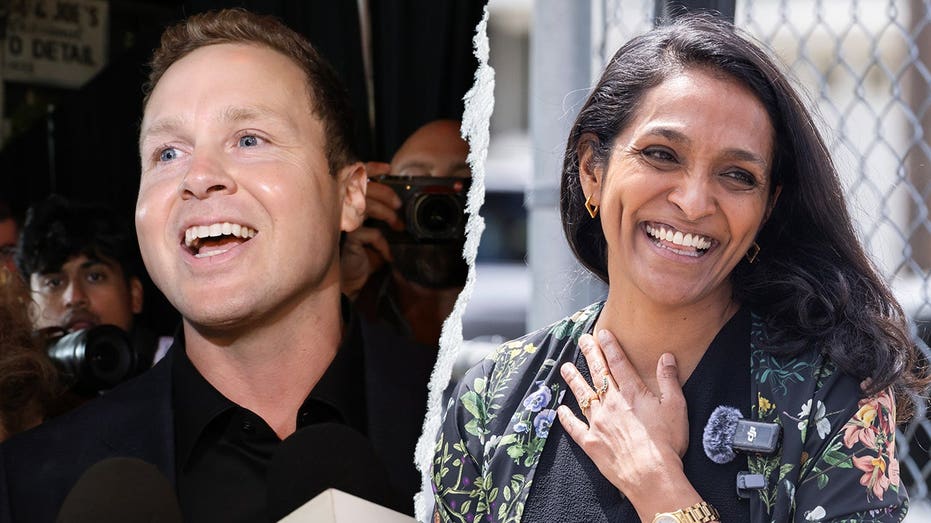
Los Angeles City Council member Nithya Raman has overtaken reality television star Spencer Pratt in the latest Associated Press vote count, although the outlet has not called the race. Pratt, a Republican, had led earlier in the day, but the latest tally now shows Raman, a Democrat, ahead by more than 3,000 votes, or about 0.4 percentage points, in the officially nonpartisan mayoral race. Incumbent Mayor Karen Bass, a Democrat, has already advanced to a runoff as she seeks a second term. She is now waiting for the candidate she will face in the runoff, as AP has not yet called a second candidate to advance. CALIFORNIA’S SLUGGISH VOTE COUNTING RIPPED ACROSS THE POLITICAL SPECTRUM: ‘EXTREMELY EMBARRASSING’ In Los Angeles’ nonpartisan mayoral election, if no candidate wins a majority in the primary, the top two vote-getters advance to the November runoff. Los Angeles County continues to count ballots postmarked on or before Election Day and received by June 9, drawing the attention of the Republican National Committee. County officials must complete final official results by July 2, and the secretary of state will certify results by July 10. California’s vote count often extends beyond Election Day because every active registered voter receives a mail ballot, ballots postmarked by Election Day may arrive up to seven days later, and election workers must verify signatures and process late-arriving ballots. WATCH: LEFT-WING LA MAYOR FACES REALITY TV CHALLENGER’S BLUNT TAKEDOWNS IN HEATED MAYORAL DEBATE “The California primary ended on June 2, 2026; yet California is still counting ballots,” the RNC website tracker counting the seconds since polls closed reads. “The state’s election system is a complete joke. The RNC is tracking every hour it takes California to finish the count,” it added. Pratt and other Republicans have decried the ongoing ballot count in the race. Election officials and voting experts have said California’s extended count is largely driven by state mail ballot rules, signature verification and the processing of late-arriving ballots. “The question to the rest of the world is what happened to California elections? Well, I’ll tell you, it’s Gavin Newsom,” McCarthy told Fox News’ “Sunday Morning Futures.” “When Gavin Newsom was elected governor of California, you knew who was elected in a day to two days. Now it takes more than weeks, almost a month.” “Why did we get here?” McCarthy continued. “Gavin changed a number of election laws in which you want to see is what did he do and why did he cause it?” Fox News’ Eric Mack contributed to this report.