

Kazakhstan’s president on balancing Russia, China and the West
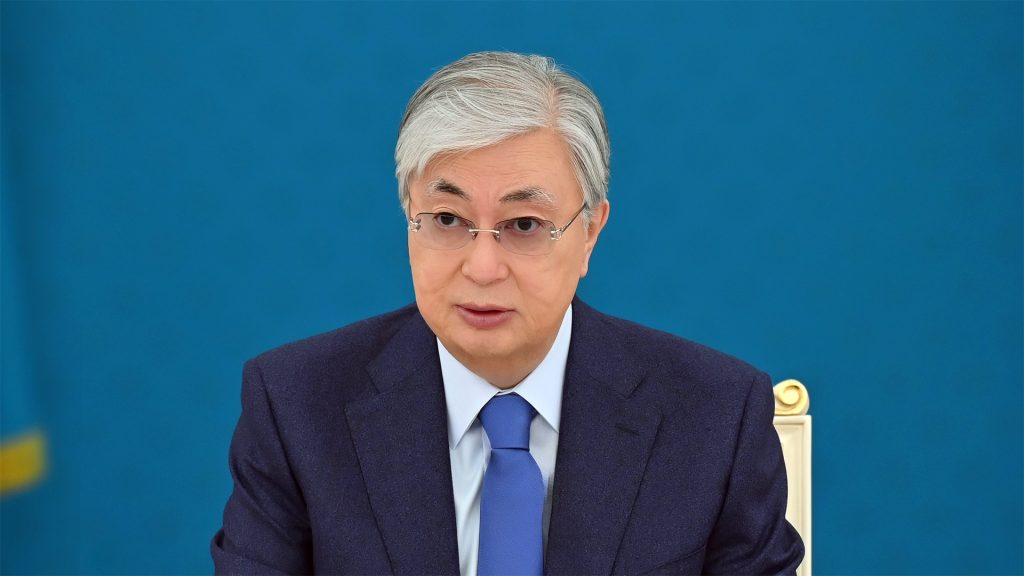
Kazakhstan sits at the crossroads of global power between Russia, China and key trade routes. President Kassym-Jomart Tokayev talks to Al Jazeera about his reform agenda, the legacy of Nazarbayev, and plans to reduce inequality in a resource-rich nation. He also addresses Kazakhstan’s economic dependency on oil and Russia, growing ties with China and the West, and criticisms over press freedom and political openness. With the war in Ukraine redrawing alliances, is Kazakhstan truly neutral, or simply under pressure? Adblock test (Why?)
Will Southeast Asian nations pick sides between the US and China?
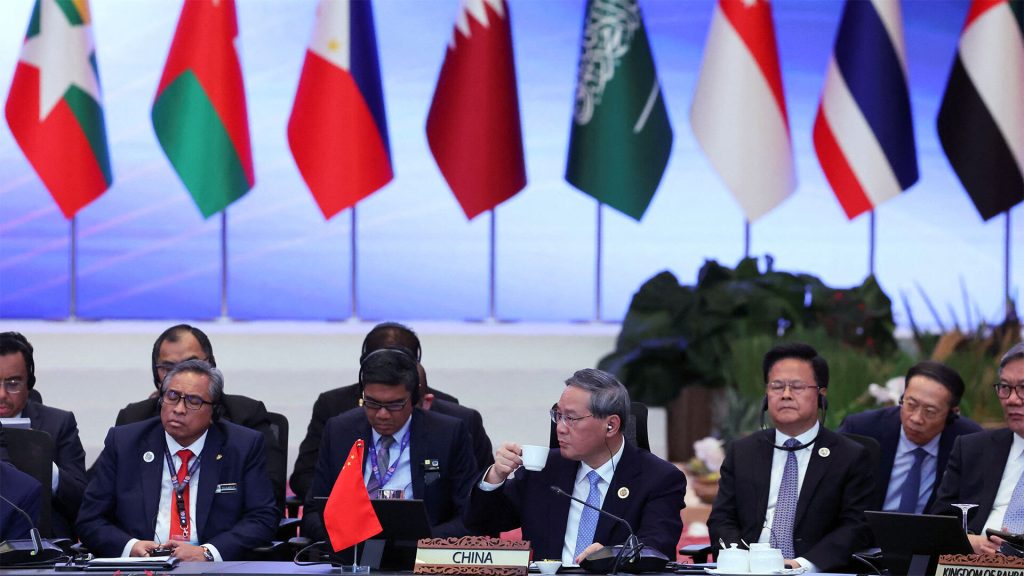
They’ve long been hedging their bets.But Southeast Asian nations are caught in the dispute between the United States and China.The trade-dependent countries are under threat from Trump’s tariffs, too.They face a delicate balancing act between economic survival and strategic neutrality.The message was clear at the Association of Southeast Asian Nations – ASEAN’s recent summit in the Malaysian capital Kuala Lumpur.Member countries are recalibrating their economic partnerships to insulate their economies.That includes a push to deepen trade ties with China and Gulf countries. Why is the price of Japanese rice rocketing? Plus, should older people work longer? Adblock test (Why?)
Most LGBTQ adults in US don’t feel transgender people are accepted: Poll
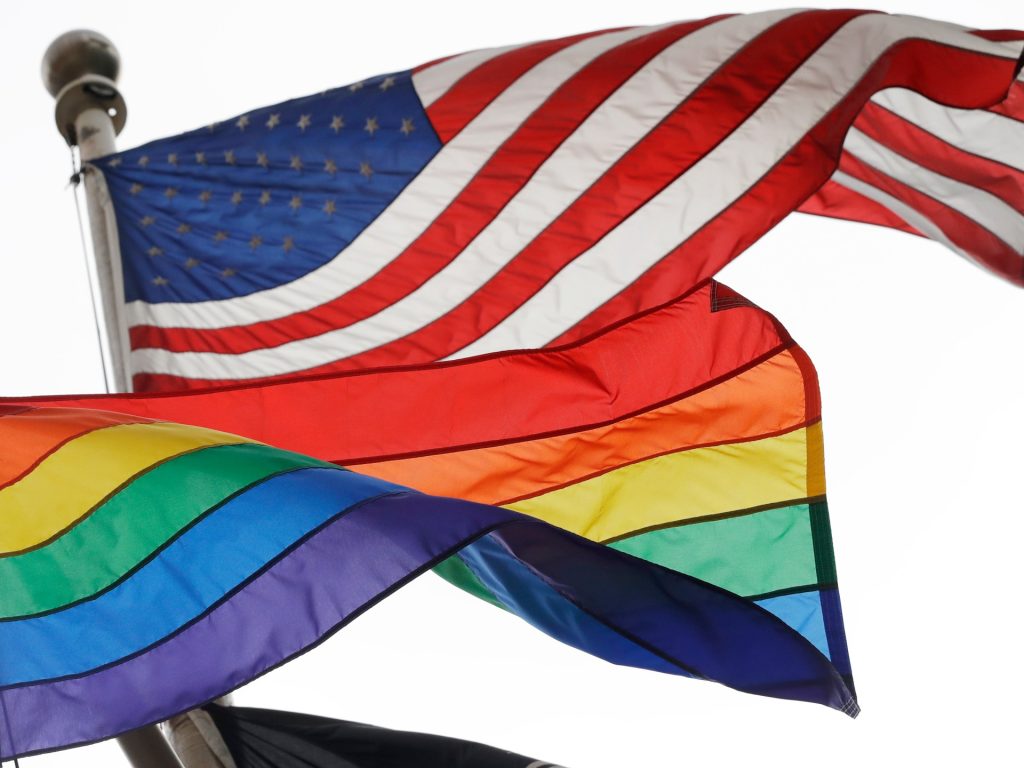
By contrast, about six out of 10 LGBTQ adults said gay and lesbian people are generally accepted in the US. A new poll by the Pew Research Centre has found that transgender people experience less social acceptance in the United States than those who are lesbian, gay or bisexual, according to LGBTQ adults. About six out of 10 LGBTQ adult participants in the poll said there is “a great deal” or “a fair amount” of social acceptance in the US for gay and lesbian people, according to “The Experiences of LGBTQ Americans Today” report released on Thursday. Only about one in 10 said the same for non-binary and transgender people — and about half said there was “not much” or no acceptance at all for transgender people. The survey of 3,959 LGBTQ adults was conducted in January, after US President Donald Trump’s election, but just before his return to office when he set into motion a series of policies that question transgender people’s existence and their place in society. On his first day in office, Trump signed an executive order calling on the government to recognise people as male or female based on the “biological truth” of their future cells at conception, rejecting evidence and scientific arguments that gender is a spectrum. Advertisement Since then, Trump has barred transgender women and girls from taking part in female sports competitions, pushed transgender service members from the military and tried to block federal funding for gender-affirming care for transgender people under age 19. A poll conducted by the Associated Press-NORC Center for Public Affairs Research in May found that about half of US adults approve of the way Trump is handling transgender issues. Transgender people are less likely than gay or lesbian adults to say they are accepted by all their family members, according to the Pew poll. The majority of LGBTQ people said their siblings and friends accepted them, though the rates were slightly higher among gay or lesbian people. About half of gay and lesbian people said their parents did, compared with about one-third of transgender people. Only about one in 10 transgender people reported feeling accepted by their extended family, compared with about three in 10 for gay or lesbian people. According to the Pew poll, about two-thirds of LGBTQ adults said the landmark US Supreme Court ruling that legalised same-sex marriage nationally on June 26, 2015, increased acceptance of same-sex couples “a lot more” or “somewhat more”. The Supreme Court is expected to rule in the coming weeks on whether Tennessee can enforce a ban on gender-affirming care for minors in what is seen as a major case for the transgender community. Adblock test (Why?)
Cambodia PM urges calm after border clash with Thailand leaves soldier dead
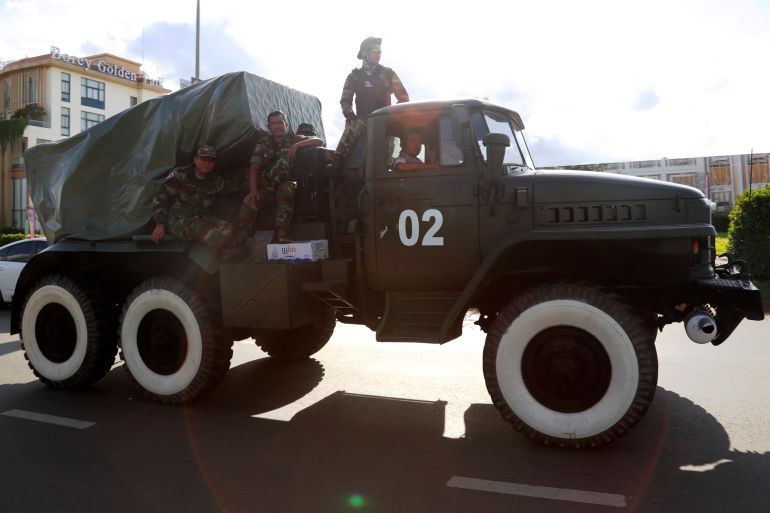
Cambodian and Thai officials claim soldiers from other side opening fire first in latest deadly border clash between the neighbours. Cambodia’s leader has called for calm in the country a day after a soldier was killed in a brief clash with troops from neighbouring Thailand, in a disputed zone along the Thai-Cambodia border. In a written statement on Thursday, Prime Minister Hun Manet said people should not “panic over unverified material being circulated”, and reassured the country that he did not want a conflict between Cambodian and Thai forces. “For this reason, I hope that the upcoming meeting between the Cambodian and Thai army commanders will produce positive results to preserve stability and good military communication between the two countries, as we have done in the past,” said Hun Manet, who is currently on a visit to Tokyo. “Even though I am in Japan … the command system and hierarchy for major military operations such as troop movements remain under my full responsibility as prime minister,” he added. Cambodia’s Ministry of National Defence said on Wednesday that one of its soldiers was killed in a brief firefight with Thai troops, in a disputed border region between the country’s Preah Vihear province and Thailand’s Ubon Ratchathani province. Advertisement The ministry accused Thai soldiers of opening fire first on a Cambodian military post that had long existed in the contested border zone. Cambodian soldiers ride on a self-propelled multiple rocket launcher in Phnom Penh, Cambodia, on May 28, 2025, as tension ramps up with Thailand [Kith Serey/EPA] However, Thailand’s Minister of Defence Phumtham Wechayachai said Cambodian forces in the area had opened fire first, adding they had previously dug a trench in the area in an effort to assert Cambodia’s claim over the disputed territory, local media reported. “I have been informed that the return fire was necessary to defend ourselves and protect Thailand’s sovereignty. I have instructed caution. Although the ceasefire holds, both sides continue to face each other,” the minister said, according to Thailand’s The Nation newspaper. The Nation also reported that Thailand’s Prime Minister Paetongtarn Shinawatra spoke with her counterpart, Hun Manet, and both were working to lower the temperature on the dispute. “We don’t want this to escalate,” the Thai prime minister was quoted as saying. Cambodia and Thailand have a long history of disputes along their mutual border, including armed clashes that broke out in 2008 near Cambodia’s Preah Vihear Temple, which was listed as a UNESCO World Heritage Site that year. Fighting also broke out along the border in 2011. The Associated Press news agency reports that in February, Cambodian troops and their family members entered an ancient temple along the border and sang the Cambodian national anthem, leading to a brief argument with Thai troops. Advertisement The incident was recorded on video and went viral on social media. Adblock test (Why?)
Jeremy Corbyn on Gaza and Britain’s Imperial Legacy

In this episode of Centre Stage, our guest is Jeremy Corbyn, an Independent MP in the UK Parliament. Corbyn has long fought for economic justice, peace and a British foreign policy that tries to atone for its imperial legacy. In this episode, he talks about the cost of standing with Palestine, and why Europe may need to unite against a US-led trade war. Adblock test (Why?)
Acclaimed Kenyan writer and dissident, Ngugi wa Thiong’o, dies at 87
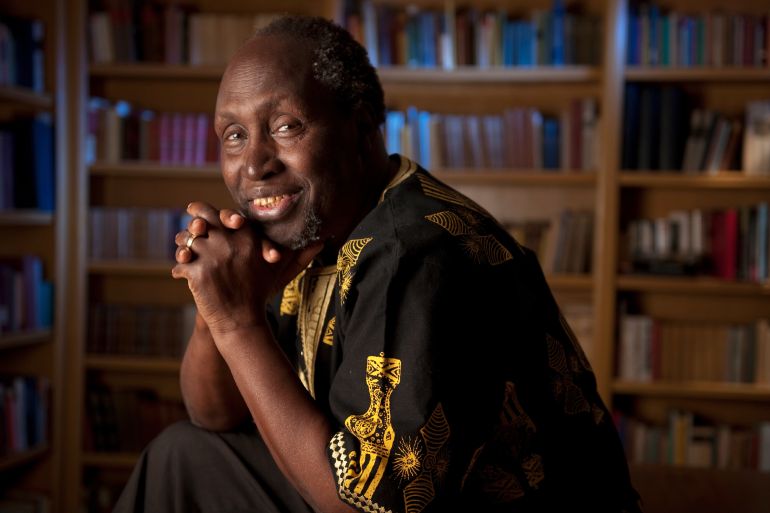
Ngugi’s work critiqued both British colonialism in Kenya and postcolonial Kenyan society. Renowned Kenyan writer Ngugi wa Thiong’o has died at age 87, his family members have announced. “It is with a heavy heart that we announce the passing of our dad, Ngugi wa Thiong’o,” his daughter Wanjiku Wa Ngugi wrote on Facebook on Wednesday. “He lived a full life, fought a good fight,” she said. At the time of his death, Ngugi was reportedly receiving kidney dialysis treatments, but his immediate cause of death is still unknown. Born in Kenya in 1938, Ngugi will be remembered as one of Africa’s most important postcolonial writers. Formative events in Ngugi’s early life included the brutal Mau Mau war that swept British-ruled Kenya in the 1950s. Ngugi’s work was equally critical of the British colonial era and the postcolonial society that followed Kenya’s independence in 1963. Other topics in his work covered the intersection between language, culture, history, and identity. Ngugi made a mark for himself in the 1970s when he decided to switch from writing in English to the Kikuyu and Swahili languages – a controversial decision at the time. Advertisement “We all thought he was mad… and brave at the same time,” Kenyan writer David Maillu told the AFP news agency. “We asked ourselves who would buy the books.” One of his most famous works, “Decolonising the Mind”, was published in 1986 while living abroad. The book argues that it is “impossible to liberate oneself while using the language of oppressors”, AFP reports. This 2010 image released by UC Irvine shows Kenyan author Ngũgĩ wa Thiong’o [File: Daniel A. Anderson/UC Irvine via AP] Besides holding the position of acclaimed writer, Ngugi was a prisoner of conscience. In 1977, he was jailed in Kenya for staging a play deemed critical of contemporary society. He once described the country’s new elite class as “the death of hopes, the death of dreams and the death of beauty”. In 1982, Ngugi went into self-imposed exile in the UK following a ban on theatre groups and performances in his home country. He later moved to the US, where he worked as a professor of comparative literature at the University of California, Irvine. He also continued writing a range of works, including essays, memoirs and novels about Kenya. Following news of Ngugi’s death, praise for his life and work quickly appeared online. “My condolences to the family and friends of Professor Ngugi wa Thiong’o, a renowned literary giant and scholar, a son of the soil and great patriot whose footprints are indelible,” Kenya’s opposition leader Martha Karua wrote on X. “Thank you Mwalimu [teacher] for your freedom writing,” wrote Amnesty International’s Kenya branch on X. “Having already earned his place in Kenyan history, he transitions from mortality to immortality.” Advertisement Margaretta wa Gacheru, a sociologist and former student of Ngugi, said the author was a national icon. “To me, he’s like a Kenyan Tolstoy, in the sense of being a storyteller, in the sense of his love of the language and panoramic view of society, his description of the landscape of social relations, of class and class struggles,” she said. Adblock test (Why?)
‘We can’t say we didn’t know’: Israeli academics demand end to war on Gaza
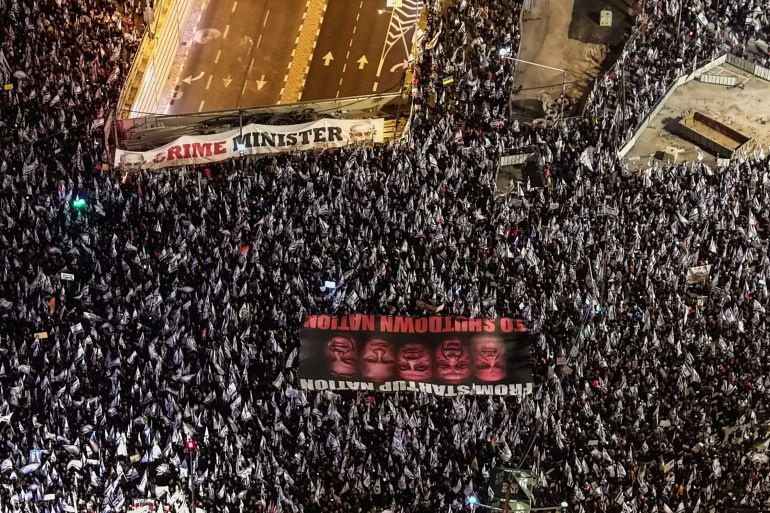
More than 1,200 Israeli academics have issued an open letter calling on the heads of Israeli academic institutions to “speak out” and act to stop the war on Gaza. In the letter released on Tuesday, the academics, who identify themselves as the Black Flag Action Group, claim that, since Israel violated the ceasefire in March, almost 3,000 people have been killed in Gaza. The vast majority of them, the writers say, were civilians. In addition to the growing numbers of people killed by Israeli fire, the authors note, are the warnings of acute starvation being forced upon Gaza as a “result of intentional and openly declared Israeli government policy”. The academics’ letter is the latest in a growing number of open letters protesting the war from within Israel. However, while many other letters have objected to the political reasons for Israel’s latest offensive, or claimed that it puts Israel’s remaining captives held in Gaza at risk, the academics’ letter is unique in that it places Palestinian suffering at the heart of its objections to the war. Advertisement “As academics, we recognize our own role in these crimes,” the letter states. “It is human societies, not governments alone, that commit crimes against humanity. Some do so by means of direct violence. Others do so by sanctioning the crimes and justifying them, before and after the fact, and by keeping quiet and silencing voices in the halls of learning. It is this bond of silence that allows clearly evident crimes to continue unabated without penetrating the barriers of recognition.” “This is a horrifying litany of war crimes and even crimes against humanity, all of our own doing,” it continues. “We cannot claim that we did not know,” the letter adds. “We have been silent for too long. For the sake of the lives of innocents and the safety of all the people of this land … if we do not call to halt the war immediately, history will not forgive us.” According to the open letter, the signatories want the Association of University Heads in Israel, the Board of Academic Public Colleges, and the protest group Academics for Israeli Democracy to “act immediately to mobilize the full weight of Israeli academia to stop the Israeli war in Gaza”. In practical terms, that could mean organising strike action, as previous universities had previously threatened in protest at Israeli Prime Minister Benjamin Netanyahu’s ongoing campaign to untether his government from judicial oversight, beginning in the early months of 2023. “What we’re saying is not that this is any more or less important [than the judicial reforms] but why not the war, too?” said Raphael Greenberg, a professor at Tel Aviv University who signed onto the letter, and who has staged daily protests against the war in Gaza since December. Advertisement “Academics have to be active,” he told Al Jazeera. Israel’s universities played a critical role in the initial resistance to Prime Minister Benjamin Netanyahu’s attempts to reduce the powers of the Supreme Court, February 25, 2023 [Ilan Rosenberg/Reuters] Devastation in Gaza Through its nineteenth months of war on Gaza, Israel has killed more than 54,000 Palestinians and wounded more than 123,000. According to the United Nations, it has destroyed or damaged 92 percent of homes and displaced hundreds of thousands of people, many multiple times. Until now, organised resistance from within Israel has been limited and largely restricted to the return of the captives taken during the Hamas-led attack on southern Israel on October 7, 2023. “For some of us, it’s been a cumulative process since October 7,” Ayelet Ben-Yishai, a professor at the University of Haifa, told Al Jazeera. “For others, I’d say it was the breaking of the ceasefire in March. That was a watershed moment for many, plus witnessing the starvation we’ve been forcing on Gaza ever since then.” Criticism within Israel of the country’s continued assault on Gaza, despite growing international condemnation, has increased. In April, roughly 1,000 current and former air force pilots, generally regarded as an elite unit within the military, wrote an open letter criticising a war they said only served “political interests”. Other open letters from within the military have followed, with many typically objecting to the political reasons behind the war, or claiming that the renewed offensive on Gaza endangers its remaining captives. Advertisement The open letter from the academics goes further in objecting to the suffering of Palestinians, a position that has been rejected by many Israelis. “I understand lots of people object to the war for different reasons,” Ben-Yishai said, “but right now, I welcome anyone that’s opposed to it.” “It sounds hollow, I know, but we wanted to make Palestinian suffering central. We wanted to say that we stand alongside and in solidarity with Palestinians. This was also about taking responsibility for what we are doing in Gaza and opening people’s eyes to it,” she said. Five-year-old Palestinian child Osama al-Raqab, who is suffering from severe malnutrition, receives treatment at Nasser Hospital in Khan Younis, southern Gaza Strip, May 26, 2025 [Haitham Imad/EPA-EFE] Sympathy for Palestinians? The position of the academics remains a marginal one within Israel. “There’s still an Israeli public taboo over showing any public sympathy for Palestinians,” Israeli political analyst Nimrod Flaschenberg previously told Al Jazeera, explaining the often low priority placed on protecting Palestinian lives among some in the antiwar movement. A march by nationalist youth led by the country’s far-right National Security Minister Itamar Ben-Gvir through Jerusalem’s old quarter on Sunday openly mocked the dead children of Gaza while physically attacking anyone perceived to be Palestinian. Perhaps more concerningly, a poll of Israelis published this week by Pennsylvania University showed 82 percent supported the forcible expulsion of Palestinians from both within Gaza and from within Israel’s borders. Almost half also backed the mass killing of civilians in enemy cities captured by the Israeli army. Adblock test (Why?)
Trump warns Netanyahu off Iran strike as nuclear talks continue
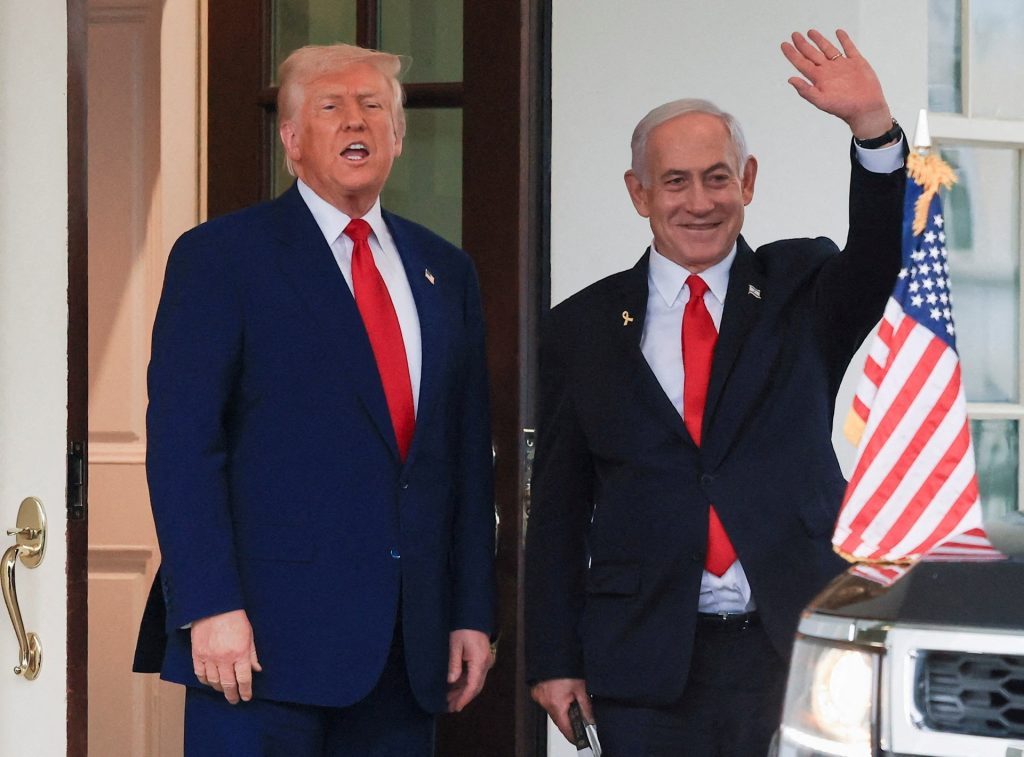
US president says an Israeli strike ‘would be inappropriate to do right now because we’re very close to a solution.’ United States President Donald Trump has said that he told Israeli Prime Minister Benjamin Netanyahu to hold off on any strike against Iran to give his administration more time to push for a new nuclear deal with Tehran, as several rounds of talks have been held in Oman and Italy. Trump told reporters on Wednesday at the White House that he relayed to Netanyahu a strike “would be inappropriate to do right now because we’re very close to a solution”. The Israeli leader has been threatening a bombardment of Iranian nuclear facilities. Iran has said it would respond with severity if any such attack were launched. In the meantime, Iran may pause uranium enrichment if the US releases frozen Iranian funds and recognises its right to refine uranium for civilian use under a “political deal” that could lead to a broader nuclear accord, two Iranian official sources told the Reuters news agency. The sources, close to the negotiating team, said on Wednesday that a “political understanding with the United States could be reached soon” if Washington accepted Tehran’s conditions. The sources told Reuters that under this arrangement, Tehran would halt uranium enrichment for a year. Advertisement The latest developments came as the head of the UN’s atomic watchdog group said that “the jury is still out” on negotiations between Iran and the US over Tehran’s rapidly advancing nuclear programme. But Rafael Mariano Grossi described the ongoing negotiations as a good sign. “I think that is an indication of a willingness to come to an agreement. And I think that… is something possible.” The 2015 nuclear deal, formally known as the Joint Comprehensive Plan of Action (JCPOA), placed limits on Iran’s nuclear programme in exchange for sanctions relief. It collapsed after Trump unilaterally withdrew the US from the agreement in 2018, leading to a sharp escalation in tensions and a breakdown in diplomatic relations. The key sticking point US officials have repeatedly said that any new deal must include a firm commitment from Iran to halt uranium enrichment, which they view as a potential pathway to building nuclear weapons. However, Iran has consistently denied seeking nuclear arms, insisting its programme is solely for civilian purposes. It has rejected Washington’s demand to eliminate enrichment capabilities, calling it an infringement on national sovereignty. It remains the critical sticking point after negotiators for Tehran and Washington met for a fifth round of Oman-mediated talks in Rome. Instead, Iran has reportedly proposed that the US publicly recognise Tehran’s right to enrich uranium under the Nuclear Non-Proliferation Treaty (NPT), and approve the release of Iranian oil revenues frozen under US sanctions. Advertisement Adblock test (Why?)
Seven migrants die when boat capsizes at Canary Island dock
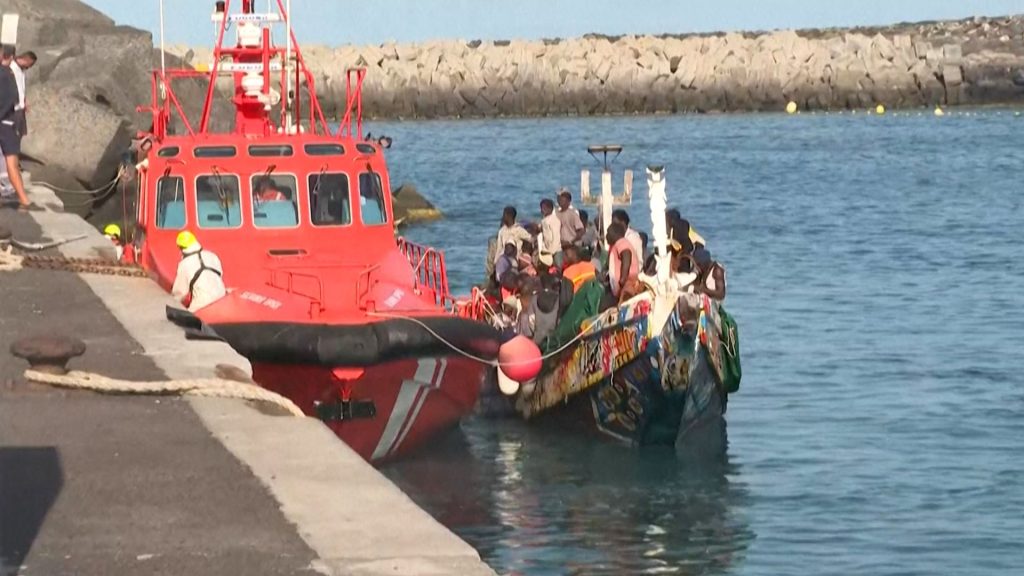
NewsFeed Four women and three girls died when a boat overcrowded with migrants capsized upon reaching a dock in the Canary Islands. They were attempting to transfer to a Spanish Coast Guard vessel when their own small boat tipped them into the water. Published On 28 May 202528 May 2025 Adblock test (Why?)
China hosts Pacific Island nations in bid to bolster diplomatic, trade ties
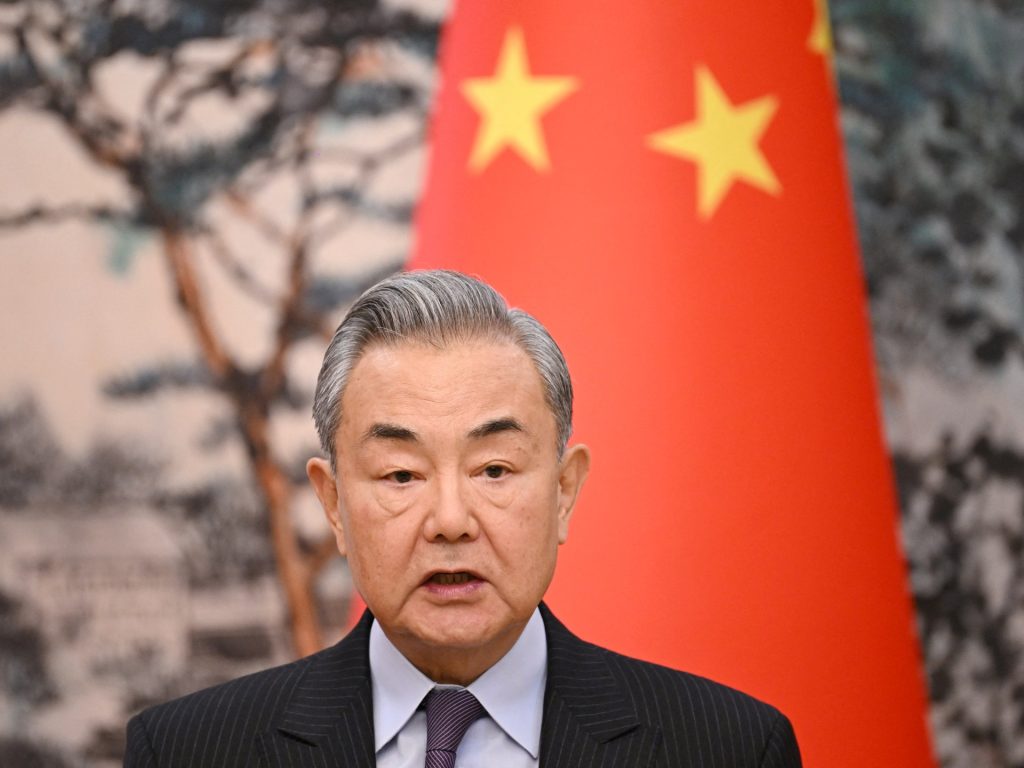
Foreign minister Wang Yi is meeting top diplomats from 11 Pacific nations in the Chinese city of Xiamen. China is hosting a high-level meeting with 11 Pacific Island nations as it seeks to deepen ties and build what it calls a “closer” community with “a shared future” in the strategic region. Chinese Foreign Minister Wang Yi is chairing the meeting in the city of Xiamen on Wednesday. The president of Kiribati, Taneti Maamau, and top diplomats from Niue, Tonga, Nauru, Micronesia, Solomon Islands, Vanuatu, Papua New Guinea, Cook Islands, Fiji and Samoa are attending. The two-day meeting is the third such gathering, but the first to happen in person in China. Al Jazeera’s Katrina Yu, reporting from Beijing, said the diplomats are expected to discuss trade, infrastructure development, poverty alleviation, sustainability and climate change. “For China, this is an opportunity to extend its influence and expand economic ties at a time when the United States is showing very little interest in this region, and we know increasingly that many of those countries are more aligned on China on things like investment, infrastructure, trade and even security assistance,” she said. Advertisement Global uncertainty The meeting comes as United States President Donald Trump’s cuts to foreign aid and the threat of tariffs fuel global uncertainty. Analysts say this has left the door open for China to step in. “This lack of certainty makes the US a very challenging partner to work with,” said Tess Newton at the Griffith Asia Institute. “Whereas other partners including China can offer, well you know we were here yesterday, we’re here today, and we expect to be here tomorrow.” The Chinese foreign ministry, announcing the meeting last week, said the objective of the meeting was to “jointly build an even closer China-Pacific Island countries community with a shared future”. Analysts say that for Beijing, that translates to greater economic aid, diplomatic engagement and the pursuit of a regional security pact. China has already signed a security accord with the Solomon Islands in 2022, a year after deploying police to the ground in the capital, Honiara, following a series of riots there. Beijing has also sent advisers to Vanuatu and Kiribati and wants to lock in a similar pact with other island nations. “What China is trying to do … is to insert itself as a security player and in some cases through the angle of contributing to the individual security needs of Pacific countries such as policing,” said Mihai Sora, director of the Pacific Islands Program at the Lowy Institute in Australia. The meeting in Xiamen is “an opportunity for China” to push its goals “in its own space, on its own turf and on its own terms,” he added. Advertisement Taiwan The topic of Taiwan, the self-ruled island that China claims as its own and lies off the coast of Xiamen, is also expected to be discussed at this meeting. China has been gradually whittling away at the number of countries in the Pacific that retain ties with Taiwan, and in January of last year, Nauru also switched recognition to Beijing. Taiwan now has three remaining allies in the region – Marshall Islands, Palau and Tuvalu. Al Jazeera’s Yu said the region is of strategic, military and diplomatic significance for China. “If you look at the region, these countries are very small, their economies are small and only one of them has a population that exceeds one million. That is Papua New Guinea,” she said. “But the region is strategically extremely important to Beijing because it’s home to crucial shipping lanes, deep sea cables, deep sea ports and potential mineral deposits underwater. Militarily, it could be strategically important, because if there could be any conflict in the future, this area could be important in terms of launching potential forward attacks on US territory, and also US ally Australia is very close by.” Adblock test (Why?)