

Trump says Canada will pay $61bn for Golden Dome, or become 51st state
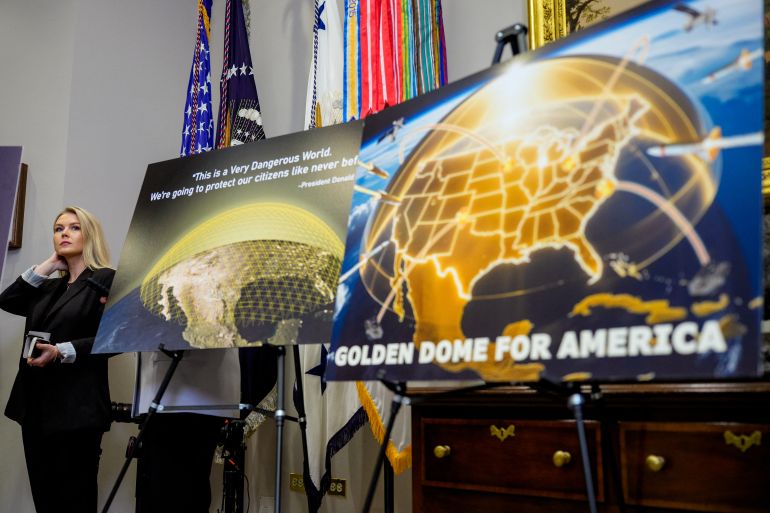
Trump’s latest comments come as China, North Korea, Russia say the Golden Dome missile defence system will create ‘space arms race’. United States President Donald Trump says he has told Canada it will have to pay $61bn to be part of his proposed Gold Dome missile defence system “if they remain a separate, but unequal, Nation”. In a post on TruthSocial, Trump claimed Canada “very much wants to be part of our fabulous Golden Dome System” and would gain free access if it joins with the US. Participating in the proposed defence system would cost Canada “ZERO DOLLARS if they become our cherished 51st State”, Trump said, adding, “They are considering the offer!” Trump’s post came just hours after Canada’s parliament hosted the UK’s King Charles III for a rare royal speech in which the monarch emphasised Canada’s sovereignty in “dangerous and uncertain” times, and amid the US president’s exhortations for the country to become part of the US. Following the king’s speech, Canadian Prime Minister Mark Carney told Canadian Public broadcaster CBC that he hopes Canada will join ReArm Europe by July 1, in an effort to reduce dependence on the US for weapons. Advertisement Canada did not immediately respond to Trump’s latest comment, but Carney has previously confirmed his country has held “high-level” talks on the defence system issue with the US. Funding, timeline uncertain In total, Trump has claimed the Golden Dome system will cost some $175bn and would be completed by the end of his current term in 2029, although defence industry experts have questioned the feasibility of this timeline and budget. Trump is hoping to secure an initial $25bn funding for the system through the sweeping “Big, Beautiful Bill” which is next to go up for a vote in the Senate after narrowly passing the Republican-controlled US House of Representatives last week. The bill boosts spending on the military and border enforcement while cutting funding for social programmes, including Medicaid and food assistance that helped tens of millions of low-income Americans. White House Press Secretary Karoline Leavitt looks on from behind posters depicting a ‘Golden Dome for America’ missile defence system [Andrew Harnik /Getty Images via AFP] The Golden Dome is modelled after Israel’s Iron Dome, which also receives significant funding from the US, including $500m per year for its upkeep. It is unclear how Trump would scale up the Iron Dome to cover the entire US, since Israel is only about the size of New Jersey, one of the smaller states in the US. The Iron Dome is also designed to target short-range missiles, with a range of 1,000km (about 620 miles), while the main threat to the US would likely come from long-range ballistic and hypersonic missiles. Golden Dome will create ‘space arms race’ China, North Korea and Russia have all criticised Trump’s plan to put weapons in space, which the US president described in detail for the first time last week. Advertisement China’s Ministry of Foreign Affairs swiftly responded, with spokeswoman Mao Ning saying the plan “heightens the risk of space becoming a battlefield, fuels an arms race, and undermines international security”. “The United States puts its own interests first and is obsessed with seeking its own absolute security, which violates the principle that no country’s security should come at the expense of others,” Mao Ning said. North Korea’s Ministry of Foreign Affairs also responded, saying the US is “hell-bent on the moves to militarise outer space”. Russian Foreign Ministry spokeswoman Maria Zakharova said on Tuesday that the Golden Dome project undermines the foundations of “strategic stability” as it involves the creation of a global missile defence system. According to Russia’s state news agency TASS, Zakharova said developing the Golden Dome would also lead to development of the “means of pre-launch missile destruction and infrastructure that ensures their use”. “This is already a literal manifestation of the US’s highly dangerous doctrinal course toward delivering so-called preventive, but essentially first strikes,” she said, warning it would turn space into a “weaponised environment” and an “arena of armed confrontation”. Adblock test (Why?)
No death penalty for son of Mexican drug boss ‘El Chapo’: US prosecutors
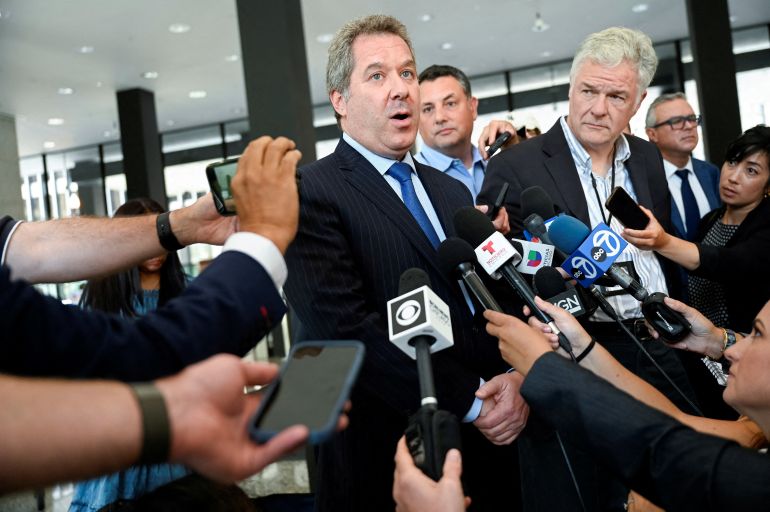
Federal prosecutors in the US will not seek the death sentence for Joaquin Guzman Lopez if he is found guilty at trial, court documents show. Federal prosecutors in the United States said they will not seek the death penalty for the son of Mexican drug lord “El Chapo” if he is found guilty of multiple drug trafficking charges when he goes on trial. According to media reports, federal prosecutors in Chicago filed a one-sentence notice on May 23, saying they would not seek the death penalty for Joaquin Guzman Lopez, the son of Joaquin “El Chapo” Guzman – the former leader of Mexico’s feared Sinaloa Cartel who is serving a life sentence in a US prison. The notice did not offer any explanation for the decision by the federal prosecutors, or further details. Joaquin Guzman Lopez, 38, was indicted in 2023 along with three of his brothers – known as the “Chapitos”, or little Chapos – on US drug trafficking and money laundering charges after assuming leadership of their father’s drug cartel when “El Chapo” was extradited to the US in 2017. Joaquin Guzman Lopez’s lawyer said in an email to The Associated Press news agency on Tuesday that he was pleased with the federal prosecutors’ decision, “as it’s the correct one”. Advertisement “Joaquin and I are looking forward to resolving the charges against him,” Lichtman said. Jeffrey Lichtman, lawyer for El Chapo’s son, Joaquin Guzman Lopez, speaks to the media as his client is set to make his initial US court appearance in Chicago, Illinois, in July 2024 [Vincent Alban/Reuters] Joaquin Guzman Lopez has pleaded not guilty to the five charges of drug trafficking, conspiracy and money laundering against him, one of which carries the maximum sentence of death as it was allegedly carried out on US territory. He was taken into US custody in a dramatic July 2024 arrest alongside alleged Sinaloa Cartel cofounder Ismael “El Mayo” Zambada on a New Mexico airfield. Zambada has also pleaded not guilty. But his lawyer told the Reuters news agency that he would be willing to plead guilty if prosecutors agreed to spare him the death penalty. Another of the brothers, Ovidio Guzman, is expected to plead guilty to drug trafficking charges against him at a court hearing in Chicago on July 9, according to court records. “El Chapo” Guzman is serving a life sentence at a maximum security prison in Colorado. Adblock test (Why?)
‘She’s the queen’: Sri Lanka bids farewell to film legend Malini Fonseka
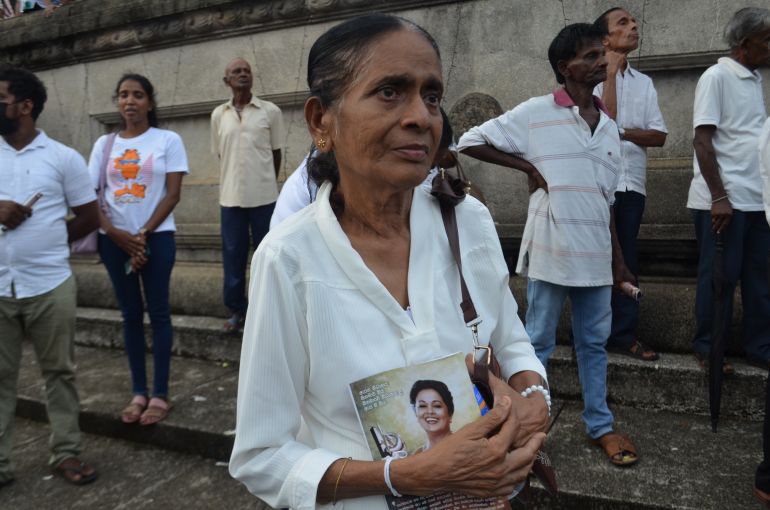
Colombo, Sri Lanka — As a girl, when Srimathi Mallika Kaluarachchi would go to the cinema with her family, and a man on the screen would hit the character played by superstar Malini Fonseka, Kaluarachchi would cry. Then she would turn to her father in desperation. “We used to scream at the screen, telling our father to save her,” Kaluarachchi, now 68, recalled. “That was how much we loved her.” On Monday, Kaluarachchi joined thousands of fans in bidding a final goodbye to Fonseka, who died on May 24 at the age of 78 while receiving treatment in hospital. Neither Fonseka’s family nor the hospital has publicly revealed the nature of her illness. One of the country’s most popular actresses, Fonseka was widely regarded as the queen of Sri Lankan cinema. She was cremated with full state honours, as fans dressed in the mourning colour of white flocked to Colombo’s Independence Square to catch a glimpse of her coffin before she was cremated. Songs from Fonseka’s films were played while a projector drone flew above the crowd, displaying a montage of scenes from across her career. Advertisement Describing Fonseka as “a true icon of Sri Lankan cinema whose grace and talent inspired generations”, Sri Lankan President Anura Kumara Dissanayake said that “her legacy will forever shine in our hearts and on our screens”. Srimathi Mallika Kaluarachchi holds an image of Malini Fonseka at the filmstar’s cremation ceremony, attended by thousands of Sri Lankans in Colombo on Monday, May 25 [Jeevan Ravindran/Al Jazeera] A trailblazer Fonseka, who starred in more than 140 films, had a career in Sinhala cinema spanning more than five decades. “Whenever we saw her, we’d forget all the pain we had in our hearts,” said Kaluarachchi, wiping away tears. “Now, we know films aren’t real, but when we were children, we didn’t realise.” Fonseka was special, Kaluarachchi said, because of the way she represented how everyday people experienced love and, often, the violence that comes with it for women in patriarchal societies. Fonseka started her career as a stage actress before making her film debut with the 1968 film Punchi Baba. Her popularity peaked in the 1970s and 1980s, as she collaborated with renowned directors, including Lester James Peries and Dharmasena Pathiraja. Many of her most famous roles shared a common theme: the struggles of women in a male-dominated society. She played a wife murdered by her husband in the film Nidhanaya (1972), a college student in a complicated relationship in Thushara (1973), a village girl hounded by male attention in Eya Dan Loku Lamayek (1975), and a girl from a rural fishing village enticed by the big city lifestyle, in Bambaru Avith (1978). Advertisement This success continued into the 1980s, when she also expanded into directorial ventures, including in the films Sasara Chethana (1984) and Ahimsa (1987). Thousands of Sri Lankans gathered at Fonseka’s cremation on Monday, May 25, 2025 [Jeevan Ravindran/Al Jazeera] ‘A bridge’ across generations She also starred in the first Indian-Sri Lankan co-production Pilot Premnath in 1978, opposite legendary Indian Tamil actor Sivaji Ganesan. “She never limited herself to one category. She was in commercial cinema and arthouse cinema,” said 27-year-old teacher Prabuddhika Kannagara. “She played a village girl, a young girl, a married woman, a mother, and even a grandmother. She represented women across all generations.” Kannagara was one of the last mourners at the funeral, sitting and watching as sparks emanated from the white cloth tower in the square, specially erected for Fonseka’s cremation, according to Buddhist rituals. She told Al Jazeera that Fonseka had acted as a “bridge” across various eras of cinema, from black-and-white to digital, and had remained a star not only for her mother’s generation, but also for her own. Fonseka was a five-time Best Actress winner at Sri Lanka’s Presidential Film Awards. Her most recent win was in 2006 for her role in Ammawarune, a film she also directed. She also won international accolades at the Moscow International Film Festival and the New Delhi Film Festival. She became Sri Lanka’s first female television drama director in the 1980s, a time when women’s participation behind the camera was unusual. Fonseka also had a short-lived foray into politics, serving as a member of Sri Lanka’s parliament from 2010 to 2015 under former President Mahinda Rajapaksa. Advertisement Film critic and journalist Anuradha Kodagoda told Al Jazeera that Fonseka was “rare and unique in Sri Lankan cinema” for the range of characters she played. Petite and fair, with an oval face and soft features, Fonseka was a “pioneer” in representing working-class women onscreen, and “represented the beauty idol for Sri Lankan women”, said Kodagoda. “She portrayed her characters very organically and authentically. That is the magic of it, I think,” Kodagoda said. People carrying Fonseka’s coffin to a specially erected cremation tower at Colombo’s Independence Square on Monday, May 25, 2025 [Jeevan Ravindran/Al Jazeera] ‘There will be no other queens’ Many mourners, some of whom travelled long distances to attend the funeral, recalled moments when they had met or spoken with Fonseka. “She was a role model for us. We saw her as an example when we went to the cinema,” said 56-year-old jam factory worker Pushpa Hemalatha. “She wasn’t arrogant. We loved her when we were young.” Fonseka’s final acting performance was in the 2024 music video Eya Wasanathaya Nowe, playing an elderly woman remembering her deceased husband. Ivanka Peiris, an actress and musician who acted with her in the TV drama Hithuwakkara, told Al Jazeera that Fonseka was “very empowering” as a role model for women, and “everything” for younger actresses in the industry. And, she said, Fonseka would never be replaced. “She’s the queen. That’s it,” Peiris said. “There will be no other queens in Sri Lanka. She will be the first and the last.” Advertisement Adblock test (Why?)
Israeli forces raid foreign exchange shops in occupied West Bank; one dead
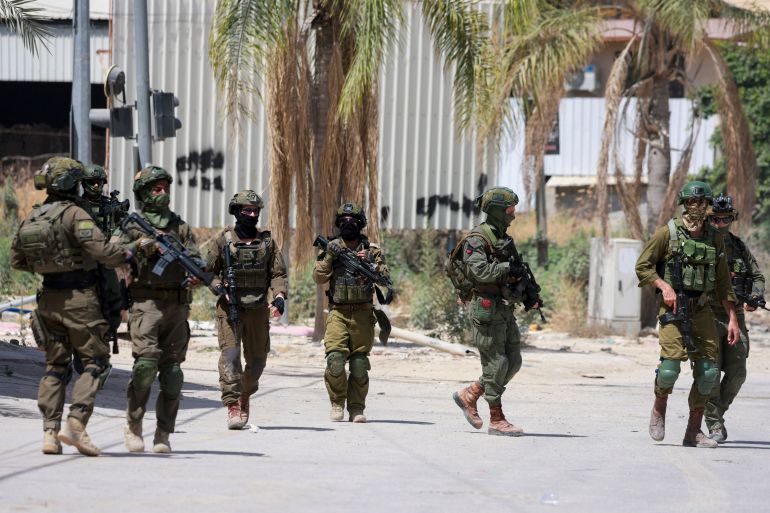
Palestinian groups slam the raids targeting exchanges in several cities in a widespread operation in the territory. Israeli forces have raided money exchanges across the occupied West Bank, using live fire and tear gas as they stormed the city of Nablus, killing at least one Palestinian and wounding more than 30. Exchange shops in the cities of Ramallah, Nablus, Hebron Arrabeh, el-Bireh, Bethlehem, Jenin and Tubas were attacked on Tuesday, residents said. In the northern city of Nablus, Israeli soldiers raided a foreign exchange belonging to the Al-Khaleej company and a gold store, according to local media reports. They also fired smoke bombs in the centre of Jenin, and streets were closed in Tubas and Bethlehem in the occupied Palestinian territory. The Ramallah-based Ministry of Health said one man was killed and eight injured by live ammunition during a raid in Nablus. The Palestine Red Crescent Society said it treated 20 people for tear gas inhalation and three injured by rubber bullets. The raids on foreign exchanges came as Israel continued its intensified military campaign in Gaza, killing more than 54,000 Palestinians since the war began on October 7, 2023, as tens of thousands of people starve in the besieged enclave. Advertisement Israeli Army Radio on Tuesday said Israel conducted the raids on foreign exchanges on suspicions that the shops supported “terrorism”. The radio station also said the operation resulted in the confiscation of large amounts of money designated for “terrorism infrastructure” in the West Bank. “Israeli forces are taking action against Al-Khaleej Exchange Company due to its connections with terrorist organisations,” a leaflet left by Israeli forces at the company’s Ramallah location read. Israeli soldiers patrol the Tulkarem refugee camp in the West Bank [Jaafar Ashtiyeh/AFP] Al Jazeera’s Hamdah Salhut said Israeli authorities have not released an official statement yet but an official talked to the Israeli media about the raids. “This official said earlier that Israel ‘believes’ – not that it has any evidence or proof – but ‘believes’ that these cash exchange places are funnelling money to what they call terror organisations,” said Salhut, who was reporting from Amman, Jordan, because Israel has banned Al Jazeera from reporting from Israel and the West Bank. “The people who own these shops say they were not given any sort of proof by the Israeli military,” she added. Salhut said it was the fourth time such raids have taken place since the start of the Israeli genocide in Gaza. “The first time was in December of 2023 when five different cash exchange places were raided by the Israeli military and they seized nearly $3m,” she said. “It happened again in August 2024 and again in September of that same year.” Advertisement Hamas slams raids Hamas denounced the Israeli raids, saying they “constitute a new chapter in the occupation’s open war against the Palestinian people, their lives, their economy, and all the foundations of their steadfastness and perseverance on their land”. “These assaults on economic institutions, accompanied by the looting of large sums of money and the confiscation of property, are an extension of the piracy policies adopted by the [Israeli] occupation government,” the Palestinian group said in a statement, adding that the targeted companies were “operating within the law”. Hamas urged the Palestinian Authority to take measures against the Israeli attacks. Separately, the Palestinian Mujahideen Movement said the raids are “part of the open war against our people, targeting their very existence and cause”. The group also urged the Palestinian Authority to “defend” Palestinians from such attacks and “halt its policy of security coordination” with Israel. Adblock test (Why?)
NPR sues Trump administration for cutting US federal funding
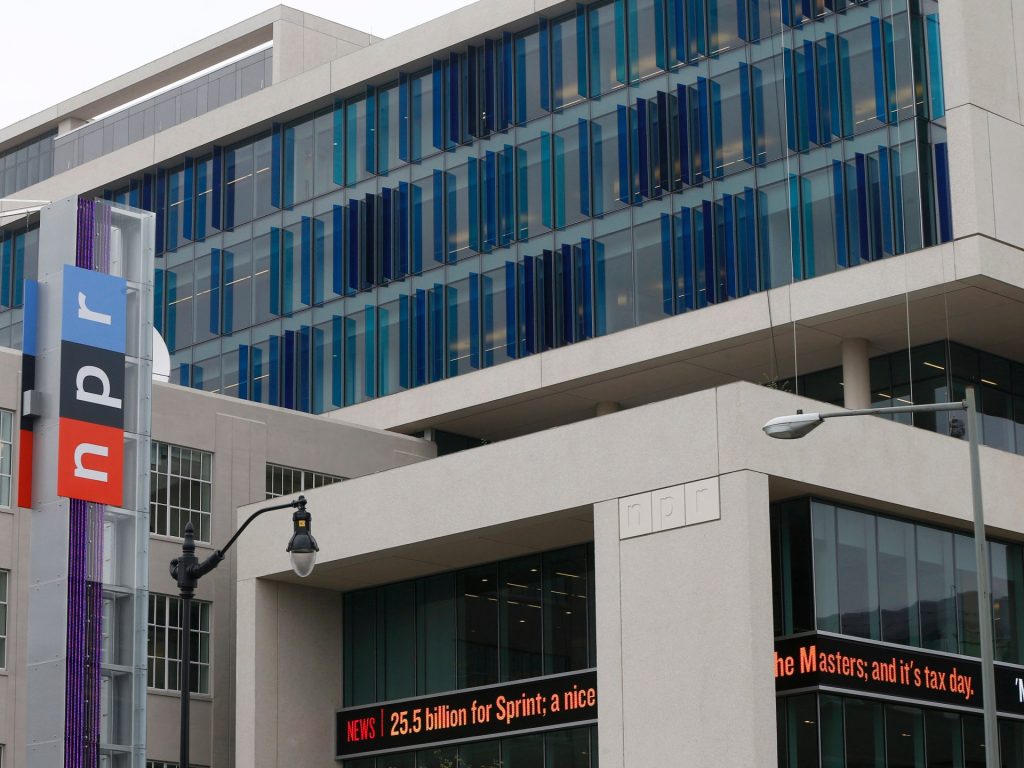
The lawsuit alleges the Trump administration’s move to cut federal funding to public broadcasting is a violation of the US Constitution’s First Amendment. National Public Radio (NPR) and three of its local stations have filed a lawsuit against United States President Donald Trump, arguing that an executive order aimed at cutting federal funding for the organisation is illegal. The lawsuit, filed in federal court on Tuesday in Washington, DC by NPR and three local stations in Colorado — Colorado Public Radio, Aspen Public Radio and KUTE Inc – argues that Trump’s executive order to slash public subsidies to PBS and NPR violates the First Amendment of the US Constitution. Trump issued the executive order earlier this month, instructing the Corporation for Public Broadcasting and other federal agencies “to cease Federal funding for NPR and PBS” and requiring that they work to root out indirect sources of public financing for the news organisations. Trump issued the order after alleging there is “bias” in the broadcasters’ reporting. The Corporation for Public Broadcasting spends roughly $500m on public TV and radio annually. PBS and NPR get part of their funding from federal grants: 17 percent and two percent, respectively. Advertisement “The Order’s objectives could not be clearer: the Order aims to punish NPR for the content of news and other programming the President dislikes and chill the free exercise of First Amendment rights by NPR and individual public radio stations across the country,” the lawsuit alleges. “The Order is textbook retaliation and viewpoint-based discrimination in violation of the First Amendment, and it interferes with NPR’s and the Local Member Stations’ freedom of expressive association and editorial discretion,” it said. The White House’s executive order argued that editorial choices – including that NPR allegedly “refused to cover the Hunter Biden laptop story”, and that it ran a “Valentine’s Day feature around ‘queer animals’” – were some of the reasons it wanted to cut federal funding. “This is retaliatory, viewpoint-based discrimination in violation of the First Amendment,” NPR CEO Katherine Maher said in a statement. “NPR has a First Amendment right to be free from government attempts to control private speech as well as from retaliation aimed at punishing and chilling protected speech. By basing its directives on the substance of NPR’s programming, the Executive Order seeks to force NPR to adapt its journalistic standards and editorial choices to the preferences of the government if it is to continue to receive federal funding.” The absence of PBS from Tuesday’s filing indicates the two systems will challenge this separately; PBS has not yet gone to court, but is likely to do so soon. Advertisement The US president’s attempts to dismantle government-run news sources like Voice of America and Radio Free Europe/Radio Liberty have also sparked court clashes. The administration has battled with the press on several fronts. The Federal Communications Commission is investigating ABC, CBS and NBC News. And after The Associated Press refrained from calling the Gulf of Mexico “the Gulf of America”, as Trump directed, the administration restricted the news outlet’s access to certain government events. Adblock test (Why?)
Chaos erupts as Palestinians rush to aid site after months of blockade
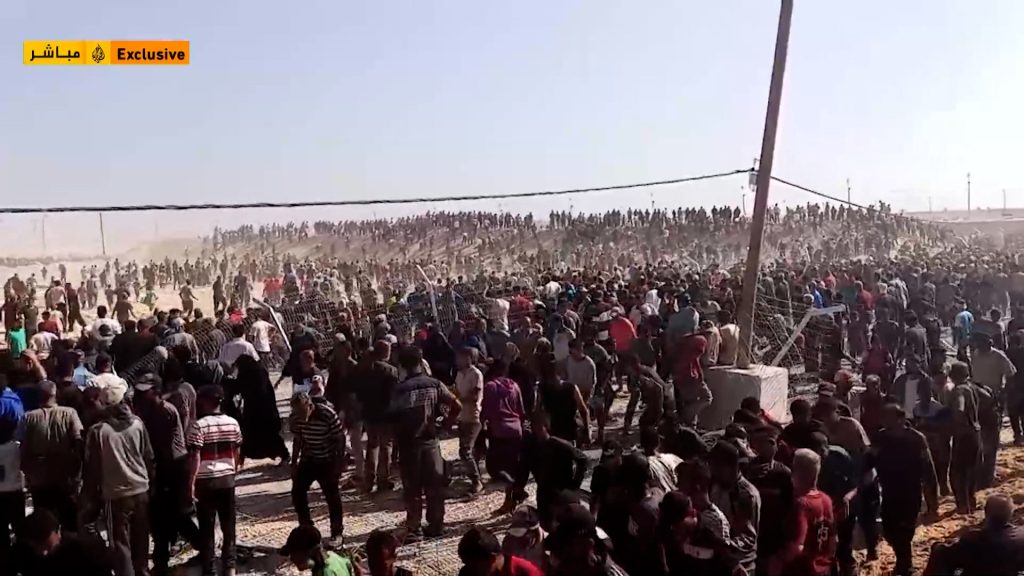
NewsFeed Chaos erupted in Rafah as thousands of desperate Palestinians swarmed a new aid distribution site, set up by the controversial US- and Israeli-backed Gaza Humanitarian Foundation. Live ammunition was fired to disperse the large crowds. Published On 27 May 202527 May 2025 Adblock test (Why?)
Trump wants Netanyahu to be on same page on Iran: Top US official

Homeland Security Secretary Kristi Noem says the US president ‘wants peace’ but will not allow Iran to obtain a nuclear weapon. Washington, DC – United States Secretary of Homeland Security Kristi Noem says she delivered a message from President Donald Trump to Israeli Prime Minister Benjamin Netanyahu that the two countries should be aligned on how to approach Iran. Noem, who concluded a visit to Israel on Monday, told Fox News that her talks with Netanyahu were “candid and direct”. Her comments come days after US and Iranian officials held their fifth round of nuclear talks in Rome. “President Trump specifically sent me here to have a conversation with the prime minister about how those negotiations are going and how important it is that we stay united and let this process play out,” she said. On Sunday, Trump suggested that the talks were progressing well. “We’ve had some very, very good talks with Iran,” the US president told reporters. “And I don’t know if I’ll be telling you anything good or bad over the next two days, but I have a feeling I might be telling you something good.” Last week, CNN reported, citing unidentified US officials, that Israel was preparing for strikes against Iran’s nuclear facilities, despite the US-led talks. Advertisement Iran has promised to respond forcefully to any Israeli attack, and accused Netanyahu of working to undermine US diplomacy. Iranian Minister of Foreign Affairs Abbas Araghchi said last week that the Israeli prime minister is “desperate to dictate what the US can and cannot do”. Israel has been sceptical about the nuclear negotiations, and Netanyahu has been claiming for years that Iran is on the cusp of acquiring a nuclear bomb. Israeli officials portray Iran – which backs regional groups engaged in armed struggle against Israel – as a major threat. On Monday, Noem said that the US understands that Netanyahu does not trust Iran. “The message to the American people is: We have a president that wants peace, but also a president that will not tolerate nuclear Iran capability in the future. They will not be able to get a nuclear weapon, and this president will not allow it,” she said. “But he also wants this prime minister, Benjamin Netanyahu, to be on the same page with him.” A major sticking point in the talks has been whether Iran would be allowed to enrich its own uranium. US officials have said they want Iran not just to scale back its nuclear programme, but also to completely stop enriching uranium – a position that Tehran has said is a nonstarter. Enrichment is the process of altering the uranium atom to create nuclear fuel. Iranian officials say enrichment for civilian purposes is a sovereign right that is not prohibited by the Nuclear Non-Proliferation Treaty (NPT). Advertisement Tehran denies seeking a nuclear weapon, while Israel is widely believed to have an undeclared nuclear arsenal. During his first term, in 2018, Trump nixed the Joint Comprehensive Plan of Action (JCPOA), which had seen Iran scale back its nuclear programme in exchange for the lifting of international sanctions against its economy. Since then, the US has been piling sanctions on Iran. Tehran has responded by escalating its nuclear programme. On Monday, Iran ruled out temporarily suspending uranium enrichment to secure an interim deal with the US. Iranian Foreign Ministry spokesperson Esmaeil Baqaei stressed that Iran is not buying time with the talks. “We have entered the course of talks seriously and purposefully with the intention of reaching a fair agreement. We have proved our seriousness,” Baqaei was quoted as saying by the Tasnim news agency. Adblock test (Why?)
Hamas agrees to a Gaza ceasefire, sources say; US and Israel reject offer
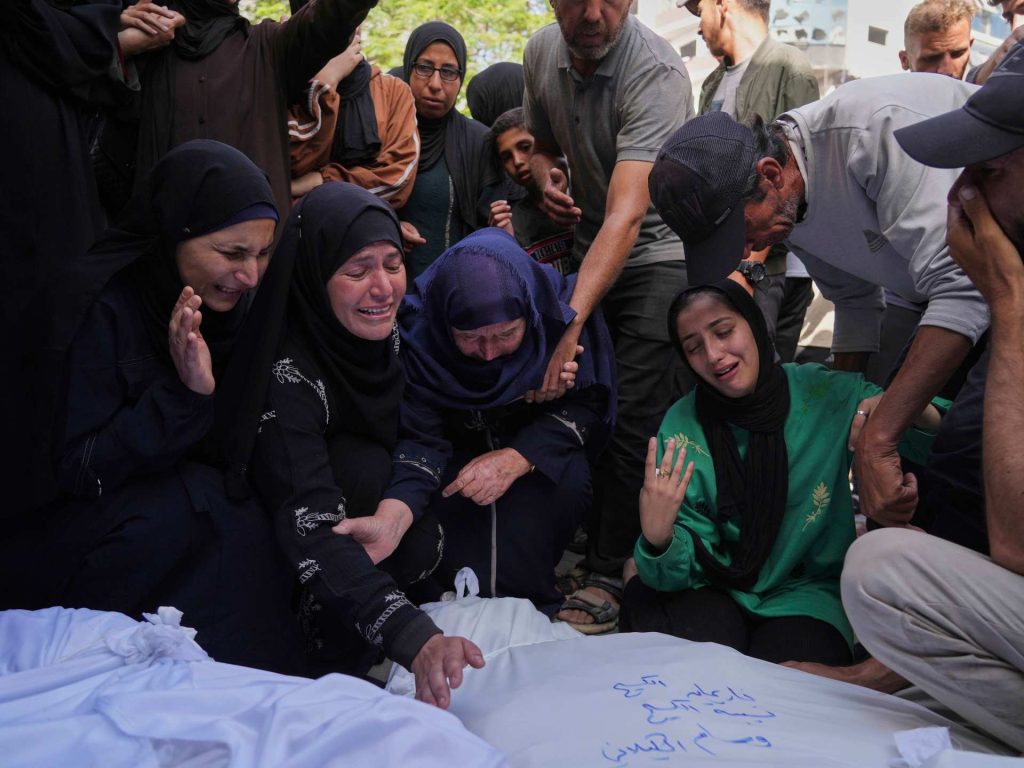
Hamas has agreed to a ceasefire proposal put forth by the United States for Gaza, according to Al Jazeera’s sources, but an American official rejected the claim and said the deal being discussed was “unacceptable” and “disappointing”. Israeli officials also denied that the proposal was from the US, saying on Monday that no Israeli government could accept it, according to the Reuters news agency. The conflicting reports came as Israeli forces kept up their relentless bombardment of starving Palestinians in Gaza, and continued to severely restrict the entry of aid into the besieged enclave. Medical sources say at least 81 people, including many children, were killed in Israel’s attacks on Monday alone. Al Jazeera’s sources said Hamas and the US’s Middle East envoy, Steve Witkoff, agreed to the draft deal at a meeting in the Qatari capital, Doha. They said it includes a 60-day ceasefire, and the release of 10 living captives held in Gaza, over two stages. US President Donald Trump would guarantee the terms of the deal and the withdrawal of Israeli troops from Gaza. The agreement would also allow for the entry of humanitarian aid, without conditions, from day one, the sources said. Advertisement Witkoff, however, rejected the notion that Hamas had accepted his offer for a captive and truce deal, telling Reuters that what he had seen was “completely unacceptable”. A US source close to Witkoff also told Al Jazeera that Hamas’s claims were “inaccurate” and the deal from the Palestinian group was “disappointing”. New red lines Al Jazeera’s Kimberly Halkett, reporting from Washington, DC, cited the US official as saying that the proposal on the table is only a “temporary ceasefire agreement” with Israel. “What this would do is allow for half of the living captives, as well as half of the deceased, to be returned,” she said. “In turn, the White House believes this would lead towards a diplomatic path of discussions that could result in a permanent ceasefire. And this is the deal that the source tells Al Jazeera is what Hamas should take,” she added. There was no immediate comment from Hamas. In Israel, meanwhile, Prime Minister Benjamin Netanyahu issued a recorded message on social media, promising to bring back the 58 Israeli captives remaining in Gaza, of whom some 20 are believed to still be alive. “If we don’t achieve it today, we will achieve it tomorrow, and if not tomorrow, then the day after tomorrow. We are not giving up,” Netanyahu said. “We intend to bring them all back, the living and the dead,” he added. The Israeli leader made no mention of the proposed deal. Al Jazeera’s Hamdah Salhut, reporting from the Jordanian capital, Amman, said Netanyahu has long rejected Hamas’s calls for a permanent ceasefire in Gaza and pledged to continue the war until “total victory” is achieved against the Palestinian group. Advertisement “The Israeli premier has even added new red lines for what to him would bring an end of the war,” Salhut said. “That includes the return of the Israeli captives, the demilitarisation of Hamas [and] the exile of military and political leaders. And, also, the implementation of Trump’s plan for Gaza. This is a plan that has been widely condemned as ethnic cleansing, and the White House even walked it back several months ago,” she said. “But Netanyahu says that’s what he wants if there is to be an end of the war.” For its part, Hamas has said it is willing to free the remaining captives all at once in exchange for a permanent ceasefire. It has also said it is willing to cede control of the Gaza Strip to an interim government, as proposed in an Arab League-backed $53bn plan for the enclave’s reconstruction. The Palestinian group, however, has refused to lay down arms or exile its leaders from Gaza, saying the demand is a “red line” as long as Israel’s occupation of Palestinian territory continues. ‘All eyes on Doha’ In Gaza, Palestinians said they were desperate for any deal to bring an end to Israel’s relentless bombardment and blockade, which has left the enclave’s entire population on the brink of famine. “All Palestinian eyes are on Doha,” Al Jazeera’s Hind Khoudary said from Deir el-Balah in central Gaza. “Since Israel resumed the war, Palestinians have been attacked in their homes, schools, makeshift tents and also in so-called safe humanitarian zones… They are also saying they are not able to even secure one meal for their families,” Khoudary said. Advertisement “Palestinians here are saying they do not have any options left, and they are trying to survive the Israeli air strikes and the mass starvation that has been imposed on them.” Israel resumed the war on Gaza on March 18, two weeks after imposing a total blockade on the enclave. Health authorities in Gaza say at least 3,822 Palestinians have been killed in Israel’s renewed offensive, and the confirmed overall death toll has now reached 53,977. Some 122,966 people have been wounded. Israel eased its blockade last week, saying it has let in some 170 aid trucks into Gaza, but humanitarian officials say they are nowhere near the amount needed to feed the enclave’s two million people after 11 weeks of a total siege. Adblock test (Why?)
Russia-Ukraine war: List of key events, day 1,188
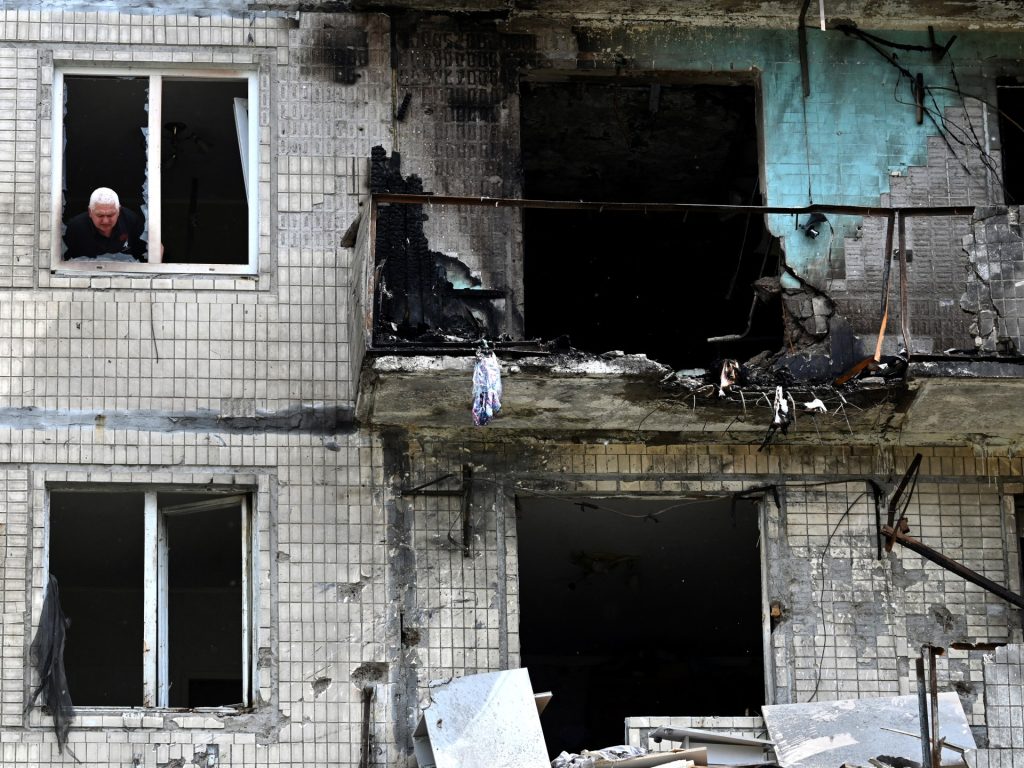
Here’s where things stand on Tuesday, May 27: Fighting: Ukraine says Russia launched a record number of drones overnight on Monday, with President Volodymyr Zelenskyy describing the attacks as a sign that Moscow is “acting with impunity”. Ukrainian air defences downed most of the 355 drones, but several broke through defences, causing casualties, according to authorities. Two elderly women were killed in Ukraine’s northeastern Kharkiv region, the regional governor said. Russia, meanwhile, accused Ukraine of launching aerial attacks on its “social infrastructure”. The Ministry of Defence said it shot down at least 48 Ukrainian drones on Monday, after shooting down 96 overnight. Russia’s state TASS news agency, citing the Defence Ministry, reported that Russian forces have taken over the villages of Volodymyrivka and Belovody in the northeastern region of Sumy. The governor of Sumy said Russian forces had captured four other villages as part of an attempt to create a “buffer zone” on Ukrainian territory. He identified them as Novenke, Basivka, Veselivka and Zhuravka, and said that residents had long been evacuated. The Ukrainian prosecutor general’s office said Russian attacks have killed 630 Ukrainian children and wounded 1,960 since the beginning of the war. Russia’s Ministry of Foreign Affairs special envoy Rodion Miroshnik has accused the Ukrainian military of causing more than 400 civilian casualties in April, including with “inhumane methods of warfare”. Advertisement Military aid German Chancellor Friedrich Merz announced that Ukraine’s key Western allies are no longer limiting the range of weapons they supply, a move the Kremlin said would be “dangerous”. Ukraine says it has confirmed information that China is supplying a range of important products to Russian military plants, including tooling machines, special chemical products, gunpowder and components specifically to defence manufacturing industries. Politics and diplomacy The Kremlin responded to United States President Donald Trump’s remark that Putin has gone “absolutely crazy” over the scale of Russian air attacks, suggesting the US leader may be experiencing “emotional overload”. It also said that serious work on Russia’s proposal for a possible peace deal for the war in Ukraine was ongoing and that a draft had not yet been submitted. “This is a serious draft, a draft of a serious document that demands careful checks and preparation,” spokesman Dmitry Peskov said. Zelenskyy said Russia launched more than 900 drones as well as missiles towards Ukraine over three nights, and again called for intensified pressure on Moscow. “There is no military sense in this, but it is an obvious political choice – a choice by Putin, a choice by Russia – a choice to continue the war and destroy lives,” the Ukrainian leader said in his nightly video address. French President Emmanuel Macron said he believes Trump is beginning to see that Putin “lied” to him about the war in Ukraine. He also called for the imposition of a deadline for Moscow to agree to a ceasefire, backed up by the threat of “massive sanctions”./li> Danish Prime Minister Mette Fredericton also said that Russia’s attacks on Ukraine over the weekend proved that Moscow is not interested in peace. Finland summoned Russia’s Helsinki ambassador to ask for an explanation regarding a suspected violation of Finnish airspace which took place last week. The NATO member said on Friday that it believed two Russian military aircraft entered its airspace off the coast of Porvoo in the southern part of the country. Advertisement Adblock test (Why?)
Far-right Israelis storm Al-Aqsa, UNRWA compounds amid Jerusalem Day march
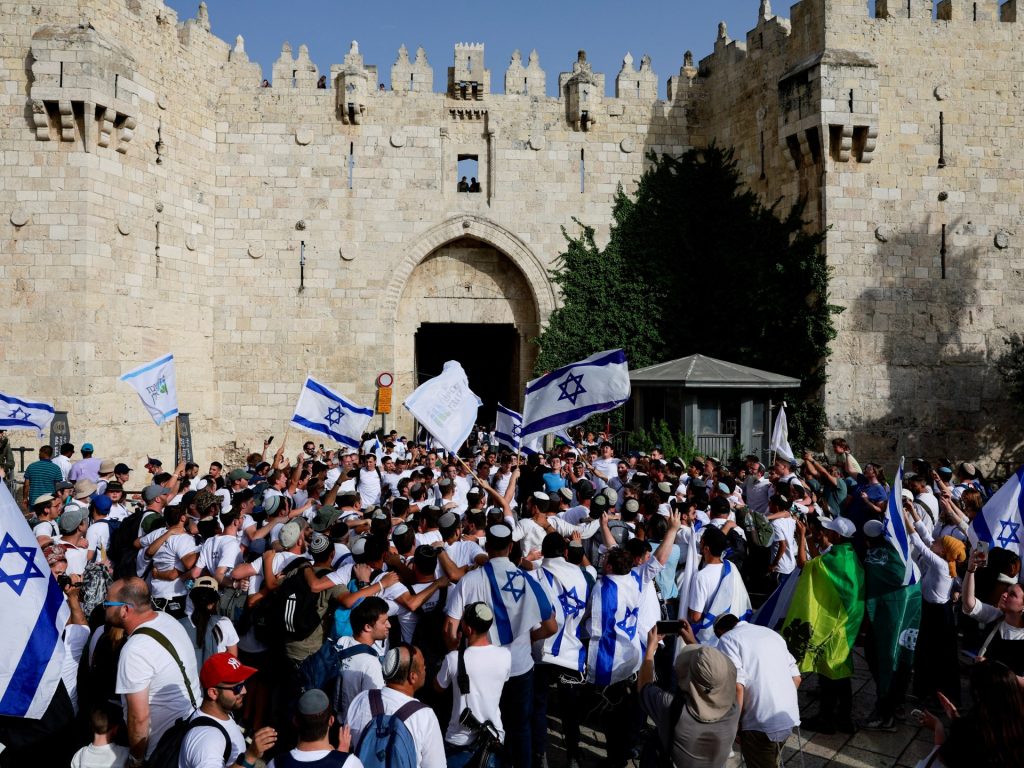
Some Israelis chant, ‘Death to Arabs’ and ‘May your village burn,’ as they march through Jerusalem’s Old City. Right-wing Israelis in Jerusalem have stormed the Al-Aqsa Mosque compound and a United Nations facility for Palestinian refugees as an annual march took place marking Israel’s conquest of the eastern part of the city. Some Israelis chanted, “Death to Arabs” and “May your village burn,” as they marched through the alleyways of Jerusalem’s Old City on Monday, going through the Muslim quarter to mark “Jerusalem Day”, which commemorates the Israeli occupation and annexation of East Jerusalem after the 1967 war. Thousands of heavily armed police and border police were dispatched in advance because settlers regularly assault, attack and harass Palestinians and shops in the Muslim quarter. The settlers live in the occupied West Bank and East Jerusalem in settlements and outposts, which are illegal under international law. Groups of young people, some carrying Israeli flags, were seen on Monday confronting Palestinian shopkeepers, passers-by and schoolchildren as well as Israeli rights activists and police, at times spitting on people, lobbing insults and trying to force their way into houses. Advertisement Police detained at least two youths, according to AFP journalists at the scene. A small group of those rallying, including an Israeli member of parliament, stormed a compound in East Jerusalem belonging to the UN agency for Palestinian refugees, known as UNRWA. Israel has banned the agency from working in occupied Palestinian territory and in Israel, impacting the life-saving work that it has been carrying out for more than 70 years in areas that include the besieged and bombarded Gaza Strip. UNRWA West Bank coordinator Roland Friedrich said about a dozen Israeli protesters, including Yulia Malinovsky, one of the legislators behind an Israeli law that banned UNRWA, entered the compound, climbing its main gate in view of Israeli police. Last year’s procession, held during the first year of Israel’s assault on Gaza, saw ultranationalist Israelis attack a Palestinian journalist in the Old City and call for violence against Palestinians. And four years ago, the march contributed to the outbreak of an 11-day war in Gaza. Earlier on Monday, Israel’s far-right national security minister, Itamar Ben-Gvir, and other politicians were among more than 2,000 Israelis who stormed the Al-Aqsa Mosque compound and surrounding areas. Ben-Gvir released a video on his X account from the site – Islam’s third holiest – saying he “prayed for victory in the war, for the return of all our hostages, and for the success of the newly-appointed head of the Shin Bet – Major General David Zini”. Advertisement Negev and Galilee Minister Yitzhak Vaserlauf and Knesset member Yitzhak Kreuzer were among those accompanying the ultranationalist minister. Backed by armed police, Ben-Gvir has carried out similar provocative moves in the compound before, often at sensitive junctures in Israel’s war on Gaza, to advocate for increased military pressure and to block all humanitarian aid entering Gaza. The Jerusalem Waqf – the Islamic authority that oversees the Al-Aqsa Mosque compound, known to Muslims as al-Haram al-Sharif (the Noble Sanctuary) – decried the storming of the compound by Ben-Gvir and other members of the Israeli Knesset and called for a halt to all “provocative activities” in the area. Under the management of the Jordan-appointed Waqf, only Muslims are allowed to pray at the compound. Al Jazeera’s Nida Ibrahim said the march is aimed at asserting Israeli dominance over the city. “Videos show Israeli citizens inside the Old City of Jerusalem attacking Palestinian shops and throwing objects at them,” Ibrahim said, reporting from Doha, Qatar as Al Jazeera has been banned from reporting in Israel and occupied East Jerusalem. “This is again a reminder that no one has immunity.” Adblock test (Why?)