

Trump proposes Putin-Zelenskyy summit in push to end Ukraine war
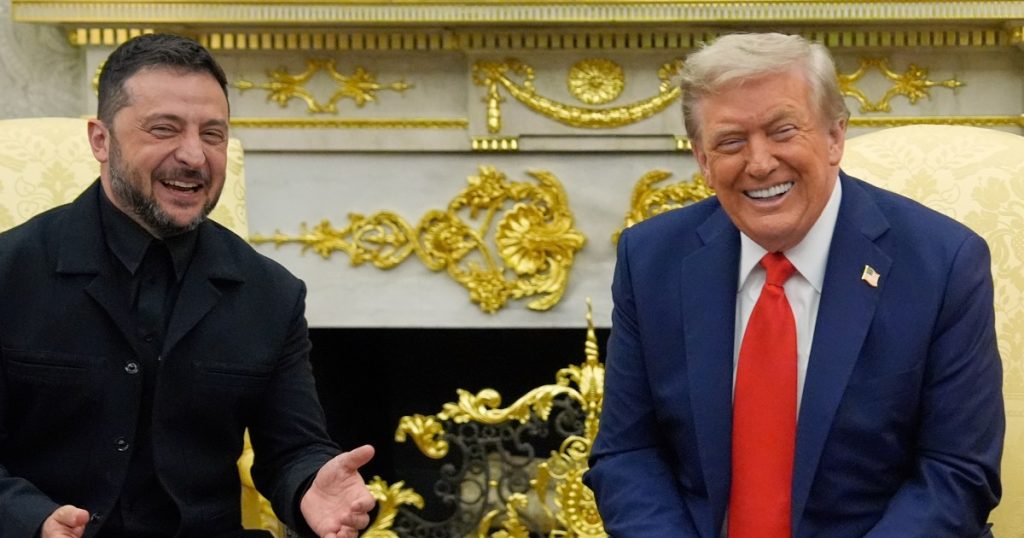
United States President Donald Trump has announced plans to convene a face-to-face summit between Russian leader Vladimir Putin and Ukrainian President Volodymyr Zelenskyy in his latest bid to end Moscow’s war in Ukraine. Trump’s proposal on Monday came as he hosted Zelenskyy and top European leaders, including French President Emmanuel Macron and UK Prime Minister Keir Starmer, at the White House for high-stakes talks on ending the conflict, which has raged since Russia’s full-scale invasion of Ukraine in February 2022. Trump said he had “begun arrangements” for the summit after speaking with Putin by phone, and that he would hold a trilateral meeting with his Russian and Ukrainian counterparts following their two-way meeting. “Again, this was a very good, early step for a War that has been going on for almost four years,” Trump said on his Truth Social platform. “Vice President JD Vance, Secretary of State Marco Rubio, and Special Envoy Steve Witkoff, are coordinating with Russia and Ukraine.” German Chancellor Friedrich Merz and NATO Secretary-General Mark Rutte separately confirmed that Putin had agreed to the bilateral meeting, but did not specify a date or location. Zelenskyy, who described his meeting with Trump as a “very good conversation,” told reporters that he was “ready” to meet the Russian leader one-on-one. Moscow did not immediately confirm that it had agreed to a summit, but Russia’s state-run TASS news agency cited presidential aide Yuri Ushakov as saying that Putin and Trump “spoke in favour of continuing direct talks” between the Russian and Ukrainian delegations. Advertisement The proposals for a summit, which would be the first meeting between Putin and Zelenskyy since Moscow’s invasion, came as the fraught issue of security guarantees for Ukraine took centre stage during the talks at the White House. The specifics of what those guarantees would look like remained unclear on Monday. Asked if the US could send peacekeepers to Ukraine, Trump said that European countries would be the “first line of defence”, but that Washington would provide “a lot of help”. “We’re going to help them out also, we’re going to be involved,” Trump said. Trump said on Truth Social later that discussions had focused on which security guarantees would be provided by European countries with “coordination” by the US. Zelenskyy said that the guarantees would be “unpacked” by Kyiv’s partners and formalised within the next week to 10 days. While Trump has ruled out NATO membership for Ukraine, his special envoy, Witkoff, said on Sunday that Putin was open to a security guarantee resembling the 32-member alliance’s collective defence mandate. Under Article 5 of the North Atlantic Treaty, an armed attack against any one NATO member nation is considered an attack on all members of the alliance. Speaking on Fox News after Monday’s talks, Rutte called Washington’s commitment to be involved in guaranteeing Ukraine’s security a “breakthrough”, but said the exact nature of that involvement would be discussed over the coming days. Rutte said the discussions had not touched on the possibility of deploying US or European troops. “What we all agree on is that if this war does come to end… it has to be definitive,” Rutte said. Konstantin Sonin, a Russian exile and Putin critic who is a professor at the University of Chicago Harris School of Public Policy, said that meaningful security guarantees for Kyiv would need to include European troops on the ground. “This is all ‘unacceptable’ to Putin, so for European leaders, it is the question how to persuade President Trump that without such guarantees, the war, even if it stops now, will start again in the near future,” Sonin told Al Jazeera. Sonin said that Ukraine had been failed by “written” guarantees for decades, including during Moscow’s 2014 invasion and occupation of Crimea. “Russia has signed many international treaties recognising Ukraine’s sovereignty and borders – including Putin himself signing one such treaty in 2004 – and still violated all of these treaties, both in 2014 and 2022,” Sonin said. “This is all to say that the sticking point is not the language in some documents,” he added. The issue of what territory Kyiv might be asked to give up in a peace deal also remained unclear after the talks at the White House. Advertisement Ahead of the meeting, Trump warned that the return to Ukraine of Russian-occupied Crimea would be off the table in any negotiated settlement. Trump has indicated that a deal to end the war would involve “some swapping, changes in land” between Russia and Ukraine. Russia controls about one-fifth of Ukraine, according to open-source estimates. Ukraine, which took control of a large swath of Russia’s Kursk region during a surprise counter-offensive last year, is not believed to hold any Russian territory at present. Speaking on Fox News, US Secretary of State Marco Rubio said both Moscow and Kyiv would have to make concessions for a deal. “Obviously, land or where you draw those lines – where the war stops – is going to be part of that conversation,” Rubio said. “And it’s not easy, and maybe it’s not even fair, but it’s what it takes in order to bring about an end to a war. And that’s been true in every war.” Zelenskyy, who has repeatedly ruled out handing over Ukrainian territory to Moscow, said on Monday that land would be an issue for him and Putin to work out between them. “We will leave the issue of territories between me and Putin,” Zelenskyy told reporters. Adblock test (Why?)
Russia pounds Ukraine, kills more civilians before White House meeting
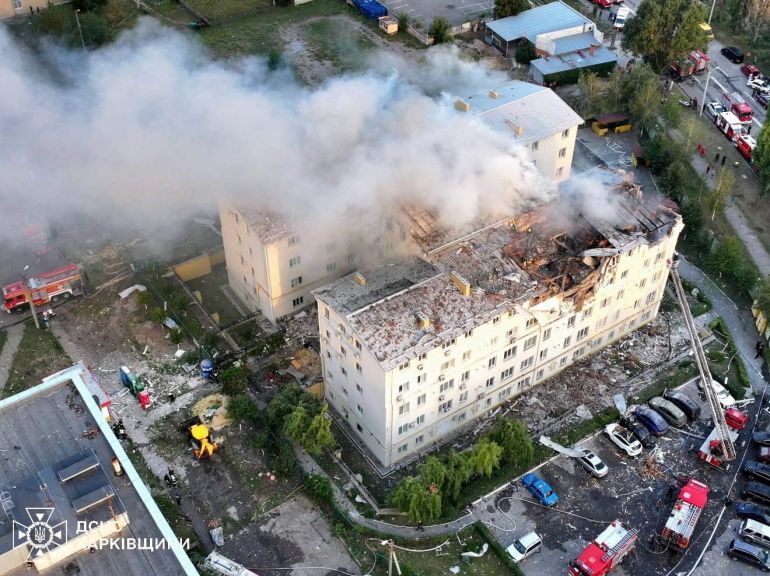
Russian attacks on major Ukrainian cities have killed at least 12 people as President Volodymyr Zelenskyy visits Washington, DC, supported by European leaders, for high-stakes peace talks with United States President Donald Trump that could determine Ukraine’s future and its fate in the war, now in its fourth year. An entire family, including a toddler and a 16-year-old, were among seven people killed in an overnight drone strike on a residential neighbourhood in the northeastern city of Kharkiv, authorities said on Monday. The attack also injured 20 people, including six children. Russian forces killed five people and injured four in attacks in eastern Ukraine’s Donetsk region, where some of the fiercest fighting on the ground rages on and where Russian President Vladimir Putin, feeling Moscow has the upper hand, seeks Ukraine’s withdrawal from the third of the region Kyiv still controls. In Zaporizhzhia, a city in the southeast, 17 people were injured in an attack, according to Governor Ivan Fedorov. Russian air raids also targeted the northeastern region of Sumy and the southern region of Odesa. Ukraine’s air force said Russian forces launched 140 drones and four missiles at Ukraine overnight, adding that 88 drones had been downed. Russia has been intensifying its fight in Ukraine. According to the United Nations monitoring mission on Ukraine, about 2,600 drone attacks were recorded in the past month, the highest rate since the beginning of the war, and more than 300 civilians were killed. The Russian drone strike on a residential neighbourhood in Kharkiv also injured 20 people, six of whom were children [Handout/State Emergency Service of Ukraine in Kharkiv via Reuters] Meanwhile, Ukraine’s military said on Monday that its drones had struck an oil-pumping station in the Tambov region, a strike 1,923km (1,195 miles) from Ukraine, leading to the suspension of supplies via the Druzhba pipeline. Advertisement “As a result of the strike, a fire broke out at the facility. Oil pumping through the Druzhba main oil pipeline was completely stopped,” the Ukrainian military’s General Staff said in a statement. In Russia’s border region of Belgorod, four people were injured in a Ukrainian drone attack while Russian officials reported shooting down hundreds of drones and munitions. Negotiating an end to the war Zelenskyy called the latest attacks on Ukraine “demonstrative and cynical”. “Putin will commit demonstrative killings to maintain pressure on Ukraine and Europe, as well as to humiliate diplomatic efforts,” he wrote on X. Al Jazeera’s Charles Stratford, reporting from Kyiv, said Zelenskyy saw the killing of civilians as a strategy aimed at giving Trump more bargaining chips with which to pressure Ukraine into accepting an unfavourable peace deal. “This shows how much pressure Zelenskyy is under as he goes into … potentially the most vital diplomatic effort to end this war,” Stratford said. Zelenskyy on Monday was expected to meet Trump for talks at the White House alongside a cadre of heavyweight European leaders, including European Commission President, Ursula von der Leyen. On the table for discussion are possible land concessions as well as NATO-like security guarantees that Ukraine requires for any peace deal with Russia. To date, Zelenskyy has refused to consider the possibility of ceding Ukrainian territory to bring about peace. It is also forbidden under the Ukrainian Constitution, The meeting comes on the heels of a summit between Trump and Russian President Vladimir Putin on Friday that ended with no clear breakthrough on the war in Ukraine. Military analyst Sean Bell said he had little hope that a peace deal would come out of the talks in Washington, DC, either. “The harsh reality is that unless Putin has achieved his objectives, he’s got no appetite for negotiations,” Bell told Al Jazeera. “If President Zelenskyy is doing all the giving, that’s in effect a surrender. Zelenskyy can’t do that,” he continued. At the same time, Bell said he did not expect Russia to accept a deal that entails NATO-like security guarantees for Ukraine. Bell said a “catalyst” was needed to bring the war to a close, the most effective of which he believed to be Trump’s stiff tariffs on buyers of Russian oil and gas, like India. The US president threatened to enact these secondary sanctions but has so far refrained from putting new pressure on Russia’s fossil fuel export revenues. “The fact that Trump has avoided doing that means the killing is going to continue,” Bell said. Advertisement Strength and safety in numbers appear to be factors in the group visit by European leaders with memories still fresh about the hostile reception Zelenskyy received in February from Trump and US Vice President JD Vance in a public White House dressing-down. They castigated the Ukrainian leader as being ungrateful and “disrespectful”. Adblock test (Why?)
UK warns Sally Rooney after novelist pledges to fund Palestine Action

The government of the United Kingdom has warned Irish novelist Sally Rooney against funding Palestine Action after she pledged support to the campaign group banned by the Labour-led government as a “terrorist” group last month. The prime minister’s office said on Monday that “support for a proscribed organisation is an offence under the Terrorism Act” and warned against backing such organisations. “There is a difference between showing support for a proscribed organisation, which is an offence under the Terrorism Act, and legitimate protest in support of a cause,” a spokesperson was quoted by PA Media. In an opinion piece in the Irish Times on Saturday, Rooney, the author of best-selling novels such as Normal People and Conversations with Friends, criticised the government’s move to ban the pro-Palestinian group. “Activists who disrupt the flow of weapons to a genocidal regime may violate petty criminal statutes, but they uphold a far greater law and a more profound human imperative: to protect a people and culture from annihilation,” she wrote in the article. Palestine Action was banned after its activists broke into a military base in central England in June and sprayed red paint on two planes in protest against the UK’s support for Israel’s war on Gaza, which has killed more than 62,000 Palestinians, more than half of them women and children. What’s Palestine Action? Since its founding in 2020, Palestine Action has disrupted the arms industry in the UK with “direct action”. It says it is “committed to ending global participation in Israel’s genocidal and apartheid regime”. Advertisement Israel has been accused of widespread abuses in its 22 months of war on Gaza. The International Court of Justice in January 2024 said Israeli actions in Gaza were plausibly genocide. Since then, multiple rights organisations have called Israel’s war a genocide. In November, the International Criminal Court issued arrest warrants against Israeli Prime Minister Benjamin Netanyahu and former Defence Minister Yoav Gallant for war crimes. Rooney said she chose the Dublin-based newspaper to publicise her intention rather than a UK one as doing so “would now be illegal” in Britain after the government banned Palestine Action. “The UK’s state broadcaster … regularly pays me residual fees. I want to be clear that I intend to use these proceeds of my work, as well as my public platform generally, to go on supporting Palestine Action and direct action against genocide in whatever way I can,” she wrote. Hundreds arrested More than 700 supporters of Palestine Action have been arrested in the UK, mostly at demonstrations, since the group was outlawed under the Terrorism Act 2000. “I feel obliged to state once more that like the hundreds of protesters arrested last weekend, I too support Palestine Action. If this makes me a ‘supporter of terror’ under UK law, so be it,” Rooney said. The spokesperson from the prime minister’s office said Palestine Action was proscribed “based on security advice following serious attacks the group has committed, following an assessment made by the Joint Terrorism Analysis Centre”. The government ban on Palestine Action came into force on July 5, days after it took responsibility for a break-in at an air force base in southern England that caused an estimated 7 million pounds ($9.3m) of damage to two aircraft. The group said its activists were responding to Britain’s indirect military support for Israel during the war in Gaza. Being a member of Palestine Action or supporting the group is now a criminal offence punishable by up to 14 years in prison. It places the campaign group on the same legal footing as ISIL (ISIS) and al-Qaeda. More than 500 people were arrested at a protest in London’s Parliament Square on August 9 for displaying placards backing the group. The number is thought to be the highest ever recorded number of detentions at a single protest in the capital. At least 60 of them are due to face prosecution, police said. Home Secretary Yvette Cooper has defended the proscription of the group, stating: “UK national security and public safety must always be our top priority.” Advertisement “The assessments are very clear – this is not a nonviolent organisation,” she said. In her article, Rooney accused the UK government of “willingly stripping its own citizens of basic rights and freedoms, including the right to express and read dissenting opinions, in order to protect its relationship with Israel”. Adblock test (Why?)
Iran’s president visits Armenia for talks on US-backed Azerbaijan corridor
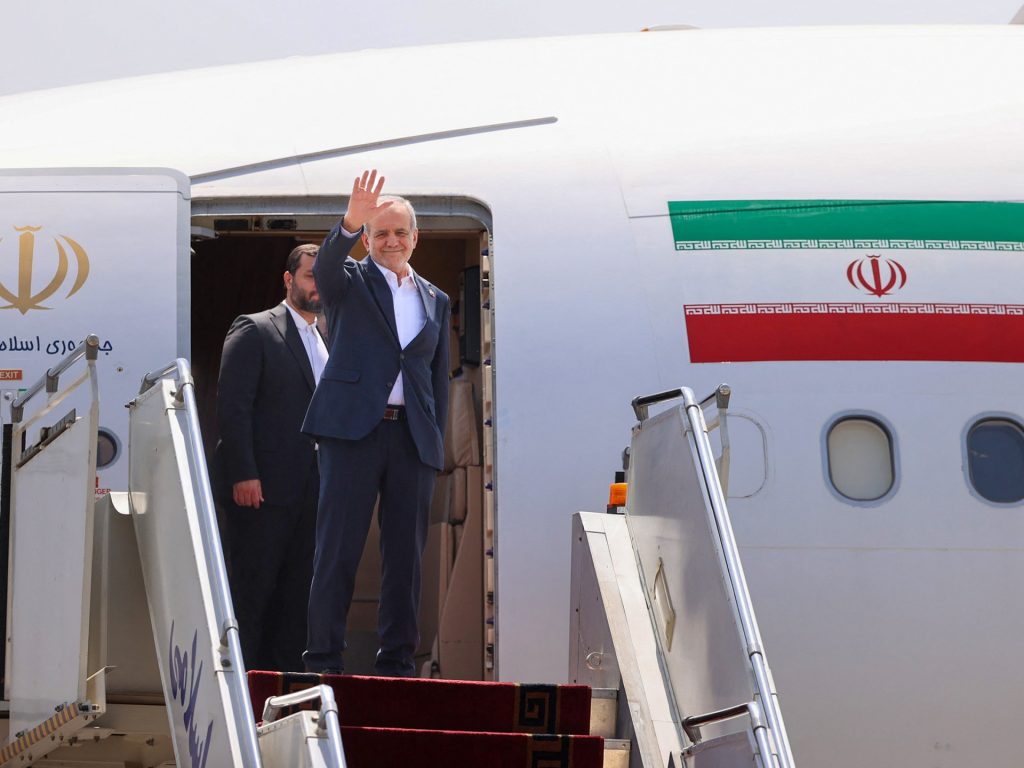
Iran rejects ‘Trump Route for International Peace and Prosperity’ (TRIPP), says the presence of American companies in the region would be ‘worrying’. Iranian President Masoud Pezeshkian is visiting Armenia for talks on a planned corridor linking Azerbaijan near the border with his country, days after Iran said it would block the project included in a United States-brokered peace accord that puts a potential Washington presence on Iran’s doorstep. The land corridor, dubbed the “Trump Route for International Peace and Prosperity” (TRIPP), is part of a deal signed earlier this month in Washington between former foes Armenia and Azerbaijan. US President Donald Trump said the deal granted the US exclusive developmental rights to the transport corridor. Washington was also signing bilateral agreements with both countries to increase cooperation in areas like energy, trade and technology, including artificial intelligence. Before departing for the Armenian capital Yerevan on Monday, Pezeshkian described the possible presence of American companies in the region as “worrying.” “We will discuss it [with Armenian officials] and express our concerns,” he told state television. The proposed route would connect Azerbaijan to its Nakhchivan exclave, passing near the Iranian border. Tehran has long opposed the planned transit route, also known as the Zangezur corridor, fearing it would cut the country off from Armenia and the rest of the Caucasus while bringing potentially hostile foreign forces close to its borders. Since the deal was signed on August 8, Iranian officials have stepped up warnings to Armenia, saying the project could be part of a US ploy “to pursue hegemonic goals in the Caucasus region”. Advertisement On Sunday, Iranian Foreign Minister Abbas Araghchi described it as a “sensitive” issue, saying Tehran’s main concern is that it could “lead to geopolitical changes in the region”. “They [Armenian officials] have assured us that no American forces … or American security companies will be present in Armenia under the pretext of this route,” he told the official IRNA news agency. The proposed corridor has been hailed as beneficial by other countries in the region including Russia, with which Iran has a strategic alliance alongside Armenia. Ali Akbar Velayati, a top adviser to Iran’s supreme leader, said Tehran would block the initiative “with or without Russia”. Trump “thinks the Caucasus is a piece of real estate he can lease for 99 years”, Velayati told state-affiliated Tasnim News soon after the deal was signed, adding that the area would become “a graveyard for Trump’s mercenaries”. Moscow cautiously welcomed the deal, saying that it supported efforts to promote stability and prosperity in the region. Similarly to Iran, however, it warned against outside intervention, arguing that lasting solutions should be developed by countries in the region. Armenia and Azerbaijan have fought a series of wars since the late 1980s when Nagorno-Karabakh, a region in Azerbaijan that had a mostly ethnic Armenian population at the time, broke away from Azerbaijan with support from Armenia. Azerbaijan Baku took control of the territory in a military operation in 2023, leading to an exodus of the ethnic Armenian population. Armenia last year agreed to return several villages to Azerbaijan in what Baku described as a “long-awaited historic event”. Adblock test (Why?)
Iraq starts mass grave excavation from ISIL (ISIS) carnage south of Mosul
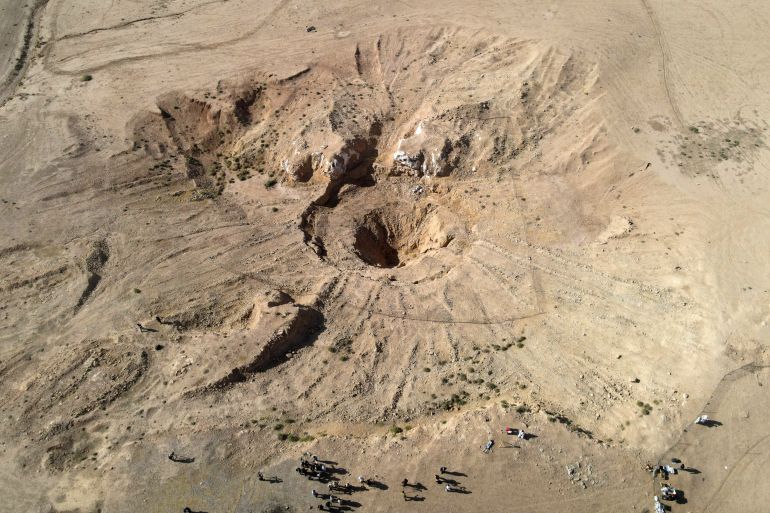
The al-Khasfa site, near Iraq’s second-largest city, could contain 4,000 remains and possibly thousands more. Iraqi officials have begun the excavation of what is believed to be a mass grave left behind by ISIL (ISIS) during its years of carnage exacted upon the civilian population after it seized large swaths of the nation from 2014 onwards, until being vanquished three years later. Local authorities were working alongside the judiciary, forensic investigators, the Iraqi Martyrs Foundation and the directorate of mass graves to carry out the excavation in al-Khafsa, south of the northern city of Mosul, the state-run Iraqi News Agency reported on Sunday. The site – a sinkhole about 150 metres (nearly 500 feet) deep and 110 metres (360 ft) wide – is believed to have been the grisly scene of some of the worst massacres committed by ISIL. Ahmad Qusay al-Asady, head of the Martyrs Foundation’s mass graves excavation department, told The Associated Press news agency that his team began work on August 9 at the request of the Nineveh province. The operation will initially be limited to gathering visible human remains and surface evidence, while preparing for a full exhumation that officials say will require international support, al-Asady said. The foundation will then build a database and start collecting DNA samples from families of suspected victims. Full exhumations can only proceed once specialised assistance is secured to navigate the site’s hazards, including sulfur water and unexploded ordnance. The water may have also eroded the human remains, complicating DNA identification. Because of the presence of these elements, al-Khafsa is “a very complicated site,” al-Asady added. Advertisement Based on unverified accounts from witnesses and families and other unofficial testimonies, authorities estimate the site could contain at least 4,000 remains, with the possibility of thousands more. The sinkhole at the al-Khasfa site could be the largest mass grave in modern Iraqi history [Zaid Al-Obeidi/AFP] Al-Khasfa is located near Mosul, Iraq’s second-largest city, where ISIL took control before being defeated in Iraq in late 2017. At its peak, ISIL ruled an area half the size of the United Kingdom, spanning across Iraq and Syria, with Raqqa in the latter being the capital of their self-declared “caliphate”. The group was notorious for its brutality. The group carried out massacres of thousands of the Yazidi people and enslaved thousands of Yazidi women. The Yazidis, a long-persecuted group whose faith is rooted in Zoroastrianism, are still recovering from the horrors of ISIL’s onslaught on their community in Iraq’s Sinjar district in 2014. Rabah Nouri Attiyah, a lawyer who has worked on more than 70 cases of missing people in Nineveh, told the AP that information points to al-Khasfa being “the largest mass grave in modern Iraqi history”. Al-Asady, however, said investigators have not yet been able to confirm its size. About 70 percent of the estimated human remains there are believed to belong to Iraqi army and police personnel, as well as other victims, including Yazidis. Interviews conducted with numerous witnesses from the area suggest ISIL fighters brought people there by bus to kill them. “Many of them were decapitated,” al-Asady said. In addition to ISIL-era mass graves, Iraqi authorities continue to unearth such sites dating to the rule of Saddam Hussein, who was toppled in a US-led invasion in 2003. Adblock test (Why?)
More than 40 missing after boat capsizes in Nigeria’s Sokoto
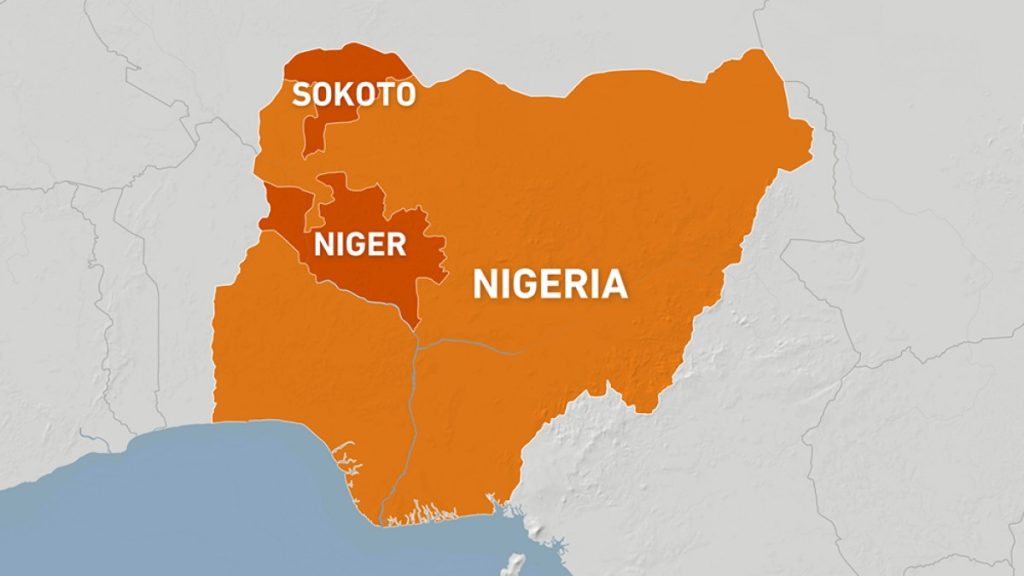
Officials say about 10 people rescued after accident in African country’s northwestern region. Rescuers are searching for more than 40 people who are missing after a boat capsized in Nigeria’s northwestern state of Sokoto, according to authorities. Nigeria’s National Emergency Management Agency (NEMA) said on Sunday that its Sokoto operations office had deployed a response team to support rescue efforts following the “tragic boat mishap”. NEMA’s director general, Zubaida Umar, said the agency responded after “receiving reports that a boat conveying over 50 passengers to Goronyo Market had capsized”. NEMA said in a statement shared on social media that about 10 people had been rescued, and more than 40 other passengers were missing. Nigeria’s The Punch newspaper, citing a local official, said the accident may have been caused by overloading, a recurring issue for boats in the state’s riverine communities. Boat accidents are common in Nigeria, particularly during the annual rainy season, from March to October, when rivers and lakes overflow. At least 16 farmers died in a similar accident in Sokoto State in August 2024, when a wooden canoe carrying them across a river to their rice fields capsized. Last month, at least 13 people died and dozens more went missing after a boat ferrying about 100 passengers capsized in Niger State, in north-central Nigeria. Two days later, six girls drowned after a boat taking them home from farm work capsized midstream in the northwestern Jigawa State. Adblock test (Why?)
Russia-Ukraine war: List of key events, day 1,271
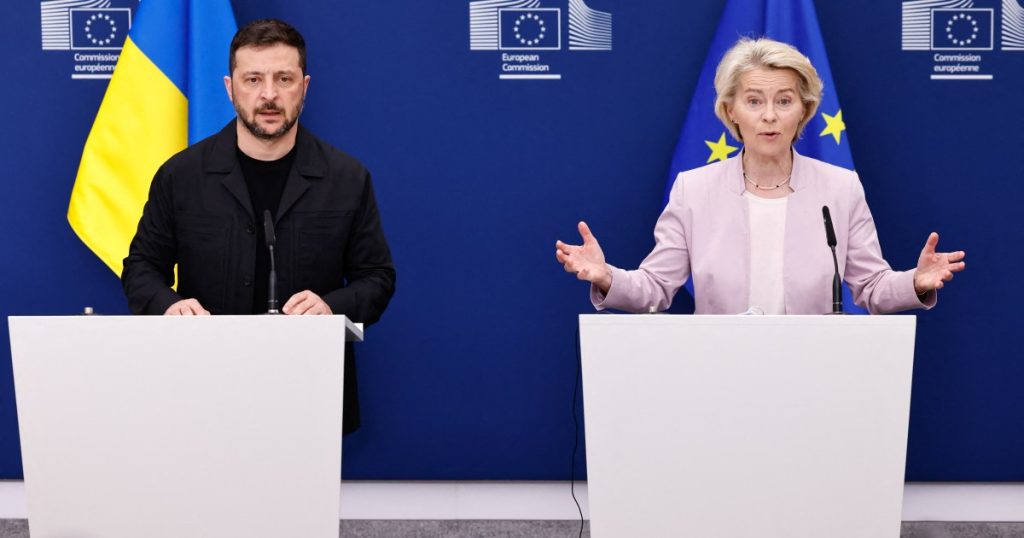
Here are the key events on day 1,271 of Russia’s war on Ukraine. Here is how things stand on Monday, August 18: Politics and diplomacy The leaders of several European countries announced that they will accompany Ukrainian President Volodymyr Zelenskyy to meet with United States President Donald Trump at the White House on Monday to discuss ending Russia’s war on Ukraine. The leaders accompanying Zelenskyy will be: German Chancellor Friedrich Merz, French President Emmanuel Macron, United Kingdom Prime Minister Keir Starmer, Finnish President Alexander Stubb, Italian Prime Minister Giorgia Meloni, European Commission President Ursula von der Leyen and NATO Secretary-General Mark Rutte. White House envoy Steve Witkoff said on Sunday that Russian President Vladimir Putin agreed to “robust security guarantees” for Ukraine that were “game-changing” at a summit with Trump in Alaska on Friday. Zelenskyy welcomed Witkoff’s announcement, saying it was “a historic decision that the United States is ready to take part in security guarantees for Ukraine”. However, he added that the guarantees “must be developed with Europe’s participation”. Macron said that European leaders would ask “to what extent” Washington would participate in the security guarantees on Monday. Macron also said that “there is only one state proposing a peace that would be a capitulation: Russia”. Von der Leyen welcomed the proposal as an offer of NATO-style security guarantees from the US, adding that the “coalition of the willing, including the European Union, is ready to do its share”. Russian Ministry of Foreign Affairs spokesperson Maria Zakharova, in a statement shared on Telegram on Sunday, said that Macron’s claims of capitulation were an “abject lie”. In an interview with CNN, Witkoff also said that Russia had “made some concessions” in relation to “all five of those regions”, in an apparent reference to the Ukrainian regions of Donetsk, Luhansk, Kherson, Zaporizhia and Crimea. US Secretary of State Marco Rubio said on NBC that a ceasefire “is not off the table” but “what we ultimately are aiming for is an end to this war”, a day after Trump said he was aiming for a peace agreement without a prior ceasefire. Trump posted on his Truth Social platform on Sunday morning, simply saying: “BIG PROGRESS ON RUSSIA. STAY TUNED!”, without elaborating. Fighting Advertisement Russian forces killed five people and injured four in Ukraine’s Donetsk region, Governor Vadym Filashkin said in a post on Telegram on Sunday. The attacks killed two people in Raiske, two more people in Sviatohorivka, and one person in Kostiantynivka, Filashkin said. Four people were injured in a Ukrainian drone attack on a commercial facility in the village of Rakitnoye in Russia’s Belgorod region, Governor Vyacheslav Gladkov said in a post on Telegram on Sunday. Russia’s state-run TASS news agency reported on Sunday that in total, Ukrainian forces struck 13 locations across Belgorod in one day, using 111 drones and 52 munitions. TASS also reported on Sunday that Russian forces shot down four aerial bombs and 300 drones in the past day. The General Staff of the Ukrainian Armed Forces claimed that Ukrainian forces cleared the city of Pokrovsk of Russian forces and occupiers. Ukrainian forces advanced up to 1km (0.6 miles), in the Yablunivka area of the Sumy region, the General Staff added in a post on Telegram on Sunday. Adblock test (Why?)
Barcelona begin La Liga title defence with win at Mallorca
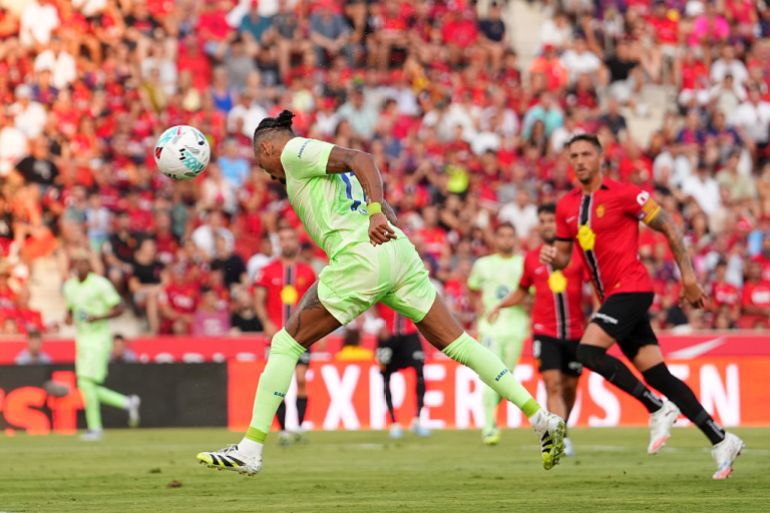
Lamine Yamal and Raphinha both find the net in Barcelona’s 3-0 La Liga win at Mallorca, who had two players sent off. Barcelona began the defence of its La Liga title with a comfortable 3-0 win at Mallorca, scoring early and taking advantage of two first-half red cards for the hosts. Raphinha and Lamine Yamal, who led Barcelona’s prolific attack last season, needed only seven minutes to impress again on Saturday. Yamal’s curling cross found Raphinha by the far post, and the Brazil forward headed in from close range. Ferran Torres’s shot from outside the area in the 23rd was a goal that drew complaints from Mallorca because one of its players was on the ground after being hit by the ball in the head in the buildup. Some Mallorca players stopped playing after their teammate went down, but the referee allowed play to continue. Mallorca immediately complained after Ferran scored. The host went a man down 10 minutes later when Manu Morlanes was sent off for a second yellow card for fouling Yamal on the run. His first yellow was for protesting Barcelona’s second goal. The second red card in the 39th came from Mallorca striker Vedat Muriqi hitting the head of Barcelona goalkeeper Joan García with his left foot while reaching up for a high ball. The referee changed the card from yellow to red after a video review. Barcelona’s Brazilian forward Raphinha heads the ball to score the opening goal at Mallorca [Jamie Reina/AFP] Yamal made it 3-0 in second-half stoppage time by hitting the top corner. Barcelona, which won the league last season after scoring 102 goals, was without veteran striker Robert Lewandowski because of an injury. Newly signed forward Marcus Rashford went in as a substitute in the 69th. Advertisement New Barcelona goalkeeper García did not have to work much in his Barcelona debut after being signed in the offseason in a transfer from city rival Espanyol. Regular starting goalkeeper Marc-Andre ter Stegen is out after undergoing lower back surgery, and García started ahead of Wojciech Szczesny and Iñaki Peña, who replaced Ter Stegen last season. Later Saturday, Valencia hosted Real Sociedad and promoted Levante visited Alaves. On Friday, Rayo Vallecano won at Girona 3-1, and Villarreal defeated promoted Oviedo 2-0. Atletico Madrid is at Espanyol on Sunday, while Real Madrid hosts Osasuna on Tuesday. Adblock test (Why?)
Lionel Messi scores as Inter Miami wins late against LA Galaxy
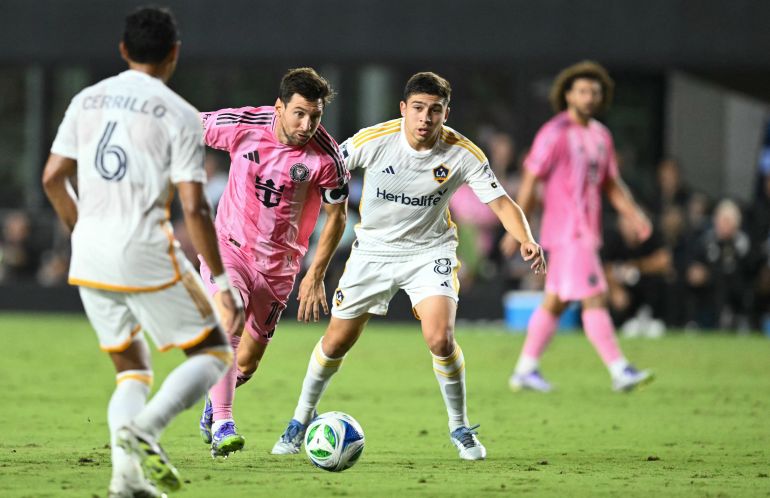
The Argentinian superstar returns from injury to score a goal and add an assist as Inter downs Galaxy at Chase Stadium. Lionel Messi returned from injury as a reserve and scored in the 84th minute to lead Inter Miami to a 3-1 victory over the defending Major League Soccer (MLS) Cup champions, Los Angeles Galaxy. The iconic 38-year-old Argentinian striker was back on the field on Saturday for Miami after suffering what Inter coach Javier Mascherano had called a “minor muscle injury” – an apparent hamstring strain – in Inter’s Leagues Cup victory over Mexican side Necaxa on August 2. “It had been something very small,” Mascherano said of his injury after the match. “The three training sessions we had were good. The important thing is that the match ended. As the minutes went by, I saw him better. We have to see how he feels tomorrow.” Eight-time Ballon d’Or winner Messi, who missed a Leagues Cup win over Pumas UNAM and last weekend’s MLS loss at Orlando City, was on the bench as a reserve before entering in the second half, replacing Telasco Segovia. “We had planned the match to give minutes to Leo [Messi]. The idea was to give him 45 minutes so that he can find sensations,” Mascherano said. “I didn’t see him after the game. Tomorrow, we’ll see what feelings he had. “He’s an extraordinary player. I saw that he was clearly not 100 percent comfortable, but as the minutes went by, he was loosening up more and more. We will have to see how he ended with the fatigue.” Jordi Alba scored for Miami in the 43rd minute, but Joseph Paintsil equalised for the Galaxy in the 59th minute. Messi takes a shot and scores his team’s second goal against LA Galaxy at Chase Stadium [Chandan Khanna/AFP] Messi dominates late Messi’s brilliant goal six minutes from full-time – a thunderous left foot strike fired from the edge of the penalty area that caromed off the bottom corner of the net – restored the lead for Miami. Advertisement He then put the victory beyond doubt with a sensational 89th-minute assist to teammate Luis Suarez, who put the home side ahead 3-1. Messi, the reigning MLS Most Valuable Player, has 19 goals and 10 assists in 19 MLS appearances for Miami this season. He also has the Herons into the quarterfinals of the Leagues Cup, which they won in 2023, just after Messi’s arrival. Miami will play the Tigres in a Cup quarterfinal on Wednesday. “He wants to play every single game,” Mascherano said. “You have to understand why Leo is Leo. He always wants to be on the pitch. He’s happy there. Sometimes, we try to explain him that we have to go slowly, but when he feels good, he knows himself like no one. In the end, we tried to give him some minutes today to start having good feelings for Wednesday.” Inter Miami rank fourth in the MLS Eastern Conference, six points behind MLS leaders Philadelphia, but with three matches in hand. Messi, left, celebrates with teammate Luis Suarez after Inter Miami went ahead 3-1 in the 89th minute [Chandan Khanna/AFP] Adblock test (Why?)
Manchester United vs Arsenal: Premier League – teams, start, lineups
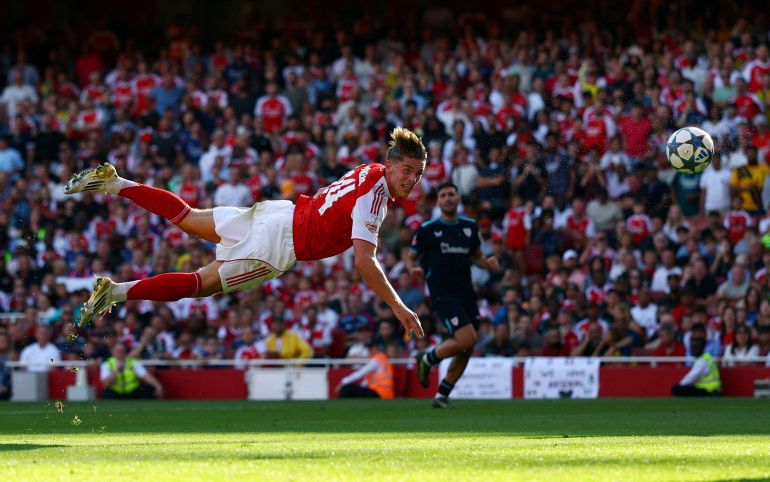
Who: Manchester United vs ArsenalWhat: English Premier LeagueWhere: Old Trafford, Manchester, United KingdomWhen: Sunday, August 16 at 4:30pm (15:30 GMT) How to follow: We’ll have all the build-up on Al Jazeera Sport from 4:30pm (15:30 GMT) in advance of our live text commentary stream. Arsenal face an immediate test of their Premier League title credentials against a revamped Manchester United. Al Jazeera Sport takes a closer look at the game. How does the season shape up for Arsenal? Mikel Arteta has challenged Arsenal to keep digging for gold. The Gunners have finished as Premier League runners-up for the last three seasons, sparking criticism of their failure to get over the line in the title race. Arsenal blew significant leads when Manchester City pipped them to the trophy in 2023 and 2024, before Liverpool left the injury-plagued north Londoners trailing in their wake last season. Arsenal’s title frustrations are mounting, with fans questioning whether Arteta is the right man to end their drought after winning only the 2020 FA Cup since he took charge in December 2019. But the Gunners showed their potential last season, with a run to the Champions League semifinals that ended with a narrow defeat against eventual winners Paris Saint-Germain. And, buoyed by a host of new signings worth more than 180 million pounds ($244 million) in total, Arteta is convinced they can finally get their hands on the Premier League silverware this season. “You keep digging, digging, digging, and you have to be digging because one day the gold is going to be there,” he told reporters on Friday. “For three seasons, we’ve had more points than [nearly] any other team in this league, which is incredible. Advertisement “You have the consistency, but now we have to do it in a season, to end with more points than any other team. “That’s the objective. When I’ve been taught, when I’ve been educated, that’s it.” Hampered by injuries to Bukayo Saka, Martin Odegaard, Gabriel Jesus and Kai Havertz at various stages last season, Arsenal lacked a cutting edge and were held to 14 draws compared with Liverpool’s nine. That was a crucial edge as Arsenal finished 10 points behind the champions. Arsenal’s Viktor Gyokeres heads at goal during a preseason friendly against Athletic Bilbao [Matthew Childs/Reuters] Who did Arsenal sign this summer? In an attempt to insulate Arsenal against another fitness-related collapse, Arteta has brought in Sporting Lisbon striker Viktor Gyokeres, Real Sociedad midfielder Martin Zubimendi, Chelsea winger Noni Madueke and Brentford midfielder Christian Norgaard. After bemoaning Arsenal’s failure to sign Aston Villa striker Ollie Watkins as Liverpool pulled away during the January window, the Spaniard is a far more upbeat figure on the eve of the new season. “I think we have great versatility, very different qualities in relation to the opposition, so we are very happy with that,” he said. Arteta said that “too many” teams have a legitimate shot at winning the Premier League for his liking, some he even suspects will “surprise everybody”. Whether that was a hint that United, who suffered their worst season since 1973-74 last term, could emerge as contenders after their summer spending spree remains to be seen. Arsenal were linked with a move for United’s new striker Benjamin Sesko before deciding to bet on Gyokeres for a fee that could rise to 66 million pounds ($89.5m). The Swede netted 97 times in 102 games in two years at Sporting, much of which came under United’s current manager, Ruben Amorim. Manchester United’s Bryan Mbeumo moved from Brentford in the summer transfer window [Andrew Boyers/Reuters] How is the season shaping up for Man Utd? Instead of being reunited with Gyokeres, Amorim overhauled his attack with the signings of Leipzig’s Sesko, Brentford winger Bryan Mbeumo and Wolves forward Matheus Cunha at a combined cost of more than 200 million pounds ($271m). United, who have not won the title since 2013, had to spend big to erase the stench of their putrid campaign. Amorim’s team finished a dismal 15th in the top-flight, and squandered a chance to qualify for the Champions League with a toothless 1-0 defeat against fellow underachievers Tottenham in the Europa League final. Advertisement The pressure is on Amorim, who replaced the sacked Erik ten Hag in November, to deliver major improvements in his second season. Amorim knows Sesko will be key to that target and believes the 22-year-old Slovenian is ready to rise to the challenge. “I don’t need to tell Ben, ‘Ben, this is Manchester United, a lot of pressure. Every game is like do or die’,” Amorim said. “He is always thinking about football. He’s really obsessed about that.” Head-to-head This is the 244th meeting between the clubs, with United winning 99 of those games and Arsenal winning 89. The last two meetings ended in 1-1 draws, although one of those was in the FA Cup with United advancing on penalties. The Red Devils have not beaten the Gunners since December 2022, a 3-1 home win lead by a Marcus Rashford double. The Gunners have won four of the six following meetings. Manchester United team news Defenders Lisandro Martinez (knee) and Noussair Mazraoui (hamstring) are both injury absentees for United. Joshua Zirkzee and Andre Onana have, however, both recovered from knocks and are available for selection. Arsenal team news Arteta has said that the new signings, Gyokeres and Zubimendi, are both “fit to play”. Leandro Trossard has had a groin problem but is expected to recover in time for selection. Gabriel Jesus remains a long-term absentee with an ACL injury, but otherwise, Arteta has a full squad to choose from. Manchester United predicted starting lineup Onana; Yoro, Maguire, Shaw; Dalot, Casemiro, Fernandes, Dorgu; Mbeumo, Cunha; Sesko Arsenal predicted starting lineup Raya; White, Saliba, Gabriel, Lewis-Skelly; Odegaard, Zubimendi, Rice; Saka, Gyokeres, Martinelli Adblock test (Why?)