

Pakistan promotes army chief Asim Munir to field marshal: Why it matters
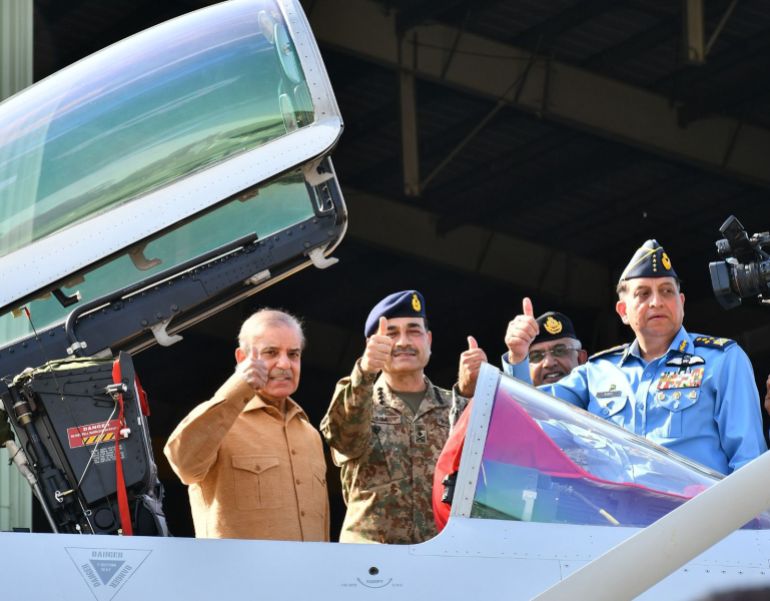
Islamabad, Pakistan – Pakistan’s cabinet on Tuesday promoted Syed Asim Munir, the country’s chief of army staff, to the rank of field marshal, following the country’s recent military conflict with India. That short but intense confrontation had brought the South Asian neighbours to the edge of their fifth war, as they launched missiles and drones towards each other over four days in early May. Ultimately, a ceasefire on May 10, announced by United States President Donald Trump, pulled the nuclear-armed neighbours back from the brink after they each targeted the other’s military installations in missile strikes earlier that day. Both New Delhi and Islamabad claimed wins in the conflict. And Pakistan’s government has drawn a direct link between those clashes and its decision to promote Munir. So why was Munir promoted, what does the rank of field marshal signify, and what does the promotion portend for the future of Pakistan’s military leadership and its role in the country’s domestic affairs? Advertisement Why was Munir made field marshal? According to a statement from Prime Minister Shehbaz Sharif’s office, Munir was promoted in recognition of his leadership of the army, with “exemplary courage and determination,” and for devising a strategy to counter Indian attacks. “In recognition of his brilliant military leadership, courage, and bravery, ensuring Pakistan’s sovereignty and territorial integrity and courageous defence against the enemy, the cabinet approved the prime minister’s proposal to promote General Syed Asim Munir to the rank of field marshal,” the statement said. The cabinet also granted a second extension to Air Chief Marshal Zaheer Ahmed Babar Sidhu, currently in his fourth year as head of the Pakistan Air Force (PAF), following a previous extension. Talal Chaudhry, state interior minister, told Al Jazeera that the decision to promote Munir was based on his leadership. “The Pakistani military was engaged on two flanks, fighting the menace of terrorism on our western borders, and during that, they also had to fend off our adversary on eastern flank, which has one of the world’s largest armies, and yet under Munir’s leadership, we came out on top decisively,” Chaudhry said. Asim Munir, centre, is only the second army official to be promoted to the rank of Field Marshal in Pakistan’s military history. [Handout/Inter-Services Public Relations] How has Munir responded? In a statement issued by the Inter-Services Public Relations (ISPR), the military’s media wing, Munir said he was humbled by the honour and dedicated it to the “entire nation, the armed forces of Pakistan, especially the civil and military martyrs and veterans”. Advertisement “This is not an individual honour but an honour for the armed forces of Pakistan and the entire nation,” he said. A field marshal is the highest rank in armies – like Pakistan’s and India’s – that follow the British Army’s traditions. How rare is the field marshal rank? Very. In Pakistan, a full general – denoted by four stars – is usually the standard rank for the army chief and the chairman of the Joint Chiefs of Staff Committee (CJCSC), who convenes the heads of all three services: army, navy and air force. Although the CJCSC role is open to any of the three branches, only army generals have held the post since 1997, with General Sahir Shamshad the current incumbent in the role. Since gaining independence in 1947, Pakistan has had 17 army chiefs. Munir is only the second among them – after Ayub Khan – to be promoted to field marshal. Ayub Khan became army chief in 1951 and seized power in a military coup in 1958. A year later, he promoted himself to field marshal while appointing General Musa Khan as the new army chief. “A field marshal has his own insignia and their own stick which they carry with them. A field marshal does not have to respond to a salute, but instead they only have to wave the stick to acknowledge it,” Inam ul Rahiem, a lawyer and former military officer, told Al Jazeera. Once conferred, the field marshal rank is held for life. Does India have the field marshal rank, too? Yes, and it is as rare in India as it is in Pakistan. Since 1947, the Indian government has awarded the title of field marshal to two generals. Advertisement The first was General Sam Manekshaw, who received the rank in 1973 for his leadership during the 1971 war with Pakistan that India won and that led to the creation of Bangladesh. “Manekshaw led their army in exemplary fashion and the Indian Prime Minister Indira Gandhi, after the war, awarded him with the title of field marshal. Although he retired from the position of army chief in 1973, he retained the rank for the rest of his life, and attended official events in his uniform,” Rahiem said. The second was Kodandera M Cariappa, India’s first post-independence army chief. He was awarded the title in 1986, three decades after retiring. Cariappa, who led Indian forces during the country’s first war with Pakistan in 1947, was previously in the British Indian Army, like Ayub Khan. In fact, Khan served under Cariappa in 1945 when they were both posted in Waziristan, in present-day Pakistan. How powerful is Pakistan’s military? Pakistan’s army is considered the most powerful institution in the country, wielding deep influence across nearly every sphere of society. It has ruled the country directly for more than three decades since independence in 1947. The army chief is widely seen as the single most powerful position in Pakistan, often overshadowing the elected civilian government. The military has long faced allegations of manipulating election results to support favoured candidates. Munir’s predecessor, General Qamar Javed Bajwa, acknowledged the military’s history of political interference in his farewell speech in November 2022 but said that such meddling had ended. Advertisement But under Munir, the Pakistani military has been accused by leaders of former Prime Minister Imran Khan’s Pakistan Tehreek-e-Insaaf party of cracking down on the group’s leaders, including Khan. In Pakistan’s 2024 election, the PTI alleged widespread rigging, even
Ukrainian former politician shot dead outside school in Madrid
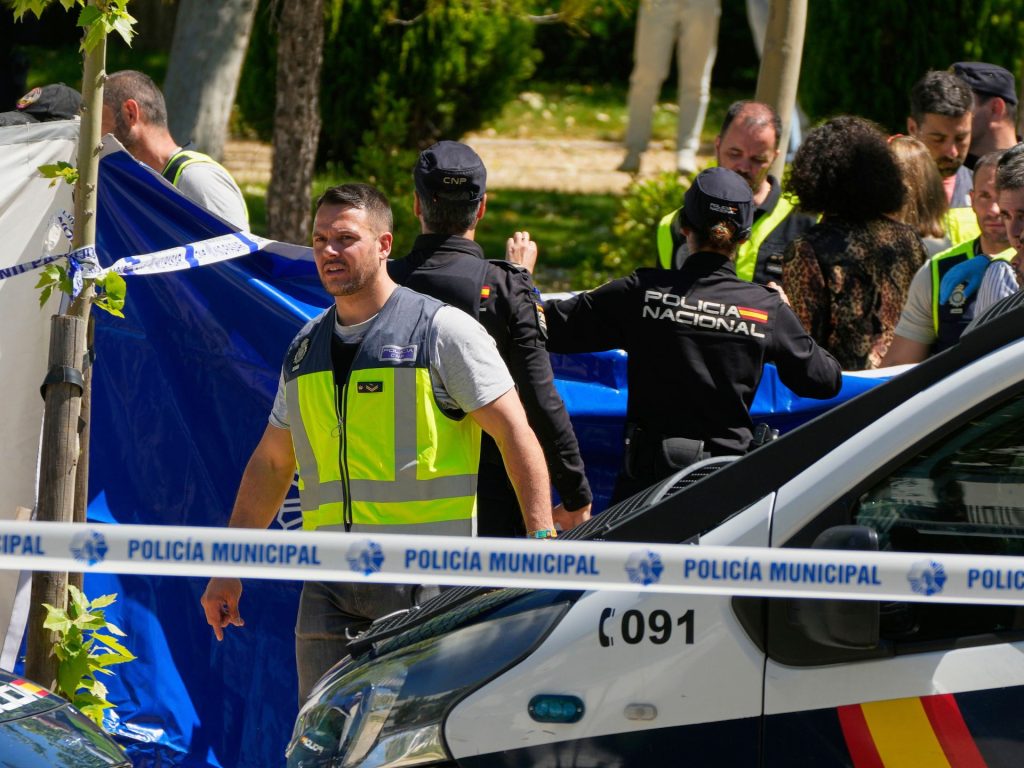
DEVELOPING STORYDEVELOPING STORY, Andriy Portnov was previously a senior aide to removed former President Viktor Yanukovych and had been the subject of US sanctions. A Ukrainian former politician has been shot dead by an unknown assailant outside a school in Madrid, Spain, authorities said. The man was identified by Spain’s Ministry of Interior as Andriy Portnov, who was previously a senior aide to Ukraine’s former President Viktor Yanukovych. The attack on Wednesday morning took place outside the gates of the American School in the Spanish capital’s upscale neighbourhood of Pozuelo de Alarcon. Police were called at about 9:15am (07:15 GMT) and notified that a man had been shot in the street. Witnesses quoted by the police said he was shot “several times” in the head and body by more than one assailant. The attackers fled on foot, police said. Radio station Cadena SER reported that Portnov was taking his children to school when he was attacked. Portnov had been closely tied to Ukraine’s pro-Russian former leader Yanukovych, having served as deputy head of the presidential office from 2010 to 2014. During Yanukovych’s time in power, Portnov was involved in drafting legislation aimed at persecuting participants of the 2014 revolution in Ukraine. He was later placed on several sanctions lists, including by the US Treasury in 2021. Advertisement This is a developing story. More to come… Adblock test (Why?)
Uganda confirms military trials for civilians despite Supreme Court ruling
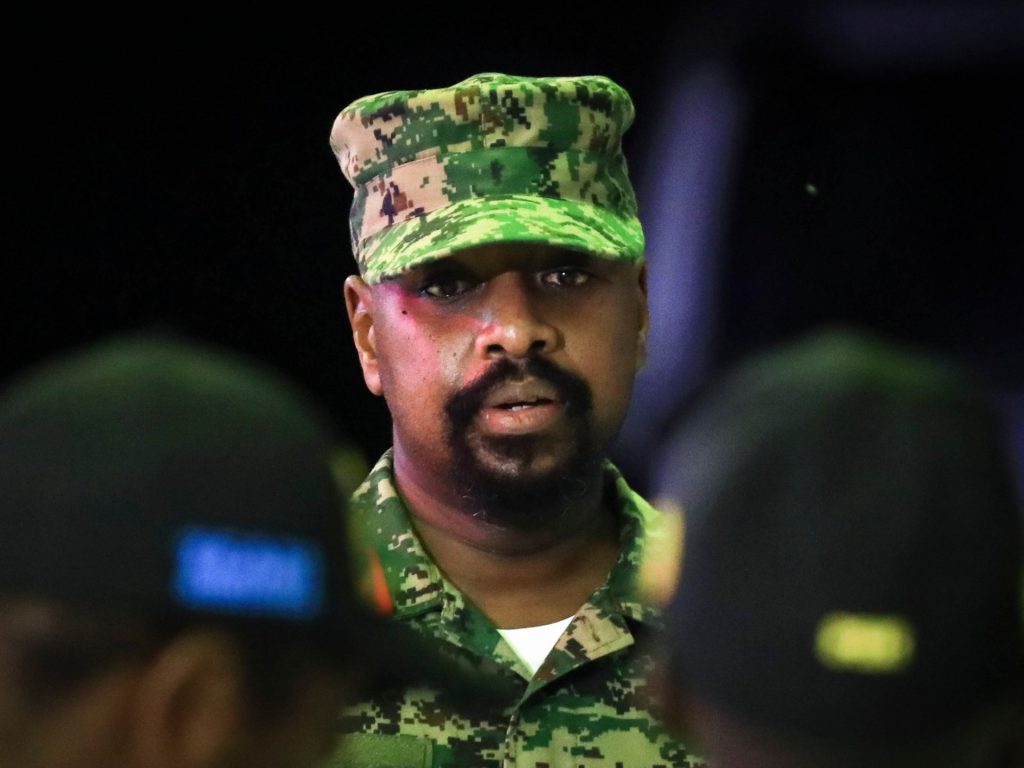
President Yoweri Museveni’s government has frequently defended military trials, citing national security concerns. Uganda’s parliament has passed a controversial bill authorising military tribunals for civilians, drawing condemnation from opposition figures and rights groups, who accuse the government of trying to silence opponents, which it denies. The practice has long been used in Uganda, but was struck down by the country’s top court in January. The Supreme Court had ruled that the military tribunals lacked legal competence to try civilians and failed to meet fair trial standards. Despite that ruling, lawmakers moved ahead Tuesday with the legislation, which permits civilians to be tried in military courts. “Today, you proved you are fearless patriots! Uganda will remember your courage and commitment,” said General Muhoozi Kainerugaba, head of the military and son of President Yoweri Museveni, in a post on X. Earlier this month, Kainerugaba said that he was holding a missing opposition activist in his basement and threatened violence against him, after the man’s party said he was abducted. Museveni’s government has frequently defended military trials as necessary for national security amid concerns about armed opposition and alleged threats to state stability. Advertisement Military spokesperson Chris Magezi said the legislation would “deal decisively with armed violent criminals, deter the formation of militant political groups that seek to subvert democratic processes, and ensure national security is bound on a firm foundational base”. But critics say the move is part of a broader pattern of repression. “There’s no legal basis to provide for the trial of civilians in the military court,” opposition MP Jonathan Odur told parliament during debate on the bill. He described the legislation as “shallow, unreasonable and unconstitutional”. Uganda has for years used military courts to prosecute opposition politicians and government critics. In 2018, pop star-turned-opposition-leader Bobi Wine was charged in a military court with illegal possession of firearms. The charges were later dropped. Kizza Besigye, a veteran opposition figure who has challenged Museveni in multiple elections, was arrested in Kenya last year and returned to Uganda to face a military tribunal. Following the Supreme Court’s January ruling, his trial was moved to a civilian court. His party, the People’s Front for Freedom (PFF), has denounced the charges as politically motivated. Human Rights Watch (HRW) has previously criticised Uganda’s military courts for failing to meet international standards of judicial independence and fairness. Oryem Nyeko, senior Africa researcher at HRW, said earlier this year: “The Ugandan authorities have for years misused military courts to crack down on opponents and critics”. Advertisement Adblock test (Why?)
EU to sustain Radio Free Europe with emergency funding after Trump cuts
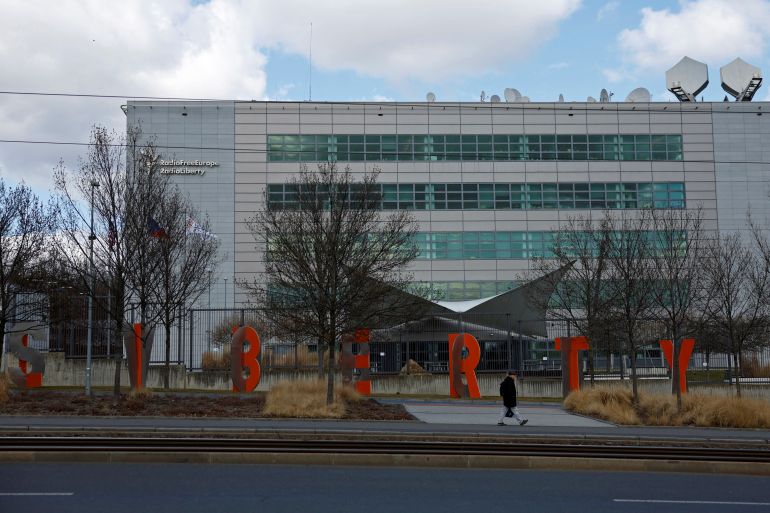
Outlet is one of several media services whose funding was cut by the Trump administration amid an aggressive downsizing effort. The European Union plans to step in to help save longtime media outlet Radio Free Europe/Radio Liberty (RFE/RL) after United States President Donald Trump’s administration abruptly stopped funding it. The bloc’s foreign policy chief, Kaja Kallas, told reporters after a meeting of EU foreign ministers in Brussels on Tuesday that 5.5 million euros ($6.2m) will be provided to “support the vital work of Radio Free Europe”. “It’s short-term emergency funding designed as a safety net for the independent journalism,” she added. Trump suspended all funding for RFE/RL in March along with other US broadcasters, including Voice of America, to slash government spending. Critics of the administration said the cuts are also politically motivated and part of a push to control and curb news media that do not hew to its outlook. Trump earlier this month signed an executive order slashing federal subsidies to two US public broadcasters, PBS and NPR , accusing them of biased reporting and spreading “left-wing” propaganda. Advertisement Lawyers for RFE/RL, which has been operating for 75 years, secured an order last month from a US federal judge for the Trump administration to restore $12m that was appropriated by Congress. The money has not been sent so far as lawyers said the service will have to shut down in June without the funding. Radio Free Europe/Radio Liberty headquarters in Prague, Czech Republic [File: David W Cerny/Reuters] Kallas said on Tuesday that the EU funding would not cover the work of the outlet across the globe but would focus on interests closer to the agenda of the bloc. “So our focus should be really to help Radio Free Europe to work and function in those countries that are in our neighbourhood and that are very much dependent on news coming from outside,” she said. The EU’s top diplomat said she hoped the 27 EU member countries would also provide more funds to help Radio Free Europe longer term. Kallas said the bloc has been looking for “strategic areas” where it can help as Washington cuts life-saving foreign aid. The outlet’s corporate headquarters are in Washington, DC, and its journalistic headquarters are based in the Czech Republic. The service has aired programmes in 27 languages in 23 countries across Eastern Europe, Central Asia and the Middle East and has more than 1,700 staff. The outlet has been heavily criticised and banned by Russia for its coverage of the war in Ukraine. Radio Free Europe began broadcasting in 1950 in the early years of the Cold War to several Eastern European nations that had become Soviet Union satellites. Radio Liberty began broadcasting to Russia a few years later. Both were initially funded by the US Congress through the Central Intelligence Agency. Adblock test (Why?)
Why is Donald Trump fixated on South Africa?

How did the US right become fixated on a debunked conspiracy theory of ‘white genocide’ in South Africa? The administration of US President Donald Trump has granted refugee status to 49 white Afrikaners, echoing a debunked conspiracy theory about “white genocide” in South Africa. The move comes after Trump cut aid to the nation and threatened to boycott meetings with its government. What’s behind Trump’s fixation on South Africa? Adblock test (Why?)
Video: UK, France, Canada threaten action against Israel over Gaza
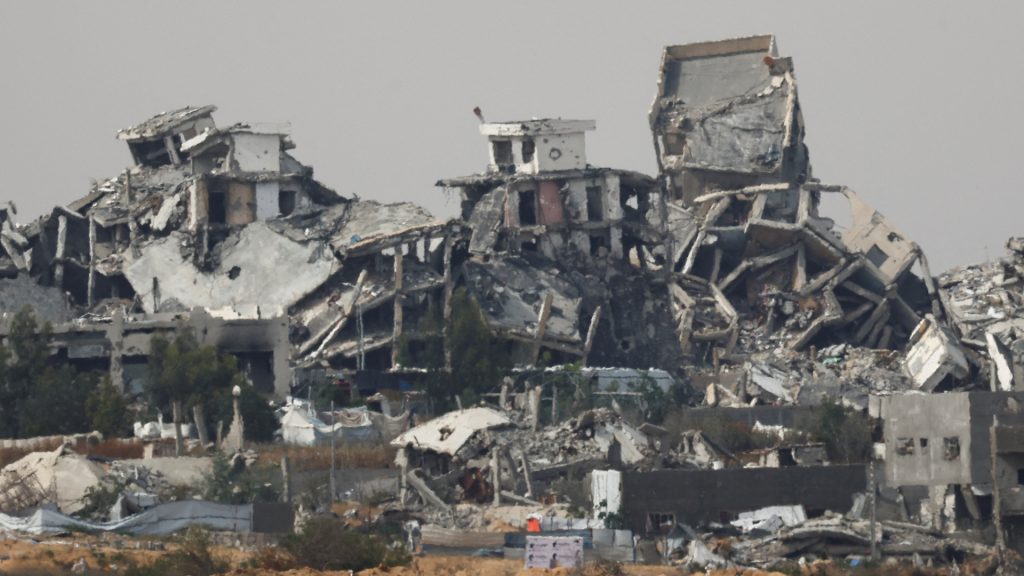
NewsFeed Leaders from Canada, France and the UK threaten to impose sanctions on Israel if it continues its offensive in Gaza. Hamdah Salhut has more from the Jordanian capital Amman. She’s there because the Israeli government has banned Al Jazeera from reporting inside Israel. Published On 20 May 202520 May 2025 Adblock test (Why?)
Pregnant woman among victims of Israeli strike on Gaza school shelter
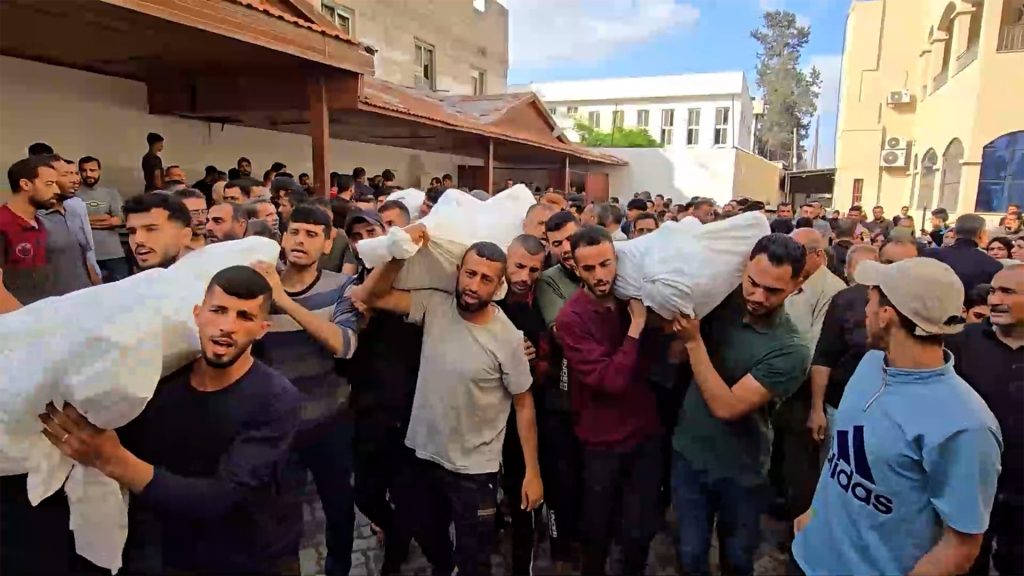
NewsFeed An Israeli air strike on the Musa bin Nusair School in Gaza City has killed at least a dozen Palestinians, including children and a pregnant woman. The school had been sheltering forcibly displaced families. Published On 20 May 202520 May 2025 Adblock test (Why?)
Detained student Mahmoud Khalil honoured at alternative graduation
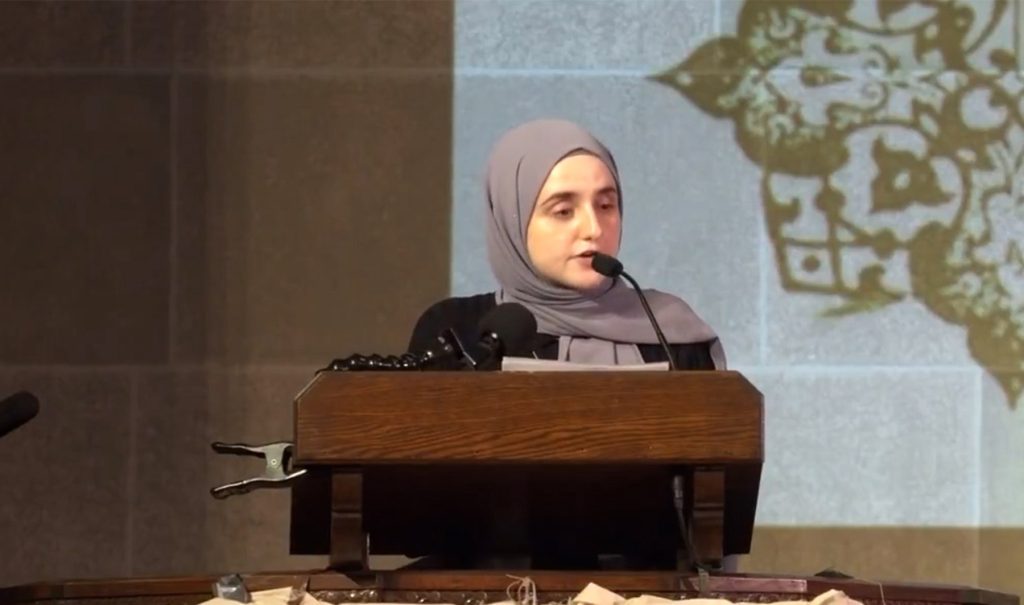
NewsFeed Palestinian activist Mahmoud Khalil was honoured at an alternative graduation ceremony in New York, where his wife and baby accepted a diploma on his behalf while he remains detained at an immigration facility in Louisiana. Published On 20 May 202520 May 2025 Adblock test (Why?)
Trump tries to jump start peace talks with calls to Zelenskyy, Putin
[unable to retrieve full-text content] US President Donald Trump spoke with the leaders of both Ukraine and Russia in back-to-back calls.
Eyewitness video shows Israeli airstrike on Khan Younis
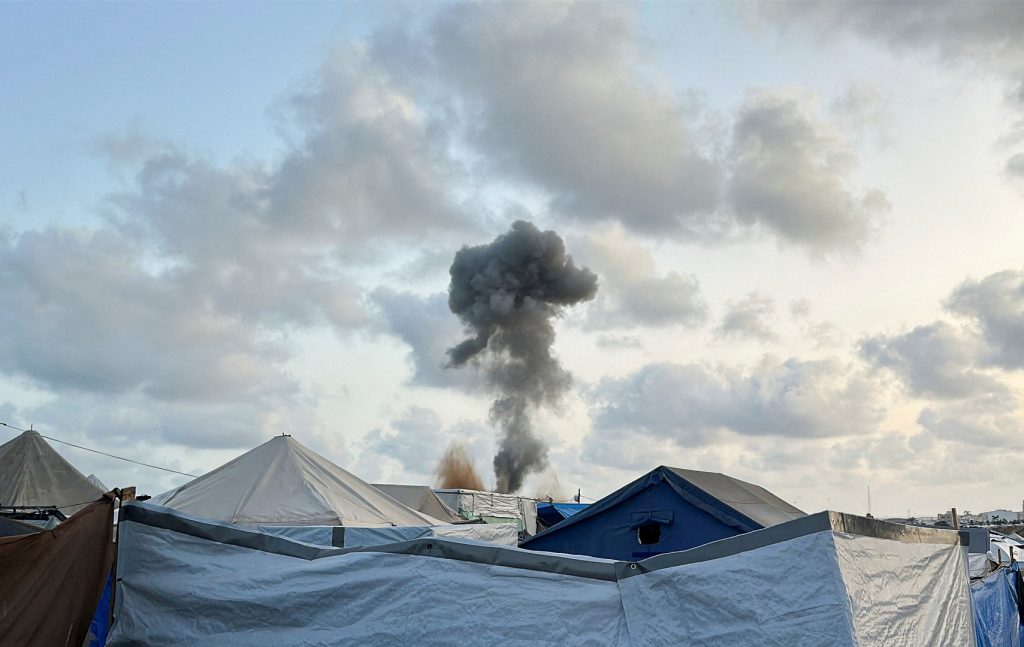
NewsFeed Eyewitness video captured an Israeli airstrike hitting west Khan Younis in Gaza as people flee tents amid gunfire. Israel had warned of an “unprecedented attack” and ordered evacuations. Israeli Prime Minister Netanyahu has vowed to control all of Gaza, despite global pressure and famine fears. Published On 19 May 202519 May 2025 Adblock test (Why?)