

Trump to host Armenia, Azerbaijan leaders for peace talks: Report

Armenia and Azerbaijan’s leaders met in the UAE last month, but no breakthrough in their decades-long conflict was reached. United States President Donald Trump will host the leaders of Armenia and Azerbaijan for peace talks at the White House, a US official said. The official told the Reuters news agency on Tuesday that there is a possibility a framework for a peace agreement could be announced at Friday’s meeting in Washington, DC. The leaders of Armenia and Azerbaijan met in Abu Dhabi, in the United Arab Emirates, for peace talks last month, but no breakthrough in the decades-old conflict was announced. [Al Jazeera] The two South Caucasus countries have been in conflict with each other since the late 1980s, when Nagorno-Karabakh broke away from Azerbaijan with support from Armenia. The region, which was claimed by both Azerbaijan and Armenia after the fall of the Russian Empire in 1917, had a mostly ethnic Armenian population at the time. Azerbaijan recaptured Nagorno-Karabakh in September 2023, prompting almost all of the territory’s 100,000 Armenians to flee to Armenia. Armenia has accused Azerbaijan of “erasing all traces” of the presence of ethnic Armenians in the contested territory, in a case before the International Court of Justice (ICJ). The case stems from the 2020 war over Nagorno-Karabakh, which left more than 6,600 people dead, one of three full-scale wars that the two countries have fought over the region. The United Nations’s top court has ordered Azerbaijan to allow ethnic Armenians who fled Nagorno-Karabakh to return. Azerbaijan says it is committed to ensuring all residents’ safety and security, regardless of national or ethnic origin, and that it has not forced ethnic Armenians, who are mostly Christian, to leave the Karabakh region. Advertisement Azerbaijan, whose inhabitants are mostly Muslim, links its historical identity to the territory, too, and has accused the Armenians of driving out Azeris who lived near the region in the 1990s. The meeting in Abu Dhabi last month between Armenian Prime Minister Nikol Pashinyan and Azerbaijani President Ilham Aliyev came after the two countries finalised a draft peace deal in March. The two leaders “agreed to continue bilateral negotiations and confidence-building measures between the two countries”, but no more concrete steps were outlined in the final statement from the talks. Ceasefire violations along the heavily militarised 1,000km (620-mile) shared Armenia-Azerbaijan border surged soon after the draft deal was announced in March, but later diminished. Adblock test (Why?)
Thousands in Sudan’s besieged el-Fasher at ‘risk of starvation’, UN warns
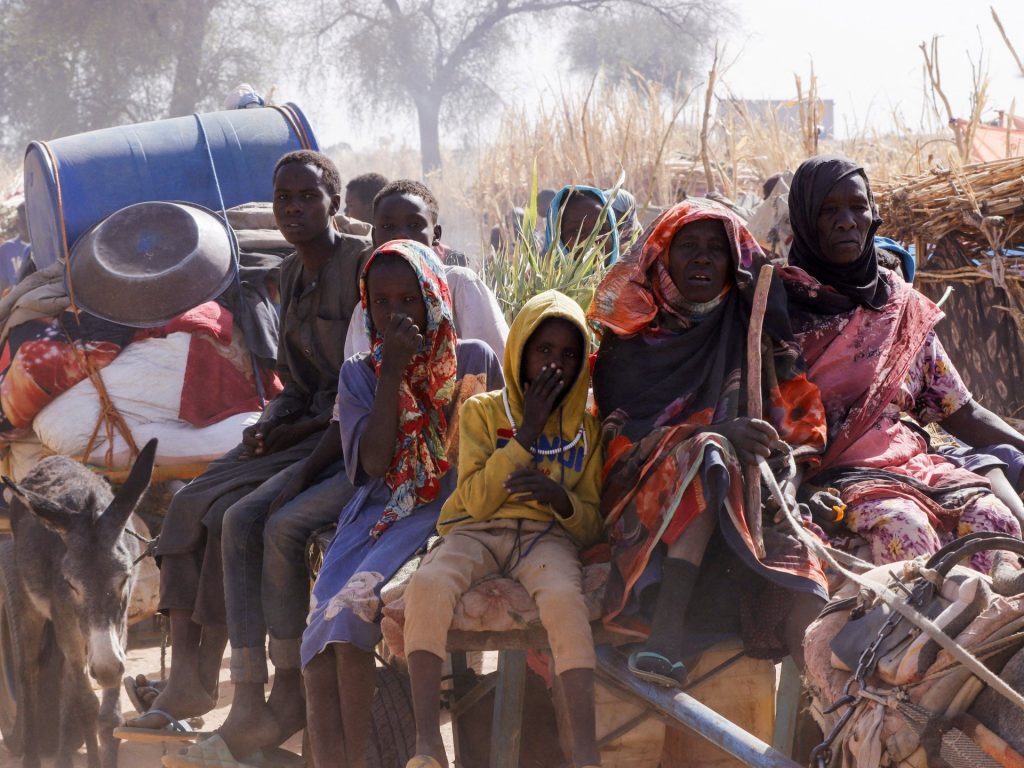
Thousands of families trapped in the besieged city of el-Fasher in western Sudan are at “risk of starvation”, the World Food Programme (WFP) warns as the country’s brutal civil war rages well into its third year. Since May last year, el-Fasher, the capital of North Darfur state, has been under siege by the paramilitary Rapid Support Forces (RSF), which has been at war with the government-aligned Sudanese armed forces (SAF) since April 2023. The RSF has encircled the city, blocking all major roads and trapping hundreds of thousands of civilians, who have dwindling food supplies and limited humanitarian access. “Everyone in el-Fasher is facing a daily struggle to survive,” said Eric Perdison, the WFP’s regional director for East and Southern Africa. “People’s coping mechanisms have been completely exhausted by over two years of war. Without immediate and sustained access, lives will be lost.” El-Fasher is the last major city in the Darfur region still held by the SAF. It has come under renewed attack by RSF fighters this year since the paramilitary was ousted from Sudan’s capital, Khartoum. A major RSF assault on the Zamzam displacement camp near el-Fasher in April forced hundreds of thousands of civilians to flee. Many have sought shelter in the state capital. According to the WFP, prices for staple foods like sorghum and wheat, used to make traditional flatbreads and porridge, are as much as 460 percent higher in el-Fasher than in other parts of Sudan. Markets and clinics have been attacked while community kitchens that once fed displaced families have largely shut down due to a lack of supplies, the United Nations agency added. Advertisement Desperate families are reportedly surviving on animal fodder and food waste while acute malnutrition is soaring, especially among children. According to the UN, nearly 40 percent of children under five in el-Fasher are now acutely malnourished, and 11 percent are suffering from severe acute malnutrition. The rainy season, which peaks in August, is further hampering efforts to reach the city as roads rapidly deteriorate. Last year, famine was first declared in Zamzam and later spread to two other nearby camps – al-Salam and Abu Shouk – and some parts of southern Sudan, according to the UN. ‘Irreversible damage’ The war has killed tens of thousands of people, displaced millions and created what the UN describes as the world’s largest displacement and hunger crises. The country in effect is split in two with the army controlling the north, east and centre of Sudan and the RSF dominating nearly all of Darfur and parts of the south. Last month, a Sudanese coalition led by the RSF announced it was establishing an alternative government in a challenge to the military-led authorities in Khartoum. The new self-proclaimed government could deepen divisions, worsen the humanitarian crisis and lead to competing institutions as the war rages. The crises are happening as UN agencies face one of their worst funding cuts in decades, compounded by decisions by the United States and other donor states to slash their foreign aid funding. Funding cuts are now driving an entire generation of children in Sudan to the brink of irreversible harm amid a scaling-back in support, UNICEF warned on Tuesday. “Children have limited access to safe water, food, healthcare. Malnutrition is rife, and many good children are reduced to just skin, bones,” Sheldon Yett, UNICEF’s representative in Sudan, said, speaking via videolink from Port Sudan. Children were being cut off from life-saving services due to funding cuts while the scale of need is staggering, UNICEF said. “With recent funding cuts, many of our partners in Khartoum and elsewhere have been forced to scale back. … We are being stretched to the limit across Sudan with children dying of hunger,” Yett said. “We are on the verge of irreversible damage being done to an entire generation of children in Sudan.” Only 23 percent of the $4.16bn global humanitarian response plan for Sudan has been funded, according to the UN Office for the Coordination of Humanitarian Affairs (OCHA). “It has been one year since famine was confirmed in Zamzam camp, and no food has reached this area. El-Fasher remains under siege. We need that access now,” Jens Laerke of OCHA said. Advertisement Meanwhile, a cholera outbreak in North Darfur has further added to the desperation of families there. Deaths due to the water-borne disease have risen to 191 in the region, according to Adam Rijal, spokesman for the General Coordination for Displaced Persons and Refugees in Darfur. At least 62 people have died from the disease in Tawila in North Darfur, Rijal said in a statement. Nearly 100 people have also died in the Kalma and Otash camps, both displacement camps located in the city of Nyala in South Darfur state. About 4,000 cases of cholera have been reported in the region, according to the statement. Adblock test (Why?)
The airdrops on Gaza are a PR stunt, not a humanitarian operation
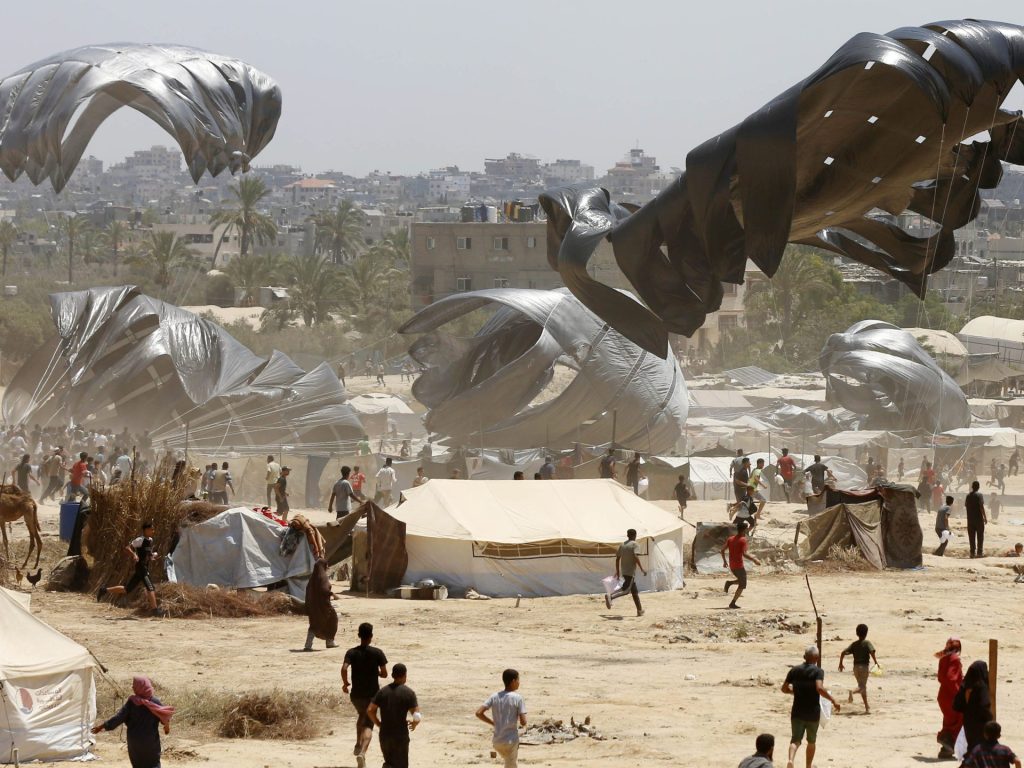
Last week, I saw aid dropping from the sky near my central Gaza neighbourhood of az-Zawayda. Neither I nor any of my neighbours had the courage to chase after it because we knew that the moment it hit the ground, a battle would erupt. If the aid survived the air, it wouldn’t survive the looters. It is almost always the same scene. Gunfire breaks out the second the plane drops the boxes. Armed gangs are already waiting on the ground, ready to take the goods by force. Whoever gets there first, whoever shoots first, also walks away with the food. It is never those who need it the most. Later, we would see those same “aid boxes” in the market in Deir el-Balah, their contents up for sale at exorbitant prices. Recently, my little brother was craving a biscuit. I saw biscuits from an aid package at the market and asked for the price. It was 20 shekels ($5) for a biscuit, something we could not afford. The aid dropped from the sky not only fails to feed the hungry, but it also kills them. On Monday, an airdropped pallet hit a tent for the displaced and killed Uday al-Quraan, a medic working at Al-Aqsa Martyrs Hospital. A week ago, 11 people were injured when another airdropped pallet hit tents in northern Gaza. Last year, in other failed airdrops, people also died. Five were killed in the Shati refugee camp in Gaza City when the parachute of a pallet did not open; 12 drowned trying to reach boxes that dropped into the sea; six were killed in a stampede after a crowd of people rushed to an airdrop location. Advertisement The idea for these latest airdrops came from Israeli Prime Minister Benjamin Netanyahu, who called on the world to help with the process. Many governments welcomed the idea and some joined the effort, including Jordan, the United Arab Emirates and European countries. But Netanyahu knows very well that the airdrops will not stop the starvation of Palestinians, which is why he called for them instead of opening the land crossings into Gaza and allowing United Nations agencies to distribute aid in a fair and orderly fashion, just like they have always done. While, the global public may be deceived that something is being done about the hunger, inside Gaza, these airdrops aren’t seen as a real solution or a humanitarian gesture. We see them as nothing more than a PR show – a way to cover up a crime that hasn’t stopped: starving an entire population under tight siege by preventing thousands of trucks from entering while a few boxes fall from the sky for the cameras. It’s all part of a strategy to extend the starvation and ease international pressure on Israel. And so the famine proceeds at full speed. According to Gaza’s Ministry of Health, more than 180 people have died from hunger, including 92 children. It is not just in Gaza that airdrops are seen as inefficient and dangerous. In Afghanistan in 2001, airdropped aid was packaged in the same way as cluster bombs. The latter would get mistaken for food boxes by children who would get killed running after them. In Syria, aid airdropped into a besieged area did not reach the starving civilians because it was either damaged or fell into ISIL (ISIS)-held territory. It is well known that airdrops do not work and when other options are available, there is no reason to use them. The UN has repeatedly said this method is ineffective and ground delivery is safer and far better. A truck can carry four to 10 times more aid than a parachute. It is also much cheaper. Thousands of trucks are waiting on the Egyptian side of the border, enough to feed people and prevent more deaths from starvation. And yet, we see this futile spectacle once again in Gaza. Here we know not to look to the sky with hope. The same sky that drops bombs can’t be trusted to drop food. This “humanity with parachutes” is a fig leaf deployed to try to cover the world’s shame and its decision to silently watch starvation. Gaza is not only under siege by bombs but also by lies, by complicity, by soft language covering bloody massacres. Everyone who stays silent, who justifies, who treats the killer and victim as equal is a partner in this crime. Advertisement And we, the Palestinians, are not just victims – we are witnesses. We see the world refuse to act, we see countries continue to arm Israel, to trade with it, to give it diplomatic cover. We see governments think of pitiful excuses not to impose embargoes – as they are obliged to do under international law – on a nation committing genocide. And tomorrow, when history is written, it won’t be in the language of diplomacy with euphemisms and excuses. It will be in the language of facts with the names of those complicit in the mass killing and starvation of Palestinians written in clear letters. The views expressed in this article are the author’s own and do not necessarily reflect Al Jazeera’s editorial stance. Adblock test (Why?)
Man Utd and Newcastle make Sesko bids as Leipzig admit ‘concrete’ interest

Benjamin Sesko tops the summer’s transfer targets, with striker’s club Leipzig revealing ‘concrete interest’. Premier League sides Manchester United and Newcastle have both placed competing bids for in-demand RB Leipzig striker Benjamin Sesko, German tabloid Bild reported Tuesday. Bild said the Red Devils made an initial bid of 85 million euros ($98.2) on Tuesday for the 22-year-old centre forward. Newcastle had offered a reported 80 million euros ($92.4) for the striker on Saturday, upping that to 85 million ($98.2) with bonuses on Monday. The Slovenian striker scored 13 goals and laid on five assists in a disappointing league campaign for Leipzig last season. He has scored 16 times in 41 appearances at the international level. Sesko was stood down from Saturday’s home friendly against Serie A side Atalanta, won 2-1 by the visitors, due to a potential transfer. Leipzig sporting director Marcel Schafer confirmed this, saying Sesko would not play “due to the very concrete interests from several clubs”. United are rebuilding after their worst top-flight campaign in 51 years, along with defeat to Tottenham in the Europa League final. United were toothless in attack and have already brought in forwards Matheus Cunha and Bryan Mbeumo in the summer window. Sesko’s arrival could push under-pressure striker Rasmus Hojlund towards the exit, with reports emerging that United could sell the Denmark forward for 35 million ($40.4) euros, less than half of what they paid to bring him from Atalanta in 2023. Newcastle qualified for the Champions League with a fifth-placed finish last season, but are reportedly in danger of losing striker Alexander Isak to Premier League champions Liverpool. Advertisement Adblock test (Why?)
Australia’s FM warns of ‘risk there will be no Palestine left to recognise’
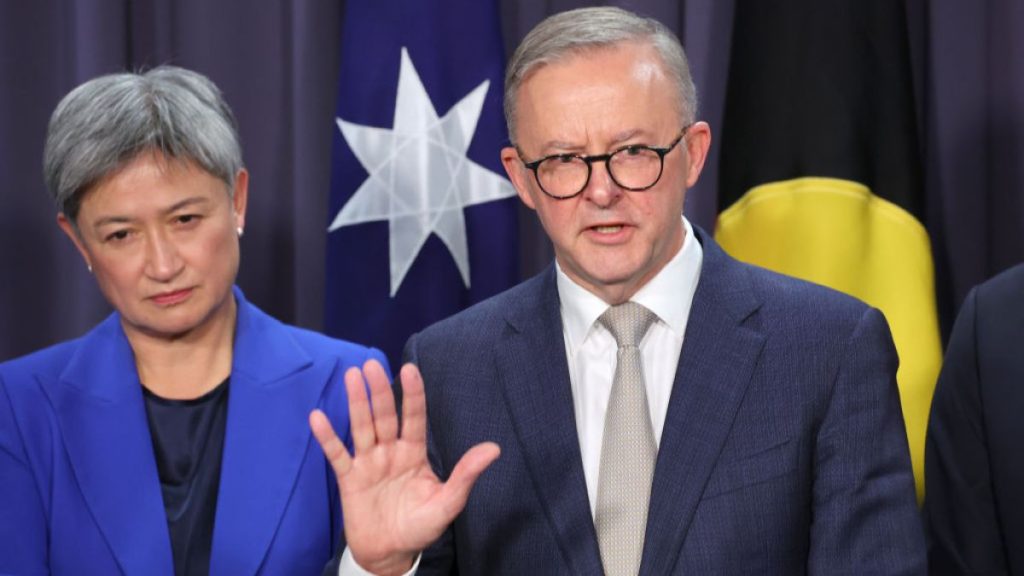
Australia’s Minister for Foreign Affairs Penny Wong has told the country’s media that “there is a risk there will be no Palestine left to recognise”, amid Israel’s devastating war on Gaza and increasing violence against Palestinians in the occupied West Bank. Wong, who did not indicate that Australia plans to change its stance and recognise Palestinian statehood, made her comments in an interview with the Australian Broadcasting Corporation ( ABC) on Tuesday morning, where she responded to questions about a mass protest in Sydney attended by hundreds of thousands of people rallying against Israel’s war on Gaza. Organisers said that between 200,000 and 300,000 people joined the protest across the iconic Sydney Harbour Bridge on Sunday. Police had initially estimated that about 90,000 people took part. Wong said the Australian government shared the protesters “desire for peace and a ceasefire”, and that the huge turnout reflected “the broad Australian community’s horror” and the “distress of Australians, on what we are seeing unfolding in Gaza, the catastrophic humanitarian situation, the deaths of women and children, the withholding of aid”. However, asked if Australia was considering taking any more concrete actions, such as imposing sanctions on Israel, Wong said: “We don’t speculate on sanctions for the obvious reason that they have more effect if they are not flagged.” She noted that Australia had already imposed sanctions on two far-right ministers in Netanyahu’s government, Itamar Ben-Gvir and Bezalel Smotrich, in June this year, as well as “extremist” Israeli settlers. Advertisement On Australia’s position regarding Palestinian statehood, Wong said: “In relation to recognition, I’ve said for over a year now, it’s a matter of when, not if.” Wong’s interview came as Australian Prime Minister Anthony Albanese is reportedly seeking to speak with Israeli Prime Minister Benjamin Netanyahu in the wake of Sunday’s protest. Responding to questions about what he plans to discuss with Netanyahu, Albanese said he would again express his support for a two-state solution. Rawan Arraf, the executive director of the Australian Centre for International Justice, said that the “only business” that Albanese should be discussing with Netanyahu is cancelling the “two-way arms trade between Australia and and Israel, new sanctions measures, and Netanyahu’s one-way trip to the [International Criminal Court] to face war crimes and crimes against humanity charges“. Albanese “must not give legitimacy to an accused war criminal”, Arraf wrote in a post on X. While both Albanese and Wong have continued to emphasise the importance of a two-state solution, Australia has yet to follow other countries, including France and Canada, that have recently announced their plans to recognise Palestinian statehood, and join the vast majority of countries which already do so. Albanese also had a phone call with Palestinian Authority President Mahmoud Abbas on Tuesday, the first publicly recorded call between the pair since November 2023, according to the ABC. Responding to questions about the Sydney protest rally, Albanese said: “It’s not surprising that so many Australians have been affected in order to want to show their concern at people being deprived of food and water and essential services.” But the state government in New South Wales, which is led by Albanese’s Labor Party, had sought to prevent the march from crossing the Sydney Harbour Bridge in the week leading up to the protest. The protest only went ahead after State Supreme Court Justice Belinda Rigg ruled that “the march at this location is motivated by the belief that the horror and urgency of the situation in Gaza demands an urgent and extraordinary response from the people of the world”. “The evidence indicates there is significant support for the march,” Rigg added. A number of state and federal Labor ministers also took part in the march, in an indication of a growing divide within Albanese’s party. Independent journalist Antony Loewenstein told Al Jazeera that Sunday’s march showed that Australians are “frustrated that our government is doing little more than talk at this point”. Advertisement “People are so outraged, not just by what Israel is doing in Gaza, but also the Australian government’s complicity,” said Loewenstein, who spoke at the march on Sunday. Australia “is part of the global supply chain for the F-35 fighter jet, which Israel is using over Gaza every day, and the parts that are amongst those parts in the plane are probably coming from Australia”, he said. Adblock test (Why?)
Bangladesh teeters between hope and deadlock a year after Hasina’s fall
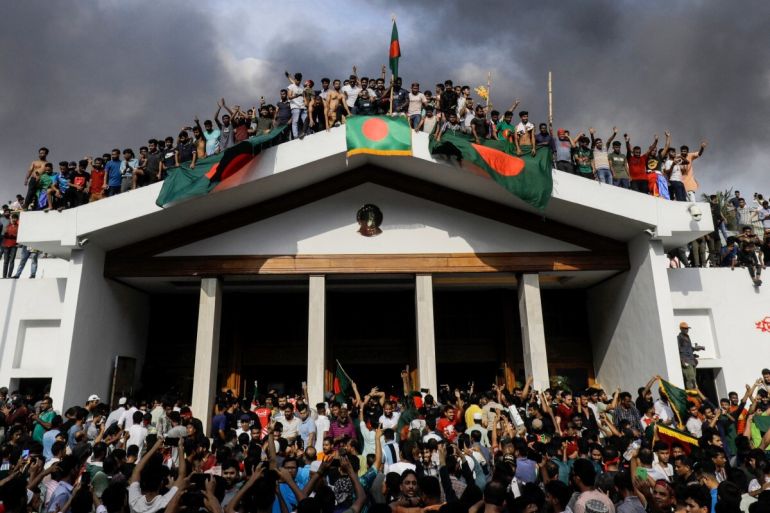
Dhaka, Bangladesh – Sinthia Mehrin Sokal remembers the blow to her head on July 15 last year when she, along with thousands of fellow students, marched during a protest against a controversial quota system in government jobs in Bangladesh’s capital, Dhaka. The attack by an activist belonging to the student wing of the then-Prime Minister Sheikh Hasina’s Awami League party left Sokal – a final-year student of criminology at the University of Dhaka – with 10 stitches and temporary memory loss. A day later, Abu Sayed, another 23-year-old student, was protesting at Begum Rokeya University in the Rangpur district, about 300km (186 miles) north of Dhaka, when he was shot by the police. A video of him, with his arms outstretched and collapsing on the ground moments later, went viral, igniting an unprecedented movement against Hasina, who governed the country with an iron fist for more than 15 years before she was toppled last August. Students from schools, colleges, universities and madrassas took to the streets, defying a brutal crackdown. Soon, the young protesters were joined by their parents, teachers and other citizens. Opposition parties, including the Bangladesh Nationalist Party (BNP) and the Bangladesh Jamaat-e-Islami, lent crucial support, forming an unlikely united front against Hasina’s government. “Even students in remote areas came out in support. It felt like real change was coming,” Sokal told Al Jazeera. On August 5, 2024, as tens of thousands of protesters stormed Hasina’s palatial residence and offices in Dhaka, the 77-year-old leader boarded a military helicopter and fled to neighbouring India, her main ally, where she continues to defy a Bangladesh court’s orders to face trial for crimes against humanity and other charges. Antigovernment protesters storm Hasina’s residence in Dhaka, August 5, 2024 [K M Asad/AFP] By the time Hasina fled, more than 1,400 people had been killed, most when government forces fired on protesters, and thousands of others were wounded, according to the United Nations. Advertisement Three days after Hasina fled, the protesters installed an interim government, on August 8, 2024, led by the country’s only Nobel laureate, Muhammad Yunus. In May this year, the interim government banned the Awami League from any political activity until trials over last year’s killings of the protesters concluded. The party’s student wing, the Chhatra League, was banned under anti-terrorism laws in October 2024. Yet, as Bangladesh marks the first anniversary of the end of Hasina’s government on Tuesday, Sokal said the sense of unity and hope that defined the 2024 uprising has given way to disillusionment and despair. “They’re selling the revolution,” she said, referring to the various political groups now jostling for power ahead of general elections expected next year. “The change we fought for remains out of reach,” said added. “The [interim] government no longer owns the uprising.” Sinthia Mehrin Sokal suffered temporary memory loss after she was hit on the head by a policeman during last year’s antigovernment protests [Courtesy of Sinthia Mehrin Sokal] ‘What was my son’s sacrifice for?’ Yunus, the 85-year-old Nobel Peace Prize winner presiding over Bangladesh’s democratic overhaul, faces mounting political pressure, even as his interim government seeks consensus on drafting a new constitution. Rival factions that marched shoulder to shoulder during anti-Hasina protests are now locked in political battles over the way forward for Bangladesh. On Tuesday, Yunus is expected to unveil a so-called July Proclamation, a document to mark the anniversary of Hasina’s ouster, which will outline the key reforms that his administration argues Bangladesh needs – and a roadmap to achieve that. But not many are hopeful. “Our children took to the streets for a just, democratic and sovereign Bangladesh. But that’s not what we’re getting,” said Sanjida Khan Deepti, whose 17-year-old son Anas was shot dead by the police during a peaceful march near Dhaka’s Chankharpul area on August 5, 2024. Witnesses said Anas was unarmed and running for cover when a police bullet struck him in the back. He died on the spot, still clutching a national flag. “The reforms and justice for the July killings that we had hoped – it’s not duly happening,” the 36-year-old mother told Al Jazeera. “We took to the streets for a better, peaceful and just country. If that doesn’t happen, then what was my son’s sacrifice for?” Others, however, continue to hold firm in their trust in the interim government. Advertisement “No regrets,” said Khokon Chandra Barman, who lost almost his entire face after he was shot by the police in the Narayanganj district. “I am proud that my sacrifice helped bring down a regime built on discrimination,” he told Al Jazeera. Barman feels the country is in better hands now under the Yunus-led interim government. “The old evils won’t disappear overnight. But we are hopeful.” Barman lost almost his entire face after he was shot by the police [Courtesy of Khokon Chandra Barman] Atikul Gazi agreed. “Yunus sir is capable and trying his best,” Gazi told Al Jazeera on Sunday. “If the political parties fully cooperated with him, things would be even better.” The 21-year-old TikToker from Dhaka’s Uttara area survived being shot at point-blank range on August 5, 2024, but lost his left arm. A selfie video of him smiling, despite missing an arm, posted on September 16 last year, went viral, making him a symbol of resilience. “I’m not afraid… I’m back in the field. One hand may be gone, but my life is ready to be offered anew.” Atikul Gazi was shot by police at point-blank range on August 5, 2024 [Courtesy of Atikul Gazi] ‘Instability could increase’ Others are less optimistic. “That was a moment of unprecedented unity,” said Mohammad Golam Rabbani, a professor of history at Jahangirnagar University on the outskirts of Dhaka. Rabbani had recited a poem during a campus protest on July 29, 2024. Speaking at an event last month to commemorate the uprising, he said: “Safeguarding that unity should have been the new government’s first task. But they let it slip.” The coalition of students, professionals and activists,
Israel’s Netanyahu has decided on full occupation of Gaza, reports say

Netanyahu’s war cabinet set to approve military operations across entire enclave, according to Israeli media. Israeli Prime Minister Benjamin Netanyahu is set to announce plans to fully occupy the Gaza Strip, Israeli media have reported. Netanyahu’s decision will see the Israeli military expand its operations across the entire enclave, including areas where Hamas’s captives are being held, i24NEWS, The Jerusalem Post, Channel 12 and Ynet reported on Monday. “The decision has been made,” Amit Sega, chief political analyst with Channel 12, quoted an unnamed senior official in Netanyahu’s office as saying. “Hamas won’t release more hostages without total surrender, and we won’t surrender. If we don’t act now, the hostages will starve to death and Gaza will remain under Hamas’s control.” The Palestinian Ministry of Foreign Affairs condemned the reported plans and called on the international community to “intervene urgently to prevent their implementation, whether they are a form of pressure, trial balloons to gauge international reactions, or genuinely serious”. Netanyahu’s office did not immediately respond to Al Jazeera’s request for comment. The reports come as Netanyahu is set to convene his war cabinet on Tuesday to discuss the next steps for Israel’s military in Gaza as its war in the besieged enclave nears the two-year mark. Netanyahu is facing growing international pressure to allow more humanitarian aid into Gaza and halt the war amid mounting Palestinian deaths due to malnutrition and Israeli attacks. At least 74 Palestinians, including 36 aid seekers, were killed in Israeli attacks on Monday, according to medical sources in Gaza. Advertisement The Israeli leader is also facing mounting domestic pressure to secure the release of Hamas’s remaining captives in Gaza, following the release of footage of detainees Rom Braslavski and Evyatar David appearing emaciated. Netanyahu on Monday doubled down on his war goals, including eliminating Hamas and securing the release of the remaining captives. “We must continue to stand together and fight together to achieve all our war objectives: the defeat of the enemy, the release of our hostages, and the assurance that Gaza will no longer pose a threat to Israel,” Netanyahu said at the start of a regular cabinet meeting on Monday. Senior Hamas official Osama Hamdan on Monday accused the United States and other Western countries of turning a blind eye to Israeli atrocities, and said that Netanyahu’s government bore “full responsibility” for the lives of the captives “due to its stubbornness, arrogance, and evasion of reaching a ceasefire agreement, and the escalation of the war of extermination and starvation against our people”. More than 60,930 Palestinians, including at least 18,430 children, have been killed in Gaza since October 2023, according to Gaza health authorities. Forty-nine captives, including 27 who are believed to be dead, are still being held by Hamas, according to Israeli authorities. Adblock test (Why?)
More than 600 former Israeli security chiefs urge Trump to end Gaza war
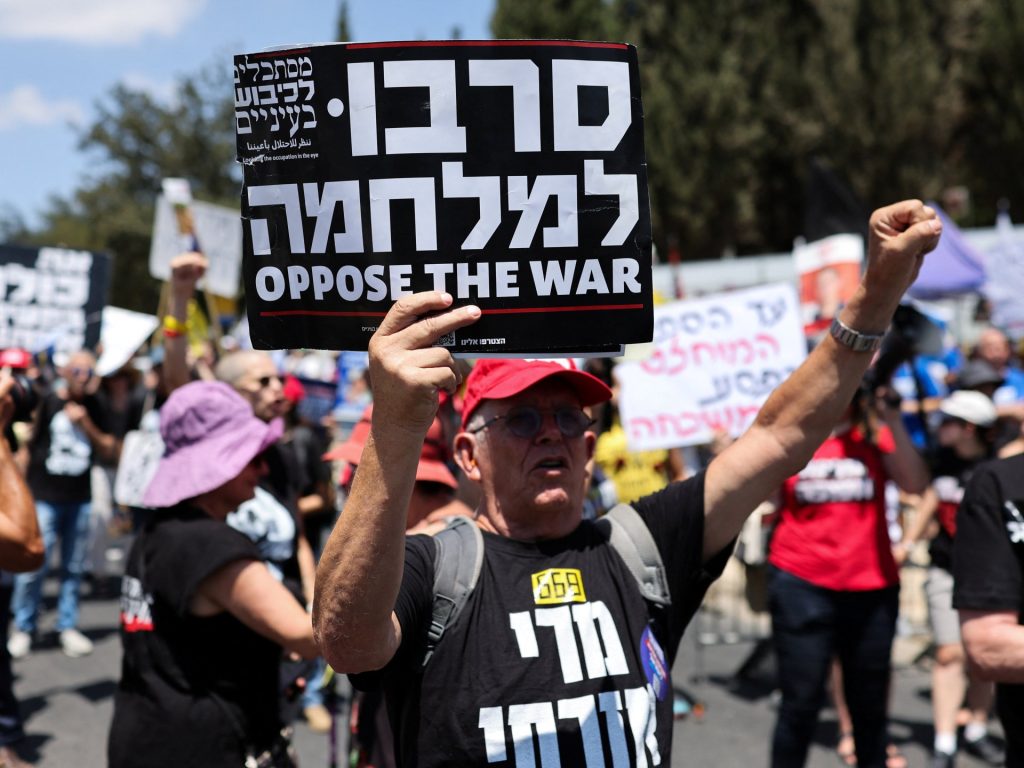
The group’s letter says the Israeli army has already achieved its objectives and the release of Israeli captives can be achieved only through a deal. More than 600 former Israeli security chiefs have urged United States President Donald Trump to bring an end to Israel’s war on Gaza as deaths of dozens of Palestinians from Israeli-induced starvation have caused global outrage. The appeal was made in a letter sent to Trump on Sunday. Its signatories include former Mossad chief Tamir Pardo, former Shin Bet chief Ami Ayalon and former deputy Israeli army chief Matan Vilnai. They called for pressure on Prime Minister Benjamin Netanyahu to end the nearly two-year conflict, which has devastated Gaza. The letter was sent as a furore grows over videos released by Palestinian groups showing two emaciated Israeli captives held in Gaza, where more than two million Palestinians are struggling to survive the starvation crisis. “Everything that could be achieved by force has been achieved. The hostages cannot wait any longer,” the Commanders for Israel’s Security (CIS) group said in a post on X, where it shared the letter. The letter said the Israeli army has achieved two of its three objectives by force, “dismantling Hamas’ military formations and governance”, but the third, bringing back all Israeli captives, can “only be achieved through a deal”. “Stop the Gaza War! On behalf of CIS, Israel’s largest group of former [military] generals and Mossad, Shin Bet, Police, and Diplomatic Corps equivalents, we urge you to end the Gaza war,” the letter read. “You did it in Lebanon. Time to do it in Gaza as well,” it added. אנו נמצאים בחלון הזדמנויות נדיר להובלת מהלך אזורי ובינלאומי לשינוי יסודי ברצועה.לטראמפ יש את היכולת לעשות זאת. בשם 550 בכירי עבר מכל זרועות הביטחון ושירות החוץ שלחנו מכתב לנשיא טראמפ: עצור את המלחמה והשב את החטופים. כל מה שניתן להשיג בכוח – הושג. החטופים לא יכולים להמתין עוד.… pic.twitter.com/4gWFC0W9PV — מפקדים למען ביטחון ישראל (@cisorgil) August 3, 2025 Advertisement Translation: We are at a rare window of opportunity to lead a regional and international move for a fundamental change in the Gaza Strip. Trump has the ability to do this. On behalf of 550 former senior officials from all branches of security and foreign service, we sent a letter to President Trump: Stop the war and bring back the hostages. Everything that could be achieved by force has been achieved. The hostages cannot wait any longer. This is the moment of truth. We call on President Trump to exert his full influence and do this – now! The security chiefs said Trump’s credibility rests on his ability to steer Netanyahu “in the right direction”. Gaza turned into rubble On Sunday, Hamas said it was open to the International Committee of the Red Cross (ICRC) delivering aid to Israeli captives in Gaza after Netanyahu said he requested the Geneva-based international organisation to step in. Netanyahu has denied starvation is taking place in Gaza among Palestinians, instead claiming that Israeli captives held there are facing “systematic starvation”. The Qassam Brigades, Hamas’s armed wing, has said the captives “eat what our fighters and all our people eat”. “They will not receive any special privilege amid the crime of starvation and siege,” the group’s spokesman, known as Abu Obeida, said. Rejecting international calls for a ceasefire, the Israeli army has conducted a war on Gaza since October 7, 2023, killing more than 60,800 Palestinians, most of them women and children. The military campaign has reduced the enclave to rubble and brought it to the verge of famine. In November, the International Criminal Court issued arrest warrants against Netanyahu and former Defence Minister Yoav Gallant for war crimes and crimes against humanity in Gaza. Israel also faces a genocide case at the International Court of Justice for its war on the enclave. Multiple rights organisations have called Israel’s war a genocide. Adblock test (Why?)
Deadly Moscow concert hall attack suspects appear in court for trial
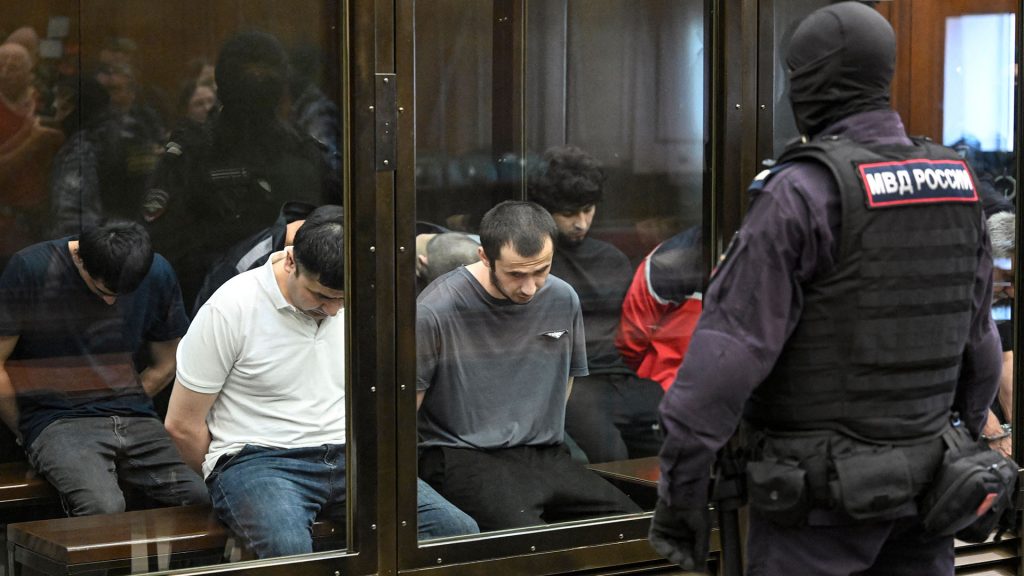
NewsFeed Nineteen suspects accused of being involved in the 2024 shooting attack in a Moscow concert hall that killed 149 people, and wounded over 600, have appeared in court in a glass cage at the beginning of their trial. A faction of the Islamic State group claimed responsibility for the attack. Published On 4 Aug 20254 Aug 2025 Adblock test (Why?)
Palestinians return to Gaza’s al-Zeitoun after 45-day Israeli assault
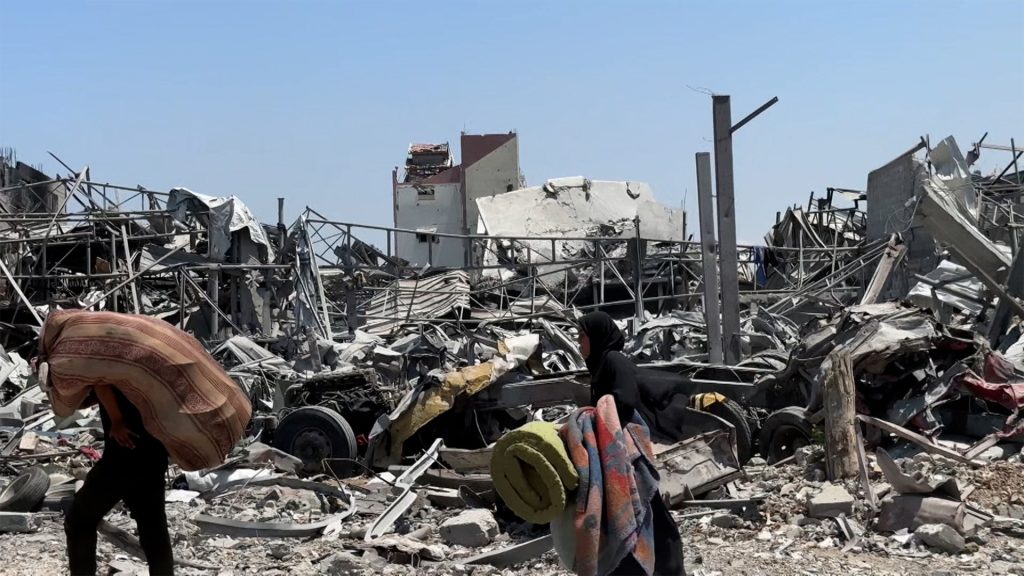
NewsFeed Al-Zeitoun neighbourhood in Gaza City has been left in ruins after a 45-day Israeli military operation that flattened entire residential blocks. Residents of the area in northern Gaza described it as the most destructive incursion yet. Al Jazeera’s Ibrahim al-Khalili reports amidst the wreckage. Published On 4 Aug 20254 Aug 2025 Adblock test (Why?)