

Texas Democrats leave state to block vote on new House map backed by Trump
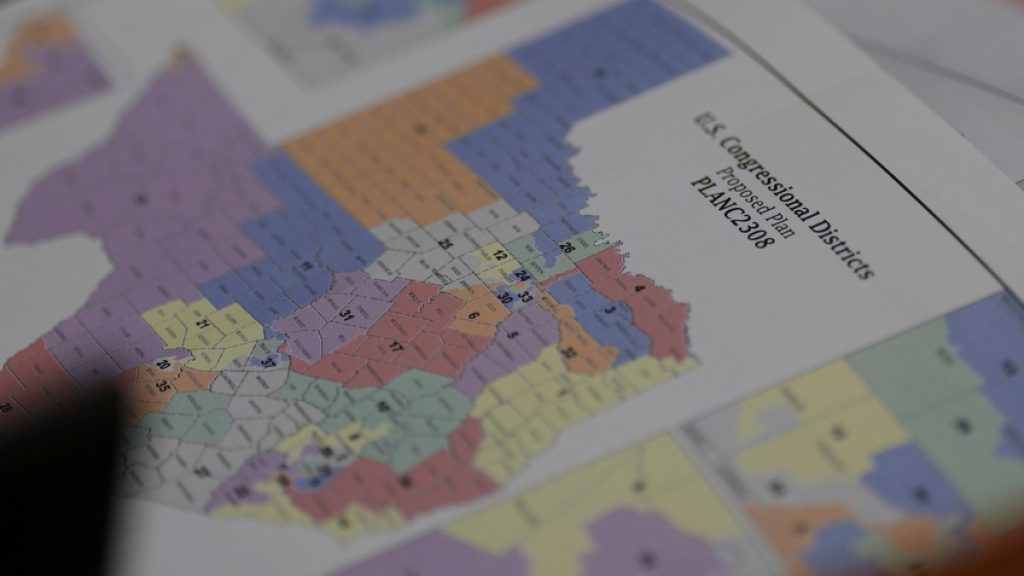
US president has urged Republicans to redraw map to help the party net a handful of seats in the midterms next year. Texas Democrats are leaving the state en masse in an attempt to prevent the state’s House of Representatives from holding a vote on Monday on new congressional maps that Republicans hope will win them several additional US House seats in the 2026 midterm elections to buttress their narrow majority. The dramatic move on Sunday could expose Democrats to fines and other penalties, with the state’s attorney general having previously threatened to arrest them if they took such an action. Refusing to attend legislative sessions is a civil violation, so Democrats legally could not be jailed, and it is unclear who has the power to carry out the warrants. Democrats have cast the decision to leave the state as a last-ditch effort to stop Republicans who hold full control of the Texas government from pushing through a rare mid-decade redrawing of the congressional map at the direction of President Donald Trump. Trump is eager to avoid a repeat of his first term, when Democrats flipped the House just two years into his presidency, stymying his legislative plans, and hopes the new Texas map will aid that effort. “This is not a decision we make lightly, but it is one we make with absolute moral clarity,” said Gene Wu, chair of the House Democratic Caucus, in a statement. To conduct official business, at least 100 members of the 150-member Texas House must be present. Democrats hold 62 of the seats in the majority-Republican chamber. At least 51 Democratic members are leaving the state, said Josh Rush Nisenson, spokesperson for the House Democratic Caucus. Advertisement “Apathy is complicity, and we will not be complicit in the silencing of hard-working communities who have spent decades fighting for the power that Trump wants to steal,” he said. Standoff in 2021 The move marks the second time in four years that Texas Democrats have fled the state to block a vote. In 2021, a 38-day standoff took place when Democrats left for Washington, DC, in opposition to new voting restrictions. Republican Governor Greg Abbott called a special session of the legislature that started last month to take up the redistricting effort, as well as to respond to flooding in Texas Hill Country, which killed at least 135 people in July. Texas Republicans last week unveiled their planned new United States House map that would create five new Republican-leaning seats. Republicans currently hold 25 of the state’s 38 seats. Adblock test (Why?)
All five miners trapped after copper mine collapse in Chile found dead
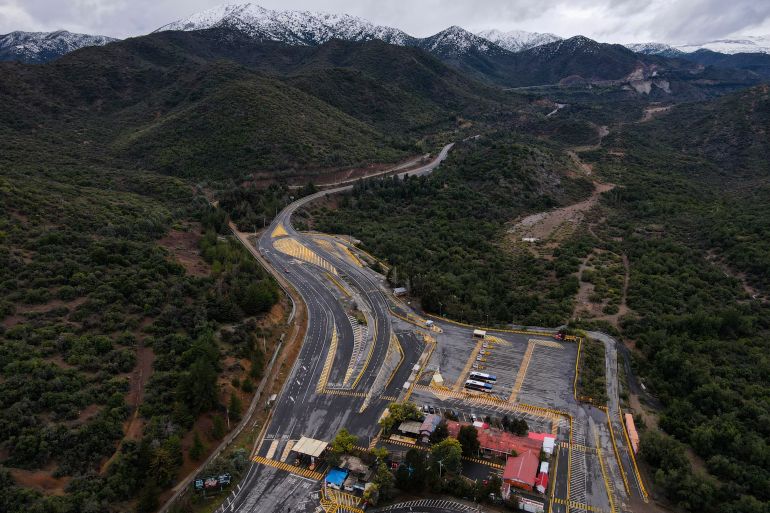
More than 100 people had been involved in the search for workers at the El Teniente copper mine, the world’s largest underground mine. All five workers trapped at a copper mine in Chile have been found dead, according to a regional prosecutor, after rescue teams cleared more than 24 metres (78 feet) of underground passages that collapsed in a strong earthquake last week. Prosecutor Aquiles Cubillo of the O’Higgins region said on Sunday that the body of the fifth trapped worker had been found at the El Teniente copper mine. More than 100 people had been involved in the search for workers at the El Teniente copper mine, the world’s largest underground mine, in Rancagua, about 100km (62 miles) south of Santiago. “We deeply regret this outcome,” Cubillos said. The latest death brings the total toll from the accident to six, including one person who died at the time of the incident on Thursday evening. Chile’s state-owned mining company Codelco discovered the first trapped worker on Saturday and another three on Sunday. It has not yet commented on the final worker. The miners had been working at a depth of more than 900 metres when the collapse happened, killing one colleague and halting operations at the site. Their exact location had been pinpointed with specialised equipment. Minister for Mining Aurora Williams announced the temporary cessation of activity at the mine on Saturday. The mine began operating in the early 1900s and boasts more than 4,500km (some 2,800 miles) of underground tunnels. Last year, El Teniente produced 356,000 tonnes of copper – nearly 7 percent of the total for Chile. The cave-in happened after a “seismic event” on Thursday afternoon, of which the origin – natural or caused by drilling – was not yet known, the authorities said on Saturday. The tremor registered a magnitude of 4.2. Advertisement “It is one of the biggest events, if not the biggest, that the El Teniente deposit has experienced in decades,” Andres Music, the mine’s general manager, said in a statement. The search team included several of the rescuers who participated in successfully surfacing 33 miners trapped in a mine for more than two months in the Atacama Desert in 2010, attracting a whirlwind of global media attention. Chile is the world’s largest copper producer, responsible for nearly a quarter of global supply, with about 5.3 million tonnes in 2024. Its mining industry is one of the safest on the planet, with a death rate of 0.02 percent last year, according to the National Geology and Mining Service of Chile. It also lies in the seismically active “Ring of Fire” that surrounds the shores of the Pacific Ocean. Aerial view of El Teniente copper mine, where a collapse killed five trapped workers underground [Esteban Felix/AP] Adblock test (Why?)
Russia-Ukraine war: List of key events, day 1,257
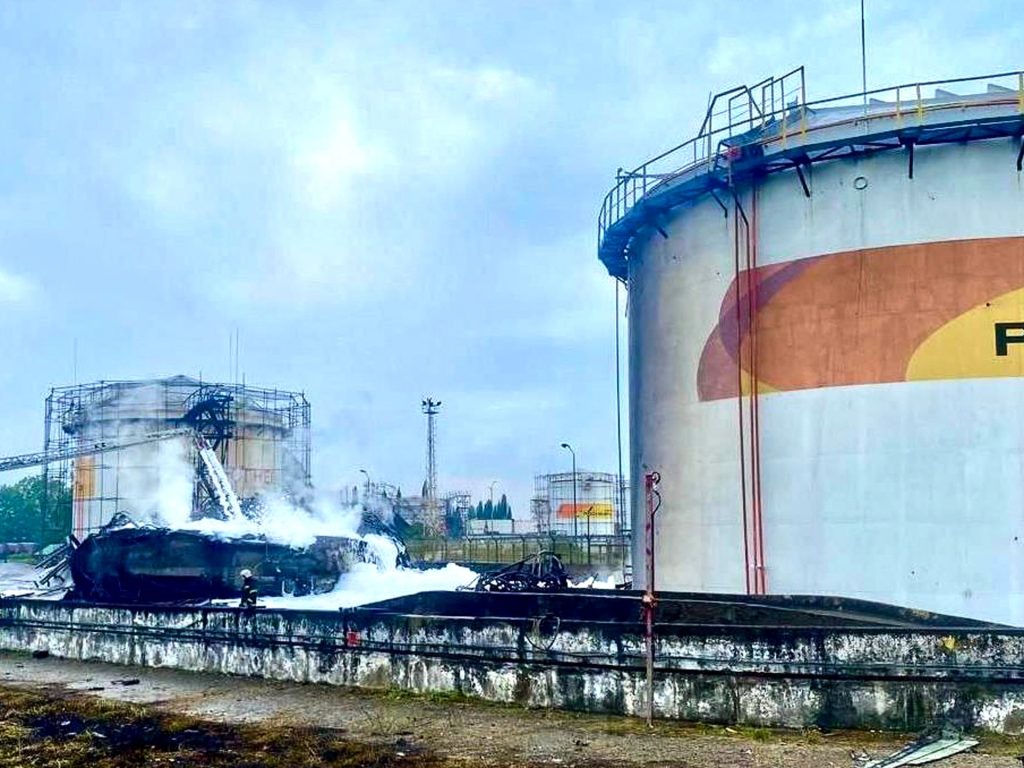
Here is how things stand on Monday, August 4: Fighting A Russian attack killed three people in Ukraine’s southeastern Zaporizhia region on Sunday, Governor Ivan Fedorov wrote on Telegram. A Ukrainian drone attack sparked a major fire at an oil depot in Sochi in southern Russia, the governor of Russia’s Krasnodar region, Veniamin Kondratiev, said on Sunday. The fire was extinguished hours later after 120 firefighters were deployed, officials said. Russia’s civil aviation authority, Rosaviatsia, briefly halted flights at Sochi’s airport during the fire. Ukraine’s military says it used drones to target several sites inside Russia, including refineries, an airfield and an electronics plant. The governor of the Voronezh region in southern Russia said four people were injured in a Ukrainian drone attack that caused several fires, A Russian attack injured seven people and destroyed dozens of houses and apartments in the southern Ukrainian city of Mykolaiv, Mayor Oleksandr Senkevych said on Telegram early on Sunday. The Ukrainian air force said on Sunday that Russia launched 76 drones and seven missiles against Ukraine. It said 60 drones and one missile were intercepted, but 16 drones and six missiles hit eight different locations across Ukraine. The Russian Ministry of Defence said its air defence units destroyed 93 Ukrainian drones overnight, including one over the Krasnodar region and 60 over the waters of the Black Sea. It did not specify how many drones were fired in total. Advertisement Politics and Diplomacy Ukrainian President Volodymyr Zelenskyy announced that Ukraine and Russia have agreed to exchange 1,200 prisoners following negotiations in Istanbul, adding that “work on the lists [of prisoners to be released] is ongoing”. There was no immediate comment from Russia. Zelenskyy announced he had appointed Anatolii Kryvonozhko as Commander of Ukraine’s air force, a role Kryvonozhko has been serving in as Acting Commander for nearly a year. Zelenskyy also said that Ukraine has prepared three new sanctions packages, including sanctions against the captains of Russia’s shadow fleet of oil tankers. China and Russia began joint naval drills in the Sea of Japan in waters near the Russian port of Vladivostok, China’s Ministry of National Defence said in a statement on Sunday. The drills will last for three days. Speaking to a crowd of one million young Catholics on the outskirts of Rome, Pope Leo said: “We are with the young people of Gaza; we are with the young people of Ukraine.” Adblock test (Why?)
Week in Pictures: From Russian missile attacks on Kyiv to floods in China
[unable to retrieve full-text content] A roundup of major events last week.
China and Russia begin joint military drills in Sea of Japan
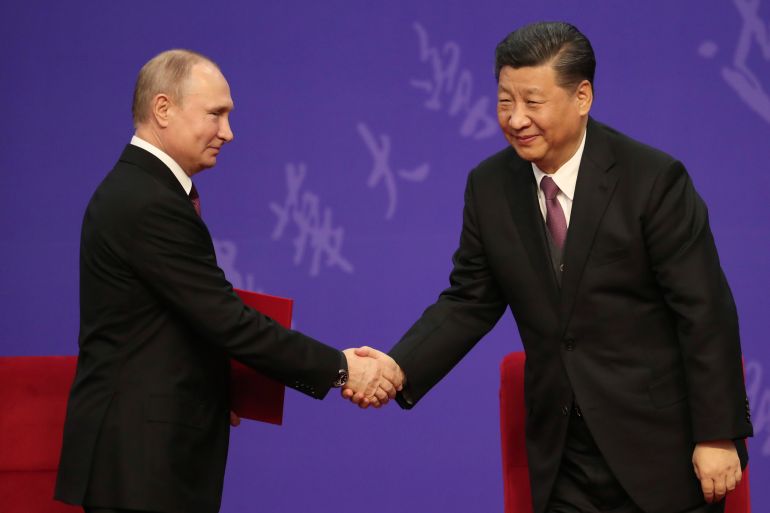
Joint Sea-2025 exercises begin in waters near Russian port of Vladivostok and will last for three days, China’s Defence Ministry says. China and Russia have begun joint naval drills in the Sea of Japan as they seek to reinforce their partnership and counterbalance what they see as a United States-led global order. The Chinese and Russian governments have deepened their ties in recent years, with China providing an economic lifeline to Russia in the face of Western sanctions over Moscow’s invasion of Ukraine. The Joint Sea-2025 exercises began in waters near the Russian port of Vladivostok and will last for three days, China’s Ministry of National Defence said in a statement on Sunday. The two sides will hold “submarine rescue, joint anti-submarine, air defence and anti-missile operations, and maritime combat”. Four Chinese vessels, including guided-missile destroyers Shaoxing and Urumqi, are participating in the exercises, alongside Russian ships, the ministry said. After the drills, the two countries will conduct naval patrols in “relevant waters of the Pacific”. Russian President Vladimir Putin, left, shakes hands with Chinese President Xi Jinping [File: Kenzaburo Fukuhara/Handout via Getty Images] China and Russia have carried out annual drills for several years, with the “Joint Sea” exercises beginning in 2012. Last year’s drills were held along China’s southern coast. With this year’s drills in the Sea of Japan, in its annual report last month, Japan’s Ministry of Defence warned that China’s growing military cooperation with Russia poses serious security concerns. “The exercise is defensive in nature and is not directed against other countries,” the Russian Navy Pacific Fleet said earlier this week, according to a report by the US Naval Institute’s online news and analysis portal. Advertisement On Friday, the Chinese Defence Ministry said this year’s exercises were aimed at “further deepening the comprehensive strategic partnership” of the two countries. China has never denounced Russia’s more than three-year war nor called for it to withdraw its troops, and many of Ukraine’s allies, including the US, believe that Beijing has provided support to Moscow. European leaders asked China last month to use its influence to pressure Russia to end the war, now in its fourth year, but there was no sign that Beijing would do so. China, however, insists it is a neutral party, regularly calling for an end to the fighting while also accusing Western countries of prolonging the conflict by arming Ukraine. Adblock test (Why?)
Ukraine claims drone strike on oil refinery in Russia
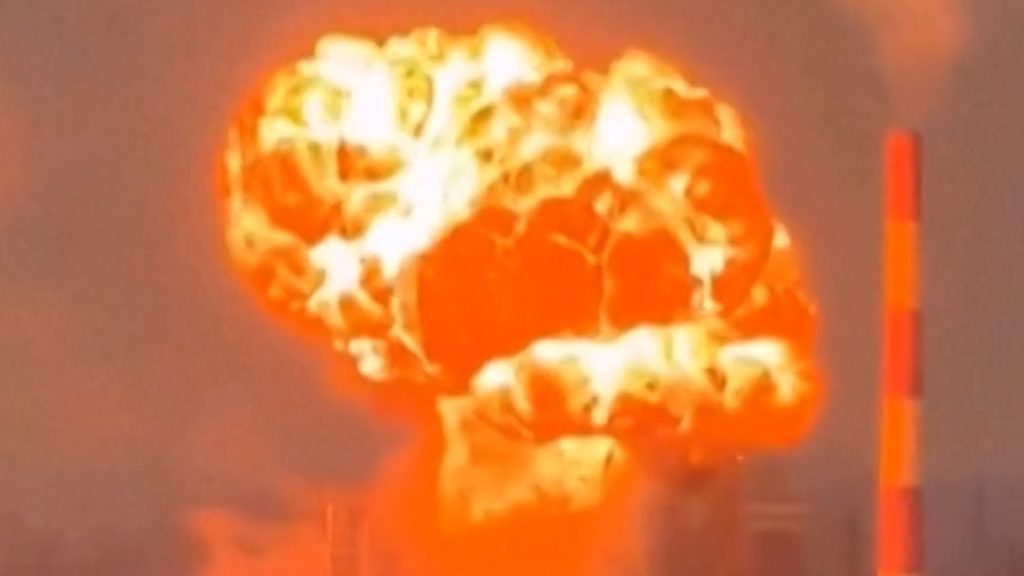
NewsFeed Video shows a massive explosion at a Russian oil facility in Novokuybyshevsk, 1,000km from the Ukrainian border. Ukraine’s military says it used drones to target several sites inside Russia, including refineries, an airfield, and an electronics plant. Published On 3 Aug 20253 Aug 2025 Adblock test (Why?)
What’s the fallout from Trump’s new batch of tariffs?
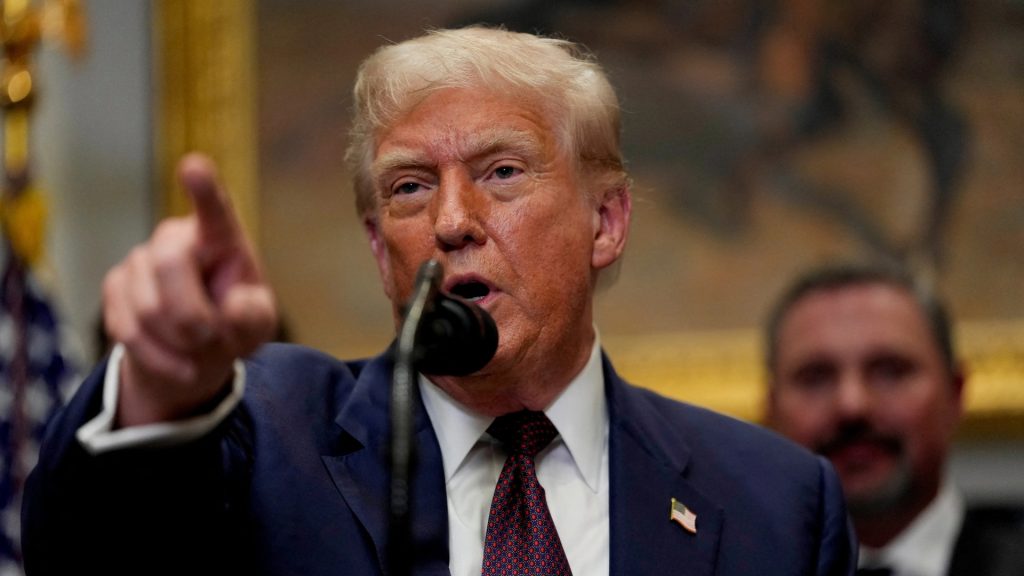
The US has hit many countries with new levies, causing shock and confusion. Around the world, countries are scrambling to cope with the latest wave of tariffs imposed by US President Donald Trump. More than 60 countries are on the list, some with levies as high as 50 percent. The move has unleashed shock, confusion and financial volatility. The US also stock market took a hit and a jobs report revealed slower than expected economic growth. Trump didn’t take the news well: He promptly fired the head of the US Labour Statistics agency – accusing her of “manipulating” the data. But beyond that, how will these tariffs affect the global economy? And will this controversial foreign policy tool backfire on Trump? Presenter: Adrian Finighan Guests: Harry Broadman – Economist at RAND Corporation and a former US assistant trade representative and chief of staff of the president’s Council of Economic Advisers Seijiro Takeshita – Professor of management at the University of Shizuoka in Japan Steve Hanke – Professor at Johns Hopkins University, distinguished senior scholar at the Mises Institute, and a former senior economist on President Ronald Reagan’s Council of Economic Advisers Adblock test (Why?)
Hamas denies it expressed willingness to disarm, slams Witkoff’s Gaza trip
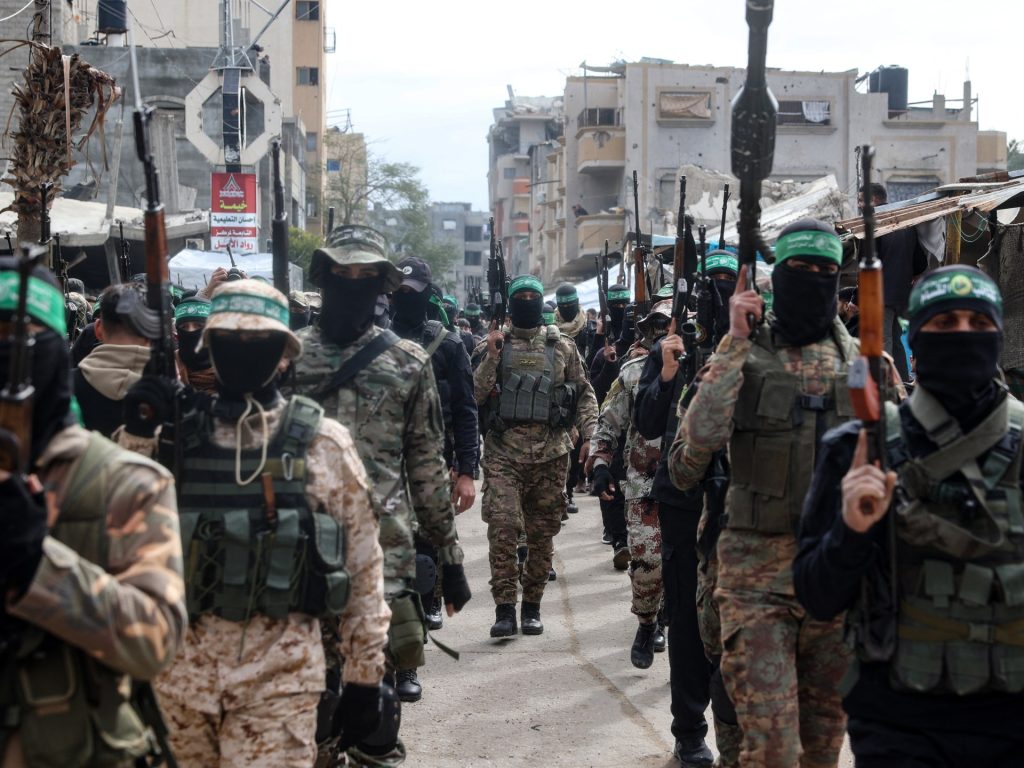
Palestinian group says right to resist Israeli occupation ‘cannot be relinquished until full national rights restored’. Hamas has rejected reports that it expressed a willingness to disarm during Gaza ceasefire negotiations with Israel, stressing that it has a “national and legal” right to confront the Israeli occupation of Palestinian territory. The Palestinian group responded on Saturday to recent remarks purportedly made by United States President Donald Trump’s special envoy to the Middle East, Steve Witkoff, during a meeting with relatives of Israeli captives held in Gaza. Citing a recording of the talks, Israeli news outlet Haaretz reported that the US envoy told the families that Hamas said it was “prepared to be demilitarised”. But in a statement, Hamas said “the resistance and its weapons are a national and legal right as long as the [Israeli] occupation persists”. That right “cannot be relinquished until our full national rights are restored, foremost among them the establishment of a fully sovereign, independent Palestinian state with Jerusalem as its capital”, it said. Witkoff met the Israeli captives’ families in Tel Aviv on Saturday, one day after he visited a US and Israeli-backed aid distribution site run by the controversial GHF in Gaza. Hamas had earlier slammed the US envoy’s trip as a “staged show” aimed at misleading the public about the situation in the enclave, where an Israeli blockade has spurred a starvation crisis and fuelled global condemnation. More than 1,300 Palestinians also have been killed trying to get food at GHF-run sites since the group began operating in the bombarded Palestinian territory in May, the United Nations said earlier this week. But the Trump administration has stood firmly behind GHF despite the killings and growing criticism of the group’s operations in Gaza. In June, Washington announced that it approved $30m to support GHF. Advertisement Witkoff’s comments on disarmament also come amid a widening international push to recognise a Palestinian state amid the scenes of starvation in Gaza. The United Kingdom announced at a two-day United Nations conference in New York this week that it may follow France in recognising a Palestinian state in September. Echoing an earlier statement by UK Prime Minister Keir Starmer, Foreign Secretary David Lammy said London would proceed with recognition if Israel did not meet certain conditions, including implementing a ceasefire in Gaza. The UN meeting also saw 17 countries, plus the European Union and the Arab League, back a seven-page text on reviving a two-state solution to the conflict. The text called on Hamas to “end its rule in Gaza and hand over its weapons to the Palestinian Authority, with international engagement and support, in line with the objective of a sovereign and independent Palestinian State”. Adblock test (Why?)
Ukraine says defence sector corruption scheme uncovered
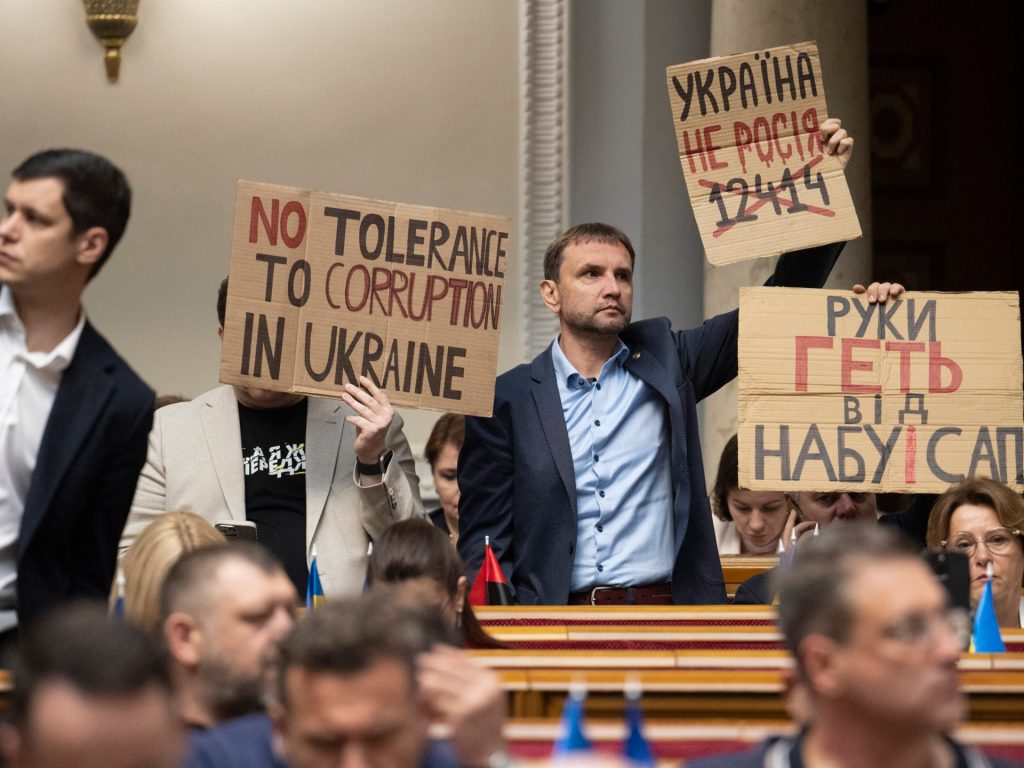
Anticorruption agencies arrest four suspects after government forced to backtrack on push to strip them of autonomy. Ukrainian authorities have detained several officials over a “large-scale corruption scheme” in the defence sector, just days after lawmakers restored the independence of the country’s two main investigative bodies. The National Anti-Corruption Agency (NABU) and the Specialised Anti-Corruption Prosecutor’s Office (SAP) said in a joint statement on Saturday that they made four arrests in connection with the scheme, which involved the procurement of military drones and signal jamming systems. “The essence of the scheme was to conclude state contracts with supplier companies at deliberately inflated prices,” they said, adding that the suspects had received kickbacks of up to 30 percent of the contract amounts. NABU and SAPO said they had caught a sitting lawmaker, two local officials and an unspecified number of National Guard personnel taking bribes. The suspects were not identified in Saturday’s statement. The Ministry of Internal Affairs also said it had suspended the suspected National Guard members. The announcement comes after Ukrainian President Volodymyr Zelenskyy came under criticism last month for trying to take away the anticorruption agencies’ independence and place them under the control of his prosecutor-general. The agencies regained their autonomy after Zelenskyy’s move sparked the first antigovernment demonstrations in Ukraine since Russia invaded in 2022. Zelenskyy, who enjoys far-reaching wartime powers, initially said he needed to bring the agencies under his control because they were inefficient and under “Russian influence”. Advertisement But he then said he had heard people’s anger and submitted a bill restoring the agencies’ independence, which was passed by lawmakers on Thursday. “It is important that anticorruption institutions operate independently, and the law passed on Thursday guarantees them all the tools necessary for a real fight against corruption,” Zelenskyy said. Ukraine’s European allies praised the about-face, having voiced concerns about the original defanging of the agencies. Top officials had told Zelenskyy that Ukraine was jeopardising its bid for European Union membership by curbing the powers of its antigraft authorities. In a statement about Saturday’s arrests, Zelenskyy said he was “grateful to the anti-corruption agencies for their work”. Adblock test (Why?)
Nigeria kills her sun: Death and vindication for Ken Saro-Wiwa, Ogoni Nine
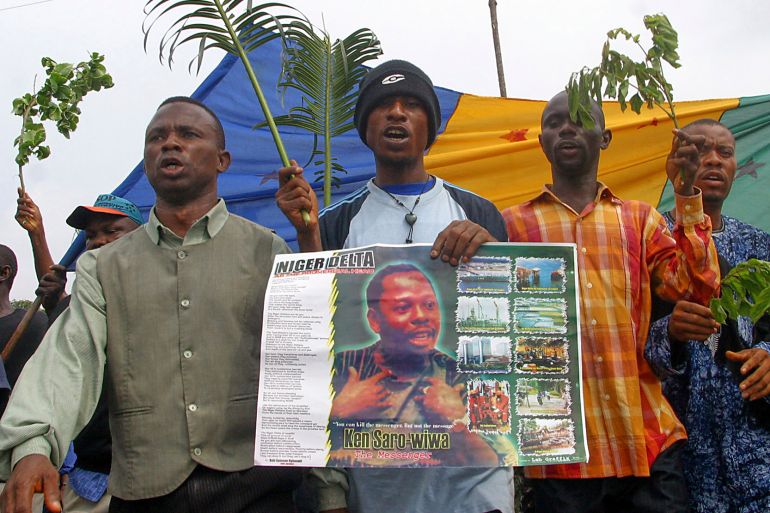
Lagos, Nigeria – “Lord, take my soul, but the struggle continues,” the man said, before his body went limp. It swung gently from the makeshift gallows, hurriedly built a few days earlier. Before that morning, the prison had last enforced a death sentence 30 years earlier, during British rule. It was November 10, 1995. For weeks, local activists from the small Ogoniland settlement in Nigeria’s lush Niger Delta region had been protesting against oil spills seeping into their farmland and the gas flares choking them. The Niger Delta, which produces the crude that earned Nigeria 80 percent of its foreign revenues, teemed with gun-carrying soldiers from the military dictatorship of the feared General Sani Abacha. They responded to the protests with force. That day, the loudest Ogoni voice – renowned playwright and environmental activist Ken Saro-Wiwa – faced his fate. A week earlier, a military tribunal had declared his sentence. And just the day before, five executioners tasked with carrying it out had flown in from the northern city of Sokoto. At 5am that morning, Saro-Wiwa and the eight other Ogoni activists accused alongside him of murder were moved from the army camp where they had been held to the prison grounds in Port Harcourt, the regional hub a few hours drive from Ogoniland. There, they were herded into a room and shackled. Then, one after the other, they were led out to the gallows. Saro-Wiwa went first. It took five attempts to kill him. After one failed tug, the activist cried out in frustration: “Why are you people treating me like this? What kind of country is this?” Advertisement On the final attempt, the gallows finally functioned as they were supposed to. By 3:15pm, all nine men had been executed. Their bodies were placed in coffins, loaded into vehicles and escorted by armed guards to the public cemetery. On the streets, thousands of horrified people watched the procession as soldiers fired tear gas into the air to quell any thoughts of rebellion. No relatives of the nine men were allowed into the cemetery. There were no dignified burials, no parting words from loved ones. Thirty years later, on June 12 this year, Nigeria’s Democracy Day, President Bola Ahmed Tinubu pardoned Saro-Wiwa and the others – the Ogoni Nine as they had become known. He went on to call them heroes and awarded them prestigious national titles. For Saro-Wiwa’s daughter Noo Saro-Wiwa, who is now aged 49, and other relatives of the executed men, the pardons were moving but insufficient. In Ogoniland, it reopened old wounds that remained as deep as when they were first inflicted all those years ago. Protesters march to commemorate the 10th anniversary of the execution of Ken Saro-Wiwa in Port Harcourt, Nigeria, the city where he was put to death [File: Sunday Alamba/AP] Saro Wiwa, accidental environmental activist Before his death at age 54, Saro-Wiwa wanted to be known as a great writer. A bundle of energy, he dabbled in many things, but books were his true love. More than two dozen books, poems and essays bore his name. His radio dramas and TV plays were wildly successful, particularly one that mocked the corrupt Nigerian elite, which took over after independence in 1960. In the short story Africa Kills Her Sun, Saro-Wiwa eerily warned of his killing: A man condemned to death pens a long letter to his lover, Zole, on the eve of his execution, telling her not to grieve. Saro-Wiwa’s execution made him a martyr for the Ogoni people – the man whose death drew international attention to their plight. In 1958, when Nigeria discovered oil in the southern Niger Delta, of which Ogoniland is a part, a 17-year-old Saro-Wiwa wrote letters to the government and oil companies questioning how delta communities would benefit from oil dollars. Later on, his essays highlighted how Ogoniland still lacked infrastructure – roads, electricity, water – despite the oil. In October 1990, Saro-Wiwa led the Movement for the Survival of the Ogoni People (MOSOP), which he cofounded, to present the Ogoni Bill of Rights to the Nigerian government. In it, the Ogoni people denounced the dominance of the majority tribes (Hausa, Yoruba and Igbo) and the sidelining of minorities like the Ogoni. They called for political autonomy and direct control of oil profits, saying: Advertisement “Thirty years of Nigerian independence has done no more than outline the wretched quality of the leadership of the Nigerian majority ethnic groups and their cruelty as they have plunged the nation into ethnic strife, carnage, war, dictatorship, retrogression and the greatest waste of national resources ever witnessed in world history, turning generations of Nigerians, born and unborn into perpetual debtors.” It marked Saro-Wiwa as a thorn in the side of the military dictators, and from 1992 to 1993, he was arrested without charge several times. Still, he continued to condemn the slow death he said Ogonis were sentenced to. “I accuse the oil companies of practising genocide against the Ogoni,” he wrote in one article. The Nigerian government, he said, was complicit. Saro-Wiwa’s fervour took hold in Ogoniland. About 300,000 Ogonis, out of a population of half a million, marched with him in January 1993 to peacefully protest against the Nigerian government and Shell, the oil company that they said bore particular responsibility for the oil spills in their part of the delta. It was one of the largest mass demonstrations Nigeria had ever seen at the time. Protesters carried signs with messages like: “Assassins, go home.” The protests were so large that the world began to notice the Ogonis and the slight, articulate man speaking for them. Soon, he was speaking at the United Nations, presenting the Ogonis’ case there. Environmental rights groups like Greenpeace noted and supported his activism. By the end of that year, riots were breaking out, and angry protesters had destroyed oil pipelines worth billions of dollars. Shell was forced to suspend operations. The government promptly deployed a special task force to suppress what is