

Severe sandstorms engulf southern Iraq
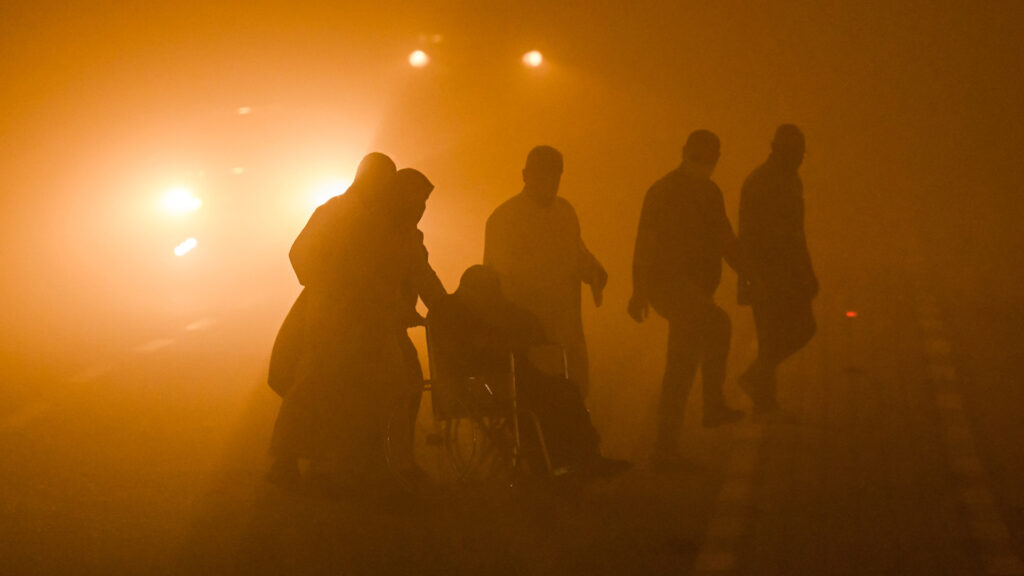
NewsFeed A severe sandstorm blanketed southern Iraq on Monday, causing airports to close down and sending over 3,500 people to hospitals. Experts warn sandstorms are becoming more frequent in Iraq due to climate change and desertification. Published On 15 Apr 202515 Apr 2025 Adblock test (Why?)
Trump-China trade war: Which US companies could be worst hit
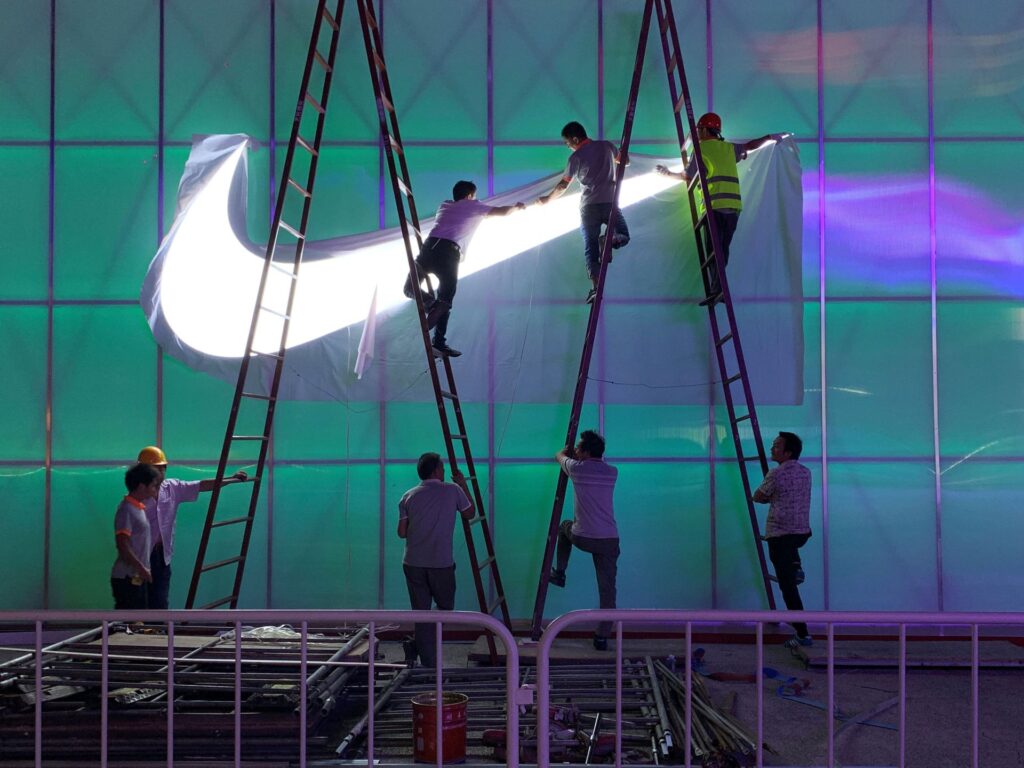
From Apple to Nvidia, United States tech companies have received a temporary exemption from President Donald Trump’s sky-high tariffs. For other businesses, the damage imposed by existing levies on Chinese exports may prove fatal. While Trump stepped back from the edge for most countries – announcing a 90-day pause on the bulk of his “reciprocal” tariffs on Wednesday – he doubled down on China, eventually increasing import taxes on its goods to 145 percent. Trump has pitched his protectionist agenda as essential for reviving US industry. However, many US firms have grown used to cheap imports from China. For many of them, prices will rise and profits will fall. Beijing has also responded to Trump’s moves with retaliatory tariffs of its own, now at 125 percent. US exports to China, and agricultural products in particular, will be hit badly by China’s blanket levy. Here is the state of trade ties between the world’s two largest economies and the US companies that could be worst affected: Advertisement State of US-China trade Despite growing tensions between the US and China, Washington and Beijing remain major trading partners. According to data from the Office of the US Trade Representative, the total goods trade between the US and China stood at $582.4bn in 2024. After Canada and Mexico, China is America’s third largest trading partner. US imports from China totalled $438.9bn while its exports the other way tallied in at $143.5bn. The upshot is that the US trade deficit with China was $295.4bn last year, bigger than for any other country. On Friday, China’s Ministry of Commerce said it was increasing tariffs on US goods from 84 percent to 125 percent, reiterating that Beijing would “fight to the end” shortly after Washington raised US duties on Chinese imports to 145 percent. Late that same day, the Trump administration announced temporary exemptions for smartphones, solar panels and other electronic products like semiconductor chips – most of which are made in China – from Trump’s “reciprocal” tariffs, which he has said are meant to level the playing field with trading partners who impose duties on US goods and run trade surpluses with the US. China’s government welcomed the exemptions and urged Trump to go further. However, the US president has said those products will ultimately be subject to their own different levy. As of now, they are still subject to the 20 percent tariffs that Trump imposed on all Chinese goods before April 2. In the meantime, companies will be forced to pass down at least some of Trump’s tariffs onto consumers to try to preserve their profit margins. That will result in higher inflation and lower business output. Advertisement According to an analysis from the Yale Budget Lab, tariffs could cause 740,000 people to lose their jobs across the US by the end of 2025. But which sectors will be most exposed to these trade disruptions? Textiles and apparel The price of Nike trainers, Levi jeans and Gap T-shirts will almost certainly rise in the US as tariffs undermine the Asian factory hubs that underpin the global clothing industry. In 2024, factories in China, Vietnam and Indonesia made 95 percent of all Nike footwear. Trump has already introduced 145 percent tariffs on China while Vietnam and Indonesia currently face 10 percent tariffs, which could go up in July if they don’t succeed in striking a trade deal with Washington by then. Vietnam, in particular, is seen as a major indirect source of Chinese imports, both by rerouting Chinese goods through Vietnamese ports and by using Chinese parts in its exports to the US. Gap is also highly exposed to production processes in Vietnam. Since Trump’s “reciprocal” tariff announcement on April 2, Gap shares have fallen by 14 percent. For Nike, it’s 14.7 percent. Elsewhere, Levi’s stock price has plunged by 10.6 percent. Smartphones and semiconductors On Friday night, US Customs and Border Protection (CBP) issued a notice exempting some technology products from the tariffs placed on Chinese goods. The CBP listed 20 product categories, including computers, smartphones and automatic data processors. It also included semiconductor equipment, memory chips and flat panel displays. The exemptions were a welcome relief to major technology firms, including Apple, which relies heavily on Chinese manufacturing. But even with all post-April 2 tariffs on them waived for now, these electronic goods still face 20 percent tariffs that Trump had imposed on them before April 2. Advertisement Trump has also said the exemptions are temporary, and new tariffs might be coming soon. Additionally, on Monday he announced an investigation into the national security implications of importing semiconductors and chip-making equipment, injecting new insecurities for electronics firms. Supply chains in general are hard to move. For electronic goods, they are particularly difficult to replace – lining up industrial processes across different locations requires time and investment. Bradley Saunders, a North America analyst at Capital Economics, told Al Jazeera that technology goods assembly processes have been “built up over years. … Markets have found the most efficient supply chains that they can.” For now, Apple outsources most of its assembly operations to China. Smartphone companies are not alone. Almost 90 percent of gaming consoles sold in the US by Sony, Microsoft and Nintendo have been shipped in from China. Elsewhere, Nvidia relies heavily on components from China. The technology giant relies on Taiwan Semiconductor Manufacturing Company to manufacture its cutting-edge graphics cards and AI chips. Apple and Nvidia led a broad advance across US stock markets after Trump announced his recent exemptions. According to Saunders, any new tariffs could hit US technology sectors “hard”. US agricultural exporters Trump’s first trade war with China from 2018 to 2019 resulted in billions of dollars of lost revenue for American farmers. “The agriculture industry always tends to lose out in trade wars,” Saunders said. Advertisement He pointed out that “about 15 percent” of US farm exports went to China in 2024. The soya bean sector, in particular, stands to lose because China is its largest export
Jordan says it thwarts plot that threatened national security

BREAKINGBREAKING, Sixteen arrested as authorities say they have foiled a plot that involved explosives and a drone factory. Jordan says it has arrested 16 people, thwarting a plot that threatened national security and that involved manufacturing and importing rockets illegally, explosives and a drone production site. In a statement on Tuesday, the General Intelligence Department said it uncovered plans to recruit and train “operatives” in Jordan and abroad, without providing more details. A drone factory was also found, according to the statement that was released on state media. It added that authorities made the arrests after “close intelligence monitoring since 2021”. In the past, Jordan said it thwarted several alleged plots by members of ISIL (ISIS). These included plans for a series of attacks on security installations as well as civilian infrastructures. This is a breaking story. More to come… Adblock test (Why?)
Pakistan police bus bombing kills three

NewsFeed Three police officers were killed and 18 others injured in a remote-controlled bomb attack on a police bus in Pakistan’s Balochistan province, officials said. The blast struck in Mastung as the vehicle was traveling from Kalat to Quetta. Pakistan has been battling a separatist insurgency there for decades. No group has claimed responsibility. Published On 15 Apr 202515 Apr 2025 Adblock test (Why?)
Israel has killed at least 71 civilians in Lebanon since ceasefire, UN says
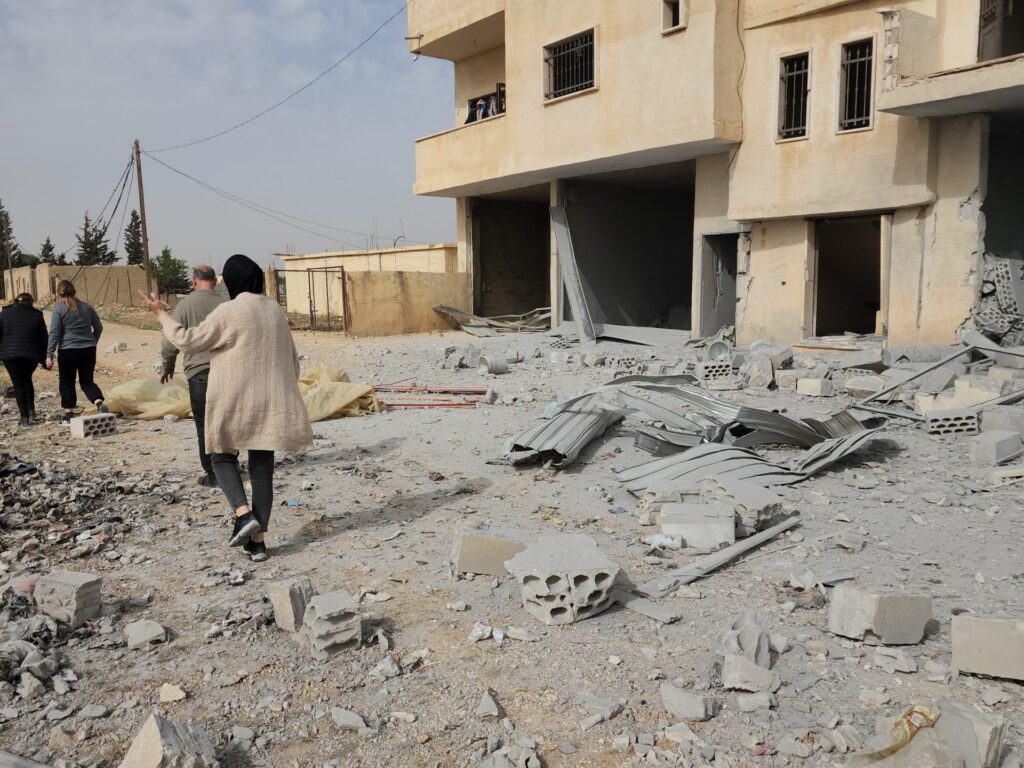
Death toll announced as Israel launches new attack in southern Lebanon, killing one person and injuring three. The United Nations says at least 71 civilians have been killed by Israeli forces in Lebanon since a ceasefire was struck at the end of last year. Thameen Al-Kheetan, spokesperson for the UN Office for the High Commissioner for Human Rights (OHCHR), said on Tuesday that the death toll included 14 women and nine children. He called for investigations into “each and every military action where civilians are killed”. OHCHR raised concerns about recent Israeli military operations hitting civilian infrastructure, including a strike on April 3 that destroyed a newly established medical centre run by the Islamic Health Society in the southern city of Naqoura. It also noted that at least five rockets, two mortars and a drone have been launched from Lebanon towards northern Israel, according to the Israeli army, and tens of thousands of Israelis remain displaced from the north. “The ceasefire must hold, and any escalation is a risk for stability in general in Lebanon, Israel and the whole region,” Al-Kheetan said. Advertisement Later on Tuesday, Lebanon’s Ministry of Public Health reported that an Israeli drone strike on a car in the southern town of Aitaroun killed one person and injured three, including a child. Israeli attacks Israel has continued to strike Lebanon, including attacks on the capital, Beirut, since a November 27 ceasefire, which largely halted more than a year of hostilities between Israel and the armed group Hezbollah, including two months of all-out war. Under the truce, Hezbollah was to withdraw fighters from south of Lebanon’s Litani River and dismantle any remaining military infrastructure there while Israel was to pull out all of its forces from southern Lebanon. Lebanon’s army has been deploying in the south near the border with Israel as Israeli forces have withdrawn although Israel continues to hold five fortified positions in Lebanon that it deems “strategic”. Lebanese President Joseph Aoun told Al Jazeera on Monday that the army was “dismantling tunnels and warehouses and confiscating weapons bases” south of the Litani “without any problem from Hezbollah”. On Thursday, a senior Hezbollah official told the Reuters news agency the group is ready to hold talks with the Lebanese president about its weapons if Israel withdraws from southern Lebanon and stops its strikes. Adblock test (Why?)
Millions displaced as Sudan war enters third year
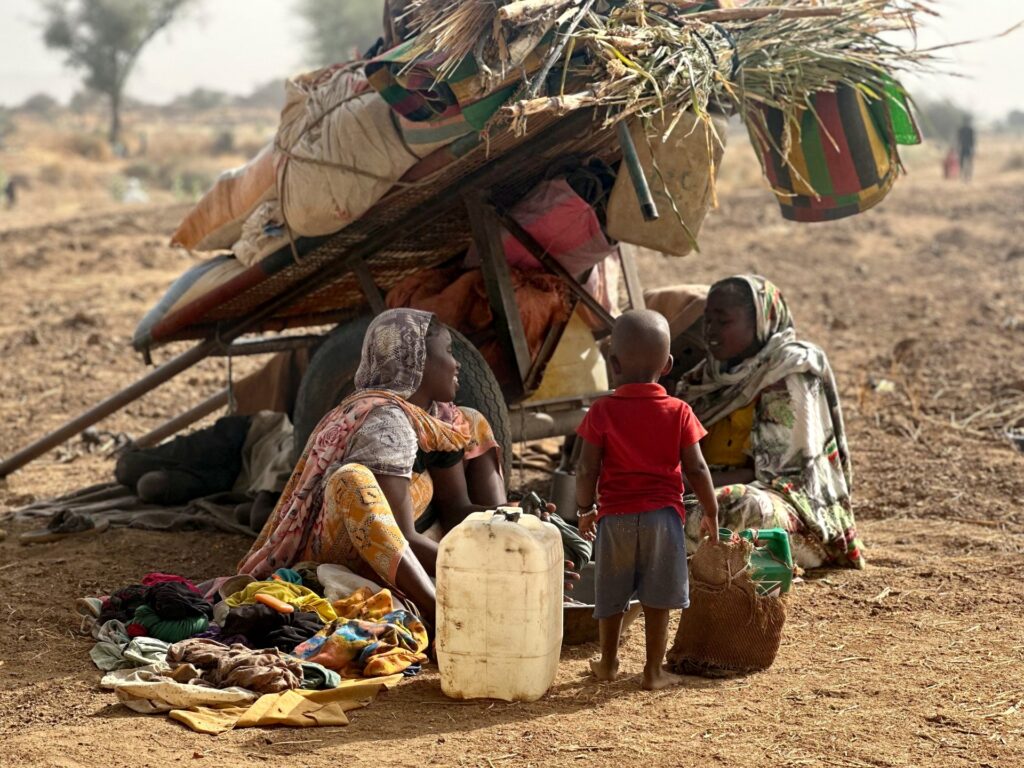
As Sudan’s civil war enters its third year, the conflict between the army and the paramilitary Rapid Support Forces (RSF) has displaced approximately 13 million people, according to the United Nations. “The conflict has provoked the displacement of 13 million people, including 8.6 million internally displaced people and 3.8 million refugees,” said Abdourahouf Gnon-Konde of the UN Refugee Agency in an interview with AFP. Since the war erupted on April 15, 2023, it has killed tens of thousands, pushed parts of Sudan into famine, and fractured the country into territories controlled by rival factions. The stakes are particularly high in Darfur, where the RSF launched a new offensive last week to capture el-Fasher – the last key city in the vast western region still under army control. The assault began on Thursday and continued until Sunday morning, targeting el-Fasher and nearby displacement camps, including Zamzam and Abou Shouk, both of which have been severely affected by famine. The UN, quoting “credible sources”, reported that more than 400 people have been killed in the latest violence. Advertisement By Sunday, RSF forces claimed control over Zamzam. Since then, about 400,000 people have been displaced from the camp, according to the UN’s International Organization for Migration. Doctors Without Borders, known by its French initials MSF, reported that approximately 10,000 people fled to Tawila, nearly 70km (40 miles) west of el-Fasher, within 48 hours to escape shelling. The war has divided Sudan, with the army holding the north and east, while the RSF controls much of Darfur and, with its allies, parts of the south. Germany’s foreign minister, Annalena Baerbock, described the conflict as “the greatest humanitarian catastrophe of our time”, highlighting the widespread destruction, starvation, and sexual violence. “Entire regions have been destroyed, hundreds of thousands of families are fleeing, millions of people are starving, and women and children are being subjected to the most horrific sexual violence,” she added. Baerbock’s remarks came before an international conference in London on Tuesday to discuss the war’s devastating effect. Mirjana Spoljaric, president of the International Committee of the Red Cross, stated that civilians in Sudan are “trapped in a relentless nightmare of death and destruction” after two years of war. A UN fact-finding mission warned that “the darkest chapters of this conflict have yet to unfold,” amid rising ethnic violence and reprisals across the country. “As Sudan enters into its third year of conflict, we must reflect on the catastrophic situation in Sudan and honour the lives of all Sudanese who have been lost or changed forever,” said Mohamed Chande Othman, chair of the mission. Advertisement Adblock test (Why?)
Amnesty International launches Hong Kong office overseas
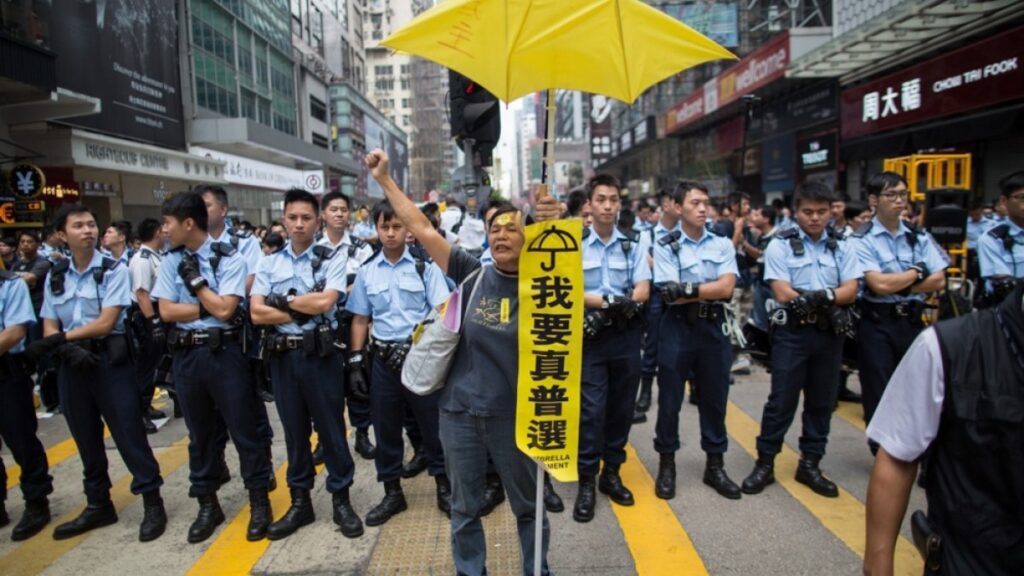
Amnesty International Hong Kong Overseas will be led by Hong Kong activists operating from different countries. Amnesty International has relaunched its Hong Kong office “in exile”, more than three years after the rights group shut its operation in the Chinese financial hub citing risks from sweeping national security legislation. The Chinese government has tightened its grip on Hong Kong after massive and sometimes violent pro-democracy protests in 2019, cracking down on political dissent with scores of activists, political opposition and journalists arrested, jailed or forced to flee. Amnesty said in a statement on Tuesday that the new office, Amnesty International Hong Kong Overseas (AIHKO), will be led by Hong Kong activists operating from several countries, including Australia, Canada, the United Kingdom and the United States. The AFP news agency reported that it is registered in Switzerland. Chi-man Luk, the AIHKO’s executive director, hailed the opening of the new office as “a new chapter” in Amnesty’s “commitment to human rights in Hong Kong” and its support for the Hong Kong diaspora. Amnesty had closed its two offices in Hong Kong in 2021, saying at the time that the security law “made it effectively impossible” for rights groups to work freely. Advertisement Chinese and Hong Kong authorities say the national security law – which punishes subversion, collusion with foreign forces and terrorism with up to life in prison – has brought stability to the Chinese-controlled territory since the 2019 protests. Officials also insist the legislation balances security with safeguarding the rights and freedoms of Hong Kong residents. Amnesty’s secretary-general, Agnes Callamard, said its new section demonstrates “our commitment to defending human rights no matter the challenges we face”. Fernando Cheung, a former Hong Kong lawmaker who joined as a board member, said top priorities include raising awareness on “prisoners of conscience” and transnational repression. “It is clear that Hong Kong’s human rights situation has continued to worsen,” said Cheung, citing the jailing of a social worker last week over a police-protester clash in 2019. As of April, Hong Kong has arrested 322 people and convicted 163 of them under two security laws – one imposed by Beijing, and another homegrown law enacted last year. Police have also issued rewards on 19 overseas pro-democracy activists. On Sunday, members of the city’s Democratic Party voted to dissolve the party that was once the city’s stalwart opposition force. Adblock test (Why?)
Russia’s Putin open to Ukraine peace deal: US envoy
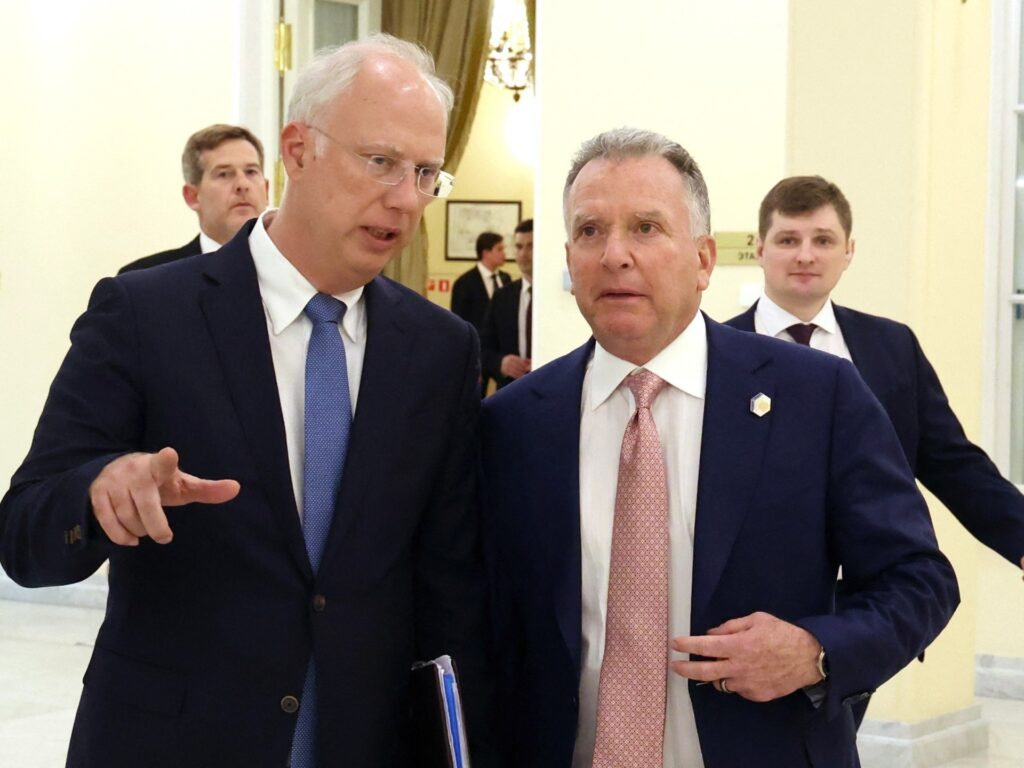
Russian President Vladimir Putin is open to a “permanent peace” deal with Ukraine, United States special envoy Steve Witkoff has said. President Donald Trump’s envoy made the claim in a TV interview late on Monday, following “compelling” talks with Putin in Saint Petersburg last week. However, Russian Foreign Minister Sergey Lavrov warned that agreeing terms on a deal is “not easy”, while Ukraine and its European allies have called on Washington not to be deceived by Moscow’s delay tactics regarding a ceasefire. “I think we might be on the verge of something that would be very, very important for the world at large,” Witkoff told Fox News in an interview following his meeting with the Russian leader on Friday, acknowledging that “it took a while for us to get to this place” but that he saw a deal “emerging” after five hours of talks. He also noted a potential to “reshape” the Russian-United States relationship through “commercial opportunities” that would bring stability to the region. Advertisement Friday’s meeting was the third between Russia and the US since Trump returned to the White House in January, claiming he could solve the conflict within 24 hours. Despite the flurry of diplomacy, there has been little meaningful progress on achieving a ceasefire, despite Ukraine agreeing to US proposals. Russia, however, has offered no key concessions, while continuing to bombard its neighbour. On Sunday, it launched one of the deadliest attacks of the war on the Ukrainian city of Sumy – a move Trump called a “mistake”, without elaborating. Both sides have accused each other of breaching a US-brokered agreement to pause attacks on each other’s energy facilities. Blame game Despite Witkoff’s optimistic report, Lavrov said in an interview with the Kommersant newspaper published on Monday that it is “not easy” to agree on “key components” of a peace deal. He did, however, concede that the Trump administration is trying to understand the “root cause” of the conflict, which he said was triggered by “the actions of Washington and Brussels” in having “brought the current regime to power in Ukraine”. Trump, who has alarmed Ukraine by taking on many points of Russia’s agenda regarding the war, supported that viewpoint on Monday as he told reporters that Ukrainian President Volodymyr Zelenskyy and former US President Joe Biden were responsible for starting the conflict, alongside Putin, whose forces invaded Ukraine in February 2022. Trump said there were “millions of people dead because of three people”. Advertisement “Let’s say Putin number one, but let’s say Biden, who had no idea what the hell he was doing, number two, and Zelenskyy,” he said, going on to dismiss the Ukrainian leader’s attempts to defend his country by obtaining missiles. “When you start a war, you got to know that you can win the war,” Trump said. “You don’t start a war against somebody that’s 20 times your size, and then hope that people give you some missiles.” ‘Mocking your goodwill’ Relations between Trump and Zelenskyy have been tense since the US president stunned the world by opening talks with Russia in February – a move critics say gave the Kremlin an edge on terms. Negotiations on a deal that would give the US priority access to lucrative minerals in Ukraine got off to a rocky start after Trump and Zelenskyy had a blazing argument in the Oval Office six weeks ago. Ukraine has been alarmed by its omission from the talks between the US and Russia. “Please, before any kind of decisions, any kind of forms of negotiations, come to see people, civilians, warriors, hospitals, churches, children destroyed or dead,” Zelenskyy said in an interview for CBS’s 60 Minutes programme broadcast on Sunday. Meanwhile, Kyiv’s European allies have urged Trump and his team not to be taken in by Russia’s delay tactics in the ceasefire talks. Polish Foreign Minister Radoslaw Sikorski said on Monday that he hoped that, following the attack on Sumy, Trump and his administration would see that Putin was “mocking their goodwill”. Adblock test (Why?)
US attacks on Yemen killed 123 people since mid-March: Health authorities
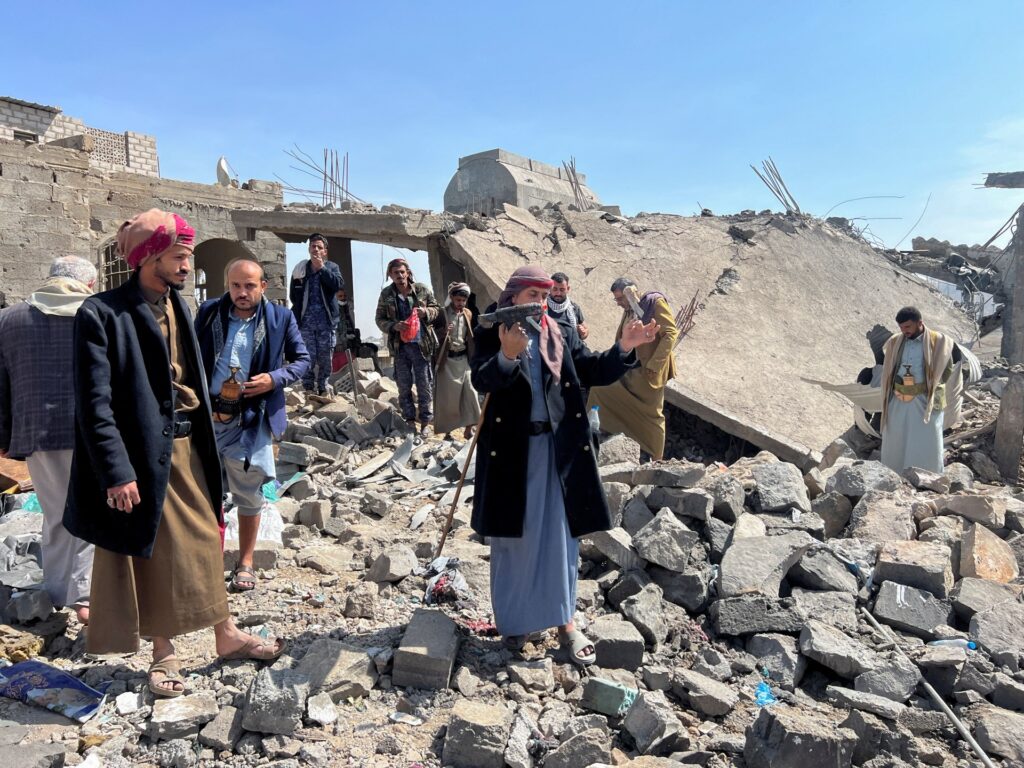
Houthi-affiliated outlet reports 15 US strikes in Marib, as Yemeni group vows to maintain ‘steadfast position’ on Gaza. The United States’ bombardment campaign in Yemen has killed at least 123 people – mostly civilians – since mid-March, health officials in the capital Sanaa say. Yemen’s Ministry of Health said on Monday that US attacks have also injured 247 others, stressing that the victims include many women and children. Civilians have been targeted, families wiped out, military sites destroyed and soldiers killed. US President Donald Trump has vowed that the Houthis will be “completely annihilated” under daily strikes by the United States military. Washington says its campaign aims to stop Houthi attacks against Israel as well as shipping lanes in the Red Sea. However, the Yemeni group has pledged to continue its military operations until Israel ends its war and siege on Gaza in solidarity with Palestinians. Trump has been suggesting that the Houthi group – also known as Ansar Allah – has been severely weakened. But the Yemeni group says the US offensive has proven to be a failure and is only targeting civil officials and civilian infrastructure. Advertisement On Sunday, a US strike targeted a ceramic factory in Sanaa province, killing six people and injuring 30 others, according to the Health Ministry. “We hold the American administration fully responsible for its continuing crimes and massacres against civilian dignitaries and civilians and its direct and repeated bombardment of infrastructure, industrial facilities and civil officials,” the ministry said. On Monday, the Houthi-affiliated Al Masirah TV reported more US attacks, including 15 strikes in the Marib governorate. Despite the US campaign, the Iran-aligned Houthis – who present themselves as Yemen’s official armed forces – said on Sunday that they fired two missiles at Israel and launched a separate drone attack against a “vital” target on the Israeli coast. “The Israeli enemy, along with the Americans, must realise that beloved Yemen – its leadership, people, and army – will not back down from its steadfast position in supporting and backing the oppressed Palestinian people … regardless of the repercussions and the outcomes,” the Yemeni group said in a statement. The Houthi attack triggered sirens in Jerusalem and Tel Aviv on Sunday, but the Israeli army said it detected and intercepted one missile, not two. Hamas praised the latest attack, with the spokesperson of its military branch, Abu Obeida, saying that Palestinians will not forget the “honourable” stance of the Yemeni group. “The honest brothers in Yemen continue to insist on paralysing the heart of the Zionist entity, standing by Gaza, which is being subjected to a fierce genocide, despite paying a heavy price with their precious blood and their country’s resources,” Abu Obeida said in a statement. Advertisement Adblock test (Why?)
Can Israel continue bombing Gaza’s health services?
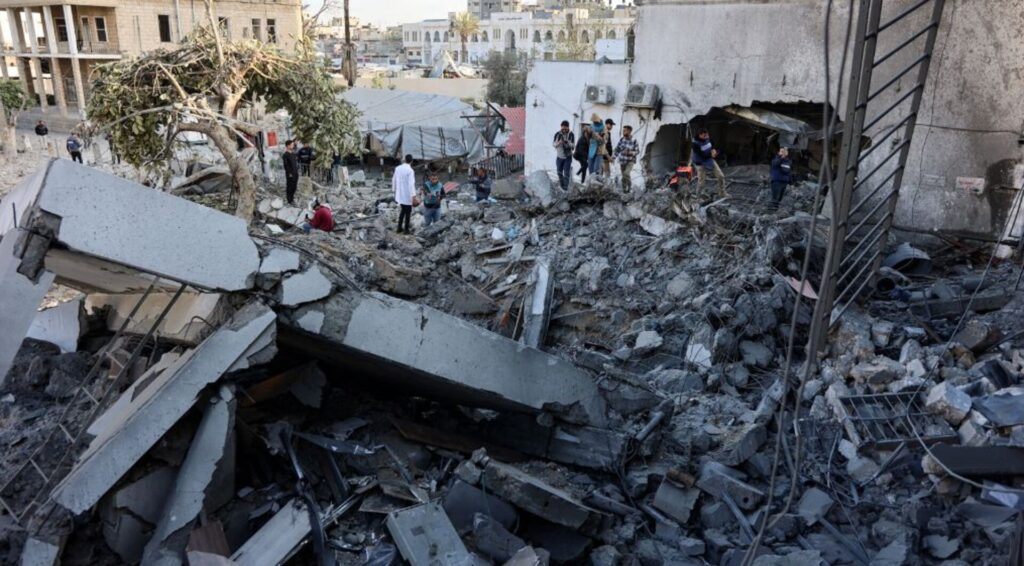
Israel’s bombing of Gaza’s last functional hospitals turns treatable conditions into death sentences. Patients in Gaza are dying of treatable wounds and illnesses due to Israeli attacks and its aid blockade. Israel bombed one of the last working hospitals in Gaza on Sunday, meaning more Palestinians with routine health conditions might now face death. Targeting health facilities is a war crime, yet it has continually occurred in the war on Gaza. So what’s the impact of Israel’s attacks on patients and doctors? Presenter: Adrian Finighan Guests: Olga Cherevko – spokesperson for the United Nations Office for the Coordination of Humanitarian Affairs in Gaza Dr Tanya Haj Hassan – paediatric intensive care doctor who has worked in Gaza Dr Mads Gilbert – emergency medicine doctor and senior consultant at the University Hospital of North Norway who has worked in Gaza Adblock test (Why?)