

Police injured, houses burned in second night of riots in Northern Ireland
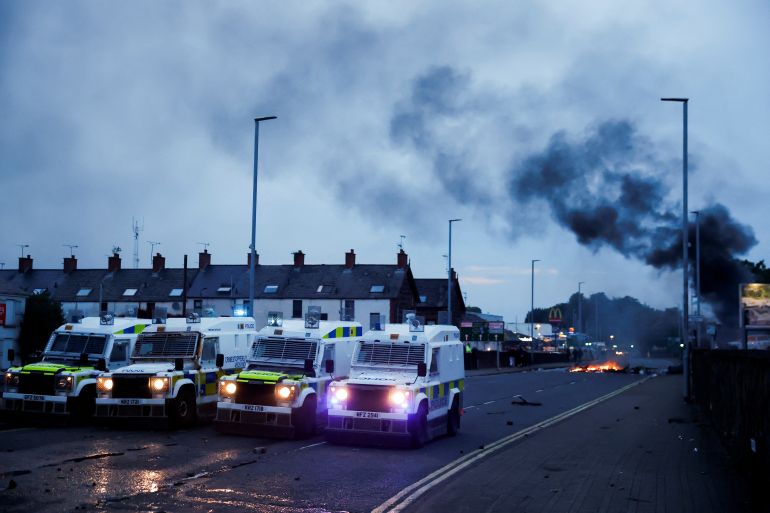
Rioters said to target ‘foreigners’ in Northern Ireland town following alleged sexual assault of local teenage girl. Hundreds of masked rioters have attacked police and set homes and cars on fire in Northern Ireland’s Ballymena in the second night of disorder described as “racially motivated” by police following a protest over an alleged sexual assault in the town. Police said they were dealing with “serious disorder” on Tuesday night in the town, located about 45km (30 miles) from the capital Belfast, and urged people to avoid the area. Officers in riot gear and driving armoured vehicles responded with water cannon and firing plastic baton rounds after being attacked with Molotov cocktails, steel scaffolding poles and rocks that rioters gathered by knocking down nearby walls, the Reuters news agency reports. One house was burned out and rioters attempted to set a second home alight, according to reports, while several cars were set on fire. The Belfast Telegraph newspaper said that some residents in Ballymena have started to mark their front doors to indicate their nationality to avoid attack, while Irish media outlets report that a call has gone out for protests to be held in other towns and cities in Northern Ireland, currently part of the United Kingdom. Police vehicles are parked as flames rise during a second night of riots, in Ballymena, Northern Ireland, on June 10, 2025 [Clodagh Kilcoyne/Reuters] During earlier violence on Monday, four houses were damaged by fire and windows and doors were smashed in other homes and businesses, in what police said they are investigating as racially-motivated hate attacks. Advertisement “The terrible scenes of civil disorder we have witnessed in Ballymena again this evening have no place in Northern Ireland,” the UK’s Northern Ireland minister, Hilary Been, said in a post on social media. “There is absolutely no justification for attacks on PSNI [Police Service of Northern Ireland] officers or for vandalism directed at people’s homes or property,” he said. Unrest first erupted on Monday night after a vigil in a neighbourhood of Ballymena where an alleged sexual assault occurred on Saturday. The trouble began when people in masks “broke away from the vigil and began to build barricades, stockpiling missiles and attacking properties”, police said. Two teenage boys, charged by police with the attempted rape of a teenage girl, had appeared in court earlier in the day, where they had asked for a Romanian interpreter, local media reports said. Tensions in the town, which has a large migrant population, remained high throughout Tuesday, with residents describing the scenes as “terrifying” and telling reporters that those involved were targeting “foreigners”. “This violence was clearly racially motivated and targeted at our minority ethnic community and police,” Northern Ireland Assistant Chief Constable Ryan Henderson said. The Police Service of Northern Ireland said it was investigating “hate attacks” on homes and businesses and that 15 officers were injured in the rioting on Monday, including some who required hospital treatment. Cornelia Albu, 52, a Romanian migrant and mother-of-two who lives opposite a house targeted in the attacks, said her family has been “very scared”. Advertisement “Last night, it was crazy, because too many people came here and tried to put the house on fire,” Albu, who works in a factory, told the AFP news agency. She said she would now have to move, but was worried she would not find another place to live because she was Romanian. Adblock test (Why?)
LA mayor announces curfew amid protests over Trump’s immigration crackdown
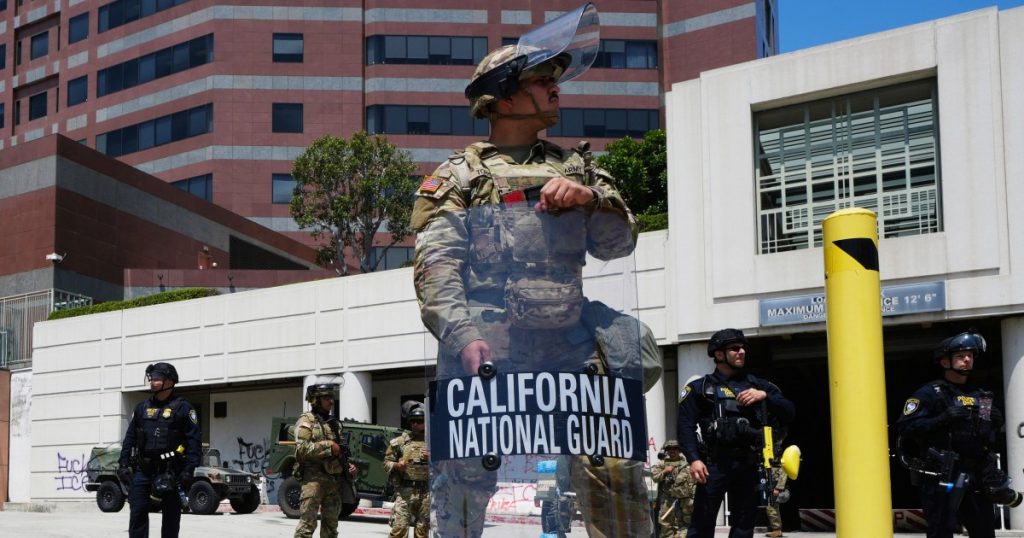
Los Angeles Mayor Karen Bass has announced a curfew for part of the United States’s second-largest city amid protests against President Donald Trump’s immigration crackdown. The curfew applies to 1 square mile (2.6sq km) of the downtown area, and will be in effect from 8pm on Tuesday to 6am on Wednesday (03:00 GMT to 13:00 GMT Wednesday), Bass said. “Many businesses have now been affected or vandalised. Last night, there were 23 businesses that were looted, and I think if you drive through downtown LA, the graffiti is everywhere and has caused significant damages to businesses and a number of properties,” Bass told a news conference. “So my message to you is: If you do not live or work in downtown LA, avoid the area. Law enforcement will arrest individuals who break the curfew and you will be prosecuted.” Bass said she expected the curfew to remain in effect for several days, but stressed that the order only applied to a small portion of the city, which covers 502 square miles (1,300sq km). Advertisement “I think it is important to point this out, not to minimise the vandalism and violence that has taken place there – it has been significant – because it is extremely important to know that what is happening in this 1 square mile is not affecting the city,” Bass said. “Some of the imagery of the protests and the violence gives the appearance that this is a city-wide crisis, and it is not.” Bass’s order came as protests against the Trump administration’s raids on suspected undocumented migrants entered a fifth night in Los Angeles, and as demonstrations spread to dozens of other US cities, including New York, Chicago and Atlanta. Trump’s immigration crackdown and deployment of the National Guard and Marines against protesters have drawn condemnation from California officials, who have accused the president of abusing his authority and fanning tensions. In an address to Californians on Tuesday night, California Governor Gavin Newsom blasted Trump’s use of military force as a “brazen abuse of power”. “That’s when the downward spiral began. He doubled down on his dangerous National Guard deployment by fanning the flames even harder, and the president – he did it on purpose,” Newsom said. Newsom, who has filed a lawsuit against the Trump administration’s deployment of troops against his wishes, said the president had unleashed a “military dragnet” targeting “dishwashers, gardeners, day labourers and seamstresses” rather than violent criminals. “That’s just weakness – weakness masquerading as strength. Donald Trump’s government isn’t protecting our communities, they’re traumatising communities, and that seems to be the entire point,” Newsom said. “California will keep fighting.” Advertisement “If some of us can be snatched off the streets without a warrant, based only on suspicion or skin colour, then none of us are safe,” he added. “Authoritarian regimes begin by targeting people who are least able to defend themselves. But they do not stop there.” Reporting from a vigil against the raids in Los Angeles, Al Jazeera’s Teresa Bo said that protesters are rejecting the Trump administration’s characterisation of the raids as being aimed at violent criminals. “Many of the people we have spoken to here say that they are wrong – that they are working people who have come to this country to find a better life,” Bo said. “That’s why most of the people who are here are extremely angry, and they are demanding an end to the raids.” Bo said the activists she spoke to also stressed the need to keep the demonstrations peaceful. “This is something that we’ve been hearing over and over,” she said. “They say that the main reason they need to be peaceful is because violence gives Donald Trump an excuse to use the military, to the use National Guard on the streets of Los Angeles.” Earlier on Tuesday, Trump doubled down on his decision to mobilise troops against protesters amid growing condemnation. “Generations of army heroes did not shed their blood on distant shores only to watch our country be destroyed by invasion and third-world lawlessness here at home, like is happening in California,” Trump told US Army soldiers during a visit to Fort Bragg in North Carolina. “As commander-in-chief, I will not let that happen. It’s never going to happen.” Advertisement Adblock test (Why?)
US journalist dropped by ABC over Trump administration ‘hater’ comment
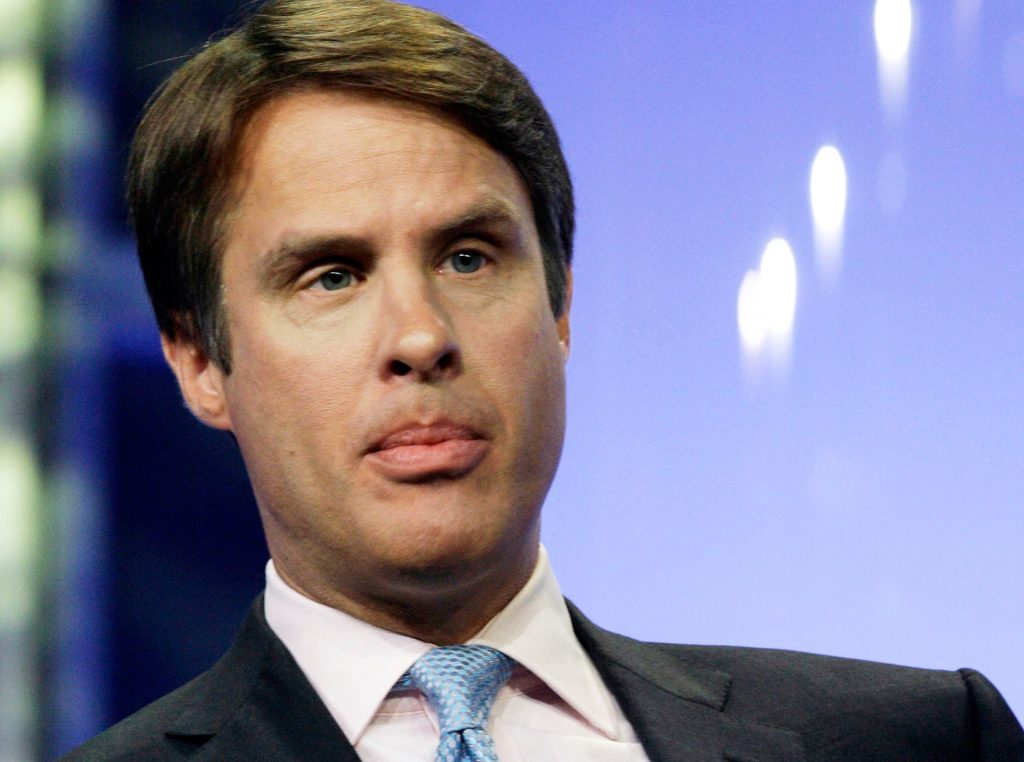
Veteran correspondent for the US broadcaster, Terry Moran, had called Trump aide Stephen Miller a ‘world-class hater’. Veteran journalist Terry Moran will not be returning to ABC News after he was suspended by the broadcaster for a social media post that called United States President Donald Trump and his deputy chief of staff Stephen Miller “world-class haters”. In a statement, the US network said on Tuesday that Moran’s quickly-deleted post on X was “a clear violation of ABC News policies”, the Associated Press news agency reports. It added that Moran’s contract was ending, and “based on his recent post… we have made the decision not to renew”. The post on Sunday night was primarily directed at Miller, whom Moran described as “the brains behind Trumpism”. “Miller is a man who is richly endowed with the capacity for hatred. He’s a world-class hater,” Moran had said on X. Moran, who had recently interviewed Trump in his role as Senior National Correspondent for ABC News, also described the US President as a “world-class hater”, but said that in Trump’s case, it was only a “means to an end” of “his own glorification”. Advertisement In Miller’s case, however, Moran said, “his hatreds are his spiritual nourishment. He eats his hate”. The Trump administration quickly condemned Moran’s post, with Vice President JD Vance describing it as an “absolutely vile smear of Stephen Miller”. Moran, 65, had worked at ABC News since 1997. He was a longtime co-anchor of “Nightline”, and covered the Supreme Court and national politics. During an interview with Trump that was broadcast a month ago, the president told Moran, “You’re not being very nice” in the midst of a contentious exchange about deportations. Trump aide Steven Cheung responded to Moran’s exit on Tuesday with a post on X, simply saying: “Talk s***, get hit.” Miller, meanwhile, has been focused on the Trump administration’s decision to send 4,000 National Guard soldiers and a Marine battalion to Los Angeles, amid anti-immigration enforcement protests in California’s capital city. In one post on X on Tuesday, Miller said that California has become a “criminal sanctuary for millions of illegal alien invaders” and that “huge swaths of the city where I was born now resemble failed third world nations.” The AP news agency reported that Moran’s contract with ABC had been due to expire on Friday, according to people with knowledge of the situation. Moran’s post also comes at what was already a sensitive time for ABC News. The network agreed to pay $15m towards Trump’s presidential library in December to settle a defamation lawsuit over George Stephanopoulos’ inaccurate claim that Trump had been found civilly liable for raping writer E Jean Carroll. Advertisement Moran leaves ABC as major television networks in the US struggle to retain audiences amid the soaring popularity of some podcasters and subscription-based newsletters. The shift has also been embraced by some journalists, such as Mehdi Hasan, who started his own media network in early 2024, after quitting MSNBC when it cancelled his show in late 2023. Adblock test (Why?)
FIFA Club World Cup 2025: What is the MLS players’ pay dispute about?
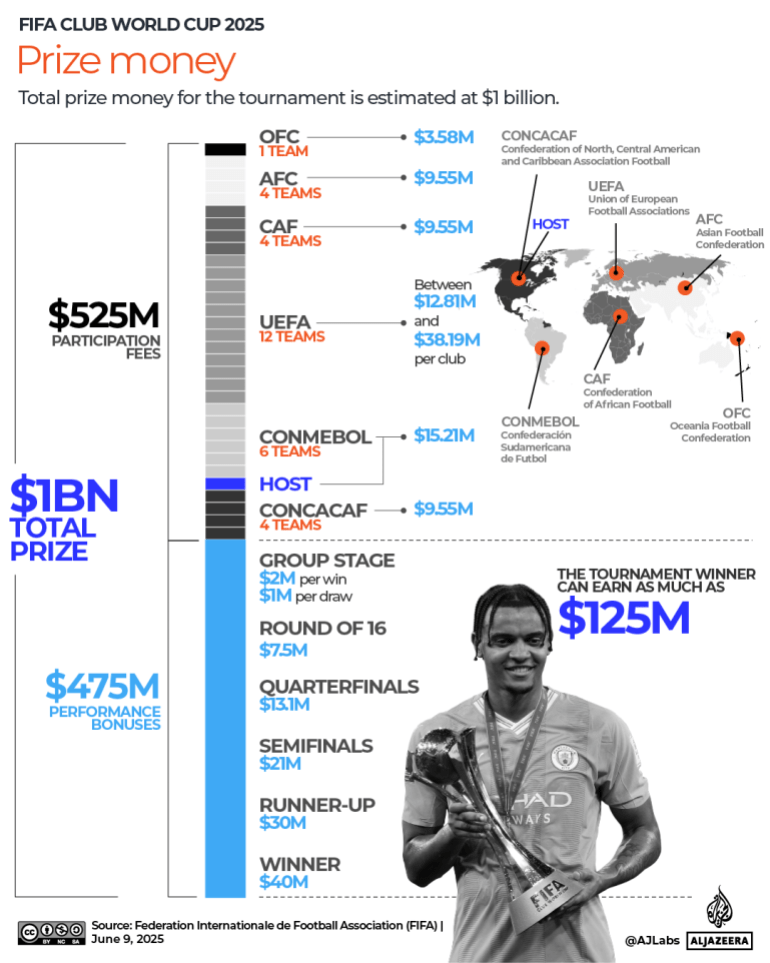
With the FIFA Club World Cup 2025 about to get under way on Saturday, the football league in the host nation United States (US) finds itself at odds with players from its three participating clubs over monetary compensation from the tournament. Three Major League Soccer (MLS) clubs – Inter Miami, Seattle Sounders and Los Angeles FC – are among the 32 teams that have qualified for the tournament running from June 14 to July 13 across 11 venues in the US. Players from the three clubs, represented by the MLS Players Association (MLSA), have protested over the amount of compensation they are promised from the tournament by the MLS. Here’s a breakdown of the ongoing tussle between the MLS and its players: What’s the Club World Cup pay dispute between the MLS and its players? The players are demanding an increased share of the tournament prize money in addition to the participation fee they are set to receive. The players’ association has accused the MLS of refusing to engage in a negotiation so far, while the league has said it has offered the clubs an “enhanced structure” for the players. Advertisement How have the players registered their protest? On June 1, players of Seattle Sounders FC brought attention to the issue by wearing shirts that read “Club World Cup Ca$h Grab” during their warm-up session before their match against Minnesota United FC. A number of players from the three clubs also posted on social media with the hashtag #FairShareNow, causing fans to take notice and engage in social media conversations. #FairShareNow pic.twitter.com/EW7ABFbsPX — Stefan Frei (@Stefan24Frei) June 8, 2025 How much money will MLS clubs receive at the Club World Cup? Every MLS team will earn a participation fee of $9.55m, but can win additional prize money based on its performance. Each win or draw during the tournament will also bring in additional prize money, which can increase further should the club advance to the next stages. Since LAFC beat Club America to qualify for the tournament in a playoff game, they won an additional $250,000 in prize money. What part of the prize money will go to the players? According to the existing collective bargaining agreement (CBA) between the MLS and MLSPA, the players are eligible to receive 50 percent of the prize money in undefined tournaments such as the Club World Cup. The MLS, on Sunday, said it has proposed an enhanced structure for the Club World Cup “to reward both participation and competitive achievement in the tournament.” According to the MLS, this is what’s on offer in the revised proposal: “In addition to the guaranteed $1m per team for qualifying, 20 percent of all prize money earned from the group stage onward would be allocated to players. If an MLS club wins the Club World Cup, its players could collectively receive more than $24m in performance bonuses.” What do the MLS players want? They seek a better deal than the one put forward by the MLS in its latest proposal, and for the league to engage with its players in a negotiation. Advertisement The players’ association says the latest proposal offered by MLS does not include any additional participation bonuses for the players and offered “below-standard” back-end compensation. The MLSPA has also accused the league of asking for unrelated concessions to the CBA. As things stand, the CBA includes a provision that caps the amount of prize money that can go to players at $1m. The MLSPA believes the players are entitled to a bigger share of the funds. “The timing, substance and retaliatory nature of the proposal sends a clear message: MLS does not respect or value players’ efforts with regard to this tournament,” the MLSPA said in a statement on Sunday. It further added that the proposed 20 percent share of the compensation amount is “below international standard”. “Although not surprised, the players and the MLSPA are deeply disappointed by this message,” the MLSPA said. An update on Club World Cup Bonuses. MLS spent most of last week making threats and promising retaliation against the MLSPA and players because Seattle players wore t-shirts that expressed frustration over the league’s refusal to engage about Club World Cup compensation. More… pic.twitter.com/jAz06ASGYw — MLSPA (@MLSPA) June 8, 2025 How has the MLS responded to the players’ demands? Neither side has issued any further statements, but players have continued posting on social media with the #FairShareNow hashtag. Reports in US media said the talks between the two sides were ongoing. The league’s last statement said that MLS owners believe that performance-based incentives are appropriate given the expanded format and increased prize pool for the tournament. Advertisement “The League values the continued dedication and commitment of its players and looks forward to supporting them as they represent their clubs – and Major League Soccer – on the global stage this summer,” it added. What happens if the players and MLS don’t reach an agreement? Should both sides remain at loggerheads, it is unlikely that the players will refuse to take the field for their games in a tournament hosted in their clubs’ home country. If they do, the players risk being fined and reprimanded by the league in accordance with its rules. How does the MLS pay dispute impact the FIFA Club World Cup? It is unlikely to impact the tournament directly unless the players refuse to take the field for their clubs. However, the controversy has added what would be considered unwelcome attention to the MLS’s pay structure and the Club World Cup, a tournament that has already faced plenty of criticism from football players and officials. Why aren’t players from other leagues protesting? It remains unclear how other leagues and teams are compensating their players for their participation in the Club World Cup. The breakdown and distribution of the prize money and participation fee vary across leagues. Adblock test (Why?)
Al Jazeera journalist arrives in Paris after Israel deportation
[unable to retrieve full-text content] Al Jazeera journalist Omar Faiad arrived in Paris after being deported by Israel for being aboard the ‘Madleen’.
Top CFPB enforcement official to resign amid policy shifts under Trump
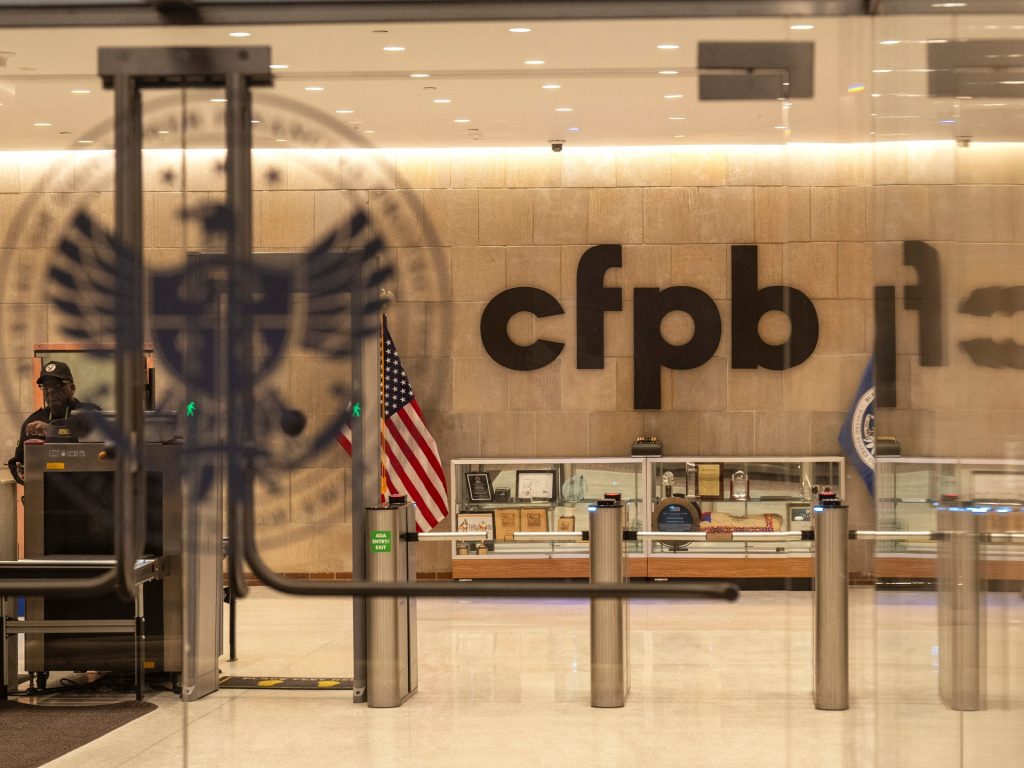
Acting Enforcement Director Cara Petersen has served with the United States agency since it was founded. The top remaining enforcement official at the United States Consumer Financial Protection Bureau (CFPB) has tendered her resignation, saying the White House’s overhaul of the agency has made her position untenable. Acting Enforcement Director Cara Petersen, who has served at the agency since its creation nearly 15 years ago, said that current leadership under US President Donald Trump “has no intention to enforce the law in any meaningful way”, according to an email first obtained by the Reuters news agency. “I have served under every director and acting director in the bureau’s history and never before have I seen the ability to perform our core mission so under attack,” Petersen wrote in an email. “It has been devastating to see the bureau’s enforcement function being dismantled through thoughtless reductions in staff, inexplicable dismissals of cases, and terminations of negotiated settlements that let wrongdoers off the hook.” Petersen’s departure comes four months after the agency’s enforcement and supervision chiefs also resigned amid efforts by President Donald Trump to dismantle the CFPB. Advertisement An agency spokesperson and Petersen did not immediately respond to requests for comment. In addition to seeking to cut the CFPB’s workforce by about 90 percent, acting Director Russell Vought and chief legal officer Mark Paoletta have said they will slash agency enforcement and supervision and have dropped major CFPB enforcement cases en masse, including against Capital One and Walmart. The agency has even revised some cases already settled under the prior administration. The dramatic changes come as Republicans have complained for years that the CFPB, created in the aftermath of the 2007-2009 global financial crisis, is too powerful and lacks oversight. Democrats and agency backers contend it plays a critical role in policing financial markets on behalf of consumers. “While I wish you all the best, I worry for American consumers,” said Petersen in her email. A federal appeals court in Washington has yet to decide on the Trump administration’s effort to undo a court injunction blocking the agency from firing most agency staff. Adblock test (Why?)
10 dead in Austria’s deadliest school attack
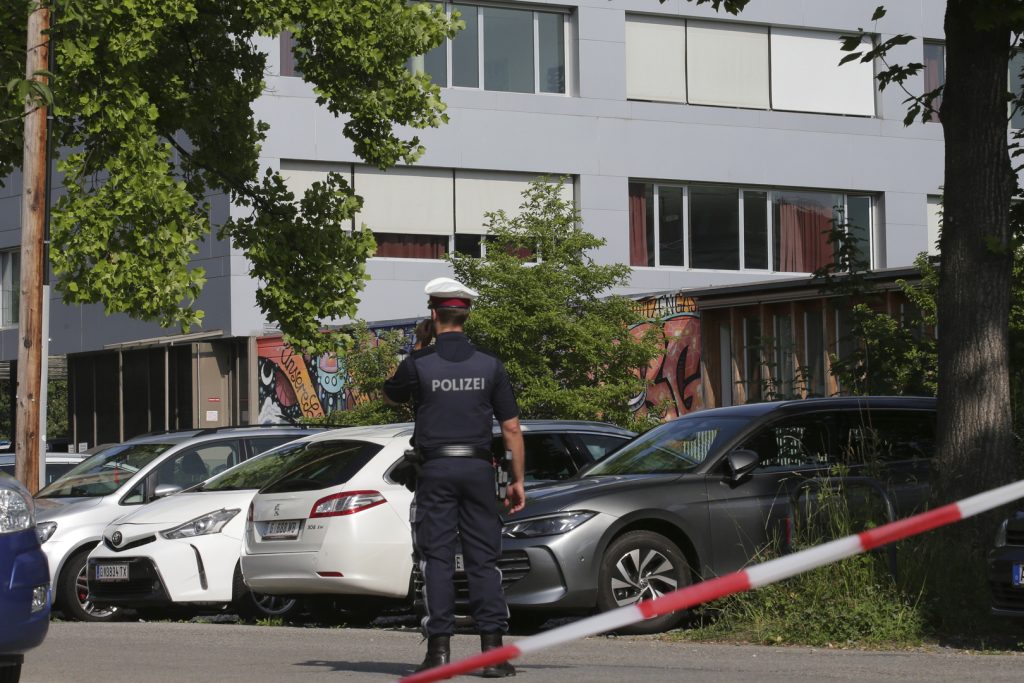
NewsFeed A former student opened fire at a high school in Graz, killing at least nine people in the deadliest shooting in Austria’s modern history. The gunman, who acted alone, died by suicide, officials said. Victims include teens, a teacher, and school staff. Published On 10 Jun 202510 Jun 2025 Adblock test (Why?)
Breaking down the drone ‘revolution’ driven by Russia’s war on Ukraine
[unable to retrieve full-text content] Russia and Ukraine are waging a remotely controlled battle in the air and at sea.
Israeli attack kills three paramedics in Gaza City

NewsFeed Three Palestinian paramedics were killed in an Israeli attack in Gaza City on Monday night, while attempting to rescue injured civilians under the rubble from a previous strike. A journalist who was with them was also killed. Published On 10 Jun 202510 Jun 2025 Adblock test (Why?)
Columbia University deserves to lose its accreditation
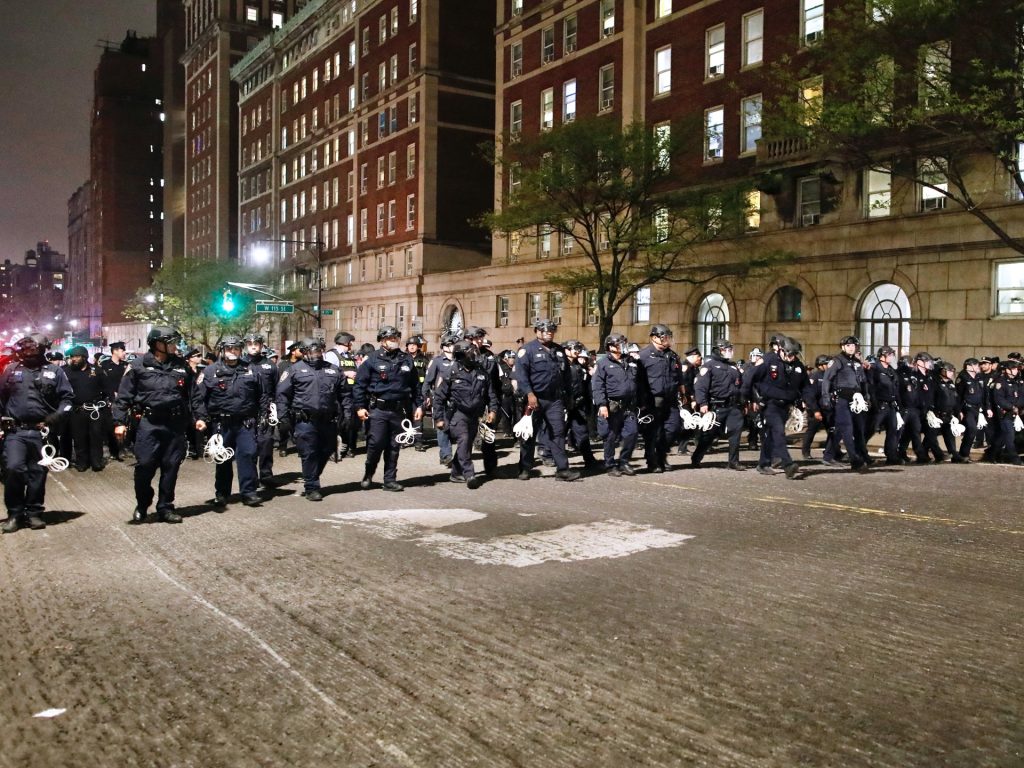
On June 4, the United States Department of Education notified the Middle States Commission on Higher Education (MSCHE) accrediting agency that its member institution Columbia University deserves to have its accreditation pulled. It accused the university of ostensibly being “in violation of federal antidiscrimination laws” for supposedly failing “to meaningfully protect Jewish students against severe and pervasive harassment”. This claim is, of course, wrong. It is a blatant mischaracterisation of the events that have taken place on campus over the last 19 months. Yet, it is also true that during that time Columbia violated the terms of its accreditation: by violently abrogating the academic freedom and viewpoint diversity of antigenocide protesters via institutional sanction and the deployment of police on campus. In this sense, Columbia does deserve to lose its accreditation. MSCHE’s accreditation policy, which is standard across the industry, states that an “accredited institution” must possess and demonstrate both “a commitment to academic freedom, intellectual freedom, freedom of expression” and “a climate that fosters respect among students, faculty, staff, and administration from a range of diverse backgrounds, ideas, and perspectives”. Advertisement It is stunningly evident that since October 7, 2023, Columbia University has egregiously and repeatedly failed to satisfy the MSCHE’s fundamental requirements due to its response to antigenocide protests on campus concerning Gaza and Palestine. The violent removal, suspension, and arrest of peaceful student protesters and faculty critics should be understood to constitute a violation of the institution’s obligation to protect freedom of expression and academic freedom. On November 10, 2023, Columbia suspended Students for Justice in Palestine (SJP) and Jewish Voices for Peace (JVP) after they organised a peaceful protest for Palestinian rights. The administration justified the suspension by claiming the groups used “threatening rhetoric and intimidation”. However, media reports, witnesses and university insiders revealed that the suspension was based on an incident involving an unaffiliated individual whose actions were condemned by the organisers and that no formal disciplinary process or appeals process was allowed by the university. It was later uncovered that Columbia administrators had unilaterally altered language in its official policies on student groups just before suspending the SJP and JVP. In January, Katherine Franke, a tenured law professor, retired and said she was “effectively terminated” by Columbia after facing public and congressional criticism for a media interview criticising students who formerly served in the Israeli army. Similarly, the university has recently acknowledged doling out “multi-year suspensions, temporary degree revocation and expulsions” to dozens of students who participated in 2024 antigenocide protests. One of those expelled, Jewish PhD student Grant Miner, president of the Student Workers of Columbia, noted that all of the students censured by the university “had been cleared of any criminal wrongdoing”. Advertisement Perhaps worst of all, Columbia has, on repeated occasions, invited the New York Police Department (NYPD) onto campus to intervene against student expression. On April 30, 2024, according to the university’s own report, the NYPD arrested 44 students and individuals with apparent associations with the university. Likewise, in early May this year, about 70 students were arrested after participating in an “occupation” of the university’s library. The NYPD explicitly acknowledged that the presence of its officers on campus was “at the direct request of Columbia University”. There is little question each of these incidents constitutes blatant stifling of academic freedom and viewpoint diversity. The disproportionate targeting of Arab, Muslim, Palestinian and Jewish students and allies can be viewed as discriminatory, undermining the institution’s commitment to equitable treatment and inclusive learning environments, in clear violation of MSCHE’s guiding principles on equity, diversity and inclusion. These decisions to suppress protests were made unilaterally by senior administration at Columbia – without input from faculty, students or shared governance bodies – clearly signalling a lack of adherence to MSCHE’s accreditation policy standard on governance, leadership and administration. By failing to show “a commitment to shared governance” with “administrative decision-making that reflects fairness and transparency”, Columbia has failed to meet the standards of accreditation outlined by the MSCHE. Advertisement But Columbia University is not alone in failing to abide by guiding principles of its accreditation. At Muhlenberg College in Pennsylvania, Jewish Associate Professor Maura Finkelstein was summarily fired for engaging in social media critiques of Israel’s genocide in Gaza. Similarly, at Northwestern University, Assistant Professor Steven Thrasher was subjected to multiple investigations in relation to his support of the student antigenocide encampment on campus and was ultimately denied tenure in a decision he characterised as an effort designed to not just silence him but also to bully him so that “students, journalists, faculty, staff and activists across campus and throughout the country [may be intimidated] into silencing themselves”. Students too have faced repression across the United States. Indeed, it has been estimated that by July 2024, at least 3,100 students had been arrested for participation in campus antigenocide protests. On November 6, 2023, Brandeis University became the first private university in the US to ban its student chapter of the SJP, for “conduct that supports Hamas”. In April 2024, Cornell University suspended several students involved in pro-Palestinian encampment protests, citing violations of campus policies. Then in May, police brutalised students with pepper spray at George Washington University while arresting 33 people in the violent clearing-out of its student encampment. At Vanderbilt University, students were arrested and expelled for occupying an administration building. Advertisement In the most recent news, it has become clear that the University of Michigan has spent at least $800,000 hiring dozens of private investigators to surveil antigenocide student protesters on and off campus in Ann Arbor. These examples are merely a small sample of what has occurred across the US, Canada and Europe since long before October 7, 2023. This is a broader existential crisis in higher education in which the free expression of students is being suppressed at the cost of the values these universities purport to espouse. Despite appearances, this crisis has very little to do with the heavy-handed Trump administration. It is, rather, the self-inflicted consequence of