

What’s next in US President Donald Trump’s immigration crackdown?
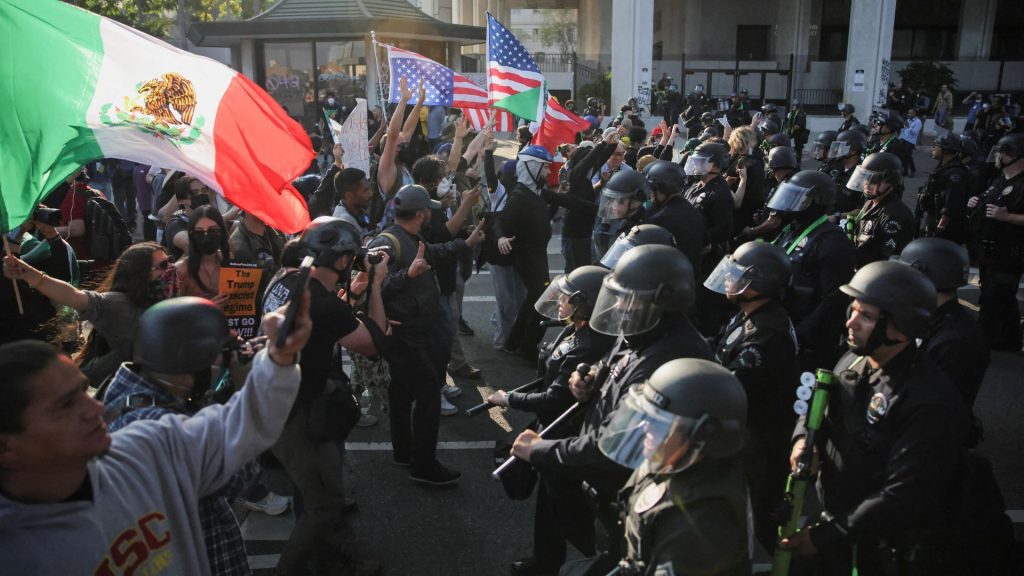
The deployment of soldiers on the streets of Los Angeles brings crisis to new level. National Guard soldiers and even the United States Marines are on the streets of Los Angeles. They were deployed by President Donald Trump after mass protests against his immigration raids. California’s governor is suing him – while the protests spread to other cities. Could this crisis worsen? Presenter: Folly Bah Thibault Guests: Peter Eliasberg – chief counsel at the American Civil Liberties Union of Southern California Claire Finkelstein – professor of law at the University of Pennsylvania Mark Pfeifle – Republican strategist, founder and president of Off the Record Strategies Adblock test (Why?)
‘It’s so painful’: Man City’s Guardiola speaks up on Israel’s war on Gaza
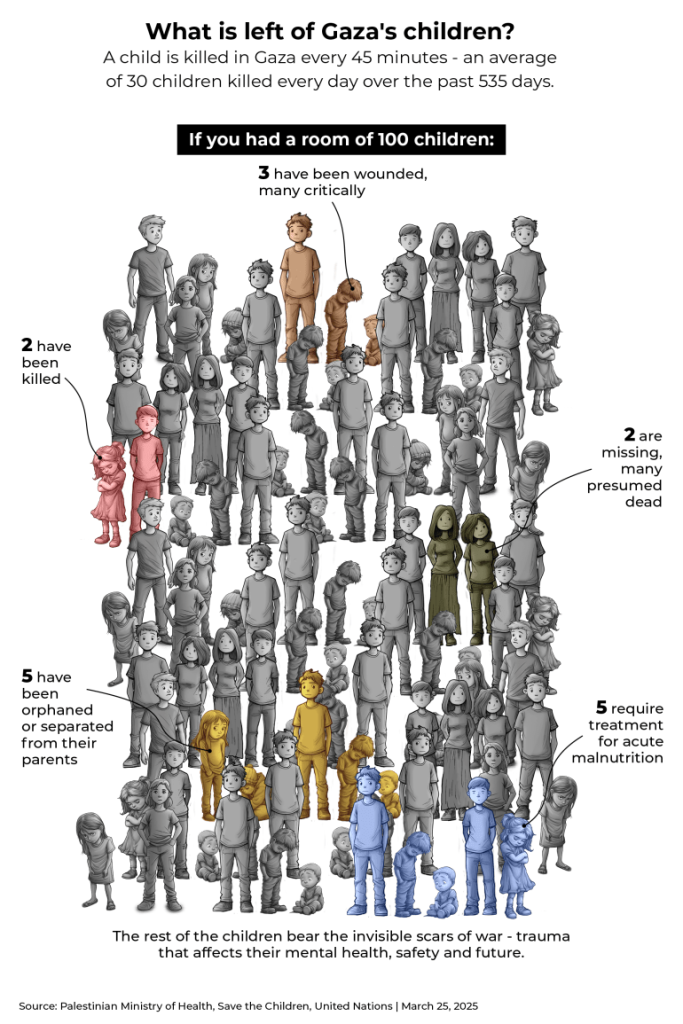
Manchester City manager Pep Guardiola says the images of children being killed during Israel’s war on Gaza are “painful” and have left him “deeply troubled”. The Spanish manager of the English Premier League club urged the world to speak up instead of choosing to stay silent “in the face of injustice” as he addressed an audience after receiving an honorary degree at the University of Manchester on Monday. “It’s so painful what we see in Gaza. It hurts all my body,” Guardiola said. “Maybe we think that when we see four-year-old boys and girls being killed by bombs or being killed at a hospital, which is not a hospital any more, it’s not our business. Yeah, fine, it’s not our business. But be careful – the next four- or five-year-old kids will be ours.” Mentioning his three children – Maria, Marius and Valentina – Guardiola said that every morning “since the nightmare started” in Gaza, whenever he sees his two daughters and son he is reminded of the children in Gaza, which leaves him feeling “so scared”. About half of Gaza’s 2.3 million residents are children. Since October 7, 2023, Israel has killed at least 17,400 children, including 15,600 who have been identified, according to the Ministry of Health in Gaza. Many more remain buried under the rubble and are presumed dead. Advertisement Many of the surviving children have endured the trauma of multiple wars, and all of them have spent their lives under an oppressive Israeli blockade. Over the past 20 months, Israeli attacks have left their homes in ruins, destroyed their schools, and overwhelmed their healthcare facilities. (Al Jazeera) ‘Deeply troubled’ by wars During his emotional speech, which has been widely shared on social media, Guardiola said the world remains silent in the face of injustice. “We feel safer [staying silent] than speaking up,” he added. “Maybe this image feels far away from where we are living now, and you might ask what we can do,” he added. He then went on to narrate the story of a bird trying to put out a fire in a forest by repeatedly carrying water in its beak. “In a world that often tells us we are too small to make a difference, that story reminds me the power of one is not about the scale – it’s about choice, about showing up, about refusing to be silent or still when it matters the most.” The former Barcelona coach and player said the images out of Palestine, Sudan and Ukraine left him “deeply troubled”. Guardiola, who has formerly voiced his support for the independence of his native Catalonia, lashed out at world leaders for their inability to stop the wars. “We see the horrors of thousands and thousands of innocent children, mothers and fathers. “Entire families suffering, starving and being killed and yet we are surrounded by leaderships in many fields, not just politicians, who don’t consider the inequality and injustice.” Advertisement An independent United Nations commission report released on Tuesday accused Israel of committing the crime against humanity of “extermination” by attacking Palestinian civilians sheltering in schools and religious sites in Gaza. “While the destruction of cultural property, including educational facilities, was not in itself a genocidal act, evidence of such conduct may nevertheless infer genocidal intent to destroy a protected group,” the report said. While the report focused on the impact on Gaza, the commission also reported significant consequences for the Palestinian education system in the occupied West Bank and East Jerusalem as a result of ramped-up Israeli military activity, harassment of students and settler attacks. “Children in Gaza have lost their childhood. With no education available, they are forced to worry about survival amid attacks, uncertainty, starvation and subhuman living conditions,” the report added. “What is particularly disturbing is the widespread nature of the targeting of educational facilities, which has extended well beyond Gaza, impacting all Palestinian children.” “It’s so painful, what we see in Gaza … And let me be clear, this is not about ideology.” Manchester City manager Pep Guardiola discusses his views on Israel’s war on Gaza, as well as how the images of children living through the war have affected him as a parent. pic.twitter.com/zwrlexAcxa — Al Jazeera English (@AJEnglish) June 10, 2025 Adblock test (Why?)
Japan beat Indonesia 6-0 in final AFC World Cup Group C qualifier
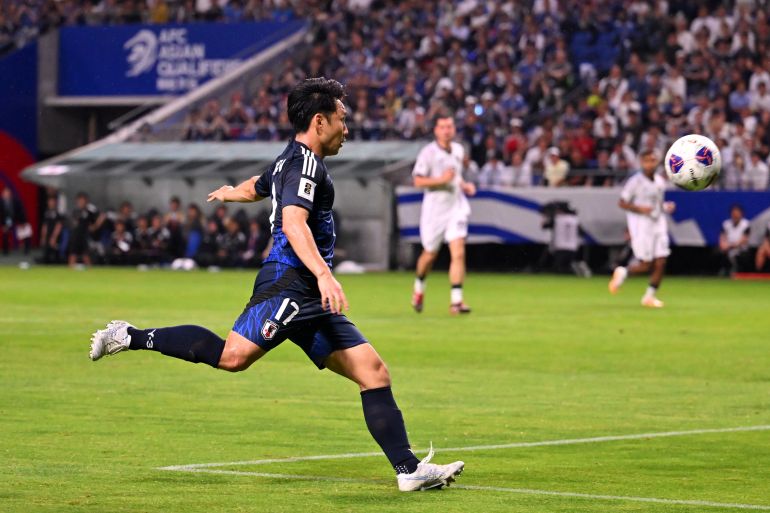
Already qualified Japan beat Indonesia 6-0 in the final Group C game in the AFC qualifiers for the 2026 FIFA World Cup. Daichi Kamada scored twice as Japan rounded off their successful World Cup qualifying campaign with a 6-0 thrashing of Patrick Kluivert’s Indonesia in Osaka. Kamada, an FA Cup winner with Crystal Palace in England this season, struck twice in Tuesday’s first half as already-qualified Japan finished their campaign as Group C winners, scoring 30 goals in their 10 matches. Takefusa Kubo, Ryoya Morishita, Shuto Machino and substitute Mao Hosoya were also on target against Indonesia, who finished fourth in the group. Kluivert’s side, who were backed by a large number of supporters who had travelled to Japan, advanced to a further round with five other teams to decide two more Asian qualifiers for next year’s tournament in the United States, Canada and Mexico. The result matched Japan’s previous winning margin against Indonesia, which also came in a 6-0 win in 1976. Morishita scored one of six goals in Japan’s shutout of Indonesia [Kenta Harada/Getty Images] Japan coach Hajime Moriyasu has set the ambitious target of winning the World Cup in North America. Advertisement His side will play friendlies against teams from outside Asia over the next 12 months, and Kamada is looking to learn from the experience. “Playing against Asian teams and against the kind of European teams who will be at the World Cup is totally different,” said the 28-year-old. “As we play these games, we will start to see a lot of areas where we need to improve. We need to come together as a team and overcome these problems when they crop up.” Japan have already lined up away friendlies against Mexico and the US in September and will face four as yet unnamed opponents at home before the end of the year. Moriyasu said his players need to keep improving “in all departments” and praised their attitude against Indonesia. “The challenge for the players is to break past their limits and grow,” he said. “They did that in training and in the game, where they were never satisfied and always looking for the next goal and the next chance, which is great to see.” Japan coach Hajime Moriyasu, left, oversaw seven wins in the 10 matches of Group C of the AFC World Cup qualifiers [Issei Kato/Reuters] Japan lost their unbeaten qualifying record in a 1-0 defeat away to Australia last week, with coach Hajime Moriyasu fielding an experimental lineup with qualification already in the bag. He started with two more debutants against Indonesia, handing first caps to defender Junnosuke Suzuki and winger Shunsuke Mito. Kamada opened the scoring in the 15th minute, heading home from a Mito cross. The Palace forward turned provider for his team’s second, combining with Kubo before the Real Sociedad man fired past Indonesia goalkeeper Emil Audero. Morishita celebrates scoring Japan’s fourth goal with his teammates [Issei Kato/Reuters] Indonesia lost defender Kevin Diks to injury midway through the first half, and his replacement, Yakob Sayuri, lasted only 15 minutes before he also had to go off after a clash of heads. Advertisement Kamada scored Japan’s third on the stroke of half-time, waltzing through the Indonesia defence before tucking the ball over Audero. Morishita volleyed home at the back post in the 55th minute for his first international goal. Machino and Hosoya also got on the scoresheet as Japan continued to squeeze Indonesia until the final whistle. Adblock test (Why?)
Ten dead, including suspect, in Austria school shooting
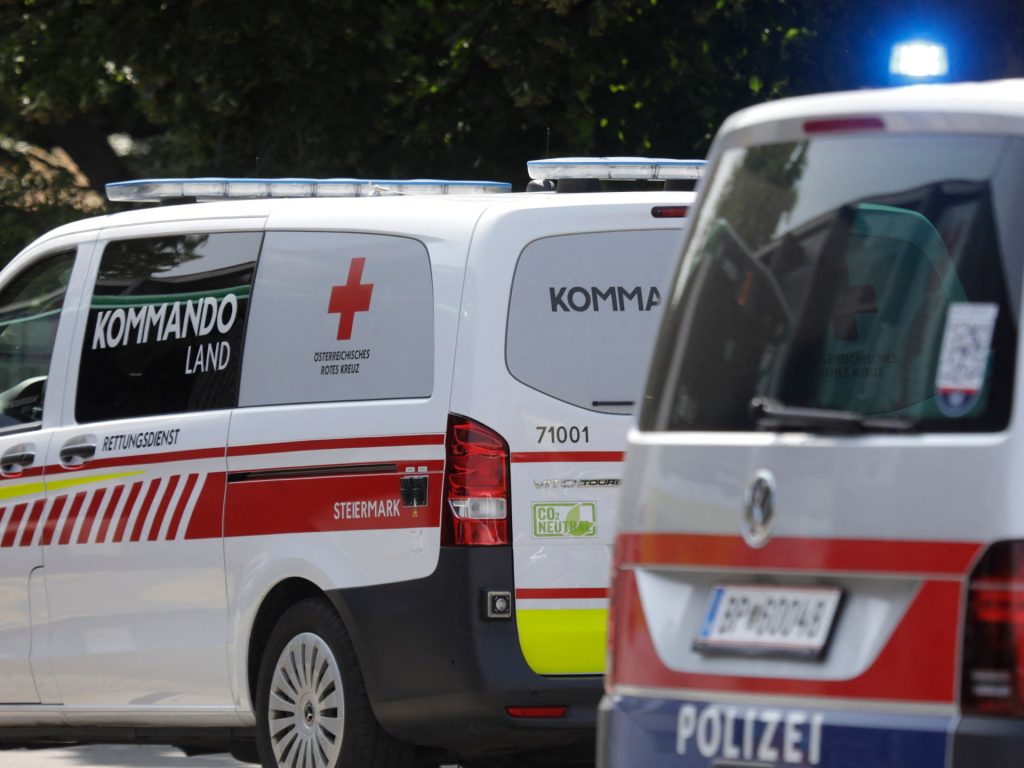
An attacker shot at least nine people dead, before killing themselves, at a school in the southeastern Austrian city of Graz, according to local authorities cited by media reports. Police said on Tuesday that they believed the assailant acted alone before turning the gun on themself. “Several” other people were seriously wounded, according to the authorities. Graz Mayor Elke Kahr described the incident as a “terrible tragedy”, the Austria Press Agency reported. It added that those killed included students and at least one adult. Officials did not immediately give information on the perpetrator. Austrian Chancellor Christian Stocker, who was on his way to Graz, said the shooting “is a national tragedy that deeply shocks our whole country”. Some weapons, such as rifles and shotguns that must be reloaded manually after each shot, can be bought in Austria after attaining the age of 18 without a permit. Gun dealers only need to check if there is no weapons ban on the buyer, and the weapon gets registered in the central weapons register. Advertisement Other weapons, such as repeating shotguns or semiautomatic firearms, are more difficult to acquire; buyers need a gun ownership card and a firearms pass. Adblock test (Why?)
Areas near Sudan’s Khartoum at risk of famine, says UN agency
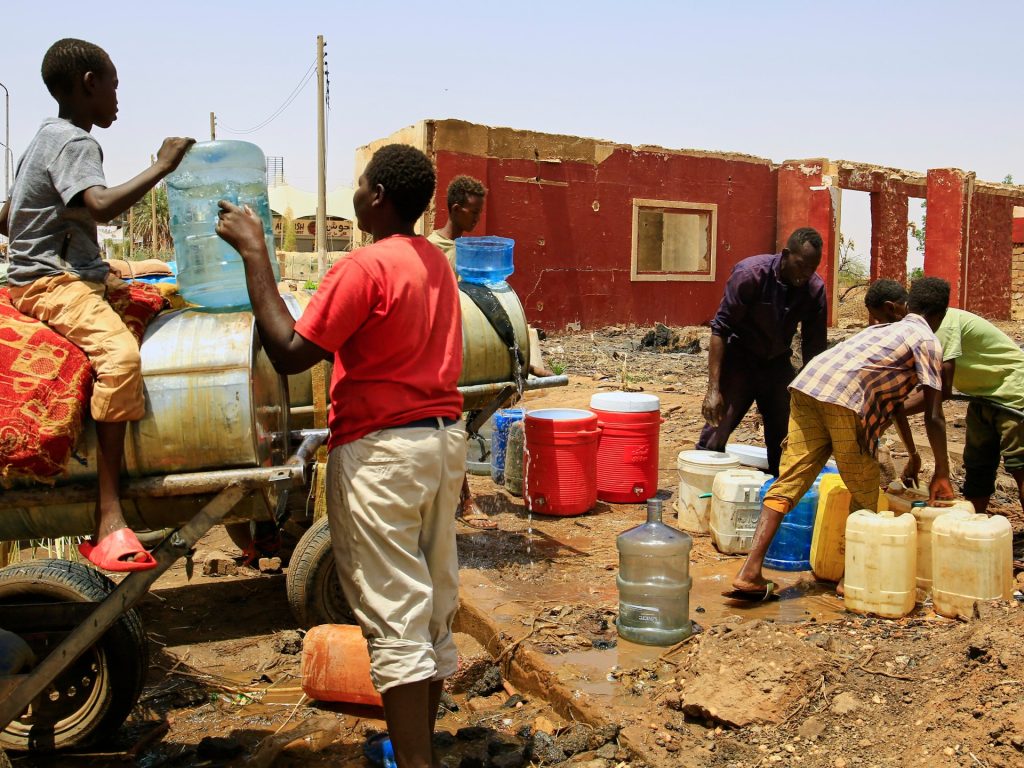
Severe levels of ‘hunger, destitution and desperation’ found in the town of Jabal Awliya, south of Khartoum. The risk of famine in Sudan has extended close to the capital Khartoum, the UN’s World Food Programme (WFP) has warned as the country’s brutal civil war grinds on into its third year. The agency has discovered “severe” levels of hunger in the town of Jabal Awliya, some 40km (25 miles) south of Khartoum, the WFP’s Sudan representative Laurent Bukera said on Tuesday. Speaking upon his return from a visit to Khartoum state, Bukera described “widespread destruction” in the town and other areas around Khartoum, and called for urgent international action to prevent famine. “The needs are immense,” Bukera said from Port Sudan, describing “limited access to water, healthcare and electricity”, as well as a cholera outbreak. “Several areas in the south of the city are at high risk of famine,” he added. “The international community must act now – by stepping up funding to stop famine in the hardest-hit areas and to invest in Sudan’s recovery.” The WFP, which says it is assisting four million people across the country, has had to reduce food rations in areas at risk of famine to 70 percent due to a major funding shortfall. Advertisement ‘Meeting basic needs critical’ The government-aligned Sudanese Armed Forces (SAF) and the paramilitary Rapid Support Forces (RSF) have been locked in a battle for power since April 2023. The army took control of Khartoum in March and declared the city “completely free of rebels” in late May. Now that WFP has access to the area and is able to make regular aid deliveries, the agency said it was doing everything it could to bring the local population back from the brink of famine. Bukera said “the level of hunger, destitution and desperation” found in Jabal Awliya was “severe, and basically confirmed the risk of famine”. The war has killed tens of thousands of people and created the world’s largest hunger and displacement crises. Over four million have fled the country and some 10.5 million are internally displaced, according to United Nations estimates. Bukera said that with people expected to return to heavily damaged areas like Khartoum, the pressure on already overstretched resources would intensify. “WFP is deeply concerned, and meeting basic needs – especially food – is critical and urgent,” he said. Famine has already been declared in five areas across Sudan, including three displacement camps near el-Fasher in the southwest. It has been all but confirmed in el-Fasher itself, where aid agencies say a lack of access to data has prevented an official famine declaration. Across the country, nearly 25 million people are suffering dire food insecurity. Adblock test (Why?)
Robert Kennedy Jr expels all 17 members of CDC vaccine panel
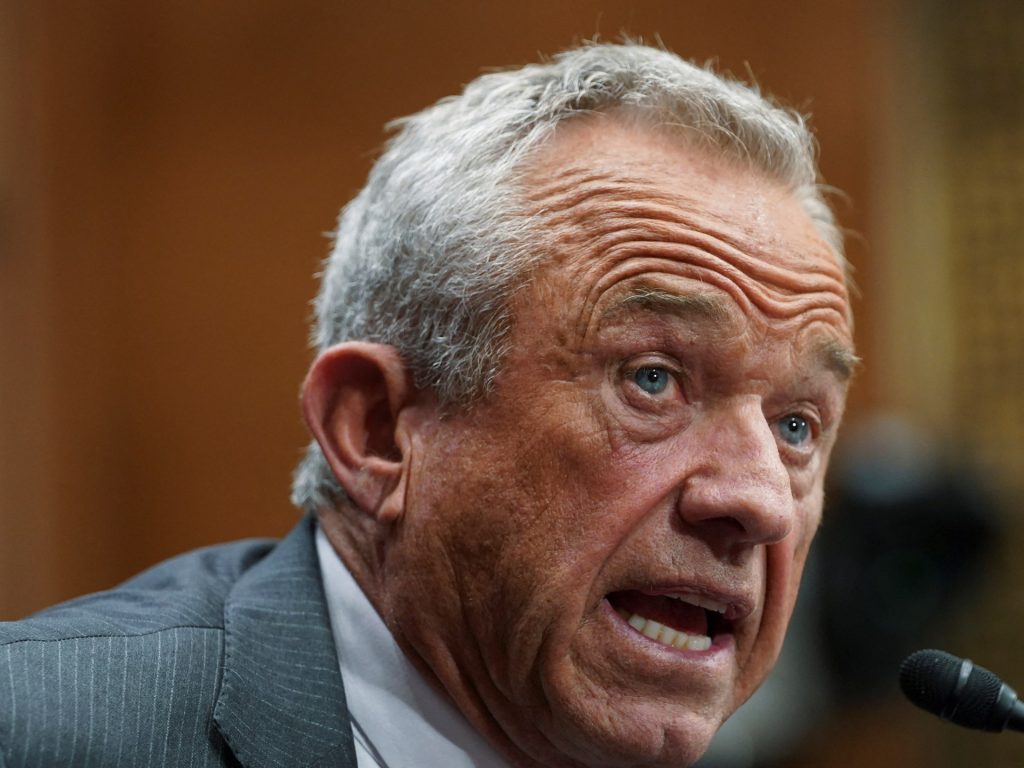
US President Trump-appointed Health Secretary and vaccine sceptic will replace panel with his own selections. United States Health and Human Services (HHS) Secretary Robert Kennedy Jr has purged a 17-member panel at the Centers for Disease Control and Prevention (CDC) that provides expertise on vaccines. Kennedy, who before taking a position in the administration of President Donald Trump was a vocal anti-vaccine activist, has said he will replace the panel with his own picks. “Today, we are prioritising the restoration of public trust above any specific pro- or anti-vaccine agenda,” Kennedy said. “The public must know that unbiased science – evaluated through a transparent process and insulated from conflicts of interest – guides the recommendations of our health agencies.” Kennedy’s reorganisation of the CDC’s Advisory Committee on Immunization Practices (ACIP) is the latest move by the Trump administration to shake up US health practices, sometimes by pushing ideas that depart strongly from the existing scientific consensus on issues such as vaccinations and fluoride. “That’s a tragedy,” a former chief scientist of the Food and Drug Administration (FDA), Jesse Goodman, said of the firings. Advertisement “This is a highly professional group of scientists and physicians and others … It’s the kind of political meddling that will reduce confidence rather than increase confidence.” The HHS said that all 17 members of the panel were selected during the administration of former President Joe Biden, and that keeping them on would have prevented Trump from choosing the majority of the panel’s members until 2028. The department said that the ACIP will convene its next meeting on June 25-27. While the Food and Drug Administration (FDA) approves vaccinations for public use, the ACIP reviews data in public meetings before voting on whether to recommend a vaccine. Adblock test (Why?)
Chinese man in US pleads guilty to exporting guns, ammo to North Korea
California resident shipped at least three containers of guns bound for North Korea, according to prosecutors. A Chinese man living illegally in the United States has pleaded guilty to exporting guns, ammunition and other military items to North Korea at the direction of Pyongyang, the US Department of Justice has said. Shenghua Wen, of Ontario, California, admitted to one count of conspiracy to violate the International Emergency Economic Powers Act – a 1977 law that empowers the president to restrict commerce with countries on national security grounds – and one count of acting as an illegal agent of a foreign government, the Justice Department said on Monday. Wen, 42, shipped at least three containers of guns bound for North Korea in 2023, one of which arrived in Nampo, North Korea, via Hong Kong, according to prosecutors. To facilitate the scheme, Wen bought a firearms business in Houston, Texas, and used false paperwork to conceal the contents of his shipping containers, according to prosecutors. Wen, who was arrested in December, also allegedly bought approximately 60,000 rounds of 9mm ammunition and obtained “sensitive technology”, including a chemical threat identification device, for shipment to North Korea. Advertisement Wen was allegedly directed to procure the weapons and sensitive goods by North Korean officials he met at the North Korean Embassy in China before entering the US on a student visa in 2012. Wen was allegedly transferred about $2m to carry out the scheme. “Wen admitted that at all relevant times he knew that it was illegal to ship firearms, ammunition, and sensitive technology to North Korea. He also admitted to never having the required licenses to export ammunition, firearms, and the above-described devices to North Korea,” the US Attorney’s Office for the Central District of California said in a press release. “He further admitted to acting at the direction of North Korean government officials and that he had not provided notification to the Attorney General of the United States that he was acting in the United States at the direction and control of North Korea as required by law.” During questioning by the FBI, Wen said he believed the North Korean government wanted the weapons and ammunition to prepare for an attack against South Korea, according to a criminal complaint filed in September. Wen is due to face court for sentencing in August. He faces a maximum penalty of 20 years in prison for violating the International Emergency Economic Powers Act, and up to 10 years for acting as an illegal agent of a foreign government. Adblock test (Why?)
Trump sends Marines to LA, doubles number of National Guard
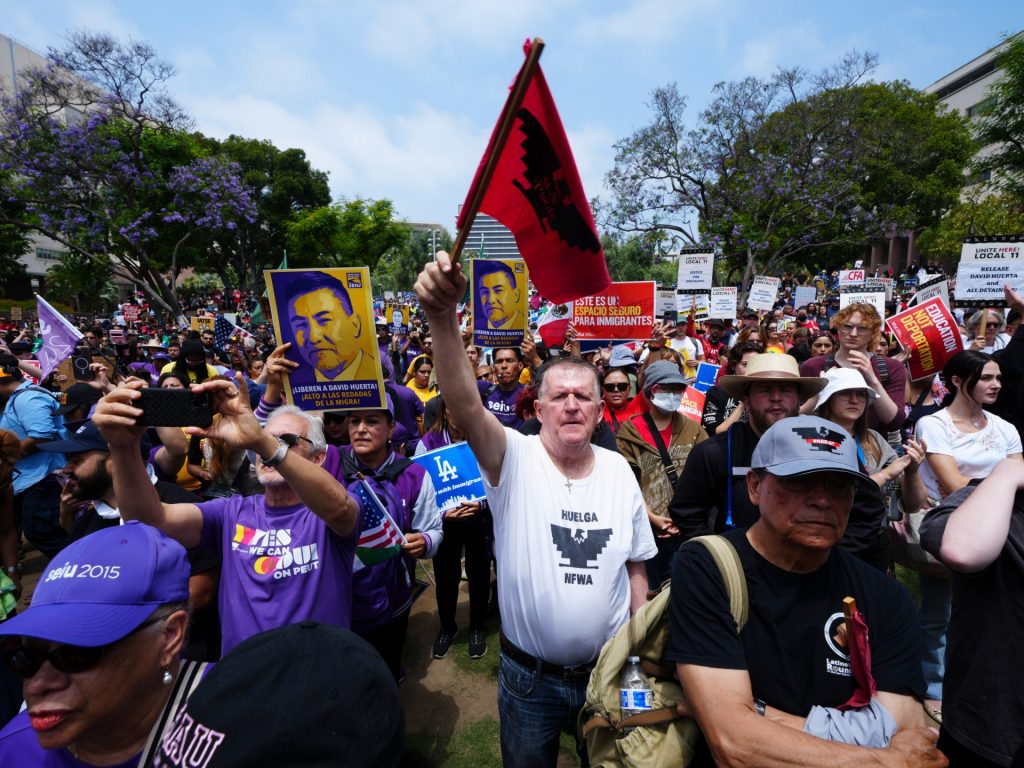
The Pentagon will send a Marine battalion to Los Angeles in a major escalation of President Donald Trump’s response to anti-immigration enforcement protests, the United States military has said. The statement on Monday confirmed the “activation” of 700 Marines to help protect federal personnel and property in the California city, where Trump had deployed the National Guard a day earlier. Pentagon spokesman Sean Parnell said later on Monday that an “additional” 2,000 National Guard troops would also be mobilised. The announcements came despite opposition from state officials, including California’s Governor Gavin Newsom, who has mounted a legal challenge to the deployment of the National Guard. In a statement, the military said the “activation of the Marines” was meant to help “provide continuous coverage of the area in support of the lead federal agency”. Speaking to the Reuters news agency, an unnamed Trump administration official said the soldiers would be acting only in support of the National Guard and other law enforcement. Advertisement The official said that Trump was not yet invoking the Insurrection Act of 1807, which would suspend legal limitations that block the military from taking part in domestic law enforcement. Speaking shortly before the reports emerged, Trump said he was open to deploying Marines to Los Angeles, but said protests in the city were “heading in the right direction”. “We’ll see what happens,” he said. Reporting from Los Angeles, Al Jazeera’s Rob Reynolds said protests on Monday organised in the city centre by union groups were peaceful. He noted that the National Guard, which Trump had deployed to the city on Sunday, played a minimal role in responding to the protests, only guarding federal buildings. That raised questions over why the Trump administration would feel a Marine deployment was needed. “[The National Guard] didn’t engage with the protesters. They didn’t do much of anything other than stand there in their military uniforms,” Reynolds said. He added that there is an important distinction between the National Guard, a state-based military force usually composed of part-time reserves, and the more combat-forward Marines, which are the land force of the US Navy. “Now the Marines, this is a whole different thing. The United States sends Marines overseas where US imperialist interests are at stake, but not to cities in the United States,” he said. Newsom’s office, meanwhile, said that according to the information it had received, the Marines were only being transferred to a base closer to Los Angeles, and not technically being deployed onto the streets. Advertisement Still, it said the “level of escalation is completely unwarranted, uncalled for, and unprecedented – mobilising the best in class branch of the US military against its own citizens”. California mounts challenge The updates on Monday came shortly after Newsom and California Attorney General Rob Bonta announced that the state had filed a lawsuit challenging Trump’s decision to deploy the National Guard to Los Angeles. Newsom has maintained that local law enforcement had the capacity to respond to protests over US Immigration and Customs Enforcement (ICE) raids in Los Angeles and the nearby city of Paramount, which first broke out on Friday. The Democratic state leader accused Trump of escalating the situation, saying in a statement that the president was “creating fear and terror by failing to adhere to the US Constitution and overstepping his authority”. “This is a manufactured crisis to allow him to take over a state militia, damaging the very foundation of our republic,” Newsom said. The California lawsuit argues that the legal authority Trump invoked to deploy the National Guard requires the consent of the state’s governor, which Newsom did not provide. Trump on Monday indicated that he would support Newsom being arrested for impeding immigration enforcement, responding to an earlier threat from the president’s border tsar, Tom Homan. Trump’s response to the protests represented the first time since 1965 that a president deployed the National Guard against the will of a state governor. At the time, President Lyndon B Johnson did so to protect civil rights demonstrators in Alabama. Advertisement Protests continue Protests against Trump’s crackdown – as well as his overall immigration policy – continued on Monday. Standing in front of Ambiance Apparel in Los Angeles, one of the sites raided by ICE agents last week, Indigenous community leader Perla Rios spoke alongside family members of individuals detained by immigration agents. Rios called for due process and legal representation for those taken into detention. “What our families are experiencing is simply a nightmare,” Rios said. Meanwhile, the Service Employees International Union (SEIU) called for protests in cities across the country over the Trump administration’s response to demonstrations, which included the arrest of the union’s California president David Huerta. Huerta was detained on Friday during immigration raids and charged with conspiracy to impede an officer during immigration enforcement operations. “From Massachusetts to California, we call for his immediate release and for an end to ICE raids that are tearing our communities apart,” the SEIU said in a statement. Protesters also gathered in New York and Los Angeles in response to Trump’s latest ban on travellers from 12 countries, a policy critics have decried as racist. Speaking at a protest in New York City on Monday, Murad Awawdeh, president of the New York Immigration Coalition, said the policy was “a continuation of the Muslim and travel ban under the first Trump administration, which separated families and harmed our communities”. Advertisement The policy, he said, was creating “an immense amount of fear”. Adblock test (Why?)
What is happening in Los Angeles is not law enforcement, it’s occupation
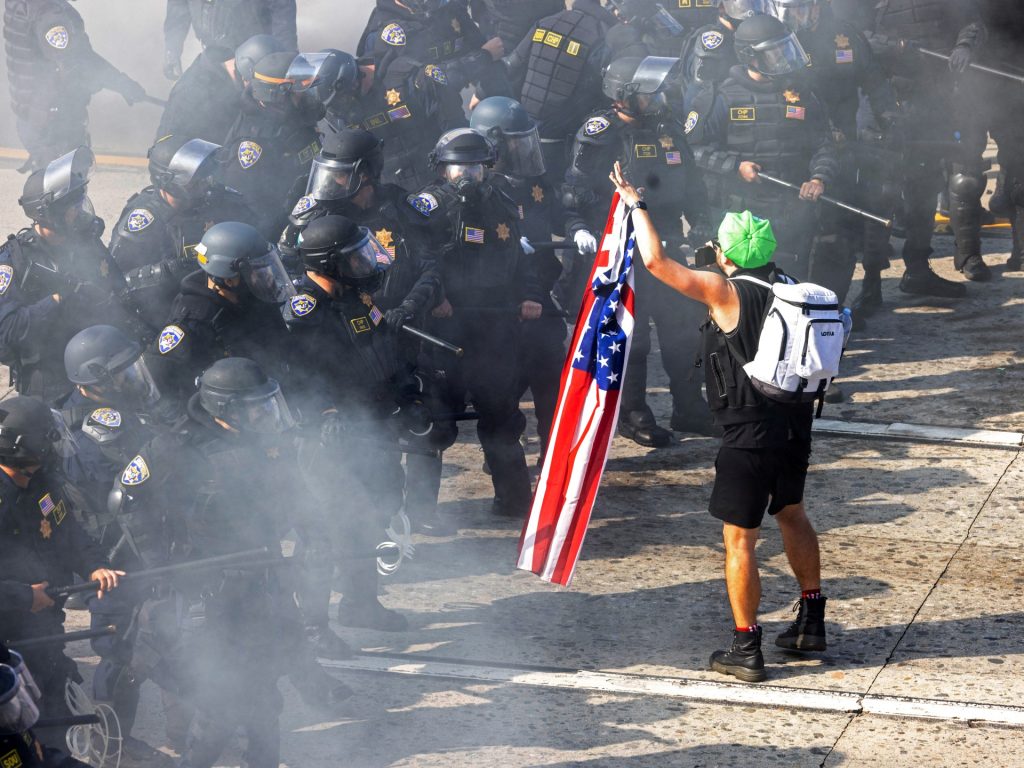
The scenes unfolding in Los Angeles should alarm every American who values constitutional governance. Federal troops have been deployed to a major American city not in response to an insurrection or natural disaster, but to suppress protests against immigration enforcement operations. The whole of downtown Los Angeles has been declared an “unlawful assembly area”. This represents a dangerous escalation that threatens the very foundations of the US democratic system. What began as routine raids by US Immigration and Customs Enforcement (ICE) on June 6 quickly spiralled into something far more ominous. Federal agents swept through Los Angeles, detaining 121 individuals from restaurants, stores and apartment buildings. The raids were conducted in broad daylight, with a calculated boldness that seemed designed to provoke. The community’s response was swift. By the afternoon, protesters had gathered downtown, not as rioters but as a grieving community, holding signs and chanting “Set them free!”. Advertisement This was grief made public, anger given voice. But in today’s America, even peaceful displays of grief and anger are not allowed when they go against the narrative set by those in power. The police responded with force. Tear gas canisters flew. Flash-bang grenades exploded. A peaceful demonstration transformed into a battlefield — not because protesters chose violence, but because the government did. US President Donald Trump decided to escalate further. He signed a memorandum deploying 2,000 National Guard troops to Los Angeles, with Defense Secretary Pete Hegseth threatening to mobilise active-duty Marines if protests continued. The legality of these actions is questionable at best. Under the Insurrection Act, federal troops can only be deployed after a public proclamation calls for citizens to disperse. Such a proclamation has not been made, and Trump has not invoked the act. Governor Gavin Newsom, who has the power to decide on matters of security in the state of California, was not consulted; he was simply informed. There is no widespread rebellion threatening the authority of the United States. There are no enemy combatants in Los Angeles, just angry, grieving people demanding dignity for their communities. What we’re witnessing is not the lawful execution of federal authority but improvisation masquerading as application of law, the slow erosion of constitutional order, replaced by declaration, spectacle, and muscle. If challenged in court, this deployment would likely be deemed illegal. But that may not matter – and that is the most chilling aspect of this crisis. We are fast moving towards a place where illegality no longer matters, where muscle has arrived with or without paperwork, and law is merely a facade. Advertisement This moment cannot be understood in isolation. As scholar Aime Cesaire observed in his analysis of colonialism, violence in the periphery inevitably returns to the metropole. The tools of oppression developed abroad always find their way home. In the US, this has been a decades-long process. In 1996, a provision in the National Defense Authorization Act allowed the Pentagon to transfer surplus military-grade weaponry to local police departments. In the following three decades, the same weapons that were used for imperialist violence abroad were transferred to police departments to deploy in poor and marginalised communities. Then with the start of the “war on terror”, tactics to target and subjugate foreign populations were transferred at home to use against vulnerable communities. Congress passed sweeping laws like the USA PATRIOT Act and amendments to the Foreign Intelligence Surveillance Act, enabling mass surveillance and intelligence gathering on US soil. The 2001 Authorization for Use of Military Force Against Terrorists allowed for indefinite military detention of US citizens, while a Supreme Court ruling in Holder v. Humanitarian Law Project expanded the “material support” doctrine to criminalise even peaceful engagement with blacklisted groups. Programmes like Countering Violent Extremism (CVE) turned schools and mosques into surveillance hubs, targeting Muslim, Arab, and South Asian communities. While outside the US government was pursuing a campaign of renditions, torture and illegal detention at Guantanamo Bay, at home, it was deploying lawfare against “suspect” communities. Advertisement The 2008 Holy Land Foundation trial introduced “secret evidence” in a US criminal court for the first time, with an anonymous Israeli intelligence officer claiming he could “smell Hamas” on defendants. Georgia’s prosecution of Cop City protesters under “terrorism” charges directly borrowed from this playbook, as did Tennessee’s Bill HB 2348, which extends policing powers to suppress peaceful protests. After October 2023, the US government violated its own laws in order to participate directly in the genocide in Gaza, providing Israel with weapons and intelligence. The mass repression and erasure that Palestinians had suffered at the hands of their US-backed colonisers were transferred on American soil. The government launched an unprecedented attack on free speech and academic freedom, cracking down on students protesting the genocide and encouraging retribution against pro-Palestinian voices. We’ve seen tenure revoked, protesters surveilled, and dissent criminalised. Palestinians and their allies have endured a fourfold increase in harassment, doxing, and employment loss; they have also faced violent attacks and murder. All this started not under Trump, but under his “Democratic” predecessor, former US President Joe Biden, who also increased the budget of police departments by $13bn and expanded ICE’s powers. The pattern is clear: repressive measures developed to target foreign populations have become tools to suppress all dissent at home. What is happening in Los Angeles and other cities isn’t about law enforcement; it’s about power projection, about demonstrating that defiance will be met with overwhelming force and quashed. Advertisement The legal framework matters less than the spectacle. When federal agents fire flash-bang grenades at protesters outside Home Depot stores, when ICE directors accuse mayors of siding with “chaos and lawlessness”, when FBI officials tweet about hunting down rock throwers, we’re watching the construction of a narrative that justifies state violence. This is how soft coups unfold: not with tanks rolling down Pennsylvania Avenue, but through executive memos, press briefings, and military logistics disguised as public safety. The Insurrection Act becomes a dead letter not through repeal but through irrelevance. If this precedent stands,
What is the national guard at the heart of Trump’s Los Angeles standoff?
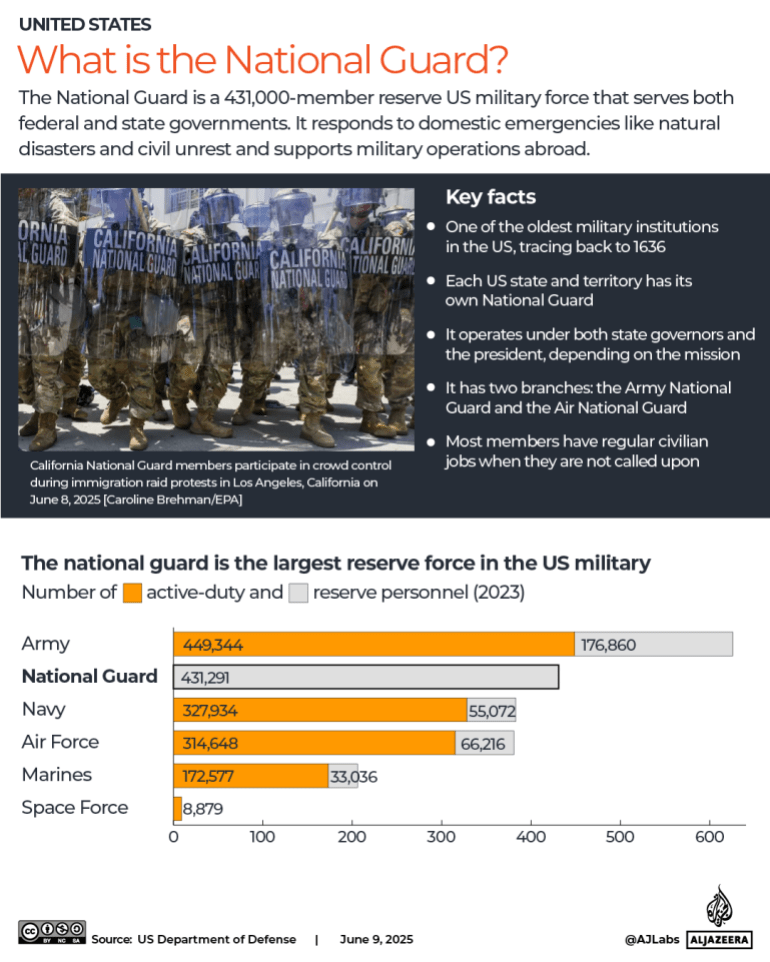
As United States President Donald Trump’s administration cracks down on immigrants and protesters in Los Angeles, it has deployed 2,000 members of the national guard to aid its efforts. Trump authorised the deployment after the protests began on Friday following Immigration and Customs Enforcement (ICE) arrests of 44 people in the city for violating immigration laws. California Governor Gavin Newsom, Los Angeles Mayor Karen Bass, former Vice President Kamala Harris and many other senior leaders of the Democratic Party have criticised Trump’s deployment. They’ve described the national guard’s use against protesters as a provocation aimed at further inflaming tensions already roiling the country’s second largest city. But what is the national guard, and why is its deployment such a political flashpoint? What is the national guard? The national guard is a branch of the US military that can perform state and federal functions. This means the guard is largely used to respond to state-level emergencies but can also be federalised. The president can also deploy national guard soldiers to overseas missions. Advertisement The guard’s origins trace back to 1636 when it started as citizen-soldier militias in Massachusetts, which is now a US state but was then a British colony. The national guard became an organised force after the passage of the Militia Act of 1903. The two world wars solidified its status as an organised branch of the US military. An air national guard was established in 1947 to complement a territorial force. How many soldiers are in the national guard? The national guard had 431,291 members as of 2023, the latest data released by the US Department of Defense. That included the army national guard, which consists of 326,317 soldiers, and the air national guard, which has 104,974 members. Many members of the guard serve part time while working civilian jobs or attending college. All members recruited into the guard have to undergo basic training. After this, they attend drills at regular intervals. Typically, drills take place one weekend each month. Every year, members attend a two-week training. (Al Jazeera) How is the national guard deployed? Typically, if a US state is experiencing an emergency that requires a national guard deployment as a response, the state’s governor may deploy its forces stationed in the state. However, presidents can also federalise the national guard from a state, but typically, this requires a governor’s approval to do so. When is the national guard deployed? The guard is deployed in cases of natural disasters or severe weather, civil unrest, war or when election assistance is needed. Advertisement In 2005, for instance, about 50,000 national guard soldiers were deployed after Hurricane Katrina hit multiple southern US states. In January, Newsom deployed the national guard as wildfires ravaged several areas of Los Angeles. In recent years, plainclothes national guard soldiers have staffed polling places during elections. During the current protests, however, Trump deployed the guard in Los Angeles without Newsom’s approval. Robert Cohen, professor of history and social studies at New York University, told Al Jazeera that Trump’s decision to deploy the national guard without getting Newsom on board was “wrong, but typical of the way Trump’s partisanship pollutes almost all of his major decisions”. When have presidents federalised the national guard in the past? In 1957, President Dwight D Eisenhower federalised the Arkansas national guard to desegregate public schools after the US Supreme Court’s Brown v Board of Education ruling, which established that racial segregation in public schools is illegal. In 1992, California Governor Pete Wilson and President George HW Bush, both Republicans, deployed the national guard to quell riots in Los Angeles. Protests, looting, assaults and arson broke out after four police officers who were filmed beating Rodney King, an African American man, for 15 minutes were acquitted of charges of excessive force. What is the debate around the national guard’s deployment? An act called the Posse Comitatus Act of 1878 generally prevents the national guard and other branches of the US military from being used in civilian law enforcement. Presidents may circumvent this by invoking the 1807 Insurrection Act, which gives the US president the power to deploy the military to suppress an insurrection. Advertisement In 1965, President Lyndon B Johnson invoked the act and deployed the guard to protect civil rights marchers in Alabama. He did this without taking Alabama Governor George Wallace, a known segregationist, on board. Before Saturday, this was the last time a US president had deployed the national guard without the approval of the state’s governor. On Saturday, instead of using the Insurrection Act, Trump invoked a similar federal law, called the Title 10 authority, to deploy the California national guard without Newsom’s approval. Adblock test (Why?)