

US evacuates personnel from Middle East in sign of growing regional tension
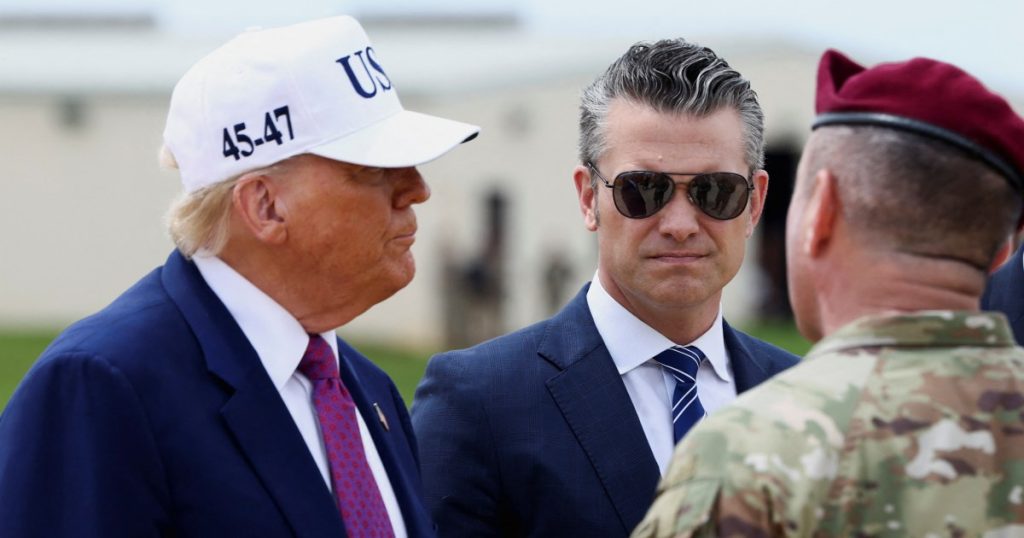
The United States is preparing a partial evacuation of its embassy in Iraq and has authorised “the voluntary departure” of dependants of US personnel from locations across the Middle East, including Bahrain, Kuwait and the United Arab Emirates, as regional security concerns rise. US Central Command (CENTCOM) said in a statement on Wednesday that Defense Secretary Pete Hegseth had authorised the departure of military dependants in the region and that CENTCOM was “monitoring the developing tension”. Orders for all nonessential personnel to depart the US Embassy in Baghdad – which was already on limited staffing – was based on a commitment “to keeping Americans safe, both at home and abroad”, the Department of State said. Speaking on Wednesday evening, US President Donald Trump said the order to move staff out had been given because the region “could be a dangerous place”. “We’ll see what happens. We’ve given notice to move out, and we’ll see what happens,” Trump said. Trump then added in reference to Iran: “They can’t have a nuclear weapon, very simple. We’re not going to allow that.” Advertisement Uncertainty has been growing in recent days as talks between the US and Iran over its nuclear programme appear to have hit an impasse. US news broadcaster CBS reported late on Wednesday that US officials have been informed that Israel is “fully ready” to launch an attack on Iran and that Washington “anticipates” that Tehran could retaliate by targeting “certain American sites in neighbouring Iraq”. Al Jazeera’s Alan Fisher, reporting from Washington, DC, said there have been clear signs in recent days of high-level discussions between senior military officials and the Trump administration amid concern around the ongoing talks with Iran over its nuclear programme. “Donald Trump has in the last couple of days … expressed his concern that a deal might not be able to be done,” Fisher said. “Therefore, we are seeing, effectively, the partial evacuation of the embassy in Baghdad with non-military personnel and non-essential staff being moved out. And the voluntary evacuation of other embassies in the region,” he said. “They’ve done this sort of thing before,” Fisher said, noting the Baghdad embassy was partially evacuated previously over “concerns that the embassy could become a target for Iranian-aligned militias in Iraq”. “Clearly, there is some concern that the discussions with the Iranians aren’t going well. Or, it could be that this is all designed to put pressure on Iranians. Because, you will remember, that Donald Trump said that if they couldn’t get some sort of deal, then … there could be some sort of military action against the Iranians.” Advertisement As reports of US embassy staff and dependants departing the Middle East region emerged, Iran’s mission to the United Nations posted on social media that “Iran is not seeking a nuclear weapon, and US militarism only fuels instability”. “Threats of ‘overwhelming force’ won’t change the facts,” the Iranian mission said. “Diplomacy – not militarism – is the only path forward,” it added. Threats of “overwhelming force” won’t change facts:Iran is not seeking a nuclear weapon, and U.S. militarism only fuels instability. CENTCOM’s legacy of fueling regional instability, through arming aggressors and enabling Israeli crimes, strips it of any credibility to speak on… — I.R.IRAN Mission to UN, NY (@Iran_UN) June 11, 2025 Separately, Iranian Defence Minister General Aziz Nasirzadeh told reporters earlier that he hoped talks with the US would be successful, though Tehran stood ready to respond to any aggression. “If conflict is imposed on us, the opponent’s casualties will certainly be more than ours, and in that case, America must leave the region, because all its bases are within our reach,” he said. “We have access to them, and we will target all of them in the host countries without hesitation.” The next round of talks – the sixth – between the US and Iran on limits to Tehran’s nuclear programme in exchange for lifting sanctions on the country have been tentatively scheduled for this weekend in Oman, according to reports, and Trump’s Middle East envoy, Steve Witkoff, is still scheduled to attend. Advertisement Adblock test (Why?)
Fashion brands accused of shortcuts on climate pledges overlooking workers
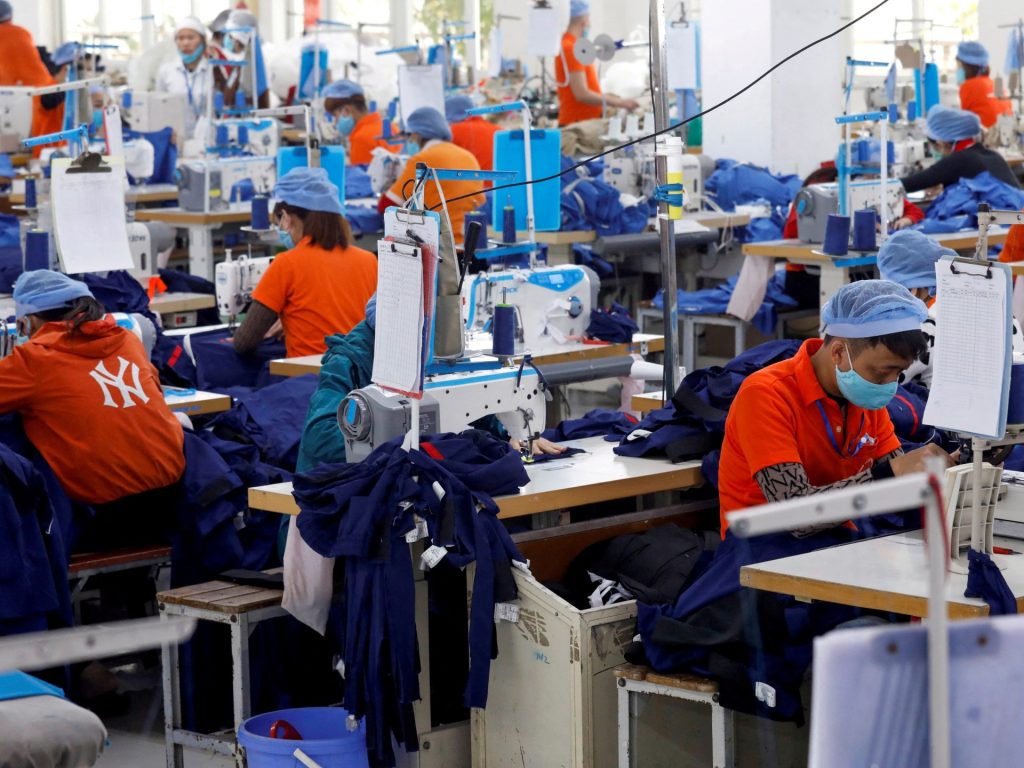
A new report accuses fashion giants of not considering the welfare of workers affected by climate change in garment factories in Southeast Asia. Fashion brands including luxury label Hermes, sportswear giant Nike, and fast fashion chain H&M are in the hot seat amid new allegations of climate greenwashing after making commitments to slash carbon emissions in Asia, which is home to more than 50 percent of global garment production. A report released this morning by the Business & Human Rights Resource Centre (BHRRC), titled, The Missing Thread, analysed 65 global fashion brands. It found that while 44 of them had made public commitments to reduce carbon emissions, none had adopted what is known as a “Just Transition” policy, a concept first introduced during COP27 in Egypt in 2022. A Just Transition ensures that workers are not left behind as industries shift towards a low-carbon economy. Only 11 companies in the study acknowledged the climate-related impact on workers in their social and human rights policies. Just four provided any guidance on managing heat-related stress. Only two companies among those deemed the most ambitious by the report mentioned the welfare of workers. These included Inditex, the Spanish retail giant that owns the fast fashion company Zara, and Kering, the parent company of Gucci. Advertisement “Decarbonisation done without workers as critical and creative partners is not a just transition, it’s a dangerous shortcut,” said Natalie Swan, labour rights programme manager at BHRRC, in a news release. Currently, the global textile industry relies on 98 million tonnes of non-renewable resources per year, such as oil and fertiliser. At current trends, the fashion industry is on track to be responsible for more than 25 percent of global greenhouse gas emissions by 2050. “The fashion industry’s climate targets mean little if the people who make its products are not taken into consideration,” Swan said. “It’s not enough to go green. It has to be clean and fair.” “Brands must stop hiding behind greenwashing slogans and start seriously engaging workers and their trade unions, whose rights, livelihoods and safety are under threat from both climate change and the industry’s response to it. A just transition is not just a responsibility, it’s a critical opportunity to build a fairer, more resilient fashion industry that works for people and the planet.” Al Jazeera reached out to Nike, Hermes, H&M, Inditex and Kering. None of them responded to a request for comment. Extreme weather The effects of climate change have already hit much of Southeast Asia hard. Garment workers in countries including Bangladesh, Cambodia, Indonesia, and Vietnam have experienced extreme weather events such as surging temperatures and severe flooding. In Bangladesh, workers reported fainting from heat-related illnesses. According to the report, factories allegedly failed to provide fans or drinking water. Similar challenges were noted in Cambodia, where temperatures regularly exceeded 39 degrees Celsius (102 degrees Fahrenheit) during a 2022 heatwave. Advertisement A third of workers said they had already lost work due to automation. In Bangladesh’s garment sector, 30 percent reported job losses stemming from technological changes. These shifts have disproportionately affected female workers, who are less likely to receive training on new technologies and are often excluded from on-the-job learning opportunities that could help them adapt to evolving industry demands. Adblock test (Why?)
Unarmed Palestinian brothers killed in Israeli raid on West Bank’s Nablus
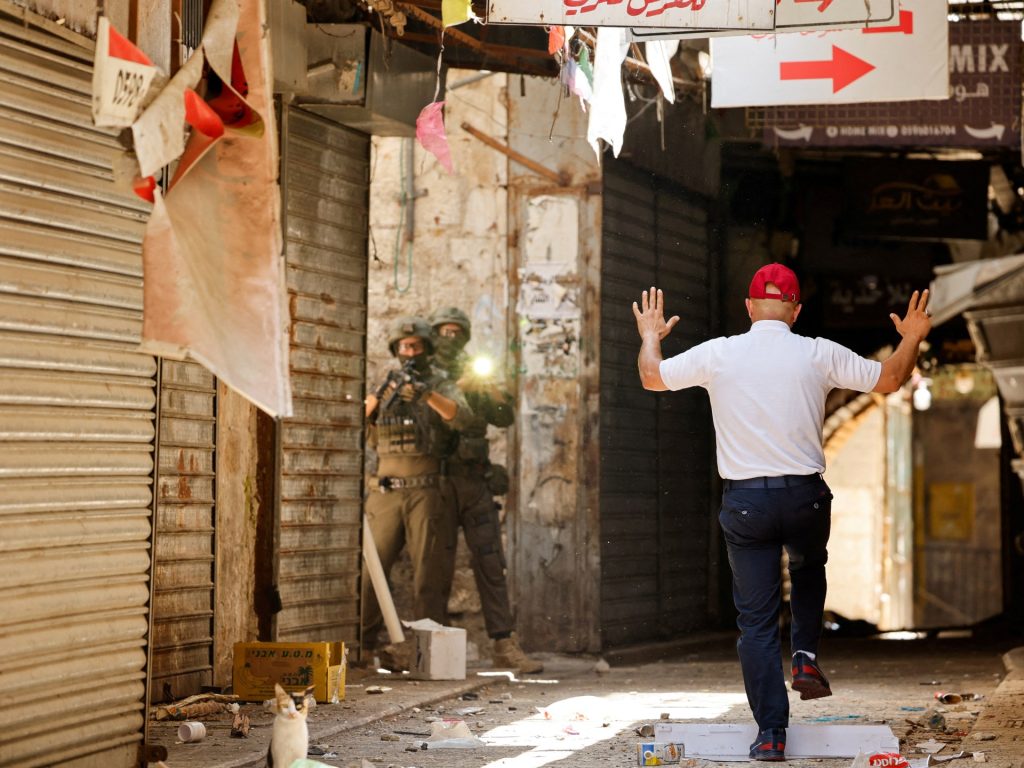
A Palestinian man in a red cap walks down the narrow alleyway in Nablus’s old city towards a group of Israeli soldiers, clearly unarmed. He attempts to talk to the soldiers, who had flooded into the occupied West Bank city in the early hours of Tuesday as part of Israel’s latest military raid – believed to be the largest carried out in Nablus in two years. The soldiers immediately kick and shove the man – 40-year-old Nidal Umairah – before his brother walks over, attempting to intervene. Gunfire follows, and soon the two brothers are lying dead. [embedded content] Nidal and his brother 35-year-old brother Khaled were the latest victims of Israel in the West Bank, after they were killed late on Tuesday. It is unclear which brother had initially been detained, but witnesses were adamant that the behaviour of the Israeli soldiers was an unnecessary escalation that led to the deaths of yet more Palestinians. Ghassan Hamdan, the director of the Palestinian Medical Relief Society in Nablus, was at the scene of the killings. Advertisement “There were at least 12 soldiers and they all fired their automatic machine guns at once,” said Hamdan. After the two men fell to the ground [medics] asked the soldiers if we could treat their wounds. They answered by firing at all of us.” “We all took cover behind the walls of the old city,” he told Al Jazeera. Hamza Abu Hajar, a paramedic at the scene, said that the Umairah brother who had initially approached the Israeli soldiers had been trying to go to his house to move his family out and away from the Israeli raid. “They lifted his shirt up to prove he was unarmed,” Abu Hajar said. “They then started shooting at him, and at us as well.” The Israeli army said it acted in self-defence after one of the Umairah brothers tried to seize a weapon from a soldier. It said that four soldiers had been injured in the incident. West Bank raids The raid in Nablus, which lasted more than 24 hours, is the latest Israel has conducted in the West Bank. Israel has taken advantage of the world’s focus on its own war on Gaza since October 2023 to escalate its land theft and violence in the West Bank. During that span, Israel has killed at least 930 people in the West Bank, 24 of whom were from Nablus, according to the United Nations Office for the Coordination of Humanitarian Affairs (OCHA). Many of these deaths are the result of violent Israeli raids ostensibly aimed at clamping down on Palestinian fighters in the West Bank, but which have resulted in mass destruction and thousands of Palestinians fleeing their homes. Advertisement According to Hamdan, Israeli troops mainly targeted Nablus’s old city by storming into hundreds of homes in the middle of the night. Dozens of people were also reportedly arrested. Young people in the city protested by burning tyres and throwing rocks at Israeli troops, yet they were met with heavy tear gas, injuring at least 80 Palestinians in the raid. In the past, Palestinian protesters have been imprisoned on “terrorism” charges or shot and killed for simply resisting Israel’s occupation by throwing rocks or defying Israeli soldiers. This time around, the Israelis classified the entire old city in Nablus as a closed military zone for 24 hours. No ambulances or medics were allowed inside to aid distressed residents, said Hamdan. “Nobody was allowed in or out. Nobody was allowed to make any movement at all. We [as medics] could not enter the area during the entire raid to try and help people in need,” he told Al Jazeera. Assault and vandalism During the raid, Israeli troops stormed into several apartments after blowing off door hinges with explosives. Umm Hassan, a 58-year-old resident who did not want to give her full name, recalls feeling terrified when several Israeli soldiers broke into her home. About five months ago, her husband passed away from cancer, an illness that also claimed two of her children years ago. Umm Hassan is also battling cancer, yet she said Israeli soldiers showed her no mercy. They flipped her television on the ground, broke windows and tossed her paintings off the walls and onto the living room floor. Advertisement They even vandalised her books by throwing them on the ground, including the Quran. “I told them to leave me alone. I was alone and so scared. There was nobody to protect me,” Umm Hassan told Al Jazeera. Another woman, Rola, said that Israeli soldiers stormed into her home two times in the span of six hours during the raid. When Israeli soldiers returned the second time, Rola said that they attacked her elderly father, hitting him on the head and chest with the butts of their guns. Rola described her three nieces and nephews – all small children – cowering with fear as Israeli soldiers vandalised and destroyed their home. “The second time they came to our home, they put us all in a room and we weren’t able to leave the room from 8am until 3:30pm,” said Rola. “We [Palestinians] always talk about being resilient. But the reality is when Israeli soldiers come into your private home, then you get very scared. It’s natural. We are humans and humans get scared,” she told Al Jazeera. Psychological warfare More than 80 Palestinians received treatment from the Palestine Red Crescent Society during the raid, 25 of them as a result of gunshot wounds. While Israel says its raid was “precise”, inhabitants of Nablus say that the attack on the city was the latest attempt to intimidate and frighten Palestinians. “Honestly, what were Israeli soldiers searching for in my home? What did they think they were going to find?” asked Rola. “The reason for their raids [violence] is to uphold the [illegal] occupation.” Advertisement Adblock test (Why?)
Pulse massacre survivors in Florida to revisit nightclub before it is razed
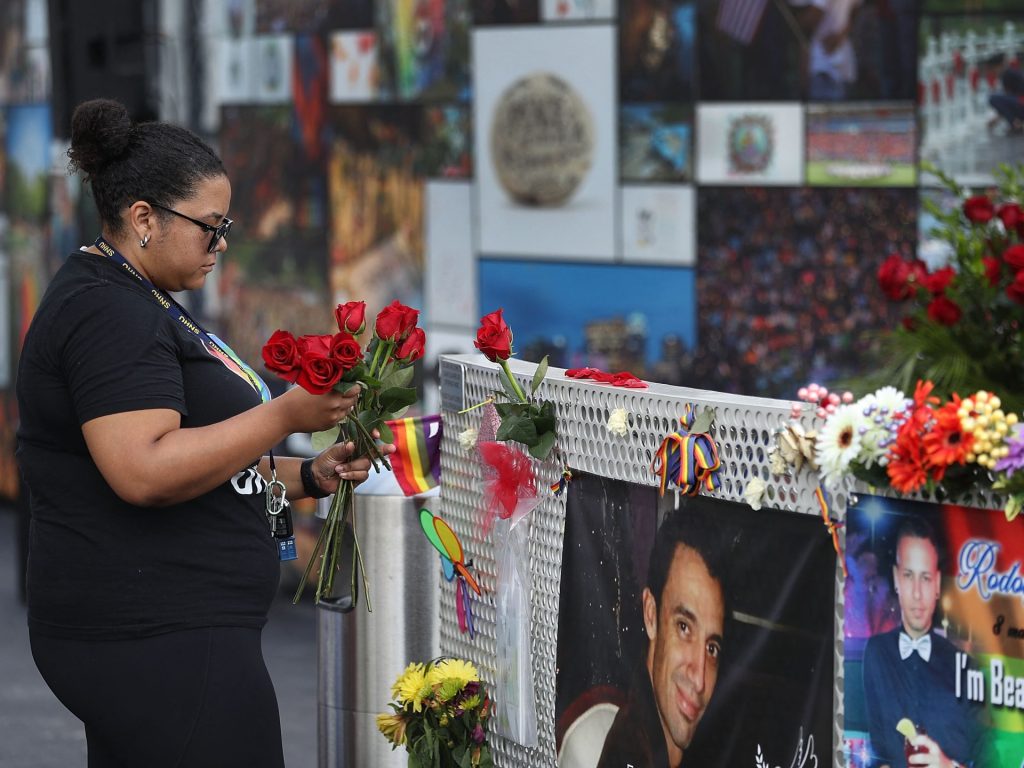
The nightclub is being replaced with a permanent memorial to one of the US’s worst mass shootings in modern history. Survivors and family members of the 49 victims killed at an LGBTQ+ friendly nightclub in the United States have gotten their first chance to walk through it before it is demolished and replaced with a permanent memorial to what at the time was considered the worst mass shooting in modern US history. In small groups over four days starting Wednesday, survivors and family members of those killed plan to spend half an hour at the Pulse nightclub in Orlando, Florida, where Omar Mateen opened fire during a Latin night celebration on June 12, 2016, leaving 49 dead and 53 wounded. Mateen, who had pledged allegiance to ISIL (ISIS), was killed after a three-hour standoff with police. The Pulse shooting‘s death toll was surpassed the following year when 58 people were killed and more than 850 injured among a crowd of 22,000 at a country music festival in Las Vegas. The city of Orlando purchased the Pulse property in 2023 for $2m and plans to build a $12m permanent memorial that will open in 2027. These efforts follow a fumbled attempt to create a memorial over many years by a private foundation run by the club’s former owner. Advertisement The existing structure will be razed later this year. “None of us thought that it would take nine years to get to this point, and we can’t go back and relitigate all of the failures along the way that have happened. But what we can do is control how we move forward together,” Orange County Mayor Jerry Demings said two weeks ago, when county commissioners pledged $5m to support the city of Orlando’s plan. The opportunity to visit the nightclub comes on the ninth anniversary of the mass shooting. About 250 survivors and family members of those killed have responded to the city’s invitation to walk through the nightclub this week. Families of the 49 people who were killed can visit the site with up to six people in their group, and survivors can bring one person with them. The club has been cleaned, and lighting has been installed ahead of the walk-throughs. The people invited to visit are being given the chance to ask FBI agents who investigated the massacre about what happened. Mental health counsellors will be available to talk to those who walk through the building in what could be both a healing and traumatic moment for them. “The building may come down, and we may finally get a permanent memorial, but that doesn’t change the fact that this community has been scarred for life,” said Brandon Wolf, who survived the massacre by hiding in a bathroom as the gunman opened fire. He does not plan to visit the site. “There are people inside the community who still need and will continue to need support and resources.” Advertisement Adblock test (Why?)
Was hope of aid for Gaza seized with the Freedom Flotilla?
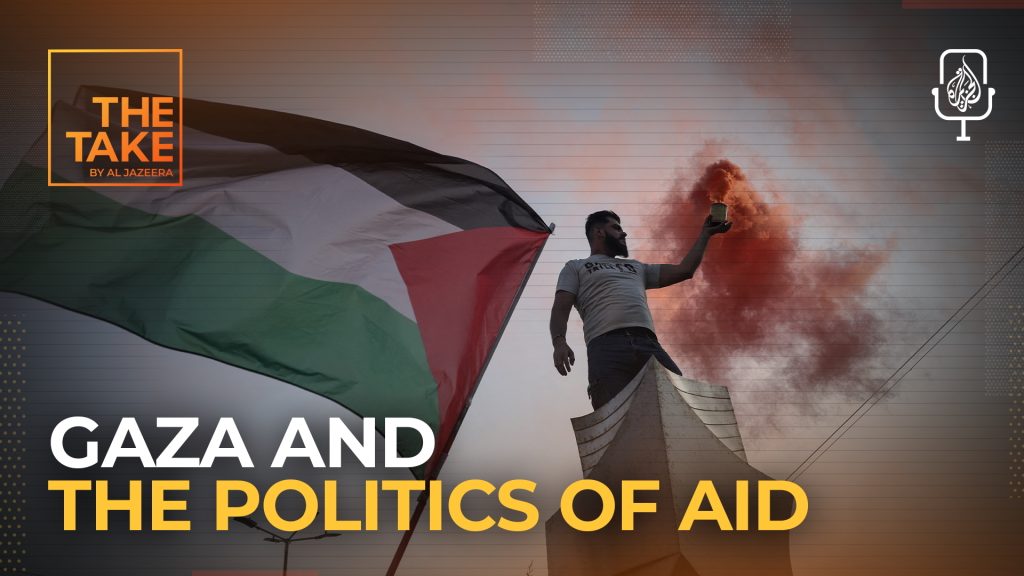
By blocking and seizing aid convoys, Israel uses humanitarian assistance as a weapon of war. The seizure of the Gaza Freedom Flotilla in international waters has not deterred other aid convoys from heading towards Gaza. Palestinian-American writer Ahmad Ibsais explains how humanitarian aid has become a politically charged weapon of war. Adblock test (Why?)
Beach Boys visionary leader Brian Wilson dies at age 82

Brian Wilson, the singer-songwriter who co-created the iconic Beach Boys rock band, has died, his family said in a statement. He was 82. “We are at a loss for words right now,” the statement said. “We realize that we are sharing our grief with the world.” The statement did not disclose a cause of death. Wilson had suffered from dementia and was unable to care for himself after his wife Melinda Wilson died in early 2024, prompting his family to put him under conservatorship. Wilson’s genius for melody, arrangements and wide-eyed self-expression inspired the songs Good Vibrations, California Girls, and other summertime anthems, making him one of the world’s most influential recording artists. The eldest and last surviving of three musical brothers – Brian played bass, Carl lead guitar and Dennis drums – he and his fellow Beach Boys rose in the 1960s from local California band to national hitmakers to international ambassadors of surf and sun. Wilson was one of rock’s great romantics, a tormented man who in his peak years embarked on an ever-steeper path to aural perfection, the one true sound. The Beach Boys (left to right): Al Jardine, Mike Love, Dennis Wilson, Brian Wilson and Carl Wilson [AP Photo] The Beach Boys rank among the most popular groups of the rock era, with more than 30 singles in the Top 40 and worldwide sales of more than 100 million. Advertisement The 1966 album Pet Sounds was voted number two in a 2003 Rolling Stone list of the best 500 albums, losing out, as Wilson had done before, to the Beatles’ album Sgt. Pepper’s Lonely Hearts Club Band. The Beach Boys, who also featured Wilson cousin Mike Love and childhood friend Al Jardine, were voted into the Rock and Roll Hall of Fame in 1988. Wilson feuded with Love over songwriting credits, but peers otherwise adored him beyond envy, from Elton John and Bruce Springsteen to Smokey Robinson and Carole King. The Who’s drummer, Keith Moon, fantasised about joining the Beach Boys. Paul McCartney cited Pet Sounds as a direct inspiration on the Beatles and the Wilson ballad God Only Knows as among his favorite songs, often bringing him to tears. Wilson moved and fascinated fans and musicians long after he stopped having hits. In his later years, he and a devoted entourage of younger musicians performed Pet Sounds and his restored opus, Smile, before worshipful crowds in concert halls. Meanwhile, The Go-Go’s, Lindsey Buckingham, Animal Collective and Janelle Monae were among a wide range of artists who emulated him, whether as a master of crafting pop music or as a pioneer of pulling it apart. Former Beatles member Paul McCartney hoists the arm of Beach Boys founder Brian Wilson after inducting him into the Songwriters Hall of Fame in New York City, the US, June 15, 2000 [Reuters] An endless summer The Beach Boys’ music was like an ongoing party, with Wilson as host and wallflower. He was a tall, shy man, partially deaf (allegedly because of beatings by his father, Murry Wilson), with a sweet, crooked grin, and he rarely touched a surfboard unless a photographer was around. Advertisement But out of the lifestyle that he observed and such musical influences as Chuck Berry and the Four Freshmen, he conjured a golden soundscape – sweet melodies, shining harmonies, vignettes of beaches, cars and girls – that resonated across time and climates. Decades after its first release, a Beach Boys song can still conjure instant summer – the wake-up guitar riff that opens Surfin’ USA; the melting vocals of Don’t Worry Baby; the chants of “fun, fun, fun” or “good, good, GOOD, good vibrations”; the behind-the-wheel chorus “’round, round, get around, I get around.” Beach Boys songs have endured from turntables and transistor radios to boom boxes and iPhones, or any device that could lay on a beach towel or be placed upright in the sand. The band’s innocent appeal survived the group’s increasingly troubled back story, including Brian’s many personal trials, the feuds and lawsuits among band members and the alcoholism of Dennis Wilson, who drowned in 1983. Brian Wilson’s ambition raised the Beach Boys beyond the pleasures of their early hits and into a world transcendent, eccentric and destructive. They seemed to live out every fantasy, and many nightmares, of the California myth they helped create. Brian Wilson was born June 20, 1942, two days after McCartney. His musical gifts were soon obvious, and as a boy, he was playing piano and teaching his brothers to sing harmony. The Beach Boys started as a neighbourhood act, rehearsing in Brian’s bedroom and in the garage of their house in suburban Hawthorne, California. Advertisement Surf music, mostly instrumental in its early years, was catching on locally: Dennis Wilson, the group’s only real surfer, suggested they cash in. Brian and Love hastily wrote up their first single, Surfin’, a minor hit released in 1961. Their breakthrough came in early 1963 with Surfin’ USA, so closely modelled on Berry’s Sweet Little Sixteen that Berry successfully sued to get a songwriting credit. It was the Beach Boys’ first Top 10 hit and a boast to the nation: “If everybody had an ocean / across the USA / then everybody’d be surfin,’ / like Cali-for-nye-ay.” From 1963-66, they were rarely off the charts, hitting number one with the songs I Get Around and Help Me, Rhonda and narrowly missing with California Girls and Fun, Fun, Fun. For television appearances, they wore candy-striped shirts and grinned as they mimed their latest hit, with a hot rod or surfboard nearby. Wilson won just two competitive Grammys, for the solo instrumental “Mrs. O’Leary’s Cow” and for “The Smile Sessions” box set. Otherwise, his honors ranged from a Grammy lifetime achievement prize to a tribute at the Kennedy Center to induction into the Songwriters Hall of Fame. In 2018, he returned to his old high school in Hawthorne and witnessed the literal rewriting of his past: The principal erased an “F” he had
Shot Colombian presidential candidate shows small signs of improvement

NewsFeed Doctors for Colombian senator and presidential candidate Miguel Uribe say his brain shows increased activity and his blood pressure and heart rate are stabilising, though his life is still in danger from a bullet wound to the head. Published On 11 Jun 202511 Jun 2025 Adblock test (Why?)
Sudan’s paramilitary RSF say they seized key zone bordering Egypt, Libya
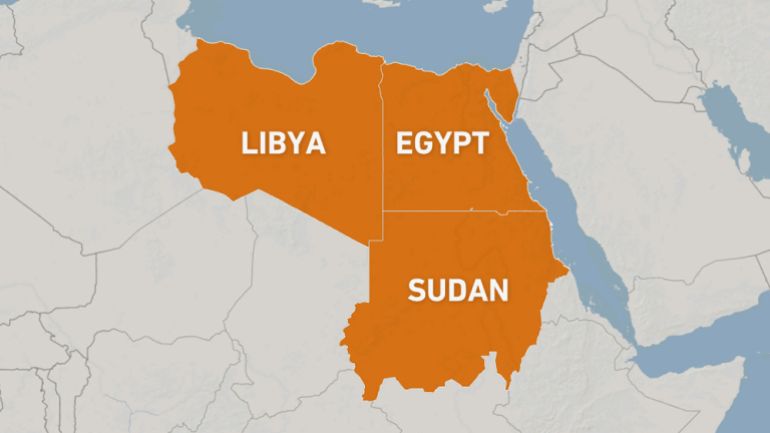
The Sudanese Armed Forces say they have withdrawn from the area as part of its ‘defensive arrangements’. Sudan’s paramilitary Rapid Support Forces (RSF) have said their fighters have seized a strategic zone on the border with Egypt and Libya, as the regular government-aligned army, the Sudanese Armed Forces (SAF), announced its withdrawal from the area. The announcements on Wednesday came a day after SAF accused forces loyal to eastern Libyan commander Khalifa Haftar of launching a cross-border attack alongside the RSF, the first allegation of direct Libyan involvement in the Sudanese war. “As part of its defensive arrangements to repel aggression, our forces today evacuated the triangle area overlooking the borders between Sudan, Egypt and Libya,” army spokesperson Nabil Abdallah said in a statement. بسم الله الرحمن الرحيم القيادة العامة للقوات المسلحة تعميم صحفي الأربعاء ١١ يونيو ٢٠٢٥م في إطار ترتيباتها الدفاعية لصد العدوان، أخلت قواتنا اليوم منطقة المثلث المطلة علي الحدود بين السودان ومصر وليبيا. (نصر من الله وفتح قريب) مكتب الناطق الرسمي باسم القوات المسلحة General… pic.twitter.com/3o5Z1xDfb0 — القوات المسلحة السودانية (@SudaneseAF) June 11, 2025 Advertisement Since April 2023, the brutal civil war has pitted SAF chief Abdel Fattah al-Burhan against his erstwhile ally Mohamed Hamdan Daglo, who leads the RSF, in a bitter power struggle. In a statement on Wednesday, the RSF said its fighters had “liberated the strategic triangle area”, adding that army forces had retreated southward “after suffering heavy losses”. SAF said on Tuesday that Haftar’s troops, in coordination with the RSF, attacked its border positions in a move it called “a blatant aggression against Sudan”. Sudan’s Ministry of Foreign Affairs also accused the United Arab Emirates of backing the assault, describing it as a “dangerous escalation” and a “flagrant violation of international law”. It also described the latest clash as part of a broader foreign-backed conspiracy. Haftar, who controls eastern Libya, has long maintained close ties with both the United Arab Emirates and Egypt. While Cairo has supported Sudan’s leadership under Burhan since the war began in April 2023, Khartoum has repeatedly accused the UAE of supplying the RSF with weapons, which the Emirati government has denied. Tensions between Khartoum and Abu Dhabi escalated in May after drone strikes hit the wartime capital of Port Sudan for the first time since the outbreak of the war. After the attacks, Sudan severed its diplomatic ties with the UAE and declared it an “aggressor state”. Since the war began more than two years ago, multiple countries have been drawn in. It has effectively split Sudan in two, with SAF holding the centre, east and north, including the capital Khartoum, while the paramilitaries and their allies control nearly all of Darfur and parts of the south. Advertisement The fighting has killed tens of thousands and displaced 13 million, including four million who fled abroad, triggering what the United Nations has called the world’s worst humanitarian crisis. Efforts by international mediators to halt the fighting have so far failed, with violence continuing to escalate across the western Darfur region and the Kordofan region in the country’s south. Adblock test (Why?)
Military jet crashes in Myanmar, homes set ablaze
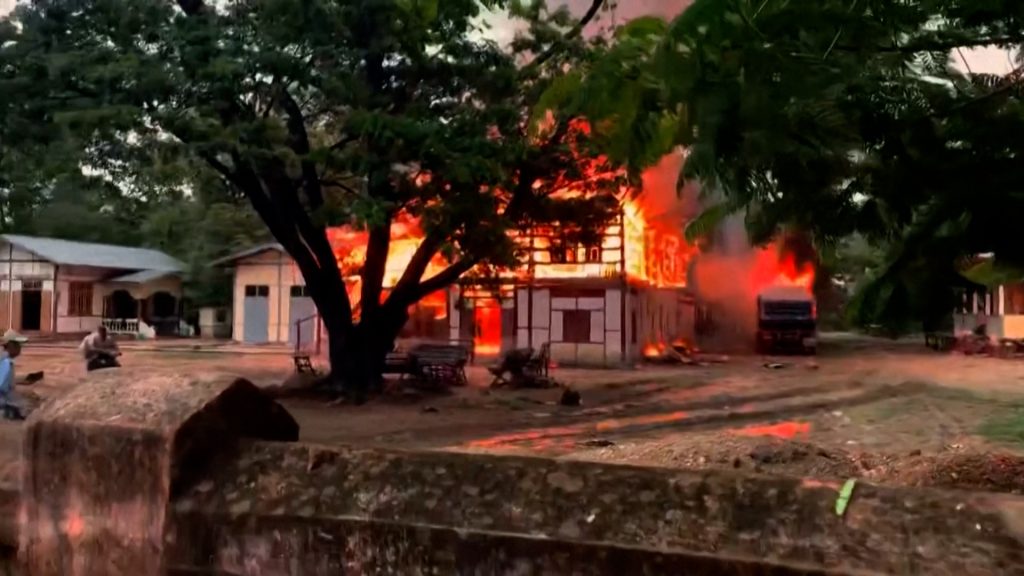
NewsFeed A Myanmar military jet crashed on Tuesday in Sagaing Region, an area that has seen intense fighting during Myanmar’s civil war. The military blamed engine failure, while a rebel group claimed it shot down the plane. Published On 11 Jun 202511 Jun 2025 Adblock test (Why?)
Why is violence by Boko Haram and ISIL rising again in Nigeria?
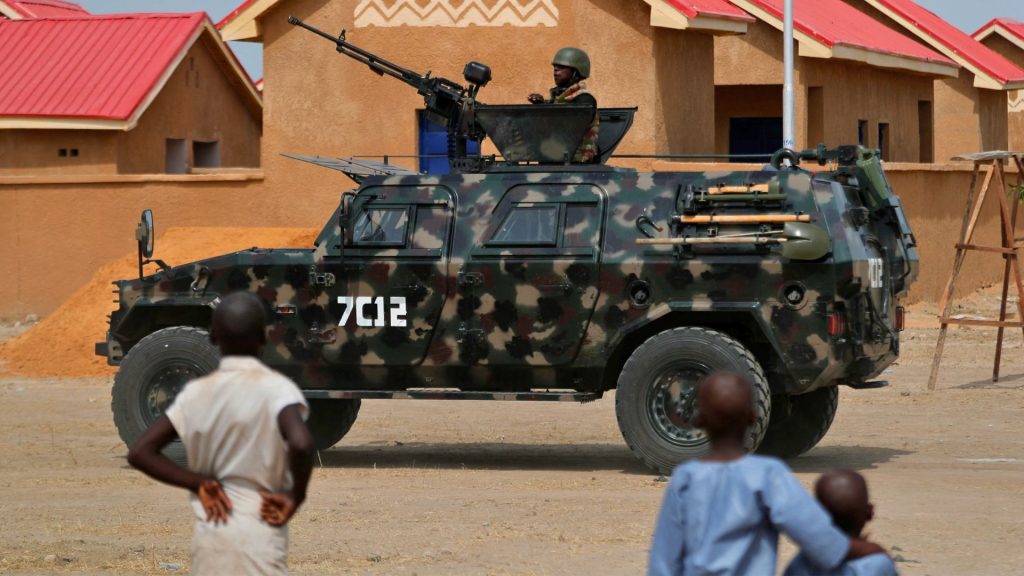
Defence chief suggests fencing off borders around the country. Renewed violence by armed groups Boko Haram and ISIL (ISIS) has forced thousands of people to leave their homes in Nigeria. Despite repeated government pledges, the military has been unable to end the unrest. So why is it continuing – and what threats does it pose? Presenter: Elizabeth Puranam Guests: Kabir Adamu – Managing director at Beacon Security and Intelligence in Abuja David Otto – Deputy director of counterterrorism training at the International Academy for the Fight Against Terrorism in Abidjan, Ivory Coast Ovigwe Eguegu – Peace and security policy analyst at Development Reimagined in Abuja Adblock test (Why?)