

‘I didn’t go’: The last Muslim man in Indian town hit by religious strife
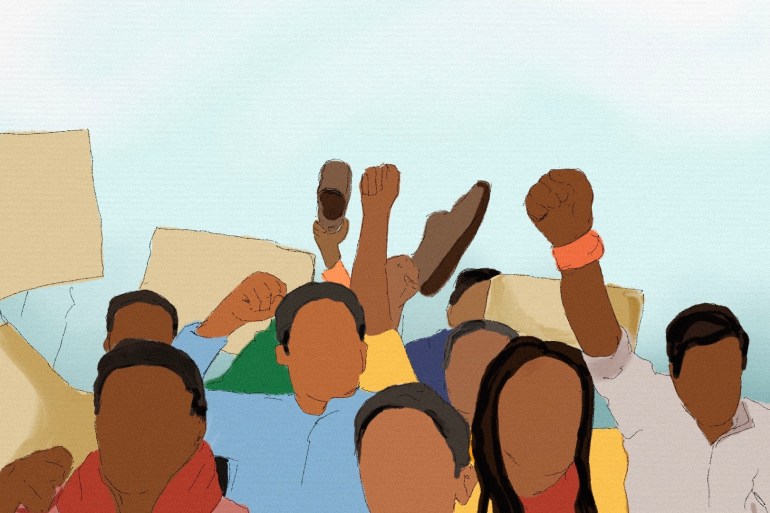
Nanda Nagar, Uttarakhand, India — Every morning at 8am, Ahamad Hasan pulls up the brown shutter of his dry-cleaning shop on the banks of the Nandakini river, which runs through the remote Himalayan town of Nanda Nagar in the northern Indian state of Uttarakhand. He neatly hangs dry-cleaned clothes in plastic covers on the pink walls of his shop. Then the 49-year-old waits for customers. Until September 2024, by lunchtime, he would have had between 20 and 25 customers come by, leaving their sherwanis, suits, coats, pants and winter wear. Some would sip a cup of tea with him while discussing politics and jokes, sharing their smiles and sorrows. Most of the customers were Hindu, a few, Muslim. But on this day, fewer than five Hindu customers visit his shop by noon. And he knows there’s no point waiting for a Muslim customer. Hasan is the last Muslim man in town. For generations, 15 Muslim families called Nanda Nagar home. It’s where Hasan was born and raised, where his family received invitations for Hindu festivals and hosted neighbours on Eid. He has collected wood for Hindu funeral pyres and shouldered the bodies of his Hindu friends. Advertisement That all changed last September in an explosion of anti-Muslim violence triggered by a Hindu girl’s allegation of sexual harassment, but rooted in a broader shift in sentiment against the minority community that Hasan had noticed since COVID-19. Hate-filled slogans and marches culminated in physical assaults against Muslims, as their shops were destroyed. Fearing for their lives, the town’s small Muslim community fled in the cover of night. Only Hasan returned, with his wife, two daughters and two sons, adamant that they could make it work in the only place he knew as home. But the family lives in fear. Their Hindu neighbours don’t speak to them. He no longer goes for walks along the river like he used to every evening. He does not let his kids and wife meet anyone. And he worries about more violence breaking out. “I just go to my shop and come back home. This is our life now,” Hasan says. “After spending my whole life in this town, I feel like I am a ghost. I am completely invisible. Nobody is even talking to me.” Hasan and other Muslims in Nanda Nagar were attacked after a protest march against an alleged act of sexual harassment by a Muslim barber [Jawaher Al-Naimi/Al Jazeera] ‘Beat Muslims with shoes’ Nanda Nagar is a 10-hour drive from India’s capital New Delhi. Located near the India-China border, the town is nestled at the confluence of the Nandakini’s tributaries, and has a population of about 2,000 people. The river Nandakini is one of the six tributaries of the Ganges river, and is considered holy by Hindus. Advertisement After Hasan’s grandfather migrated from Najibabad, a town in Bijnor district of neighbouring Uttar Pradesh state in 1975, their family settled in town. Hasan was born a year later. Life was largely peaceful, he recalls, until 2021. During the coronavirus pandemic, Muslims across India were vilified because of conspiracy theories spread by the Hindu far-right groups that accused the community of deliberately spreading the virus through their religious practices and by holding large gatherings. The far-right called it “Corona jihad”. Suddenly, Hasan felt his Hindu friends grow distant. “Before COVID-19, there used to be so many people in our home on Eid, and on Diwali we used to get so many invites from our friends. But after COVID, this stopped,” he says. But the events of September 1, 2024, were a tipping point. A week earlier, on August 22, a young Hindu pupil accused a Muslim barber, Mohammad Arif, of sexual harassment while he was opening his salon. The barber soon fled the town. On September 1, the town’s shopkeepers’ association decided to rally to condemn the alleged harassment of the pupil and demand police action. Hasan, along with other Muslims in the town, participated in the protest. “We went because otherwise the Hindus would allege that we support crimes committed by Muslims,” he recalls. However, the crowd soon started chanting anti-Muslim slogans, threatening violence. “As we were walking along with protesters, anti-Muslim slogans were raised such as ‘Mullon ke dalaalon ko … Joote maaro saalon ko’ [the pimps of Muslims should be beaten by shoes],” he says. As the rally reached the police station in Nanda Nagar, a group of protesters grabbed a 30-year-old Muslim man, Harun Ansari, and started beating him. Hasan said many Hindus justified Ansari’s beating by alleging that Muslims in town had helped the accused barber, Arif, to flee. Advertisement In a phone interview from Najibabad, where he moved after the assault, Ansari says that he received multiple injuries in his head. “I just remember being dragged by the crowd. After that nothing was visible to me,” he recalls. After Ansari was beaten, all the other Muslims, including Hasan, fled from the rally and locked themselves in their houses. A mob of hundreds of people came and started pelting their houses with stones. Hasan says the Muslim families kept calling the police for help. “But no one came.” He also called his Hindu friends. “They were not even picking up my call,” he says. The Muslim families stayed indoors until late evening when the mob went away. That night, as the clock crossed midnight, Hasan quietly made his way back to his shop, which is in front of his house. He saw that the shutter of his shop was broken and twisted. Dry-cleaned clothes were strewn across the street like confetti. The counter, a sturdy wooden table where he kept savings worth 400,000 rupees [$4,600] in a locked drawer, was shattered – the money stolen. He had saved that money for his children’s marriages. Fragments of the name board of his shop, The Hasan Drycleaners, were thrown like debris on the banks of the Nandakini. “I will never forget that day,” Hasan tells Al Jazeera, while showing photos of
Russia-Ukraine war: List of key events, day 1,143
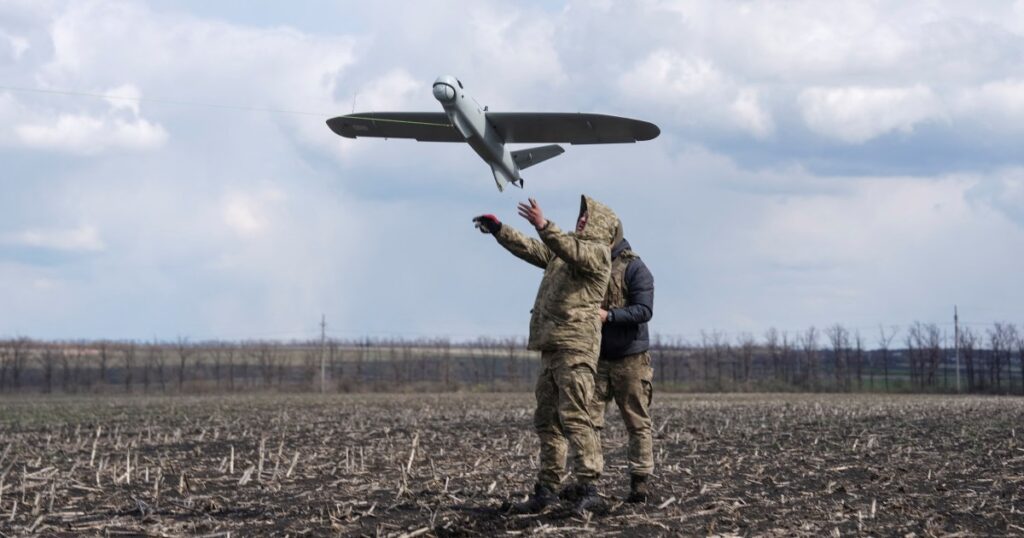
These are the key events on day 1,143 of Russia’s war on Ukraine. Here is where things stand on Saturday, April 12: Fighting Russia’s defence ministry said air defence units destroyed 13 Ukrainian drones within a span of 30 minutes late on Friday. The ministry said that between 10-10:30pm local time (19:00-19:30 GMT), nine drones were destroyed over Russia’s Rostov region on Ukraine’s eastern border, and four in the Kursk region on Ukraine’s northern border. Ukrainian President Volodymyr Zelenskyy visited the site of a deadly Russian attack on his hometown of Kryvyi Rih, one week after a Russian missile strike killed 19 people, including nine children and teenagers. Ukrainian officials have in recent days sent Washington a list of targets it believes Russia has struck in violation of the energy infrastructure ceasefire that Kyiv and Moscow agreed to last month as part of efforts by the United States to reach a ceasefire. Military analysts believe Russia is preparing to launch a new military offensive in the coming weeks to ramp up pressure and strengthen the Kremlin’s hand in ceasefire negotiations. Advertisement President Zelenskyy said that hundreds of Chinese nationals were fighting at the Ukraine front line alongside Russian forces, and accused Moscow of dragging Beijing into its invasion of his country. “As of now, we have information that at least several hundred Chinese nationals are fighting as part of Russia’s occupation forces,” Zelenskyy said. More than 100 Chinese citizens fighting for the Russian military against Ukraine are mercenaries who do not appear to have a direct link to China’s government, two US officials familiar with American intelligence and a former Western intelligence official told the Reuters news agency. Chinese military officers have, however, been in the theatre of war behind Russia’s lines with Beijing’s approval to draw tactical lessons from the war, officials told Reuters. Zelenskyy said that Ukraine was ready to purchase additional air defence systems, adding that he discussed it with US President Donald Trump. Ceasefire Talks between US special envoy Steve Witkoff and Russian President Vladimir Putin on Friday in Russia lasted more than four hours, with no concrete results disclosed. According to Russia’s Interfax news agency, Kremlin spokesman Dmitry Peskov did not rule out the possibility of another phone call between Putin and Trump following the discussions. Trump said in a post earlier on Truth Social: “Russia has to get moving. Too many people [are] DYING, thousands a week, in a terrible and senseless war – A war that should have never happened, and wouldn’t have happened, if I were President!!!” Russia has rejected a US-backed proposal for a 30-day unconditional ceasefire and appears to be dragging its feet on a more limited truce in the Black Sea agreed last month, analysts said. Advertisement German Defence Minister Boris Pistorius said on Friday, after presiding over a meeting of the Ukraine Defence Contact Group in Brussels alongside British Defence Secretary John Healey, that “ongoing aggression” from Russia meant “we must concede peace in Ukraine appears to be out of reach in the immediate future”. If a ceasefire is not achieved by the end of this month, Trump could impose additional sanctions on Russia, the US news site Axios reported, citing an anonymous source. Ukraine could be partitioned like Berlin after World War II, President Trump’s envoy to Kyiv, General Keith Kellogg, appeared to suggest as Russia continues to hold out on accepting a truce. In an interview with The Times newspaper, Kellogg said the country could be split into zones of control, with British and French troops as part of a “reassurance force” in the west and Moscow’s forces in the east. Between them would be Ukrainian forces and a demilitarised zone. Military Aid European countries have promised to send billions of dollars in further funding to help Ukraine keep fighting Russia’s invasion. Ukraine’s allies pledged a record 21 billion euros ($23.9bn) of military aid for the country, with the United Kingdom Defence Secretary Healey warning that 2025 was “the critical year” for the war. Estonian Defence Minister Hanno Pevkur said that his country is monitoring the world armaments market and sees opportunities for Ukraine’s backers to buy more weapons and ammunition. US Defense Secretary Pete Hegseth was absent from the Ukraine donor’s forum that the US established and led for several years, although he spoke to the meeting via video. Advertisement Sanctions A former Russian government minister who violated UK sanctions by receiving financial support from family members was sentenced to more than three years in prison in England. Dmitrii Ovsiannikov, who was appointed governor of Sevastopol in Russian-annexed Crimea by Putin, became the first person convicted of violating the sanctions put in place after the illegal annexation of Crimea from Ukraine in 2014. Estonia’s navy said it detained an oil tanker believed to belong to Russia’s “shadow fleet” in the Gulf of Finland in order to check its papers. Regional security A reduction in the number of US soldiers in Eastern Europe would be seen as Washington moving another step closer to Moscow and a worrying sign for Europeans, according to analysts. The NBC news channel, quoting US and European sources, said this week that the US Department of Defense was looking at the withdrawal of 10,000 troops from Europe. President Putin announced billions in investments for the rearmament of his country’s navy. “In the next decade, 8.4 trillion roubles [around $97bn] are earmarked for the construction of new boats and ships for the navy,” Putin said at a meeting on navy development in Saint Petersburg, according to Russian news agencies. Putin said the navy would develop drone and robot technology, and he claimed that 49 warships of various classes have been built in Russian shipyards in the past five years, including nuclear submarines that can be equipped with new Zircon hypersonic missiles. Russian Foreign Minister Sergey Lavrov sharply criticised European Union politicians against the backdrop of a rapprochement between the Kremlin and the new US administration. Politicians such as acting German Foreign Minister
Gabon’s first election after collapse of Bongo dynasty: What’s at stake?
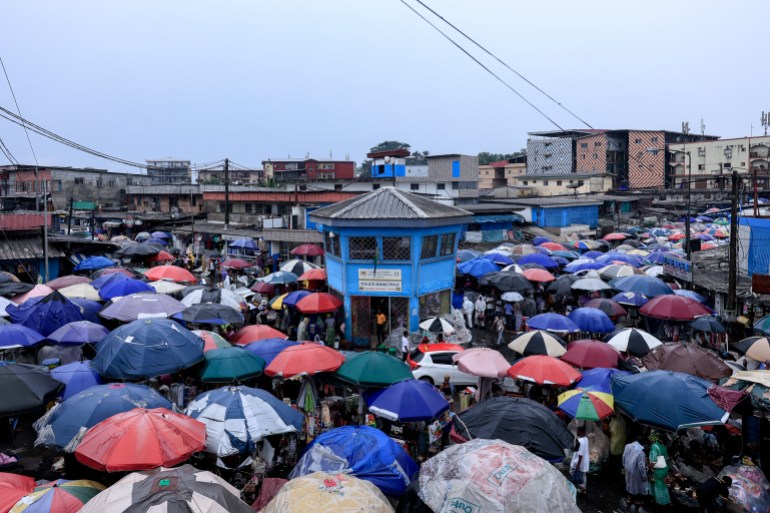
The small African nation of Gabon is voting on Saturday in its first executive elections since a military coup in 2023 ended the 50-year dynastic rule of the Bongo political family. Brice Clotaite Oligui Nguema, coup leader-turned-transition president, is the main candidate among four competitors and is widely expected to win the elections, despite controversial reforms he has put into place that experts say were tailored to make him eligible for the vote. Located in West-central Africa, on the Atlantic coast, Gabon is rich in extractives like crude oil. The country, with a population of 2.2 million, is also part of the vital Congo Basin and boasts millions of acres of rainforest replete with varieties of plant and animal species. However, those natural resources have not translated into any meaningful distribution of wealth, as one family and a small political elite have ruled the country for the past five decades. The opposition is weak, experts say; the press is largely toothless; and Gabonese are distrustful of politicians. Advertisement Located right on the equator, Gabon’s lingua franca is French, and local languages include Fang, Mbere and several others. Libreville, the breezy coastal capital, is the largest city, followed by the port town of Port-Gentil. Here’s what to know about the vote: General view of the Mont-Bouet market in Libreville on April 8, 2025. Gabon is voting Saturday to elect its future president 19 months after the August 2023 coup that overthrew the Bongo dynasty and brought General Brice Oligui Nguema, the clear favourite, to power [Daniel Beloumou Olomo/AFP] When is the vote — and how did Gabon get here? The presidential vote will be held in the country’s nine provinces on Saturday, April 12, from 7:30am to 6pm local time (06:30-17:00 GMT). Campaigns began on March 29 and will end on April 11. Voting is mandatory for adults. The election is being held several months before an August 2025 deadline the military initially announced after the August 30, 2023, coup that ended the rule of former President Ali Bongo Ondimba (2009 – 2023). The coup, part of a wave of military takeovers on the continent, occurred on the same day the results of presidential elections were released. Ondimba was declared the winner with 60 percent of the vote for a third term. The opposition, led by Albert Ondo Ossa of the Alternate Party, disputed the elections. Ondimba took over after the death of President Omar Bongo, his father (1967-2009). Between them, the father-son duo ruled Gabon for 56 years. Legislative elections have not been announced. Currently, the bicameral houses are staffed with representatives appointed by the military government. Advertisement Who is running? Four candidates, all male, have been approved by the electoral college. All are running independently. That’s because the candidates want to distance themselves from the former governing Gabonese Democratic Party (PDG), Douglas Yates, a professor at the American Graduate School in Paris, told Al Jazeera. The PDG has been in power since 1967 with little opposition and represents the only truly established party. Gabon Transitional President Brice Clotaire Oligui Nguema gestures at the Stade de l’Amitie in Libreville on March 29, 2025, during the opening rally of his electoral campaign [Nao Mukadi/AFP] Brice Clotaire Oligui Nguema (50): As head of the Royal Guard, Nguema led the coup that overthrew former President Ali Bongo, who is also his cousin, on August 30, 2023. The military general previously served as aide-de-camp to Omar Bongo before he was posted overseas to the embassies in Morocco and Senegal. He thereafter returned to lead the elite Royal Guard that protects the president, a post he kept until seizing power. Following the coup, Nguema promised to hand over to a civilian government within two years. He has been praised for moving rapidly towards that transition as opposed to military government counterparts in the West African countries of Mali, Niger, Burkina Faso and Guinea. He’s also managed to maintain ties with Gabon’s former colonial leader, France, while the others have actively cut ties with France. A new constitution affirming strict two-term limits was passed following a November referendum. Advertisement Nguema is promising to “lift” and transform Gabon economically. He has cleaned up his military image since the coup, sporting suave suits and T-shirts in his packed, colourful campaign rallies. In one, he was seen moonwalking on stage to loud applause from his supporters. Alain Claude Bilie-By-Nze (57): In a country where the opposition has historically been weak due to decades of elections widely viewed as rigged, Bilie-By-Nze poses the biggest challenge to Nguema. The career politician, unlike many of his more elite counterparts, comes from a low-income background. In 2015, he entered politics and went on to serve in several ministerial positions under Ali Bongo. He was prime minister until the 2023 coup. Backed by his Together for Gabon political group, Bilie-By-Nze has chosen a low-key door-to-door campaign in the lead-up to the election. He has tried to underplay his role in the previous government – even criticising the former ruling PDG party, which he was a part of until 2023. His promises of “another Gabon” include a focus on urban renewal, better health insurance and overall economic growth. However, experts say it is tough for many voters to trust him. “Despite his efforts to distance himself from his past, everybody knows that he was the last prime minister of Ali Bongo, and therefore is tarnished,” Yates said. A voter casts his ballot at a polling station during Gabon’s referendum in Libreville, on November 16, 2024 [Nao Mukadi/AFP] Stephane Germain Iloko Boussengui: The medical doctor, popularly known as Iloko, was once a spokesperson for the former ruling PDG party before its downfall in the coup. He formed the Together for Gabon group with By-Nze, but the two men clashed, leading to Iloko’s exit in March. Advertisement His rallies are colourful: In one campaign event in Libreville, Iloko wore traditional wrappers and danced with his supporters, who sported T-shirts with his photos on them. Despite his
‘Extremely troubling’: Judge questions why US cannot locate deported man
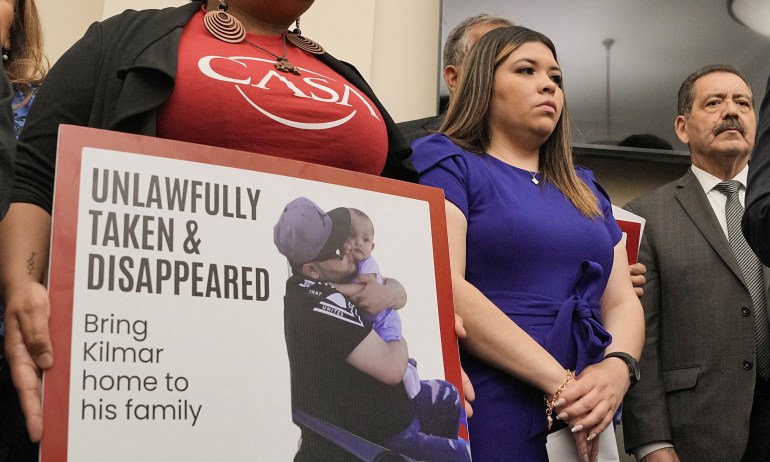
A United States federal judge has called it “extremely troubling” that the administration of President Donald Trump failed to comply with her court order to provide details on the status of a Maryland resident illegally deported to El Salvador. At a tense hearing on Friday, US District Judge Paula Xinis demanded that the administration identify the whereabouts of Kilmar Abrego Garcia, who was sent to El Salvador on March 15. She also required daily updates on the administration’s efforts to secure his return. Abrego Garcia, a Salvadoran migrant, had lived in Maryland under a court order protecting him from deportation since 2019. He had been in the US since 2011, after he said he fled gangs who were pursuing him for recruitment in his home country. His wife and child are American citizens. But on March 12, he was stopped and detained by US Immigration and Customs Enforcement officers who questioned him about alleged gang affiliations. He was deported on March 15 on one of three high-profile deportation flights to El Salvador that also included alleged Venezuelan gang members — in violation of the 2019 court order. Advertisement Abrego Garcia’s family sued to challenge the legality of his deportation, and on April 4, Xinis ordered the administration to “facilitate and effectuate” his return. The Trump administration challenged that order at the Supreme Court, which upheld Xinis’s order but said the term “effectuate” was unclear and may exceed the court’s authority. The Supreme Court also ordered the Trump administration to take measures to facilitate Abrego Garcia’s release from custody in El Salvador and detail the steps it has taken — and will take — to return him to the US. Xinis repeatedly pressed a government lawyer on Friday for answers about what it had done to get Abrego Garcia back. “Where is he and under whose authority?” Xinis asked. “I’m not asking for state secrets,” she added. “All I know is that he’s not here. The government was prohibited from sending him to El Salvador, and now I’m asking a very simple question: Where is he?” “I’m not sure what to take from the fact that the Supreme Court has spoken quite clearly, and yet I can’t get an answer today about what you’ve done, if anything, in the past.” ‘A man’s life and safety is at risk’ Drew Ensign, a lawyer with the US Department of Justice, said the government would comply with the Supreme Court’s ruling. He repeated what the administration had said in court filings: that it would provide the required information by the end of Tuesday next week, once it had evaluated the Supreme Court ruling. “We simply believe that the court’s deadlines are impracticable, but that is not to say that the government is not intending to comply with the Supreme Court’s order,” Ensign said. Advertisement Xinis ordered Ensign to provide her with daily updates, even if only to say that the government intends to comply with the Supreme Court’s order, but the administration believes her deadlines were unrealistic. The Supreme Court’s ruling also said the lower court should clarify its order “with due regard for deference” to the executive branch of government. The administration said in a court filing earlier on Friday that it was “unreasonable and impracticable” to say what its next steps are before they are properly agreed upon and vetted. “Foreign affairs cannot operate on judicial timelines, in part because it involves sensitive country-specific considerations wholly inappropriate for judicial review,” the government’s filing said. But Abrego Garcia’s lawyers questioned the Trump administration’s motives for the delay. In their own filing on Friday, they alleged that “the government continues to delay, obfuscate, and flout court orders, while a man’s life and safety is at risk.” [Jennifer Vasquez Sura, wife of Kilmar Abrego Garcia, looks on during a news conference with other family members, supporters and members of the Congressional Hispanic Caucus, in Washington [Ken Cedeno/Reuters] Abrego Garcia’s wife, Jennifer Vasquez Sura, said the ordeal has been an “emotional rollercoaster” for their family and the entire community. “I am anxiously waiting for Kilmar to be here in my arms and in our home, putting our children to bed, knowing this nightmare is almost at its end. I will continue fighting until my husband is home,” she said. Advertisement The case highlights the administration’s tensions with federal courts. Several have blocked Trump policies, and judges have expressed frustration with the administration’s efforts to avoid complying with court orders. In Abrego Garcia’s case, the Trump administration has remained adamant that its deportation was warranted. In a filing on April 7 to the Supreme Court, the Justice Department stated that, while Abrego Garcia was deported to El Salvador through “administrative error”, his actual removal from the United States “was not error”. The error, department lawyers wrote, was in removing him specifically to El Salvador despite the deportation protection order. Adblock test (Why?)
Trump officials end ‘temporary protected status’ for Afghans, Cameroonians
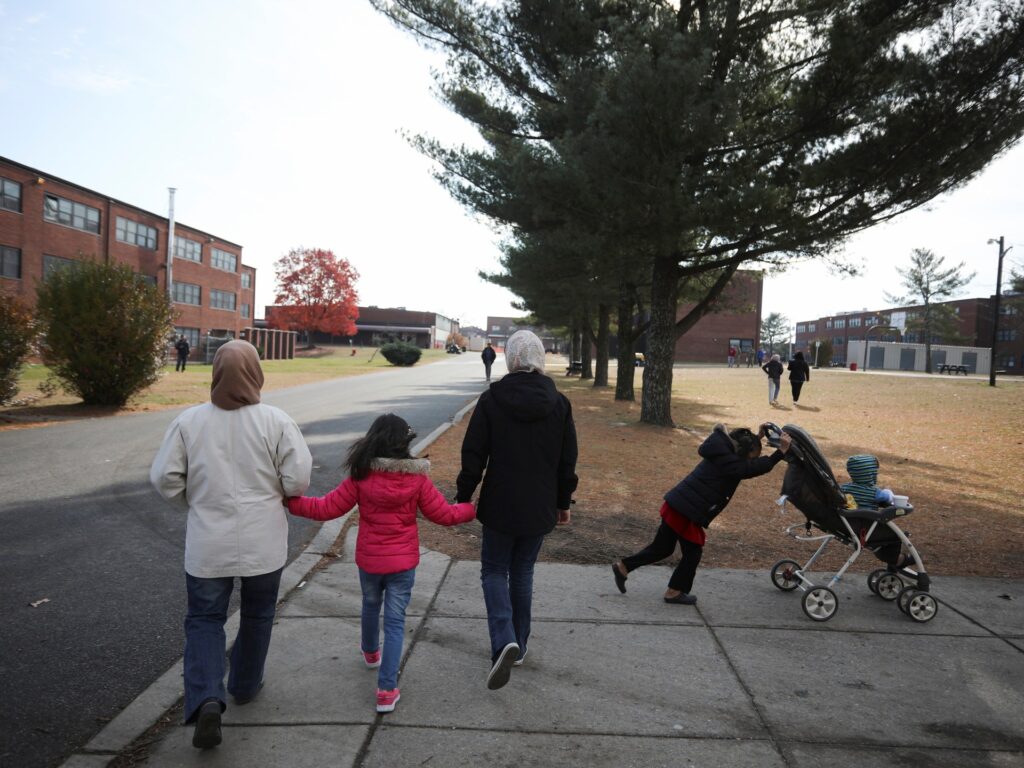
The administration of President Donald Trump has moved to end legal protections for thousands of Afghans and Cameroonians legally living in the United States. On Friday, a spokesperson for the Department of Homeland Security confirmed the decision, which will affect approximately 14,600 Afghans and 7,900 Cameroonians. Those individuals were able to live in the US under a designation called “temporary protected status” or TPS. The US government typically offers TPS to individuals already in the US for whom it may be unsafe to return, at least in the short term, due to conflict, natural disaster or other circumstances. But the Trump administration has attempted to sever TPS protections for multiple nationalities since taking office in January, as part of a broader crackdown on immigration, both legal and otherwise. In a statement, Homeland Security Secretary Kristi Noem said that conditions in Afghanistan and Cameroon no longer met the criteria for TPS. But critics point out that fighting has raged in Cameroon between the government and separatists since 2017. Advertisement And in Afghanistan, the Taliban has been in control of the government since the withdrawal of US and Western forces in 2021. Its leadership has been accused of perpetrating widespread human rights abuses, including arresting members of the previous US-backed government and banning women from many aspects of public life. Refugee groups quickly condemned the move. Krish O’Mara Vignarajah, the president of the nonprofit Global Refuge, called the revocation of the TPS for Afghans “a morally indefensible betrayal”. She warned they could face persecution if returned to Afghanistan. “Afghanistan today is still reeling from Taliban rule, economic collapse, and humanitarian disaster,” she said in a statement. “Nothing about that reality has changed.” While the US evacuated more than 82,000 Afghans to the US, the vast majority were granted temporary “parole” or other legal statuses based on their direct work with the US government. Still, the end of TPS would still affect a significant portion of that total group. Their TPS status will end in May. Veterans groups and politicians on both sides of the political spectrum have called for more legal avenues for Afghans to seek safety in the US, particularly if they worked alongside US troops or the US-backed government. Meanwhile, US lawmakers earlier this month urged the Trump administration to extend the status for Cameroonians, who face civilian attacks in their home country. They are now set to lose that protection in June. Advertisement “The country’s worsening security situation, combined with its ongoing humanitarian cries and human rights abuses, makes return impossible for Cameroonian nationals,” the lawmakers wrote. Cameroon has seen clashes between Anglophone separatists and Francophone security forces that have resulted in extrajudicial killings, attacks on civilians and widespread displacement. The Trump administration has moved to close several avenues to temporarily stay in the US, arguing it was “restoring the rule of law”. But many of the moves target immigration categories established under Trump’s predecessor and political rival, former President Joe Biden. Trump has also sought to pursue a campaign of “mass deportation” during his second term. Removing legal protections from immigrants allows the government to potentially remove them from the country. This is not the first time Trump has targeted TPS, though. During his first term, from 2017 to 2021, he tried to end most TPS enrollment but was thwarted by federal courts. During his second term, Trump reembarked on a similar push. In February, he sought to strip nearly 300,000 Venezuelans of their TPS. But in late March, a US district judge blocked his attempt, saying that his government’s characterisation of the migrants as criminals “smacks of racism”. Trump has also moved to nix the humanitarian parole programme that granted legal status to more than 500,000 Haitians, Venezuelans, Cubans and Nicaraguans under Biden. On Thursday, however, a federal judge blocked Trump from ending the programme, which would have stripped nearly half a million people of their legal status. Advertisement Adblock test (Why?)
Luisa Gonzalez wants to be Ecuador’s president. Will Correa weigh her down?

Still, even voters who reject Correa’s legacy might be inclined to vote for Gonzalez out of disillusionment with the status quo. President Noboa has faced criticism for human rights abuses and executive overreach during his short term in office. Some even say he has flashed an authoritarian streak, just like Correa. Voting is compulsory in Ecuador, and voters demonstrated their displeasure at the polls in the first round of this year’s presidential race. Null and blank votes made up nearly 9 percent of the total ballots cast — a sign of deep voter dissatisfaction. Political consultant Jacobo Garcia believes this segment of the electorate may lean towards Gonzalez, not because of her campaign, but due to growing frustration with Noboa. “What could tip the balance,” he said, “isn’t support for Gonzalez, but the perception that Noboa’s campaign has lost steam and made critical mistakes.” Some Indigenous leaders who once clashed with Correa are also backing Gonzalez for similar reasons. “The alternative is worse,” Gomez, the Kitu Kara activist, said. “This is about defending our territories and lives from a government that has shown open disregard for Indigenous rights.” In late March, the Confederation of Indigenous Nationalities of Ecuador (CONAIE) — the country’s largest Indigenous organisation — also struck an agreement with Gonzalez. It endorsed her, on the condition that she accepted a 25-point platform that included pledging to repeal Noboa-era decrees that CONAIE felt were anti-Indigenous. “We’re not joining a campaign. We’re demanding action on Indigenous rights, environmental justice, and an end to criminalising defenders,” said Gomez. She emphasised that the decision followed months of internal consultation across Indigenous communities — a strategic choice rooted in resistance, not alignment. “We’ve chosen who we’d rather confront. If she wins, the demands are clear, and the response will be mobilisation.” But Avila, the professor from the University of Cuenca, said such alliances will be key to any government Gonzalez might form if elected. Currently, Ecuador’s fiscal crisis and divided legislature could stall her agenda. “Campaigns are built on hope, but governance requires coalitions,” said Avila. “The real challenge will begin the day after the election.” Adblock test (Why?)
UN agrees deal on shipping emissions despite US threats
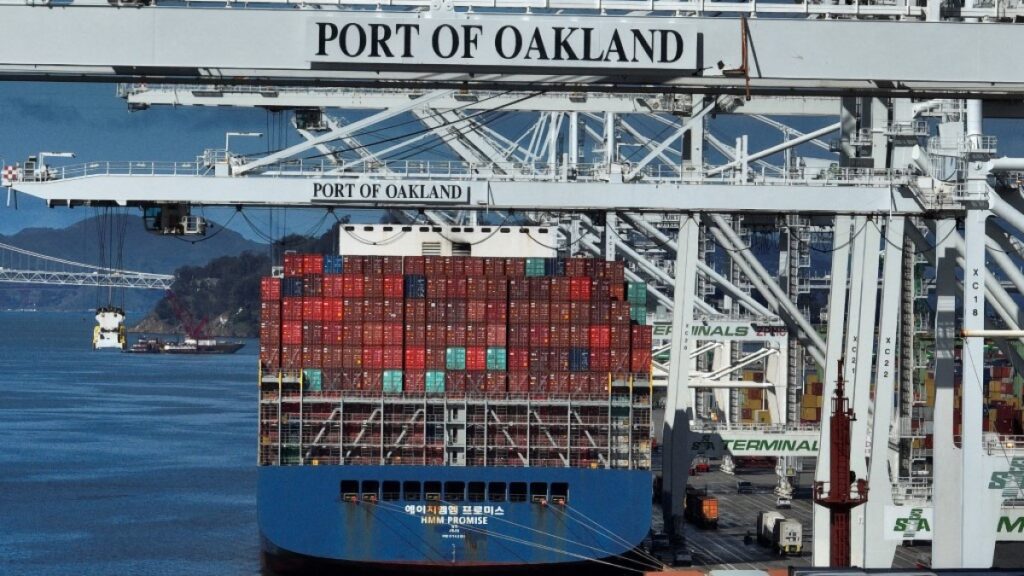
The US pulled out of the climate talks at the International Maritime Organization in London this week. Countries at the United Nations shipping agency have struck a deal on a global fuel emissions standard for the maritime sector, which will impose an emissions fee on ships that breach it and reward vessels burning cleaner fuels. The United States pulled out of the climate talks at the International Maritime Organization (IMO) in London this week, urging other countries to do the same and threatening to impose “reciprocal measures” against any fees charged to US ships. Despite that, other nations have approved the CO2-cutting measures to help meet the IMO’s target to cut net emissions from international shipping by 20 percent by 2030 and eliminate them by 2050. A majority of countries at the IMO voted on Friday to approve a scheme that from 2028 will charge ships a penalty of $380 per metric tonne on every extra tonne of CO2-equivalent they emit above a fixed emissions threshold, plus a penalty of $100 a tonne on emissions above a stricter emissions limit. The deal is expected to generate up to $40bn in fees from 2030, some of which will go towards making expensive zero-emission fuels more affordable. Advertisement The talks have exposed deep rifts between governments over how fast to push the maritime sector to cut its environmental effect. A proposal for a stronger carbon levy on all shipping emissions, backed by climate-vulnerable Pacific countries – which abstained in Friday’s vote – plus the European Union and the UK, was dropped after opposition from several countries, including China, Brazil and Saudi Arabia, delegates told the Reuters news agency. Vanuatu’s climate minister, Ralph Regenvanu, said countries had “failed to support a set of measures that would have gotten the shipping industry onto a 1.5°C pathway”. Industry group the International Chamber of Shipping welcomed the deal, which it said would require a huge scale-up of such fuels. “We are pleased that governments have understood the need to catalyse and support investment in zero emission fuels,” ICS said in a statement. In 2030, the main emissions limit will require ships to cut the emissions intensity of their fuel by 8 percent compared with a 2008 baseline, while the stricter standard will demand a 21 percent reduction. By 2035, the main standard will cut fuel emissions by 30 percent, versus 43 percent for the stricter standard. Ships that reduce emissions to below the stricter limit will be rewarded with credits that they can sell to non-compliant vessels. “This is a groundbreaking moment for the shipping industry, which should signal a turning of the tide on greenhouse gases from global shipping,” Mark Lutes, senior adviser at the NGO World Wildlife Fund for Nature, said in a statement. Advertisement “However, key aspects of this agreement fall short of what is needed and risk blowing the transition off course,” he added. The carbon pricing measure must now be formally adopted at an IMO assembly in October. Adblock test (Why?)
A court upheld the impeachment last week, and removing removed him from off
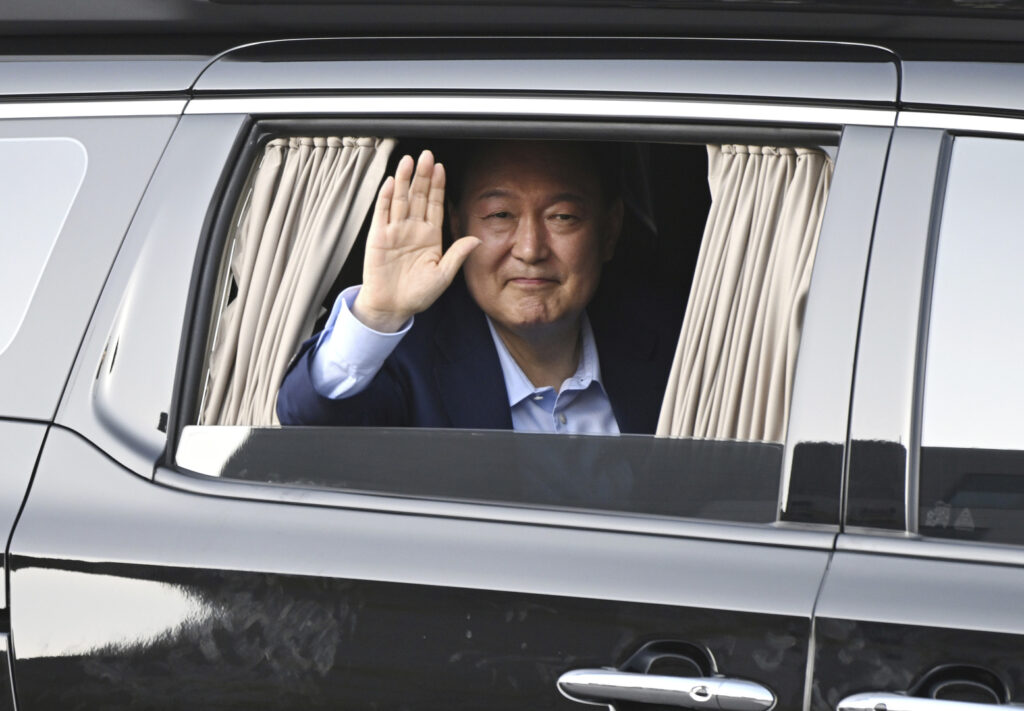
NewsFeed South Korea’s ousted president Yoon Suk-yeol left the presidential residence for the final time on April 11, days after a court upheld his impeachment. Yoon, who greeted throngs of flag-waving supporters, will relocate to his private home in Seoul. Published On 11 Apr 202511 Apr 2025 Adblock test (Why?)
Trump’s tariffs: Short-term damage or long-term ruin?
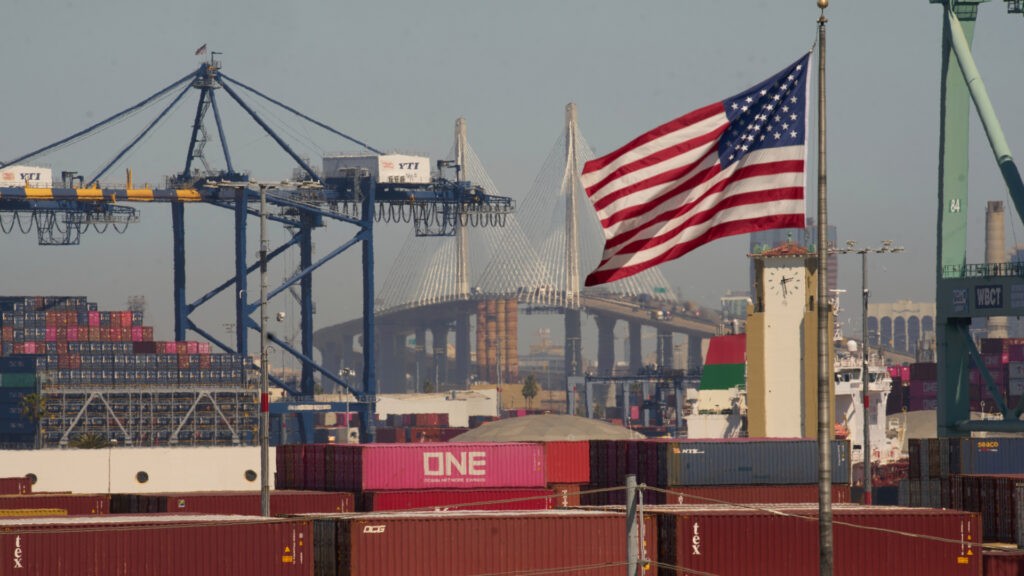
What does Trump aim to achieve by making it costlier for the rest of the world to sell their goods in the US? As the US government imposed tariffs on goods from all other countries, President Donald Trump has asked Americans to “hang tough”. But economists are warning of negative consequences for American households and businesses. Georgetown University professor Michael Strain, who heads economic policy studies at the American Enterprise Institute, tells host Steve Clemons that “the risk of recession is very, very real.” Trump believes that the tariffs will stimulate the US economy and bring jobs back after decades of outsourcing, Strain argues, but the opposite is more likely: costs will rise, manufacturing will decrease, and Trump’s approval rating will go down. Adblock test (Why?)
United States is no longer a safe destination for international students
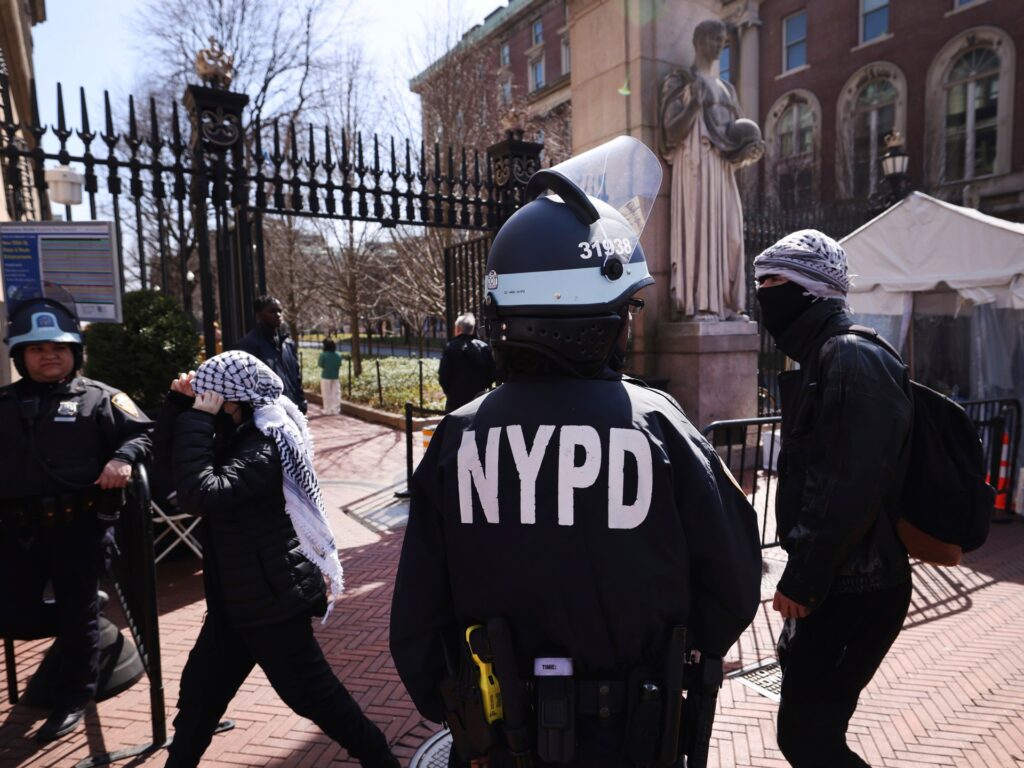
One cannot underestimate the precarity that orders the lives of international students in the United States. I remember making my maiden journey from Kolkata to upstate New York as an international student to pursue an undergraduate degree at a small liberal arts college. This was back in 2003 when the US-led so-called “war on terror” was in full swing. The US had invaded Iraq only a few months before my arrival in New York. Be it the on-campus jingoism inspired by America’s battle against the “Axis of Evil” that left little room for critical assessments of US foreign policy in the classroom, the “random” airport security checks at airports or the near-consistent racism and Islamophobia on the American airwaves – it was soon painfully apparent to me that someone who “looked like me” didn’t belong in the “Land of the Free”. In the years since, things hardly got any better for international students making their way to America. They remained untrustworthy and unwelcome outsiders in the eyes of many Americans, and the sense of precarity surrounding their lives persisted. Advertisement Under Trump 2.0, however, this sense of precarity has reached unprecedented levels. In fact, these days the US appears to be not only unwelcoming, it is a blatantly unsafe destination for international students. Trump has made the lives of international students much more difficult than before. This did not come as a surprise, as he had promised to do just that on the campaign trail, well over a year ago. Besides claiming that universities and various accreditation bodies were dominated by Marxists and radical leftists, he made his particular hatred for Palestine solidarity activists on campus well-known. He declared that, if re-elected, he would revoke the student visas of “radical, anti-American and anti-Semitic foreigners” participating in pro-Palestinian protests on US college campuses as early as October 2023. After his return to the White House, he made targeting pro-Palestine international students and faculty a priority. One of his highest-profile targets was Mahmoud Khalil, a Columbia University graduate. Khalil, who was on the front lines of Columbia’s pro-Palestine protests as a negotiator between the student protesters and university leadership, is a green card holder. However, the Trump administration is pushing to deport him, claiming that he was engaging in pro-Hamas, un-American activities. Khalil was abducted by Immigration and Customs Enforcement (ICE) officers from his home in New York in front of his pregnant American wife in early March, and has been held at a detention facility in Louisiana for over a month. Advertisement In a similar case, Tufts University PhD student and Turkish citizen Rumeysa Ozturk was abducted by masked, plain-clothed officers in Boston. She, too, was transferred to the detention facility in Louisiana. Her crime? Co-authoring an op-ed in Tufts Daily calling for her university to divest from Israel. Indian citizen and Georgetown University postdoctoral scholar Badar Khan Suri has also been targeted for deportation and is faced with an uncertain future at an ICE detention facility in Texas. Suri didn’t even participate in any Palestine solidarity protests. His crime seems to be that he is the son-in-law of a former adviser to the Hamas government in Gaza, Ahmed Yousef. Yousef, however, left the position in the political wing of Hamas more than a decade ago and has called the group’s attack on Israel on October 7, 2023 “a terrible error”. Then there is the case of Cornell University PhD candidate Momodou Taal, a dual citizen of the United Kingdom and Gambia. He participated in Palestine solidarity protests and was called upon by immigration authorities to surrender. After going into hiding for two and half weeks in fear for his personal safety, Taal decided to leave the US. These few high-profile cases are just the tip of the iceberg. The Trump administration has revoked the visas of hundreds of international students for their pro-Palestine activism and social media posts. As of April 10, more than 600 international students in over 100 colleges and universities across the country are believed to have been affected. And there seems to be no end in sight. The Department of Homeland Security has begun screening the social media accounts of non-citizens and says it will deny visas and green cards to all individuals it deems as having participated in pro-Palestine activism or, as the Trump administration deems it, “anti-Semitic activities”. Advertisement America’s leading universities, meanwhile, appear more than willing to capitulate to Trump’s demands, and are throwing their international students to the wolves, to stay on the good books of the administration and keep federal funding. Columbia University, for instance, quickly caved when the Trump administration decided to withhold $400m in federal funding due to the university’s supposed inaction during the Palestine solidarity protests. Despite sitting on an endowment valued at just under $15bn, Columbia’s leadership responded to Trump’s funding threats by overhauling the university’s protest policies and introducing new security measures that would swiftly crack down on any possible return of Palestine solidarity encampments and protests on the campus. The Trump administration also demanded that Columbia’s Middle Eastern, South Asian and African Studies Department be placed on academic receivership for five years. Typically, academic receivership involves internal processes and measures implemented by the university leadership to bring a dysfunctional department or programme “back on track”. Seemingly agreeing to Trump’s demands, the university appointed a new senior vice provost to oversee the department. Harvard University – another institution with a massive endowment – faced similar demands from the Trump administration in return for federal funding. Specifically, its leadership was asked to make “necessary changes” to “address bias, improve viewpoint diversity and end ideological capture” in “programs and departments that fuel antisemitic harassment”. Unlike in the case of Columbia, there was no mention of specific programmes or departments. Advertisement But it would seem that the Harvard leadership knew what Trump meant. Harvard’s interim dean of social sciences David M Cutler dismissed the leadership of the Center for Middle Eastern Studies. He justified his decision by claiming that