

‘Make showers great again’: Why Trump’s fighting bathroom water pressure
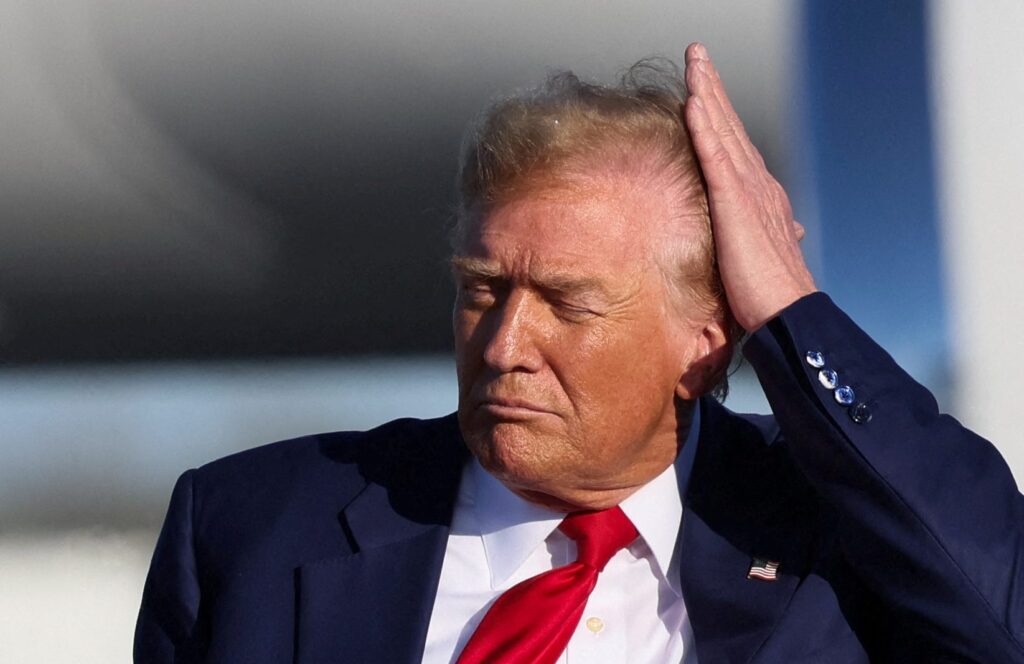
EXPLAINER Trump’s new executive order declares showerheads will not be ‘weak and worthless’ any more. But what about water bills? US President Donald Trump signed an executive order on Wednesday repealing limits to the flow of water from bathroom showers imposed by previous Democratic Presidents Joe Biden and Barack Obama. Biden and Obama introduced these limits to increase efficiency and conserve water. Where their focus was on the environment, Trump’s order aims to “make America’s showers great again,” a White House fact sheet says. Showerheads, it added, will no longer be “weak and worthless”. Trump’s order to free the showerhead from regulations would, he said, help him wash his “beautiful hair”. It came at a time when his back-and-forth tariff policies had washed away billions of dollars from the stock markets, which plunged following his declaration of a trade war on the rest of the world, only to gain back some of its lost territory after Trump’s sudden reprieve on tariffs for most countries. Here is more about Trump’s latest order: What is Trump’s executive order about showerheads? Trump’s order calls on Energy Secretary Chris Wright to reverse the definitions of what constitutes a showerhead usable in the United States, as implemented by Obama and Biden. “The Biden definition was a staggering 13,000 words. The Oxford English Dictionary, by contrast, defines “showerhead” in one short sentence,” the White House fact sheet says. Advertisement Trump wants to go back to a 1992 federal energy law, which sets the standard of water pressure for showers to 2.5 gallons (9.5 liters) per minute. Over the years, new showerhead designs began to include multiple nozzles or spray systems. To ensure water conservation, the Obama administration clarified the rule in 2013 to say that even if a showerhead has multiple nozzles, they collectively should not release more than 2.5 gallons a minute. Trump’s order, in effect, would allow each nozzle to eject up to 2.5 gallons of water a minute. So if a showerhead has four nozzles, it could release up to 10 gallons a minute. “These changes served a radical green agenda that made life worse for everyday Americans,” the White House factsheet says about the Obama-era rule. “Overregulation chokes the American economy, entrenches bureaucrats, and stifles personal freedom.” “In my case, I like to take a nice shower, take care of my beautiful hair,” Trump said while signing the order in the Oval Office. “I have to stand under the shower for 15 minutes until it gets wet. It comes out drip, drip, drip. It’s ridiculous.” Has Trump eased showerhead rules before? During his first administration, Trump reversed the Obama-era rule to allow multiple nozzles on one showerhead to each spray out 2.5 gallons of water per minute individually, increasing the permitted amount of water released by a singular showerhead. This was finalised in December 2020. “So, showerheads — you take a shower, the water doesn’t come out. You want to wash your hands, the water doesn’t come out. So what do you do? You just stand there longer or you take a shower longer? Because my hair — I don’t know about you, but it has to be perfect. Perfect,” Trump said on the campaign trail in 2019. He has complained about low water pressure multiple times since. Advertisement In 2021, the Biden administration reversed Trump’s relaxation of water flow rules. Biden went back to Obama’s 2013 rule to permit an overall 2.5 gallons of water per minute for a showerhead, regardless of the number of nozzles on it. “Biden undid this progress and the shower wars continued,” says the White House factsheet. How could this affect Americans? The average family spends $1,000 every year on water costs, according to a factsheet by the US Environmental Protection Agency (EPA), last updated on March 24. The EPA estimated that households could save more than $380 annually if they retrofitted their homes with WaterSense-labelled fixtures and energy-efficient appliances. A showerhead qualifies for the WaterSense label if it releases no more than two gallons (7.6 liters) per minute. A US government-backed report, published in 2019, issued a warning that climate change and population growth increase the risk of water shortages in many regions of the US. Adblock test (Why?)
Pope Francis meets King Charles, Queen Camilla during Vatican convalescence
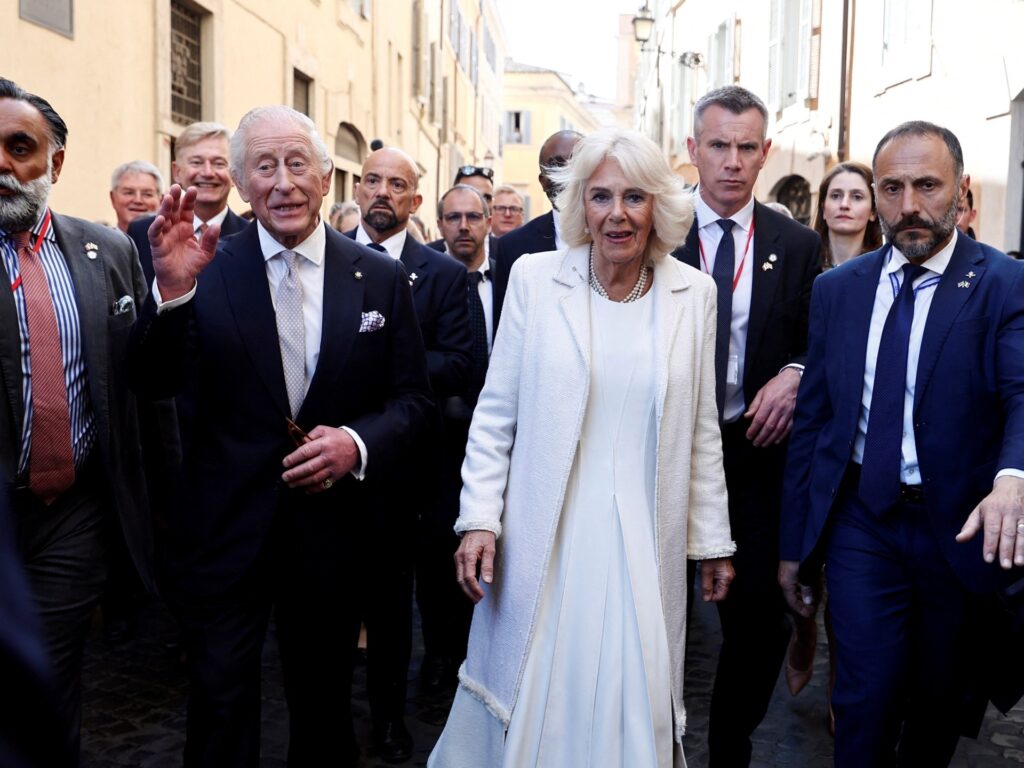
Charles tells Italy’s parliament that peace is ‘never to be taken for granted’ before a surprise visit to Pope Francis. Pope Francis met privately with King Charles III and Queen Camilla at the Vatican during the royal couple’s four-day state visit to Italy and on the occasion of their 20th wedding anniversary, the Vatican has announced. The British royals’ visit on Wednesday was the pope’s first known meeting since his return to the Vatican after five weeks in hospital for life-threatening double pneumonia. Francis had planned to have an audience with Charles, but the official state visit to the Vatican was postponed due to the pope’s health. The pope issued a new invitation for a private audience, but it was subject to his health and only confirmed on Wednesday morning. The mid-afternoon visit lasted about 20 minutes and included a private exchange of gifts. The Vatican statement said the pope wished Charles and Camilla a happy anniversary, and the king and queen in return wished the pope a speedy recovery. Buckingham Palace said “their majesties were delighted the pope was well enough to host them, and to have had the opportunity to share their best wishes in person’”. Advertisement The pope has been convalescing at the Vatican since March 23 and made an appearance to the faithful in St Peter’s Square on Sunday. He was pushed in a wheelchair, wearing nasal tubes for supplemental oxygen, and wished the crowd a good Sunday from the front of the altar before being greeted by participants in the Mass, some of whom leaned to kiss his hands. Charles, meanwhile, was on his first trip abroad this year after being taken to hospital over side effects related to his ongoing cancer treatment. Earlier on Wednesday, Charles became the first British monarch and fourth foreign leader to address a joint session of the Italian parliament. In his speech, he stressed the need for close ties between Italy and the United Kingdom, calling for unity in defence of common values at a time of war in Europe. “Our countries have both stood by Ukraine in her hour of need and welcomed many thousands of Ukrainians requiring shelter,” he said, referring to the Russia-Ukraine war and warning that images of wars were now reverberating again across the continent. “Our younger generations can see in the news every day on their smartphones and tablets that peace is never to be taken for granted.” Charles added that Italian and British armed forces “stand side by side” as part of the NATO alliance, noting the two countries’ joint plans to develop with Japan a new fighter jet. “It will generate thousands of jobs in our countries and speaks volumes about the trust we place in each other,” he said. Advertisement Charles also spoke passionately in his address about threats facing the planet, recalling another speech he gave in Italy 16 years ago and how the “warnings” he made at the time about the urgency of the climate challenge were “depressingly being borne out by events”. Earlier on Wednesday, Charles had a short private meeting with Prime Minister Giorgia Meloni, the leader of Italy’s hard-right government, at the historic Villa Doria Pamphili. The king was then whisked in his Bentley to Rome’s working-class neighbourhood of Testaccio, where its converted slaughterhouses now hold cultural events, to meet with drama students who performed a portion of Shakespeare’s Othello in Italian. A few dozen curious residents milled about outside, but most appeared nonplussed, such as Carlotta, a 70-year-old woman who declined to give her last name. “I don’t give a damn about the king but they’ve spent three days cleaning the neighbourhood, scrubbing the pavements, clearing up dog poo, so he can come every week if he likes,” she told the AFP news agency. Another woman, 66-year-old Ninetta, quipped: “Rome has seen emperors, how impressive is a king? I couldn’t care less.” Adblock test (Why?)
Macron says France could recognise Palestinian state
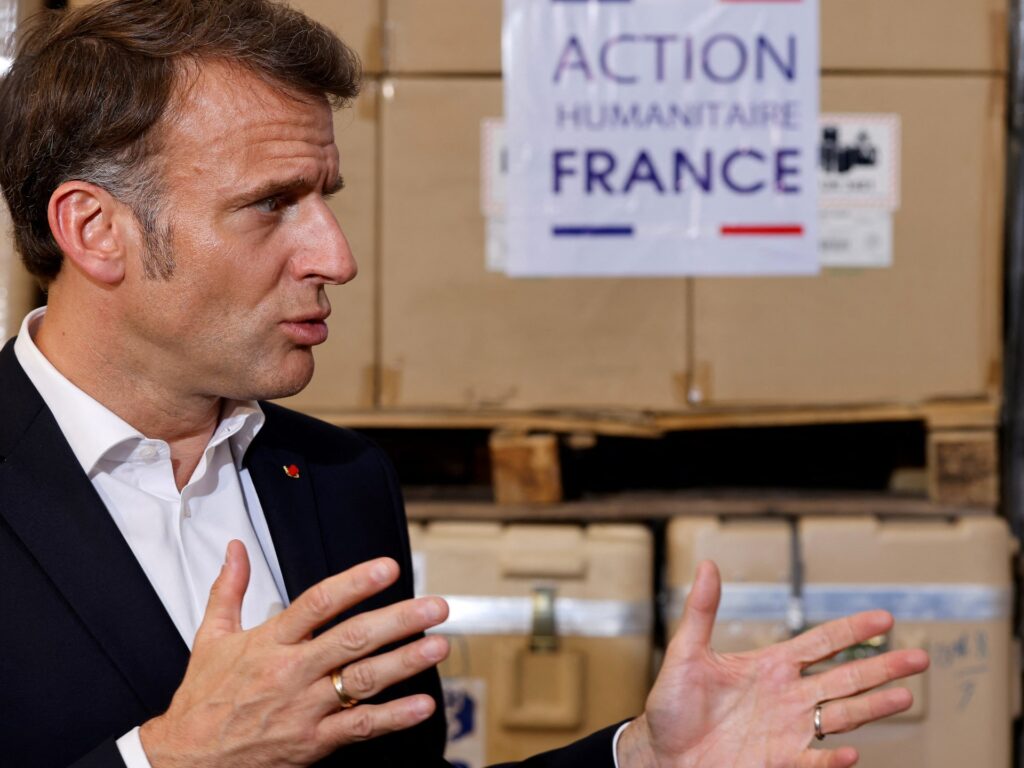
‘We must move towards recognition, and we will do so in the coming months,’ French president says. President Emmanuel Macron says France could recognise a Palestinian state “in the coming months”. Macron told France 5 television on Wednesday that he aimed to finalise the move at a United Nations conference on the Israel-Palestine conflict, which his country will co-chair with Saudi Arabia in June. “We must move towards recognition, and we will do so in the coming months,” Macron said. “I’m not doing it to please anyone. I’ll do it because at some point it will be right,” he said. Palestine’s minister of state for foreign affairs, Varsen Aghabekian Shahin, told the news agency AFP that France’s recognition would be “a step in the right direction in line with safeguarding the rights of the Palestinian people and the two-state solution”. Israeli Foreign Minister Gideon Saar said any “unilateral recognition” of a Palestinian state would be a “boost for Hamas”. “A ‘unilateral recognition’ of a fictional Palestinian state, by any country, in the reality that we all know, will be a prize for terror and a boost for Hamas,” he wrote on X. Advertisement “These kind of actions will not bring peace, security and stability in our region closer – but the opposite: they only push them further away,” he said. Palestine has been recognised as a sovereign state by 146 out of 193 UN members so far, with Armenia, Slovenia, Ireland, Norway, Spain, the Bahamas, Trinidad and Tobago, Jamaica and Barbados joining their ranks last year. However, despite growing international support for Palestinian statehood, several major Western countries like the United States, Australia, the United Kingdom and Germany have withheld recognition. Macron said that he foresaw a “collective dynamic”, enabling some countries in the Middle East to recognise the Israeli state in turn. Countries that do not recognise Israel include Saudi Arabia, Iran, Iraq, Syria and Yemen. Macron said that recognising Palestine as a state would allow France “to be clear in our fight against those who deny Israel’s right to exist, which is the case with Iran, and to commit ourselves to collective security in the region”. France has long championed a two-state solution to the Israel-Palestinian conflict, continuing its policy after the October 7, 2023, attack by Palestinian armed group Hamas on Israel. But formal recognition by Paris of a Palestinian state would mark a major policy switch and could antagonise Israel, which insists such moves by foreign states are premature. On a recent trip to Egypt, Macron held talks with President Abdel Fattah el-Sisi and Jordan’s King Abdullah II, making it clear he was strongly opposed to any displacement or annexation in Gaza and the Israeli-occupied West Bank. Advertisement Adblock test (Why?)
Barcelona hit Dortmund for four in Champions League quarterfinal
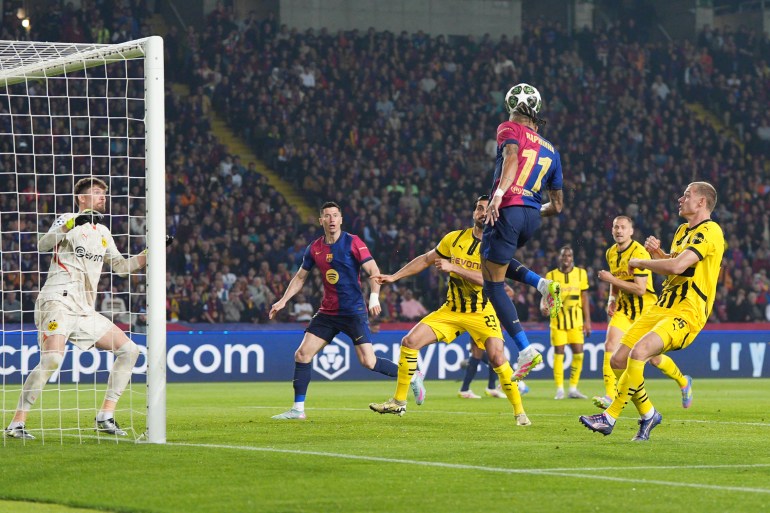
Barcelona set sights on Champions League progress with 4-0 home win in quarterfinal first leg against Borussia Dortmund. Barcelona claimed a commanding 4-0 home win over Borussia Dortmund in the first leg of the Champions League quarterfinals. Robert Lewandowski scored twice and Raphinha recorded a goal and an assist on Wednesday, leaving the Catalan club in a strong position to reach the semifinals for the first time since 2019. Lamine Yamal also scored as Barcelona dealt a hammer blow to the German side’s hopes of advancing. The return match is next Tuesday at Dortmund, who were last year’s runners-up in the final against Barcelona’s fierce rivals, Real Madrid. “We played very well, but we can’t be thinking about the semifinals yet,” Lewandowski said. “We scored four goals at home, but we still have the return leg to play.” Raphinha of Barcelona heads the ball across the goal before his teammate Robert Lewandowski scores his team’s second goal [Pedro Salado/Getty Images] Raphinha added to his Champions League-leading tally by poking the ball into the open net in the 25th minute for his 12th goal in the competition this season. He then helped set up Lewandowski’s first goal of the night in the 48th. Advertisement Lewandowski scored his 11th Champions League goal with a one-timer in the 66th before Yamal closed the scoring in the 77th. The 36-year-old Lewandowski has scored 14 Champions League goals after the age of 35, two more than Cristiano Ronaldo. Lewandowski had scored 17 of his 105 career goals in the Champions League for Dortmund over three seasons, from 2011-14. The Polish striker, who is also the Spanish league’s leading scorer this season with 25 goals, has 40 goals this season. “In my head, I always want to be helping the team with my quality and my goals,” Lewandowski said. “A striker always needs to be thinking about scoring goals, and when the team plays well, it becomes easier for me.” Raphinha of Barcelona scores his team’s first goal [David Ramos/Getty Images] Raphinha has scored in each of Barcelona’s last four Champions League knockout stage matches, with seven goals in that span. He entered the match with 11 goals, one more than Dortmund’s Serhou Guirassy and Bayern Munich’s Harry Kane. Also Wednesday in the quarterfinals, a wonder goal from Khvicha Kvaratskhelia upstaged a brilliant curling shot from teammate Desire Doue as Paris Saint-Germain beat Aston Villa 3-1. Adblock test (Why?)
Rescuers search rubble after Dominican Republic club roof collapse
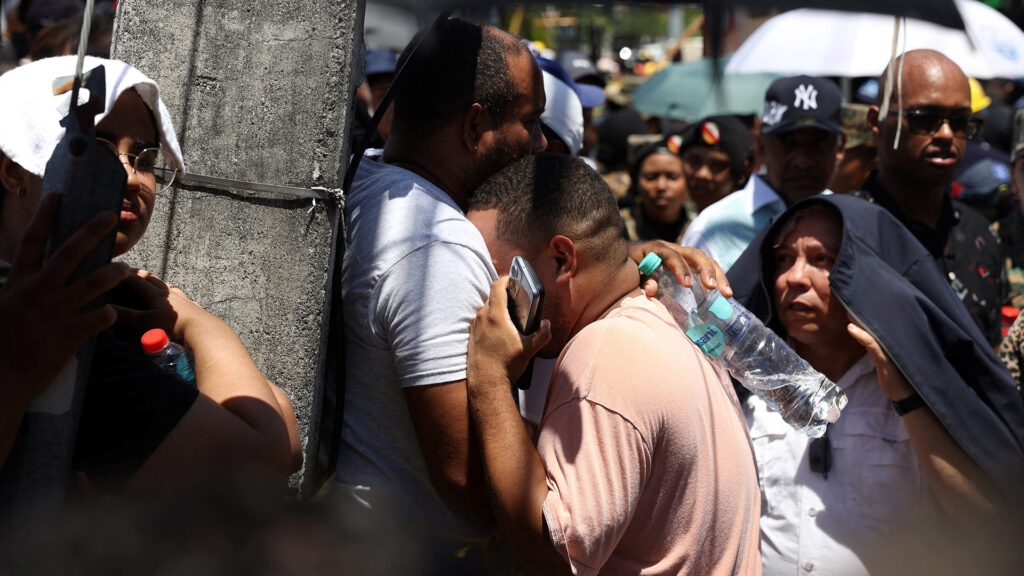
NewsFeed “I know she’s fine, I have faith.” Families waited for rescuers to find their loved ones amongst the rubble after a nightclub roof collapsed in the Dominican Republic on Tuesday, killing more than 100 people. Singer Rubby Perez, who was performing at the time, has been confirmed among the dead. Published On 9 Apr 20259 Apr 2025 Adblock test (Why?)
Israeli ‘massacre’ in Gaza’s Shujayea as residential tower targeted
[unable to retrieve full-text content] An Israeli strike destroyed an entire residential tower block in Gaza’s Shujayea neighbourhood.
Israel pushes on with strategy to keep neighbours weak in Lebanon and Syria
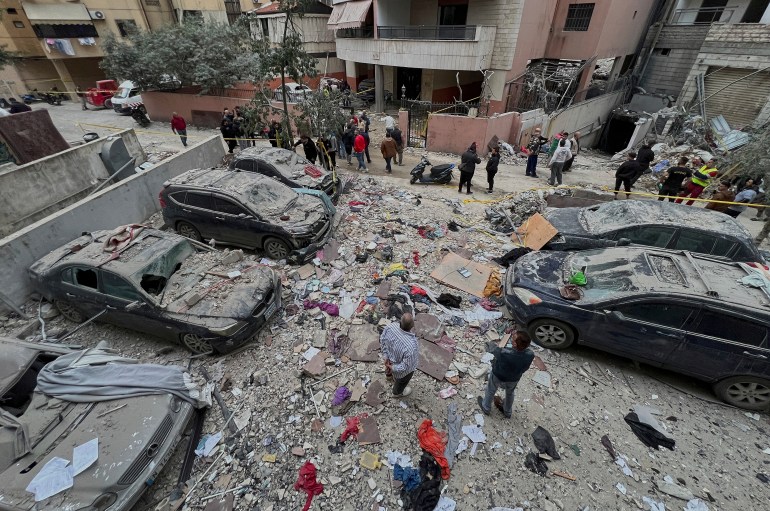
Beirut, Lebanon – Israel’s continuing attacks intend to keep its neighbours unstable, weak and fragmented, analysts say, and are contributing to the derailing of governing projects in Lebanon and Syria. Conversations with experts, analysts, and diplomats reveal a belief that Israel wants to keep the two states weak and fractured, maintaining Israel as the strongest regional power. “The Israelis believe that having weaker neighbors, as in states that aren’t really able to function, is beneficial for them because, in that context, they’re the strongest actor,” Elia Ayoub, writer, researcher, and founder of The Fire These Times podcast, told Al Jazeera. Lebanon and Syria, the targets of Israel’s forays, have largely not retaliated against the Israelis, who outpower them militarily, financially and technologically. ‘Israel has no limits’ Lebanon and Syria are both in a fragile condition. Lebanon has been in dire economic straits for at least six years, with bouts of political paralysis, and has just emerged from a prolonged Israeli assault that killed more than 4,000 people and destroyed swaths of the country. Advertisement That war, which also badly damaged the armed movemen tHezbollah, a major domestic actor in Lebanon since the 1980s, ostensibly ended with the November 27 ceasefire. Syria, meanwhile, recently emerged from a nearly 14-year-long war that displaced millions and killed hundreds of thousands. The transitional government is working to unify armed factions, stabilise the economy and gain international recognition. Lebanese residents gather around damaged cars at the site where an Israeli air strike hit a building in Dahiyeh, a southern suburb of Beirut, Lebanon, early Tuesday, April 1, 2025 [Hussein Malla/AP] Along with Lebanon, which is led by its first functioning cabinet in years, Syria has new leadership that wants to turn a page on recent history but, analysts told Al Jazeera, Israel seems intent on preventing that. Israel has been violating the ceasefire with Lebanon since it was signed, justifying each breach by claiming it had hit “Hezbollah targets”. The situation is particularly gruesome along Lebanon’s southern border, where some villages were obliterated during the war and others were completely razed since the ceasefire was agreed on. “There are a lot of violations,” a member of Lebanon’s civil defense force, who asked to not be named, told Al Jazeera from the battered southern town of Meiss el-Jabal, adding, “There’s nothing we can do about it.” Israel has also refused to fully withdraw from Lebanon, as the ceasefire stipulates, instead, leaving its forces in five points that experts say are likely being held for future negotiations over delineating the Lebanon-Israel border. Advertisement “The very clear path ahead is that Israel has no limits in its operations within Lebanon,” Mohanad Hage Ali, a senior fellow at the Carnegie Middle East Center in Beirut, told Al Jazeera. “The only distinction made is in firepower and destruction, which is reserved for disproportionate responses to attacks on northern towns in Israel.” Israel betting on Syria’s failure In Syria’s chaos following the Assad regime’s overthrow on December 8, Israel launched attacks on military infrastructure around the country, focusing on the south and creeping its forces further into Syrian territory. Syria’s transitional government has said it has no interest in regional war. Instead it has said that it has no intention to attack Israel and would respect the 1974 Agreement on Disengagement between the two countries. But the Syrian government’s overtures fell on deaf ears, and the attacks have continued. The Israeli government immediately revealed its position towards the new Syrian government following President Bashar al-Assad’s overthrow, calling it “a terror group from Idlib that took Damascus by force”. Israel has since repeatedly bombed Syria, and seized territory along the frontier between the occupied Golan Heights and the rest of Syria. Israeli strikes on Syria [Jalaa Marey / AFP] “Israel has made a bet that Syria will fail and will be fragmented,” Aron Lund, a fellow at Century International, told Al Jazeera. “What they’re doing is trying to position themselves in that scenario, as a push to have sway over the south and keep it unthreatening to them and protect their now almost unlimited freedom of manoeuvre in their airspace.” Advertisement In March, Israeli air strikes on Syria increased and expanded to new areas, with ground incursions increasing by 30 percent, including into the southern areas of Deraa and al-Quneitra. “The impact on civilians has been increasingly deadly,” Muaz al-Abdullah, ACLED’s Middle East Research manager, said in a statement. Smoke rises from Taibeh, following Israeli strikes in response to cross-border rocket fire, as seen from Marjayoun in southern Lebanon, March 22, 2025 [Karamallah Daher/Reuters] “To defend themselves, residents in the village of Kuya, in Deraa, fired warning shots to deter Israeli forces from advancing into the village on March 25. The response by Israeli forces was an air strike and shelling of the village, and at least six civilians were killed.” Imad al-Baysiri, from Deraa, told Al Jazeera about a similar incident in Nawa, 34km (21 miles) north of Deraa city. The Israeli army “tried to advance to all the large squares in Nawa so some young men started running and the Israeli army started shooting at them”, he said, adding that locals confronted the army and forced them to retreat. “They brought in helicopters and drones and for around four hours bombed the area,” he said. “Warplanes and helicopters also bombarded the city of Nawa with missiles from helicopters and drones.” The Israelis listen to the Americans ‘but only to a certain extent’, a diplomatic source said [Saul Loeb/ AFP] ‘They know war, but not peace’ Analysts can see little that would stop Israel’s near-daily attacks on Lebanon and Syria. Advertisement “They listen to Americans, but only to a certain extent,” a Western diplomatic source, speaking on condition of anonymity, told Al Jazeera. Hezbollah’s arsenal may once have acted as a deterrent, but the latest war has changed that calculus. “All deterrence has been lost,” Hage Ali said. Without any diplomatic or military pressure in its way, Israel seems set
Netanyahu’s visit to the White House “is a win back home”
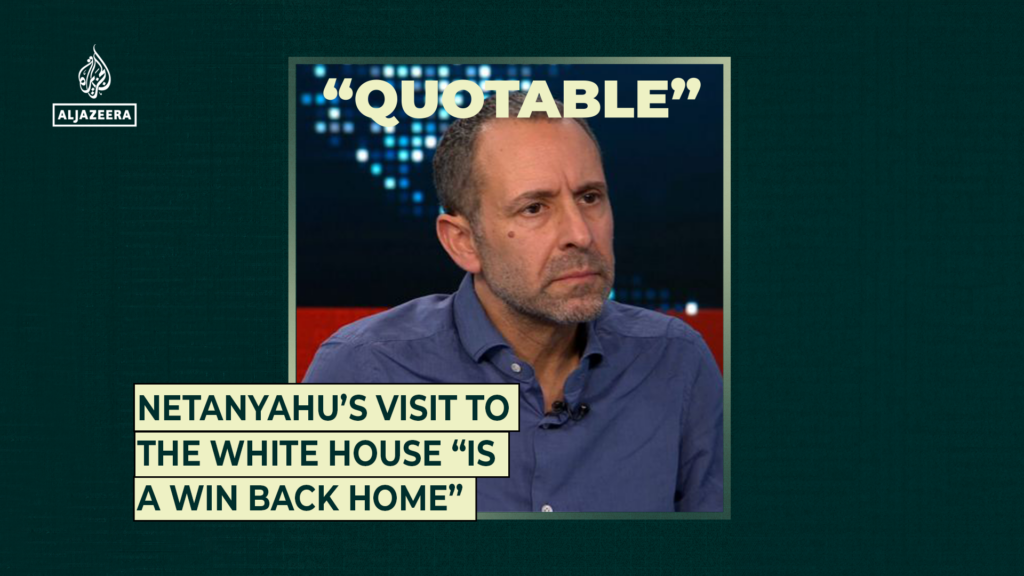
Daniel Levy on Trump and Netanyahu’s White House meeting on Iran and Gaza: why now, and what message does it send? Daniel Levy, president of the US / Middle East Project, weighs in on Trump and Netanyahu’s recent White House meeting on Iran and Gaza. Why now — and what message does it send? Adblock test (Why?)
Trump’s ‘reciprocal’ tariffs hit dozens of countries, stock markets plunge
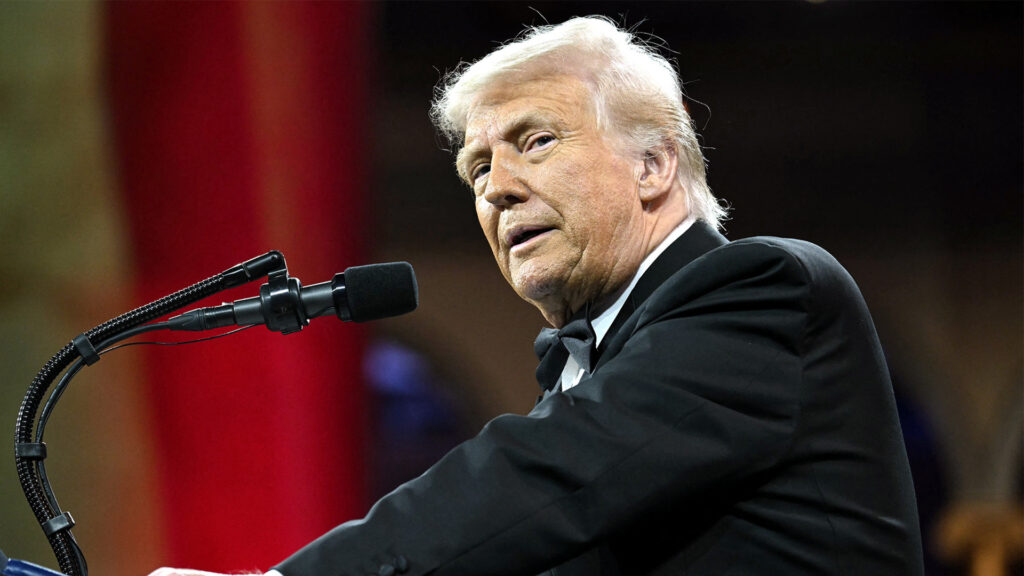
NewsFeed US President Donald Trump unleashed a massive 104% tariff on China as the ‘reciprocal’ trade levies against dozens of countries took effect on Wednesday. China soon hit back, hiking its tariffs on US imports to 84% Published On 9 Apr 20259 Apr 2025 Adblock test (Why?)
Trump’s tariff war: What’s at stake for China’s economy?
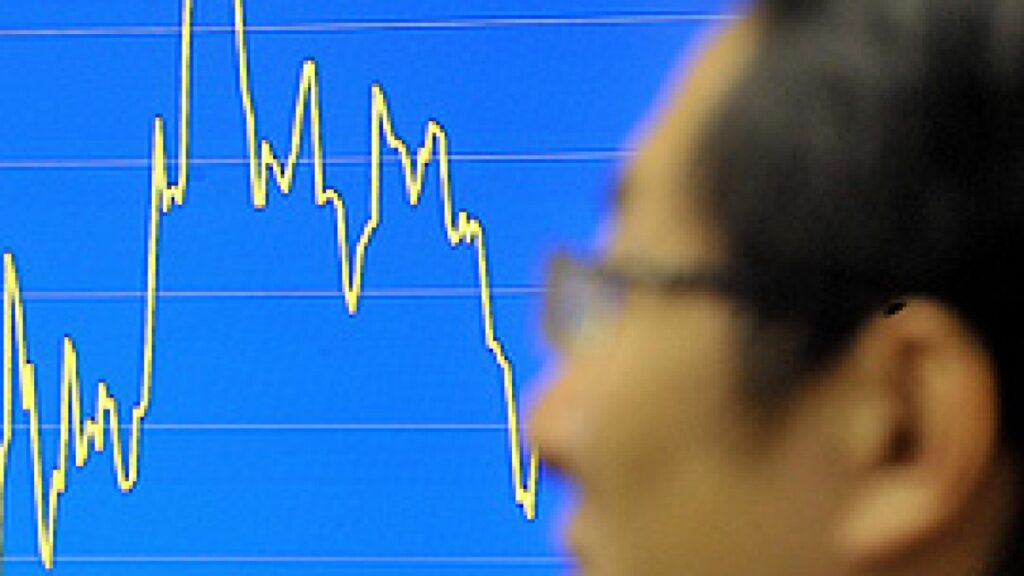
It’s started. At 12.01am EST (04:01 GMT) on Wednesday, United States President Donald Trump’s “reciprocal” trade tariffs kicked in. And no country has been hit worse than China, which now effectively faces a 104 percent levy on the goods it sells to the US. Even as Washington moved to start negotiations with other trading partners targeted by tariffs, the new levies on Beijing mean that anything the US imports from China will cost more than double what it did two months ago. In response, China quickly raised its US tariffs to 84 percent. Stock markets have nosedived since last week’s announcement of US tariffs on dozens of countries, as investors braced for the fallout from what is now a global trade war. For his part, Trump has long accused other countries – especially China – of exploiting the US on trade, casting his protectionist agenda as necessary to revive domestic manufacturing and re-shore American jobs. What is the status of US-China tariffs? On February 3, Trump imposed an extra 10 percent tariff on all goods from China, on top of various tariffs levied during the first Trump administration in 2017-2021 and the administration of former US President Joe Biden in 2021-2025. Advertisement Then, on March 5, Trump doubled the rate on Chinese imports to 20 percent. On April 2, he lifted it again by another 34 percent – stacking up to 54 percent in total. Last Friday, on April 4, China announced a 34 percent reciprocal tariff on US imports. Trump raised the temperature again by threatening still more tariffs unless Beijing withdrew its levies on US goods. “If China does not withdraw its 34 percent increase above their already long-term trading abuses by tomorrow, April 8th, 2025, the United States will impose ADDITIONAL Tariffs on China of 50%, effective April 9th,” Trump said on his Truth Social platform on Monday. As the hours ticked away, Trump remained confident that Beijing would buckle. “China also wants to make a deal, badly, but they don’t know how to get it started,” the US president wrote in a social media post. “We are waiting for their call. It will happen!” It didn’t. Instead, Beijing raised its tariff on US goods to 84 percent on Wednesday. What has China said in response to Trump’s tariffs? Announcing its latest round of tariffs on US exports on April 9, China’s Commerce Ministry said that Beijing “has the firm will and abundant means to take necessary countermeasures and fight to the end”. “History and facts have proven that the United States’ increase in tariffs will not solve its own problems,” said the policy statement. “Instead, it will trigger sharp fluctuations in financial markets, push up US inflation pressure, weaken the US industrial base and increase the risk of a US economic recession, which will ultimately only backfire on itself. Advertisement In a statement the previous day, on April 8, the Ministry of Commerce also made combative overtures, saying Washington’s actions were “completely groundless” and a form of economic “bullying”. Beijing defended its reciprocal tariffs and said they were aimed at safeguarding China’s “sovereignty, security and development interests”, as well as maintaining a balanced international trade market. Elsewhere, China’s Foreign Ministry spokesperson Lin Jian said “We Chinese are not troublemakers, but we will not flinch when trouble comes our way.” How will tariffs impact China’s economy? Despite growing tensions between the US and China, Washington and Beijing remain major trade partners. According to the Office of the United States Trade Representative, America imported $438.9bn in Chinese goods last year. That amounts to roughly 3 percent of China’s total gross domestic product (GDP), which is heavily reliant on exports. In a report shared with clients on Tuesday, Goldman Sachs said it expects Trump’s latest tariffs would drag down China’s GDP by as much as 2.4 percent. The investment bank is forecasting 4.5 percent growth for this year, citing concerns that China’s proven tactic of rerouting exports through countries like Vietnam and Thailand – to bypass US tariffs – will become less effective now that Trump has erected trade barriers globally. That 4.5 percent is lower than the Chinese government’s official growth target of 5 percent for 2025. Analysts at UBS are even more pessimistic: They’ve said that Trump’s tariff hikes could reduce China’s economic growth rate to just 4 percent in 2025. And that’s assuming the government engages in “broad fiscal expansion” [i.e. extra public investment]. Advertisement China’s economy has already been growing at a slower pace than when Trump first took office. The latest trade war comes as China is struggling with deflation, a crisis-stricken property market and elevated debt levels. In 2018, when Trump launched his first trade war against China, Beijing’s official GDP growth figure was 6.6 percent. How has Beijing responded so far? Al Jazeera’s Beijing correspondent Katrina Yu says Chinese officials are working to guard against shocks in the stock market. “The government does have the ability to intervene strongly,” Yu said. On Tuesday, China’s Premier Li Qiang said that the government is “fully capable of hedging against adverse external influences”. The same day, several public investment firms – such as Chengtong and Huijin – vowed to increase equity investments and stem financial market selloffs. Yu noted that Chinese stock exchanges have performed better than elsewhere in Asia. Shanghai’s SSE Composite Index posted gains of 1.1 percent on Wednesday, while Shenzhen’s SE Composite rose 2.2 percent. Meanwhile, Japan’s Nikkei index closed down by 3.9 percent. “The [Chinese] government is really looking to stabilise the stock market. It seems to be working so far, but investors here … some of them are still very anxious,” Yu said. Adblock test (Why?)